
Unfinished basements often look cold because of exposed ceilings, concrete floors, visible pipes, and limited natural light. However, those features do not stop the room from becoming comfortable and useful. Smart decorating can soften rough surfaces without requiring a complete renovation, professional contractor, or large budget.
Good planning matters more than expensive materials during a basement makeover. Lighting, furniture placement, floor coverings, and simple wall treatments can change how the room feels. Focus first on moisture control, safe electrical access, and comfortable movement. Decorative details should come after the basement is clean, dry, and suitable for regular use.
Many cozy basement design ideas work well because they hide visual distractions instead of rebuilding the entire room. Large rugs cover concrete, curtains soften unfinished walls, and warm bulbs balance grey surfaces. Second-hand furniture and removable products also make the project affordable for homeowners and renters.
How Can You Make an Unfinished Basement Look Good?
Clean the space, improve the lighting, define activity zones, cover large unfinished surfaces, and add comfortable furniture. Concentrate spending on items that improve warmth and daily use rather than permanent decorative finishes.
Successful basement inspiration usually begins with the room’s purpose. Decide whether you need a television room, home gym, play area, craft corner, office, storage zone, or flexible family space. Clear functions help you avoid buying random furniture that makes the basement feel crowded.
Check the Basement Before Decorating
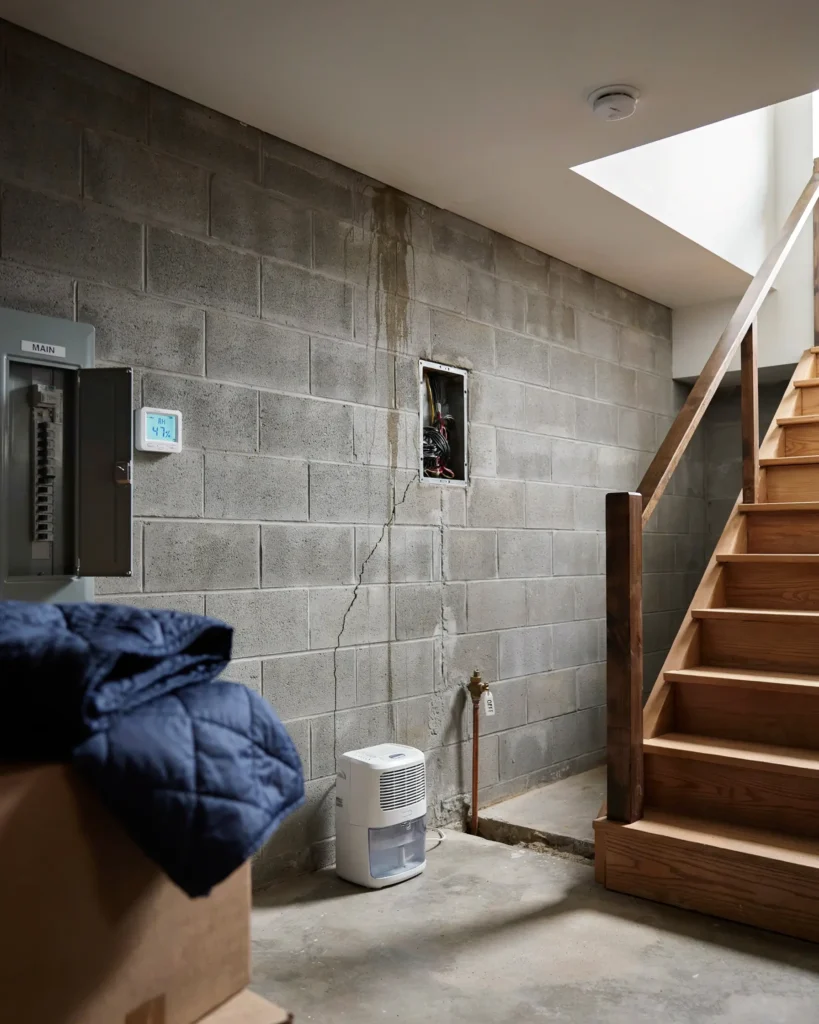
Inspect the basement for water stains, musty smells, active leaks, loose wiring, damaged insulation, and cracks before moving furniture downstairs. Decorative materials can trap moisture against walls or floors, so deal with damp areas before adding rugs, curtains, or storage units.
Place a simple humidity monitor in the room for several days. Indoor humidity should generally remain below 60 percent, while a range near 40 to 50 percent often feels more comfortable. Run a dehumidifier when needed and leave enough space around walls for air movement.
Confirm that stairways, windows, smoke alarms, electrical panels, water valves, and heating equipment remain easy to reach. Never cover junction boxes or important mechanical systems with fabric, shelving, or decorative panels. Safety access should guide every layout decision.
Paint the Exposed Ceiling One Colour
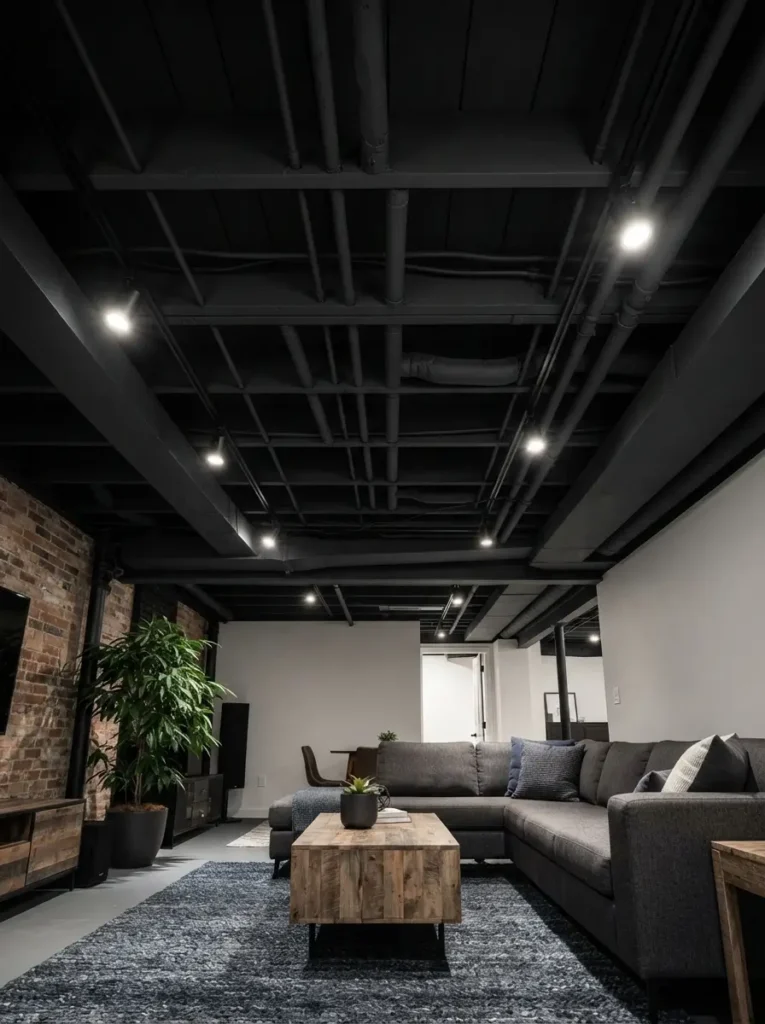
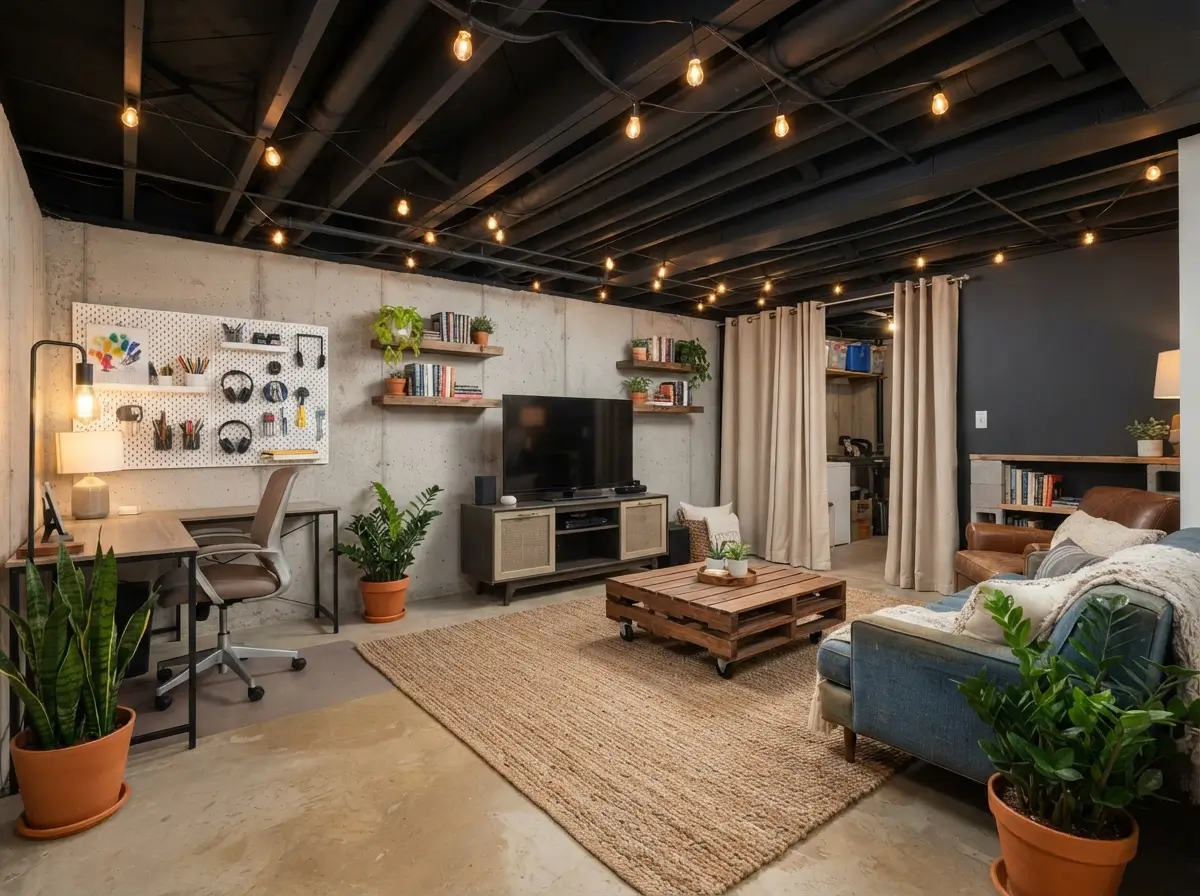
Exposed joists, wires, ducts, and pipes create visual clutter because every material has a different colour and texture. Painting the ceiling in one shade makes separate elements appear like one intentional surface. Matte black creates an industrial finish, while charcoal, deep navy, or warm white can feel softer.
Dark paint works best in basements with enough ceiling height and strong lighting. Warm white suits smaller rooms because it reflects more light, although dust and uneven surfaces remain easier to see. Use paint approved for the materials present and protect valves, electrical boxes, labels, and moving mechanical parts.
Renters can create a similar effect without painting by keeping the upper part of the room visually quiet. Choose furniture and accessories from a limited colour palette so the exposed ceiling feels less distracting.
Brighten the Room With Warm LED Lighting
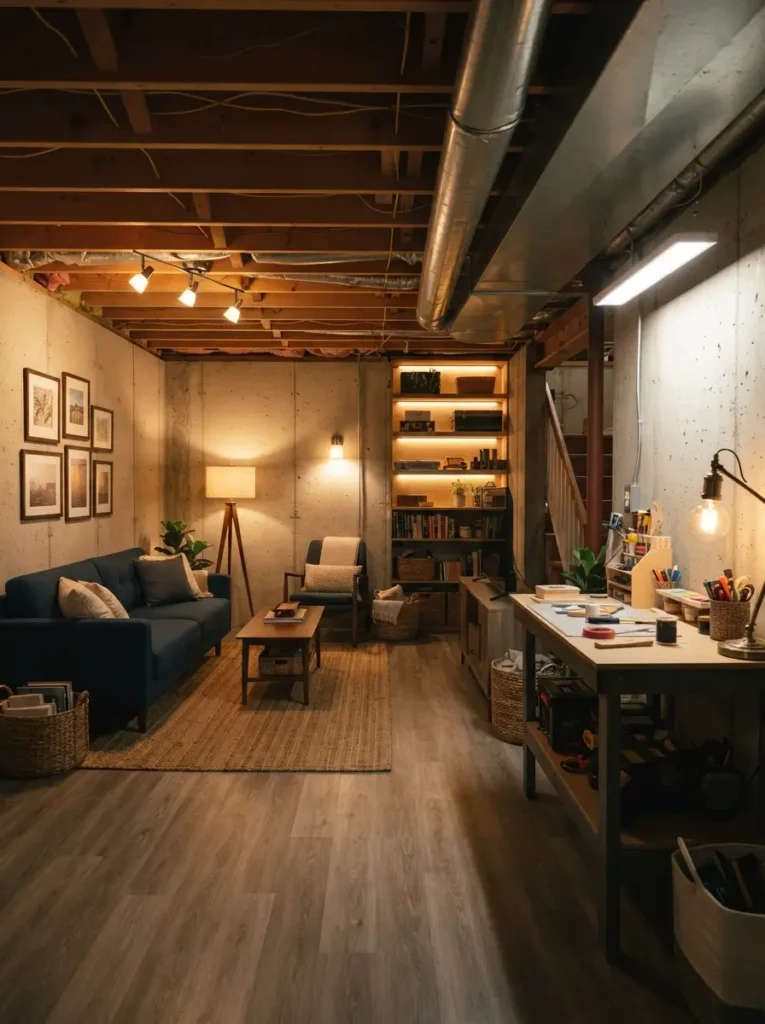
Single bare bulbs usually create harsh shadows and leave corners dark. Layered lighting spreads brightness across the room and helps an unfinished basement feel safer and more comfortable. Combine overhead fixtures, floor lamps, table lamps, and rechargeable wall lights rather than relying on one source.
Choose bulbs around 2700K to 3000K for television rooms, reading corners, and relaxed family spaces. Bulbs around 3500K work well for laundry zones, workbenches, and craft areas where clearer task lighting matters. Avoid mixing very yellow and blue-white bulbs because the difference can make the room look uneven.
Plug-in track lights are useful when ceiling wiring cannot be changed. Adhesive LED strips can also brighten shelves or stair edges, but place them behind a ledge or diffuser to hide individual light dots.
Cover Concrete With a Large Area Rug
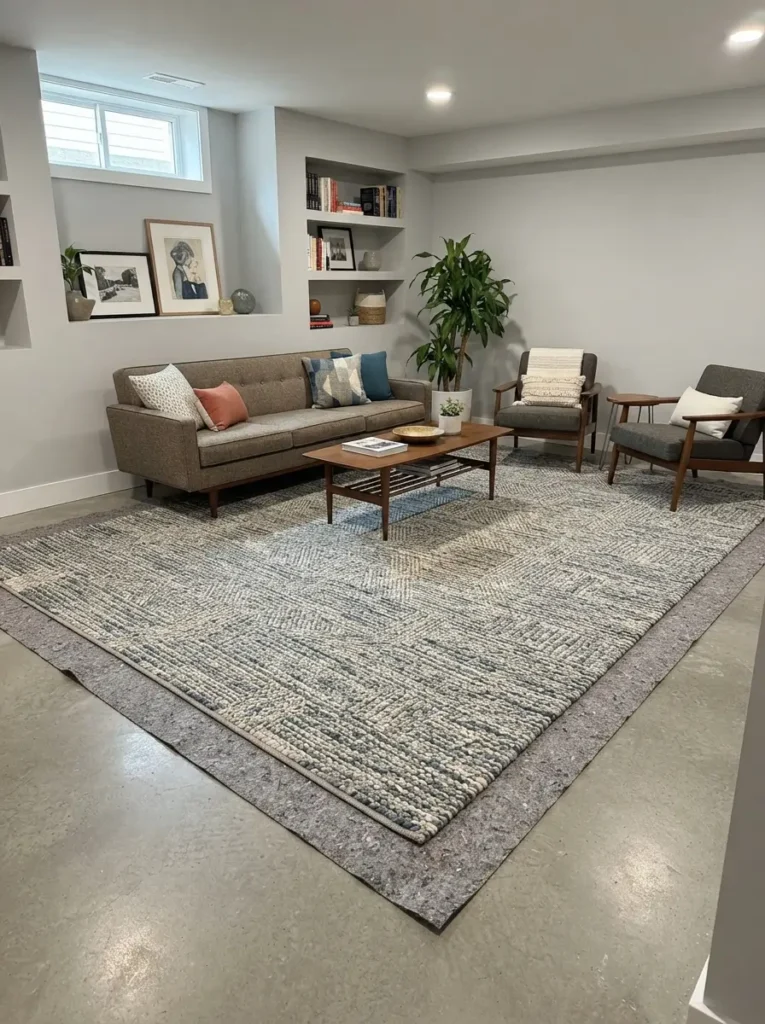
Concrete floors feel cold underfoot and often make sound echo around the room. Large rugs introduce warmth, colour, texture, and acoustic softness without requiring permanent flooring. Low-pile rugs are usually easier to clean and less likely to trap dampness than thick shag styles.
Choose polypropylene, recycled polyester, or indoor-outdoor materials for areas where moisture or spills may occur. A washable rug can suit a playroom or craft space. Leave several centimetres between the rug and basement walls so you can inspect the floor and allow airflow.
Place a moisture-resistant rug pad underneath for comfort and grip. Avoid laying expensive natural-fibre rugs directly over concrete because wool, jute, and cotton may absorb moisture and develop odours. Best results come from using one large rug rather than several small mats floating around the room.
Use Carpet Tiles for Flexible Floor Coverage
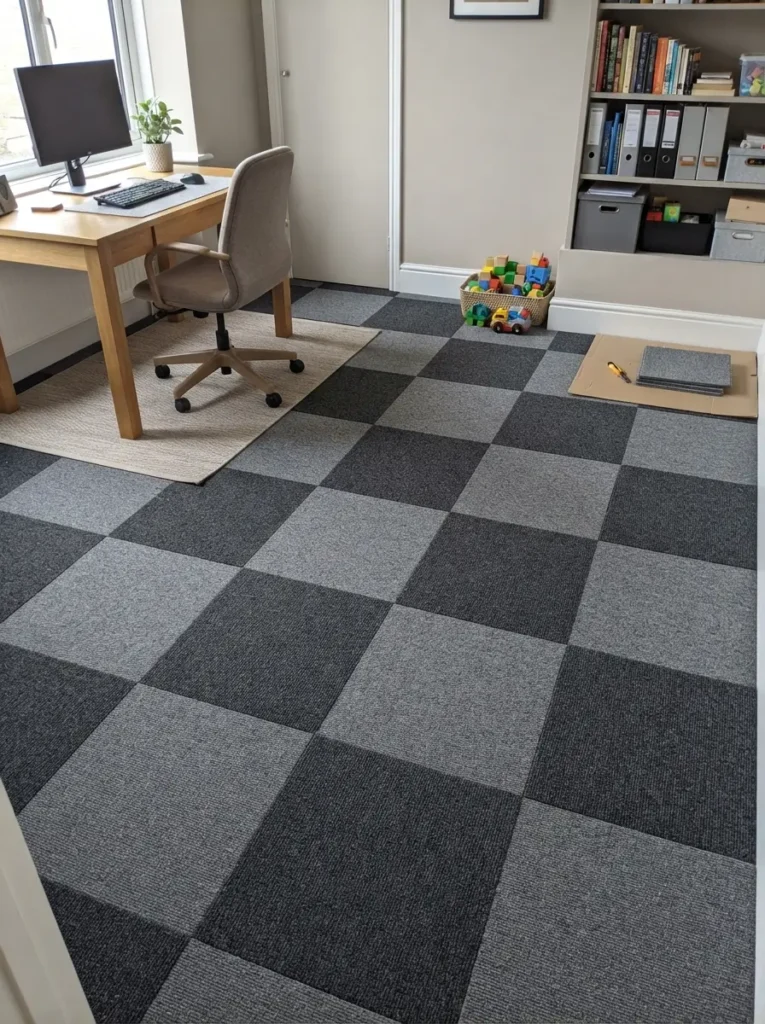
Carpet tiles provide more coverage than one rug while remaining cheaper and easier to replace than traditional fitted carpet. Damaged sections can be removed individually, making this option practical for play areas, home offices, or hobby rooms.
Peel-and-stick tiles may not suit damp concrete because adhesive can fail or trap moisture. Loose-lay tiles with rubber or bitumen backing offer more flexibility, although manufacturers’ installation instructions should always guide the final choice. Test a small area before covering the full floor.
Create a simple checkerboard using two related colours such as charcoal and medium grey. Randomly mixing several tones can also disguise marks. Carpet tiles work especially well for beginners who want a weekend project without heavy tools.
Hang Curtains Across Unfinished Walls
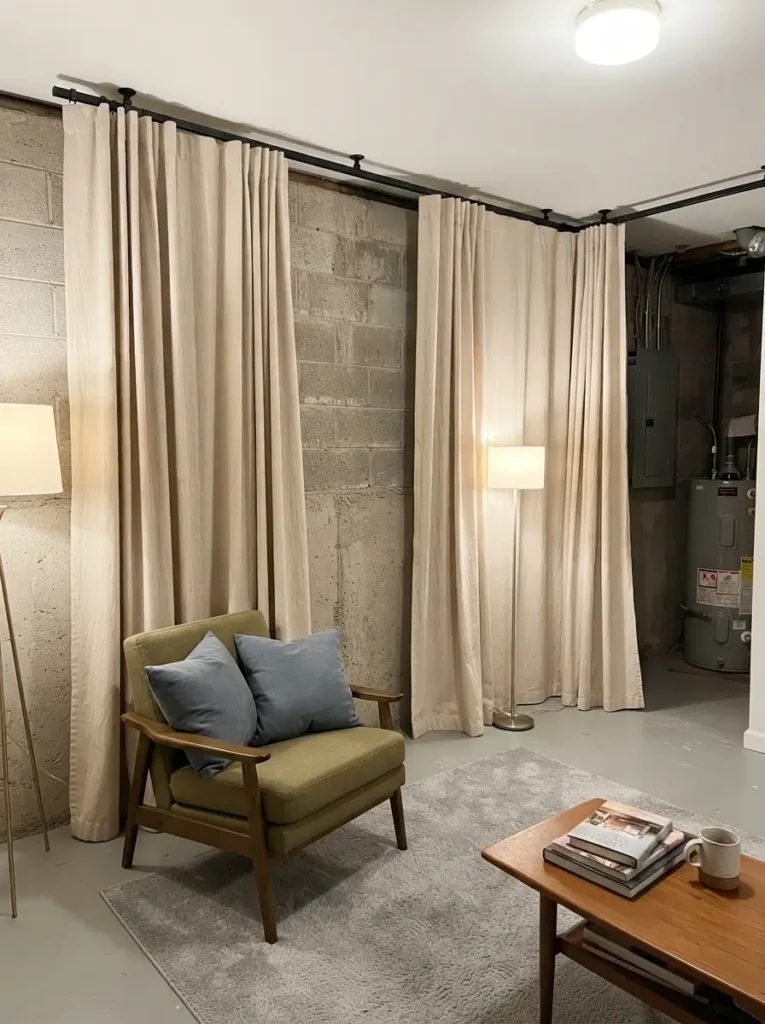
Fabric panels can soften concrete, block walls, exposed insulation, or shelves without permanent construction. Curtains also absorb sound and introduce colour on a large scale. Heavy cotton, canvas drop cloths, or theatre-style curtains usually hang better than thin fabric.
Install ceiling-mounted tracks, tension systems, or cables only where the structure can safely support them. Keep fabric away from furnaces, water heaters, electrical panels, heaters, and exposed bulbs. Leave an air gap behind the curtains rather than pressing material directly against concrete.
Neutral oatmeal, soft grey, muted olive, or dusty blue can reduce the industrial feeling of the room. Washable panels suit families with children or pets. Rental-friendly tension rods may work between stable posts, although they should never block emergency exits.
Divide the Basement Into Clear Zones
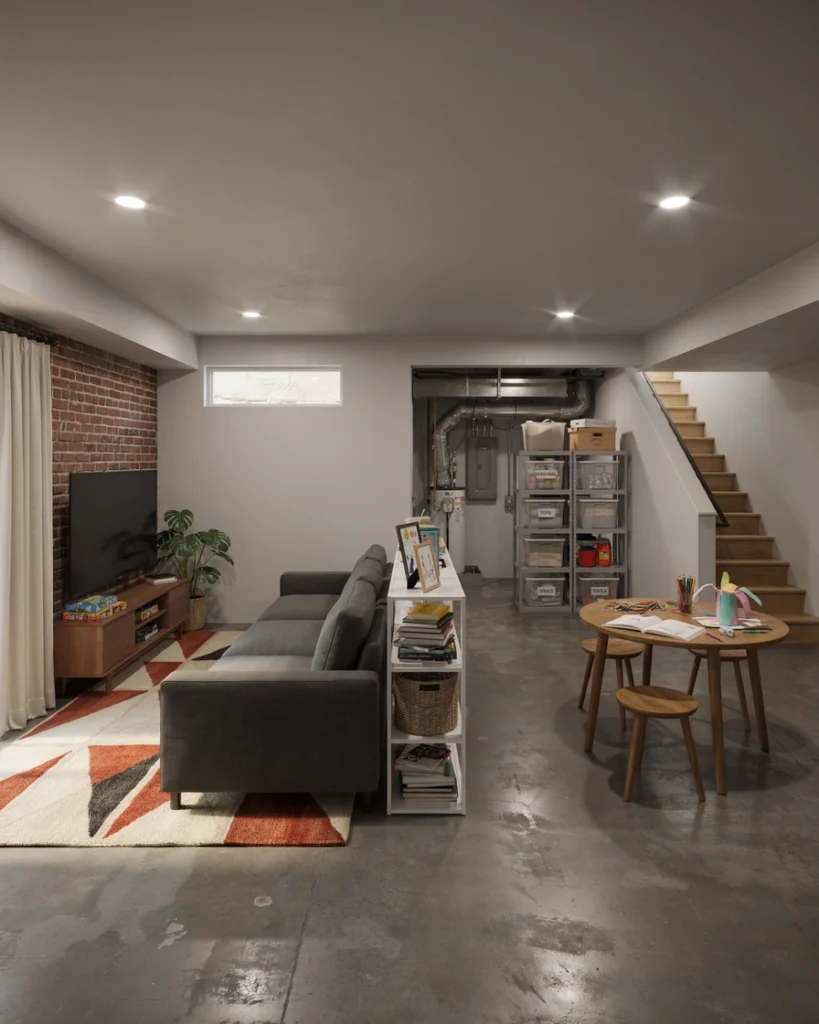
Large unfinished basements often feel awkward because furniture sits against random walls without a clear purpose. Dividing the room into zones makes it feel organised even when the building materials remain visible.
Use the back of a sofa, an open bookcase, a rug, or a curtain to separate activities. A television area might contain a sofa and large rug, while a nearby table creates a game or craft zone. Storage can remain closer to utility equipment where decorative finishes matter less.
Keep walking routes at least 75 to 90 centimetres wide where possible. Avoid placing tall units near the bottom of the stairs because they can make the entrance feel cramped. Zoning works best for families who need several uses from one open room.
Build a Simple Pallet-Style Platform
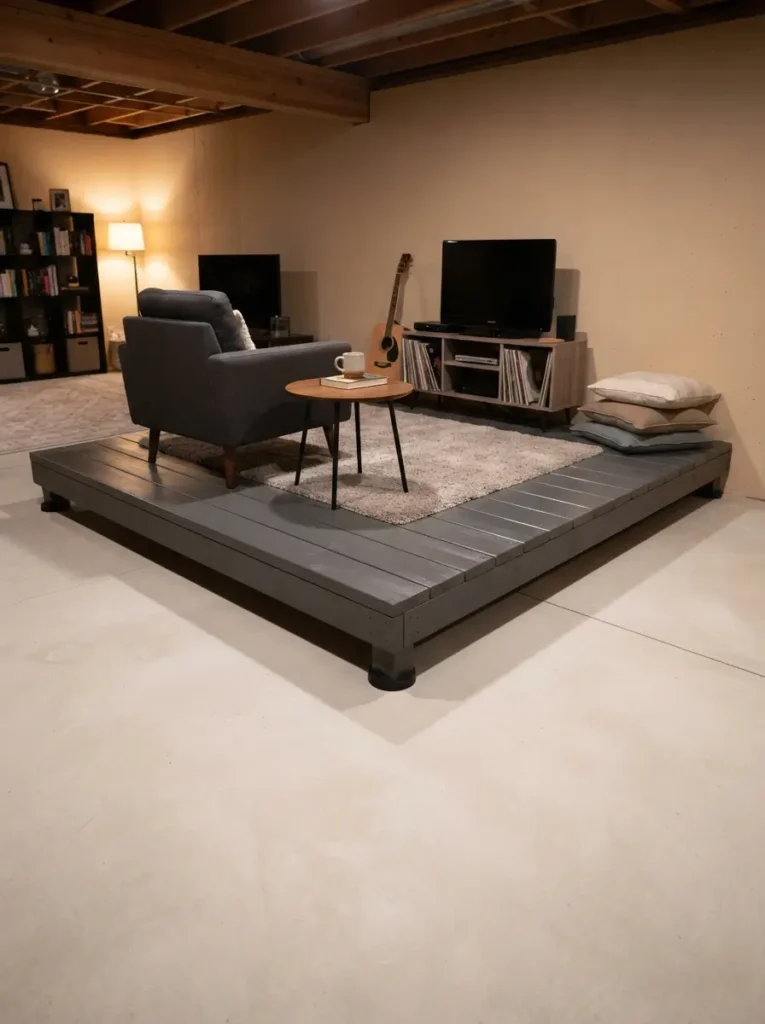
Low wooden platforms can lift seating or storage away from cold concrete and help define a lounge, music, or gaming area. New construction timber is generally safer and cleaner than unknown shipping pallets, which may contain chemicals, insects, or damaged boards.
Create a basic rectangular frame with properly supported boards, sanded edges, and secure fasteners. Add furniture pads underneath so the frame does not scrape the floor. Never place untreated wood in a basement with moisture problems because it can absorb water and develop mould.
Paint the platform charcoal or warm brown to connect it with other furniture. People with limited mobility may find raised platforms difficult to use, so maintain clear edges and avoid creating unexpected steps in main walkways.
Create a Comfortable Second-Hand Lounge
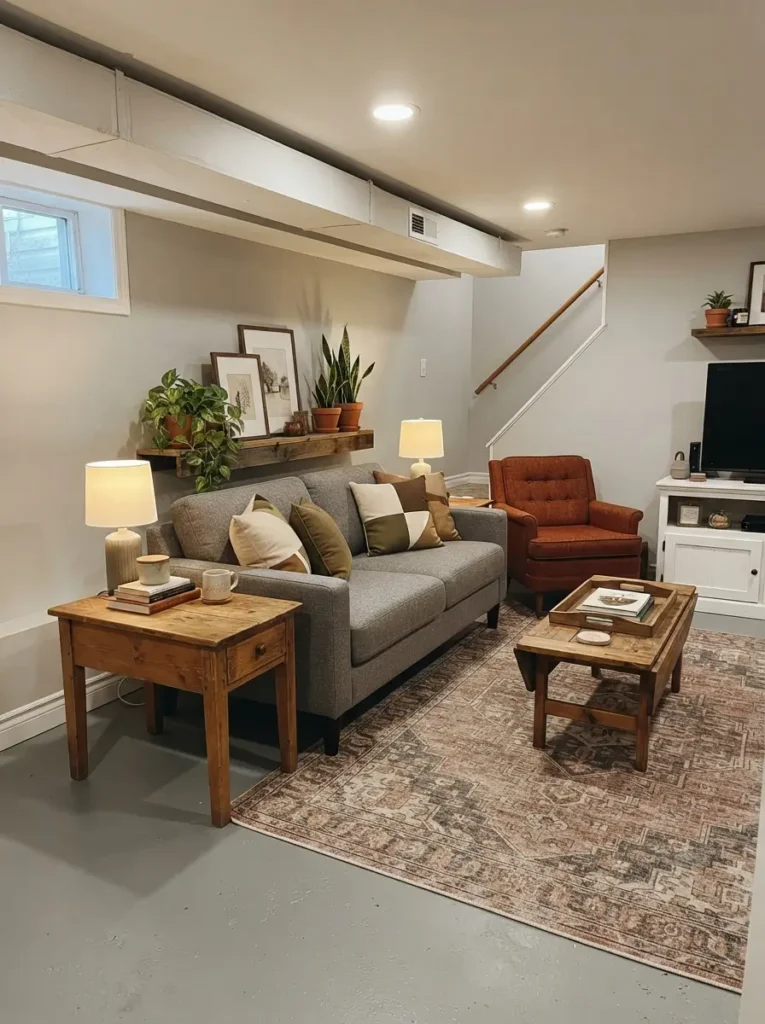
Used furniture can stretch a limited basement makeover budget much further than buying a complete matching set. Look for solid frames, removable cushion covers, clean upholstery, and compact proportions. Oversized sofas may be difficult to carry down basement stairs.
Mixing second-hand pieces looks intentional when colours and shapes relate to each other. Pair a grey sofa with two wooden side tables, a rust-coloured chair, and cushions in cream, olive, and brown. Repeating two or three colours makes different furniture styles feel connected.
Measure the stairway, door openings, ceiling height, and turning space before collecting anything. Inspect upholstered furniture for smoke, dampness, pests, and strong odours. Hard-surface items such as wooden tables are often easier to clean and refinish.
Make a Media Wall With Curtains and Paint
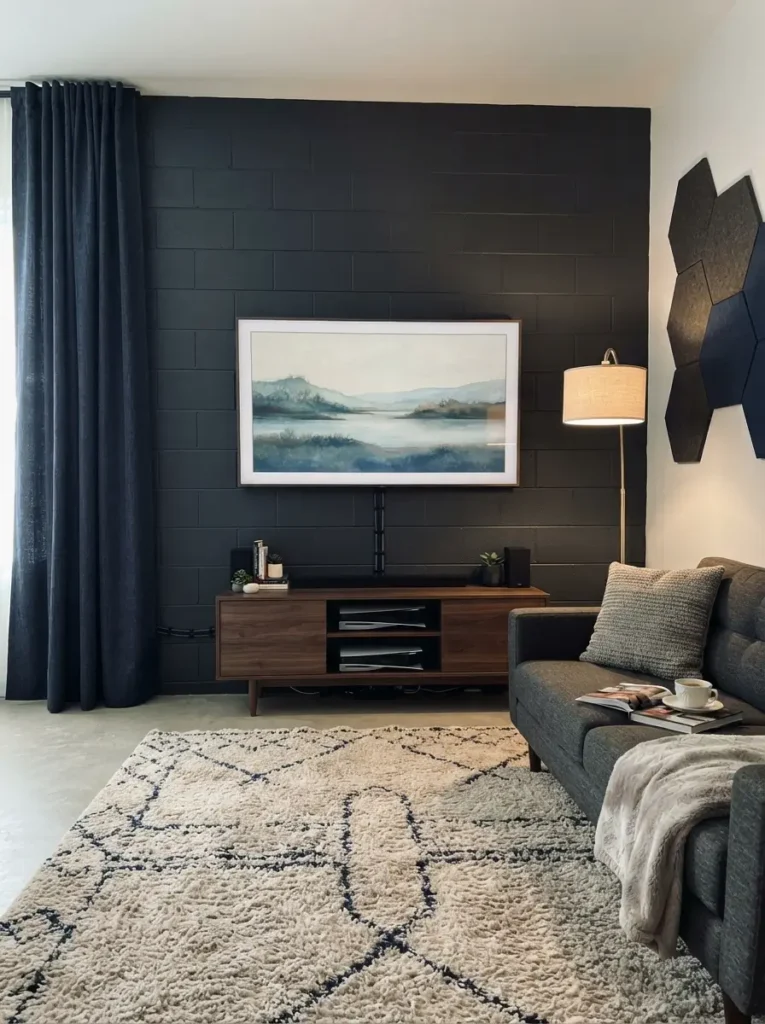
Television areas look more finished when the screen has a simple visual background. Paint one block wall in charcoal, deep green, or navy to create contrast, or hang a wide curtain behind the television unit when painting is not possible.
Low media consoles help hide cables while keeping the wall visually open. Leave enough ventilation around game consoles and electronic equipment. Use cable sleeves or clips to guide wires neatly along furniture rather than stretching them across walkways.
Soft furnishings improve sound quality by reducing echoes from concrete walls and floors. Add a rug, curtains, fabric seating, and a few acoustic panels made for indoor use. Dark walls can reduce screen glare, but they require enough ambient lighting to prevent eye strain.
Turn One Corner Into a Reading Area
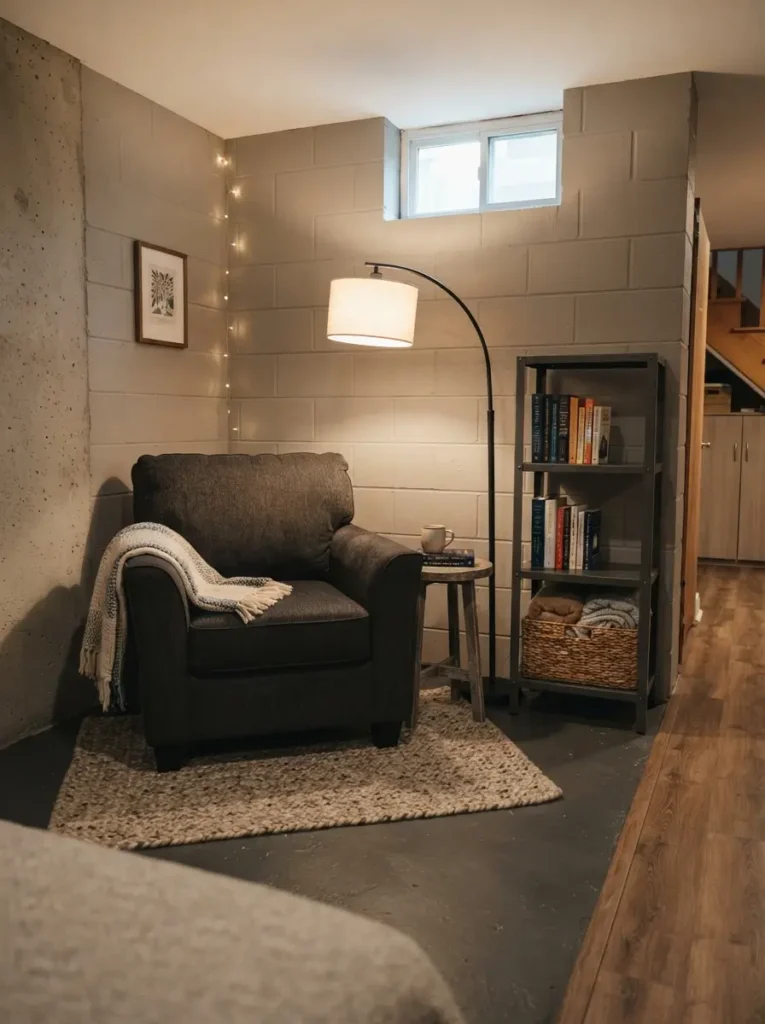
Unused basement corners can become practical reading areas with one comfortable chair, a lamp, a small table, and a basket for books or blankets. Minimal furniture keeps the setup affordable and prevents the basement from becoming overcrowded.
Choose a floor lamp that directs light over the shoulder. Bulbs around 2700K offer a relaxing tone, while a brightness of roughly 800 lumens can support casual reading depending on the lamp position. Add a second task light if the corner remains dim.
Moisture-sensitive books should sit on raised shelves rather than directly on concrete. Use metal, plastic, or sealed wood storage where dampness is a concern. Reading corners suit narrow basements because they need less space than a full seating arrangement.
Install Freestanding Open Shelving
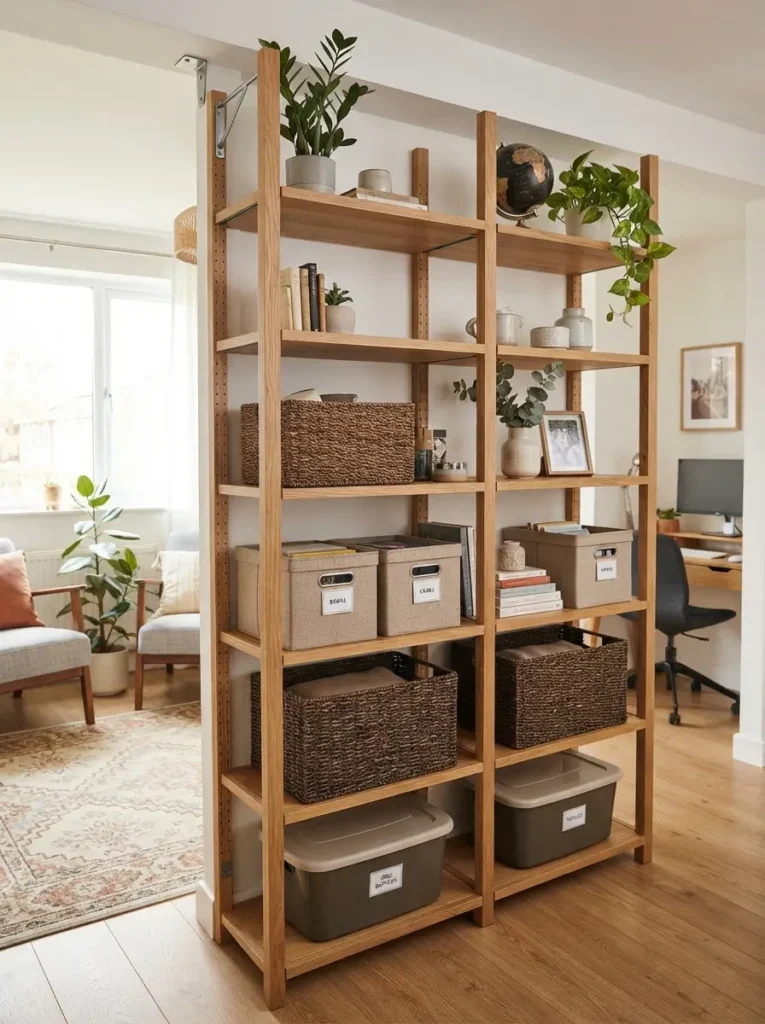
Open shelves can organise storage while acting as room dividers. Metal utility shelving offers strength and airflow, while simple wooden units feel warmer in living zones. Choose adjustable shelves so bulky containers and smaller decorative objects can share the same unit.
Keep frequently used items between waist and eye level. Heavy boxes belong on lower shelves to reduce tipping risks. Secure tall shelving to a suitable structural surface when possible, particularly in homes with children.
Use matching opaque boxes for unattractive supplies and open baskets for blankets or toys. Labels prevent boxes from becoming forgotten clutter. Leaving some shelves partly empty makes the unit look more like furniture and less like warehouse storage.
Create a Pegboard Tool or Craft Wall
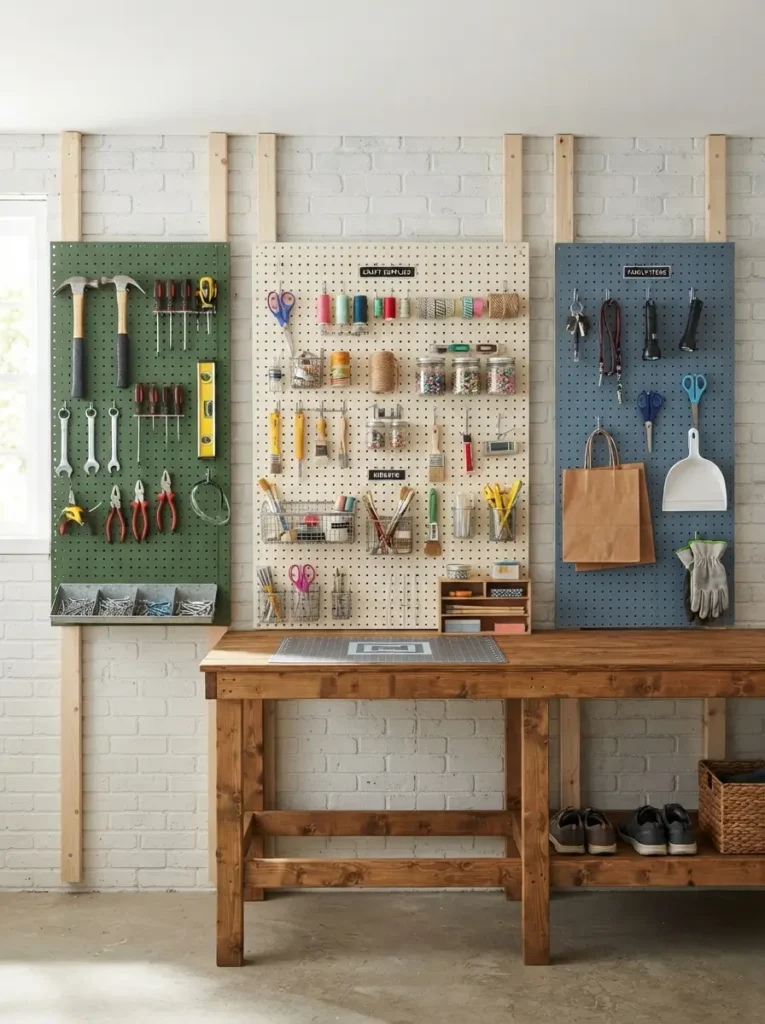
Pegboard uses vertical space efficiently and keeps tools visible without requiring deep cabinets. It can support craft supplies, hand tools, wrapping paper, sports accessories, or cleaning equipment depending on the room’s purpose.
Mount pegboard on furring strips so hooks have space behind the panel. Fasten the strips into suitable structural material rather than relying on weak surface attachments. Painted plywood pegboard gives a cleaner result than untreated brown board and allows colour coordination.
Try warm white for a bright craft corner, forest green for a workshop, or muted blue for a family storage area. Group objects by function and leave gaps between categories. Overloading every hole creates visual noise and makes items difficult to return.
Add Removable Wall Panels
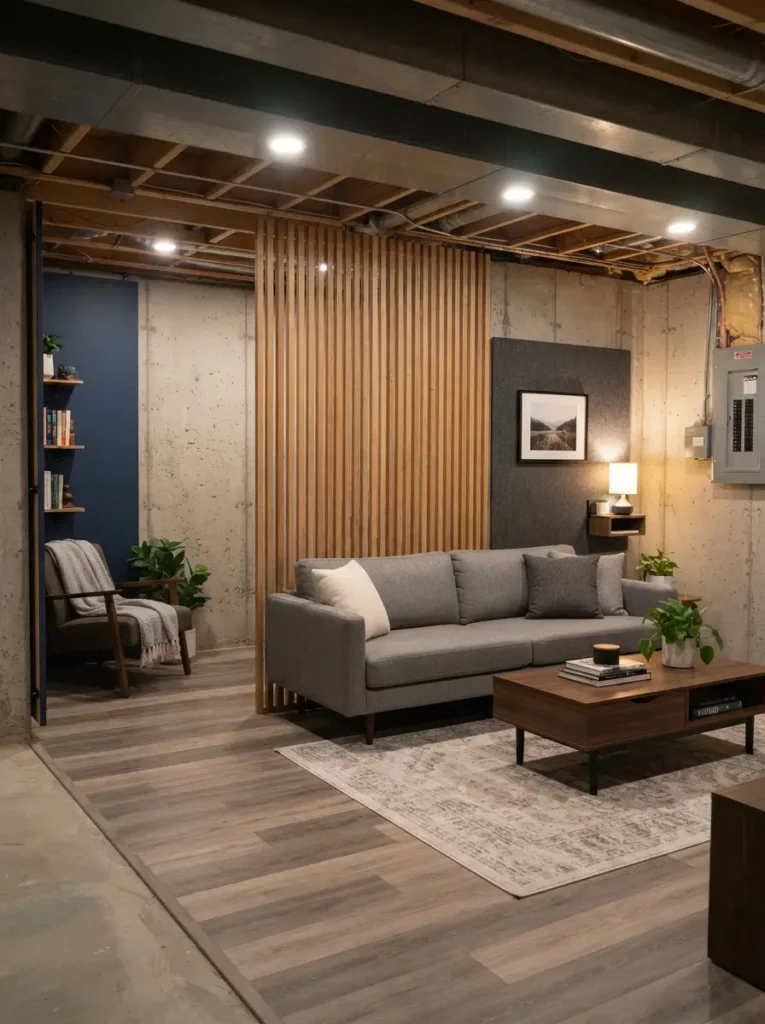
Lightweight panels can hide limited areas of rough wall without finishing the entire basement. Options include painted plywood, decorative foam panels rated for the intended location, slatted screens, or fabric-covered acoustic boards.
Panels should never trap moisture against foundation walls. Keep them removable and allow airflow behind them. Avoid attaching wood directly to damp masonry. Local building requirements may also affect which materials are suitable near utility equipment or electrical installations.
Use panels strategically behind a desk, sofa, or game table rather than covering every wall. One carefully placed backdrop can make a functional zone feel finished while keeping costs manageable. Renters should favour freestanding panel frames that do not damage walls.
Paint Concrete Blocks in a Light Neutral
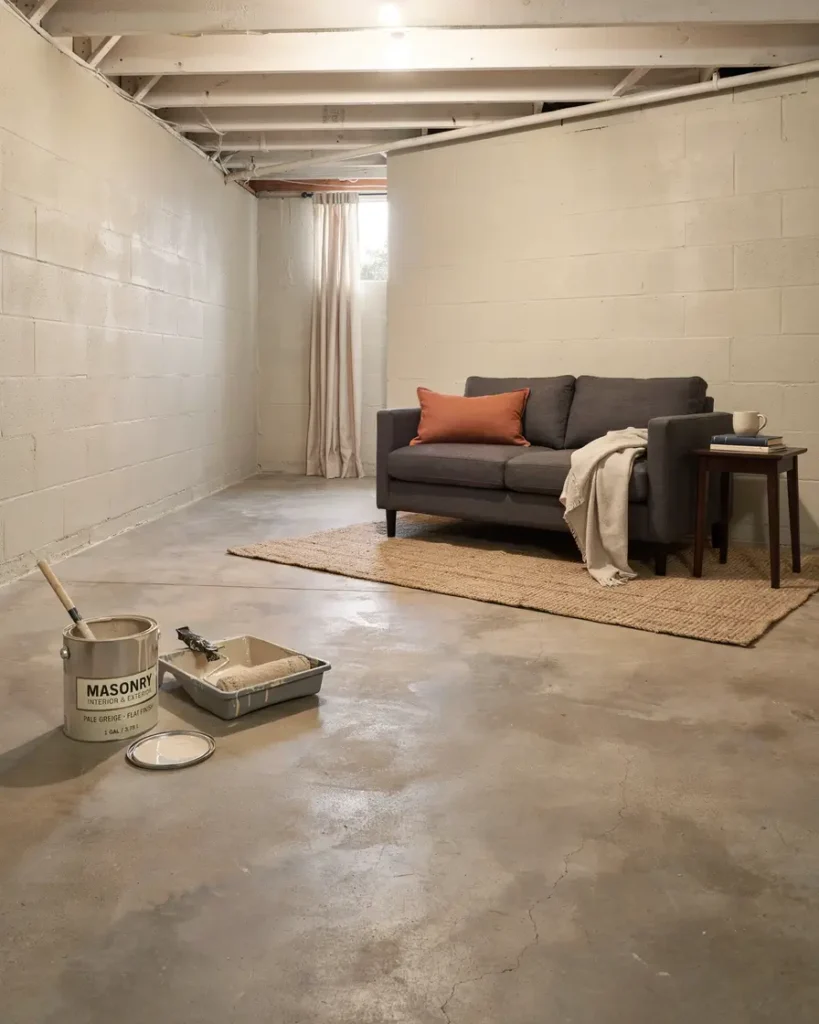
Masonry paint can brighten rough walls while preserving the basement’s practical character. Soft white, pale greige, light mushroom, and gentle grey reflect more light than raw concrete without looking overly stark.
Surface preparation determines whether the finish lasts. Clean dust, remove loose material, repair appropriate cracks, and use products designed for masonry. Paint should not serve as a solution for active water entry. Moisture problems need proper repair before cosmetic work begins.
Satin finishes may highlight bumps and mortar lines, so flat or low-sheen masonry paint often gives a calmer appearance. Light walls suit small basements and rooms with low ceilings. Keep one darker colour for furniture or textiles to prevent the space from looking washed out.
Use Large Art to Distract From Rough Surfaces
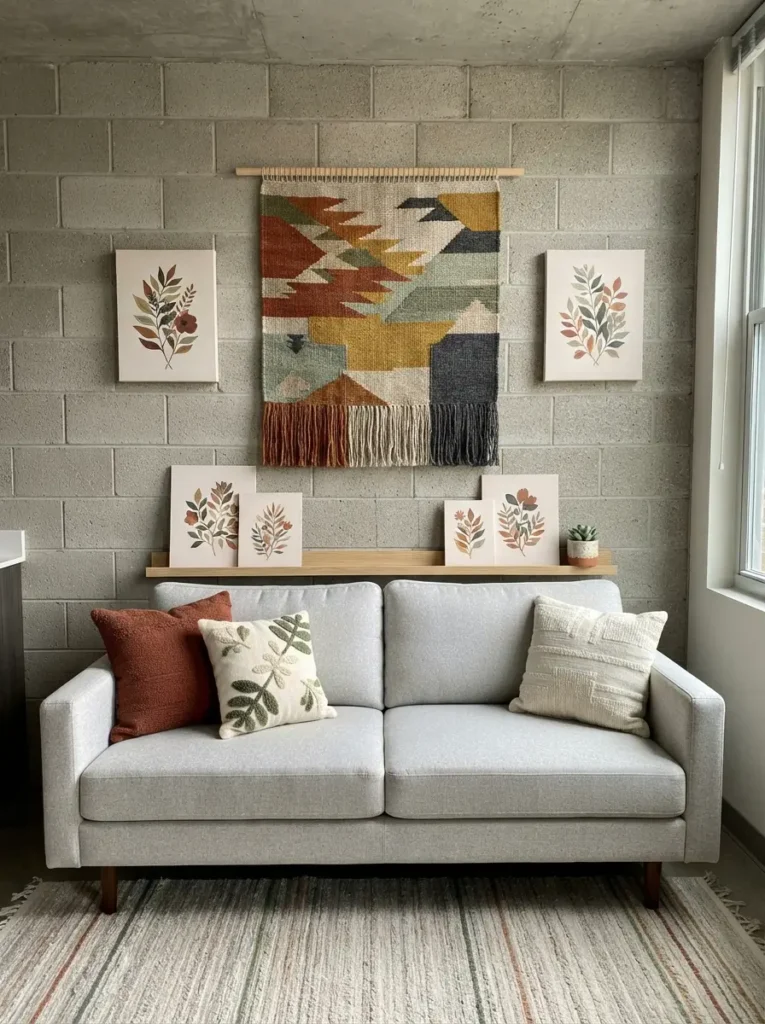
Several tiny decorations can make an unfinished wall feel busier. One large piece of art, a textile hanging, or a grouped set of matching prints creates a clearer focal point and reduces attention on pipes or blockwork.
Choose lightweight pieces when hanging options are limited. Fabric banners, framed posters with acrylic glazing, and stretched canvas usually weigh less than heavy glass frames. Freestanding picture ledges can display art without drilling into masonry.
Scale matters more than price. Artwork should usually fill a noticeable portion of the area above a sofa or console. Colours pulled from rugs and cushions help the display feel connected. Avoid placing valuable paper art in areas with uncertain humidity.
Build a Budget Home Gym Zone
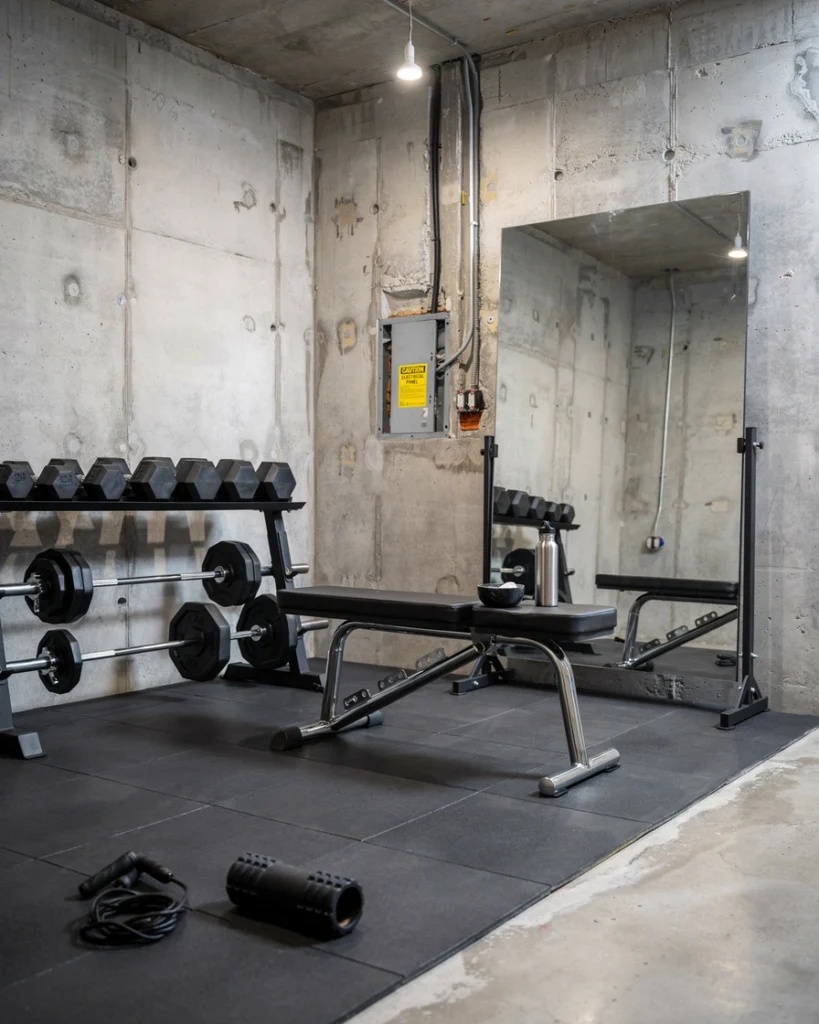
Concrete floors and unfinished walls can suit a practical gym when the space is dry, ventilated, and safely arranged. Rubber mats protect the floor, reduce noise, and create a clear exercise boundary.
Place mirrors only where they can be mounted securely or supported by stable frames. Lightweight acrylic mirrors reduce breakage risk but may distort reflections. Store weights on low racks so heavy equipment cannot fall from high shelves.
Bright neutral lighting around 3500K to 4000K works well for exercise because it feels clearer than warm lounge lighting. Leave enough room around each machine and keep equipment away from pipes, panels, and utility access points. Gym zones are best for people who prioritise function over decorative finishes.
Set Up a Simple Playroom
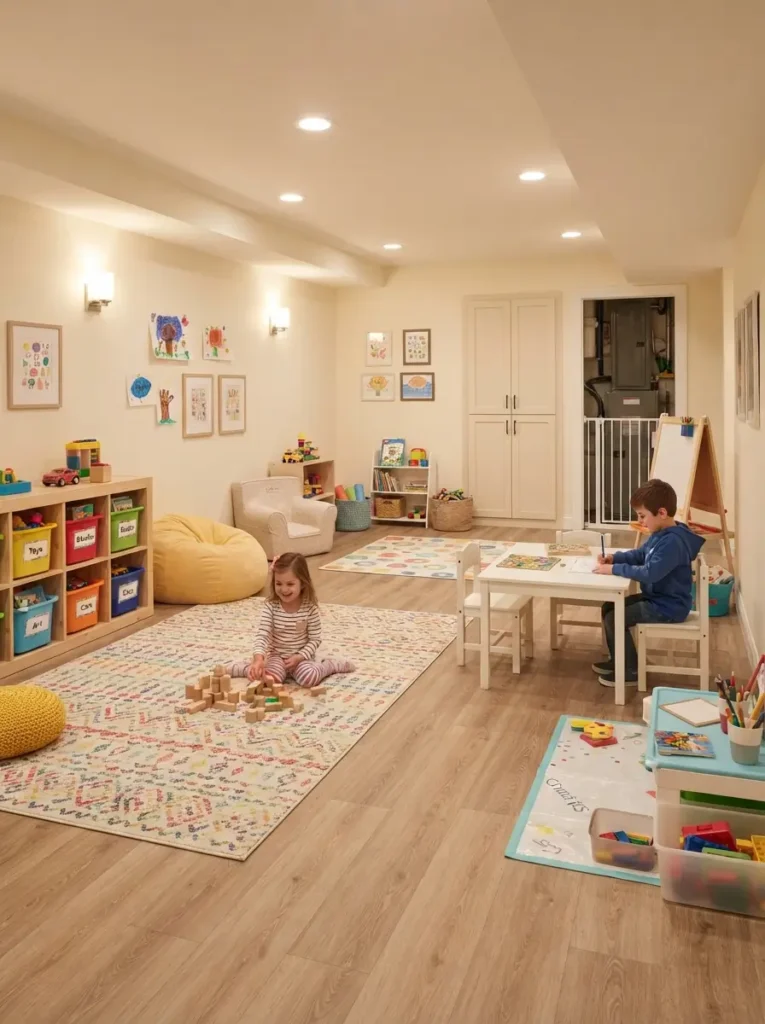
Basements can provide useful play space when safety, warmth, and supervision guide the layout. Start with washable rugs, closed storage, soft seating, and clear walking routes. Avoid tall unstable furniture, loose cords, exposed insulation, sharp tools, and accessible mechanical equipment.
Low plastic bins make toys easy for children to reach and return. Assign one category to each box using pictures or simple labels. Keep messy activities near washable flooring and quieter activities near soft rugs.
Warm white lighting reduces the institutional feeling common in basement rooms. Add bright colours through movable items rather than painting every surface. Families can update cushions, storage boxes, and artwork as children grow without rebuilding the space.
Add a Folding Table for Flexible Use
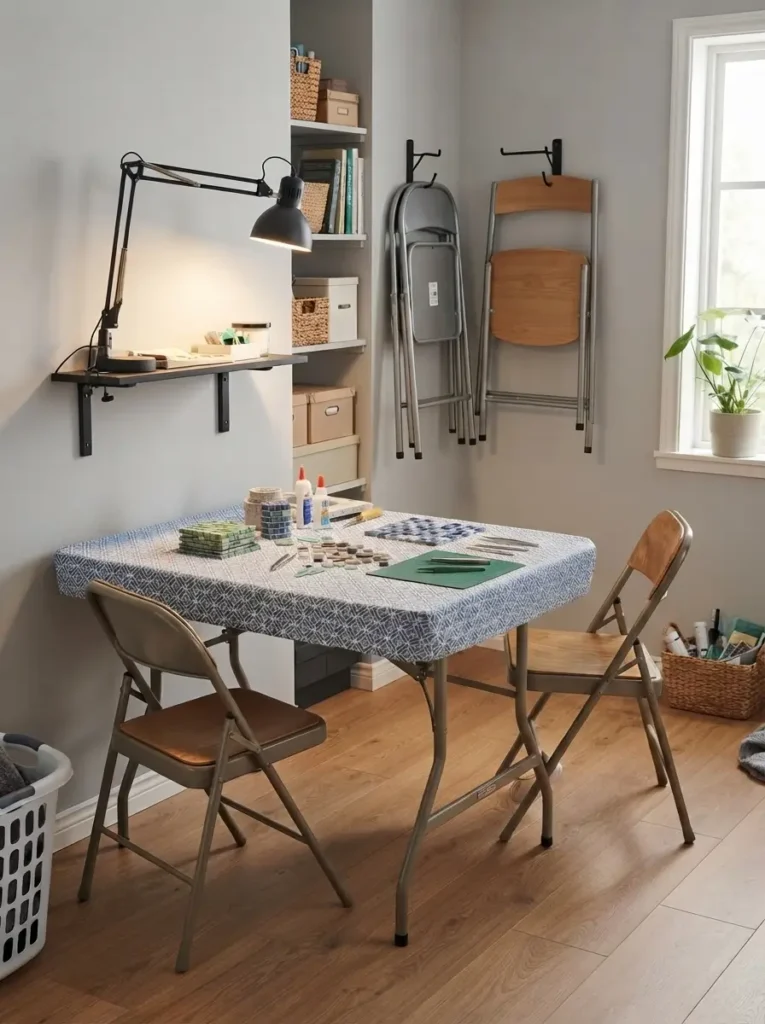
Folding tables support crafts, homework, parties, laundry, and temporary work without occupying permanent floor space. Models with adjustable height can serve several users, while wall-mounted drop-leaf designs work well in narrow rooms when secure installation is possible.
Cover a basic utility table with a fitted washable cloth or adhesive surface film. Position task lighting directly above the work area to reduce shadows. Folding chairs can hang on strong wall hooks or store behind shelving.
Measure the open table footprint before buying. Enough clearance should remain for chairs and walking routes. Flexible tables are especially useful for households that need changing functions rather than one dedicated room.
Create a Compact Home Office
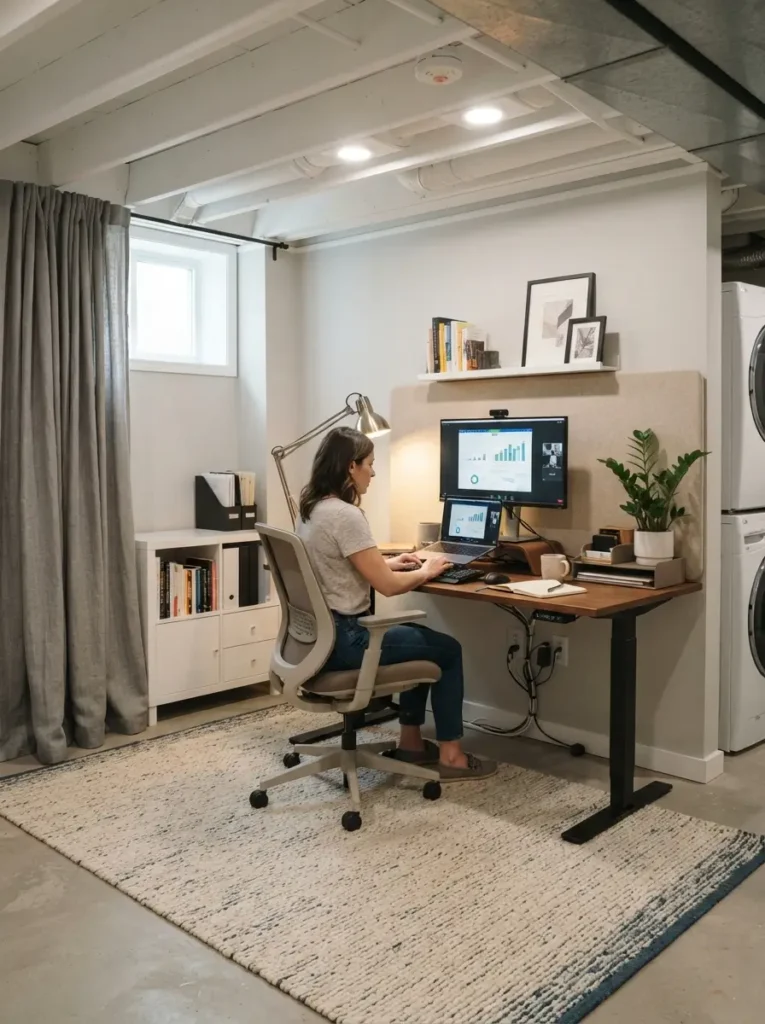
Quiet basement corners can support focused work when lighting, temperature, and internet access are reliable. Position the desk away from noisy laundry equipment and leave access to outlets without running cables across the floor.
Use a desk lamp around 3000K to 4000K and place it opposite the writing hand to reduce shadows. A light-coloured wall or freestanding panel behind the monitor can improve video-call backgrounds. Add a rug and curtain to reduce echo during meetings.
Closed storage helps paperwork stay protected from dust. Important files should not sit directly on the floor. People working long hours should also check ventilation, heating, ceiling height, and emergency access before treating the basement as a regular office.
Style Exposed Pipes Intentionally
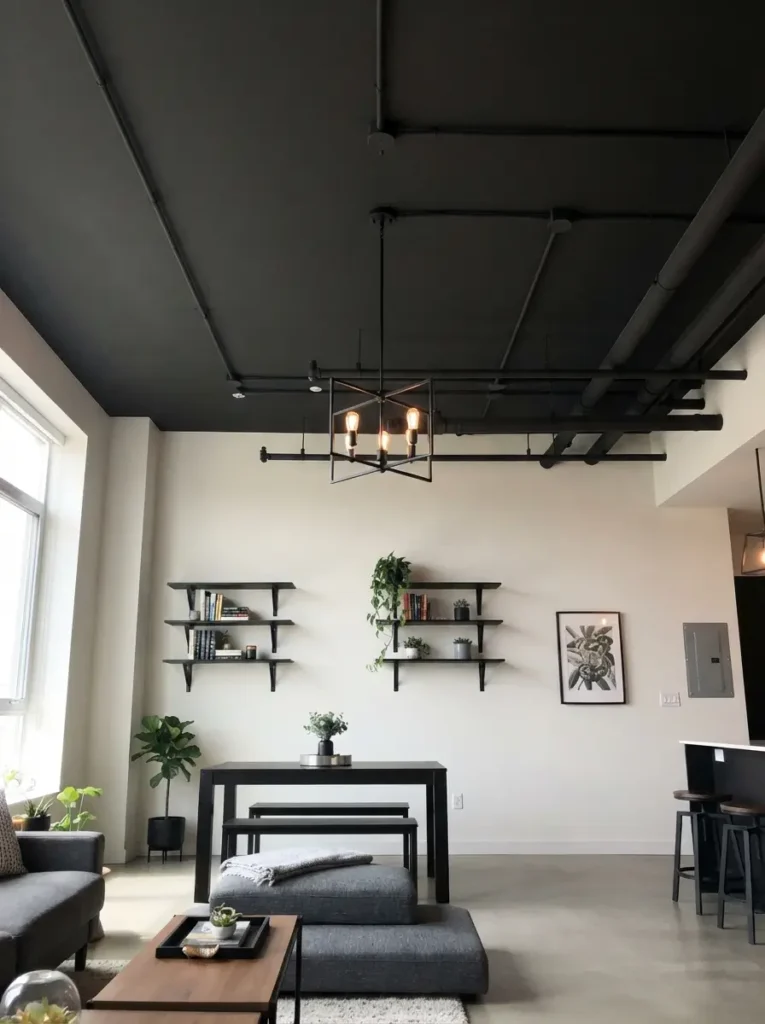
Visible pipes become less distracting when they appear connected to the room’s colour scheme. Painting suitable pipes the same colour as the ceiling can help them blend in, while a contrasting shade can turn selected lines into an industrial feature.
Identify every pipe before painting. Valves, labels, flexible connectors, sprinkler components, gas lines, and heated surfaces may require special treatment or should remain untouched. Ask a qualified professional when the pipe’s purpose is uncertain.
Black ceiling elements look balanced with black lamp frames, table legs, or shelving brackets. Copper tones can be repeated through small accessories rather than altering actual plumbing. Consistent repetition makes exposed infrastructure feel less accidental.
Add Warmth With Layered Textiles
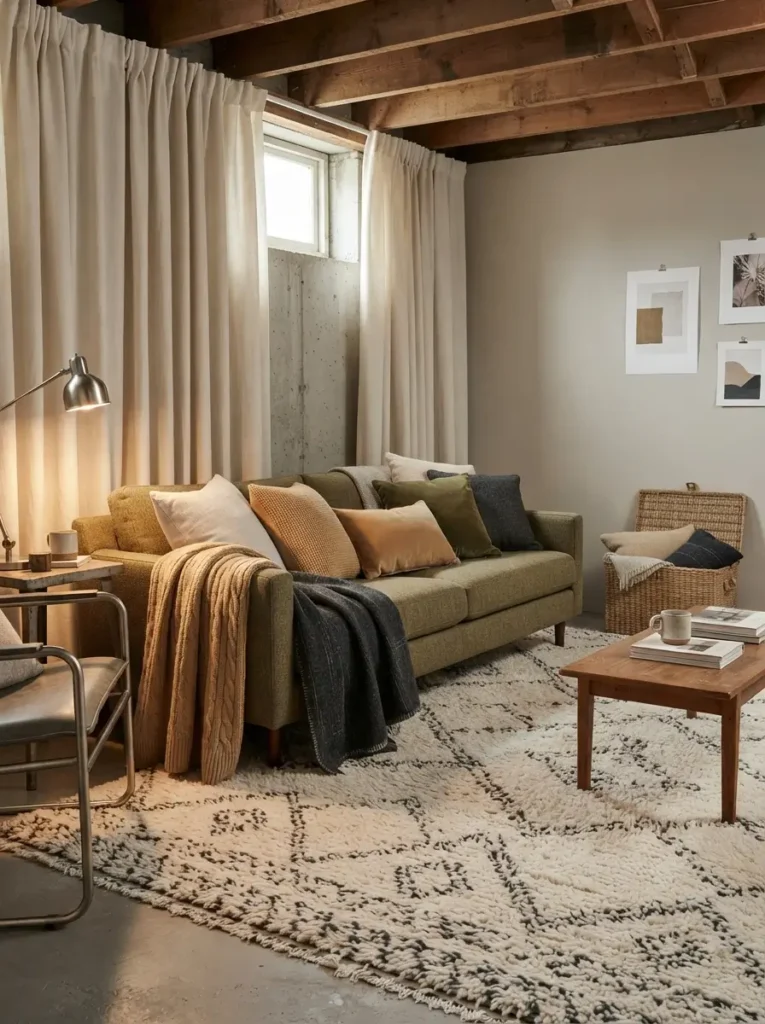
Textiles provide one of the fastest ways to soften concrete, metal, and exposed timber. Combine a large rug, lined curtains, washable cushion covers, and two or three blankets. Different textures create warmth without requiring many colours.
Stick to a simple palette such as cream, camel, olive, and charcoal. Another workable combination includes navy, warm grey, rust, and natural wood. Repeating colours across the room makes inexpensive items feel coordinated.
Store spare fabric in lidded containers to protect it from dust and moisture. Avoid piling blankets against exterior walls. Layered textiles suit lounge spaces and offer some of the most approachable cozy basement design ideas for beginners.
Common Basement Decorating Mistakes to Avoid
Ignoring Moisture Before Decorating
Covering damp floors or walls can hide warning signs and damage new materials. Rugs, timber, fabric, cardboard, and upholstered furniture can absorb moisture quickly. Investigate musty odours, visible staining, condensation, and leaks before decorating.
Blocking Important Utility Access
Furniture should never prevent access to electrical panels, shutoff valves, water heaters, furnaces, sump pumps, or drainage points. Leave clear working space around equipment according to local requirements and manufacturer instructions.
Using Only One Ceiling Light
One bright bulb creates shadows, especially when ducts and joists interrupt the light. Add task and ambient lamps at different heights. Lighting several corners often makes the basement appear larger than simply installing one stronger bulb.
Buying Furniture Before Measuring the Stairs
Large sofas, desks, and shelving units may fit the room but fail to pass through the basement doorway. Measure stair width, turns, ceiling clearance, and door openings. Modular furniture and flat-pack units solve many access problems.
Placing Fabric Directly Against Concrete
Concrete can hold moisture and feel cold even when it looks dry. Leave gaps behind curtains, sofas, mattresses, and storage boxes. Air circulation also makes inspections easier.
Mixing Too Many Decorating Styles
Industrial ceilings, farmhouse signs, bright plastic storage, ornate furniture, and several unrelated colours can make the room feel chaotic. Select one general direction and repeat a limited range of finishes.
Forgetting Sound Control
Hard surfaces create strong echoes. Rugs, curtains, fabric seating, acoustic panels, and filled bookshelves help absorb sound. Noise control matters in television rooms, game spaces, music corners, and offices.
Covering Every Unfinished Feature
Trying to hide every pipe and block wall can become expensive. Choose one or two areas to improve and let the remaining construction elements appear intentional. Balanced contrast often looks better than several incomplete cover-up projects.
Budget-Friendly Ways to Stretch Your Money
Begin the basement makeover with cleaning, organising, and removing broken items. Empty space often reveals that fewer purchases are needed. Sell unused furniture or equipment and put the proceeds toward lighting, rugs, or moisture control.
Spend money on comfort and safety before decoration. Dehumidifiers, suitable lighting, secure shelving, smoke alarms, and warm floor coverings usually improve daily use more than small accessories.
Shop for furniture slowly. Charity shops, resale marketplaces, clearance sections, estate sales, and family hand-me-downs can provide strong tables, shelves, and chairs. Avoid upholstered pieces with unknown odours, moisture damage, or pest risks.
Use leftover paint from other rooms for small projects such as pegboard, shelving, storage boxes, or one feature panel. Mixing unrelated leftovers may produce inconsistent colour, so save each paint for a separate item.
Repurpose useful materials already in the house. Old bookcases can store games, spare curtains can cover shelves, and a dining table can become a craft station. Check every reused item for stability and suitability before moving it downstairs.
Set a clear spending limit for each zone. For example, allocate £100 to lighting, £150 to floor coverings, £200 to used seating, and £50 to storage labels or baskets. Prices vary, but separate limits prevent one category from consuming the full budget.
Unfinished Basement Ideas on a Budget Tips
Start With One Finished-Looking Zone
Trying to improve the whole basement at once spreads the budget too thinly. Complete one seating corner, office area, or play zone first. A well-organised section provides immediate value and guides later decisions.
Repeat Materials Across the Room
Using the same black metal, warm wood, cream fabric, or grey storage boxes in several places creates visual consistency. Repetition helps low-cost products appear planned rather than randomly collected.
Choose Removable Improvements
Curtains, rugs, folding screens, freestanding shelves, plug-in lighting, and modular seating can move when the room changes. Removable items also suit renters and homeowners who plan a future renovation.
Keep the Colour Palette Limited
Select one light neutral, one dark anchor colour, and one warmer accent. Warm white, charcoal, and rust work well together. Pale grey, navy, and natural wood offer another flexible combination.
Use Decorative Items With a Function
Choose baskets that store blankets, lamps that improve task lighting, curtains that absorb sound, and tables with shelves. Functional decoration prevents clutter and helps every purchase earn its place.
Work From Largest Surfaces to Smallest
Floors, walls, ceilings, and lighting affect the room more than tiny accessories. Covering a large section of concrete with a rug changes the atmosphere more effectively than buying several ornaments.
Leave Room for Future Repairs
Avoid permanent decorative structures around plumbing, wiring, drains, and foundation walls. Removable solutions save time and money if inspections or repairs become necessary.
More Practical Basement Makeover Tips
Choose furniture with visible legs when the basement is small. Raised sofas, chairs, and cabinets expose more floor area and create a lighter appearance. Solid furniture bases can make a low room feel heavier.
Place taller storage near the edges of the room and lower furniture toward the centre. Keeping sight lines open reduces the boxed-in feeling caused by low ceilings.
Use mirrors carefully to reflect lamps or brighter walls rather than unfinished storage. A mirror facing clutter simply doubles the visual mess. Secure every mirror properly and avoid placing fragile glass in active play zones.
Add one natural material to balance concrete and metal. Wooden tables, woven baskets, cotton curtains, or cork boards can introduce warmth. Moisture-resistant alternatives may be safer where humidity remains difficult to control.
Maintain empty space between furniture groups. Basements often become storage areas because every wall gets filled. Clear surfaces and open walking routes make the room feel more intentional.
Take photographs before buying accessories. Images reveal dark corners, awkward gaps, and mismatched colours that may be difficult to notice while standing in the room. Use the photos as practical basement inspiration rather than copying expensive finished basements.
Plan changes in stages. Lighting and cleaning can happen first, followed by floor coverings, furniture, storage, and decorative details. Staged work helps beginners test what the room actually needs.
Frequently Asked Questions
What Is the Cheapest Way to Improve an Unfinished Basement?
Cleaning, decluttering, and improving lighting usually produce the biggest change for the lowest cost. Add warm LED bulbs, one large rug, and second-hand seating before purchasing decorative wall finishes.
Paint can also offer good value when the surfaces are dry and suitable. Painting the exposed ceiling one colour or refreshing one concrete wall can reduce visual clutter without building a finished ceiling.
Can You Use an Unfinished Basement as a Living Room?
Many unfinished basements can support a casual living area when they are dry, ventilated, adequately heated, safely wired, and easy to exit. Local building rules may limit whether the room can count as formal living or sleeping space.
Keep upholstered furniture away from damp walls and use moisture-resistant floor coverings. Regularly inspect the room for condensation, leaks, mould, and pests.
How Can I Make Concrete Floors Feel Warmer?
Large low-pile rugs, moisture-resistant pads, carpet tiles, and rubber-backed floor coverings reduce the cold feeling. Select materials suitable for concrete and the basement’s moisture conditions.
Layering furniture over the rug also helps define a warmer visual zone. Position the front legs of sofas and chairs on the same rug to connect the seating arrangement.
What Colours Look Best in an Unfinished Basement?
Warm whites, light greige, soft mushroom, muted blue, olive, charcoal, and natural wood tones work well with concrete and exposed structures. Light colours reflect available light, while darker colours can simplify ceilings or feature walls.
Avoid using several cold greys together unless warm wood, cream textiles, or amber lighting balances them. Test paint under the basement’s actual bulbs because artificial light can change how colours appear.
How Do You Make a Basement Cosy Without Finishing It?
Layer warm lighting, a large rug, fabric curtains, comfortable seating, cushions, and blankets. Define one main seating zone instead of scattering furniture around the room.
Soft materials absorb echo and reduce the cold appearance of concrete. Keeping the palette consistent also helps the room feel calm without requiring finished walls.
How Much Should a Low-Cost Basement Refresh Cost?
Costs depend on room size, existing furniture, moisture needs, and local prices. A small refresh using second-hand furniture, plug-in lamps, paint, and one rug may cost a few hundred pounds.
More extensive work involving electrical upgrades, water repairs, heating, insulation, or code compliance can cost considerably more. Obtain professional advice before making changes to structural, plumbing, heating, or electrical systems.
Conclusion
Unfinished basements do not need polished drywall, fitted carpet, and hidden ceilings to become useful. Thoughtful lighting, large floor coverings, practical storage, and comfortable furniture can make rough construction features feel less dominant.
Strong results come from working with the room instead of pretending it is fully finished. Paint exposed elements consistently, protect materials from moisture, maintain utility access, and divide the space according to real household needs.
Successful basement makeover planning also requires patience. Complete one zone, use it for several weeks, and notice which improvements affect comfort most. Practical choices usually outperform decorative trends because they support storage, movement, lighting, warmth, and maintenance.
Affordable unfinished basement ideas on a budget work best when every purchase solves a specific problem. Rugs reduce coldness, curtains soften walls, shelves control clutter, and lamps remove shadows. With those priorities in place, an unfinished basement can look organised, inviting, and ready for everyday use.