
A small apartment TV wall can do more than hold a screen. It can organize your living room, hide clutter, improve your layout, and make a compact home feel more balanced. The challenge is that small apartments rarely give you a blank, wide wall with enough room for bulky furniture. You may have windows, doors, heaters, odd corners, narrow walkways, or rental rules that limit what you can install.
The good news is that you do not need a large media wall or expensive built-ins. You need smart spacing, light furniture, simple storage, and a wall design that works with your room instead of fighting it. A good TV wall should make watching comfortable, leave enough walking space, and still support your everyday storage needs.
This guide shares practical small apartment TV wall ideas for compact homes, renters, beginners, and anyone who wants a clean living room without overdecorating. You will find layout tips, color examples, budget ideas, lighting advice, and common mistakes to avoid.
How can you design a small apartment TV wall without making the room feel crowded?
You can design a small apartment TV wall by keeping the setup slim, balanced, and useful. Mount the TV or use a narrow media console, choose light colors around the screen, add closed storage where clutter builds up, and avoid oversized shelves or heavy decor. The best small apartment TV wall uses the vertical space without blocking movement or making the room feel visually busy.
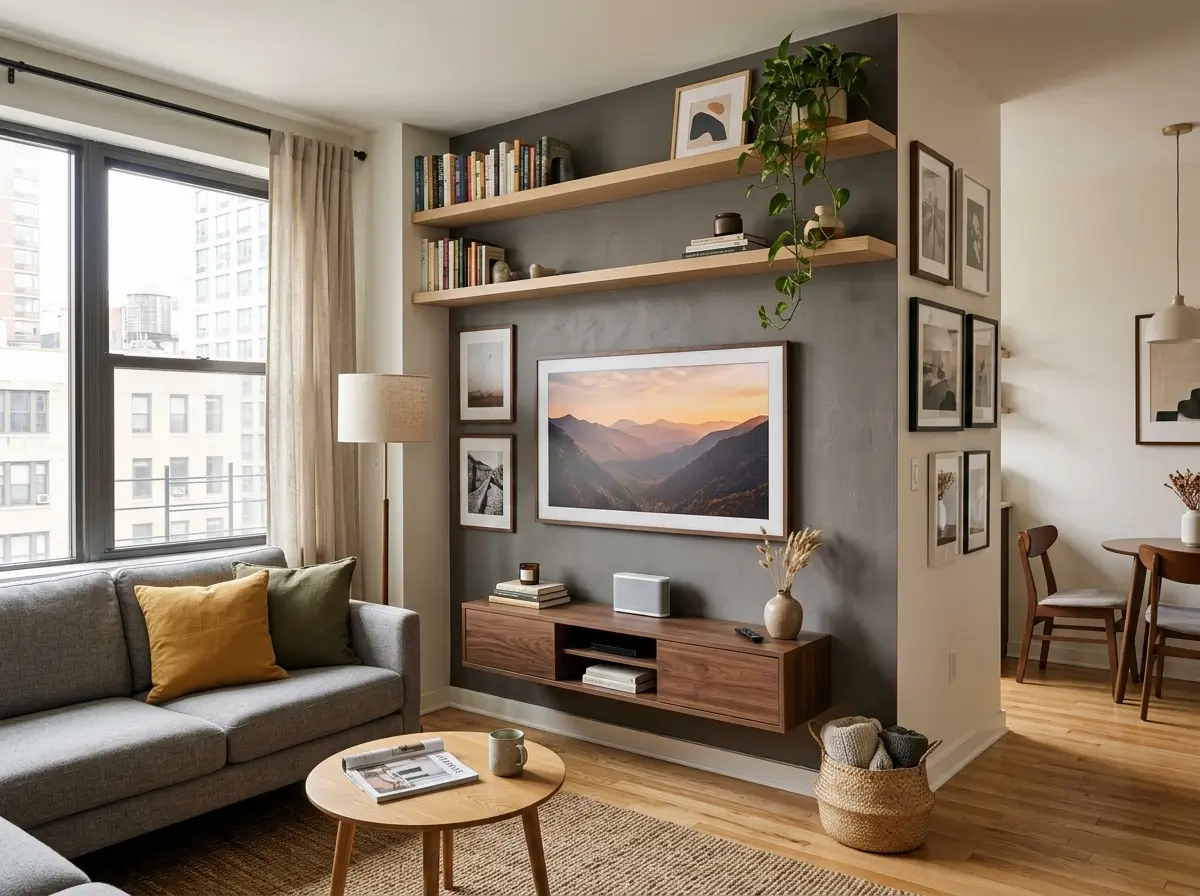
A simple example is a wall-mounted TV above a floating console that is 10 to 14 inches deep. Add two small wall sconces or plug-in picture lights, use warm white bulbs around 2700K to 3000K, and keep decorations low and minimal. This works well for renters, studio apartments, narrow living rooms, and beginners who want a neat setup without major renovation.
Mount the TV to Free Up Floor Space
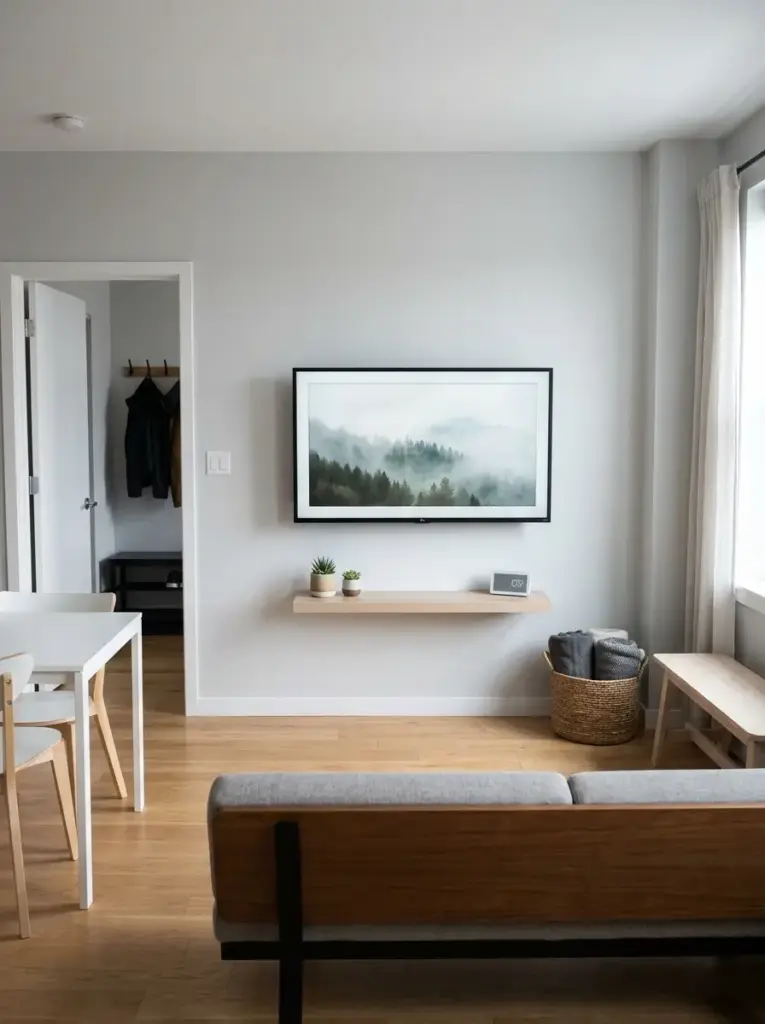
A wall-mounted TV is one of the most practical small apartment TV wall ideas because it removes the need for a large TV stand. In a compact living room, even a few extra inches can help. When the TV sits on a bulky console, the furniture often pushes into the walking path and makes the room feel tighter.
Mounting the TV works because it shifts the screen upward and clears floor space below. You can then use a slim floating shelf, low bench, storage baskets, or a narrow console without making the wall feel heavy. This is especially helpful in studio apartments where the TV wall may also sit near the bed, dining table, or entryway.
For comfortable viewing, place the center of the TV close to seated eye level. In many small living rooms, this means the center of the screen should sit around 42 to 48 inches from the floor. If your sofa is low, keep the TV lower. If you mount it too high, you may strain your neck during long viewing.
This idea is best for people who want a cleaner layout and less furniture. Renters can use a no-drill TV stand that looks like a mount, or they can ask the landlord before drilling. Some freestanding TV mounts have slim bases and cable channels, making them useful when wall mounting is not allowed.
A common mistake is mounting the TV first and planning the furniture later. Measure the sofa distance, console height, outlet location, and screen size before drilling. A 43-inch or 50-inch TV often works better in a very small room than an oversized screen that dominates the wall.
Use a Floating Media Console
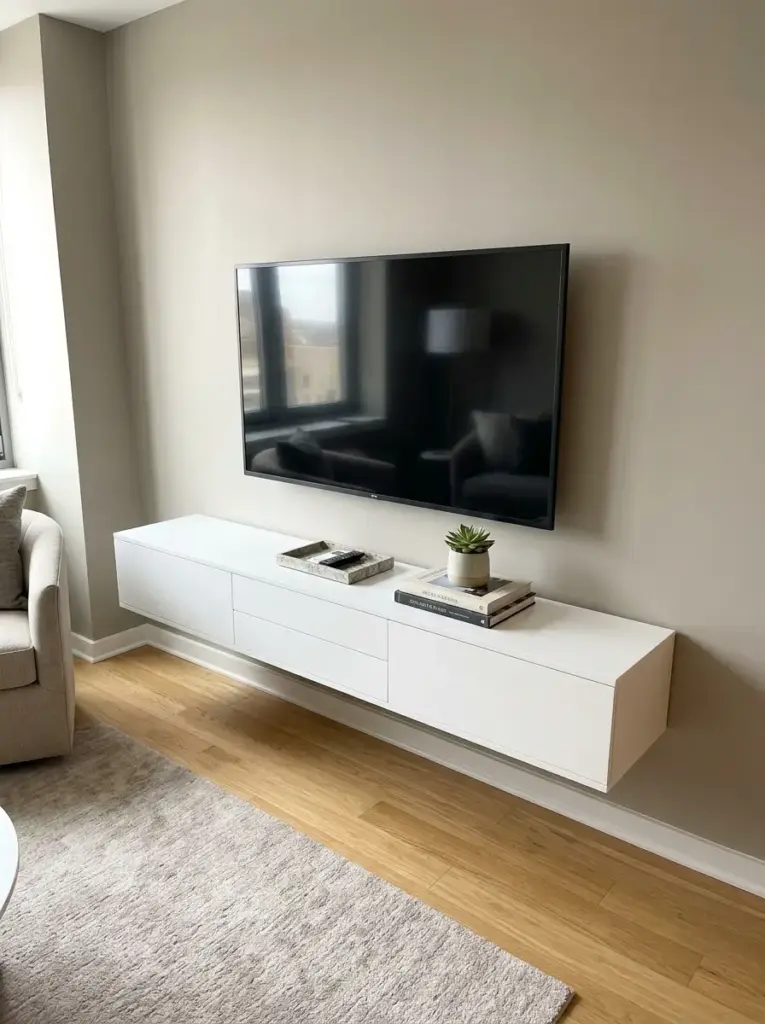
A floating media console gives a small apartment TV wall a light and modern structure without taking up much floor space. It works well because the open floor below the cabinet makes the room feel less crowded. Your eye can see more floor, which helps the space feel wider.
Choose a console that is shallow, simple, and wide enough to balance the TV. A good depth for small apartments is usually 10 to 14 inches. If you need storage for remotes, chargers, game controllers, or small devices, choose drawers or sliding doors instead of open cubbies. Closed storage keeps visual clutter under control.
For colors, white, oak, walnut, greige, soft black, and warm beige work well in compact homes. A white floating console blends into light walls and feels airy. A warm wood console adds softness and works nicely with cream, taupe, sage green, or warm gray walls. A black console can look sharp, but it works best when the rest of the wall stays simple.
This idea is best for renters who can drill into studs or masonry walls with permission. If you cannot mount a cabinet, choose a low-profile console with legs in the same wall color. A raised-leg console gives a similar floating effect and is easier to move.
Keep the styling simple. Place one small tray, a plant, and maybe two stacked books on the console. Leave empty space on both sides. In a small room, empty space is part of the design because it prevents the TV wall from feeling overloaded.
Build a Slim Storage Wall Around the TV
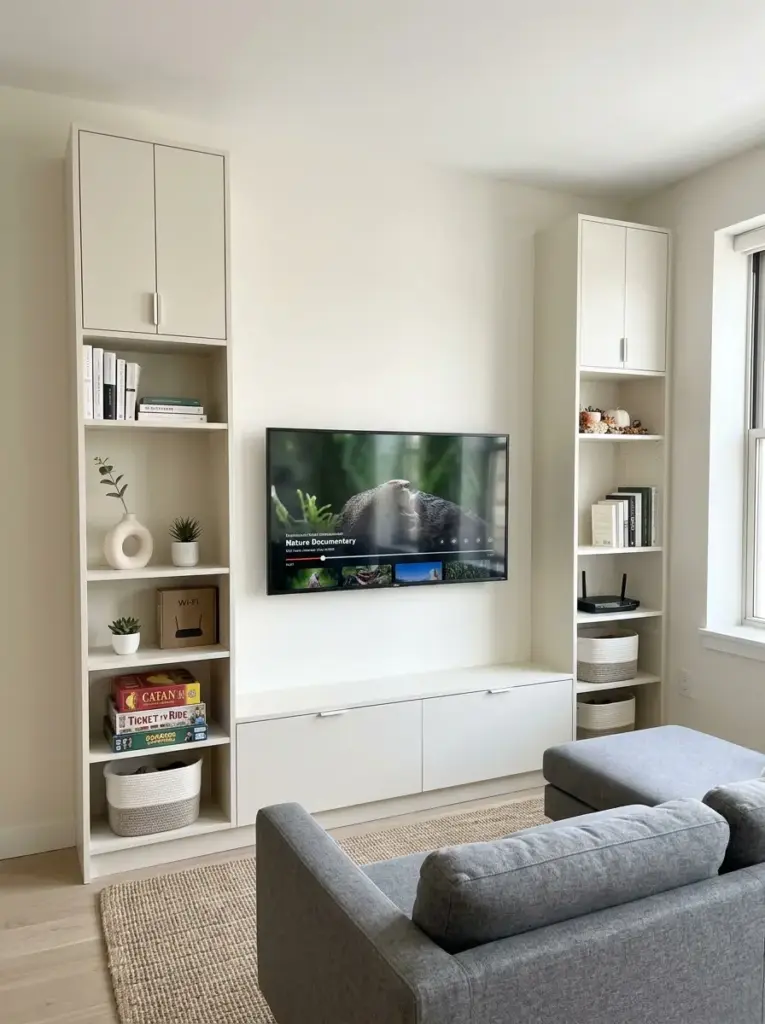
A slim storage wall can make a compact home work harder. Instead of adding separate shelves, cabinets, baskets, and side tables around the room, you can place useful storage around the TV. The key is to keep everything shallow and balanced.
This idea works because it uses vertical space, not extra floor space. In small apartments, walls are often underused. A narrow cabinet above or beside the TV can hold books, documents, board games, decor, Wi-Fi equipment, or seasonal items. You can also use side cabinets as display areas if they are not too deep.
For a small apartment TV wall, avoid deep entertainment units that stick out too far. Look for cabinets around 12 to 15 inches deep. If your room is very narrow, even 9 to 11 inches may work better. Use upper cabinets with doors if you need to hide clutter. Use a few open shelves only for items that look neat every day.
This setup is best for people who need storage but do not want the living room to feel like a storage room. It also helps families, remote workers, and renters with limited closets. If you rent, consider modular bookcases or freestanding cabinets instead of permanent built-ins.
A practical example is placing a wall-mounted TV in the center, two narrow bookcases on each side, and a closed cabinet below. Keep the bookcases the same height and color so the wall looks planned. Paint or choose units close to the wall color if you want the setup to feel less bulky.
Try a Low Console for a Calm Layout
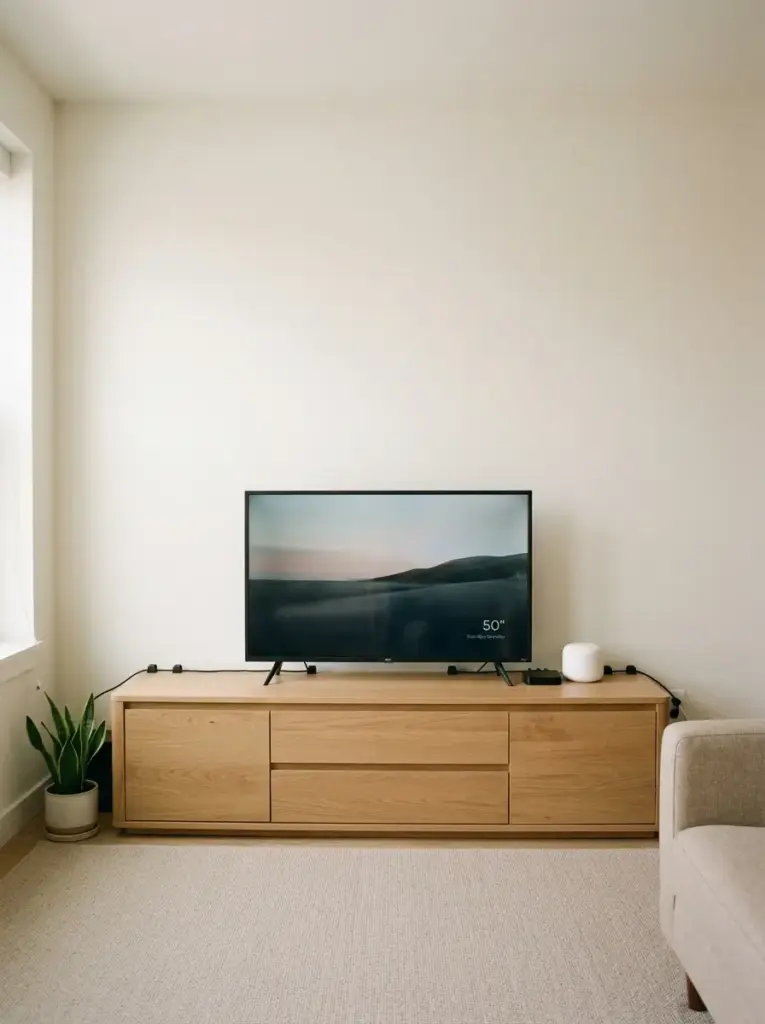
A low TV console can make a small apartment feel wider and calmer. This works because low furniture keeps the upper wall open, which makes the ceiling feel taller. If your room already has low ceilings or limited natural light, a low console may be better than tall shelves.
Choose a console that is longer than the TV, but not too deep. A good rule is to pick a console that is at least 6 to 12 inches wider than the TV on each side. This helps the TV look grounded instead of floating awkwardly. For a 50-inch TV, a console around 60 inches wide often feels balanced.
This idea is best for beginners because it does not require drilling into the wall. It is also rental-friendly and easy to adjust. You can take the console with you when you move, and you can change the styling without repairing wall holes.
For compact homes, choose a low console with drawers or doors. Open shelves can look nice in photos, but they often become messy in real apartments. If you have a router, streaming device, gaming console, or speaker, use cable clips and boxes to keep the area tidy.
Color matters here. A light oak or white console keeps the wall soft. A dark brown or black console can work if the room has good light and a simple rug. Avoid heavy, carved, oversized media units because they can make a small apartment TV wall feel dated and crowded.
Add Floating Shelves Without Overloading the Wall
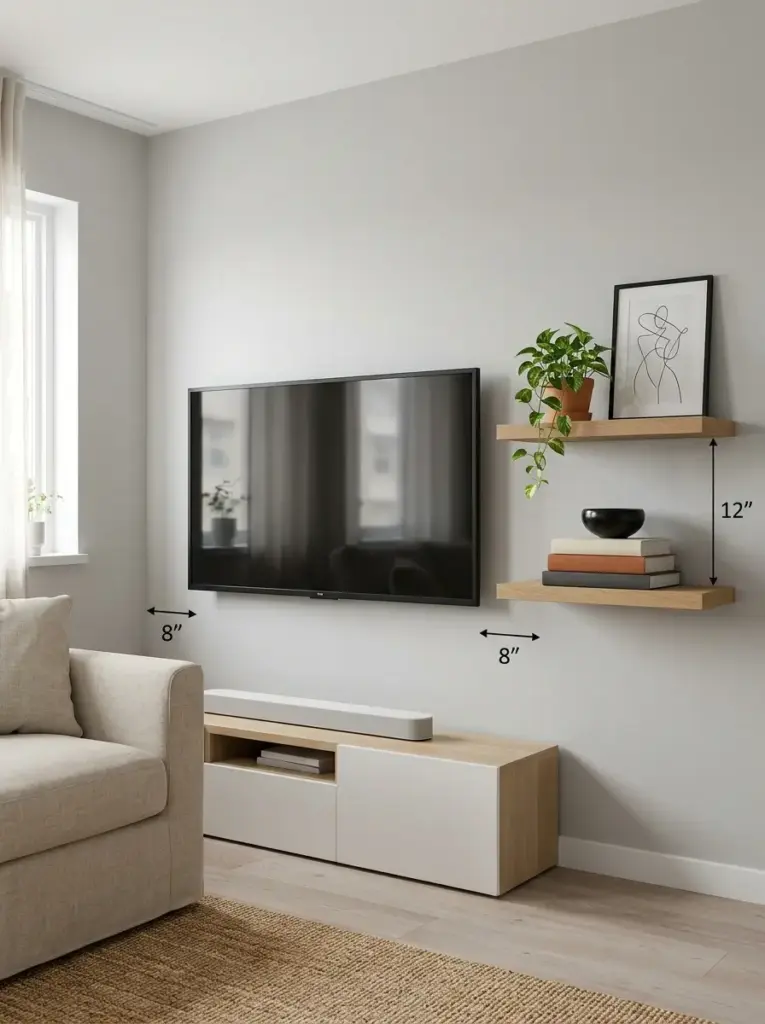
Floating shelves can make a TV wall more useful, but they need restraint in a small apartment. The best shelves add storage and shape without surrounding the TV with too many small items. When every shelf is full, the TV wall becomes distracting and harder to clean.
This idea works because shelves use wall space above and beside the TV. They can hold books, framed prints, plants, candles, baskets, or small speakers. They also help connect the TV to the rest of the room so the screen does not feel like a black box on an empty wall.
For small rooms, use two or three shelves instead of a full grid. Try one long shelf above the TV, or two short shelves on one side. Keep at least 6 to 10 inches of breathing room around the screen. Do not place shelf edges too close to the TV because it can make the wall look cramped.
This idea is best for renters, home decor lovers, and people who want a styled wall without built-ins. Use renter-friendly anchors only if they suit your wall type and shelf weight. For heavier shelves, always secure them properly.
A simple styling formula works well. Use one plant, one framed print, one small bowl, and a few books. Repeat colors from the room, such as beige, black, wood, or soft green. Avoid tiny decor pieces because they create visual noise. In a compact living room, fewer larger pieces usually look cleaner than many small objects.
Paint the TV Wall in a Soft Accent Color
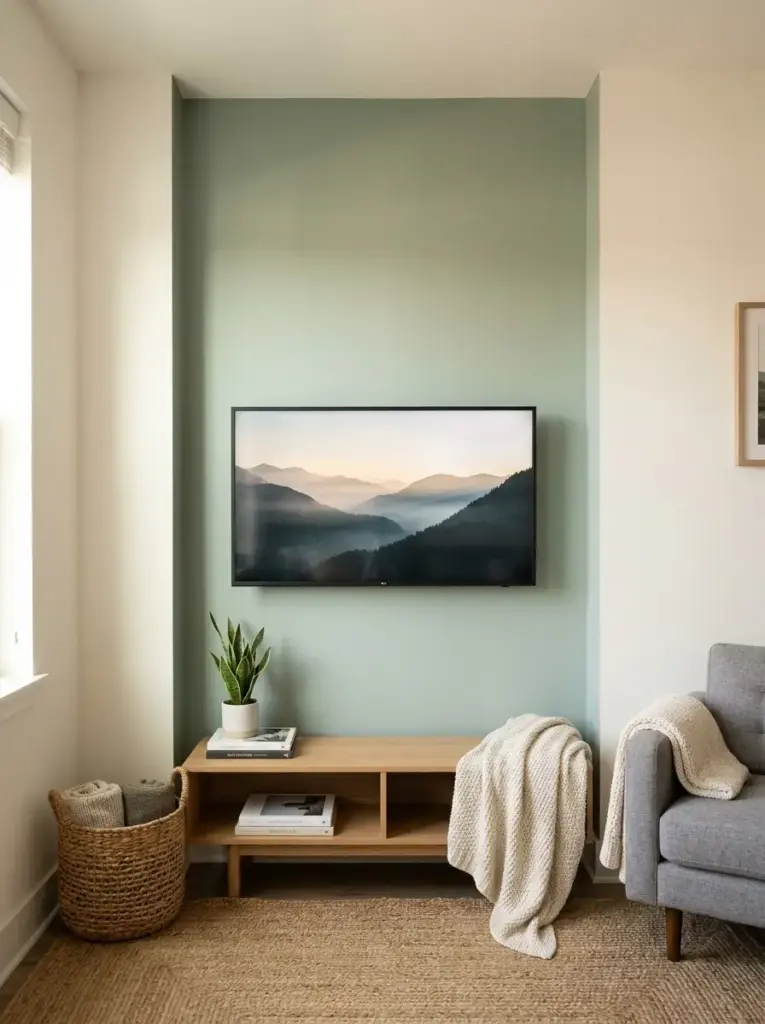
Paint can help a small apartment TV wall feel intentional without adding furniture. A soft accent color frames the TV and gives the wall depth. It can also reduce the harsh contrast between a black screen and a plain white wall.
This works because color changes how the eye reads the wall. A soft warm gray, mushroom beige, muted sage, dusty blue, taupe, or clay color can make the TV blend in better. Very bright colors can look fun, but they may compete with the screen and make the room feel smaller.
For a compact home, choose muted shades with gray, brown, or beige undertones. Examples include soft greige, warm off-white, pale olive, light terracotta, and smoky blue-gray. These shades pair well with small-space furniture because they feel calm and easy to decorate around.
This idea is best for renters who can paint, homeowners on a budget, and anyone who wants a big change without buying more furniture. If you rent and cannot paint, try peel-and-stick wallpaper in a soft solid texture. Look for removable options and test a small corner first.
Keep the surrounding decor simple. If the wall is sage green, use a light wood console and cream textiles. If the wall is warm beige, add black frames and a woven basket. The goal is not to make the wall loud. The goal is to make the TV area feel connected to the room.
Use Peel and Stick Wallpaper for Rental Style
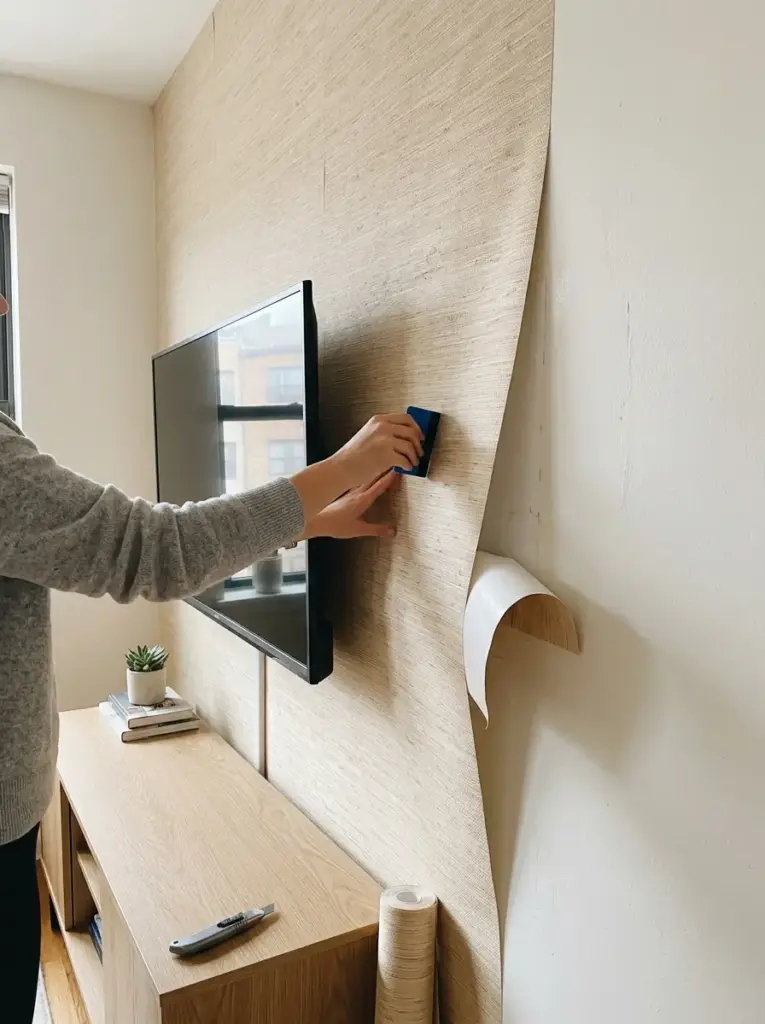
Peel-and-stick wallpaper can give a small apartment TV wall character without permanent changes. It works well when plain walls feel unfinished but paint is not allowed. The trick is choosing a pattern that supports the room instead of taking over it.
This idea works because wallpaper creates a clear focal point. In a small living room, one planned focal wall often looks better than several competing decor areas. It can also hide small wall marks or uneven paint, which is helpful in older rentals.
Choose simple patterns for a small apartment. Linen texture, grasscloth effect, soft vertical stripes, small geometric patterns, light arches, or subtle plaster designs usually work better than large busy prints. A beige grasscloth-style wallpaper behind a mounted TV can add warmth without making the room feel crowded.
This idea is best for renters, beginner decorators, and anyone who wants a low-commitment update. Before applying, clean the wall and test the paper in a hidden area. Some removable wallpapers stick differently depending on paint type, humidity, and wall texture.
Avoid covering every wall in a compact living room with bold wallpaper. One TV wall is enough. Also avoid patterns with strong contrast right behind the screen because they can distract your eyes while watching. Soft tone-on-tone designs are easier to live with and easier to match with future furniture.
Hide Cables for a Cleaner TV Wall
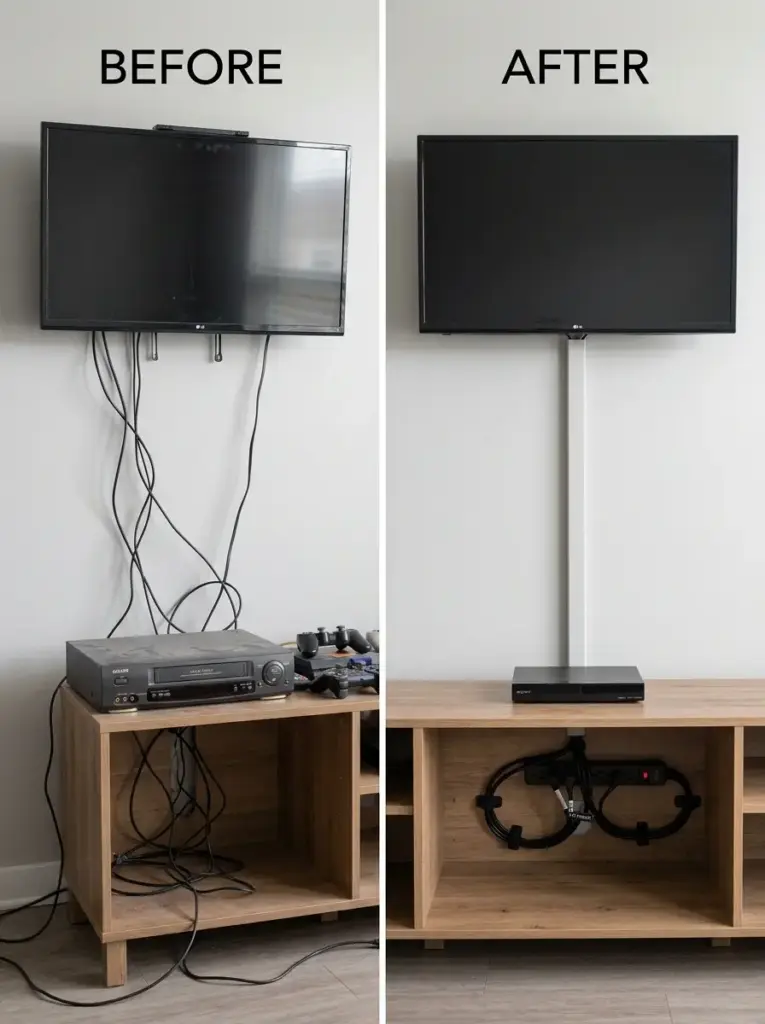
Visible cables can make even a well-designed TV wall feel unfinished. In a small apartment, clutter stands out quickly because everything sits closer together. Hiding cables is one of the simplest ways to improve a small apartment TV wall without spending much money.
This works because clean lines make the wall look calmer. When cords hang below the TV or run across the floor, they break the visual flow. They can also collect dust and make the room feel less organized.
Use a paintable cable cover if your TV is mounted. Match it to the wall color so it blends in. If your console hides the outlet area, use cable clips, cord sleeves, and a small cable box inside the cabinet. Label chargers and device cords if you often unplug things.
This idea is best for renters because most cable covers attach with removable adhesive. It is also useful for families with children or pets, since loose wires can be pulled or chewed. Always avoid overloading outlets and keep power strips placed where air can move around them.
A practical setup includes a mounted TV, one vertical cord cover, a closed console below, and a power strip fixed inside the cabinet. Keep only the devices you actually use. Old DVD players, unused game consoles, and extra speakers can make a compact TV wall feel crowded.
Frame the TV With Simple Wall Art
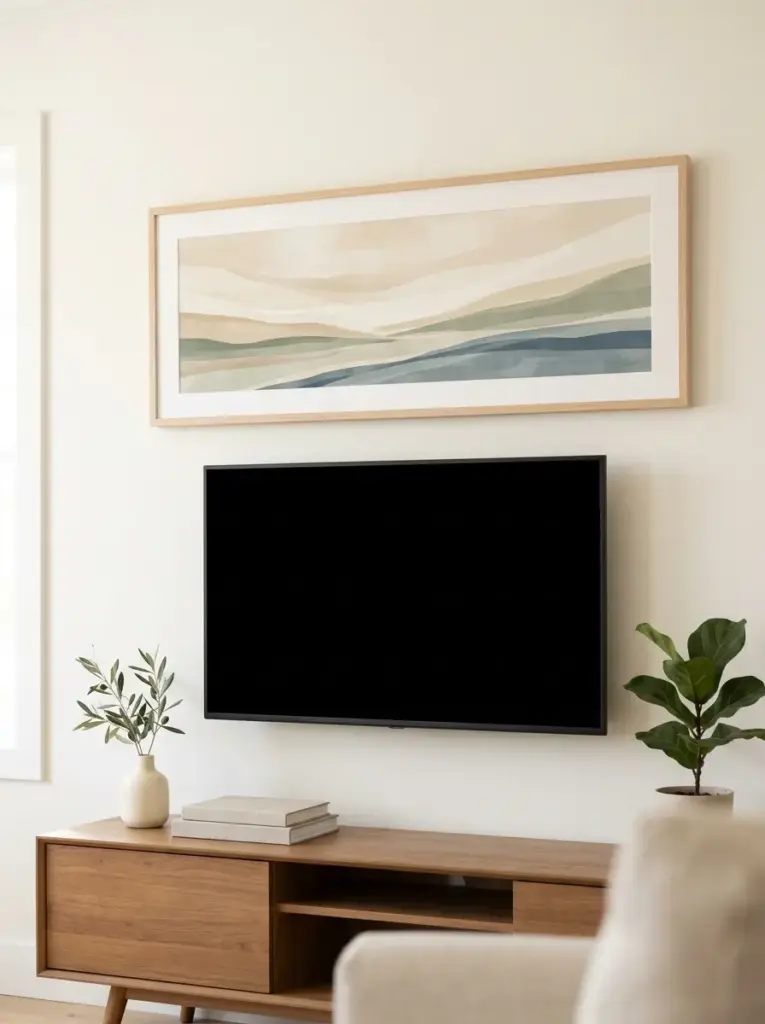
Wall art can soften a TV wall and make the black screen feel less lonely. The key is to frame the TV without making the area too busy. In small homes, art should support the TV wall, not fight for attention.
This idea works because art adds balance and personality. A single TV on a blank wall can look unfinished, while too much art can feel chaotic. A few well-placed frames help the screen blend with the rest of the room.
For beginners, start with two frames on one side of the TV or one long frame above a low console. Keep the frames in simple colors like black, natural wood, white, or brass. Use prints with calm colors that repeat your room palette. For example, choose beige line art, soft landscapes, muted abstract prints, or black-and-white photography.
This idea is best for home decor lovers who want a styled room without building shelves. It is also useful for renters because art can hang with removable strips if the frames are light. Always check the weight limit before using adhesive strips.
Avoid placing tiny frames all around the TV. Small frames can look scattered and make the wall feel cluttered. Instead, use fewer pieces with enough space between them. Keep the TV as the main visual anchor, then let the art add warmth around it.
Choose a Narrow Console for Tight Walkways
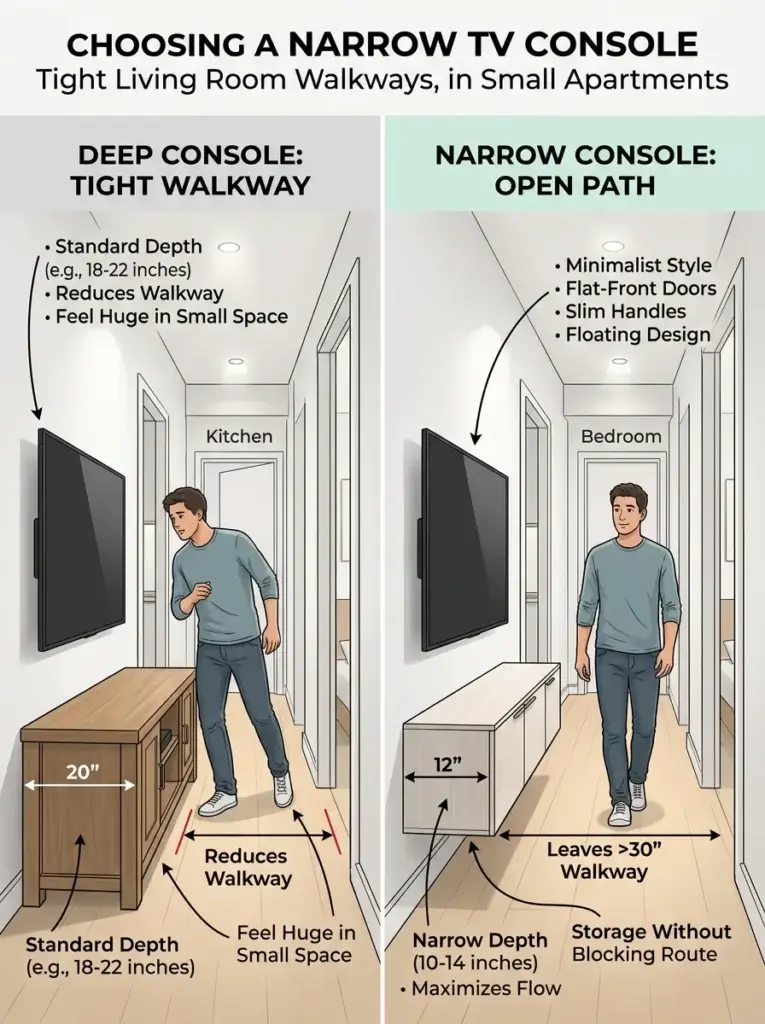
A narrow console is a smart choice when the TV wall faces a tight walkway. Many small apartments have a living room that also works as a path to the kitchen, balcony, bedroom, or entry. In that layout, deep furniture can make daily movement uncomfortable.
This idea works because depth matters as much as width. A console that is 18 to 22 inches deep may look normal in a store, but it can feel huge in a small apartment. A narrow console around 10 to 14 inches deep gives you storage without blocking the route.
This setup is best for narrow living rooms, studio apartments, and open-plan spaces. Choose a wall-mounted console, shoe cabinet, slim sideboard, or floating drawer unit. Some narrow shoe cabinets work surprisingly well as TV wall storage because they are shallow and have closed doors.
Measure your walking space before buying furniture. Try to leave at least 30 inches for a main walkway if possible. If the route is less than that, choose floating storage or skip the console and use a small shelf below the TV.
For style, keep the console simple. Flat-front doors, slim handles, and light finishes work best in compact homes. Avoid consoles with thick legs, heavy bases, or deep open shelves. The slimmer the profile, the easier your small apartment TV wall will feel in daily use.
Add Warm Lighting Around the TV
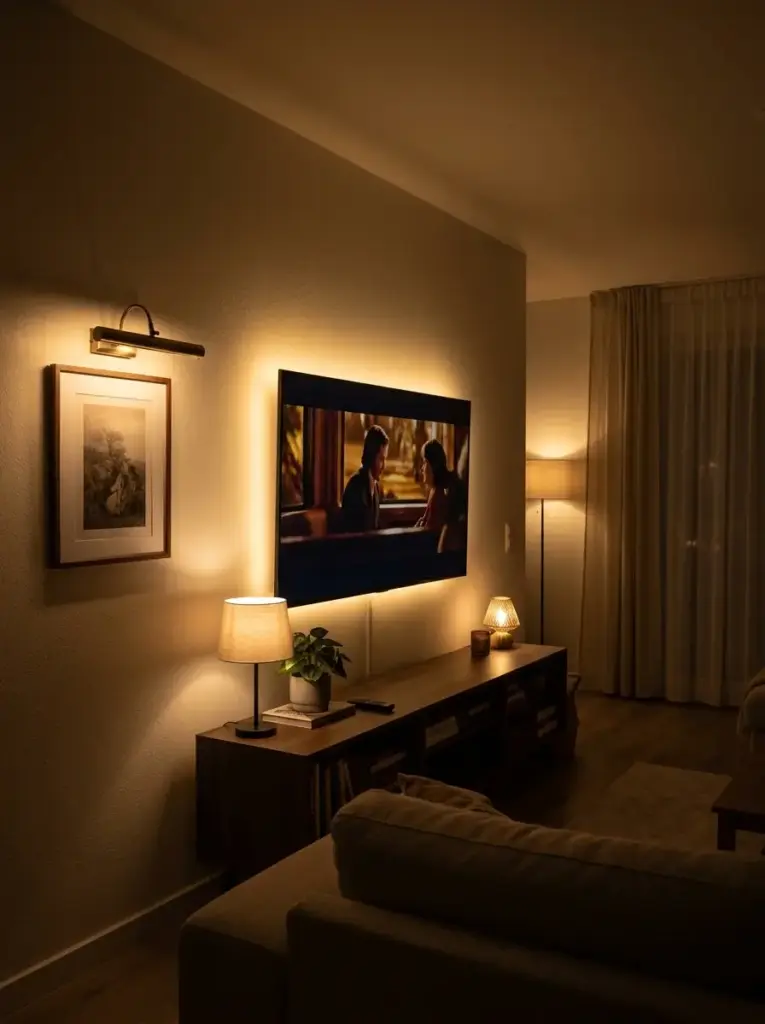
Lighting can make a TV wall feel softer and more comfortable. Many small apartments rely on one ceiling light, which can create glare on the screen and make the room feel flat. Adding warm, layered lighting improves both function and mood.
This works because light guides attention. A small lamp, wall sconce, or LED strip can reduce the harsh contrast between the bright screen and a dark room. It can also make the TV wall look finished in the evening.
Use warm white bulbs around 2700K to 3000K for living rooms. This range feels comfortable for relaxing and watching TV. Avoid cool blue light around 5000K because it can feel sharp and office-like. If you use LED backlighting behind the TV, keep it soft and neutral instead of bright neon colors.
This idea is best for renters and anyone who watches TV at night. Plug-in sconces, picture lights, and small table lamps are easier than hardwired lighting. A small lamp on one side of the console can be enough if the room is tiny.
Be careful with glare. Do not place a bare bulb directly opposite the TV screen. Use lampshades, dimmers, or indirect lighting. If the TV sits near a window, use light-filtering curtains to control reflections during the day.
Create a Corner TV Wall
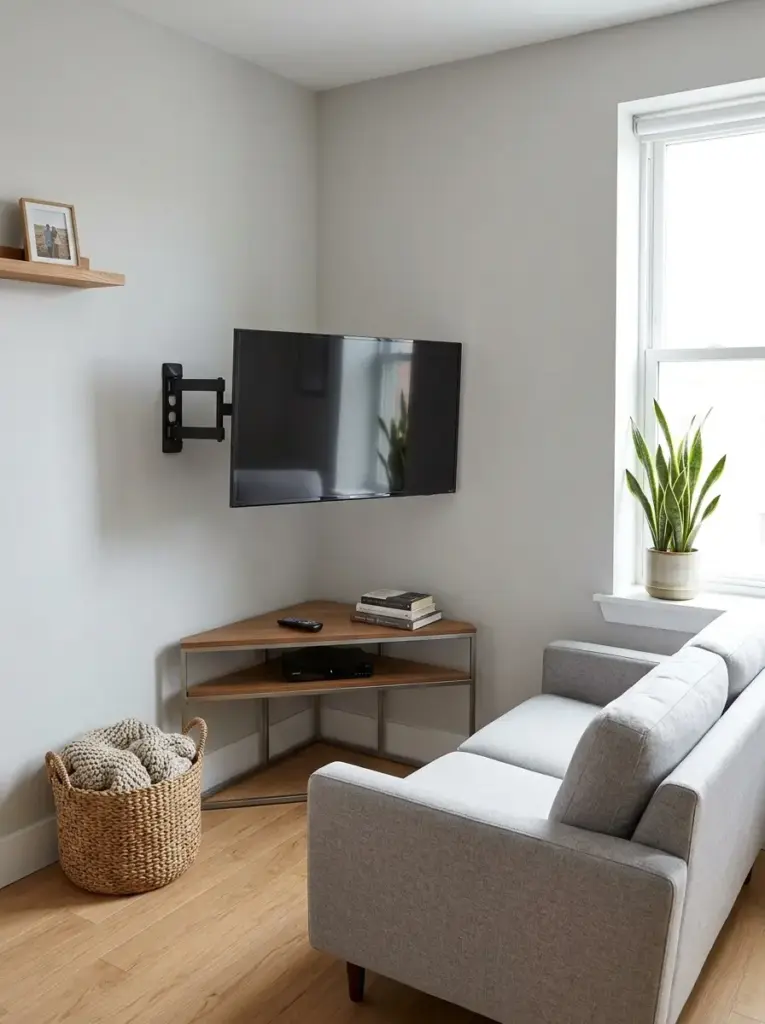
A corner TV wall can solve awkward layouts in compact homes. Not every small apartment has a wide central wall. Sometimes the best wall has a doorway, window, radiator, or closet. Using a corner can free up the main wall for seating, storage, or dining.
This idea works because it uses space that often goes unused. A corner TV setup can also improve viewing angles if your sofa does not face a straight wall. It can make a small living room feel more flexible, especially when the room has multiple functions.
This idea is best for studio apartments, odd-shaped rooms, and living rooms with limited wall space. Use a corner TV stand, a swivel wall mount, or a narrow angled console. A swivel mount helps you turn the screen toward the sofa, bed, or dining area when needed.
Keep the corner setup light. Avoid tall corner cabinets that close in the room. Choose a slim unit with storage below and leave the upper corner simple. If you add shelves, keep them short and balanced.
A practical example is placing a 43-inch TV on a swivel mount in the corner, with a small triangular or narrow console below. Add a basket for blankets and a plant on the nearby side wall. This keeps the corner useful without making it feel packed.
Use Vertical Panels to Add Height
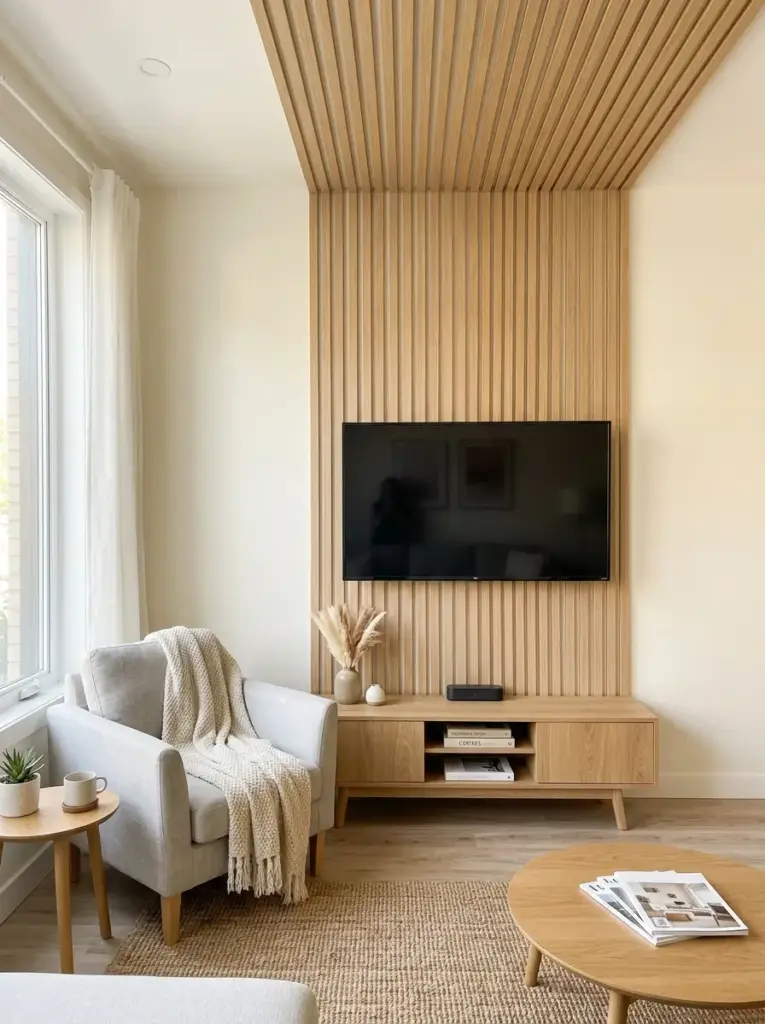
Vertical wall panels can help a small apartment TV wall feel taller and more structured. They draw the eye upward, which is helpful in compact rooms with low ceilings. You do not need heavy woodwork to get this effect.
This idea works because vertical lines create a sense of height. Slim wood slats, painted trim, peel-and-stick panels, or narrow wallpaper stripes can make the TV area look planned. They also add texture behind the screen without requiring shelves or lots of decor.
For small homes, keep the panel color close to the wall color. Warm white panels on a cream wall, light oak slats on beige paint, or soft gray trim on a greige wall can add detail without making the wall feel busy. Dark slats can look stylish, but they work best if the room gets good natural light.
This idea is best for home decor lovers who want a more custom look. Renters can use removable slat panels, lightweight peel-and-stick trim, or wallpaper with a vertical texture. Test adhesives first, especially on textured walls.
Avoid placing thick panels behind a wall mount unless you understand the mounting requirements. The TV still needs secure support. If you are unsure, keep the panels beside the TV instead of directly behind the bracket area.
Make the TV Wall Part of a Gallery Wall
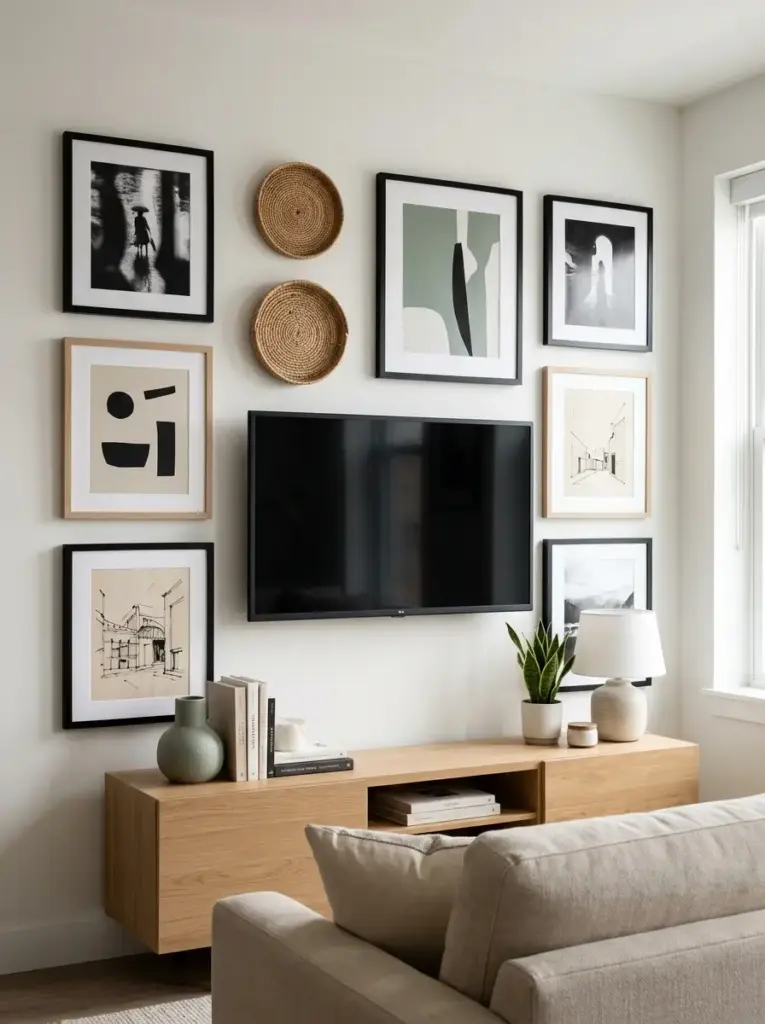
A gallery wall can help the TV blend into the room when done carefully. This idea works best when the TV is not too large and the art arrangement has a clear structure. The goal is to make the screen feel like one dark rectangle within a planned wall layout.
This works because repeated shapes create balance. The TV becomes part of a larger composition instead of standing alone. Black frames, dark artwork, or simple prints can visually connect with the screen.
This idea is best for creative decorators, renters, and people who do not want a traditional media wall. It works especially well above a low console or slim bench. Use frames in two or three sizes, not too many. Keep the spacing consistent, around 2 to 4 inches between frames.
For a small apartment TV wall, choose a limited color palette. Black, white, beige, wood, and one soft accent color are enough. Too many frame colors can make the wall feel messy. You can also mix one round mirror or small woven piece for texture, but keep it light.
A common mistake is making the gallery wall too wide. In a small room, the arrangement should relate to the console and sofa. If it spreads too far, it can make the wall feel restless. Start small, then add pieces slowly.
Combine the TV Wall With a Small Work Zone
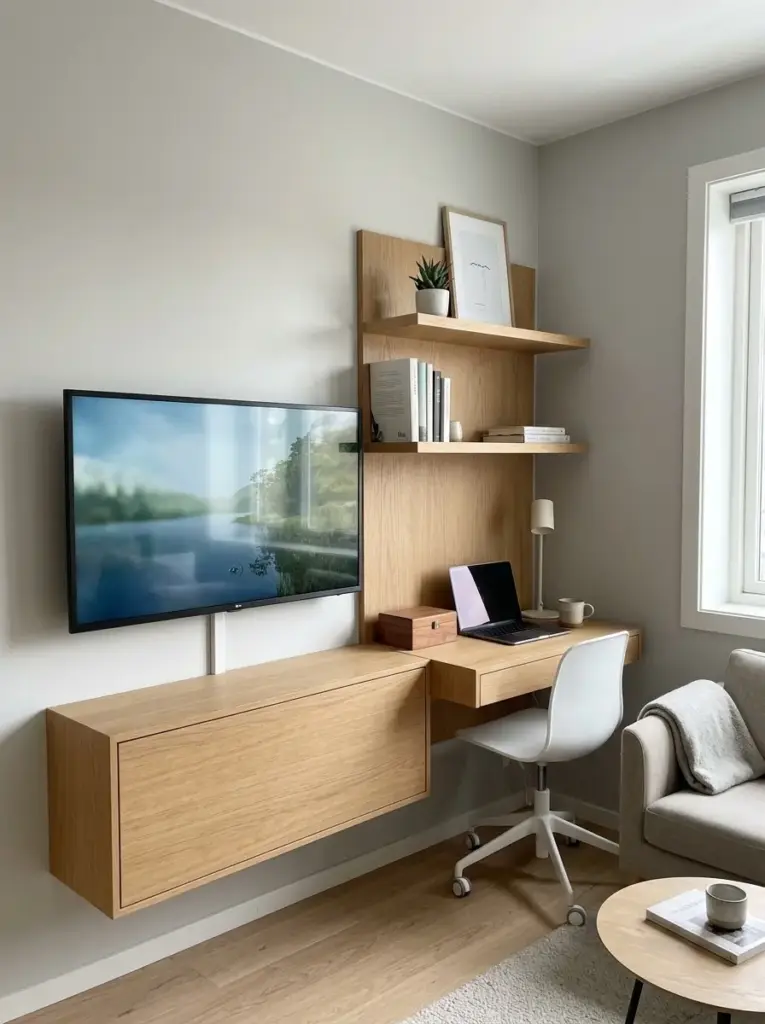
In many compact homes, the living room needs to do more than one job. It may also hold a desk, reading corner, dining spot, or storage area. A small apartment TV wall can include a work zone if you plan the layout carefully.
This idea works because it groups function on one wall. Instead of spreading furniture across the room, you can combine a TV, slim desk, shelves, and storage in one organized area. This leaves the rest of the room more open.
This setup is best for studio apartments, remote workers, students, and people who use the living room as a multi-purpose space. Choose a wall-mounted desk, narrow writing table, or fold-down desk near the TV wall. Keep the desk visually light so it does not compete with the screen.
A practical example is placing a mounted TV on one side of the wall and a 32-inch writing desk on the other. Add one floating shelf above the desk and a closed cabinet below the TV. Use the same wood tone for both pieces so the wall feels connected.
Keep work items hidden after office hours. Use a drawer, lidded box, or small cabinet for notebooks, chargers, and papers. If the desk stays messy, the whole TV wall will feel messy too. Good storage makes this dual-purpose idea easier to live with.
Common Mistakes to Avoid With a Small Apartment TV Wall
One common mistake is choosing furniture that is too deep. A large media console may offer storage, but it can steal walking space and make the room feel cramped. Always measure the wall, walkway, sofa distance, and door swing before buying anything.
Another mistake is mounting the TV too high. Many people place the TV above eye level because they want space underneath for decor. This can make watching uncomfortable. In most small living rooms, the TV should sit close to seated eye level, not near the ceiling.
Too many shelves can also hurt the design. Open shelving looks helpful, but it becomes cluttered quickly if you use it for random items. In compact homes, closed storage usually works better for everyday clutter. Keep open shelves for a few books, frames, or plants.
Avoid using very busy wallpaper or strong patterns behind the TV. A high-contrast pattern can distract your eyes while watching. If you want texture, choose grasscloth effect, subtle stripes, plaster-style wallpaper, or a muted painted wall.
Poor cable management is another issue. Dangling wires can make a nice TV wall look unfinished. Use cable covers, clips, cord sleeves, and storage boxes. If you have multiple devices, remove anything you no longer use.
Do not ignore lighting. A single bright ceiling light can create glare and shadows. Add a small lamp, warm plug-in sconce, or soft backlight. Use bulbs around 2700K to 3000K for a warm living room feel.
Finally, avoid copying large-home media walls exactly. A compact apartment needs lighter furniture, fewer decor pieces, and better spacing. What works in a big house can feel crowded in a small rental.
Budget-Friendly Small Apartment TV Wall Ideas
A small apartment TV wall does not need a large budget. Start with the changes that make the biggest difference. Cable management, better lighting, and removing clutter can improve the wall before you buy new furniture.
Use a paintable cord cover if your cables show. This small upgrade often costs much less than new furniture, but it makes the TV wall look cleaner. Match the cover to the wall color for a built-in effect.
If you need storage, look for secondhand slim consoles, small sideboards, or narrow shoe cabinets. Many shoe cabinets are shallow, which makes them useful for tight living rooms. You can update the handles or paint the piece if the surface allows it.
Floating shelves are budget-friendly when used carefully. Install one or two shelves instead of filling the whole wall. Style them with items you already own, such as books, small bowls, framed postcards, or a plant cutting in a simple vase.
Peel-and-stick wallpaper can be cheaper than custom panels. Use it only on the TV wall to save money. Choose subtle designs so you do not feel the need to replace it quickly.
Lighting can also be affordable. A small table lamp with a warm bulb can soften the wall. Plug-in sconces cost more than basic lamps, but they are still cheaper than hardwired lighting. Choose simple shades that direct light softly.
For art, use printable art, personal photos, fabric scraps in frames, or thrifted frames. Keep the color palette tight so the wall looks intentional. You do not need expensive art to make the space feel finished.
Small Apartment TV Wall Tips for Better Layout and Styling
Start with the sofa position. The TV wall should support comfortable viewing, but it should not force the sofa to block doors, windows, or walkways. In a small apartment, the best layout often leaves one clear route through the room.
Match the TV size to the room. Bigger is not always better in compact homes. A screen that is too large can dominate the wall and make the sofa feel too close. For many small living rooms, 43 to 55 inches is enough, depending on viewing distance.
Leave breathing room around the TV. Avoid packing shelves, frames, plants, and speakers close to the screen. Empty wall space helps the setup look calmer and makes the room easier to clean.
Use closed storage for small items. Remotes, chargers, batteries, paperwork, and gaming accessories create visual clutter fast. Drawers, baskets, and cabinets keep the TV wall practical.
Repeat materials from the room. If your coffee table is light oak, use light oak on the TV console or shelves. If your curtain rods are black, use black frames or handles. Repetition makes a small room feel planned.
Choose soft wall colors if the room feels tight. Warm white, cream, greige, sage, taupe, and pale gray can support a compact TV wall without overwhelming it. Dark colors can work, but balance them with good lighting and simple furniture.
Keep the floor clear. Raised furniture, floating consoles, and wall-mounted storage make cleaning easier and help the room feel open. This matters in small apartments because every visible floor area helps.
Think about daily habits. If you watch TV every night, prioritize comfort and glare control. If you rarely watch TV, make the wall more decorative with art and storage. If you work from home, include a hidden work zone or drawer storage.
FAQ
What is the best TV wall idea for a very small apartment?
The best idea is usually a wall-mounted TV with a slim floating console or narrow cabinet below. This setup saves floor space, hides clutter, and keeps the wall clean. Choose closed storage if you have remotes, chargers, streaming devices, or gaming accessories.
How do I make a small apartment TV wall look less cluttered?
Use fewer decor items, hide cables, choose closed storage, and leave empty space around the TV. Stick to two or three main colors, such as warm white, light wood, and black. Avoid filling every shelf because small rooms look crowded quickly.
Can renters create a stylish TV wall without drilling?
Yes, renters can use a freestanding TV mount, a slim console, peel-and-stick wallpaper, lightweight art with removable strips, and plug-in lighting. Always check lease rules before drilling or painting. Test removable products first so they do not damage the wall.
What color works best behind a TV in a small apartment?
Soft, muted colors usually work best. Try warm white, greige, taupe, sage green, mushroom beige, dusty blue, or light clay. These shades reduce the strong contrast of a black screen and make the wall feel calmer.
Should a TV console be wider than the TV?
Yes, a console usually looks better when it is wider than the TV. Try to leave at least 6 to 12 inches of console width on each side of the screen. This helps the TV feel balanced and prevents the wall from looking top-heavy.
How can I add storage without making the TV wall bulky?
Use shallow cabinets, floating drawers, slim bookcases, or wall shelves with closed baskets. Keep storage depth around 10 to 15 inches when possible. Choose light colors or wall-matching finishes if you want the storage to blend in.
Conclusion
A small apartment TV wall should make your home easier to use, not harder to live in. The best ideas combine comfort, storage, clean lines, and smart spacing. You do not need a huge media unit or a custom built-in to create a wall that feels organized and stylish.
Start with the basics. Choose the right TV height, hide the cables, keep the furniture shallow, and leave enough walking space. Then add details such as warm lighting, soft paint, floating shelves, simple art, or renter-friendly wallpaper.
The most successful small apartment TV wall fits your real routine. If you need storage, use closed cabinets. If you rent, choose flexible pieces. If your room is narrow, keep the console slim. If your wall feels plain, add color or texture without adding clutter.
Small-space decorating works best when every choice has a purpose. When your TV wall supports your layout, hides everyday mess, and feels comfortable to use, your compact home starts to feel more open, practical, and complete.