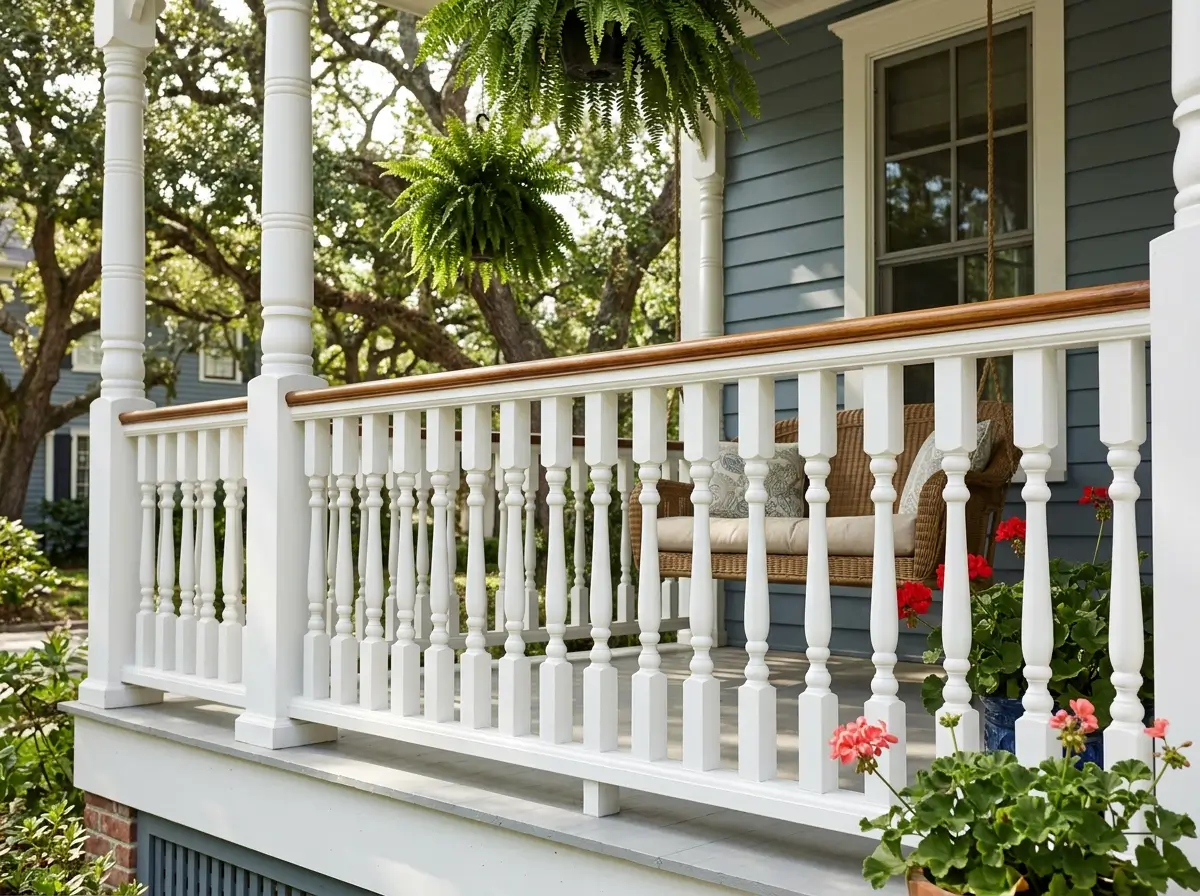

Porches often get decorated from the floor inward. People choose chairs, outdoor rugs, cushions, wreaths, and seasonal plants, yet the railing around the same space receives very little attention. That missed detail can make an otherwise thoughtful entrance feel unfinished. A well-styled Porch Railing helps connect the architecture of the house with the furniture, landscaping, and front door. Better still, improving it does not always require replacing anything. Fresh paint, carefully positioned planters, subtle lighting, or a few material changes can make a surprisingly noticeable difference without turning the porch into a major renovation project.
Good railing design also matters on smaller porches because every visible element has more influence when space is limited. Heavy decorations can make a narrow entrance feel cramped, while thin vertical lines and restrained colors can make it feel more open. Homeowners can make permanent improvements, while renters can rely on removable planters, outdoor-safe ties, clip-on lighting, and freestanding accessories. The goal should be to work with the existing architecture instead of covering it. Simple choices usually age better, require less maintenance, and leave enough visual breathing room for plants, seating, and seasonal decorations.
What Is the Best Way to Make a Porch Railing Look Better?
Start by looking at the railing as part of the whole front elevation rather than an isolated feature. Match or complement colors already found on the front door, window trim, roof, outdoor furniture, or landscaping. Keep decorations proportional to the available space, and avoid attaching something to every section. Fresh paint is often the most effective starting point, followed by planters, warm outdoor lighting, and carefully chosen accessories. Materials should also suit the house. Traditional wood works naturally with cottages and older homes, while black metal and simple vertical balusters can complement contemporary architecture.
Before buying decorations, stand at the sidewalk or driveway and look at the porch from a distance. Details that seem small when you are standing beside the railing may look much stronger from the street. Check the view from inside the house as well. Tall planters, thick garlands, or privacy panels can block daylight and sightlines. Measuring first helps prevent these mistakes. Record the railing height, distance between posts, depth of the porch, and available walking clearance so that decorative additions remain attractive without interfering with everyday use.
Refresh the Railing With a Carefully Chosen Paint Color
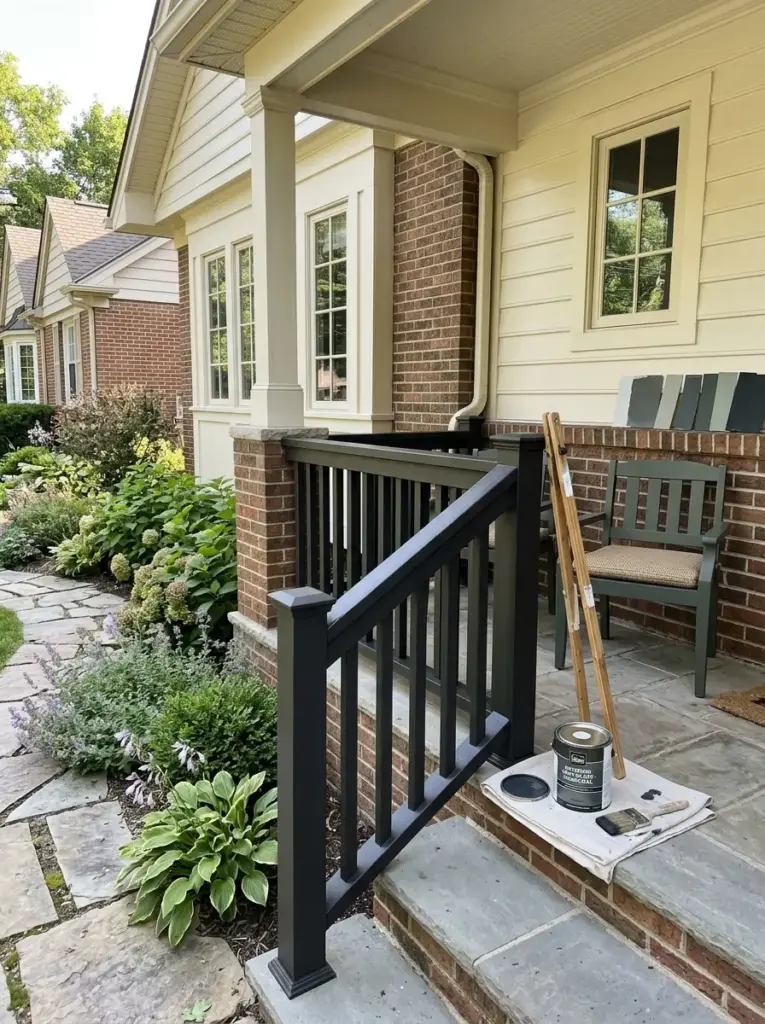
Paint offers one of the simplest ways to change the appearance of an existing railing without changing its structure. White remains useful for traditional homes because it creates a crisp connection with window trim and columns, but it is far from the only choice. Soft black, charcoal, warm gray, deep forest green, and muted navy can give older railings more definition. Before choosing a shade, compare it with permanent exterior elements such as brick, stone, roofing, siding, and paving. Those materials are expensive to change, so the railing color should normally cooperate with them rather than compete with them.
Dark colors are particularly effective when the porch contains several pale surfaces. Black or charcoal rails against cream siding create clear architectural lines and can visually sharpen an ordinary entrance. Homes with red or brown brick often work well with warm black rather than a blue-toned black. Green-gray can complement natural stone and garden planting. White makes sense when the house already has substantial white trim, but bright white against warm beige siding can sometimes appear harsher than expected. Testing several painted boards outdoors is more reliable than choosing from tiny color chips inside a store.
Preparation matters just as much as color. Peeling paint, rust, dirt, and rough wood will remain visible beneath a fresh coat if the surface is not prepared properly. Clean the railing, remove loose material, sand rough areas, and use a suitable exterior primer when required. Choose paint intended for the actual material, whether that is wood or metal. Homeowners working with older painted surfaces should also follow appropriate safety practices before sanding unknown coatings. Proper preparation takes longer, but it reduces the chance of the finish looking worn again after one season.
Paint works best for people who like a cleaner architectural update rather than extra decoration. Renters should avoid repainting without permission, but they can create a similar color effect through furniture and removable accessories. For example, black outdoor chairs beside a white railing introduce contrast without altering the building. Budget-conscious homeowners can also concentrate on repainting the most visible front sections first if the remaining finish is still in good condition, although matching old and new paint accurately requires care.
Add Railing Planters Without Overcrowding the Porch
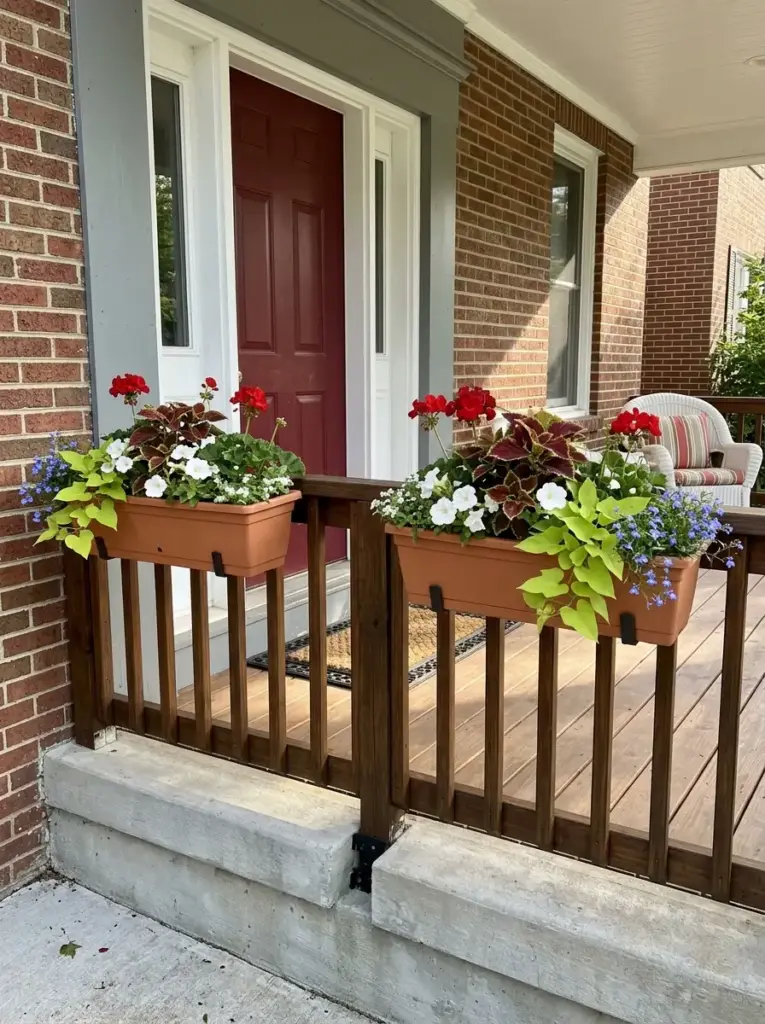
Flowers and foliage soften hard architectural lines, making railing planters especially useful around porches dominated by wood, brick, or concrete. Instead of filling every available section, place boxes where they support the composition. Two balanced planters near the entrance can look more intentional than six mismatched containers spread around the perimeter. Long rectangular boxes generally suit straight railings, while smaller pots work better around narrow sections or corners. Keeping container shapes consistent also creates order when the plants themselves contain several colors and textures.
Plant choice should follow actual sunlight conditions. Sun-loving flowers will struggle on a deeply covered north-facing porch, while shade plants may scorch along an exposed railing receiving strong afternoon sun. Observe the area during the day before shopping. Ferns, coleus, begonias, and certain foliage plants can work well in shade depending on local climate, while sunny locations offer many more flowering options. Combining upright plants, medium-height fillers, and a restrained amount of trailing foliage gives boxes dimension without producing a tangled wall that hides the railing completely.
Color repetition keeps planting connected to the rest of the entrance. Burgundy leaves can echo a deep red front door, white flowers can relate to pale trim, and green foliage can provide relief when the house already uses several exterior colors. Avoid introducing five unrelated flower colors simply because individual plants look attractive at the nursery. Two or three coordinated tones usually create a stronger result. Neutral containers in black, cream, terracotta, or natural wood also make seasonal plant changes easier because the boxes do not dictate the entire palette.
Safety and drainage need attention too. Containers become surprisingly heavy after watering, so use mounting systems designed for their weight and railing type. Water should drain without constantly staining painted surfaces or dripping onto a neighbor’s area below. Renters can use removable brackets where permitted or place narrow freestanding planters directly behind the railing. People who travel frequently may prefer drought-tolerant planting or self-watering containers. Good styling should make the porch easier to enjoy rather than creating a demanding watering schedule.
Use Warm Lighting to Define the Railing After Dark
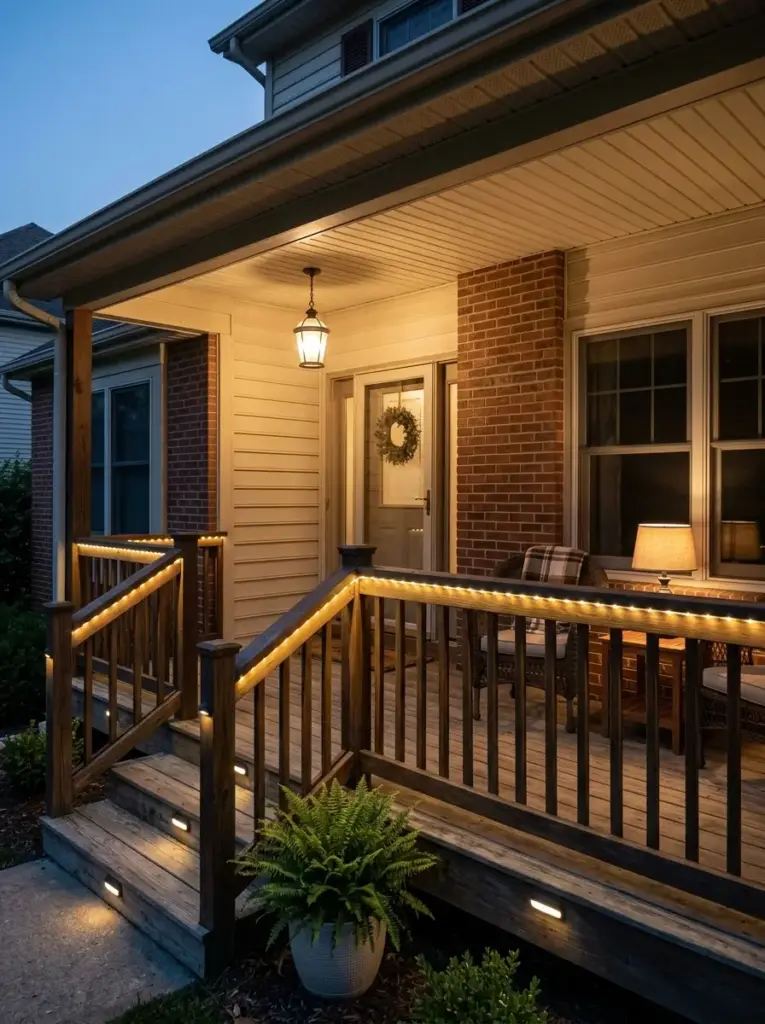
Lighting changes how a porch feels in the evening and can make railings contribute to the nighttime appearance of the house. Small outdoor-rated lights placed near posts or beneath handrails provide subtle definition without turning the entrance into a brightly illuminated display. Aim for warm white light around 2700K to 3000K for most residential porches. That range generally feels comfortable beside wood, brick, cream siding, and warm exterior paint. Cooler 4000K lighting can look noticeably harsher in a relaxed seating area unless the house has a deliberately crisp contemporary scheme.
Layered lighting works better than relying on one strong fixture. A ceiling pendant or wall sconces can handle general illumination while low-level railing lights add depth. Small step lights can improve visibility near stairs, and a table lamp rated for outdoor use can make a covered seating area feel more comfortable. Keep brightness restrained. Decorative railing illumination should support safe movement and architectural definition rather than compete with the front door light or shine into nearby windows.
String lights can work, but placement determines whether they look polished or temporary. Instead of loosely wrapping several strands around every spindle, run one neat line along the inside edge where the cable is less obvious during daylight. Choose outdoor-rated products and secure them according to manufacturer guidance rather than using fasteners that could damage electrical cables. Battery or solar options can help where outlets are unavailable, although solar performance depends heavily on how much direct light the panel receives during the day.
Renters benefit particularly from removable lighting because it creates impact without permanent construction. Clip-on fixtures, rechargeable lamps, and carefully secured outdoor string lights can be removed when moving. People with tiny porches should prioritize one or two lighting layers instead of adding lights everywhere. Excess illumination makes a small area visually busy and can expose every cable and bracket. Restraint produces a calmer entrance and lets the architecture remain visible.
Mix Wood and Black Metal for Stronger Contrast
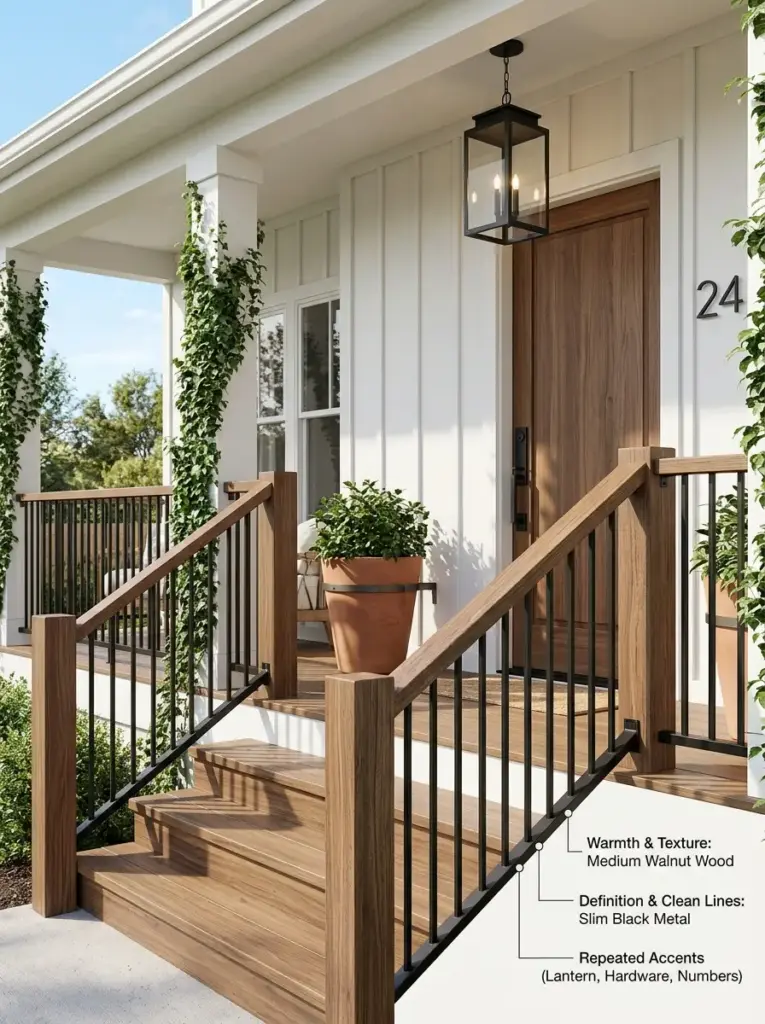
Material contrast can turn a practical railing into an architectural feature. Natural or medium-toned wood paired with slim black metal creates warmth and definition at the same time. Wood introduces texture, while dark metal provides clean lines. The combination works particularly well on transitional homes, modern farmhouses, cabins, and renovated older houses where an entirely contemporary railing might feel disconnected from the original structure.
Full replacement is not always necessary. Depending on the existing construction and local requirements, homeowners may be able to refinish wooden handrails while retaining metal balusters or introduce dark hardware elsewhere to strengthen the same visual relationship. Repeating black through a porch lantern, house numbers, planter brackets, or door hardware helps the railing feel connected rather than randomly added. Repetition should remain controlled; three or four related dark accents are usually enough.
Wood tone deserves careful consideration. Very orange stain beside cool gray siding can clash, while a medium brown or slightly muted natural finish often integrates more easily. Look at the front door and porch floor before choosing a stain. Matching every wood surface exactly is unnecessary, but undertones should relate. If the door is a warm walnut brown, for example, a railing with similarly warm undertones usually feels more coherent than pale gray-brown wood.
Material upgrades suit homeowners planning a longer-term exterior improvement. Structural railing changes must satisfy applicable safety and building requirements, so appearance should never override correct height, spacing, attachment, or stair safety. Decorative inspiration can guide the finish and visual character, but construction decisions deserve professional advice when structural changes are involved.
Create a Cleaner Look With Simple Vertical Lines
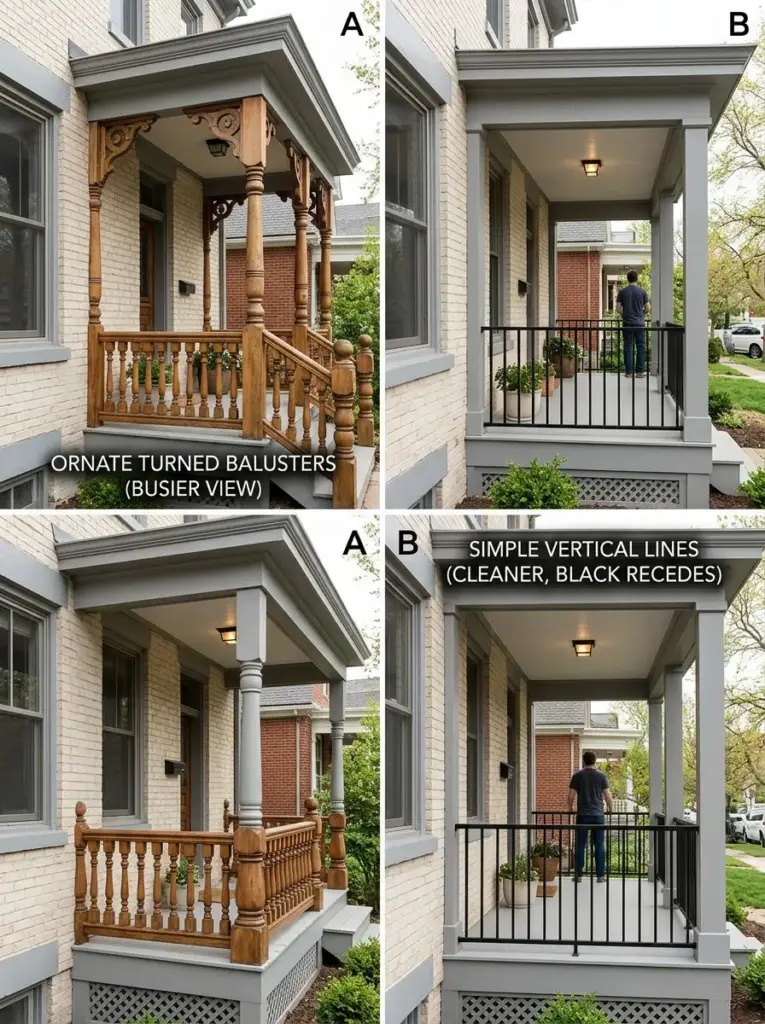
Ornate balusters can suit Victorian and highly traditional homes, but many porches benefit from simpler vertical lines. Straight balusters make the railing easier for the eye to read, particularly when the facade already includes brick patterns, shutters, decorative trim, or elaborate landscaping. Cleaner lines can also help small porches feel less crowded because fewer shapes compete for attention.
Black vertical elements create stronger contrast and tend to recede visually when viewed from inside a covered porch. White vertical rails feel lighter and coordinate naturally with traditional columns. Natural wood provides more visual warmth but can become dominant when used across a large facade. Selection should depend on the house rather than a current trend. Architecture with simple rectangular windows and minimal trim usually supports restrained railing details, while a decorative historic facade may need something with more character.
Furniture should reinforce that simplicity. Slim metal chairs, compact teak seating, or a narrow wooden bench fit more comfortably beside straightforward rails than oversized outdoor sofas. On a porch only five or six feet deep, furniture depth matters considerably. Leave a comfortable walking route to the door and stairs rather than pushing seating into every available corner. Measuring furniture footprints with painter’s tape before purchasing can reveal whether a chair that looks compact online will actually overwhelm the space.
People renovating a small porch will gain the most from this approach. Cleaner lines create visual order without requiring extra accessories. Homeowners keeping their current railing can mimic the principle by reducing attached decorations, using matching planters, and removing unnecessary objects. Sometimes editing what is already there makes a greater difference than buying something new.
Bring in Seasonal Greenery Without Covering Everything
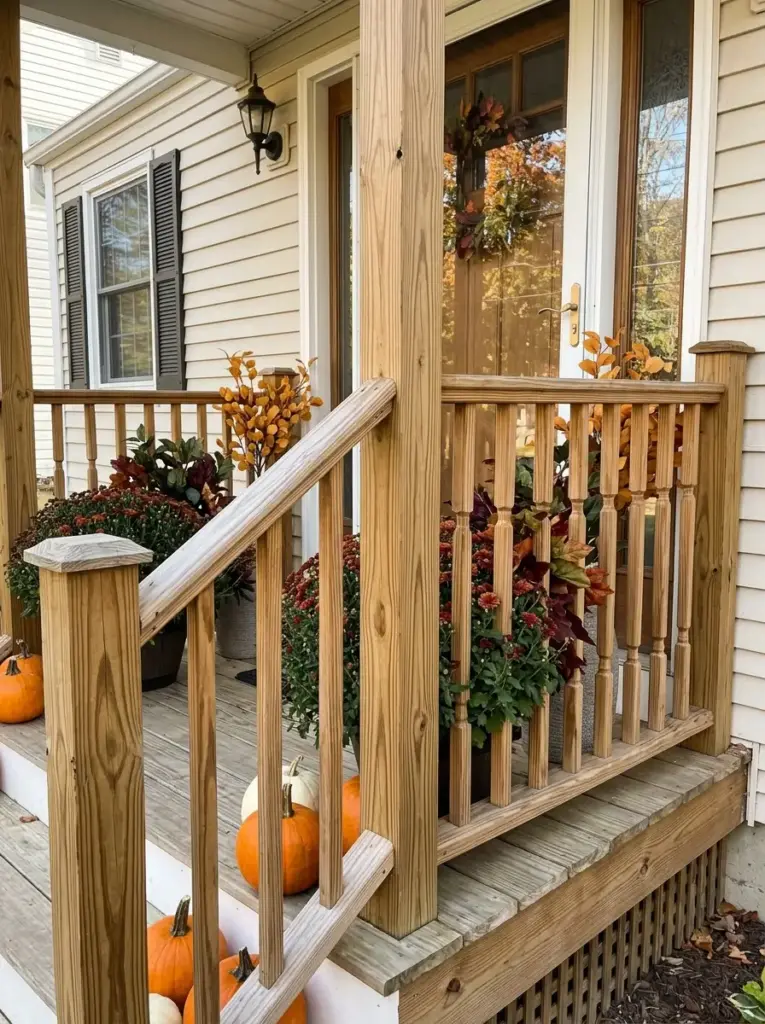
Seasonal decorating gives the porch variety, but the Porch Railing should still remain recognizable underneath it. Autumn branches, winter greenery, spring flowers, and summer foliage can highlight the structure when used selectively. Concentrate decoration around posts, corners, or the section nearest the front door rather than covering every spindle. Leaving open sections creates rhythm and keeps the arrangement from becoming visually heavy.
Autumn styling can use small bundles of preserved-looking foliage, outdoor-safe faux branches, or compact planters with rust, burgundy, ochre, and deep green tones. Pumpkins work better on the porch floor than balanced on narrow handrails, where they can fall or obstruct use. Winter greenery can follow the upper rail in a restrained line, but thick garlands should not interfere with hand placement along stairs. Spring may need only two flower boxes, while summer can rely on green foliage rather than constant seasonal ornaments.
Material quality becomes more visible outside because daylight reveals artificial shine and repetitive textures. When using faux greenery, choose pieces with varied leaf shapes and restrained finishes instead of highly glossy plastic. Mixing a small amount of realistic artificial foliage with natural branches can reduce maintenance, provided everything is secured safely. Outdoor exposure also fades many indoor decorative products quickly, so check whether items are designed for exterior use.
Seasonal styling suits people who enjoy changing their entrance throughout the year without permanent renovation. Renters can use removable ties or hooks approved for the surface, avoiding adhesives that may pull paint from older railings. Store reusable pieces carefully rather than replacing them every season. A small collection of neutral planters, greenery, and lights can support several seasonal schemes simply by changing a few inexpensive accents.
Coordinate the Railing With the Front Door
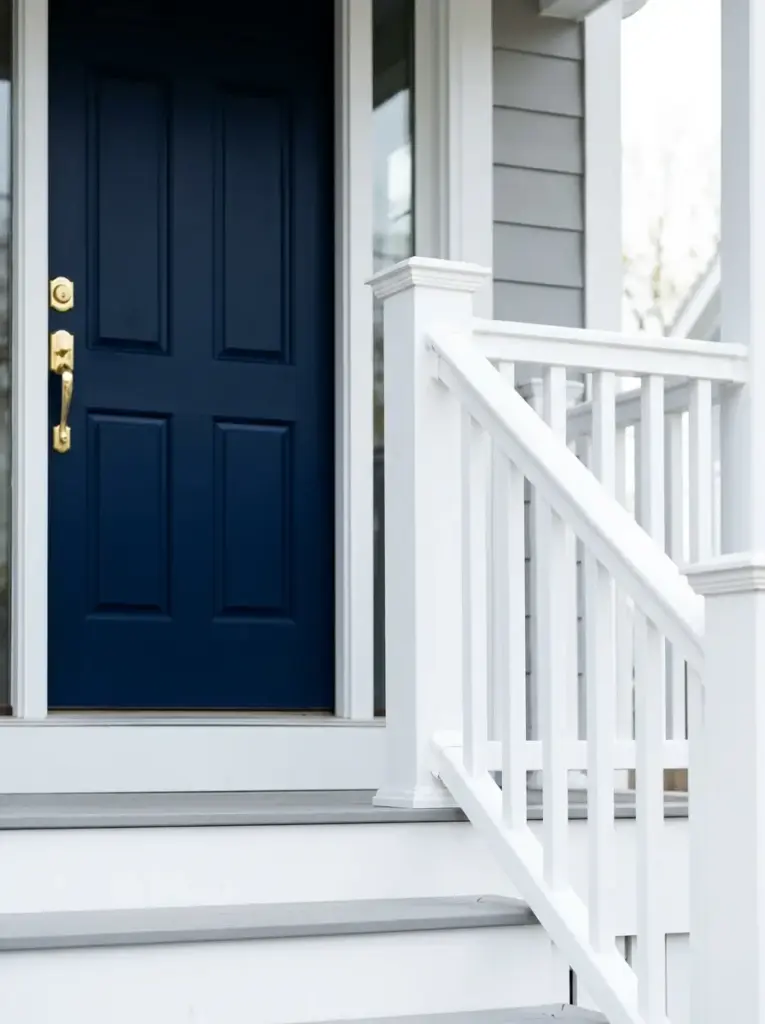
Front doors naturally command attention, so coordinating the railing with the door creates a stronger overall composition. Coordination does not require matching colors. A navy door can sit beautifully beside white rails, while a warm stained door may look stronger against charcoal metal. The important part is creating a deliberate relationship among the entrance’s largest visual elements.
Start with undertones. Deep blue doors usually cooperate with cool gray, white, black, and certain natural woods. Olive and forest green doors work comfortably with warm whites, stone, aged brass, and medium brown timber. Terracotta or muted red doors often pair well with cream, dark bronze, and warm wood. Bright colors need more restraint elsewhere because repeating a strong shade across too many surfaces can make the facade feel themed rather than thoughtfully coordinated.
Small accents can connect separate colors. Black door hardware can repeat black railing elements. A wood bench can relate to a stained handrail. Cream planters can echo trim around the doorway. Even a doormat containing two of the exterior colors can visually bridge the entrance. Avoid purchasing every accessory as part of a matching set. Repetition works best when it is subtle enough to feel intentional rather than staged.
Door-and-railing coordination is especially helpful for homes with small front elevations where every color is visible at once. People working with a limited budget can start here because the approach may require no structural changes. Repainting the door, refinishing the handrail, or simply repeating an existing color through planters can establish a clearer palette for the entire porch.
Add Privacy Without Turning the Porch Into a Wall
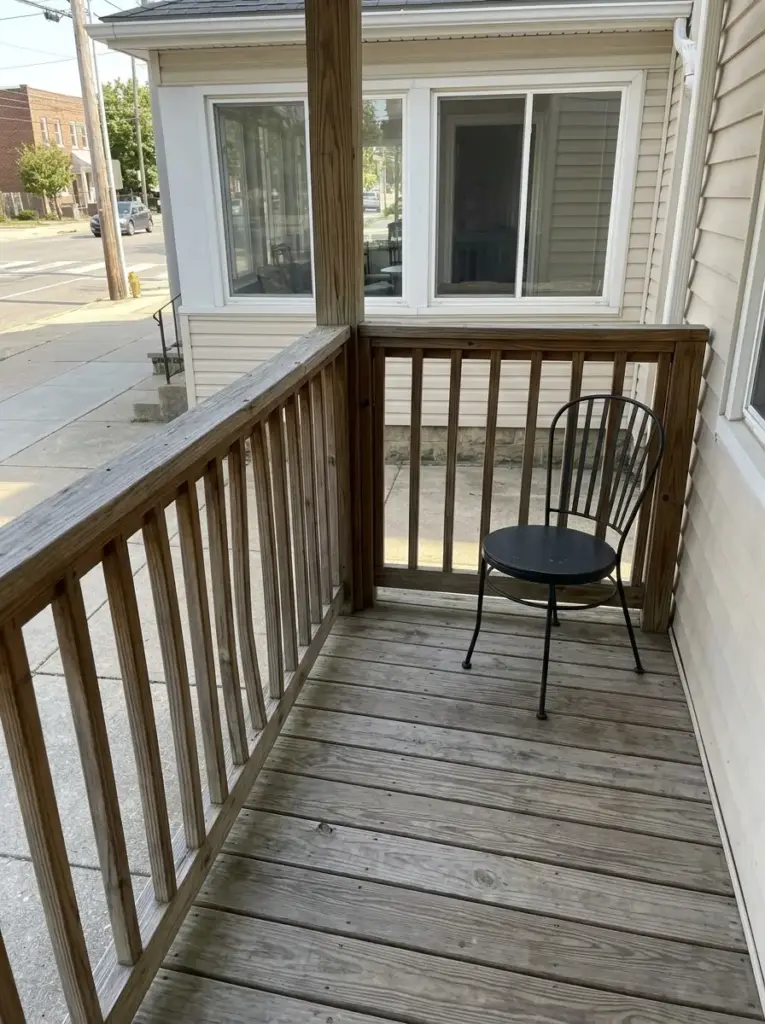
Street-facing porches sometimes need privacy, particularly when seating sits close to a sidewalk or neighboring property. Completely enclosing the railing, however, can remove airflow and make a small porch feel boxed in. Partial screening usually provides a better balance. Tall plants positioned near seating, open lattice in selected areas, or narrow outdoor screens placed behind certain sections can soften direct sightlines while keeping the entrance visually open.
Placement should respond to where privacy is actually needed. Sit in the chair you normally use and identify the direct line of sight toward the street or neighboring window. Screening only that area often solves the problem. A pair of tall planters may be enough, avoiding the cost and visual weight of covering an entire side. Grasses, compact evergreen shrubs, or upright foliage can provide natural screening where climate and maintenance conditions allow.
Small porches need especially careful measurements. Thick planters placed inside the railing reduce usable floor depth, so narrow rectangular containers often work better than large round pots. Freestanding screens should be stable and suitable for outdoor conditions. Avoid blocking stairs, gates, or required access. Wind exposure also matters because tall lightweight objects can become unstable during storms.
Renters can benefit from freestanding solutions because they avoid permanent attachments. Folding outdoor screens, tall containers, or movable plant stands can be repositioned as needed. Choose one screening method rather than combining lattice, curtains, plants, and fabric panels in the same small space. Privacy should make the porch more comfortable without visually shrinking it.
Use Planter Color to Connect the Porch and Garden
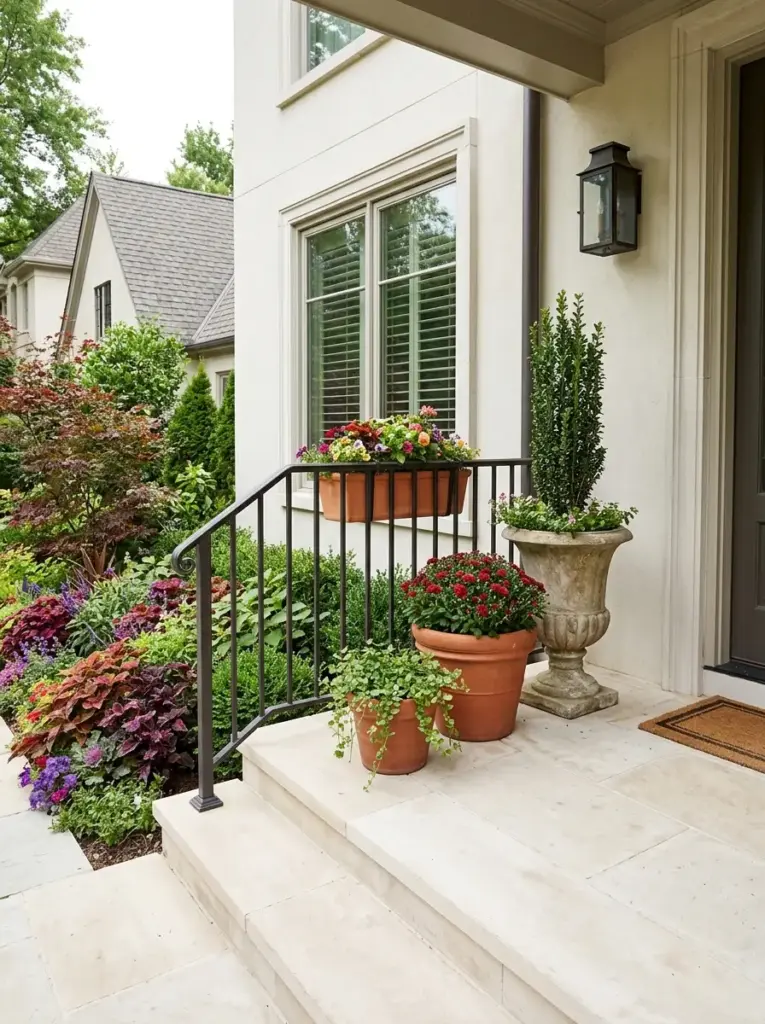
Containers provide an easy way to bridge the visual gap between house architecture and landscaping. A dark railing beside pale stone can feel separate from a colorful front garden, but carefully chosen pots can connect the two. Repeating foliage colors or container materials helps the eye move naturally from the porch to the planting beds.
Terracotta introduces warmth and suits cream, beige, olive, and many brick exteriors. Matte black containers create a cleaner contrast and work particularly well when the house already has black lighting or hardware. Cream pots can brighten a shaded porch, while weathered stone finishes suit traditional architecture. Limit the main container palette to one or two materials. Ten unrelated pots gathered over time may be practical, but they can make a small entrance look cluttered.
Height variation makes grouped containers more interesting. Place a tall plant toward the back, a medium pot beside it, and a smaller container toward the front. Keep the grouping away from the main walking path. On narrow porches, use vertical plant stands or railing boxes instead of spreading pots across the floor. Empty floor space is valuable because it makes the porch feel larger and makes cleaning easier.
Garden-focused homeowners and beginners who already own several plants will find this strategy particularly useful. Budget shoppers can update mismatched pots with compatible exterior finishes where suitable rather than replacing every container. Another inexpensive approach is grouping similar colors together and moving the most visually distracting containers to the backyard. Editing the collection costs nothing and often produces an immediate improvement.
Add a Narrow Seating Zone Beside the Railing
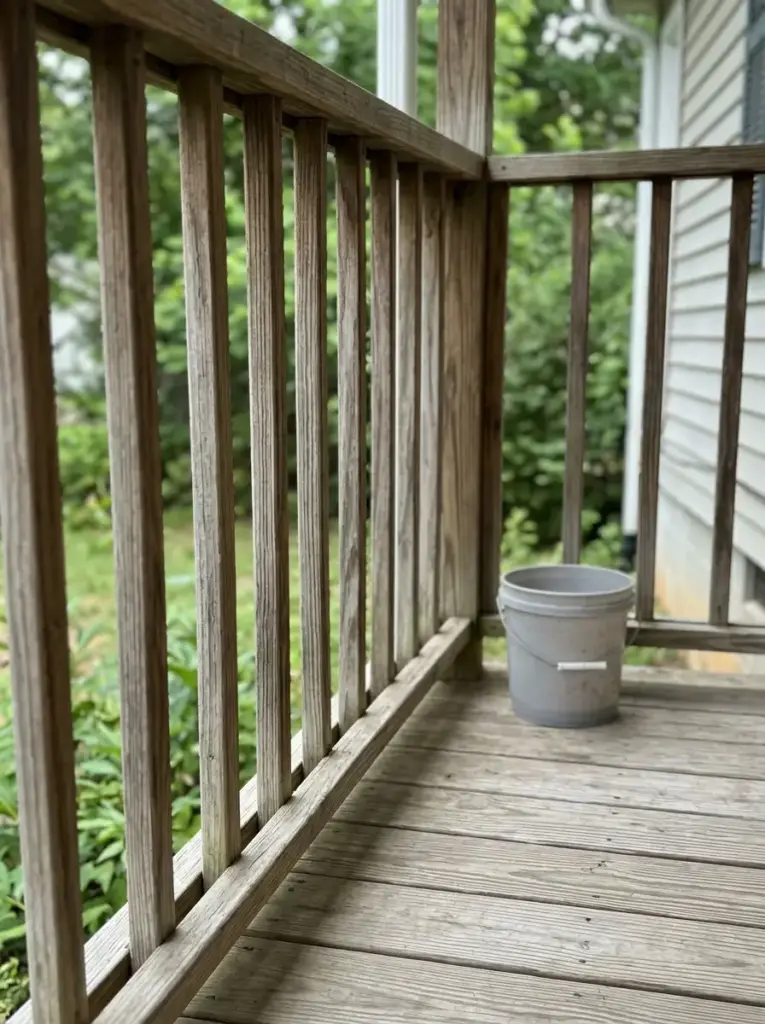
Furniture can make the railing feel like part of a usable outdoor room rather than a boundary around an empty platform. Small porches do not need a full sofa set. One comfortable chair with a compact side table, two slim chairs angled slightly toward each other, or a narrow bench against the house can establish a functional seating zone while preserving circulation.
Scale is critical. Oversized club chairs may look comfortable in photographs but can consume most of a shallow porch. Look for chairs roughly 22 to 28 inches wide when space is tight, then check actual depth before buying. Armless chairs often feel visually lighter. Small round tables reduce sharp corners along circulation routes, while nesting tables can be moved when additional floor space is needed.
Keep the Porch Railing visible behind furniture instead of pushing tall chairs, pillows, plants, and signs against every section. Negative space gives both furniture and architecture room to register. A compact outdoor rug can define seating, but it should not create a tripping edge across the primary route to the door. Choose a rug designed for exterior use and leave enough exposed flooring around it to make the layout feel deliberate.
Covered porches can support textiles, but outdoor conditions still require practical fabrics. Use cushions designed to resist moisture and fading, and choose removable covers when possible. Colors such as oatmeal, charcoal, olive, faded blue, rust, and muted stripe patterns are easier to coordinate than highly specific seasonal prints. People decorating small porches should treat every piece as functional first and decorative second.
Keep the Styling Minimal and Let Architecture Lead
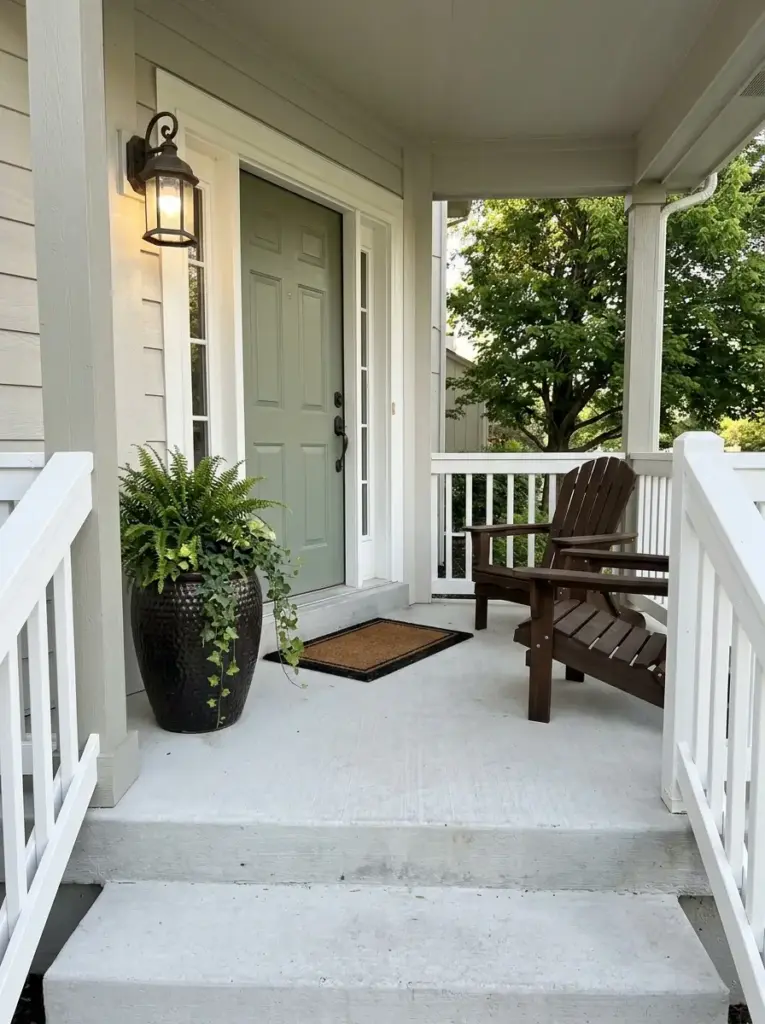
Minimal styling does not mean leaving the porch bare. It means selecting fewer objects and giving each one a clear job. One planter near a post, a good porch light, two chairs, and a simple doormat can create a stronger entrance than multiple signs, lanterns, wreaths, pillows, baskets, and decorative objects competing within the same area.
Start by removing everything that is purely decorative and then add pieces back one at a time. Notice when the porch begins to feel complete. Stop before every empty surface has been filled. Railings need visible open space because their repeating lines already contribute pattern. Adding ornaments to every post and spindle creates another layer of repetition that can become tiring, particularly on small facades.
Architectural condition becomes more important with minimal styling. Clean flooring, repaired paint, tidy steps, working lighting, and healthy plants contribute more than extra accessories. Sweep corners, remove cobwebs, clean light fixtures, and wash dirty rail surfaces before evaluating what the entrance needs. Maintenance is inexpensive compared with new decor and often improves the overall impression more noticeably.
Minimal styling works especially well for beginners who are unsure which direction to take. Establish a restrained base first, then introduce seasonal items gradually. Neutral permanent pieces also reduce future spending because they can work with spring flowers, autumn foliage, and winter greenery. Rather than buying an entirely new porch collection each season, change one or two smaller elements.
Common Porch Decorating Mistakes to Avoid
Overdecorating remains one of the most common problems. Railings naturally contain repeated vertical or horizontal lines, so attaching decorations to every section can quickly create clutter. Choose focal points instead. Posts, corners, and areas beside the front door provide natural locations for decoration. Open sections between them allow the house itself to remain visible.
Ignoring scale causes another problem. Tiny decorations disappear on a wide porch, while oversized planters and thick garlands overwhelm narrow entrances. Measure the area and photograph it straight from the street before shopping. Looking at the photograph can make proportion problems easier to recognize because you see the facade as one composition instead of several separate decorating zones.
Blocking circulation should never be accepted for appearance. Chairs, pots, lanterns, and seasonal objects should remain clear of stairs and the main route to the door. Decorative additions must not interfere with safe use of handrails. People often underestimate how much room is required when carrying groceries, opening a storm door, receiving packages, or walking beside another person.
Too many colors can also weaken an otherwise attractive exterior. Select two or three main tones based on permanent materials and repeat them in controlled amounts. A house with red brick, white trim, a blue door, yellow flowers, orange cushions, green furniture, and black accessories may contain individually attractive pieces but still feel disconnected. Reducing the palette helps architectural details stand out.
Choosing indoor products for outdoor exposure creates unnecessary replacement costs. Fabrics, lights, containers, adhesives, and decorative objects should be appropriate for the conditions they will face. Covered porches still experience humidity, temperature changes, dust, wind, and indirect moisture. Check product suitability instead of assuming the roof provides complete protection.
Neglecting maintenance is another frequent mistake. Beautiful styling cannot fully hide peeling paint, dead plants, rusty hardware, dirty flooring, or damaged wood. Put maintenance before decoration. Repairing and cleaning what already exists is usually cheaper than buying accessories and gives new decor a stronger background.
Budget-Friendly Ways to Improve Your Porch
Begin with cleaning because it costs very little. Wash the railing, sweep the ceiling and corners, clean exterior lights, remove dirt from the front door, and scrub suitable porch flooring. Years of dust can dull paint and make colors look older than they really are. After cleaning, you may discover that fewer updates are necessary than expected.
Paint offers excellent value when the existing structure is sound. Rather than replacing a functional Porch Railing, consider whether refinishing could produce the change you want. Even painting only associated elements, such as planters or a front door, can improve the relationship between existing railing colors and the rest of the porch. Always use coatings appropriate for the material and outdoor exposure.
Reuse containers before purchasing new ones. Gather existing pots and decide which shapes are worth keeping. Matching them through a limited color palette can make inexpensive pieces feel more coordinated. Plants can also be divided or propagated where appropriate, reducing the amount needed for seasonal containers. Choosing foliage-heavy arrangements may cost less over time than frequently replacing short-lived flowers.
Secondhand furniture can work well on covered porches when the construction is sound and the material is appropriate for outdoor conditions. A small wood bench may need sanding and a protective exterior finish rather than replacement. Metal tables can sometimes be refinished if rust has not compromised their structure. Avoid spending money restoring furniture that was never designed for exterior exposure if local weather will quickly damage it again.
Textiles offer another inexpensive update. Replacing two cushion covers costs less than buying new chairs. Choose one patterned fabric and support it with solids rather than purchasing several unrelated prints. Outdoor rugs can also define a seating area, but a rug is not essential. On a tight budget, clean flooring and coordinated furniture can look more considered than an inexpensive rug that is too small for the space.
Seasonal decorations become cheaper when the foundation remains neutral. Keep containers, furniture, and lighting consistent throughout the year, then change foliage, a wreath, or one textile accent. Storing a small reusable collection also prevents impulse purchases. Before buying something, decide exactly where it will go. If no specific location exists, it probably will not improve the porch.
Practical Porch Railing Tips for Beginners
Treat your Porch Railing as part of the architecture first and a decorating surface second. Check its physical condition before styling. Loose sections, damaged wood, corrosion, or unstable components need appropriate repair rather than camouflage. Structural safety is more important than decorative appearance, particularly around elevated porches and stairs.
Measure everything before ordering planters, lights, screens, or furniture. Record railing length and height as well as the depth of the usable porch floor. Check how far the front door swings outward if applicable. Small measurements can prevent expensive mistakes, especially when shopping online where furniture and containers often appear smaller in photographs.
Build a color palette from permanent exterior materials. Take cues from brick, siding, stone, roofing, trim, and the front door. Choose one dominant neutral, one supporting tone, and perhaps one smaller accent color. Green plants can usually function as a natural neutral. Repeating those colors creates cohesion without requiring every object to match.
Think about the view from multiple directions. Street appearance matters, but so does the view from the front window or porch chair. Large railing boxes may look attractive from outside while blocking the view from indoors. Sit, stand, and walk through the area before finalizing placements.
Leave room for ordinary life. Delivery packages need somewhere to sit, doors need room to open, plants need watering, and floors need sweeping. Decor that makes basic tasks difficult rarely remains enjoyable for long. Easy maintenance is particularly important for busy households and anyone new to caring for outdoor plants.
Use warm lighting in seating areas and brighter task lighting only where needed for visibility. For most traditional and transitional porches, bulbs around 2700K create a comfortable evening atmosphere. Around 3000K provides a slightly cleaner appearance while remaining warm. Matching the color temperature of nearby exterior fixtures prevents the entrance from appearing patchy at night.
Renters should prioritize reversible changes. Freestanding pots, outdoor cushions, movable furniture, removable lighting systems, and seasonal greenery can provide color without permanent alterations. Check rental rules before attaching objects or painting. Photographing the original condition before making approved temporary changes can also make restoring the area easier later.
Frequently Asked Questions
What Color Makes a Porch Railing Look Best?
No single color works for every house. White suits many traditional exteriors, black creates strong definition, and natural wood introduces warmth. Look at the undertones of siding, brick, stone, roofing, and the front door before deciding. Warm brick usually works better with warm whites, bronze, charcoal, or brown than icy gray. Contemporary pale siding often pairs well with black or charcoal. Testing samples outside during morning and afternoon light is worthwhile because exterior colors can shift noticeably throughout the day.
How Can I Decorate a Small Porch Without Making It Cluttered?
Limit the number of objects and keep the main walking route open. One pair of chairs, a small table, and two or three coordinated plants may be enough. Use railing-mounted or vertical planters when floor space is scarce. Choose furniture with slim frames and avoid oversized cushions, signs, and lantern groups. Repeating two or three colors also reduces visual clutter. Empty space is useful rather than unfinished because it allows individual pieces to stand out.
Can Renters Decorate Porch Railings?
Renters can make substantial visual changes without painting or drilling. Removable planter brackets approved for the railing type, freestanding containers, rechargeable outdoor lamps, clip-on lighting, outdoor cushions, and seasonal decorations are useful options. Avoid heavy items that could damage rails and never use attachments that interfere with handrail function. Rental agreements differ, so check the rules before attaching anything to the building. Freestanding decor remains the safest option when permission is unclear.
Should Porch Railings Match the Front Door?
Exact matching is unnecessary. Coordinating undertones and repeating smaller details usually produces a more natural result. A black railing can relate to black door hardware even when the door itself is green. Wood rails can connect with a stained door without using exactly the same stain. Aim for a relationship between the colors rather than identical finishes. Three coordinated exterior colors generally create more depth than covering every major element in one shade.
How Do I Make an Older Railing Look More Modern?
Start with condition and color. Cleaning, repairing, and repainting can significantly change an older structure. Dark charcoal or black can give simple balusters more definition, while reducing attached decorations creates cleaner lines. Modern-looking planters, streamlined lighting, and simple furniture can also update the surrounding area without rebuilding the railing. Structural alterations require more consideration because railing dimensions and spacing may be governed by local safety requirements.
What Should I Put Along a Porch Railing?
Planters, subtle outdoor lighting, and carefully placed seasonal greenery are among the most useful options. Seating can sit nearby when enough floor space remains. Choose decorations based on the porch size instead of trying to fill the entire length. Longer railings can handle repeated planter boxes, while narrow entrances often look better with one planter near each end. Keep stairs and handrails clear and avoid objects that could fall, obstruct visibility, or make routine cleaning difficult.
Conclusion
Better porch styling usually comes from improving relationships between existing elements rather than adding as much decoration as possible. Color, scale, materials, lighting, furniture, and plants should support one another. Start with maintenance, identify the house’s existing palette, and decide which sections genuinely need attention. Those steps create a useful foundation before money is spent on accessories.
Small porches benefit especially from restraint. Slim furniture, limited colors, open sightlines, and carefully positioned greenery keep the entrance functional while adding character. Larger spaces can support more substantial planting and seating, but they still need visual breathing room. Decoration should never interfere with stairs, handrails, door movement, or comfortable circulation.
Homeowners planning permanent changes can use paint, material contrast, and simplified details to strengthen the architecture. Renters can achieve many of the same visual improvements through reversible lighting, plants, furniture, and textiles. Budget limitations do not prevent a thoughtful result either. Cleaning, rearranging existing objects, repainting suitable pieces, and reducing clutter can change the appearance before anything new is purchased.
Most importantly, let the house guide the choices. A traditional cottage, brick bungalow, modern farmhouse, and contemporary home do not need the same railing treatment. Pay attention to proportions, repeat existing materials thoughtfully, and choose additions that make everyday use easier. A carefully styled Porch Railing can then become part of a welcoming, balanced entrance rather than a forgotten boundary around the porch.