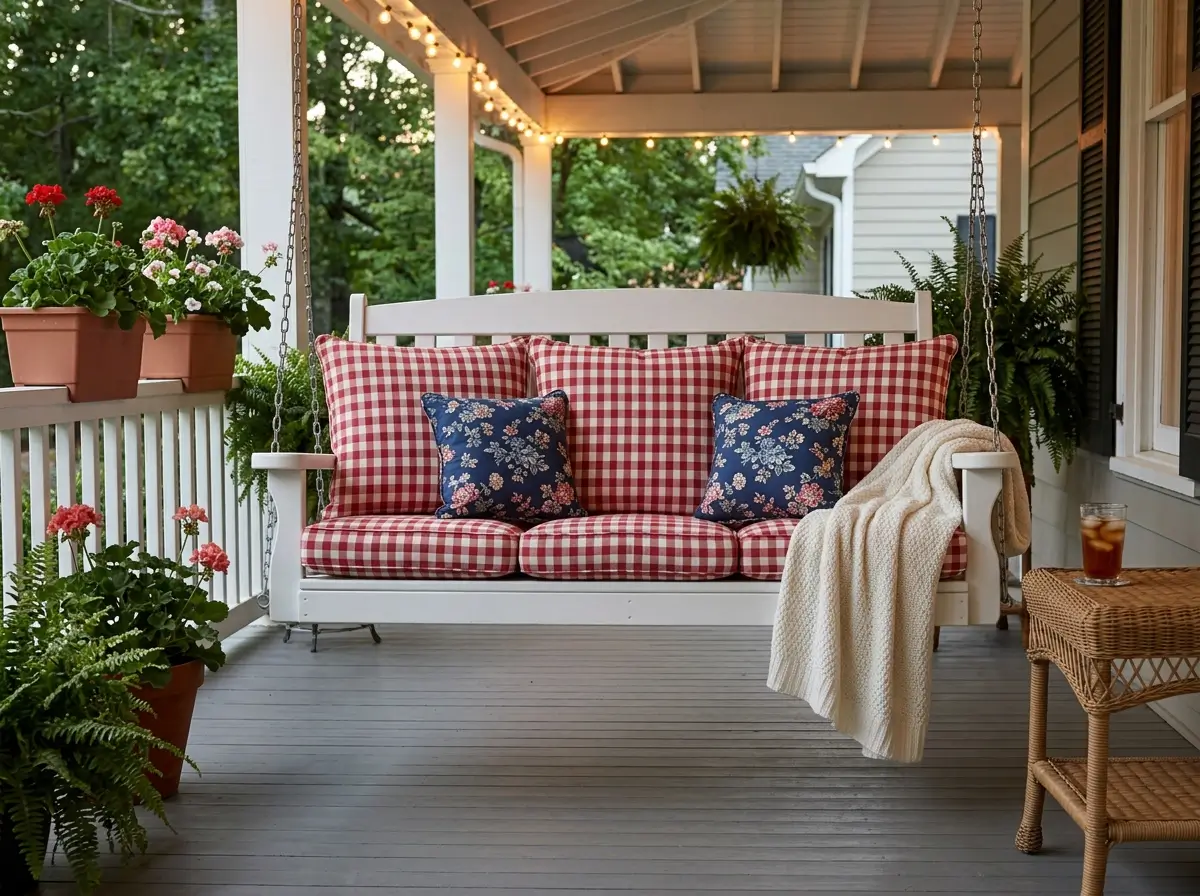

Porches often become overlooked spaces between the front door and the yard, yet a well-planned Porch Swing can turn even a modest covered area into somewhere people genuinely want to sit. Good styling involves more than adding several cushions and a throw. Scale, clearance, upholstery, lighting, flooring, plants, and the architecture around the seat all affect how comfortable and balanced the finished space feels. Small porches especially need careful choices because oversized furniture or too many accessories can quickly block circulation. These ideas focus on practical arrangements that work for real homes, including narrow porches, rentals, traditional houses, modern exteriors, and spaces decorated on a limited budget.
What Is the Best Way to Style a Porch Swing?
Short answer: Start with comfort and scale, then build the decor around a limited color palette, weather-friendly cushions, one useful side surface, soft lighting, and a small amount of greenery. A Porch Swing should have enough open space around it to move safely and should visually relate to the house rather than looking like an unrelated piece of furniture.
Before shopping for accessories, measure the available width and depth. Check doors, steps, railings, windows, planters, and walking routes. Remember that suspended seating needs movement space rather than only enough room for its stationary dimensions. Once the practical layout works, choose two or three main colors and repeat them through cushions, pots, rugs, or small accessories. That simple approach usually creates a more polished result than buying many decorative pieces separately.
Build a Warm Neutral Seating Area
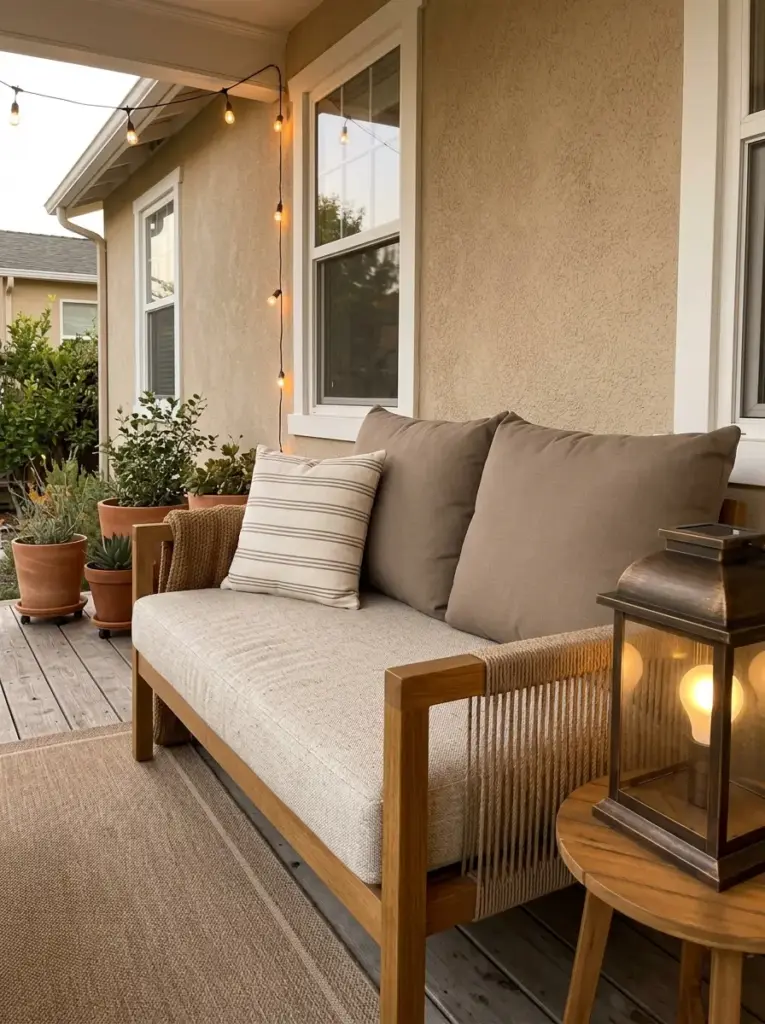
Warm neutrals are useful when you want comfortable outdoor seating without committing to strong seasonal colors. Start with cream, oatmeal, warm beige, mushroom, camel, and natural wood. Rather than making every surface the same shade, vary the depth of those neutrals. Try an oatmeal seat cushion, two mushroom-colored back pillows, and one smaller pillow with a subtle brown stripe. Natural timber or a medium oak stain gives the arrangement enough contrast to keep pale textiles from looking washed out.
Texture matters more when the palette stays quiet. Woven outdoor fabric, slub-style cushions, rope details, wood grain, and a flat-weave rug can all sit within the same neutral family while still looking distinct. Avoid using five different chunky textures together. One woven rug and one textured cushion fabric usually provide enough variation.
Warm neutrals work particularly well on white, cream, beige, brick, or soft gray houses. Renters can use the same approach without altering the architecture. Outdoor cushion covers, a washable rug, and movable pots introduce the palette without painting walls or floors. Owners of narrow porches can skip the rug entirely and let attractive timber or concrete flooring remain visible.
Lighting should support the warmth rather than fight it. Bulbs around 2700K create a softer evening atmosphere than cool blue-white lamps. Position the light beside or above the seating area instead of pointing a harsh fixture directly at eye level. Solar lanterns can provide a similar effect where adding electrical wiring is impractical.
The approach succeeds because neutral colors reduce visual competition and let materials create the interest. It is especially suitable for beginners who want a flexible foundation they can update later with inexpensive seasonal accents.
Use Deep Green for a Classic Outdoor Look
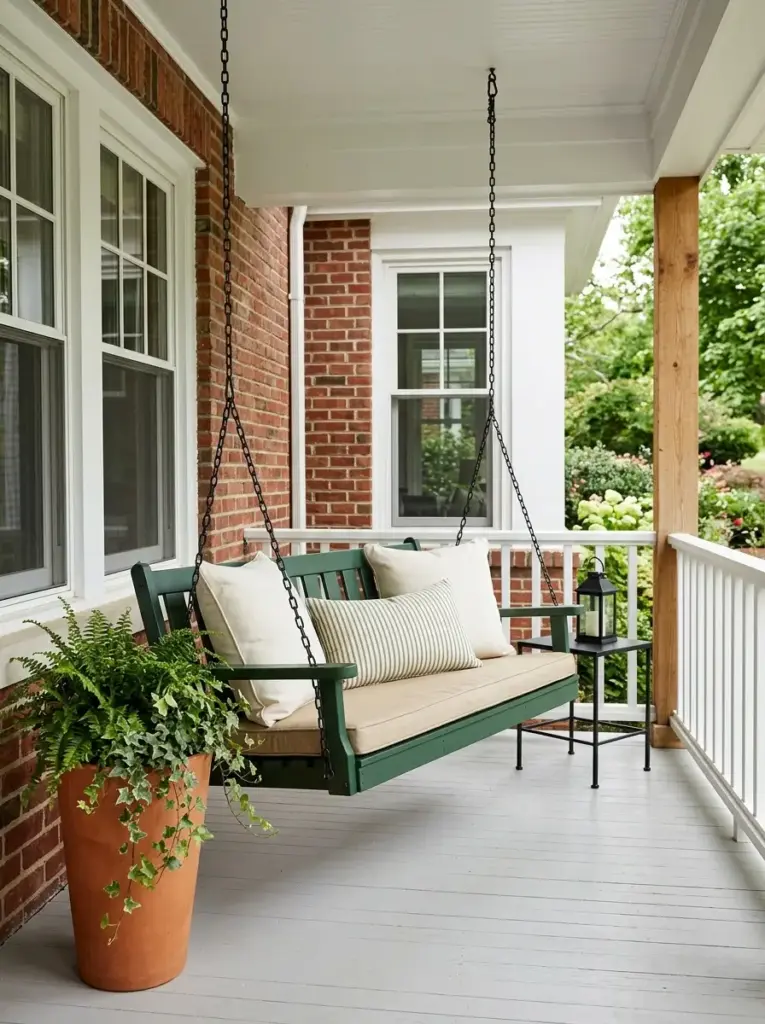
Deep forest green, olive, or muted moss can connect outdoor seating to nearby planting while giving a porch more definition. Instead of spreading green across every accessory, use it on one substantial element. Painted timber, a seat cushion, or two large back cushions can establish the color without making the area overly coordinated.
White trim and pale flooring make forest green feel crisp and traditional. Red brick makes olive and moss shades appear warmer. Natural timber works beautifully beside either option because brown and green already occur together outdoors. For a simple palette, combine forest green with ivory, tan, and a restrained black metal detail such as a lantern or side table.
Pattern can add character, but keep its scale appropriate. Narrow cream-and-green stripes work on traditional houses, while a subtle geometric design feels more suitable beside contemporary architecture. Avoid mixing botanical prints, checks, stripes, and florals in one small seating area. Two solid cushions plus one patterned lumbar pillow create enough variation for most compact porches.
Plant choices should complement the color rather than disappear into it. Ferns, boxwood, trailing ivy, or broad-leaf plants can sit near the outer edges of the arrangement. Keep large planters away from the swing path. Tall narrow pots are useful where floor area is limited because they provide greenery without taking up the same width as several small containers.
Deep green is particularly effective for traditional homes, cottages, Craftsman houses, and anyone who wants color that does not need to change with every season. Rust cushions can be introduced in autumn, while pale blue or cream accessories can lighten the same foundation during spring.
The reason this palette feels established is its connection to the landscape. Green reads as part of the exterior environment, so the seating looks integrated with the porch instead of decorated independently from it.
Create a Small-Space Porch Swing Layout
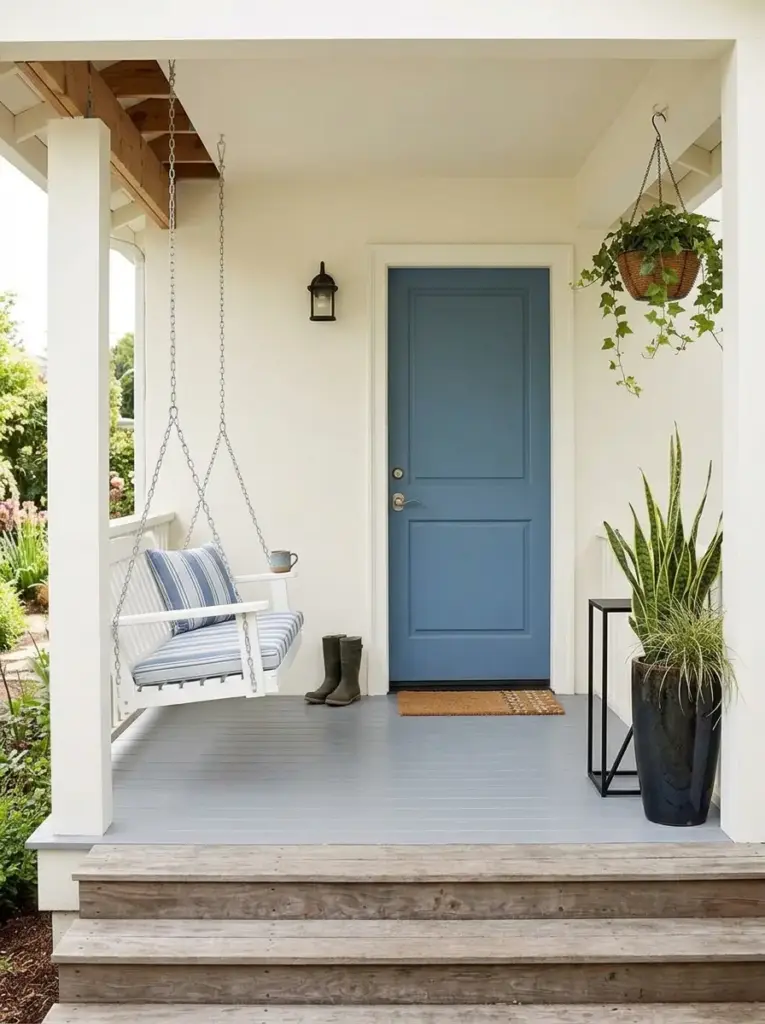
Limited square footage does not mean the seating has to feel cramped. Small-space styling depends on choosing fewer pieces and giving each one a clear purpose. A compact Porch Swing should remain the largest furniture element, while everything around it stays visually lighter. One narrow side table, one tall planter, and a wall-mounted light may be all the supporting pieces required.
Start by protecting the walking path. Trace the route from the steps to the front door and make sure nobody has to squeeze around furniture. Door swing is another common problem. Furniture that looks appropriately positioned when the door is closed may become inconvenient once the door opens. Test the layout before adding pots, tables, baskets, or floor lanterns.
Vertical space can compensate for limited floor space. Tall planters, wall-mounted outdoor sconces, narrow trellises, and hanging plants move decorative interest upward. Keep hanging greenery away from the seat itself so leaves do not brush against people or interfere with chains and ropes.
Furniture with exposed legs usually looks lighter than solid box-shaped pieces. Choose a slim metal drink table instead of a broad wooden end table. Folding tables are another practical choice because they can disappear when the porch needs extra circulation space. Nesting stools can provide a similar function while occasionally doubling as extra seating.
Rugs require more thought in a tight layout. An undersized rug can make the arrangement look fragmented, while an oversized one may collect dirt near the entrance. If there is not enough space for a properly proportioned outdoor rug, leave the floor bare. Painted boards, concrete, brick, or tile can become part of the design instead.
Small-space success comes from preserving negative space. Beginners often assume empty corners need decoration, but visible floor and wall areas help the porch feel wider. This approach is best for townhouses, narrow front porches, compact cottages, and anyone working with a shallow covered entry.
Try a Modern Black and Cream Palette
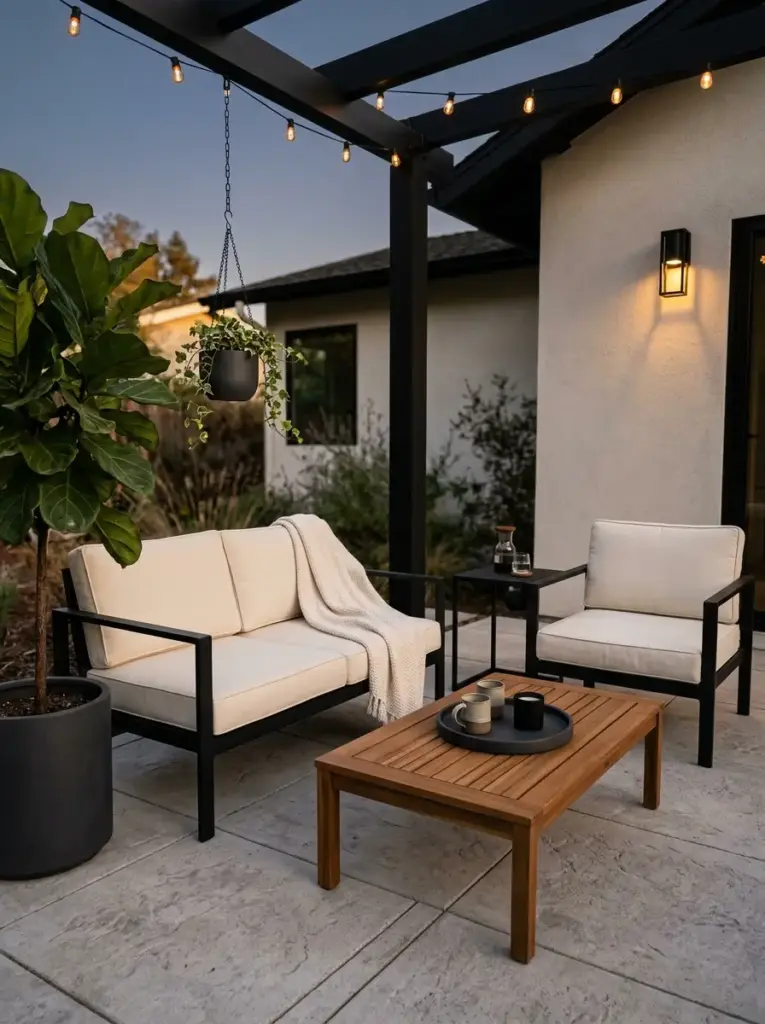
Black and cream provide clear contrast without requiring a complicated decorating plan. Use black for the structural elements and cream for the surfaces that should feel soft. Dark chains, a black frame, charcoal planters, or a slim side table can establish definition, while cream cushions prevent the seating area from becoming severe.
Modern styling depends heavily on shape. Choose cushions with clean edges rather than excessive ruffles, and limit accessories to pieces with simple silhouettes. One cylindrical planter and one compact table can look more intentional than several differently shaped decorative objects. Matte finishes generally feel quieter outdoors than glossy black surfaces, which can produce distracting reflections in strong daylight.
Warm wood is helpful when the contrast starts to feel too stark. Introduce it through the seat itself, a small stool, or a simple tray. Oak, teak-like brown, and medium walnut tones bridge black and cream while making the space more welcoming. Avoid adding multiple wood stains because they can make a small composition feel disconnected.
Greenery becomes particularly noticeable against this restrained palette. One large leafy plant can provide enough natural color. Choose a pot in charcoal, sand, or warm gray rather than introducing another dominant shade.
Evening lighting should soften the strong color contrast. Warm 2700K fixtures are a useful starting point, especially beside black metal. Avoid very cool 5000K bulbs unless functional visibility is the main priority because they can make cream upholstery look stark and flatten warm timber tones.
Modern black and cream works best for renovated homes, contemporary exteriors, modern farmhouses, and homeowners who prefer fewer accessories. Renters can recreate the scheme entirely through removable furnishings, making it easy to reverse when moving.
The palette works because the visual hierarchy is obvious. Dark elements define the structure, pale textiles provide comfort, and natural materials soften the transition between them.
Add Coastal Style Without Nautical Clutter
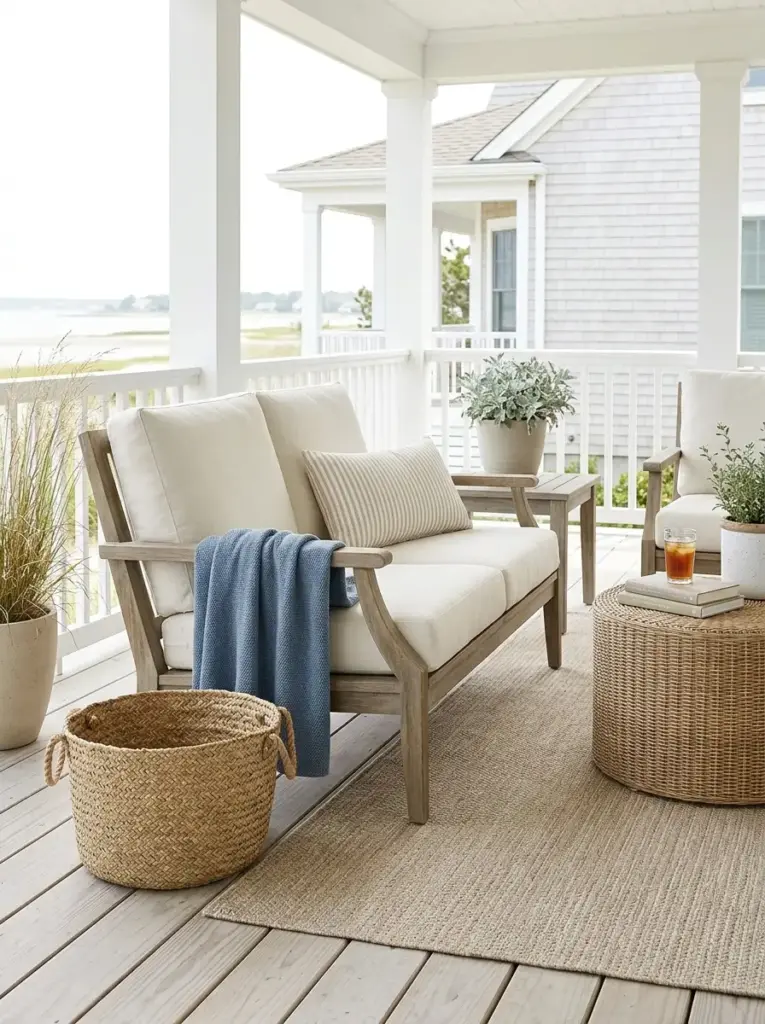
Coastal styling feels more convincing when it comes from color, texture, and light rather than obvious themed decorations. Skip anchor signs, collections of shells, and multiple rope ornaments. Instead, combine faded blue, soft white, sandy beige, natural fibers, and weathered wood.
Begin with one washed blue textile. Dusty denim blue, muted slate, or pale blue-gray tends to look calmer than bright turquoise. Pair it with ivory seat cushions and one narrow striped pillow if you want pattern. Keep surrounding pieces in natural materials so the blue remains an accent rather than becoming the entire theme.
Woven textures are particularly useful here. Rattan-look outdoor tables, seagrass-style baskets made from weather-resistant materials, rope details, and flat-weave rugs can introduce the tactile quality associated with relaxed coastal interiors. Check whether each product is actually rated for covered or outdoor use. Indoor natural-fiber pieces may absorb moisture and deteriorate quickly.
Light is another important part of the scheme. Coastal porches generally benefit from an airy arrangement that does not cover every wall or corner. Pale textiles reflect daylight, while open floor area prevents the collection of soft colors from looking heavy.
Nearby planting can remain simple. Ornamental grasses, silvery foliage, or restrained green plants fit the palette without turning it into a literal beach theme. Where local climate makes those plants unsuitable, choose species that thrive in your conditions rather than forcing a particular visual reference.
Rental properties are easy to style this way because almost every element can be movable. Cushions, a washable rug, baskets, planters, and a compact side table can create the direction without changing paint or permanent fixtures.
Coastal styling works best for light-colored houses, sunny porches, lake homes, and anyone who prefers a relaxed palette. Its strength comes from restraint. Materials suggest the setting while the absence of novelty decor keeps the space useful year-round.
Make the Porch Swing Comfortable Like a Daybed
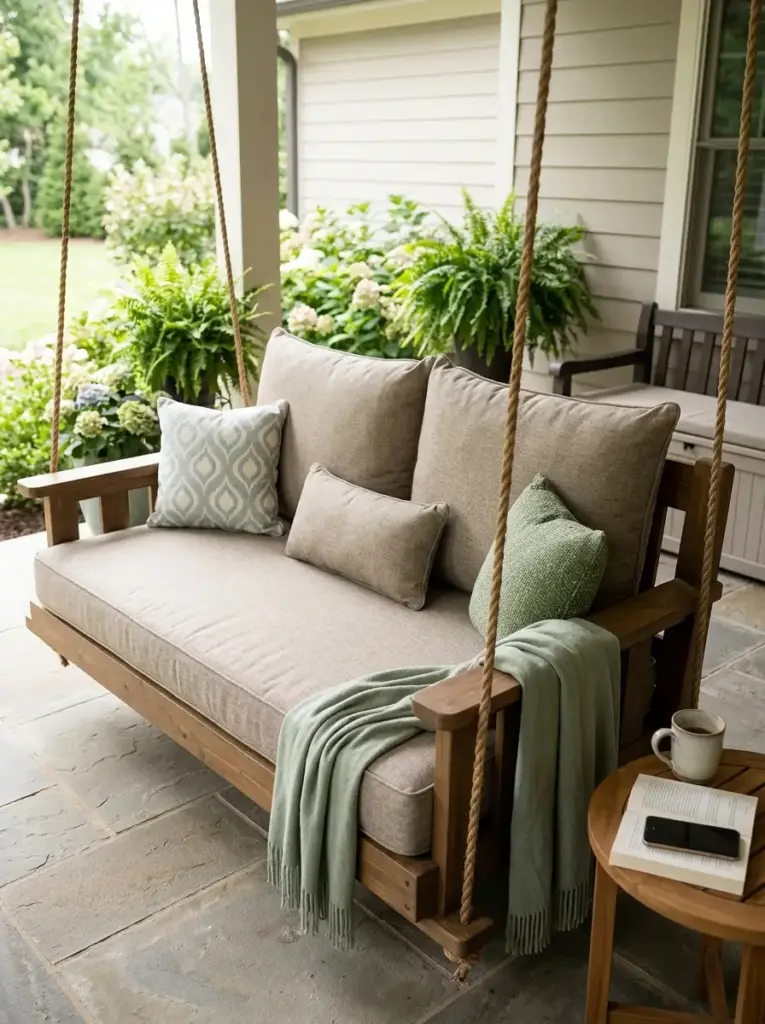
Comfort becomes especially important when the seat is used for reading, afternoon naps, or long conversations. A deeper Porch Swing can function almost like an outdoor daybed when the cushions support the body properly. Start with a supportive seat cushion rather than relying on decorative pillows to compensate for a hard base.
Measure the seat before ordering upholstery. Cushions that are several inches too short can slide around, while oversized cushions may bunch at the corners. Look for outdoor foam or fill designed to recover after compression and choose removable, washable covers whenever possible. Covered porches still collect pollen, dust, pet hair, and windblown moisture.
Back support should come next. Two or three substantial back cushions are usually more comfortable than a pile of tiny throw pillows. Add one lumbar cushion if the seat depth makes it difficult for shorter users to sit with their feet comfortably positioned. Decorative pillows can then be limited to one or two pieces.
Throws require practical storage. Leaving ordinary indoor blankets outside encourages dampness and fading. Keep a washable outdoor throw in a nearby lidded storage bench or bring it inside after use. Where humidity is high, avoid stuffing textiles into containers while they are still damp.
A small table within easy reach makes the seat genuinely useful. Look for a surface large enough for a mug, phone, book, or small lamp but narrow enough to remain outside the movement path. Round tables can be easier to navigate on tight porches because they have no projecting corners.
Daybed-style seating is best for deep covered porches and households that actually spend time outdoors rather than using the area only as an entrance. The arrangement feels inviting because comfort is designed into the foundation instead of being added as decoration afterward.
Style With Autumn Colors That Still Feel Refined
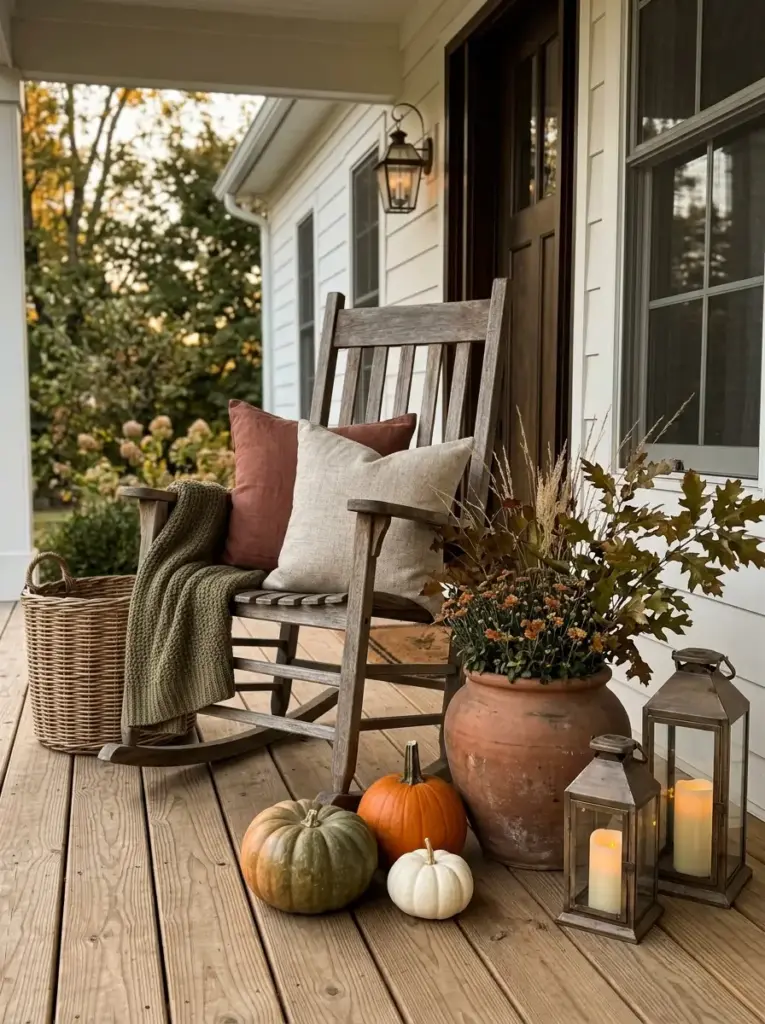
Seasonal decorating can quickly become crowded when every available surface receives pumpkins, signs, garlands, and novelty objects. Autumn styling works better when the base furniture stays consistent and only a few textile colors change.
Start with rust, cinnamon, muted ochre, deep brown, olive, or burgundy. Select two accent colors rather than using the entire fall spectrum. Rust and olive work beautifully with natural wood, while burgundy and camel can suit darker traditional exteriors. Cream or oatmeal should remain somewhere in the palette to give stronger colors breathing room.
Swap one or two cushion covers rather than replacing every pillow. Drape a washable throw over one corner and add a pot of seasonal foliage or flowers nearby. Three pumpkins grouped at different heights generally make a stronger arrangement than small pumpkins scattered across the entire porch.
Lanterns are useful for autumn because shorter days make lighting more noticeable. Battery-operated candles can create a soft glow without open flame. Keep floor lanterns away from steps and the swing path, especially on narrow porches. Wall sconces or overhead fixtures remain better for functional illumination.
Natural textures make seasonal colors feel less temporary. Wood, woven baskets, clay pots, and aged metal can stay in place after autumn accessories are removed. That reduces storage needs and makes seasonal changes cheaper.
Budget-conscious decorators can buy neutral cushion inserts once and change only zippered covers. Thrifted baskets and pots can also work if their materials suit protected outdoor conditions. Avoid buying large collections of items printed with seasonal phrases because they have limited use and can dominate a small porch.
Autumn layering suits traditional, farmhouse, rustic, and cottage-style homes particularly well. The strategy works because color creates the seasonal change while permanent furniture continues to provide a calm foundation.
Use Plants to Frame the Seating Instead of Hiding It
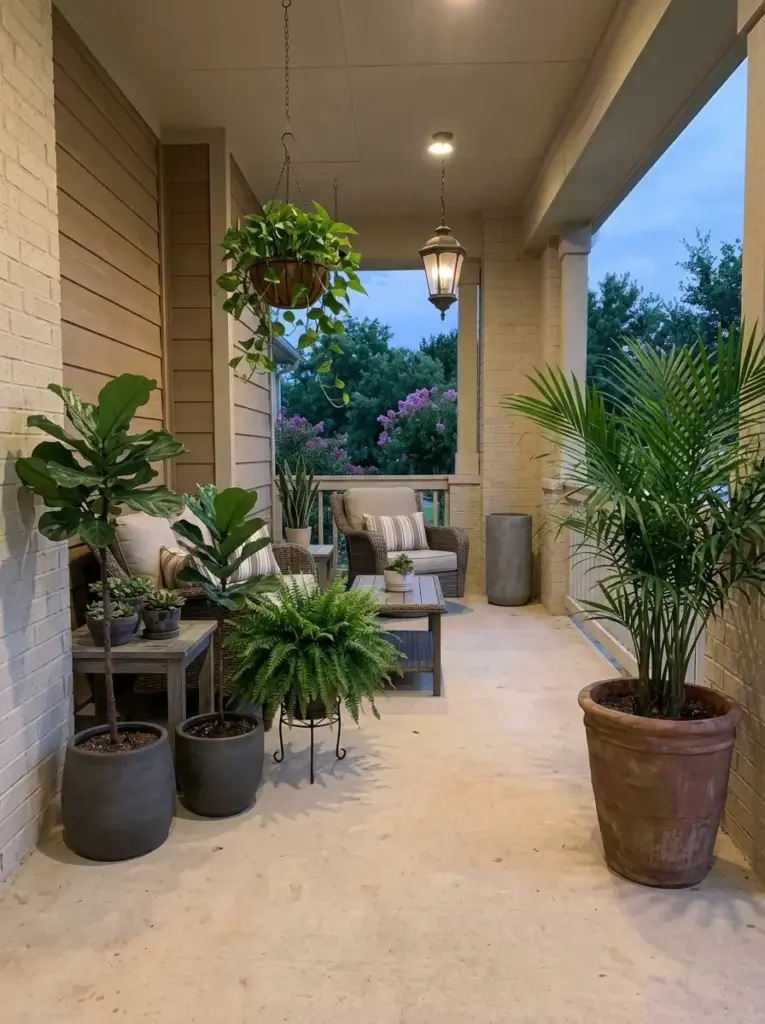
Greenery can soften hard porch surfaces, but too many plants can make a seating area difficult to use. Treat plants as a frame rather than filling every available gap. Place taller foliage toward the outer edges, medium-height plants near walls or columns, and smaller pots where they will not interfere with walking.
Vary height before varying species. Three plants at exactly the same level can look like a row of unrelated objects, while a tall, medium, and low arrangement creates a natural visual progression. Matching pots are not required, but containers should share something in common, such as material, color family, or finish.
Large pots often look cleaner than numerous tiny ones. One substantial planter can anchor the end of a long porch without creating maintenance clutter. Small-space decorators should consider tall, narrow containers that add height while using less floor area.
Sun exposure needs to guide plant selection. A shaded north-facing porch requires different species from a hot western exposure. Observe the space at several times of day before buying plants. Decorative advice should never override the actual light, temperature, and watering requirements of living greenery.
Hanging plants can draw attention upward, especially on porches with generous ceiling height. Position them where water drainage will not stain upholstery or create slippery flooring. They should also remain clear of moving chains, ropes, and seating.
Artificial plants can be reasonable in extremely dark areas, but choose them selectively. One convincing faux plant usually looks better than a large collection. Clean it periodically because outdoor dust quickly reveals artificial leaves.
Plant framing works for nearly every decorating style because greenery creates a transition between architecture and landscape. It is especially helpful where a porch has large expanses of siding, masonry, or concrete that need visual softness without additional furniture.
Layer an Outdoor Rug Without Crowding the Floor
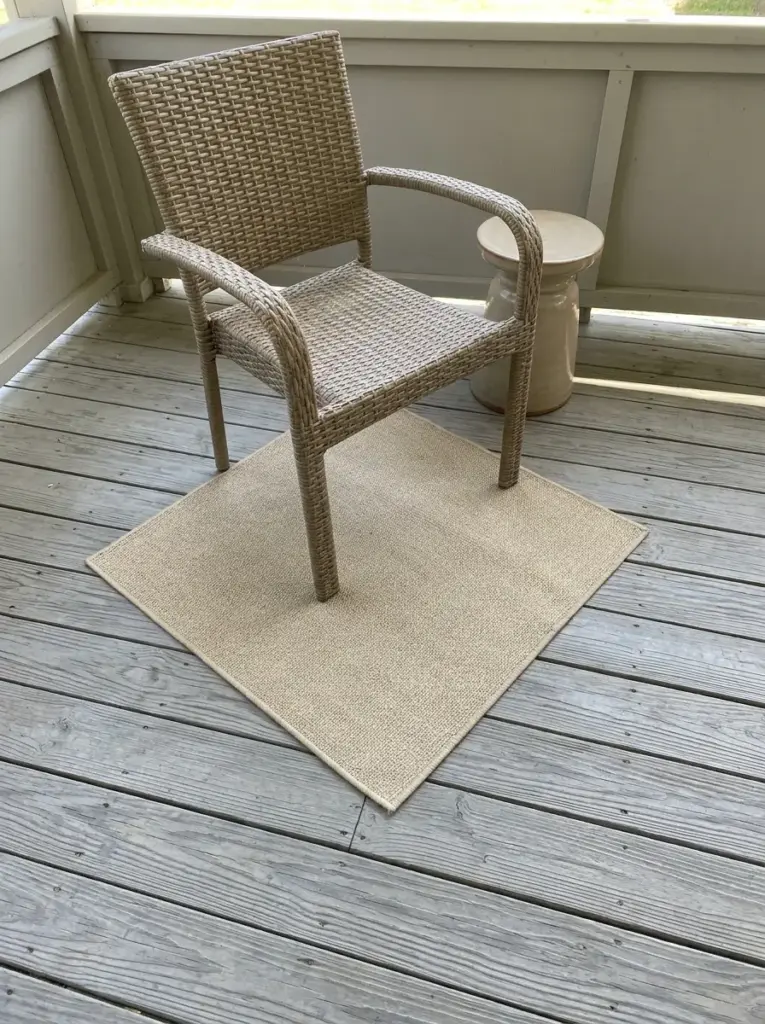
Outdoor rugs can define a seating zone, introduce pattern, and make hard flooring feel more comfortable. They can also become awkward when their size ignores doors, steps, and circulation. Measure the usable floor area before selecting one.
Ideally, the rug should visually connect the main seat to at least one nearby piece, such as a side table or planter. Tiny mats floating directly beneath the furniture often make the seating appear smaller. Where a larger rug would interfere with the entry path, skipping it may produce a cleaner result.
Flat-weave outdoor rugs are usually easier to maintain than thick indoor-style piles. Look for materials designed to tolerate moisture and allow the rug to dry fully after rain or cleaning. Even outdoor products can develop odor or mildew when water remains trapped beneath them for long periods.
Pattern should relate to the rest of the porch. Stripes can visually widen a narrow area when positioned thoughtfully. Small geometric patterns hide everyday dirt better than solid cream. Heavily patterned rugs work best when cushions remain simple, while quiet rugs allow stronger textiles on the seating.
Color repetition helps the rug belong. If the rug contains muted brown and cream, repeat one of those shades in a cushion, pot, or timber finish. Exact matching is unnecessary. Similar undertones are enough to make separate purchases feel related.
Renters often benefit from outdoor rugs because they can cover unattractive flooring without permanent changes. Budget shoppers should prioritize durability and appropriate sizing over intricate patterns. A simple correctly sized rug usually looks more considered than an elaborate design that is too small.
The rug succeeds when it defines the seating zone without becoming an obstacle. Floor space still needs to function first, particularly around entrances and steps.
Add Warm Lighting for Better Evening Seating
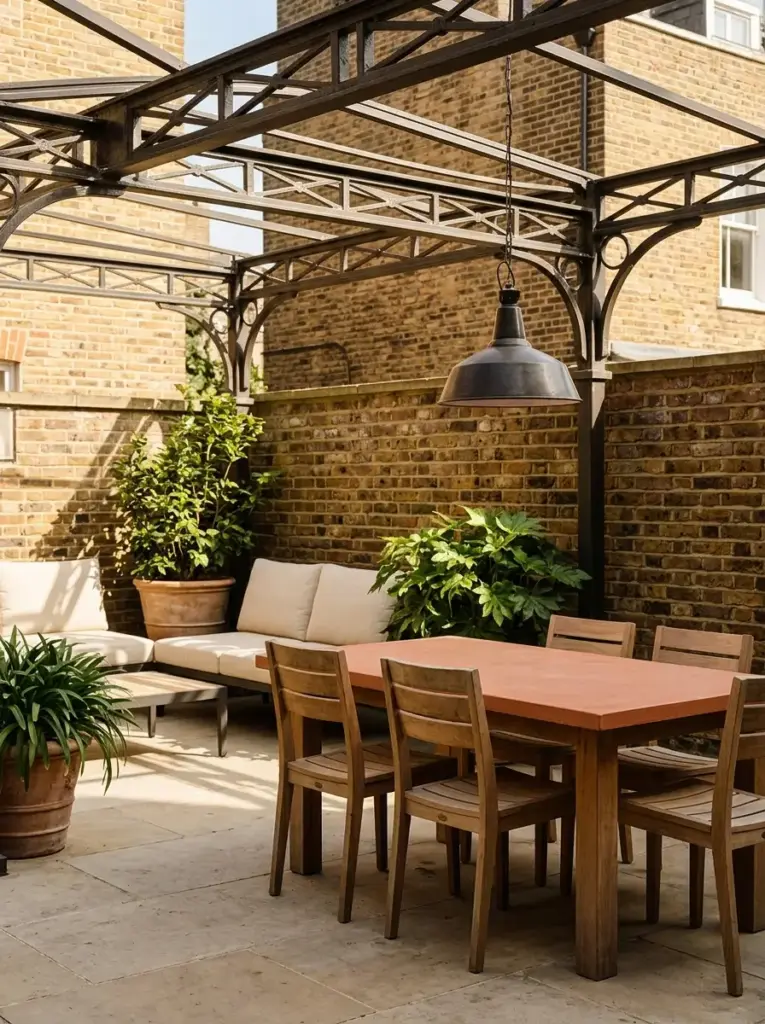
Outdoor seating that looks inviting during daylight can become unusable after sunset if the lighting is too harsh or too dim. Layering light at different heights provides better results than relying on one bright ceiling fixture.
Begin with the main functional source. An overhead fixture or wall sconce should provide enough visibility for safe movement. Add softer secondary lighting through protected lanterns, approved outdoor string lights, or portable rechargeable lamps. Keep electrical products properly rated for the location and exposure.
Color temperature strongly affects atmosphere. Warm white light around 2700K generally complements timber, brick, cream upholstery, terracotta, and warm paint colors. Lighting around 3000K can provide a slightly cleaner appearance while remaining comfortable. Very cool light may be useful for certain security applications, but it often feels too clinical around relaxed seating.
Fixture scale matters as much as brightness. Tiny wall lights can disappear beside tall columns, while oversized lanterns can overwhelm a narrow porch. Look at the fixture in relation to doors, ceiling height, and furniture rather than judging it alone in a product photo.
Solar lighting offers a rental-friendly alternative where sunlight exposure is adequate. Rechargeable table lamps are another flexible choice because they require no wiring and can move indoors during poor weather. Avoid running extension cords through walking routes.
Lighting should never create glare directly at seated eye level. Position portable lamps slightly to the side and use diffused shades where possible. Shadows should remain soft enough that faces are comfortable to see during conversation.
Evening lighting is particularly valuable for households that use the porch after work or during warmer nights. The layered approach succeeds because it combines safety with atmosphere instead of expecting one decorative fixture to handle every job.
Give Your Porch Swing a Relaxed Cottage Style
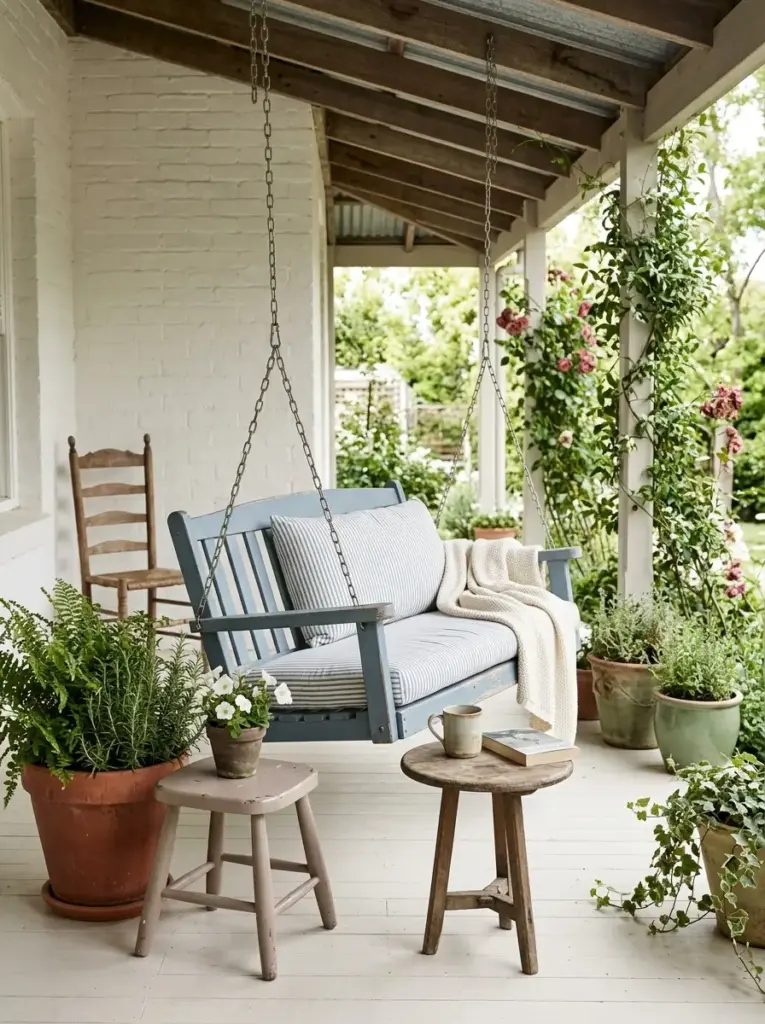
Cottage styling allows more softness and variation than minimalist schemes, but it still benefits from editing. Give the Porch Swing a relaxed character with muted paint, gentle patterns, natural timber, traditional planters, and informal greenery rather than covering it with themed decorations.
Dusty green, muted blue, warm white, soft taupe, and faded brick red are useful cottage colors. Pick one as the primary accent and support it with quieter neutrals. Slightly weathered finishes can work, but deliberately distressing every item tends to look artificial. Let natural wear appear gradually on suitable materials.
Textiles can introduce pattern through small checks, narrow stripes, restrained florals, or traditional woven designs. Limit the arrangement to one main pattern and one quieter companion. Repeating five different prints on a small seat makes it difficult for the eye to rest.
Nearby furniture does not need to match exactly. A painted stool can sit beside a timber seat if their undertones feel related. Vintage-style pots and secondhand tables are excellent budget options, provided they remain stable and suitable for the conditions.
Informal planting completes the setting. Ferns, herbs, flowering pots, or climbing plants can soften railings and columns. Leave enough architecture visible so greenery looks established rather than uncontrolled. Renters can create the effect with freestanding trellises and containers instead of attaching plants permanently to walls.
Cottage style works particularly well for older houses, small homes, covered garden porches, and people who enjoy collected pieces rather than coordinated furniture sets. Its charm comes from controlled variation: objects can differ in age, finish, and shape while sharing a restrained color story.
Common Mistakes to Avoid
Choosing Furniture Before Measuring
Buying first and measuring later causes many porch layout problems. Check width, depth, ceiling structure, nearby doors, railings, and movement clearance before committing to suspended furniture. Decorative dimensions alone do not show how much room a moving seat requires.
Filling Every Empty Corner
Visible floor and wall space can make a porch feel larger. Resist the urge to place a pot, lantern, basket, or table in every gap. One or two empty areas create visual relief and make the main seating easier to notice.
Using Too Many Small Pillows
Several tiny cushions may photograph well but often reduce usable seat depth. Prioritize supportive back cushions and add only one or two decorative pillows. Comfort should determine the number rather than the desire to fill every inch.
Ignoring Outdoor Fabric Requirements
Indoor cushions can fade, absorb moisture, and become difficult to maintain outdoors. Choose materials appropriate for the amount of sun and rain the porch receives. Removable covers make regular cleaning considerably easier.
Blocking the Walking Route
Steps, front doors, and narrow passages should remain easy to navigate. Decorative floor lanterns and planters are common obstacles. Walk through the finished layout while carrying bags or opening the door to check whether everyday movement still feels natural.
Mixing Too Many Colors
Five or six strong accent colors can make a small porch look busy. Start with one dominant neutral, one main accent, and one smaller supporting shade. Plants and natural materials already add extra color, so they should be considered part of the overall palette.
Forgetting Maintenance
White upholstery, thick rugs, untreated wood, and dozens of small accessories all require care. Choose finishes based on how much cleaning and seasonal storage you realistically want to handle. Easy maintenance often leads to a porch that stays attractive longer.
Budget-Friendly Styling Tips
Updating outdoor seating does not require replacing the main furniture. Cushion covers usually create the biggest visible change for relatively little money. Keep existing inserts when they remain supportive and buy washable covers in a coordinated palette. Two larger cushions can also look more substantial than six inexpensive small pillows.
Secondhand side tables, stools, baskets, and planters are worth considering because minor cosmetic wear is often less noticeable outdoors. Check stability before buying and make sure materials can handle the intended environment. Exterior-safe paint can unify mismatched pieces where appropriate.
Plants can become expensive when purchased fully grown. Smaller plants generally cost less and can fill out over time when given suitable conditions. Propagating plants that respond well to that method can stretch the budget further.
Lighting does not always require electrical work. Rechargeable lamps, solar fixtures, and battery-operated lanterns provide flexible options for renters. Spend more on functional pieces that affect comfort and safety, then save on decorative items that can be changed easily.
Seasonal decorating becomes cheaper when the foundation stays neutral. Store a small collection of zippered cushion covers instead of several complete cushion sets. Change one throw, one pillow cover, and a few natural accents when the season changes rather than rebuilding the whole arrangement.
Existing household pieces can sometimes move outdoors temporarily during gatherings, but only when weather conditions allow and the items are brought back inside afterward. Avoid sacrificing indoor furniture to moisture simply to save money.
Practical Porch Swing Tips for Everyday Use
Check the support system before concentrating on styling. Suspended seating needs appropriate structural support, secure hardware, and installation suitable for its expected load and movement. When the ceiling structure or mounting method is uncertain, use a qualified professional rather than guessing from appearance.
Leave adequate clearance around moving parts. Decorative pots, tables, railings, and walls should not sit where the seat can repeatedly strike them. Families with children should pay particular attention to movement zones and avoid creating pinch points around chains or nearby furniture.
Washable textiles make everyday upkeep easier. Keep an outdoor storage box or indoor shelf available for throws and cushions that need protection during severe weather. Allow wet upholstery to dry completely before storing it.
Clean the floor beneath and around the seat regularly because leaves, pollen, and grit tend to collect in sheltered areas. Inspect timber finishes, ropes, chains, fasteners, and hardware periodically for visible wear or deterioration.
Keep frequently used items convenient rather than decorative. One side surface for a drink and a comfortable cushion will usually improve daily use more than several ornamental objects. Design the area around how people actually sit, read, talk, or enjoy coffee there.
Frequently Asked Questions
What size Porch Swing is best for a small porch?
Measure the complete usable area rather than choosing by seat width alone. Allow for the movement of the suspended seat, nearby doors, walls, railings, steps, and the main walking route. Compact two-person designs often suit narrow porches better than deep daybed models. Exact clearance requirements depend on the specific product and installation, so follow the manufacturer’s specifications.
How many cushions should I put on the swing?
Two substantial back cushions and one lumbar or decorative pillow are enough for many standard seats. Deeper daybed designs may need additional support. Avoid filling so much of the seat with cushions that people have to remove half of them before sitting down.
What colors make a porch feel cozy?
Warm white, oatmeal, camel, rust, forest green, dusty blue, muted terracotta, and natural wood tones are reliable choices. Select colors that relate to the house exterior. Warm neutrals are especially flexible because seasonal colors can be introduced through inexpensive cushion covers and throws.
Should an outdoor rug go underneath the swing?
Use one when there is enough floor space for a properly proportioned rug without blocking doors, steps, or drainage. Flat-weave outdoor rugs are practical for covered areas because they are easier to clean and dry. Leaving attractive flooring exposed is often better than forcing a rug into a cramped layout.
How can renters decorate without permanent changes?
Focus on removable textiles, freestanding planters, outdoor rugs, compact tables, rechargeable lighting, and portable accessories. Avoid drilling, painting, or changing permanent fixtures without permission. Freestanding trellises can also add vertical greenery without attaching anything to exterior walls.
What lighting is best around outdoor seating?
Warm light around 2700K is a useful choice for relaxed seating because it works well with wood, cream textiles, brick, and earthy colors. Combine functional overhead or wall lighting with a softer secondary source when possible. Every electrical fixture should be appropriately rated for its outdoor exposure.
Conclusion
Good outdoor seating starts with function and becomes attractive through thoughtful editing. Measure first, protect circulation, choose supportive cushions, and build the color palette around the architecture already present. Plants should frame the space rather than crowd it, lighting should improve both safety and comfort, and accessories should have enough room around them to be noticed.
The most successful Porch Swing setup does not need the largest budget or the greatest number of decorations. Comfortable proportions, weather-appropriate materials, coordinated colors, practical lighting, and a clear walking path matter much more. Start with the pieces that affect daily use, then add texture and personality gradually. When every item has a reason to be there, even a small porch can become a comfortable and polished extension of the home.