
A narrow apartment living room can feel tricky to style because every inch matters. The sofa, coffee table, TV stand, walkway, and rug all compete for space. When the rug sits in the wrong spot, the room can look cramped, uneven, or unfinished.
The good news is that you do not need a large room or expensive furniture to make the space feel balanced. The right apartment living room rug placement can define your seating area, guide foot traffic, soften hard floors, and make a long room feel more planned.
Rugs also help renters add warmth without changing flooring, painting walls, or making permanent updates. A simple rug can hide worn floors, reduce echo, and make basic apartment furniture look more connected.
This guide shares 15 practical rug placement ideas for narrow apartment living rooms. Each idea explains why it works, who it is best for, and how to use it in a real home.
What is the best apartment living room rug placement for narrow rooms
The best apartment living room rug placement for a narrow room is usually a rug placed under the front legs of the sofa, with the coffee table centered on top and at least part of the seating touching the rug. This creates one clear sitting zone without blocking the walking path.
For most narrow apartments, a 5×8, 6×9, or slim 4×6 rug works better than a very large area rug. The rug should support the furniture layout, not cover the entire floor. Leave enough visible flooring around the edges so the room can breathe and feel wider.
A narrow living room usually needs balance more than decoration. Before choosing a rug, measure the walkway, sofa width, coffee table size, and TV wall distance. This helps you avoid a rug that is too small, too wide, or placed in a way that interrupts movement.
Place the Rug Under the Front Sofa Legs

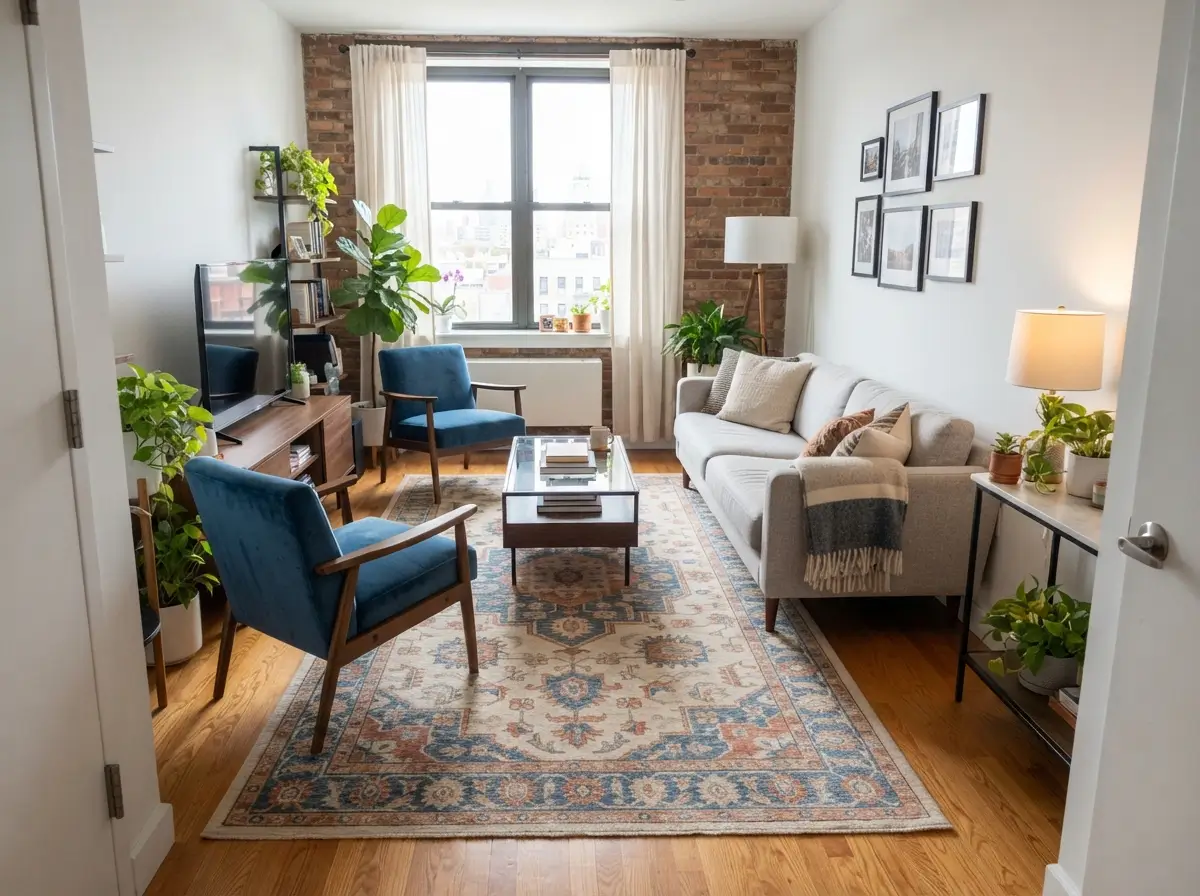
One of the easiest apartment living room rug placement ideas is to tuck the rug under the front legs of the sofa. This layout works well because it connects the sofa and coffee table without needing a huge rug. It gives the seating area a finished shape while keeping the room open.
This idea works especially well in narrow rooms where the sofa sits against one long wall. Pull the rug slightly under the sofa, usually 6 to 12 inches, so it does not look like it is floating in the middle of the floor. The back legs can stay off the rug if the room is tight.
For example, if you have a 72-inch apartment sofa, a 5×8 rug often works nicely. Place the long side of the rug parallel to the sofa. Add a slim rectangular coffee table or nesting tables in the center.
This setup is best for beginners because it is simple and forgiving. It also works for renters who cannot change the room layout. Choose a low-pile rug if you move furniture often or use the space daily.
Why it works is simple. The rug visually anchors the sofa, but it does not swallow the room. It creates a cozy seating zone while leaving enough flooring exposed along the sides.
Use a Long Runner Rug Beside the Sofa

A runner rug can be a smart choice when your apartment living room is very narrow. Instead of forcing a wide area rug into the space, use a runner along the open walkway beside the sofa. This gives the room softness without making the seating area feel squeezed.
This idea works best when your sofa sits on one side and the walking path runs between the sofa and TV stand. A runner helps guide movement through the room. It also protects high-traffic flooring, which is helpful in rentals with laminate, vinyl, or older wood floors.
Choose a runner that is long enough to follow the shape of the room but not so long that it touches every wall. Leave several inches of visible floor at both ends. A 2.5×7 or 3×8 runner often fits narrow apartments better than a standard area rug.
For colors, try warm beige, muted taupe, soft gray, or a small vintage pattern. These colors hide dust better than plain white and still keep the room light. If your furniture is dark, a lighter runner can brighten the walkway.
This placement is best for very tight living rooms, studio apartments, and rooms with a clear traffic lane. It works because it decorates the floor without fighting the furniture.
Center the Rug Under the Coffee Table Only

If your room is too narrow for the rug to touch the sofa, you can center a smaller rug under the coffee table. This is not always the designer’s first choice, but it can work when the scale is right. The key is to make the rug look intentional, not like a bath mat.
Choose a rug that is larger than the coffee table on all sides. As a simple rule, the rug should extend at least 12 inches beyond the table edges. This keeps the rug from looking too small. A 4×6 rug can work well with a compact coffee table in a narrow apartment.
This idea is best for rooms where the sofa, TV stand, and walkway leave very little open floor. It also works for renters who already own a smaller rug and want to use it without buying a new one.
To make this placement feel balanced, keep the coffee table slim. A round table, oval table, or narrow rectangular table can soften the layout. Avoid bulky square coffee tables because they can make the rug area feel crowded.
This placement works because it adds texture and warmth in the center of the room. It does not define the whole seating zone, but it still gives the eye a clear focal point.
Choose a Rug That Matches the Sofa Width

A narrow room often looks better when the rug follows the width of the sofa. This creates a clean line and avoids awkward edges sticking into walkways. For good apartment living room rug placement, measure your sofa first, then choose a rug close to that width or slightly wider.
For example, if your sofa is 78 inches wide, a rug around 5×8 can work because the 8-foot side gives enough width. Place the rug so it extends a few inches past both sofa arms. This makes the sofa feel framed rather than squeezed.
This idea works well when your sofa is the largest piece in the room. It gives the layout order and makes the seating area feel calm. It is also helpful if you have mismatched furniture because the rug creates a shared base.
A common mistake is choosing a rug much shorter than the sofa. When the rug stops far inside the sofa arms, the room can look unfinished. Another mistake is choosing a rug so wide that it blocks door swings, balcony access, or the natural walking path.
This tip is best for narrow living rooms with a standard sofa, loveseat, or apartment-size sectional. It works because matching the rug to the sofa creates visual structure without adding clutter.
Place the Rug Lengthwise to Stretch the Room

In a long and narrow apartment living room, place the rug lengthwise with the longest side following the longest wall. This draws the eye through the room and makes the layout feel more organized. It works especially well when the living room also connects to a dining area or entry path.
A lengthwise rug can help the room feel longer in a controlled way, not tunnel-like. The trick is to keep the seating area connected. The front sofa legs should sit on the rug, and the coffee table should sit fully on it.
This placement is best for railroad-style apartments, studio living rooms, and open layouts where the living area sits along one wall. It helps separate the lounge zone from the rest of the apartment without using shelves or dividers.
Use simple patterns if the room is already busy. Thin stripes, soft geometric designs, faded traditional prints, or small-scale patterns work better than large bold shapes. A heavy oversized pattern can make a narrow room feel crowded.
This idea works because the rug supports the natural shape of the room. Instead of fighting the narrow layout, it uses the length as part of the design.
Try a Round Rug to Soften Sharp Lines
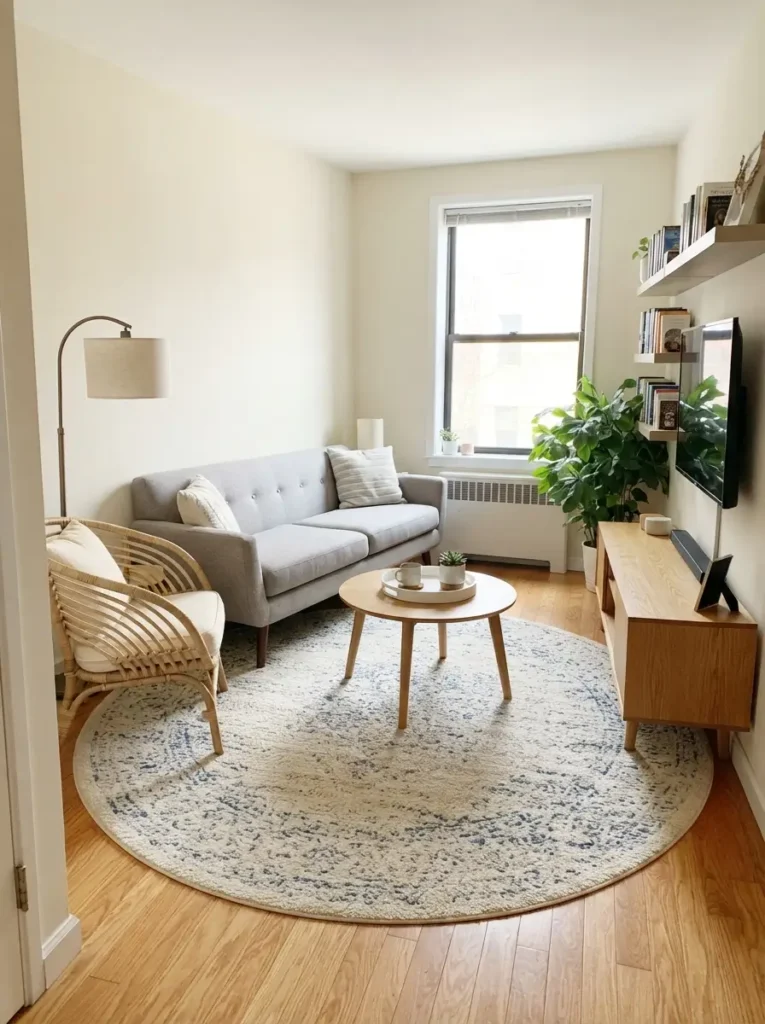
Most narrow apartment living rooms have many straight lines. Sofas, TV stands, walls, windows, and coffee tables often create a boxy feeling. A round rug can soften those edges and make the room feel less rigid.
A round rug works best in small seating areas with a compact sofa, accent chair, or round coffee table. It can also work in a studio apartment where the living space blends into the bedroom or dining corner. The curved shape creates separation without a hard border.
For apartment living room rug placement, center the round rug under a round or oval coffee table. Let the front sofa legs touch the rug if possible. If the sofa cannot touch it, make sure the rug is large enough to feel connected to the seating area.
A 5-foot or 6-foot round rug can fit many narrow rooms. Avoid tiny round rugs because they can look like random floor decor. The rug should feel like part of the furniture plan.
This idea is best for people who want a softer, more relaxed layout without adding more furniture. It works because curves balance narrow spaces that are full of rectangles.
Use a Low-Pile Rug Under Moving Furniture

Narrow apartment living rooms often work hard. You may use the coffee table for meals, laptop work, games, or storage. If furniture moves often, choose a low-pile rug and place it where chair legs, table legs, and sofa legs can slide without catching.
Low-pile rugs are practical because they are easier to vacuum and less likely to trap crumbs. They also work better under furniture in small rooms because they do not create a bulky floor layer. Flatweave rugs are especially good for rentals and high-traffic apartments.
For placement, tuck the rug under the sofa’s front legs and keep the coffee table fully on the rug. If you use poufs or small stools, make sure they can sit fully on the rug without wobbling.
This idea is best for busy homes, small families, pet owners, and anyone who uses the living room every day. It is also useful if your apartment has a narrow walkway where rug edges may curl.
Choose patterns that hide wear, such as faded beige, gray, rust, olive, or charcoal details. Avoid very thick shag rugs in tight rooms because they can make furniture feel unstable and collect dust quickly.
This works because the rug supports daily life, not just the room’s appearance.
Leave a Clear Border Around the Rug

A rug should not press against every wall in a narrow apartment living room. Leaving a border of visible floor helps the room feel cleaner and wider. Even a small gap can make a big difference.
A good rule is to leave at least 6 to 12 inches of floor between the rug and the walls or furniture edges. In very tiny rooms, even 4 inches can help. The goal is to avoid the wall-to-wall carpet effect unless you truly want that look.
This apartment living room rug placement idea works because visible flooring acts like breathing space. It gives the eye a break and shows the room’s shape. When the rug is too large, the room can feel stuffed, even if the rug itself is beautiful.
This tip is best for renters with attractive wood, laminate, or vinyl flooring. It also works if you want to make a narrow room feel less heavy. A light rug on a medium wood floor can create a soft contrast without closing in the space.
For example, pair a warm ivory rug with oak-look floors, or use a soft gray rug on darker floors. Keep the border even where possible, especially near the sofa and TV stand.
Place the Rug Away From the Main Walkway
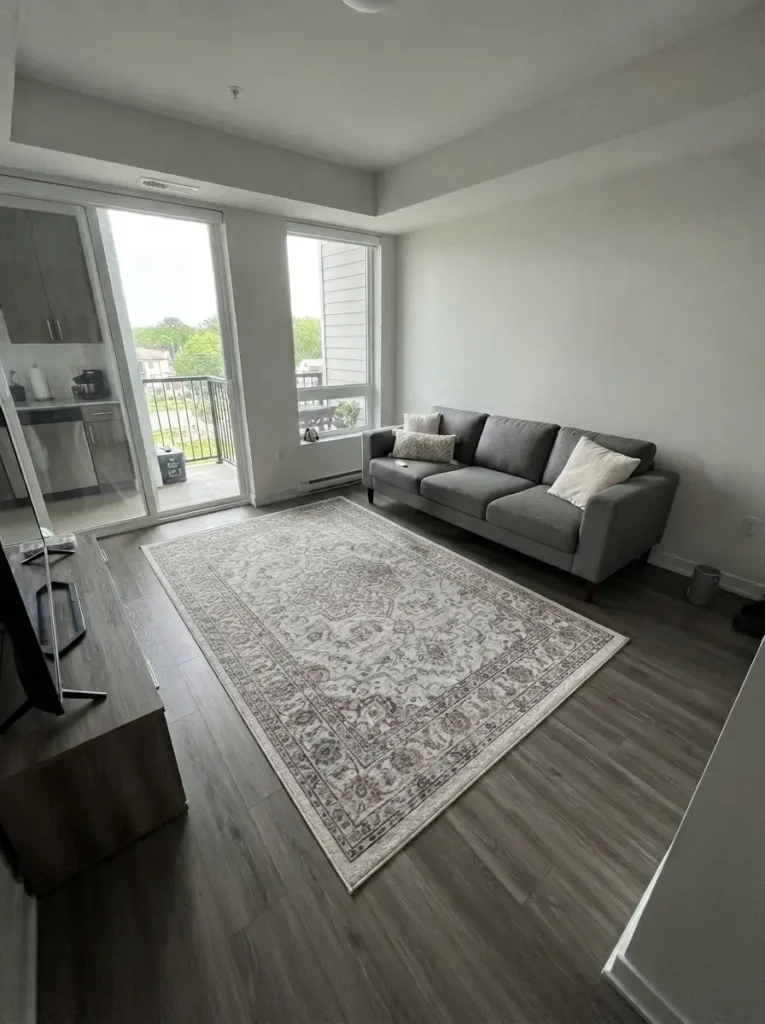
In narrow rooms, the walkway matters as much as the seating area. If the rug sits halfway in the walkway, people may trip, drag the edges, or feel like the room is harder to use. Place the rug so the main walking path stays clear.
This is especially important if your living room connects the entry door to the balcony, bedroom, or kitchen. Watch how people naturally move through the room. Then keep the rug inside the sitting zone instead of across the traffic path.
This idea is best for apartments with children, pets, roommates, or frequent guests. It also helps if you use a rolling office chair, storage cart, or foldable dining table in the same area.
For a practical example, place the sofa against the long wall, keep the rug under the sofa and coffee table, and leave the open side as the walkway. Do not center the rug in the full room if that means it blocks movement.
This works because good design should make daily life easier. A rug can look nice, but if it makes the room awkward to walk through, the placement is not right.
Use the Rug to Define a Floating Sofa

Not every narrow living room needs the sofa against the wall. If your room is long enough, you may float the sofa a little forward and place the rug underneath it. This can create a more intentional seating area, especially in open-plan apartments.
A floating sofa works best when there is still enough space behind it for walking or storage. You might place a slim console table behind the sofa, use baskets underneath, or leave the back open if the room connects to another zone.
For apartment living room rug placement, the rug should sit under at least the front legs of the sofa. If possible, place all seating pieces partly on the rug. This keeps the floating sofa from looking disconnected.
This idea is best for studio apartments, long living rooms, and open spaces where you need to separate the lounge area from dining or work zones. It works because the rug becomes a visual boundary.
Keep the rug simple if the layout already has several zones. A soft beige, warm gray, muted blue, or faded terracotta rug can define the space without shouting for attention. Add warm white lighting around 2700K to 3000K to make the seating zone feel comfortable in the evening.
Layer a Small Rug Over a Larger Neutral Rug

Layering rugs can help when you already own a rug that feels too small. Instead of replacing it, place a larger neutral rug underneath and add the smaller decorative rug on top. This gives the room more coverage and depth without needing one expensive statement rug.
For narrow rooms, use a flat neutral base rug, such as jute, sisal-style, cotton, or a washable low-pile rug. Then place a smaller patterned rug under the coffee table. Keep the top rug centered so the layers look planned.
This apartment living room rug placement idea is best for budget decorators and renters. It also works well if you want to update the room seasonally. You can keep the base rug all year and change the top rug when you want a different color.
For example, use a natural jute-look rug as the base and a faded rust or blue 4×6 rug on top. The base adds texture, while the top rug adds personality. If real jute feels rough, choose a softer jute-look synthetic option.
This works because layering solves scale problems. It can make a small rug look more useful and help a narrow room feel styled without overfilling it.
Pick a Rug Shape That Matches the Furniture Layout

The rug shape should follow the furniture, not just the room shape. A narrow rectangle works for a long sofa and coffee table. A round rug works with curved furniture. An oval rug can soften a tight layout while still following the length of the room.
This idea matters because narrow rooms can feel awkward when the rug shape fights the furniture. For example, a small square rug under a long sofa often looks unbalanced. A round rug under a large rectangular coffee table can also feel mismatched unless the table is small.
For most apartments, a rectangular rug is the safest choice. Place it parallel to the sofa and let it support the main seating area. If the space feels too sharp, add curved decor through a round side table, arched lamp, or oval coffee table.
This tip is best for beginners who feel unsure about rug sizes. Start by looking at the largest furniture pieces, then choose a rug shape that repeats those lines.
It works because repeated shapes create order. When the rug, sofa, and table relate to each other, the narrow room feels less random and more comfortable.
Use Light Colors to Make the Floor Feel Open

Color affects how rug placement feels. In a narrow apartment living room, light and medium tones often work better than very dark rugs. A dark rug can look beautiful, but it may visually shrink the floor if the room has limited natural light.
Soft ivory, oatmeal, beige, greige, warm gray, muted sage, and faded blue are useful choices. These colors brighten the floor without feeling too stark. If you worry about stains, choose a patterned rug with mixed tones instead of a flat cream rug.
This apartment living room rug placement idea works best when the rug covers a visible central area. A light rug under the coffee table and sofa front legs can make the seating zone feel more open. It also reflects more light from lamps and windows.
For lighting, use warm bulbs around 2700K to 3000K in floor lamps or table lamps. This keeps beige and neutral rugs from looking cold at night. If your walls are white and your sofa is gray, add warm wood, brass, or woven textures to prevent the room from feeling flat.
This tip is best for narrow rooms with little sunlight, dark flooring, or bulky furniture. It works because lighter floors visually reduce heaviness.
Place the Rug Under an Apartment Sectional Carefully

A sectional can be useful in a narrow living room, but rug placement needs care. If the rug is too small, the sectional can look oversized. If the rug is too large, the room may feel packed. The goal is to connect the sectional without covering every inch of floor.
For an apartment-size sectional, place the rug under the front legs of both sides of the sectional. The coffee table should sit fully on the rug. This creates one seating zone and keeps the sectional visually grounded.
If your sectional has a chaise, run the rug in the same direction as the chaise. This helps the layout feel longer and cleaner. A 6×9 rug may work for many small sectionals, but always measure first.
This idea is best for people who have a narrow living room with a chaise sofa or L-shaped seating. It works because the rug balances the weight of the sectional. Without a rug, a sectional can look like it is taking over the room.
Avoid placing a tiny rug only in front of the chaise. That can make the room feel broken into pieces. Instead, choose a rug large enough to touch the main sofa and chaise area together.
Use a Washable Rug for Flexible Narrow Rooms

Many apartment living rooms serve more than one purpose. Your narrow room may also work as a dining spot, home office, workout area, or guest space. In that case, a washable rug can make placement less stressful.
Place a washable rug in the main seating zone, ideally under the sofa’s front legs and coffee table. Choose a low-pile style so doors, chairs, and table legs move easily. This is especially useful if you eat in the living room or have pets.
Washable rugs are best for renters, families, pet owners, and anyone decorating on a practical budget. They are also helpful if you like lighter colors but worry about spills. Look for designs with soft patterning because they hide daily marks better than solid rugs.
A washable 5×8 or 6×9 rug can often fit a narrow room well. Use a good rug pad underneath to stop sliding. Many rental floors are smooth, so a rug without grip can shift and become annoying.
This works because the rug supports real life. You can enjoy a softer, more finished living room without treating the rug like something too precious to use.
Common Mistakes to Avoid
One common mistake is choosing a rug that is too small for the seating area. A tiny rug in front of the sofa can make the furniture look disconnected. Even in a narrow room, the rug should relate to at least the sofa or coffee table.
Another mistake is pushing the rug too close to the wall. This can make the room feel like it has wall-to-wall carpet that does not quite fit. Leave some visible floor around the rug, even if the gap is small.
Many beginners also center the rug in the room instead of centering it with the furniture. In a narrow apartment, the furniture layout matters more than the exact room center. Your rug should support how you sit, walk, and use the space.
Avoid thick rugs in tight walkways. A high-pile rug may feel soft, but it can catch on doors, table legs, or feet. If the room has heavy traffic, a flatweave or low-pile rug usually works better.
Do not ignore door swings, balcony doors, heater vents, or floor outlets. Measure these before buying a rug. A rug that blocks practical features will become frustrating quickly.
Another mistake is using a very busy rug with busy furniture. If your sofa has strong texture, your curtains have pattern, or your pillows are colorful, choose a calmer rug. If your furniture is plain, then a soft patterned rug can add interest.
Also avoid placing the rug halfway under a TV stand in a narrow room. This can create an awkward visual line and make the rug feel misplaced. Keep the rug focused on the seating area unless the room is large enough for a full layout.
Budget-Friendly Tips for Rug Placement
Start by measuring before you shop. This sounds basic, but it can save money. Use painter’s tape on the floor to mark possible rug sizes. Try 4×6, 5×8, and 6×9 outlines before buying anything.
Check affordable rug materials such as polypropylene, cotton blends, washable polyester, and jute-look synthetics. These can work well in apartments because they are lighter, easier to clean, and often less expensive than wool.
Use a rug pad instead of buying a heavier rug. A rug pad can add comfort, stop sliding, and make a budget rug feel more secure. This is especially important on laminate, tile, or smooth rental floors.
If you already own a small rug, try layering it over a larger plain rug. A simple neutral base can make the small rug look more intentional. This is often cheaper than buying one large patterned rug.
Shop during seasonal sales if you can. Rugs often go on sale around home refresh seasons, holidays, and end-of-season clearances. Choose a versatile color so you can keep using the rug even if you change pillows or curtains later.
Consider secondhand rugs, but check condition carefully. Look for stains, odors, curled edges, and worn backing. A used rug can be a good buy if it is clean, flat, and the right size for your narrow room.
Choose pattern wisely if you are on a budget. A slightly patterned rug hides wear better than a plain light rug. Faded prints, small geometric patterns, and mixed neutral tones are practical choices for daily use.
Apartment Living Room Rug Placement Tips
Measure the seating area, not just the full room. In narrow apartments, a rug should support the furniture zone. Measure from the sofa front to the coffee table and from one side of the seating area to the other.
Keep at least part of the main furniture on the rug. The front legs of the sofa should touch the rug when possible. This makes the rug feel connected to the layout.
Leave a clear walking path. A narrow living room should feel easy to move through. If the rug interrupts the path from the entry to the kitchen, balcony, or bedroom, adjust the placement.
Match the rug size to the sofa. A rug that is slightly wider than the sofa usually looks better than one that is much smaller. This keeps the seating area balanced.
Use low-pile rugs in high-traffic spaces. Thick rugs can feel cozy, but they are not always practical in tight rooms. Low-pile rugs are easier to clean and easier to place under furniture.
Think about lighting before choosing color. In a dark narrow room, light rugs usually help. In a very bright room, medium tones can feel warmer and hide marks better.
Use furniture scale as a guide. A slim sofa, narrow coffee table, and lighter rug often work better than bulky pieces. Rug placement cannot fix furniture that is too large for the space.
Frequently Asked Questions
What size rug is best for a narrow apartment living room?
A 5×8 rug works well in many narrow apartment living rooms, especially with a loveseat or apartment-size sofa. A 6×9 rug can work if the room has enough width and the rug does not block the walkway. For very tight rooms, a 4×6 rug or runner may be more practical.
Should a rug go under the sofa in a small apartment?
Yes, if there is enough space. The most practical option is placing the front legs of the sofa on the rug. This connects the sofa, coffee table, and seating area without needing a very large rug. If the rug cannot reach the sofa, make sure it is still large enough around the coffee table.
Can I use a runner rug in a living room?
Yes, a runner rug can work well in a narrow living room. Place it along the walking path or beside the sofa to add softness without crowding the seating area. Choose a runner with a non-slip pad so it stays flat and safe.
Is a round rug good for a narrow living room?
A round rug can work if your furniture is compact and you want to soften sharp lines. It looks best under a round coffee table or in a small seating corner. Avoid very small round rugs because they can look disconnected from the furniture.
How do I make a narrow living room look wider with a rug?
Choose a light or medium-toned rug, leave visible floor around the edges, and avoid placing the rug across the main walkway. Place the rug parallel to the sofa and keep the layout simple. A rug that fits the seating area properly will make the room feel more balanced.
What rug color is best for apartment living rooms?
Warm neutrals such as beige, ivory, oatmeal, greige, and soft gray are easy to use in apartments. Muted colors like sage, dusty blue, rust, and taupe can also work well. Choose a subtle pattern if you want to hide dust, pet hair, or small spills.
Conclusion
Apartment living room rug placement matters even more when the room is narrow. The right rug can define the seating area, improve flow, soften hard floors, and make a small rental feel more thoughtful.
Start with the way you use the room. Notice where you walk, where you sit, and which furniture pieces need to feel connected. Then choose a rug size and placement that supports that layout.
For most narrow rooms, placing the rug under the front sofa legs is the safest choice. A runner rug, round rug, layered rug, or coffee-table rug can also work when the room has special limits.
You do not need a large budget to get this right. Measuring carefully, using a rug pad, choosing practical materials, and avoiding common sizing mistakes can make a big difference.
A narrow living room does not have to feel cramped. With smart rug placement, your apartment can feel warmer, easier to use, and more pulled together every day.