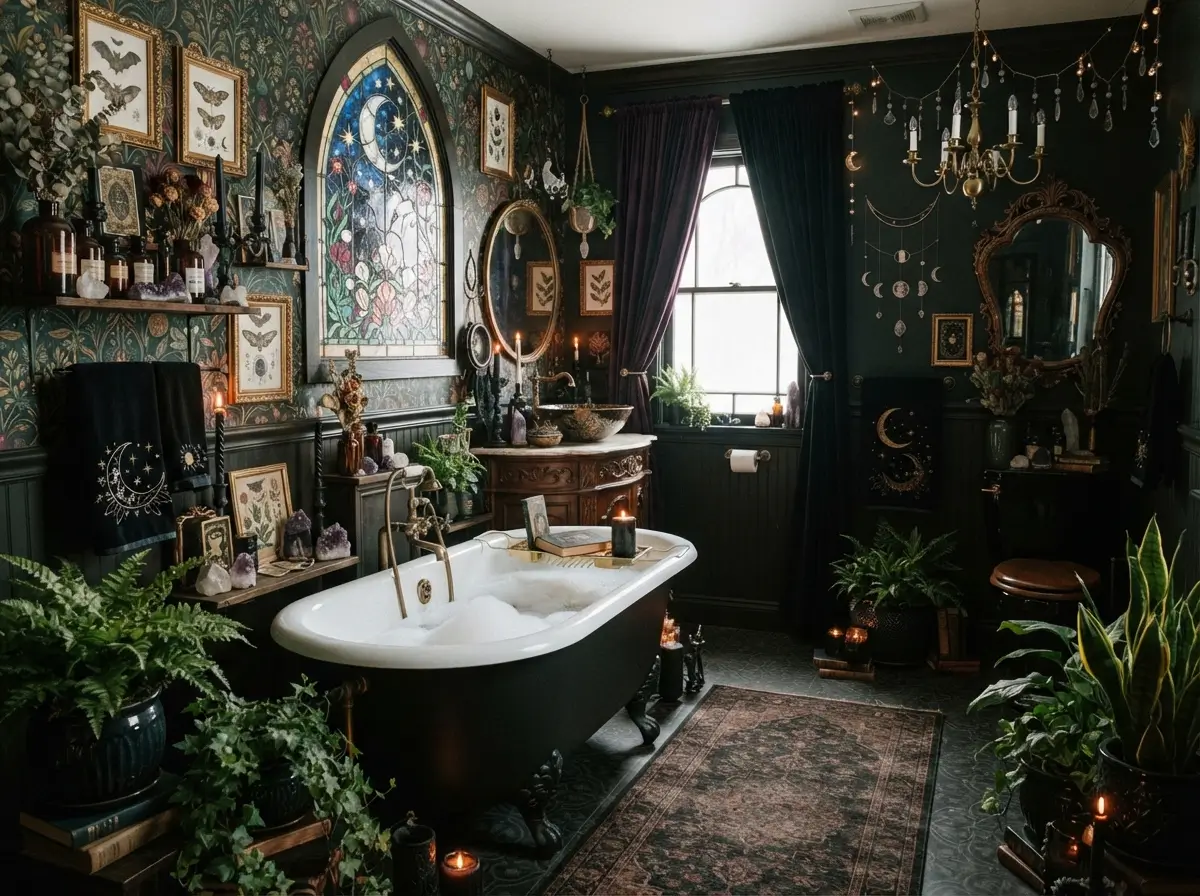

Dark bathrooms do not need to feel gloomy, cluttered, or difficult to maintain. Good whimsigoth bathroom decor mixes shadowy colors, celestial details, vintage shapes, and useful everyday pieces without sacrificing storage, light, or cleaning access. Beginners should start with two or three repeatable elements instead of filling every wall with themed accessories.
Renters can create the same atmosphere through removable wallpaper, peel-and-stick tiles, tension rods, rechargeable sconces, framed prints, and textiles. The strongest rooms feel intentional because color, metal finish, lighting, and pattern connect from one side of the space to the other.
What Is the Best Way to Style a Whimsigoth Bathroom?
Start with a dark or muted base, add one celestial or botanical motif, choose warm lighting, and repeat one metal finish. Whimsigoth bathroom decor works best when practical pieces such as mirrors, towels, shelves, and storage containers carry the style. Keep wet zones easy to wipe, leave visual breathing room around the sink, and use lighter surfaces where the room needs brightness.
Build the Palette Around Deep Plum and Smoky Neutrals
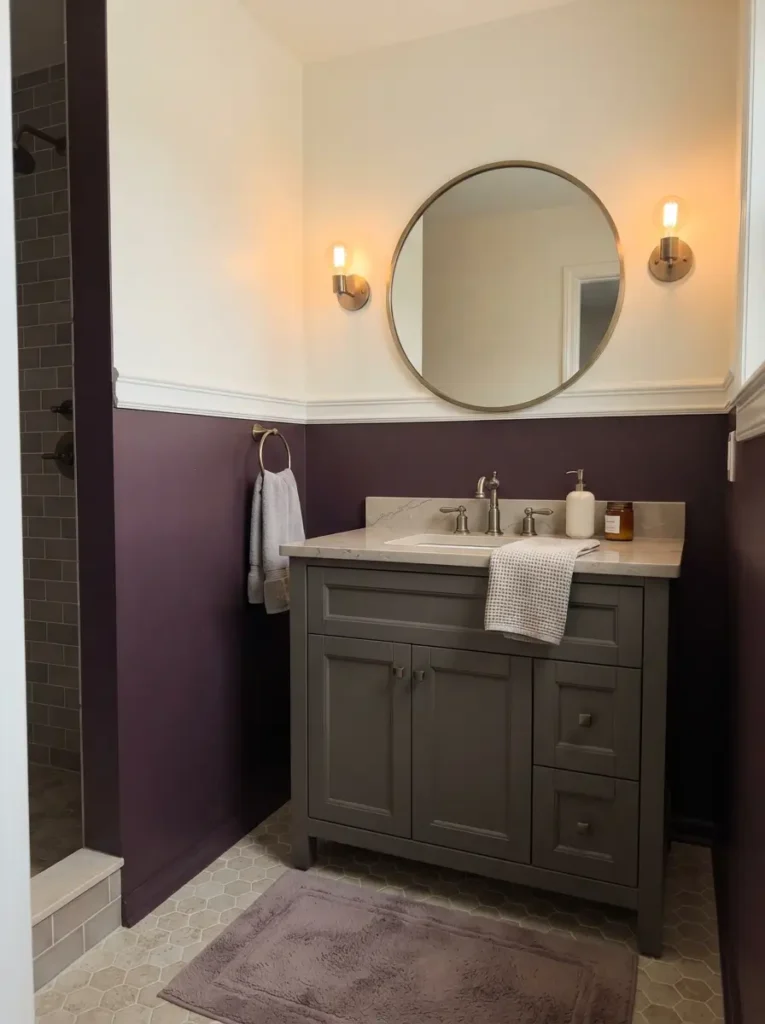
Deep plum gives a bathroom gothic richness without the heaviness of pure black. Pair it with mushroom beige, smoked grey, warm cream, or muted mauve so the room has enough contrast for daily use. Small bathrooms usually look calmer when the darkest color appears on the lower half, vanity, or textiles rather than every wall. Satin paint suits bathroom walls because it handles moisture better than flat finishes and remains easier to wipe.
Color balance makes the scheme usable because plum reads warm while charcoal can feel cool. Combining both creates depth without making the mirror area look dim. Common mistakes include mixing too many purples, using blue-white bulbs, and choosing black accessories that disappear against dark walls. Test paint beside tile and under evening light before covering the whole room.
Choose a Vintage-Inspired Mirror With a Slim Frame
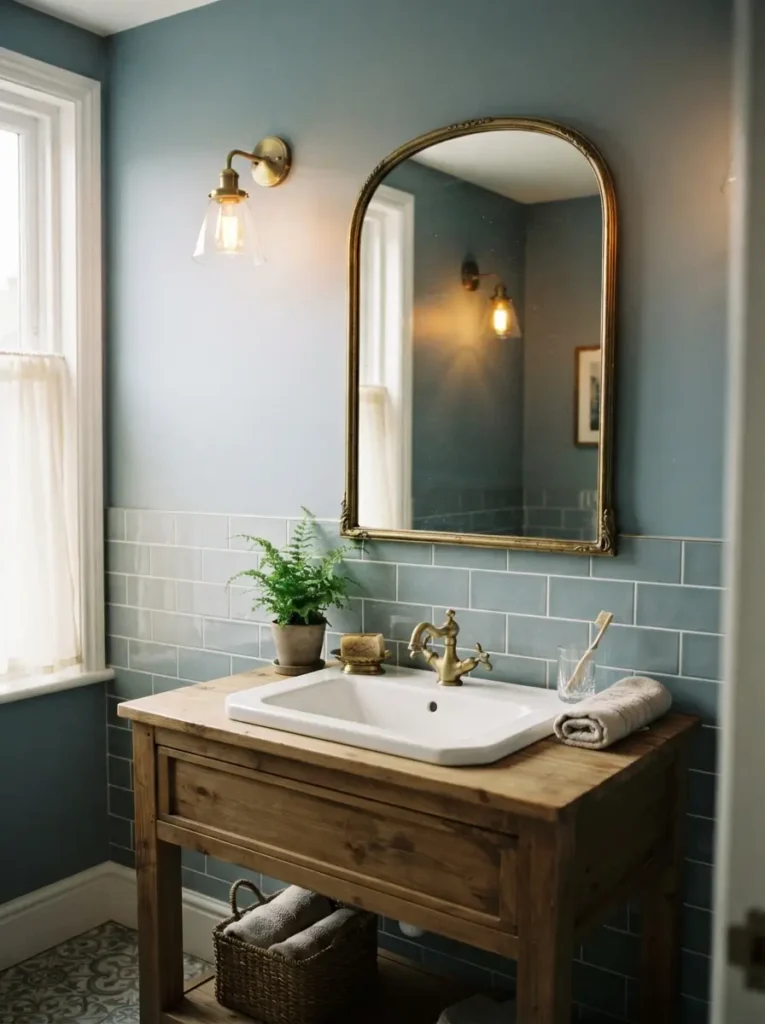
Curved, arched, or gently ornate mirrors bring old-world character into a plain bathroom. Look for narrow brass, blackened bronze, dark wood, or antique-gold frames that do not project too far from the wall. Renters can hang a lightweight version with suitable removable hardware, but they should always follow the weight limit and protect painted surfaces.
Reflection gives dark rooms needed brightness, so mirror placement matters as much as frame style. Position the mirror where it can catch window light or bounce illumination from a wall sconce. Avoid tiny mirrors above wide sinks because they make the wall feel unfinished and reduce useful visibility during grooming.
Install Warm Lighting at 2700K to 3000K
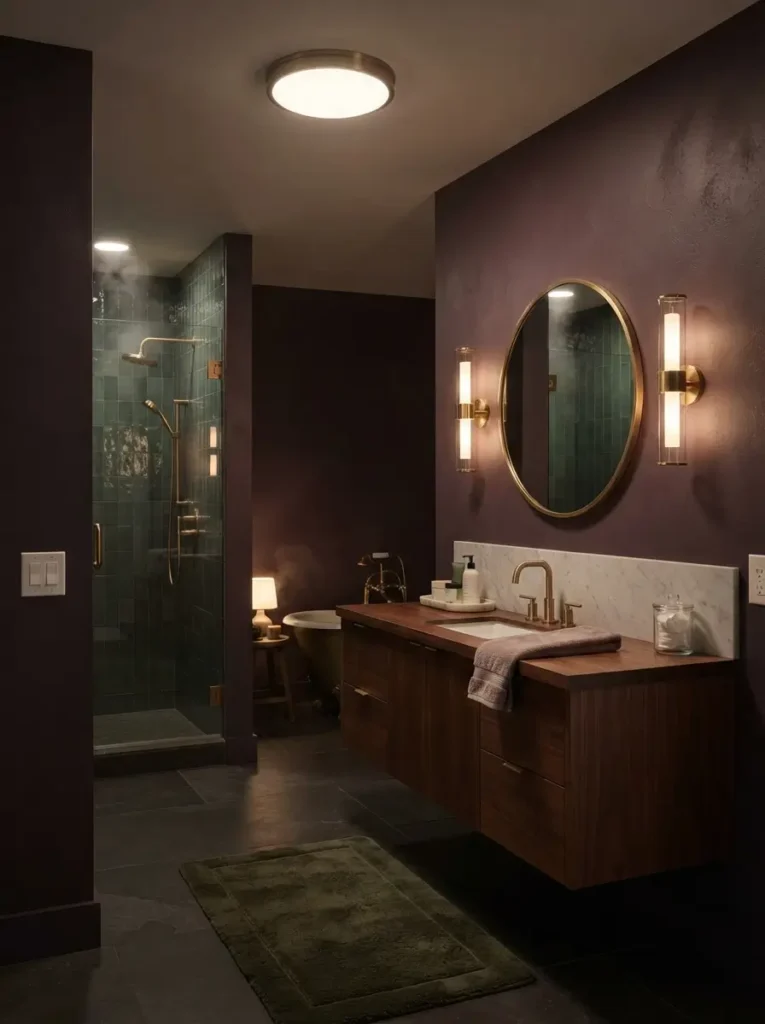
Warm white bulbs between 2700K and 3000K suit moody bathrooms because they soften deep colors and make brass, walnut, and plum feel richer. Light below 2400K may look too amber for makeup, while cool 4000K bulbs can flatten warm finishes. Use a central ceiling light for general visibility and add side lighting near the mirror when possible. Two narrow sconces at face height reduce harsh shadows better than one bright bulb placed directly above the forehead.
Layered lighting improves both atmosphere and function, which makes this one of the most useful upgrades. Choose sealed or bathroom-rated fittings near wet areas and keep fabric shades away from steam. A frequent error involves using only decorative low light, which makes cleaning, shaving, and skincare harder. Place brighter task lighting on a separate switch when the layout allows.
Add a Celestial Shower Curtain With Controlled Pattern
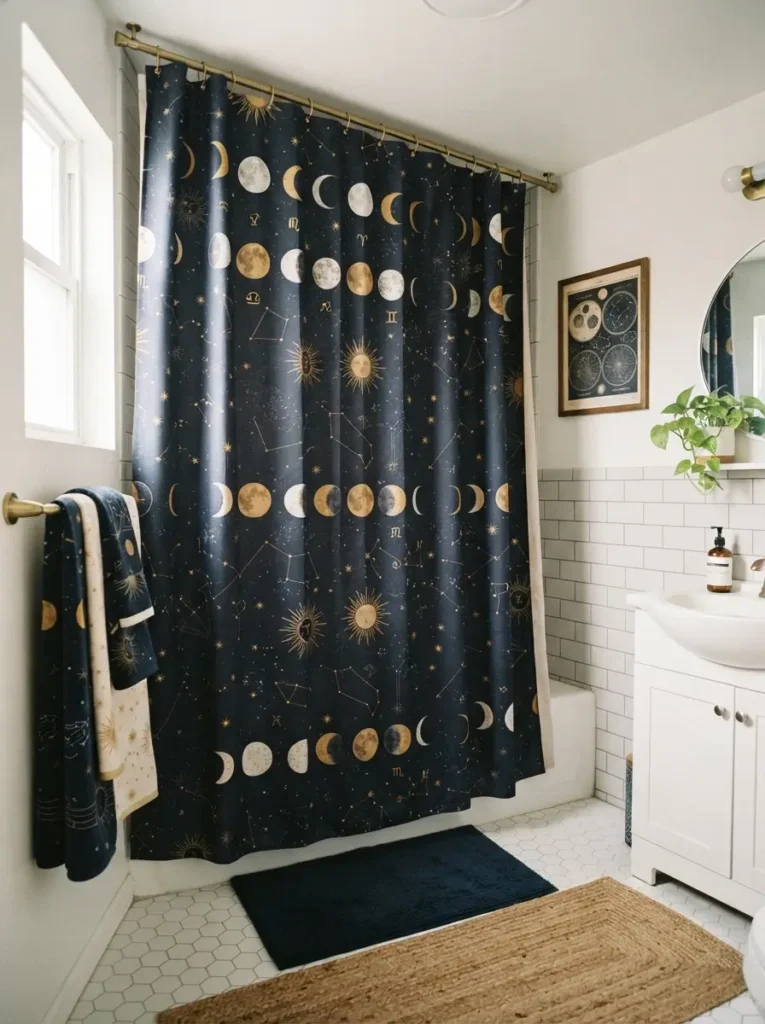
Moon phases, faded stars, suns, constellations, and subtle zodiac symbols can introduce the theme without permanent renovation. Hang the curtain close to the ceiling and let it fall almost to the floor. Greater height visually lengthens the room and hides standard tubs more effectively.
Pattern becomes convincing when it connects with something else in the space. Repeat one color from the curtain in towels, a bath mat, or a framed print. That connection prevents the shower curtain from looking like a separate costume piece. The approach is best for renters and anyone decorating on a modest budget. Use a washable liner and dry both layers after showers to reduce mildew.
Use Dark Wood Shelves for Warmth and Storage
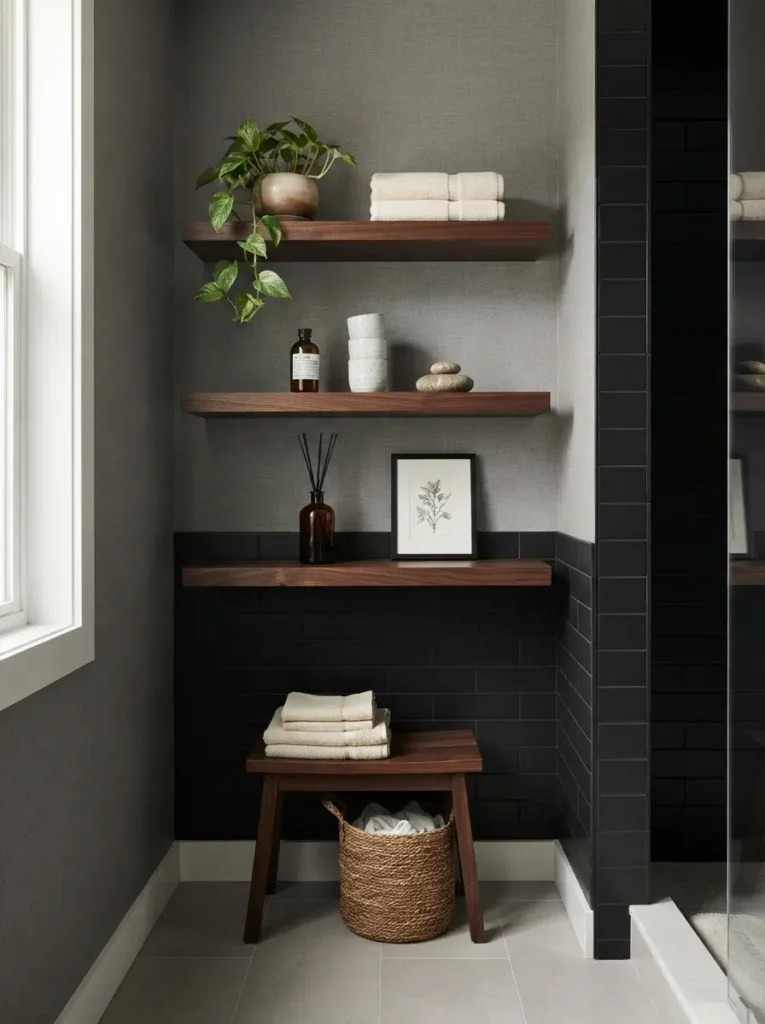
Dark-stained oak, walnut, or espresso shelves balance black tile and grey walls with natural warmth. Keep the depth between 12 and 18 centimetres in tight spaces so people do not bump into the shelf.
Useful storage supports the style because wood introduces age, texture, and contrast at once. Floating shelves make a room feel lighter than a tall cabinet, but they also expose clutter. Group items by height and leave at least one-third of the shelf visually open. Renters can use a slim freestanding ladder shelf or over-toilet unit instead of drilling. Avoid untreated timber near showers because repeated moisture can warp or stain the surface.
Repeat One Metal Finish Through the Room
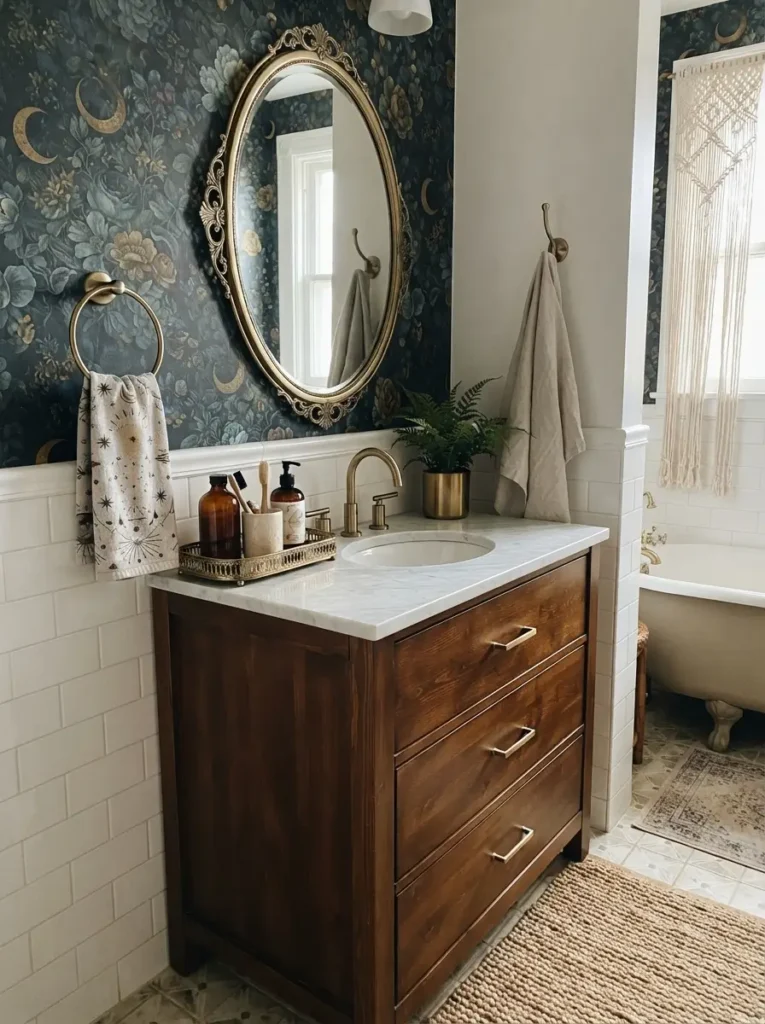
Brushed brass, aged bronze, and blackened iron all work with whimsigoth bathroom decor, but using every finish together can make a small room look busy. Choose one dominant metal for visible pieces such as the mirror, towel ring, hooks, cabinet pulls, and tray.
Repetition gives ordinary pieces a collected, coherent appearance. Renters can replace drawer pulls and store the originals for move-out day. Self-adhesive hooks also allow metal repetition without drilling, but they should stay outside splash zones unless rated for moisture. Common mistakes include painting taps, coating moving hardware with unsuitable spray paint, or placing cheap metal where it will rust quickly.
Frame Botanical Prints in Dark or Antique Frames
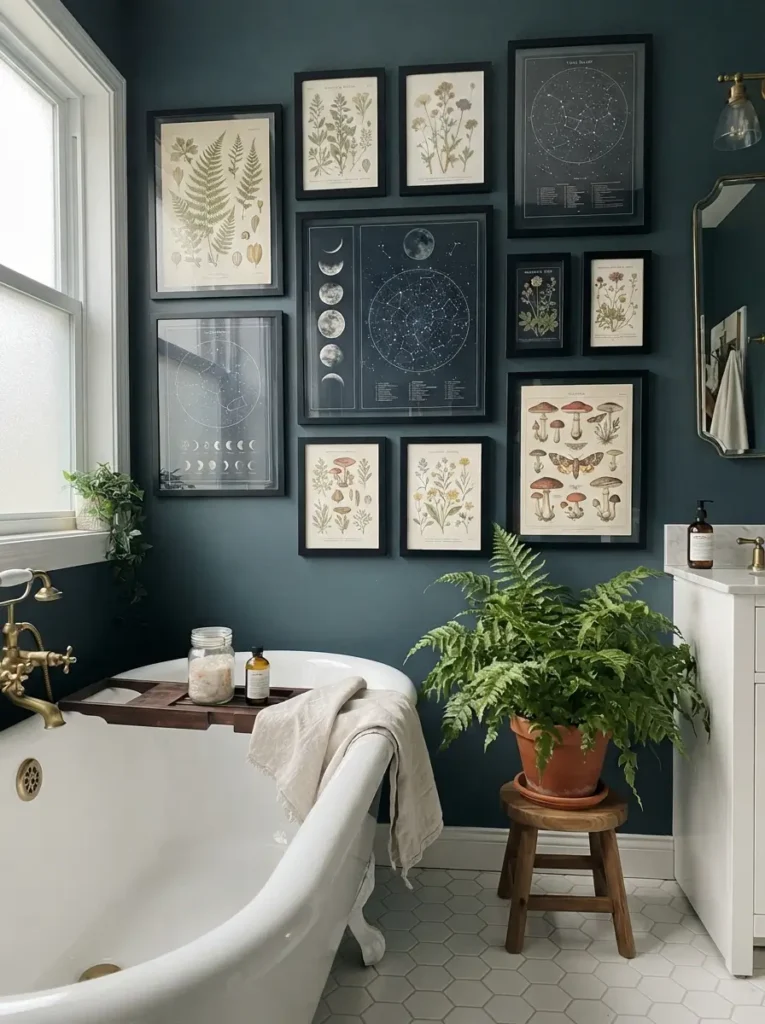
Ferns, moths, medicinal herbs, wildflowers, mushrooms, and old botanical studies complement celestial motifs without making the bathroom feel like a novelty set. Moisture-resistant frames with acrylic fronts are safer than unsealed paper and raw wooden backs.
Botanical imagery softens gothic elements and adds detail without using precious counter space. Prints work especially well in bathrooms with plain rental walls or builder-grade tile. Keep artwork away from direct spray and use removable strips designed for humid areas when drilling is not possible. Avoid placing many unrelated art styles together because the wall can quickly resemble a crowded collage.
Create Contrast With Cream Towels and Dark Walls
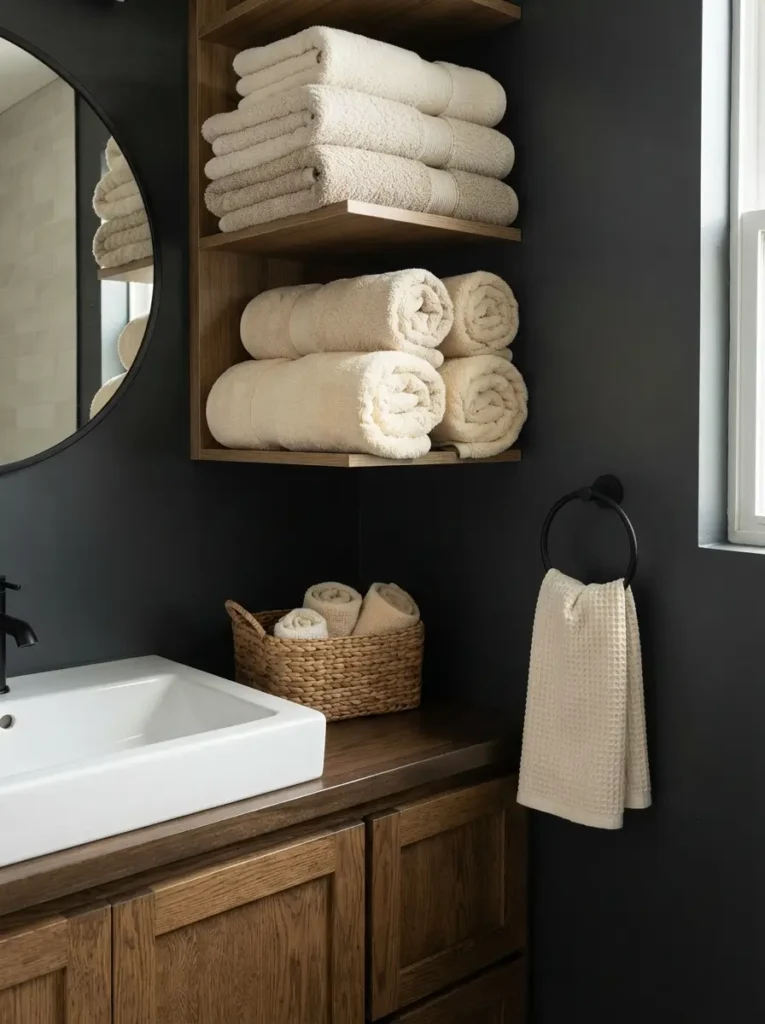
Cream, oatmeal, and warm ivory towels brighten deep walls while staying softer than brilliant white. Thick cotton towels also add texture, which helps a dark palette feel comfortable rather than severe. Choose washable textiles with strong absorbency instead of selecting fabric only for appearance.
Light textiles guide the eye and make the sink zone easier to read. Contrast also helps guests find towels quickly in low light. If the walls are light, reverse the arrangement with charcoal, aubergine, or forest-green towels. Avoid too many competing towel colors because the room will lose its clear palette. Keep one backup set hidden so open storage remains orderly.
Style the Vanity With a Small Gothic Tray
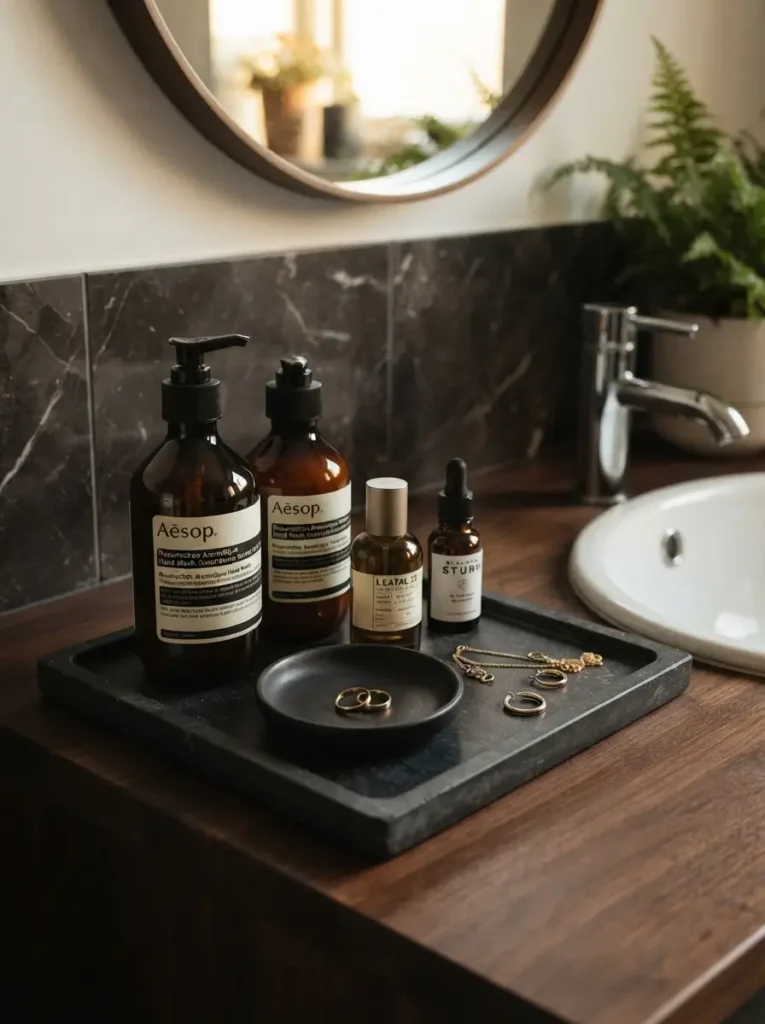
One compact tray keeps soap, perfume, skincare, and jewellery from spreading across the counter. Choose dark stone, smoked glass, brass, black ceramic, or wood with a raised edge. Countertops appear larger when grouped objects read as one unit instead of many separate pieces.
Organisation makes the decorative style believable because clutter weakens dark, detailed interiors. Trays also simplify cleaning since everything can be lifted at once. Reuse a small serving plate or thrifted metal dish for a budget option, but check for rust and sharp edges. Avoid placing candles, paper labels, or absorbent materials directly beside the tap where splashes occur.
Add Peel-and-Stick Tile Behind the Vanity
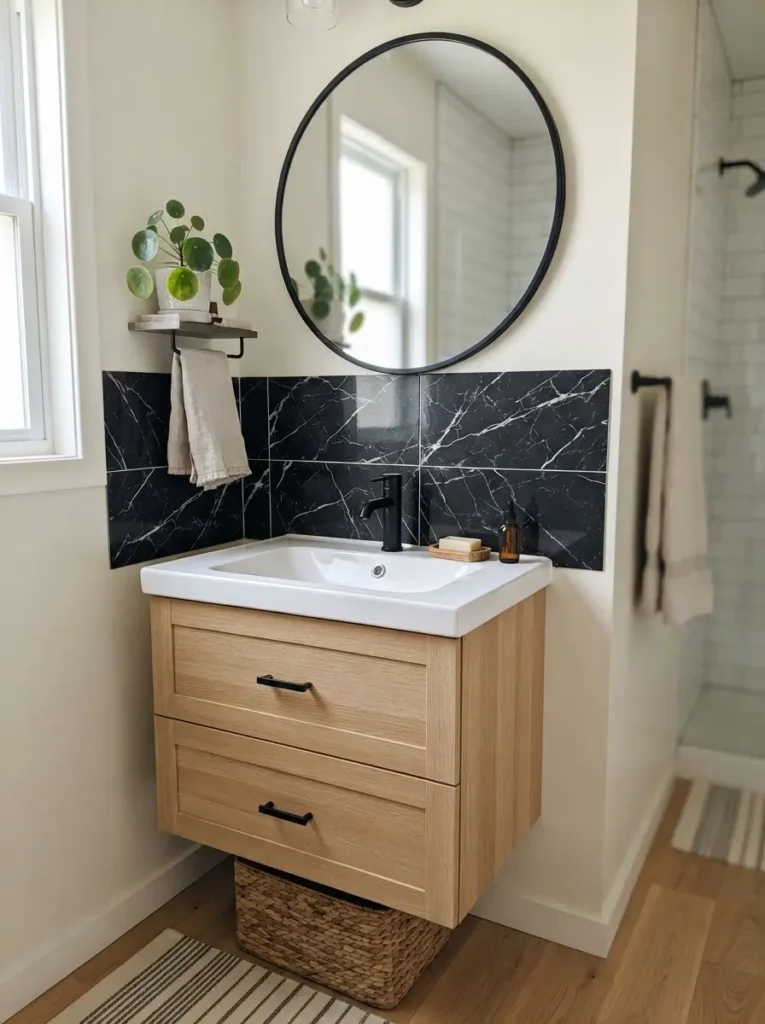
Removable tile can create a dramatic backsplash using black marble, deep green, smoky blue, aged stone, or small geometric patterns. Cover only the area between the vanity and mirror for a focused update. Uneven seams become more noticeable with high-contrast designs, so careful preparation matters.
Limited backsplash coverage adds visual structure without overwhelming a small bathroom. It also protects painted walls from light splashes, though many peel-and-stick products are not suitable for direct shower exposure. Renters should test a hidden section and review removal guidance because some adhesives can damage weak paint. Avoid applying removable tile over loose paint, textured plaster, or damp surfaces because adhesion will fail and trapped moisture may create problems.
Paint or Wrap the Vanity in Near-Black Green
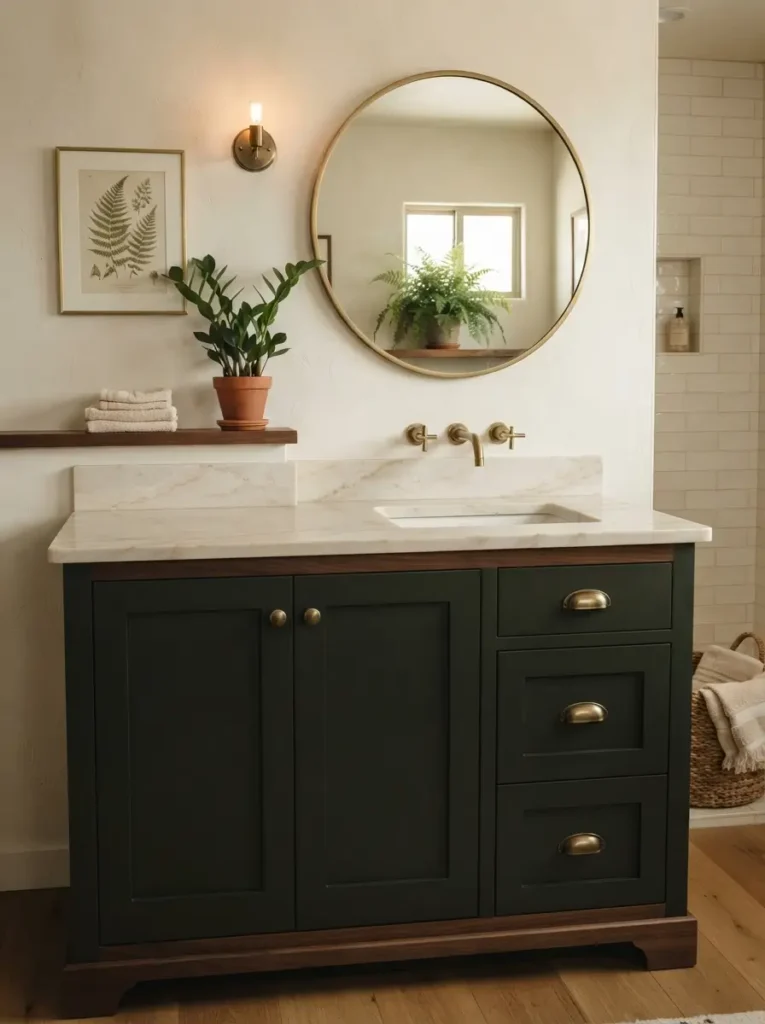
Near-black green feels softer and more dimensional than pure black. Shades similar to pine, bottle green, or blackened olive pair well with brass, cream stone, and walnut. Keep the countertop light enough to separate the vanity from the wall.
Depth comes from the green undertone, which changes subtly under warm light. The color also links naturally with botanical prints and plants. Preparation matters more than colour choice. Skipping cleaning, primer, curing time, or edge sealing can cause peeling around handles and sink splashes.
Use an Antique-Style Rug Outside the Wet Zone
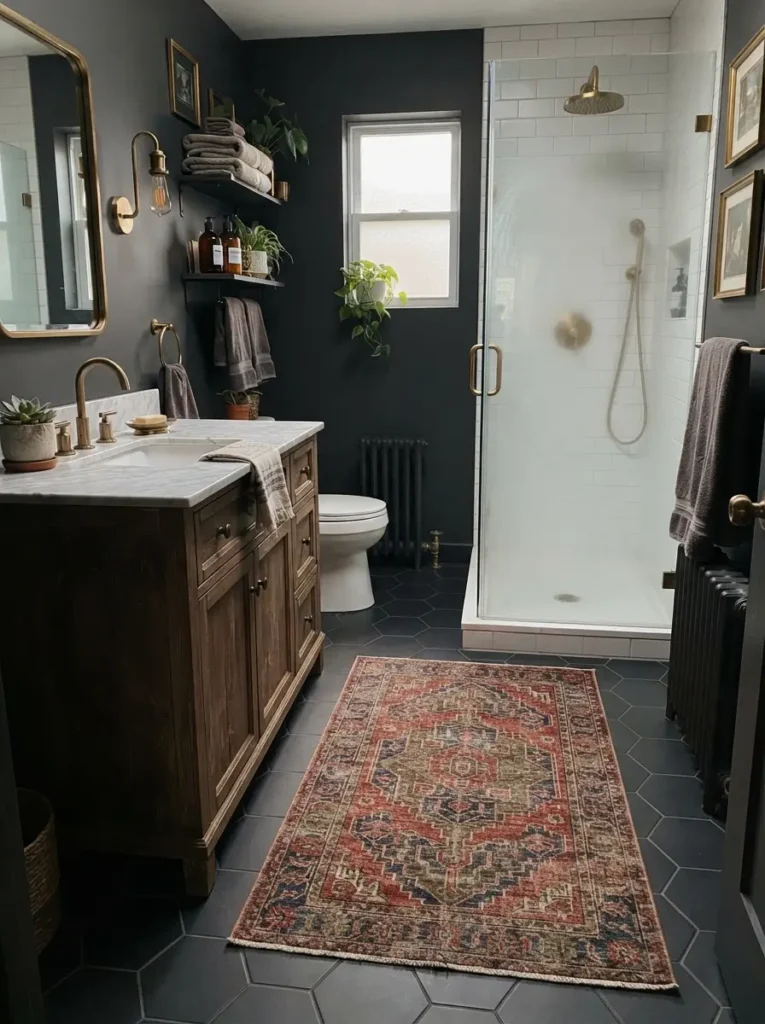
One small washable rug with faded Persian, floral, or geometric pattern adds colour and softness to hard bathroom surfaces. Choose low pile with a non-slip backing. Deep red, rust, navy, olive, and cream patterns blend well with dark walls and warm metals.
Textile pattern gives the room a layered, collected feeling and connects easily with other rooms. Someone who already has a whimsigoth living room can repeat a similar rug palette for continuity. Washable construction is essential because bathroom rugs collect moisture, dust, and product residue. Avoid valuable vintage rugs, thick wool, and loose mats near the shower because they can hold moisture or create a slipping risk.
Hang Dark Linen-Look Curtains for Privacy
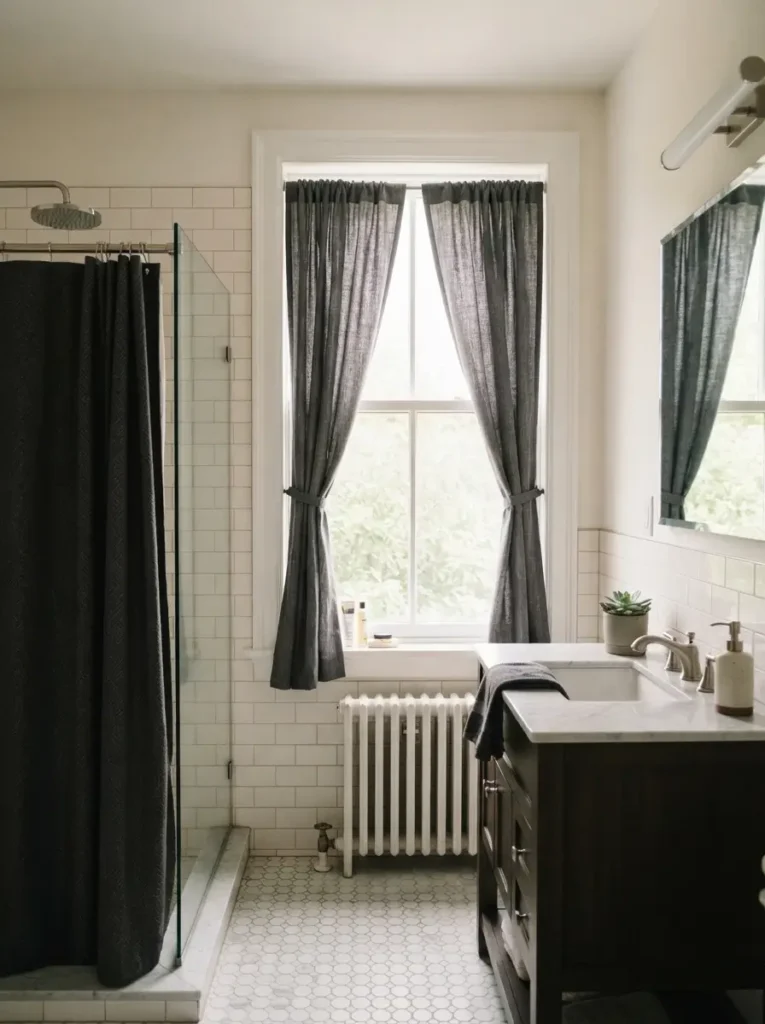
Bathrooms with windows can use charcoal, plum, or olive curtains to add softness and privacy. Choose moisture-tolerant synthetic linen-look fabric rather than true heavy linen if steam is frequent. Natural light keeps moody colours from feeling oppressive.
Fabric works because it softens tile, mirrors, and hard edges. Renters can use a tension rod inside the frame, though the fabric should not block ventilation. Hem curtains above radiators and wet floors. Avoid thick velvet because it dries slowly, traps dust, and may develop odour in humid rooms. A dark shower curtain can create a similar effect when no window exists.
Add Removable Arch Shapes With Paint or Vinyl
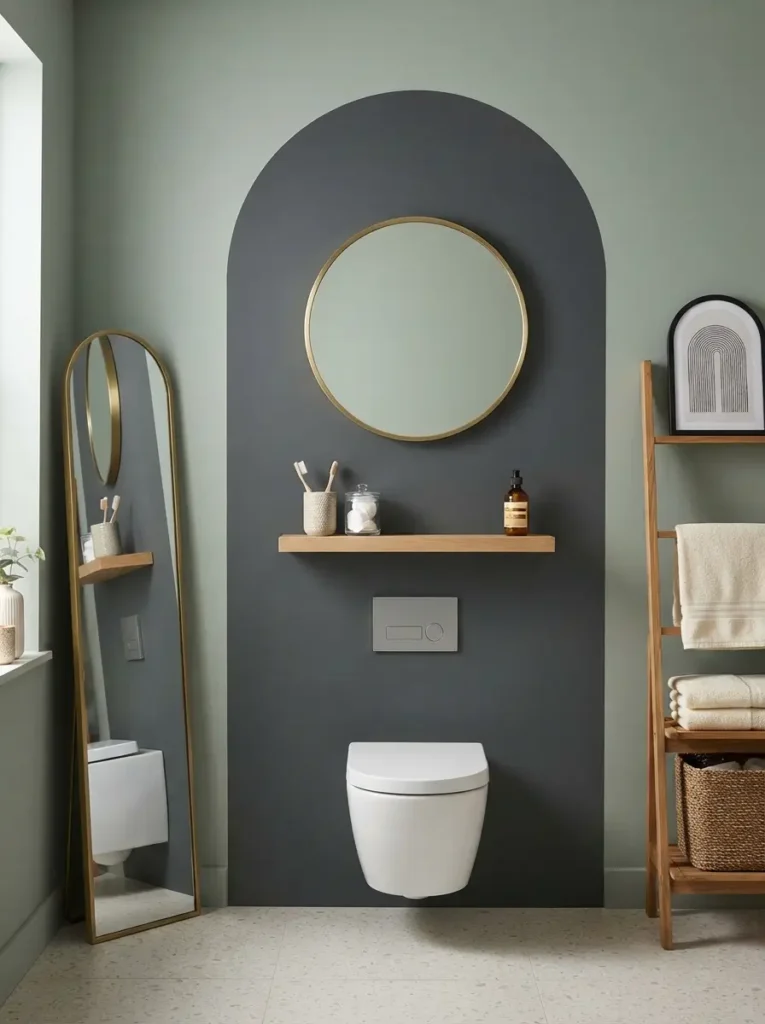
One arch behind the mirror, toilet, shelf, or freestanding cabinet can create architectural interest without moulding. Homeowners may paint the shape in aubergine, charcoal, or deep green. Renters can use removable vinyl or wallpaper cut into an arch. A narrow arch can make a low ceiling appear taller, while a very wide shape may shorten the wall visually.
Shape creates focus and gives plain rooms a built-in feeling. Use a pencil, string, and level to mark a smooth curve before painting. Repeat the arch in a mirror or print frame to strengthen the connection. Avoid placing arches behind every feature because repetition becomes busy. One strong focal wall usually delivers more impact than several competing outlines.
Display Apothecary Bottles Without Creating Clutter
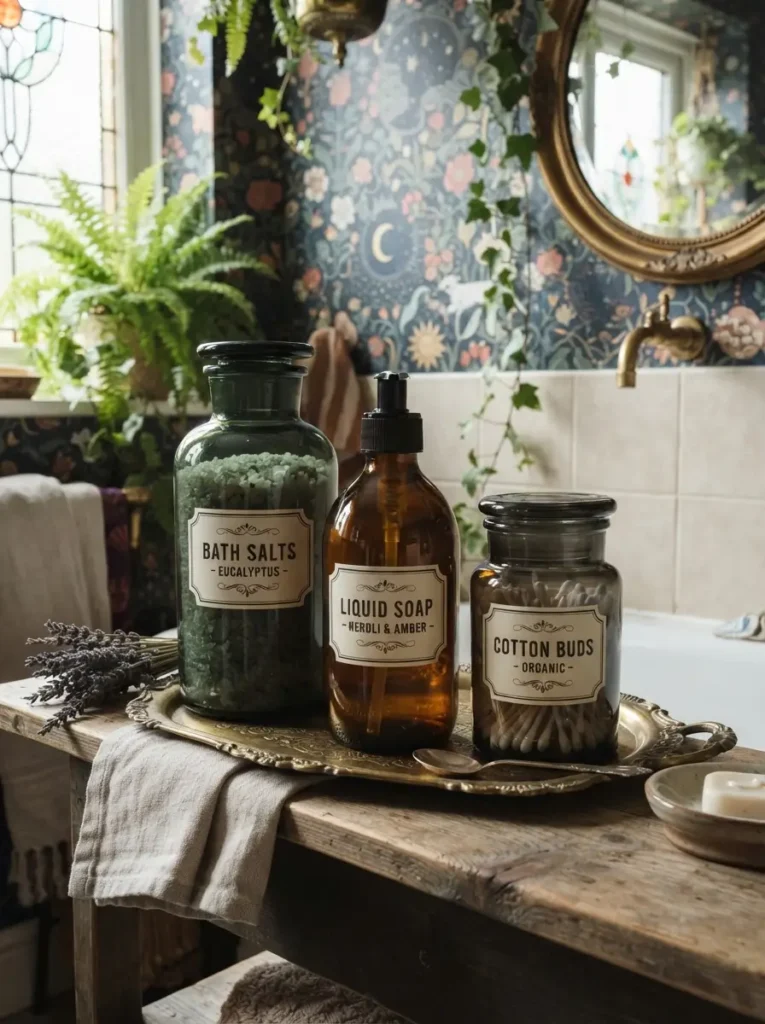
Amber, smoked, or dark green bottles can hold bath salts, cotton buds, mouthwash, or liquid soap. Three containers in different heights usually create enough variety on a shelf or tray. Clear labelling helps family members and guests use the right product safely.
Practical containers support whimsigoth bathroom decor because they combine vintage references with daily function. Refillable bottles also reduce the visual noise of branded packaging. Budget shoppers can reuse clean glass bottles, though every container must suit its contents. Never transfer medicine, chemicals, or products that require safety instructions into unmarked decorative bottles. Avoid cork lids near water because they can absorb moisture and become difficult to clean.
Bring in One Humidity-Tolerant Plant
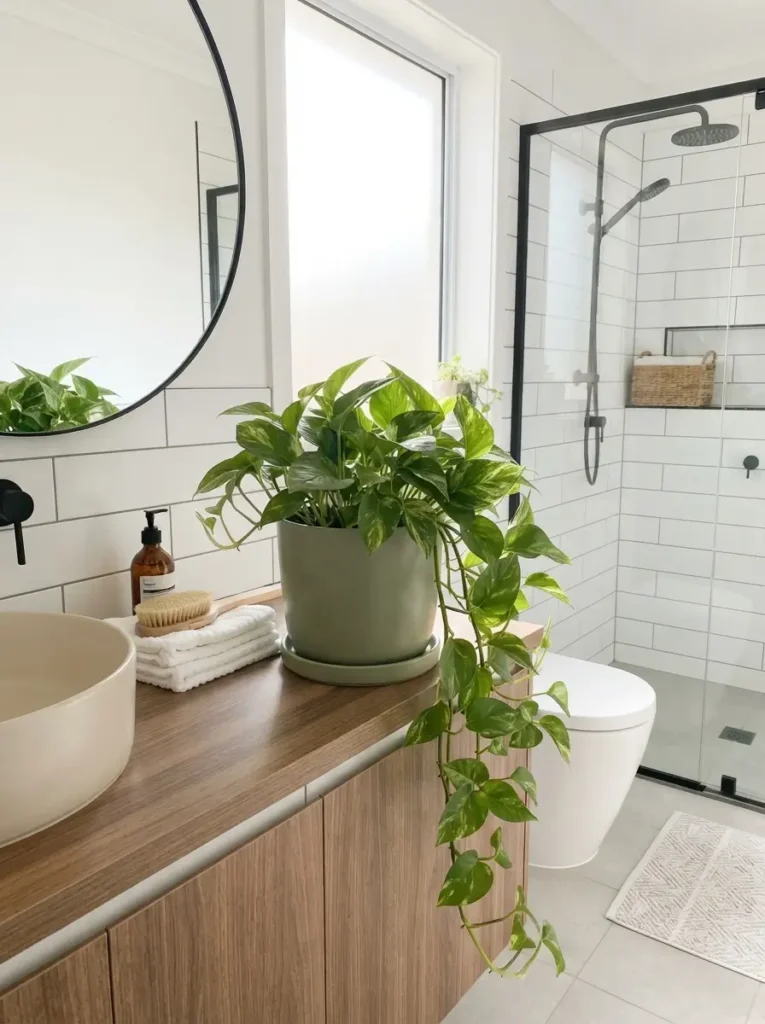
Pothos, heartleaf philodendron, ZZ plant, or certain ferns can add life to a bathroom with suitable natural light. Windowless bathrooms need a grow light or realistic faux plant because ordinary ceiling bulbs rarely support healthy growth.
Living foliage connects dark colours with natural materials and prevents the room from feeling overly staged. One healthy plant usually looks better than several struggling ones. Choose a stable pot with drainage and a protective saucer. Avoid placing plants where children or pets can reach toxic varieties. Overwatering is a common problem because bathroom humidity can slow soil drying.
Install Decorative Hooks With Useful Spacing
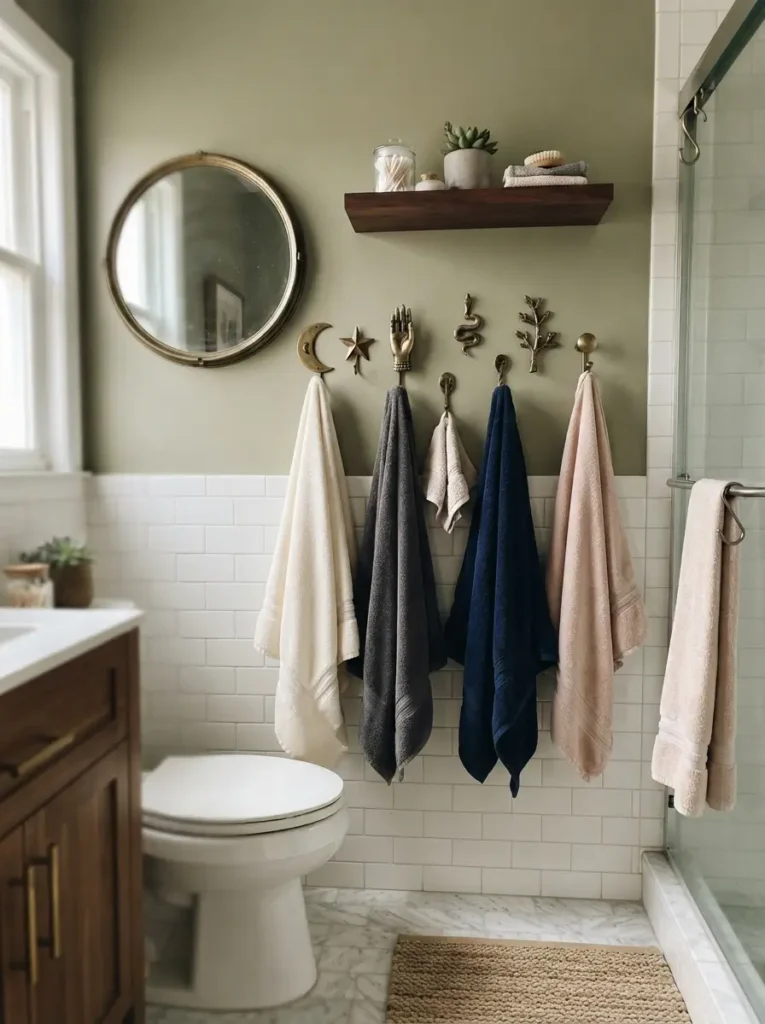
Moon, star, serpent, hand, branch, or simple antique-style hooks can add character while improving towel storage. Renters can choose over-door hooks, adhesive hooks rated for humid rooms, or an S-hook rail over the shower screen. Position every hook where fabric will not touch the toilet, floor, or wet wall.
Function strengthens the decorative result because repeated hardware looks intentional and reduces pileups. Match the hook finish to the mirror or cabinet handles for cohesion. Avoid tiny ornamental hooks that cannot hold wet weight. Too many hooks can also create visual clutter, so calculate actual household needs before buying a full set.
Use Dark Grout Lines Carefully
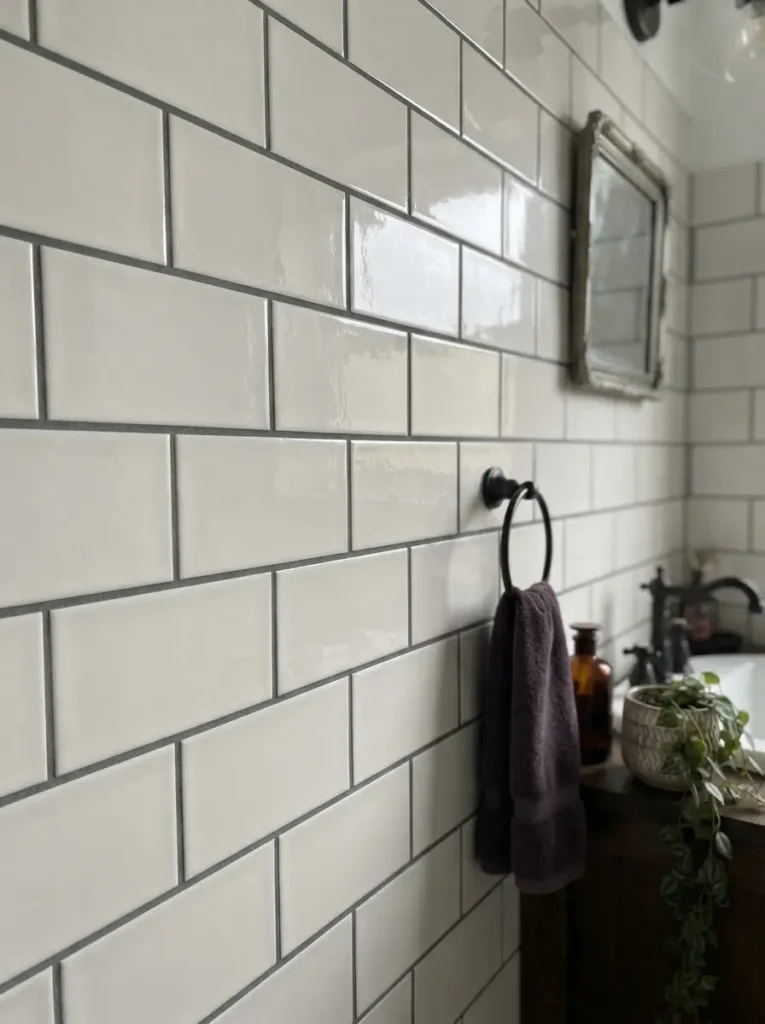
Dark grey grout can sharpen pale subway tile, hide mild staining, and introduce graphic structure. Medium charcoal usually feels less harsh than true black. Existing grout can sometimes be refreshed with a specialist grout colourant after thorough cleaning and drying. Homeowners planning new tile should test several grout samples because the same tile changes dramatically beside different shades.
Defined lines suit whimsigoth bathroom decor when the rest of the room includes repeated dark accents. Grout pattern can make simple tile feel more considered without adding another decorative object. Avoid DIY colouring products that are not designed for wet environments. Uneven application, poor sealing, and rushed preparation can leave patchy lines that look less polished than the original grout.
Add Wall Moulding in Dry Areas
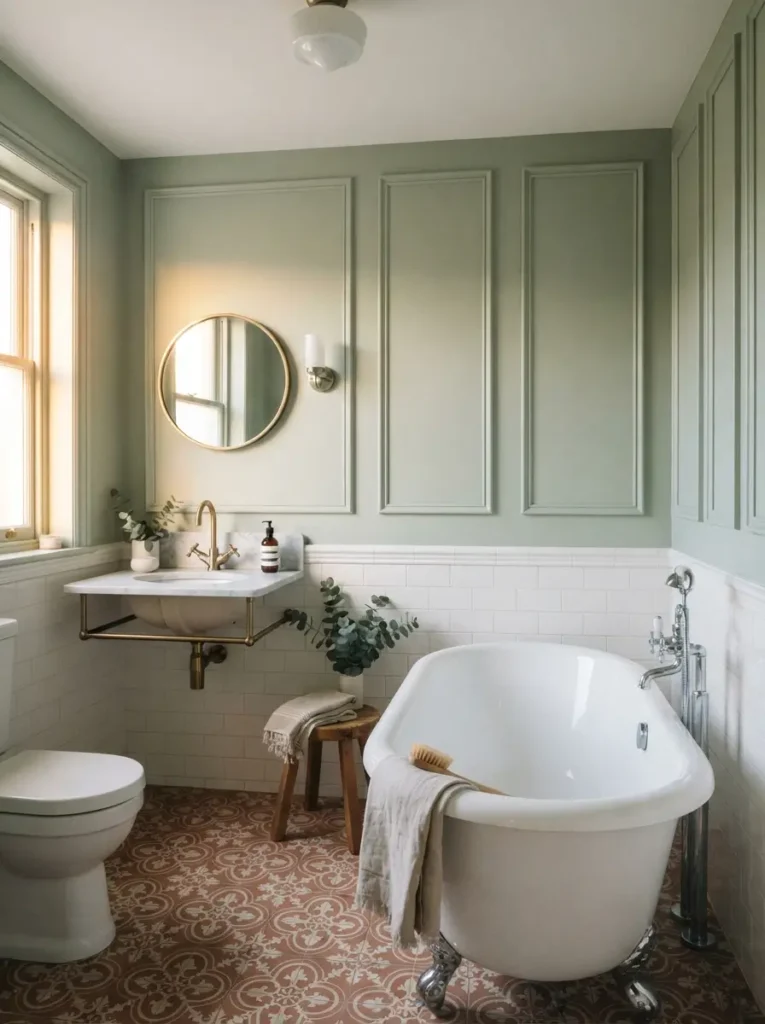
Slim picture-frame moulding adds historic character to plain walls and works well behind a vanity, toilet, or freestanding bath. Moisture-resistant material and bathroom-safe adhesive matter, especially where steam collects.
Architectural detail gives depth without using shelf space, which is valuable in compact layouts. Budget-conscious decorators can create a similar effect using lightweight removable trim, though corners must be measured carefully. Avoid installing moulding inside showers or where water regularly splashes. Poorly sealed edges can trap moisture, and oversized rectangles can make low ceilings appear shorter.
Finish With One Sculptural Statement Piece
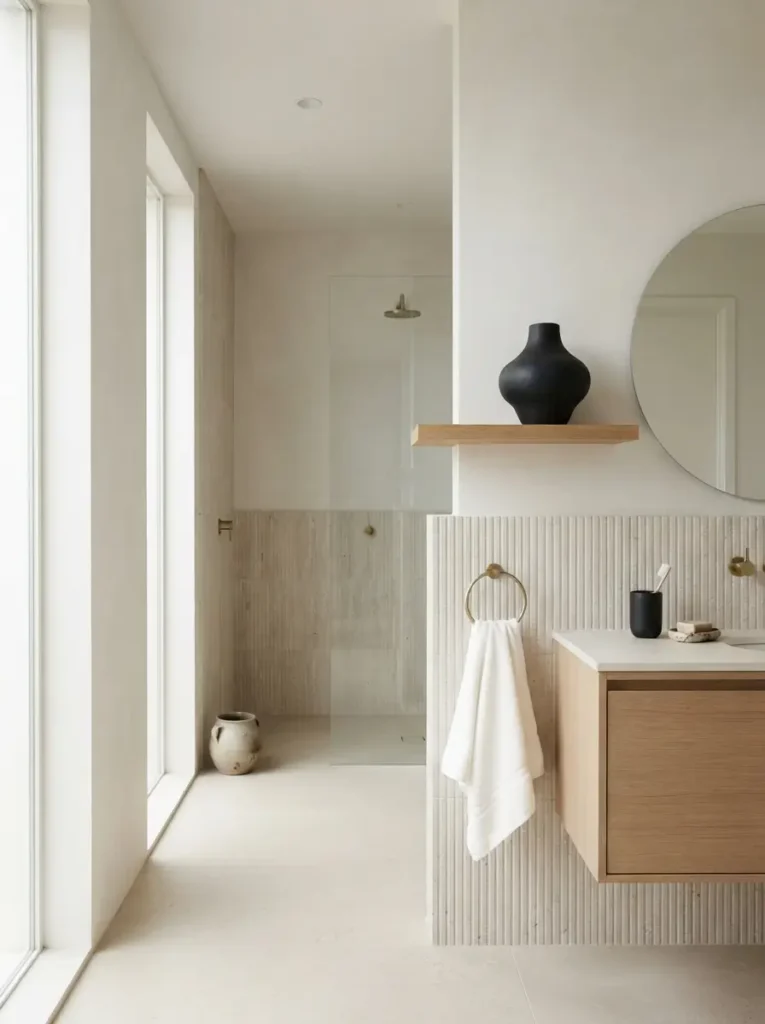
One memorable object can complete the room without covering every surface. Consider a carved stool, moon-shaped wall shelf, black ceramic vase, sculptural candleholder used only when supervised, or a small plaster bust on a high dry shelf.
Restraint gives the final object importance and keeps the bathroom comfortable. One larger piece often costs less than a collection and creates less cleaning work. Check stability, moisture resistance, and placement before using fragile decor. Avoid placing valuable art, porous plaster, or unsealed wood close to the sink or shower. The best finishing item supports the palette while leaving the room easy to use.
Common Mistakes to Avoid
Using Too Many Dark Surfaces
Dark walls, dark floors, dark towels, and a dark vanity can remove useful contrast. Small bathrooms need at least one lighter plane, such as cream tile, pale counters, a large mirror, or light towels. Balance does not weaken the gothic mood; it makes details easier to see. Add reflective metal or glass where natural light is limited. Before painting, photograph the room in morning and evening light to understand where shadows already fall.
Choosing Theme Pieces Instead of Useful Pieces
Novelty signs, plastic potion bottles, and excessive moon accessories can make the room feel temporary. Prioritise functional pieces that carry the style through shape, colour, or material. A brass towel ring contributes more than a decorative sign because it works every day. Decorative objects should fill real gaps rather than cover every open surface. Fewer pieces also reduce dust and simplify cleaning.
Ignoring Humidity and Ventilation
Bathrooms expose materials to steam, splashes, and temperature changes. Paper, untreated wood, velvet, and unsealed metal may stain or deteriorate. Use an extractor fan, open the window when possible, and leave space around objects for air circulation. Moisture-resistant paint and washable textiles extend the life of the design. Watch for condensation behind frames, shelves, and removable wall coverings.
Mixing Too Many Metal Finishes
Four or five competing finishes can make a compact bathroom feel disorganised. Choose one dominant finish and one supporting finish at most. Existing chrome taps do not require a full renovation; repeat chrome once elsewhere, then use aged brass for removable accessories. Consistent repetition matters more than an exact match. Avoid cheap plated items in wet zones because the coating may peel.
Blocking Daily Movement
Floor stands, baskets, stools, and large plants can narrow the walkway or stop cabinet doors from opening. Measure the room before buying freestanding pieces. Leave comfortable space around the toilet, vanity, and shower entrance. Wall-mounted storage often works better in narrow rooms. Test layouts with cardboard boxes before purchasing furniture so you can see how the footprint affects movement.
Forgetting Cleaning Access
Detailed decor should not make routine cleaning difficult. Leave enough room behind taps, around the toilet, and beneath shelves for cloths and brushes. Use trays to group products and washable liners under baskets. Open storage needs regular editing because dust and hair remain visible. Choose smooth containers over heavily carved pieces near the sink. Design choices feel better when the room stays easy to maintain.
Budget-Friendly Ways to Build the Look
Start With Textiles and Bulbs
Towels, a shower curtain, a bath mat, and warm bulbs can change the room without tools or permanent work. Choose a three-colour palette before shopping so every item connects. Deep plum, cream, and aged gold create warmth, while charcoal, olive, and rust feel earthier. Replace items gradually instead of buying a full matching set. Quality towels and a washable curtain offer better value than decorative objects that serve no function.
Shop Second-Hand for Frames and Trays
Charity shops, flea markets, and online resale listings often have brass trays, dark wood frames, small cabinets, and mirrors. Inspect each item for rust, mould, loose joints, and water damage. Clean and seal suitable pieces before bathroom use. A mismatched frame set can look coherent after painting everything in one finish. Keep spending focused by carrying measurements and a short material list while shopping.
Reuse Containers You Already Own
Clean glass jars, ceramic dishes, and small serving trays can organise cotton pads, soap, jewellery, or hair accessories. Remove labels completely and group containers by colour. Avoid storing products that need original safety instructions. Reusing pieces works best when every object has a clear purpose. Too many repurposed jars can create visual clutter, so limit visible containers to what the household uses each day.
Update Hardware Before Replacing Furniture
New knobs, hooks, towel rings, and a tap-compatible soap dispenser can refresh a plain vanity for far less than a replacement unit. Measure screw spacing before buying handles. Renters should label and store the original hardware. Choose moisture-resistant finishes from reputable ranges rather than decorative craft pieces. Small changes look more intentional when the same finish appears three or four times across the room.
Use Paint in Focused Areas
Painting one wall, the vanity, a door, or a simple arch costs less than redecorating the entire room. Sample pots can also update frames, shelves, and small accessories. Select bathroom-safe paint for walls and durable cabinet paint for furniture. Dark paint often needs careful cutting-in because uneven edges show clearly beside pale tile. Good preparation produces a more expensive-looking result than rushing through multiple colours.
Practical Whimsigoth Styling Tips
Successful whimsigoth bathroom decor begins with function. List the room’s problems before choosing colours. Poor towel storage, weak lighting, cluttered counters, and limited privacy should guide the first purchases. Once those needs are solved, add celestial, botanical, or vintage details through the same useful pieces. A moon-phase curtain can provide privacy, an arched mirror can improve grooming light, and dark shelves can create storage. Practicality keeps the style comfortable after the initial decorating excitement fades.
Scale matters in compact rooms. Large patterns can work well when they appear on one surface, while tiny repeated motifs across curtains, towels, prints, and accessories often feel restless. Choose one dominant pattern and let solids support it. Keep furniture narrow and vertical, particularly beside the toilet or sink. Measure door swings, drawer depth, and walking space before adding a stool or cabinet.
Material choice protects the finished room. Use washable fabrics, sealed wood, rust-resistant metal, and moisture-safe wall products. Keep paper, candles, and porous decor away from splash zones. Check adhesive ratings before using renter-friendly hooks or tiles. Even removable products can damage weak paint, so test a hidden area first. Good ventilation also protects wallpaper, frames, towels, and grout.
Colour should travel through the bathroom in a clear path. Repeat a deep tone at least three times, perhaps on the shower curtain, vanity tray, and bath mat. Repeat a lighter colour in towels, art backgrounds, and containers. Metal finishes can provide a third connection. That rhythm helps separate purchases look planned. Avoid matching every item exactly because variation in texture keeps the room from resembling a showroom set.
Lighting deserves special attention in dark schemes. Use warm ambient light for comfort and clearer task light around the mirror. Layering lets the bathroom feel calm at night while remaining bright enough for cleaning and grooming. LED candles may add gentle secondary light on a high dry shelf, but they should not replace fixed lighting. Mirrors, glass, and pale counters can spread available light without changing the palette.
Rental-friendly decorating works best when removal is planned from the beginning. Keep original handles in labelled bags, photograph wall condition before applying adhesive, and save product instructions. Tension rods, over-door storage, freestanding shelves, washable rugs, and framed prints can deliver strong character without permanent changes. Avoid installing products on damaged paint or damp tile because removal may become difficult.
Visual editing prevents the style from becoming cluttered. After decorating, remove one-third of the small objects and compare the room. Counters should still have open space, shelves should include gaps, and floor areas should remain clear. Store refills, cleaning products, and spare toiletries behind doors or inside matching baskets. A calm layout allows the gothic details to stand out.
Connections with nearby rooms can make the home feel more intentional. Repeat one colour or material from a whimsigoth living room, dark academia apartment bedroom, or Witchy Bedroom Decor scheme without copying every motif. Walnut wood, muted plum, aged brass, and botanical art translate easily between spaces. Consistency works best through subtle repetition rather than identical accessories.
Personal taste should remain visible. Choose motifs that mean something to you, whether that involves astronomy, herbs, antique illustration, folklore, or dramatic colour. Avoid buying symbols only because they fit a trend. One framed print, inherited mirror, or handmade ceramic piece can give the room more character than a complete themed set. Meaningful objects also make the finished space feel less generic.
Maintenance plans protect the design. Wash textiles regularly, wipe bottles and trays, inspect adhesive edges, and check frames for condensation. Rotate towels before colours fade unevenly. Seal grout and wood when required by the product instructions. The strongest whimsigoth bathroom decor remains attractive because the layout supports simple cleaning and every material suits the bathroom environment.
Frequently Asked Questions
Can a Small Bathroom Handle Dark Colours?
Yes, a small bathroom can use dark colours when contrast, lighting, and mirrors are planned carefully. Keep one or two surfaces lighter, use warm task lighting, and avoid filling every wall with pattern. Dark lower cabinets or a single deep wall often create more depth than painting the entire room. Large mirrors and pale towels also prevent the space from feeling closed in.
Which Colours Work Best for a Whimsigoth Bathroom?
Plum, charcoal, blackened green, midnight blue, rust, mushroom, cream, and muted gold work well together. Choose two main colours, one light neutral, and one metal finish. Deep plum with warm cream and aged brass creates warmth, while charcoal with olive and dark wood feels earthier. Test colour samples under the bathroom’s actual bulbs before committing.
How Can Renters Create the Style Without Damage?
Use removable wallpaper, peel-and-stick backsplash panels, tension rods, over-door hooks, rechargeable sconces, framed prints, textiles, and freestanding shelves. Test adhesives in hidden areas and follow weight limits. Store original hardware before replacing knobs or hooks. Avoid applying removable products over weak paint, damp walls, or textured plaster.
What Lighting Is Best for Moody Bathroom Decor?
Warm white lighting between 2700K and 3000K suits most moody palettes. Add brighter task lighting beside the mirror for grooming. Fixtures near water should have the correct bathroom rating. Windowless spaces benefit from layered lighting and reflective surfaces. Avoid relying only on candles or very dim bulbs because the bathroom still needs safe visibility.
How Do I Keep the Room From Looking Cluttered?
Limit the palette, repeat one metal finish, and choose one main pattern. Group daily products on a tray and hide refills inside cabinets or baskets. Leave open space on counters and shelves. Select useful decor such as mirrors, hooks, curtains, and storage rather than many small ornaments. Remove items that do not support function or the chosen colour story.
Is Whimsigoth Decor Expensive to Create?
No fixed budget is required. Start with warm bulbs, dark towels, a patterned curtain, second-hand frames, and a small tray. Paint or removable vinyl can update one surface at a low cost. Spend more on items that handle moisture and daily use, such as lighting, hardware, and washable textiles. Gradual decorating often produces a more considered result than buying everything at once.
Conclusion
Moody bathroom style works best when every choice supports both atmosphere and everyday use. Deep colours, warm bulbs, vintage-shaped mirrors, botanical art, dark wood, and aged metal can create gothic character without turning the room into a themed display. Small spaces benefit from controlled pattern, narrow storage, clear counters, and strong lighting. Renters can rely on textiles, removable finishes, and freestanding pieces, while homeowners can add paint, moulding, and permanent fixtures.
Careful planning also prevents costly rework. Measure shelves, test colours beside existing tile, and photograph the room before shopping. Those simple steps help you compare choices, control spending, and keep the final layout practical for bathing, storage, cleaning, ventilation, and everyday movement throughout busy routines.
Thoughtful whimsigoth bathroom decor grows from a clear palette, practical materials, and careful editing. Begin with one useful upgrade, repeat its colour or finish elsewhere, and assess the room before adding more. That slower approach reduces waste, keeps costs manageable, and creates a bathroom that remains comfortable, functional, and personal long after the first makeover.