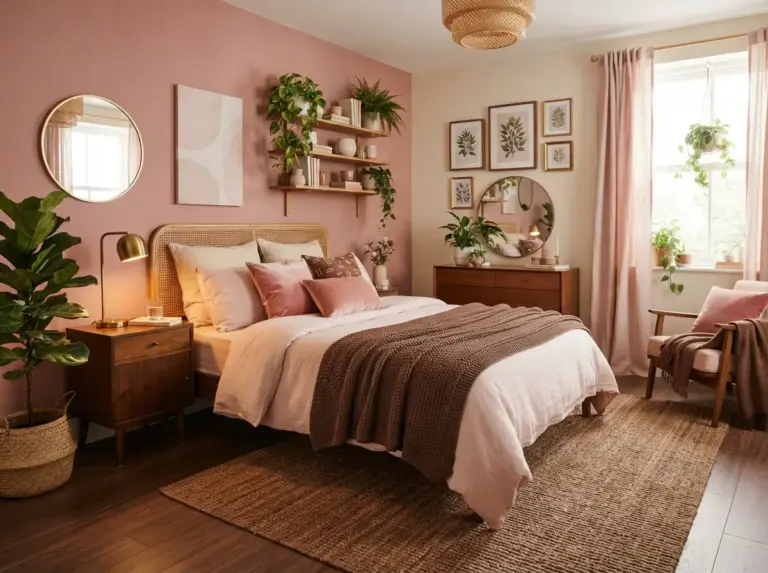


Cooler evenings often make the bedroom feel more important. People spend more time reading, resting and getting ready for darker mornings, so small changes can improve comfort without turning the room into a themed display. Thoughtful Fall Bedroom Decor uses colour, texture, lighting and layout to create warmth while keeping the space practical. Beginners do not need a complete makeover or expensive furniture. Small bedrooms, rented rooms and shared spaces can all benefit when every update has a clear purpose.
Seasonal decorating works best when it supports daily routines. Heavy blankets should remain easy to fold, bedside lighting should help with reading and decorative objects should not crowd useful surfaces. Colour also needs balance. Too many dark shades can make a small room feel closed in, while too many pale colours may look flat under weak autumn light. Practical styling combines richer accents with lighter foundations, comfortable fabrics and enough empty space for the room to breathe.
How Can You Make a Bedroom Feel Warm for Autumn
Short answer: Start with bedding, warm bulbs, one grounded colour palette and two or three natural textures. Effective Fall Bedroom Decor does not depend on pumpkins or obvious seasonal signs. Instead, it creates warmth through useful layers, balanced colour, gentle contrast and lighting that feels comfortable after sunset. Begin with the bed because it takes up the most visual space, then adjust the bedside area, windows and floor. Small changes in those zones usually make the room feel complete without adding clutter.
Start with a Warm Neutral Base
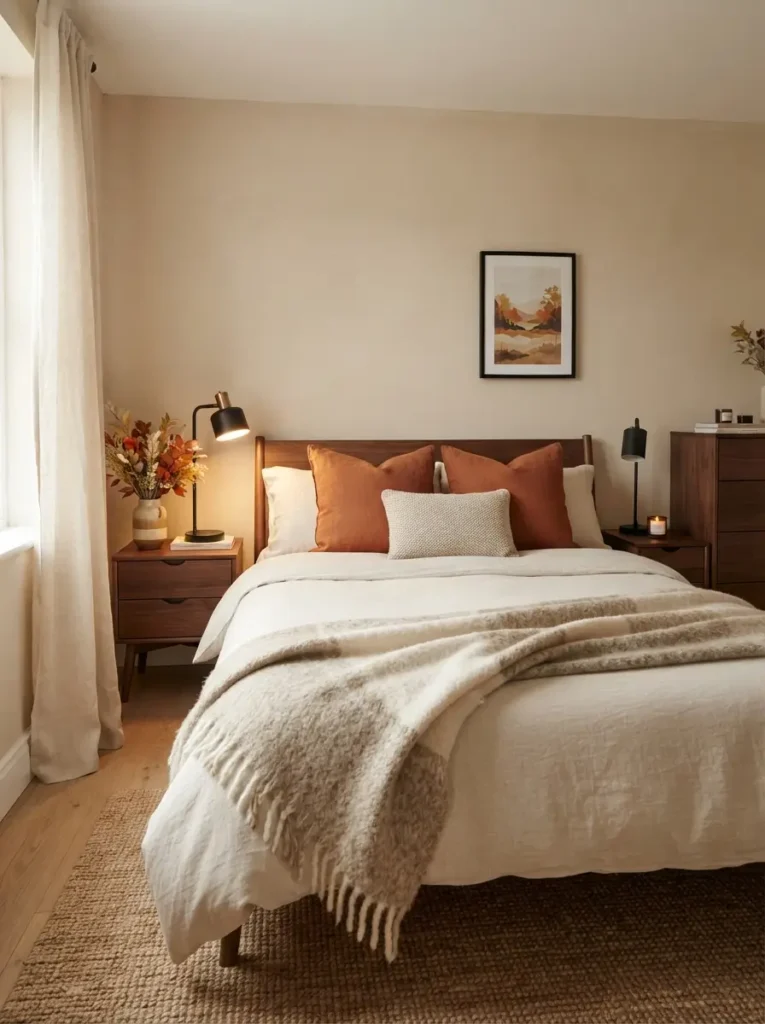
Warm neutrals make a reliable foundation because they work with both autumn accents and year-round furniture. Cream, oatmeal, soft taupe, warm beige and muted stone create a calmer background than bright white. These shades reflect enough light to keep a compact room open while reducing the cold appearance that can come from blue-grey walls or icy bedding. Renters can introduce the palette through a duvet cover, curtains and a large throw instead of paint. Homeowners can use a washable matte paint with warm undertones on the walls.
Colour balance matters most in small rooms. Keep roughly 60 percent of the space in a light neutral, 30 percent in a deeper supporting shade and 10 percent in a stronger accent. For example, pair cream bedding with walnut furniture, rust cushions and black reading lamps. The method works because the light base protects visual space while darker details give the room enough depth. Beginners who feel unsure about colour will find this approach easier than mixing several unrelated autumn shades.
Layer the Bed Without Making It Bulky
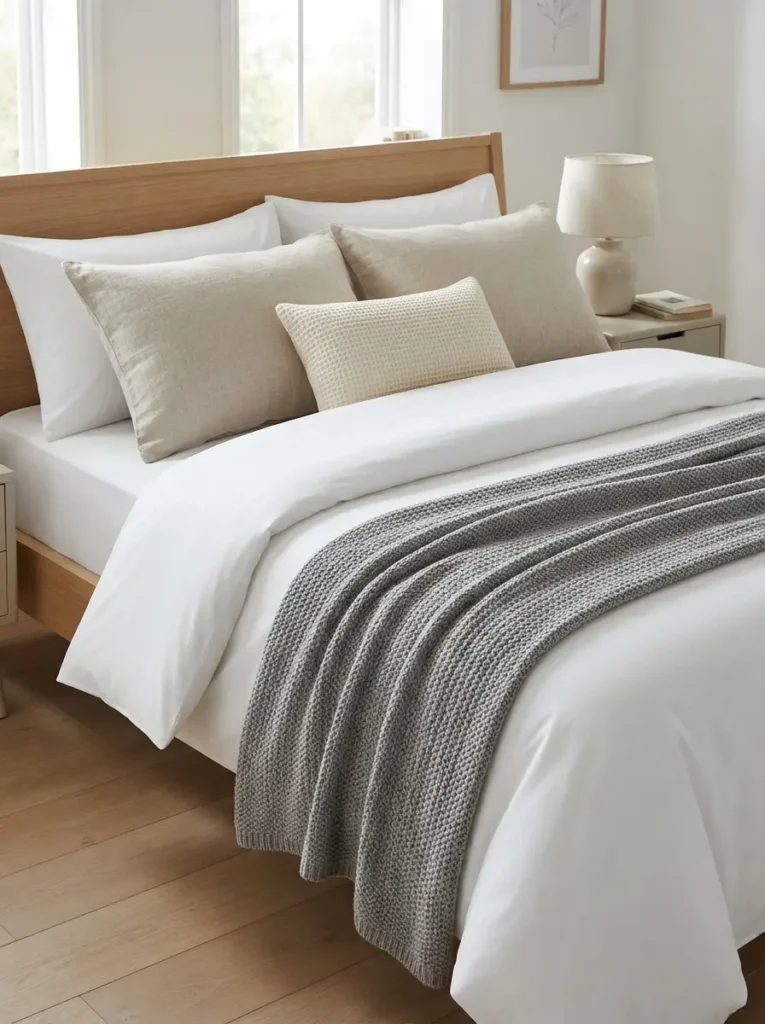
Layering creates warmth, but too many pillows and blankets quickly become inconvenient. Start with breathable cotton sheets, add a medium-weight duvet and finish with one folded quilt or knitted throw at the foot of the bed. During colder nights, the extra layer is already within reach. During the day, it gives the bed texture and structure. Choose fabrics with different surfaces rather than adding many colours. Smooth cotton, washed linen, waffle weave and soft knit can all sit together comfortably.
Proportion keeps the arrangement usable. On a double bed, two sleeping pillows, two standard decorative pillows and one lumbar cushion are usually enough. Smaller beds need even less. Oversized cushions often fall on the floor and make daily bed-making frustrating. People with limited storage should choose washable layers that serve a real purpose. The styling succeeds because every textile adds either comfort, warmth or support instead of acting as filler.
Use Rust as a Controlled Accent
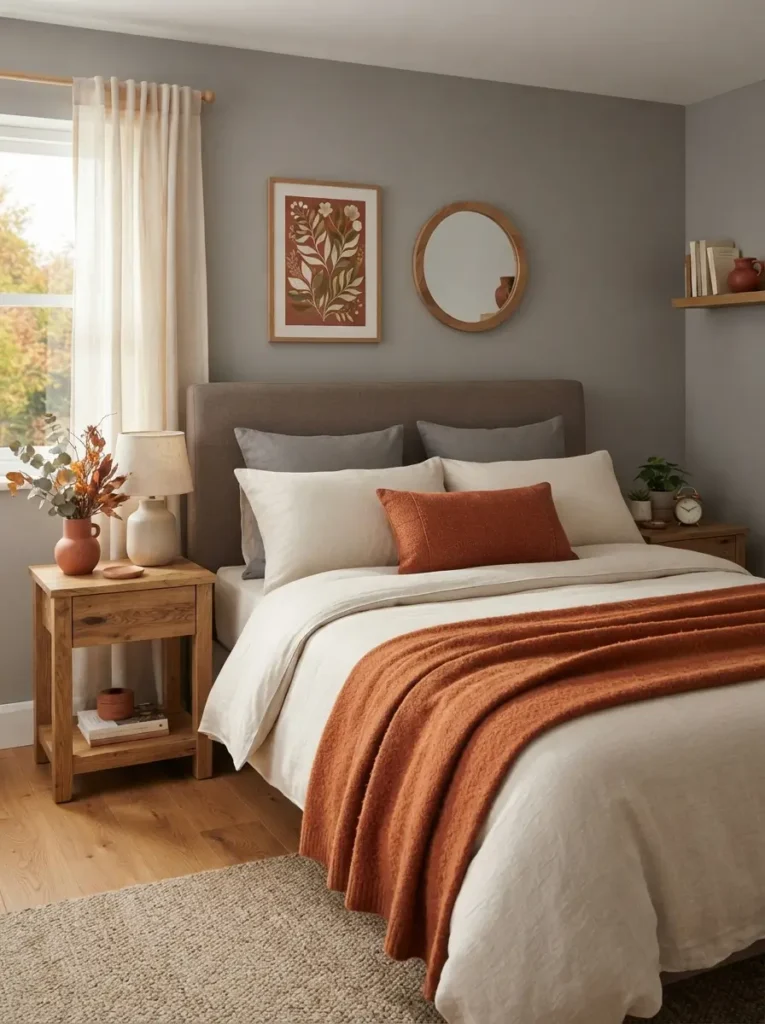
Rust brings autumn warmth into a bedroom without looking overly bright. Its red and brown undertones pair well with cream, tan, olive, charcoal and natural wood. Use it in two or three places so the colour feels intentional. A rust lumbar cushion, a small ceramic vase and a folded throw can create a connected look. Avoid spreading rust across every surface because the room may feel visually heavy, especially when the walls or furniture are already dark.
People with grey bedrooms can use rust to soften the coolness. Warm grey bedding with a rust throw and oak side tables creates a balanced result. Blue bedrooms also benefit because rust sits opposite blue on the colour wheel, producing clear but controlled contrast. The combination works best when one colour remains dominant. Keep blue on larger areas and rust on smaller accessories. Renters can test the shade through removable items before committing to curtains or painted furniture.
Switch to Warm White Lighting

Lighting can change the entire room more quickly than new accessories. Bulbs between 2700K and 3000K produce a warm white glow that suits bedrooms and makes wood, terracotta and cream fabrics look richer. Cooler bulbs above 4000K often feel harsh at night and can make warm colours appear dull. Use at least two lower light sources, such as bedside lamps, wall lights or a shaded floor lamp.
Lamp position affects comfort as much as bulb colour. Reading lamps should sit near shoulder height when you are in bed, while decorative lamps can be lower. Choose fabric, frosted glass or paper shades to diffuse light and reduce glare. Plug-in wall sconces are useful for renters because they add layered lighting without permanent wiring. The approach works because several small pools of light create depth and reduce the flat appearance caused by one bright overhead source.
Add a Textured Throw at the Bed End

Bed-end throws introduce seasonal texture while keeping the main bedding simple. Choose a size that covers most of the mattress width without hanging to the floor. A throw that is too small may look accidental, while an oversized blanket can drag, collect dust and crowd a narrow walkway. Fold it into thirds for a neat finish or place it loosely across one corner for a relaxed arrangement. Both methods work when the throw remains easy to use.
Material should match your local climate. Chunky wool suits colder homes, but cotton knit, brushed cotton or lightweight fleece may feel more practical in mild weather. Families with pets should avoid loose loops that can snag. Allergy-sensitive sleepers may prefer tightly woven washable fabrics. The detail is effective because it introduces a tactile change that people can see and use. Beginners can often refresh the whole bed by changing only this one layer.
Bring in Dark Wood Through Small Pieces
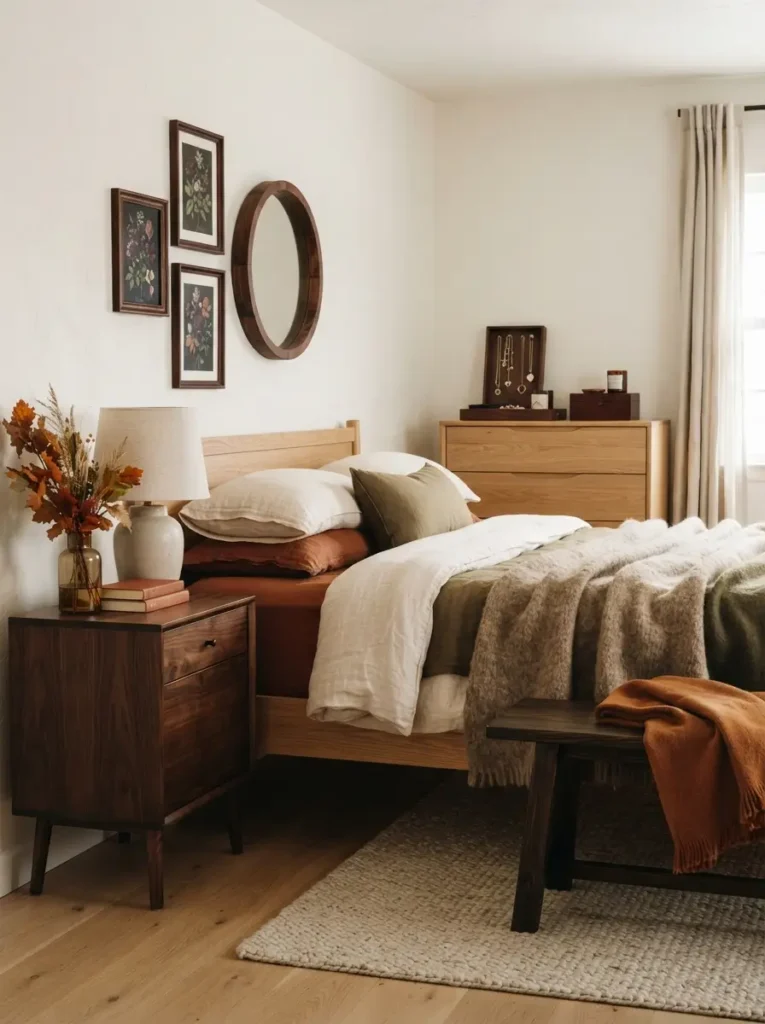
Dark wood adds visual weight and suits autumn palettes, but replacing a full bedroom set is unnecessary. Introduce walnut, stained oak or deep brown through one or two compact pieces. A bedside table, narrow bench, tray or picture frame can provide enough contrast against pale walls and bedding. Matching every wood tone is not required. Rooms often look more natural when light and dark woods appear together, provided the undertones are compatible.
Look for red-brown woods if the room includes rust, burgundy or terracotta. Choose neutral brown or slightly greyed wood if the palette uses olive, cream and charcoal. Second-hand furniture can be sanded lightly and finished with a low-sheen stain. Renters who cannot change built-ins can place a dark wood tray on a white dresser. The idea works because small areas of deeper colour anchor the room without reducing valuable light.
Style the Bedside Table for Real Use

Bedside tables often collect objects because they sit within easy reach. Seasonal styling should improve the surface rather than make it harder to use. Keep one lamp, a small dish, one book and a compact decorative item. Leave enough free space for a phone, water glass or medication. If the table is narrow, move the lamp to the wall and use the full surface for essentials.
Height variation creates a finished arrangement without needing many objects. A lamp forms the tallest point, a book or box creates a middle layer and a shallow dish sits low. Dried leaves, a small branch or a stoneware vase can add autumn character without looking themed. The setup suits people who want a tidy room but still enjoy decorative details. Its strength comes from combining beauty with everyday function, which helps the room stay organised after the first week.
Add Olive Green for a Calmer Palette

Olive green brings an earthy note that feels quieter than bright forest green. It pairs naturally with beige, tan, off-white, rust and black. Use olive on bedding, curtains or an accent chair when you want a stronger change. Smaller rooms may need only one olive cushion and a framed print with muted green tones. Repeating the colour twice helps it feel connected to the room rather than randomly added.
Natural light changes olive throughout the day, so test fabric samples near the window before buying large items. North-facing rooms may make the shade look greyer, while warm afternoon light can reveal more yellow. Choose a softer sage-olive mix in dark rooms and a deeper brown-based olive in brighter spaces. The colour works well for people who prefer understated autumn decorating because it suggests changing leaves without relying on orange.
Use Curtains to Warm the Windows

Windows can make a bedroom feel cold when coverings are thin, too short or visually disconnected from the room. Full-length curtains create a softer frame and help reduce drafts when paired with blinds or thermal lining. Hang the rod slightly above the window and extend it beyond the frame so the curtains can open fully. That placement makes the window appear larger and allows more daylight into the room.
Fabric weight should suit the season and the room size. Heavy velvet can look luxurious, but it may overwhelm a small bedroom. Brushed cotton, linen-look fabric or lined polyester often offers a better balance. Renters can use no-drill tension rods, adhesive brackets rated for curtain weight or removable hooks for light panels. The update succeeds because it improves insulation, light control and visual height at the same time.
Build Fall Bedroom Decor Around One Focal Point

Rooms feel calmer when the eye has one clear place to land. The bed usually makes the best focal point because of its size, but a fireplace, large window or strong piece of art can also lead the arrangement. Choose one area and give it the richest colour, strongest pattern or most noticeable texture. Keep nearby surfaces quieter so they support the focal point rather than compete with it.
For example, use a patterned rust-and-cream quilt on the bed, then repeat only small amounts of rust elsewhere. Plain curtains, simple lamps and neutral walls allow the quilt to stand out. Small bedrooms benefit especially from this approach because too many competing features can shrink the room visually. The principle works by directing attention instead of spreading it across several unrelated objects.
Create a Soft Headboard Effect Without Building One

Headboards add comfort and structure, yet many renters or budget-conscious decorators cannot install a permanent one. A large wall hanging, padded panel, folding screen or carefully mounted curtain can create a similar effect. Choose a width close to the mattress size so the bed looks grounded. Keep the material easy to clean and make sure any wall attachment suits the weight.
People who read in bed may prefer upholstered peel-and-stick panels placed in a tidy grid. Lightweight fabric panels can soften sound and protect the wall from marks. Wooden screens add stronger contrast but need enough floor depth behind the bed. The method works because the wall gains texture and a clear boundary without expensive carpentry. Beginners should measure the bed and wall first, since a narrow or off-centre treatment can look unfinished.
Introduce Plaid in Small Amounts

Plaid carries an autumn association, but large amounts can make a bedroom feel busy. Use one plaid element, such as a lumbar cushion, folded blanket or upholstered stool. Keep the remaining textiles mostly plain. Patterns with muted tan, black, rust or olive are easier to blend than bright red tartans. Smaller checks suit compact rooms because the pattern reads as texture from a distance.
Scale should relate to furniture size. A large check can work on a king-size bed, while a small check often looks better on a single bed or narrow bench. Pair plaid with solid fabrics that repeat one or two colours from the pattern. The style is useful for people who enjoy traditional or cabin-inspired rooms but still want a clean result. Controlled repetition prevents the pattern from taking over.
Add a Rug That Frames the Bed

Rugs make hard floors feel warmer and reduce the cold sensation beside the bed. Positioning matters more than size labels. A large rug can sit under the lower two-thirds of the bed, extending at least 45 to 60 centimetres on both sides. Smaller budgets may suit two matching runners placed along the bedside areas. Avoid tiny rugs floating far from the furniture because they break the room into disconnected sections.
Low-pile wool blends, washable flatweaves and soft synthetic rugs are practical choices. Thick shag can feel comfortable but traps dust and makes furniture harder to move. People with allergies or pets often prefer washable, low-pile options. Add a non-slip pad underneath, especially on wood or laminate floors. The update works because it adds warmth where feet touch the floor while visually linking the bed to the surrounding space.
Use Autumn Art Without Relying on Quotes

Seasonal artwork does not need written sayings or obvious leaf graphics. Landscapes, botanical sketches, abstract colour fields and vintage still-life prints can introduce autumn shades in a more flexible way. Choose images that contain two or three colours already present in the room. Frames should relate to nearby furniture or lighting, but they do not need to match exactly.
Gallery walls can overwhelm small bedrooms when every piece has a different frame and strong subject. One medium print above the bed or two smaller works beside a dresser often feels more balanced. Renters can use removable picture strips within the recommended weight limit. The idea suits people who want seasonal character without storing decorations each year. Art works well because it changes the palette while taking up no floor or surface space.
Add Natural Branches or Dried Stems
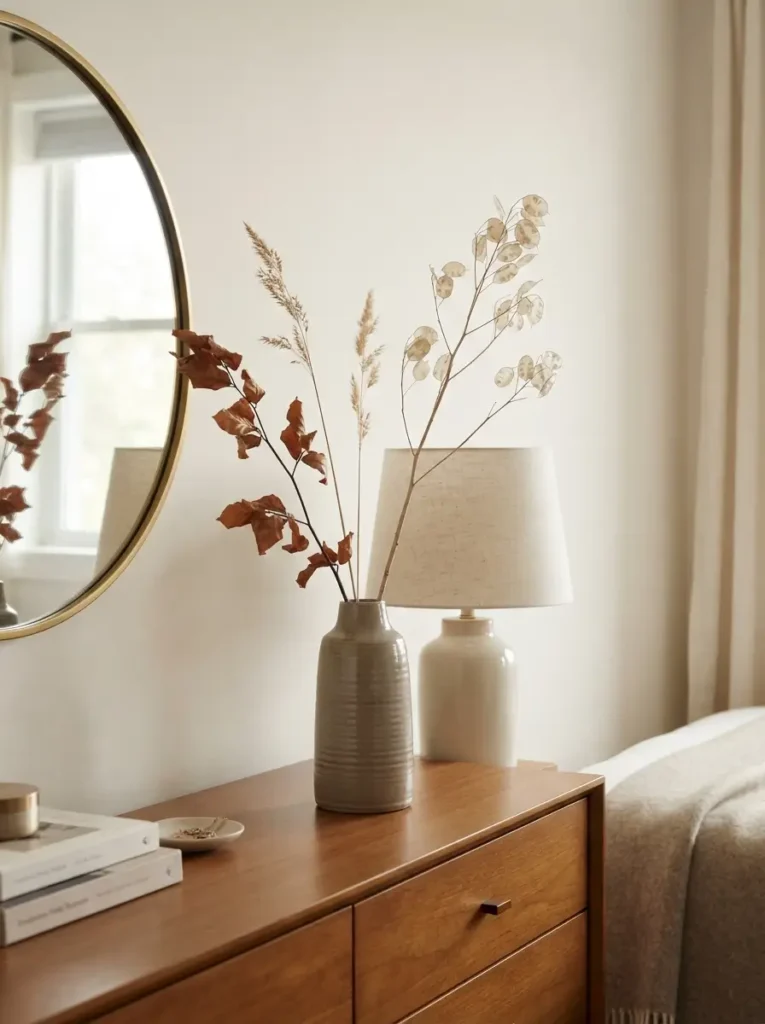
Branches and dried stems bring height, movement and an outdoor reference to the bedroom. Choose simple forms such as eucalyptus, beech branches, dried grasses or seed heads. Place them in a stable vase on a dresser, shelf or window ledge. Keep the arrangement narrow in small spaces so it does not block mirrors, lamps or walking routes.
Freshly gathered materials should be clean, dry and free from insects before entering the room. People with allergies may prefer realistic faux stems that can be washed. Avoid brittle plants near the bed because they shed and create mess. The effect succeeds when the arrangement looks edited rather than crowded. Three to five stems often make a stronger statement than a large mixed bouquet, especially in a compact room.
Warm Up a Reading Corner
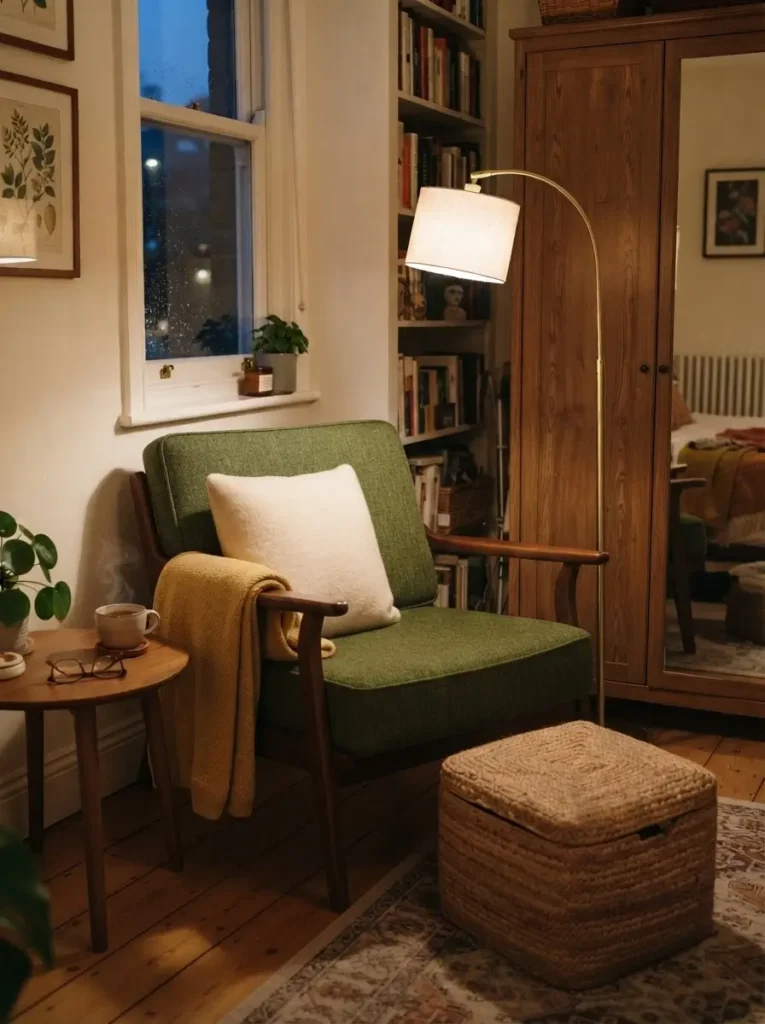
Reading corners need good lighting, comfortable support and a nearby surface. Start with a compact chair, a firm cushion and a small table or wall shelf. Add a floor lamp that directs light onto the page without shining into the eyes. Upholstered armchairs provide comfort, but slim wooden chairs with seat cushions work better in tight rooms. A small ottoman can double as storage if floor space allows.
Placement should protect circulation. Keep at least 60 centimetres of clear walking space between the chair and the bed or wardrobe. Angle the chair toward the room rather than pressing it flat against the wall, provided the layout permits. The corner feels welcoming because it creates a specific activity zone. People who share a home often value this small retreat, especially during darker autumn evenings.
Replace Cool Metallic Details

Chrome and bright silver can feel sharp beside autumn colours, particularly under cool lighting. Replace a few small items with aged brass, bronze, matte black or dark iron. Lamp bases, drawer pulls, curtain rods and picture frames provide easy opportunities. Full matching sets are unnecessary. Two or three repeated metal finishes are enough to make the room feel coordinated.
Warm metals pair especially well with cream, olive, rust and dark wood. Matte black works better in modern rooms and can prevent a warm palette from becoming too soft. Renters can change knobs if they store the originals and reinstall them before moving. Peel-and-stick metallic film may suit lightweight decorative boxes or trays, but avoid applying it to valuable furniture. The adjustment works because metal finish influences the room’s temperature even when used in small amounts.
Use Scent Carefully and Safely

Scent can reinforce a seasonal mood, but bedrooms need restraint. Strong candles, heavy sprays and multiple diffusers may cause headaches or disturb sleep. Choose one subtle source and place it away from pillows. Cedar, fig, soft vanilla, bergamot or sandalwood tend to feel warm without smelling like a holiday display. Ventilate the room and stop using any fragrance that causes irritation.
Flameless options suit bedrooms better than unattended candles. Pet owners should check whether fragrance ingredients are safe for animals. People with asthma or scent sensitivity may prefer unscented decorating and use natural cedar blocks inside wardrobes instead. The idea works only when fragrance supports comfort rather than dominating the room.
Edit Open Shelves for Autumn
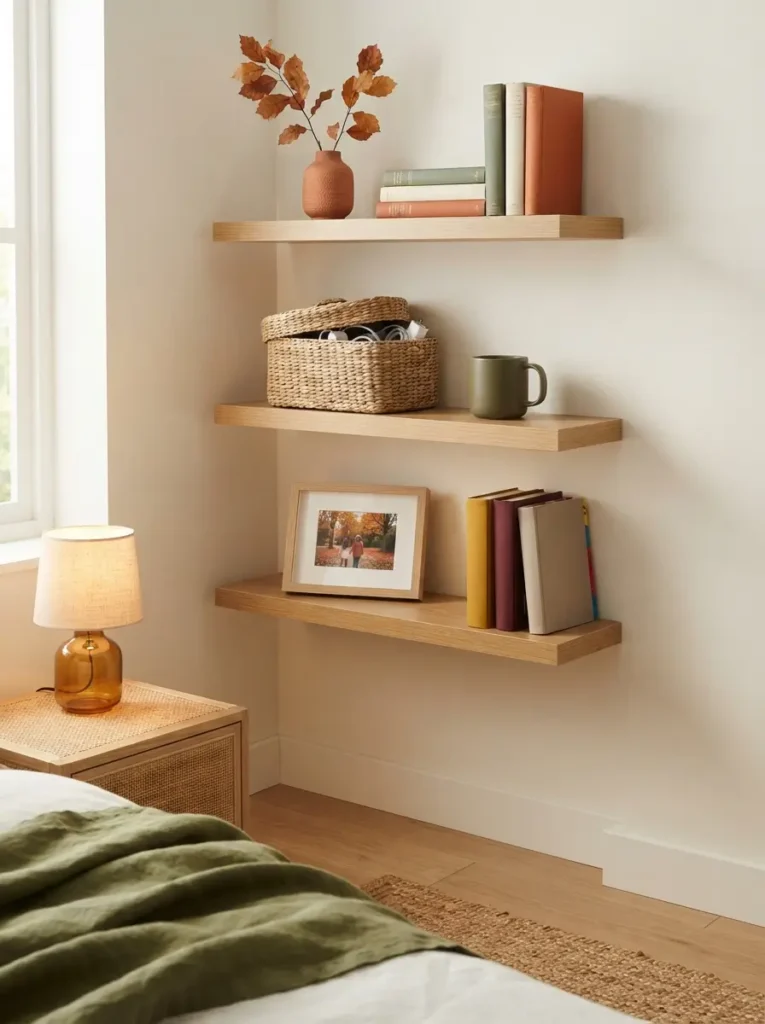
Open shelves can make a bedroom feel personal, yet they become cluttered quickly. Remove items that do not serve the room, then group the remaining objects by colour, material or function. Books, boxes, a framed photograph and one natural element may be enough. Leave some empty space around each group so the shelf does not become a solid wall of objects.
Autumn colours can appear through book spines, small ceramics or woven baskets. Turn overly bright book jackets inward only when you still know where titles are located. Storage boxes should hide small items such as cables, receipts or spare chargers. The method suits renters and small-space decorators because it refreshes the room without buying furniture. Editing works by reducing visual noise, allowing the warmer colours and textures to stand out clearly.
Finish with a Practical Night-Time Routine Zone
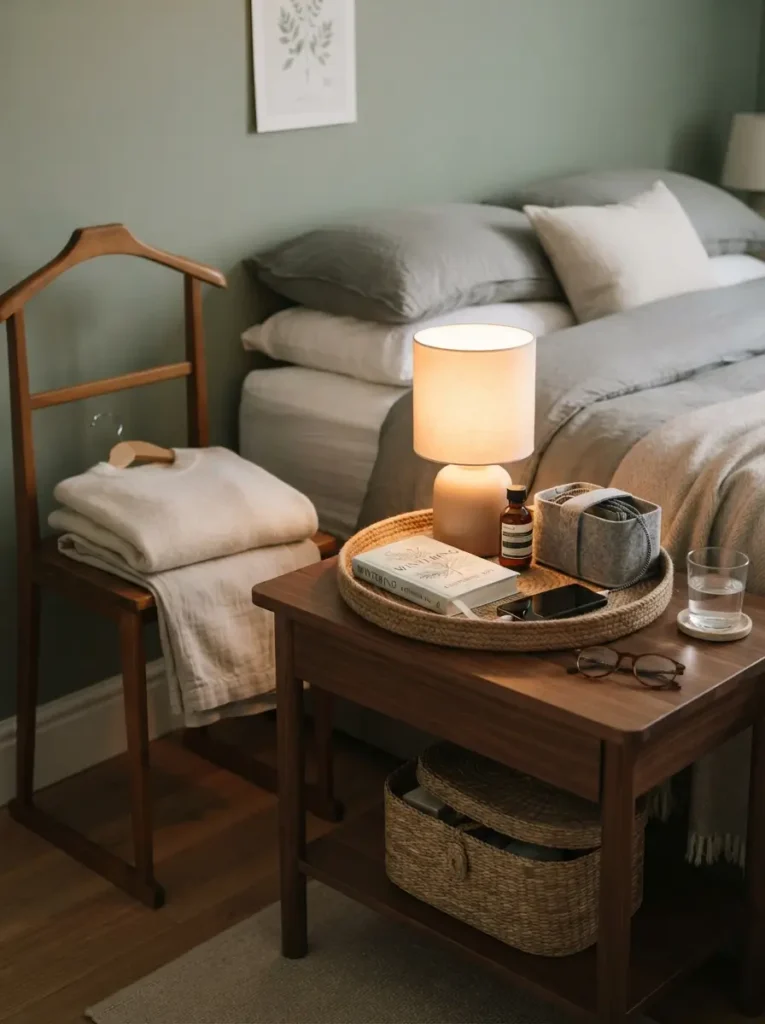
Seasonal comfort often depends on small routines. Create a simple night-time zone with a tray, soft lamp, book, hand cream and charging point. Keep cords controlled with clips or a cable box. Place frequently used items within reach while leaving enough open space for a drink. People who prepare clothes for the next morning can add a valet hook or narrow chair nearby.
Organisation prevents the bedroom from losing its calm appearance. Choose one drawer, basket or lidded box for items that normally collect on the bedside table. Warm materials such as wood, felt and woven fibre can make storage feel connected to the room. The final detail works because it supports real habits rather than adding another decorative layer. People who struggle with clutter will notice the biggest improvement when every small object has a clear home.
Common Mistakes to Avoid
Too many seasonal colours can make a bedroom feel smaller and harder to rest in. Orange, red, mustard, brown and green may all suit autumn, but using every shade at equal strength creates competition. Select one main warm colour, one supporting shade and a neutral base. Repeat them across the room in different amounts. Strong colours should stay on smaller items unless the bedroom receives generous natural light.
Poor lighting can undo careful colour choices. One cold ceiling bulb makes rust, cream and wood look flat. Several very dim lamps can also make reading difficult. Combine a warm general light with one focused task light and one softer accent light. Use bulbs within the same colour temperature range so the room does not look patchy.
Ignoring storage creates short-lived results. Throws, extra pillow covers and seasonal accessories need a place when they are not in use. Under-bed boxes, lidded baskets and one labelled shelf can prevent piles from forming. Choose fewer, better items when storage is limited. Small-space decorating rewards editing more than collecting.
Budget-Friendly Ways to Refresh the Room
Low-cost changes can still create a noticeable shift when they focus on the largest visual areas. Begin with pillow covers rather than new inserts, then add one throw or replace a lampshade. Second-hand frames, wooden trays and small tables often cost less than new seasonal accessories. Fabric remnants can become simple cushion covers if you can sew, while iron-on hemming tape helps beginners make basic curtain panels or table runners.
Rearranging furniture costs nothing and can improve both light and movement. Move the bed away from a draughty window if the layout allows, clear the area in front of the radiator and place a lamp where it supports reading. Rotate artwork between rooms to create a new palette. Shopping your own home often reveals useful baskets, blankets and ceramics that already fit the season.
Paint samples offer another affordable tool. Small tester pots can update a picture frame, stool, tray or bedside drawer front. Use low-VOC paint and prepare the surface properly. Renters should avoid permanent changes unless the landlord agrees, but removable wallpaper can line a shelf or the back of an open bookcase. Fabric panels and peel-and-stick tiles also provide colour without full renovation.
Good Fall Bedroom Decor does not require buying a complete matching set. Budget looks stronger when one or two quality basics carry the room and cheaper accents support them. Spend more on bedding used every night, a supportive pillow or a reliable lamp. Save on decorative branches, baskets, frames and cushion covers. Practical spending protects comfort while still giving the room a clear seasonal direction.
Practical Fall Bedroom Decor Tips for Small Spaces
Small bedrooms need stronger editing because every item affects circulation and visual space. Keep the floor as open as possible by choosing wall-mounted lights, floating shelves and beds with built-in drawers. Furniture with visible legs often feels lighter than solid pieces that sit directly on the floor. Use one larger rug instead of several tiny mats when the layout allows, since a single surface makes the room feel more connected.
Vertical space can hold useful storage without crowding the bed. Install a narrow shelf above a dresser, place hooks behind the door or use a tall bookcase with closed boxes on lower levels. Keep the upper shelf styling simple so the room does not feel top-heavy. Mirrors should reflect light or a calm view rather than clutter. Positioning one opposite or beside a window can brighten the room during shorter days.
Pattern scale deserves attention in compact rooms. Small or medium patterns usually blend more easily than oversized checks or large florals, but too many tiny patterns can also look busy. Choose one patterned textile and keep the rest mostly solid. Repeat its colours in plain accessories. The room gains interest without losing order.
Furniture size should match the actual floor plan, not only the mattress width. Narrow bedside tables, compact dressers and slim benches can provide function while preserving movement. Avoid deep armchairs if they block wardrobe access. Folding stools, nesting tables and storage ottomans offer flexibility for renters and multipurpose rooms.
Seasonal storage should remain hidden or attractive. Vacuum bags work for spare duvets, while lidded baskets can hold throws. Label boxes so you do not have to search through several containers. Limit seasonal pieces to one box if possible. The rule encourages thoughtful choices and makes changing the room easier each year.
Frequently Asked Questions
What colours work best in an autumn bedroom
Warm neutrals, rust, olive, burgundy, caramel, muted mustard and deep brown all work well. Choose two or three shades rather than using the entire autumn palette. Light cream or warm beige can keep the room open, while a darker accent adds depth. Existing furniture should guide the final choice. Cool grey furniture often benefits from rust or caramel, while warm wood pairs naturally with olive and cream.
How can renters decorate without damaging walls
Removable hooks, tension rods, plug-in sconces, fabric wall hangings and peel-and-stick products offer useful options. Always check weight limits and test adhesive in a hidden area. Freestanding screens can create a headboard effect without drilling. Swapping pillow covers, throws, lampshades and artwork also changes the room without touching permanent surfaces.
How many autumn accessories should a small bedroom have
Three to five noticeable seasonal accents are usually enough. For example, use one throw, two cushion covers, a small vase and one piece of art. Keep other items neutral so the room does not feel crowded. Quality and placement matter more than quantity. Each accessory should support the palette, add texture or serve a practical purpose.
Which lighting temperature is best for a cosy bedroom
Bulbs between 2700K and 3000K usually create the most comfortable warm white light for bedrooms. Use brighter task lighting near reading areas and softer lamps for general evening use. Avoid mixing very cool and very warm bulbs in the same room because the colours may look inconsistent. Dimmable bulbs help adjust the room for reading, dressing and relaxing.
Can Fall Bedroom Decor work with a modern interior
Yes. Use clean lines, simple bedding and a limited palette. Matte black lighting, walnut furniture, olive textiles and one rust accent can create seasonal warmth without adding rustic signs or themed ornaments. Modern rooms often benefit from texture more than extra objects, so focus on wool, linen, wood and soft lighting.
What should I change first on a limited budget
Start with the bed because it covers the largest area. Change the pillow covers, add one textured throw and adjust the lighting temperature. Rearrange furniture to improve movement and bring in one natural element from another room. These steps usually create more impact than buying several small decorations.
Conclusion
Seasonal bedrooms feel most comfortable when every choice supports rest, warmth and daily use. Effective Fall Bedroom Decor begins with a calm base, then adds richer colour, layered textiles, softer light and practical storage. Small rooms benefit from careful scale, open walkways and fewer decorative objects. Rental homes can achieve the same warmth through removable lighting, textiles, art and freestanding pieces.
Personal habits should guide the final arrangement. Readers need a proper lamp, pet owners need washable fabrics and busy households need easy storage. Begin with one area, live with the change for a few days and add more only when the room still feels balanced. Autumn warmth comes from thoughtful decisions, not from filling every surface.