
Starting in your first college apartment can feel exciting, but it can also be confusing when the space is small, the budget is tight, and the lease has rules. A good apartment setup for college students should make daily life easier, not just make the room look nice.
You need a place to sleep well, study without distractions, cook simple meals, store your things, and relax after long classes. The best setup uses smart furniture, good lighting, easy storage, and small decor choices that make the apartment feel clean and comfortable.
This guide shares practical apartment setup ideas for college students, especially beginners, small apartment renters, and anyone who wants a simple, useful, and stylish space without spending too much.
Start With a Simple Floor Plan
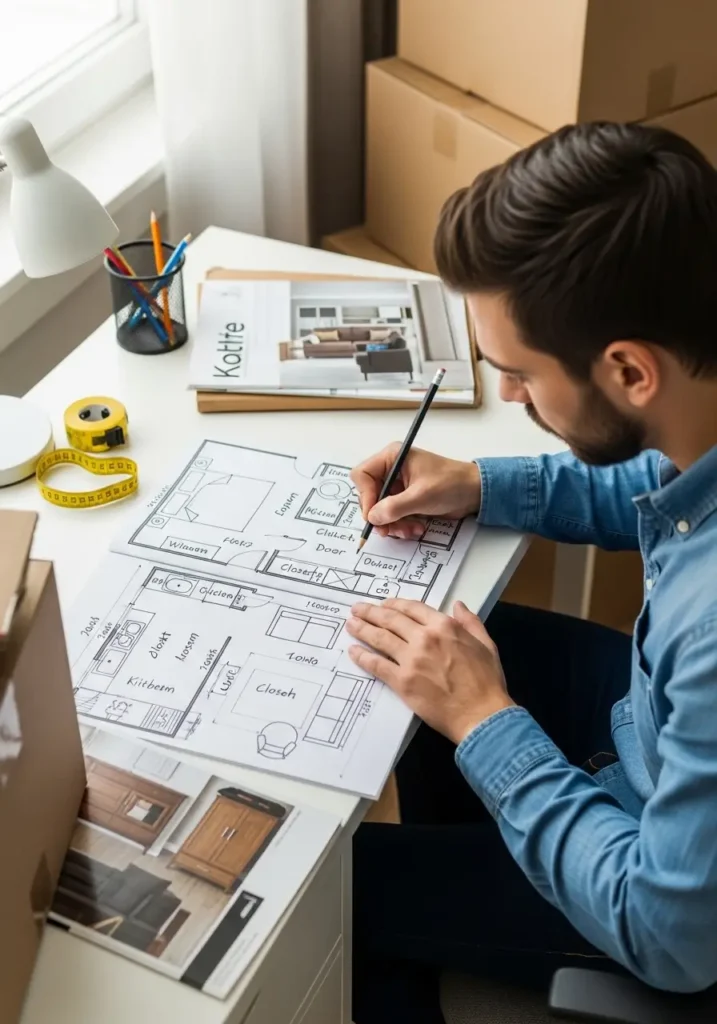
Before buying furniture, measure your apartment and sketch a simple floor plan. You do not need a professional design app. A basic drawing on paper works fine. Mark the bed, desk, sofa, kitchen area, closet, outlets, windows, and doors.
This works because small apartments need clear movement space. If your bed blocks a closet or your desk sits too far from an outlet, the room becomes annoying fast. This tip is best for students moving into a studio, shared apartment, or small one-bedroom space.
A practical example is placing your bed against the longest solid wall, keeping your desk near natural light, and leaving at least 24 inches of walking space between furniture. This makes the apartment feel more open and easier to use every day.
Choose a Bed With Storage Underneath
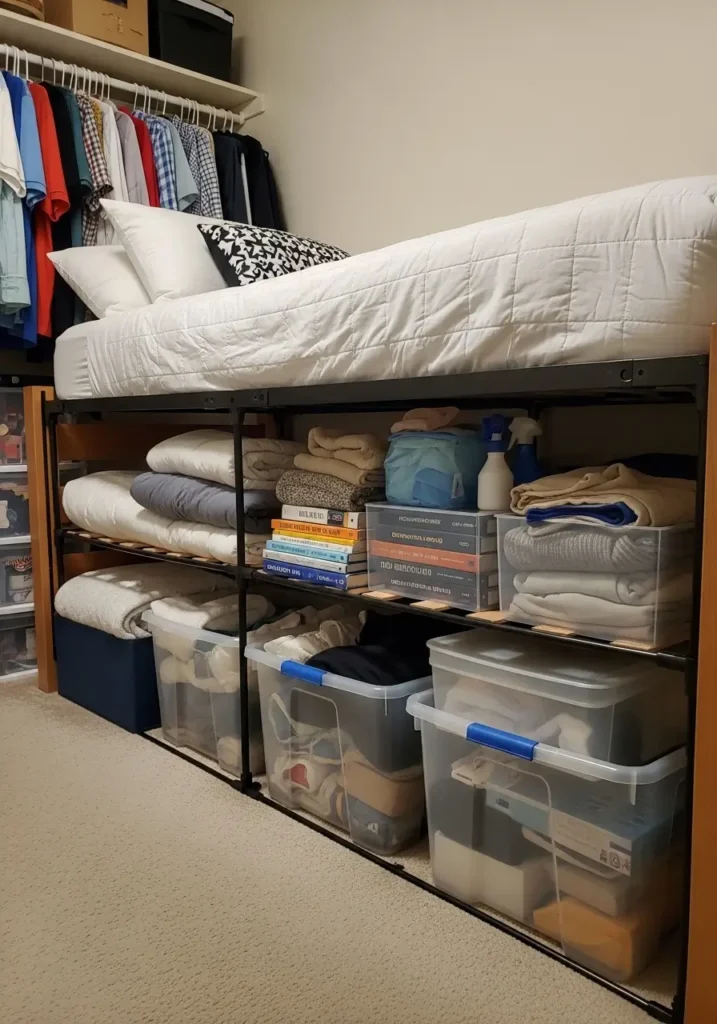
A bed takes up a lot of space, so make it do more than one job. A bed frame with drawers, risers, or under-bed bins can hold extra clothes, shoes, bedding, books, cleaning supplies, or seasonal items.
This idea works because college students often have limited closet space. Instead of adding more bulky furniture, you use the space that already exists. It is best for students in studio apartments, dorm-style rentals, or rooms with small wardrobes.
For a budget-friendly option, use simple plastic storage bins under the bed. Choose clear bins if you want to see what is inside, or fabric bins for a cleaner look. Keep daily-use items near the front and rarely used items toward the back.
Create a Real Study Zone
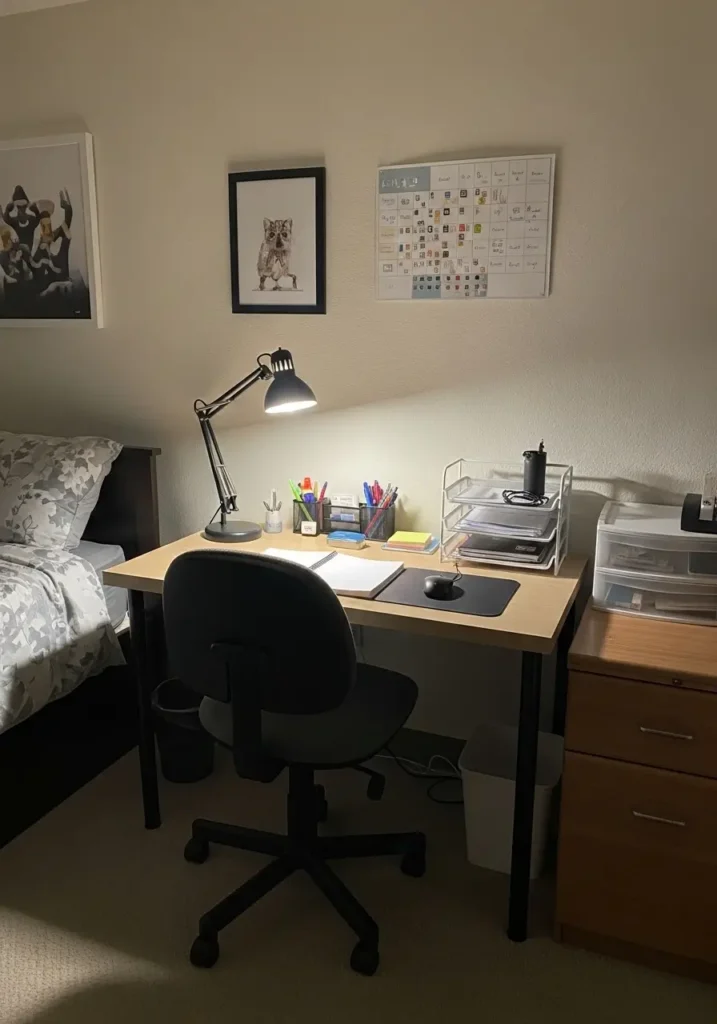
A college apartment should have a proper study spot, even if it is small. A desk, a comfortable chair, a task lamp, and a few storage items can make a big difference. Try not to study from bed every day because it can blur the line between rest and work.
This works because your brain connects places with habits. A dedicated desk helps you focus better, keep supplies in one place, and avoid wasting time looking for chargers, notebooks, or headphones. This tip is best for students who take online classes, work late, or need quiet focus time.
A good setup includes a desk at least 36 inches wide, a chair with back support, a 4000K task lamp, and a small organizer for pens, sticky notes, and cables. Keep the desk surface mostly clear so it does not become a dumping zone.
Use Warm Lighting for Comfort and Cool Lighting for Study
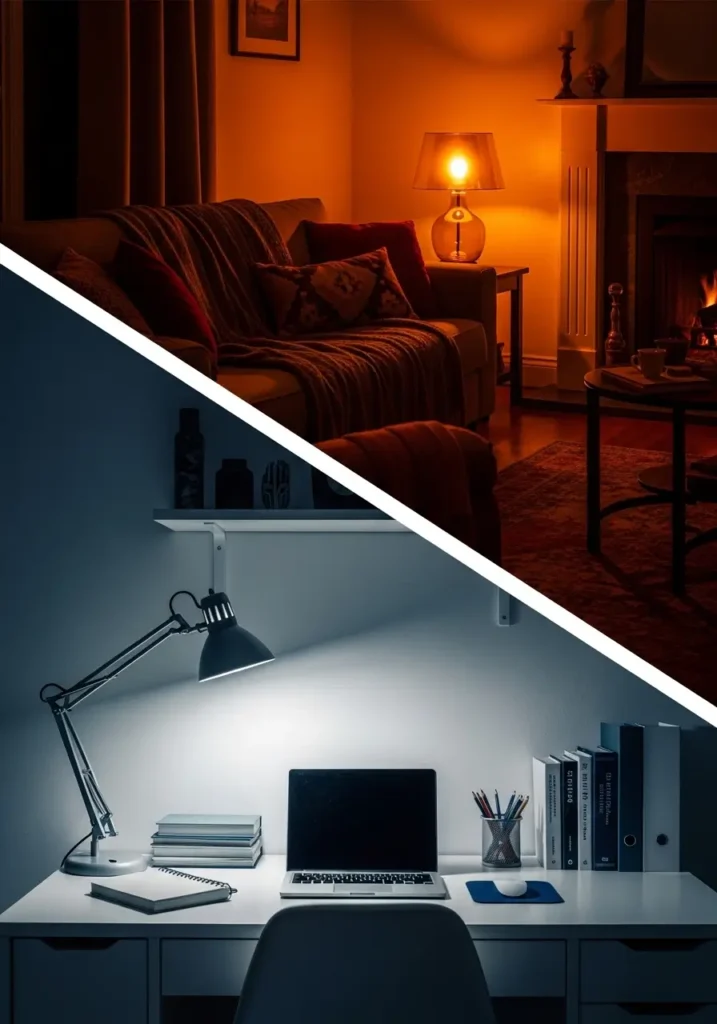
Lighting can change how your apartment feels and how well it works. Use warm white bulbs around 2700K to 3000K for relaxing areas, such as the bedroom and living room. Use neutral or cool white light around 4000K for your desk or study area.
This works because warm light feels softer at night, while brighter task lighting helps with reading and focus. It is best for students who spend long hours indoors, study at night, or have apartments with weak overhead lighting.
A practical setup could include one floor lamp near the sofa, one desk lamp for studying, and one small bedside lamp. If the apartment has harsh ceiling lights, use lamps more often. This gives you better control without changing rental fixtures.
Pick a Small Color Palette
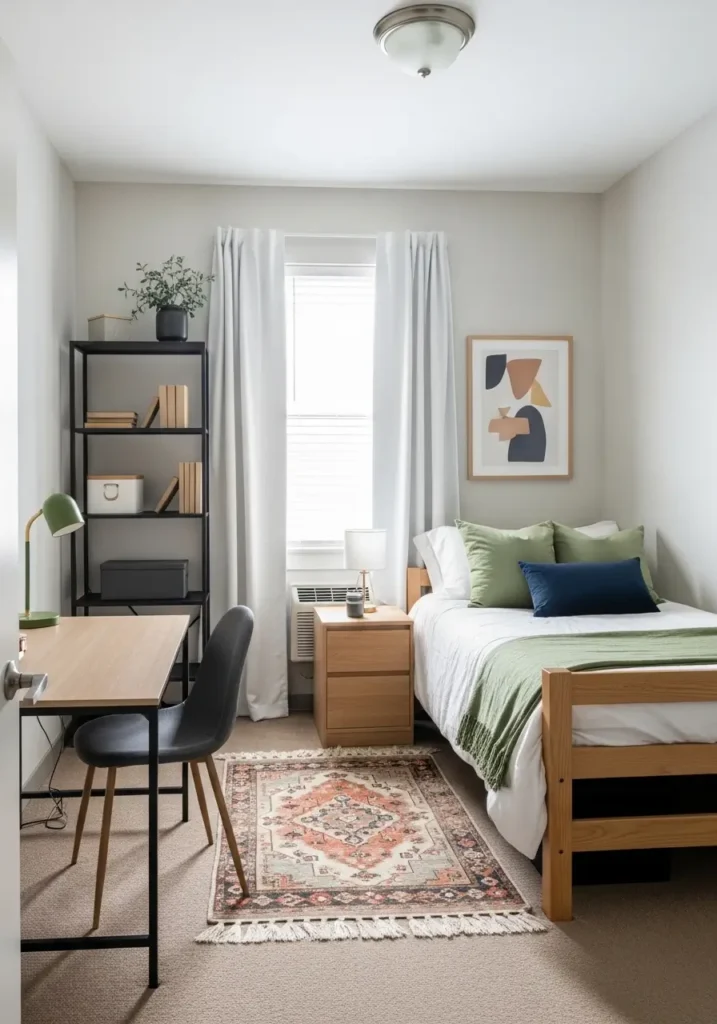
A simple color palette makes a student apartment look more organized. You do not need expensive decor. Choose two main colors and one accent color. For example, use white and light gray as the base, then add navy, olive green, tan, or black as the accent.
This works because too many colors can make a small apartment feel busy. A tighter palette helps cheap furniture, bedding, rugs, and storage pieces look more planned. This tip is best for beginners who do not know how to decorate yet.
For a men’s apartment decor style, try charcoal bedding, a light wood desk, black metal shelves, and one warm-toned rug. For a softer look, use beige bedding, white curtains, light oak furniture, and sage green pillows.
Add a Rug to Define the Space
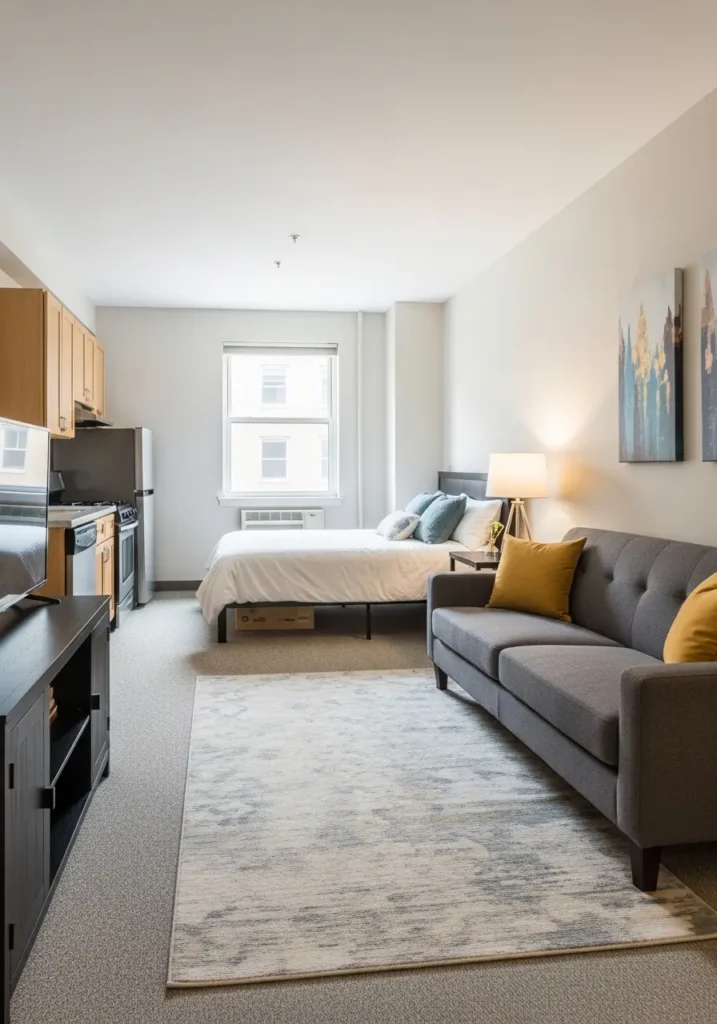
A rug can make a college apartment feel more finished while also separating different zones. In a studio apartment, a rug under the bed or sofa area helps create a visual boundary without adding walls or dividers.
This works because small spaces need structure. When every area blends, the apartment can feel messy even when it is clean. A rug tells the eye where the living area starts and ends. This is best for studio apartments, open layouts, and basic rentals with plain flooring.
Choose a low-pile rug because it is easier to clean. For small living areas, a 5×7 rug often works well. For a bed area, place the rug halfway under the bed so it extends out where your feet land in the morning.
Use Vertical Storage Instead of Bulky Furniture
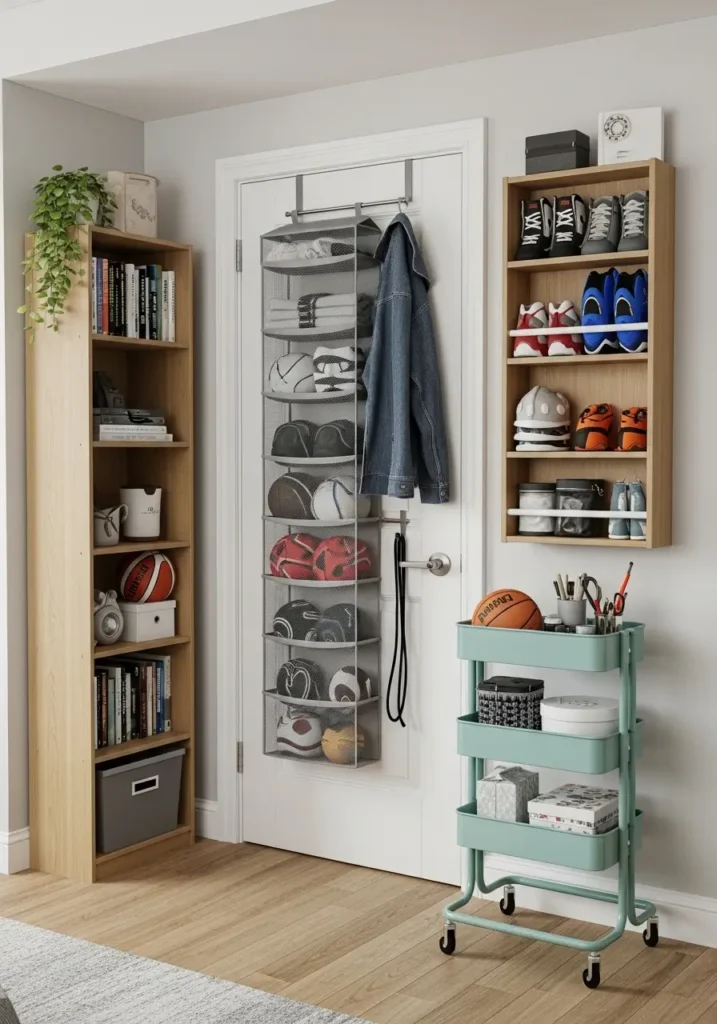
When floor space is limited, use wall height. Tall bookshelves, over-the-door hooks, wall shelves, and vertical storage carts can hold more without taking up much room. This is one of the most useful apartment setup for college students ideas because it solves clutter without overcrowding the floor.
This works because small apartments usually have unused wall space. Vertical storage keeps items accessible while leaving more walking room. It is best for students with books, tech gear, sports items, clothes, or hobby supplies.
Rental-friendly options include freestanding shelves, adhesive hooks, tension rods, and over-the-door organizers. Use wall shelves only if your lease allows drilling. If not, choose a slim bookshelf that reaches upward instead of a wide cabinet.
Keep the Entryway Functional
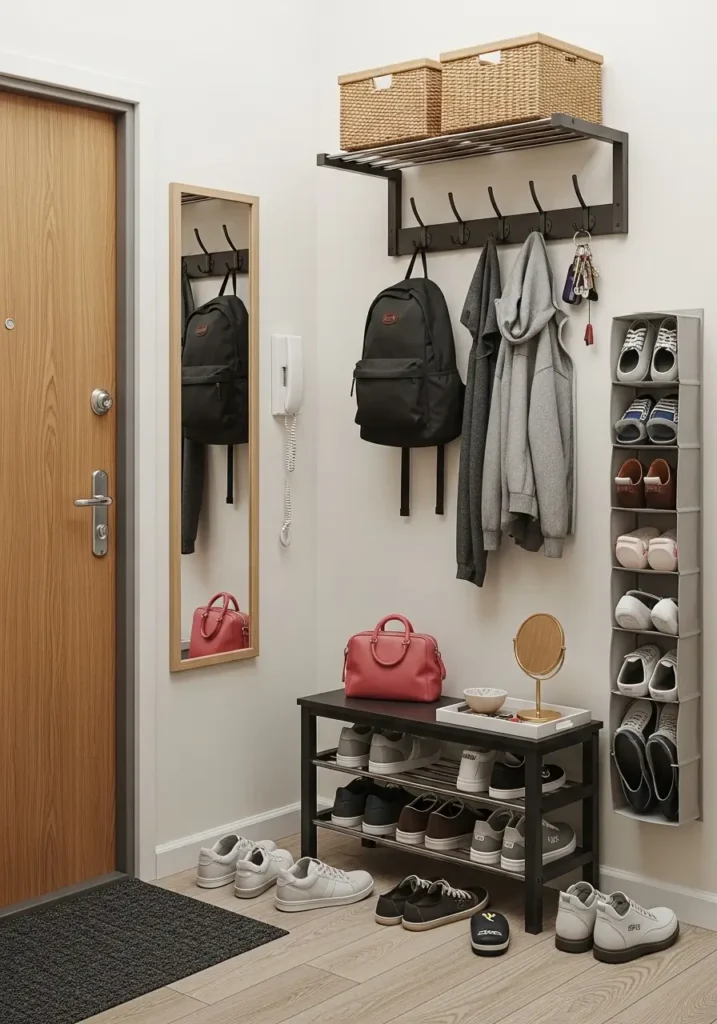
Even a small apartment needs an entry zone. Without one, shoes, bags, keys, and jackets end up scattered across the floor. A simple entry setup can include a shoe rack, wall hooks, a small tray, and a compact mirror.
This works because the entryway controls daily clutter. When every item has a landing spot, the apartment stays cleaner with less effort. This tip is best for students who come home with backpacks, gym bags, keys, mail, or work items.
A practical example is placing a narrow shoe rack near the door, adding removable hooks for jackets, and using a small bowl for keys. If space is extremely tight, use an over-the-door hook rack and a slim vertical shoe organizer.
Choose Multipurpose Furniture
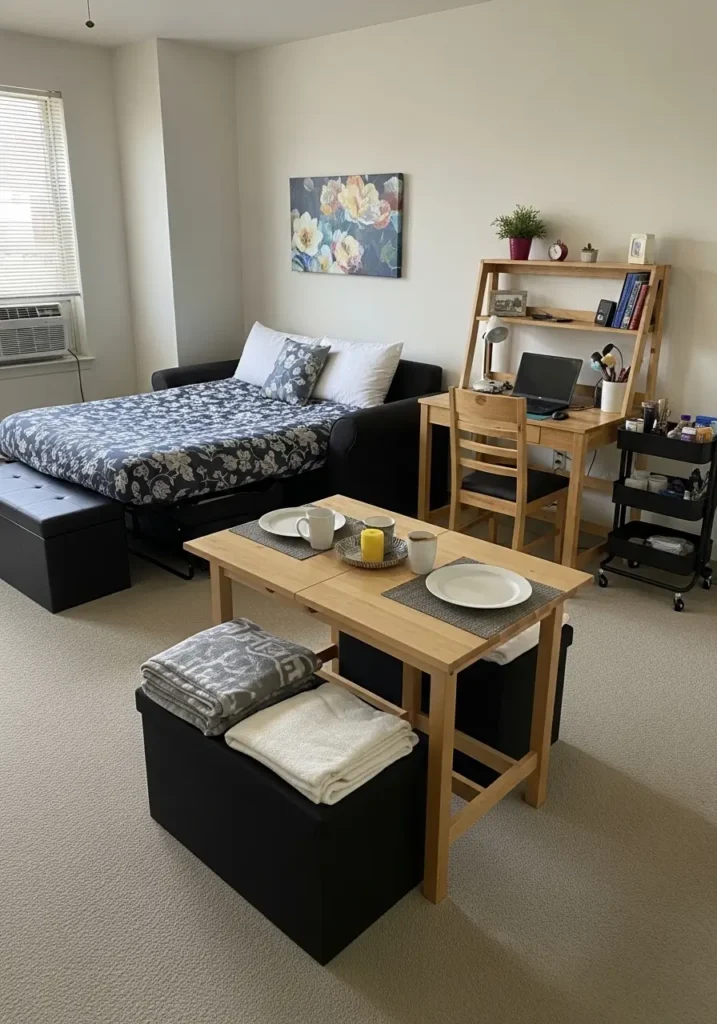
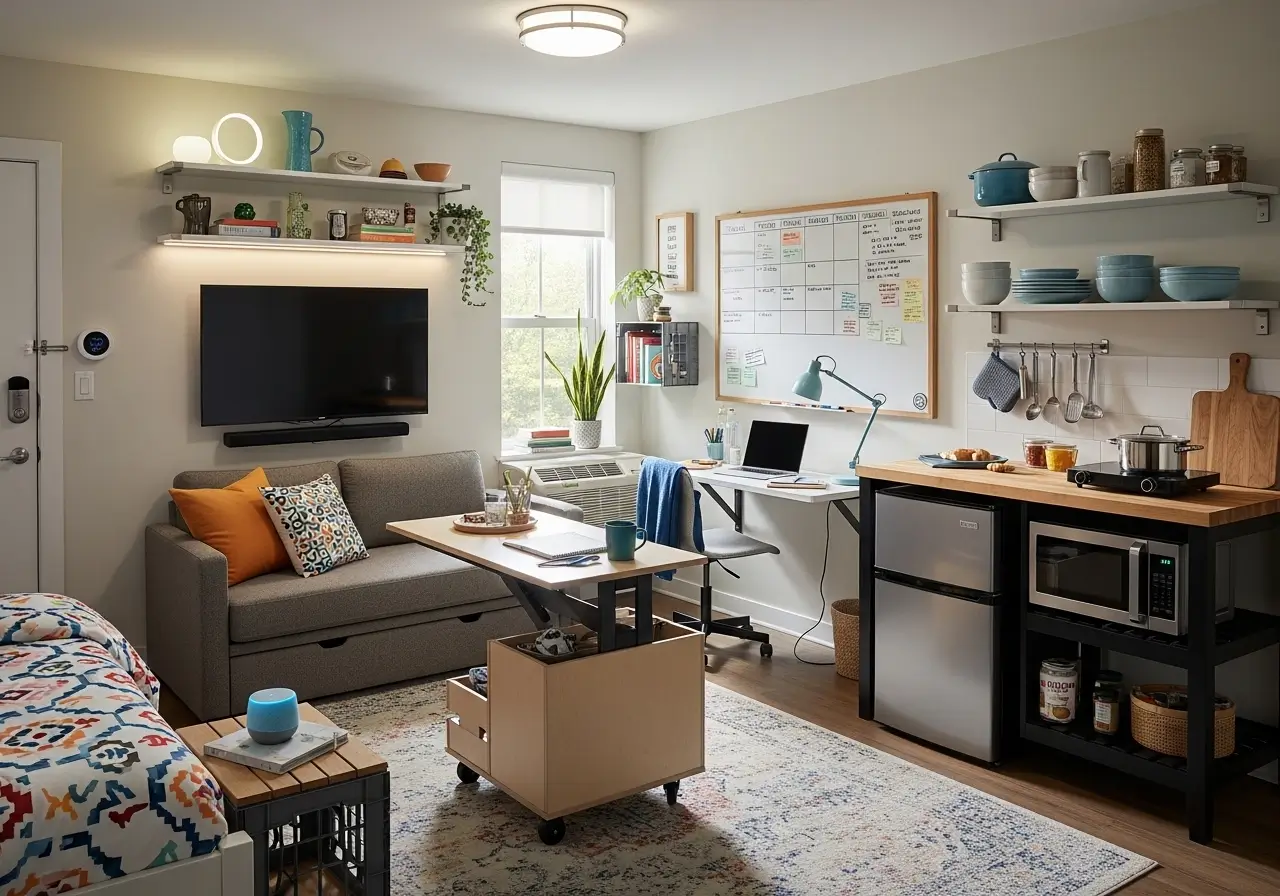
Multipurpose furniture is useful in any apartment setup for college students. Look for pieces that solve more than one problem, such as a storage ottoman, foldable dining table, sleeper sofa, rolling cart, or desk that can double as a dining area.
This works because college apartments often need to support studying, eating, relaxing, hosting friends, and sleeping in one small area. Multifunctional pieces reduce the number of items you need. This is best for studio apartments and shared apartments with limited common space.
For example, a storage ottoman can work as a footrest, extra seat, and blanket storage. A folding table can serve as a dining table during meals and disappear when you need more floor space.
Make the Kitchen Easy to Use
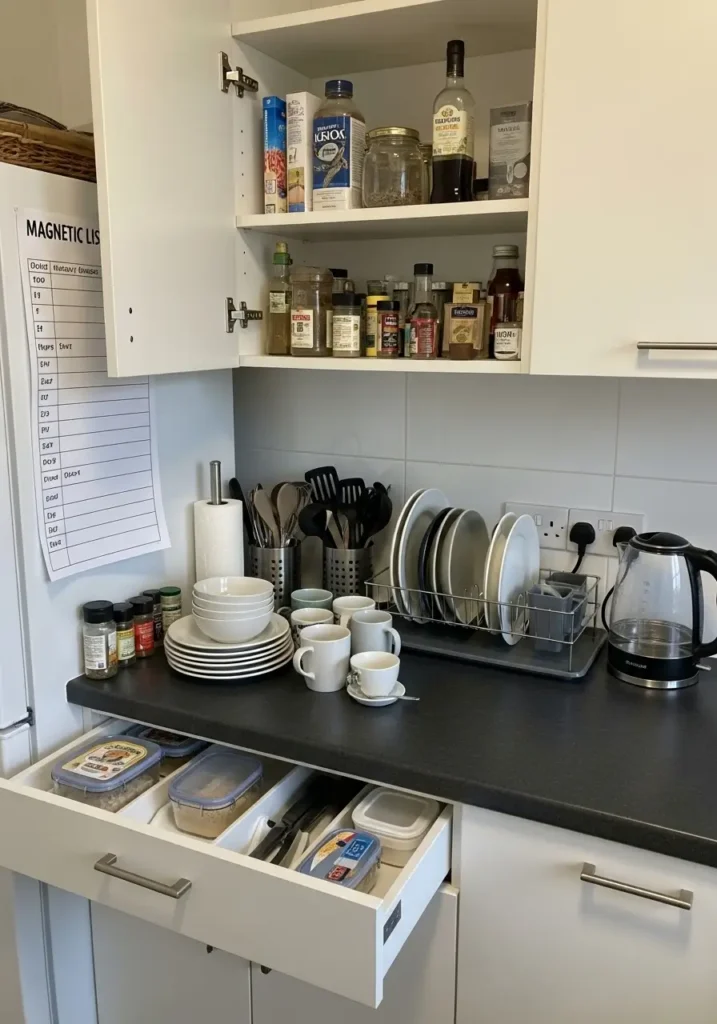
A student kitchen does not need to be large, but it should be organized. Keep daily items close together: plates, bowls, mugs, utensils, cookware, and basic spices. Store rarely used items higher up or in lower cabinets.
This works because a messy kitchen makes cooking feel harder. When the kitchen is simple to use, you are more likely to make quick meals instead of spending money on takeout. This tip is best for students on a budget or anyone learning to cook basic meals.
Use drawer dividers, stackable food containers, a small dish rack, and cabinet shelf risers. A magnetic fridge list can help you track groceries. If counter space is limited, keep only daily-use items out, such as a kettle, coffee maker, or toaster.
Use Peel-and-Stick Upgrades Carefully
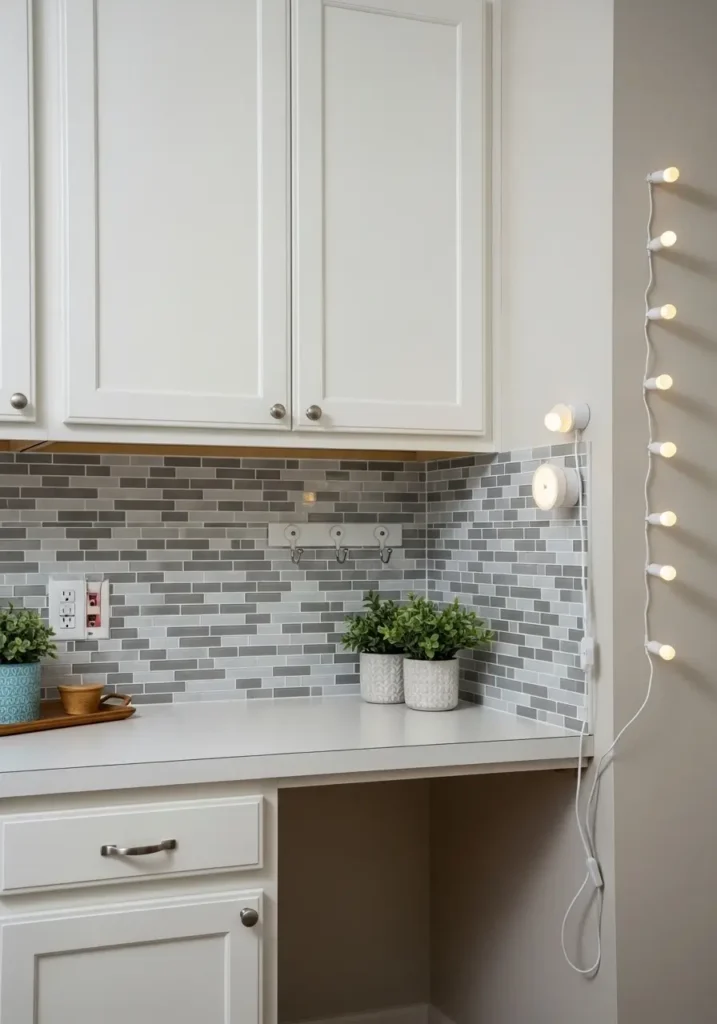
Rental-friendly decor can improve a basic apartment without risking your security deposit. Peel-and-stick wallpaper, removable backsplash tiles, adhesive hooks, temporary floor decals, and stick-on LED lights can make the space feel more personal.
This works because many college apartments have plain walls, old cabinets, or basic finishes. Temporary upgrades let you add style without permanent changes. This tip is best for renters who want a cleaner look but cannot paint or remodel.
Use peel-and-stick products on smooth, clean surfaces only. Test a small hidden area first. Avoid applying strong adhesive products to weak paint, textured walls, or damp areas. Good places to use them include a desk wall, kitchen backsplash area, or closet interior.
Control Cable Clutter Early
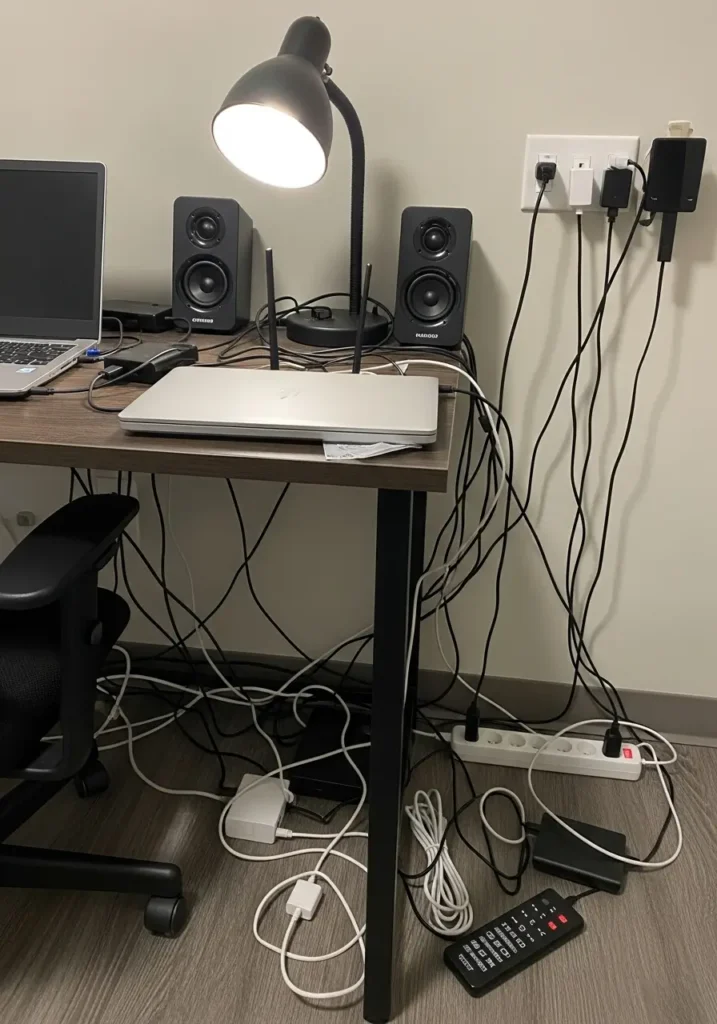
College apartments usually have many cables: laptop chargers, phone chargers, Wi-Fi routers, lamps, gaming consoles, speakers, and extension cords. If you do not organize them early, they quickly make the room look messy.
This works because visible cables create visual clutter even when the apartment is otherwise clean. Cable management also makes cleaning easier and reduces tripping risks. This idea is best for students with gaming setups, online classes, multiple devices, or shared living rooms.
Use cable clips, cord sleeves, Velcro ties, and a power strip with surge protection. Place your desk near an outlet when possible. Label chargers if you share the apartment with roommates, so items do not get mixed up.
Add Personal Decor Without Overcrowding
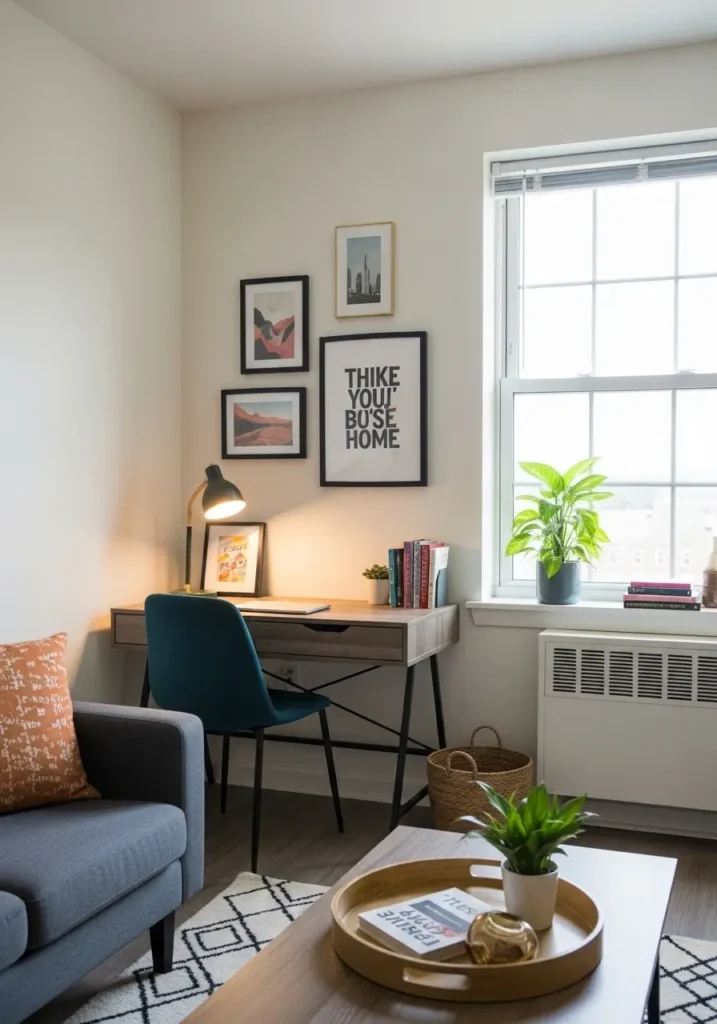
Personal decor makes the apartment feel like yours, but too much can make a small space feel crowded. Choose a few meaningful items instead of covering every surface. Use framed prints, a small gallery wall, a plant, books, or a statement lamp.
This works because small apartments need balance. Personal items add character, but space helps the room breathe. This tip is best for students who want a stylish apartment without spending a lot or creating clutter.
A simple example is hanging three framed prints above the desk, placing one plant near the window, and using a neat tray on the coffee table. Avoid filling every shelf with random items. Leave some open space so the room looks cleaner.
Set Up a Cleaning Station
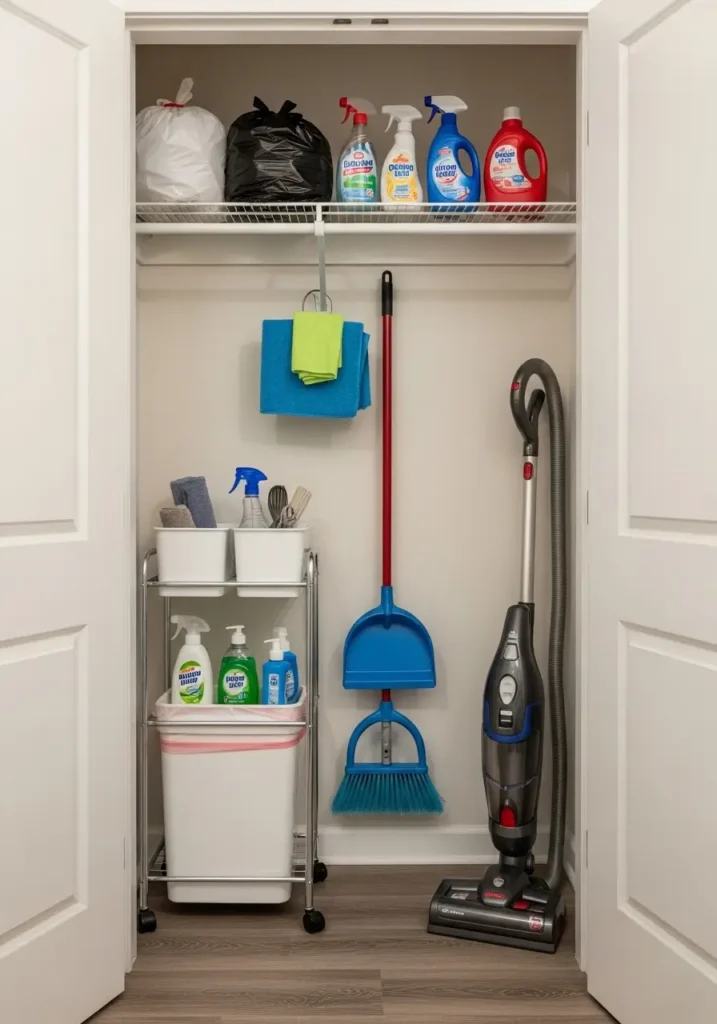
A smart apartment setup for college students should include cleaning storage from day one. Keep basic supplies together: trash bags, disinfecting spray, microfiber cloths, dish soap, laundry detergent, broom, dustpan, and vacuum if you have carpet.
This works because cleaning becomes easier when supplies are ready. If everything is scattered, small messes turn into bigger problems. This tip is best for first-time renters and students sharing an apartment with roommates.
Use a small caddy under the sink or a slim rolling cart in a closet. For shared apartments, label common supplies and agree on a cleaning schedule. Even a basic 10-minute weekly reset can keep the apartment from becoming stressful.
Create a Relaxing Corner
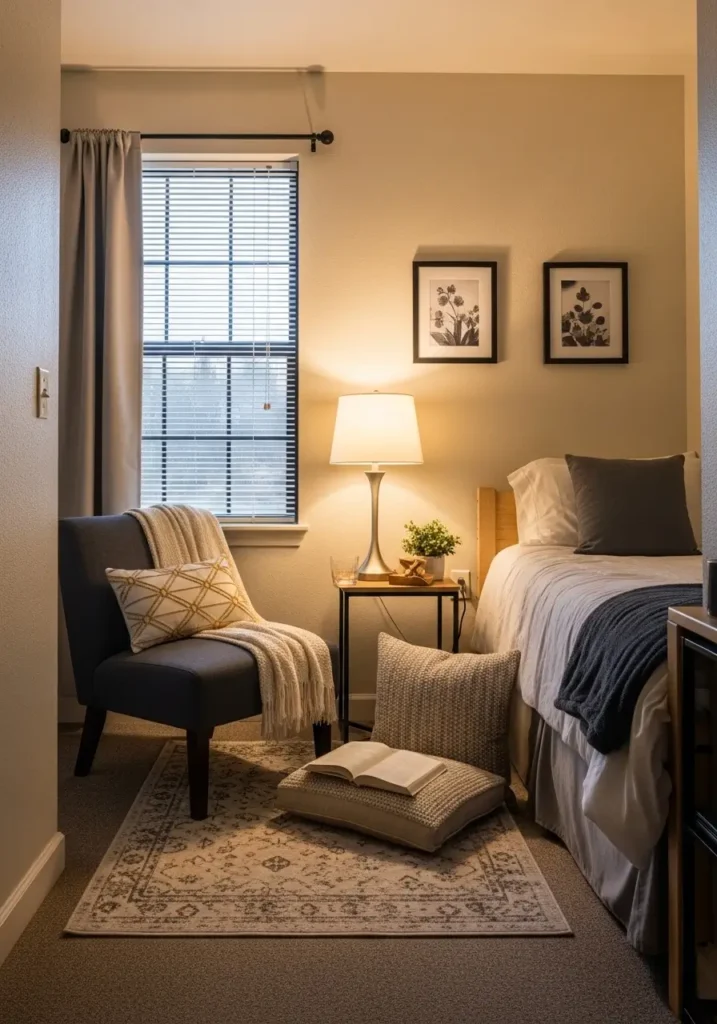
College life can be busy, so your apartment should include a small place to rest. This could be a chair by the window, a floor cushion with a lamp, a small sofa corner, or even a clean bedside area with soft lighting.
This works because your apartment should support recovery, not only studying and sleeping. A calm corner helps you read, watch a show, call family, or decompress after class. This tip is best for students with stressful schedules or anyone living in a compact space.
Use a comfortable chair, a warm lamp, a small side table, and one soft throw blanket. Keep this area free from textbooks and laundry if possible. It should feel easy to use, not like another storage spot.
Common Mistakes to Avoid
One common mistake is buying furniture before measuring the apartment. A sofa, bed, or desk can look fine online but feel too large in a small room. Always measure first and check doorways before ordering anything bulky.
Another mistake is using only overhead lighting. Most rental ceiling lights are harsh or poorly placed. Add lamps to control the mood and make the space more useful at night.
Avoid buying too many decor items in the first week. Live in the apartment for a little while and notice what you actually need. You may find that storage, lighting, or seating matters more than wall art.
Do not ignore hidden clutter areas like cables, entryways, kitchen counters, and laundry piles. These small messes can make the whole apartment feel unfinished.
Also, avoid blocking windows with tall furniture. Natural light makes a small apartment feel larger and helps the space feel more comfortable during the day.
Budget-Friendly Tips
Start with the essentials: bed, desk, chair, lighting, basic kitchenware, and storage. Once those are handled, add decor slowly. This keeps your budget focused on items you use every day.
Shop secondhand for solid items like desks, bookshelves, dining chairs, and side tables. Avoid used mattresses and heavily upholstered furniture unless you can inspect and clean them properly.
Use affordable upgrades such as pillow covers, curtains, rugs, lamps, and storage bins. These items can change the feel of the apartment without costing as much as new furniture.
Buy neutral furniture when possible. A black desk, white shelf, gray sofa, or wood-tone table can work with many future styles. This helps if you move apartments later.
For wall decor, print simple posters, use affordable frames, or create a small photo wall with removable strips. You do not need expensive art to make the space feel personal.
Apartment Setup for College Students Tips
A good apartment setup for college students should be simple, flexible, and easy to maintain. Choose furniture that fits your real routine, not just a picture you saw online. If you study daily, invest more attention in your desk. If you cook often, organize the kitchen first.
Keep your layout open enough to move around comfortably. Small apartments feel better when the floor is not crowded. Use vertical storage, under-bed bins, and wall-safe hooks to keep items off the floor.
Choose lighting based on activity. Use brighter light for studying, warm light for relaxing, and small lamps for evenings. This makes the apartment more comfortable without major changes.
Plan your storage before clutter builds up. Use baskets, bins, drawer organizers, and labels. When everything has a place, cleaning takes less time.
Finally, make the space personal but not overloaded. A few good decor choices will do more than many random items. Your apartment should feel useful, clean, and comfortable for daily student life.
FAQ
What is the best apartment setup for college students?
The best apartment setup for college students includes a comfortable bed, a proper study zone, an organized kitchen, good lighting, smart storage, and a small relaxation area. The goal is to make the space easy to live in, study in, and clean.
How can I decorate a college apartment on a small budget?
Start with practical basics before decor. Use secondhand furniture, under-bed storage, affordable lamps, simple rugs, removable hooks, and budget-friendly pillow covers. Add personal items slowly instead of buying everything at once.
What furniture does a college student’s apartment need?
Most students need a bed, desk, chair, small table, seating, storage shelves, and basic kitchen furniture if the apartment does not include them. Multipurpose furniture works best in small spaces because it saves room and money.
How do I make a small college apartment feel bigger?
Use light colors, vertical storage, mirrors, low-pile rugs, clear walking paths, and furniture that fits the room size. Avoid oversized sofas, dark heavy curtains, and too many small decor items on every surface.
Is peel-and-stick decor safe for rental apartments?
Peel-and-stick decor can be rental-friendly, but it depends on the wall surface and product quality. Test a small hidden area first and avoid weak paint, textured walls, or damp spaces. Always check your lease before adding temporary upgrades.
How can I keep my college apartment organized?
Create storage zones for school supplies, clothes, kitchen items, cleaning products, and entryway items. Use bins, hooks, drawer dividers, and labels. A short weekly reset helps prevent clutter from becoming overwhelming.
Conclusion
A practical apartment setup for college students should support real life. It should help you sleep well, study better, cook simple meals, stay organized, and relax after busy days. You do not need expensive furniture or a large apartment to create a comfortable space.
Start with the layout, lighting, storage, and daily-use furniture. Then add color, rugs, personal decor, and rental-friendly upgrades. When every choice has a purpose, even a small college apartment can feel clean, useful, and easy to live in.