

Dining rooms often carry more responsibility than their size suggests. They host quick breakfasts, family dinners, celebrations, homework, and quiet coffee breaks. Good Dining Room Decoration should support all those moments without feeling tied to one short-lived trend. Timeless rooms usually rely on balanced proportions, durable materials, comfortable lighting, and a few personal details rather than a crowded collection of fashionable pieces.
Beginners often assume that a lasting dining room requires expensive furniture or a large floor plan. Neither is true. Thoughtful choices matter more than price or square footage. Correct table dimensions, warm lighting, practical storage, and flexible seating can make even a small rental feel polished. The ideas below focus on decisions that continue to look good as paint colors, accessories, and seasonal tastes change.
What makes dining room decor feel timeless?
Strong Dining Room Decoration feels timeless when the room has clear function, visual balance, comfortable scale, and materials that age well. Neutral foundations help, but timeless does not mean plain. Rich wood, woven texture, classic shapes, soft contrast, and meaningful art can create character without making the space difficult to update.
Question: How can you refresh a dining room without replacing everything?
Short answer: Keep the largest pieces simple, improve the lighting, edit the color palette, and update smaller elements such as curtains, art, seat cushions, and table linens. Changes at eye level and around the table usually make the biggest difference for the least effort.
Choose a table shape that fits the room
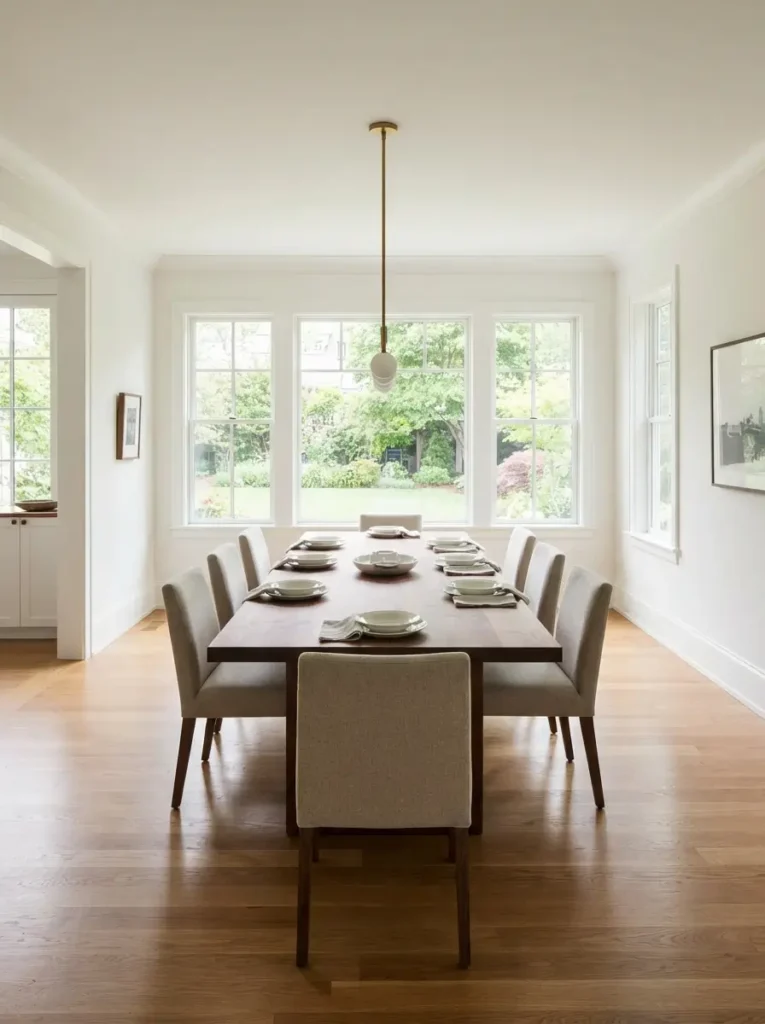
Table shape affects movement, seating comfort, and visual balance more than almost any decorative item. Rectangular tables work well in long rooms because they follow the architecture and allow clear walkways at both ends. Round tables suit square rooms, breakfast corners, and compact apartments because their curved edges improve circulation. Oval tables offer a useful middle ground when you want generous seating without sharp corners.
Measure before buying and leave roughly 36 inches between the table edge and nearby walls or furniture whenever possible. Smaller rooms can manage with 30 inches, but chairs may feel tight when pulled out. Extendable tables are especially useful for renters, couples, and families who host occasionally. Correct proportions create an orderly base, which allows future styling changes without making the room feel awkward.
Consider real dimensions before choosing a model. An eight-foot-square nook may suit a 36- to 42-inch round table, while a room closer to 10 by 12 feet can often support a 60-inch rectangular table. Cardboard boxes or folded sheets can imitate the footprint for a full day, revealing pinch points that a quick measurement may miss.
Build the room around warm wood tones

Natural wood has remained popular because it brings warmth, texture, and visual depth without depending on a specific trend. Oak, walnut, maple, and medium-toned finishes pair easily with white, cream, charcoal, navy, olive, terracotta, and muted blue. Matching every wood piece is unnecessary. Rooms often feel more collected when the table, chairs, and sideboard vary slightly in tone.
Keep the undertones related for a calmer result. Warm oak works well with honey, caramel, beige, and soft green, while cooler walnut pairs beautifully with stone gray, deep blue, and off-white. Beginners should avoid combining several strong orange and red stains because the mix can appear busy. Wooden furniture is best for households seeking durability, repairability, and a foundation that remains attractive through changing color schemes.
Look closely at the finish before purchase. Matte or satin surfaces hide fingerprints and small scratches better than high-gloss lacquer. Families can protect a vulnerable tabletop with felt pads, placemats, and immediate cleanup rather than a permanent plastic cover. Secondhand wood can often be revived with gentle cleaning and wax, making it a sensible budget choice.
Use a soft neutral wall color

Neutral walls create flexibility, but the best shades have enough depth to support furniture and artwork. Stark white can feel cold under artificial light, while soft white, warm ivory, light taupe, mushroom, and pale greige create a gentler backdrop. North-facing rooms often benefit from warm undertones, while bright south-facing spaces can handle cooler neutrals without feeling dull.
Test paint on several walls and observe it during morning, afternoon, and evening hours. Lighting can shift a color dramatically. Renters can use removable wallpaper, peel-and-stick panels, or large fabric wall hangings when painting is not allowed. Calm wall color lets wood grain, table settings, and artwork take the lead. Such restraint works especially well for beginners who want easy seasonal updates without repainting every year.
Paint samples should cover at least a two-foot section because tiny swatches rarely show undertones accurately. Place one sample behind the table and another near the window. Rooms with beige flooring may make gray paint look blue, while red-toned wood can make cream appear yellow. Comparing samples beside permanent finishes prevents expensive repainting.
Hang one well-scaled pendant light

Lighting defines the table as the center of the room. One pendant or chandelier usually creates a stronger focal point than several small fixtures. Choose a piece that measures about one-half to two-thirds the width of the table. Hang it approximately 30 to 36 inches above the tabletop in rooms with standard ceilings, adjusting slightly for taller ceilings and larger fixtures.
Warm bulbs between 2700K and 3000K flatter food, wood, and skin tones. Bright cool bulbs can make evening meals feel clinical. Dimmers offer the greatest flexibility because the same fixture can support homework, casual meals, and formal dinners. Renters may use a plug-in pendant with a ceiling hook, provided the mounting method suits the ceiling. Thoughtful lighting gives Dining Room Decoration structure even when the furniture is simple.
Fixture style can remain simple while still adding character. Opal glass spreads light gently, woven shades create soft texture, and metal shades direct more light downward. Clear glass exposes bulbs and may produce glare, so frosted bulbs or lower-lumen lamps are safer. Keep the fixture centered on the table rather than the room when the table sits off-center.
Mix chair styles with a clear rule

Matching chair sets are safe, but a controlled mix can make the room feel relaxed and personal. Keep one feature consistent, such as color, material, seat height, or silhouette. For example, combine black spindle chairs with two upholstered end chairs, or use the same chair shape in two related wood finishes. Repetition prevents the arrangement from looking random.
Seat height deserves careful attention. Most dining tables are about 28 to 30 inches tall, and comfortable chairs usually leave 10 to 12 inches between the seat and tabletop. Test armchairs to ensure the arms slide beneath the table apron. Mixed seating is best for creative homeowners, secondhand shoppers, and anyone building the room gradually. Avoid using more than two or three distinct chair styles in a small room.
Secondhand chairs deserve a quick stability test. Sit down, lean back gently, and check whether the frame twists or the joints move. Minor fabric wear is easy to fix, but loose structural joints may require repair. Standardizing seat cushions, paint, or wood tone can make chairs from different sources feel like one intentional set.
Add an area rug with practical proportions

Rugs soften sound, define the dining zone, and add color without permanent changes. Proper sizing matters because chair legs should remain on the rug when chairs are pulled out. Add at least 24 inches beyond every side of the table, and use 30 inches when space allows. Undersized rugs often catch chair legs and make the whole arrangement look cramped.
Low-pile wool, flatweave cotton, indoor-outdoor fiber, and washable synthetic rugs work better than thick shag under dining furniture. Patterns can hide small stains, while medium tones are usually easier to maintain than pure white or very dark colors. Rug pads improve stability and protect hard floors. Renters and open-plan homeowners benefit most because a rug creates a visual room without construction.
Measure with every chair pulled out to a realistic sitting position. Add the required clearance on all sides, then compare that size with available standard rugs. In a narrow room, skipping the rug may be better than forcing one that folds near a doorway. Bare floors can still feel warm when curtains, upholstery, and wood provide texture.
Bring in a sideboard for storage and balance

Sideboards give the room a finished appearance while storing serving pieces, candles, linens, and items that would otherwise crowd the table. Select a unit that is shallower than a typical dresser, especially in narrow rooms. Depths between 14 and 18 inches often provide useful storage without blocking circulation. Leave enough space for doors and drawers to open comfortably.
Style the top with one large artwork, a lamp, and a simple tray rather than many small objects. Vertical storage can replace a sideboard when floor space is limited. Wall-mounted cabinets, narrow shelving, and tall glass-front units serve the same purpose. Such furniture suits frequent hosts and small homes where every piece needs to earn its place. Closed storage keeps visual noise under control.
Height also affects the room’s balance. Sideboards between roughly 30 and 36 inches tall are easy to serve from and usually sit comfortably beneath art. Keep the top at least partly clear so it can hold dishes during gatherings. Inside, shallow baskets and drawer dividers prevent napkins, candles, and serving tools from becoming a mixed pile.
Display art at a comfortable viewing height
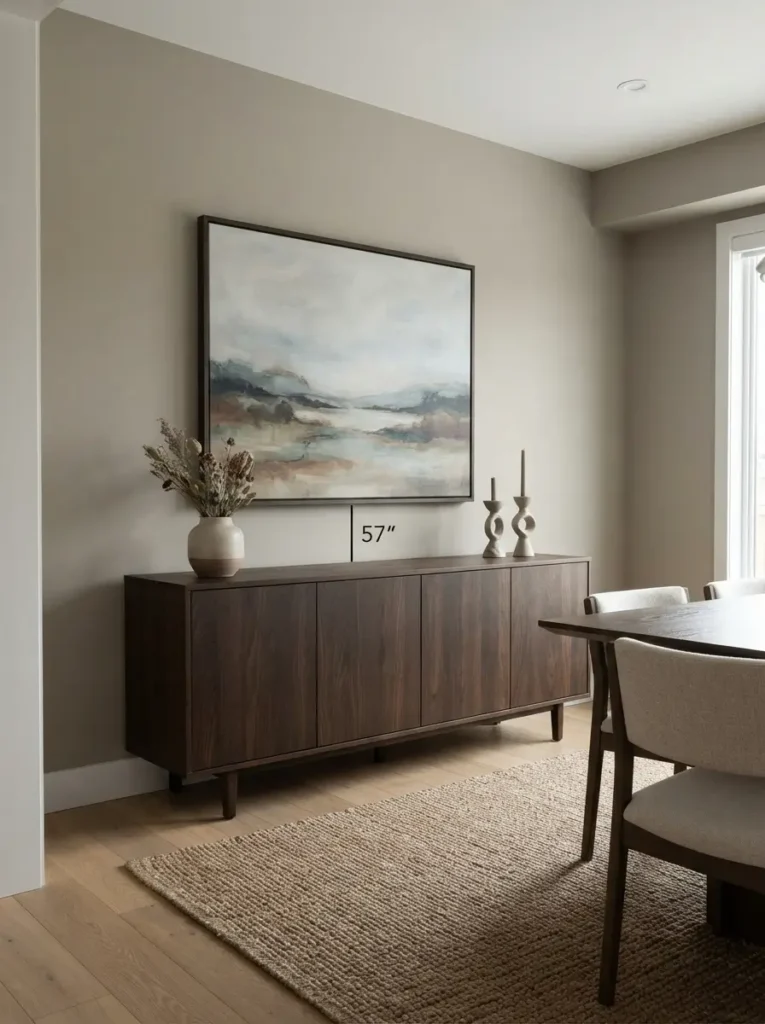
Dining room art should connect with seated viewers, not float near the ceiling. Hang the center of a large piece around 57 to 60 inches from the floor, then adjust for nearby furniture. Artwork above a sideboard usually looks best with 6 to 10 inches of breathing room between the frame and furniture top. Large pieces often create more impact than several tiny frames.
Choose subjects and colors you can live with for years. Landscapes, abstract compositions, botanical prints, black-and-white photography, and collected family artwork all work well. Removable picture strips help renters avoid holes, while lightweight frames reduce risk. Art is most successful when it adds a personal story rather than merely filling an empty wall. Such character keeps the room from feeling like a showroom.
Gallery walls can work when the frames share a visual link. Use matching colors, similar mats, or one repeated subject, then arrange the group on the floor before hanging. Keep outer edges aligned and leave consistent gaps of about two to three inches. Small rooms benefit from a compact grouping rather than frames scattered across every wall.
Use curtains to improve height and softness

Curtains make hard dining surfaces feel more comfortable and can correct awkward window proportions. Mount rods several inches above the window frame and extend them beyond each side. Higher, wider placement makes windows appear larger and allows more daylight when panels are open. Floor-length curtains usually look more polished than short panels ending at the sill.
Linen blends, cotton, and textured polyester provide softness without appearing overly formal. Cream, flax, taupe, muted green, and soft blue age well, while subtle stripes add interest without dominating the space. Washable fabrics suit families and homes near busy kitchens. Renters can use tension rods, no-drill brackets, or lightweight tracks. Curtains are especially valuable in echo-prone rooms with wood floors and minimal upholstery.
Measure from the proposed rod height to the floor before ordering panels. Curtains should just touch the floor or break slightly, not stop several inches above it. Two panels should together measure at least one-and-a-half times the window width for acceptable fullness. Wider coverage also helps disguise an off-center or undersized window.
Add black accents in small amounts

Black creates definition and helps lighter rooms feel grounded. Thin black frames, chair legs, curtain rods, candleholders, or a dark pendant can repeat across the room and connect unrelated pieces. Small doses usually feel timeless because they outline shapes without overpowering the palette. Matte and satin finishes tend to look softer than highly glossy black.
Repeat the accent at least two or three times so it feels intentional. One isolated black object can seem accidental, while too many heavy pieces may shrink a compact room. Charcoal, espresso, and oil-rubbed bronze offer gentler alternatives. Small dark accents work well for pale neutral rooms, Scandinavian interiors, and spaces with light wood furniture. They also help rental-friendly upgrades look more deliberate.
Balance dark details across different heights. Pair a black pendant above the table with slim frames on the wall and dark chair legs below. Keeping every black item near the floor can make the upper half feel disconnected. Similar repetition works with bronze or deep brown when pure black feels too sharp for the room.
Layer table linens instead of overdecorating

Table linens add color, texture, and pattern while keeping the surface practical. Runners suit everyday use because they leave space for plates and reduce the formality of a full cloth. Placemats protect wood and define each seat. Full tablecloths work best for special meals, worn tabletops, or rooms needing more softness.
Select washable cotton, linen blends, or durable woven materials. Neutral bases can shift through the seasons with napkins in rust, olive, navy, burgundy, or soft yellow. Keep center decorations low enough for conversation. One bowl, a short vase, or several small candles is usually sufficient. Layered linens are ideal for budget-conscious decorators because fabric changes can refresh the room without replacing furniture.
Choose sizes that fit the furniture rather than relying on one universal set. Runners should leave visible tabletop at both ends or fall evenly over each edge. Placemats need enough space between settings, especially on round tables. Keeping one everyday set and one washable special-occasion set reduces clutter while covering most hosting needs.
Include plants with manageable care needs

Greenery adds life and softens the straight lines of tables, cabinets, and frames. Choose plants according to real light conditions rather than appearance alone. Snake plants, pothos, ZZ plants, and cast-iron plants tolerate lower light, while herbs, rubber plants, and many palms prefer brighter conditions. Avoid placing large leaves where people must brush past them.
One medium floor plant often looks calmer than several tiny pots scattered around the room. Branches, dried stems, or realistic artificial greenery offer low-maintenance alternatives. Plant stands and wall planters save floor space in small homes. Greenery works especially well for neutral interiors that need color without another strong decorative theme. Proper scale keeps the room lively rather than cluttered.
Maintenance should match the household routine. Place saucers beneath pots, protect wood from water rings, and avoid overwatering plants in low light. Dining rooms used only at night may need species that tolerate shade or a discreet grow bulb. One healthy plant looks better than several struggling ones, so begin with the easiest option.
Create contrast with upholstered end chairs

Upholstered chairs at the ends of a rectangular table can make the dining area feel more comfortable and complete. They introduce softness, support, and visual weight while allowing simpler side chairs to remain practical. Choose stain-resistant fabric, removable covers, or performance upholstery in homes with children or frequent guests.
Color choices such as oatmeal, charcoal, deep green, navy, and muted rust tend to work across several styles. Avoid chairs with arms that are too wide for the table or backs that tower far above every other seat. Balanced height keeps the arrangement connected. Upholstered end chairs suit larger dining rooms, open-plan homes, and people who use the table for long conversations or work sessions.
Use mirrors where they reflect something useful
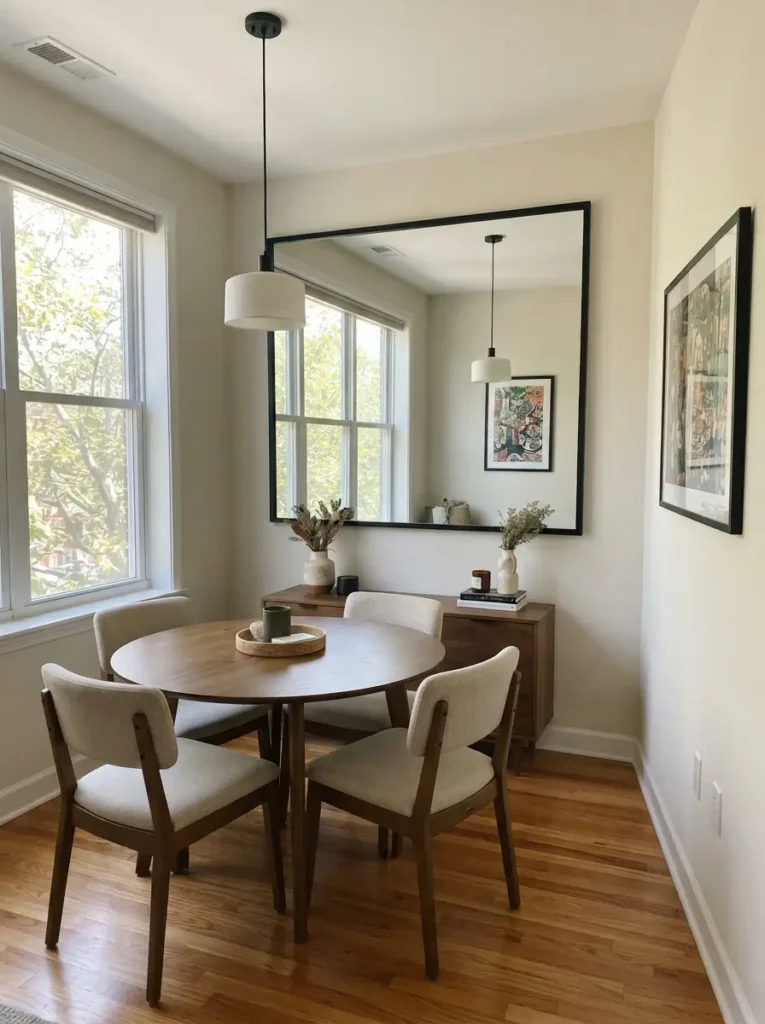
Mirrors can brighten a darker room and make a compact dining area feel more open. Placement matters more than size. Position a mirror to reflect a window, artwork, pendant light, or attractive view rather than a blank wall or cluttered kitchen counter. Frames in wood, black metal, antique brass, or painted finishes can connect the mirror with existing furniture.
Large mirrors should be securely mounted, especially in homes with children or pets. Renters can lean a substantial mirror on a sideboard only when it is anchored safely, or use smaller lightweight mirrors with suitable strips. Mirrored surfaces are best for narrow rooms and apartments with limited natural light. Controlled reflection creates depth without adding more objects.
Keep the centerpiece low and flexible

Centerpieces should support conversation rather than block faces or consume serving space. Low bowls, fruit dishes, short vases, candle groups, and simple trays work for everyday use. Keep most arrangements below 12 inches unless the design is narrow enough to see around. Flexible pieces can move quickly when the table is needed for food, projects, or games.
Seasonal changes can happen through contents rather than containers. Use the same ceramic bowl for citrus in summer, pinecones in autumn, ornaments in winter, and flowering branches in spring. Repetition saves money and reduces storage needs. Low centerpieces suit every household, especially small homes where the dining table has several functions. Practical styling often appears more timeless than elaborate displays.
Repeat one accent color around the room

Color repetition creates unity without requiring a matching furniture set. Choose one accent and place it in three or four areas, such as artwork, curtains, seat cushions, and table linens. Muted colors usually age better than very bright shades because they blend with wood, stone, metal, and neutral walls. Olive, navy, rust, burgundy, dusty blue, and ochre offer lasting depth.
Limit the room to one main accent and perhaps one secondary shade. Too many unrelated colors can make a small dining space feel restless. People who enjoy seasonal changes can keep the fixed room neutral and rotate accent textiles. Consistent color makes the room feel planned while leaving enough freedom for personal objects and changing tastes.
Leave enough empty space to let the room breathe

Empty space is not unfinished space. Clear surfaces, open walkways, and visible wall areas help the eye understand the room. Crowding often happens when homeowners try to display every serving piece, plant, frame, and candle at once. Editing creates stronger impact because each remaining object gains attention.
Start by removing one-third of the accessories, then live with the room for several days. Return only pieces that serve a function or hold genuine meaning. Keep primary paths at least 30 to 36 inches wide where possible. Small-space decorators benefit most from this approach because clear circulation makes the room feel larger and safer. Restraint also makes cleaning, hosting, and future updates much easier.
Common mistakes to avoid
Buying furniture before measuring causes many dining room problems. Large tables can block walkways, oversized chairs may not slide underneath, and deep cabinets can make narrow spaces difficult to use. Write down room dimensions, door swings, window locations, and the width of main walking routes before shopping. Painter’s tape on the floor can show the true footprint of a table or sideboard.
Hanging lighting too high weakens the connection between the fixture and table. Installing it too low can block views or create glare. Bulb temperature also matters. Cool white bulbs above 4000K often feel harsh during meals, while very dim amber bulbs may not provide enough light for everyday tasks. Dimmable 2700K to 3000K bulbs offer a practical middle ground.
Following trends too literally can shorten the life of the room. Trendy colors and shapes are easiest to enjoy through napkins, art prints, vases, or removable covers. Expensive items should usually have simple lines and dependable materials. Furniture with extreme proportions, fragile finishes, or unusual construction may become difficult to pair with future updates.
Ignoring chair comfort is another common issue. Beautiful chairs that pinch, wobble, or force poor posture will not support long meals. Check seat depth, back angle, and the distance between the chair seat and table. Homes that host older relatives may need firm seats and supportive backs rather than low, lounge-like silhouettes.
Overfilling walls and surfaces makes a dining area feel smaller. Several small frames, signs, shelves, and decorative words can compete for attention. Choose one main focal point and allow nearby areas to remain quieter. Thoughtful editing gives the room confidence and keeps cleaning manageable.
Using delicate materials in a busy household creates unnecessary stress. Pale untreated fabrics, soft wood finishes, and unstable decorative objects may not suit children, pets, or frequent entertaining. Durable finishes, washable textiles, and wipeable paint can still look refined. Practical choices support daily life and usually remain attractive longer.
Budget-friendly ways to refresh the room
Paint offers one of the most visible changes for a modest cost. Refresh walls in warm white, muted beige, pale sage, or soft gray, then use leftover paint on a small cabinet or frame. Renters can paint only with permission, but removable wallpaper, peel-and-stick trim, and large fabric panels can deliver similar impact.
Secondhand furniture often provides stronger materials than inexpensive new pieces. Look for solid wood tables, sturdy chairs, mirrors, and sideboards with sound construction. Scratches can be softened with furniture markers, wax, stain, or careful sanding. Mixed chairs can be unified with matching seat cushions or a consistent paint finish.
Changing the light fixture can transform the room, but smaller updates also matter. Replace cool bulbs with warm dimmable bulbs, add a plug-in wall sconce, or use a table lamp on the sideboard. Better light can improve the entire room even when every piece of furniture stays the same.
Textiles create affordable flexibility. New curtains, a washable rug, simple placemats, or slipcovers can introduce color and texture. Buy standard-size panels and hang them higher to create a custom appearance. Sewing basic covers from drop cloths or durable cotton can cost less than replacing chairs.
Artwork does not need a gallery price. Frame pages from old calendars, vintage maps, family photographs, children’s art, fabric remnants, or downloadable public-domain prints. Consistent frames make inexpensive pieces look connected. Large frames with wide mats can give small images more presence.
Decorative objects can come from items already owned. Bowls, pitchers, books, cutting boards, and glassware often work better than generic accessories because they have function and history. Rotate a limited group instead of buying new pieces for every season. Fewer, larger objects usually look more intentional than many small purchases.
Dining Room Decoration tips for small spaces and rentals
Compact rooms need furniture that supports circulation. Round pedestal tables remove corner legs and allow chairs to tuck closer. Benches can slide under the table, while armless chairs occupy less visual and physical space. Drop-leaf and gateleg tables work well when the dining area doubles as an office or passage.
Vertical surfaces can carry storage without consuming valuable floor area. Narrow wall shelves, peg rails, shallow cabinets, and tall bookcases provide space for dishes and linens. Secure heavy furniture properly and avoid placing open shelves where people may bump them. Closed lower storage keeps practical items hidden, while a few upper shelves can display attractive pieces.
Rental-friendly upgrades should be easy to reverse. Use removable hooks, tension rods, plug-in lighting, washable rugs, and peel-and-stick finishes designed for the surface. Test adhesive products in a hidden location because some paints and walls react differently. Save original hardware and reinstall it before moving.
Mirrors and light colors help, but scale remains more important than simply choosing pale furniture. One correctly sized dark table can look better than several tiny light pieces. Keep sightlines clear, avoid bulky chair backs, and leave at least one wall relatively open. Visual calm makes a compact room feel generous.
Multifunctional pieces offer the greatest value. Storage benches can hold linens, sideboards can serve as work surfaces, and nesting stools can become extra seating. Select items with simple silhouettes so their changing functions still feel connected. Flexible furniture is especially useful for renters who may move to a differently shaped home.
Frequently asked questions
What colors make a dining room feel timeless?
Warm whites, soft taupes, mushroom tones, muted greens, navy, charcoal, and natural wood shades tend to stay useful because they combine easily with many materials. Stronger colors can still work when used in smaller amounts through curtains, art, rugs, and upholstery. Lighting and room orientation should guide the final choice.
How high should a dining room light hang?
Most pendants and chandeliers work well when the bottom sits about 30 to 36 inches above the tabletop in a room with an eight-foot ceiling. Larger fixtures or taller ceilings may require slightly more height. Seated guests should see each other comfortably without glare from exposed bulbs.
Which rug size works under a dining table?
Choose a rug that extends at least 24 inches beyond every side of the table. Thirty inches is even better when space allows because chairs stay fully supported when pulled out. Measure the table at its extended size if you regularly use leaves for extra guests.
Can renters improve a dining room without painting?
Renters can use removable wallpaper, large art, curtains, rugs, plug-in pendants, mirrors, slipcovers, and temporary hardware. Changes at eye level often create enough impact that wall color becomes less important. Test adhesives first and keep all original fittings for move-out day.
How can Dining Room Decoration look expensive on a budget?
Good scale, warm lighting, consistent finishes, and careful editing often matter more than price. Choose fewer larger accessories, use secondhand solid-wood furniture, hang curtains high, and frame inexpensive art with generous mats. Matching every piece is less important than creating balance and repetition.
What should stay on the dining table every day?
Keep only items that are useful and easy to move. One bowl, short vase, tray, or candle group is usually enough. Households that use the table for work or homework may prefer a single tray that can be lifted away quickly before meals.
Conclusion
Planning the room in stages prevents costly mistakes. Begin with measurements, confirm the table and chair clearance, then improve lighting before buying accessories. Live with each change for several days and notice how the room works during real meals. Slow decisions reveal practical needs that shopping photos often hide, especially in compact homes where every inch affects comfort.
Timeless dining rooms grow from practical decisions rather than strict style rules. Correct proportions, comfortable chairs, warm lighting, useful storage, and a controlled color palette create a room that can adapt for years. Personal art, natural materials, and flexible textiles keep the space welcoming without locking it into one trend.
Successful Dining Room Decoration also respects the way people actually live. Small homes need clear pathways and multipurpose furniture, while busy households benefit from washable fabrics and durable finishes. Renters can create just as much character through reversible changes. Start with one high-impact improvement, such as lighting or table scale, then build slowly. Rooms that develop with care usually feel more personal, balanced, and lasting.