

Compact apartment bedrooms often need to serve several purposes within one limited space. Your bedroom might function as a sleeping area, dressing room, reading corner, workspace, and storage zone. Adding bulky cabinets for every purpose can quickly make the room feel crowded. Thoughtful blanket ladder decor provides vertical storage while introducing warmth, colour, and texture without demanding much floor space.
Practical ladder styling starts with choosing the right size, material, and position for your room. Slim wooden ladders suit warm or traditional interiors while powder-coated metal versions complement modern furniture. Careful placement matters because even a beautiful ladder becomes inconvenient when it blocks drawers, curtains, doors, or walking routes. Every idea below includes useful dimensions, colour suggestions, lighting advice, and realistic apartment solutions.
How can you decorate a blanket ladder without making a small bedroom feel overcrowded?
Effective blanket ladder decor uses two or three lightweight textiles, leaves some rails visible, and coordinates with nearby furniture. Position the ladder against an unused wall or corner where it remains accessible without interrupting movement. Choose blankets with different textures but related colours so the display feels layered rather than cluttered.
Beginners should start with one main blanket and one smaller throw. Fold each textile lengthwise before hanging it across separate rails. Keep the thickest blanket near the bottom because visual weight feels more balanced there. Leave at least one empty rail between bulky pieces and avoid covering the entire frame. Visible wood or metal helps the ladder appear lighter inside a compact room.
Place the Ladder Beside a Low Platform Bed

Low platform beds create open sightlines that can make short bedroom walls appear taller. Positioning a slim ladder beside the bed adds vertical interest without overpowering the low furniture. Leave approximately 15 to 25 centimetres between the bed frame and ladder base so bedding can move freely. Bedrooms with simple Japanese, Scandinavian, or contemporary furniture benefit most from this arrangement.
Pair pale oak with beige, stone, cream, or muted sage textiles for a calm colour scheme. Black metal works better beside charcoal, walnut, or dark upholstered beds. Avoid letting blankets hang below the ladder base because loose edges collect dust and may become a tripping hazard. Finish the arrangement with a small bedside table no wider than the ladder to maintain balanced proportions.
Use a Warm Neutral Colour Palette

Warm neutrals bring comfort into small bedrooms without creating strong visual divisions. Choose throws in oatmeal, ivory, camel, mushroom, soft brown, or warm grey. Mixing related shades gives the ladder depth while keeping the wall visually quiet. Renters with plain white or magnolia walls can use these colours to make the room feel warmer without painting or applying wallpaper.
Texture prevents a neutral display from looking flat. Combine a smooth cotton throw with a waffle-knit blanket and one softly brushed fleece. Keep large tassels to one textile because several fringed layers may look messy. Warm neutral styling suits beginners because slight differences between fabrics appear intentional. Add a bedside lamp using a 2700K bulb to strengthen the cosy undertones during the evening.
Turn an Empty Corner Into Vertical Storage

Unused bedroom corners often hold valuable storage potential. Set a narrow ladder diagonally across the corner rather than pressing it flat against one wall. Slightly angled placement creates room behind the rails and makes blankets easier to lift. Choose a model measuring roughly 40 to 50 centimetres wide so it provides useful storage without extending too far into the walking area.
Corner placement suits studio apartments, box rooms, and bedrooms containing limited wall space. Rubber feet can prevent movement on laminate, tile, or polished wood flooring. Renters should avoid permanent wall fixings unless the ladder feels unstable. Removable anti-slip pads and discreet furniture straps offer safer alternatives. Keep a nearby socket accessible instead of hiding chargers or extension leads behind the frame.
Coordinate the Ladder With Your Headboard

Matching materials can help separate bedroom pieces feel connected. Pair an oak ladder with an oak-effect headboard or combine black metal rails with a black-framed bed. Exact matching is unnecessary because similar undertones usually create enough harmony. Honey-toned wood works with warm beige furniture while ash wood suits cooler grey, blue, or white surroundings.
Contrast can also work when the room already contains too much of one finish. Place a natural bamboo ladder near a dark upholstered headboard to soften the heavier fabric. Keep the blankets connected to both pieces by repeating colours from the bedding. For example, hang a navy throw with a narrow beige stripe beside navy cushions and a beige linen headboard.
Create a Compact Reading Corner

Reading corners do not require a large armchair or built-in shelving. Place the ladder near a compact accent chair, floor cushion, or upholstered bedroom bench. Store a throw on the lowest rail where you can reach it while sitting. Bedrooms with awkward alcoves benefit from this arrangement because the ladder gives the corner a clear purpose.
Select a chair measuring between 60 and 75 centimetres wide so the area remains easy to enter. Position a narrow floor lamp behind the chair and use a warm 2700K to 3000K bulb. Bright blue-white bulbs may feel harsh before bedtime. Keep one magazine basket beneath the ladder but leave enough space around the chair for comfortable movement.
Balance Blanket Ladder Decor With Empty Space
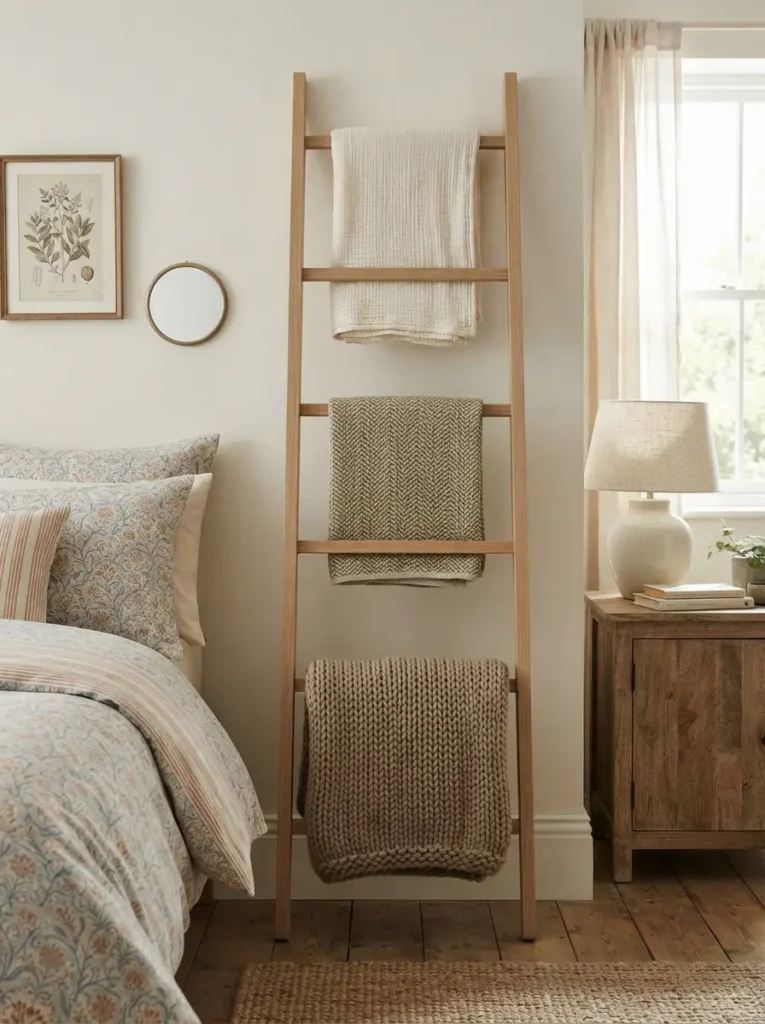
Empty rails are part of the display rather than wasted storage. Covering every rung can make a slim ladder resemble an overloaded laundry rack. Hang textiles on alternate rails and leave the upper section partly visible. Bedrooms with patterned bedding particularly need this breathing space because several competing prints can make the room feel visually smaller.
Visual balance also depends on textile thickness. Place a heavy knitted blanket on a lower rail and a thin cotton throw higher up. Avoid hanging two oversized duvets because their volume may hide the entire structure. Anyone searching for practical blanket storage ideas should prioritise accessibility and airflow instead of squeezing every spare textile onto one decorative piece.
Choose Black Metal for Modern Contrast

Black metal ladders create crisp definition against white, cream, concrete-grey, or pale taupe walls. Their slim frames suit modern apartments because they introduce contrast without adding visual bulk. Matte finishes usually look softer than shiny finishes and reveal fewer fingerprints. Industrial, minimalist, and monochrome bedrooms gain the strongest effect from this option.
Soften the dark structure with fabrics in cream, rust, olive, dusty pink, or warm grey. One patterned throw can add character but keep the remaining textiles plain. Positioning the ladder near another black detail, such as a lamp, mirror frame, or drawer handle, prevents it from looking isolated. Avoid placing every black item on one side of the room because the layout may feel unbalanced.
Use Pale Wood to Brighten a Dark Bedroom
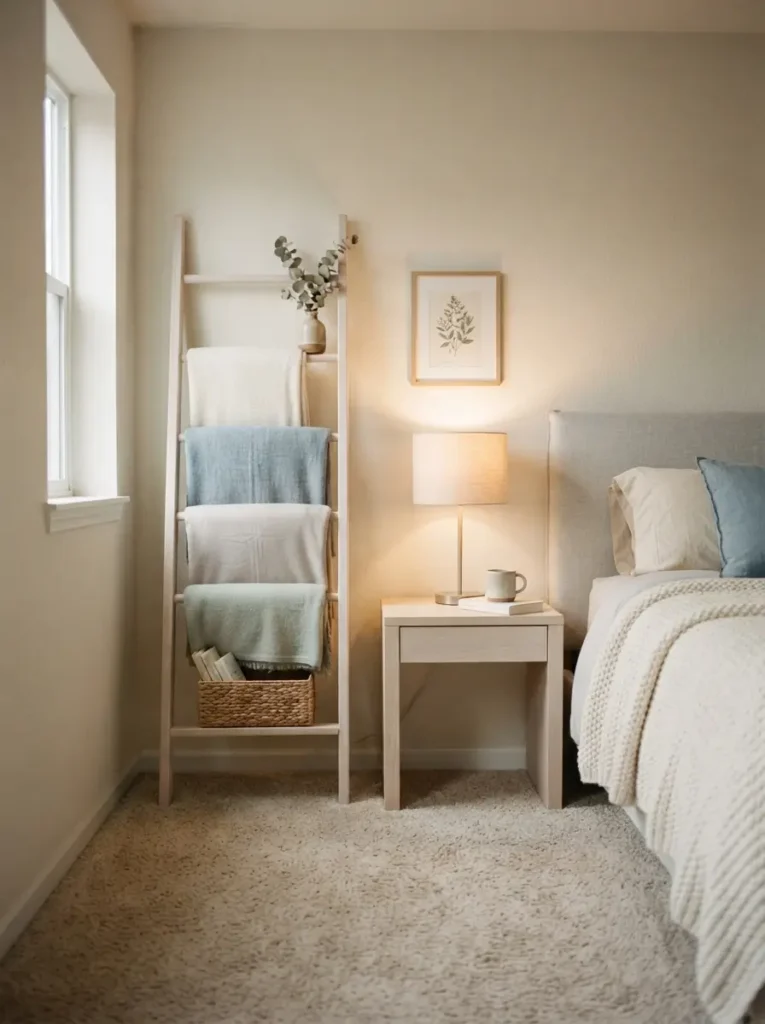
Pale wood reflects more light than walnut or black metal and can reduce the heaviness of a poorly lit bedroom. Birch, bamboo, pine, and whitewashed oak work well beside north-facing windows or in rooms with limited natural light. Choose a simple frame without thick side rails when the bedroom already contains several large furniture pieces.
Light-coloured blankets strengthen the brightening effect but pure white is not essential. Soft ivory, faded blue, pale clay, and light sage offer gentle colour without darkening the corner. Bedrooms with beige carpet often look more connected when the ladder has a warm rather than grey undertone. Use a 3000K lamp nearby to provide clear yet comfortable evening illumination.
Layer Different Textures in One Colour Family

Texture creates interest when floor area and wall space remain limited. Select three blankets from one colour family but vary their surfaces. For example, combine a smooth sage cotton throw, a ribbed olive blanket, and a moss-green woven piece. Colour repetition keeps the display controlled while the different weaves prevent it from appearing plain.
Thicker fabric should sit lower because it carries greater visual weight. Place delicate or frequently used throws higher for easier access. Beginners can test combinations on the bed before transferring them to the ladder. Check the display from the bedroom doorway because an arrangement may look balanced close up but crowded when viewed across the entire room.
Position the Ladder Between Two Windows
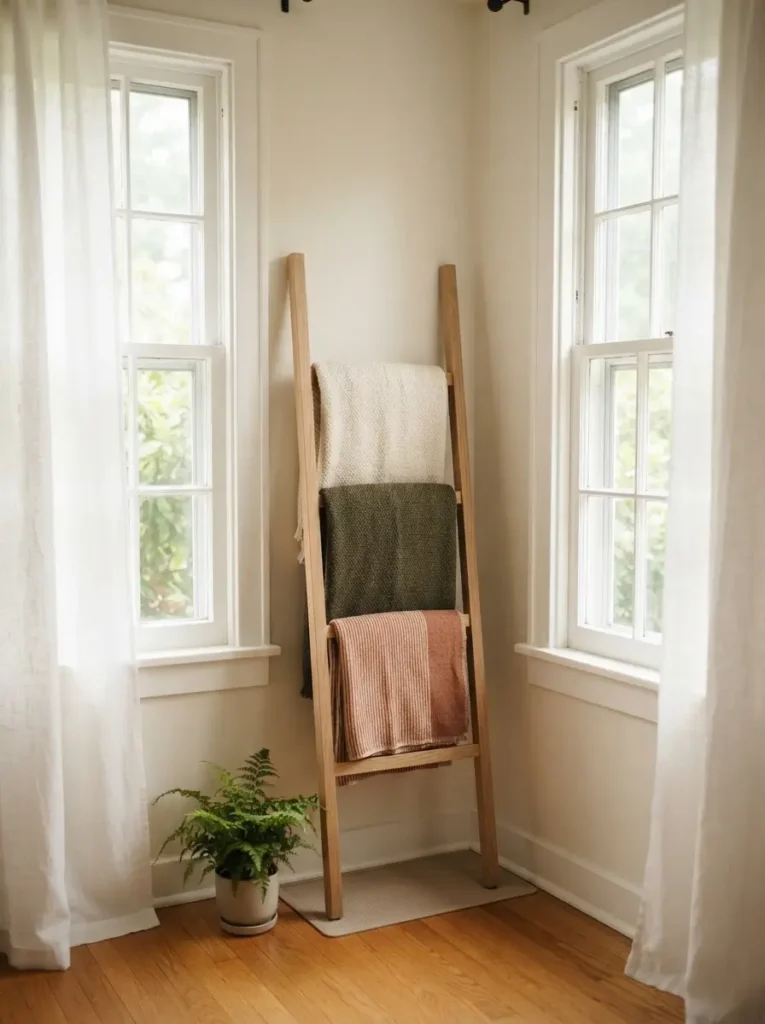
Narrow wall sections between windows are difficult to furnish but often suit slim vertical pieces. Measure the available width before buying and leave enough clearance for curtains or blinds. A ladder should never prevent window treatments from opening fully. Models around 35 to 45 centimetres wide fit many narrow sections without covering the frames.
Natural light can highlight woven details and make darker blankets feel less heavy. Avoid leaving delicate dyed textiles in direct sunlight for long periods because colours may fade. Rotate displayed pieces every few weeks when strong afternoon sun reaches the ladder. Renters can add a non-slip base rather than drilling into the wall, provided the floor remains level and stable.
Pair the Ladder With a Small Storage Basket

One basket at the ladder base can hold cushions, rolled throws, slippers, or reading materials. Choose a basket slightly narrower than the ladder so it fits neatly between the side rails. Rectangular woven baskets use floor space more efficiently than wide round designs. Rooms with natural wood furniture often suit seagrass, jute, cotton rope, or light rattan.
Keep the basket contents controlled because overflowing items can make the corner appear untidy. Rolled blankets should match or complement those hanging above. People comparing comforter storage should remember that a decorative basket may not protect bulky bedding from dust. Store seasonal duvets in breathable bags under the bed and use the basket for everyday items.
Add Colour Through Seasonal Throws
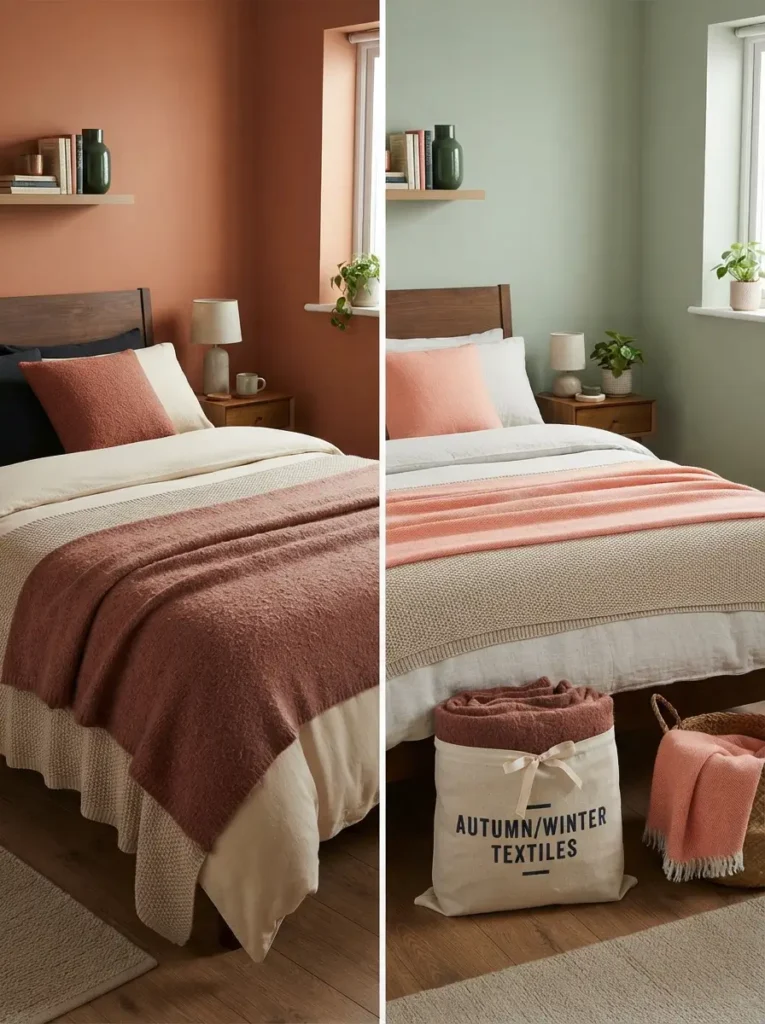
Seasonal rotation offers an affordable way to refresh the room without replacing furniture. Use muted rust, mustard, forest green, or deep red during autumn and winter. Bring in faded blue, soft coral, pale green, or light beige during spring and summer. Two seasonal throws usually create enough change in a compact bedroom.
Storage planning keeps this approach realistic. Fold off-season throws inside a labelled fabric bag rather than piling them on top of the wardrobe. Breathable cotton bags protect textiles while reducing trapped moisture. Budget-conscious renters can change only the upper throw and keep one neutral blanket displayed throughout the year. Repeating the seasonal colour in a cushion cover creates a deliberate connection.
Style the Ladder Beside a Wardrobe
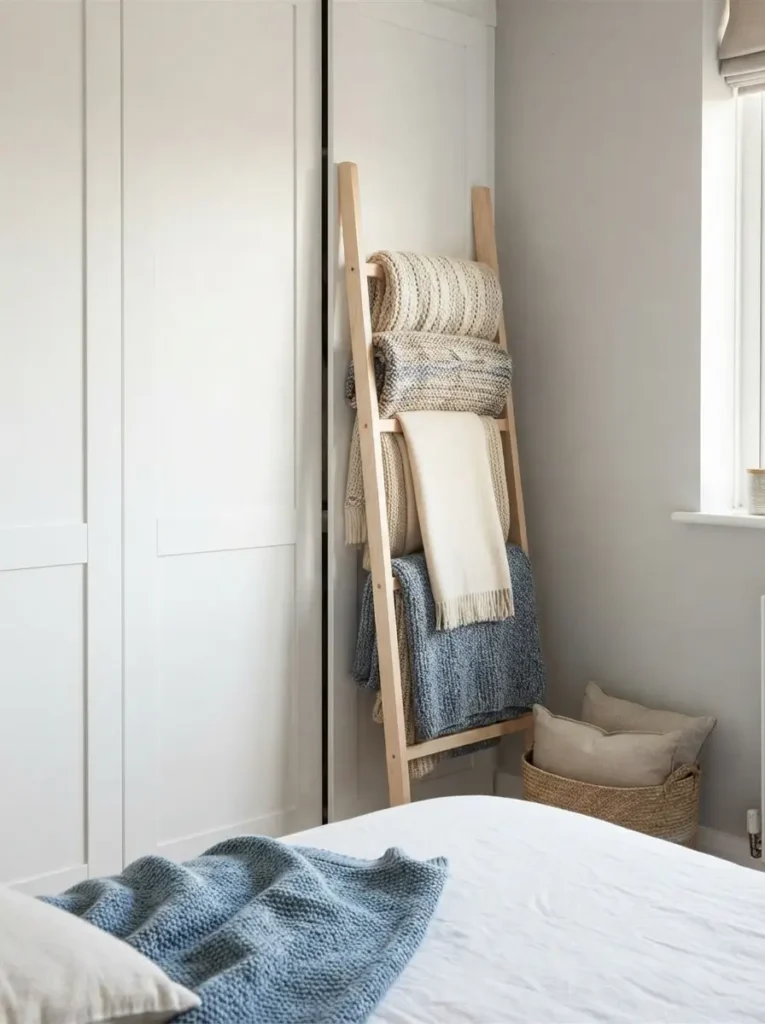
Narrow gaps beside wardrobes frequently remain unused. A slim ladder can fill the area while keeping spare throws accessible. Check that wardrobe doors and drawers open completely before setting the position. Sliding wardrobes offer greater flexibility but hinged doors need additional clearance. Allow at least 10 centimetres between moving doors and hanging fabric.
Colour coordination helps the ladder blend with large wardrobe surfaces. White wardrobes work with pale timber, black metal, or painted ladders while dark wardrobes usually benefit from lighter materials. Keep bulky blankets away from door handles where they could snag. People who change bedding frequently will appreciate having folded layers close to both the bed and clothing storage.
Use the Ladder Near a Bedroom Desk

Apartment bedrooms often contain a compact work area. Placing the ladder beside the desk can soften the functional appearance of monitors, cables, and office equipment. Choose simple textiles with limited fringe so fibres remain away from plugs and ventilation openings. One muted throw may be enough when the desk already contains books, stationery, and decorative objects.
Work zones benefit from clearer lighting than bedside areas. Use a 3500K to 4000K task lamp on the desk while keeping warm ambient lighting elsewhere. Avoid wrapping string lights around the ladder near hanging fabrics because heat, cables, and dust complicate maintenance. A single wall light or table lamp produces a cleaner and safer result.
Combine the Ladder With Under-Bed Storage
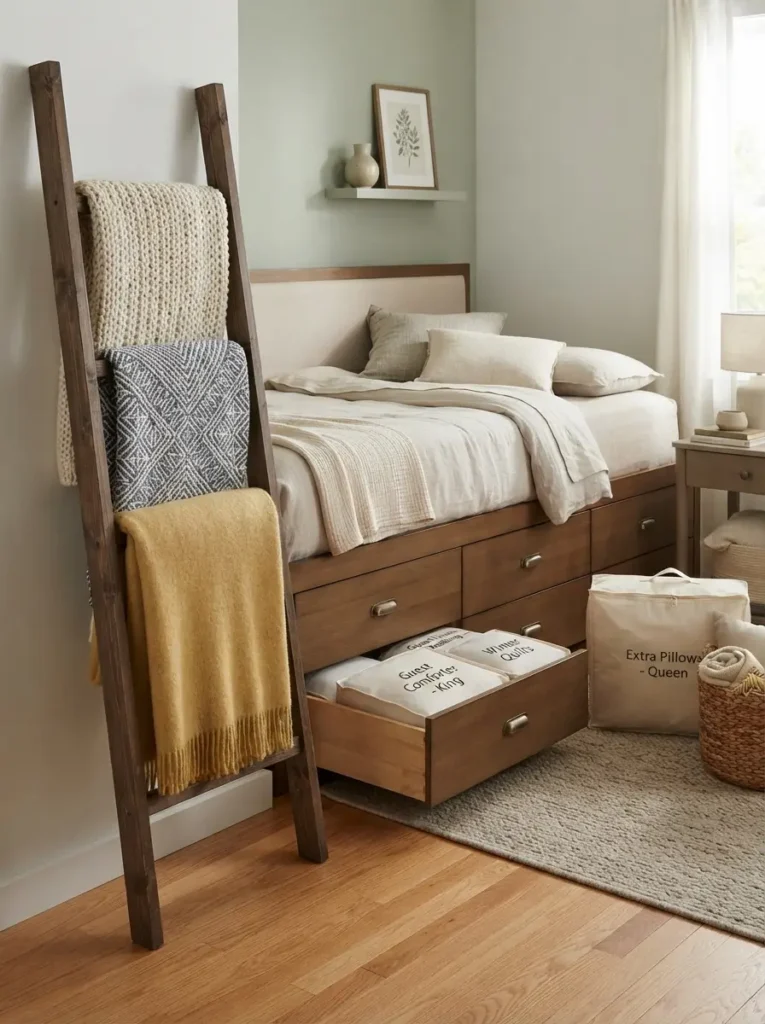
Vertical and hidden storage can work together without making the room feel packed. Display attractive everyday throws on the ladder and keep bulky seasonal bedding under the bed. Vacuum bags save space but may compress feather or down fillings too aggressively. Breathable zipped bags offer better long-term protection for many natural materials.
Anyone researching blanket storage should sort textiles by frequency of use. Daily pieces belong on accessible rails while guest bedding can remain below the bed. Label each storage bag with its contents and size. Beds with drawers work particularly well but leave enough opening space near the ladder. Moving the frame every time you open a drawer quickly becomes frustrating.
Style a Ladder Behind the Bedroom Door

Wall space behind a door may accommodate an especially slim ladder. Open the door fully and measure the remaining depth before choosing a model. Door handles must not strike the ladder or catch hanging fabric. Short throws folded into narrow sections work better than wide blankets in this restricted position.
Safety matters more than appearance in high-movement areas. Use non-slip feet and a removable furniture strap when the ladder could be knocked. Adhesive straps should be suitable for the wall finish and removed according to the manufacturer’s directions. This placement works best for adults who keep the door open gently rather than children’s bedrooms or busy shared rooms.
Display One Statement Blanket

One carefully chosen blanket can provide more impact than several unrelated pieces. Look for a strong woven pattern, oversized checks, bold stripes, or a controlled geometric design. Keep surrounding bedding plain so the statement textile has enough space to stand out. Small rooms often feel calmer when one feature carries most of the visual detail.
Fold the blanket so the most recognisable part of the pattern remains visible. Uneven folds may cut off motifs and make the fabric look casually stored rather than styled. Renters can use one quality second-hand blanket instead of buying several decorative throws. Check charity shops, local resale platforms, and clearance sections for durable wool, cotton, or woven blends.
Use a Ladder as a Soft Room Divider

Studio bedrooms sometimes need a light boundary between sleeping and dressing areas. A freestanding ladder can suggest separation without blocking light like a solid screen. Choose a stable model designed for independent standing rather than a decorative leaning frame. Hang only lightweight throws to avoid shifting the centre of gravity.
Placement should preserve at least 75 to 90 centimetres of comfortable walking space. Keep the ladder away from emergency exits, heating vents, and frequently opened cabinets. Smaller studios benefit from using similar colours on both sides of the divided area. Matching the throw to the bedding links the sleeping zone while the frame still defines a subtle boundary.
Treat the Ladder as Functional Wall Art
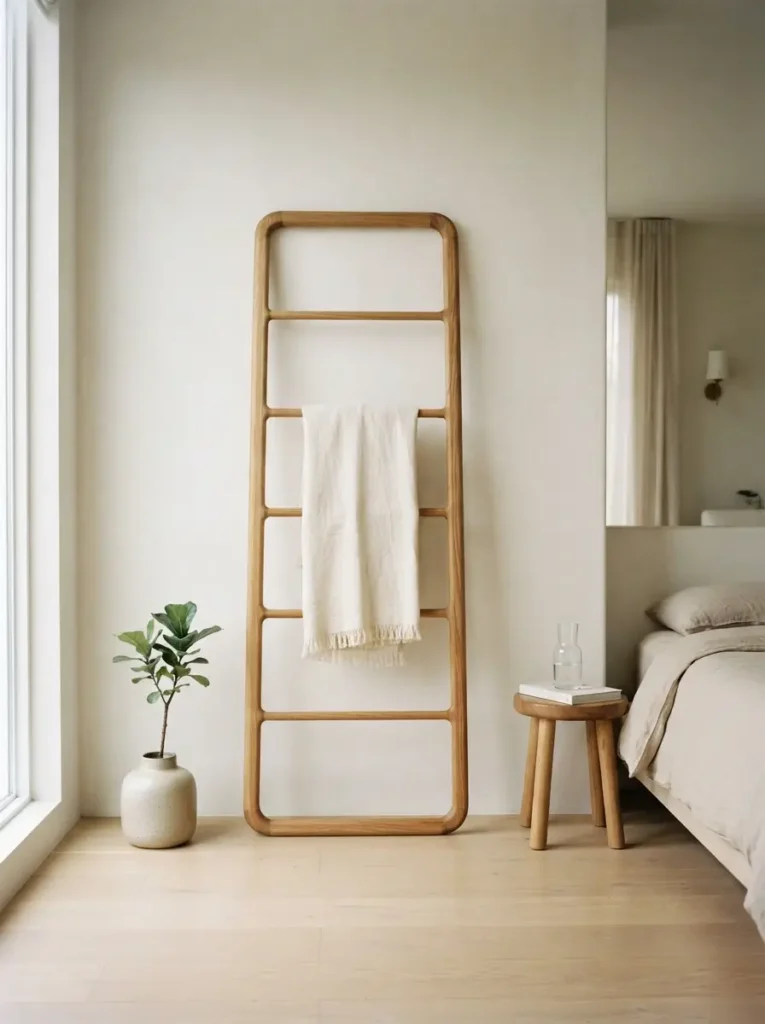
Minimal bedrooms can use a ladder almost like a sculptural object. Select a frame with curved corners, handmade wood grain, slim metalwork, or an unusual painted finish. Display only one folded textile across a middle rail so the structure remains visible. Such styling suits people who prefer organised surfaces and limited accessories.
Nearby objects should support the composition instead of competing with it. Add one low plant, ceramic vase, or simple bedside lamp and avoid a cluster of tiny ornaments. Maintain roughly 20 centimetres of open wall around each side when possible. Negative space helps the frame appear intentional while keeping the room easier to clean and visually understand.
Common Blanket Ladder Styling Mistakes to Avoid
Overloading the rails remains the most common mistake. Too many blankets hide the frame, block airflow, and create uneven weight. Large tassels can drag across the floor while loosely folded fabrics may slip. Limit the ladder to two or three textiles and store excess bedding elsewhere. Check stability after adding every item, especially when using thick wool or weighted blankets.
Poorly planned blanket ladder decor can also interfere with everyday movement. Avoid placing the base beside drawers, wardrobes, sockets, heaters, or curtain edges without testing their full range of motion. Decorative ladders should never be climbed or used as drying racks unless specifically designed for those purposes. Keep them away from candles and exposed heating elements because hanging fabric increases fire risk.
Clashing undertones create another avoidable problem. Cool grey blankets may feel disconnected beside orange-toned pine while yellow-beige throws can look dull against blue-grey walls. Compare fabrics under daylight and evening lighting before deciding. Repeating one colour from the bedding, rug, curtains, or artwork usually produces a more connected bedroom scheme.
Incorrect proportions can make the ladder look awkward. Very wide frames overwhelm narrow walls while short ladders may disappear beside tall wardrobes. Measure both wall width and ceiling height before purchasing. Most compact bedrooms suit ladders between 140 and 180 centimetres high. Leave enough space above the top rail so the arrangement does not appear squeezed beneath the ceiling.
Budget-Friendly Blanket Ladder Styling Tips
Second-hand shopping can reduce costs without limiting quality. Search local resale sites, charity shops, flea markets, and furniture clearance outlets for wooden ladders. Cosmetic scratches often disappear after light sanding or careful touch-up work. Never use an old working ladder automatically because paint, metal edges, unstable joints, or chemical residue may make it unsuitable for bedroom textiles.
Low-cost textiles can look considered when colours remain coordinated. Begin with blankets you already own and arrange them by tone, thickness, and frequency of use. A plain cotton throw may appear more polished after neat folding. Instead of purchasing an entire new set, buy one patterned piece that connects existing bedding colours. Removable cushion covers provide another inexpensive way to repeat the selected shade.
DIY builders should use smooth, properly finished materials and reliable joints. Sand every surface to prevent splinters or pulled threads. Water-based low-VOC paint is more suitable for indoor use than strongly scented finishes. Allow paint or sealant to cure fully before hanging fabric. Anyone lacking basic tools or construction experience may spend less by purchasing a simple ready-made frame.
Affordable blanket storage ideas often combine visible and concealed solutions. Keep attractive everyday throws on the ladder while placing less decorative bedding inside under-bed bags or wardrobe boxes. One organised display usually looks better than several crowded storage products. Clear labels also prevent unnecessary purchases because you can see what colours, sizes, and materials you already own.
Apartment Bedroom Blanket Ladder Styling Tips
Successful apartment bedroom blanket ladder decor depends on circulation, scale, and rental restrictions. Measure the floor footprint rather than considering only the ladder width. Leaning frames extend outward at the base and may use more room than expected. Mark the proposed area with masking tape before purchasing to see whether doors, drawers, or your normal walking path become restricted.
Rental agreements may limit drilling, painting, or permanent wall attachments. Use rubber feet, removable furniture straps, or freestanding designs where suitable. Test adhesive products on an inconspicuous area because some can lift delicate paint. Keep photographs of the original wall condition and follow removal instructions slowly. Never rely on decorative adhesive hooks to support a heavy ladder unless their rated capacity and installation method clearly allow it.
Small bedrooms benefit from colour continuity. Matching the ladder textiles to bedding creates fewer visual breaks and can make the arrangement feel quieter. Try cream bedding with camel and olive throws or pale grey bedding with dusty blue and charcoal layers. Strong colour remains possible but repeat it in two or three small places rather than spreading many unrelated shades around the room.
Heating and ventilation deserve attention in compact layouts. Avoid covering radiators, air vents, dehumidifiers, or portable heaters with hanging textiles. Keep fabrics away from condensation-prone windows because persistent moisture may encourage musty smells or mildew. Air blankets regularly and wash them according to their labels. Practical placement protects both the room and the textiles over time.
Residents considering comforter storage should avoid hanging full-size duvets on lightweight decorative ladders. Their weight and volume can make the frame unstable while preventing proper airflow. Store large comforters inside breathable bags on a wardrobe shelf, beneath a lift-up bed, or in a storage ottoman. Reserve ladder rails for manageable throws and lightweight quilts.
Frequently Asked Questions
Blanket ladders can work in many apartment bedrooms but their success depends on size, stability, and placement. Measuring the room first prevents common problems such as blocked drawers or crowded walkways. Slim designs usually suit rental bedrooms better than wide rustic ladders because they provide storage while maintaining visual space.
Regular cleaning also keeps the feature useful. Dust the frame weekly with a soft cloth and rotate blankets so hidden folds can air. Wash or refresh fabrics according to their care labels. Natural fibres may need gentler treatment than synthetic fleece while painted frames should not remain wet after cleaning.
How Many Blankets Should I Put on a Ladder?
Two or three blankets usually suit a compact bedroom. One blanket can create a cleaner minimalist arrangement while three provide greater colour and texture. Leave at least one rail partly visible and avoid stacking several heavy pieces on the same side. Balanced weight helps the frame remain stable and prevents the display from looking like temporary laundry storage.
Should a Blanket Ladder Match the Bed Frame?
Exact matching is not required. Similar undertones, shapes, or finishes can connect both pieces without making the room look overly coordinated. Warm oak works with beige upholstery and walnut furniture while matte black complements modern metal beds. Repeating one ladder colour in a lamp, cushion, or handle usually creates enough visual continuity.
Can Renters Secure a Blanket Ladder Without Drilling?
Freestanding ladders, rubber feet, anti-slip pads, and suitable removable furniture straps may reduce the need for drilling. Product instructions and rental rules should guide your choice. Heavy blankets can still affect stability so test the ladder carefully. Homes with children or pets may require a more secure solution than adhesive products can provide.
Where Should Spare Comforters Be Stored?
Bulky comforters usually belong inside breathable storage bags, lift-up beds, wardrobe shelves, or storage ottomans. Clean and dry every item fully before packing it away. Avoid tight compression for delicate down or feather fillings unless the manufacturer permits it. Labels help you identify bedding sizes without opening every bag during seasonal changes.
Can I Put Lights Around a Blanket Ladder?
Battery-operated lights may appear convenient but cables and fabric can complicate cleaning and safety. Avoid exposed bulbs, damaged wiring, and lights that generate noticeable heat. Placing a table lamp or wall lamp beside the ladder creates a cleaner result. Warm 2700K lighting usually complements bedrooms while keeping the textiles safely separated from electrical components.
How Can I Stop Blankets From Sliding Off?
Fold each blanket into a narrower strip and place its centre across the rail. Textured cotton, wool, and waffle fabrics usually grip better than silky materials. Clear silicone rail grips may help when they remain hidden and do not damage the fabric. Avoid pins or sharp clips because they can snag fibres and create visible holes.
Conclusion
Thoughtful blanket ladder decor can add storage, texture, and visual height to a compact apartment bedroom without requiring a bulky cabinet. Strong results come from careful measurements, limited textile layers, coordinated colours, and safe positioning. Leaving part of the frame visible often makes the display feel lighter while keeping frequently used throws easy to reach.
Personal habits should guide the final arrangement. Readers who use throws daily need accessible lower rails while minimalists may prefer one statement textile. Renters should prioritise removable safety measures and avoid blocking doors, heaters, or sockets. Combining a slim ladder with concealed storage creates a bedroom that feels organised, comfortable, and realistic for everyday apartment living.