
Small apartments make every object work harder, including the blankets you use for movie nights, afternoon naps, and cold mornings. Loose throws often end up on chair backs, bed corners, or the floor because no storage spot feels convenient. Thoughtful apartment blanket storage gives each blanket a clear home while supporting the room’s layout, colour palette, and daily routine.
Good storage does not need permanent shelving or expensive built-ins. Baskets, benches, wall hooks, slim cabinets, and under-bed containers can all work in rentals when you choose the right size and position. The best solution keeps blankets easy to reach, prevents visual clutter, and avoids blocking walkways. Texture also matters, because woven fibres, wood, canvas, and soft upholstery can make practical storage feel like part of the decor.
What Is the Best Way to Store Blankets in an Apartment
The best apartment blanket storage combines quick access, breathable materials, and a location close to where each throw is used. Living-room blankets belong near the sofa, bedding belongs near the bed, and occasional quilts can move into protected seasonal storage.
Start by sorting blankets into daily, weekly, and seasonal groups. Daily throws should stay visible or within one easy movement, while heavy duvets can sit higher, deeper, or farther away. Measure the blanket when folded instead of guessing. Bulky knits need wider containers than thin cotton throws, and tightly packed storage can trap odours or stretch fibres.
Place a Lidded Basket Beside the Sofa
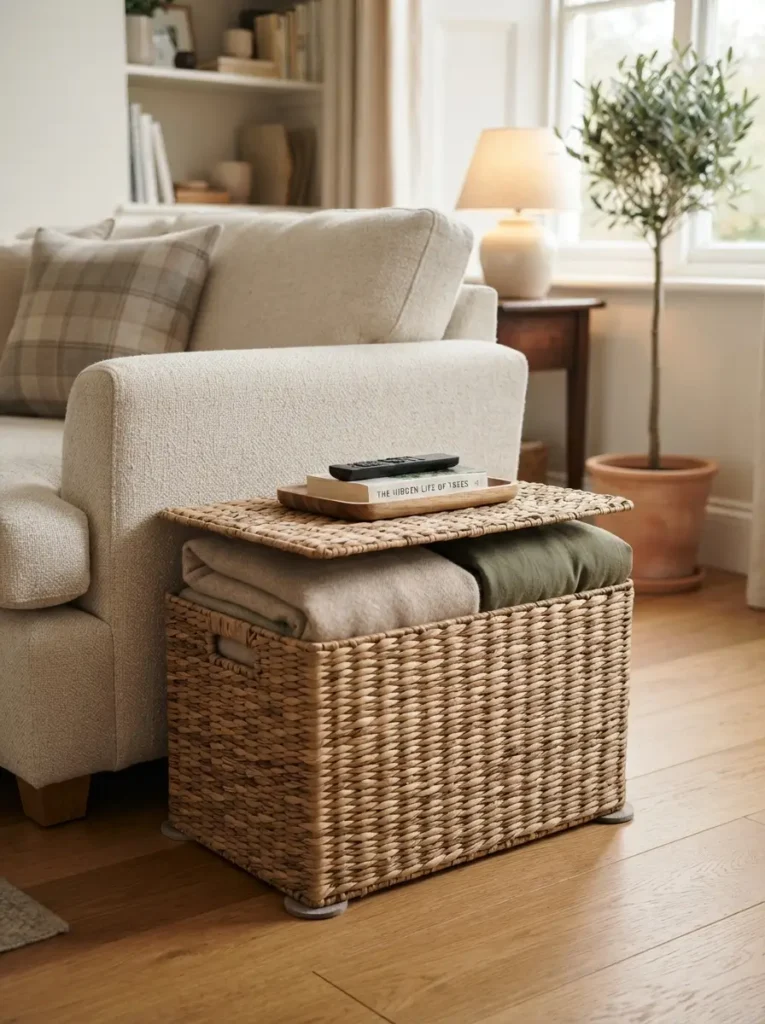
Lidded baskets keep throws close without showing every fold. Choose a basket about 40 to 50 centimetres wide for two medium blankets, then position it beside the sofa arm rather than in the centre of the room. Natural seagrass suits cream, beige, olive, and terracotta schemes, while black woven fibre looks sharper beside grey upholstery and dark wood.
Covered storage helps because it reduces dust and turns soft clutter into one clean shape. Leave a few centimetres of breathing room instead of forcing the lid shut. Flat woven lids can also hold a tray, remote control, or book, giving the basket a second purpose. Renters and busy households benefit most because nothing needs drilling and tidying takes seconds.
Before choosing a basket, test the lid with one hand while seated. Daily storage fails when the top feels awkward or catches on nearby furniture. Felt pads under the base protect rental flooring, and a small washable liner keeps natural fibres from snagging loosely woven blankets.
Use a Storage Ottoman as a Coffee Table
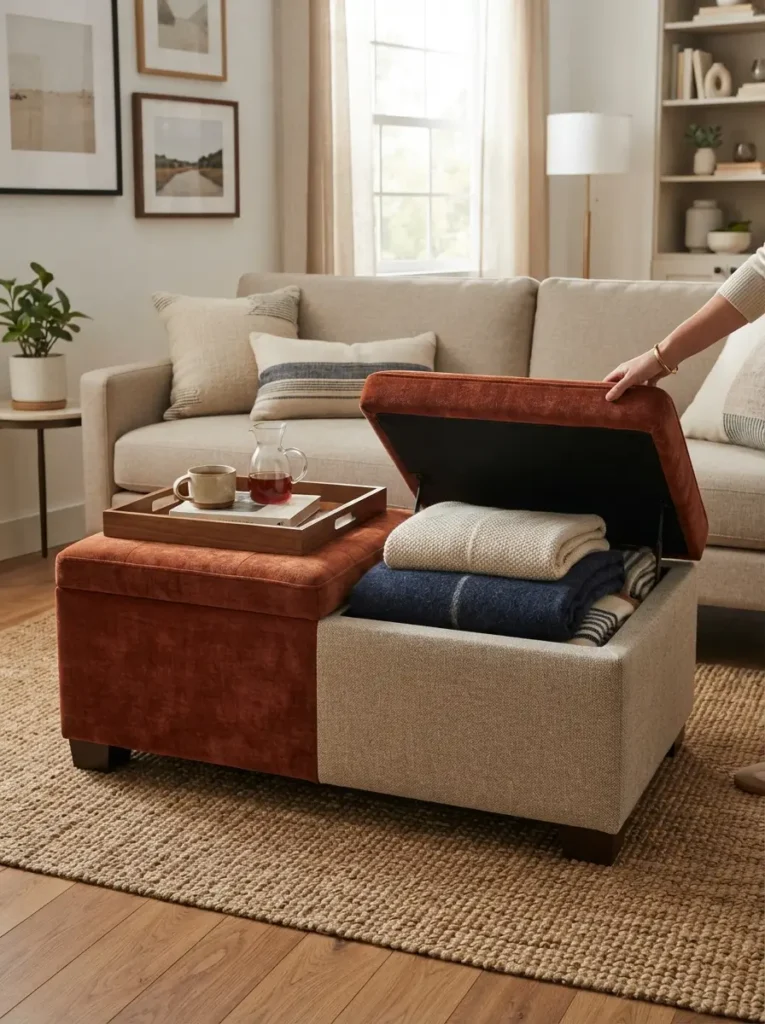
Storage ottomans replace two pieces of furniture with one. Pick a firm, flat-topped model that can hold a tray, then store folded throws inside. Rectangular ottomans work well in narrow living rooms because they follow the sofa line, while round versions soften tight layouts filled with square furniture and straight walls.
Hidden interiors keep the room calm, and padded sides make the piece safer in compact homes where people often brush past furniture. Look for lift-off lids with handles or hinged tops that stay open. Velvet in rust, navy, or forest green adds colour, while textured beige fabric blends with neutral rooms. Studio residents and homes without a separate linen cupboard gain the most value.
Measure the space around the ottoman before ordering. Leave enough clearance for knees, sofa-bed mechanisms, and cabinet doors. A tray measuring roughly half the top keeps drinks stable while leaving room to lift the lid. Removable covers are worth prioritising in homes with pets or children.
Style a Blanket Ladder on an Empty Wall

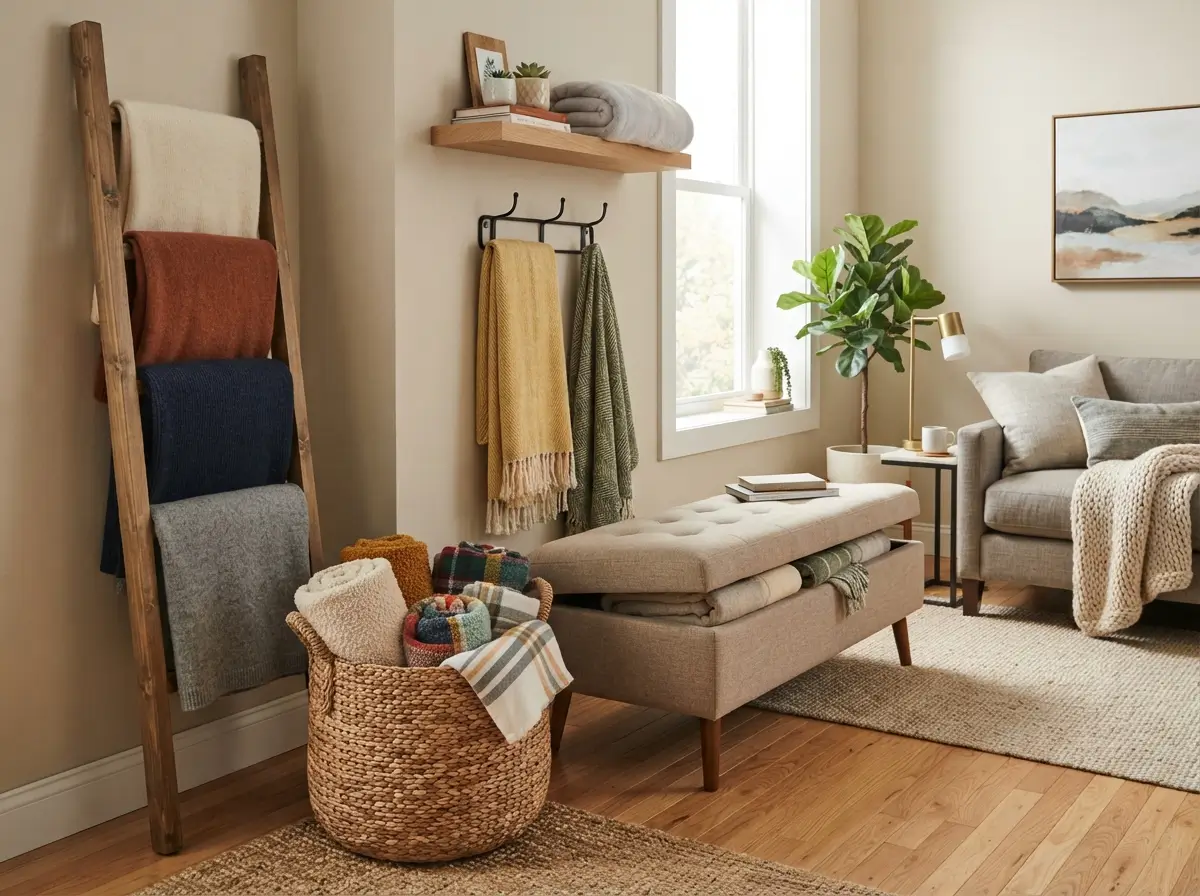
Leaning ladders display blankets without taking much floor depth. Place a slim blanket ladder against a wall beside the sofa, reading chair, or bed, then drape one throw over each rung. Keep the bottom rung partly visible so the piece still reads as furniture rather than a pile of fabric.
Vertical storage works because it uses wall height while preserving drawers and cupboards for less attractive items. Match pale oak with Scandinavian rooms, black metal with modern interiors, and warm walnut with earthy colours. Avoid hanging heavy wet textiles or overloading the top. Style-conscious renters who want accessible blankets and visible texture will find this approach especially useful.
Wall protection matters with leaning designs. Add clear rubber pads where the rails touch paint and nonslip feet at floor level. Alternate thick and thin textiles so the display does not become top-heavy. One patterned throw among two solids usually creates enough contrast without making the wall feel busy.
Slide Low Containers Under the Bed
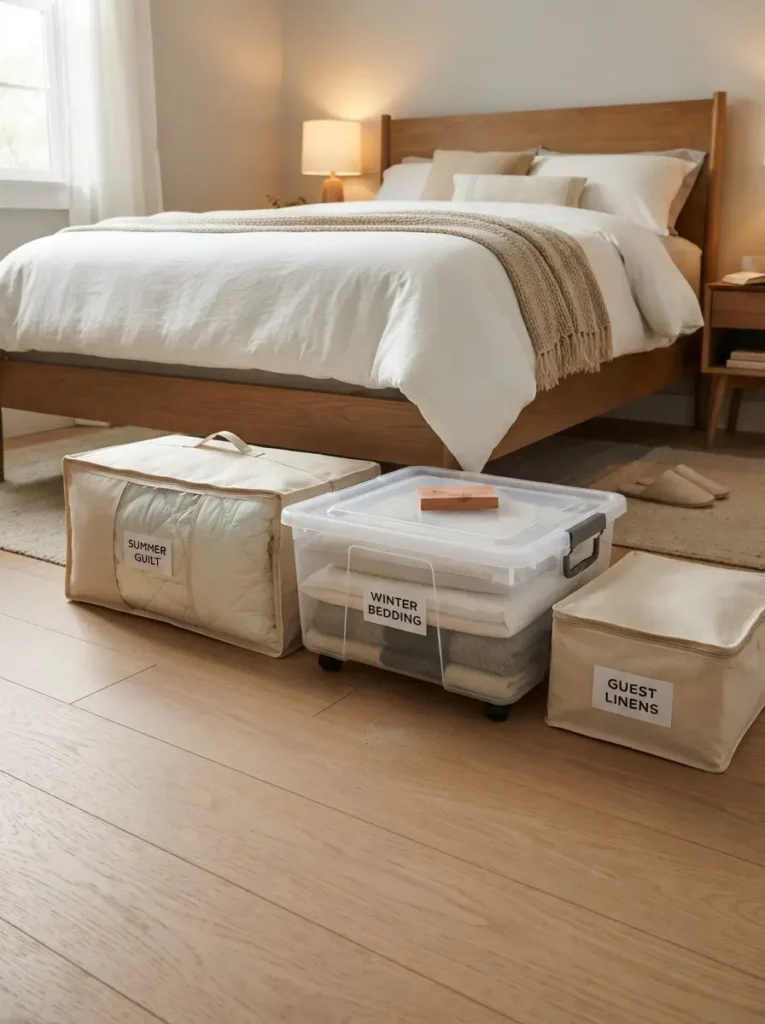
Under-bed boxes turn unused floor space into a practical linen zone. Measure the bed clearance before buying anything and choose containers at least two centimetres lower than the available height. Fabric zip bags suit lightweight quilts, while rigid plastic boxes protect seasonal bedding from dust and accidental spills.
Low storage succeeds when it remains easy to pull out. Handles on both short ends help in narrow bedrooms, and clear tops prevent repeated searching. Place cedar blocks or clean cotton sachets nearby rather than spraying fragrance directly on textiles. People with small wardrobes, platform beds, or limited hallway storage will appreciate this solution, especially for comforter storage that keep bulky pieces out of sight.
Divide large boxes with smaller cotton bags so sheets, quilts, and guest bedding remain separate. Bed risers can create extra clearance, but check the frame manufacturer’s guidance before using them. Dust beneath the bed regularly because even closed containers collect debris around wheels, zips, and handles.
Add a Bench with Storage at the Bed Foot

Storage benches create a natural place for blankets because they sit beside the area where bedding is used. Choose a bench slightly narrower than the mattress so corners do not interrupt circulation. Hinged models hide extra quilts, while open-shelf benches make daily throws easier to grab and return.
Proportion makes the idea effective. A bench around mattress height looks balanced and also supports dressing, reading, or placing a laundry basket. Soft oatmeal upholstery works with most bedding, while deep blue or muted green can ground pale rooms. Couples, guest-room owners, and anyone who changes bedding seasonally will find the added surface and hidden capacity especially practical.
Safety deserves attention with hinged benches. Soft-close hinges protect fingers, while ventilation holes help prevent trapped odours. Avoid placing the bench so close to a wardrobe that the lid cannot rise. A narrow runner rug can visually connect the bench to the bed without crowding the floor.
Tuck a Woven Basket Beneath a Console

Console tables often leave a hollow strip underneath that collects random bags or dust. Fill that space with one or two matching baskets sized to the opening. Square baskets give a tailored look, while rounded baskets suit casual rooms with soft fabrics and curved lamps.
Using the console footprint twice makes a narrow entry or living room more efficient. Keep at least five centimetres between the basket top and tabletop so removal feels easy. Repeat a nearby material, such as cane dining chairs or a jute rug, to make the basket feel intentional. Small households with little wall storage benefit because the arrangement adds order without adding another large furniture piece.
Visual spacing keeps the console area polished. Centre one large basket or use two identical smaller baskets with equal gaps at both sides. Avoid containers that extend beyond the tabletop legs because protruding edges catch ankles. A nearby wall mirror can brighten the arrangement without using more floor area.
Choose a Sofa with Built-In Storage

Storage sofas hide blankets exactly where people use them. Chaise sections often lift to reveal deep compartments, and some sofa beds include drawers beneath the seat. Before buying, check whether the lid can open fully in your layout and whether a nearby coffee table blocks access.
Integrated storage works especially well because it uses furniture volume that would otherwise remain empty. Store everyday throws loosely and place seasonal pieces inside breathable cotton bags. Medium grey, camel, and warm taupe sofas hide wear while supporting many colour schemes. New renters furnishing from scratch, families, and frequent overnight hosts can justify the higher cost through reduced furniture needs.
Inspect the storage compartment in person when possible. Rough staples, exposed mechanisms, or unfinished wood may catch fabric. Removable cotton liners solve minor texture problems and make cleaning easier. For online purchases, compare internal measurements rather than trusting broad phrases such as generous storage or extra-deep seating.
Hang Fabric Baskets from Strong Wall Hooks

Soft hanging baskets create lightweight wall storage for thin throws, children’s blankets, or spare cushion covers. Use removable heavy-duty hooks only when the manufacturer’s weight rating comfortably exceeds the filled basket weight. Position baskets beside a wardrobe or behind a door where they will not narrow the main path.
Wall-mounted fabric storage earns its place by freeing the floor and adding gentle texture. Canvas in cream or charcoal feels neat, while striped cotton can brighten a child’s room. Keep heavy knits elsewhere because fabric handles may stretch. Renters, nursery owners, and people who need flexible storage will like how easily the baskets can move when the layout changes.
Keep hanging baskets shallow enough that they do not swing into the walkway. Two smaller baskets are usually safer than one overloaded sack. Command-style strips need clean, fully cured paint and correct removal technique, so follow the packaging carefully and avoid applying them to fragile wallpaper or peeling surfaces.
Repurpose a Vintage Trunk as a Side Table
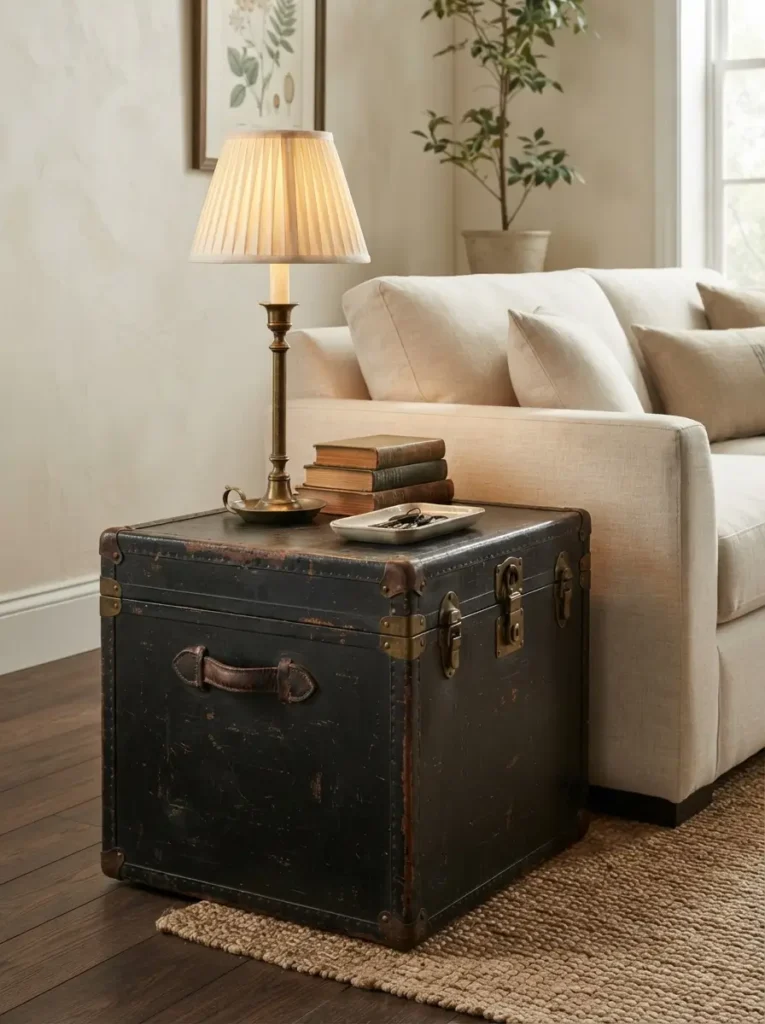
Vintage trunks bring character and deep storage to small rooms. Place one beside a sofa, under a window, or at the foot of a bed, then use the top for a lamp, books, or a tray. Check that hinges, corners, and interior surfaces are smooth before storing delicate textiles.
Solid trunks conceal bulky blankets and give the room a strong visual anchor. Line rough interiors with washable cotton or acid-free tissue, and leave the lid open occasionally for airflow. Dark wood pairs well with cream walls and brass lighting, while painted trunks suit cottage-inspired rooms. Collectors, traditional decorators, and people who enjoy second-hand furniture will get the most from this approach.
Ventilation can be improved with small felt feet beneath the trunk, especially on cool floors. Avoid storing textiles directly against metal that shows rust. If the lid is heavy, add a support stay or choose another piece; daily use should never require balancing a dangerous top while reaching inside.
Build a Neat Stack on Open Shelving

Open shelves can hold blankets beautifully when folds stay consistent. Use the same folding width for every throw, place heavier pieces at the bottom, and limit each stack to three or four items. Shelf dividers prevent soft piles from leaning into books, plants, or decorative objects.
Visible storage works because blankets contribute colour and texture while remaining easy to reach. Arrange cream, tan, and brown throws from light to dark for a calm gradient, or repeat one accent colour from the rug. Avoid overfilling every shelf; leave some empty space around each stack. Organised households and design lovers who enjoy colour coordination will appreciate the display.
Shelf depth should support the full folded blanket rather than leaving fabric hanging over the edge. Use magazine files or acrylic dividers for lightweight throws, but avoid sharp-edged organisers near loose knits. A small rechargeable shelf light can make high or dark compartments easier to use.
Roll Throws into Deep Floor Baskets

Rolled blankets fit deep round baskets better than folded squares. Start with the long edge, roll firmly without compressing the fibres, and place each roll upright. Three visible rolls usually look balanced in a medium basket and make different colours easy to identify.
Vertical rolls stop lower blankets from becoming trapped beneath a stack. They also reduce the messy edges that appear when thick knits refuse to fold cleanly. Choose felt baskets for modern rooms, rope baskets for coastal interiors, or water-hyacinth baskets for warm neutral spaces. Families and anyone who swaps throws throughout the day will value the quick grab-and-return routine.
Basket lining matters when rope or wicker feels rough. A simple cotton drawstring bag placed inside prevents snags and can be washed separately. Keep the basket away from radiators, fireplaces, and strong sunlight, since repeated heat may fade colours or dry natural fibres until they become brittle.
Install a Slim Cabinet Behind the Sofa

Narrow cabinets can fit behind a floating sofa or along an unused wall. Look for units 20 to 30 centimetres deep with adjustable shelves. Sliding doors work better than hinged doors in tight walkways, and wall anchoring is important even when the cabinet seems stable.
Shallow closed storage keeps blankets protected without consuming the depth of a standard wardrobe. Adjustable shelves let you separate thin summer throws from thick winter layers. Paintable units can match the wall colour, helping them visually recede, while wood finishes add warmth. Long living rooms, open-plan flats, and households with several blanket types will find the organisation especially useful.
Cable planning helps when the cabinet also supports lamps or chargers. Route cords through an existing opening rather than drilling rental furniture without permission. Keep the top mostly clear so the slim unit does not become another clutter zone. One lamp, one tray, and one decorative object are usually enough.
Use Bedside Tables with Deep Drawers

Wide bedside drawers can store one lightweight throw, a heated blanket, or extra pillowcases. Choose tables with full-extension runners so the back of the drawer remains reachable. Folding blankets into compact rectangles prevents fabric from catching in the mechanism.
Near-bed drawers make night-time access simple without adding visible clutter. Matching bedside tables create symmetry, but one larger chest can work in a single-occupant room. Warm white lamps between 2700K and 3000K keep the area cosy and help wood finishes look richer. Light sleepers, cold bedrooms, and people who use one specific blanket nightly benefit most from this location.
Drawer dimensions matter more than the table’s outside width. Check internal height and depth before buying, especially when storing electric blankets with controllers. Keep cords loosely coiled in a separate pouch. Never fold heated wires sharply, and always follow the manufacturer’s storage and safety instructions.
Fill the Top Wardrobe Shelf with Fabric Cubes

High wardrobe shelves often become messy because loose blankets slide forward when other items move. Fabric cubes create separate categories and keep soft pieces contained. Label the front discreetly with terms such as summer throws, guest blankets, or spare bedding.
Structured cubes improve access because each category comes down as one unit. Choose breathable canvas rather than sealed plastic for regularly used textiles, and keep the cube depth slightly shorter than the shelf. Neutral grey, cream, or navy keeps the wardrobe interior visually quiet. Shared flats, families, and people with tall wardrobes will find this method easier than balancing loose piles overhead.
Pull handles make high cubes easier to control. Choose reinforced fronts that will not collapse when the container is full, and avoid lifting an overloaded cube above shoulder height. A small folding step stool provides safer access than standing on a chair or stretching from the bed.
Place a Rolling Cart in a Bedroom Corner
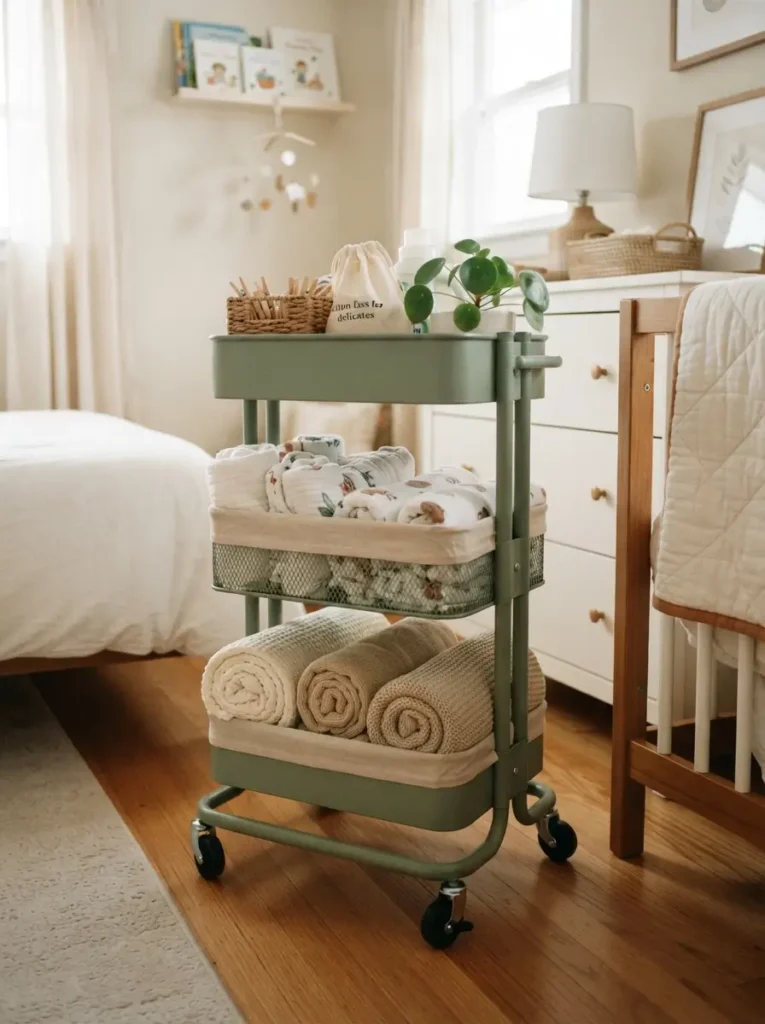
Three-tier rolling carts can store rolled baby blankets, lightweight throws, and laundry accessories. Use the lowest tier for the heaviest textiles so the cart stays stable. Park it beside a dresser or in a corner rather than beside a narrow doorway.
Mobility gives the cart an advantage in flexible rooms. It can move beside the bed on cold nights, then return to the corner during the day. Powder-coated white suits bright rooms, black suits industrial interiors, and muted sage adds gentle colour. Students, nursery caregivers, and renters who rearrange often will enjoy the adaptable format.
Wheel locks stop the cart drifting on hard floors. Shallow shelf baskets prevent rolled throws from falling through open sides, and washable liners keep dust away. Avoid placing trailing blankets near the wheels. A cart should remain light enough to move smoothly with one hand.
Hide Blankets Inside Decorative Suitcases
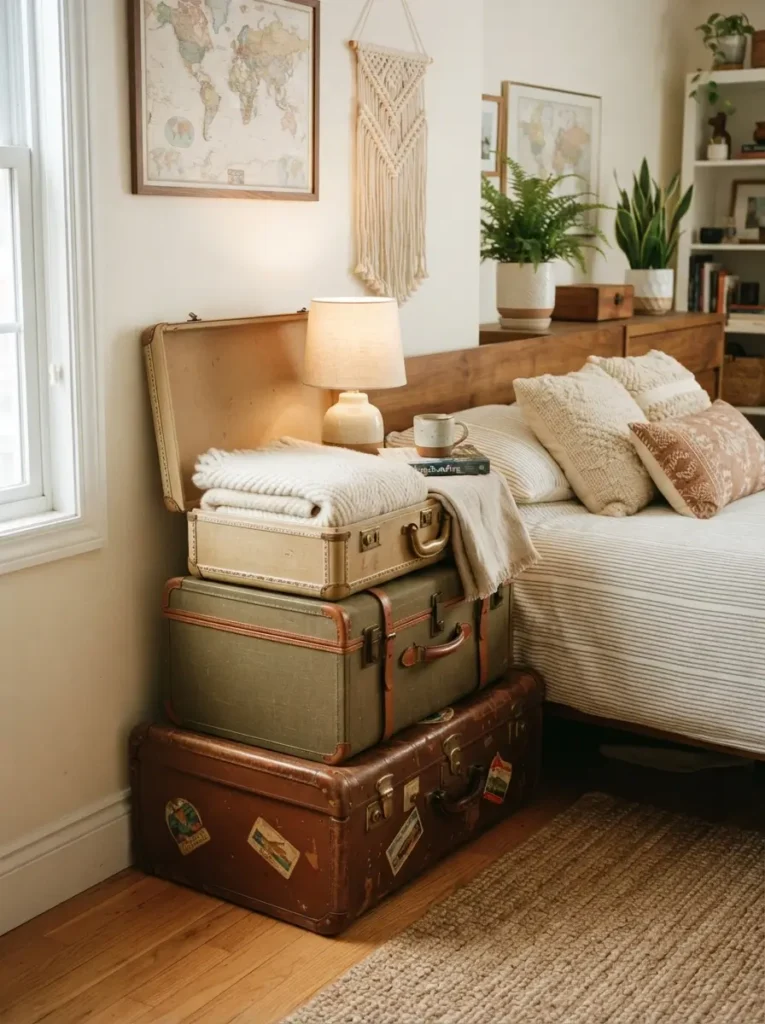
Decorative suitcases can create a compact storage tower beside a bed or under a console. Use only clean, odour-free cases with smooth interiors. Place the most frequently used blanket in the top case and reserve lower cases for seasonal items.
Stacked cases combine vertical storage with personality, especially in eclectic or travel-inspired rooms. Keep the tower to two or three pieces and place the largest case at the bottom. Similar colours make the stack calmer, while mixed vintage finishes feel collected. Creative renters and second-hand shoppers can build the look gradually without buying specialist storage furniture.
Moisture checks are essential with older luggage. Leave an empty case open for several days, smell the lining, and look for staining before use. Insert a removable cotton bag rather than placing blankets against aged paper or adhesive. Decorative cases should store clean textiles, not hide musty interiors.
Create a Seasonal Rotation Zone

Seasonal rotation prevents every blanket from competing for space all year. Keep two or three useful throws in the living room, store lightweight cotton layers during winter, and swap heavy fleece or wool out during warmer months. Clean each blanket fully before packing it away.
Rotation works because it reduces daily clutter and makes storage containers easier to manage. Use labelled cotton bags, vacuum bags only for durable synthetic pieces, and rigid boxes for delicate quilts. Mark the season and room on every label. People with changing climates, limited cupboards, or large bedding collections will gain the clearest improvement from this organised cycle.
Calendar reminders make seasonal systems easier to maintain. Choose two swap dates each year and inspect every item for stains, loose threads, or pests. Photograph labelled containers before placing them on high shelves. A simple phone album can show where each blanket lives without opening every box.
Common Blanket Storage Mistakes to Avoid
Overfilling containers causes several problems at once. Blankets become hard to remove, folds crease deeply, and lids may stop closing properly. Leave enough room for your hand to reach inside and lift one item without disturbing the rest. Soft storage should look relaxed, not compressed.
Ignoring airflow can create stale smells, especially in humid apartments. Wash and dry textiles completely before storage, then choose breathable cotton bags or woven baskets for regular use. Sealed plastic works better for short-term protection from leaks, pests, or renovation dust, but it should not hold damp fabric.
Choosing storage that blocks movement makes a small room feel even smaller. Keep at least 75 centimetres of clear passage where possible, and avoid placing baskets where doors, drawers, or sofa beds need to open. Painter’s tape on the floor can help you test a furniture footprint before buying.
Mixing every colour and material can also make useful storage look accidental. Repeat one or two finishes already present in the room, such as black metal, pale oak, or natural fibre. Consistency helps separate storage pieces feel connected, even when they come from different shops or were bought at different times.
Forgetting textile care shortens the life of blankets. Wool should not sit in direct sun, delicate quilts should not carry heavy stacks, and chunky knits should not hang for long periods because their weight can stretch the stitches. Check care labels before choosing between folding, rolling, hanging, or sealed storage.
Accessibility is easy to overlook. Storage placed too low may be difficult for someone with back pain, while high shelves can be unsafe for shorter users. Choose handles that allow a full grip, avoid very heavy lids, and keep the most frequently used throw between knee and shoulder height whenever possible.
Budget-Friendly Ways to Store More Blankets
Second-hand furniture often offers better capacity than small decorative organisers. Search for storage benches, trunks, bedside chests, and ottomans with sound hinges and clean interiors. A used piece costing £25 to £60 may replace both a table and several baskets, which can save floor space as well as money.
Repurposing containers keeps costs low. Clean laundry baskets can hold rolled throws inside wardrobes, sturdy gift boxes can divide shelves, and unused pillowcases can protect folded blankets from dust. Matching labels make mixed containers look more organised without requiring a full set of new products.
Discount shops usually sell fabric cubes, under-bed bags, and removable hooks for modest prices. Measure first and buy only the sizes that match real gaps in the room. Three correctly fitted £8 boxes are more useful than six random baskets that block doors or leave awkward empty spaces.
Simple upgrades can improve inexpensive storage. Add felt pads beneath a trunk, sew stronger handles onto a canvas basket, or line a rough wooden box with leftover cotton. Peel-and-stick wallpaper can refresh a plain cabinet interior without affecting the exterior. Small adjustments make budget pieces safer for textiles and easier to use.
Rotating what you already own costs nothing and may solve the problem immediately. Keep the best-looking throws in visible baskets, move rarely used blankets to high shelves, and donate pieces that feel scratchy, damaged, or unnecessary. Fewer items let every storage method work better.
Neighbourhood swap groups, charity shops, and online marketplaces can provide baskets or benches at low cost. Ask for exact dimensions before travelling, inspect for smoke or damp smells, and clean every surface thoroughly. Replacement liners, new handles, or furniture wax can refresh a sound second-hand piece without hiding structural damage.
Practical Apartment Blanket Storage Tips
Successful apartment blanket storage starts with location, not the container. Watch where blankets naturally collect for one week. A pile beside the sofa suggests nearby storage, while blankets repeatedly left on the bed belong in a bench, drawer, or bedside chest. Following real habits creates a system people will keep using.
Scale matters in small rooms. One large basket usually looks calmer than three tiny baskets, but the container should not dominate the furniture beside it. Aim for a basket height close to the sofa seat or a bench width slightly shorter than the bed. Balanced proportions help storage blend into the layout.
Fabric weight should guide the method. Cotton throws fold neatly, fleece can roll, quilts need gentle support, and chunky knits prefer broad baskets or shelves. Avoid hanging heavy blankets for months. Matching the storage style to the textile prevents stretching, crushing, and difficult daily handling.
Lighting affects how storage materials look. Warm bulbs between 2700K and 3000K flatter wood, cane, cream canvas, and earthy fabrics. Cooler 4000K lighting can make beige fibres look grey and may suit crisp black-and-white rooms better. Test a basket in evening light before deciding whether its colour works.
Labels should stay simple and useful. Place labels inside lids, on the back of cubes, or on matching card tags when you want a cleaner appearance. Categories based on room, season, or user work better than vague groups. Clear labels also help guests or family members return blankets correctly.
Pet owners should choose containers that resist hair and claws. Smooth canvas, tightly woven rope, and washable upholstery are easier to maintain than loose open wicker. Keep favourite pet blankets in a separate labelled basket, then wash the liner regularly so fur and odours do not spread to guest bedding.
Colour repetition can make practical pieces feel deliberate. Match a storage basket to the rug’s warm tan, repeat a black cabinet handle in the floor lamp, or choose an ottoman that echoes the curtains. Two repeated details are usually enough; exact matching across every object can make a room feel flat.
Before purchasing anything, create a quick inventory with blanket size, material, season, and usual room. The list reveals whether you need one deep container or several smaller categories. It also prevents buying storage for blankets that should be repaired, donated, or recycled through an appropriate textile programme.
Frequently Asked Questions
What Is the Best Apartment Blanket Storage for a Studio
The best apartment blanket storage for a studio usually combines seating and hidden capacity. Storage ottomans, lift-up chaise sofas, and benches work well because they do not introduce a separate single-purpose object. Place daily throws near the sofa and keep seasonal bedding under the bed or on a high wardrobe shelf.
How Should Blankets Be Stored to Prevent Smells
Clean every blanket according to its care label and dry it completely before packing. Use breathable cotton bags, fabric cubes, or woven baskets for regular storage. Add cedar blocks or unscented moisture absorbers nearby, but avoid strong fragrance sprays that may stain fibres or simply cover an existing moisture problem.
Can Blankets Stay in Vacuum Bags for Long Periods
Vacuum bags suit durable synthetic comforters and short-term seasonal storage, but they may flatten natural fillings or create deep creases in delicate quilts. Reopen bags every few months, check for moisture, and let the contents regain loft. Wool, down, and handmade textiles usually do better in breathable containers with gentle support.
How Many Throws Should Stay in the Living Room
Two or three throws are enough for most small living rooms. Keep colours connected to the sofa, rug, or curtains so the textiles support the scheme rather than compete with it. Store extra pieces elsewhere and rotate them seasonally. Smaller visible collections are easier to fold, style, and use.
Should Blankets Be Folded or Rolled
Folding works best on shelves, in drawers, and inside rectangular benches. Rolling suits deep round baskets and thick blankets that form uneven folded edges. Delicate quilts should be folded loosely with acid-free tissue along sharp creases, while heavy knits need broad support to prevent stretching.
Where Should Guest Blankets Be Kept
Guest blankets should stay clean, labelled, and easy to access without moving daily items. Use a bench in the guest room, a fabric cube on a wardrobe shelf, or a protected under-bed box. Include one lightweight and one warmer option when storage allows, then wash both after extended use.
Conclusion
Effective apartment blanket storage depends on matching each blanket to the right location, container, and level of access. Daily throws should stay close to seating, bedding should remain near the bedroom, and seasonal pieces can move into protected spaces. Furniture with hidden compartments often gives the strongest result in very small homes.
Begin with the throw causing the most daily frustration. Give it a nearby home, test the system for one week, and adjust anything that makes returning it inconvenient each day.
Start with one clutter point rather than reorganising the entire apartment. Measure the available space, choose a breathable solution, and test whether the blanket can be returned with one simple movement. Practical habits, balanced proportions, and materials that suit the room will keep every throw organised without making the apartment feel crowded.