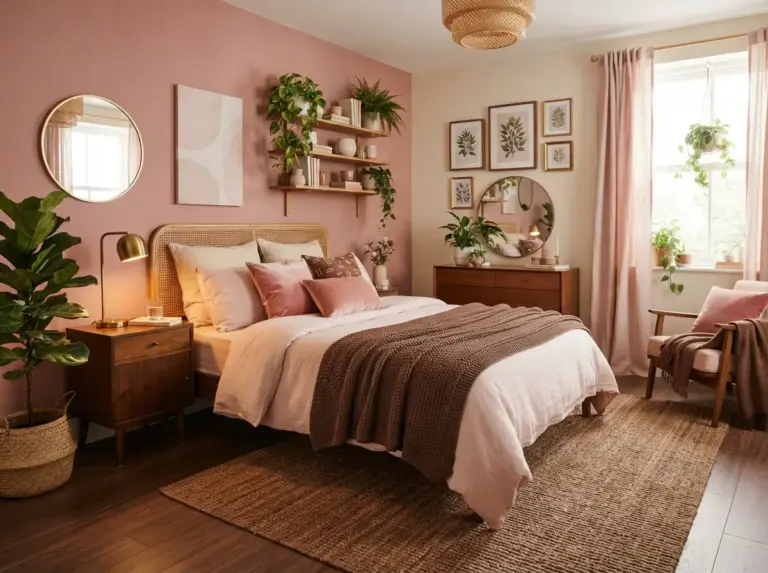


Blank apartment walls often feel unfinished, yet permanent renovations rarely suit renters. Pinboards solve both problems because they add personality, improve organization, and need little floor space. Good apartment pinboard ideas also help small rooms work harder by giving notes, photos, lists, fabric samples, and reminders a clear home. A compact board near the desk can hold deadlines, while a larger board in the living area can display rotating art. Careful scale, color, and placement keep the result useful rather than cluttered.
What Are the Best Apartment Pinboard Ideas for Small Rentals?
Strong pinboard displays combine function, proportion, and easy mounting. Start with a board size that relates to nearby furniture, then choose a simple color palette and leave enough open space for the eye to rest. Cork, fabric, wire mesh, felt, and magnetic boards all work well, but the best material depends on what you plan to pin. Renters should favor lightweight boards, removable hooks, tension systems, or boards that lean on furniture. Beginners usually get better results when they start with one clear purpose, such as planning, inspiration, family photos, or weekly household organization.
Frame a Corkboard Like Real Artwork

Plain cork can look temporary, but a proper frame gives it visual weight. Choose a slim black frame for a modern room, pale oak for Scandinavian furniture, or warm walnut for a space with vintage pieces. Position the board 15 to 20 centimeters above a desk, console, or low cabinet so it feels connected to the furniture below. Keep the frame width modest because an oversized border can make a small board look heavy. Cork tiles can also be fitted inside an old picture frame, which makes this approach useful for beginners and renters who want a polished result without drilling several holes.
Framing works because the border turns scattered notes into one controlled composition. Match pushpins to the room rather than using mixed office colors; brass, matte black, white, or wood pins create a calmer finish. People who enjoy Retro Apartment Wall Art can use a dark wood frame, faded postcards, ticket stubs, and one muted rust fabric swatch. Avoid placing the frame too high, since a pinboard should remain easy to reach and read during everyday routines.
Cover the Board With Linen or Cotton

Fabric softens the practical look of cork and lets the board blend with curtains, cushions, or bedding. Natural linen in oatmeal, warm gray, or soft olive suits calm rooms, while striped cotton adds more energy without becoming too busy. Pull the fabric tightly across the board and staple it at the back, keeping the weave straight along every edge. Thin fabric shows pinholes less than paper, and it creates a pleasant background for photos or notes. Such a board is especially helpful in bedrooms, home offices, and dining nooks where raw cork might feel too casual.
Texture gives the wall depth while the neutral surface keeps pinned items readable. Choose fabric with a medium weave, because heavy upholstery cloth can resist pins and very loose fabric may sag. Pair the board with 2700K warm-white lamps in a bedroom or 3000K lighting near a desk, where clear visibility matters. Renters can set the covered board on a shelf or secure it with two removable picture-hanging strips rated for its weight. Skip glossy satin, since reflected light can distract from the items you actually want to see.
Build a Vertical Planning Station

Narrow walls beside a desk, kitchen doorway, or entry cabinet often go unused. Divide the board into three horizontal areas for monthly dates, current tasks, and papers that need action. Use thin washi tape or cotton cord to mark the sections instead of drawing permanent lines. Keep the most frequently checked area near eye level, around 145 to 160 centimeters from the floor for many adults. Lower zones can hold grocery lists or household reminders that other family members need to reach.
Vertical layouts succeed because they organize information without spreading it across the room. Choose one paper size for most notes, such as A6 cards, so the surface feels ordered even during a busy week. Pair the board with a slim writing desk, a wall-mounted drop-leaf table, or a narrow console that is no deeper than 35 centimeters. Apartment dwellers with limited work surfaces benefit most from this arrangement. Leave at least 20 percent of the board visible; covering every centimeter makes important tasks harder to identify and creates unnecessary visual noise.
Create a Soft Neutral Mood Board

Mood boards can guide decorating decisions before money is spent. Start with three base colors already present in the room, then add samples that show the direction you want to take. Cream, mushroom, taupe, and charcoal form a flexible neutral scheme, while dusty blue or terracotta can provide one restrained accent. Pin paint chips, fabric offcuts, furniture screenshots, and small material samples in loose columns. Keep the largest sample near the center because it should represent the dominant color or material in the finished space.
Visual planning works because it lets you compare undertones under apartment lighting. Gray can look blue beside a north-facing window, and beige may turn yellow under a 2700K bulb. Check the board in daylight, evening light, and with nearby lamps switched on before buying paint or textiles. Beginners redecorating a first apartment will find this especially useful. Connect the board to a future Accent Wall by including the exact paint card, one flooring sample, and two possible curtain fabrics rather than collecting unrelated inspiration that will never fit the room.
Turn Family Photos Into a Clean Grid
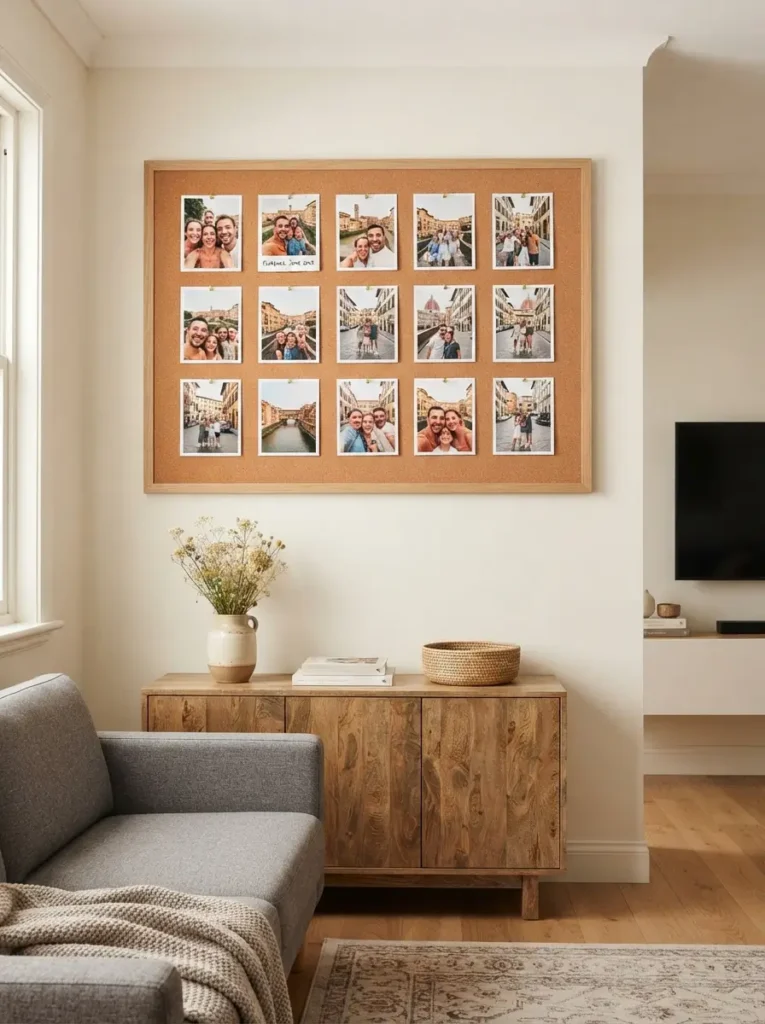
Photo pinboards feel more intentional when every image follows a simple format. Print pictures in the same size, such as 10 by 15 centimeters, then arrange them in straight rows with equal gaps. Black-and-white photos create consistency when the original images contain many different colors. Color prints can still work when you choose a limited set from one holiday, season, or family event. Mark the grid lightly with removable tape before pinning so the rows stay level. A board above a sideboard or compact sofa can become a personal focal point without filling the whole wall.
Order makes the display easy to enjoy from across the room. Use a 2-centimetre gap between photographs and keep the outer border slightly wider, around 4 to 6 centimetres. The method suits sentimental decorators who dislike messy collage walls. Small labels with dates or locations can sit beneath selected images, but avoid writing under every photo. When a living room already includes Living Room TV Wall Designs, place the photo board on a side wall rather than beside the screen, where competing rectangles can make the room feel crowded.
Make a Pinboard Headboard Panel

Bedrooms with no room for a deep headboard can use a wide upholstered pinboard behind the bed. Choose a board that is slightly wider than the mattress but not wider than the bedside tables combined. Mount the panel securely or rest it behind the bed frame if the base prevents movement. Keep pins and sharp items away from the sleeping area; use fabric tabs, ribbon loops, or flat clips for lightweight photos and notes instead.
Scale gives this idea its strength because the panel visually anchors the bed without stealing floor space. Soft beige, muted green, navy, or warm gray works well with white bedding and wood furniture. Add two wall-mounted reading lights at 2700K to create comfortable evening light, but keep electrical cables separate from the board. Studio renters and students often benefit most from this solution. Avoid filling the panel with dozens of objects, since the bedroom should remain restful. Three to five fabric-safe items usually provide enough personality without making the bed area feel busy.
Use Hexagon Cork Tiles for a Modular Wall

Hexagon cork tiles let you create a board that fits awkward wall shapes. Arrange six to nine tiles in a loose cluster above a desk, reading chair, or dining bench. Keep one edge aligned with the furniture below so the composition still feels grounded. Natural cork works with warm wood, cream walls, and black metal accents. Painted tiles can introduce color, but use only two or three shades. Dusty blue, clay, and natural cork create an easy combination that suits many rentals without dominating the room.
Modular pieces work well because the layout can expand, shrink, or move to a new apartment. Use removable mounting squares designed for painted walls, and check the weight rating before adding heavy papers. People who move frequently or share a rental will appreciate the flexibility. Pin current tasks on one tile, photographs on another, and receipts or appointment cards on a third. Uneven spacing is a common mistake; keep 1 to 2 centimeters between tiles so the negative space looks deliberate rather than accidental.
Add a Pinboard Above a Small Entry Console

Entry walls need practical storage, yet bulky furniture can block a narrow walkway. A medium pinboard above a shallow console creates a useful landing zone for reminders, keys, shopping lists, and delivery notes. Choose a console between 20 and 30 centimeters deep, then center the board over it. Neutral cork or charcoal felt works well near the door because both materials hide marks better than white fabric.
Daily routines improve when important information sits where you naturally pass it. Use 3000K light from a table lamp or wall light so notes remain easy to read without creating harsh glare. These apartment pinboard ideas are especially practical for busy households and people who often forget items before leaving. Keep the floor around the console open; baskets that project into the walkway can make a small entrance feel cramped and unsafe.
Design a Café-Style Menu Board

Dining corners can borrow the charm of a small café without using permanent signage. Cover a board with dark charcoal fabric or black felt, then pin a weekly meal plan, favorite recipe cards, coffee labels, and one handwritten menu. Cream cards and white ink stand out against the dark background, while small brass clips add warmth. Keep the typography consistent by using one pen color and one card shape.
Personality comes from the changing content rather than elaborate decoration. People living alone may prefer a simpler format with three meals, a shopping note, and one recipe to try. Connect nearby Apartment Wall Decor through repeated materials, such as black frames, oak furniture, or brass hardware. Avoid placing the board directly over a stove or sink because steam, grease, and splashes can damage paper, fabric, and cork.
Make a Fabric Swatch Display

Textile lovers can turn leftover fabric into a useful color story. Cut swatches into the same square or rectangular shape, then pin them in rows from light to dark. Include curtain fabric, cushion covers, bedding samples, and upholstery offcuts that relate to your room. Place the board close to natural light, but not in direct sun, which can fade delicate fabrics over time.
Material repetition helps small apartments feel connected from room to room. A rust cushion in the living area can relate to a stripe in the bedroom, while olive fabric can echo kitchen accessories. Sewists, renters planning updates, and people who enjoy changing soft furnishings will get the most value from this idea. Include one or two textured pieces, such as boucle or corduroy, but avoid attaching thick foam-backed samples with ordinary pushpins. Use small binder clips or upholstery pins that can hold the extra weight safely.
Build a Children’s Rotating Art Board

Children’s artwork deserves display space, yet taping every page to the wall quickly creates clutter. A large fabric-covered board lets families rotate drawings without damaging paint. Mount it at a height children can reach, usually with the lower edge 70 to 90 centimeters from the floor, depending on age. Use blunt clips, wooden pegs, or ribbon bands instead of sharp pins. Bright artwork already provides color, so keep the board itself neutral.
Rotation keeps the display fresh and teaches children to select work they feel proud of. Families in compact homes benefit because the artwork stays contained within one zone. Coordinate the display with Bold Vibrant Wall Design by repeating one strong color in a nearby stool, storage bin, or lamp rather than painting several walls. Avoid placing the board above a bed or toy shelf where loose clips could fall onto children during play.
Combine a Pinboard With a Weekly Command Center
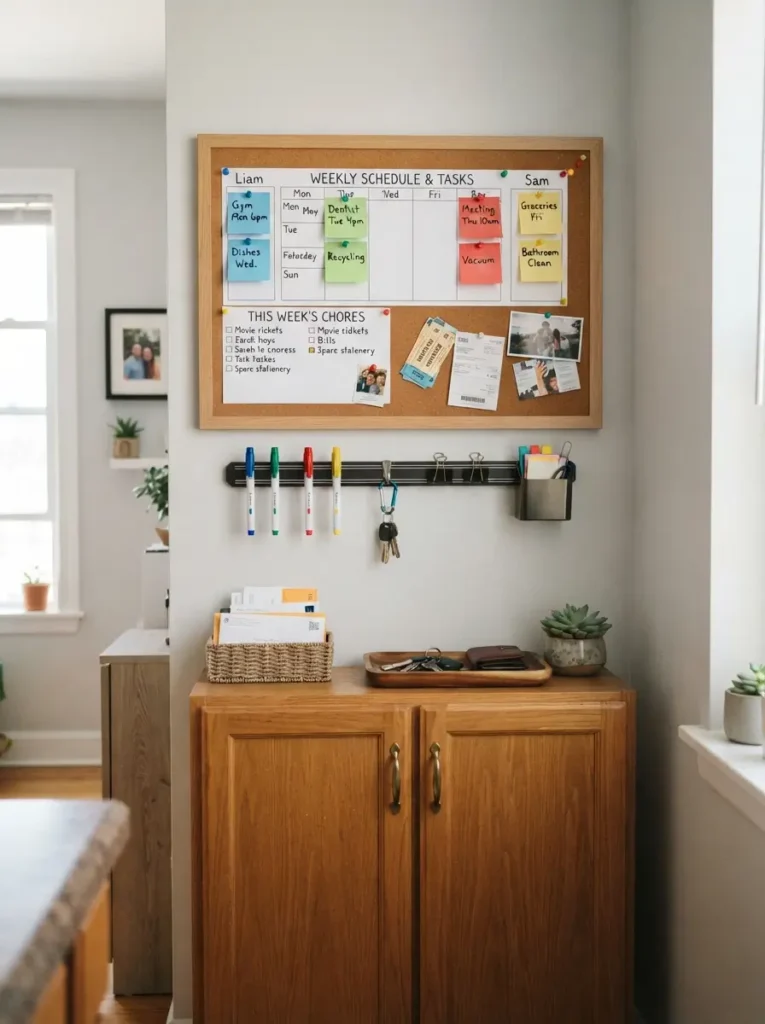
Shared apartments often need one visible place for schedules and household tasks. Each person can have a small color code, but limit the palette to four colors so the board stays readable. Add a slim magnetic strip beneath the cork for pens, keys, or clips. Kitchens, hallways, and utility corners usually work best because everyone passes those areas during the day.
Clear roles reduce confusion and prevent important papers from disappearing under random mail. Roommates, couples, and families will find the system especially useful. Pair the command center with closed storage below, such as a two-door cabinet or narrow drawer unit, to hide envelopes and spare stationery. A board full of old notices stops working quickly, so schedule a five-minute reset every weekend and remove anything that no longer needs attention.
Style a Travel Memory Board

Travel keepsakes become more meaningful when grouped by place or journey. Pin one map section, two or three photographs, tickets, a postcard, and a short handwritten note about the trip. Use a natural cork background for colorful items or dark navy fabric for pale paper pieces. Arrange the largest map first, then build smaller objects around it. Leave clear margins so the story remains easy to understand. A board beside a bookshelf or reading chair gives the display a reflective, collected character.
Narrative makes this approach stronger than a random souvenir collage. Every item should support the same trip, year, or theme, such as coastal weekends or train journeys. People who prefer College Apartment Wall Decor can use campus maps, event passes, and photos from shared trips while keeping the layout tidy. Avoid pinning irreplaceable documents or fragile vintage tickets directly; place them in clear archival sleeves and attach the sleeves instead.
Create a Monochrome Black-and-White Board

Busy rooms often need a quieter wall feature. Cover the board in charcoal felt or use a black frame around pale cork, then pin only black, white, and gray materials. Mix typography, line drawings, receipts, photographs, and simple calendar pages. Vary size rather than color to create interest. Position the board near white shelving, a black floor lamp, or a gray sofa so the palette connects with furniture already in the room.
Limited color keeps information clear and helps beginners avoid mismatched displays. Students, minimalists, and renters with open-plan rooms often prefer this controlled approach. Use warm 3000K bulbs if the room feels stark, because very cool lighting can make monochrome decor look clinical. Avoid using too many tiny quotes or labels, since dense text becomes hard to read from a normal standing distance.
Turn Shallow Shelving Into a Pinboard Niche

Wall shelves can frame a pinboard while adding storage. Place a cork or felt board between two slim picture ledges, or mount one board behind a shallow cube shelf. Keep shelf depth between 10 and 15 centimeters so it does not project too far into the room. Display light items such as a small plant, a pencil cup, or two books, then use the board for notes and pictures. Matching the shelf color to the board frame makes the whole unit look built in.
Layering works because the ledges give pinned items a stronger architectural boundary. Small home offices and studio apartments benefit most from this compact workstation. Bring in Small Apartment Wall Shelf Decor through one trailing plant, a ceramic cup, and a single framed card rather than crowding every surface. Use wall anchors when required and follow the shelf manufacturer’s weight limits. Renters who cannot drill can place the board behind a freestanding ladder shelf, using the shelf frame to hold it securely against the wall.
Use a Bold Color-Blocked Pinboard
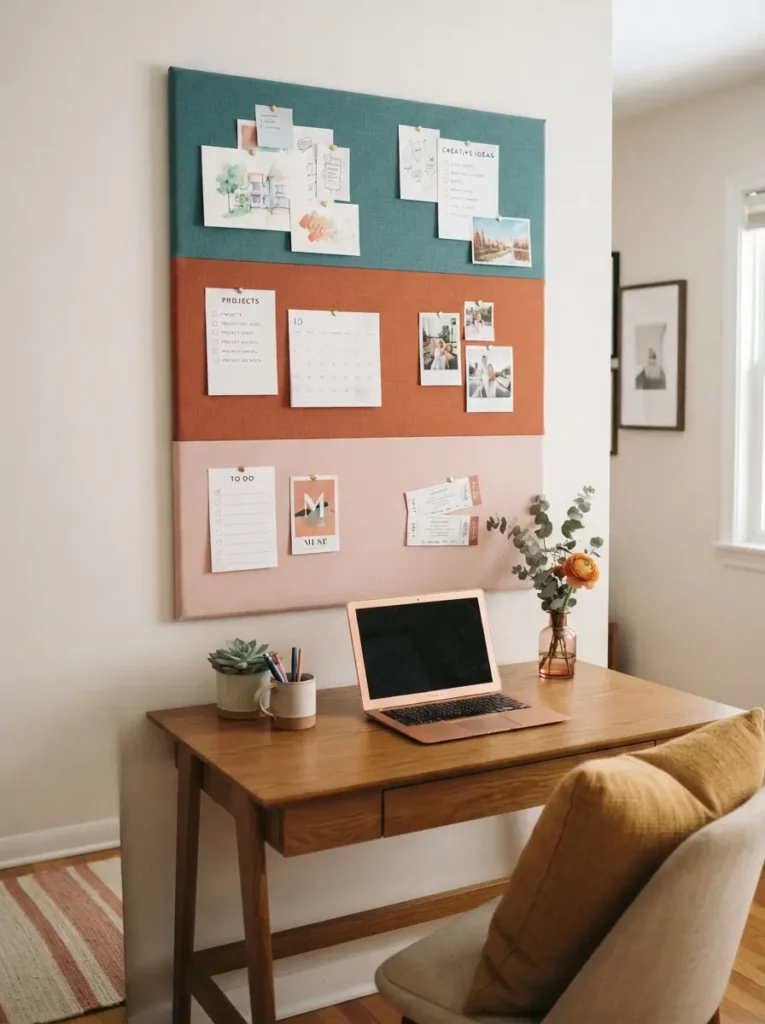
Color blocking adds energy without painting an entire wall. Divide a fabric-covered board into two or three large color zones using separate fabric panels. Teal and rust, navy and mustard, or terracotta and blush can work well when the rest of the room stays fairly neutral. Keep each color area large enough to read as a shape, then group related notes within it. Choose pins that disappear into the fabric so the color remains the main feature.
Controlled contrast makes the board a focal point while keeping the commitment low. Creative renters, students, and home workers who want more stimulation often enjoy this approach. Link the palette to Statement Wall Bold Color Designs by repeating only one board color in a chair cushion, vase, or rug stripe. Avoid using more than three strong shades, because small rooms can feel fragmented when every surface competes for attention. Soft white walls and medium-tone wood furniture usually provide enough balance for a colorful board.
Lean an Oversized Board Behind a Desk
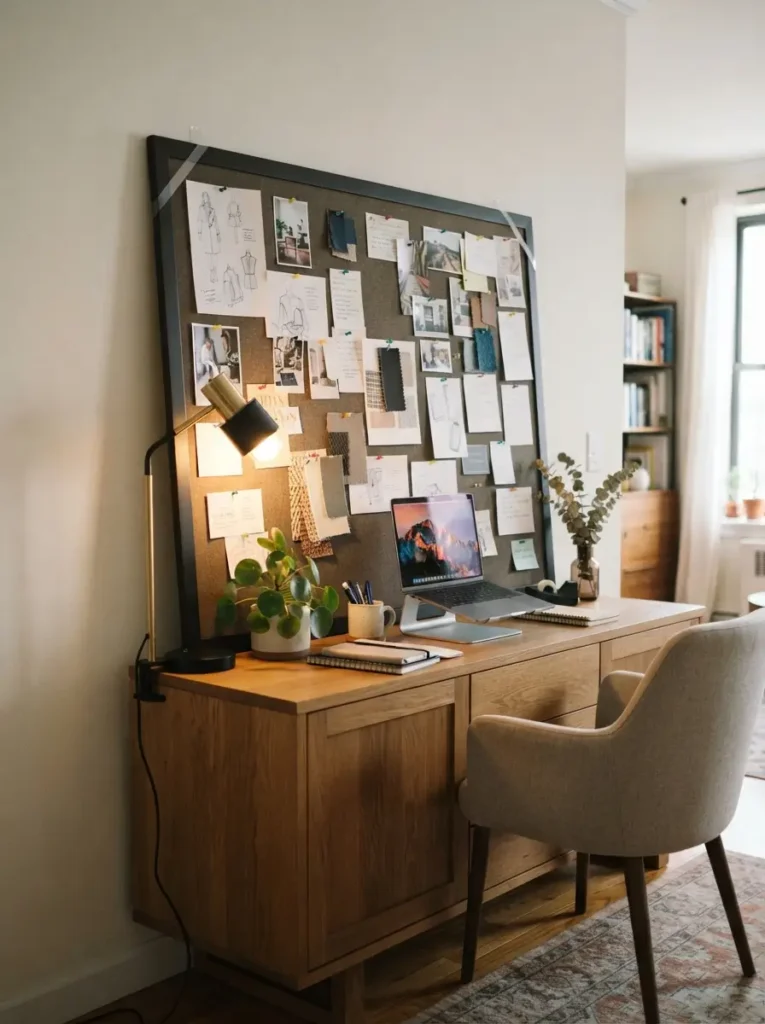
Large pinboards do not always need wall mounting. Rest an oversized framed board on a sturdy desk, low cabinet, or console, then secure it discreetly with removable anti-tip straps if possible. Choose a board that covers no more than two-thirds of the furniture width so the setup remains balanced. Leave a small gap between the board and desk accessories so papers remain easy to reach.
Leaning keeps rental walls intact and makes future rearranging simple. Creative professionals, students, and frequent movers benefit most from the flexibility. Add a compact task lamp with a 3000K to 3500K bulb, aiming the light across the board rather than directly at it to reduce glare. Floor-standing boards can also work, but they should not narrow walking paths or block power sockets, radiators, or air vents.
Common Pinboard Decorating Mistakes to Avoid
Oversizing causes many small rooms to feel crowded. Measure the furniture below the board first and choose a width between one-half and three-quarters of that piece for a balanced result. Height matters just as much. Place the center of a decorative display near eye level, while functional boards should sit where every section remains reachable. Random placement often makes a useful object look like an afterthought.
Clutter weakens both style and function. Too many paper sizes, pin colors, fonts, and unrelated objects make the board difficult to read. Set a simple rule, such as one photo size, two note colors, and one metal finish. Remove expired reminders every week and archive sentimental items elsewhere. Crowded boards also collect dust, especially when they include fabric, ribbon, and dried flowers.
Poor mounting can damage walls or create safety problems. Check the finished board weight, including frames and pinned items, before choosing removable strips or hooks. Painted brick, textured plaster, wallpaper, and recently painted walls may not work well with adhesive products. Follow curing times and test a hidden area when possible. Heavier boards should use proper anchors or lean on stable furniture with anti-tip support. Never hang a board above a crib, bed, or seating area unless the fixings are fully secure.
Weak lighting can make even a well-designed display hard to use. Direct sunlight fades photographs and fabrics, while cold 5000K bulbs can make a cozy room feel harsh. Warm 2700K light suits bedrooms and living areas, and neutral 3000K to 3500K light works better for desks and planning zones. Avoid mixing several bulb temperatures within the same small room because the wall colors may look inconsistent.
Budget-Friendly Pinboard Styling Tips
Low-cost apartment pinboard ideas start with materials already available at home. Old picture frames can hold cork sheets, fabric remnants can cover basic boards, and cardboard can support temporary paper displays when it is backed with foam board. Charity shops, office clearances, and reuse centers often sell frames, corkboards, and fabric at modest prices. Before buying anything, decide the exact wall size and function. Saving money on the wrong shape rarely helps because a board that does not fit will remain unused.
Paint can refresh damaged frames without replacing them. Sand glossy surfaces lightly, apply a suitable primer, and use leftover wall paint or a small sample pot. Cork tiles may cost less than one large board, and they are easier to transport when moving. Keep the layout simple so affordable materials look intentional. Equal spacing and repeated pin colors often improve the result more than decorative accessories.
Printable calendars, handwritten labels, and cut paper shapes provide inexpensive visual structure. Use plain card in two coordinated colors and trim every piece with a ruler and craft knife. Seasonal updates should rely on paper, photographs, and fabric scraps rather than buying new decorations each month. Storage envelopes behind the board or inside a desk drawer help you rotate items without creating waste.
Rental-friendly mounting also protects your deposit. Lightweight foam boards, felt panels, and small cork tiles often work with removable strips, while larger frames can rest on desks or shelves. Tension rods can hold hanging fabric panels inside a window recess or alcove, provided they do not block ventilation. Freestanding screens with pinboard panels are another option for open-plan studios. Always remove adhesive slowly according to the instructions rather than pulling it straight away from the wall.
Apartment Pinboard Ideas Tips for Better Results
Start with purpose before decoration. Decide whether the board will hold schedules, photographs, inspiration, children’s work, or a mixture. Mixed-use boards need clear sections, while decorative boards need more empty space. Measure the wall and furniture, then test the size with painter’s tape or newspaper before purchasing a frame. Such planning prevents the two most common errors, which are choosing a board that is too small and hanging it where nobody can comfortably use it.
Choose a restricted palette based on the room. Pull two colors from nearby furniture and add one neutral background. A navy sofa, oak table, and cream wall might lead to cork, dark blue cards, and brass pins. Small bedrooms often suit softer combinations, while work areas can handle stronger contrast. Keep at least 15 to 20 percent of the surface visible because open background makes every pinned item easier to notice.
Match the pinboard material to the activity. Cork accepts frequent pinning and works well for changing schedules. Wire grids suit clips and lightweight containers, while magnetic boards handle notes without holes. Fabric-covered foam is light and renter-friendly, though it can dent under heavy objects. Beginners should test a small sample before committing to a large wall display, especially when using adhesives or unfamiliar materials.
Plan maintenance from the beginning. Set a weekly reset time and keep only current or meaningful pieces visible. Photograph a finished arrangement before changing it if you want to recreate the layout later. Dust the frame monthly and check adhesive mounts every few weeks. Practical care keeps the wall feature safe, readable, and attractive long after the first decorating session.
Frequently Asked Questions
How Big Should a Pinboard Be in a Small Apartment?
Board size should relate to the furniture beneath it and the available wall width. Over a desk, choose a board about half to three-quarters as wide as the desktop. Above a console, leave at least 10 to 20 centimeters of open wall on each side. A4 or A3 boards suit narrow work corners, while 60 by 90 centimeters offers more planning space.
Can Renters Hang Pinboards Without Drilling?
Renters can often use removable picture strips, adhesive hooks, over-door systems, tension rods, shelf-supported boards, or leaning frames. Weight and wall finish determine which method is safe. Smooth painted walls usually accept removable strips better than textured plaster or wallpaper. Larger boards should lean on stable furniture and use an anti-tip strap when possible, especially in homes with children or pets.
Which Material Is Best for a Frequently Used Board?
Cork remains practical for frequent changes because it grips standard pushpins and recovers reasonably well after use. Dense felt works for a softer decorative finish, while magnetic steel suits people who want hole-free notes. Foam board is light and inexpensive but dents more easily. Wire mesh works best with clips rather than pins. Choose based on how often the display will change, what weight it must hold, and whether the board needs to move between rooms.
How Do I Stop a Pinboard From Looking Cluttered?
Limit the display to one purpose or divide it into clear sections. Repeat paper sizes, pin finishes, and colors so unrelated items still feel connected. Leave visible background around every cluster and remove old notes regularly. Large pieces should go on first, followed by medium and small items. Avoid placing every object at the same angle unless you want a strict grid.
Where Should I Place a Pinboard in a Studio Apartment?
Choose a wall connected to the board’s purpose. Planning boards belong near a desk or entry, while photo displays work beside a sofa, bookshelf, or dining table. Avoid narrow walkways where frames can catch clothing and do not block light switches, vents, or cabinet doors. In a studio, use the board to define a zone without adding furniture. A vertical board can mark a work corner, while a wide board above a bench can establish a dining area.
Can Pinboards Work in Bathrooms or Kitchens?
Moisture and grease can damage cork, paper, fabric, and adhesive mounts. Bathrooms with strong ventilation may support a small sealed board away from the shower, but framed prints or washable materials are often safer for Bathroom Wall Decor. Kitchens should keep boards away from sinks, kettles, and cooking zones. A magnetic board on the refrigerator or a sealed panel near the pantry usually handles everyday use better than fabric or uncovered cork.
Conclusion
Thoughtful apartment pinboard ideas can turn unused wall space into storage, planning, and personal display without making a rental feel crowded. Strong results come from matching the board to a clear purpose, choosing a scale that fits nearby furniture, and limiting colors and materials. Framed cork, soft fabric, modular tiles, photo grids, and leaning boards all offer different levels of flexibility. Renters should prioritize lightweight materials and safe mounting, while budget decorators can reuse frames, fabric, and paper they already own.
Good pinboard styling also improves with regular editing. Leave open space, remove outdated notes, check fixings, and adjust lighting so the board remains practical. Careful placement can make a desk more efficient, an entry more organized, or a bedroom more personal. Small changes in spacing, color, and maintenance often matter more than expensive materials, which makes pinboards a realistic project for beginners and experienced decorators alike.