

A small apartment can feel plain when every wall is the same color. But adding too much decor can also make the room feel crowded. That is where wallpaper works well. It gives one wall character, depth, and color without taking up any floor space.
A small apartment accent wall can help define a living room, bedroom, dining nook, entryway, or work corner. It can make a basic rental feel more personal and finished. The best part is that many wallpaper options are now removable, renter-friendly, and budget-friendly.
The key is to choose the right wall, pattern, color, and scale. A large dark print may look beautiful online, but it can overwhelm a tiny room if used in the wrong place. A soft texture, vertical stripe, or small pattern may work better in a compact apartment.
This guide shares practical wallpaper accent wall ideas for small apartments. Each idea includes why it works, where to use it, and who it suits best.
What is the best small apartment accent wall with wallpaper?
The best small apartment accent wall with wallpaper is usually the wall that naturally catches attention without blocking movement. In a living room, this is often the wall behind the sofa. In a bedroom, it is usually the wall behind the bed. In a dining nook, it can be the wall behind a small table.
For small spaces, choose wallpaper that adds interest without making the room feel tighter. Soft neutrals, thin stripes, small florals, grasscloth textures, limewash effects, and light geometric prints often work well. Removable peel-and-stick wallpaper is best for renters because it can be removed later with less risk.
A small apartment accent wall should support the room instead of fighting with it. Match the wallpaper with your furniture size, lighting, wall color, and decor style.
Use Peel and Stick Wallpaper Behind the Sofa

A sofa wall is one of the easiest places to create a small apartment accent wall. The sofa already anchors the room, so wallpaper behind it makes the seating area feel planned and complete.
This idea works because it creates a focal point without adding extra furniture. In a small apartment, every inch matters. Wallpaper gives the wall detail while keeping the floor clear.
Choose a pattern that fits your sofa style. If you have a beige, cream, gray, or white sofa, try soft botanical wallpaper, warm taupe texture, pale sage stripes, or a muted geometric print. If your sofa is already bold, use a quieter wallpaper like linen texture or subtle plaster effect.
For a rental, peel-and-stick wallpaper is the safest choice. Measure the width of your sofa first. You do not always need to cover the entire wall. Sometimes wallpapering only the area behind the sofa creates a cleaner and cheaper feature.
This idea is best for beginners because the sofa hides the lower part of the wall. Small mistakes near the base are less noticeable. You can also style the wall with two framed prints, a slim picture ledge, or a pair of plug-in sconces.
Keep lighting warm and soft. A floor lamp with a 2700K warm white bulb makes the wallpaper look cozy in the evening. Avoid very cool white bulbs because they can make beige, cream, and warm wallpaper look dull.
A common mistake is choosing a busy print behind a sofa with many patterned cushions. Keep one element simple. If the wallpaper has movement, use plain cushions. If the cushions are colorful, choose a soft textured wallpaper.
Add a Wallpaper Headboard Wall

The wall behind the bed is one of the best places for wallpaper in a small bedroom. It creates the feeling of a headboard, even if your bed frame is simple.
This small apartment accent wall works well because it draws the eye upward and makes the sleeping area feel intentional. It also helps separate the bed from the rest of the room, which is helpful in studio apartments.
For a calm bedroom, choose wallpaper in soft colors. Warm beige, dusty blue, sage green, clay, ivory, or light gray can make the room feel restful. Small florals, linen textures, watercolor patterns, and quiet arches work well.
If you do not have a headboard, wallpaper can add the missing layer. Pair it with two matching pillows, a textured throw, and simple bedside lighting. Even a basic metal bed frame can look more finished with the right wallpaper behind it.
This idea is best for renters, students, and anyone working with a small bedroom. Peel-and-stick wallpaper is useful because bedroom walls are often easier to access than kitchen or bathroom walls.
For a budget option, wallpaper only the width of the bed and leave a few inches of painted wall on both sides. This creates a panel effect and uses fewer rolls. You can frame the edges with thin renter-friendly molding strips if allowed.
Avoid very loud wallpaper if your bedroom is already small and dark. A heavy black pattern behind the bed can feel dramatic, but it may also make the room feel closed in. If you want drama, choose a deep olive, navy, or charcoal pattern with plenty of open space.
Try Vertical Striped Wallpaper for Height
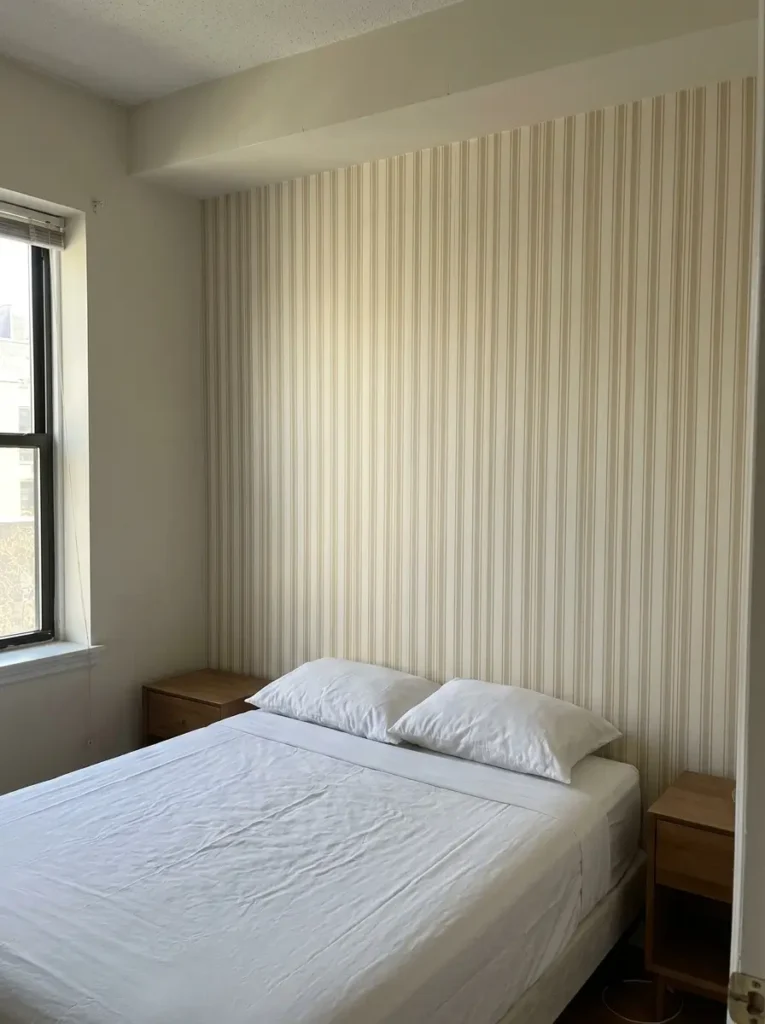
Vertical stripes are a smart choice for small apartments because they make walls feel taller. They guide the eye upward, which helps a low ceiling feel less cramped.
This idea works especially well in older apartments, basement units, and compact bedrooms. You can use thin stripes for a classic look or wider stripes for a more modern feel.
For a small apartment accent wall, choose stripes in low-contrast colors. Cream and beige, white and soft gray, pale blue and ivory, or sage and off-white are easy to live with. Strong black and white stripes can work, but they need simple furniture and good lighting.
Vertical striped wallpaper looks great behind a bed, sofa, console table, or dining bench. It also works in narrow entryways because it adds structure without needing shelves or heavy decor.
This idea is best for people who want a clean, timeless wall that will not feel dated quickly. It also suits beginners because stripes are easy to pair with furniture.
Be careful during installation. Stripes need straight alignment. Use a level and mark a light guideline before applying each strip. If the first panel is crooked, every panel after it will look off.
Pair striped wallpaper with simple furniture. A small apartment already has limited visual space. A striped wall, patterned rug, printed curtains, and busy cushions can feel too much together. Let the wallpaper lead, then keep the other pieces calm.
For lighting, stripes look better with even light. A wall washer floor lamp or two warm lamps can prevent harsh shadows. This makes the accent wall feel clean instead of visually choppy.
Choose Grasscloth Effect Wallpaper for Texture
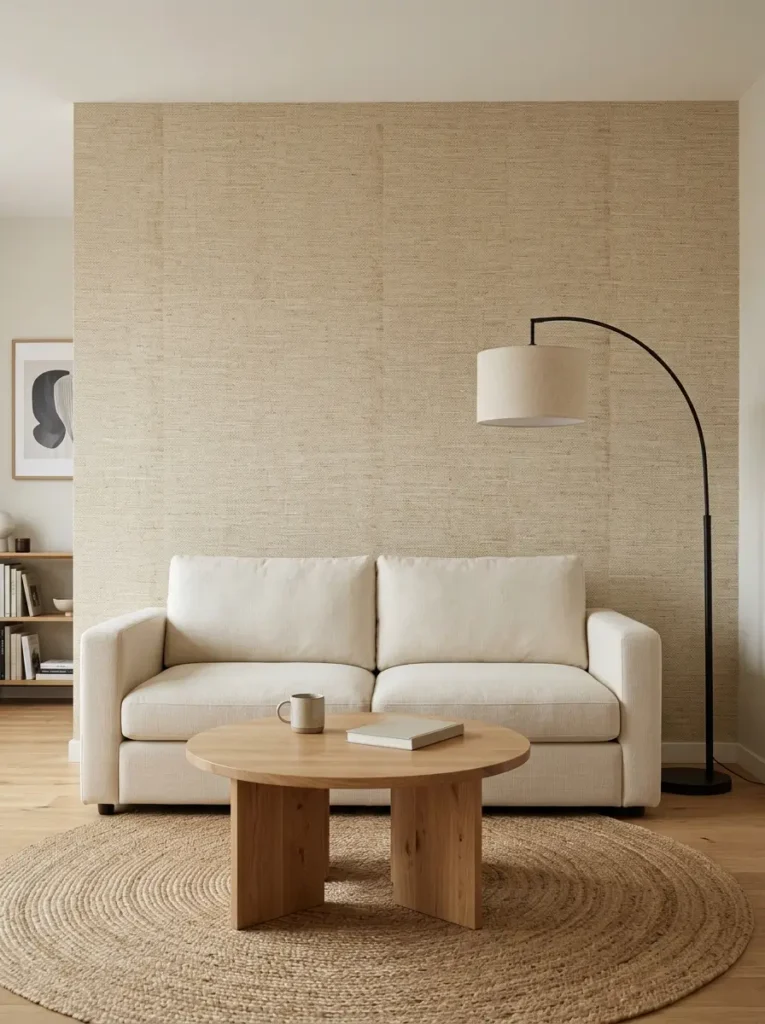
Real grasscloth can be expensive and harder to clean, but grasscloth effect wallpaper gives a similar textured look for less money. It adds warmth without using a strong pattern.
This is a good small apartment accent wall idea because texture makes a room feel layered. In small spaces, texture often works better than large prints because it adds depth without visual noise.
Grasscloth effect wallpaper looks beautiful behind a sofa, bed, desk, or dining table. Colors like oatmeal, sand, warm gray, soft olive, and tan work with many decor styles. These shades also pair well with wood furniture, black metal accents, and woven baskets.
This idea is best for renters who want a mature, calm look. It is also helpful for people who like neutral rooms but do not want plain white walls.
Use this wallpaper when your furniture is simple. For example, a cream sofa, round wood coffee table, jute rug, and grasscloth wall can make a tiny living room feel warm and finished. Add one black floor lamp for contrast.
If your apartment has little natural light, avoid dark brown grasscloth wallpaper. It may make the room feel smaller. Choose a lighter woven texture instead.
A useful budget tip is to wallpaper a small wall section instead of the entire wall. Grasscloth effect patterns look intentional even in narrow areas, such as behind a desk or in a reading corner.
Make sure the wallpaper pattern repeats softly. Some printed textures have obvious seams. Read reviews before buying, and order a sample if possible. A small sample can save you from buying rolls that look flat or fake in person.
Create a Dining Nook With Wallpaper

Many small apartments do not have a separate dining room. A wallpaper accent wall can help a dining nook feel like its own zone, even if it sits beside the living room or kitchen.
This idea works because wallpaper creates visual separation. You do not need a divider, shelf, or screen that blocks walking space. The wall itself defines the dining area.
Choose wallpaper that feels fresh but not distracting. Small check patterns, soft botanical prints, faded tile designs, and warm plaster textures work well. If your table is tiny, avoid oversized patterns that make the wall feel too heavy.
This small apartment accent wall idea is best for people with a small round table, wall-mounted drop-leaf table, or narrow dining bench. It also works well in studio apartments where one room has to serve many purposes.
For a practical setup, keep the furniture slim. A round table with two armless chairs helps movement. A bench against the wallpaper wall can save space. Add a small pendant light or plug-in wall light above the table if possible.
Warm lighting matters in a dining nook. A 2700K bulb makes food and wallpaper colors look more inviting. Avoid bright bluish light because it can make the corner feel cold.
If you rent, use removable wallpaper and lightweight art. Do not use heavy shelves unless you are allowed to drill. A simple framed print or small mirror can sit on the wallpaper without making the wall busy.
A common mistake is using wallpaper that looks too much like kitchen tile in the wrong scale. If the pattern is too realistic but low quality, it can look cheap. Choose designs that feel intentional, not like a fake backsplash.
Use Arch Wallpaper for a Soft Focal Point
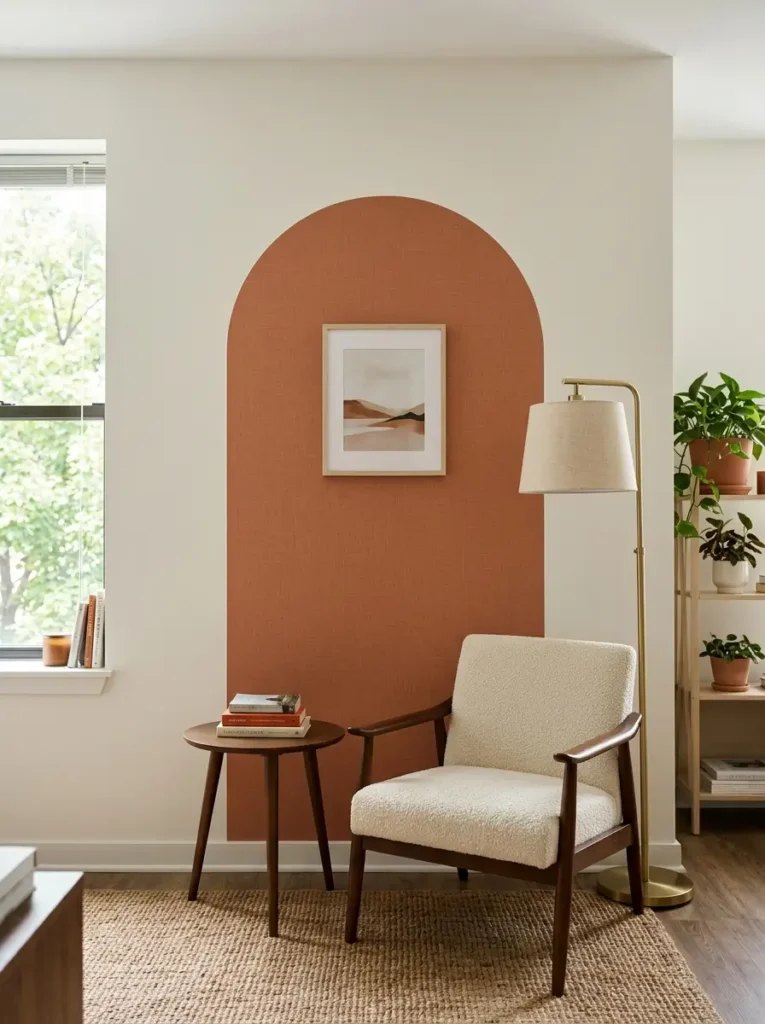
Arch wallpaper or arch-shaped wallpaper panels can create the look of painted architecture. This is helpful in small apartments that lack built-in features.
This idea works because the curved shape softens boxy rooms. Many apartments have plain square walls, sharp corners, and basic finishes. An arch adds movement without needing bulky decor.
You can use arch wallpaper behind a bed, reading chair, console table, or desk. It works especially well when you want a focal point but do not want to wallpaper the full wall.
Choose colors that blend with the room. Terracotta, beige, olive, dusty rose, soft gray, or muted blue can work nicely. For a calm style, choose a plain arch with subtle texture. For a playful style, choose a patterned arch with small shapes or floral details.
This small apartment accent wall idea is best for renters and budget decorators. Since you cover less wall space, you spend less on wallpaper. It also feels less risky than applying wallpaper across a full wall.
Place furniture in front of the arch to make it feel grounded. A small desk, bed, bench, or accent chair gives the shape a purpose. Without furniture, the arch can look random.
If you want to hang art inside the arch, choose one simple piece. Too many small frames can break the shape and make the wall look cluttered.
Installation needs care. Measure the center point before applying the arch. If it sits too far left or right behind the furniture, the room can feel unbalanced. Use painter’s tape first to test the size and placement.
Try a Soft Botanical Wallpaper
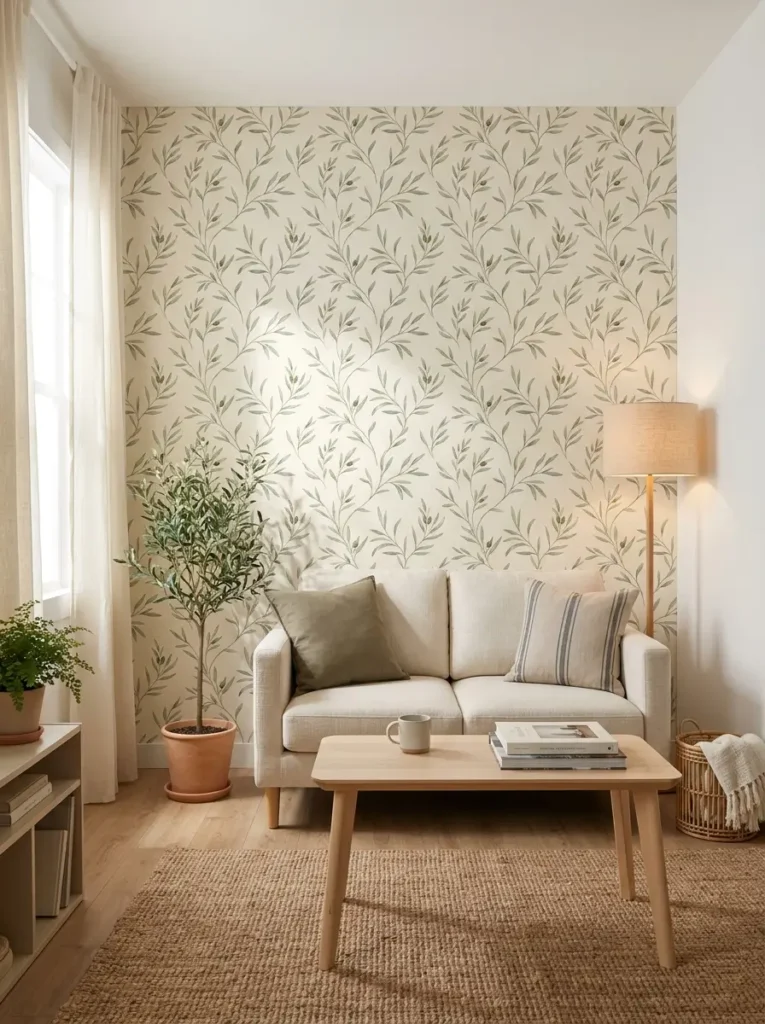
Botanical wallpaper is popular because it brings a natural feeling indoors. In a small apartment, the right botanical print can add life without needing many plants or accessories.
This idea works because leaf and branch patterns add movement. They can make a plain room feel softer, especially if the apartment has hard flooring, white walls, and simple furniture.
For small spaces, choose botanical wallpaper with breathing room. Look for thin branches, small leaves, muted vines, or watercolor greenery. Avoid huge tropical leaves unless the room has enough light and very simple furniture.
Soft green, beige, cream, olive, and blue-gray botanical prints work well in living rooms and bedrooms. Pair them with natural materials like wood, rattan, cotton, linen, and ceramic decor.
This idea is best for home decor lovers who want a fresh look but do not want a loud feature wall. It also suits people who like a calm, organic style.
For a rental-friendly approach, use peel-and-stick wallpaper behind a sofa or bed. Add one or two real or faux plants nearby, but do not overdo it. The wallpaper already brings a nature-inspired detail.
A budget-friendly example is a sage vine wallpaper behind a small cream sofa. Add a light wood coffee table, ivory curtains, and a warm floor lamp. The room feels styled without needing expensive furniture.
Be careful with scale. If the leaves are too large, they can shrink the room visually. If the print is too tiny, it may look busy from a distance. A medium-small pattern usually works best.
Add Removable Mural Wallpaper on One Wall
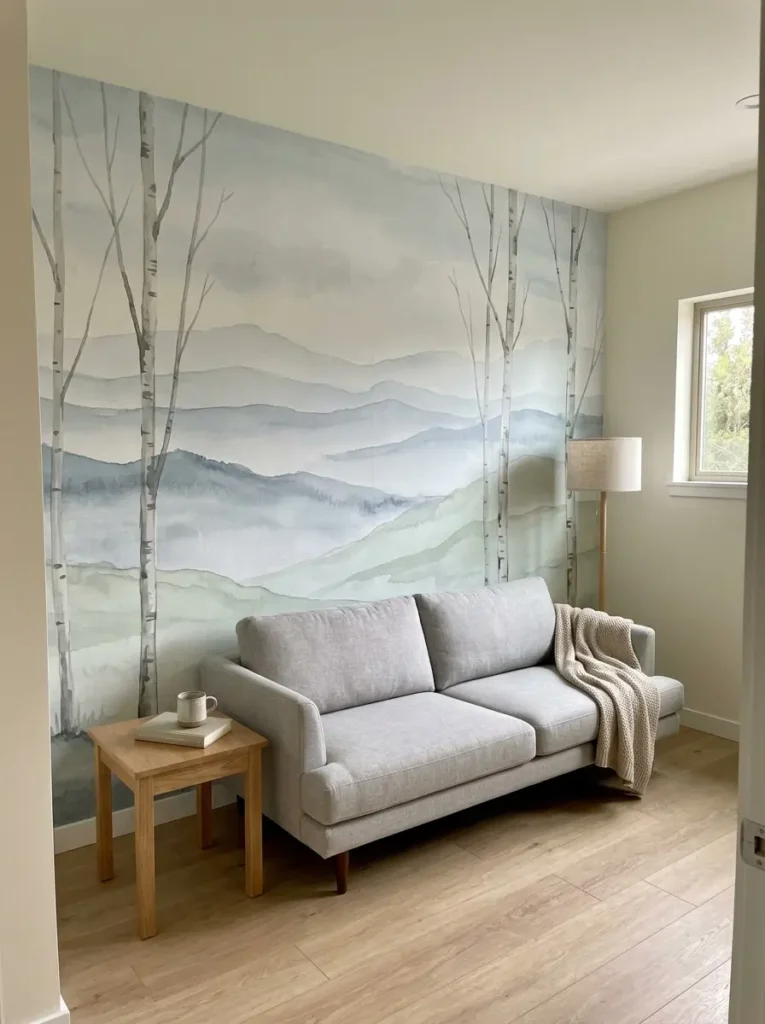
Mural wallpaper can make a small apartment feel special, but it needs the right design. A mural is usually one large image or scene instead of a repeating pattern.
This small apartment accent wall idea works when you want strong impact with fewer decor pieces. A soft landscape, abstract wash, city sketch, or watercolor wall can replace the need for several frames.
For small spaces, choose murals with depth and light colors. Misty hills, soft clouds, pale abstract shapes, and faded botanical scenes can make the wall feel open. Dark murals can work, but they need good lighting and simple furniture.
This idea is best for people who want a statement wall in a studio, bedroom, or living room. It also helps if you do not own much wall art.
Use mural wallpaper on the most visible wall, not every wall. Behind a sofa or bed is usually best. Keep nearby furniture low so the mural can be seen clearly.
If your apartment has low ceilings, choose a mural with vertical movement. Trees, tall grasses, arches, or upward brush strokes can help the room feel taller.
For renters, removable mural panels are available, but check the wall texture first. Peel-and-stick wallpaper may not hold well on rough, dusty, or freshly painted walls. Clean the wall and test a sample before applying a full mural.
A common mistake is choosing a mural that is too realistic for the furniture style. For example, a dramatic forest mural may clash with bright modern furniture. Choose a design that supports your room’s colors and mood.
Use Geometric Wallpaper in Small Doses
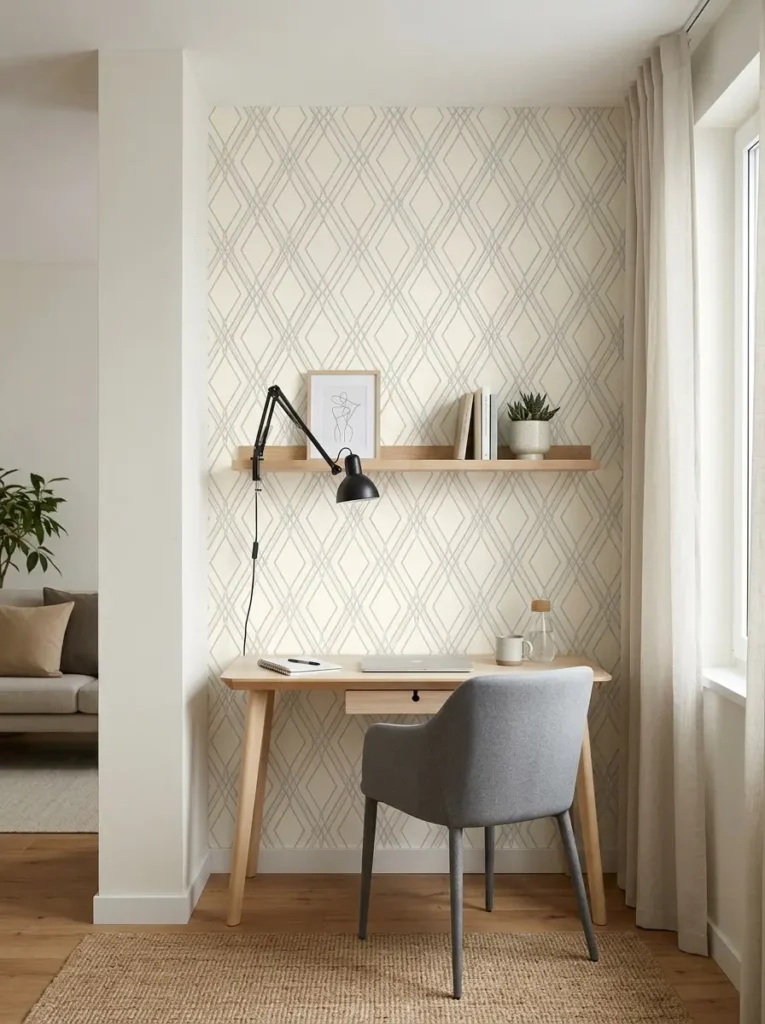
Geometric wallpaper can make a small apartment feel modern and organized. It works well when the pattern is controlled and the colors are not too harsh.
This idea works because geometric prints add rhythm. They can make a plain wall feel designed, especially in a room with simple furniture and clean lines.
For a small apartment accent wall, choose small or medium geometric patterns. Soft arches, thin lines, diamonds, grids, scallops, and simple blocks can work well. Avoid large high-contrast patterns unless you want a bold look.
Colors matter. Try warm white and tan, soft gray and cream, beige and black, olive and ivory, or muted blue and white. These combinations feel stylish without shouting.
This idea is best for modern apartments, small home offices, and living rooms with minimal furniture. It also works well behind a desk because the pattern can make the work area feel defined.
If you have a small desk in your living room, wallpaper the wall behind it. Add a slim desk, floating shelf, and task lamp. The wallpaper tells the eye that this is a work zone, not random furniture pushed against a wall.
Use simple decor with geometric wallpaper. A plain rug, solid cushions, and clean curtains will keep the room balanced.
A budget tip is to use geometric wallpaper inside a wall panel or alcove. Small areas often need only one roll. This gives a custom look without a full-wall cost.
Try Faux Limewash Wallpaper
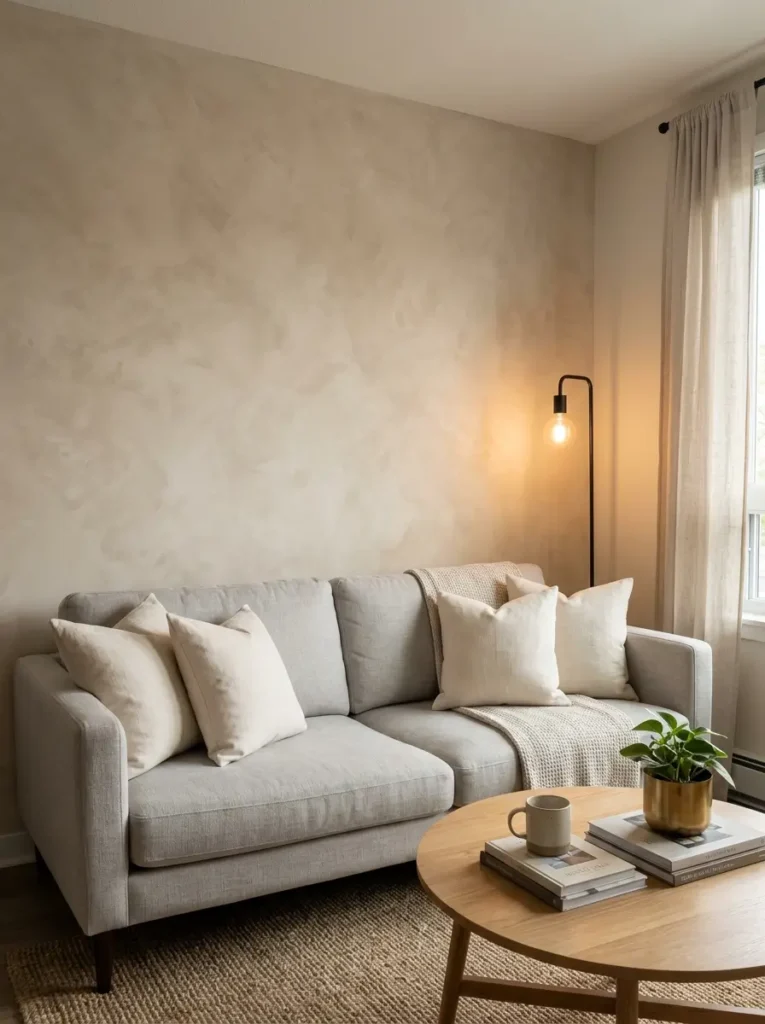
Limewash walls have a soft, cloudy texture. Real limewash paint can be beautiful, but renters may not be able to use it. Faux limewash wallpaper gives a similar effect without permanent changes.
This small apartment accent wall idea works because it adds depth while staying quiet. It is ideal for people who want texture but do not want obvious patterns.
Choose warm beige, clay, soft gray, ivory, greige, or muted olive. These colors make a small room feel layered and calm. They also pair well with wood, boucle, linen, black metal, and brass finishes.
Faux limewash wallpaper works behind sofas, beds, media consoles, and dining benches. It is especially useful when your apartment has flat white walls and needs warmth.
This idea is best for beginners because the pattern is forgiving. Slight alignment issues are less noticeable than with stripes or grids. It also works well for renters who want a grown-up look.
For example, use warm beige limewash wallpaper behind a gray sofa. Add cream pillows, a black floor lamp, and a round wood coffee table. The wall adds softness without making the room busy.
Lighting makes a big difference. Warm lamps create gentle shadows that bring out the texture. Use bulbs around 2700K to 3000K. Avoid harsh overhead lighting if you want the wall to feel soft.
Do not pair limewash wallpaper with too many other textured patterns. If you use a jute rug, boucle chair, and textured wallpaper, keep the colors close so the room feels calm, not crowded.
Wallpaper the Entryway Wall

Small apartments often open straight into the living room. A wallpapered entryway wall can create a clear welcome zone without adding bulky furniture.
This idea works because it gives the entry a purpose. Even a narrow strip of wallpaper near the door can make the apartment feel more organized.
Choose durable, wipeable wallpaper if this area gets touched often. Entryways collect bags, shoes, coats, keys, and fingerprints. Vinyl peel-and-stick wallpaper can be easier to clean than delicate paper.
Good patterns for entryways include small stripes, soft tile prints, simple botanicals, tiny checks, or textured neutrals. Darker colors can work here because the area is small, but balance them with a mirror or good lighting.
This small apartment accent wall idea is best for renters who want personality near the door. It also suits people who do not have a proper foyer.
Add a narrow console, wall hooks, or a slim shoe cabinet if space allows. Keep furniture shallow so you do not block walking space. A mirror on the wallpaper can bounce light and make the entry feel larger.
For budget decorating, wallpaper only the wall section behind hooks or above a shoe cabinet. This small area can still feel intentional.
A common mistake is using delicate wallpaper where bags and coats rub daily. If you know the wall will get heavy use, choose a stronger material or use wallpaper above chair-rail height only.
Keep the entry color connected to the living room. If your living room has beige and green, choose entry wallpaper with one of those shades. This helps the apartment flow instead of feeling chopped into pieces.
Add Wallpaper Behind Open Shelves

Wallpaper behind open shelves can turn a plain storage wall into a styled feature. It works well in living rooms, kitchens, bedrooms, and small home offices.
This idea works because shelves can look messy against a plain wall. Wallpaper gives the background a finished layer and makes simple objects look more arranged.
Choose subtle wallpaper if your shelves hold many items. Grasscloth effect, linen texture, small dots, pale stripes, or soft plaster patterns work well. If the shelves are minimal, you can use a slightly stronger print.
This small apartment accent wall idea is best for people who already have shelves or bookcases. It is also useful for renters because you can wallpaper the back of a freestanding bookcase instead of the actual wall.
For a budget-friendly version, apply peel-and-stick wallpaper to the back panel of a bookshelf. This gives the look of a wallpaper accent wall without touching the rental wall.
Style the shelves with fewer pieces. Use books, baskets, small frames, and ceramics. Leave empty space between items. If every shelf is packed, the wallpaper will make the area feel too busy.
Color coordination helps. If the wallpaper has sage green, repeat sage in one vase or book cover. If it has tan, use wood frames or woven baskets. Small repeats make the design feel thoughtful.
Avoid tiny high-contrast patterns behind cluttered shelves. They can create visual noise. The goal is to make storage look calmer, not more crowded.
Use Wallpaper to Frame a Work From Home Corner

Many small apartments now need a work area, even when there is no separate office. Wallpaper can help turn a corner desk into a clear workspace.
This idea works because it creates a visual boundary. Your desk feels separate from the sofa, bed, or dining area. That can make the room feel more organized.
Choose wallpaper that helps you focus. Soft grids, pale stripes, muted geometrics, linen textures, or gentle abstract patterns work well. Avoid overly busy prints behind your screen because they can distract you during work.
This small apartment accent wall idea is best for remote workers, students, and anyone using a desk in a living room or bedroom.
For a practical setup, keep the wallpaper area slightly wider than the desk. This creates a framed zone. Add a slim desk, comfortable chair, small task lamp, and cable management. Keep the floor clear so the corner does not feel cramped.
Lighting should be functional. Use a task lamp with a warm white or neutral white bulb around 3000K. This keeps the desk bright without feeling too cold.
If you rent, use removable wallpaper or a wallpapered corkboard panel. You can also apply wallpaper to a large foam board and place it behind the desk. This gives a similar look without attaching anything permanent to the wall.
A common mistake is choosing wallpaper only for photos and not for daily use. If you sit there every day, pick a pattern you can look at comfortably for hours.
Try Dark Wallpaper on a Small Feature Wall
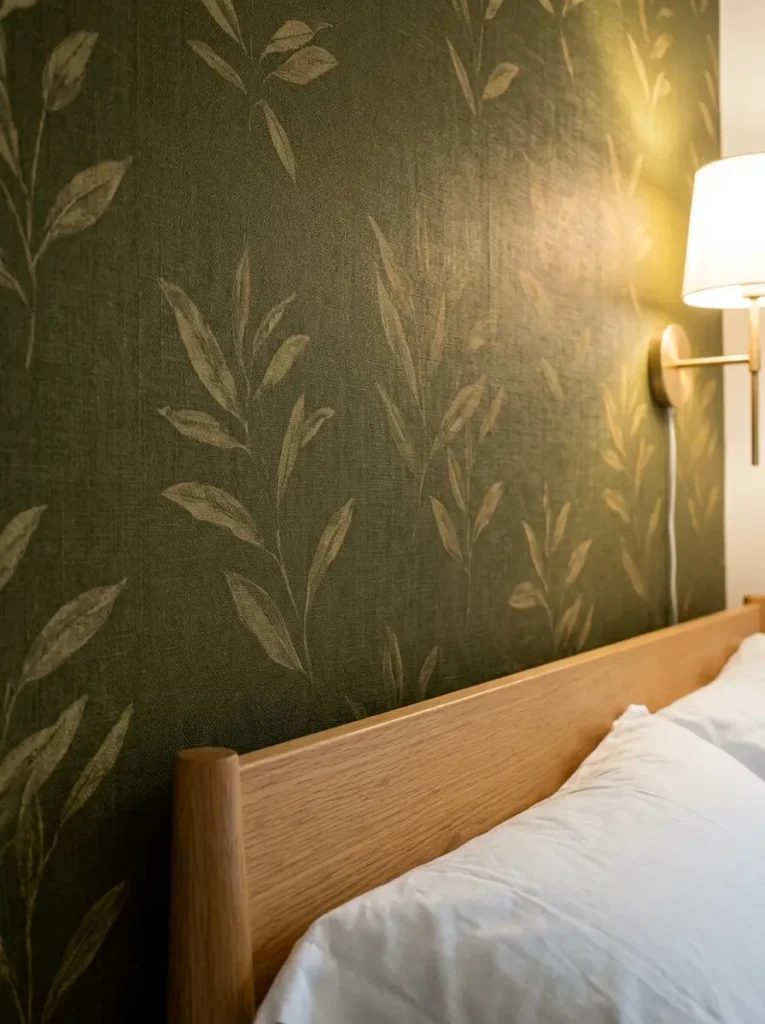
Dark wallpaper can work in a small apartment when used carefully. It can add depth, contrast, and a cozy feeling.
This idea works because dark colors can make one wall recede visually. This can create depth, especially behind a bed, sofa, or media console. The key is to use dark wallpaper on one focused wall, not every wall.
Good dark wallpaper colors include charcoal, deep olive, navy, espresso, plum, or black with a soft texture. Choose patterns with some negative space. A dark wallpaper with thin gold lines, muted leaves, or subtle linen texture can feel rich without being too heavy.
This small apartment accent wall idea is best for people who already have good natural light or enough lamps. It also suits bedrooms, TV walls, and evening-focused living rooms.
Pair dark wallpaper with lighter furniture. A cream sofa, white bedding, light wood nightstands, or pale curtains can balance the wall. Add warm lighting to prevent the room from feeling flat.
For example, use deep olive botanical wallpaper behind a bed with white bedding and walnut side tables. Add two warm plug-in sconces. The wall feels cozy, but the bedding keeps the room bright.
Avoid dark wallpaper in a very narrow hallway unless you have strong lighting. It can make the space feel tighter. If you want drama in an entry, try dark wallpaper on a small upper section with a mirror.
A common mistake is using dark wallpaper with dark furniture and no contrast. In small apartments, contrast helps the eye read the room. Add light textiles, reflective accents, or warm wood.
Use Wallpaper Panels Instead of a Full Wall
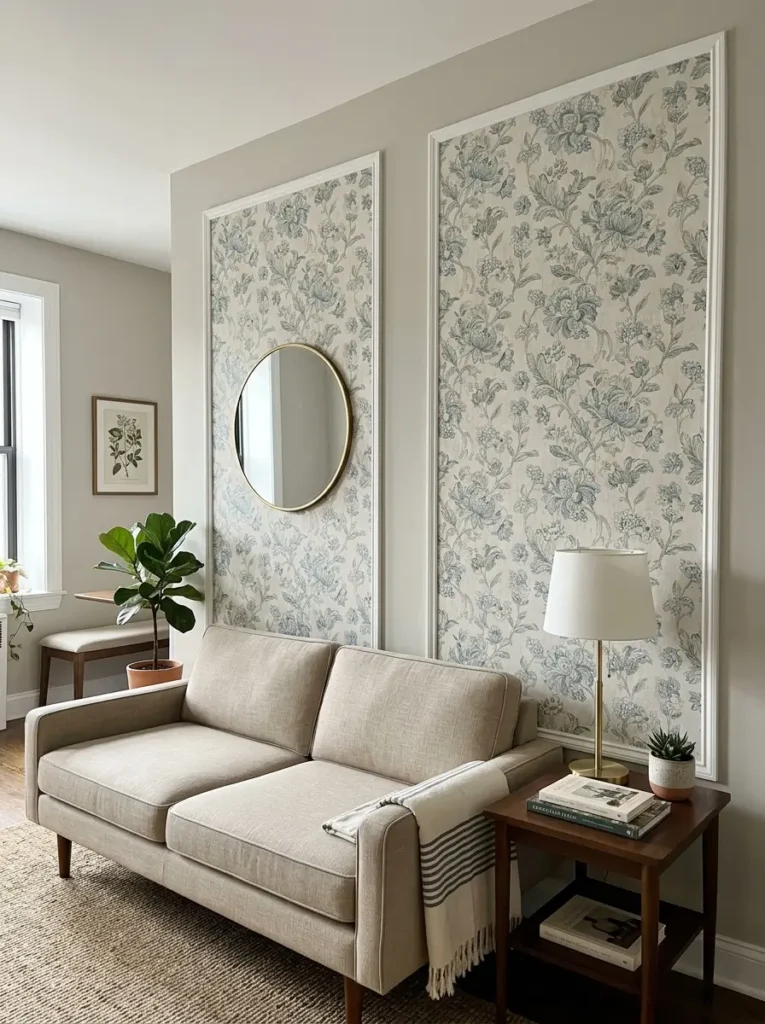
Wallpaper panels are a smart choice when you want an accent wall but do not want to cover a large area. You can create one, two, or three framed wallpaper sections.
This idea works because it gives structure and saves money. It also feels more custom than a full wallpaper wall in some rooms.
You can create panels with peel-and-stick wallpaper and lightweight trim, or simply leave clean wallpaper edges. Use panels behind a sofa, bed, console, dining bench, or desk.
This small apartment accent wall idea is best for renters, beginners, and budget decorators. It uses less material and feels easier to remove later.
Choose wallpaper that looks good in a framed shape. Florals, toile, grasscloth effect, stripes, and soft geometric patterns work well. Avoid designs that need a full wall to show the pattern properly.
For a classic look, create two tall panels behind a sofa and place a small table lamp on one side. For a bedroom, create one wide panel behind the bed to mimic a headboard.
Measure carefully before you start. The panels should line up with furniture. If the sofa is 72 inches wide, a 60-inch wide wallpaper panel centered behind it can look balanced. Too narrow, and it may feel accidental.
A budget tip is to buy one roll of higher-quality wallpaper and use it as panels instead of buying several cheap rolls for a full wall. The smaller area can look more refined.
Common Mistakes to Avoid
One common mistake is choosing the wrong wall. The best accent wall is usually the one that already has a purpose. Behind a sofa, bed, dining table, desk, or console is often better than a random side wall.
Another mistake is using a pattern that is too large for the room. Large prints can work, but they need enough blank space around them. In a tiny room with lots of furniture, a medium or small pattern is often easier.
Many beginners also ignore lighting. Wallpaper changes throughout the day. A beige wallpaper may look warm in sunlight but gray under cool bulbs. Test a sample during morning, afternoon, and evening before buying full rolls.
Do not mix too many patterns. Wallpaper, printed rugs, patterned curtains, and colorful cushions can compete in a small apartment. Let one pattern lead and keep the rest simpler.
Another issue is poor installation. Crooked panels, visible seams, and bubbles can make even expensive wallpaper look messy. Clean the wall, use a level, smooth slowly, and do not rush corners.
Renters should avoid wallpaper without checking removability. Some peel-and-stick wallpaper can damage weak paint. Test a small hidden area first. Also avoid applying wallpaper to damp, textured, or dusty walls.
Do not forget scale with furniture. A wallpaper wall behind a tiny sofa may feel too strong if the pattern is heavy. Balance it with furniture size, art, curtains, and lighting.
Budget Friendly Wallpaper Tips
You do not need to wallpaper a full wall to get a strong result. Use wallpaper behind one furniture piece, inside an alcove, or as a framed panel. Smaller areas cost less and are easier to install.
Buy samples before buying rolls. A sample is cheaper than wasting money on wallpaper that looks wrong in your apartment. Check the color in natural light and at night.
Look for removable wallpaper during sales. Many home decor stores discount seasonal patterns. Neutral textures, stripes, and simple botanicals are usually safer buys than trendy prints.
Use wallpaper on furniture instead of walls. The back of a bookcase, the front of drawer panels, or a small cabinet can become a mini accent feature. This is useful for renters who cannot change walls.
Mix wallpaper with paint. Paint most walls in a soft neutral, then use wallpaper on one wall only. Warm white, ivory, greige, pale gray, and soft beige are easy base colors.
Choose simple patterns if you plan to keep the look for years. Trendy wallpaper may feel exciting now, but soft stripes, grasscloth effects, and limewash textures usually last longer.
Measure before buying. Wallpaper waste gets expensive. Add a little extra for pattern matching, but do not guess blindly. Check roll width, pattern repeat, and wall height.
Small Apartment Accent Wall Tips
Start with the room’s main function. A small apartment accent wall should support how you live. A sofa wall should help the living area feel cozy. A bed wall should feel calm. A desk wall should help you focus.
Use color carefully. Light colors can make a room feel open, while dark colors add depth. Neither is wrong. The best choice depends on your light, furniture, and how you want the space to feel.
Match the pattern scale to the room. Small patterns work well in tight spaces. Medium patterns add interest without feeling too loud. Large patterns need more breathing room.
Keep walking paths clear. Wallpaper should not encourage you to add too much furniture. In small apartments, a clear path matters more than extra decor.
Repeat one wallpaper color somewhere else in the room. If your wallpaper has sage green, add a sage pillow or small vase. If it has beige, use a beige throw or lampshade. This makes the room feel connected.
Think about the view from other rooms. In a studio apartment, you may see the wallpaper from the bed, kitchen, and entry. Choose something you enjoy from every angle.
Use mirrors carefully. A mirror near wallpaper can reflect the pattern and make the room feel busier. This can look great with subtle wallpaper, but too much with bold prints.
Choose renter-friendly tools when needed. Peel-and-stick wallpaper, removable hooks, plug-in sconces, command strips, and lightweight frames can help you decorate without major changes.
FAQs
Is wallpaper good for a small apartment accent wall?
Yes, wallpaper is good for a small apartment accent wall because it adds color, texture, and pattern without using floor space. The best choices are removable wallpaper, subtle textures, soft stripes, small botanicals, and low-contrast patterns.
Which wall should be the accent wall in a small apartment?
Choose the wall that already anchors the room. In a living room, use the wall behind the sofa. In a bedroom, use the wall behind the bed. In a dining nook, use the wall behind the table. This makes the accent wall feel natural.
What wallpaper pattern makes a small room look bigger?
Vertical stripes, soft textures, pale botanicals, and light geometric patterns can help a small room feel larger. Wallpapers with open space and gentle colors usually work better than dense, dark, high-contrast prints.
Can renters use wallpaper for an accent wall?
Yes, renters can use peel-and-stick removable wallpaper, but they should test a small area first. Some walls with weak paint or texture may not handle removal well. Always clean the wall before applying wallpaper.
Should a small apartment accent wall be dark or light?
Both can work. Light wallpaper can make the room feel airy, while dark wallpaper can add depth and warmth. In very small or dark rooms, lighter wallpaper is usually safer. Dark wallpaper works best with good lighting and light furniture.
How can I make wallpaper look expensive on a budget?
Use wallpaper in a smaller, focused area like behind a bed, sofa, desk, or inside panels. Choose timeless patterns such as grasscloth effect, linen texture, soft stripes, or limewash designs. Good lighting and simple styling also make wallpaper look more polished.
Conclusion
A small apartment accent wall can change how your space feels without adding bulky furniture or expensive decor. Wallpaper is especially useful because it brings color, texture, and personality to one focused area.
The best wallpaper accent wall starts with the right location. Behind a sofa, bed, dining table, desk, or entryway console usually works well. These walls already have a purpose, so the wallpaper feels intentional.
Choose patterns that match your space, not just your saved inspiration photos. Soft stripes can add height. Grasscloth effect wallpaper can add warmth. Botanical prints can soften a plain room. Dark wallpaper can add depth when balanced with light furniture and warm lamps.
For renters, peel-and-stick wallpaper is the most practical choice. For budget decorators, panels, small sections, and furniture-backed wallpaper can create a stylish result for less money.
A small apartment does not need a lot of decor to feel finished. One well-chosen wallpaper wall can define the room, support your furniture layout, and make everyday living feel more comfortable.