
A rental living room can feel hard to decorate. You want it to look warm, personal, and finished, but you also want your security deposit back. That means no damaged walls, no risky drilling, and no changes your landlord may question later.
The good news is that renter friendly living room decor can still feel stylish and practical. You do not need permanent paint, built-in shelves, or expensive furniture to make your space feel better. Small changes can make a big difference when you choose the right colors, lighting, layout, storage, and removable materials.
This guide shares simple living room decor ideas that work well for renters, apartment dwellers, and beginners. Every idea focuses on damage-free updates, budget-friendly choices, and realistic styling that you can actually use in a small or medium living room.
What is renter friendly living room decor
Renter friendly living room decor means decorating your living room in ways that do not cause permanent damage. It includes removable wallpaper, washable rugs, plug-in lighting, freestanding storage, no-drill curtains, peel-and-stick details, and furniture layouts that make the space feel more useful.
The best renter friendly living room decor works because it improves the room without changing the structure. You can add color, texture, comfort, and storage while keeping walls, floors, and fixtures safe. This approach is best for renters, students, apartment owners, and anyone who wants flexible decor that can move with them.
Use removable wallpaper for one accent wall

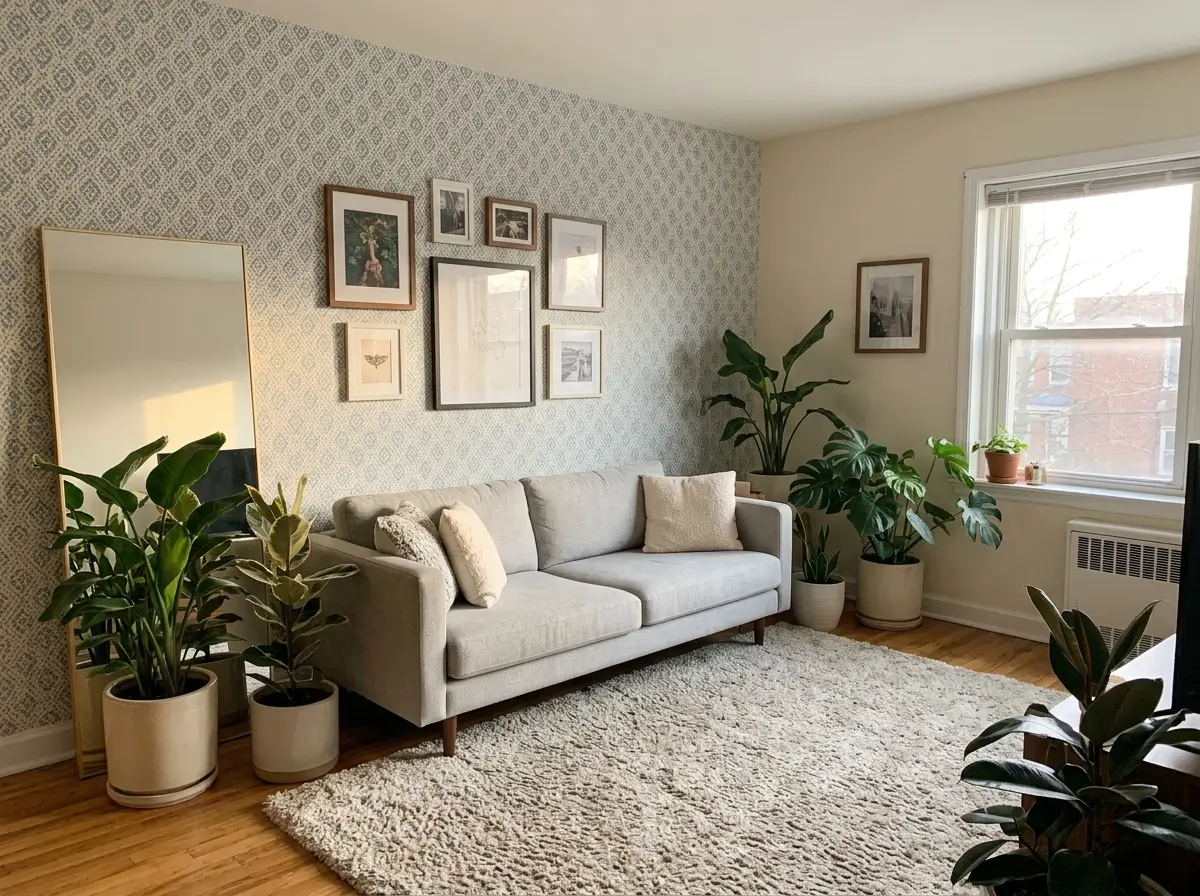
Removable wallpaper is one of the easiest ways to change a plain rental living room without paint. It works well behind a sofa, TV console, reading chair, or dining corner. Choose soft patterns if your room is small. Warm beige, muted sage, pale blue, soft gray, or cream-based prints can add interest without making the space feel crowded.
This idea works because it gives the room a clear focal point. A focal point helps your furniture arrangement feel intentional. For example, if your sofa sits against a blank white wall, a peel-and-stick linen texture or small botanical print can make that wall feel designed. It is best for renters who want color but cannot paint.
Before applying removable wallpaper, clean the wall and test one small piece first. Some textured walls do not hold peel-and-stick paper well. Avoid very cheap wallpaper with strong adhesive because it may peel paint during removal. If you are nervous, use wallpaper only inside framed panels or behind open shelves for a smaller update.
Add peel-and-stick trim to create wall panels

Peel-and-stick trim can help you create a panel-style wall without nails or woodwork. You can use lightweight adhesive molding strips to form simple rectangles behind the sofa or around a TV area. Keep the layout clean and symmetrical so the wall looks planned instead of busy.
This idea works because wall panels add depth to flat rental walls. They make basic white walls look more finished without needing permanent carpentry. For a soft living room style, use white trim on white walls. For a warmer look, use beige or greige removable wallpaper inside each panel. This is best for renters who like a classic or modern style.
Measure carefully before you apply anything. Use painter’s tape to map out the panel shapes first. This helps you check spacing before the adhesive touches the wall. A common mistake is making panels too small or too close together. Leave enough empty space so the design can breathe.
Choose a large rug to hide plain flooring

Rental floors are not always attractive. You may have cold tile, old laminate, scratched wood, or carpet you do not love. A large rug can cover most of the visible floor and make the living room feel softer. In small apartments, a rug also helps define the seating area.
This idea works because rugs add color, comfort, and visual structure. For most living rooms, the front legs of the sofa and chairs should sit on the rug. A 5×7 rug often looks too small under a full sofa, while an 8×10 rug usually works better in medium rooms. For narrow apartments, try a 6×9 rug and keep it centered under the coffee table.
Choose low-pile or washable rugs if you eat, work, or have pets in the living room. Warm neutral rugs with small patterns hide dust better than flat white rugs. This tip is best for renters with unattractive floors or open-plan spaces. Avoid rugs that are too thick near doors because they can block movement.
Use no-drill curtain rods for softer windows

Curtains can make a rental living room feel more complete. They soften hard window frames, reduce glare, and add height to the room. If you cannot drill, use tension rods, twist-and-fit rods, magnetic rods for metal frames, or adhesive curtain rod brackets designed for lightweight curtains.
This idea works because fabric changes how the room feels without changing the window itself. Hang curtains close to the ceiling when possible, and let them reach the floor. This makes the room look taller. For small living rooms, choose light fabrics like linen-look polyester, cotton blends, or sheer panels in warm white, oatmeal, taupe, or soft gray.
This tip is best for renters with bare windows, vertical blinds, or harsh daylight. Keep the curtains lightweight if you use adhesive brackets. Heavy blackout curtains may pull the brackets down. If you need privacy, layer sheer curtains with a removable privacy film on the glass instead of using bulky fabric.
Add plug-in wall sconces instead of hardwired lights
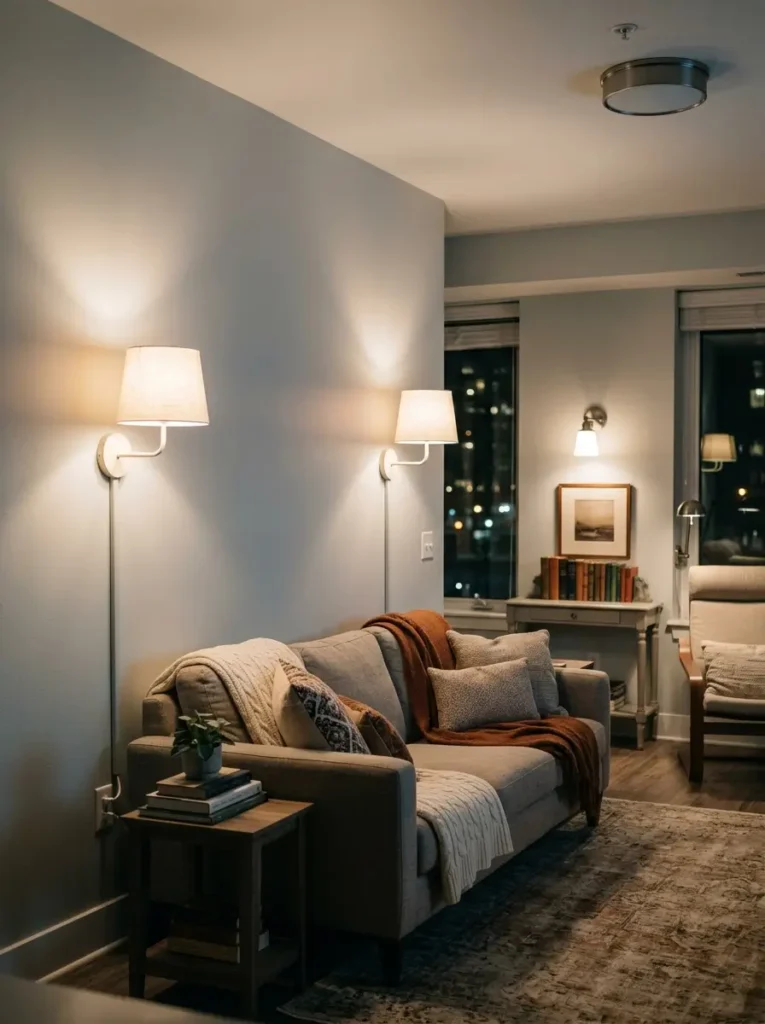
Many rental living rooms have one ceiling light that feels too harsh. Plug-in wall sconces add better lighting without electrical work. You can place one on each side of the sofa, beside a reading chair, or above a small console table. Use cord covers with removable adhesive if you want a cleaner look.
This idea works because layered lighting makes a room more comfortable. A single overhead bulb creates shadows and glare. Plug-in sconces add light at eye level, which feels softer and more useful. Choose warm white bulbs around 2700K to 3000K for relaxing evenings. For reading corners, a 3000K bulb gives clear light without feeling too cold.
This tip is best for renters who want a cozy living room without hiring an electrician. Pick sconces with fabric, frosted glass, or metal shades that direct light gently. Avoid exposed bright bulbs near eye level. They may look trendy online, but they can feel uncomfortable during daily use.
Style removable picture ledges instead of gallery walls
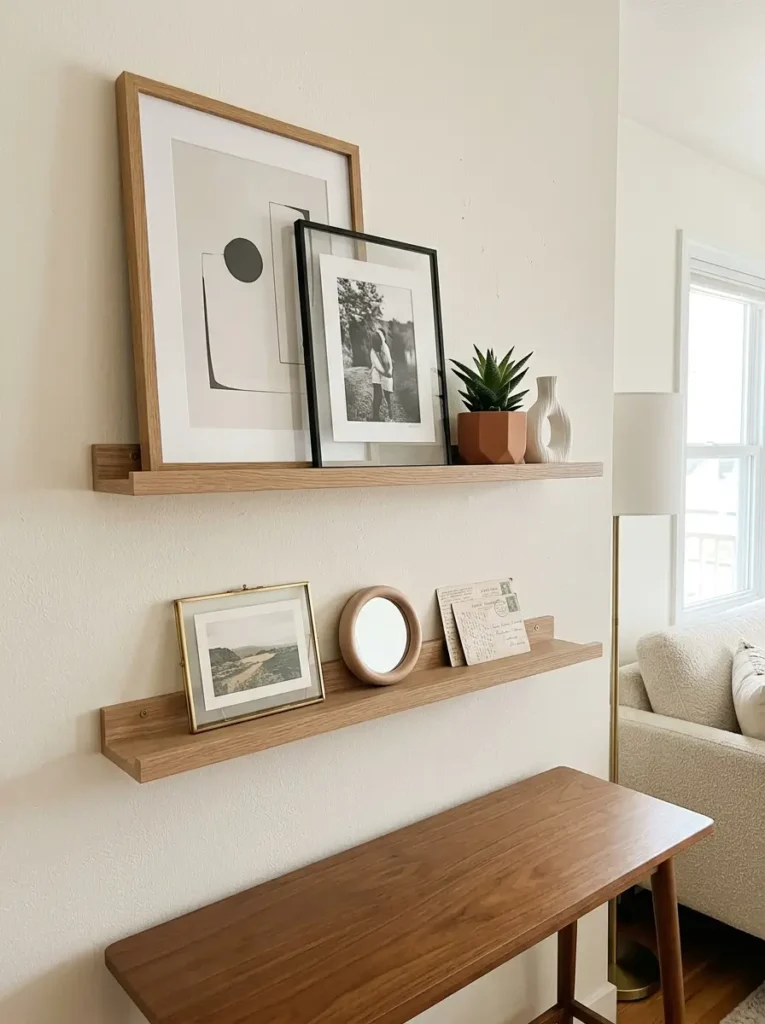
Gallery walls often require many nails, hooks, and measurements. Picture ledges give you a similar layered look with fewer wall marks. If your lease allows a couple of small holes, one or two ledges are easier to patch later than twelve frame holes. For a fully damage-free option, use freestanding leaning shelves or adhesive ledges rated for the right weight.
This idea works because ledges let you change art without moving hardware. You can layer framed prints, small canvases, postcards, and lightweight decor. For example, use three frames in different sizes, a small plant, and one ceramic object. Keep the color palette connected with black, oak, white, brass, or soft wood frames.
This is best for renters who like changing decor often. It also works well behind a sofa, above a console, or in a reading corner. The common mistake is overcrowding the ledge. Leave small gaps between pieces so each item feels visible. Too many tiny items can make the wall look messy.
Use removable hooks for lightweight wall decor
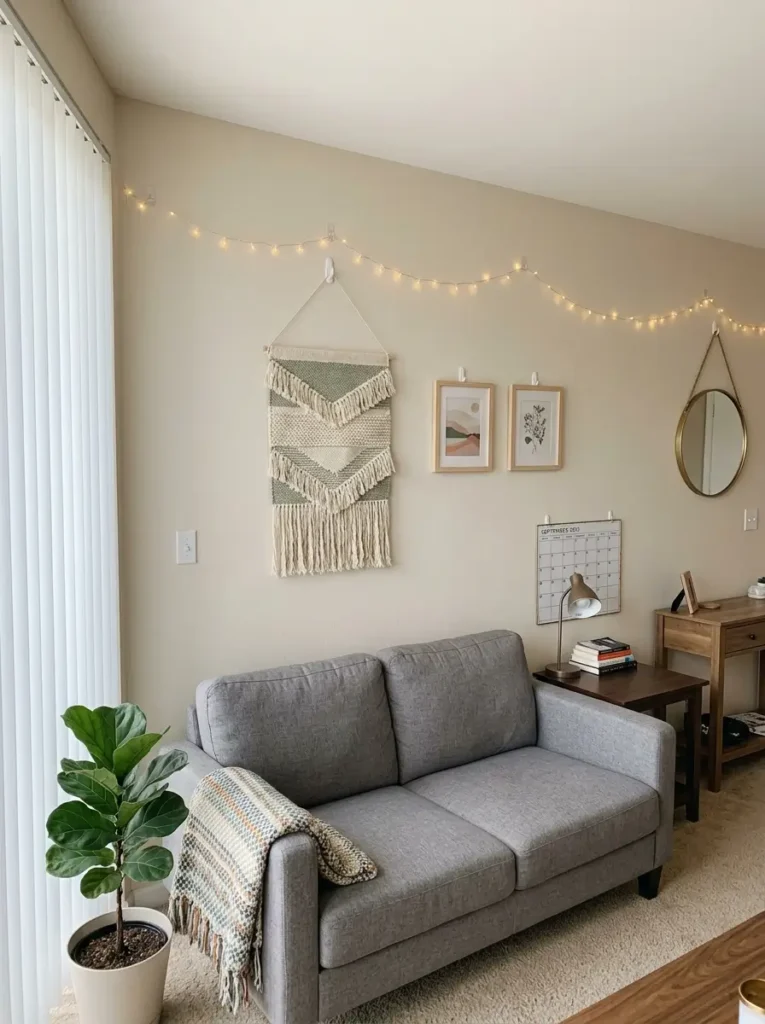
Removable hooks are helpful for renters, but they work best when you use them wisely. They can hold small frames, fabric wall hangings, calendars, fairy lights, lightweight mirrors, and seasonal decor. Always check the weight limit and use the right hook size for the item.
This idea works because it lets you decorate vertical space without nails. Bare rental walls can make a living room feel unfinished, especially when all furniture sits low. A woven wall hanging above the sofa, a small framed print near a lamp, or a lightweight mirror by the entry can make the space feel more balanced.
This tip is best for beginners because it is simple and affordable. Clean the wall before applying the hook, press firmly, and wait before hanging anything. Do not use removable hooks on peeling paint, damp walls, or delicate wallpaper. A common mistake is pulling the strip straight out during removal. Follow the removal direction slowly to protect the paint.
Bring in freestanding storage instead of built-ins

Built-in shelves look beautiful, but they are not always possible in a rental. Freestanding bookcases, ladder shelves, cube units, storage cabinets, and slim console tables can give you useful storage without permanent installation. Choose pieces that fit your wall size and do not block walkways.
This idea works because clutter often makes a living room feel smaller than it really is. A closed storage cabinet can hide games, cables, blankets, documents, and extra chargers. Open shelves can display books, plants, baskets, and framed photos. A mix of closed and open storage usually looks cleaner than all open shelving.
This tip is best for renters with small spaces or shared homes. For safety, tall furniture should be anchored if possible, especially around children or pets. If you cannot anchor into the wall, choose lower storage pieces with a wider base. Avoid filling every shelf. Leave some empty space so the unit feels styled, not stuffed.
Use slipcovers to refresh an old sofa

A sofa can dominate a living room. If your rental has an old sofa, or your own sofa no longer fits your style, a slipcover can change the look without buying new furniture. Choose a fitted cover for a cleaner result, or use a textured throw blanket over the seat and back for a relaxed update.
This idea works because the sofa sets the room’s main color story. A dark brown or faded sofa can make a room feel heavy. A washable beige, cream, olive, charcoal, or soft gray slipcover can make the space feel calmer. Add two or three pillows with texture, not too many patterns, to finish the look.
This tip is best for renters on a budget or anyone using secondhand furniture. Measure the sofa before buying a cover. Tuck extra fabric neatly into the seat gaps. Avoid thin shiny covers because they can look loose and slide around. Cotton blends, waffle textures, and stretch covers usually look better in daily use.
Decorate with floor lamps and table lamps

Good lighting can change a rental living room more than many expensive decor pieces. Add a floor lamp near the sofa, a table lamp on a side table, or a small lamp on a bookcase. This helps the room feel warm in the evening and gives you better light for reading, watching TV, or relaxing.
This idea works because lighting creates zones. A floor lamp can make a corner useful. A table lamp can make a side table feel intentional. A small lamp on a shelf can add depth to a dark wall. Use warm white bulbs between 2700K and 3000K for living rooms. Avoid cool 5000K bulbs unless you need task lighting for work.
This tip is best for renters who cannot change ceiling fixtures. Choose lamps with slim bases if the room is small. Arc floor lamps work well when you do not have space for a side table. A common mistake is using one bright overhead light for everything. Several softer lights usually feel more comfortable.
Try peel-and-stick tiles around a fireplace or media area
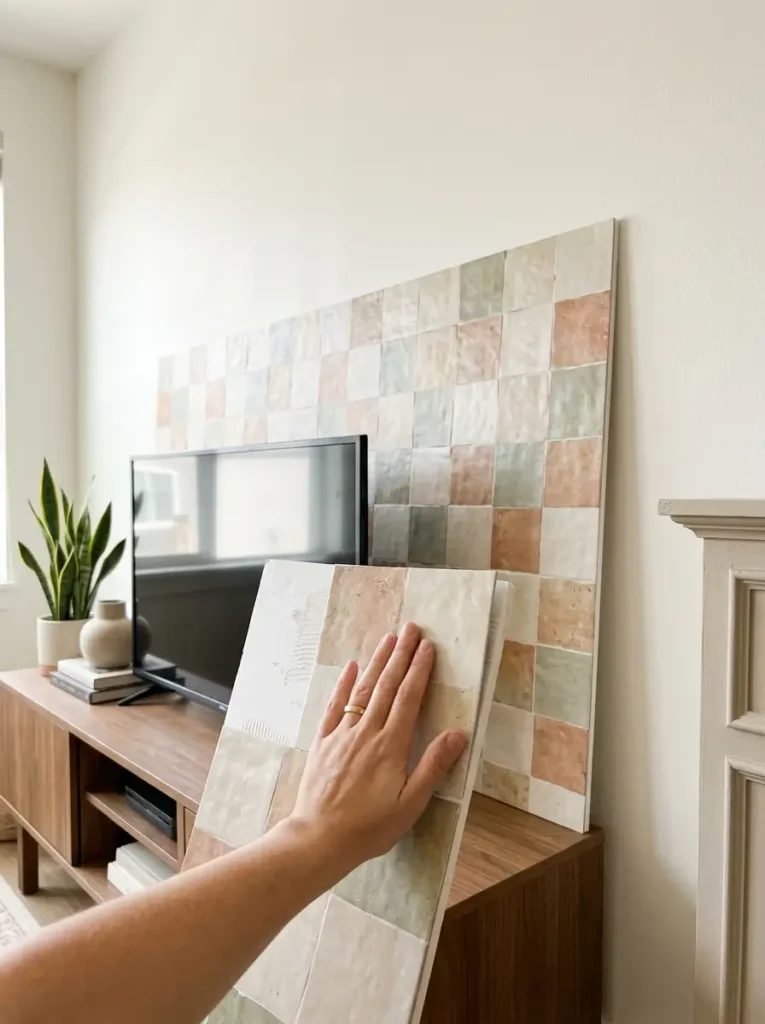
If your rental living room has an outdated fireplace surround, a plain TV wall, or a tired media console area, peel-and-stick tiles can help. Use them only on surfaces where removal will be safe. Many renters use them on removable boards instead of applying them directly to walls.
This idea works because small surface changes can make the whole room feel updated. A peel-and-stick tile panel behind a TV console can create a neat media zone. Marble-look, zellige-look, matte white, or warm stone patterns can add texture without a full renovation. This is best for renters who want a polished detail in one specific area.
Test the tile first and avoid high-heat areas unless the product is rated for heat. Do not place peel-and-stick materials inside working fireplaces. For a safer option, cover a thin foam board or plywood panel with peel-and-stick tiles and lean it behind a console. You get the look without attaching anything permanent.
Use large baskets for storage and texture

Baskets are practical in rental living rooms because they hide daily clutter quickly. Use a large woven basket for throw blankets, a lidded basket for toys, or small baskets on shelves for remotes and cables. Choose natural materials like seagrass, water hyacinth, rattan, or cotton rope if you want warmth.
This idea works because storage can also act as decor. A basket beside the sofa looks softer than a plastic bin. It also gives you a clear place for items that usually end up on the floor. In a small living room, try one large basket instead of several tiny ones. It will look cleaner and hold more.
This tip is best for families, pet owners, students, and anyone who needs quick cleanup. Match baskets to your color palette. For example, use tan baskets with beige rooms, black-trim baskets with modern spaces, or white rope baskets for soft neutral rooms. Avoid buying too many different basket styles because the room can start to look uneven.
Add removable window film for privacy and style

Window film is useful if your living room faces a street, balcony, or nearby building. It gives privacy without heavy curtains or permanent blinds. Frosted film, reeded glass film, rice paper film, and subtle geometric film can all work well in rentals.
This idea works because it solves a real problem while adding style. Privacy makes a living room feel easier to use during the day. You can sit, work, or relax without feeling exposed. Frosted film also softens harsh sunlight. It is best for renters in ground-floor apartments, city flats, and homes with large uncovered windows.
Most window films use static cling or removable adhesive. Clean the glass well, spray water, and smooth out bubbles with a squeegee or card. Keep the design simple if you already have patterned rugs or pillows. A common mistake is using very busy film on every window. It can block light and make the room feel smaller.
Create a damage-free TV wall with furniture

A mounted TV can look clean, but drilling into rental walls may not be allowed. Instead, create a strong TV wall using furniture. Use a low media console, framed art leaning behind the TV, a tall plant on one side, and a lamp or basket on the other side.
This idea works because it gives the TV area structure without wall mounting. The furniture and decor around the screen make it feel like part of the room, not just a black rectangle. Choose a console that is wider than the TV. This simple rule makes the setup look balanced. For example, use a 60-inch console under a 50-inch TV.
This tip is best for renters who watch TV often but still want a styled living room. Hide cables with cord clips, a cable box, or a fabric cable sleeve. Avoid placing too many small objects around the TV because they can distract from the screen. Use fewer, larger pieces for a cleaner look.
Rearrange furniture before buying new decor
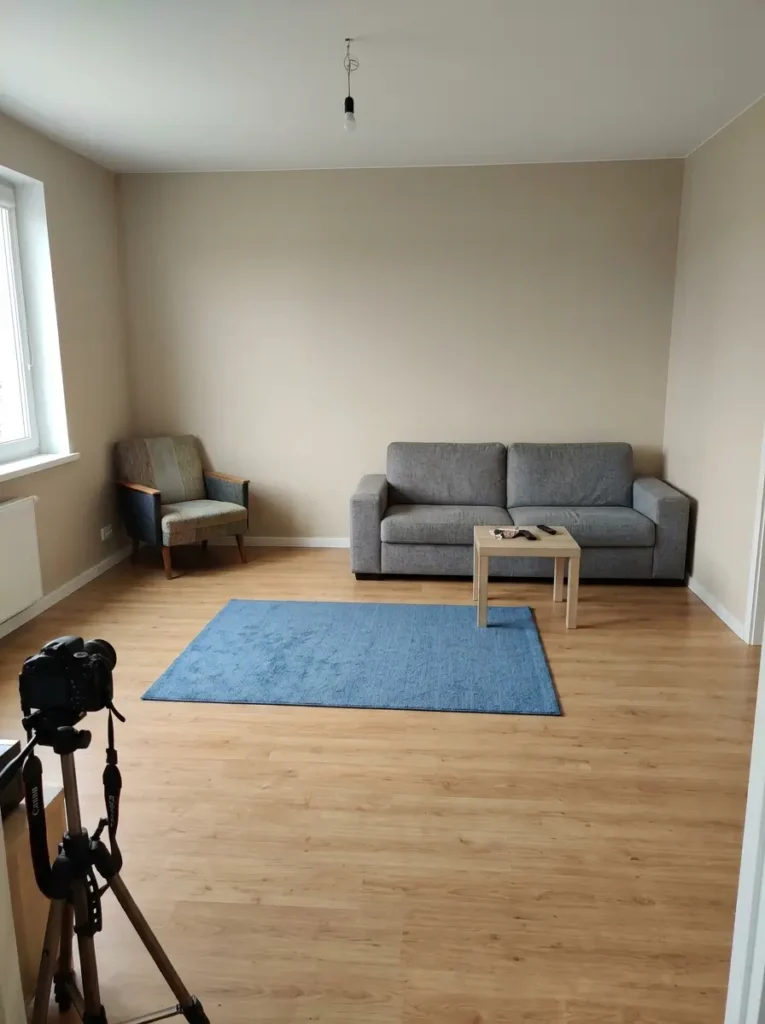
Sometimes the best renter friendly living room decor idea costs nothing. Before buying anything, try a better furniture layout. Pull the sofa a few inches away from the wall, move a chair closer to the conversation area, or place the rug so it connects the main seating pieces.
This idea works because layout affects comfort more than decoration. A room can have nice items but still feel awkward if the furniture blocks movement or sits too far apart. Keep at least 24 to 30 inches for main walkways when possible. Place the coffee table around 14 to 18 inches from the sofa so it is easy to reach.
This tip is best for beginners who feel stuck. Take photos of the room from different angles before moving furniture. Photos help you see balance, clutter, and empty corners more clearly. A common mistake is pushing every piece against the wall. In some rooms, floating the sofa slightly can create a more comfortable seating zone.
Common mistakes to avoid in rental living room decor
One common mistake is buying decor before measuring the room. A rug that is too small, curtains that are too short, or a coffee table that blocks the walkway can make the room feel uncomfortable. Always measure the sofa, wall, windows, and floor area before shopping.
Another mistake is using too many small decor pieces. Tiny frames, small candles, little vases, and mini plants can create visual clutter. Choose fewer pieces with better size. For example, one large framed print can look stronger than six tiny prints above the sofa.
Many renters also ignore lighting. They decorate with pillows and art but keep one harsh ceiling light. This makes the room feel flat at night. Use at least two or three light sources in a living room. A floor lamp, table lamp, and small shelf lamp can make the space more useful.
Another mistake is choosing adhesive products without testing them. Not all removable items work on every wall. Paint quality, humidity, sunlight, and wall texture can affect removal. Test a small hidden area first, especially with wallpaper, hooks, tiles, and cord covers.
Some renters copy decor ideas that do not fit their lifestyle. White sofas, glass tables, and open shelves may look nice, but they need more cleaning. If you have children, pets, roommates, or a busy schedule, choose washable fabrics, closed storage, and durable finishes.
Avoid blocking natural light with bulky furniture. A tall bookcase in front of a window can make the room feel dark. Place taller items on solid walls and keep window areas open. If privacy is a concern, use window film or light curtains instead of heavy panels.
Do not forget the lease rules. Some rentals allow small nail holes, while others do not. Some allow painting if you repaint before leaving. Others forbid adhesive wallpaper. Check your agreement before making changes, especially if the item touches walls, floors, doors, or fixtures.
Budget-friendly renter friendly living room decor tips
Start with the changes that give the biggest visual result. Rugs, curtains, lighting, and sofa covers often change a living room more than small accessories. If your budget is tight, choose one major update first instead of buying many little things.
Shop secondhand for solid furniture. A used wood coffee table, side table, or bookcase can look better than a cheap new piece. You can clean it, add removable contact paper to the top, or change the handles if it has drawers. This keeps costs low and reduces waste.
Use pillow covers instead of buying full pillows. Covers cost less, take up less storage, and let you change colors by season. For example, use olive green or rust covers in colder months, then switch to beige, blue, or cream in warmer months. Keep the pillow inserts the same.
Choose neutral base pieces and use color in smaller items. A beige rug, gray sofa cover, or wood console can work for years. Add color through art, pillows, throws, and lampshades. This makes decorating cheaper because you can refresh the room without replacing large items.
Use printable art or your own photos in simple frames. You do not need expensive artwork to fill a wall. Black frames can feel modern, oak frames feel warm, and white frames feel light. Keep the frame style consistent so budget art still looks organized.
Repurpose items from other rooms. A bedroom lamp can work on a living room side table. A dining bench can become extra seating under a window. A basket from the laundry area can hold throws. Walk through your home before buying anything new.
Set a small monthly decor budget. Even $20 to $40 can help you update slowly without impulse shopping. One month you can buy curtain panels. Next month you can add a lamp. Later you can replace pillow covers. Slow decorating often creates a better room because you make more thoughtful choices.
Renter friendly living room decor tips for small spaces
Small living rooms need careful choices because every item shows. Use furniture with slim legs when possible. Sofas, chairs, and tables with visible legs create a lighter feeling because you can see more floor. This works better than bulky furniture that sits directly on the ground.
Choose multi-use furniture. A storage ottoman can work as a coffee table, extra seat, and blanket storage. A nesting table can expand when guests come over and tuck away later. A console table behind a sofa can act as a desk in a small apartment.
Keep the color palette simple. You do not have to use only white, but too many strong colors can make a small room feel busy. Try three main colors. For example, use warm white walls, a beige rug, and black accents. Then add one soft color like sage, clay, or dusty blue.
Use vertical space carefully. Tall shelves, floor lamps, curtains hung high, and vertical art can draw the eye upward. This helps the room feel taller. Just avoid filling every wall. Empty space is important in small rooms because it gives your eyes a place to rest.
Pick the right coffee table size. In tight rooms, round or oval tables are easier to move around than sharp rectangular ones. Acrylic tables can also work because they look light. If you need storage, choose a lift-top table or ottoman with hidden space.
Hide cables and daily clutter. Small rooms look messy faster than large rooms. Use cable clips, storage baskets, drawer organizers, and closed cabinets. Make sure every daily item has a place. This one habit can make a rental living room feel much more polished.
Easy color ideas for renter friendly living room decor
Color can change a rental living room even when you cannot paint. Use textiles, art, lampshades, and rugs to build a clear palette. Warm neutrals like ivory, oatmeal, camel, and taupe work well in rooms with beige floors or warm wood furniture.
For a calm style, combine soft white, light gray, and muted blue. This works well in bright apartments or rooms with cool daylight. Add texture through cotton curtains, a woven rug, and matte ceramic decor so the room does not feel flat.
For a warmer style, try cream, rust, walnut wood, and olive green. This palette works well with older rental floors, brown sofas, and black metal accents. Use rust only in small amounts, such as one throw pillow or a piece of wall art, so it does not overpower the room.
For a modern look, use white, black, light oak, and one soft accent color. Black picture frames, a black floor lamp, and a light wood coffee table can make simple rental walls feel intentional. Add one plant or green pillow to keep the room from feeling too sharp.
Simple styling formula for beginners
A simple formula can help if you do not know where to start. Choose one base color, one wood tone, one metal finish, and one accent color. For example, you can use cream as the base, light oak as the wood tone, black as the metal finish, and sage green as the accent.
Repeat each choice at least twice. If you use black in a lamp, repeat it in a picture frame or table leg. If you use sage green in pillows, repeat it in art or a plant pot. Repetition makes the room feel connected without needing expensive decor.
Balance soft and hard textures. A living room with only hard furniture can feel cold. Add curtains, pillows, a rug, or a throw. A room with too many soft items can feel cluttered. Add a wood table, metal lamp, or ceramic vase for structure.
Style surfaces in small groups. On a coffee table, use a tray, a book, and one small object. On a shelf, mix vertical books, one framed print, and one bowl or plant. Leave space between groups. This makes cleaning easier and keeps the room practical.
FAQ
How can I decorate a rental living room without damaging walls
Use removable hooks, peel-and-stick wallpaper, freestanding shelves, no-drill curtain rods, plug-in lights, and leaning artwork. Always test adhesive products first. Choose lightweight decor and follow removal instructions carefully to protect the wall paint.
What is the easiest renter friendly living room decor update
Lighting is one of the easiest updates. Add a floor lamp, table lamp, or plug-in sconce with warm white bulbs. This can make the room feel softer and more useful without changing walls, floors, or fixtures.
Can I use peel-and-stick wallpaper in a rental
You can use peel-and-stick wallpaper in many rentals, but you should test it first. Wall texture, paint quality, and humidity can affect removal. Use it on one accent wall or a small area if you are unsure.
How do I make a rental living room look expensive on a budget
Use larger rugs, full-length curtains, warm lighting, matching frames, and fewer decor pieces. Choose simple colors and repeat materials like wood, black metal, or brass. A clean layout often looks more expensive than a room filled with random accessories.
What colors work best for renter friendly living room decor
Warm white, beige, taupe, soft gray, sage green, dusty blue, olive, camel, and charcoal work well in rental living rooms. These colors are easy to layer and can fit many furniture styles. Use stronger colors in pillows, throws, and art.
How can I hide ugly rental floors
Use a large area rug, washable rug, or layered rugs. Make sure the rug is large enough for the front legs of your sofa and chairs. Choose patterned or textured rugs if you want to hide marks, dust, or old flooring.
Conclusion
Renter friendly living room decor is not about limiting your style. It is about making smart choices that improve your space without creating damage. You can change the mood of your living room with removable wallpaper, better lighting, large rugs, curtains, baskets, slipcovers, and thoughtful furniture placement.
Start with the biggest problems first. If the room feels cold, improve the lighting and add textiles. If it feels cluttered, bring in closed storage and baskets. If it feels plain, create one focal wall or add art with removable hooks. Each small choice should make the room easier to live in, not just nicer to photograph.
You do not need a large budget or landlord approval for every update. With careful planning, renter-safe materials, and practical styling, your living room can feel warm, personal, and complete while still staying damage-free.