

Cooler evenings can make an outdoor space feel unused, yet a few thoughtful changes can keep it comfortable well into autumn. Fall Patio Decor should support real habits, such as morning coffee, relaxed dinners, reading, or gathering around a heater. Instead of filling every surface with pumpkins, focus on warmth, texture, lighting, and a layout that still allows easy movement. Small patios benefit from restraint, while larger backyards need clear zones so the space does not feel scattered. The ideas below work for homeowners, renters, beginners, and anyone decorating with a limited budget.
What Is the Best Way to Decorate a Patio for Fall?
The best approach is to begin with comfort, then add seasonal color in layers. Keep the largest items neutral, choose two or three autumn shades, add warm lighting, and bring in natural materials that can handle outdoor conditions. Useful furniture, washable textiles, safe lighting, and weather-resistant storage should come before small accessories. Seasonal details can then make the space feel timely without creating clutter or extra work.
Build the Color Palette Around Warm Neutrals
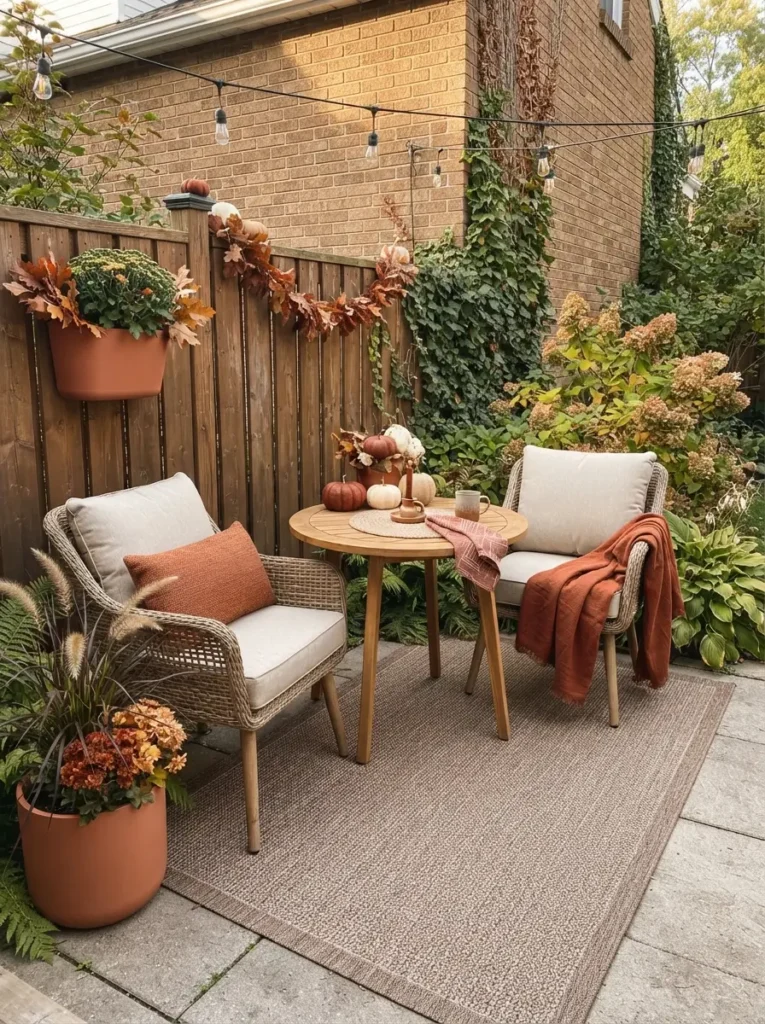
Start with colors already present in the backyard, including fence stain, brick, concrete, siding, or natural greenery. Warm neutrals such as oatmeal, camel, mushroom, taupe, and soft brown create a calm base that suits most patio materials. Add one deeper color, such as rust, olive, burgundy, or charcoal, for contrast. Limit the palette to three main shades so cushions, planters, throws, and tableware feel connected. A controlled palette prevents that problem and makes inexpensive items appear more intentional.
Color repetition gives the eye a clear path around the seating area. Place rust on one pillow, repeat it in a planter, then bring it back through a napkin or candle holder. Small repeats work better than covering every surface in the same shade. Fall Patio Decor feels more balanced when color appears at different heights and in different materials. Matte terracotta, woven fabric, dark metal, and dried leaves can share a color family without looking identical. Such variety adds depth while preserving a simple plan.
Small-space decorators benefit most from this method because too many strong colors can make limited square footage feel crowded. Renters can use removable elements, including cushion covers, table linens, outdoor rugs, and lightweight pots, rather than painting walls or railings. Budget shoppers should begin with what they own and identify one missing accent color before purchasing anything. Spread visual weight evenly so the patio feels settled from every angle.
Arrange Seating for Conversation and Clear Movement

Furniture placement affects comfort more than seasonal accessories. Angle chairs toward one another rather than lining every seat against a wall. Leave a clear path from the door to the yard, grill, steps, or storage area. A small round table often fits better than a square one because curved edges reduce bumps and make circulation easier.
Conversation areas feel natural when people can speak without leaning forward or turning sharply. Position chairs within a few feet of the coffee table, then add a side table where someone can place a drink. Loveseats with slim arms offer useful seating without the bulk of a deep outdoor sofa. Larger backyards may need two zones, such as dining near the house and lounging farther out, instead of one oversized furniture group floating in the middle.
Before buying new furniture, mark each piece on the ground with painter’s tape or cardboard. Walk through the layout while carrying a tray, opening the door, and pulling out chairs. Avoid pushing every item to the perimeter, which can make the center feel empty and communication difficult. Another frequent error involves placing seating directly under roof runoff or too close to a fire source. Practical planning creates an inviting arrangement that remains comfortable after the season changes.
Layer Outdoor Textiles Without Creating Maintenance Problems
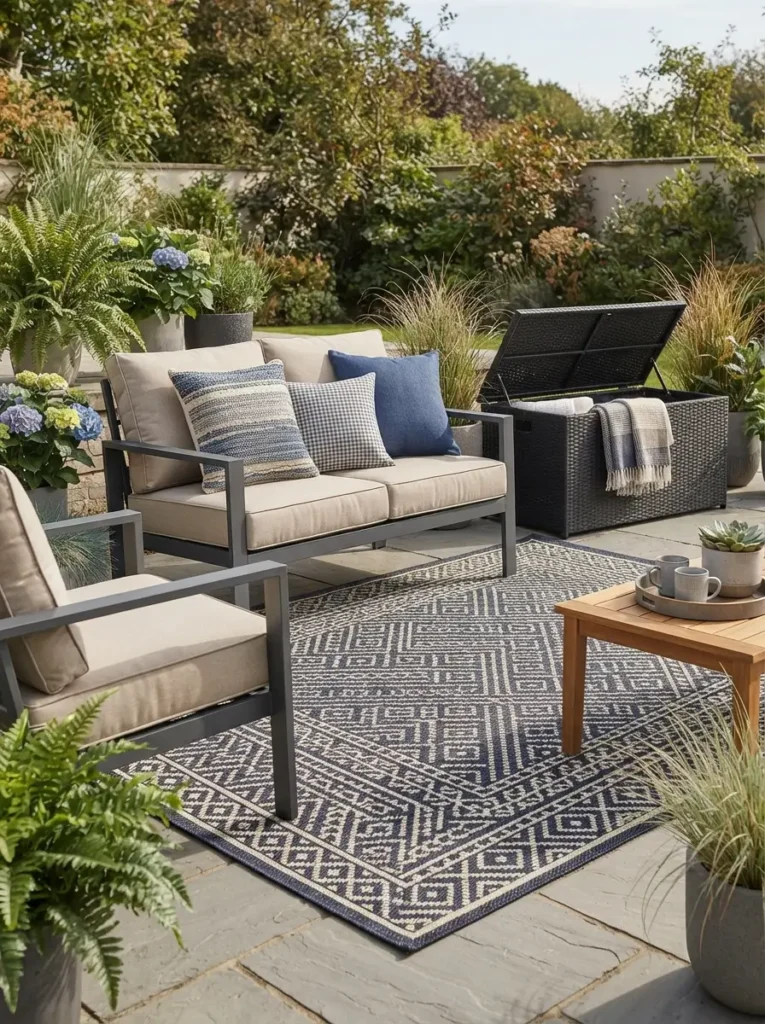
Textiles bring warmth quickly, but every fabric should have a clear purpose. Begin with seat cushions in a neutral outdoor material, then add two or three pillow covers in different textures. Woven stripes, small checks, brushed solids, and subtle leaf patterns can work together when the colors repeat. Store extras in a deck box, weather-resistant basket with a lid, or indoor cabinet so damp air does not leave them smelling musty.
Outdoor rugs help define a seating zone and soften hard paving. Choose polypropylene or another quick-drying material for exposed patios, especially where leaves and rain collect. Leave several inches of flooring visible around the rug so the arrangement does not look cramped. On a narrow balcony or rental patio, a runner can guide the eye lengthwise and make the area appear more generous. Dark, tightly patterned rugs hide dirt well, but extremely deep colors may show dust, pet hair, and dried leaves more clearly than expected.
Textile layering works because fabric changes both visual and physical comfort. Smooth metal or plastic furniture feels more welcoming when paired with soft covers and warm woven details. People who host often should choose zippered pillow covers that can be washed rather than decorative cushions that require spot cleaning. Avoid indoor-only blankets, thick cotton rugs in uncovered areas, and cushions left outside overnight. Moisture damage can happen quickly during cool weather. A simple maintenance routine protects the budget and keeps the seating area ready for use.
Use Warm Lighting at Several Heights
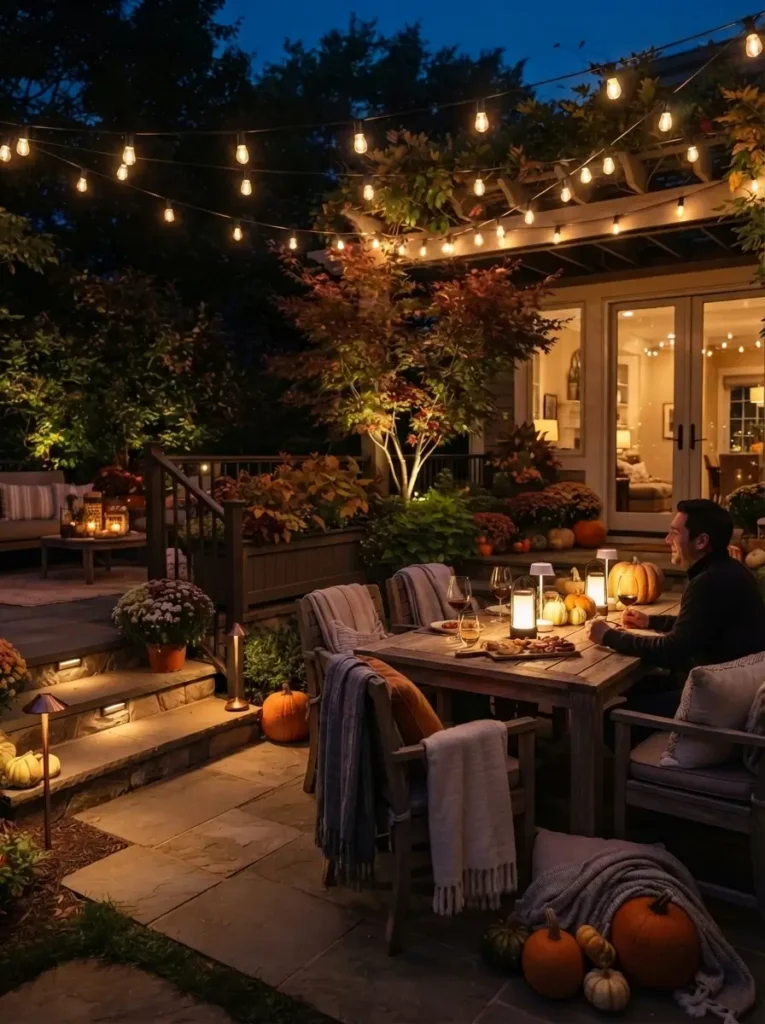
Evening lighting should make faces visible without turning the patio into a bright work zone. Aim for warm white bulbs around 2200K to 2700K. String lights can define the upper edge of a patio, while lanterns or cordless table lamps provide light closer to eye level. Add low pathway lights near steps or uneven surfaces for safety. Fall Patio Decor becomes more functional when decorative light also supports movement, dining, and conversation.
Create three layers rather than relying on one overhead fixture. Ambient light sets the general mood, task light helps with serving food or reading, and low accent light highlights planters, railings, or a small tree. Solar lights work best where they receive strong daytime sun, while rechargeable lamps suit shaded patios and covered porches. Renters can use adhesive hooks rated for outdoor conditions or freestanding poles instead of drilling into walls. Battery candles inside closed lanterns offer a safe option around children, pets, and dry leaves.
Overlighting remains one of the most common patio mistakes. Cool 4000K bulbs can make autumn colors look flat and may feel harsh beside warm indoor rooms. Exposed bare bulbs at eye level create glare, especially around a dining table. Test the lighting after sunset, then remove any source that causes squinting or deep shadows. Keep cords secured away from walkways and choose products approved for outdoor use. People who entertain after work will gain the most from this upgrade because good lighting extends useful hours without requiring major construction.
Create a Seasonal Container Garden
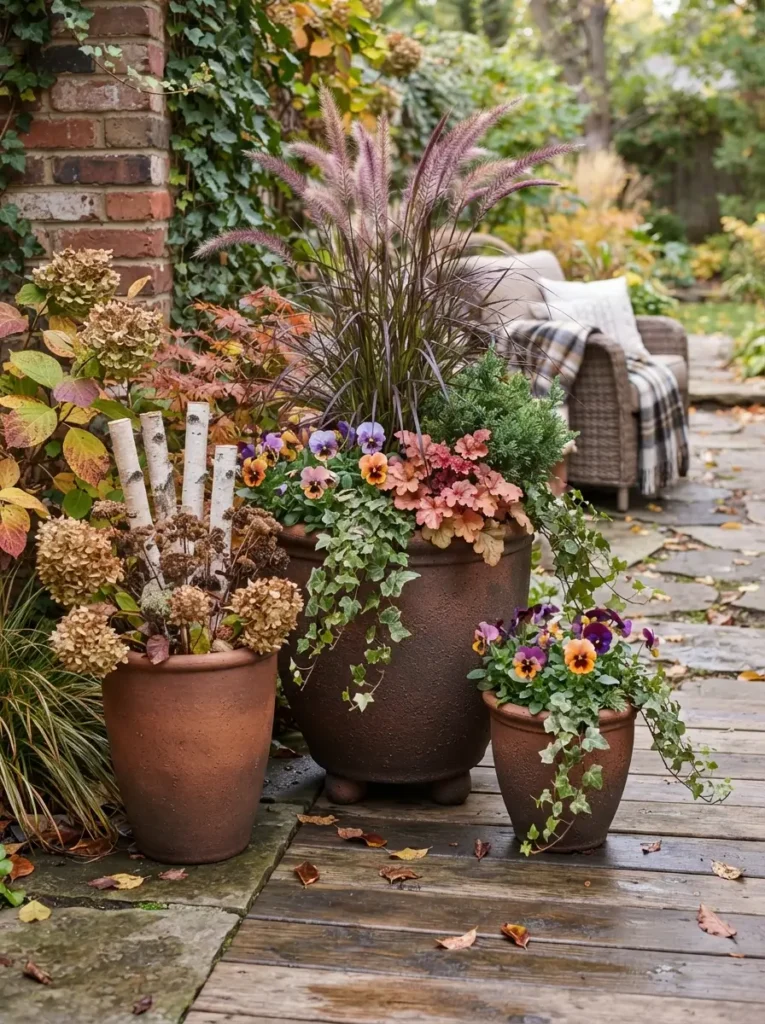
Planters provide color, height, and structure even when summer flowers begin to fade. Combine one upright plant, one rounded filler, and one trailing element in a larger container. Ornamental grasses, pansies, heuchera, small evergreen shrubs, trailing ivy, and cold-tolerant herbs can create a layered arrangement. Empty pots can also hold cut branches, dried seed heads, or weather-safe faux stems when live planting is impractical.
Container groupings look strongest in odd numbers, especially sets of three. Vary the heights while keeping at least one shared feature, such as pot color, material, or plant family. Place the tallest pot near a wall or corner, then step down toward the seating area. Lightweight resin pots suit balconies and renters, while terracotta adds warmth but may crack during freezing conditions. Add pot feet under heavy containers to improve drainage and protect decking from trapped moisture.
Gardeners and beginners both benefit from a simple watering plan because autumn containers can dry out even when the air feels cool. Check soil with a finger rather than watering by habit. Remove dead leaves, rotate plants for even growth, and clean saucers before they stain the floor. Avoid using tiny pots across every surface; many small containers create clutter and require frequent care. One or two generous groupings usually provide more impact, better moisture control, and a stronger connection to the surrounding landscape.
Style the Table for Everyday Use

Patio tables often become storage spots for candles, planters, and seasonal ornaments, leaving little room for meals. Keep the central arrangement narrow and low enough for easy conversation. A shallow bowl with small gourds, a simple tray with a lantern, or a weather-resistant vase with clipped branches can provide seasonal interest without taking over the surface. Use washable placemats or a short table runner instead of a full cloth on windy days. Weighted corners or clips can keep lightweight linens in place.
Round tables suit compact areas because every seat remains part of the conversation. Rectangular tables work well for families and larger patios, though benches may save space along one side. Leave enough room behind each chair for someone to sit down without hitting a wall or planter. For a small apartment patio, a drop-leaf table can serve coffee for two, then open for dinner. Neutral dishes with amber glasses, olive napkins, or wooden serving boards create autumn color without requiring a separate seasonal dinnerware set.
Everyday practicality makes the table more likely to be used. Keep a lidded bin nearby for napkins, trays, and unbreakable cups, especially when the kitchen is several steps away. Avoid tall centerpieces, loose dried leaves, and open flames near fabric or windy edges. When planning connected indoor spaces, Fall Dining Room Ideas can guide repeated colors or materials, helping the transition through patio doors feel deliberate rather than disconnected.
Add Natural Texture Through Wood, Wicker, and Metal

Material contrast creates richness without requiring many decorative objects. Pair smooth metal furniture with a woven basket, wooden stool, or slatted side table. Place a dark iron lantern beside a pale ceramic pot, or soften a painted bench with a chunky knit cushion cover. Fall Patio Decor benefits from texture because autumn light is lower and often emphasizes surfaces more clearly. Grain, weave, and matte finishes create visual interest even within a restrained color palette.
Choose materials according to exposure. Powder-coated aluminum handles rain well and remains easy to move. Teak and other outdoor woods can weather attractively, though they need care if the original finish should remain. Natural wicker may deteriorate outside, while synthetic resin wicker offers a similar appearance with better durability. People with uncovered patios should prioritize weather resistance before choosing texture solely for appearance.
Budget decorators can add texture through smaller pieces rather than replacing furniture. A secondhand wooden stool, outdoor basket, woven tray, or metal plant stand can shift the overall look. Check used items for loose joints, rust, splinters, and water damage before bringing them home. Avoid combining every rustic material at once, which can make the patio resemble a store display. Two or three finishes are enough. Repeating each material at least twice helps the design feel purposeful and prevents one accessory from appearing random.
Make Pumpkins Look Intentional Rather Than Crowded

Pumpkins remain useful seasonal accents when scale, color, and placement are controlled. Choose a small group with varied sizes instead of spreading individual pumpkins across every ledge. Soft green, cream, muted orange, and deep rust can sit comfortably within a warm neutral palette. Place the largest pumpkin at the back, add a medium one beside it, then use a smaller shape to complete the triangle. Keep groupings near an entrance, planter cluster, or table rather than blocking walkways.
Real pumpkins suit sheltered areas with good airflow, while durable faux versions work better on exposed patios or in warm climates. Inspect real pumpkins for soft spots and keep them off wet ground with a small riser, tray, or bed of gravel. Washable faux pumpkins can be reused, repainted, or wrapped in removable fabric. Renters and families may prefer lightweight pieces because they move easily during bad weather. Neutral versions also transition well into November without feeling tied to one holiday.
Too many tiny pumpkins can make a small patio look cluttered and create extra surfaces to clean. Choose one main display and leave nearby areas calmer. Avoid placing pumpkins directly beside heaters, fire pits, or candles. People who prefer modern decor should use fewer pieces and stronger shapes, while cottage-style patios can support a fuller arrangement with baskets and trailing plants. Seasonal objects work best when they support the overall palette instead of becoming the only visible decorating idea.
Define a Cozy Corner for Reading or Morning Coffee

Choose one corner with reasonable shelter from wind, direct afternoon sun, or foot traffic. Add a comfortable chair, small table, task light, and place for a mug or book. A compact swivel chair, Adirondack chair, or cushioned dining chair can work depending on available depth. Position the seat toward the best view, whether that means a garden bed, open sky, or a carefully styled planter rather than a blank fence.
Comfort depends on proportions. Seat height should allow feet to rest securely, and the side table should sit close to the chair arm. Add a lumbar pillow if the back feels too deep. Keep one throw nearby in a dry storage box rather than leaving it exposed. Apartment dwellers can use folding pieces that disappear when the area needs to serve another purpose.
Morning users may need shade and a stable surface for coffee, while evening readers need focused light that does not shine directly into the eyes. Avoid setting up a reading spot under dripping gutters or near noisy equipment. Home workers who enjoy carrying a laptop outdoors may also connect the palette to Fall Home Office Decor Ideas, creating visual continuity without turning the patio into a permanent office.
Add Privacy Without Closing Off the Space

Privacy can improve relaxation, but solid barriers may make a small patio feel boxed in. Use partial screening where sightlines matter most. Tall planters, narrow trellises, outdoor curtains, slatted panels, or a row of upright grasses can block direct views while allowing light and air to move. Seasonal patio styling feels calmer when the seating area has a defined edge, particularly in townhouses, apartment courtyards, and closely spaced backyards.
Outdoor curtains offer flexibility because they can open during the day and close when needed. Choose mildew-resistant fabric and secure the lower corners so wind does not push panels into furniture. Freestanding screens work for renters, though a weighted base is essential. Trellises with seasonal vines create a softer boundary, but plant growth takes time. A large planter with a compact evergreen can provide immediate coverage and remain useful throughout the year.
Measure the viewing angle while seated, not only while standing. Many people install screens too low or cover areas that were not actually visible from the chair. Avoid blocking exits, air-conditioning units, or access to utility panels. Privacy solutions should feel integrated with the furniture and planting rather than appearing as temporary barricades. Narrow spaces benefit most from open slats, light colors, and gaps that preserve depth.
Prepare a Safe Heat Source for Cool Evenings
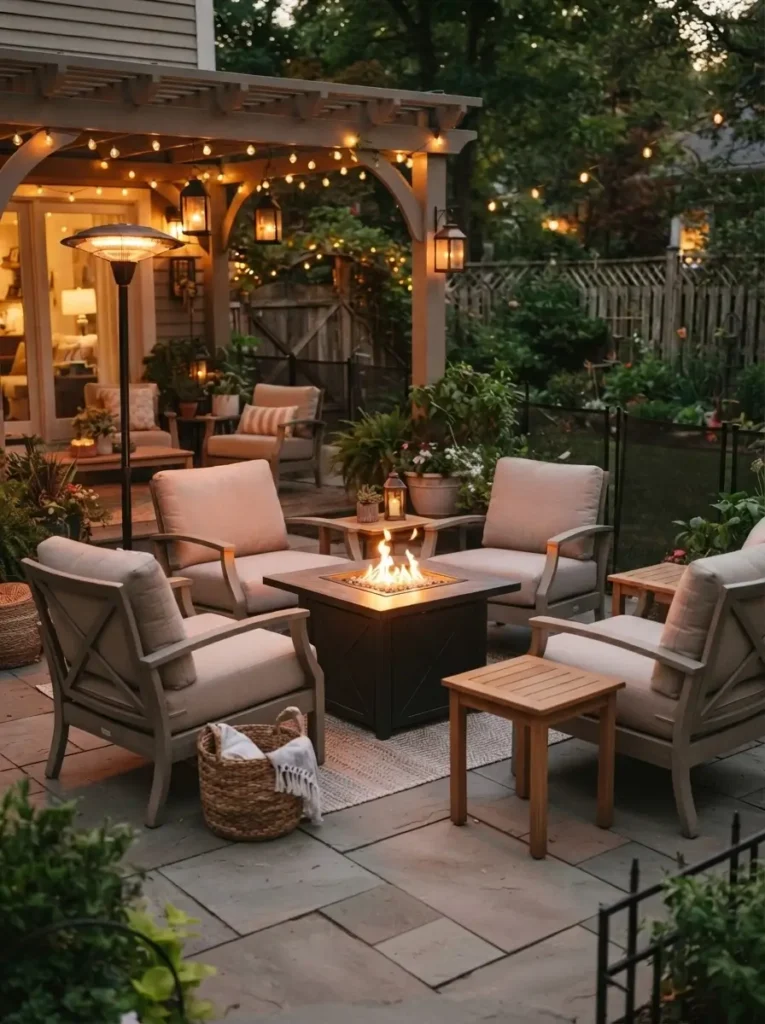
Warmth encourages people to stay outside, yet every heat source needs careful placement. Electric patio heaters suit covered areas where the manufacturer allows them, while propane heaters require adequate clearance and ventilation. Fire pits provide a strong gathering point but may not be permitted in rentals, balconies, or dense neighborhoods. Check local rules, building policies, and product instructions before purchasing. Smaller spaces may need no heater at all if sheltered seating, warm textiles, and hot drinks provide enough comfort.
Arrange chairs far enough from heat that fabric, hair, and clothing remain safe. Keep leaves, baskets, rugs, and decorations away from flames or hot surfaces. Stable flooring matters, especially for freestanding heaters. Never run indoor extension cords outdoors or place cords beneath rugs. Families with children or pets should favor protected heating elements and clear physical boundaries. Store fuel correctly and turn equipment off completely after use.
Heat works best when the furniture forms a loose circle or U shape around it without blocking movement. Avoid making the heater the only reason the patio feels welcoming. Lighting, supportive seating, side tables, and blankets still matter. Homeowners with larger yards can create a separate fire area, while renters can use rechargeable hand warmers or insulated seat pads where open flames are prohibited. Safety should remain visible in the layout rather than treated as an afterthought.
Connect the Patio to the Rest of the Backyard

Strong outdoor spaces feel related to the house and garden. Repeat one or two materials from nearby areas, such as black metal from the door hardware, wood tones from a fence, or stone colors from a path. A rug can anchor furniture, but the surrounding edges should still lead naturally toward the rest of the yard rather than ending abruptly.
Sightlines from inside deserve attention because the patio may be viewed through windows more often during colder weather. Place the most attractive planter grouping, lantern, or chair arrangement where it can be seen from the kitchen or living room. Use Fall Porch Decor as a related reference point by repeating one color or material near the entrance, while allowing the patio to keep its own function and scale.
Large backyards often fail when every object is spread far apart. Bring pieces closer and define separate zones with lighting, rugs, or plantings. Tiny yards have the opposite risk, so leave some open floor and avoid decorating every boundary. The strongest connection comes from clear movement, repeated materials, and consistent maintenance. Sweep paths, trim plants, and store unused items. Practical order makes seasonal styling feel believable and allows the backyard to remain pleasant after autumn ends.
Common Mistakes to Avoid
Overdecorating usually happens when every attractive seasonal item receives a place. Crowded tables, overloaded steps, and too many small signs reduce usable space and make cleaning difficult. Select a focal area, such as the dining table, seating corner, or container grouping, then keep the rest quieter. Scale also matters. One large planter or lantern often looks stronger than five tiny objects. Beginners should pause before buying decor and ask whether the piece adds comfort, function, color, texture, or light.
Ignoring weather exposure creates another common problem. Indoor pillows, untreated baskets, paper decorations, and delicate dried materials can deteriorate quickly outdoors. Read care labels and consider wind, rain, sun, insects, and temperature changes. Secure lightweight pieces, protect fabrics, and move vulnerable items inside before storms. Sheltered patios still experience damp air, so storage should remain part of the decorating plan. Choosing fewer, more durable pieces usually costs less over several seasons.
Poor lighting can make a well-arranged patio uncomfortable. One bright floodlight creates glare, while decorative lights alone may leave steps and serving areas unsafe. Combine warm ambient light with practical illumination near paths and tables. Test every source after dark and view it from both seated and standing positions. Keep cords tidy, replace weak batteries, and clean solar panels. Lighting should support use rather than function only as decoration.
Forgetting circulation makes outdoor rooms frustrating. Chairs that block doors, planters on narrow steps, or tables placed too close to railings can create daily inconvenience. Measure furniture and leave clear routes to frequently used areas. Consider how people move when carrying food, opening umbrellas, handling pets, or storing cushions. A beautiful arrangement should still work during ordinary routines. Functional movement often matters more than symmetry.
Mixing too many themes can weaken the design. Farmhouse signs, modern black metal, bright Halloween figures, coastal stripes, and rustic crates may each look appealing alone but compete when combined. Choose one general direction and edit anything that does not support it. Personal style does not require matching sets, yet repeated colors, shapes, and materials should create a relationship. Seasonal charm feels more natural when the patio still resembles the rest of the home.
Budget-Friendly Ways to Refresh the Patio
Begin with cleaning and rearranging because both can change the space without spending money. Sweep flooring, wash furniture, wipe light fixtures, remove dead plants, and clear items that no longer serve a purpose. Shift chairs into a more conversational layout and bring a neglected side table into use. Clean surfaces reflect light better and make existing colors look fresher. Many patios need editing before they need shopping.
Change removable covers instead of replacing full cushions. Standard outdoor pillow inserts can work through several seasons when paired with washable covers. Look for end-of-season fabric, neutral clearance cushions, or thrifted outdoor-safe textiles. Sew simple envelope covers if basic sewing is comfortable. Keep patterns limited so low-cost finds do not create visual noise. One rust cover and one olive cover may be enough to update a neutral bench.
Repurpose household objects only when they can handle the environment. A sturdy wooden crate can become a sheltered side table, while a metal tray can organize candles or drinks. Glass jars belong inside closed lanterns rather than exposed edges. Old baskets may hold blankets during use, but should return indoors afterward. Paint can refresh suitable planters or furniture, provided surfaces are prepared and outdoor-rated products are used.
Natural materials can reduce accessory costs. Clip branches from permitted areas, collect clean pinecones, or display pruned grasses in a weather-safe container. Avoid bringing home plants, branches, or natural objects from protected land. Simple groupings feel more refined than large piles. Budget styling improves when each item has space around it and connects to the chosen palette.
Shop with a short list based on gaps in function. Needed items may include one rechargeable lamp, a storage bin, two pillow covers, or a durable rug. Avoid buying complete seasonal collections simply because the pieces coordinate. Such sets can consume the budget while leaving practical problems unsolved. Spend more on items used often, including seating, lighting, and storage, then use inexpensive accents for color.
Fall Patio Decor Tips for Small Spaces
Compact outdoor areas need Fall Patio Decor that prioritizes vertical space, flexible furniture, and visual breathing room. Use railing planters, wall-safe hooks, tall narrow pots, or one vertical trellis instead of filling the floor. Folding chairs, nesting tables, and benches with storage support multiple uses. Keep the center open and avoid deep furniture that extends into the walking path. A limited palette of two neutrals and one accent color can make separate items feel unified.
Choose fewer objects with stronger scale. One medium lantern, one planter group, and two coordinated pillows will usually serve a small balcony better than several miniature decorations. Mirrors are not always suitable outdoors because glare, breakage, and reflected heat can create problems. Instead, use light-colored fabrics, open furniture frames, and uninterrupted flooring to preserve spaciousness. Position the tallest element near the back and keep lower items toward the view.
Storage should be planned from the beginning. A narrow deck box, storage bench, or indoor basket near the door can hold blankets, covers, and lights. Measure lids and doors before placing storage against a wall. Renters should avoid permanent attachments unless approved and use weighted freestanding solutions where possible. Good small-space decorating depends on easy setup and quick cleanup, especially when weather changes.
Frequently Asked Questions
When should I start decorating my patio for autumn?
Late summer or early autumn works well, depending on local weather. Begin with practical changes such as cleaning, rearranging furniture, and adding warmer textiles. Bring in pumpkins, dried materials, and cool-season plants when temperatures support them. Starting in stages prevents the patio from feeling overly themed too early. People in warm climates can use color and texture before seasonal plants become available, while colder regions may need to focus on weather protection sooner.
Which colors work best for an autumn patio?
Warm neutrals create the easiest foundation. Oatmeal, tan, mushroom, brown, and soft gray can support deeper accents such as rust, olive, burgundy, mustard, or charcoal. Choose colors that relate to the house exterior and existing furniture. Small patios usually look calmer with three main shades. Bright orange can still work, but it often looks stronger when used in small amounts beside cream, wood, or dark green.
How can renters decorate without making permanent changes?
Freestanding screens, folding furniture, outdoor rugs, battery lamps, removable cushion covers, and lightweight planters offer flexible options. Use outdoor-rated adhesive hooks only where the surface and lease allow them. Store original fixtures and avoid painting, drilling, or attaching heavy items without written approval. Renters should also check rules for grills, fire pits, balcony weight, hanging lights, and exterior curtains before making changes.
What type of lighting is best for an autumn patio?
Warm white lighting between roughly 2200K and 2700K usually feels comfortable with wood, amber, rust, and natural greenery. Combine overhead or string lighting with table lamps, lanterns, and low path lights. Rechargeable lamps work well in shaded locations, while solar lights need reliable sun. Choose outdoor-rated products and place cords away from walking routes. Lighting should reveal faces and steps without creating glare.
How do I keep outdoor cushions and blankets dry?
Store them in a weather-resistant deck box, storage bench, or indoor cabinet when they are not in use. Allow damp items to dry fully before closing them inside a container. Choose zippered, washable covers and quick-drying outdoor inserts. Waterproof covers can protect furniture, but trapped moisture may still cause mildew, so airflow matters. During long wet periods, moving textiles indoors provides the safest protection.
Can a small patio still include a fire feature?
Possibility depends on local laws, lease rules, building policies, available clearance, and the product instructions. Many balconies and compact rental patios do not permit open flames or propane heaters. Electric heaters may work in approved locations, but they still require safe clearance and outdoor-rated power. Where heat sources are restricted, use insulated seat pads, warm throws during use, wind protection, and hot drinks instead.
Conclusion
Thoughtful Fall Patio Decor begins with the way the space needs to function. Comfortable seating, clear paths, warm light, durable textiles, and sensible storage create a foundation that seasonal accents can support. Pumpkins, branches, deep colors, and layered textures feel more convincing when the patio remains easy to use. Small spaces need editing and flexible furniture, while larger yards benefit from clear zones and repeated materials.
Begin with one practical improvement rather than changing everything at once. Rearrange the chairs, update the lighting, add a washable pillow cover, or create a focused planter group. Test the patio during the time of day it will be used most. Careful planning also keeps daily maintenance simple and predictable. Careful choices can make autumn evenings more comfortable without requiring a large budget, permanent construction, or a crowded collection of decorations.