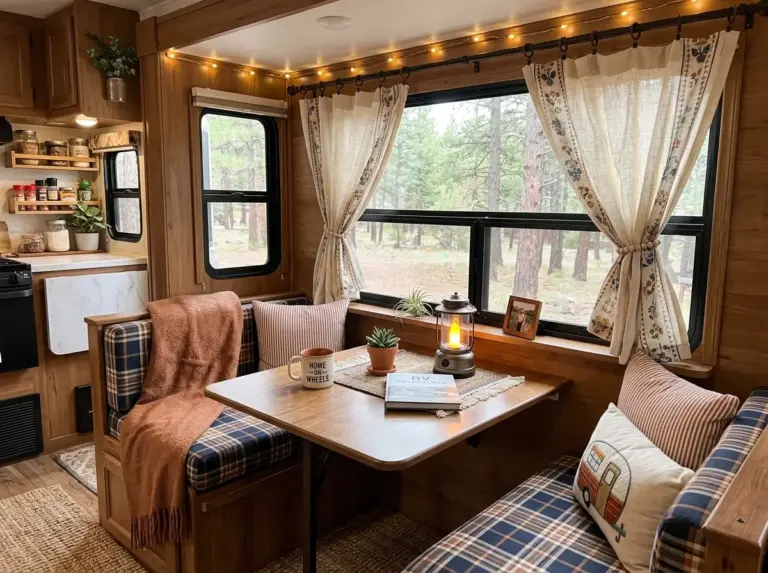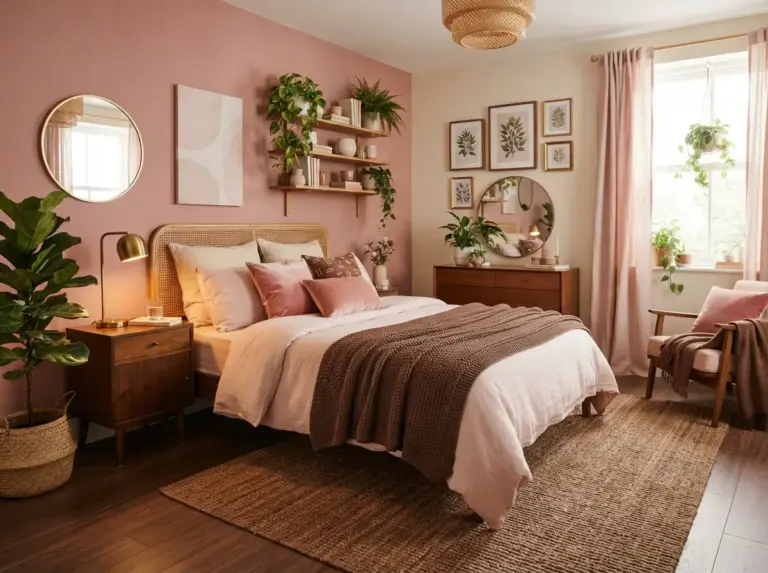


Large Wall Decor can turn a plain room into a space that feels finished, balanced, and confident. Oversized walls often look difficult because small frames, narrow shelves, or scattered objects disappear against so much empty space. The solution is not always to buy the biggest artwork you can find. Better results come from choosing the right scale, creating a clear visual center, and connecting the wall treatment to nearby furniture, lighting, and color. Whether you own your home or rent a small apartment, the following ideas show how to decorate generously without making a room feel crowded, expensive, or overly formal.
Before buying anything, photograph the wall from the main doorway and from the place where people usually sit. The pictures reveal scale problems that are easy to miss while standing close. Mark possible edges with painter’s tape, then live with the outline for a day. Check whether doors can open, curtains can move, and lamps still cast useful light. Consider how the wall looks in daylight and after sunset. Beginners often focus only on the object itself, yet the surrounding furniture determines whether it feels grand or awkward. Careful testing saves money, protects walls, and makes the final choice easier and calmer.
What Is the Best Way to Decorate a Large Wall?
Large Wall Decor works best when it fills about two-thirds to three-quarters of the wall area above the main furniture piece. Start by measuring the available width, then choose one large item or a grouped arrangement that reads as a single composition. Keep the bottom edge roughly 6 to 10 inches above a sofa, console, bed, or bench. Have you noticed that a wall often feels empty even after hanging several small items? Scale and spacing usually cause the problem, not a lack of decoration.
Hang One Oversized Piece of Art

Single oversized artwork gives a room an immediate focal point without adding visual clutter. Choose a canvas that measures about two-thirds of the furniture width below it. Over a 90-inch sofa, a piece between 55 and 70 inches wide usually feels balanced. Landscapes, abstract shapes, botanical studies, and textured neutral paintings all work, but the colors should connect with at least two items already in the room, such as cushions, curtains, or a rug.
Large Wall Decor feels especially polished when the artwork has breathing room around it. Leave enough open wall so the piece looks intentional rather than squeezed in. Warm white bulbs between 2700K and 3000K help earthy art feel rich, while 3000K to 3500K lighting suits cleaner modern work. Homeowners who want a calm, straightforward solution will appreciate this approach because it needs only one strong installation point.
Renters can use lightweight stretched canvas, removable hooks rated for the correct weight, or a large framed print leaned on a console. Avoid tiny art centered high above furniture, which creates a floating effect. Budget shoppers can download printable art, order an engineering-size print, and place it in a simple wood frame. Matte finishes generally look more refined than glossy poster paper in living rooms and bedrooms.
Build a Floor-to-Ceiling Gallery Wall
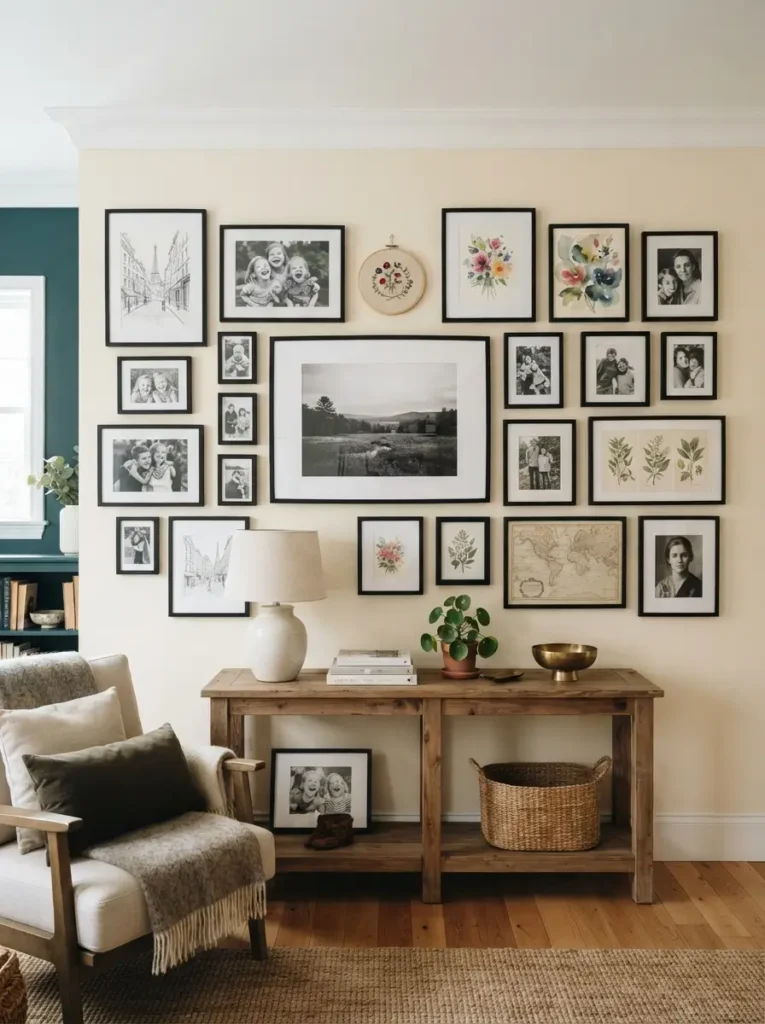
Gallery walls can cover a generous surface while telling a personal story. Mix family photographs, sketches, travel prints, fabric pieces, and small paintings, but repeat frame colors so the arrangement feels connected. Black frames create a crisp graphic effect, oak adds warmth, and white frames keep busy artwork from feeling heavy. Spread the collection from roughly 8 inches above the furniture to about 10 inches below the ceiling.
Strong gallery layouts begin with one visual anchor. Place the largest frame slightly off-center, then build outward with smaller pieces. Keep gaps between 2 and 3 inches for a clean result. Cutting paper templates and taping them to the wall first prevents unnecessary holes. Gallery arrangements suit collectors, families, and anyone who prefers layered rooms rather than minimal spaces.
Small apartments benefit when the frames include pale backgrounds and slim profiles. Rooms with deep green, navy, or charcoal walls can handle brass or light wood frames for contrast. Avoid using identical frame sizes in a rigid grid unless every picture has a similar style. Varied dimensions create movement, while repeated colors stop the layout from feeling random.
Create a Framed Textile Feature

Textiles bring softness and scale to rooms filled with hard surfaces. Frame a vintage scarf, woven cloth, quilt panel, embroidered fabric, or printed curtain remnant behind acrylic or glass. One large piece can cover a difficult wall and introduce pattern without requiring wallpaper. Colors like rust, indigo, mustard, cream, and olive pair especially well with leather seating, natural wood, and woven rugs.
Framed fabric works because it adds visual depth and subtle texture that flat posters cannot provide. Bedrooms, dining rooms, and reading corners benefit most from the quieter character. People who enjoy collected interiors may also like Retro Apartment Wall Art especially when an old textile or graphic pattern reflects the building’s age.
Rental homes can use a lightweight tapestry bar instead of a full frame. Sew a sleeve along the back, slide in a dowel, and hang it from two removable hooks. Keep textiles away from cooking grease, strong sunlight, and damp walls. For a budget version, stretch affordable fabric over a large wooden frame and staple it neatly behind the edges.
Install Picture Ledges Across the Wall
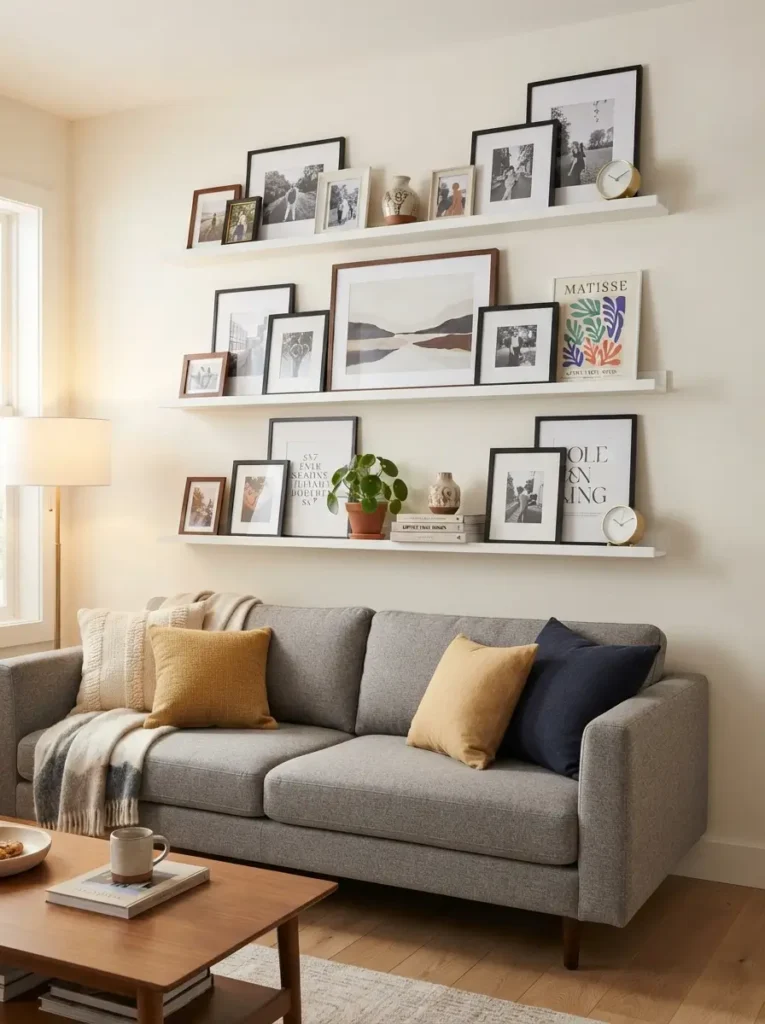
Long picture ledges create flexible display space for art, books, small plants, and framed photographs. Two or three ledges can fill a wide wall more effectively than several short shelves. Place the first ledge 8 to 12 inches above a sofa or desk, then allow 12 to 18 inches between levels depending on frame height. Overlap frames slightly to create depth without crowding the surface.
Picture ledges help beginners because they reduce pressure to choose exact hanging positions. Artwork can move whenever seasons, colors, or personal tastes change. White ledges blend into pale walls, while black or walnut finishes create stronger horizontal lines. Keep the largest frame near the center and balance it with smaller pieces on both sides.
Renters should choose narrow ledges with secure wall anchors and avoid loading them with heavy ceramics. People decorating studios or dorm-style spaces can adapt ideas from College Apartment Wall Decor by mixing postcards, small prints, and one functional clock. Use only a few accessories so the wall still reads as an art display rather than a storage shelf.
Add Decorative Wall Molding

Wall molding gives a large blank surface architectural structure. Simple rectangular boxes, vertical battens, or full-height paneling can make an ordinary room feel more considered. Paint the molding the same color as the wall for a subtle finish, or use a slightly darker shade for gentle contrast. Warm greige, muted blue, soft olive, and creamy white work well in living rooms and bedrooms.
Molding succeeds because it divides a broad surface into clear sections. Furniture then feels grounded within the room instead of floating against an empty background. Traditional homes suit narrow picture-frame molding, while modern spaces often look better with wider vertical battens. People who want depth without busy artwork will find this idea useful.
Peel-and-stick molding strips offer a rental-friendly option when the adhesive is safe for painted walls. Test a hidden area before applying anything. Budget projects can use lightweight trim, careful measurements, and one-color paint. Common mistakes include making boxes too small, placing trim directly behind a television without planning cable access, and using uneven spacing near corners.
Paint a Wide Color Block

Color blocking can fill a large wall without adding objects. Paint a wide arch, rectangle, circle, or horizontal band behind a bed, sofa, desk, or dining table. Dusty terracotta adds warmth, deep blue creates depth, sage feels relaxed, and muted ochre brightens neutral rooms. Keep the shape wider than the furniture so it frames the setting instead of looking like a narrow backdrop.
Painted shapes work by creating a visual boundary. That boundary tells the eye where the furniture zone begins and ends, which is especially helpful in open-plan rooms. Anyone interested in Statement Wall Bold Color Designs can use a rich tone but balance it with quieter upholstery and simple accessories.
Renters can recreate the effect with removable wall decals or peel-and-stick panels. Use painter’s tape, a level, and careful measurements to keep edges sharp. Avoid placing a tiny arch behind a large bed because the scale will feel weak. People who change décor often should choose a mid-tone color that works across several seasons.
Frame the Television with Built-Ins

Television walls often feel unfinished because the screen becomes the only dark rectangle in the room. Built-in cabinets, open shelving, or matching bookcases can turn the area into a complete composition. Keep the television centered, leave at least 3 to 6 inches of visual space around it, and repeat materials from the rest of the room. Oak cabinetry, matte black hardware, and warm white walls create a flexible modern combination.
Successful Living Room TV Wall Designs balance storage with open space. Closed lower cabinets hide cables, games, and media equipment, while upper shelves hold books, ceramics, and a few framed pieces. Install 2700K to 3000K LED strips beneath shelves for comfortable evening light, but avoid bright strips directly behind glossy objects.
Budget households can place two matching bookcases beside a low media console to imitate a built-in unit. Renters may use freestanding storage and cable covers painted to match the wall. Keep shelves about one-third empty so the television does not compete with dozens of small objects. Screens should sit near seated eye level rather than close to the ceiling.
Lean a Large Mirror Against the Wall
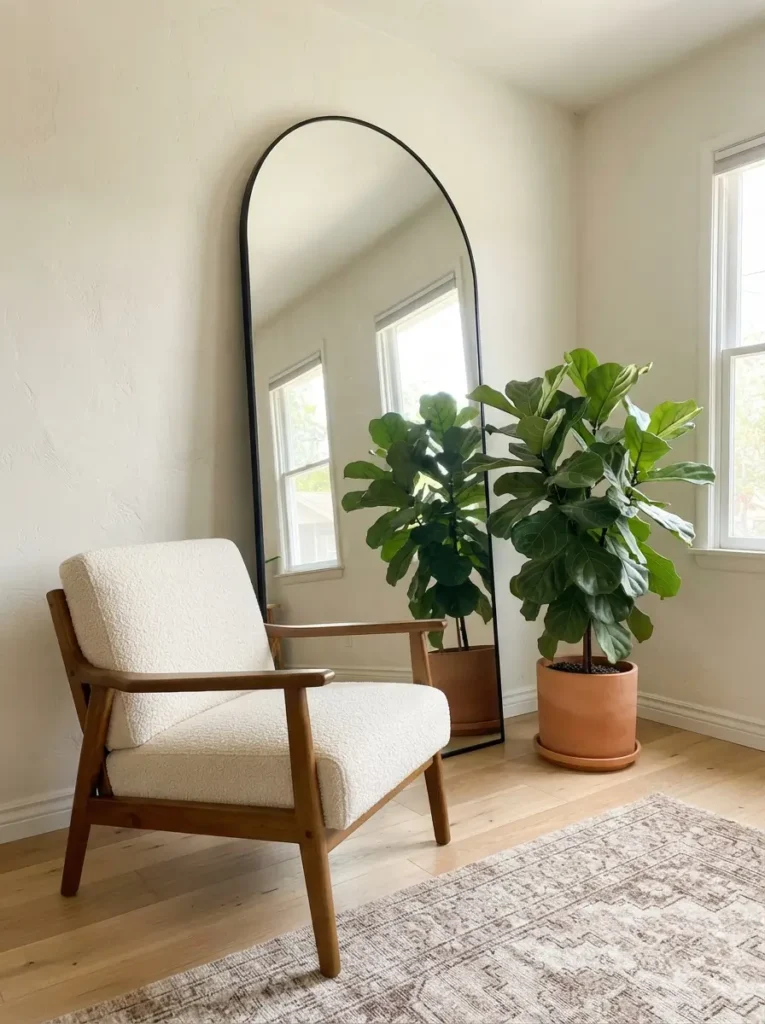
Oversized mirrors increase light, reflect attractive views, and add height to a room. Leaning one behind a chair, console, or floor plant creates a relaxed look, while a securely hung mirror feels more formal. Arched shapes soften square rooms, rectangular frames suit clean interiors, and antique-style mirrors add character to simple spaces. Position the mirror where it reflects a window, artwork, or greenery rather than clutter.
Mirrors make large walls feel purposeful without introducing strong colors. They suit dark apartments, narrow living rooms, bedrooms, and dining areas that need more brightness. Black frames define pale walls, brass warms cool gray rooms, and natural oak works with beige, cream, or olive schemes.
Safety matters with heavy mirrors. Use anti-tip straps, proper anchors, or professional installation, especially in homes with children or pets. Renters should consider lighter acrylic mirrors or securely lean a medium-weight design behind furniture. Avoid placing a large mirror directly opposite a messy entry or television because the reflection can double visual noise.
Display a Large Map or Mural

Maps and murals cover wide walls while adding meaning. Choose a vintage city map, world map, botanical mural, landscape scene, or simple line drawing. A map works well in a home office, family room, or hallway where people can study details. Murals fit dining areas and bedrooms when the imagery supports the room’s mood instead of dominating it.
Broad imagery draws the eye across the entire surface, making the room feel wider and more immersive. Neutral maps in charcoal, tan, cream, and faded blue suit classic interiors, while graphic black-and-white maps fit modern spaces. Families can mark travels with small pins, but keep additions neat and limited.
Removable wallpaper murals are useful for renters, although smooth walls give the best results. Measure twice, order a small sample, and check the image scale before purchasing. Budget decorators can print a public-domain map in sections and mount it on foam boards. Avoid tiny map labels in rooms where viewers stand far away, since the design may look busy rather than detailed.
Arrange Sculptural Baskets or Woven Plates

Woven baskets, trays, and flat plates bring texture to a large wall while staying relatively lightweight. Gather pieces in different sizes but limit the color palette to two or three tones. Natural straw, black accents, and cream create strong contrast without feeling noisy. Start with the largest basket near eye level, then spread smaller pieces outward in an irregular oval.
Natural materials soften rooms with metal furniture, tile floors, or straight architectural lines. Dining rooms, stair landings, and relaxed living spaces benefit from the handmade character. People who enjoy Bold Vibrant Wall Design can add painted baskets in coral, cobalt, or mustard while keeping nearby furniture neutral.
Use small hooks, removable strips designed for lightweight objects, or plate hangers with secure springs. Thrift stores often sell baskets cheaply, and mismatched pieces can look unified after a light coat of paint. Avoid identical spacing around every piece because woven displays usually feel better with slight variation.
Mount an Oversized Clock
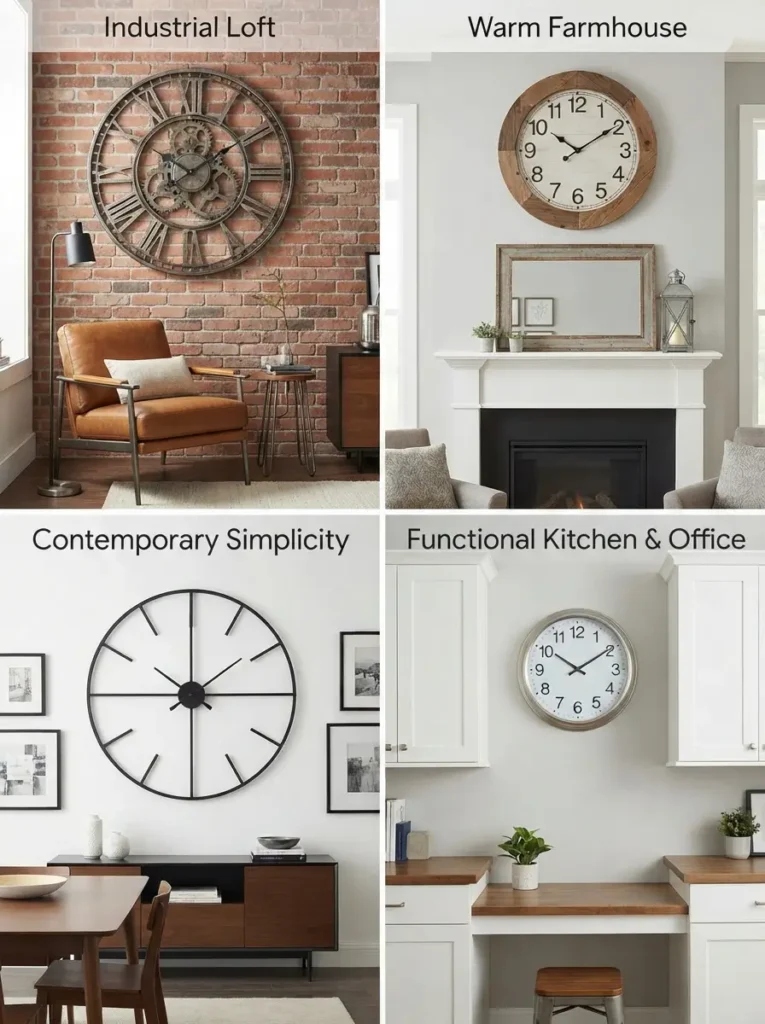
Large clocks combine function with strong visual scale. Industrial metal clocks suit loft-style rooms, wood-framed designs warm farmhouse spaces, and slim black clocks fit contemporary interiors. Choose a diameter that fills the wall without touching nearby trim, curtains, or shelving. A 30- to 40-inch clock works well above a console, while very wide walls may need a 48-inch design.
Clear numerals and simple hands help the clock remain readable from across the room. Rooms already filled with artwork may benefit from a clock because it adds structure without another image. Home offices, kitchens, and family rooms are the best settings for this practical focal point.
Silent movement is worth choosing in bedrooms or quiet living areas. Lightweight models make installation easier for renters, but strong hooks still matter. Avoid placing a clock above a television where two dark circles or rectangles compete. Decorative clocks should connect with nearby metal finishes, such as lamp bases, cabinet pulls, or chair legs.
Use a Large Open Bookcase

One tall, wide bookcase can fill an empty wall while adding storage. Choose a unit that reaches close to the ceiling to emphasize height. Shelves with a mix of books, closed boxes, pottery, and artwork look more balanced than rows of tiny accessories. Arrange heavier objects on lower shelves and leave open space around special pieces.
Large furniture works because it gives the wall both scale and purpose. Renters, book lovers, and families with limited storage gain the most from this solution. Black shelving creates a dramatic frame, white keeps a small room light, and medium wood adds warmth without looking heavy.
Secure tall bookcases to wall studs or appropriate anchors. Budget versions can combine two matching flat-pack units and finish them with a simple top board. Style shelves in groups of three, vary object heights, and turn some books horizontally. Avoid filling every inch because crowded shelving can make even a large room feel smaller.
Create a Ceramic Plate Wall

Decorative plates form a lighter, more refined alternative to framed art. Mix plain plates with subtle patterns, but repeat one color throughout the arrangement. Blue and white suits classic dining rooms, earthy brown and cream work with rustic spaces, while black and white complements modern kitchens. Keep the display centered above a sideboard or dining bench.
Curved plate shapes catch light and create small shadows, giving the wall depth. Dining rooms and breakfast areas benefit most because the material connects naturally with food and tableware. Plates also work in Bathroom Wall Decor when the room stays dry and the pieces are mounted securely away from splashes.
Use plate hangers rated for each size or adhesive disc hangers designed for ceramics. Trace every plate on paper and test the pattern before hanging. Thrift shops and family cupboards can supply inexpensive pieces. Avoid valuable heirloom china in high-traffic areas or above seats where accidental impact could cause damage.
Hang a Large Tapestry

Tapestries cover a wide wall quickly and soften sound at the same time. Choose woven landscapes, geometric patterns, block prints, or simple neutral textures. Bedrooms and media rooms benefit because fabric reduces hard echoes. Keep the tapestry wide enough to relate to the furniture below, and hang it straight with a rod, hidden clips, or a slim wooden rail.
Fabric creates presence without the weight of a huge framed piece. Renters and budget decorators gain flexibility because tapestries are easy to move, fold, and store. Cream and black patterns suit minimal rooms, while rust, navy, and olive add depth to warm wood furniture.
Steam wrinkles before installation and keep the lower edge safely above heaters or candles. Avoid pinning fabric loosely at only two corners because it may sag. People exploring Apartment Wall Decor can use a tapestry to cover damaged paint, awkward wall texture, or a temporary workspace without permanent changes.
Add Vertical Greenery

Tall indoor plants, wall-mounted planters, or a simple trellis can bring life to a broad wall. Use trailing pothos, heartleaf philodendron, hoya, or artificial greenery where natural light is limited. Place plants at varied heights but keep maintenance access in mind. Matte white, terracotta, or black pots help the arrangement look coordinated.
Greenery breaks up large blank surfaces with organic shape and movement. Rooms filled with straight furniture lines feel softer, while neutral color schemes gain freshness without another strong accent color. Plant lovers, renters, and people who prefer natural materials will enjoy this approach.
Grow lights between 3000K and 4000K can support plants in darker corners, but position them so they do not glare at seated eye level. Use drip trays and avoid mounting pots above electronics or upholstered furniture. Budget decorators can place one tall floor plant beside a narrow wall shelf rather than installing a full living wall.
Combine a Console with Layered Art
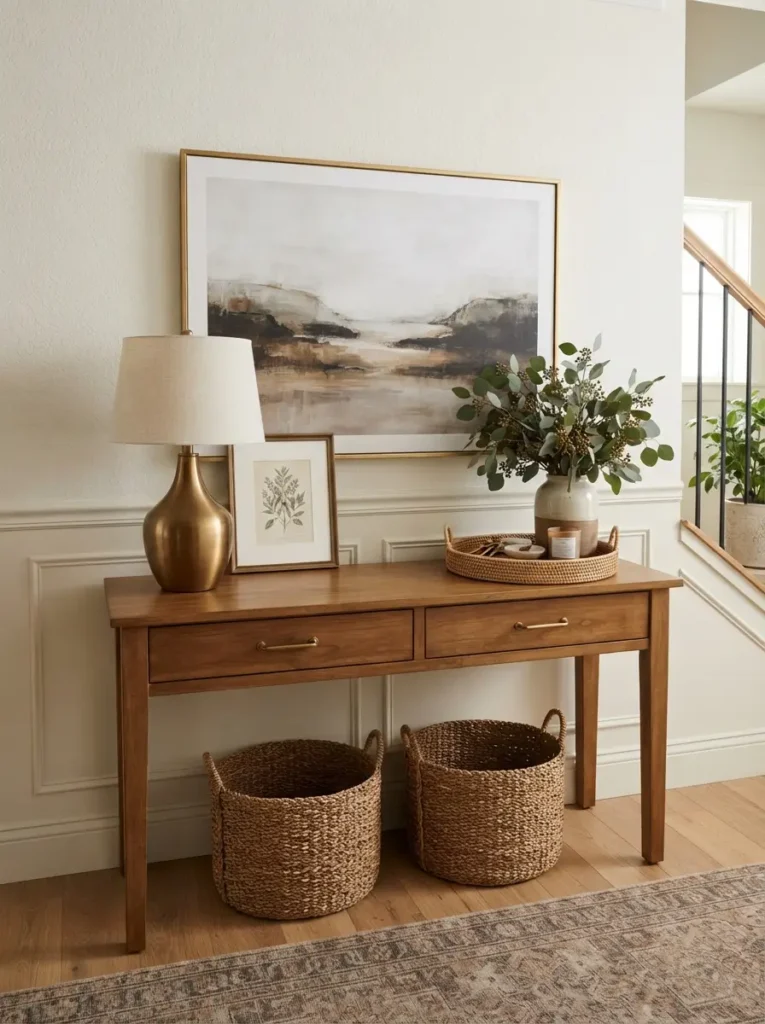
Placing a console table against the wall gives the arrangement a clear base. Hang one medium-to-large piece above it, then layer a smaller frame, lamp, vase, or branch arrangement on the surface. The artwork should be narrower than the console but wide enough to connect visually. A 60-inch console often works well with art between 36 and 48 inches wide.
Layering creates depth and allows useful lighting to become part of the composition. Entryways, dining rooms, and living rooms benefit from the storage and display space. Keep the lamp shade near the lower third of the artwork rather than blocking its center. Warm bulbs around 2700K make wood and fabric tones feel welcoming.
Renters can lean the artwork instead of hanging it. Drawers or baskets hide daily clutter, while a tray keeps keys and small objects controlled. Avoid using a console that is too short for the wall. A narrow piece stranded in the center will make the surface look even larger.
Design a Functional Wall with Shelves and Pegs

Functional walls can combine shelves, hooks, rails, pegboards, and closed boxes. Home offices may hold supplies and calendars, craft rooms can display tools, and entryways can support coats, bags, mirrors, and mail. Keep the arrangement within a clear rectangle so the parts read as one unit rather than scattered hardware.
Good storage walls use repetition. Match shelf finishes, align vertical edges, and limit visible containers to one or two colors. People working with Small Apartment Wall Shelf Decor should use shallow shelves, wall-mounted lights, and closed baskets to preserve floor space. A narrow ledge above a desk can hold art without reducing workspace.
Renters can use modular pegboards attached with minimal holes, freestanding ladder shelves, or tension systems. Leave frequently used items within easy reach and place decorative objects higher. Avoid overloading hooks or displaying every tool. Practical storage still needs negative space to feel calm.
Common Mistakes to Avoid
Choosing Pieces That Are Too Small
Small frames often disappear on a broad wall, especially above wide sofas or beds. Measure the furniture first and choose artwork or groupings that cover roughly two-thirds of its width. Several tiny pieces can work only when arranged tightly enough to create one visual block. Randomly spreading them across the wall weakens the effect.
Hanging Everything Too High
Eye level matters, but furniture changes the correct position. Artwork above a sofa, console, or headboard usually looks best when the lower edge sits 6 to 10 inches above the furniture. Rooms with high ceilings do not require art near the ceiling. Keeping the composition connected to the furniture makes the entire zone feel intentional.
Ignoring the Room’s Existing Lines
Door frames, windows, curtain rods, fireplaces, and cabinets create strong lines. Wall decoration should relate to them rather than fight them. Align the top of a gallery wall with nearby trim, center artwork over furniture, or use a tall piece to echo a vertical window. Poor alignment can make expensive décor look careless.
Mixing Too Many Styles
Large walls tempt people to display every favorite object at once. Choose one main direction, such as natural texture, modern graphics, vintage photography, or architectural molding. Supporting pieces can vary, but repeated frame colors, materials, or tones create unity. Strong color schemes need extra restraint elsewhere, especially with patterned rugs and bright upholstery.
Forgetting Lighting
Wall features lose impact in dim corners. Add a picture light, wall sconce, floor lamp, or adjustable ceiling spotlight. Bedrooms and living rooms usually feel comfortable around 2700K, while workspaces can use 3000K to 3500K. Avoid harsh cool bulbs above warm artwork because the colors may look flat or gray.
Overloading Shelves
Shelves should not become parking places for every small object. Group similar items, leave open areas, and vary height. Closed boxes handle unattractive essentials, while books and artwork add structure. Too many tiny accessories create dust, visual noise, and extra work without improving the wall.
Budget-Friendly Ways to Decorate a Large Wall
Large Wall Decor does not require custom art or expensive construction. Printable artwork, thrifted frames, fabric remnants, secondhand mirrors, baskets, and simple paint can all create strong scale. Spend money on one element that carries the composition, then support it with affordable pieces. A large print in a basic frame usually looks more convincing than six small decorative signs bought separately.
Repurposing existing objects can also reduce cost. Frame a beautiful scarf, enlarge a travel photograph, paint several thrift-store frames one color, or stretch leftover fabric over a simple timber frame. Peel-and-stick molding and removable wallpaper can change a rental without permanent work. Always test adhesives and check lease rules before installation.
Scale creates more impact than quantity. One 60-inch canvas may cost less than a crowded gallery of ten frames. Large branches in a floor vase, a broad painted arch, or two matching bookcases can fill space without specialized décor. Budget planning works best when you measure first and avoid impulse buys that are too small.
Large Wall Decor Tips for Better Scale and Balance
Balanced Large Wall Decor connects to nearby furniture rather than floating independently. Use the furniture width as a guide, repeat colors from the room, and keep the visual weight balanced from left to right. Dark objects feel heavier than pale ones, so a black frame may need a lamp, plant, or dark cushion nearby to feel integrated.
Wall color affects perceived scale. Deep navy, forest green, and charcoal make large surfaces feel more intimate, while warm white, pale greige, and soft cream keep rooms open. People interested in an Accent Wall should choose a color that appears elsewhere in small amounts, such as in a rug border or artwork detail.
Furniture placement matters just as much as wall decoration. Center a sofa, bed, console, or dining table before deciding where to hang anything. When furniture sits off-center because of a doorway, create an intentionally asymmetrical arrangement rather than forcing decoration into the wall’s geometric middle.
Negative space keeps oversized displays from becoming oppressive. Leave breathing room around mirrors, art, shelves, and molding. Rooms with low ceilings often benefit from vertical pieces and tall curtains, while very wide walls need horizontal groupings. High-energy wall color works best when nearby surfaces remain simpler and quieter.
Frequently Asked Questions
How Big Should Wall Art Be Above a Sofa?
Artwork should usually measure about two-thirds to three-quarters of the sofa width. Over an 84-inch sofa, aim for a single piece or grouping between 56 and 63 inches wide. Keep the lower edge 6 to 10 inches above the back of the sofa so both elements feel connected.
Can Renters Decorate a Large Wall Without Damage?
Renters can use removable hooks, lightweight canvases, peel-and-stick murals, tension systems, leaning mirrors, tapestries, and freestanding bookcases. Test adhesive products in a hidden place and follow weight limits closely. Lease rules vary, so confirm whether small nail holes or painted sections are allowed.
What Colors Make a Large Room Feel Grand?
Deep colors such as navy, olive, burgundy, and charcoal add richness when the room has enough light. Warm neutrals like cream, mushroom, and soft taupe create a quieter sense of scale. Repeating one wall color in textiles or accessories helps the room feel coordinated rather than formal or cold.
Should Every Large Wall Have a Focal Point?
Most rooms benefit from one main visual focus, but not every wall needs equal attention. Choose the wall behind the sofa, bed, dining table, fireplace, or media unit as the primary feature. Keep secondary walls simpler so the eye can rest and the main composition feels stronger.
How Can I Decorate a Large Wall in a Small Apartment?
Use one large lightweight piece, a tall mirror, a tapestry, or a narrow storage system. Oversized items can actually reduce clutter because they replace many small objects. Apartment wall styling works best when pieces serve more than one purpose, such as a mirror that reflects light or shelving that adds storage.
Can Wall Shelves Replace Artwork?
Shelves can replace artwork when they are styled as a clear composition. Use books, framed prints, plants, and a few sculptural objects, then leave some open space. Match shelf finishes with nearby furniture and avoid filling every level. A balanced shelf wall can provide more personality and function than a single print.
Conclusion
Large Wall Decor can make a room feel grand when scale, placement, color, and function work together. Start with measurements, identify the main furniture zone, and choose one strong idea rather than scattering small objects across the surface. Oversized art, mirrors, molding, bookcases, murals, shelves, textiles, and greenery all succeed when they relate to the room’s proportions.
Good wall styling does not depend on a large budget or permanent renovation. Rental-friendly hooks, removable wallpaper, secondhand frames, paint, and fabric can create impressive results with careful planning. Focus on balance, leave breathing room, and use lighting to support the final composition. Grand rooms feel confident because every item has a clear reason for being there.