
Small apartments need lighting that works hard without taking over the room. A good floor lamp can brighten a dark corner, make a living room feel warmer, and help you avoid bulky side tables or extra wall fixtures. The right lamp can also make your space feel more planned, even when your furniture layout is tight.
Choosing a small apartment floor lamp is not only about finding something pretty. You need the right height, base size, bulb temperature, shade shape, and placement. You also need to think about walkways, outlets, furniture scale, and how the lamp looks during the day when it is not switched on.
This guide shares practical floor lamp ideas for renters, beginners, and home decor lovers who want soft lighting without clutter. Each idea explains why it works, where to use it, and how to style it in a real small apartment.
How can you use a small apartment floor lamp without making the room feel crowded?
A small apartment floor lamp works best when it has a slim base, a vertical shape, and a clear purpose. Place it in unused corners, beside a sofa, near a reading chair, or behind furniture where it adds light without blocking movement. Choose warm white bulbs around 2700K to 3000K for cozy rooms, and avoid oversized shades or heavy tripod bases in narrow spaces.
Use a Slim Floor Lamp Beside the Sofa
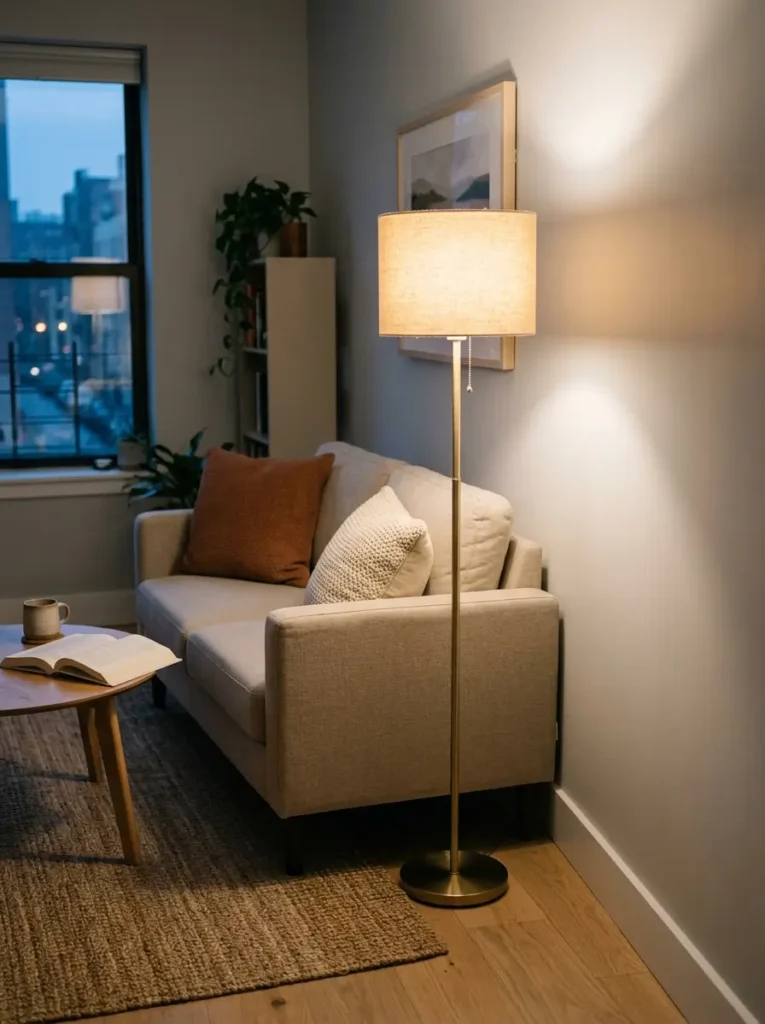
A slim floor lamp beside the sofa is one of the easiest choices for a small living room. It gives you useful light for reading, relaxing, or watching TV without needing a side table lamp. This works well when your sofa already sits close to a wall or corner.
Look for a lamp with a narrow metal pole and a small round base. A base around 9 to 11 inches wide usually works better than a wide tripod base in compact rooms. Black, brushed brass, matte white, or soft nickel finishes are easy to match with most apartment decor.
This idea works because it uses vertical space instead of floor width. Many small apartments have limited surface space, so a floor lamp helps you keep your coffee table and side table clear. It also draws the eye upward, which can make the room feel less cramped.
For a beige, cream, or gray sofa, try a warm brass lamp with a linen shade. For a modern black or charcoal sofa, a matte black floor lamp can look clean and simple. Use a warm white bulb around 2700K if you want soft evening light.
This tip is best for renters, first apartment owners, and anyone who wants a simple lighting upgrade without changing furniture. Just make sure the lamp does not block the sofa arm or the walking path around the seating area.
Pick an Arc Floor Lamp for Overhead Light
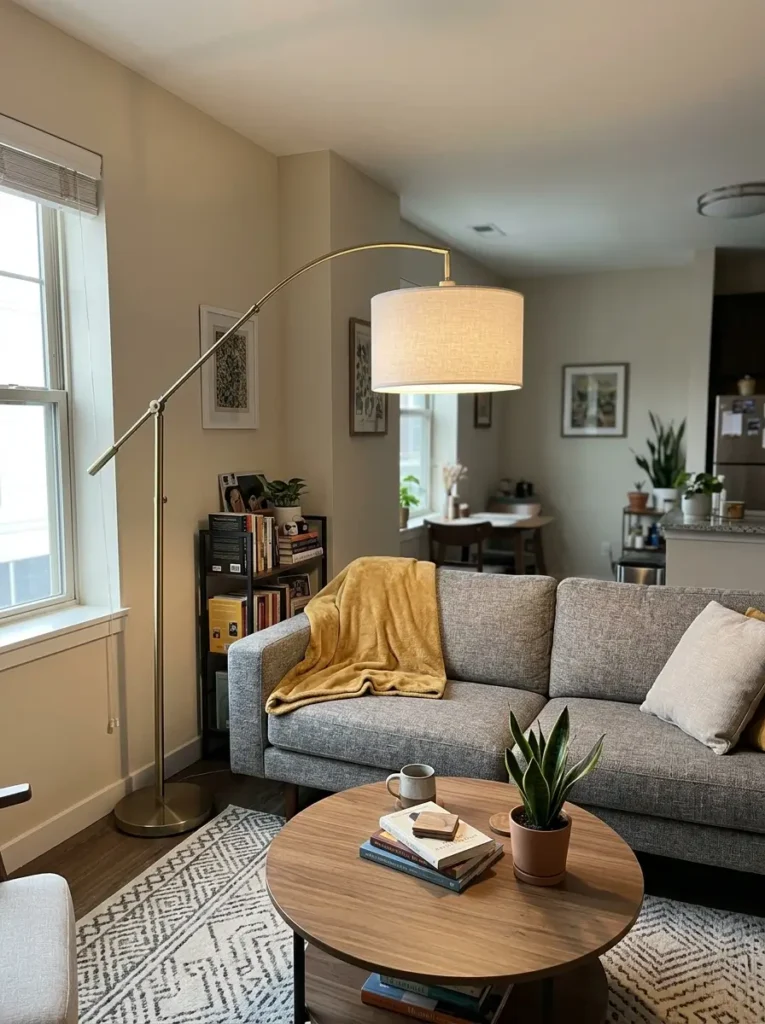
An arc floor lamp can create overhead lighting without ceiling installation. This is helpful in rental apartments where you cannot add pendant lights or hardwired fixtures. The curved arm brings light over a sofa, chair, or small coffee table while the base stays tucked to the side.
Choose an arc lamp carefully in a small apartment. Some arc lamps have huge marble bases and wide arms that need a lot of clearance. For compact spaces, look for a smaller arc with a slim stem, adjustable arm, and a shade that does not hang too low.
This idea works because it gives you the effect of ceiling lighting without using ceiling wiring. It also helps define a seating zone in an open-plan studio. When placed behind a sofa or near a corner, it can brighten the middle of the room without needing another lamp.
A good example is placing a slim arc lamp behind the sofa so the shade reaches over the coffee table. This setup works especially well if your apartment has no ceiling light in the living room. Keep the shade at least a few inches above head level when seated.
Use this idea if you want a more designed look but still need practical light. It suits modern, mid-century, and minimalist rooms. Avoid it in very narrow walkways because the curved arm can feel intrusive if people need to pass under it.
Try a Shelf Floor Lamp for Storage and Light
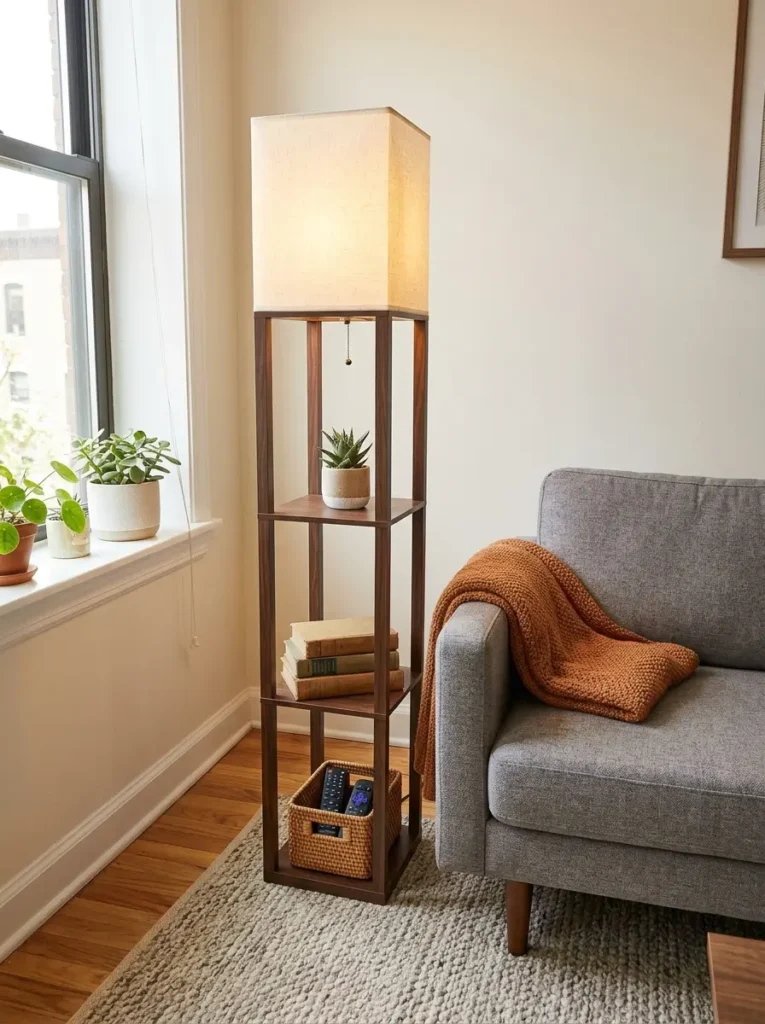
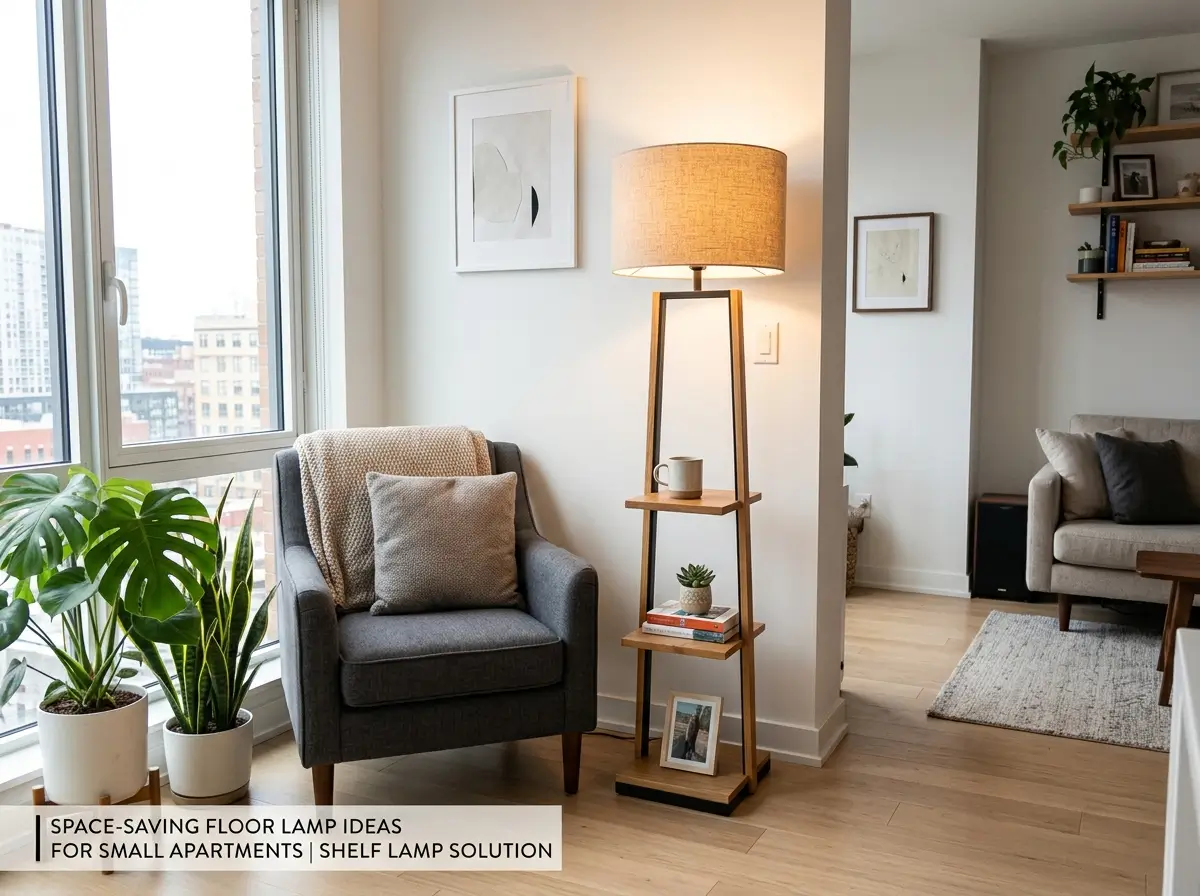
A shelf floor lamp combines lighting with small storage. It usually has two or three narrow shelves built into the lamp frame. This makes it useful in small apartments where every piece of furniture needs to do more than one job.
This type of small apartment floor lamp works well beside a sofa, next to a bed, or near an entry corner. You can use the shelves for a small plant, a book, a remote control basket, or a tray for keys. Keep the styling simple so the lamp does not become visual clutter.
The reason this idea works is clear. It replaces a side table and a lamp with one vertical piece. That saves floor space and reduces the number of furniture items in the room. It also helps beginners create a small styled corner without buying extra decor.
For a warm home look, choose a shelf lamp with a wood frame and a cream fabric shade. For a clean modern apartment, use a black or white frame with simple square shelves. Avoid overloading the shelves with heavy items because these lamps are usually lightweight.
This tip is best for studio apartments, bedrooms without nightstands, and living rooms with small sofas. Use baskets or small boxes on the shelves if you want storage to look neat. A warm 2700K bulb keeps the light soft and comfortable.
Place a Floor Lamp Behind an Accent Chair
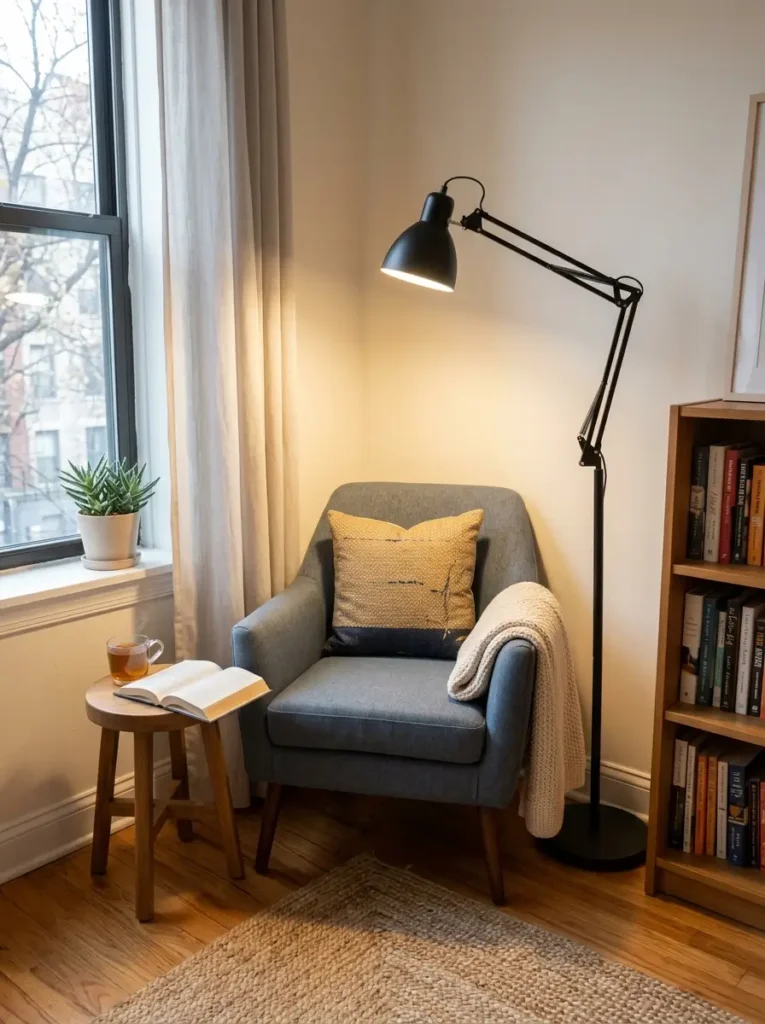
A floor lamp behind an accent chair can create a small reading nook without taking up much space. This setup works well in an empty corner, near a window, or beside a bookcase. It gives the chair a clear purpose and makes the room feel more intentional.
Choose a lamp with an adjustable head if you read often. A pharmacy-style floor lamp, swing-arm lamp, or narrow task lamp can direct light onto your book or laptop. The lamp should be tall enough to shine over your shoulder, not directly into your eyes.
This idea works because it turns an unused corner into a functional zone. Many small apartments have awkward corners that collect random items. A chair, a lamp, and a small cushion can make that area useful without needing a full furniture arrangement.
For example, place a small upholstered chair in a corner with a black adjustable floor lamp behind it. Add a compact round stool instead of a full side table. This gives you a place for tea or a book while keeping the footprint small.
This tip is best for people who work from home, read at night, or want a quiet corner in a studio apartment. Keep the chair and lamp close to the wall so the nook does not push into the main walkway.
Choose a Tripod Lamp Only When the Room Allows It
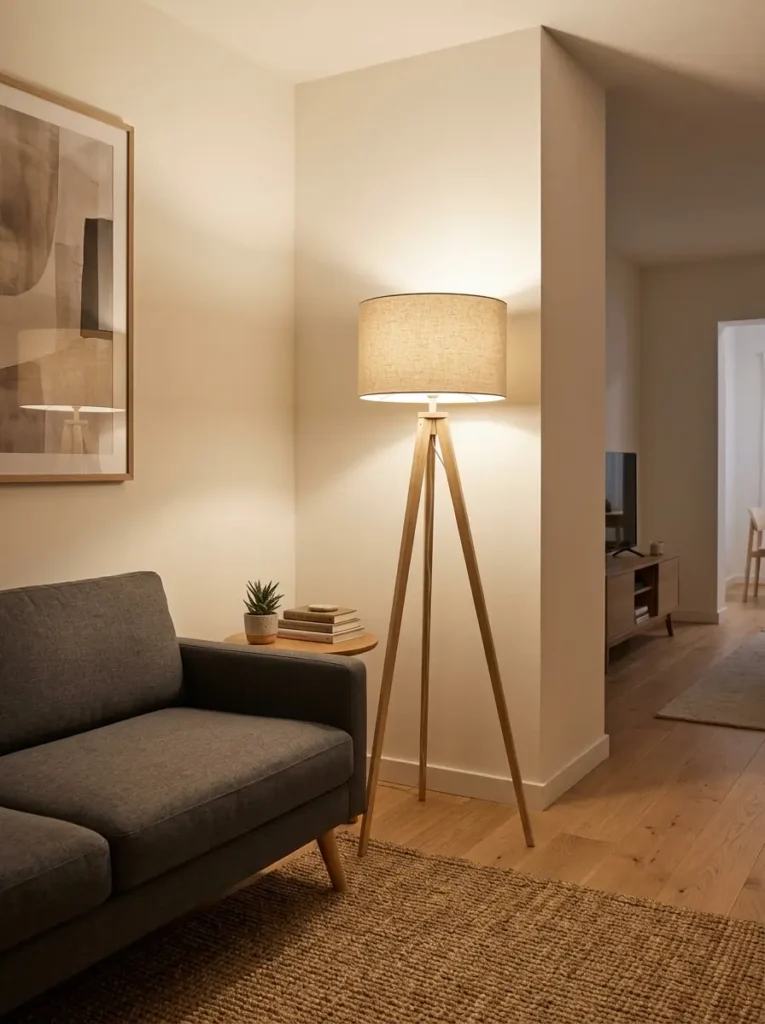
Tripod floor lamps can look stylish, but they need more floor space than slim pole lamps. The three legs spread out, which can become a problem in a narrow living room. Still, a small tripod lamp can work if you place it in the right spot.
Use a tripod lamp in a corner where the legs will not interrupt movement. It can work beside a low sofa, behind a lounge chair, or near a media console. Avoid placing it near doorways, tight hallways, or between the coffee table and sofa.
This idea works when the lamp adds structure to a plain corner. The angled legs can make a room feel warmer and more furnished. Wood tripod lamps are especially useful in neutral apartments because they add texture without strong color.
For small spaces, choose a tripod lamp with slim legs and a simple drum shade. A shade in white, beige, oatmeal, or light gray keeps the look soft. If your furniture is already heavy, avoid chunky tripod designs because they can make the floor look crowded.
This tip is best for people with slightly wider living rooms or empty corners that need height. It is not the best choice for very narrow apartments. Always measure the full width of the legs before buying, not just the shade or pole height.
Use a Torchiere Floor Lamp to Bounce Light Upward
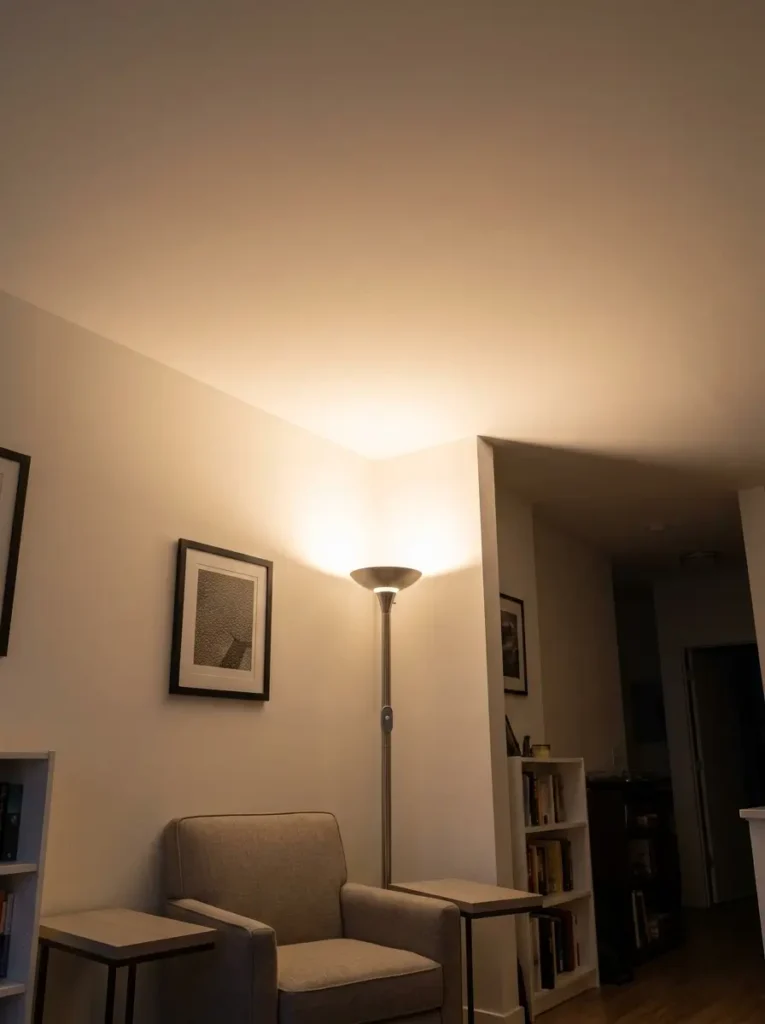
A torchiere floor lamp points light upward toward the ceiling. This can make a small apartment feel brighter because the light spreads across the room instead of shining in one small spot. It is especially helpful in rooms with poor ceiling lighting.
This type of lamp works best with a white or light-colored ceiling. The light bounces off the ceiling and creates a softer glow. If your ceiling is dark, textured, or very high, the effect may be weaker, so use it with another lamp nearby.
The reason this idea works is that indirect light feels less harsh. It reduces strong shadows and helps a small room feel more open. It can also brighten corners without taking up much floor space because many torchiere lamps have slim poles.
Place a torchiere floor lamp in a dark corner, behind a sofa, or near a wall that needs light. Choose a dimmable version if possible. Bright upward light can feel too strong at night, so dimming gives you more control.
This tip is best for renters who cannot install ceiling lights. It is also useful in older apartments where one overhead fixture does not reach every corner. Use a warm white or soft white bulb for living rooms, and avoid cool blue bulbs unless the room is used for focused work.
Add a Floor Lamp Beside the Bed Instead of a Nightstand Lamp
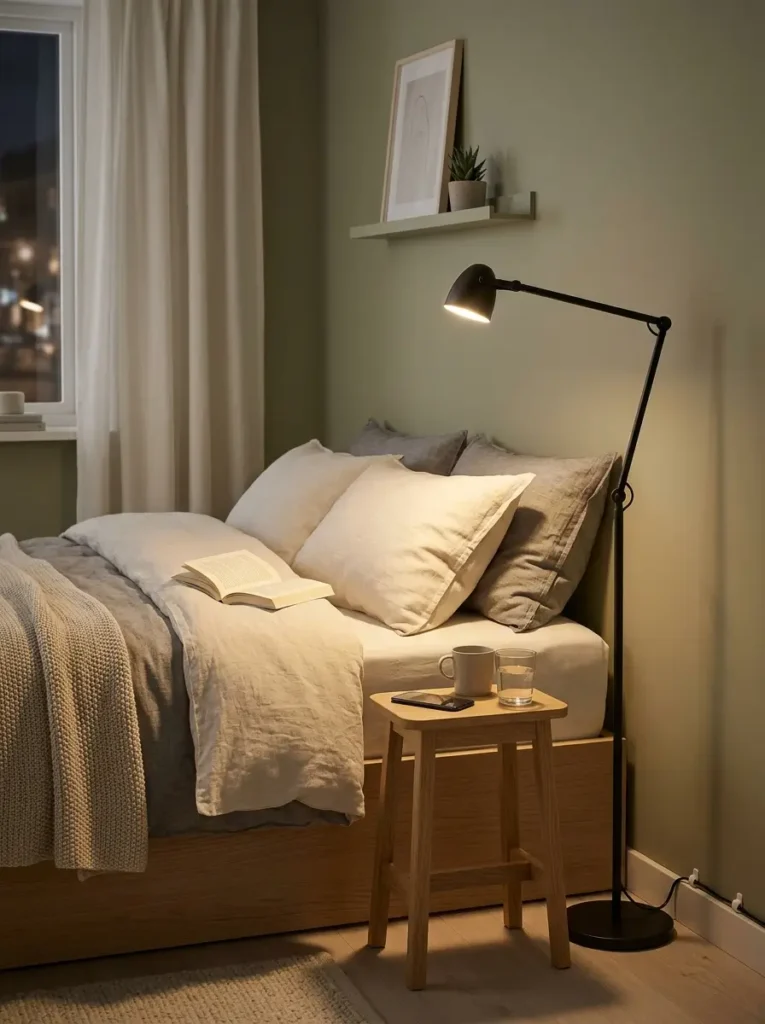
Small bedrooms often do not have space for two full nightstands. A floor lamp beside the bed can replace a table lamp and free up surface space. This works especially well beside a platform bed, narrow bed frame, or bed placed against the wall.
Choose a lamp with a small base that can slide close to the wall. A slim reading lamp with an adjustable head works better than a wide shade if your bedroom is tight. The light should reach your pillow area without shining directly into your face.
This idea works because it keeps the bedside area lighter and less crowded. You can use a wall shelf, narrow stool, or small floating nightstand for your phone and water while the floor lamp handles the lighting. This is a good rental-friendly alternative to wall sconces.
For a cozy bedroom, use a warm bulb around 2700K. A fabric shade gives soft light, while a metal task shade gives more focused light for reading. If you share the bed, choose a directional lamp so you do not disturb the other person.
This tip is best for renters, studio apartment bedrooms, and small rooms with limited bedside space. Keep the cord tucked along the wall with removable cord clips to avoid a messy or unsafe floor.
Use a Floor Lamp to Divide a Studio Apartment
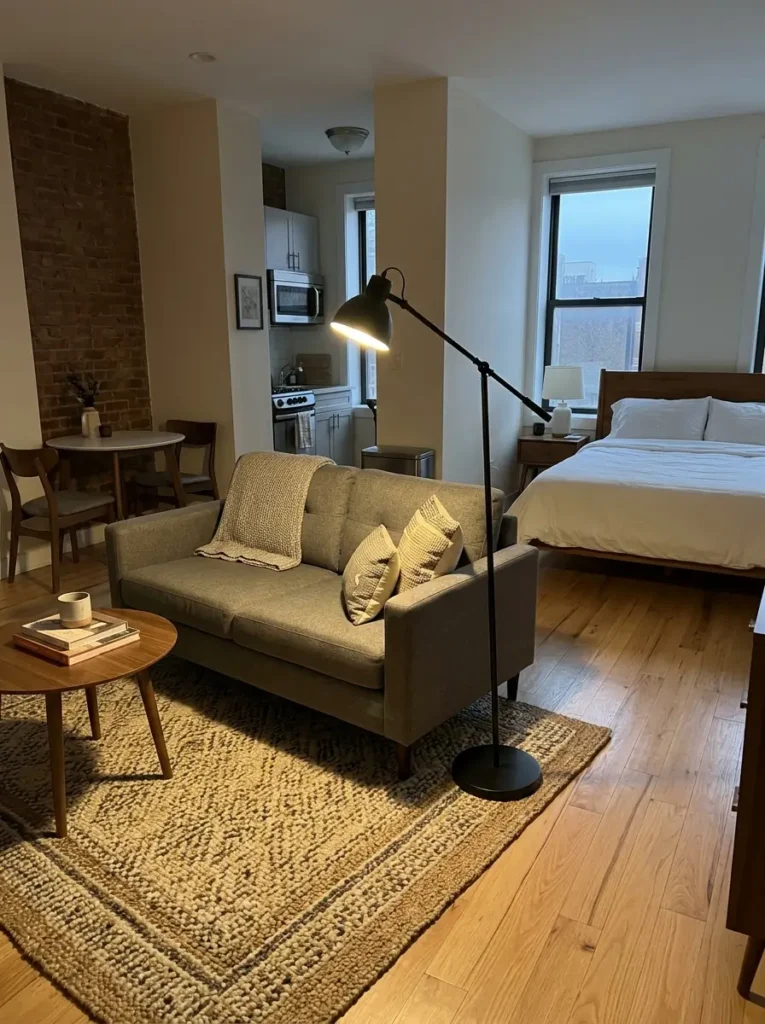
A floor lamp can help divide zones in a studio apartment without using a bulky room divider. It can mark the edge between the living area and sleeping area, or between the sofa and dining corner. Lighting is one of the easiest ways to create zones in one open room.
Place a floor lamp beside the sofa, behind a chair, or between two furniture zones. The lamp becomes a visual marker that says, “this area has a purpose.” It also gives each zone its own mood, which matters when one room does many jobs.
This idea works because small apartments often lack architectural separation. You may not have walls, built-ins, or separate rooms. A lamp adds height and helps organize the space without blocking light or making the apartment feel smaller.
For example, place a slim black floor lamp next to a small sofa facing away from the bed. Add a rug under the sofa area. The lamp and rug together make the living zone feel separate, even in a one-room apartment.
This tip is best for studio renters, open-plan apartments, and people who want better room flow. Avoid placing the lamp in the middle of a walkway. It should support the layout, not become something you walk around all day.
Pick a Floor Lamp With a Small Drum Shade
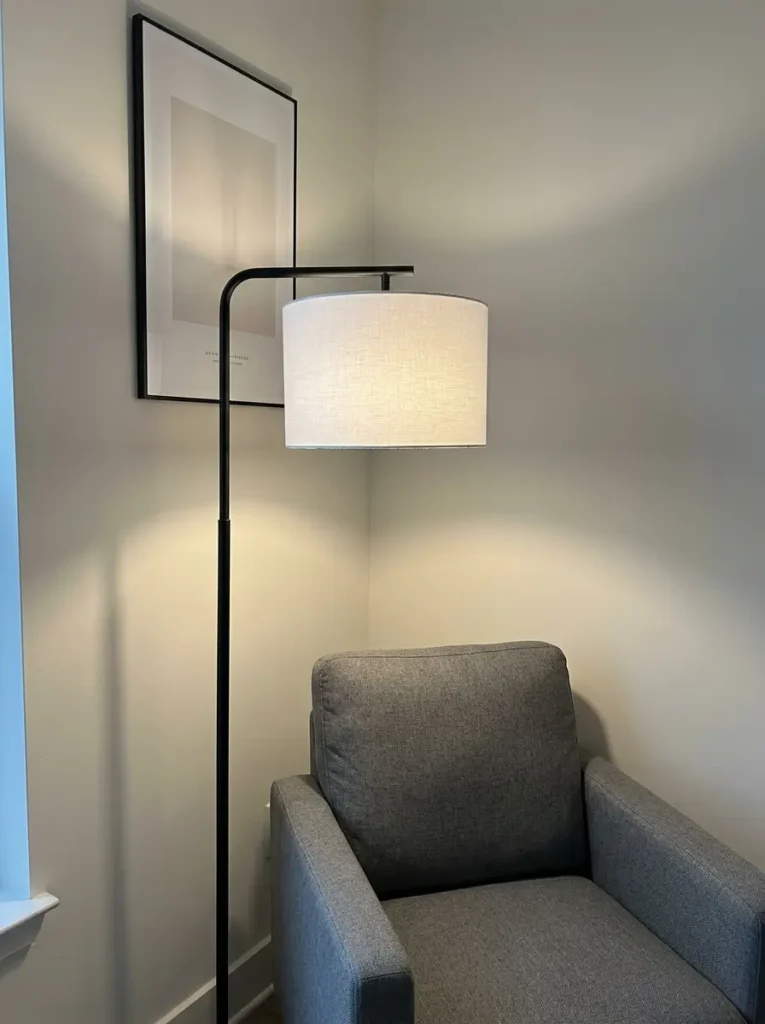
The shade shape matters more than many beginners realize. A large shade can make a floor lamp feel bulky even if the base is slim. A small drum shade gives balanced light while keeping the lamp visually neat.
A drum shade spreads light upward and downward, which works well for living rooms and bedrooms. Choose a shade that is wide enough to look balanced but not so wide that it touches the wall, curtains, or furniture. In small rooms, a shade between 12 and 16 inches often feels easier to place.
This idea works because the shade controls both the style and the light quality. Fabric shades soften brightness and make the room feel calmer. White and cream shades let more light through, while darker shades create moodier light but may not brighten the room as much.
For a small apartment floor lamp in a neutral room, try a linen drum shade with a slim brass or black pole. For a colorful room, a white shade can keep the lighting simple while other decor carries the color.
This tip is best for beginners who want a safe, flexible lamp choice. It works with many decor styles and does not demand attention. Avoid shades that are too tall, too flared, or too dark if your main goal is bright functional light.
Choose a Floor Lamp With Built-In Dimming
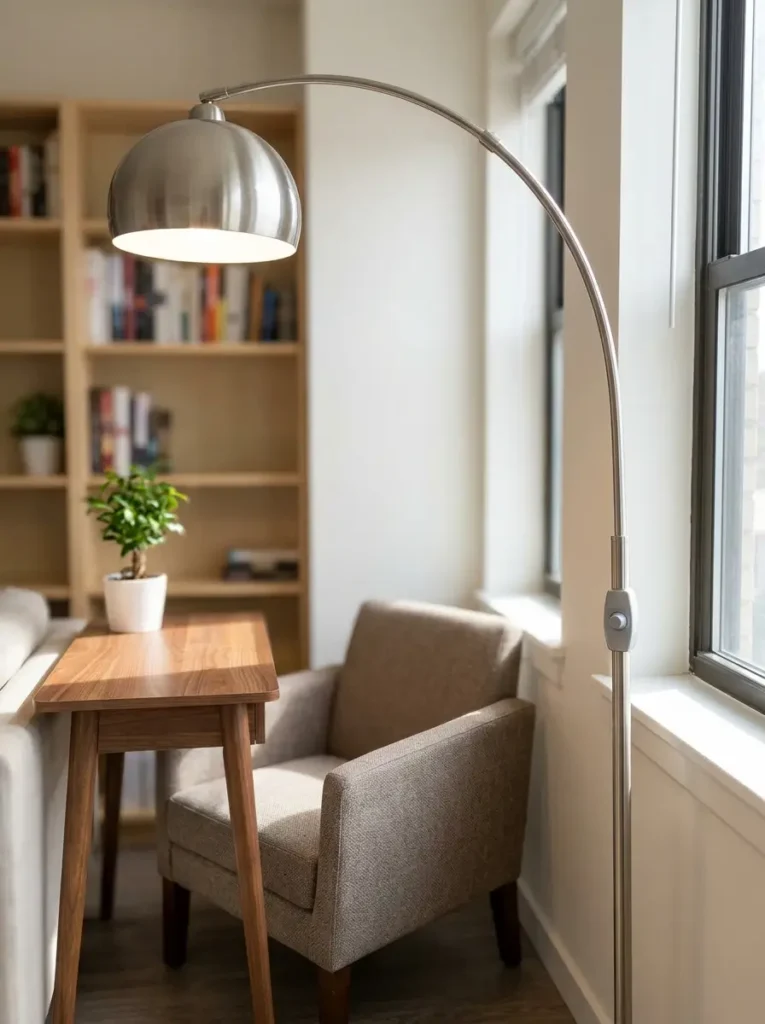
A dimmable floor lamp gives you more control in a small apartment. The same lamp can provide brighter light for cleaning or reading and softer light for evening relaxation. This is helpful when you do not have room for several lamps.
Dimming works especially well in living rooms, bedrooms, and studio apartments. You can keep the lamp bright during the day or early evening, then lower it at night. This helps the room feel comfortable without needing separate task, accent, and mood lighting.
This idea works because small spaces change function throughout the day. Your living room may be a work area, dining spot, and relaxation zone. Adjustable lighting helps one room support all those uses without adding more fixtures.
Look for floor lamps with a built-in dimmer switch, foot dimmer, or smart bulb compatibility. If the lamp does not include dimming, you can often use a dimmable LED bulb with a compatible plug-in dimmer. Always check the lamp and bulb instructions first.
This tip is best for anyone who works from home, watches TV in the living room, or lives in a studio. For the best comfort, use warm white bulbs around 2700K to 3000K. Avoid very cool bulbs in evening areas because they can feel harsh in a small room.
Use a Tall Narrow Lamp in an Empty Corner
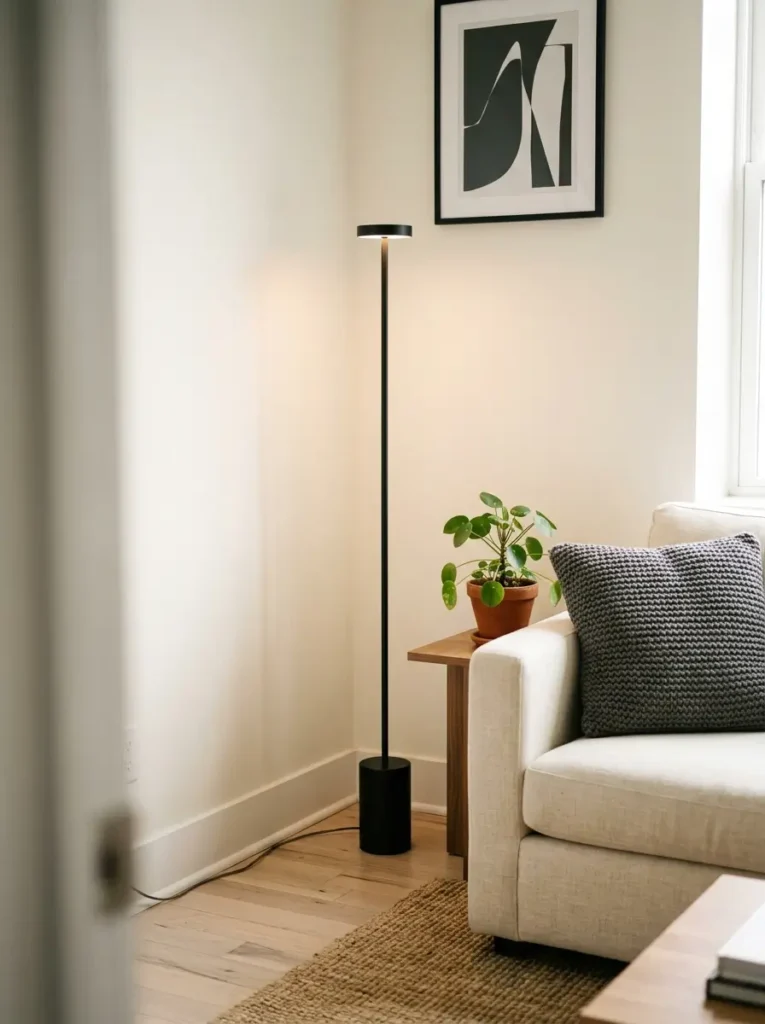
Empty corners can make a small apartment feel unfinished, but filling them with bulky furniture can create clutter. A tall narrow floor lamp is a simple way to add height, light, and purpose without using much space.
This works especially well in corners near the sofa, beside a media console, or next to a small dining table. Choose a lamp with a slim stem and a compact base. The height should feel balanced with nearby furniture, usually around 58 to 66 inches for most living rooms.
The reason this idea works is that corners often lack both light and visual interest. A floor lamp brightens the area and makes the room feel more complete. It also pulls attention upward, which helps the space feel taller.
For example, place a matte black floor lamp in a corner behind a cream sofa. Add one textured cushion and a small plant nearby. The lamp gives structure to the corner without needing a large shelf, cabinet, or plant stand.
This tip is best for beginners who are not sure how to decorate awkward corners. It is also helpful for renters because it does not require drilling or permanent changes. Keep the cord along the wall so the corner stays tidy.
Try a Multi-Light Floor Lamp for Flexible Lighting
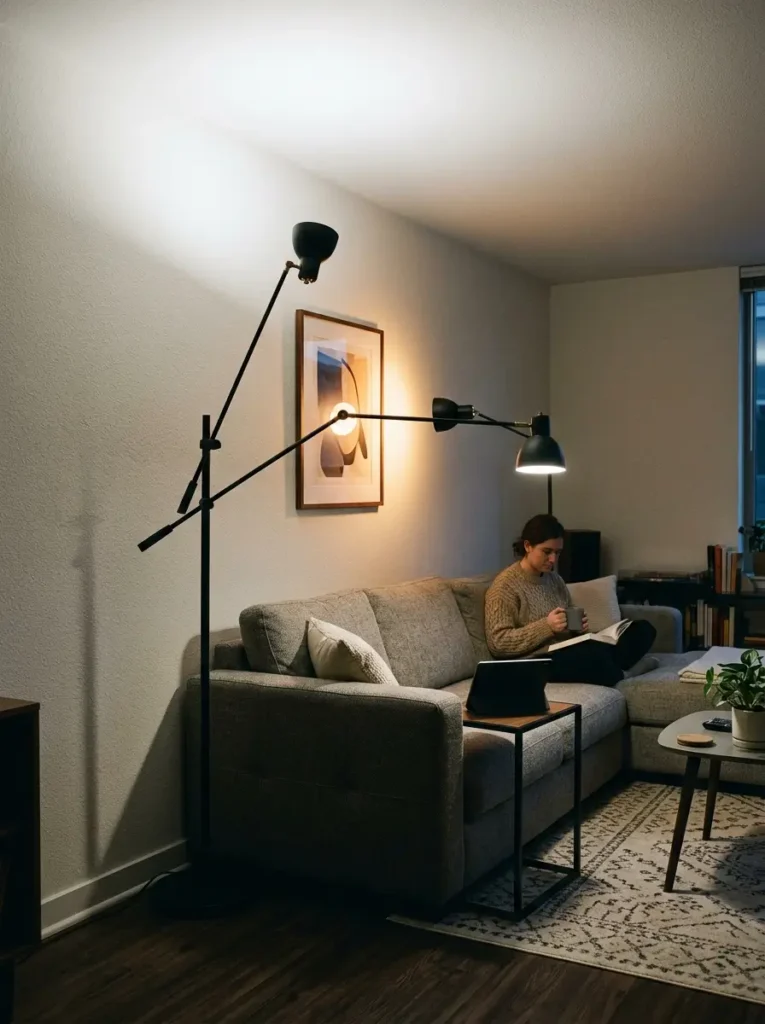
A multi-light floor lamp has two or more adjustable heads. It can light different parts of a small room from one base. This makes it useful when you need reading light, general light, and accent light but do not have space for several lamps.
Choose a design with slim arms and small shades. Some multi-light lamps look too busy, especially in small apartments. A simple black, white, or brass version usually blends better with compact decor.
This idea works because it gives flexibility without extra furniture. You can point one light toward a chair, one toward the wall, and one toward the ceiling. This layered effect makes a small room feel more comfortable and less flat.
For example, use a three-head floor lamp near a sectional sofa. Aim one head at the seating area, one toward the wall art, and one upward for ambient light. This gives the room depth without needing wall sconces or table lamps.
This tip is best for shared apartments, studio layouts, and living rooms used for several activities. It is also good for renters who cannot add built-in lighting. Avoid versions with colorful plastic shades unless they match your decor plan, because they can look messy quickly.
Place a Floor Lamp Near a Mirror
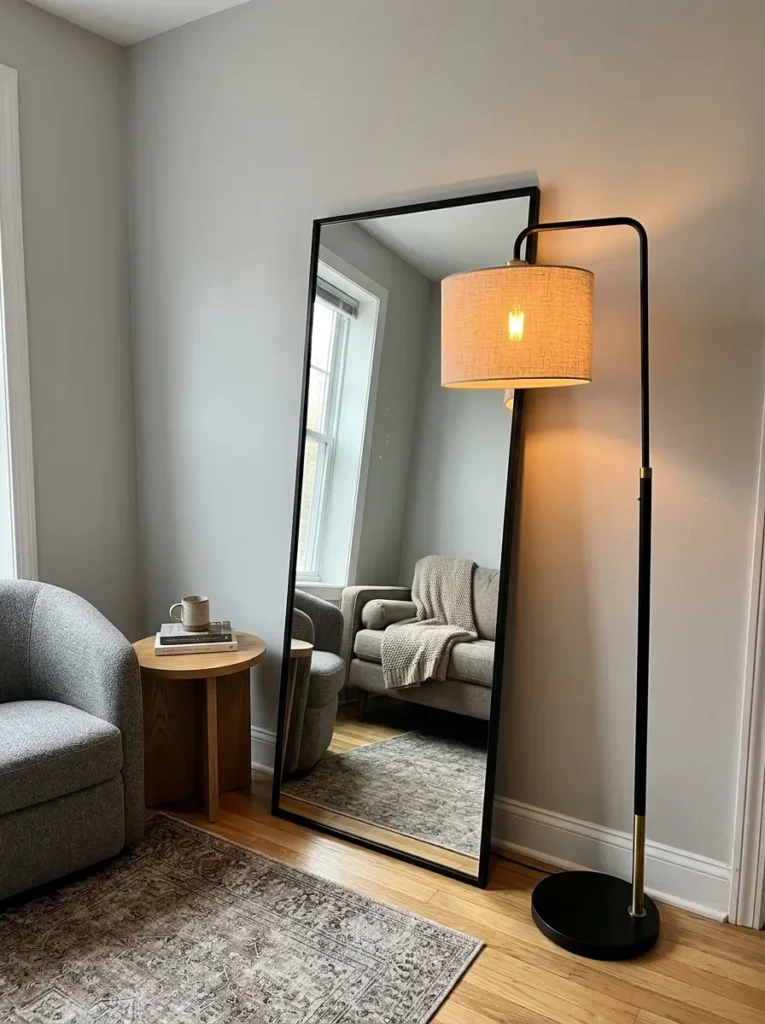
A floor lamp near a mirror can help spread light through a small apartment. The mirror reflects some of the light, making the room feel brighter without adding another fixture. This works well in narrow living rooms, small bedrooms, and entry corners.
Place the lamp slightly beside the mirror, not directly in front of it. This reduces glare and keeps the reflection softer. A warm bulb works best because it creates a comfortable glow instead of a sharp reflection.
This idea works because mirrors help move light around the room. Small apartments often have limited windows or dark corners. A mirror and floor lamp together can improve brightness without major changes.
For example, place a tall mirror near a sofa corner and add a slim floor lamp beside it. The mirror reflects light into the seating area, while the lamp adds height. This setup can also make the corner look more styled and useful.
This tip is best for renters who want a brighter room without adding ceiling lights. Use a leaning mirror only if it is safely secured, especially in homes with children or pets. Avoid placing the lamp where the bulb reflects directly at eye level.
Use a Floor Lamp to Balance a TV Wall
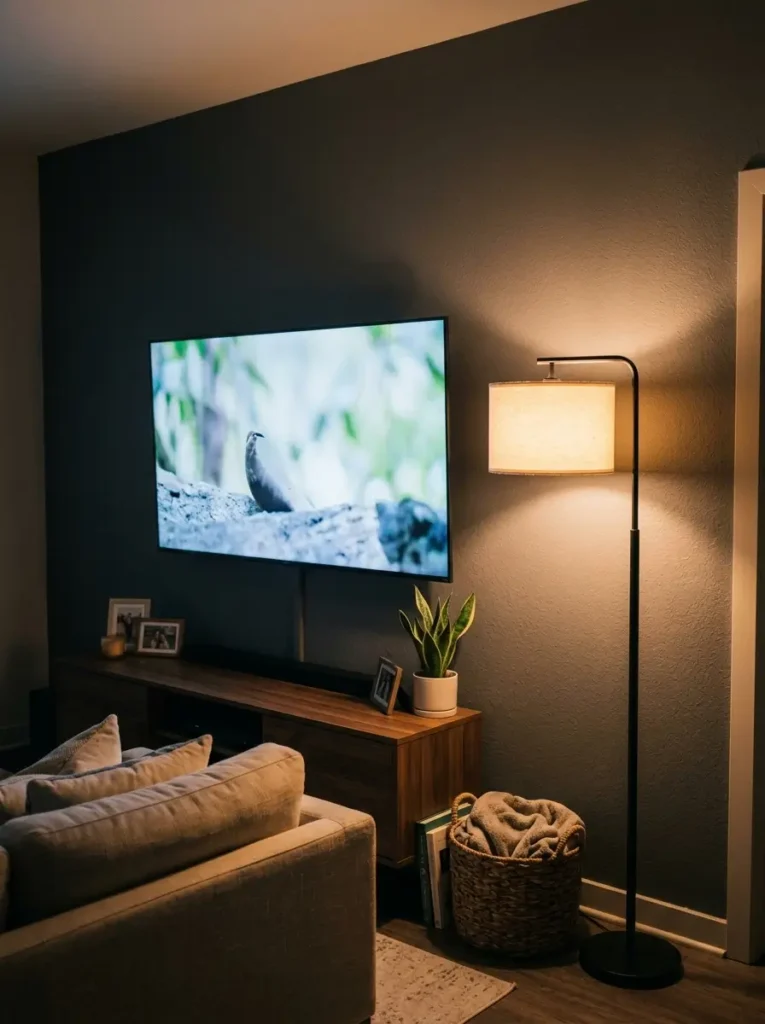
A TV wall can look dark and heavy in a small apartment. A floor lamp beside the media console can soften that area and make the screen wall feel less harsh. This is especially useful if you watch TV at night.
Place the lamp to one side of the TV, not directly beside the screen. The goal is to add soft surrounding light, not glare. A shaded lamp or indirect floor lamp works better than a bright exposed bulb.
This idea works because screen light alone can create strong contrast in a dark room. A soft floor lamp helps reduce eye strain and makes the living room feel more comfortable. It also adds height beside a low media console.
For a modern TV wall, choose a slim black or brass lamp with a simple shade. If the room has a beige sofa and wood furniture, a warm metal or wood floor lamp can connect the TV area with the rest of the decor.
This tip is best for small apartments where the TV wall is the main living room feature. Keep the lamp cord hidden behind the media console if possible. Avoid placing the shade where it reflects on the screen.
Choose a Plug-In Floor Lamp for Rental-Friendly Styling
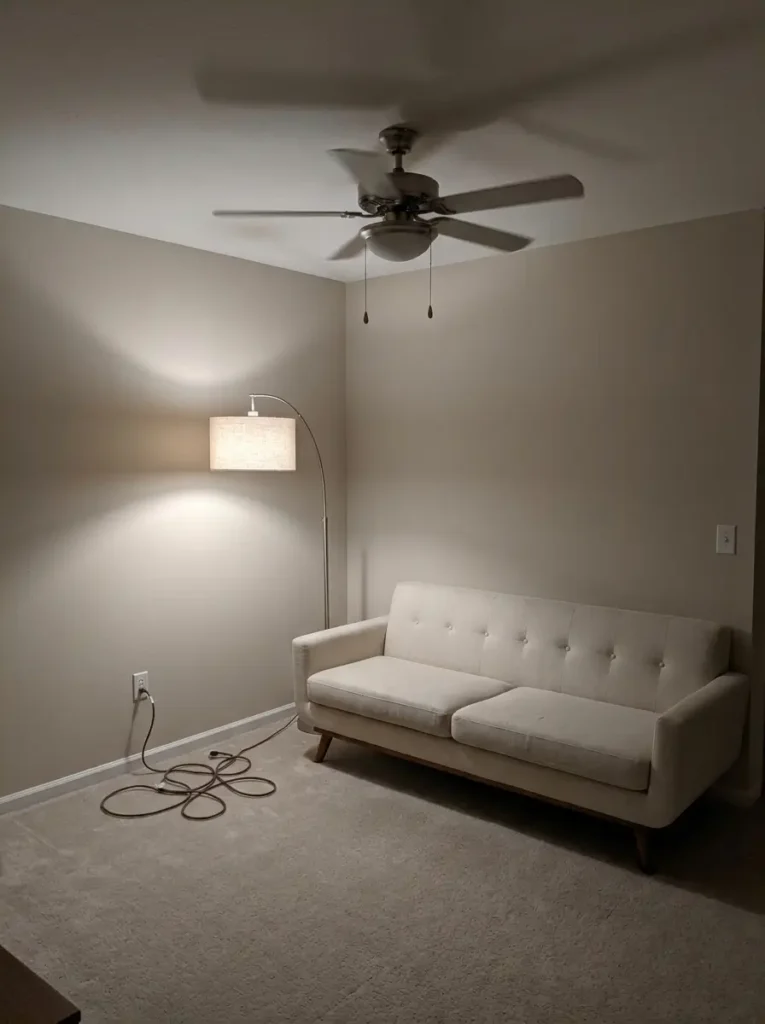
A plug-in floor lamp is one of the most rental-friendly lighting choices. You do not need wiring, drilling, or landlord approval. You can move it whenever your layout changes, which matters in small apartments where furniture often shifts.
This idea works because renters need flexible solutions. A floor lamp can replace a missing ceiling light, improve a dark corner, or add task lighting without permanent installation. It also travels easily when you move.
Choose a lamp with a cord long enough to reach the nearest outlet without stretching across the room. If the outlet is far away, use a safe extension solution rated for your lamp. Keep cords along walls and secure them with removable clips.
For example, if your apartment has only one ceiling light in the center of the room, place a plug-in floor lamp near the sofa. Add another small lamp near the bed if needed. This creates more comfortable lighting zones without touching the walls.
This tip is best for renters, students, and anyone decorating on a budget. Choose a classic design in black, white, brass, or wood so you can reuse it in future homes. Avoid trendy shapes if you want the lamp to last through different decor styles.
Common Mistakes to Avoid With Small Apartment Floor Lamps
One common mistake is buying a lamp that is too large for the room. A wide base, oversized shade, or heavy tripod frame can make a small apartment feel crowded. Always check the full width of the lamp before buying, not only the height.
Another mistake is using only one bright lamp for the whole room. One strong light can create harsh shadows and make corners feel dark. It is better to use a floor lamp with another small light source, such as a table lamp, wall light, or under-shelf light.
Many beginners also choose the wrong bulb temperature. Cool white bulbs above 4000K can feel harsh in living rooms and bedrooms. Warm white bulbs around 2700K to 3000K usually feel better for cozy apartment lighting.
Placing the lamp in a walkway is another problem. A floor lamp should not force you to step around it. Keep it near walls, corners, sofa arms, chairs, or furniture edges where it supports the layout.
Cord clutter can also make a room look messy. Loose cords across the floor are unsafe and distracting. Use removable cord clips, cord covers, or furniture placement to keep cords neat, especially in rental spaces.
A final mistake is choosing a lamp only for style. A beautiful lamp is not useful if it shines in your eyes, blocks the TV, or does not brighten the area you need. Always think about the task first, then choose the style.
Budget-Friendly Small Apartment Floor Lamp Tips
You do not need an expensive lamp to improve a small apartment. Start by choosing a simple shape that works in more than one room. A slim black, white, brass, or wood floor lamp can move from the living room to the bedroom when your layout changes.
Check affordable home stores, online marketplaces, secondhand shops, and local furniture resale groups. Many people sell lamps when they move, and you can often find simple floor lamps in good condition. Always test the switch and check that the lamp stands straight before buying used.
Changing the bulb can also improve a budget lamp. A warm LED bulb can make an inexpensive lamp feel much better. Choose the brightness based on the purpose. Around 450 to 800 lumens can work for soft living room light, while reading areas may need stronger focused light.
If the lamp shade looks cheap, replace only the shade instead of the whole lamp. A clean linen or cotton shade in white, cream, or oatmeal can make an old base look newer. Make sure the shade fitting matches your lamp before buying.
Use smart plugs or smart bulbs if you want better control without buying a new lamp. This can help you turn the lamp on from your phone or set evening routines. For renters, this is easier than installing new switches.
Keep decor around the lamp simple. One floor lamp, one chair, and one small side surface can create a useful corner. Buying too many small accessories often costs more and makes the room feel cluttered.
Small Apartment Floor Lamp Tips
Measure before you shop. Check the space where the lamp will stand, including base width, shade width, height, and distance to the outlet. A lamp that looks small in a showroom may feel much bigger in a compact apartment.
Think about the lamp’s job. Do you need reading light, soft background light, TV wall lighting, or light for a dark corner? The answer will help you choose between a task lamp, shaded lamp, arc lamp, torchiere, or multi-light lamp.
Use warm light in relaxing areas. For living rooms and bedrooms, 2700K to 3000K usually creates a softer effect. For a desk corner or focused task area, you can use a slightly brighter bulb, but avoid making the space feel cold.
Match the lamp scale to nearby furniture. A very thin lamp may look weak beside a large sectional, while a heavy lamp may overpower a small loveseat. The lamp should feel connected to the furniture, not random.
Keep floor space clear. In a small apartment, the best floor lamp is often the one you barely notice in the walking path. Tuck it beside furniture, behind a chair, or into a corner.
Choose simple finishes if you are unsure. Matte black, warm brass, white, and natural wood are easy to style. They also work with many decor styles, from modern to cozy neutral to small-space farmhouse.
FAQ
What type of floor lamp is best for a small apartment?
A slim floor lamp with a narrow base is usually best for a small apartment. It adds height and light without taking up much room. If you need reading light, choose an adjustable task lamp. If you need general light, try a shaded lamp or torchiere.
Where should I place a floor lamp in a small living room?
Place a floor lamp beside the sofa, behind an accent chair, in an empty corner, or near the TV wall. Keep it close to furniture edges so it does not block the walkway. The lamp should brighten a useful area, not stand randomly in the room.
What bulb color is best for a small apartment floor lamp?
Warm white bulbs around 2700K to 3000K work best for most living rooms and bedrooms. They create a softer, more comfortable light. Cool white bulbs can work in task areas, but they may feel too harsh in relaxing spaces.
Can a floor lamp replace ceiling lighting?
A floor lamp can help replace ceiling lighting in many rental apartments, especially when paired with other small lamps. A torchiere or arc floor lamp can spread light well. However, one lamp may not be enough for every activity, so layered lighting usually works better.
Are arc floor lamps good for small apartments?
Arc floor lamps can work in small apartments if the design is not too large. Choose a compact arc with a slim base and adjustable arm. Place it behind or beside furniture so the curved arm does not block movement.
How do I hide floor lamp cords in a rental?
Run the cord along the wall and secure it with removable cord clips. You can also place the lamp near furniture so the cord stays hidden behind a sofa, chair, or media console. Avoid running cords across open walkways because they can be unsafe.
Conclusion
A small apartment floor lamp can do more than brighten a room. It can save surface space, define a corner, soften a TV wall, support a reading nook, and make a rental feel more comfortable without permanent changes. The key is choosing a lamp that fits your layout, not just your style.
Start with the space you need to improve most. A dark sofa corner may need a slim shaded lamp. A studio may need a lamp that helps divide zones. A bedroom without nightstand space may need a narrow reading lamp. When the lamp has a clear purpose, it becomes easier to choose the right size, shape, and bulb.
Keep the design simple, measure carefully, and use warm light where you relax. Small rooms do not need many large decor pieces. They need practical choices that make daily life easier. The right floor lamp can help your apartment feel brighter, calmer, and more useful without taking over the floor.