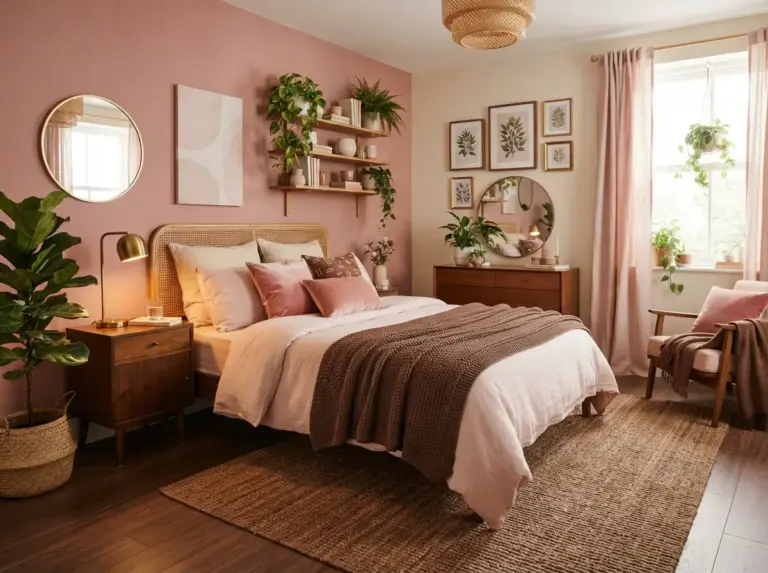

Good apartment living room lighting can change how your whole space feels. This matters even more when you live in a small apartment, because every corner needs to work harder. A dark corner can make the room feel unfinished, cramped, or cold. A well-lit corner can make the same space feel cozy, useful, and more balanced.
Corners often get ignored because they are not always easy to decorate. You may not have ceiling wiring in the right place. You may not want to drill holes because you rent. You may also have awkward layouts, narrow walkways, or furniture pushed against the walls. The good news is that you do not need a big renovation to fix these problems.
The right lamp, bulb, shade, and placement can make a corner look intentional. You can create a reading nook, highlight plants, brighten a sofa corner, or add soft evening light without taking up much floor space. This guide shares practical apartment living room lighting ideas that work for beginners, renters, and anyone decorating on a budget.
What Is the Best Apartment Living Room Lighting for Corners?
The best apartment living room lighting for corners is layered lighting. This means you use more than one light source, such as a floor lamp, table lamp, wall sconce, or LED strip, instead of relying only on one ceiling light. For most apartments, warm white bulbs between 2700K and 3000K work well because they feel soft and comfortable in a living room.
For corners, choose lighting based on the purpose of the space. A reading corner needs focused light. A plant corner needs balanced light and maybe a grow light if natural light is weak. A sofa corner needs soft light that does not glare into your eyes. A display corner needs accent lighting that highlights shelves, art, or texture.
Add a Slim Floor Lamp Beside the Sofa

A slim floor lamp is one of the easiest apartment living room lighting ideas for corners. It works well because it adds height without taking up much room. In a small apartment, vertical lighting helps the eye move upward, which can make the room feel less crowded.
Place the lamp in the corner behind or beside your sofa. This works especially well if your sofa sits against two walls or near a window. A narrow black, brass, white, or matte beige floor lamp can blend with most decor styles. If your living room has a neutral palette, choose a warm brass lamp for softness. If your room has modern furniture, a black metal lamp often looks clean and grounded.
This idea is best for renters, small apartments, and anyone who wants a fast lighting upgrade without drilling. Choose a lamp with a weighted base so it does not tip easily. If the corner is tight, look for a base that slides under the sofa or sits close to the wall.
Use a warm white LED bulb around 2700K for evening comfort. If you read in that corner, choose a lamp with an adjustable arm or a shade that points light downward. Avoid very bright cool white bulbs because they can make a living room feel like an office.
Use an Arc Lamp Over a Corner Chair

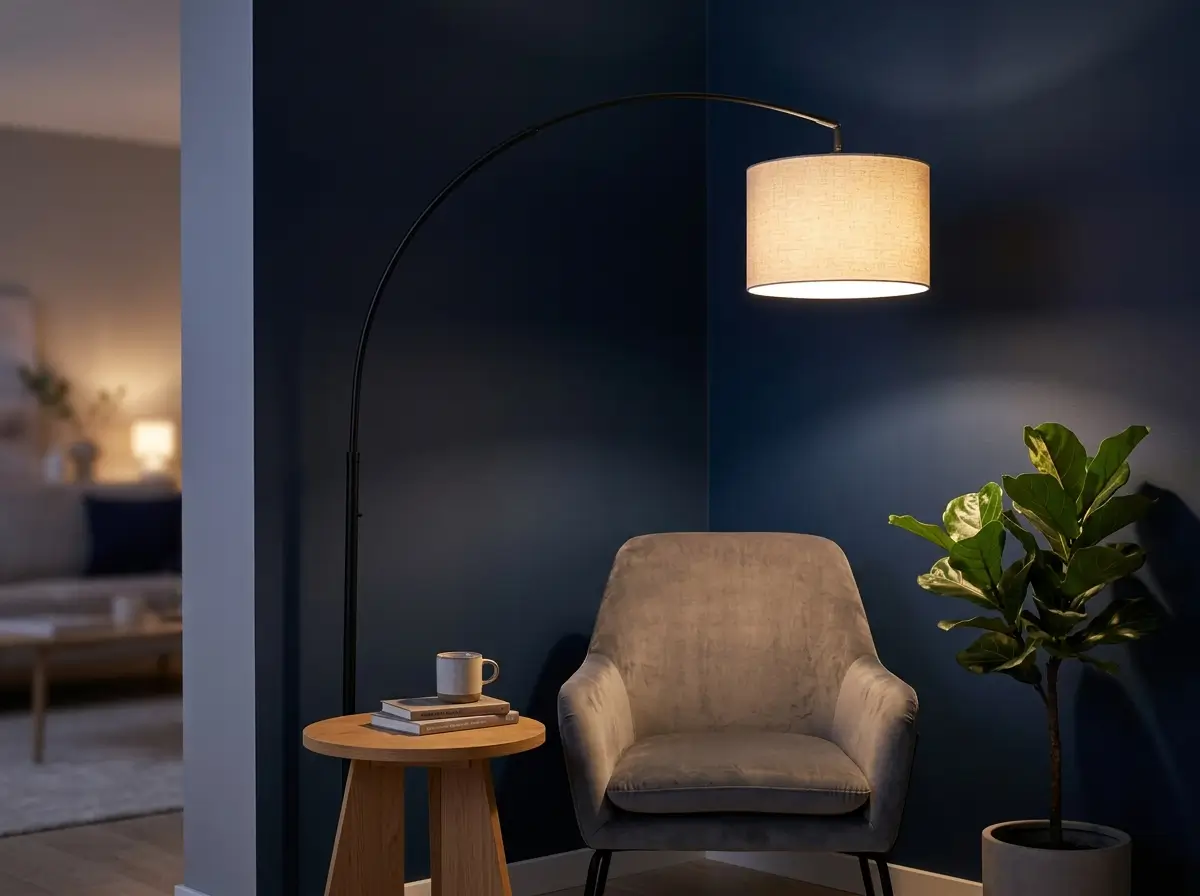
An arc lamp is a smart choice when you want overhead-style lighting without ceiling wiring. It curves over a chair, sofa, or small side table and gives the corner a more finished layout. This is useful in apartments where the ceiling light is in the wrong place or too harsh.
Place an accent chair in the corner, then position the arc lamp so the shade hangs above the seat. Add a small round side table and a soft throw blanket to create a practical reading or coffee corner. The curved shape also helps break up straight apartment walls and boxy furniture.
This idea works best for people who have one empty corner and want to turn it into a useful seating area. It also works well in open-plan apartments because the arc shape visually separates the corner from the rest of the room.
Choose the size carefully. In a small apartment, a huge arc lamp can overwhelm the room. Look for a slim metal frame and a simple shade. A white fabric shade gives soft, diffused light. A black or bronze metal shade gives a more focused light but may feel stronger. Keep the bulb warm, around 2700K to 3000K, so the corner feels relaxed at night.
Create a Reading Corner With a Task Lamp

A reading corner needs more than general light. It needs task lighting, which means focused light that helps you see clearly without lighting the whole room. This makes your apartment living room lighting more practical and comfortable.
Start with a comfortable chair, small side table, and a task lamp. The lamp should sit slightly behind or beside your shoulder, not directly in front of your face. This placement reduces glare and keeps the page, tablet, or laptop well-lit. If you use the corner for reading and working, choose a lamp with an adjustable neck.
This idea is best for book lovers, students, remote workers, and anyone who wants a quiet corner in a small apartment. It also works in awkward corners that are too small for a big floor lamp but large enough for a chair and table.
For the bulb, use 3000K if you want clear but still warm light. A bulb around 450 to 800 lumens is usually enough for reading, depending on the shade and distance. Avoid placing the lamp too low because it may cast shadows over your book. Also avoid exposed bulbs near eye level, especially if you sit close to the lamp.
Install Plug-In Wall Sconces for a Rental-Friendly Upgrade

Plug-in wall sconces are a great solution when you want the look of built-in lighting without hiring an electrician. They mount on the wall and plug into a standard outlet, so they are easier for renters than hardwired sconces. Some can be installed with screws, while lighter options may work with renter-friendly mounting methods if the manufacturer allows it.
Use plug-in sconces on both sides of a corner sofa, above a small side table, or beside a reading chair. This frees up floor space and makes the corner look more designed. It also helps when your living room is narrow and you do not have room for a floor lamp base.
This idea works best for renters who want wall lighting, small-space decorators, and people who like a clean look. Choose sconces with fabric, frosted glass, or opaque shades if you want soft light. Choose adjustable metal sconces if you need focused light for reading.
Cord management matters here. A visible cord can look messy if it hangs loosely. Use paintable cord covers that match your wall color. White cord covers work well on white or cream walls. Black cords can look intentional in industrial or modern rooms. For a calm look, avoid placing too many cords in one corner.
Place a Table Lamp on a Corner Side Table

A table lamp can make a corner feel warm and balanced without changing the whole room. It works well when you already have a side table near your sofa or chair. It also adds a lower layer of light, which makes a living room feel more comfortable than using only overhead lighting.
Choose a side table that fits the corner. A round table works well in tight spaces because it has no sharp corners. A narrow C-shaped table can slide over the sofa arm. A small nesting table works if you need flexibility. Place the lamp near the back edge of the table so you still have room for a cup, book, or remote.
This idea is best for beginners because it is simple and low-risk. You can change the lamp shade, bulb, or table later without changing the whole layout. It is also budget-friendly because thrift stores and discount shops often have good lamp bases.
For the shade, pick a fabric shade in white, cream, oatmeal, or light gray if you want soft light. A dark shade looks stylish but sends less light into the room. If your corner already feels dark, avoid black shades unless the lamp has a strong upward or downward glow. A warm white bulb around 2700K usually works best for evening use.
Highlight a Plant Corner With Soft Up lighting

Plants can look flat in a dark corner, especially at night. Soft uplighting can make the corner feel alive and give your apartment living room lighting more depth. Uplighting means placing a light low and aiming it upward, often behind or beside an object.
Place a small uplight behind a tall plant, such as a fiddle leaf fig, rubber plant, snake plant, or palm. The light will create shadows on the wall and make the leaves stand out. This works especially well with textured walls, warm beige paint, or soft white walls.
This idea is best for plant lovers and renters who want a decorative effect without adding bulky lamps. It also works in corners where you cannot fit a chair or table. A small plug-in uplight or low-profile spotlight can sit on the floor behind a planter.
Use warm light if the goal is mood and decoration. If the plant needs help growing, choose a proper grow light and use it during the day, not as your main evening light. Be careful with heat. LED lights are safer and cooler than old incandescent bulbs. Keep cords tucked behind the planter and avoid placing electrical parts where water can drip.
Use LED Strip Lights Behind Corner Shelves
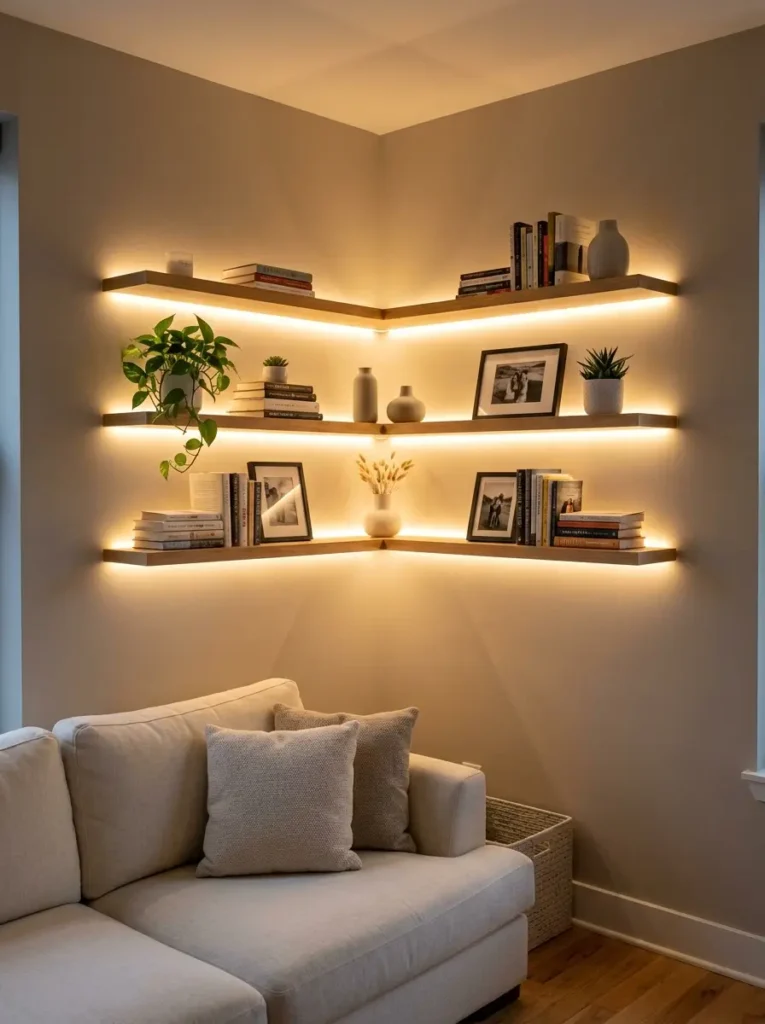
LED strip lights can brighten a corner without using floor space. They work well behind open shelving, floating shelves, bookcases, or media units placed in a living room corner. The light adds depth and makes the shelves look less heavy.
Place the strip light along the back edge of a shelf or behind a vertical bookcase. This creates a soft glow on the wall. For a cleaner look, hide the strip so you see the glow, not the individual dots. If your strip shows harsh points of light, use a diffuser channel or place it behind the shelf lip.
This idea is best for people who have display shelves, books, small plants, ceramics, or framed photos in a corner. It is also useful for small apartments because shelves can provide storage and lighting at the same time.
Choose warm white or adjustable white LED strips. Avoid bright blue, purple, or flashing colors for everyday living room lighting unless they match a specific gaming or media setup. For a calm home decor look, warm white between 2700K and 3000K is safer. Use adhesive strips carefully, especially in rentals. Test a small area first, because some adhesive can pull paint when removed.
Add a Corner Picture Light Above Wall Art
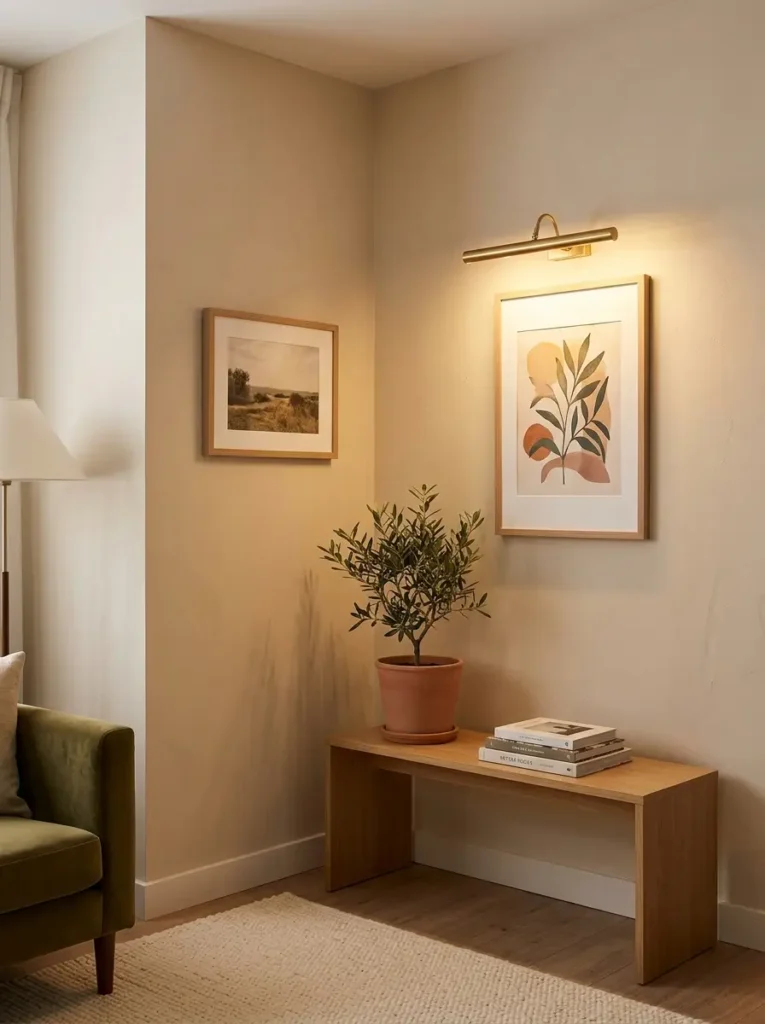
A picture light can make a plain corner feel more polished. It works by shining light over artwork, a framed print, a small gallery wall, or even a textured wall panel. In an apartment, this can make a corner feel finished without adding more furniture.
Hang one large piece of art in the corner or place two smaller frames on the two meeting walls. Then add a battery-operated or plug-in picture light above the main frame. A brass picture light looks warm and classic. A black picture light feels modern. A white one blends into pale walls.
This idea is best for people who want a decorative corner but do not need extra seating. It is also useful in narrow living rooms where furniture would block the walkway. A picture light gives the corner a reason to exist.
Keep the brightness gentle. The goal is to highlight the art, not create a spotlight that hurts your eyes. Choose a light with dimming if possible. Warm light around 2700K works well with beige, brown, cream, terracotta, olive, and wood tones. If your art has cool blues or grays, 3000K may show the colors more clearly while still feeling comfortable.
Style a Corner Console With Two Small Lamps
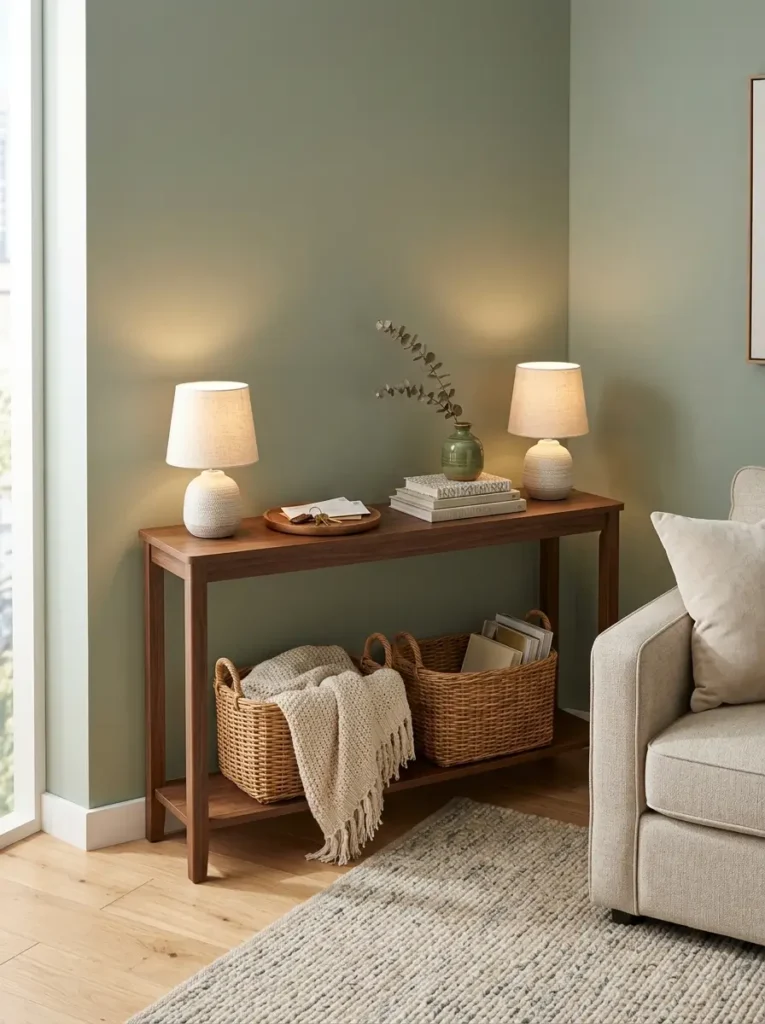
A narrow console table can turn an empty corner into useful storage and display space. Add two small lamps to make it feel balanced and intentional. This works especially well in larger apartment living rooms or open layouts where one corner feels empty.
Place a narrow console against one wall near the corner, or use an angled corner console if your space allows it. Add baskets underneath for blankets, books, or cables. Put two small lamps on top, or use one lamp with a vase and tray if the table is very narrow.
This idea is best for people who need extra storage but still want soft lighting. It also works in apartments without a proper entryway, because a corner console can hold keys, mail, and decor while lighting the room.
Use small lamp bases so the table does not feel crowded. Ceramic lamps in white, stone, beige, or muted green look soft and homey. Glass lamps feel lighter in small rooms. If you use two lamps, keep the bulbs low to medium brightness so the corner does not overpower the sofa area. A pair of 400-lumen bulbs can be enough for mood lighting.
Place a Tall Shelf Lamp in an Empty Corner
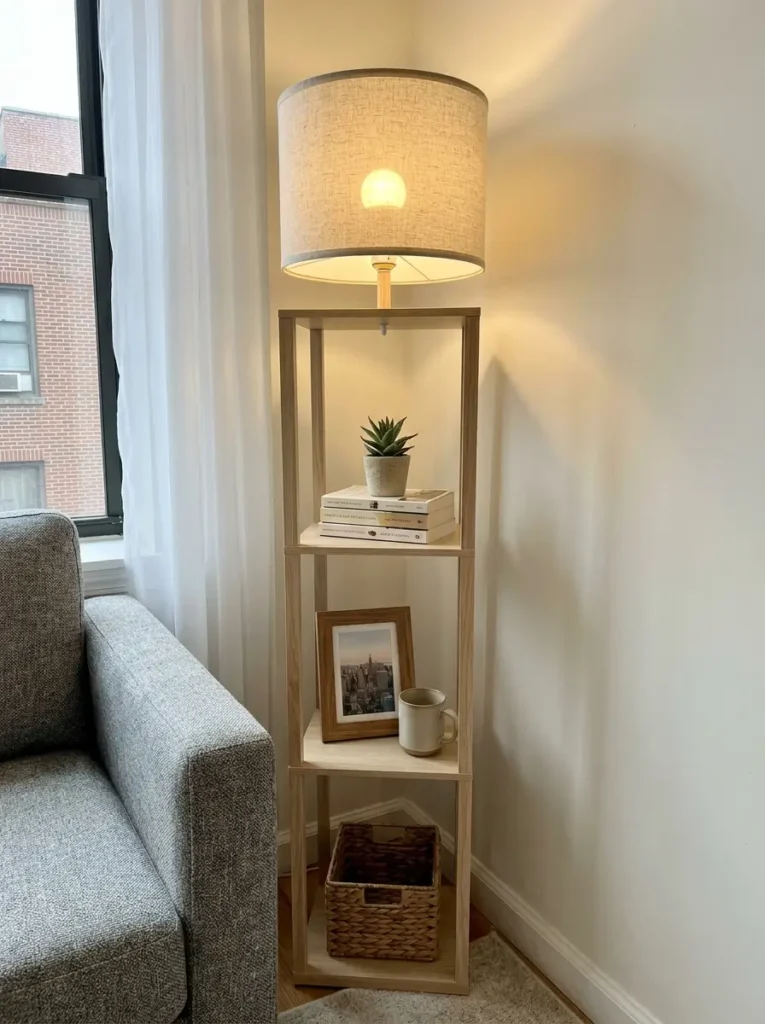
A shelf lamp combines lighting and storage in one piece. It usually has open shelves with a built-in lamp at the top. This is useful in apartments because one item can do two jobs. You get light, display space, and vertical height without needing a separate bookcase and lamp.
Place the shelf lamp in a bare corner beside the sofa, near a window, or next to a TV wall. Use the shelves carefully. Add only a few items, such as books, a small plant, a framed photo, and a basket. Too many small objects can make the corner look cluttered.
This idea is best for small apartments, studio apartments, and beginners who need simple decorating structure. It is also budget-friendly because many shelf lamps are affordable and easy to assemble.
Choose a shelf lamp with a simple frame. Black metal works well in modern rooms. Light wood works well in Scandinavian or neutral spaces. White shelves blend into white walls and keep the corner feeling open. Use a warm bulb and a fabric shade to soften the light. Avoid placing heavy items on upper shelves unless the unit is stable and designed for weight.
Use a Floor Lamp Behind a Corner Sectional

Corner sectionals are common in apartment living rooms because they provide lots of seating. The problem is that they can make corners dark, especially when the sectional blocks side tables. A floor lamp behind the sectional solves this without taking up seating space.
Place the lamp in the back corner where the two sofa sections meet. A tall lamp with a small base works best. If the sectional is close to the wall, use a narrow lamp or one with an angled arm. The goal is to add light above shoulder height without making the seating area feel cramped.
This idea is best for people with L-shaped sofas, family apartments, and small living rooms where table lamps are not practical. It also helps if your living room has only one ceiling fixture that leaves the sofa area shadowy.
Use a shade that diffuses light outward. A drum shade or linen shade can spread light softly. Avoid bare bulbs behind the sofa because they can create glare when people sit back. Use a smart bulb or dimmer plug if the outlet is hard to reach. That way, you can control the light without moving the sofa.
Brighten a TV Corner With Bias Lighting

If your TV sits in a corner, the area can feel harsh at night. The screen becomes the brightest object in the room, which can strain your eyes. Bias lighting solves this by adding a soft glow behind the TV or media unit.
Place LED strip lights behind the TV, along the back edge of the media console, or behind a corner-mounted panel. Keep the light soft and steady. Warm white works well for cozy rooms, while neutral white around 3000K to 4000K can work for clearer screen viewing.
This idea is best for people who watch movies, play games, or have a TV in a dark apartment living room. It is also useful when the TV corner looks like a black hole during the day and too bright at night.
Do not use flashing colors for normal viewing. They can feel distracting and may make the room look less calm. Also, do not make the bias light brighter than the TV. The light should support the screen, not compete with it. Hide wires behind the console and use cable clips to keep everything neat.
Add a Pendant-Style Plug-In Light Over a Corner Table
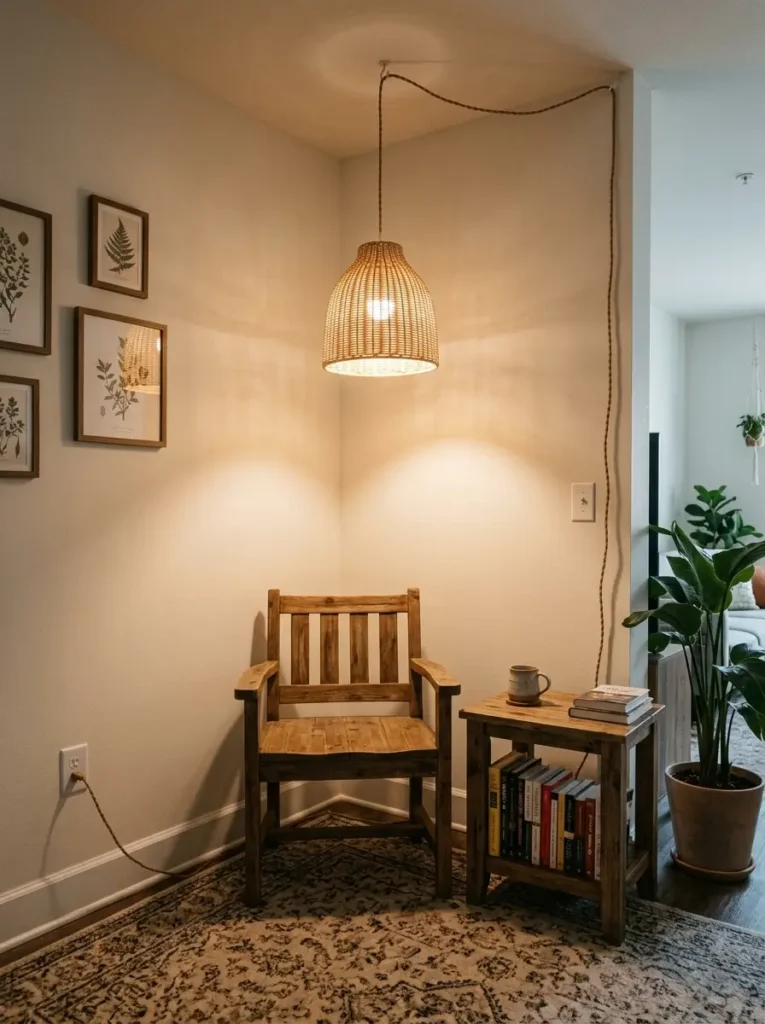
A plug-in pendant light gives the look of ceiling lighting without hardwiring. It works well over a small corner table, plant stand, game table, or reading nook. This is a renter-friendly way to add overhead light in a spot where the apartment builder did not place a fixture.
Use a ceiling hook to hang the pendant, then run the cord to the nearest outlet. If drilling is not allowed, use a renter-safe hook only if the light is lightweight and the product instructions support it. Safety matters more than style here.
This idea is best for renters who want a custom lighting look. It also works for studio apartments where one corner needs to feel like a separate zone. For example, a small round table with two chairs can become a breakfast or work corner when you hang a plug-in pendant above it.
Choose the shade based on the effect you want. A woven shade creates warm texture but may cast patterns. A white fabric shade gives soft light. A metal shade focuses light downward, which is good for a table but may feel too sharp if the bulb is exposed. Use a dimmable bulb if the pendant hangs near eye level.
Use Candle-Style LED Lights for a Soft Corner Glow

Candle-style LED lights can make a corner feel calm without using real flames. They are safer for renters, families, pets, and anyone who forgets to blow out candles. They work well on corner shelves, mantels, consoles, and small tables.
Group three LED candles in different heights on a tray. Add a small plant, ceramic bowl, or stack of books to make the arrangement feel grounded. Place them in a corner that needs gentle evening light, not strong task lighting. This is best for relaxing, watching TV, or winding down after work.
This idea is best for people who want low-cost mood lighting. It also works in apartments where outlets are limited. Battery-operated candles can go almost anywhere, including shelves and corners far from plugs.
Choose warm white candles, not blue-toned ones. A realistic flicker can look pleasant, but avoid very orange or fast-flickering lights because they may look fake. Use timers if available. They save battery and make the corner glow at the same time every evening.
Layer Two Light Sources in One Corner

The most comfortable apartment living room lighting usually comes from layering. In a corner, this could mean one floor lamp plus one small table lamp, one sconce plus LED shelf lighting, or one plant uplight plus a nearby reading lamp. Layering works because each light has a different job.
For example, place a floor lamp behind a chair for height and add a small lamp on the side table for softer light near your hands. Or use a shelf lamp for general glow and add LED strips under one shelf to highlight decor. These combinations make the corner useful in more than one way.
This idea is best for people who use their living room for many activities. You may read, watch TV, host friends, work on a laptop, and relax in the same room. One light level rarely works for all of that.
The key is control. Use separate switches, smart bulbs, or dimmer plugs so you can adjust each light. Keep all bulbs in the same color temperature family. Mixing a cold 5000K bulb with a warm 2700K bulb can make the room feel uneven. For most living rooms, stay between 2700K and 3000K for a soft but practical result.
Common Mistakes to Avoid With Corner Lighting
One common mistake is using only one ceiling light. Many apartments have a single overhead fixture in the center of the room. This can leave corners dark and make the room feel flat. Add at least two extra light sources, even if they are small.
Another mistake is choosing bulbs that are too cool. Cool white bulbs can help in kitchens, bathrooms, or work areas, but they often feel harsh in a living room. For apartment living room lighting, warm white bulbs usually feel more comfortable. Try 2700K for cozy evenings or 3000K if you want a slightly cleaner look.
Do not place lamps where they block movement. A beautiful floor lamp becomes annoying if you bump into it every time you walk to the sofa. Before buying a lamp, measure the corner and check the walkway. Leave enough room for daily movement, especially near doors, balcony access, and TV units.
Avoid exposed bulbs at eye level. They can cause glare and make the room uncomfortable. If you like the look of exposed bulbs, use low-lumen bulbs or place them higher or lower than direct eye level. Frosted bulbs are usually easier to live with than clear bulbs.
Another mistake is ignoring cords. Messy cords can make even a nice lamp look unfinished. Use cord covers, cable clips, baskets, or furniture placement to hide them. If you rent, choose removable cable clips and avoid adhesive products that may damage paint.
Do not overfill the corner. Lighting should help the space, not create clutter. If the corner already has a plant, chair, side table, and shelves, you may only need one good lamp. In small apartments, negative space can be just as important as decor.
Budget-Friendly Apartment Living Room Lighting Tips
You do not need expensive fixtures to improve a corner. Start with bulbs. Replacing a cold bulb with a warm LED bulb can instantly make your living room feel better. This is one of the cheapest apartment living room lighting upgrades.
Shop secondhand for lamp bases. Many thrift stores, marketplaces, and clearance sections have solid lamps that only need a new shade or bulb. A simple ceramic or metal base can look fresh with a clean white drum shade. Always check wiring condition before using an older lamp.
Use smart plugs instead of replacing every bulb with smart bulbs. A smart plug can control a floor lamp or table lamp from your phone. This helps when the outlet is hidden behind a sofa. It also makes your living room feel more convenient without a big cost.
Choose multi-use furniture. A shelf lamp gives storage and lighting. A side table with a built-in charging port can hold a lamp and reduce cable mess. A narrow console can provide storage, display space, and a place for lamps.
Look for plug-in options before paying for electrical work. Plug-in sconces, pendants, and picture lights can give you a custom look without permanent changes. This is especially helpful for renters or people who move often.
Use dimmable bulbs where possible. A lamp that feels too bright at night may work well during the day if you can dim it. Dimmers help one light serve different purposes, which is useful in small apartments.
Apartment Living Room Lighting Tips for Better Corners
Start by deciding what the corner should do. A corner can be for reading, storage, plants, TV, conversation, or display. Once you know the purpose, choosing the right lighting becomes easier. Do not buy a lamp just because it looks nice online. Think about how you will use the space every day.
Match the lamp scale to the furniture. A tiny lamp beside a large sectional may look weak. A huge arc lamp beside a small chair may feel oversized. As a simple rule, the shade of a table lamp should sit near eye level when you are seated. A floor lamp should be tall enough to spread light over the area, not just glow near the floor.
Use warm bulbs for comfort. Most living rooms look better with bulbs between 2700K and 3000K. If your apartment has gray walls, cool floors, or little natural light, warm bulbs can help soften the space. If your room has beige walls, wood furniture, or cream textiles, warm light will make those tones feel richer.
Place lights at different heights. A floor lamp, table lamp, and shelf light each create a different layer. This makes the room feel more balanced. When all light comes from the ceiling, faces can look shadowed and corners can feel forgotten.
Think about shadows. Shadows are not always bad. Soft shadows behind plants, shelves, or art can add depth. Harsh shadows from exposed bulbs can feel messy. If a lamp creates strong shadows, change the shade, move the lamp, or use a frosted bulb.
Use mirrors carefully. A mirror near a corner lamp can reflect light and make the room feel brighter. But do not place a lamp where the mirror reflects the bulb directly into your eyes. Angle the mirror so it reflects the glow, not the glare.
Keep the layout realistic. If your apartment has limited outlets, choose battery lights or smart plugs. If your corner is near a walkway, use wall lighting instead of a floor lamp. If you have pets or children, choose stable lamps, hidden cords, and LED bulbs that do not get too hot.
How to Choose the Right Bulb for Corner Lighting
Bulb choice affects the whole room. Even a beautiful lamp can look bad with the wrong bulb. For apartment living room lighting, focus on color temperature, brightness, and bulb finish.
Color temperature is measured in Kelvin. Warm white light is usually around 2700K. It feels soft and relaxed. Soft white or warm neutral light around 3000K feels a little clearer but still comfortable. Cool white bulbs above 4000K can feel too sharp for a living room unless you use them for a specific task.
Brightness is measured in lumens. For mood lighting, 300 to 500 lumens may be enough. For reading, you may want 450 to 800 lumens depending on the lamp design. For a corner that needs general brightness, one 800-lumen bulb in a shaded floor lamp can help, but you may still need another small light nearby.
The bulb finish matters too. Frosted bulbs spread light more softly. Clear bulbs can look stylish but often create sharper glare. If your lamp has an open shade, choose a frosted bulb. If your shade fully covers the bulb, you have more flexibility.
Dimmable bulbs are worth considering. They let you use the same lamp for bright afternoon tasks and soft evening light. Make sure your lamp or dimmer plug supports dimmable bulbs before buying them.
Best Corner Lighting Ideas by Apartment Type
For a studio apartment, use lighting to create zones. A plug-in pendant over a small table can mark a dining area. A floor lamp behind the sofa can define the living area. LED shelf lighting can make a storage corner feel intentional instead of crowded.
For a narrow apartment living room, choose wall sconces, slim floor lamps, and corner shelf lamps. Avoid wide tripod lamps if they block the walkway. Use vertical lighting to draw the eye upward and make the room feel taller.
For a rental apartment, focus on plug-in and battery-operated lights. Plug-in sconces, plug-in pendants, LED candles, and table lamps are safer choices than hardwired fixtures. Use removable cord clips and avoid permanent changes unless your lease allows them.
For a dark apartment, layer lights in at least three places. Add one tall lamp, one low lamp, and one accent light. Use warm white bulbs, but do not make them too dim. Light-colored shades, pale walls, mirrors, and glass lamp bases can help the room feel brighter.
For a modern apartment, choose clean lines and simple finishes. Black, brushed brass, white, and chrome lamps often work well. Keep cords neat and avoid too many small decorative lights. One strong floor lamp and one clean wall sconce can look better than five small lamps.
For a cozy neutral apartment, choose linen shades, ceramic bases, warm bulbs, and wood accents. Place a lamp near textured items like boucle chairs, woven baskets, or cotton curtains. Warm light brings out texture and makes neutral colors feel less flat.
FAQ
What type of lighting is best for an apartment living room corner?
The best lighting depends on how you use the corner. A reading corner needs a task lamp or adjustable floor lamp. A plant corner works well with uplighting. A sofa corner needs soft light from a floor lamp, table lamp, or wall sconce. In most cases, warm white bulbs between 2700K and 3000K work best.
How can I light a living room corner without drilling?
Use floor lamps, table lamps, shelf lamps, LED candles, battery picture lights, or plug-in pendants with renter-safe hooks when allowed. Plug-in wall sconces can also work, but they may still need small screws. Always check your lease before making holes.
What color temperature is best for apartment living room lighting?
For most living rooms, 2700K to 3000K is the best range. A 2700K bulb feels warm and cozy. A 3000K bulb feels a bit brighter and cleaner. Avoid very cool bulbs in the living room unless you need task lighting for work or hobbies.
How do I make a dark apartment corner look brighter?
Use a tall lamp with a light-colored shade, add a mirror nearby, and choose warm LED bulbs with enough lumens. You can also use LED strips behind shelves or a small uplight behind a plant. Keep dark bulky furniture out of the corner if the room already feels heavy.
Are floor lamps good for small apartments?
Yes, floor lamps can be very useful in small apartments if you choose the right shape. Slim floor lamps, arc lamps with narrow bases, and lamps that fit behind furniture work best. Avoid wide tripod bases in tight walkways because they can take up too much floor space.
How many lamps should an apartment living room have?
Most apartment living rooms work well with at least three light sources. You might use one ceiling light, one floor lamp, and one table lamp. If the room has dark corners, add one accent light, such as shelf lighting, a picture light, or an uplight.
Conclusion
Good apartment living room lighting does not need to be complicated or expensive. Corners are often the darkest parts of a living room, but they also offer some of the best decorating opportunities. With the right lamp, bulb, and placement, you can turn an empty corner into a reading nook, plant display, TV zone, or soft evening spot.
Start with the purpose of the corner. Then choose lighting that supports that purpose. Use warm bulbs, hide cords, measure your space, and pick lamps that fit your furniture scale. If you rent, focus on plug-in, battery-operated, and freestanding options before considering permanent fixtures.
The best corners feel useful, comfortable, and easy to live with. A slim floor lamp, plug-in sconce, shelf lamp, LED strip, or small table lamp can make a big difference. When you layer light carefully, your apartment living room feels warmer, more balanced, and more complete without needing a full makeover.