
A small apartment couch layout can completely change how your living room feels, works, and looks. In a tiny home, the couch is usually the largest piece of furniture. That means its placement affects walking space, storage, lighting, conversation areas, and even how easy it is to clean the room.
Many beginners make the same mistake. They push the couch against the longest wall and hope the rest of the room works around it. Sometimes that works, but not always. A better layout depends on your apartment shape, window placement, door swing, TV position, and daily routine.
The good news is that you do not need expensive furniture or a large room to create a comfortable setup. You can use smart placement, renter-friendly styling, compact furniture, warm lighting, and simple visual tricks to make your couch layout feel more intentional.
This guide shares 15 practical small apartment couch layout ideas for tiny homes. Each idea explains why it works, who it suits best, and how to apply it in a real apartment without making the space feel crowded.
What is the best small apartment couch layout?
The best small apartment couch layout keeps clear walking paths, uses the couch to define the living area, and matches your daily needs. In most tiny homes, a couch against a wall, a floating couch, or a compact sectional works well when paired with slim tables, light colors, and layered lighting.
Place the Couch Against the Longest Wall
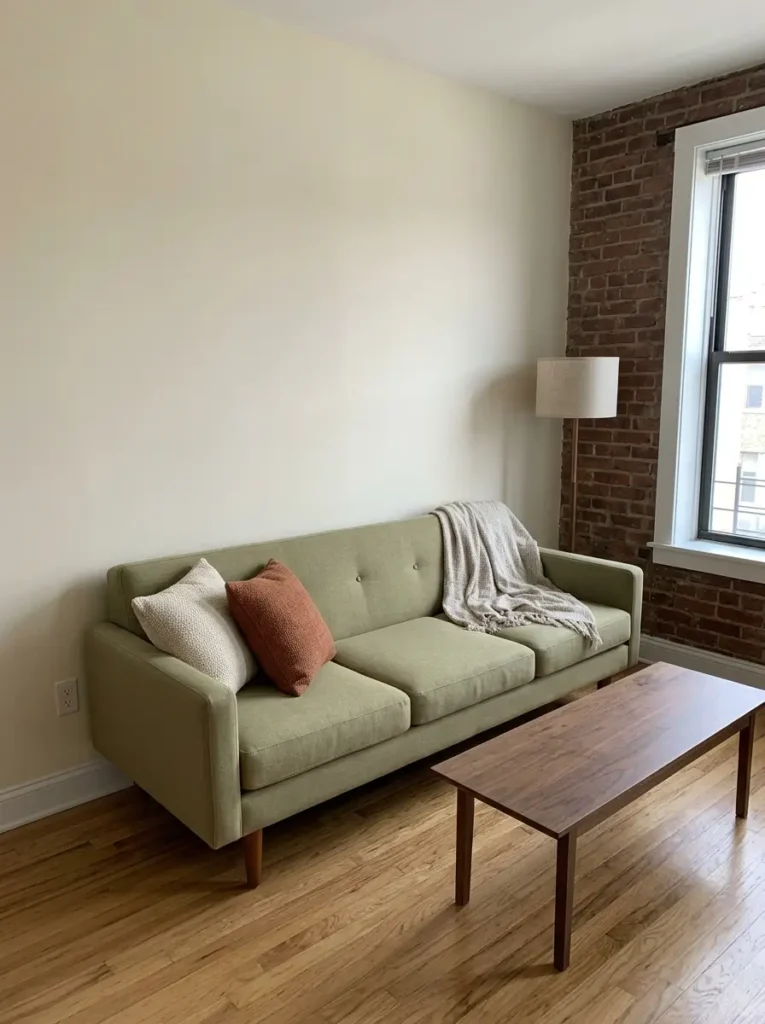
Placing the couch against the longest wall is one of the easiest small apartment couch layout ideas for beginners. It keeps the center of the room open and creates a clear walking path. This layout works well in narrow apartments, studio flats, and small living rooms where every inch matters.
The reason this works is simple. Large furniture needs visual stability. When the couch sits against a long wall, it feels grounded instead of floating awkwardly in the room. It also gives you more flexibility for a coffee table, small rug, floor lamp, or TV stand.
This layout is best for renters, first apartments, and anyone who wants a low-risk setup. You do not need to drill into walls or buy new furniture. A two-seat couch, loveseat, or slim three-seat sofa works especially well here.
For a practical example, use a beige, soft gray, olive green, or warm taupe couch against a white or cream wall. Add two 18-inch throw pillows and one lightweight throw blanket. Keep the coffee table narrow, around 16 to 20 inches deep, so you can still move comfortably.
Avoid placing a bulky recliner-style couch on the longest wall if the room is already narrow. Thick arms and deep seats can make the space feel tight. Choose a couch with raised legs instead. The visible floor underneath helps the room feel more open.
For lighting, place a floor lamp at one end of the couch with a warm white bulb around 2700K to 3000K. This gives the space a cozy evening feel without making the apartment look yellow or dim.
Float the Couch to Divide a Studio Apartment
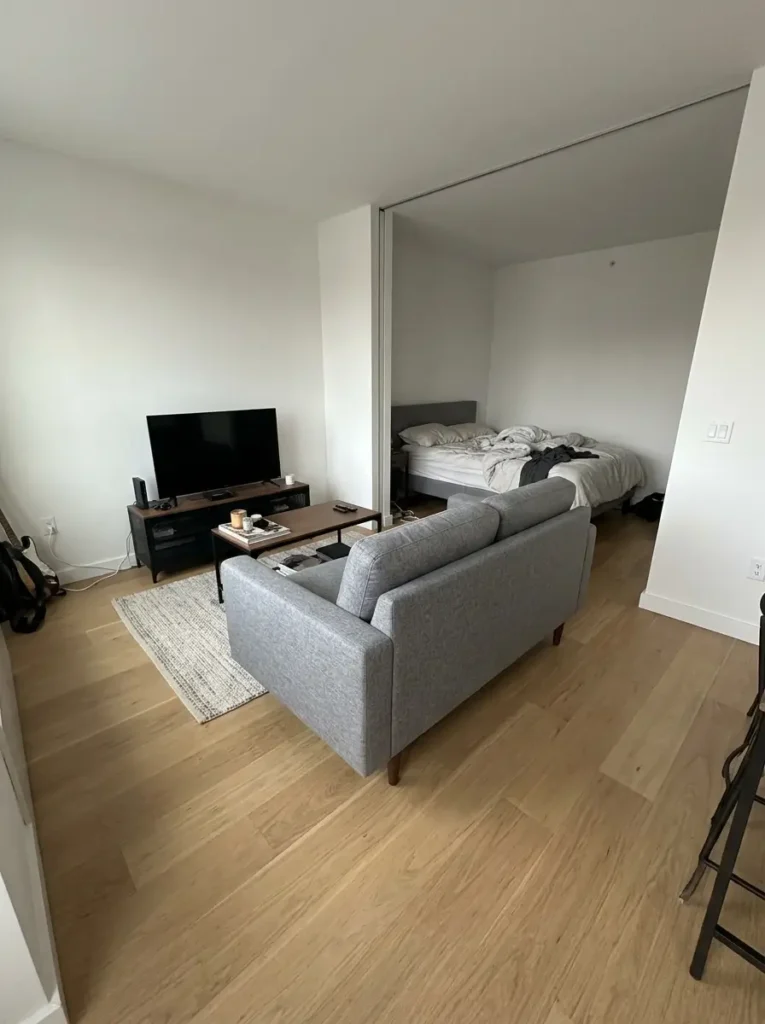
A floating couch means the couch is not pressed against a wall. Instead, it sits slightly forward and acts like a soft divider between zones. This small apartment couch layout works very well in studio apartments where the living, sleeping, and dining areas share one open room.
The couch can separate your living space from your bed, desk, or dining nook. It creates structure without needing a wall, bookcase, or room divider. This is useful because tiny homes often feel messy when every area blends together.
This idea is best for studio renters, open-plan apartments, and people who work from home. A floating couch can make the living zone feel more intentional, even when the apartment is small.
Leave at least 30 inches behind the couch if you need to walk there. If the back of the couch faces the bed, place a slim console table behind it. Choose one that is around 10 to 12 inches deep. You can use it for a lamp, books, storage baskets, or a charging station.
A good example is a small gray loveseat floating in front of a bed area, with a narrow wood console behind it. Add a table lamp with a warm bulb, a woven basket underneath, and a small framed print leaning against the wall. This gives the back of the couch a finished look.
For rental-friendly styling, use peel-and-stick cable clips to hide lamp cords along the table leg. You can also use removable felt pads under the couch legs if you have wood or vinyl flooring.
The common mistake here is floating the couch without measuring walking space. If the room feels blocked, move the couch closer to the rug or choose a smaller loveseat. Floating furniture should create zones, not obstacles.
Use a Loveseat Instead of a Full Sofa
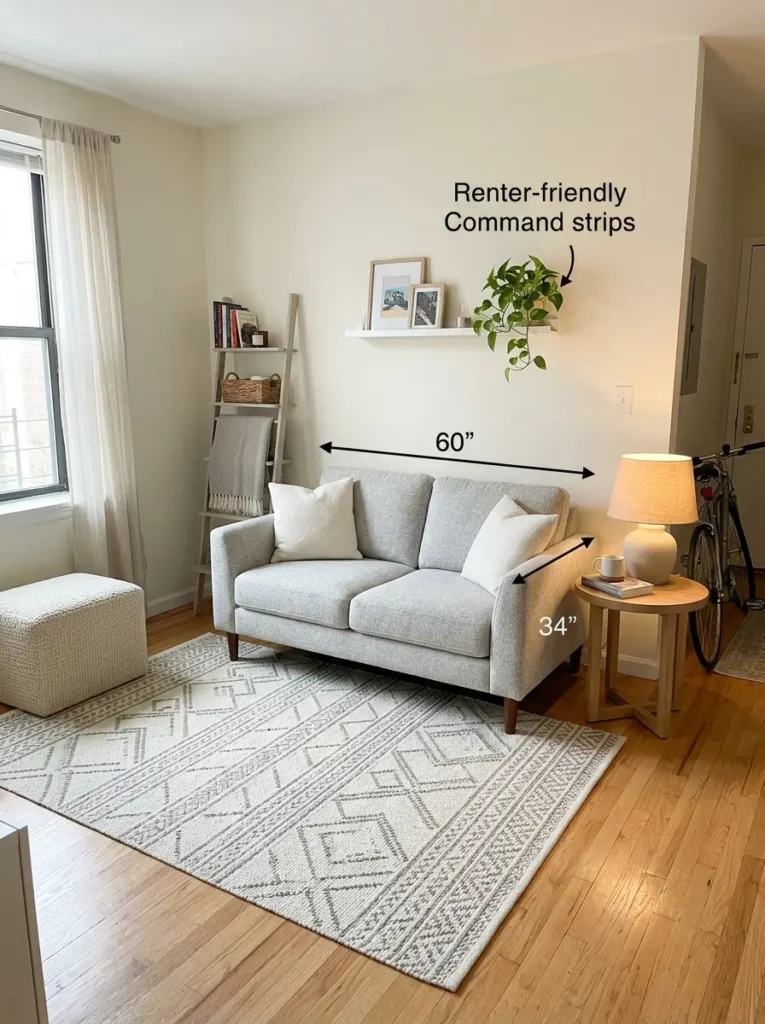
A loveseat is often the smartest choice for a tiny living room. It gives you comfortable seating without taking over the space. A standard sofa can be 80 to 90 inches wide, while many loveseats are around 52 to 68 inches wide. That difference matters in a small apartment.
This small apartment couch layout works because it leaves room for side tables, storage, lamps, and movement. A loveseat also looks more balanced in a compact room. Oversized sofas can make small spaces feel cramped, even if they technically fit.
This idea is best for single renters, couples, students, and anyone living in a studio or one-bedroom apartment. It is also useful if you prefer floor cushions, accent chairs, or ottomans for extra seating.
For example, place a 60-inch loveseat against a wall and pair it with one small round side table instead of two bulky end tables. Add a wall-mounted shelf above the couch using renter-friendly adhesive options if allowed, or use a leaning ladder shelf nearby.
Choose upholstery carefully. Light gray, beige, cream, tan, and muted green are flexible colors for home decor lovers. If you have pets or children, look for performance fabric, washable covers, or textured woven fabric that hides daily wear better than smooth velvet.
A loveseat can still feel complete with the right rug. Choose a rug that extends at least 6 inches beyond both sides of the loveseat. In a tiny room, a 5×7 rug usually works better than a very small mat. A rug that is too small can make the couch area feel disconnected.
The biggest mistake is buying a loveseat that is too deep. Some compact couches still have very deep seats. Measure depth as well as width. In a small apartment, a depth of 32 to 36 inches is often easier to manage than 40 inches or more.
Try an L-Shaped Sectional in a Corner
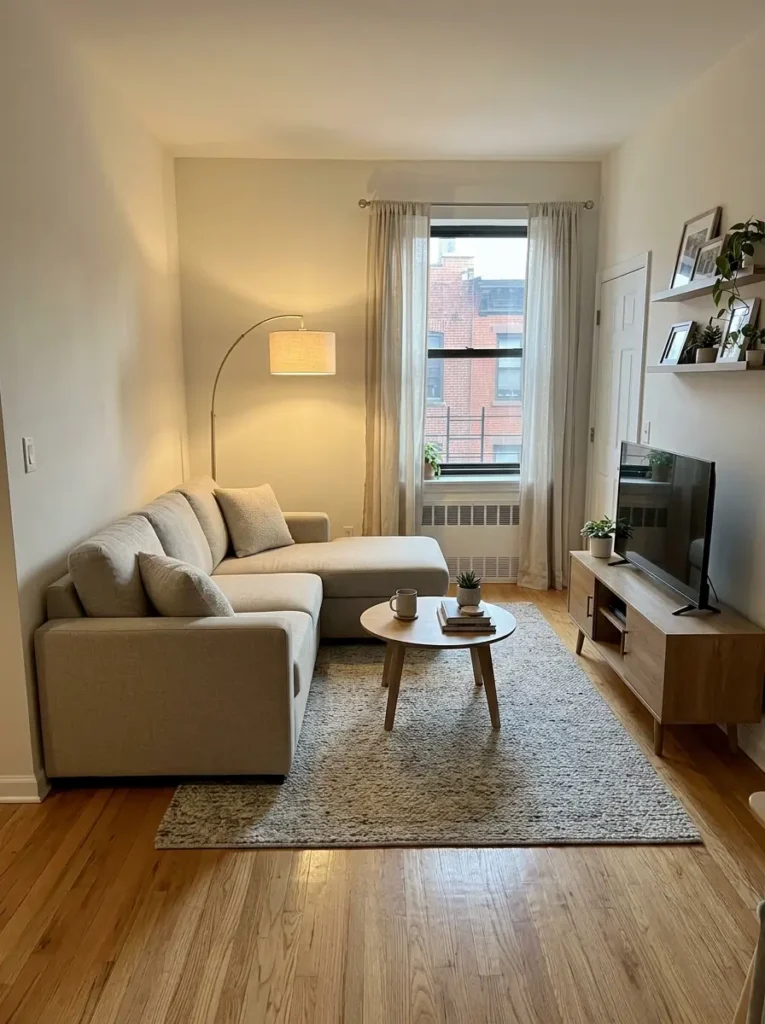
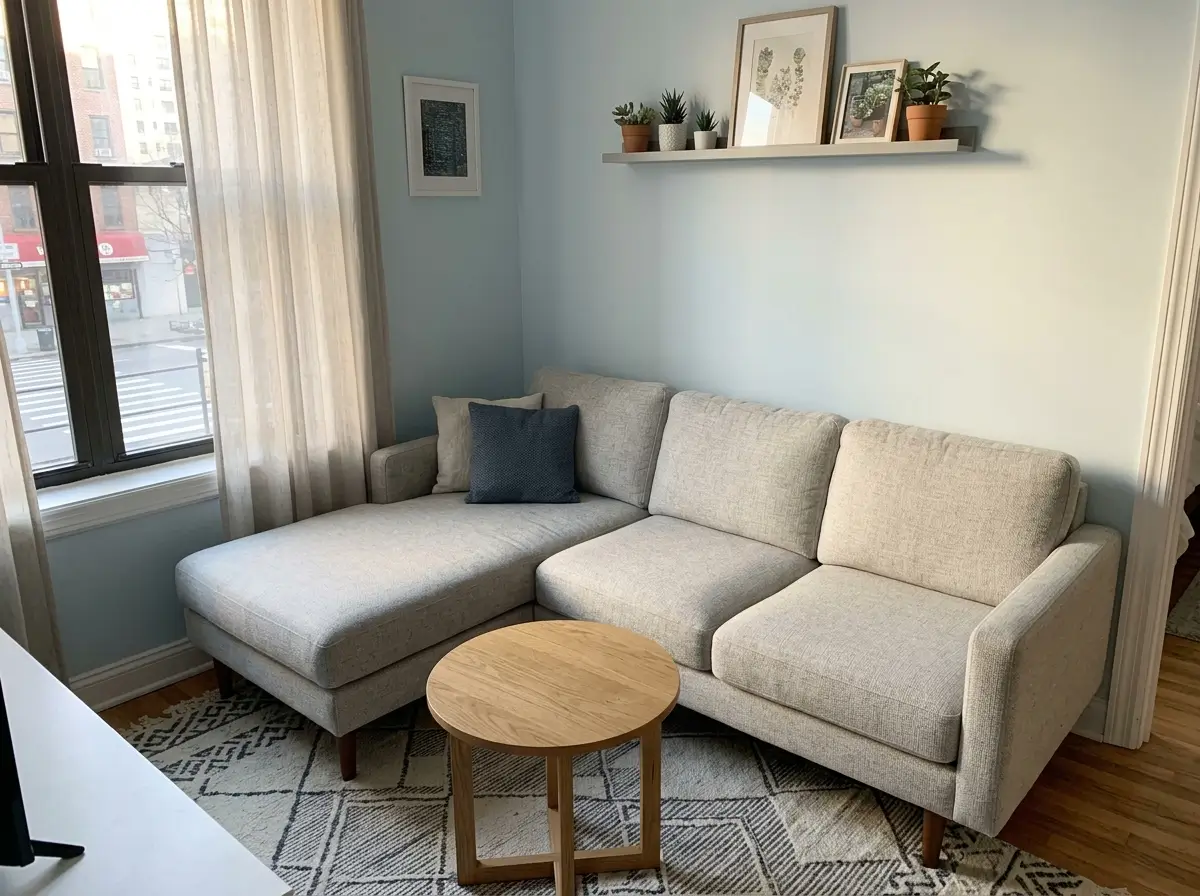
Many people avoid sectionals in small apartments, but a compact L-shaped sectional can work beautifully when placed in a corner. It creates more seating without needing extra chairs. It also uses corner space that often goes unused.
This layout works because it gathers seating into one clean shape. Instead of spreading furniture across the room, the sectional keeps everything tucked into one zone. That makes the rest of the apartment feel calmer and easier to move through.
This small apartment couch layout is best for people who host friends, watch movies, or prefer lounging with their feet up. It is also helpful in apartments where there is only one strong corner for furniture placement.
Choose a small apartment sectional with a chaise that fits the room shape. If your entryway is on the right, a left-facing chaise may work better, and the reverse may be true for the opposite side. Always check the chaise direction before buying.
A practical example would be a compact oatmeal or charcoal sectional placed in the corner across from a low TV unit. Use a round coffee table or soft ottoman instead of a sharp rectangular table. Round shapes are easier to walk around in tight spaces.
Lighting matters with sectionals because corners can become dark. Add a tall floor lamp behind the sectional or a plug-in wall sconce with a removable cord cover. Use warm white light around 2700K for relaxing evenings.
The main mistake is choosing a sectional that blocks a window, heater, balcony door, or closet. A sectional should fit the apartment’s function, not just the floor plan. If it blocks daily access, it will become frustrating quickly.
Place the Couch Facing the Window
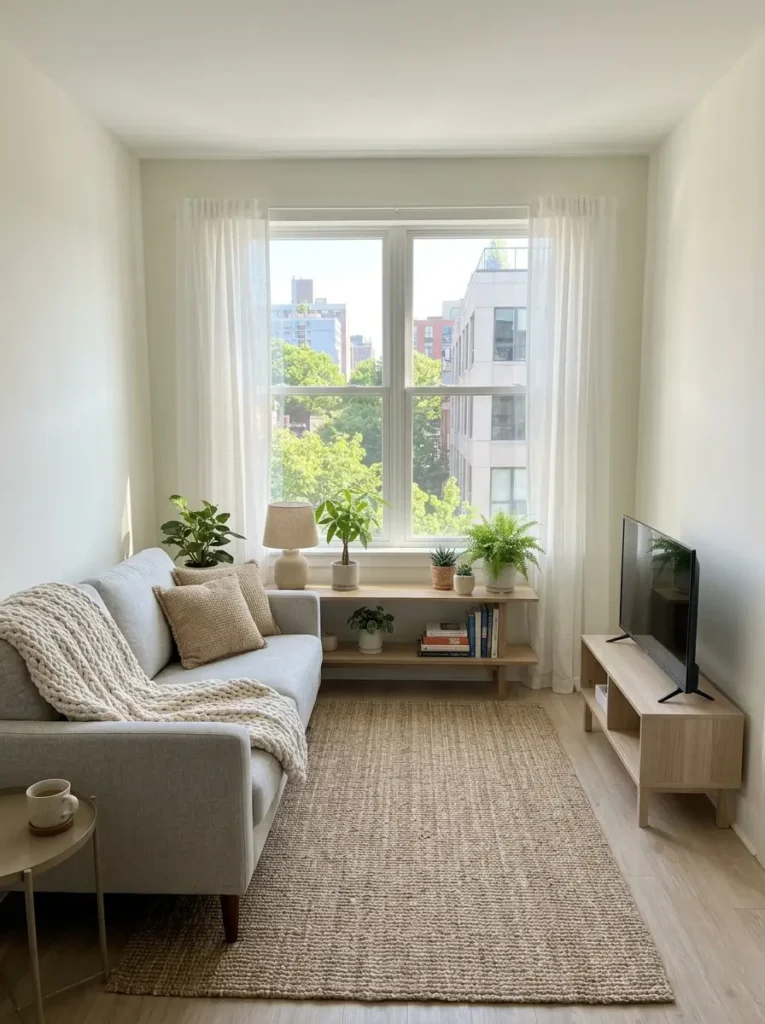
A couch facing the window can make a small apartment feel more open and relaxed. Instead of staring at a wall, you get natural light and a visual connection to the outside. This is especially helpful when your apartment has a nice view, a balcony, or even just a bright window.
This layout works because windows create depth. In small homes, your eye needs somewhere to travel. When the couch faces natural light, the room can feel less boxed in.
This idea is best for people who read, drink coffee in the living room, care about natural light, or do not want the TV to be the main focus. It also works well for apartments with large windows or bright curtains.
For example, place a small couch or loveseat opposite a window and put a slim console or low shelf under the window. Add plants, books, or a small lamp. Use sheer white curtains to soften the light while keeping the room bright.
If glare is a concern, choose linen-look curtains, bamboo shades, or light-filtering roller shades. For renters, tension rods can work well if drilling is not allowed. Choose curtains close to the wall color for a cleaner, larger-looking room.
A couch facing the window does not mean you cannot have a TV. You can place a small TV on a side wall, use a swivel mount if your lease allows it, or put the TV on a rolling media stand. This gives you flexibility without forcing the couch into an awkward position.
Avoid blocking the walking path between the couch and the window. You should still be able to open curtains, water plants, and clean the window area. Leave enough space to move comfortably.
Create a Conversation Layout with Two Small Seats
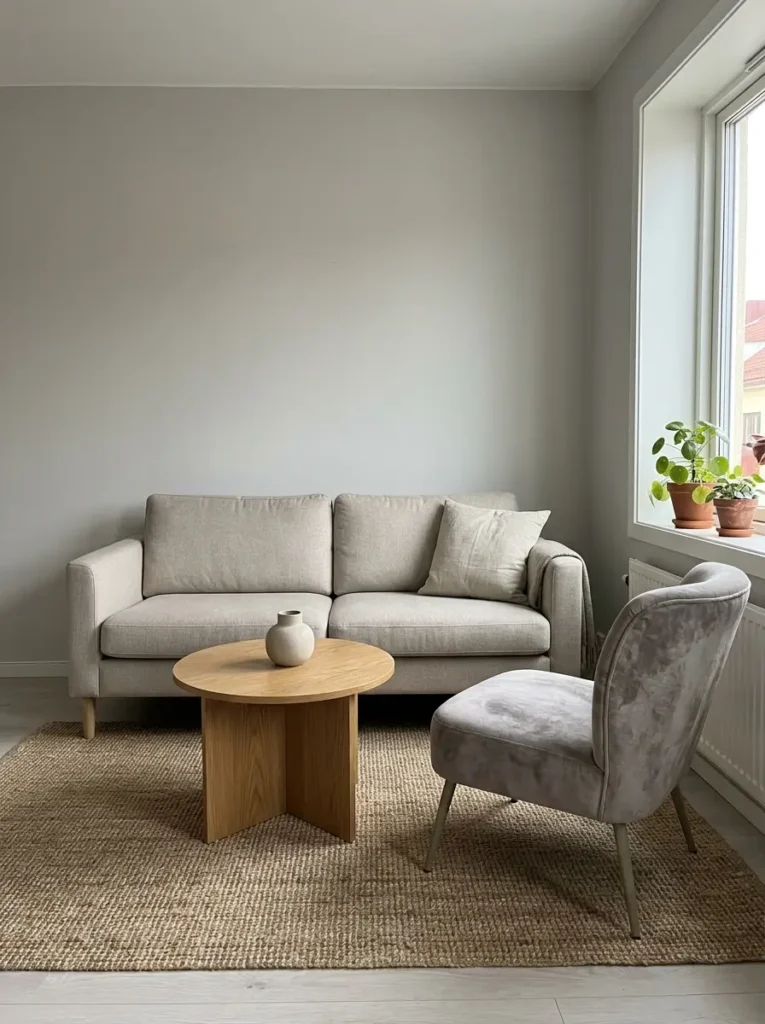
If you enjoy hosting, a conversation layout may work better than a TV-focused layout. Place the couch across from one or two small accent chairs, poufs, or stools. This creates a social setup without needing a large sectional.
This small apartment couch layout works because it balances the room. Instead of all furniture facing one wall, the seating faces inward. This helps the living area feel welcoming and useful for real conversations.
This idea is best for people who invite friends over, enjoy tea or coffee chats, or use the living room for reading and relaxing. It also works in apartments where the TV is not the main priority.
For a practical setup, place a loveseat against the wall and add one small armless chair across from it. Choose a chair with slim legs, not a bulky club chair. Add a small round coffee table between them. Round tables reduce sharp corners and make movement easier.
Use lightweight seating when possible. A woven stool, upholstered pouf, or folding accent chair can be moved when you need more space. This is useful for renters and anyone living in a flexible space.
Color can help the layout feel planned. If your couch is neutral, choose chairs in a soft accent color such as sage green, muted rust, dusty blue, or warm beige. Keep the rug simple so the small room does not feel busy.
The common mistake is adding too many chairs. In tiny homes, extra seating should still allow clear movement. If guests have to squeeze sideways around furniture, the layout needs editing.
Use the Couch as a Room Divider
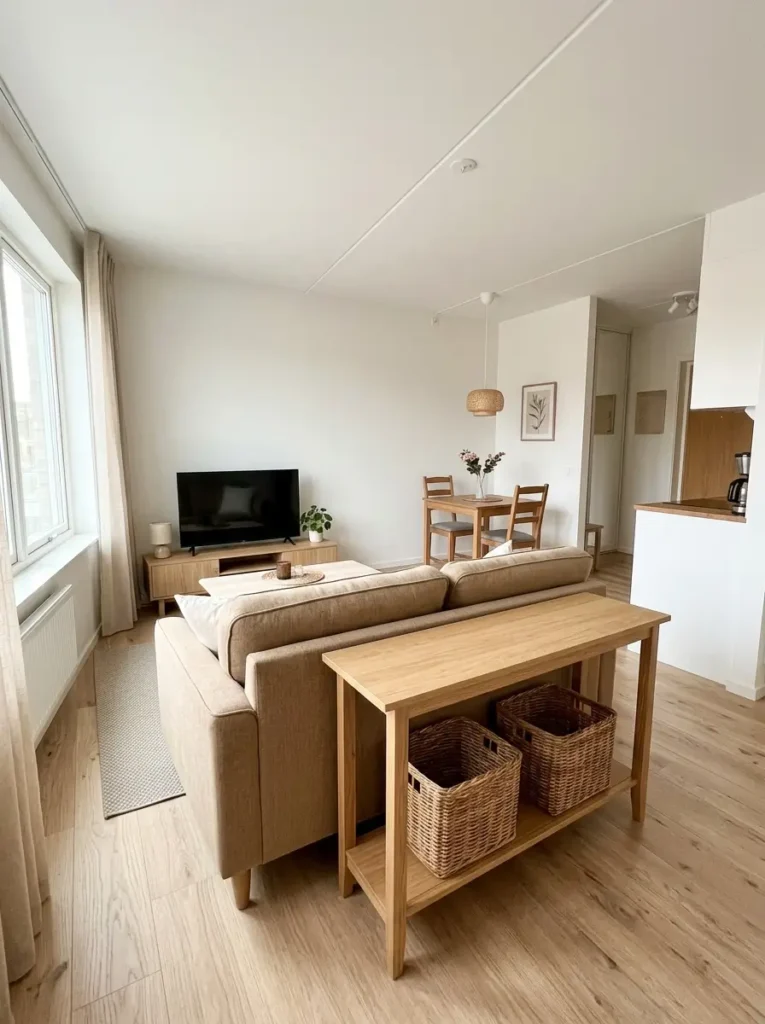
In a small open-plan apartment, your couch can act as a room divider. Place it with the back facing the dining table, bed, desk, or kitchen area. This creates a living zone without building anything permanent.
This layout works because furniture can define space without walls. Small apartments often need zones for different tasks. The couch can gently separate rest, work, eating, and sleeping areas.
This idea is best for studio apartments, loft-style homes, and open living rooms. It is especially useful when you do not want to buy a folding screen or large bookcase.
To make the back of the couch look intentional, add a narrow console table, low storage bench, or slim bookcase behind it. Keep the height close to the couch back or slightly lower. If the furniture behind the couch is too tall, the room may feel crowded.
For example, place a tan loveseat with its back toward a small dining table. Add a narrow console behind the couch with two baskets underneath. Use the baskets for blankets, chargers, pet supplies, or extra table linens.
This layout also helps hide visual clutter. If your kitchen is behind the couch, the seating area feels more separate from dishes and appliances. That small boundary can make the apartment feel more restful.
For renters, avoid heavy divider furniture that scratches floors. Use felt pads under furniture legs. If you use a console table with open shelves, keep items in matching baskets so the back view stays neat.
The biggest mistake is choosing a couch with an unfinished or messy back. If the back will be visible, pick a couch with clean upholstery and simple lines. Avoid layouts where cords, tags, or storage mess show from behind.
Choose a Sofa Bed for Flexible Living
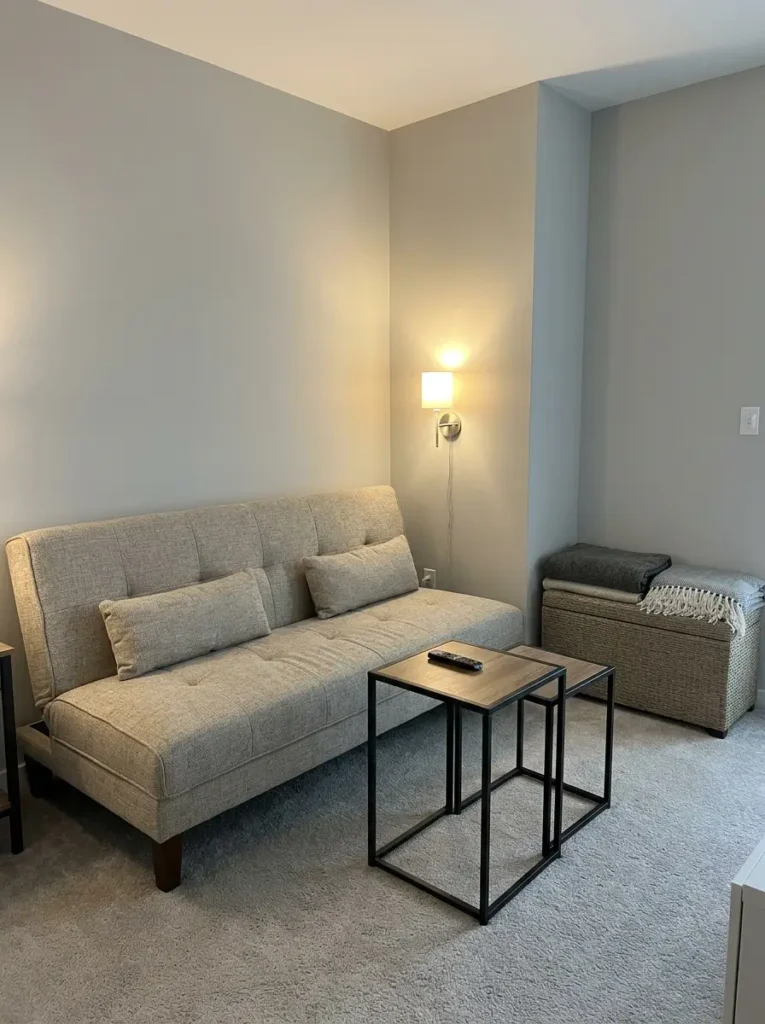
A sofa bed is a practical choice for tiny homes because it serves two purposes. It works as daily seating and turns into a bed when needed. This is helpful if you host overnight guests or live in a studio where your couch and bed zones overlap.
This small apartment couch layout works best when you plan enough space for the bed to open. Many people buy a sofa bed but forget to measure the full pull-out length. Then the coffee table, TV stand, or rug gets in the way.
This idea is best for studio renters, guest-friendly apartments, and small homes without a spare bedroom. It also works for people who want a flexible living room that can change quickly.
Choose a sofa bed with a simple pull-out or fold-down design. Futon-style couches are usually lighter and cheaper, but they may be less comfortable for daily use. Pull-out sofa beds can feel more like real beds, but they are heavier and often cost more.
A practical layout is to place the sofa bed against a wall with a lightweight nesting table in front. When guests stay over, move the nesting tables to the side. Use a storage ottoman for bedding, pillows, and blankets.
Keep the color simple. A medium gray, oatmeal, navy, or warm beige sofa bed hides wear better than pure white. Add washable pillow covers so you can refresh the room without buying new furniture.
Lighting should work for both seating and sleeping. A plug-in wall sconce or slim floor lamp near the sofa bed gives guests easy light access. Use warm bulbs around 2700K so the space feels calm at night.
Avoid heavy coffee tables with sofa beds. They make the layout annoying to use. Choose pieces that move easily, such as nesting tables, a small ottoman, or a C-shaped side table.
Angle the Couch in an Awkward Corner
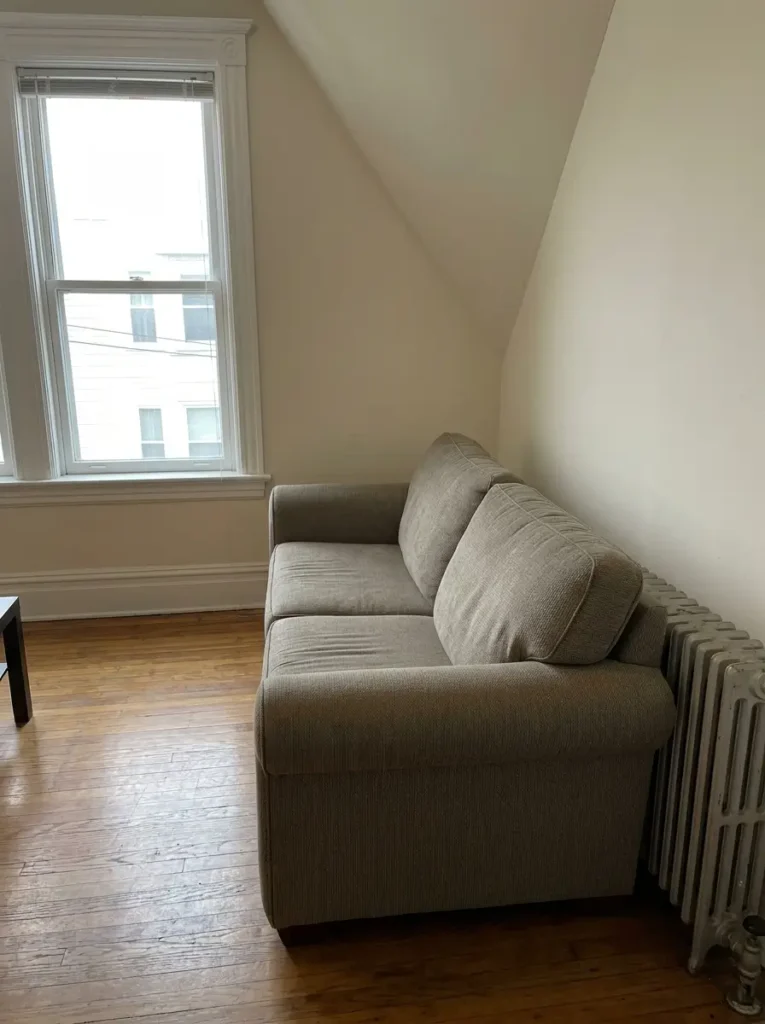
Not every apartment has clean straight walls. Some tiny homes have angled corners, radiators, columns, bay windows, or odd door placements. In these cases, placing the couch at a slight angle can solve layout problems.
This idea works because it accepts the room’s shape instead of fighting it. A slightly angled couch can improve flow, soften hard corners, and make awkward architecture feel intentional.
This layout is best for older apartments, attic spaces, converted homes, and rooms with strange corners. It is also useful when a straight couch placement blocks a doorway or window.
Start with a small angle. You do not need to turn the couch dramatically. Even a 10 to 20 degree shift can help. Place a round rug or oval coffee table in front to support the softer layout.
For example, if your couch looks cramped between a window and a doorway, angle it slightly toward the center of the room. Add a floor lamp behind the corner space and use a small plant or basket to fill the gap.
This can also help with TV viewing. If your TV sits on a side wall, angling the couch can make watching more comfortable without moving every piece of furniture.
The common mistake is angling the couch so much that it wastes space behind it. The empty triangle behind an angled couch should have a purpose. Use it for a lamp, plant, basket, or narrow shelf. If the gap becomes dead space, reduce the angle.
For renters, this layout is helpful because it does not require wall mounting or permanent changes. You can test it with painter’s tape on the floor before moving furniture.
Pair the Couch with a Round Coffee Table
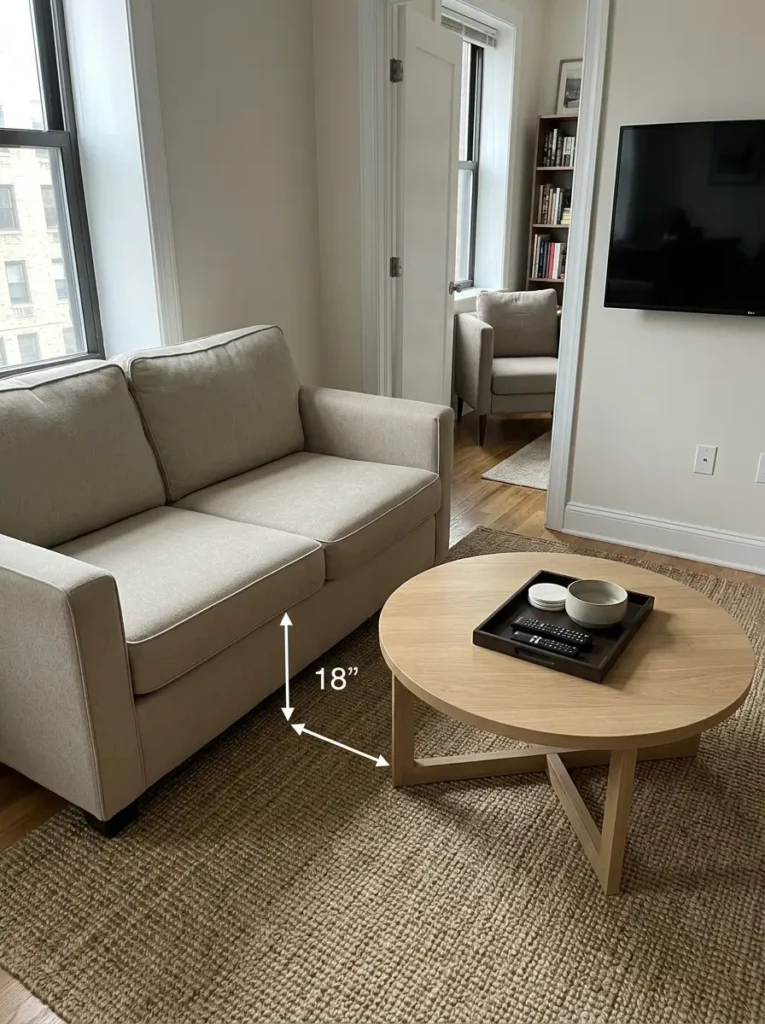
The coffee table affects a small apartment couch layout more than most people realize. A large rectangular table can block movement and make the seating area feel tight. A round coffee table often works better because it has no sharp corners.
This idea works because round shapes improve flow. You can walk around them more easily, especially in small rooms where the path between the couch, door, and TV is limited.
This tip is best for beginners, renters, families with young children, and anyone who bumps into furniture often. It also suits small living rooms with a loveseat, apartment sofa, or compact sectional.
Choose a round table around 24 to 32 inches wide, depending on your couch size. If your room is very small, use a round side table as a mini coffee table instead. You can also use two small nesting tables that tuck together.
For example, pair a beige loveseat with a 28-inch round wood coffee table. Add a small tray for remotes, one coaster set, and a low bowl. Keep the table surface simple because clutter looks larger in small spaces.
If you need storage, choose a round storage ottoman. It can hold blankets, board games, or extra pillow covers. It can also act as extra seating when guests visit.
Leave around 16 to 18 inches between the couch and coffee table. This gives enough space to reach items while still allowing movement. If the table blocks your knees or walking path, it is too close.
Avoid glass tables if you dislike constant cleaning. Glass can look light and airy, but fingerprints and dust show quickly. Wood, metal, or upholstered ottomans are often easier for daily living.
Use a Rug to Anchor the Couch Area
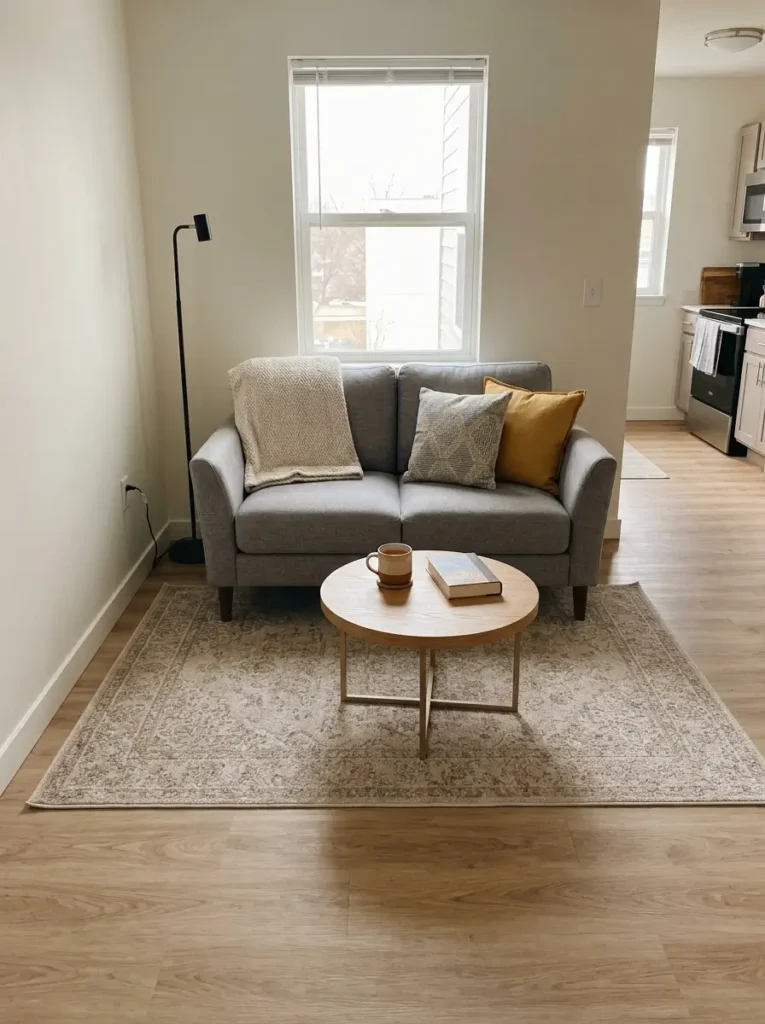
A rug can make a small apartment couch layout feel finished and organized. It visually defines the living zone, especially in studios or open-plan apartments. Without a rug, the couch may look like it is floating without purpose.
This idea works because rugs create boundaries. They tell the eye where the living area begins and ends. This helps tiny homes feel more structured.
This tip is best for renters, studio apartment owners, and anyone who cannot change flooring. A rug can hide unattractive rental floors, reduce echo, and add warmth underfoot.
Choose the right size. In many small apartments, a 5×7 rug works for a loveseat, while a 6×9 rug may work for a larger sofa. At minimum, the front legs of the couch should sit on the rug. This connects the furniture pieces.
For example, use a low-pile beige rug under a gray couch with a small round coffee table. Low-pile rugs are easier to vacuum and better for furniture movement. If you have pets, choose a patterned rug in muted tones to hide daily mess.
Color matters. Light rugs can make a room feel larger, but they may stain easily. Medium tones such as oatmeal, warm gray, taupe, or soft patterned beige are more forgiving. Avoid very dark rugs in tiny rooms unless the walls and furniture are light.
For rental-friendly comfort, add a rug pad underneath. It keeps the rug from sliding and protects the floor. It also makes a budget rug feel thicker.
The common mistake is choosing a rug that is too small. A tiny rug in front of a couch can make the entire layout look smaller. When in doubt, go slightly larger rather than too small.
Add Slim Side Tables Instead of Bulky End Tables
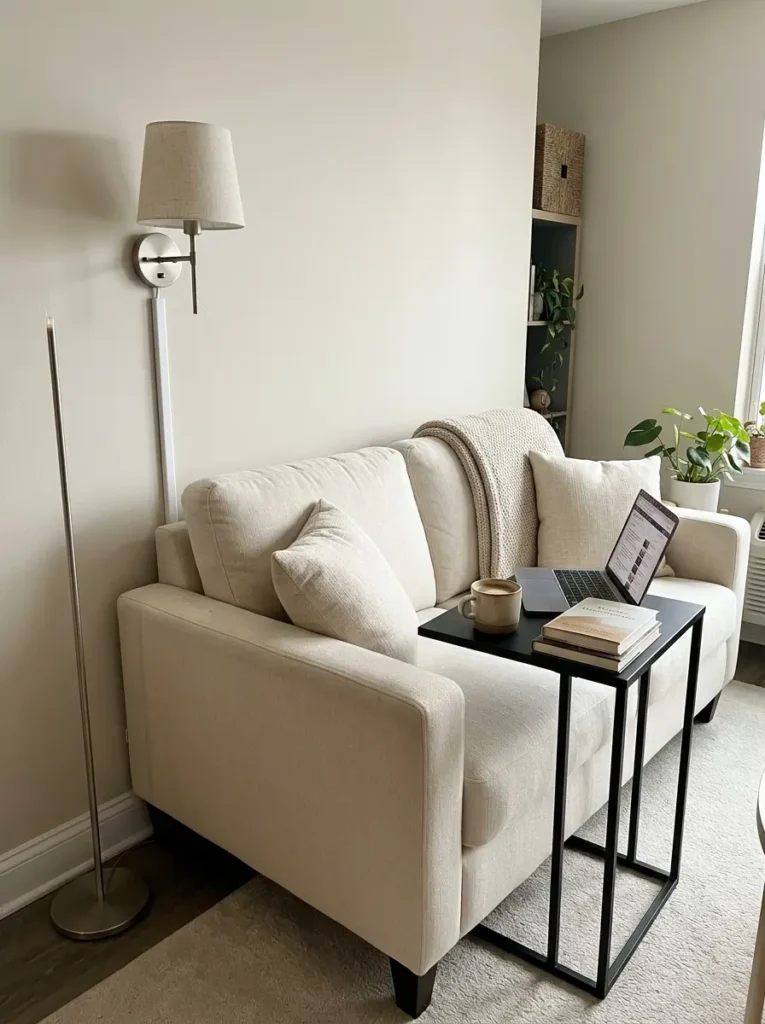
Side tables are useful, but bulky ones can ruin a small apartment couch layout. In tiny homes, every side piece should earn its place. Slim side tables give you a spot for drinks, lamps, and books without crowding the couch.
This idea works because it supports daily habits while keeping the floor open. A narrow table can add function without making the room feel packed.
This tip is best for small living rooms, narrow apartments, and anyone who works, reads, or relaxes on the couch. It is also great for renters because side tables are easy to move.
Choose tables around 10 to 16 inches wide if space is tight. C-shaped tables are useful because they slide partly under the couch. Nesting tables are also practical because you can pull one out when needed and tuck it away later.
For example, place a slim black metal C-table next to a cream loveseat. Use it for a laptop, tea mug, or small lamp. Add a basket under the couch or nearby shelf for items that do not fit on the table.
If you need lighting but do not have room for a lamp table, use a floor lamp with a small footprint. A plug-in wall sconce can also work if your lease allows it. Many renters use adhesive cord covers to keep wires neat.
The mistake to avoid is placing matching bulky end tables on both sides just because it feels traditional. Small apartments do not always need symmetry. One useful side table is better than two that block movement.
Keep tabletops clear. A small table covered with candles, books, remotes, and decor becomes frustrating quickly. Leave open space for real use.
Place the Couch Near Built-In Storage
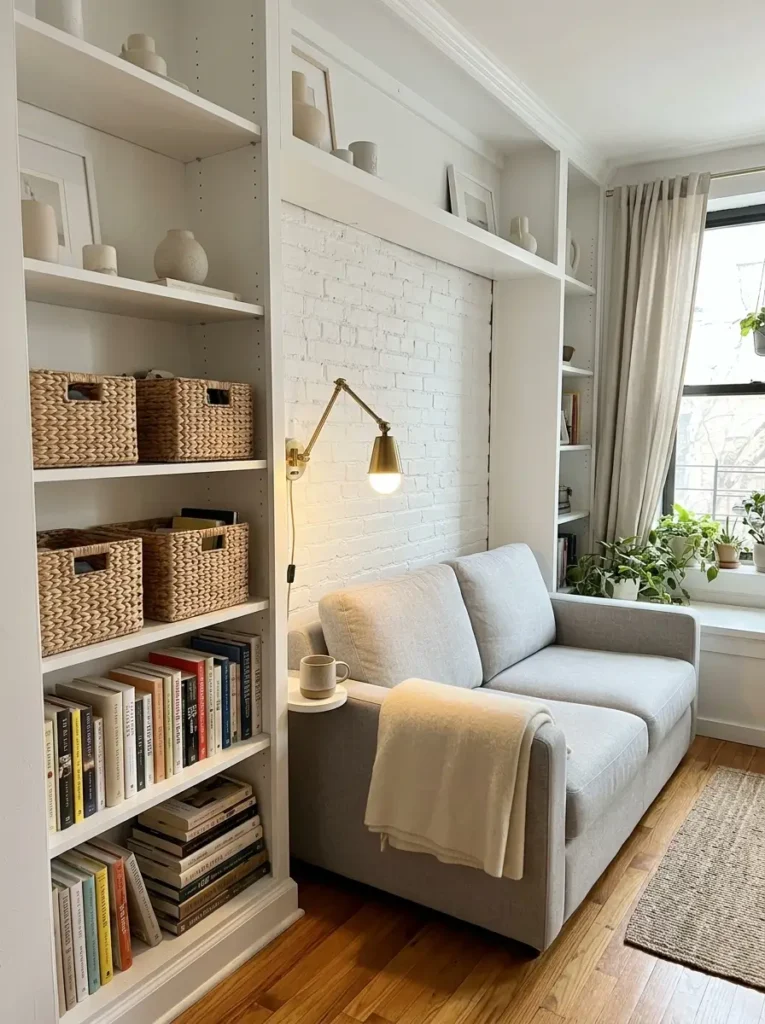
If your apartment has built-in shelves, cabinets, window benches, or alcoves, use them in your couch layout. Placing the couch near storage can reduce the need for extra furniture.
This small apartment couch layout works because storage and seating support each other. You can keep books, blankets, games, and daily items nearby without adding bulky cabinets.
This idea is best for apartments with alcoves, built-in shelving, or awkward wall niches. It also helps anyone who wants a clean, low-clutter living room.
For example, place a small sofa beside a built-in shelf and use the shelf as a side table. Store books on the lower shelves, baskets in the middle, and lighter decor on top. This keeps everything useful but not crowded.
If you do not have built-ins, create a similar effect with a narrow bookcase, wall-mounted shelves, or a ladder shelf. Renters can use freestanding shelves instead of drilling into walls.
Color coordination helps. If your shelves are white, choose baskets in natural woven textures or soft gray fabric. If your couch is dark, add lighter storage pieces so the corner does not feel heavy.
Lighting is important near storage. Shelves can cast shadows, especially in small rooms. Add a small rechargeable lamp, LED puck lights, or a plug-in lamp nearby. Warm light around 2700K to 3000K makes shelves feel softer in the evening.
The common mistake is overfilling shelves near the couch. Clutter beside your main seating area can make the whole room feel busy. Leave some empty space on shelves so the layout can breathe.
Use a Bench or Ottoman Instead of Extra Chairs
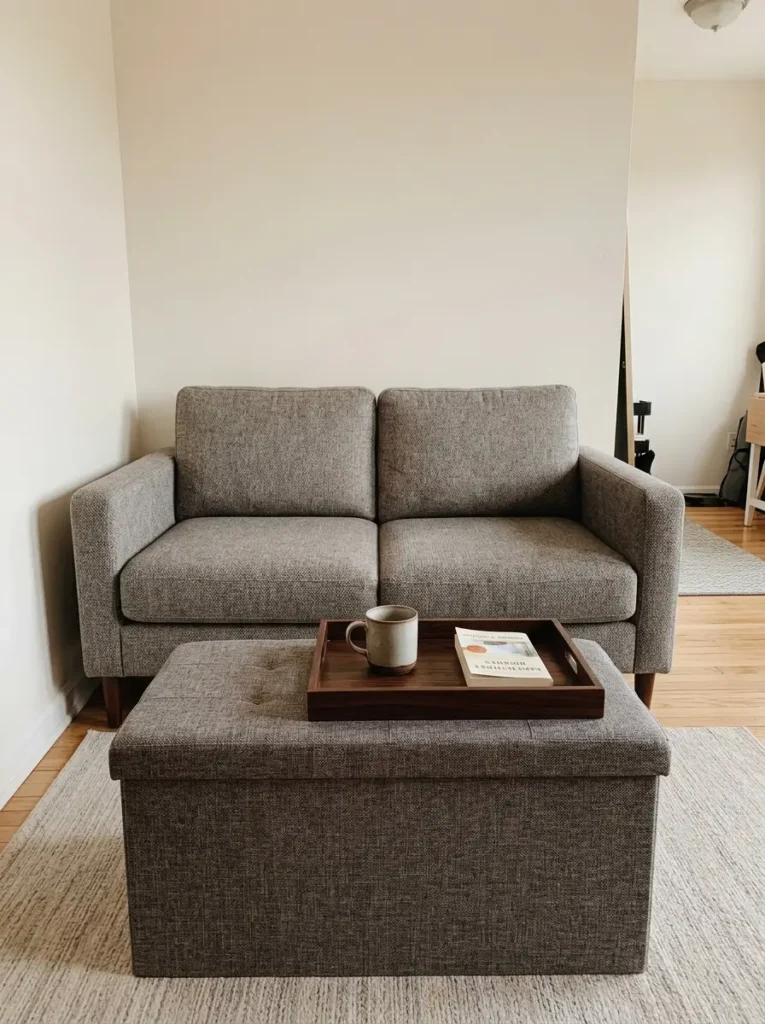
Extra chairs can crowd a tiny living room. A bench or ottoman often works better because it can serve several purposes. It can be a coffee table, footrest, storage piece, or guest seat.
This layout works because flexible furniture helps small apartments adapt. Instead of using one piece for one purpose, you get more function from less floor space.
This idea is best for renters, small families, people who host occasionally, and anyone who wants a softer layout. It is also helpful if your room has sharp corners or narrow paths.
For example, place a compact sofa against the wall and use a rectangular storage ottoman in front. Add a tray on top when you need a coffee table. Remove the tray when you want to put your feet up or use the ottoman as extra seating.
A bench can also sit behind a floating couch or under a window. Choose one with hidden storage if you need space for blankets, shoes, or seasonal decor.
Fabric choice matters. A textured beige, gray, or brown ottoman hides wear better than smooth white fabric. If you have pets, choose a material that is easy to vacuum.
The main mistake is buying an ottoman that is too large. It should not block the couch or make walking difficult. Leave enough space on all sides so you can move naturally.
For budget-friendly styling, look for secondhand benches and update them with a washable cover. You can also use a simple wood bench with a cushion tied on top. This gives you flexible seating without spending much.
Keep the Couch Layout Light with Raised Legs
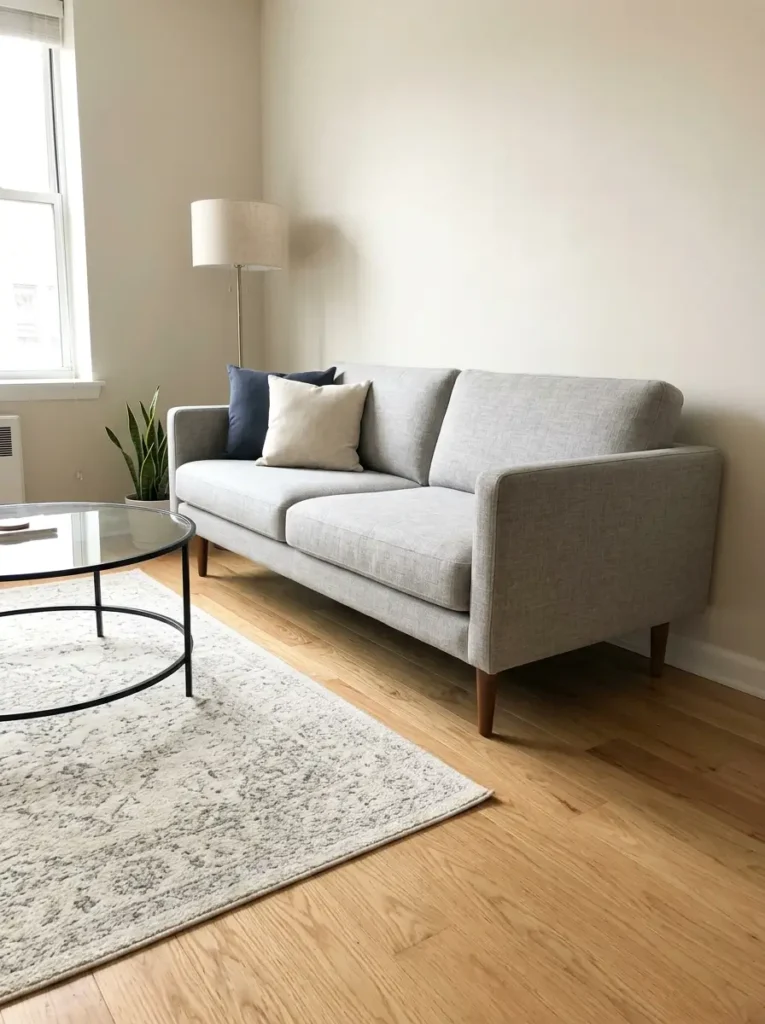
Couches with raised legs can make a small apartment feel more open. When you can see floor space underneath the sofa, the room looks lighter. This is a simple visual trick, but it works well in tiny homes.
This idea works because visible floor creates a sense of air and space. Heavy couches that sit directly on the floor can make a small room feel blocked, especially if the fabric is dark.
This tip is best for very small living rooms, narrow apartments, and renters who cannot change flooring or wall colors. It is also useful if you want the room to feel easier to clean.
Choose a couch with slim arms, simple lines, and legs that lift it several inches off the floor. Mid-century-style sofas often work well because they are raised and not too bulky. Avoid oversized rolled arms if space is limited.
For example, use a small camel, gray, or cream sofa with wood legs. Pair it with a thin-frame coffee table and a low-pile rug. Add one floor lamp instead of two side tables to keep the room open.
Cleaning is easier with raised legs, too. You can vacuum under the couch and avoid dust buildup. This matters in tiny homes because dust and clutter show faster.
The mistake to avoid is choosing a couch only because it looks small online. Check the seat depth, arm width, and leg height. A sofa with wide arms can waste several inches on each side. In a tiny apartment, those inches matter.
Common Mistakes to Avoid
One common mistake is buying the couch before measuring the room. Always measure the wall, walking paths, doorways, elevator, and stairwell before ordering. A couch that fits the room but cannot enter the apartment creates a costly problem.
Another mistake is blocking natural light. Placing a tall couch in front of a low window can make the room feel darker. If the couch must sit near a window, choose a low-back design and use light curtains.
Many people also choose furniture that is too deep. A couch can be narrow in width but still take up too much floor space if it has deep seats. Check depth carefully, especially in rooms under 10 feet wide.
Avoid placing every piece of furniture against the walls without thinking about flow. Sometimes floating the couch slightly creates a better layout. The goal is not just open floor space. The goal is useful open floor space.
Another mistake is using too many small decor items. Tiny accessories can make a small living room look cluttered. Use fewer pieces with clear function, such as one tray, one lamp, one plant, and a few pillows.
Poor lighting is another issue. A single ceiling light can make a small apartment feel flat and harsh. Add at least two light sources when possible. A floor lamp and a table lamp can make the couch area more comfortable.
Do not ignore cable management. Visible cords around the couch, TV, and lamps can make the layout feel messy. Use cord clips, baskets, cable sleeves, or adhesive cord covers for a cleaner setup.
Finally, avoid copying a layout without considering your routine. A beautiful layout that blocks your closet, balcony, desk, or kitchen path will not work well. Your small apartment couch layout should support your daily life first.
Budget-Friendly Tips for Small Apartment Couch Layouts
Start by rearranging before buying anything. Move the couch to a different wall, angle it slightly, or try floating it with painter’s tape marking the rug area. Sometimes the best improvement costs nothing.
Buy multi-use furniture when possible. A storage ottoman, nesting table, sofa bed, or bench can replace several separate pieces. This saves both money and space.
Shop secondhand for side tables, benches, lamps, and shelves. These items are often easier to find used than couches. You can update them with paint, new knobs, washable covers, or peel-and-stick finishes.
Use pillow covers instead of buying new pillows. Covers take less storage space and cost less. For a flexible look, choose two neutral covers and one seasonal accent cover in sage, rust, navy, or mustard.
Lighting can also be budget-friendly. A simple floor lamp with a warm bulb can change the couch area quickly. Choose bulbs around 2700K to 3000K for a comfortable living room. Avoid very cool bulbs above 5000K because they can feel harsh at night.
For renters, peel-and-stick hooks, tension rods, removable wallpaper panels, and adhesive cord covers can improve the couch area without permanent changes. Always test removable products on a hidden spot first.
Use baskets to control clutter. Place one basket beside the couch for blankets, chargers, or pet toys. Matching baskets make open storage look more intentional.
If your couch feels old but still works, try a fitted slipcover. Choose a simple fabric in beige, gray, cream, or olive. Add fresh pillow covers and a clean throw. This can make the couch area feel updated without replacing the sofa.
Small Apartment Couch Layout Tips
Keep walking paths clear. Try to leave at least 30 inches for main walkways and around 16 to 18 inches between the couch and coffee table. These measurements do not need to be perfect, but they help the room feel easier to use.
Match the couch size to the room. A loveseat, apartment sofa, or compact sectional usually works better than a large sofa in a tiny home. Measure width, depth, and height before buying.
Think about the main use of the room. If you watch TV daily, face the couch toward the screen. If you host friends, create a conversation layout. If you work from home, use the couch to separate the living zone from the desk.
Use light and medium colors wisely. Cream, beige, warm gray, taupe, and soft green can make a small couch area feel calm. Dark colors can work too, but balance them with light walls, rugs, curtains, or lamps.
Choose furniture with legs when possible. Raised legs on couches, tables, and chairs help more floor show. This makes the layout feel less heavy.
Use vertical space. Wall shelves, tall narrow bookcases, and plug-in sconces free up floor space. Renters can use freestanding shelves or adhesive options where safe.
Keep the coffee table flexible. Round tables, nesting tables, C-tables, and ottomans are easier to use in small apartments than oversized rectangular tables.
Anchor the couch with a rug. The rug should connect the couch, table, and seating area. A too-small rug can make the space feel unfinished.
Place lighting at different heights. Use a floor lamp, table lamp, wall sconce, or small shelf lamp near the couch. Layered lighting makes the room more useful throughout the day.
Edit often. Small apartments need regular editing because clutter builds quickly. Remove items that do not support comfort, storage, or daily use.
FAQ
How do I arrange a couch in a very small apartment?
Start by placing the couch where it does not block doors, closets, windows, or main walking paths. In many tiny apartments, the best option is against the longest wall. If you live in a studio, floating the couch can help separate the living area from the bed or dining space.
Should a couch always go against the wall?
No, a couch does not always need to go against the wall. In a studio or open-plan apartment, floating the couch can create zones and improve layout. However, if your room is very narrow, placing the couch against a wall may save more space.
What couch style is best for small apartments?
Loveseats, apartment sofas, slim-arm sofas, raised-leg couches, and compact sectionals work well in small apartments. Avoid very deep couches, oversized arms, and bulky recliner styles unless you have enough room for them.
How can I make my couch area look bigger?
Use light or medium colors, raised-leg furniture, a properly sized rug, and warm layered lighting. Keep the coffee table slim or round. Avoid clutter around the couch, and choose curtains close to the wall color to make the room feel taller and cleaner.
Is a sectional a bad idea in a small apartment?
A sectional is not always a bad idea. A compact L-shaped sectional can work well in a corner and provide more seating than separate chairs. The key is to measure carefully and make sure it does not block windows, doors, heaters, or walkways.
What should I put beside a couch in a tiny living room?
Use a slim side table, C-shaped table, small floor lamp, basket, or narrow shelf. Avoid bulky end tables if they block movement. Choose pieces that support daily use, such as a place for a drink, book, lamp, or charger.
Conclusion
A smart small apartment couch layout is not about following one fixed rule. It is about making your space easier to live in. The right couch placement should support your routine, keep walkways clear, improve lighting, and help your tiny home feel organized.
Start with the basics. Measure your room, choose furniture that fits, and avoid blocking natural light or daily paths. Then add comfort with a rug, warm lighting, flexible tables, and storage that does not crowd the room.
Whether you use a loveseat against the wall, a floating couch in a studio, a compact sectional in a corner, or a sofa bed for guests, the goal stays the same. Your couch should make the apartment more useful, not harder to move through.
Small spaces work best when every piece has a purpose. With the right layout, even a tiny living room can feel comfortable, practical, and easy to enjoy every day.