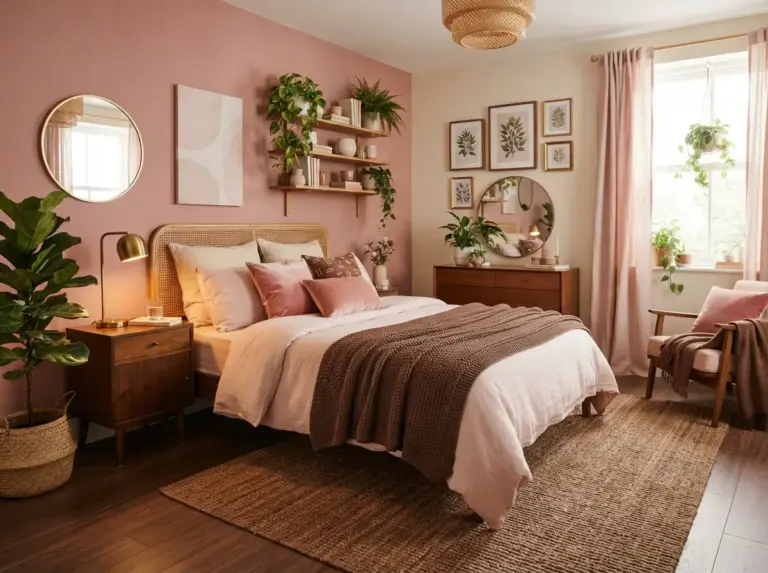
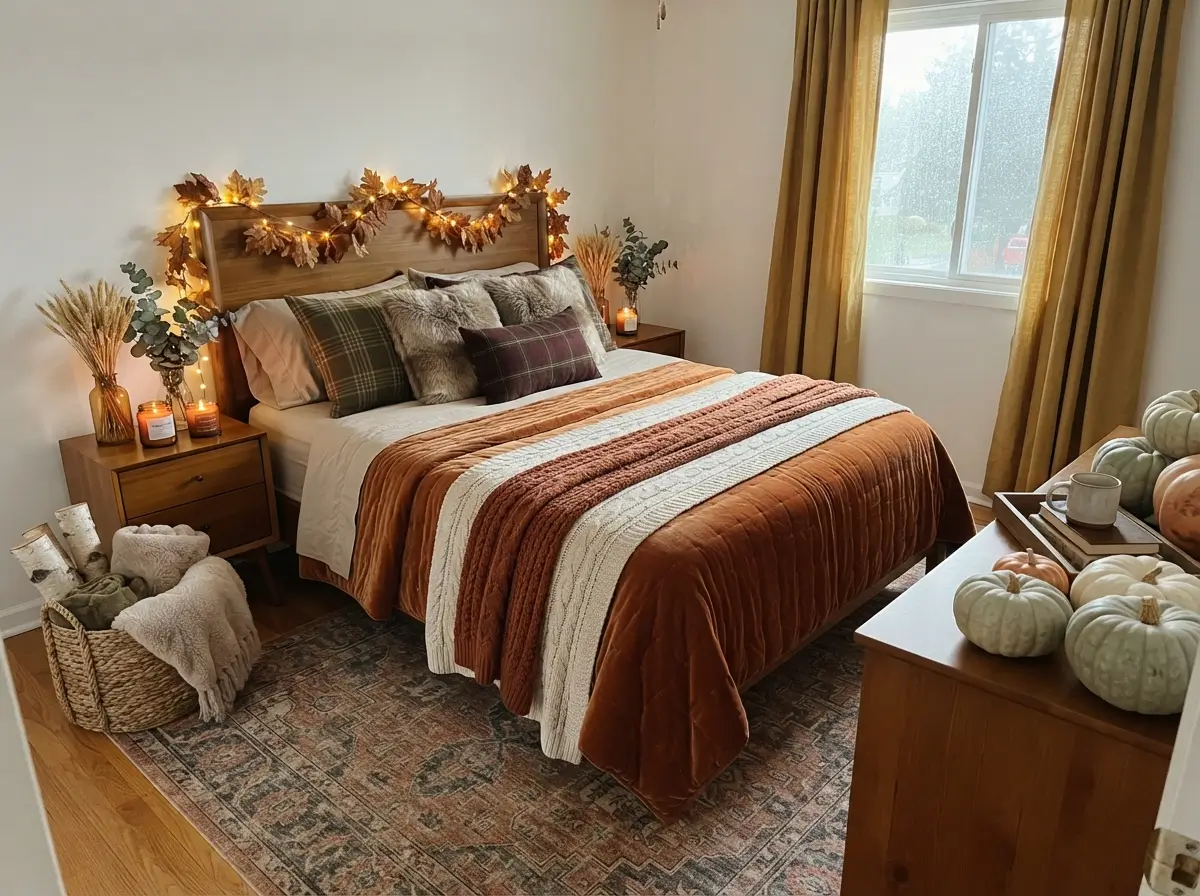

Cooler evenings often make the bedroom feel more important. It becomes the place where you want softer light, warmer layers and a calmer colour palette. Good seasonal bedroom styling does not require a complete makeover or expensive furniture. Small changes such as deeper pillow covers, a textured throw, amber lighting and natural materials can make the room feel more comfortable while keeping it practical. The key is to work with the size of the room, the amount of daylight and the furniture you already own. Beginners should focus on a few coordinated changes rather than filling every surface with seasonal objects.
What Is the Easiest Way to Style a Bedroom for Autumn?
The easiest approach is to change three areas first: bedding, lighting and colour accents. Add one warm-toned throw, switch to 2200K–2700K bulbs and repeat two seasonal colours in pillows, artwork or a rug. Autumn bedroom decor feels balanced when the room still has breathing space, clear walking paths and useful surfaces. Start with items you can store easily after the season, especially if you rent or live in a small bedroom. Texture usually creates more warmth than extra ornaments, so prioritise woven fabric, brushed cotton, wood and soft wool-effect finishes.
Build the Room Around a Warm Neutral Base
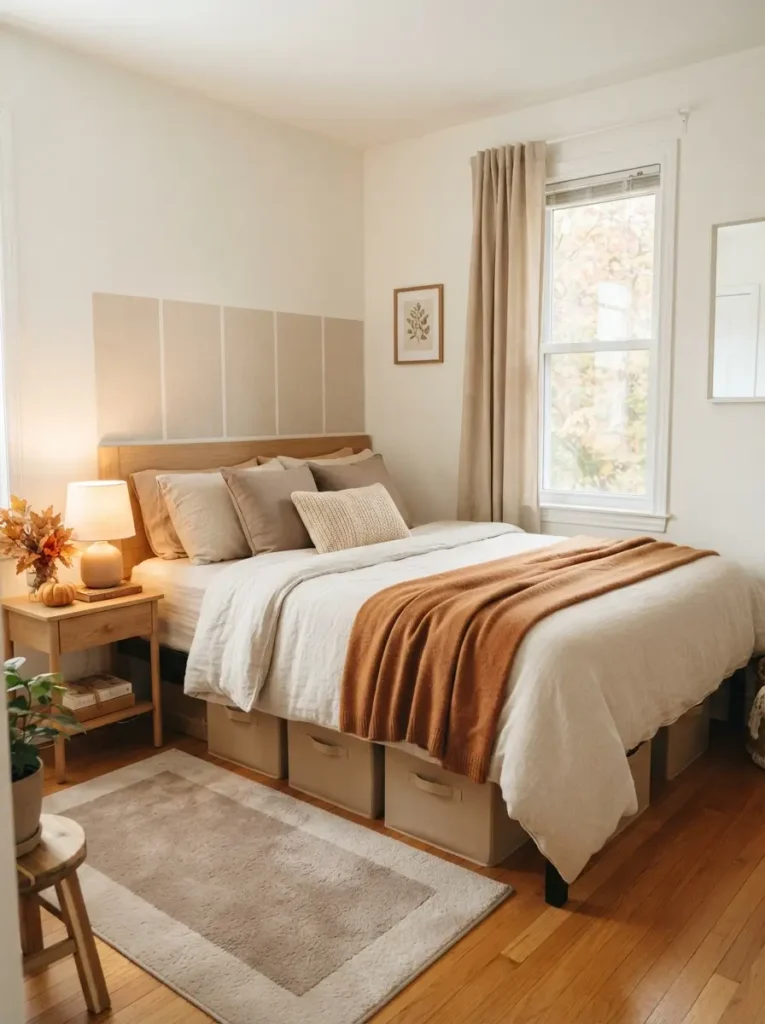
Warm neutrals create a flexible background for seasonal colours without making the room feel dark. Shades such as oatmeal, mushroom, warm beige, soft taupe and creamy white work well on walls, bedding and curtains. They reflect more daylight than deep brown or charcoal, which helps small bedrooms avoid a closed-in feeling. People with limited space benefit most because the palette keeps larger surfaces quiet while smaller accents carry the autumn theme.
Keep existing white walls if repainting is not possible. Bring in warm neutrals through a duvet cover, removable curtains, a bedside rug or fabric storage boxes. Renters can use peel-and-stick samples behind a headboard rather than covering every wall. Avoid mixing too many undertones. Creamy beige beside icy grey often looks disconnected, so compare fabrics in daylight before buying.
Layer Bedding Without Making the Bed Bulky
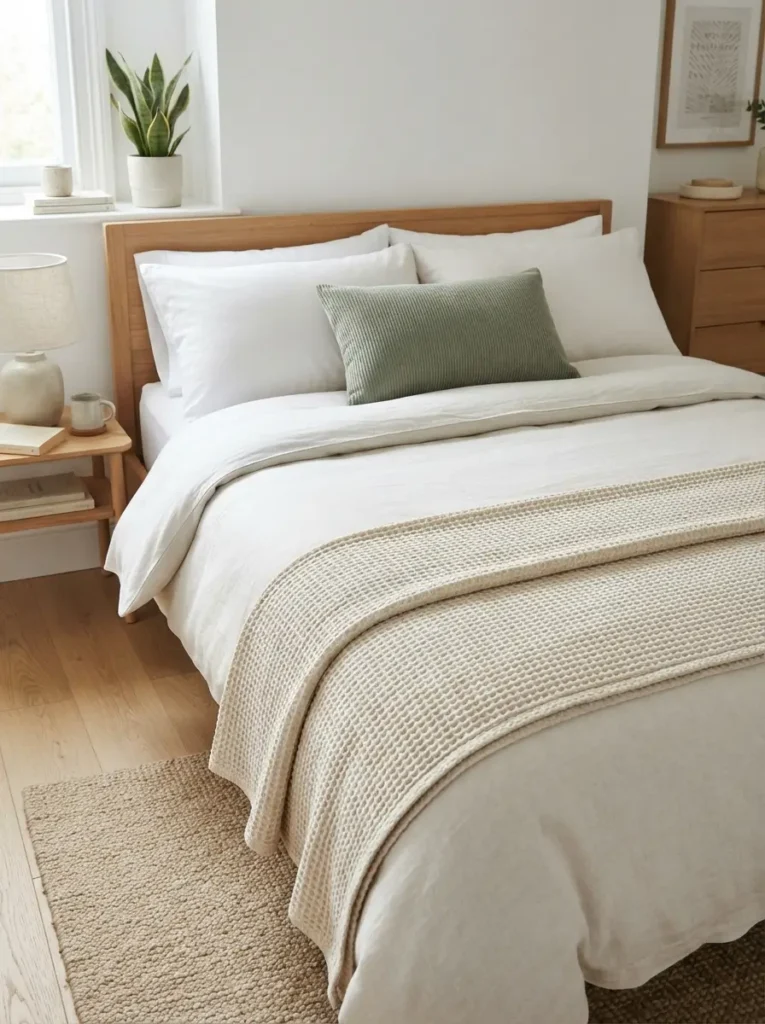
Layering makes a bed feel warmer, but too many thick pieces can overwhelm a compact room. Begin with breathable cotton sheets, add a medium-weight duvet and fold a textured throw across the lower third of the bed. Finish with two sleeping pillows and one or two decorative cushions. People who dislike constant bed styling should keep the arrangement simple enough to reset in under two minutes.
Choose fabrics with different surfaces rather than using many colours. Brushed cotton, washed linen, waffle weave and fine corduroy create visible depth while staying comfortable. Keep the heaviest layer at the foot of the bed so the sleeping area remains practical. Avoid stacking six or seven cushions on a small double bed because they take up storage space at night and quickly make the room look crowded.
Use Rust as an Accent Instead of a Main Colour
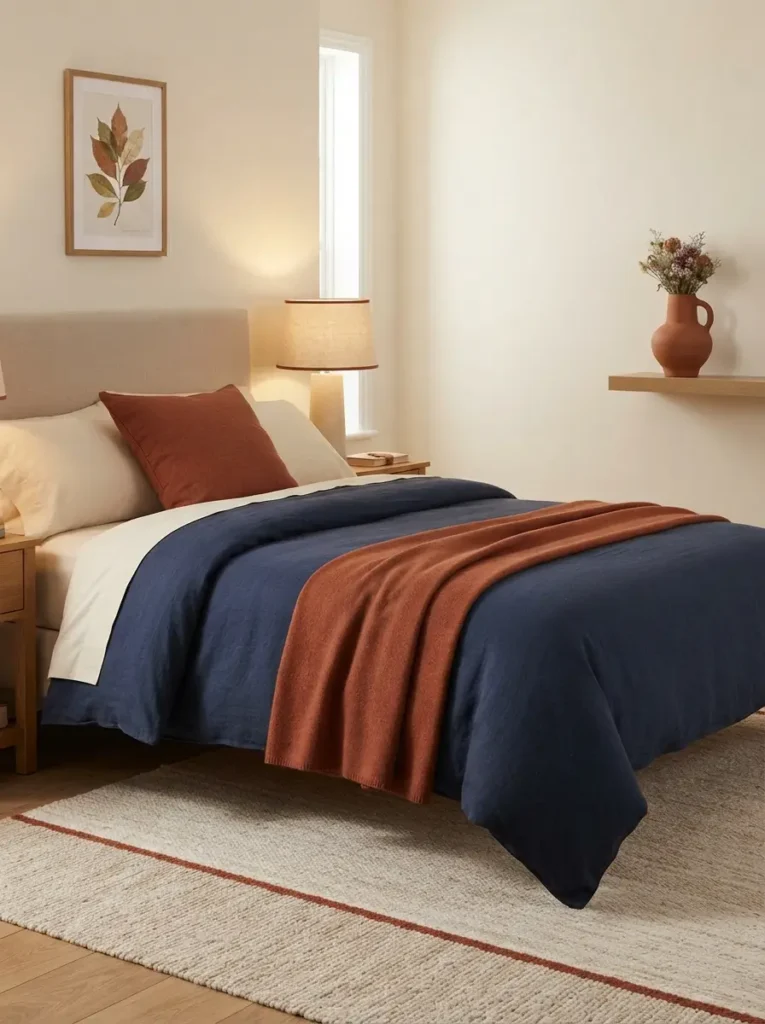
Rust brings the warmth of dried leaves indoors, yet it can dominate a bedroom when used on large walls or heavy curtains. Smaller doses look more controlled. Try rust pillow covers, a folded blanket, a lampshade trim or one framed print. Anyone who already owns beige, cream, olive or navy furnishings can add rust without replacing the main pieces.
Repeat the shade in two or three locations so it looks intentional. For example, place a rust cushion on the bed, a terracotta vase on a shelf and a narrow rust stripe in the rug. Keep each item separated rather than clustering everything in one corner. Deep orange also changes under artificial light, so test it beside your bulbs before removing tags or ordering several matching pieces.
Add Olive Green for a Calmer Seasonal Palette
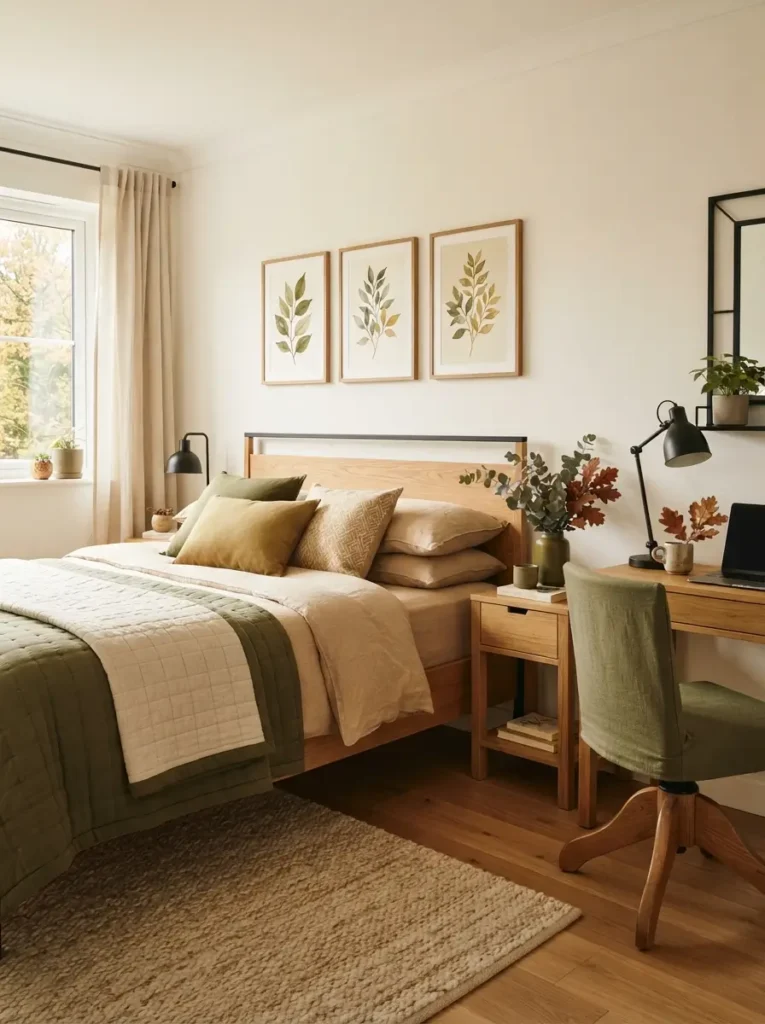
Olive green gives an autumn room a natural quality without relying only on orange and brown. It works especially well with oak furniture, black metal, warm white walls and tan textiles. Bedrooms used for both sleeping and working benefit from olive because it feels grounded and less visually energetic than bright green.
Introduce the colour through a quilt, cushion, small chair cover or botanical artwork. Pair it with cream and muted gold rather than several competing earth tones. People with north-facing rooms should choose a lighter olive because very dark green can absorb limited daylight. Avoid combining olive with cool blue-grey unless one colour appears only in a small accent, as equal amounts may make the scheme feel muddy.
Choose a Reversible Autumn Duvet Cover
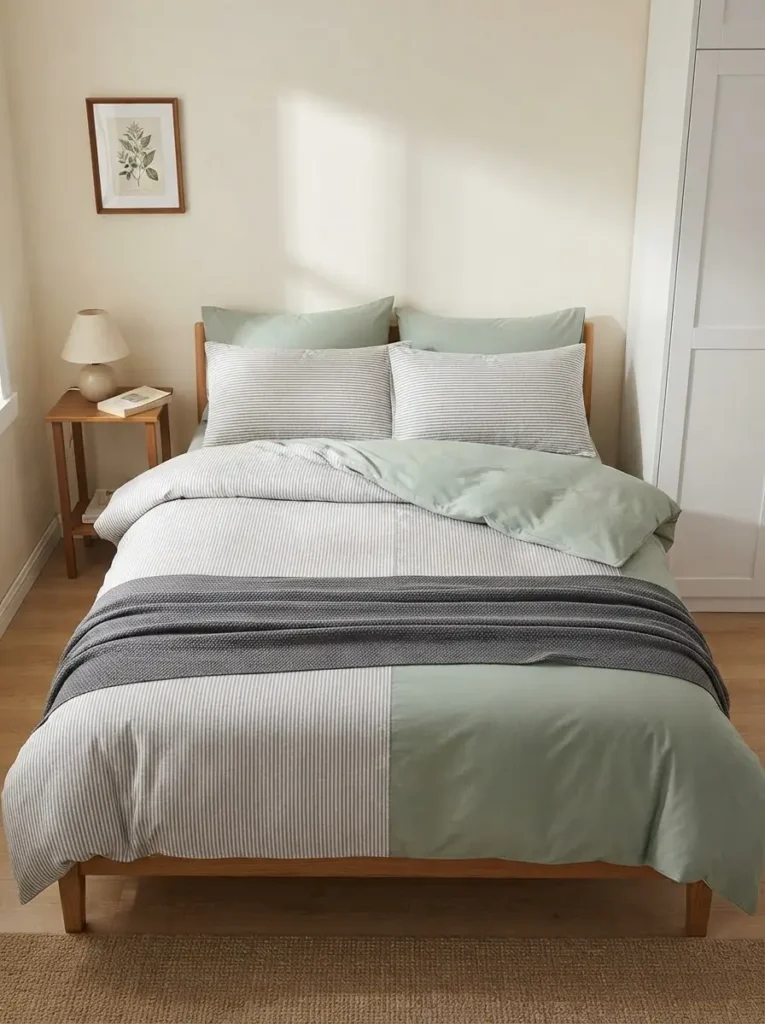
Reversible bedding gives you two looks without using extra cupboard space. One side might feature a muted check, leaf pattern or narrow stripe, while the other stays plain. Small-home owners and renters gain the most because the same item can handle seasonal styling and everyday use.
Look for breathable cotton or a cotton-rich blend that washes easily. Printed microfibre may feel warm, but it can trap heat and may not suit people who sleep hot. Keep the pattern scale in proportion to the room. A small check often looks calmer in a narrow bedroom, while an oversized botanical print suits a larger bed with fewer surrounding objects. Check whether the reverse side has a usable pattern rather than a noticeably cheaper finish.
Place a Textured Throw Where It Will Be Used
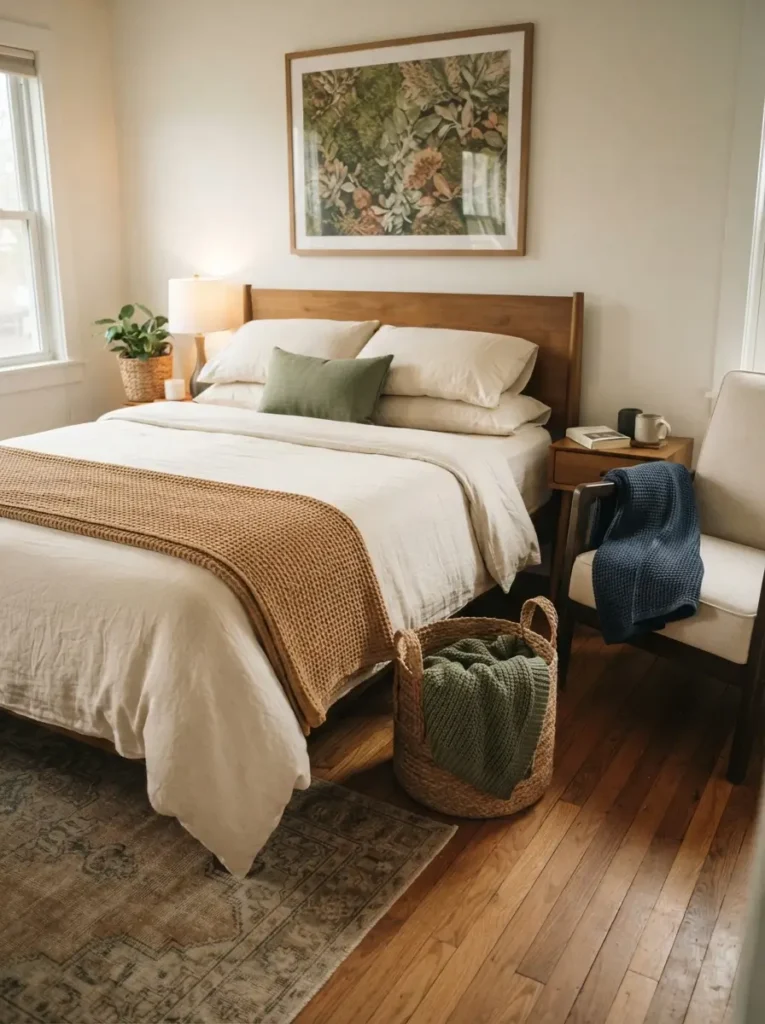
Throws often become decorative clutter because they are placed where nobody reaches them. Fold one across the foot of the bed, hang it over a reading chair or keep it in an open basket beside the mattress. Practical placement makes the room feel lived-in and stops the fabric from sliding onto the floor.
Choose a washable weave in a shade already used elsewhere. A camel waffle throw works with cream bedding, while a moss knit can connect green artwork and wooden furniture. Households with pets may prefer a tightly woven cotton throw because loose loops catch claws and collect hair. Skip oversized blankets in very small rooms unless they serve as the main extra layer during cold nights.
Warm the Floor With a Bedside Rug
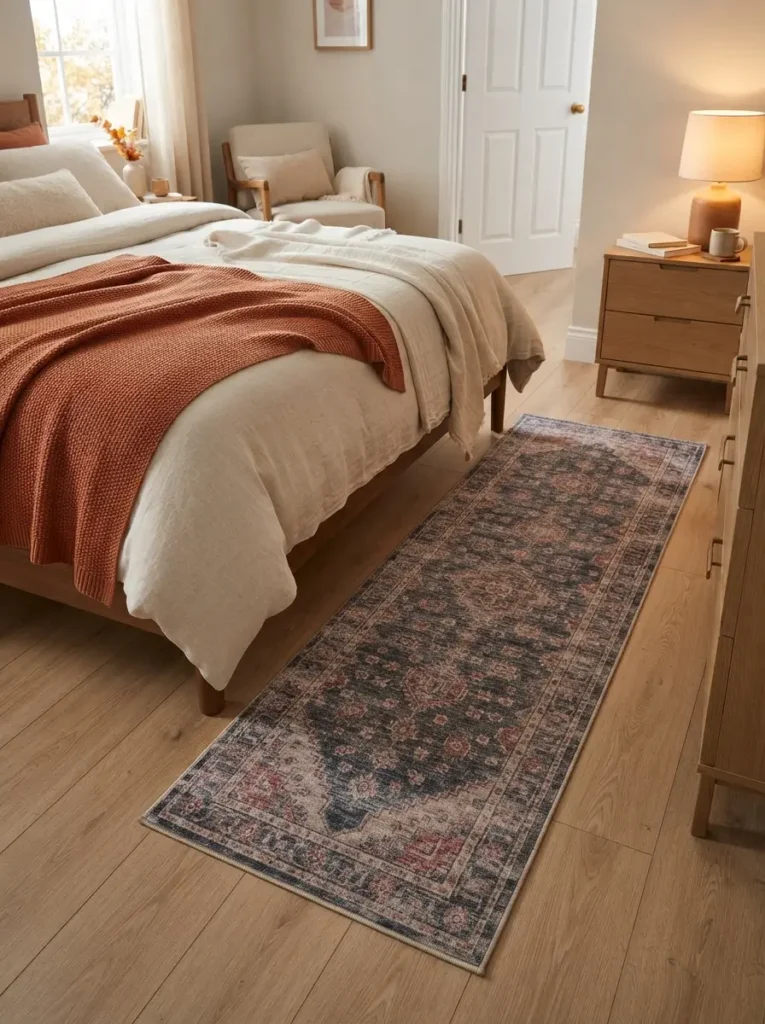
Cold flooring can make the whole bedroom feel less comfortable during autumn. A rug beside the bed adds warmth exactly where bare feet land in the morning. Narrow runners suit small rooms because they fit along one side without interfering with drawers or doors. Larger rooms can handle a rug that extends at least 45–60 centimetres beyond the bed edges.
Low-pile wool-effect, washable cotton and flatwoven rugs are easier to maintain than deep shag. Choose patterns that hide everyday dust, such as muted checks, faded geometrics or small-scale vintage designs. Place a non-slip pad underneath, especially on laminate or timber. Avoid a tiny rug floating several centimetres away from the bed, as the gap looks awkward and reduces its practical value.
Switch to Warmer Light Bulbs
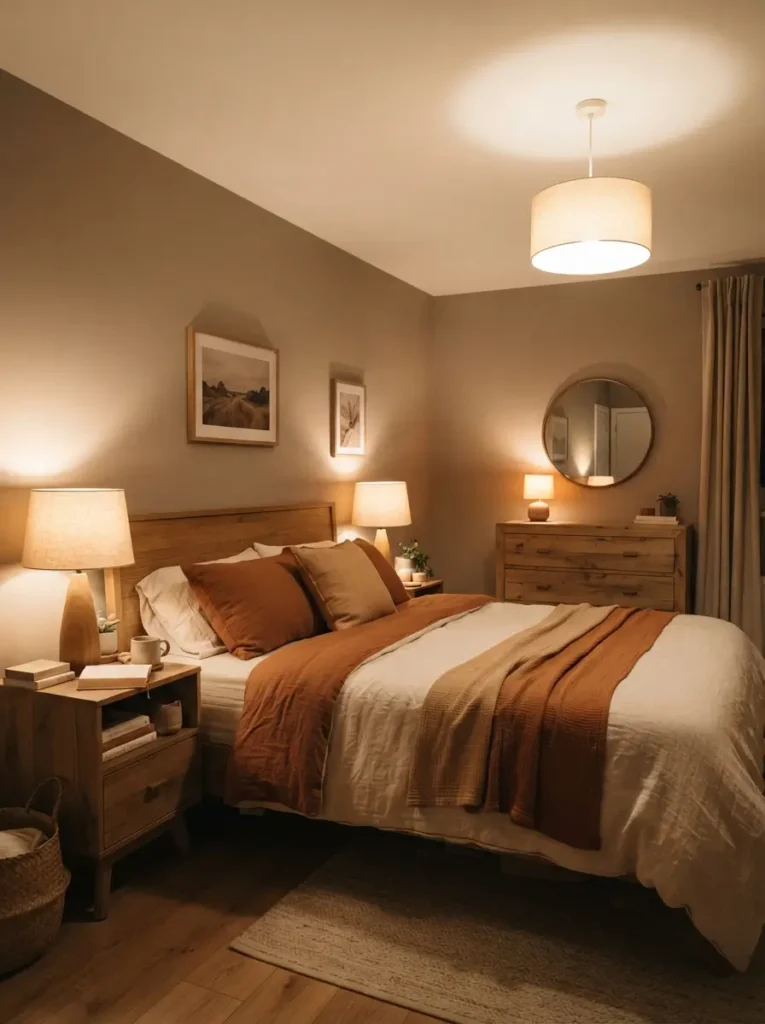
Lighting changes colour perception more than many people expect. Bulbs around 2200K to 2700K create a warm glow that suits rust, tan, wood and cream. Higher colour temperatures can make the same fabrics appear grey or flat. Anyone who finds their bedroom harsh at night should make lighting the first update.
Use warm bulbs in bedside lamps and a slightly brighter warm-white bulb in the main ceiling fixture. Layered lighting works better than one strong source because it reduces deep shadows and gives you options for reading, dressing and winding down. Check lamp wattage limits and choose dimmable bulbs only when the fitting supports them. Avoid amber bulbs that distort colours so heavily that clothes and makeup become difficult to judge.
Add a Small Bedside Lamp With a Fabric Shade
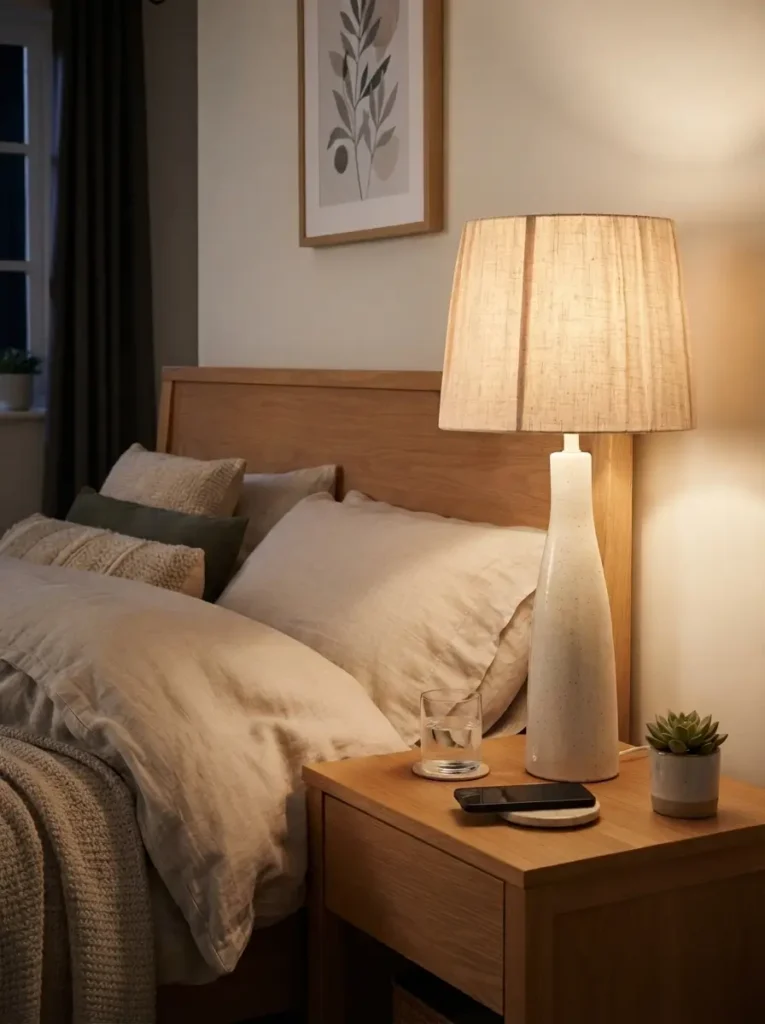
Fabric shades soften light and reduce the sharp glare created by exposed bulbs. Linen-look, pleated or lightly textured shades suit seasonal styling without feeling overly themed. People who read in bed should choose a lamp with enough height to cast light over the shoulder rather than directly into the eyes.
Keep the lamp base proportional to the bedside table. A narrow ceramic or wooden base leaves room for a book, phone and water glass. Clip-on lamps work for tiny rooms with no table space, while plug-in wall sconces provide a rental-friendly alternative to hardwired fixtures. Avoid very dark shades unless the room has another reading light because they reduce useful brightness.
Frame the Bed With Removable Wall Colour
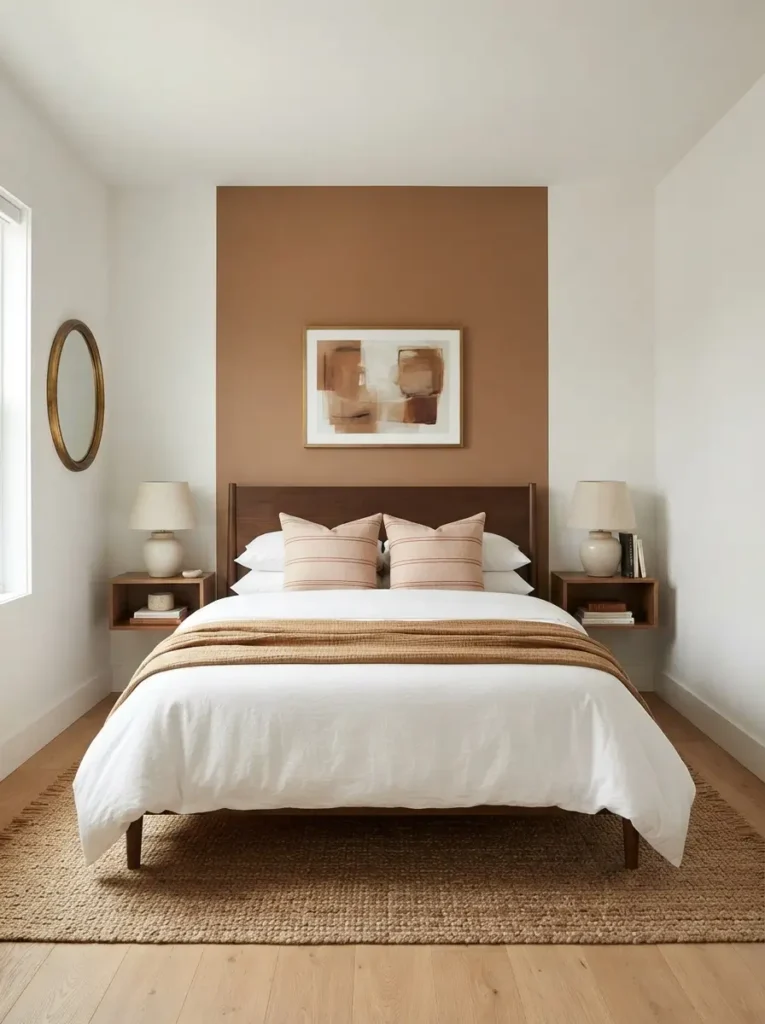
Painted or peel-and-stick panels behind the bed create a focal point without filling the room with objects. Try muted clay, caramel, tobacco brown or warm olive within the width of the headboard. Renters can use removable wallpaper or large fabric panels attached with damage-minimising strips, provided the wall finish allows it.
Keep the shape simple. A full-height rectangle often looks cleaner than a complex arch in a busy room. Measure the bed and centre the panel before applying anything. People with low ceilings should take the colour close to the ceiling to increase visual height. Avoid stopping the panel at a random point just above the pillows because it can make the wall appear cut off.
Style the Headboard With Soft Texture
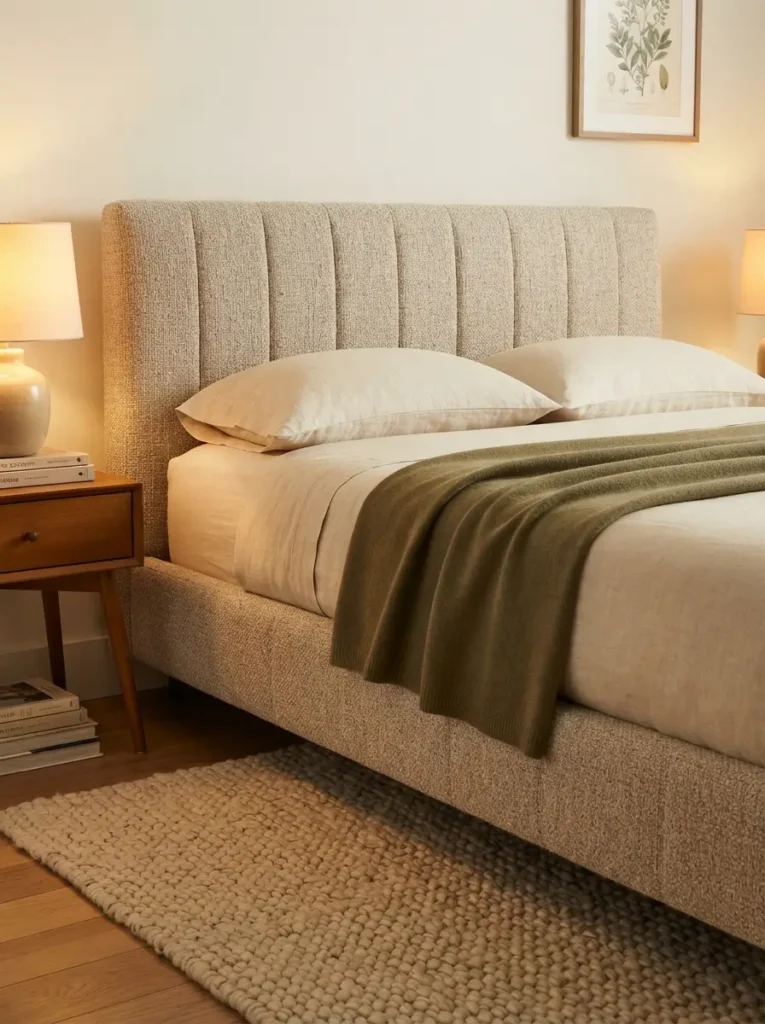
Headboards provide a large visual surface, so changing their texture can shift the room quickly. Upholstered styles in oatmeal, camel or olive feel warmer than glossy metal or cool grey fabric. Anyone with an existing hard headboard can drape a fitted quilted cover over it or use a removable padded slipcover.
Choose a design that remains comfortable for sitting up in bed. Deep buttoning looks traditional but collects dust, while smooth channel stitching is easier to vacuum. Small bedrooms benefit from slim headboards because thick padded frames reduce the usable mattress area. Avoid tying loose blankets around the frame, as they slide, gather dust and may look untidy after a few days.
Introduce Autumn Through Artwork
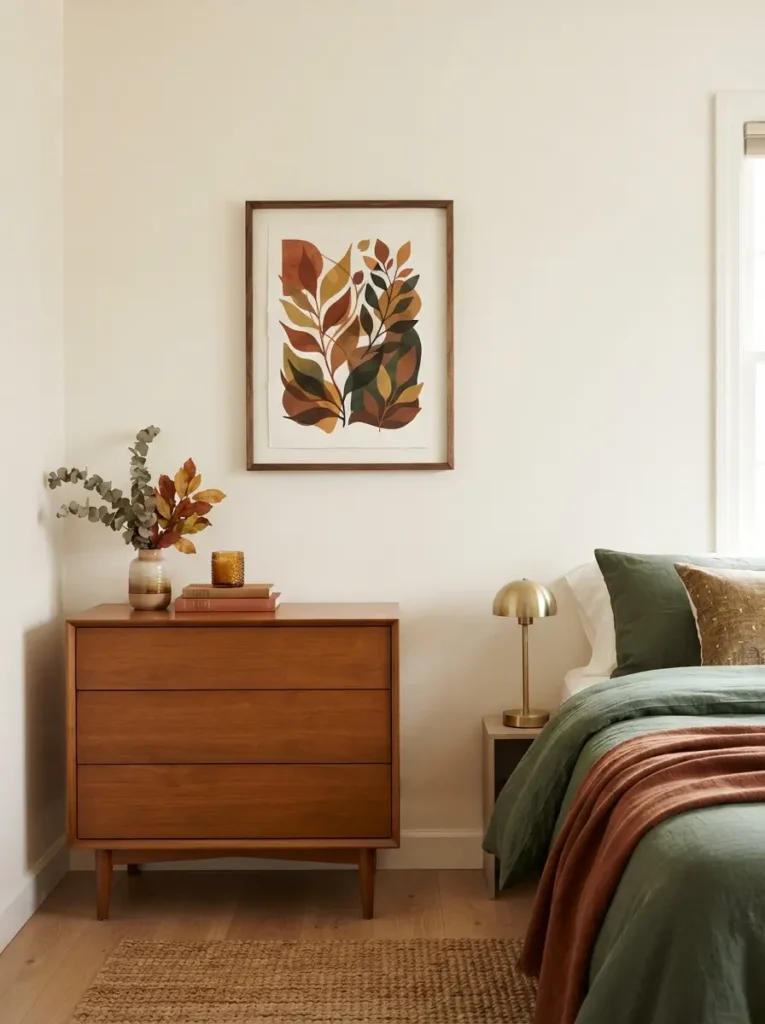
Seasonal artwork can change a room without taking up floor or storage space. Look for landscapes, abstract forms, botanical studies or still-life prints in burnt sienna, muted gold, forest green and warm brown. Art lovers who want a subtle result should choose subjects that remain suitable beyond autumn rather than prints covered in pumpkins and slogans.
Use frames you already own and rotate only the paper inserts. Standard sizes reduce printing costs and make storage easier. Hang one medium piece above a chest or arrange two smaller prints beside the bed. Keep art at eye level and leave enough space around it. Avoid covering every wall because negative space helps the colours and furniture feel more deliberate.
Create a Simple Seasonal Bedside Vignette
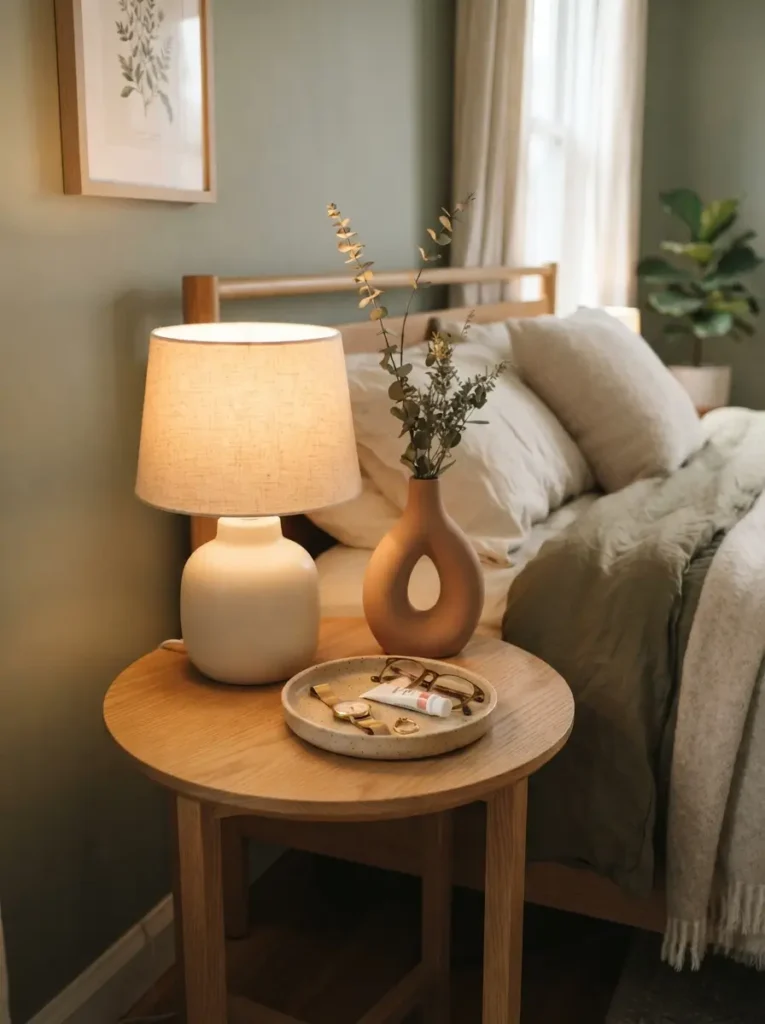
Bedside styling works best when it supports daily routines. Combine one practical item, one soft light source and one seasonal accent. A lamp, small tray and ceramic vase are usually enough. Beginners should start here because the area is easy to adjust without changing the whole room.
Choose a shallow tray to hold jewellery, lip balm or glasses, then add a small branch of dried foliage or an empty sculptural vase. Keep the arrangement lower than the lamp shade so it does not block light. People with narrow tables can use a wall shelf above the switch level. Avoid scented candles beside loose bedding, and never place open flames where curtains or blankets can reach them.
Bring in Natural Wood Tones
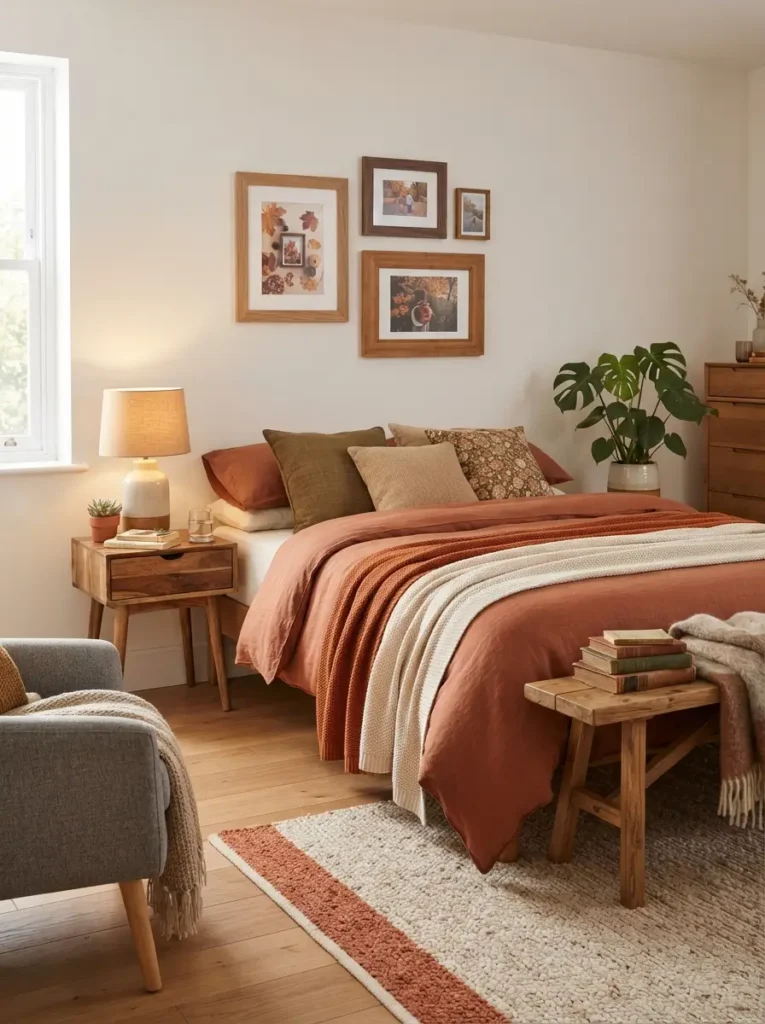
Wood adds warmth through colour and grain, even when the room contains modern furniture. Oak, walnut, acacia and medium-toned bamboo all pair well with autumn colours. People furnishing a room gradually can use one wood family repeatedly rather than trying to match every piece exactly.
Add wood through a bedside table, picture frames, a lamp base or a narrow bench. Second-hand furniture often provides better value than seasonal accessories and can work year-round. Sand and oil a small stool if the finish looks orange or glossy. Avoid combining too many strong grains in a small room because the competing patterns can make the layout feel busy.
Use Baskets as Visible Storage
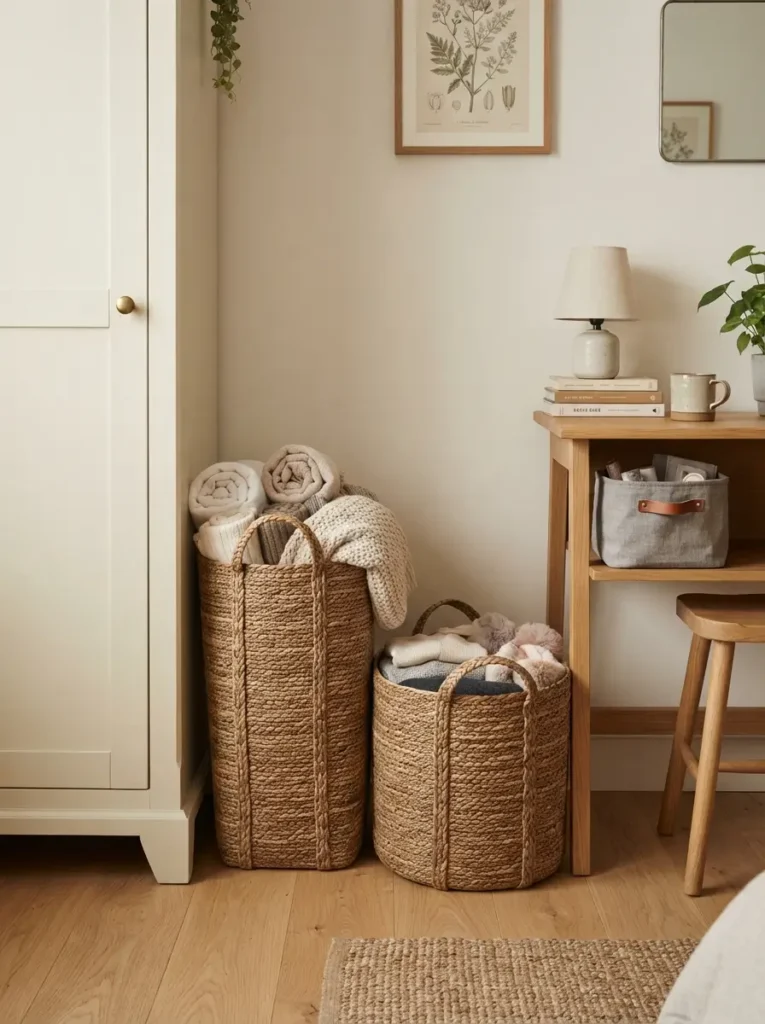
Baskets add texture while hiding items that create visual clutter. Store spare blankets, laundry, reading material or soft accessories inside. Small bedrooms benefit from tall, narrow baskets because they use vertical space and fit beside wardrobes or desks.
Choose materials based on how the basket will be used. Soft cotton rope protects delicate floors, seagrass works for lightweight items and lidded fabric baskets control dust. Repeat one basket style rather than mixing several unrelated weaves. Keep handles clear so the container remains easy to move. Avoid placing open baskets under leaking windows or beside radiators, where natural fibres may dry out or develop marks.
Add Curtains That Filter Autumn Light
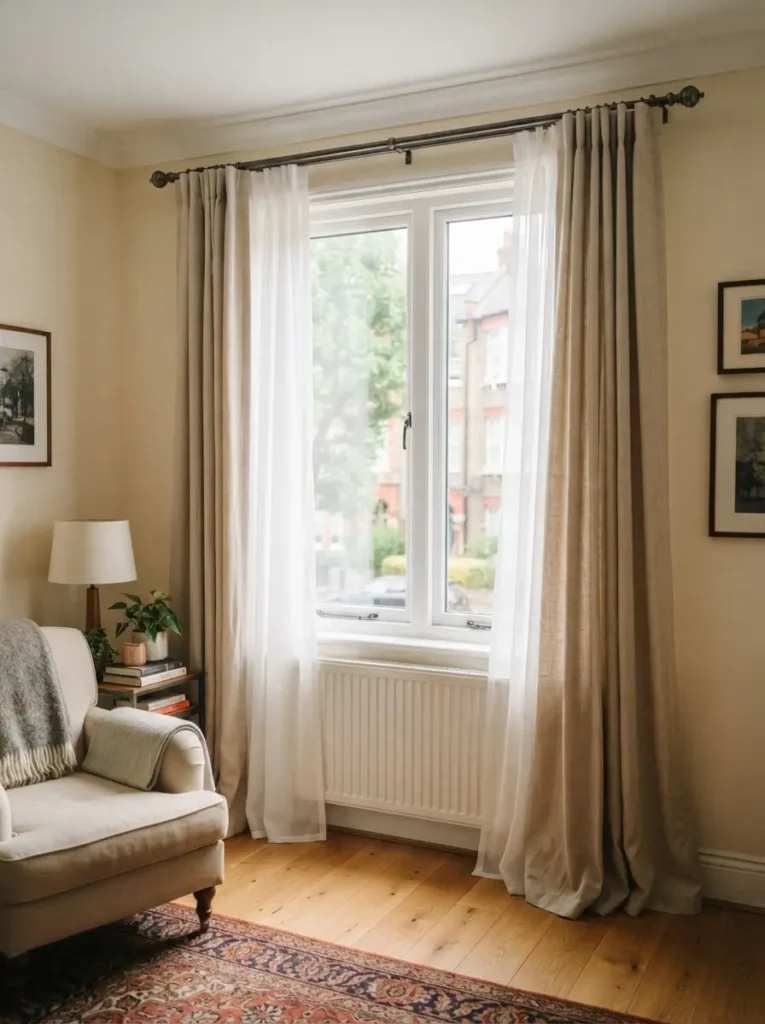
Curtains influence warmth, privacy and the way colours appear during the day. Warm ivory, oatmeal or soft tan panels filter cool daylight while keeping the room brighter than heavy brown curtains. People in overlooked flats can layer a sheer panel with a thicker curtain for flexible privacy.
Hang the rod wider than the window so the curtains stack beyond the glass and allow more daylight in. Floor-length panels usually make ceilings appear taller, but they should finish just above the floor in rooms where dust collects quickly. Thermal linings help during colder months, although they need enough wall clearance near radiators. Avoid short curtains that end halfway down the wall unless furniture blocks the lower section.
Use Dried Foliage With Restraint
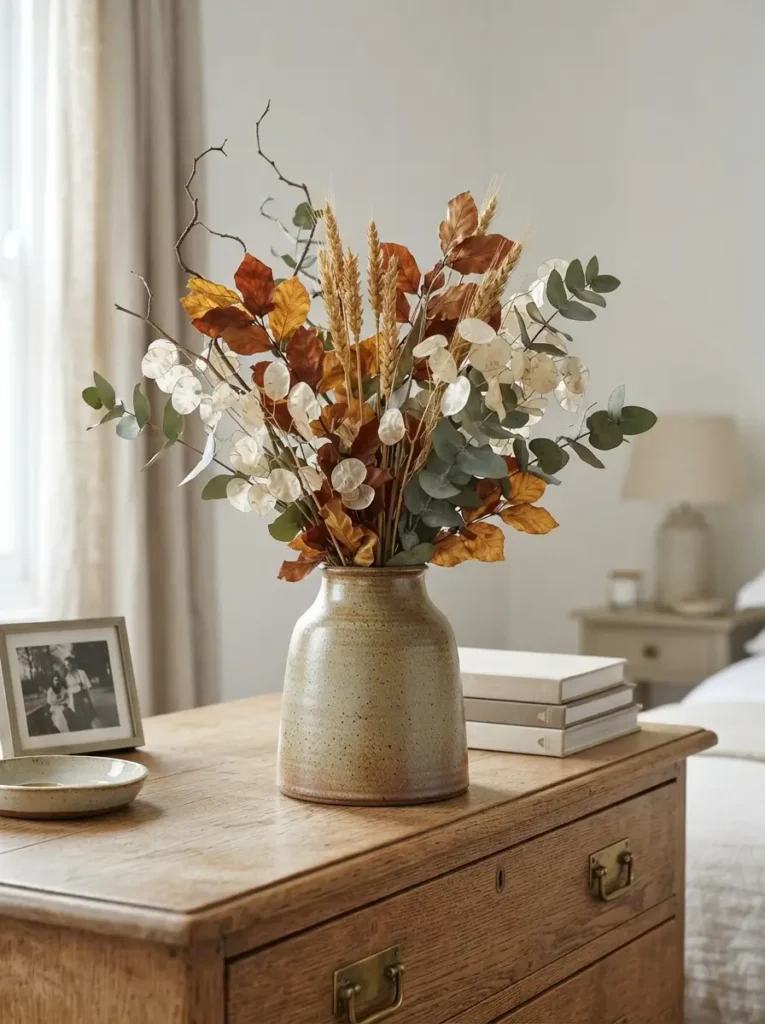
Dried stems introduce shape and natural colour without the care required by fresh flowers. Try beech leaves, wheat, eucalyptus, honesty seed heads or simple bare branches. People who travel often or forget plant care may find dried arrangements more practical than live plants.
Place a small bundle in a stable vase on a dresser or shelf. Trim stems so the arrangement fits the furniture rather than touching the ceiling. Dust them gently with a cool hairdryer setting or soft brush. Avoid fragile grasses beside the bed because they shed and catch on fabrics. Artificial branches can work well when their colour and finish look natural, but shiny plastic leaves usually weaken the overall scheme.
Set Up a Compact Reading Corner
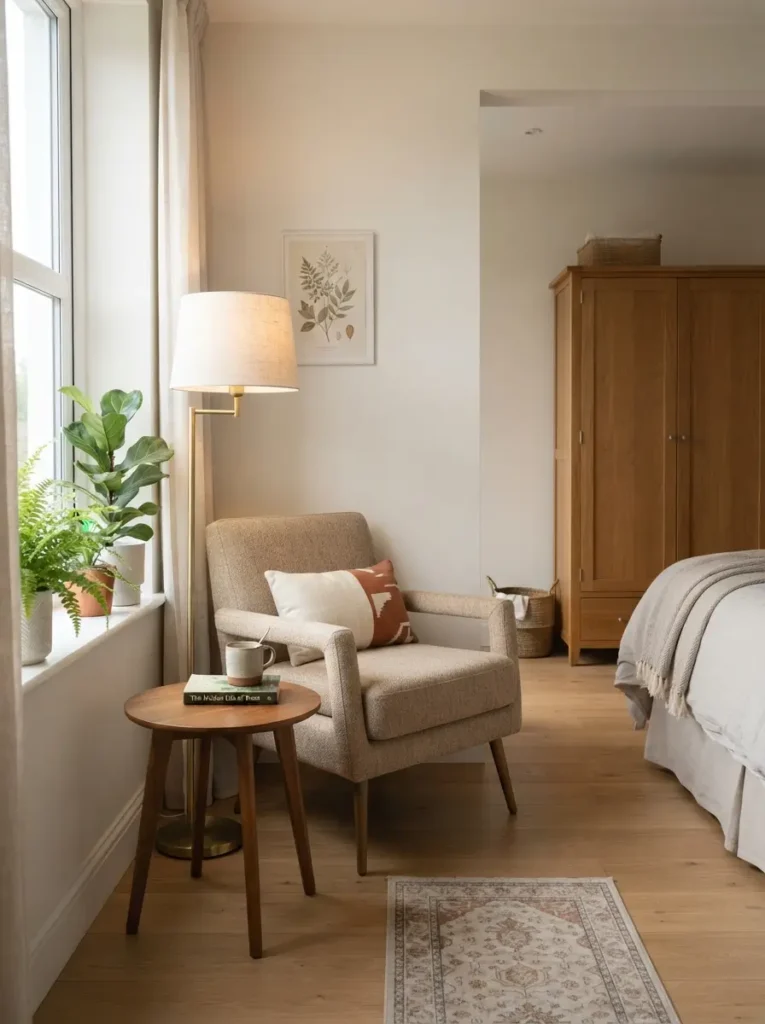
Creating a reading corner gives seasonal styling a purpose. Use a small chair, floor cushion or bench near natural light, then add a lamp and reachable surface for a drink. Bedrooms with an unused corner benefit most, but the route to the wardrobe and bed must remain clear.
Choose a chair with open arms or slim legs to reduce visual weight. A small upholstered accent chair around 60–70 centimetres wide often fits better than a deep lounge chair. Add one cushion and keep the nearby floor clear. Avoid squeezing furniture into a corner only for appearance. If you cannot sit down comfortably or open drawers, the space is better used for storage or left empty.
Refresh Furniture With Temporary Hardware
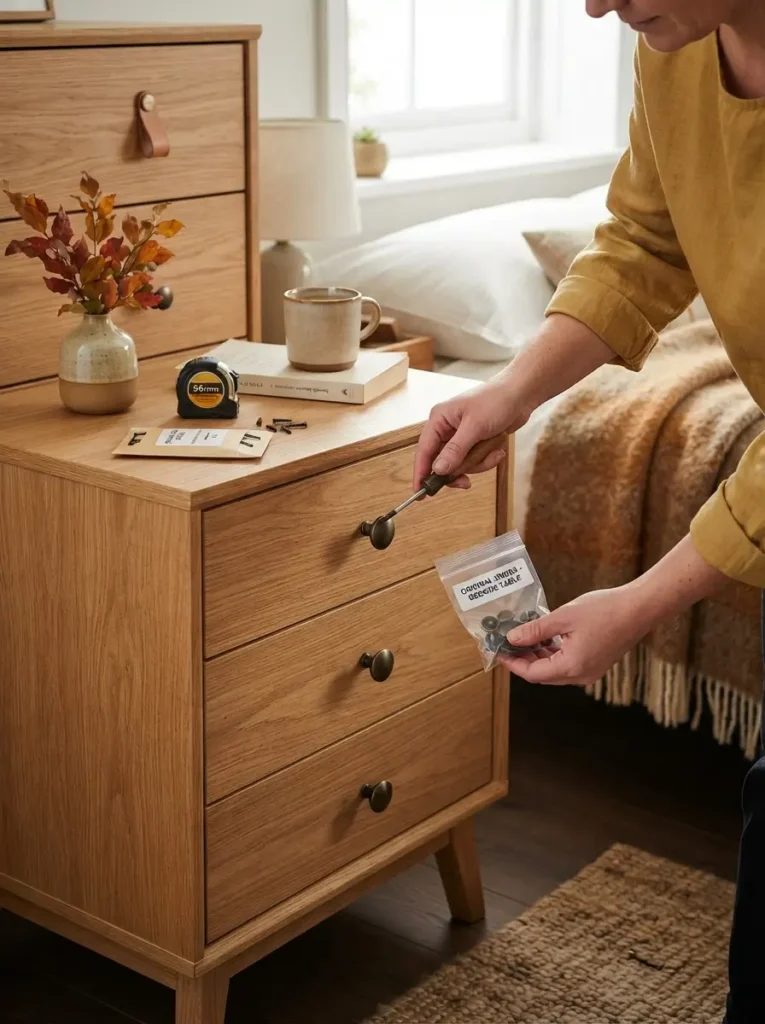
Changing knobs or handles can warm up plain furniture at a low cost. Antique brass, dark bronze, leather loops and wooden knobs suit autumn palettes and work on bedside tables, chests and wardrobes. Renters should store the original hardware in a labelled bag so it can be replaced later.
Measure the screw spacing before buying. Single-hole knobs are easiest to swap, while pull handles need the exact centre-to-centre measurement. Keep the style consistent across one furniture piece rather than mixing several finishes. Avoid oversized handles on narrow drawers because they can catch clothing and make the furniture look unbalanced.
Add Subtle Checks and Stripes
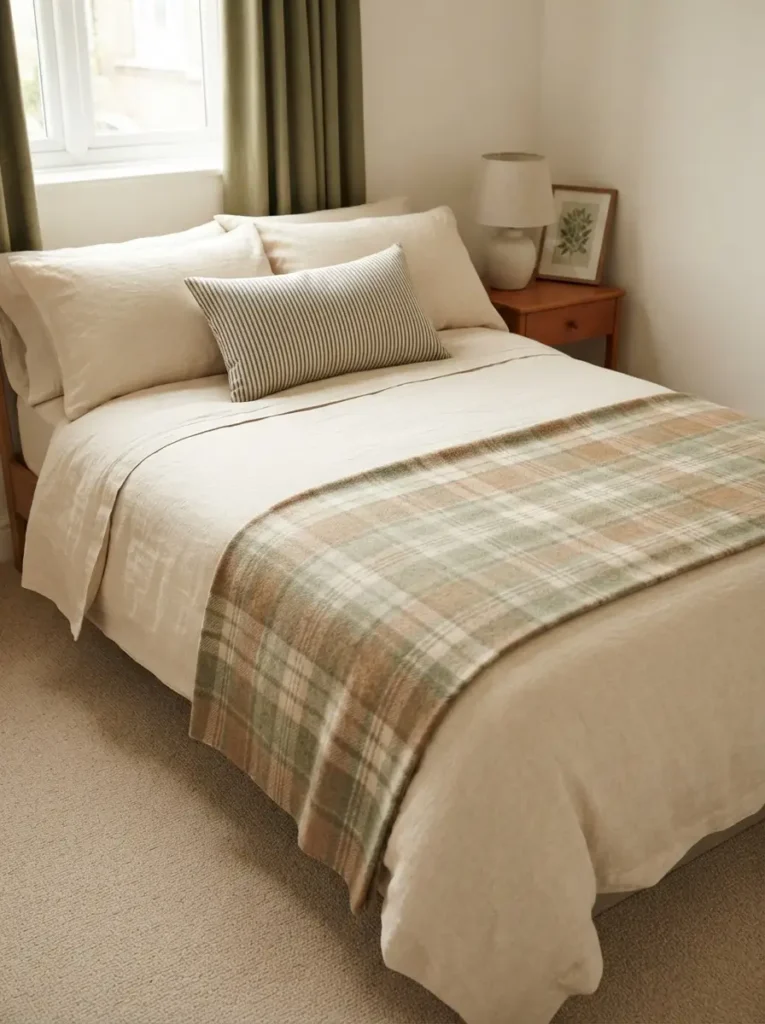
Checks and stripes introduce pattern without relying on obvious seasonal motifs. Windowpane checks, narrow ticking stripes and muted tartans work well on cushions, throws and small upholstered pieces. Pattern beginners should use one design at a time and keep surrounding fabrics mostly plain.
Scale matters in compact rooms. Small or medium patterns tend to sit quietly, while oversized checks can dominate a single bed. Repeat one pattern colour elsewhere to connect it with the room. A tan stripe may echo a wooden table, while a green check can relate to artwork. Avoid using checks on bedding, curtains and rugs at once unless the patterns vary clearly in scale and share a limited palette.
Finish With One Seasonal Scent Source
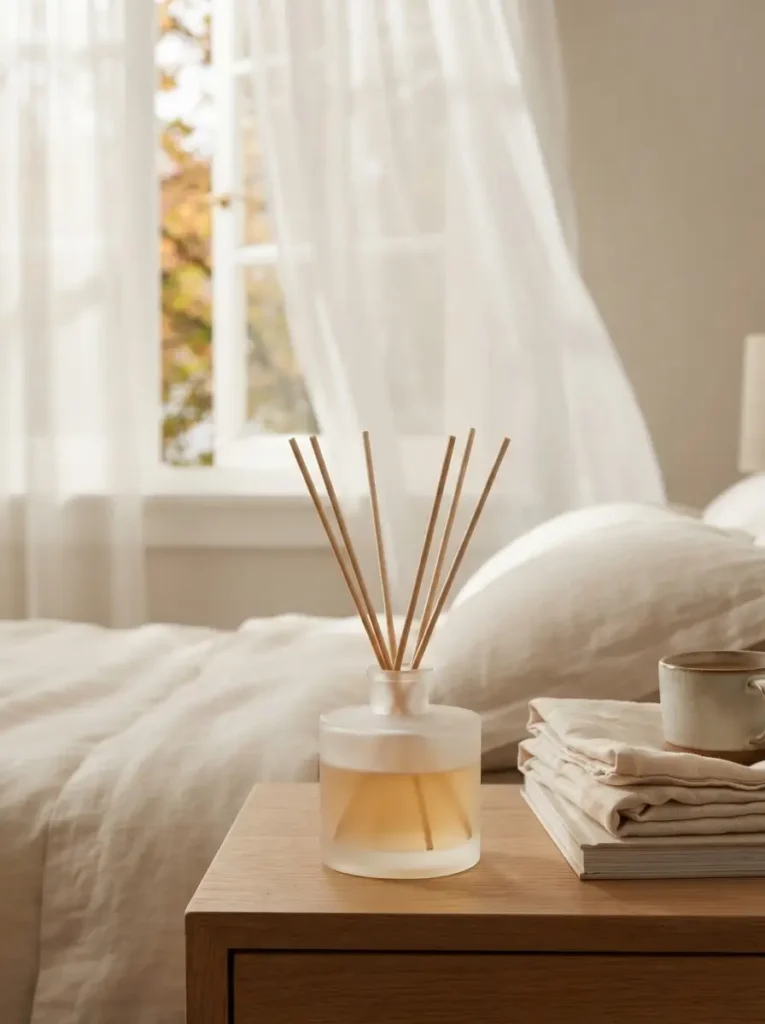
Scent can support the feeling of autumn, but strong fragrance in a bedroom may disturb sleep or trigger headaches. Choose one subtle source such as a reed diffuser, linen spray or drawer sachet. People sensitive to perfume should skip fragrance and rely on fresh air, clean bedding and natural materials instead.
Look for soft notes such as cedar, fig, black tea, apple peel or light vanilla. Place diffusers away from fabrics and direct sunlight, then use fewer reeds if the scent feels strong. Never spray pillows heavily before sleep. Avoid combining candles, plug-ins, sprays and diffusers because competing scents can make a small room feel stale rather than comfortable.
Common Mistakes to Avoid
Overdecorating is the most common problem. Seasonal cushions, signs, garlands, pumpkins and candles can quickly crowd a bedroom, especially when the room also functions as a workspace. Autumn bedroom decor should support comfort and storage rather than reducing usable space. Choose a limited palette of two main colours plus one neutral, then remove anything that blocks drawers, walking routes or bedside surfaces.
Poor lighting choices can also undo good colour decisions. Cool bulbs may make tan and rust fabrics appear dull, while very orange bulbs can distort the room. Another mistake is buying several inexpensive themed items instead of one useful textile or lamp. Check scale before purchasing furniture, measure curtain lengths and leave at least 60 centimetres for main walking routes where possible. Safety matters too, so keep candles away from bedding and avoid unstable decorations above the headboard.
Budget-Friendly Ways to Update the Room
Seasonal changes do not need a large budget. Start by moving items between rooms. A wooden stool from the hallway may work as a bedside table, while a neutral basket from the living room can store blankets. Wash, steam and rearrange existing textiles before buying anything because fresh fabric often looks noticeably better. Autumn bedroom decor becomes more affordable when each new item works beyond one season.
Set a small spending limit and divide it by function. For example, use £20 for pillow covers, £25 for a washable throw and £15 for a warm bulb or simple lampshade. Charity shops, local resale apps and end-of-season sales can provide solid wood frames, ceramic lamps and wool-blend textiles at lower prices. Avoid buying sets just because they match. Individually chosen pieces usually look more personal and are easier to replace.
Rental-friendly updates can include removable wallpaper behind the bed, tension-rod curtains, plug-in wall lights, peel-and-stick hooks and framed fabric panels. Test adhesives in a hidden area and follow the manufacturer’s removal guidance. Keep original hardware in labelled bags and photograph furniture before making temporary changes. These habits reduce stress when moving and prevent small upgrades from becoming expensive repairs.
Autumn Bedroom Decor Tips for Small Spaces
Successful autumn bedroom decor in a compact room depends on editing, scale and storage. Keep the largest surfaces light, then place deeper colours in items that can be moved or folded. One rust cushion, one olive throw and one warm lamp can create a clear seasonal direction without narrowing the room visually. Furniture with legs allows more floor to remain visible, which often makes the layout feel lighter.
Use vertical areas before adding more furniture. Wall-mounted shelves, narrow picture ledges, over-door hooks and tall baskets can store useful items while keeping the floor open. Choose bedside tables with drawers or shelves rather than purely decorative stools when storage is limited. Mirrors should reflect daylight or an attractive part of the room, not clutter. Keep the top of wardrobes mostly clear because stacked boxes can make a low ceiling feel lower.
Plan every purchase around measurements. Record the width beside the bed, door swing, drawer clearance and distance from the bed to the wardrobe. Foldable benches and nesting tables work well when occasional extra surfaces are needed. Avoid placing decor on the floor in walking routes. Small rooms look warmer when textures are layered carefully, not when every empty corner is filled.
How to Combine Seasonal Layers Without Clutter
Begin with the room’s fixed elements before adding anything. Note the wall colour, flooring, wardrobe finish and largest piece of furniture. These surfaces already form most of the visual palette, so new textiles should connect with them rather than compete. Cream walls and pale oak, for example, can support rust, moss and muted gold. Cool grey furniture often needs camel, warm white and wood to prevent the room from feeling flat. People decorating for the first time should photograph the room in daylight because a picture makes repeated colours and crowded corners easier to notice.
Select one leading colour, one supporting colour and one light neutral. Use the leading shade in two medium-sized items, such as a throw and artwork. Place the supporting colour in smaller details, perhaps a cushion and vase. Let the neutral cover the largest surfaces, including the duvet, curtains or rug. Such distribution creates rhythm without making every object match. Avoid buying an entire coordinated range because identical patterns and shades can make a bedroom feel like a shop display rather than a personal space.
Change one zone at a time and review it from the doorway. The bed usually deserves attention first because it occupies the most visual space. Move next to lighting, then the floor, walls and bedside surfaces. Stop when the room feels warmer and more comfortable, even if a shelf or corner remains undecorated. Empty areas help the eye rest and make textured pieces easier to appreciate. Small-room decorators should be especially strict about keeping the windowsill, door swing and main route around the bed clear.
Store removed items carefully instead of pushing them into an already full wardrobe. Fold summer covers into a breathable bag, place small accessories in one labelled box and keep spare frames together. Under-bed containers work well when they do not block airflow around the mattress. Anyone with almost no storage should choose reversible or year-round pieces rather than highly specific decorations. A rust-striped cushion can stay through winter, while a novelty leaf garland may need eleven months of storage after a few weeks of use.
Choosing Materials That Last Beyond Autumn
Prioritise materials that feel pleasant, wash well and suit daily use. Cotton, linen blends, tightly woven wool-effect fabric and washable flatweaves usually provide better long-term value than delicate seasonal textiles. Check care labels before buying because dry-clean-only bedding or cushion covers may become expensive to maintain. Families with children or pets should favour zipped covers, darker mid-tones and tightly woven surfaces that resist snagging. Texture should improve comfort rather than create another cleaning task.
Look closely at construction as well as colour. Cushion covers need secure seams and zips that sit flat. Throws should have finished edges that do not shed after light handling. Lamps should stand firmly on the intended table, and baskets should keep their shape when empty. Second-hand wood furniture deserves attention because small scratches can often be repaired, while unstable joints require more work. Buy fewer items with useful functions instead of several fragile accents that only appear attractive from a distance.
Consider how every piece will work in later seasons. Olive cushions can move into a spring scheme with cream and pale green, while caramel wood and brass hardware remain useful all year. Reversible quilts, plain curtains and neutral rugs provide the strongest flexibility. People who enjoy frequent changes can rotate inexpensive paper prints, pillow covers and dried stems around these permanent foundations. Such planning reduces waste, controls storage needs and gives the bedroom a consistent character even when seasonal colours change.
Before shopping, make a checklist of the room’s needs. Record whether you need warmer bedding, better reading light, improved storage or privacy. Rank those needs before choosing colours or decorations. Such an order prevents unnecessary purchases from using the budget. Keep receipts until each item has been tested in daylight and at night. Return pieces that block movement, feel uncomfortable or duplicate something already owned. Seasonal decorating works best when every addition earns its place through comfort, function or clear visual value.
Frequently Asked Questions
How Can I Create Autumn Bedroom Decor Without Changing the Walls?
Use bedding, lighting, rugs, curtains and artwork to shift the colour palette. Rust pillow covers, an olive throw, warm bulbs and wood frames can create a seasonal result against white or cream walls. Renters can also add removable wallpaper panels behind the bed, but soft furnishings are usually easier to store and reuse.
Which Colours Work Best in a Small Autumn Bedroom?
Warm neutrals, muted rust, olive green, caramel and soft gold usually work well. Keep the walls and largest bedding pieces lighter, then use deeper shades in smaller amounts. Rooms with limited daylight benefit from creamy tones rather than dark brown across large surfaces.
How Many Cushions Should I Put on the Bed?
Two sleeping pillows plus one or two decorative cushions are enough for most single and double beds. Larger beds may handle three decorative cushions, but every item should have a place at night. Too many cushions create daily clutter and take up valuable storage space.
What Lighting Temperature Feels Warm but Still Practical?
Bulbs between 2200K and 2700K give a warm appearance suited to bedrooms. Choose a brighter warm-white bulb for the ceiling and softer lamps for evening use. Reading lamps should still provide enough focused light to prevent eye strain.
Can Autumn Styling Work With Grey Furniture?
Grey furniture can work when the room includes warmer materials nearby. Add cream bedding, tan wood, rust textiles and warm lighting to soften the cool undertone. Avoid pairing grey with too many dark browns because the room may feel heavy, especially in limited daylight.
What Is the Best First Purchase for a Seasonal Update?
Choose the item that improves comfort as well as appearance. A washable throw, warm bedside lamp or reversible duvet cover usually offers more value than small themed ornaments. Check what the room lacks before shopping so the purchase solves a practical problem.
Conclusion
Thoughtful autumn bedroom decor comes from useful layers, controlled colour and lighting that supports the room after sunset. Begin with bedding and bulbs, then add one or two natural textures such as wood, woven storage or a flatwoven rug. Keep the layout easy to move through and choose pieces that remain useful in other seasons. Small bedrooms need fewer objects, not less personality, so repeat a limited palette and let empty space balance the warmer materials. Practical choices will make the room feel comfortable, organised and ready for cooler weather without requiring a full redesign.