


Small rental bathrooms often rely on one harsh ceiling fixture that leaves the shower area dull, shadowy or visually disconnected. Better lighting can make daily routines easier while improving colour balance, comfort and the sense of cleanliness. Renters do not need rewiring, drilled holes or permanent electrical work to create a more useful setup.
Careful placement matters more than buying the brightest product. Moisture, glare, colour temperature, battery access and removable mounting all influence whether an apartment shower lamp feels practical after the first week. The best ideas add light where it helps while keeping cords, adhesives and decorative pieces away from direct water spray.
Can You Improve Shower Lighting Without Renovating?
Yes, renters can improve shower lighting with rechargeable, battery-powered or plug-in fixtures placed outside wet zones. Good results come from indirect light, sensible colour temperature and removable hardware rather than permanent wiring.
Most no-renovation options work by placing light near the shower instead of inside the direct spray area. Wall washers, mirror lights, shelf lamps and door-mounted fixtures can brighten the enclosure through reflection. Frosted glass, pale tile and light-coloured curtains help spread illumination without creating sharp glare.
Safety should guide every choice. Check the manufacturer’s wet-location or damp-location rating, keep charging ports dry and never run ordinary extension cords near a tub or shower. Renters should also avoid mounting heavy lights above head height unless the fixing method is specifically designed for humid surfaces.
Quick Comparison of No-Renovation Options
Different fixtures solve different problems, so compare mounting method, charging access and light spread before buying. Lightweight designs usually give renters more placement freedom and reduce the chance of surface damage.
| Lighting option | Best location | Useful colour temperature | Best for | Main caution |
| Rechargeable sconce | Dry side wall | 3000K–3500K | Narrow bathrooms | Check adhesive weight limits |
| Magnetic bar | Metal frame or plate | 3500K | Flexible task lighting | Confirm the surface is magnetic |
| Motion sensor puck | Door or cabinet side | 2200K–3000K | Night-time use | Avoid false triggers |
| Shelf lantern | Dry ledge | 2700K–3000K | Soft background light | Keep away from towels |
| Mirror strip | Mirror edge | 3500K–4000K | Grooming and reflection | Control glare |
| Hidden LED strip | Behind a rail or shelf | 2700K–3000K | Even indirect light | Protect connectors from steam |
Comparison shopping becomes easier when you decide which problem matters most. Dark toiletries need focused task light, harsh overhead fixtures need a warmer secondary source and low ceilings benefit from concealed bars. Choose one clear purpose first rather than buying a decorative light that does not improve visibility.
Mount a Rechargeable Sconce Beside the Shower

Rechargeable wall sconces bring targeted light beside the shower without hardwiring. Magnetic bases and removable adhesive plates make them especially useful for renters who need flexible placement.
Choose a slim sconce with a frosted diffuser and place it on the dry wall beside the enclosure. Warm white light around 3000K suits beige, cream or wood-toned bathrooms while 3500K works well with white tile and chrome. Keep the beam angled toward the wall rather than directly into your eyes.
Placement gives this apartment shower lamp its value. Side lighting softens facial shadows, brightens shelves and makes glass doors look clearer without creating a spotlight effect. It suits narrow bathrooms where the ceiling light sits behind the user and leaves the shower front noticeably darker.
Add a Magnetic Light to a Metal Shower Frame

Magnetic lights can attach to compatible metal framing without screws or glue. Their greatest advantage is easy repositioning when you need to charge, clean or adjust the beam.
Test the frame with a small magnet before buying the fixture because many aluminium frames are not magnetic. When the frame works, choose a lightweight bar light with a strong magnetic back and a sealed battery compartment. Position it on the outside edge where steam may reach it but direct water cannot.
Magnetic placement suits renters who dislike adhesive residue or frequently rearrange their bathroom. A vertical bar can visually lengthen a low shower while a horizontal light can spread brightness across a dark entrance. Remove the fixture during deep cleaning so moisture does not collect behind the housing.
Use a Motion Sensor Light Near the Shower Door

Motion sensor lights improve convenience during early mornings and late nights. They provide enough guidance for safe movement without forcing you to use a harsh main fixture.
Install the sensor light on a dry wall, vanity side or linen cabinet facing the shower entrance. Select a low or medium brightness setting so the light guides your steps without waking other people. Amber or warm white settings between 2200K and 3000K feel calmer during nighttime use.
Small households, shared apartments and studio residents benefit most from this idea. Automatic lighting helps when your hands are full with towels or toiletries and it reduces unnecessary switching. Avoid placing the sensor directly opposite moving curtains because constant fabric movement may trigger the light repeatedly.
Clip a Waterproof Reading Light to a Shower Caddy

A compact clip light can create a practical pool of light around toiletries. Only use models specifically rated for wet or damp conditions and keep the clip away from the direct spray path.
Secure the light to the outer edge of a sturdy caddy and point the beam toward the tiled wall. Reflected light looks softer than a direct beam and can illuminate labels without causing glare. Neutral white around 3500K to 4000K helps distinguish shampoo, conditioner and skincare packaging clearly.
Clipped lighting works well for people with limited vision, crowded product storage or darker wall tile. Its flexible neck lets you change the angle after the curtain closes. Check the clip weekly because soap residue and humidity can reduce grip on smooth plastic or coated metal surfaces.
Place a Small Lamp on a Dry Bathroom Shelf
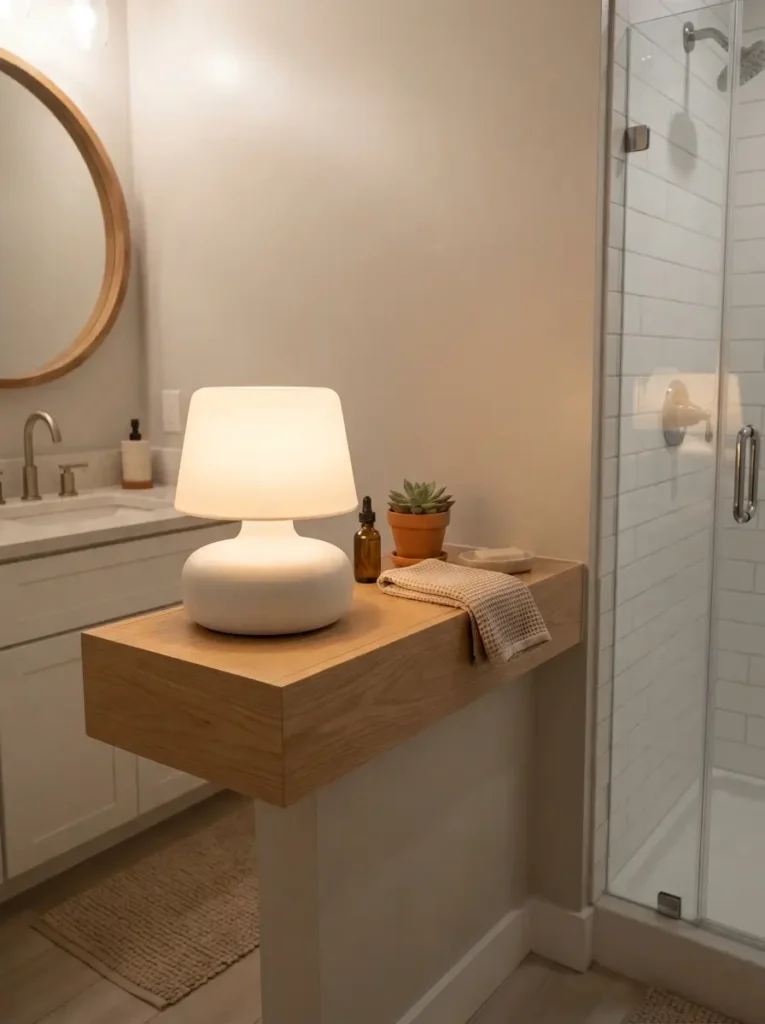
Shelf lighting adds warmth and depth without touching the shower structure. A rechargeable lamp placed on a stable dry shelf can brighten the entire area through reflected light.
Pick a low-profile lamp with a broad base, rounded edges and a shatter-resistant shade. Set it on a shelf at least an arm’s length from the wet zone and aim the glow toward a pale wall. Soft ivory, sand or matte white shades blend easily with most rental finishes.
Shelf lamps suit bathrooms with recessed niches outside the shower, built-in ledges or wide vanity shelves. The method creates layered lighting instead of one flat overhead source. Keep towels away from the lamp housing and choose an LED model that stays cool during longer use.
Hide an LED Strip Behind the Shower Curtain Rail

Concealed LED strips produce indirect light that feels softer than exposed bulbs. Removable clips can support the strip without drilling while keeping the adhesive away from damp tile.
Run the strip along the dry wall above or behind the curtain rail, never inside the direct spray area. Use diffuser channels or a frosted cover to prevent visible dots. Warm white at 2700K creates a cosy evening effect while 3000K offers better clarity for daily routines.
Indirect strips are best for renters who want even illumination without adding another visible fixture. The hidden source makes a low ceiling feel less crowded and helps soften strong tile lines. Choose a rechargeable or safely located plug-in model and keep all connectors outside humid zones.
Use Suction Cup Lights on Smooth Tile
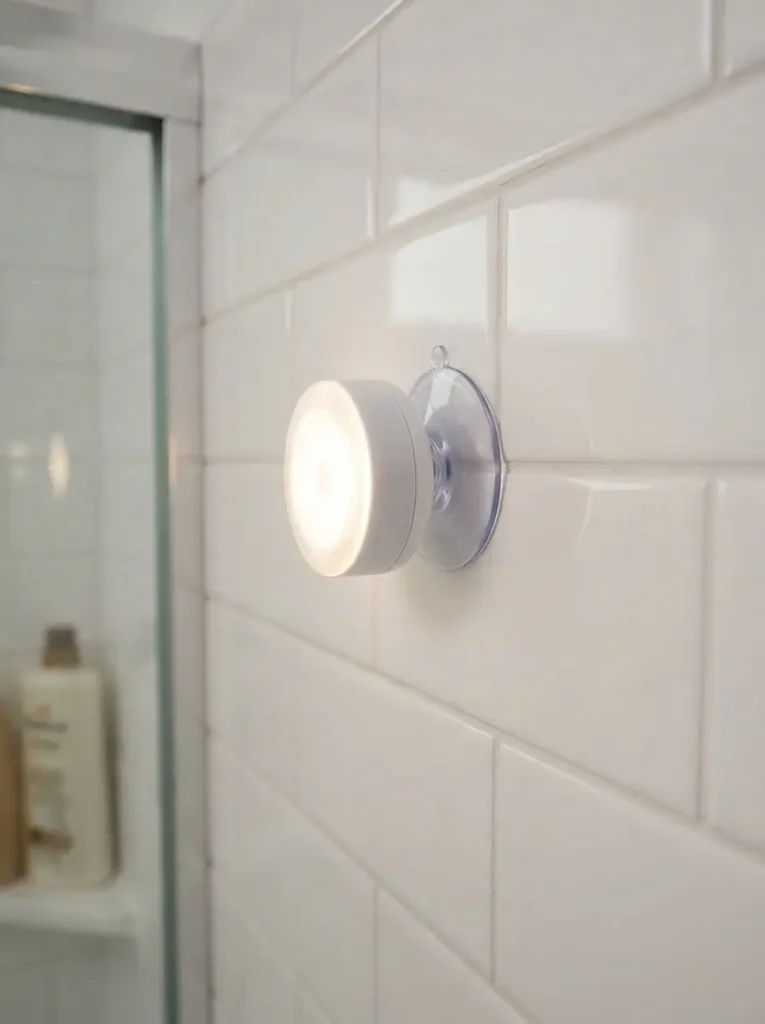
Suction cup lights offer fully removable placement on clean, non-porous surfaces. They work best as temporary accents rather than heavy-duty primary lighting.
Clean the tile with rubbing alcohol, let it dry and press the suction cup firmly onto a flat area outside the water stream. Small puck lights with sealed housings are easier to support than long bars. Recheck the seal after hot showers because temperature changes can weaken suction.
Short-term renters, students and frequent movers will appreciate the easy removal. The idea also helps when you want to test different heights before choosing a more permanent removable mount. Never place suction-mounted lighting above your head or over the tub because unexpected drops can cause injury.
Attach a Light Bar Under a Floating Shelf

Under-shelf light bars illuminate the shower entrance while keeping the fixture visually hidden. Rechargeable models with magnetic charging make cleaning and battery care straightforward.
Mount the bar beneath a floating shelf, wall cabinet or open storage ledge outside the wet zone. Aim it downward across the shower threshold rather than directly toward the mirror. A neutral 3500K beam balances comfort and visibility in bathrooms with grey tile, black accents or brushed nickel.
Mounted below, an apartment shower lamp works well when the main ceiling fixture sits near the door. The lower beam fills shadows around the curtain and floor without making the room feel overlit. Use removable mounting strips rated for humid spaces and follow the stated weight limit carefully.
Hang a Rechargeable Pendant from a Removable Hook

Lightweight rechargeable pendants create visual interest without ceiling wiring. A removable ceiling hook can support selected models when the weight stays well within the hook’s rating.
Choose a compact pendant made from plastic, woven synthetic fibre or another moisture-tolerant material. Hang it near the shower entrance but outside the enclosure and above normal head clearance. Keep the cord short so it cannot swing toward water, doors or moving curtains.
Pendant lighting suits renters with high ceilings or bland builder-grade bathrooms. A small dome shade can define the shower zone while a ribbed shade spreads softer patterns across the wall. Avoid paper, untreated rattan and heavy glass because humidity or accidental movement can damage them.
Brighten the Area with a Mirror-Mounted Light
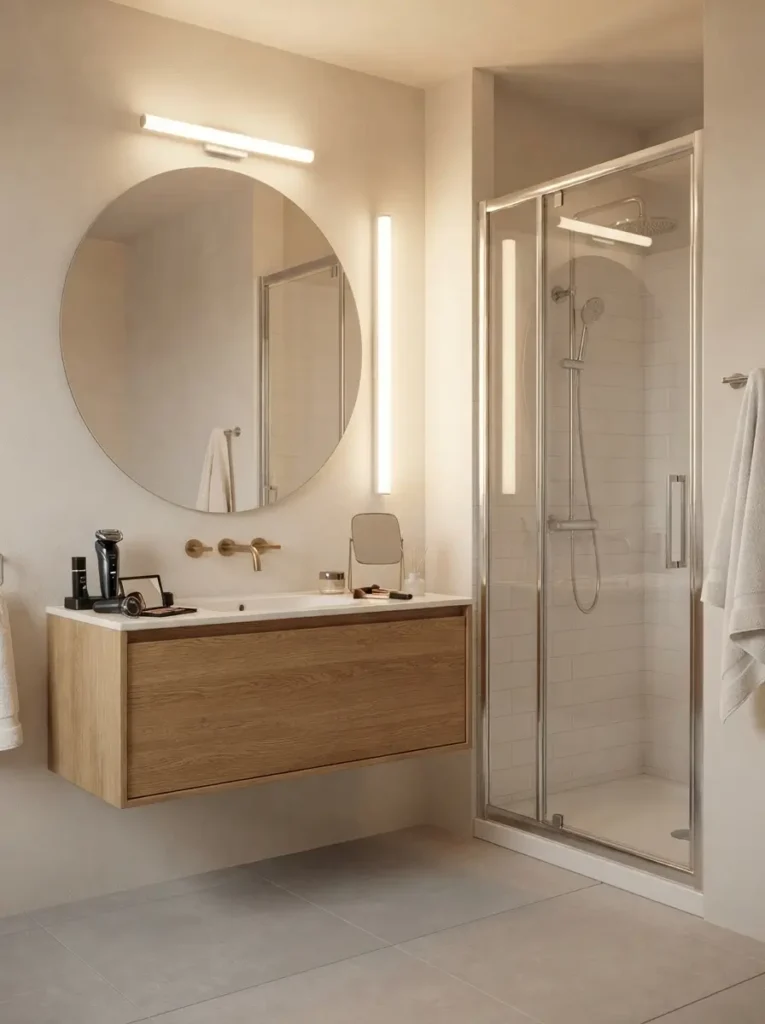
Mirror-mounted lights can reflect brightness toward the shower while improving grooming visibility. Clamp-on and adhesive models avoid drilling into tile or plaster.
Position the light along the mirror edge closest to the shower so the reflection carries across the room. Vertical strips reduce side shadows while a short top bar provides wider coverage. Choose high colour rendering when you apply makeup, shave or evaluate skin tone under the same fixture.
Mirror lighting suits bathrooms where the vanity faces the shower or sits directly beside it. The reflected beam makes the space feel brighter without placing electronics near water. Reduce glare by choosing a frosted diffuser and avoid cool blue light above 5000K for regular evening use.
Turn a Battery Lantern into Soft Shower Lighting

Battery lanterns add portable light and can move between a shelf, vanity or stool. Their enclosed shape often produces a gentle glow that suits relaxing evening routines.
Select a stable lantern with LED lighting, a dimmer and a moisture-resistant body. Place it on a dry stool or shelf outside the enclosure then angle the brighter side toward the wall. Frosted lanterns create smoother light than clear designs with visible LED points.
Portable lanterns are ideal for renters who cannot attach anything to walls. They also help during power cuts or when the bathroom lacks an outlet. Keep the lantern away from fabric shower curtains, never place it on the floor near pooled water and store it outside the bathroom while charging.
Use a Door-Mounted Light for Narrow Bathrooms

Door-mounted lights use overlooked vertical space and avoid tile installation. Over-door hooks or removable straps can hold very lightweight fixtures on the bathroom side of the door.
Mount a small rechargeable bar near the upper third of the door and angle it toward the shower. Check that the fixture does not hit the wall, towel rail or nearby cabinet when the door opens. A wide beam gives better coverage than a narrow spotlight in compact layouts.
Door lighting benefits long, narrow bathrooms where the main fixture sits near the vanity. The elevated position sends light deeper into the room while keeping counters clear. Add small felt pads behind the mount to prevent rattling and protect the painted surface from repeated movement.
Add a Lighted Shower Speaker Outside the Spray
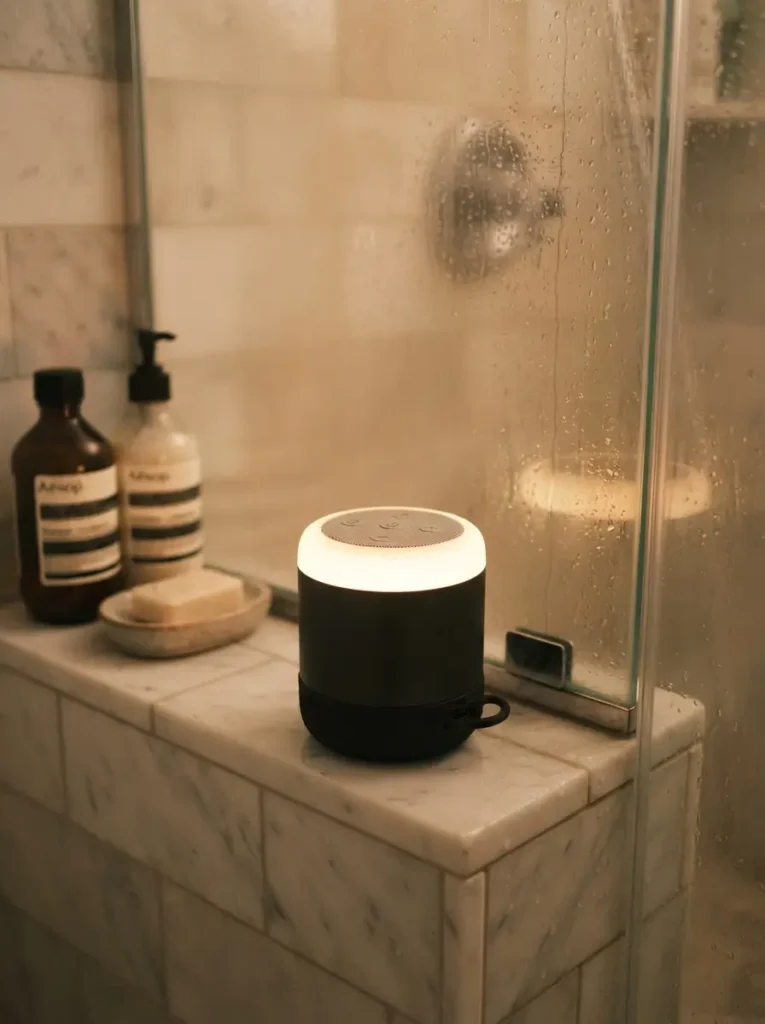
A lighted speaker combines gentle illumination with audio in one portable object. The light should remain secondary and the device must match the bathroom’s moisture conditions.
Place the speaker on a dry ledge or secure caddy section outside the direct spray. Choose a model with simple controls, low brightness and a stable silicone base. Soft colour-changing modes can feel pleasant but steady warm white usually gives better visibility and less visual distraction.
Music lovers and small-space renters may prefer one object that serves two purposes. The combined device reduces clutter on narrow shelves while adding enough glow for a relaxed shower. Keep volume moderate in shared buildings and dry the speaker before opening any charging cover.
Reflect Light with a Pale Shower Curtain

Reflective styling can improve shower brightness without adding another electrical item. Pale curtains, glossy tile and light accessories help existing lamps work more efficiently.
Choose white, warm ivory, pale grey or soft sage fabric with a washable liner. Semi-opaque curtains spread light more evenly than dense black or navy materials. Small bathrooms often feel brighter when the curtain matches the wall colour because the visual boundary becomes less abrupt.
Reflection works best for beginners who want the cheapest and simplest change. Pair the curtain with a rechargeable sconce, mirror light or shelf lantern to multiply the effect. Avoid shiny metallic curtains because strong reflections can create glare and make water marks more noticeable.
Check the Bathroom Layout Before Buying
Layout determines whether a light spreads evenly or disappears behind a curtain, door or cabinet. A five-minute placement test can prevent wasted money and awkward mounting.
Sketch the room from above and mark the shower, vanity, door swing, towel rail, ventilation grille and available dry walls. Notice where your body blocks the ceiling light during normal use. Many shadow problems come from the user standing between the main fixture and the shower controls.
Use a torch or phone light to test promising positions before ordering a fixture. Hold it near the mirror, shelf edge and shower entrance while the curtain or door is closed. Look for comfortable brightness at eye level, clear floor visibility and enough room to remove the light for charging.
Match the Light to Your Shower Type

Curtains, clear glass and frosted doors distribute light differently. Choosing a position that works with the enclosure helps a modest fixture perform more effectively.
Fabric curtains absorb more light than clear glass, especially in navy, charcoal or patterned designs. Place the source slightly above the rail or near the opening so illumination reaches the interior. Pale semi-opaque curtains can soften glare while allowing useful light to pass through.
Clear glass reflects bright points and shows fingerprints, so use frosted diffusers and off-centre placement. Frosted doors spread light more gently but may reduce overall brightness. Renters with walk-in showers can often use a side-wall sconce because fewer barriers interrupt the beam.
Use Removable Mounting Without Damaging Walls

Surface preparation and patient removal matter as much as the mounting product itself. Correct technique protects paint, tile and grout while improving grip in a humid room.
Apply adhesive only to smooth, clean and fully dry surfaces. Avoid flaky paint, textured plaster, grout lines and recently painted walls. Press the mount for the recommended time then wait before adding the fixture, because immediate loading can weaken the bond before it cures.
Remove strips slowly by pulling the tab parallel to the wall rather than outward. Warm stubborn adhesive gently with a hair dryer used well away from water. Keep spare tabs for moving the light and photograph the original wall condition when rental inspections are strict.
Build Layered Light Without Creating Clutter
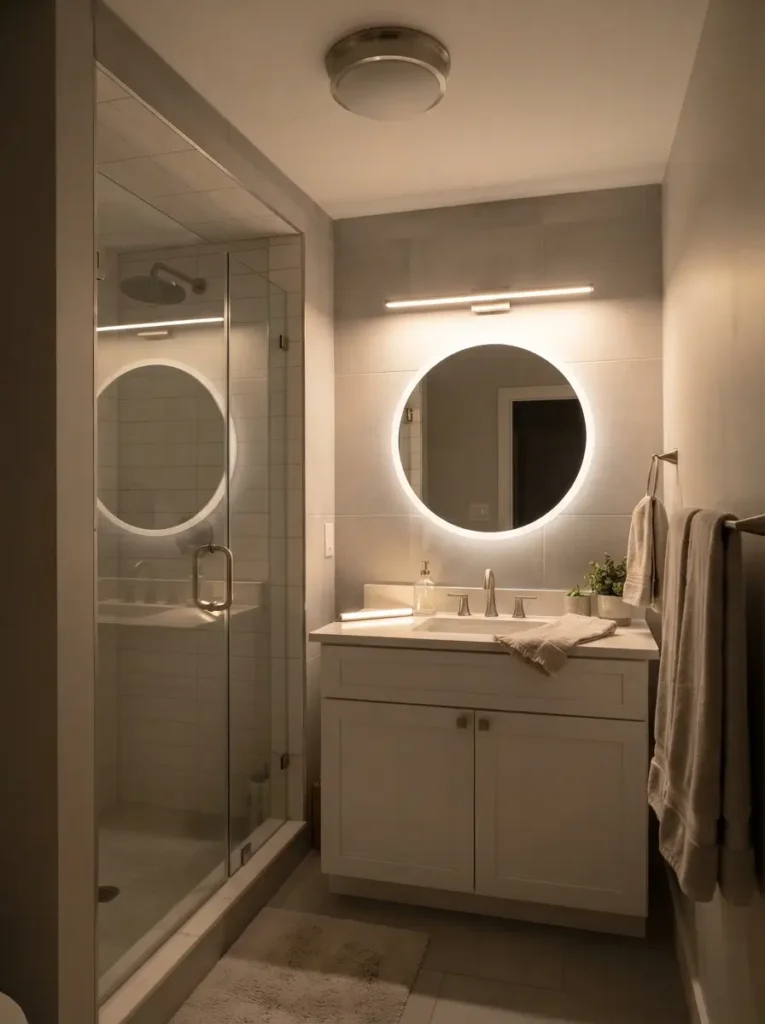
Layered lighting combines general, task and accent sources, but small bathrooms rarely need several visible fixtures. One useful secondary light can balance a harsh ceiling lamp.
Let the existing ceiling fixture handle general brightness then add focused light near the shower entrance or mirror. A dim rechargeable bar can provide evening ambience while the main light remains available for cleaning. Avoid placing several puck lights around the room because repeated dots often look messy.
Visual simplicity keeps a compact bathroom calmer. Match fixture shapes, repeat one finish and hide charging cables outside the room. When two sources are visible together, select similar colour temperatures so skin tones, towels and wall colours do not shift dramatically across the space.
Clean and Maintain Portable Bathroom Lights
Regular cleaning preserves brightness, grip and battery performance. Humidity leaves residue on diffusers and mounting surfaces even when the fixture stays outside direct water.
Wipe the housing weekly with a slightly damp microfibre cloth then dry it fully. Remove soap film from frosted covers because cloudy residue reduces useful output. Check suction cups, adhesive plates, clips and magnetic pads for movement whenever you clean nearby tile.
Charge the fixture in a dry room and inspect ports for moisture or corrosion. Replace swollen batteries, cracked housings or damaged cables rather than continuing to use them. Seasonal battery checks are helpful for lanterns or sensor lights that may sit unused for long periods.
Test the Setup Before Final Placement
Temporary testing reveals glare, weak coverage and inconvenient charging access before adhesive touches the wall. Evening and morning checks are both useful because natural light changes how the fixture performs.
Place the light with painter’s tape, a temporary hook or another person’s help. Turn off nearby lamps, close the curtain and inspect the shower floor, controls, bottles and threshold. Repeat the test with the main ceiling light on to see whether both sources create balanced coverage or distracting reflections.
Live with the trial position for one or two shower routines when possible. Notice whether steam reaches the housing, the door strikes the fixture or towels block the beam. Confirm that removal for charging feels simple and that the brightness setting is easy to reach with dry hands.
Record the chosen height and distance from nearby edges before cleaning the surface for installation. A pencil mark on painter’s tape keeps the final alignment accurate. Careful testing is especially valuable in tiny bathrooms where moving a fixture by only a few centimetres can change comfort, shadow direction and visual balance.
Common Shower Lighting Mistakes to Avoid
Most problems come from poor placement, unsuitable moisture ratings and excessive brightness. Renters should prioritise secure mounting, indirect light and easy access for charging or cleaning.
Placing ordinary lamps inside the shower zone creates unnecessary risk even when they run on batteries. Steam can enter charging ports, adhesives may loosen and wet hands can drop small fixtures. Keep uncertified products well outside the enclosure and never assume a decorative “water-resistant” label equals approval for direct exposure.
Overlighting causes another common problem. Bright cool-white LEDs aimed at mirrors or glass can create glare, harsh shadows and an unwelcoming atmosphere. Mix one functional source around 3500K with a softer 2700K to 3000K accent when possible then test the setup both morning and evening.
Budget-Friendly Ways to Improve Shower Lighting
Low-cost improvements often come from better placement, brighter surfaces and multi-use fixtures. Renters can create useful results without buying premium designer lighting.
Start by cleaning the existing ceiling cover, mirror and glass shower screen because residue blocks and scatters light. Replace dark towels with lighter ones, switch to a pale curtain and place a small rechargeable puck near the entrance. These changes often cost less than £30 when purchased gradually.
Spend more only where it affects safety or daily convenience. Strong mounting hardware, sealed charging ports and a dimmer matter more than decorative finishes. Compare battery life, charging time and replacement costs before choosing a bargain fixture because a cheap light that needs constant charging quickly becomes frustrating.
Apartment Shower Lamp Tips for Small Bathrooms
Small bathrooms need controlled brightness, simple shapes and carefully protected mounting points. The goal is to spread light across surfaces without adding visual clutter or unsafe obstacles.
Use one main accent source and let mirrors, pale walls and glass do the rest. Slim bars, small sconces and low-profile lanterns fit compact rooms better than bulky shades. Place light slightly above eye level or behind a diffuser so the shower feels brighter without exposing the bulb.
Test the apartment shower lamp before attaching it permanently with removable strips. Hold it at several heights, close the curtain, step inside the shower and check for glare, dark corners and awkward reflections. Mark the best position with painter’s tape then clean and dry the mounting surface thoroughly.
How to Choose Colour Temperature and Brightness
Warm white supports relaxation while neutral white improves visibility. Most small bathrooms work well between 2700K and 4000K with dimming available for different routines.
Choose 2700K to 3000K for evening showers, cream tile and warm metals such as brass. Select 3500K to 4000K for grey stone, white tile, black fixtures or detailed grooming. Avoid mixing several very different temperatures because the room may look patchy and colours can appear inconsistent.
Brightness depends on placement and reflection rather than a single number. A lower-output light near a pale wall may feel stronger than a brighter beam aimed into dark tile. Start dim, increase gradually and check whether the light helps you see the floor, controls and products without squinting.
Best Materials and Finishes for Rental Bathrooms
Moisture-tolerant finishes last longer and are easier to clean. Plastic, coated metal, silicone and sealed LED housings generally suit humid bathrooms better than paper or untreated natural fibres.
Matte white and frosted finishes diffuse light while hiding water spots. Black fixtures create strong contrast but may show mineral residue quickly. Brushed nickel coordinates easily with common rental hardware whereas brass adds warmth when repeated in small accessories such as hooks or trays.
Material choice also affects visual weight. Clear acrylic, slim metal and soft silicone keep tiny bathrooms from feeling crowded. Avoid heavy glass near removable hooks and skip porous shades close to steam because they can stain, warp or hold odours over time.
Simple Styling Combinations That Look Intentional
Coordinated lighting feels more polished when it repeats one finish, one colour family or one shape already present in the room. Small links between fixtures and accessories create order without requiring a matching set.
Pair a matte black light bar with black hooks and a white curtain for crisp contrast. Combine a warm brass sconce with sand towels and amber bottles for a softer scheme. Match a white puck light with pale grey storage bins when you want the fixture to disappear visually.
Keep the palette limited to two main colours plus one metal finish. Too many small accessories make compact bathrooms look busy and reduce the calming effect of improved lighting. Repeat rounded shapes through mirrors, lamp shades and containers or choose straight lines for a cleaner architectural feel.
Frequently Asked Questions
Renters usually ask about safety, placement, colour temperature, mounting and battery life. Clear answers help you choose a fixture that remains useful after the novelty wears off.
What Colour Temperature Is Best for an Apartment Shower Lamp?
Most renters will find 3000K to 3500K comfortable for everyday use. The range provides enough clarity for grooming while staying warmer than clinical cool-white lighting.
Choose 2700K when the bathroom has cream tile, wood details or brass finishes. Move closer to 4000K when the room uses bright white tile, grey stone or black fittings. Dimming gives the most flexibility because morning routines usually need more light than evening showers.
Can Renters Install Shower Lighting Without Drilling?
es, removable strips, magnetic plates, suction mounts, clips and over-door hooks can support lightweight fixtures. Every method still needs careful surface preparation and regular checks.
Clean smooth surfaces with the product recommended by the mounting brand then allow them to dry fully. Respect weight limits and avoid overhead placement when the mount could fail. Painter’s tape can help test location and beam direction before you commit to adhesive hardware.
Are Battery Lights Safe Near a Shower?
Battery power removes the risk of nearby mains cords but does not automatically make a light suitable for wet areas. Moisture rating and placement remain essential.
Keep ordinary battery lights outside direct spray and away from pooled water. Look for clear manufacturer guidance about damp or wet locations and close every charging cover firmly. Dry the housing before charging and replace damaged seals, cracked cases or corroded contacts immediately.
How Often Do Rechargeable Bathroom Lights Need Charging?
Charging frequency depends on battery capacity, brightness and sensor use. Many fixtures last longer on low settings or short motion-activated cycles than at full continuous output.
Track the first few charging cycles so you know the realistic routine in your bathroom. Place magnetic or clip-on fixtures where removal feels easy and keep the charger in a dry room. A light that lasts several weeks at useful brightness usually causes less frustration than one with flashy features.
Where Should I Place a Light in a Tiny Bathroom?
Place it where light can reflect toward the shower without shining directly into your eyes. Dry side walls, mirror edges, shelves and the area above the entrance usually work well.
Stand in the shower with the curtain or door closed and ask someone to hold the fixture in several locations. Check the floor, controls and storage shelves for shadows. Avoid positions that interfere with doors, towels, ventilation grilles or routine cleaning.
Conclusion
Better shower lighting does not require rewiring or permanent renovation. Careful placement, suitable materials and controlled brightness can make a rental bathroom safer, calmer and easier to use.
Start with one apartment shower lamp solution that matches your layout rather than adding several small lights at once. A rechargeable sconce, under-shelf bar or portable lantern can solve most shadow problems when placed outside the wet zone and aimed toward a reflective surface.
Good results come from testing before mounting, choosing a sensible colour temperature and keeping the setup easy to clean. Rental-friendly lighting should improve daily routines without creating clutter, glare or worry about damage when it is time to move.