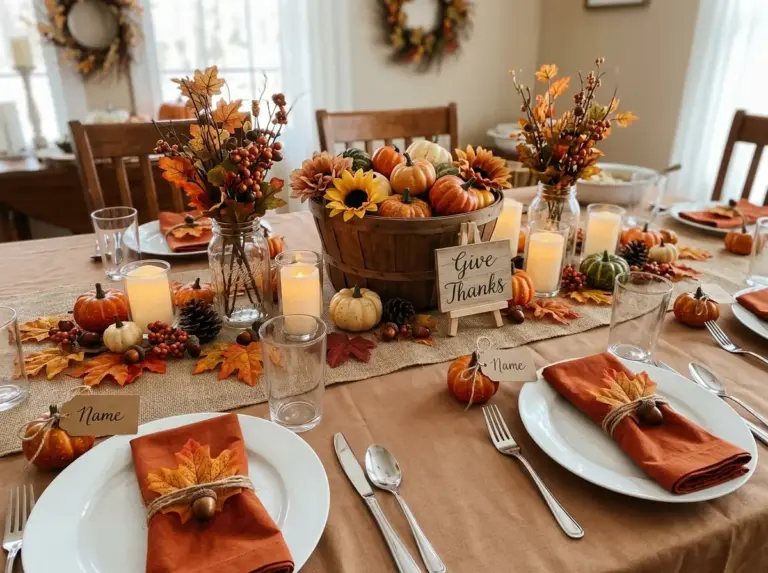


Fall decorating feels different in an apartment. Space is limited, storage matters, and every new item needs a purpose. Large wreaths, oversized centerpieces, and bulky seasonal furniture can quickly make a dining area feel crowded. Better results come from smaller changes that improve warmth, color, texture, and light without reducing comfort. An Apartment Fall Dining Room can feel inviting with a few well-placed updates, including washable textiles, compact table decor, warm bulbs, and natural materials. Practical choices help renters enjoy the season while keeping walls, floors, and furniture protected.
Autumn style does not require a complete room makeover. Most dining spaces respond well to one strong color direction, one main seasonal display, and two or three supporting details. Soft rust napkins, amber glass, a textured runner, and a bowl of pears can communicate the season without filling every surface. Beginners often get better results by decorating slowly, checking the room from the doorway, and removing anything that interrupts movement. Small-space decorating works best when beauty supports daily use rather than competing with it.
What Is the Easiest Way to Style a Fall Dining Room?
Start with the table, lighting, and one visible wall or corner. Choose two autumn colors, repeat them in small amounts, and leave enough empty space for meals. For an Apartment Fall Dining Room, practical options include a narrow runner, warm white bulbs between 2700K and 3000K, removable hooks, slim candleholders, and decor that can fit inside one storage box after the season ends. Each idea below explains how to make the room warmer without making it harder to use.
Build a Small Autumn Color Palette

Color creates the fastest seasonal change, but too many shades can make a small dining area feel busy. Choose one main color, one supporting neutral, and one darker accent. Rust with cream and walnut brown works well in warm rooms. Olive green with oatmeal and black suits modern apartments. Muted mustard with beige and deep burgundy adds richness without looking overly themed. Repeat the main color three times, perhaps in napkins, a small vase, and one artwork detail. Repetition helps the room feel planned even when the decor comes from different stores.
Small spaces benefit from muted versions of fall colors rather than intense orange everywhere. Burnt orange, clay, cinnamon, moss, chestnut, and warm taupe feel seasonal while blending with everyday furniture. Cool gray apartments often look better with burgundy, forest green, and aged brass because those tones create contrast without clashing. Renters with white walls can use deeper textiles to prevent the space from feeling flat. People who already own colorful chairs should select one existing shade and build the autumn palette around it instead of adding another competing color.
Use a Narrow Table Runner Instead of a Full Cloth

Full tablecloths can look formal, but they often overwhelm compact tables and become inconvenient during everyday meals. A narrow runner adds color and texture while keeping most of the tabletop visible. Linen, cotton slub, soft plaid, and washed canvas work especially well for fall. Choose a runner that hangs about six to ten inches over each end. Longer drops can catch on knees, chair arms, or pets in a tight dining area. Round tables look balanced with a short runner placed through the center or with two woven placemats layered beneath a small centerpiece.
Practicality makes this idea useful for households that eat at the table every day. A runner can be folded back during messy meals, washed easily, and stored in very little space. Warm oatmeal fabric softens a dark table, while rust or olive adds depth to pale wood. Avoid thick runners with stiff embroidery because plates and glasses may wobble on uneven surfaces. Families with children can use a machine-washable cotton runner and skip loose fringe. Texture creates interest, so the fabric does not need a bold pattern to feel seasonal.
Create a Low Centerpiece That Leaves Room to Eat
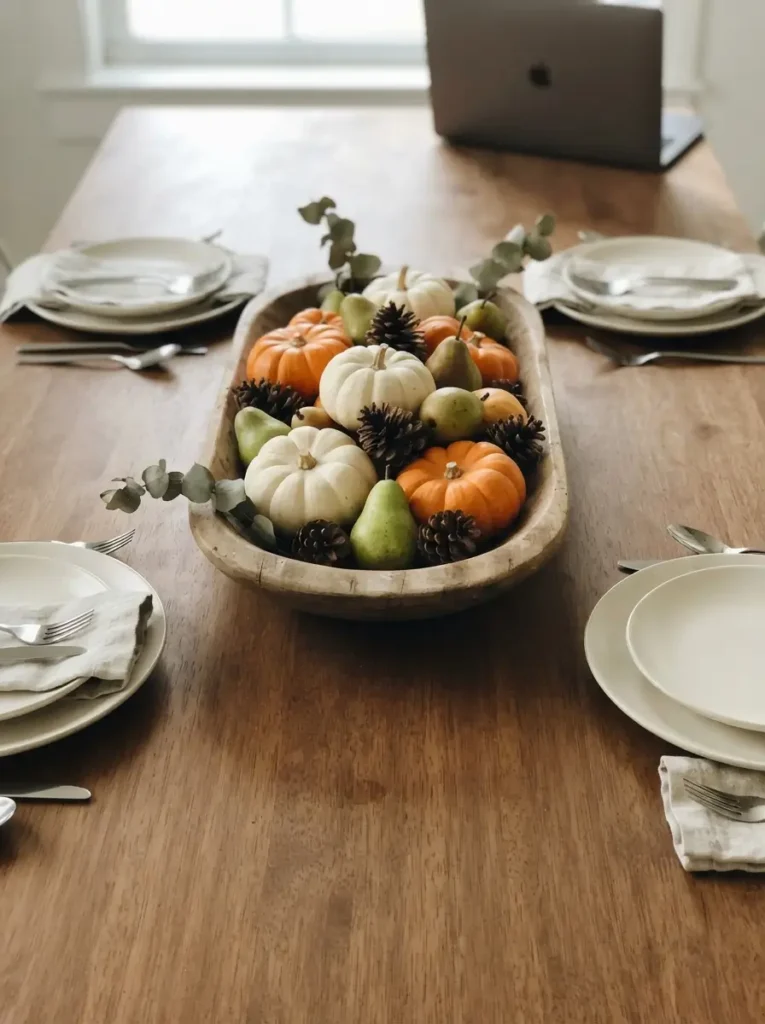
Centerpieces should improve the table without blocking faces, serving dishes, or laptop space. Keep the main arrangement below twelve inches, especially on a table narrower than thirty-six inches. A shallow wooden bowl filled with mini pumpkins, pears, pinecones, or folded linen can look full without becoming tall. Another option uses three bud vases with short branches placed in a line. Odd-numbered groups usually feel natural, but symmetry works better on very small square tables where every inch needs order.
Daily routines should guide the design. Anyone who frequently clears the table can place the entire display on a tray, making it easy to move in one step. A round tray suits circular tables, while a long narrow tray fits rectangular surfaces. Limit the centerpiece to about one-third of the table length. Empty space is not unfinished space; it allows place settings to breathe. Real fruit adds color and can be eaten before it spoils, making it a sensible choice for beginners who do not want to buy single-purpose decor.
Warm the Room With 2700K to 3000K Lighting
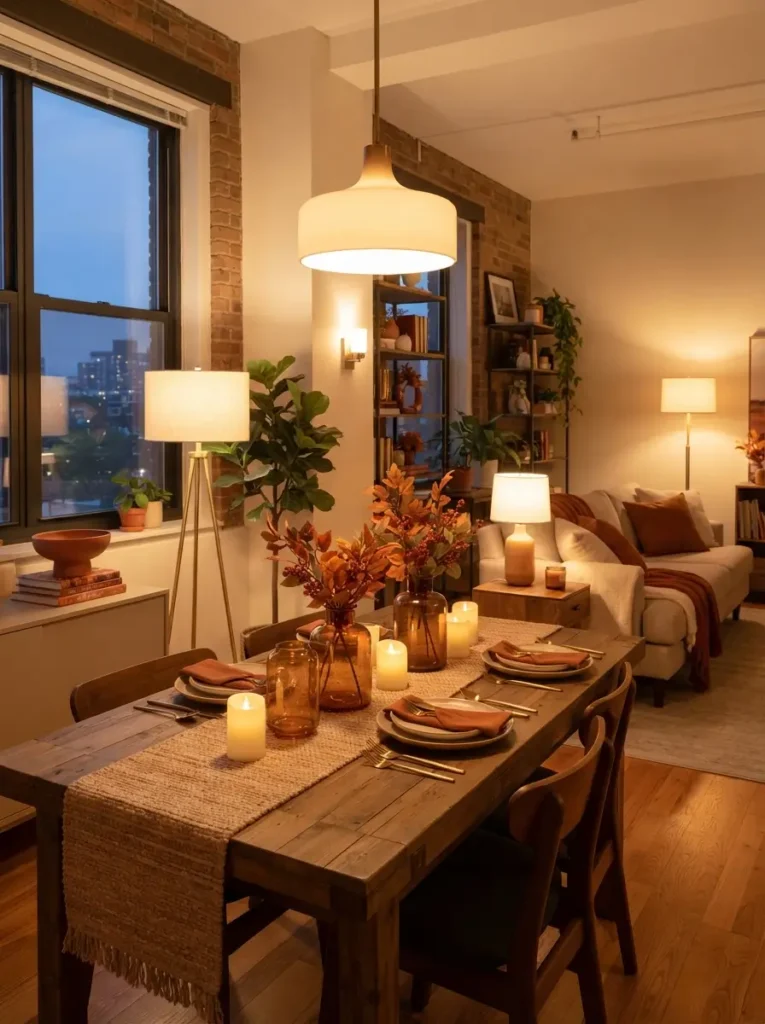
Lighting changes how every fall color appears. Bulbs between 2700K and 3000K create a warm white glow that supports wood, amber glass, brass, rust, and cream. Bulbs below 2200K can feel very orange, while bulbs above 4000K may make autumn colors look dull or gray. Check the label before buying, and keep the color temperature consistent across nearby fixtures. A warm pendant combined with a cool floor lamp creates a mixed effect that can make the dining area look accidental.
Renters do not need to replace a ceiling fixture to improve the mood. Plug-in wall sconces, slim floor lamps, rechargeable table lamps, and LED candles can add layered light. Place a lamp near a sideboard or plant rather than directly beside a chair. Dimmers provide more flexibility, but only use bulbs and switches marked as compatible. Best results come from three levels of light: overhead illumination for cleaning, softer side lighting for meals, and small accent lighting for evenings. People with open-plan apartments should match the dining light temperature to the nearby living room.
Add Amber Glass for Warmth Without Bulk

Amber glass brings fall color into a room while keeping the visual weight light. Transparent material allows light to pass through, which helps a small table feel less crowded than solid ceramic pieces. One amber vase, two small tumblers used as candleholders, or a brown glass bottle with dried stems can be enough. An Apartment Fall Dining Room often benefits from transparent decor because the eye can still see the table surface, wall, or window behind it. Clear glass mixed with one amber piece also prevents the setting from becoming too dark.
Secondhand shops frequently carry amber bowls, bottles, and glasses at low prices. Choose pieces with stable bases and smooth rims, especially when using them near food. Battery candles are safer inside narrow containers that are not designed for heat. People with dark furniture should pair amber glass with cream fabric or pale wood so the arrangement does not disappear. Renters with limited storage can choose a vase that works all year, then change the contents by season. In spring it can hold green branches; in fall it can hold wheat, eucalyptus, or deep red leaves.
Layer Chairs With Removable Textiles

Dining chairs offer useful decorating space when the table needs to stay clear. Add one small lumbar cushion to a bench, drape a lightweight throw over the back of an end chair, or use washable seat pads in a seasonal color. Keep textiles thin enough that chairs still slide under the table. Bulky pillows can push people forward and reduce circulation space behind the chair. Ties, nonslip backing, or fitted covers help seat pads remain secure during meals.
Fabric choices should match the way the room is used. Wool blends and boucle look warm, but cotton canvas, twill, and washable polyester are easier for busy households. A subtle windowpane check can introduce pattern without dominating the room. Solid olive, camel, or rust cushions suit apartments with patterned rugs or artwork. Best suited to renters with plain dining sets, removable textiles change the character of basic chairs without paint or permanent upholstery. Store only covers rather than complete seasonal cushions by using zippered cases over existing inserts.
Style One Wall With Removable Fall Art

Wall decor can create a seasonal focal point while leaving the table functional. Use removable picture strips that match the weight of the frame, and follow the manufacturer’s surface instructions carefully. Lightweight frames reduce risk on rental walls. Botanical prints, landscape sketches, vintage harvest illustrations, or abstract art in rust and brown can work beyond one season. Hang one medium piece rather than several tiny frames when the dining wall is narrow. Larger visual shapes usually make a compact room feel calmer.
Scale matters more than the number of decorations. Artwork above a sideboard should measure roughly two-thirds of the furniture width, while a piece above a small dining table should relate to the table rather than the whole wall. Keep the center near eye level, usually around fifty-seven to sixty inches from the floor, then adjust for nearby furniture. People who change art frequently can use a picture ledge secured according to lease rules or display prints in tabletop frames. Avoid unframed paper taped directly to painted walls because adhesive may lift the finish.
Bring in Branches Without Creating Clutter

Branches provide height, movement, and natural shape without requiring a large floral arrangement. Choose one or two branches with an open structure, trim them to suit the vase, and place them where they will not touch a light fixture. Maple, oak, magnolia, eucalyptus, and faux berry stems all produce different effects. Real branches should be checked for insects, loose bark, moisture, and sap before coming indoors. Wash or wipe the vase regularly because standing water can develop odor.
Placement determines whether tall stems feel graceful or inconvenient. Use them on a sideboard, console, or windowsill rather than in the center of a small dining table. A floor vase can work in an unused corner, but only when it does not narrow the main walkway. Slim branches are ideal for people who want a natural element without buying many accessories. Faux stems may cost more initially, yet they store flat and return each year. Select realistic colors with varied leaves rather than identical bright orange pieces, which can look artificial under overhead light.
Use a Washable Rug to Define the Dining Zone
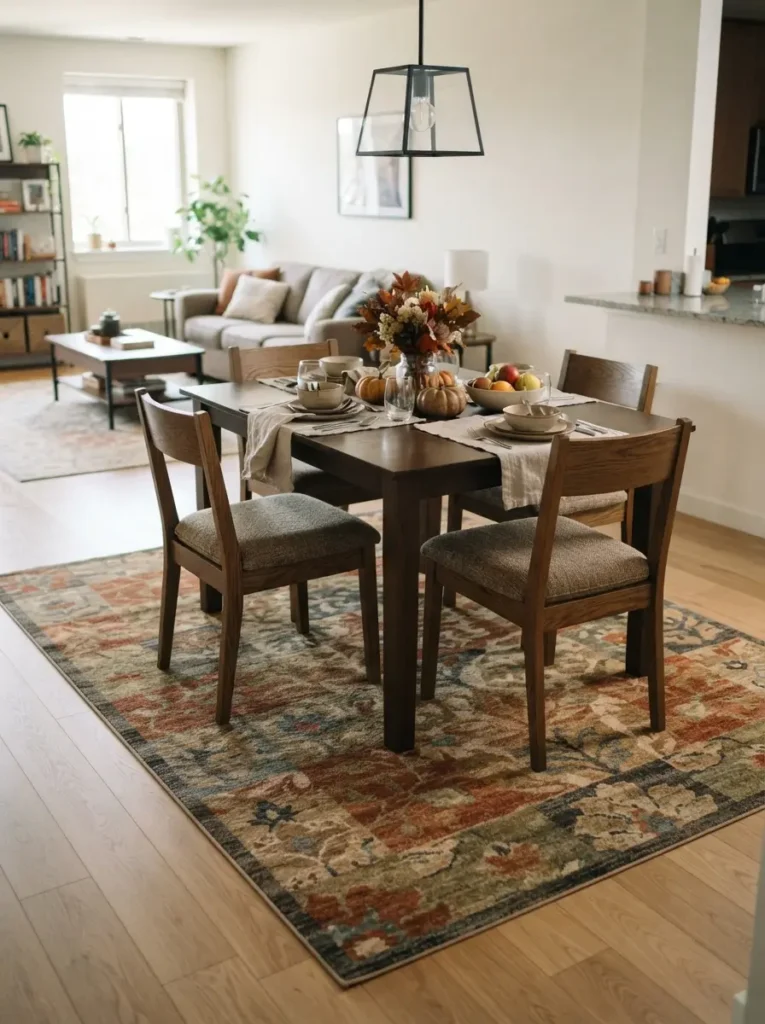
Open-plan apartments often need a visual boundary between dining and living areas. A rug can create that boundary while adding warmth underfoot. Size is crucial: chairs should remain on the rug when pulled out. Measure the table, then add at least twenty-four inches on every side. An undersized rug catches chair legs and makes the table look cramped. For a four-seat rectangular table, a rug near six by nine feet often works, but room measurements and chair depth should make the final decision.
Low-pile, flatweave, or washable rugs are easier to clean around food than deep shag. Patterns in rust, tan, faded blue, olive, and charcoal can disguise small marks while supporting an autumn palette. Apartment residents should check door clearance, floor vents, and robot vacuum access before adding thickness. Use a nonslip pad approved for the flooring material, because some rubber backings can discolor vinyl or finished wood. Renters who cannot fit a full rug can define the zone with coordinated chair cushions and a pendant light instead.
Arrange Furniture for Comfortable Movement

Seasonal decor should never reduce the room’s function. Leave about thirty-six inches between the table edge and a wall or cabinet when people need to walk behind seated diners. Thirty inches may work in a low-traffic spot, but anything tighter can feel awkward. Round pedestal tables improve movement in square dining nooks because they remove sharp corners and leg conflicts. Drop-leaf tables suit apartments where the dining surface also supports work, crafts, or food preparation.
Before decorating a compact fall dining area, test the layout with every chair pulled out. Walk from the kitchen to the table, open nearby cabinets, and check whether a centerpiece interferes with serving. Angling a rectangular table rarely saves meaningful space and can create unusable corners. People who entertain occasionally can keep two folding chairs elsewhere and use only daily seating at the table. A bench against a wall may reduce visual clutter, although it works best when guests do not need to move frequently during meals. Good circulation makes even modest decor feel more considered.
Turn Everyday Dishes Into Seasonal Decor

Useful objects can carry the seasonal theme without creating extra storage needs. Stack cream stoneware bowls on an open shelf, display wooden serving boards against the backsplash, or place rust-colored napkins inside everyday glasses. White dishes gain warmth when paired with woven placemats and brown or olive linens. Black dinnerware looks striking with pale pumpkins and natural wood, but it may darken a room that already receives little daylight. Use contrast deliberately so the table remains easy to read.
Open shelving should look edited rather than packed. Group similar items, leave visible gaps, and keep frequently used dishes within comfortable reach. Two stacks of plates, a small pitcher, and one seasonal bowl often look better than a row of unrelated ornaments. People with glass-front cabinets can repeat the fall palette behind the doors through mugs, folded linens, or a shallow basket. Avoid placing decorative leaves directly on food-contact surfaces. Everyday pieces feel more intentional when their colors relate to the runner, artwork, or centerpiece elsewhere in the room.
Add Soft Candlelight Safely

Candlelight makes evening meals feel calmer because it lowers contrast and adds small points of warmth. Slim tapers suit narrow tables, while low votives work better beneath pendant lights or in rooms with active children and pets. Keep flames away from dried leaves, paper, curtains, branches, and loose fabric. Candleholders need stable bases and enough weight to resist tipping. Unscented candles are usually the better dining choice because strong pumpkin, cinnamon, or vanilla fragrances can compete with food.
Battery-operated candles solve many rental and safety concerns. Choose warm-toned LEDs with a gentle flicker rather than cool white bulbs. Rechargeable models reduce the need to replace batteries throughout the season. Place two or three lights at different heights on a tray, sideboard, or windowsill, but avoid lining every surface with candles. Best suited to windowless dining nooks or apartments with harsh overhead fixtures, candlelight should support the main lighting rather than replace it. Keep enough brightness to see plates, spills, and chair legs clearly.
Make a Practical Beverage or Serving Corner

Small dining rooms often become cluttered because serving pieces, drinks, and extra dishes land on the table. A narrow cart, wall-mounted shelf, compact cabinet, or sturdy console can create a separate station. Use the top for a kettle, carafe, glasses, or dessert plates, then place one fall detail beside them. A small bowl of apples or a folded plaid towel feels seasonal without reducing working space. Furniture between twelve and sixteen inches deep can provide storage while preserving circulation in many apartments.
Measure doors, drawers, outlets, and walking paths before adding any piece. Rolling carts need locking wheels, especially on uneven floors. Wall shelves require landlord approval and suitable anchors for the wall type. People who entertain in small spaces benefit most because guests can serve themselves without gathering around the dining table. Avoid using the station as a permanent landing zone for mail, keys, and shopping bags. One basket can contain temporary clutter, but emptying it weekly prevents the new feature from becoming another crowded surface.
Use Seasonal Produce as Edible Decor

Produce offers natural color, varied shape, and practical value. Pears, apples, pomegranates, small squash, and walnuts can create a simple fall display in a shallow bowl. Keep the amount modest so air can circulate and fruit remains visible. Check pieces regularly, remove anything soft, and avoid stacking delicate fruit beneath heavy pumpkins. Food-safe bowls made from ceramic, wood, or metal are easier to clean than decorative baskets with deep woven gaps.
Edible arrangements suit beginners, minimalists, and anyone with little seasonal storage. Green pears support olive palettes, red apples work with burgundy accents, and orange squash adds warmth to neutral rooms. Place produce away from direct sun, heating vents, and candles to slow spoilage. Wash fruit before eating rather than before displaying when excess moisture could shorten its life. Decorative gourds should stay separate from edible varieties if identification is uncertain. A useful display earns its space and changes naturally as the household consumes it.
Finish With One Comfortable Autumn Scent

Scent can influence how a dining room feels, but restraint matters around food. Choose one light fragrance and use it before guests arrive rather than throughout the meal. Cedar, apple peel, mild clove, black tea, or fresh rosemary can suggest fall without creating a heavy bakery smell. A simmer pot belongs in the kitchen where it can be monitored, not on a crowded dining table. Reed diffusers should sit on a protected tray because fragrance oils may damage wood, paint, or laminate.
Natural sources often feel cleaner in a compact home. A bowl of apples, clipped rosemary, or dried orange slices provides a subtle scent that does not fill every room. People sensitive to fragrance should skip scented products entirely and focus on fresh air, clean textiles, and odor-free candles. Ventilate after cooking, wash runners regularly, and empty food waste before decorating with fragrance. The goal is a comfortable background, not a scent guests notice before they notice the meal. Small rooms amplify fragrance quickly, so use less than the package suggests at first.
Common Fall Dining Room Mistakes to Avoid
Filling Every Surface
Seasonal enthusiasm can turn a small dining room into a storage display. Crowded tables, packed shelves, decorated chair backs, and full windowsills leave the eye nowhere to rest. Keep one surface mostly clear and allow at least half of the dining table to remain open during normal days. Remove an everyday object before adding a seasonal one whenever possible. People with studio apartments should be especially selective because the dining area is visible from several zones. One strong arrangement usually creates more impact than many small objects spread around the room.
Choosing Decorations That Interrupt Daily Use
Oversized centerpieces, long tablecloths, unstable candleholders, and bulky chair cushions may photograph well but become frustrating during meals. Test every addition by sitting down, pulling out chairs, carrying plates, and reaching for shared dishes. Decor should not block faces, touch hanging lights, or require a complicated reset each evening. Households that work from the dining table need pieces that move quickly. A tray-based centerpiece, folding runner, or single vase can shift to a shelf in seconds. Convenience encourages people to maintain the room rather than remove all decor after a few days.
Mixing Too Many Fall Themes
Pumpkins, farmhouse signs, woodland animals, leaves, plaid, harvest wording, and Halloween accents can compete when used together. Select one visual direction before shopping. Natural modern style might use branches, stoneware, linen, and black accents. Traditional style could combine plaid, brass, dark wood, and burgundy. Minimal style may rely on clay, cream, and one sculptural bowl. Clear direction prevents impulse purchases and makes inexpensive items feel coordinated. Beginners should photograph the room before buying anything, then compare each possible purchase with the colors and materials already present.
Ignoring Scale and Lighting
Tiny decor can disappear on a broad wall, while a wide centerpiece can consume a narrow table. Measure surfaces and evaluate pieces from the room entrance, not only from close range. Lighting also changes color. Rust fabric may look rich in daylight but muddy beneath a cool bulb. Test textiles and paint-free samples during morning and evening before removing tags. Shiny metallic pieces can create glare under a low pendant, while dark matte objects may vanish in a shadowed corner. Appropriate scale and consistent light make simple decor look deliberate without adding more items.
Budget-Friendly Ways to Decorate for Fall
Begin by shopping your own home. Wooden boards, neutral bowls, glass bottles, baskets, books, linen towels, and serving trays can become seasonal when grouped with fall colors. Move one amber vase from a bedroom, stack two cookbooks beneath it, and add a clipped branch. No purchase is needed when the arrangement uses familiar objects in a new location. Rotate rather than duplicate. People with limited storage should keep a small reusable seasonal kit containing napkin covers, ribbon, faux stems, and one runner instead of several boxes of themed decorations.
Secondhand stores, local resale groups, and end-of-season clearance sections often provide useful basics. Look for solid materials and versatile shapes rather than signs printed with a specific holiday. A brass candlestick, woven tray, cream pitcher, or brown glass vase can work from September through winter. Set a room budget before shopping, such as $30 for textiles and $20 for tabletop pieces. Spending limits help prioritize visible changes. Wash fabric items, inspect wood for damage, and avoid chipped serving ware that may contact food.
Low-cost natural materials can complete the room. Grocery-store pears, backyard branches gathered where permitted, dried seed heads, pinecones, and herbs add color and texture. Clean outdoor materials carefully and keep unknown plants away from pets and food. Paper can also work when treated simply. Print one botanical illustration, place it in an existing frame, and store the print flat afterward. Budget decorating feels polished when the palette stays controlled, the arrangement uses varied heights, and empty space remains part of the design.
Before buying seasonal items, create a room checklist. Record the table width, available wall space, chair clearance, outlet locations, and storage dimensions. Photograph the room in daylight and again after sunset. Those notes make shopping easier because every purchase must solve a real need, fit a measured location, or strengthen the chosen palette. Keep receipts until the item has been tested during a normal meal. Decorative pieces sometimes look appropriately sized in a store but feel oversized at home. Careful planning reduces waste, protects the budget, and helps beginners build a collection they will reuse instead of replacing each year.
Apartment Fall Dining Room Tips for Small Spaces
Storage should influence every purchase for an Apartment Fall Dining Room. Choose collapsible baskets, flat textiles, nesting candleholders, and vases that serve several seasons. Measure the intended storage shelf before buying a large pumpkin or wreath. Items that cannot fit in a cabinet may occupy valuable living space for most of the year. Digital art, pillow covers, napkins, and foldable runners provide stronger seasonal change per inch of storage than rigid signs or oversized artificial arrangements.
Rental rules also shape safe decorating. Use removable products only on approved surfaces, follow weight limits, and test adhesive in an inconspicuous place. Never assume peel-and-stick materials will release cleanly from old paint, wallpaper, or textured walls. Floor protection matters as well. Add felt pads beneath trays, vases, carts, and chair legs. Rechargeable lamps should sit where cords do not cross walkways. A practical Apartment Fall Dining Room protects the property while still showing personal style through color, fabric, light, and movable accessories.
Visual continuity helps a small dining zone feel larger. Repeat one material from the living area, such as black metal, pale oak, or cream linen, then introduce fall color in smaller amounts. Keep tall objects near walls and low objects near the center of the room. Mirrors can reflect warm light, but position them so they do not create glare or reflect cluttered kitchen counters. People in studios should treat the dining area as part of one connected composition rather than a separate themed set.
Frequently Asked Questions
How Can I Decorate a Very Small Apartment Fall Dining Room?
Focus on three areas only: the table, one light source, and one vertical surface. Use a narrow runner, a low tray centerpiece, warm bulbs, and one framed print or branch arrangement. Keep chairs and walkways clear. An Apartment Fall Dining Room looks more spacious when decor repeats a limited palette and leaves visible gaps between objects.
Which Fall Colors Work Best in a Small Dining Area?
Muted rust, olive, camel, cream, walnut, burgundy, and warm taupe usually work well. Select shades that relate to existing flooring, chairs, or artwork. Light neutrals keep the room open, while one darker accent adds depth. Avoid using equal amounts of several strong colors because they can divide a compact room into busy visual sections.
How Do I Make Fall Decor Look Refined Rather Than Themed?
Use natural materials, simple shapes, and restrained repetition. Linen, wood, glass, branches, fruit, and stoneware communicate the season without relying on printed slogans. Choose one pumpkin shape instead of many novelty versions. Refined rooms often contain fewer objects, better spacing, and colors that connect with permanent furnishings.
Can Renters Hang Seasonal Wall Decor Safely?
Many renters can use removable strips or hooks, but lease terms and wall conditions vary. Check the agreement, follow product instructions, respect weight limits, and test a hidden area first. Lightweight frames reduce risk. Tabletop frames, leaning art, and freestanding picture ledges offer alternatives when wall adhesives are not suitable.
What Lighting Makes Fall Decor Look Warmer?
Warm white light between 2700K and 3000K supports autumn colors without turning the room overly orange. Match nearby bulbs so the space does not shift between warm and cool tones. Add a rechargeable lamp or LED candle for evening depth. Keep enough task lighting for serving, cleaning, and safe movement around chairs.
How Much Seasonal Decor Does a Dining Room Need?
Most small dining rooms need fewer pieces than expected. One centerpiece, one textile layer, one wall or shelf accent, and improved lighting can be enough. Stop when the palette is clear and daily activities remain easy. Extra objects rarely improve a room once surfaces, views, and pathways begin to feel crowded.
Conclusion
Fall beauty comes from thoughtful changes rather than a large collection of decorations. Color repetition, warm light, comfortable circulation, useful textiles, and natural materials can transform a small eating area while protecting its function. Plan an Apartment Fall Dining Room around real meals, available storage, rental rules, and the furniture already in place. Start with one idea, observe how the room feels at different times of day, then add only what improves warmth or convenience. Seasonal style feels most welcoming when people can sit, move, serve food, and enjoy the room without working around the decor.