
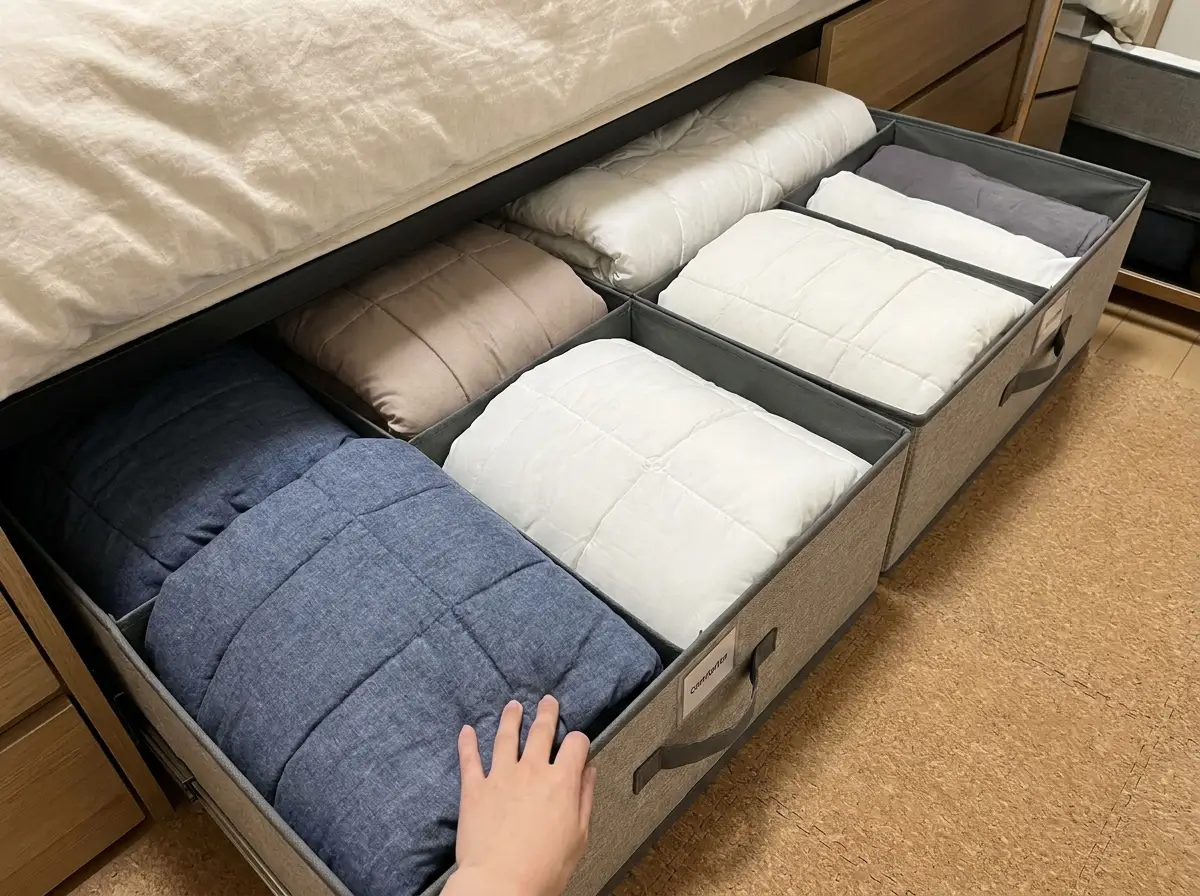

Bulky comforters can quickly consume the limited closet space available in a small home. Good apartment comforter storage keeps bedding clean, accessible, and protected without making bedrooms feel crowded. Smart solutions also make seasonal changes easier because you do not need to empty an entire wardrobe whenever the weather changes.
Small-space storage should support the way you live rather than force you to maintain an unrealistic organising system. Renters usually need flexible furniture, removable fittings, and affordable containers that can move to another home. Homeowners may prefer built-in options, but simple solutions often work just as well when planned carefully.
What Is the Best Way to Store a Comforter in an Apartment?
Smart apartment comforter storage starts with folding bedding neatly, protecting it from moisture, and using overlooked areas such as the space under a bed or above a wardrobe. Vacuum bags work well for synthetic comforters, while breathable cotton bags suit down or feather-filled bedding. Label every container so seasonal swaps take only a few minutes.
Storage choices should match the comforter material, available floor space, and how frequently you use the bedding. Daily or weekly items need easy access, while winter bedding can sit farther away during summer. Measuring the folded comforter before buying containers prevents wasted money and containers that do not fit.
Store Comforters in Vacuum Bags Under the Bed
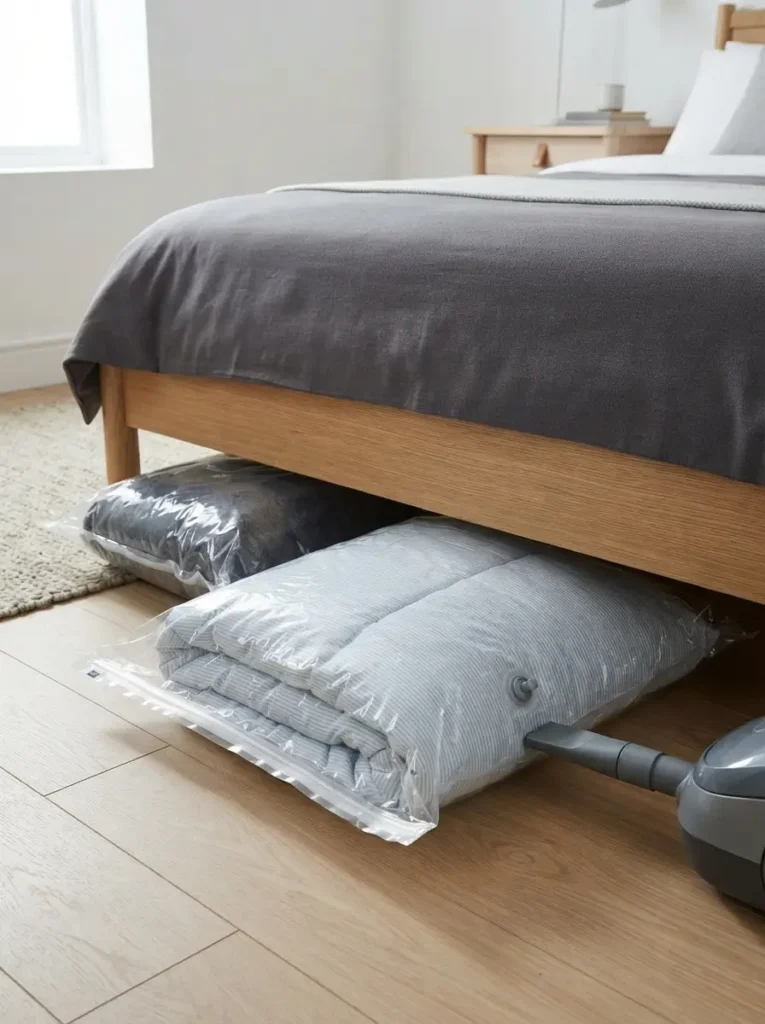
Vacuum storage bags reduce the volume of thick synthetic comforters and make them easier to slide under a bed. Fold the comforter evenly, place it inside the bag, close the seal carefully, and remove the air with a vacuum cleaner. Choose bags with reinforced seams because cheaper versions can slowly refill with air.
Under-bed storage works especially well for renters, studio residents, and anyone with a bed frame offering at least 15 centimetres of clearance. Clear bags let you identify colours and sizes without opening everything. Avoid compressing natural down comforters for many months because heavy pressure can damage their loft and reduce warmth.
Low-profile storage gives the bedroom a cleaner appearance than exposed boxes. Match the bag size to the width of the bed instead of pushing several uneven packages underneath. A simple bed skirt in white, oatmeal, charcoal, or another colour used in the room can hide the storage while keeping the layout calm.
Use Rolling Drawers Beneath the Bed
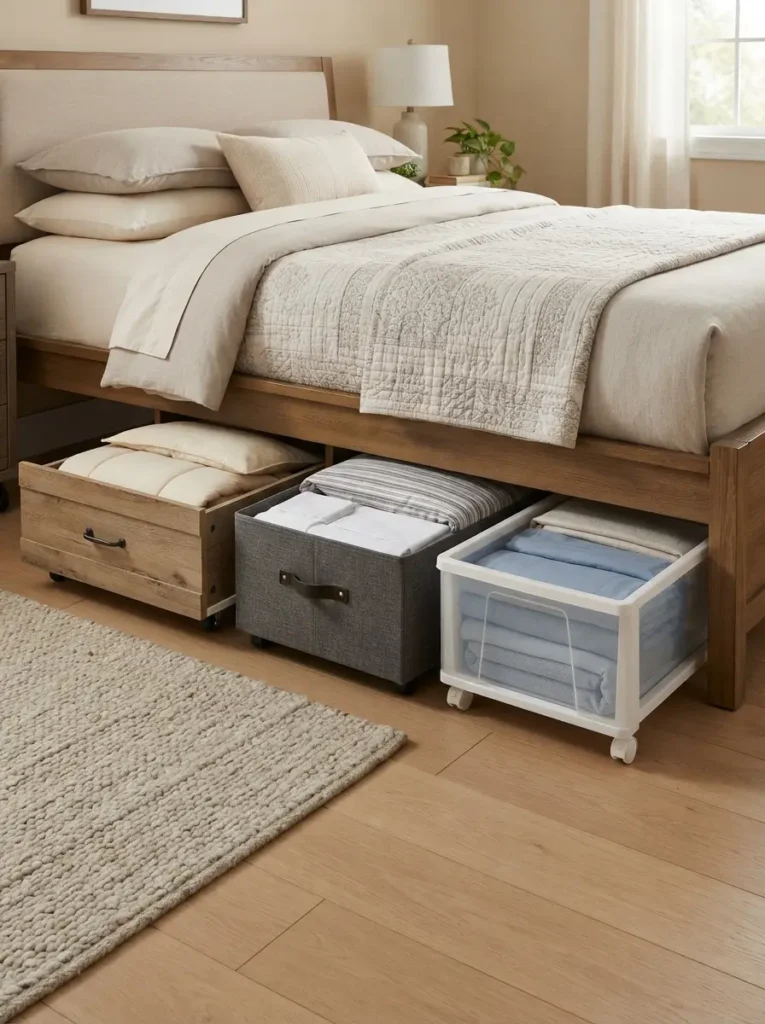
Rolling under-bed drawers offer faster access than sealed bags and keep bedding protected from floor dust. Wooden drawers suit traditional or Scandinavian bedrooms, while fabric-covered drawers work well in softer contemporary spaces. Plastic models remain practical for humid climates because their surfaces wipe clean easily.
People who change guest bedding often benefit most from rolling drawers. Place a complete bedding set inside each drawer, including the comforter cover, pillowcases, and fitted sheet. Keeping coordinated pieces together prevents last-minute searches when visitors arrive or temperatures suddenly change.
Check the height of the bed legs before purchasing drawers. Many attractive models look suitable online but cannot pass beneath low frames. Leave enough space for drawer handles and nearby rugs. Thick rugs can stop small wheels from moving, so place the rug slightly away from the drawer opening or choose drawers with larger wheels.
Choose a Lift-Up Storage Bed
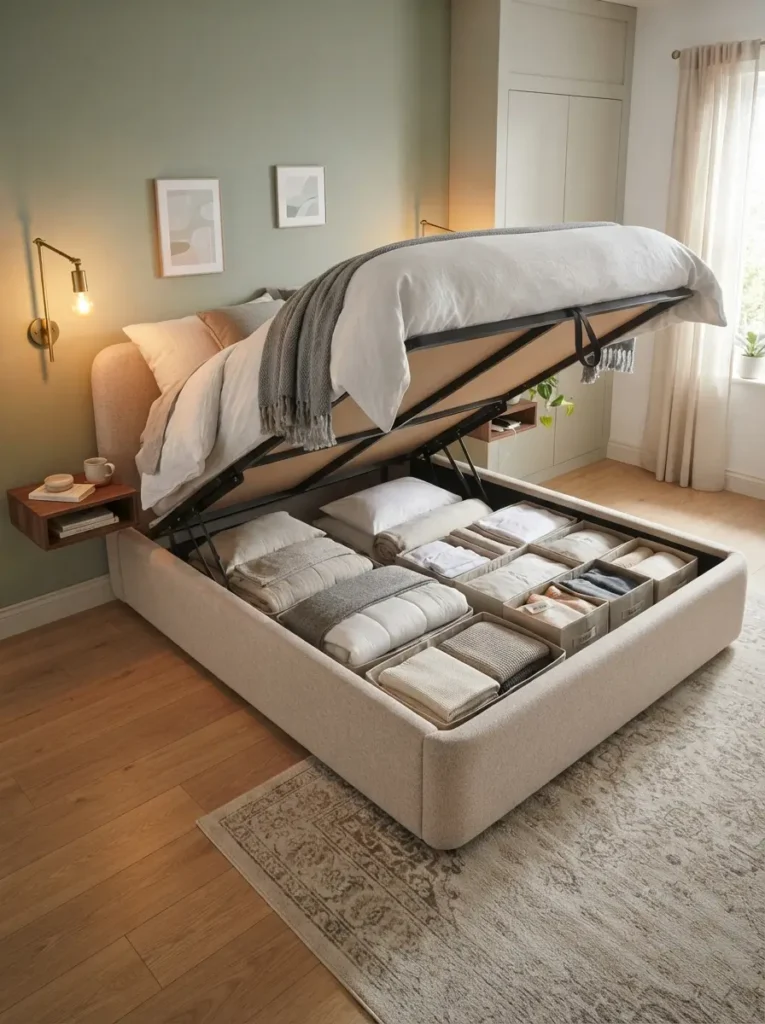
Lift-up beds use the entire area beneath the mattress instead of leaving a narrow gap. Hydraulic hinges raise the mattress platform and reveal a large compartment suitable for comforters, pillows, spare sheets, and seasonal clothes. Closed construction keeps the room looking organised because nothing remains visible from the sides.
Couples, families, and people with several bedding sets gain the most value from this furniture. Divide the compartment with fabric organisers rather than stacking everything in one pile. Store heavier bedding near the foot of the bed so you can reach it without lifting the platform fully.
Neutral upholstery in beige, warm grey, navy, or soft brown helps a large storage bed feel less imposing. Pair the bed with slim bedside tables and wall-mounted lights to preserve walking space. Warm-white bulbs between 2700K and 3000K create a comfortable bedroom atmosphere without making bulky furniture appear harsh.
Add a Storage Bench at the Foot of the Bed
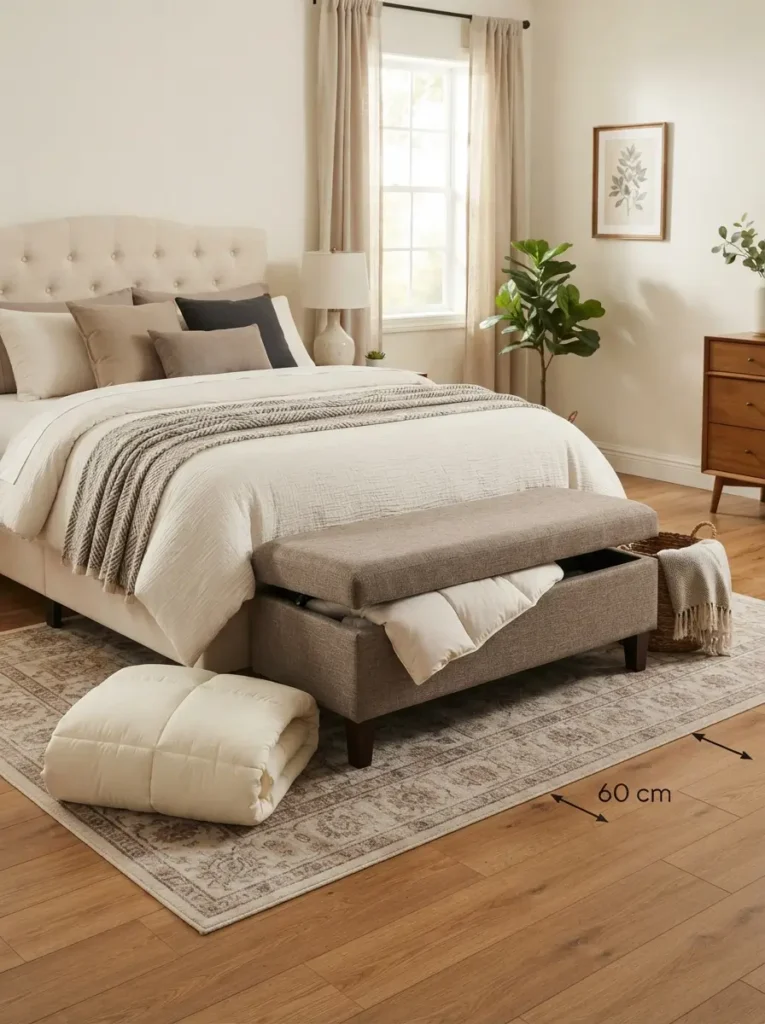
Storage benches provide seating and hidden space in one practical piece of furniture. Hinged models can hold one or two folded comforters depending on their depth. Upholstered benches soften the bedroom, while wooden benches create a cleaner and more structured look.
Bedrooms with enough clearance at the foot of the bed benefit most from this idea. Leave at least 60 centimetres between the bench and the opposite wall or furniture so you can move comfortably. Small rooms may suit a narrow bench around 35 to 40 centimetres deep.
Select fabric that complements the headboard without matching it exactly. For example, combine a cream headboard with a taupe bench or a charcoal headboard with muted olive upholstery. Avoid placing damp laundry or worn clothes on top because trapped moisture may transfer into the stored bedding.
Use a Storage Ottoman in the Living Room

Storage does not always need to stay in the bedroom. A large ottoman can hold a spare comforter while serving as a coffee table, footrest, or occasional seat. Round ottomans soften rooms filled with square furniture, while rectangular designs work well in front of sofas.
Open-plan apartment residents and people without bedroom closets often find this solution useful. Wrap the folded comforter in a breathable bag before placing it inside the ottoman. Protection matters because drinks, snacks, and shoes frequently come near living-room furniture.
Choose a firm lid when you plan to use the ottoman as a table. A tray placed on top creates a stable surface for cups and decorative objects. Deep rust, forest green, dark blue, and textured beige can add colour without requiring permanent changes to rental walls.
Install a High Closet Shelf
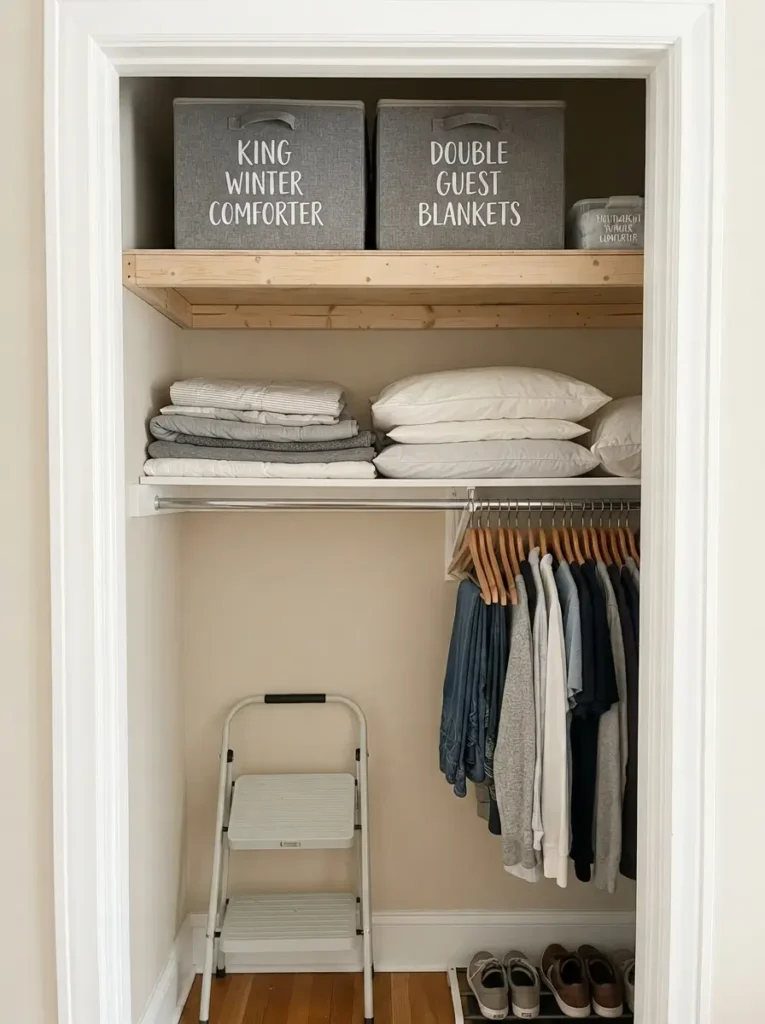
Upper closet space often remains unused because the standard shelf sits too low or stops before the ceiling. Adding a second shelf creates a dedicated zone for comforters and other items needed only during certain seasons. Removable tension shelving can work when drilling is not allowed.
Reliable apartment comforter storage becomes much easier when each bedding category has a fixed location. Place winter comforters in labelled fabric boxes and lighter summer bedding in a separate container. Labels such as King Winter, Double Guest, or Lightweight Summer provide more useful information than vague words like Bedding.
Upper shelves suit tall closets and people who can safely use a small step stool. Heavy boxes should never sit overhead because they can be difficult to lower. Lightweight comforters belong on high shelves, while denser blankets and weighted bedding should remain lower.
Separate Bedding With Shelf Dividers

Shelf dividers prevent folded comforters from collapsing into neighbouring stacks. Clear acrylic dividers maintain an open appearance, while wire dividers cost less and offer good airflow. Clip-on designs attach to existing shelves without screws, making them useful for rental homes.
Neat vertical sections help people who store several comforters in one wardrobe. Give each comforter its own space rather than stacking four thick items together. Individual sections reduce pressure on the lower bedding and make it easier to remove one piece without disturbing everything else.
Measure shelf thickness before ordering dividers because clips vary in size. Deep shelves usually need taller dividers to support bulky bedding. White or transparent organisers blend into most closets, while black wire versions coordinate well with industrial-style rooms and dark wardrobe interiors.
Add Fabric Storage Cubes to a Wardrobe
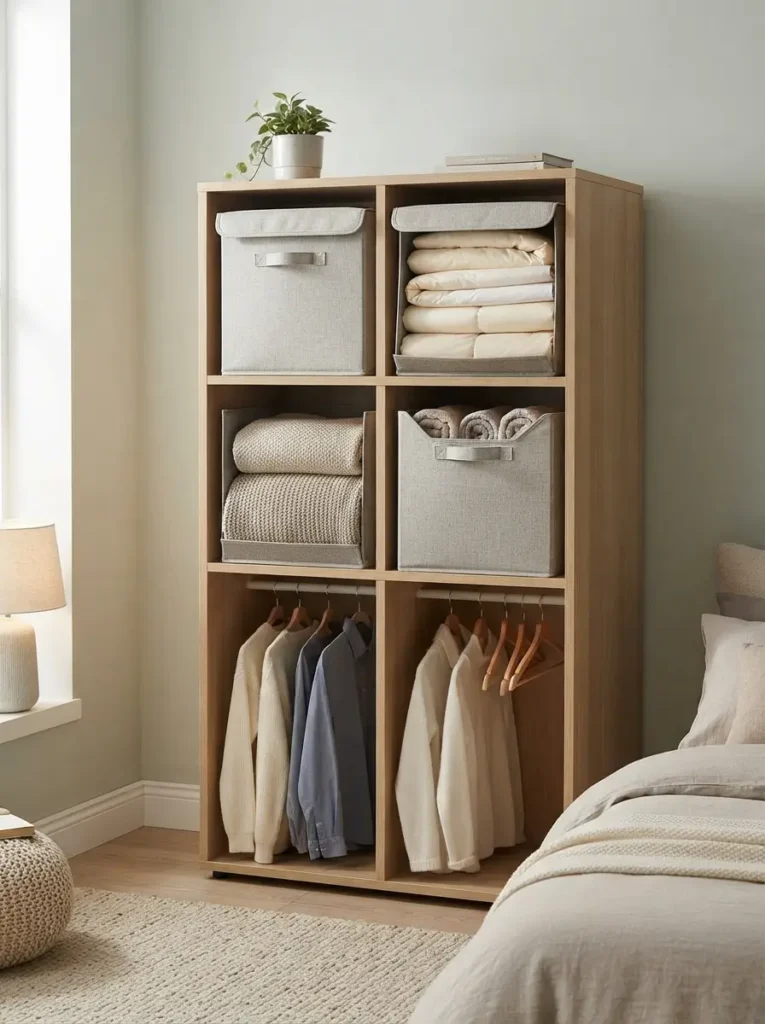
Fabric cubes turn open wardrobe shelves into simple pull-out storage. Soft sides expand slightly around bulky comforters, and handles make the containers easier to move. Lidded cubes provide better dust protection than open baskets, especially when bedding remains unused for several months.
Students, renters, and first-time organisers often prefer cubes because they cost less than fitted drawers. Choose one colour across the wardrobe for a calm appearance. Cream, light grey, muted blue, and natural linen suit most bedroom palettes and make mismatched shelving feel more intentional.
Avoid overfilling fabric containers. Weak side panels can bend outward and make the wardrobe look untidy. Folding the comforter into a rectangle close to the cube’s dimensions creates better support. Cardboard bases may warp in damp rooms, so select plastic-reinforced bottoms when humidity is a concern.
Use the Top of a Freestanding Wardrobe
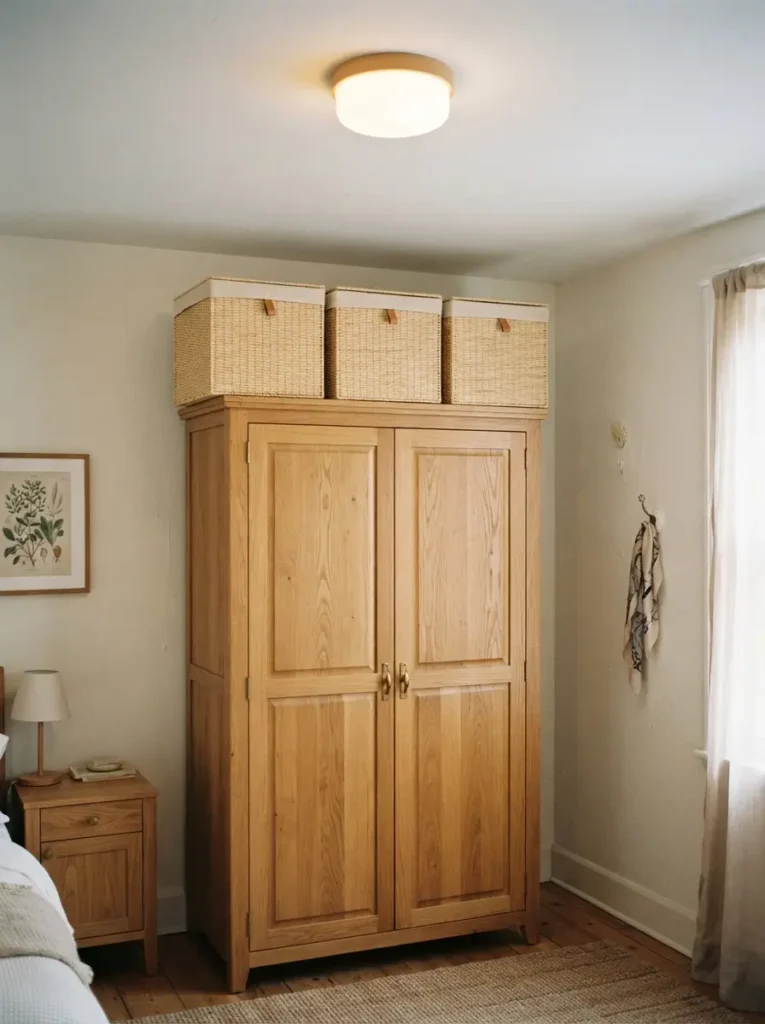
Space above a freestanding wardrobe can hold lightweight comforters without reducing usable floor area. Closed boxes keep dust away and create a more finished appearance than exposed bedding. Select containers that fit the wardrobe width so nothing hangs dangerously over the edges.
Older apartments with limited built-in closets often benefit from this overlooked zone. Matching boxes make tall furniture feel deliberate rather than crowded. For example, natural woven-look containers can complement oak furniture, while matte white boxes suit modern rooms with pale walls.
Keep visual weight in mind. Dark containers placed near the ceiling can make a small bedroom feel shorter. Lighter colours reflect more light and reduce the sense of bulk. Ceiling fixtures around 3000K provide warm illumination while helping high storage remain visible when you need it.
Place Comforters Inside Empty Luggage
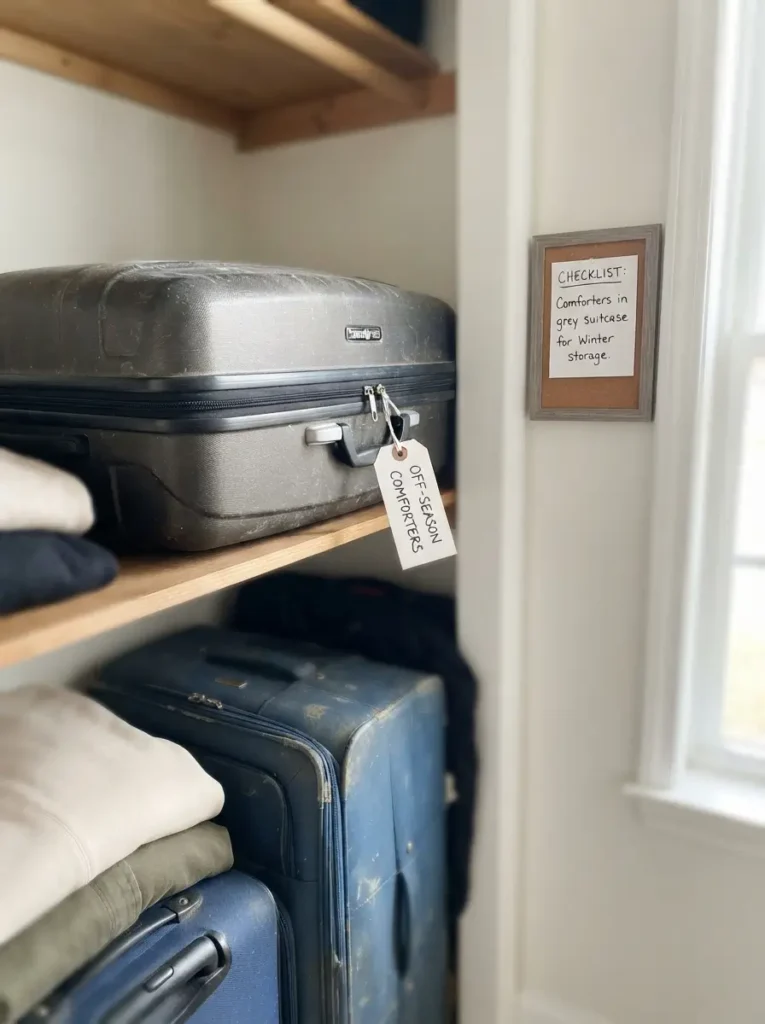
Suitcases occupy significant storage space even when they contain nothing. Filling them with off-season comforters allows one bulky item to store another. Clean the suitcase interior first and place the bedding inside a breathable cotton or nonwoven bag.
Frequent travellers should avoid this method because repeatedly unpacking bedding becomes inconvenient. Occasional travellers, however, can use the idea without disrupting everyday routines. Keep a small note near the suitcase storage area reminding you what is inside.
Hard-shell luggage protects bedding from dust and accidental spills, while soft luggage allows slight expansion. Never force the zip closed because excessive pressure may damage both the comforter and the suitcase. Add a cedar block outside the fabric bag if moths are common, but keep scented products from directly touching the bedding.
Hide Bedding Inside a Trunk Coffee Table
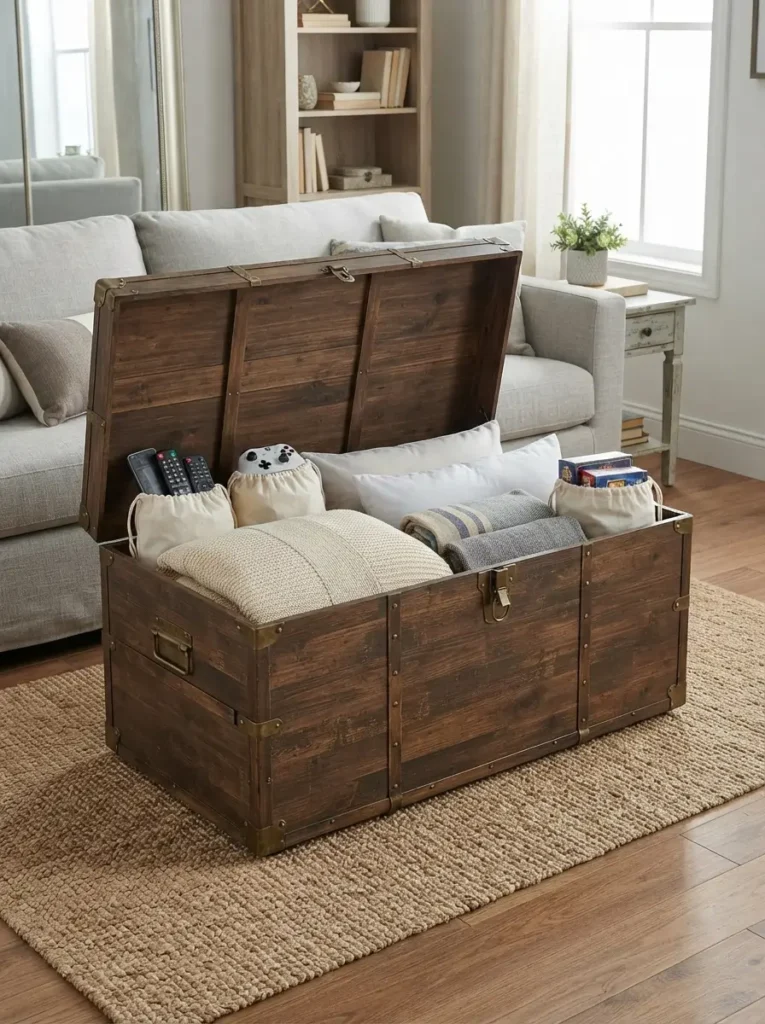
Trunk-style coffee tables offer deeper storage than standard lift-top models. Large interiors can accommodate a comforter, guest pillows, and folded throws. Their substantial shape works especially well in rustic, industrial, vintage, or relaxed coastal rooms.
Small apartments without extra bedroom furniture can shift spare bedding into the living area through this method. Keep the interior organised with two lightweight bags so comforters do not mix with remote controls, board games, or other household items.
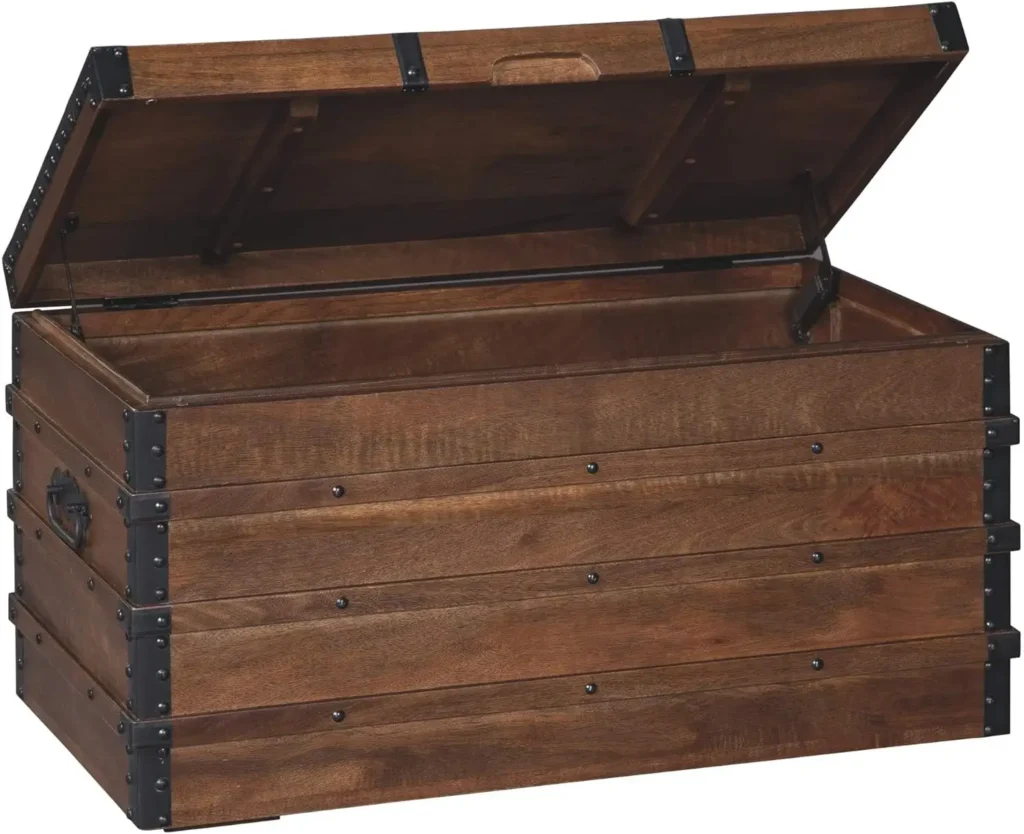
Wood tones affect how heavy the trunk appears. Pale oak and washed finishes suit compact rooms because they reflect more light. Dark walnut or black finishes create stronger contrast but need lighter surrounding furniture. Allow enough space around the lid so it can open without striking the sofa.
Turn an Oversized Floor Cushion Into Storage
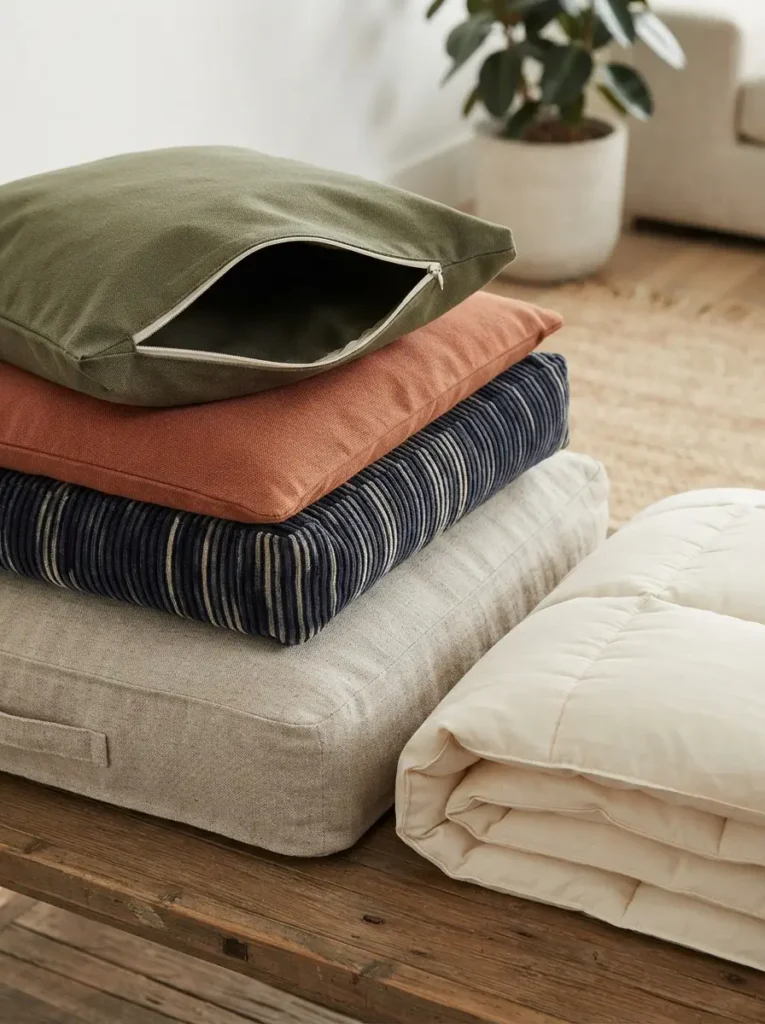
Decorative floor cushion covers can hide lightweight comforters while creating extra seating. Fold or loosely roll the comforter, place it inside a large square or round cover, and shape the filling evenly. Strong upholstery fabric handles regular use better than thin decorative cotton.
Flexible seating helps studio residents, teenagers, and renters who often host friends. Covers measuring around 80 to 100 centimetres can hold a lightweight double comforter, though actual capacity depends on thickness. Zips should run across a wide section so the bedding can enter without excessive squeezing.
Cotton canvas, corduroy, and washable linen blends offer practical durability. Colours such as terracotta, olive, sand, or navy can connect the cushion with curtains or artwork. Avoid using expensive down bedding as daily cushion filling because repeated sitting may damage its structure.
Use Breathable Cotton Storage Bags
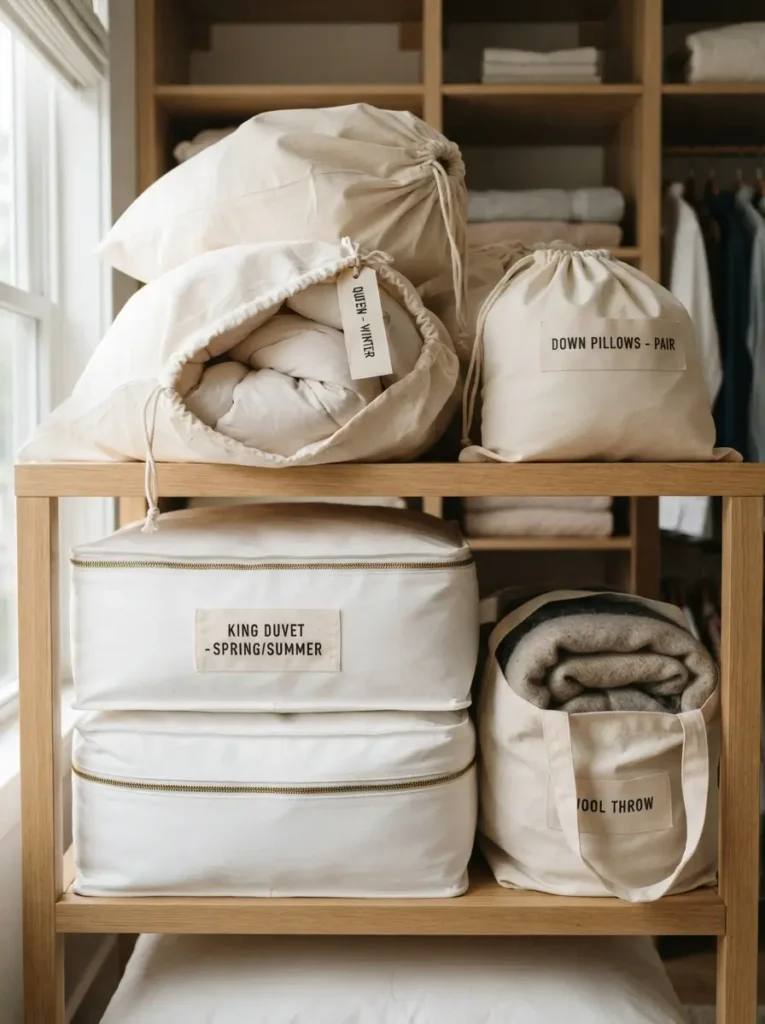
Cotton storage bags protect bedding while allowing some airflow. Natural fibres suit feather, down, wool, and other materials that should not remain tightly sealed for long periods. Drawstring bags work for closet shelves, while zipped rectangular bags stack more neatly.
People living in humid regions should consider breathability before choosing containers. Completely sealed plastic may trap residual moisture, leading to unpleasant smells or mildew. Bedding must always be fully dry before storage, regardless of the container material.
Washable bags offer long-term value because they can be refreshed between seasons. Natural canvas looks attractive on open shelving, while white cotton makes labels easy to read. Include the comforter size and season on each label to make future swaps faster.
Store Bedding in Clear Lidded Boxes
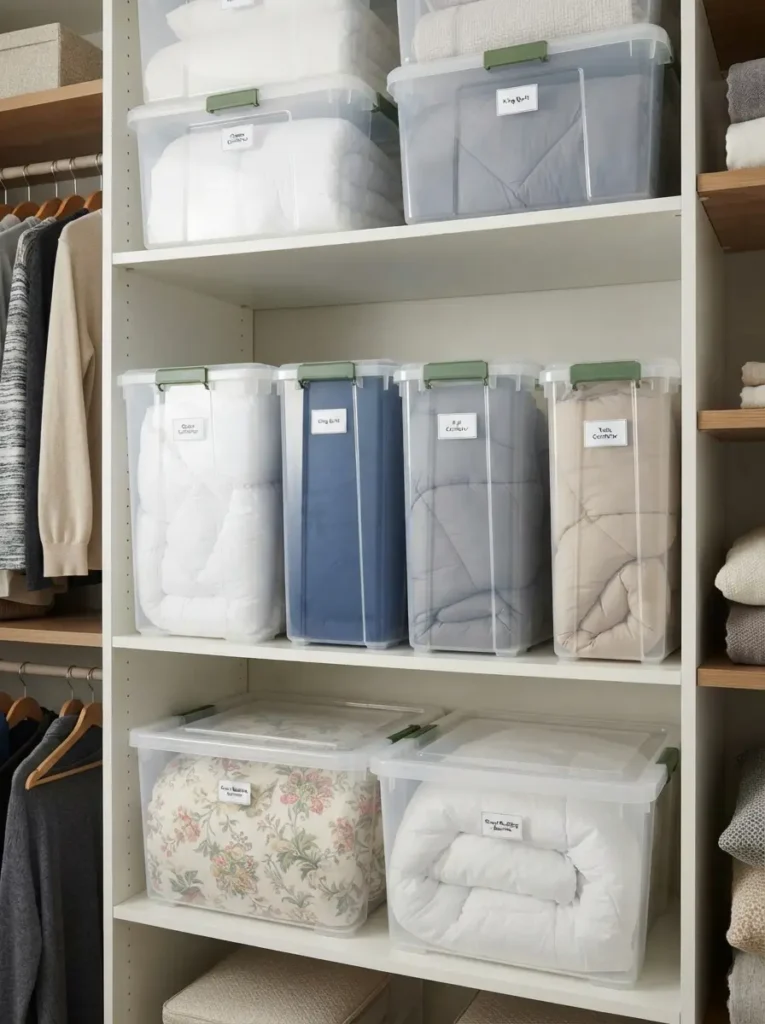
Clear boxes let you see the comforter colour and size without pulling every container from the shelf. Firm sides support stacking and keep nearby objects from crushing the bedding. Clip-lock lids also reduce dust, insects, and accidental moisture exposure.
Busy households benefit from visible storage because family members can locate bedding without asking where it belongs. Group similar sizes together and place the most frequently used box at eye level. Guest bedding can sit higher or lower depending on how often visitors stay.
Plastic boxes can trap moisture, so allow the comforter to air thoroughly before packing. Avoid storing them beside radiators or direct sunlight because heat can weaken the box and discolour fabrics. Low, wide containers usually fit wardrobes better than tall narrow designs.
Create a Seasonal Bedding Rotation Zone

Seasonal rotation becomes easier when one shelf, drawer, or cabinet serves only bedding. Divide the area into cold-weather and warm-weather sections. Place the current season’s comforter at the front and move the off-season option to the back.
Families with different bed sizes gain particular value from a rotation zone. Colour-coded labels can reduce confusion, such as blue for king bedding, green for double, and yellow for single. Simple coding works well for beginners because it provides visual guidance without complex organising rules.
Set two yearly reminders for bedding swaps, ideally before temperatures change sharply. Early autumn and mid-spring work for many climates, though local weather should guide the timing. Wash, dry, inspect, and repair every comforter before returning it to storage.
Use Adjustable Compression Straps
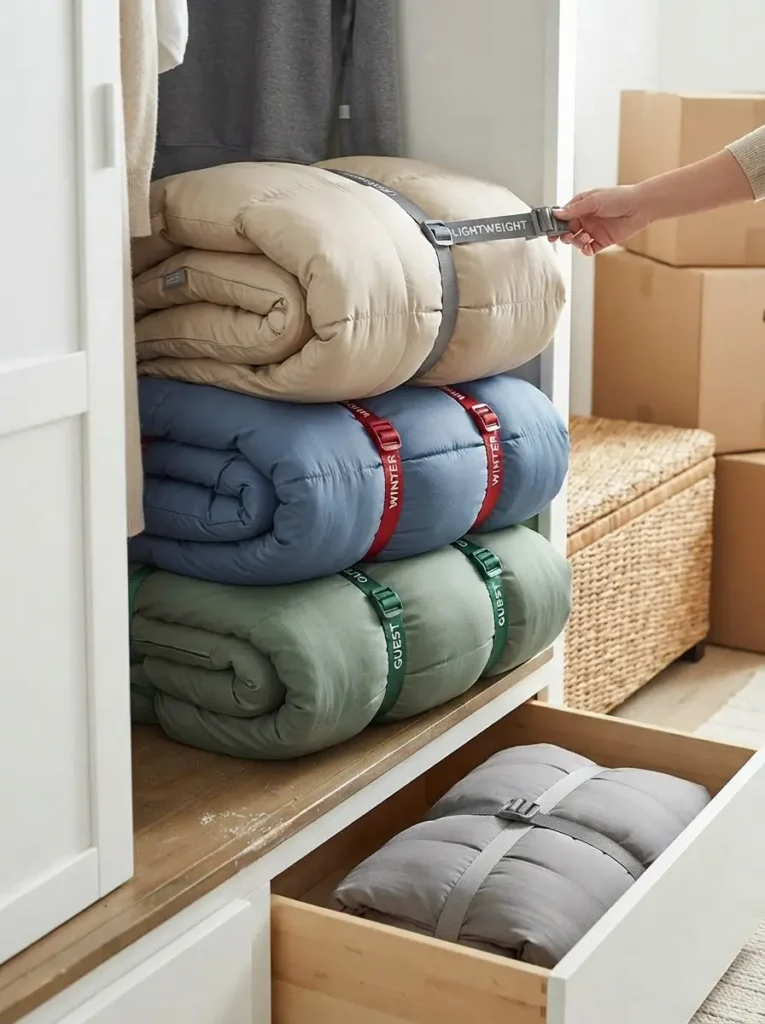
Compression straps reduce bulk without sealing bedding inside plastic. Fold the comforter into a neat rectangle, wrap two straps around it, and tighten them evenly. Straps keep the bundle stable inside wardrobes, storage benches, or under-bed drawers.
Down-filled bedding benefits from lighter compression than synthetic comforters. Pull the straps only enough to prevent unfolding rather than flattening the filling completely. Wide straps distribute pressure better than thin cords and leave fewer marks on fabric.
Colour-coded straps create a simple identification system. Red might mark winter comforters, green could identify guest bedding, and grey could indicate lightweight sets. People who move frequently also find straps useful because bundled bedding remains manageable during packing.
Mount a Cabinet Above the Bedroom Door
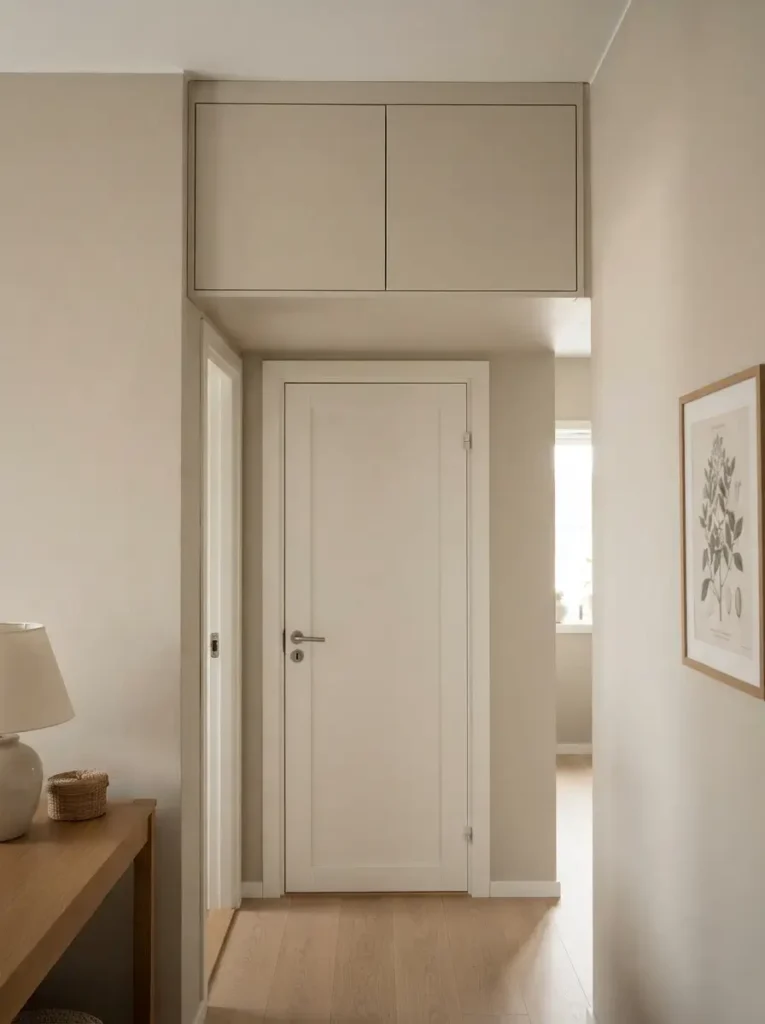
Wall space above a doorway often remains empty. A shallow cabinet can use that height for lightweight bedding while keeping valuable floor space clear. Doors protect comforters from dust and create a cleaner appearance than open shelving.
Permanent installation suits homeowners or renters with written permission to drill. Strong fixings must match the wall type because overhead furniture requires secure support. Professional fitting may be sensible when walls contain unknown materials or electrical wiring.
Paint the cabinet the same colour as the wall to reduce visual clutter. Soft white, warm greige, or pale stone helps the unit blend into the room. Handleless doors or small matching knobs also keep the design understated.
Display Lightweight Quilts on a Blanket Ladder
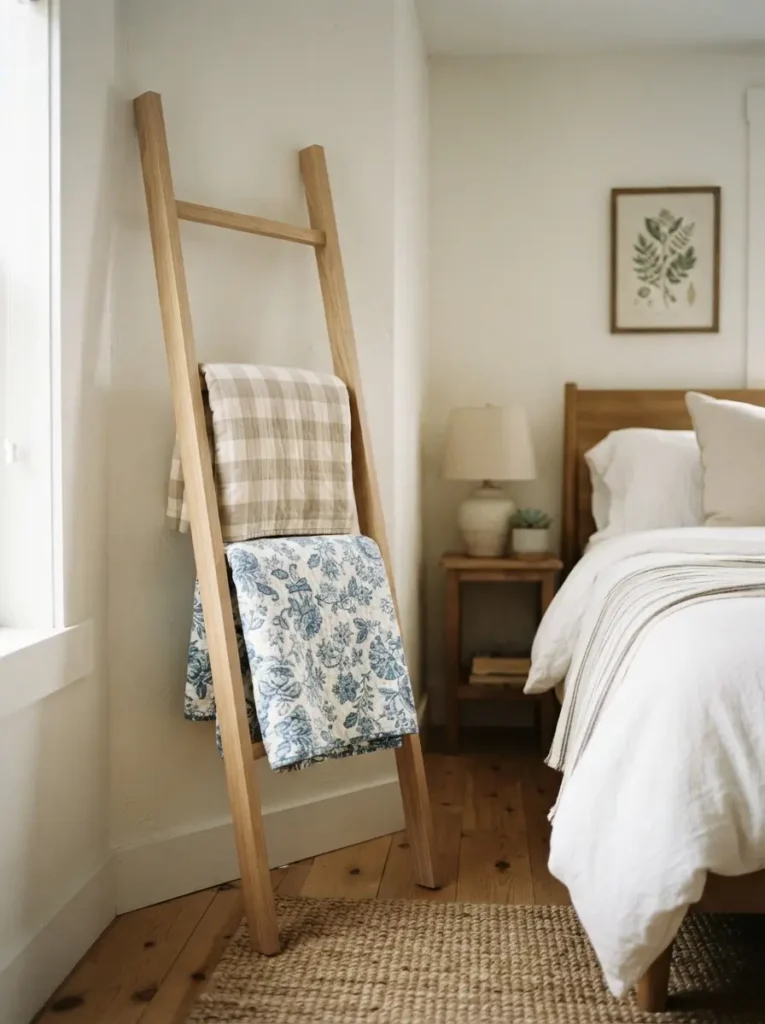
Lightweight quilts and thin comforters can become part of the bedroom decor instead of remaining hidden. A blanket ladder provides vertical storage and uses little floor space. Leaning models suit renters because they do not require permanent wall fittings.
Guest rooms and homes with attractive patterned bedding benefit most from this approach. Fold each piece into a narrow strip and place heavier items on the lower rungs. Limit the display to two or three pieces so the ladder does not look overloaded.
Patterns should coordinate with the room rather than compete with it. Blue-and-white quilts suit coastal spaces, muted checks work in farmhouse rooms, and simple cream stitching complements minimalist decor. Keep the ladder away from heaters, windows with strong sunlight, and areas where bedding may collect cooking smells.
Build a Simple Modular Bedding Station
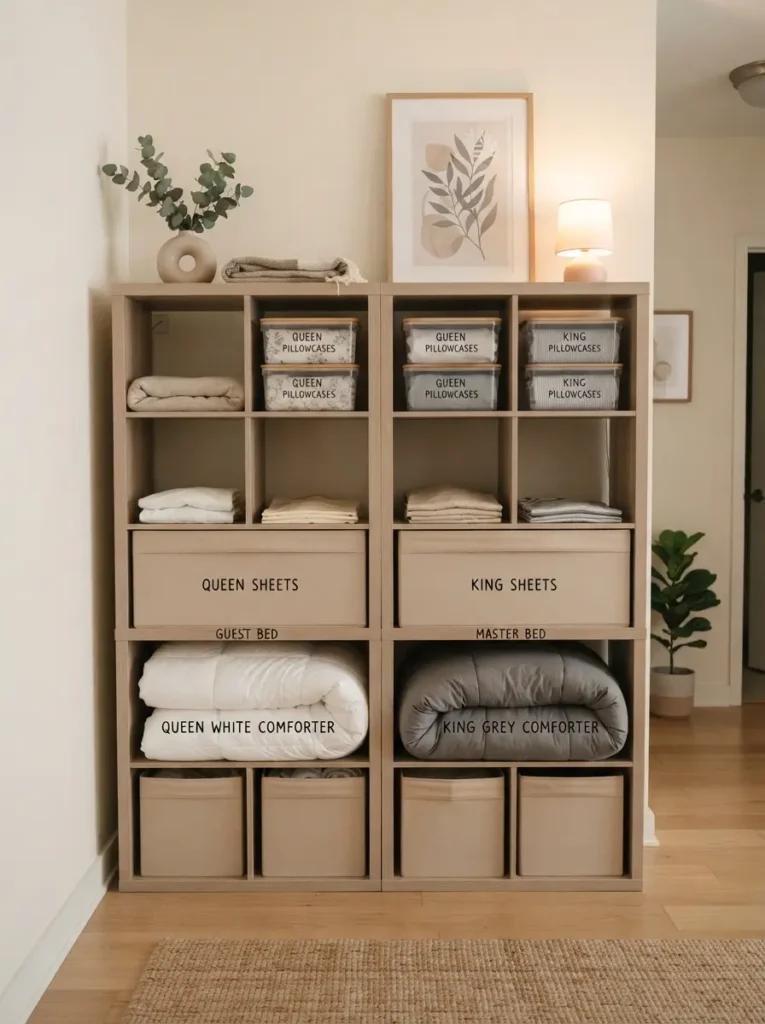
Modular shelves can combine cubes, boxes, and open sections into one organised bedding station. Place comforters in larger lower cubes, sheets in medium boxes, and pillowcases in smaller labelled containers. Adjustable systems can adapt when bedding collections or apartment layouts change.
People sharing an apartment or managing several guest sets often need a clear system more than additional storage. Assign one column to each bedroom or bed size. Consistent labels make it obvious where every item should return after laundry day.
Budget shelving in white, black, or wood-effect finishes can look polished when containers match. Leave one or two open sections for decor so the unit does not resemble a packed storeroom. A small lamp with a 2700K bulb, a framed print, or a ceramic vase can soften the practical furniture.
Common Comforter Storage Mistakes to Avoid
Good apartment comforter storage can still fail when bedding enters containers before it dries completely. Residual moisture creates stale smells and can encourage mildew. Air comforters for several hours after washing, especially thick synthetic or feather-filled designs.
Over-compression causes another common problem. Vacuum bags suit many synthetic comforters, but natural down needs room to recover. Repeatedly flattening delicate filling can reduce loft and create uneven cold areas when the comforter returns to the bed.
Poor measurements also lead to wasted money. Storage boxes may fit the comforter but fail to fit beneath the bed or inside the wardrobe. Measure the storage opening, container exterior, and folded bedding before purchasing anything.
Unlabelled containers slow down seasonal swaps. Clear descriptions work better than decorative labels with vague wording. Add the bed size, material, season, and room name when necessary.
Storing bedding near damp walls, leaking pipes, or hot radiators creates avoidable risks. Interior walls, dry shelves, and ventilated spaces provide safer conditions. Check stored bedding every few months for moisture, insects, damaged seams, or unusual smells.
Budget-Friendly Comforter Storage Tips
Budget apartment comforter storage does not require custom wardrobes or expensive beds. Start by using luggage, strong delivery boxes, and existing shelves. Cover clean cardboard boxes with neutral paper or leftover wallpaper to create a more coordinated appearance.
Charity shops, resale platforms, and furniture outlets often sell storage benches, trunks, and ottomans at lower prices. Check hinges, interior smells, and signs of damp before buying used furniture. Wooden pieces can be cleaned and repainted, while upholstered furniture may require more careful inspection.
Reusable shopping bags with zips can hold lightweight bedding temporarily. Choose strong woven designs rather than thin plastic carriers. Adding a handwritten label costs almost nothing and makes the system easier to maintain.
Bed risers provide another low-cost improvement. Raising the bed by several centimetres can create room for containers already owned. Select sturdy risers with weight ratings suitable for the bed and occupants. Avoid unstable homemade blocks that may shift or damage rental flooring.
Simple blanket storage ideas become more effective when every container serves a specific purpose. Buy one or two organisers first, test them through a seasonal change, and expand only when the system works. Gradual improvements usually cost less than purchasing a complete matching set that may not suit the space.
Apartment Comforter Storage Tips for Easier Seasonal Swaps
Reliable apartment comforter storage depends on preparation as much as furniture. Wash bedding according to its care label, dry it fully, and inspect edges for loose stitching. Repairing small tears before storage prevents filling from escaping when the comforter is unfolded months later.
Fold comforters according to the dimensions of the container rather than using the same fold every time. Long under-bed drawers need wide, flat folds, while wardrobe cubes need compact square folds. Consistent folding also keeps stacks stable.
Place a clean cotton sheet around delicate comforters when a dedicated bag is unavailable. Cotton protects the outer fabric while allowing airflow. Avoid printed newspaper because ink may transfer, and avoid strongly scented liners that can irritate sensitive sleepers.
Keep an inventory on a phone note or inside the wardrobe door. Record the bedding size, colour, warmth rating, and storage location. Simple records prevent unnecessary purchases and help households prepare guest rooms quickly.
Pairing blanket storage ideas with a seasonal routine makes the whole bedroom easier to manage. Set aside one afternoon for washing, airing, folding, labelling, and rotating bedding. Completing every step together reduces the chance of placing an unwashed comforter back into storage.
Styling Comforter Storage in a Small Bedroom
Visible storage should connect with the bedroom palette. Repeating two or three colours creates more order than mixing many patterns and container styles. Warm white, soft grey, natural wood, and muted green form a flexible combination for calm rooms.
Closed storage usually suits small bedrooms because fewer visible objects reduce visual noise. Open shelves can still work when boxes match and labels remain discreet. Leave some empty space around containers instead of filling every centimetre.
Furniture scale matters as much as colour. Slim benches, narrow ladders, and low under-bed drawers preserve movement better than oversized trunks. Measure walking routes before adding storage furniture, particularly near doors and wardrobes.
Lighting also changes how storage appears. Warm bulbs between 2700K and 3000K flatter fabric and wood while creating a comfortable evening setting. Cooler bulbs around 4000K may help inside wardrobes but can feel harsh as the main bedroom light.
Who Benefits Most From These Storage Ideas?
Studio residents often need furniture that performs more than one function. Ottomans, lift-up beds, floor cushions, and trunk tables provide useful capacity without introducing single-purpose storage units.
Renters benefit from removable solutions such as leaning ladders, tension shelves, fabric cubes, rolling drawers, and freestanding modular units. These pieces can move to another property and usually do not require changes to walls.
Families need clear labels and separate zones for different bed sizes. Transparent boxes, colour coding, and dedicated seasonal shelves prevent bedding from becoming mixed after washing.
Home decor beginners should start with one hidden area, such as under the bed or inside a wardrobe. Completing one manageable section builds a practical routine without turning organising into a large and expensive project.
Frequently Asked Questions
How do you store a bulky comforter in a small apartment?
Fold the comforter to match the shape of the available container. Use a vacuum bag for durable synthetic filling, a breathable bag for down, or a rolling drawer for frequently used bedding. Under-bed areas, wardrobe tops, storage benches, and empty luggage provide useful capacity without taking extra floor space.
Can comforters stay in vacuum bags all year?
Synthetic comforters can usually tolerate longer compression when the manufacturer’s care guidance allows it. Down, feather, and wool bedding should not remain heavily compressed for extended periods because the filling may lose loft. Release and air compressed bedding occasionally when long-term storage cannot be avoided.
How do you keep stored comforters smelling fresh?
Wash and dry the comforter fully before storing it. Choose a dry, ventilated location and use a clean breathable bag when appropriate. Cedar blocks can help discourage moths, but scented products should not directly touch the fabric. Avoid strong fragrance sheets because their smell may become overpowering over time.
Is it safe to store a comforter under the bed?
Under-bed storage remains safe when the floor is dry and the comforter sits inside a protective container. Vacuum or wipe the area before storage and check it occasionally for dust or moisture. Homes prone to flooding, condensation, or pests may need raised plastic boxes rather than fabric bags.
Should bedding be stored in plastic or fabric?
Material choice depends on the comforter filling and storage conditions. Plastic protects against spills and dust but may trap moisture. Fabric allows more airflow and suits natural fillings. Both options require completely dry bedding and a clean storage area.
How can I store a comforter without buying furniture?
Use empty suitcases, existing wardrobe shelves, reusable zipped bags, strong boxes, or space beneath the bed. Compression straps can keep folded bedding compact without requiring a new container. Rearranging current storage often creates enough space before any purchase becomes necessary.
Conclusion
Thoughtful apartment comforter storage makes seasonal bedding changes faster and keeps small bedrooms easier to use. Successful systems rely on accurate measurements, suitable materials, clear labels, and storage locations that match how frequently each comforter is needed.
Start with the empty spaces already available before buying new furniture. Under-bed areas, wardrobe tops, luggage, ottomans, and shelving can often provide enough room. Renters can focus on portable solutions, while homeowners may consider fitted cabinets or lift-up beds.
Practical storage should protect bedding without making daily life harder. Choose one or two ideas that fit the room, test them during the next seasonal swap, and adjust the system based on real use. Consistent folding and labelling will usually create more improvement than complicated organisers.