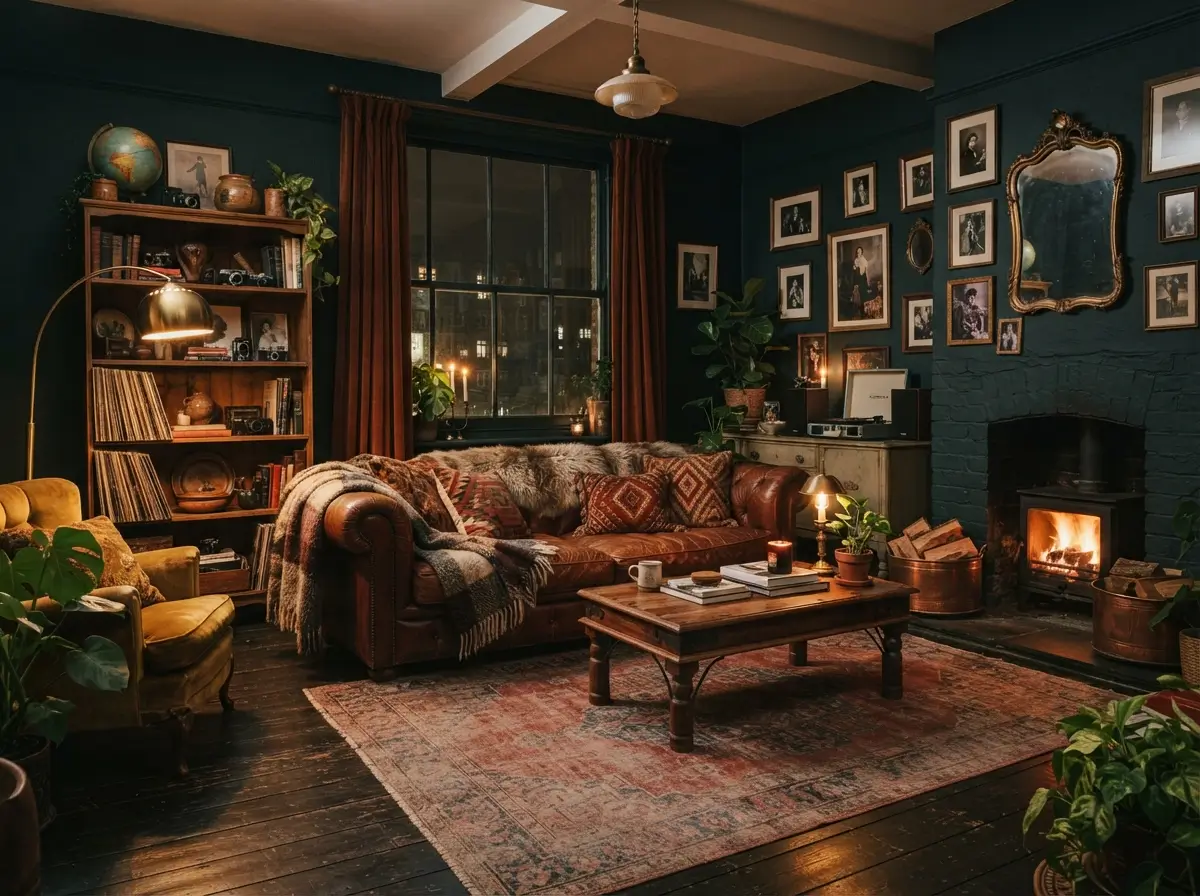

Moody apartment living room ideas work especially well when you want a space that feels warm, collected, calm, and personal without making your apartment look heavy or cramped. Vintage style is a natural match because it brings character through aged wood, patina, soft fabric, old books, brass details, framed art, and layered lighting. The key is balance. A moody room should feel rich and comfortable, not dark for the sake of being dark. This matters even more in apartments, where rooms are often small, natural light can be limited, and renters may not be able to paint walls or change floors.
A good moody vintage living room usually starts with a deep color palette, but it does not depend only on black paint or dark furniture. You can create the same feeling with warm browns, deep olive, charcoal, tobacco leather, antique gold, burgundy, walnut, espresso wood, cream linen, amber lighting, and textured textiles. These choices help the room feel grounded while still keeping it practical for daily life. Whether you live in a studio, a small one-bedroom apartment, or a rental with plain white walls, you can use the ideas below to build a moody vintage living room that feels intentional, useful, and easy to maintain.
What are the best moody apartment living room ideas?
The best moody apartment living room ideas use deep colors, warm lighting, vintage textures, layered furniture, and practical layouts to make a small space feel cozy without closing it in. Start with one or two darker anchor pieces, such as a charcoal sofa, walnut coffee table, olive rug, or dark wood media console, then soften the room with lamps, cream curtains, old brass accents, books, art, and natural textures. Vintage style works because it adds age and depth, while rental-friendly choices like peel-and-stick wallpaper, plug-in sconces, secondhand furniture, and framed prints let you create the look without permanent changes.
Start with a Deep but Livable Color Palette
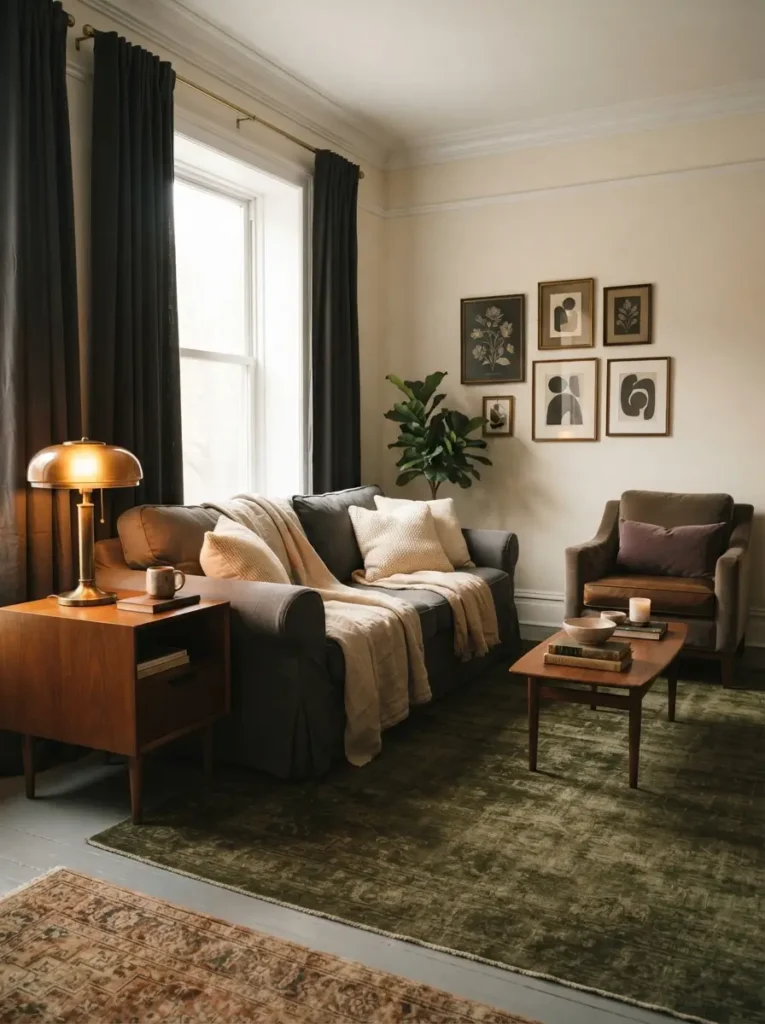
A moody vintage living room needs a color palette that feels rich but still easy to live with every day. Instead of covering every surface in black, choose a base of warm dark shades and balance them with lighter support colors. Good apartment-friendly options include charcoal gray, deep brown, espresso, olive green, dark taupe, oxblood, muted plum, and soft black. Pair these with cream, aged brass, warm white, natural linen, walnut wood, and faded beige so the room does not feel flat. This idea works because darker colors create depth, while the lighter tones stop the room from feeling smaller than it is.
This approach is best for beginners because you can start small. If you rent and cannot paint, use dark colors through a rug, sofa cover, curtains, art, throw pillows, or a large blanket. For example, a cream rental living room can feel moody with a dark olive rug, a walnut side table, brass lamp, and charcoal curtains hung high and wide. If your apartment already has gray floors or white walls, choose warmer dark shades instead of cool black to keep the room from feeling cold. A common mistake is using too many unrelated dark colors at once. Pick two main moody shades, repeat them across the room, and let vintage wood and warm lighting connect everything.
Choose a Vintage-Inspired Sofa That Fits the Room
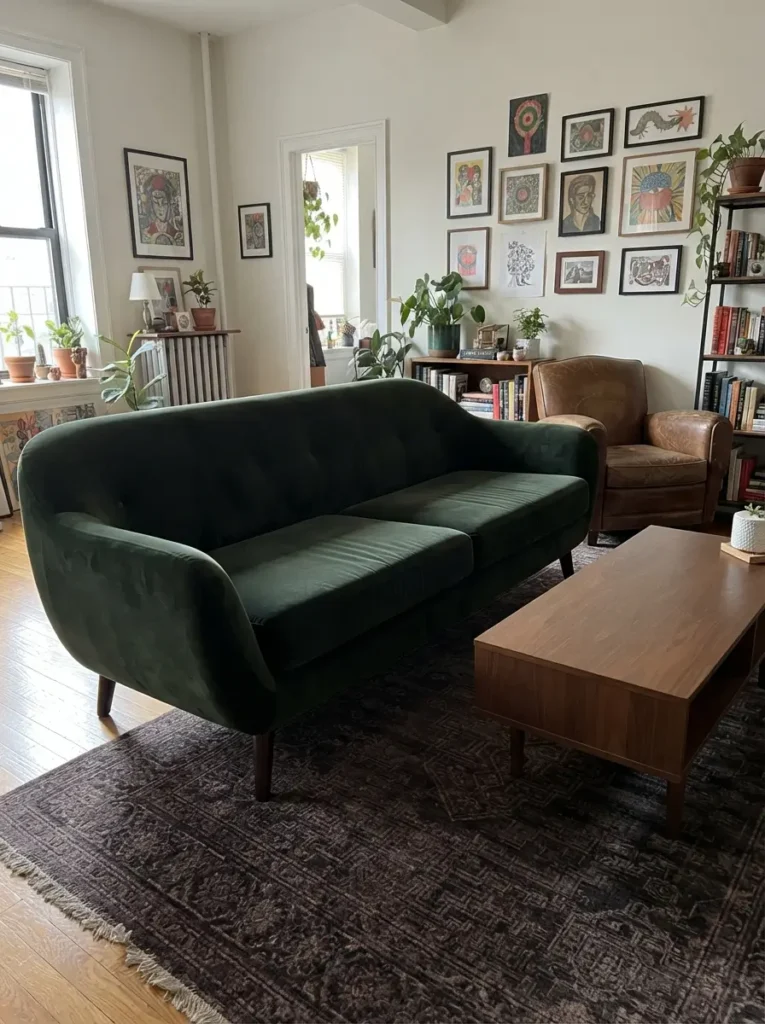
The sofa is usually the largest piece in an apartment living room, so it sets the tone quickly. A vintage-inspired sofa with rounded arms, a low back, velvet fabric, leather upholstery, or tapered wooden legs can make the room feel collected even before you add decor. Good choices include a tobacco leather loveseat, a dark green velvet sofa, a brown corduroy couch, a charcoal slipcovered sofa, or a small Chesterfield-style loveseat if your room can handle the shape. This works because vintage details bring structure and personality, while a darker sofa becomes a visual anchor in a moody room.
This tip is best for people furnishing a new apartment or replacing an old sofa. If you are on a budget, look for secondhand sofas with solid frames and simple lines, then clean them well and style them with new pillows. Renters and small-space dwellers should measure carefully before buying. Leave enough walking space between the sofa and coffee table, usually around 16 to 18 inches, and avoid oversized rolled arms if your room is narrow. If your current sofa is light gray or beige, you can still create the look with a dark throw blanket, vintage-style pillows, and a deep-toned rug underneath. The goal is not to buy the most dramatic sofa; it is to choose one that supports the mood without blocking movement.
Use Warm Lighting Instead of Bright Overhead Light
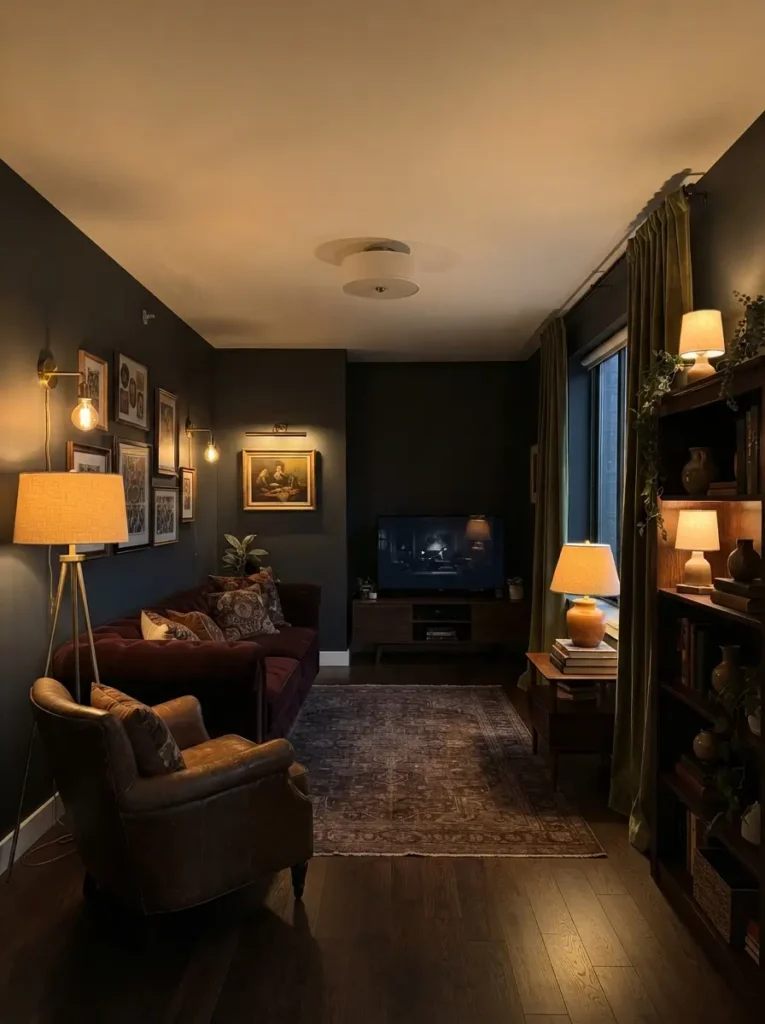
Lighting can make or break moody apartment living room ideas because dark furniture and vintage accents need warmth to look inviting. Many apartments come with harsh ceiling lights that flatten the room and make every corner feel exposed. Replace that effect with several smaller light sources placed around the room. Use table lamps, floor lamps, plug-in wall sconces, picture lights, and small shaded lamps on shelves. Choose bulbs around 2200K to 2700K for a warm amber glow. This temperature works well with wood, leather, brass, burgundy, olive, and brown because it brings out their richness.
This idea is best for renters because it gives a strong result without renovation. You do not need electrical work to add vintage-style lighting. Plug-in sconces, cord covers, rechargeable picture lights, and lamp timers can make the room feel designed without touching the wiring. For example, place a brass floor lamp beside the sofa, a small ceramic lamp on a bookshelf, and a shaded table lamp near the window. Together, they create depth and allow you to use different light levels for reading, watching TV, or relaxing. Avoid cool white bulbs above 4000K because they can make vintage furniture look dull and make moody colors feel harsh. Also avoid relying on one lamp only, because the room may look gloomy instead of layered.
Add an Antique or Vintage-Style Rug
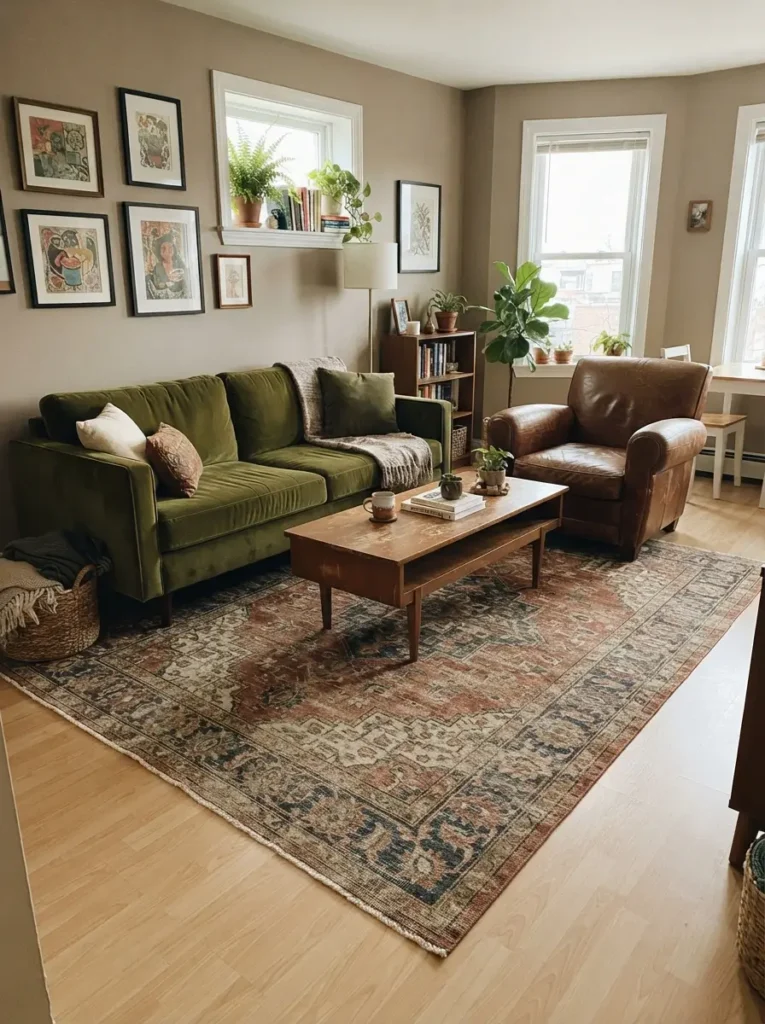
A rug is one of the easiest ways to bring vintage character into a small apartment living room. Look for Persian-inspired, Turkish-inspired, faded floral, medallion, or worn traditional patterns in colors like rust, navy, olive, brown, cream, burgundy, or muted gold. A vintage-style rug works because it adds pattern, age, and softness at the same time. It also helps connect mismatched furniture, which is useful if you shop secondhand or already own pieces from different styles. In a moody room, the rug can introduce deep color without needing dark walls.
This tip is best for renters, studio apartments, and anyone dealing with plain floors. If your apartment has cold tile, laminate, or gray vinyl, a warm vintage rug can immediately make the room feel more settled. For layout, try to place at least the front legs of your sofa and chairs on the rug. This makes the seating area feel connected instead of scattered. In small apartments, avoid rugs that are too tiny because they can make the room feel chopped up. A 5×7 rug may work for a very small loveseat area, but many living rooms look better with a 6×9 or 8×10 if space allows. Budget-friendly printed rugs are fine, especially when layered with a thicker rug pad for comfort.
Bring in Dark Wood Through Practical Furniture
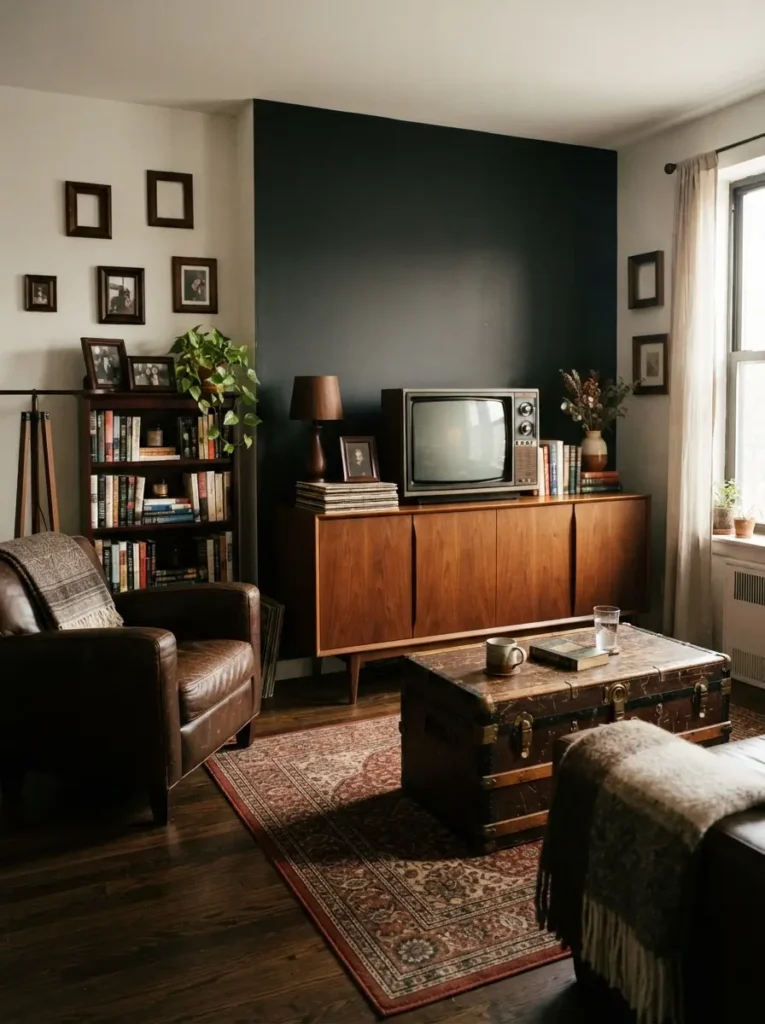
Dark wood is one of the strongest vintage elements you can add to a moody living room. Walnut, mahogany, espresso, and dark oak pieces bring warmth that black metal or glossy plastic cannot create. You can use dark wood through a coffee table, side table, bookshelf, media console, cabinet, picture frames, or nesting tables. This works because wood adds natural variation, which keeps a dark room from feeling plain. Even one good wood piece can make newer apartment furniture feel more grounded and mature.
This idea is best for people who like thrift stores, marketplace finds, and furniture with real function. A vintage sideboard can work as a TV stand and storage piece. A dark wood trunk can serve as a coffee table and blanket storage. A narrow bookcase can fill a blank wall without taking much floor space. If your apartment is small, choose furniture with legs so you can see some floor underneath. This helps the room feel lighter. Avoid filling the room with several heavy dark wood pieces if the space is tight. Instead, choose one main piece and repeat the wood tone in smaller details, such as frames or a lamp base. If the wood is scratched, use furniture polish, a dark stain marker, or a tray to hide the worn top while keeping the vintage charm.
Layer Curtains for a Softer Vintage Look
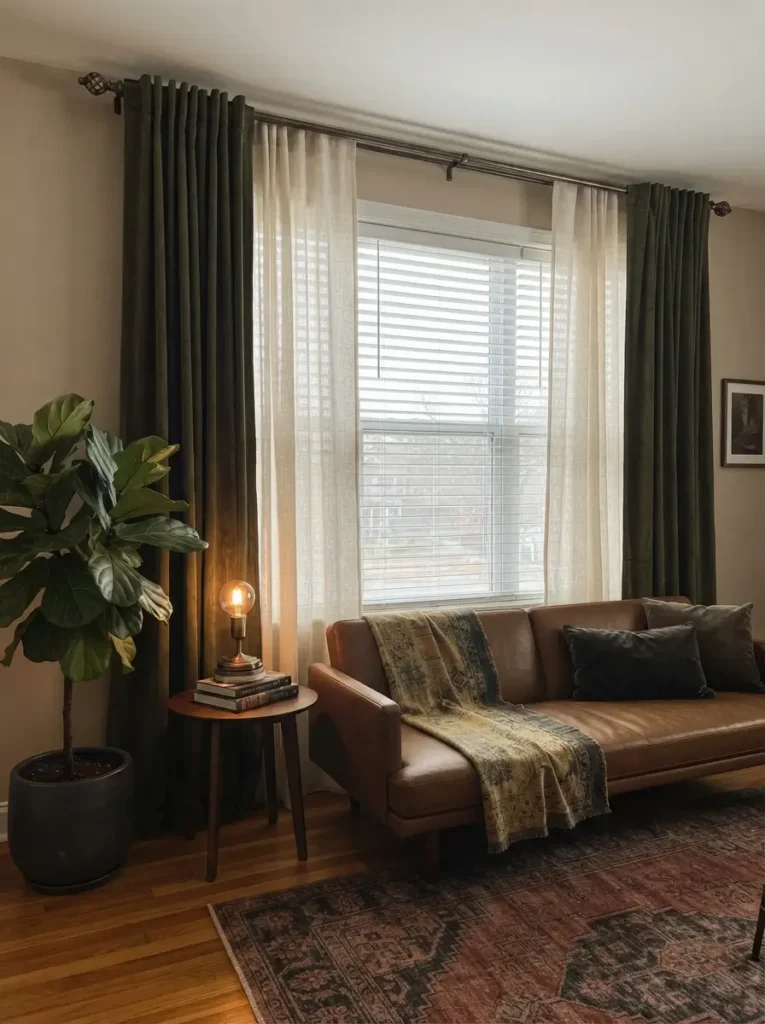
Curtains can change the entire mood of an apartment living room because they soften hard edges, control light, and make windows feel more finished. For a vintage moody style, choose fabrics that hang nicely, such as linen-look cotton, velvet, cotton blend, or textured weave. Colors like warm ivory, mushroom, deep olive, tobacco brown, charcoal, or faded gold can work depending on your palette. This idea works because curtains add vertical movement and make the room feel taller when hung close to the ceiling.
This tip is best for renters with basic blinds or unattractive window frames. You can keep the blinds for privacy and hang curtains in front using a tension rod, no-drill brackets, or standard curtain hardware if allowed. In a small room, hang the rod wider than the window so the curtains sit mostly on the wall when open. This lets in more daylight and makes the window look bigger. If you want a darker feel without blocking all natural light, use two layers: sheer cream curtains for daytime and heavier dark panels for evening. Avoid very shiny synthetic curtains because they can fight with vintage textures. Also avoid curtains that stop awkwardly above the floor. Panels that just touch or slightly break at the floor usually look more intentional.
Create a Gallery Wall with Old-World Character
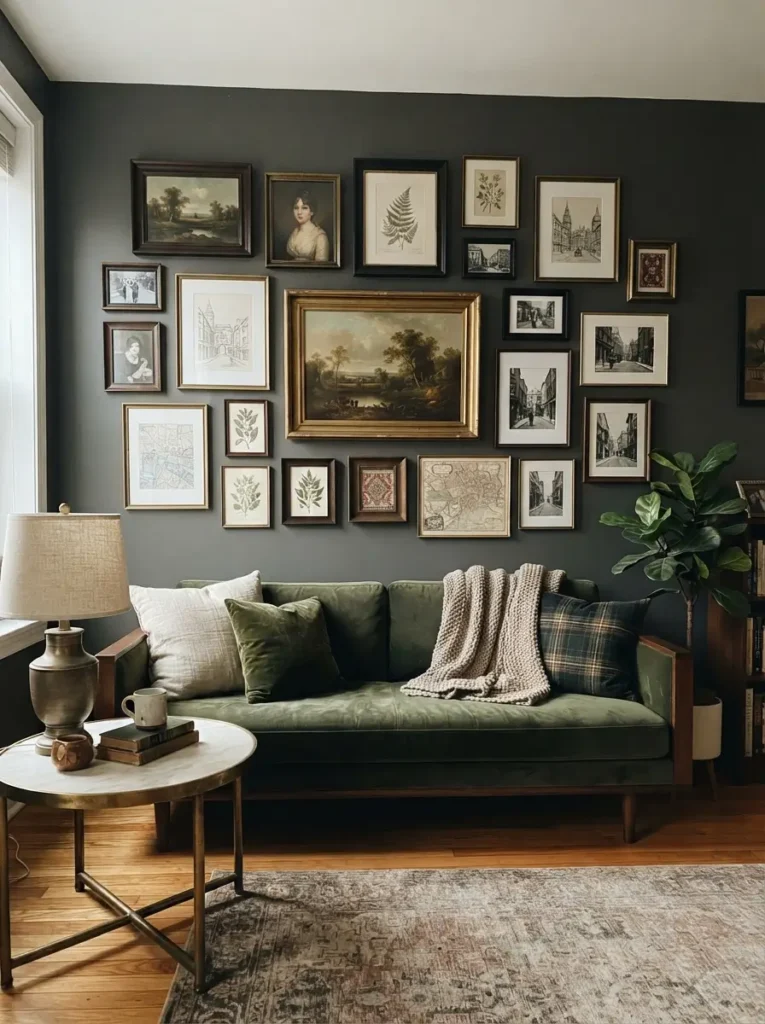
A gallery wall can bring strong vintage style to a rental living room without changing the walls permanently. Choose art that feels collected, not overly matched. Good options include landscape prints, old portraits, botanical drawings, architectural sketches, black-and-white photos, vintage maps, museum-style prints, and small framed textiles. Use frames in dark wood, antique brass, black, or aged gold. This works because a gallery wall adds history and detail, which supports a moody room even if the apartment itself is plain and new.
This idea is best for people with blank walls, low budgets, or limited floor space. You can find affordable prints from thrifted books, old calendars, public-domain art collections, flea markets, or secondhand stores. For renters, use removable picture hanging strips for lighter frames, but follow the weight limits carefully. A good layout starts with one larger piece at eye level, then smaller pieces around it. Keep spacing mostly consistent, around two to three inches between frames, so the wall feels planned. In a small living room, avoid covering every wall with art. One strong gallery wall behind the sofa or beside a reading chair is usually enough. Too many small frames across the whole room can make the space feel busy and dusty rather than moody and vintage.
Mix Velvet, Leather, Linen, and Worn Cotton
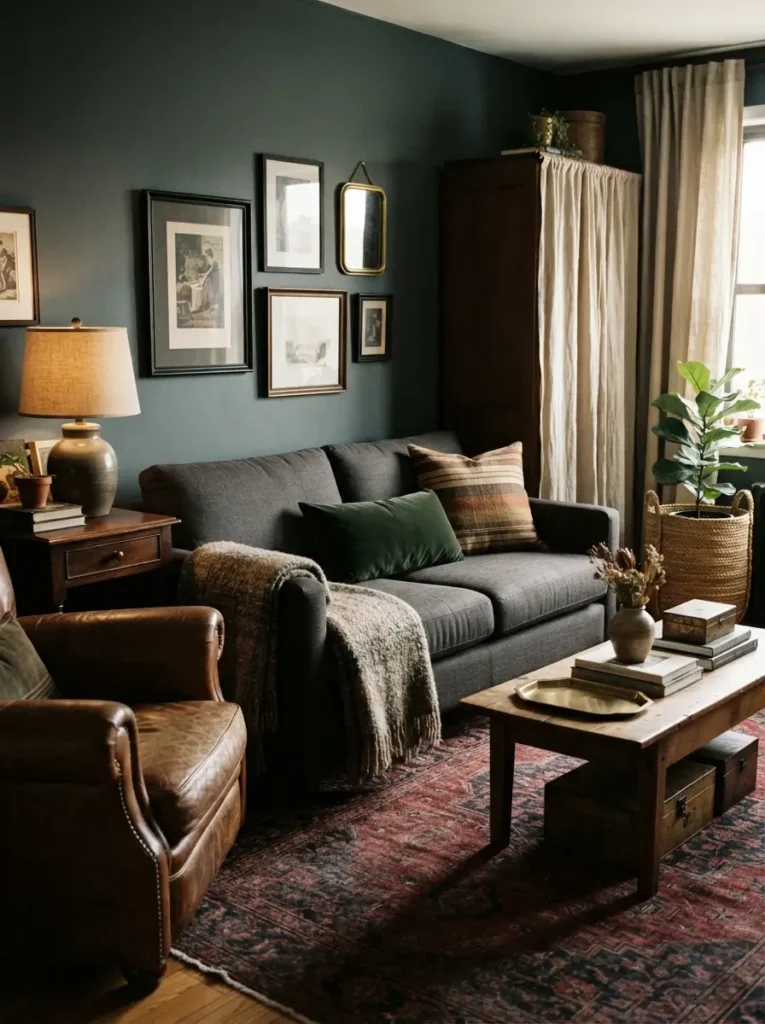
Texture is essential in a moody vintage apartment because it gives dark colors more life. A room with only smooth surfaces can look flat, especially when the palette is deep. Mix materials such as velvet pillows, leather seating, linen curtains, cotton throws, wool rugs, aged wood, brass, ceramic lamps, and woven baskets. This works because each texture catches light differently, so the room feels layered even when the color scheme stays simple. Vintage style also depends on touchable materials that feel used and comfortable.
This tip is best for anyone who cannot buy large furniture right now. You can update a plain sofa with a dark velvet pillow, a striped cotton cushion, and a thick woven throw. A leather ottoman can sit near a fabric sofa. A linen curtain can soften a dark wood cabinet. The trick is to repeat textures in small ways rather than using random items. For example, if you use brass in a lamp, repeat it in a frame or tray. If you use velvet on pillows, repeat the same color family in art or a rug. Avoid too many shiny items because they can make the room feel less vintage. Also avoid using only heavy textures, such as velvet curtains, velvet sofa, and thick dark rug together, unless the room has enough natural light.
Use Bookshelves as Decor and Storage
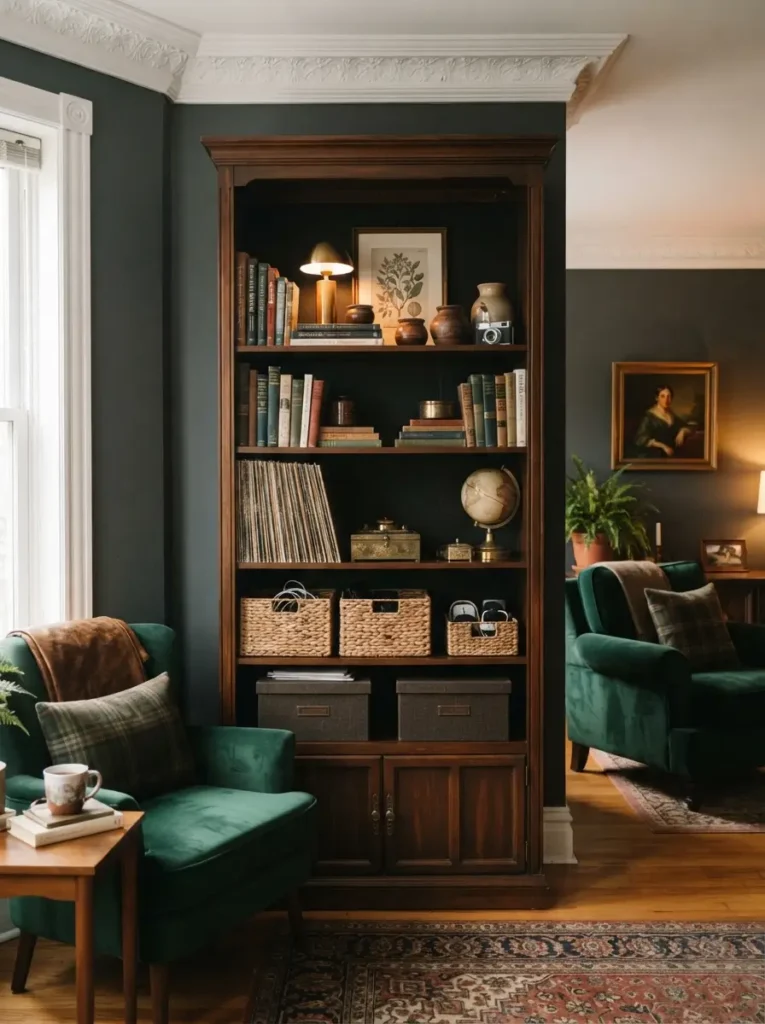
Bookshelves are practical in apartments, but they also help create a moody vintage living room when styled with care. Dark bookshelves, leaning ladder shelves, built-in-style bookcases, or secondhand wooden shelves can hold books, framed art, lamps, storage boxes, baskets, pottery, and small vintage finds. This works because shelves add height and depth while giving everyday items a proper place. They also make a living room feel personal without needing much floor area.
This idea is best for readers, collectors, students, remote workers, and anyone who needs extra storage. In a small apartment, use one tall bookcase instead of several short pieces. Style it with a mix of vertical books, horizontal stacks, one or two framed prints, and a small lamp if there is an outlet nearby. Use closed baskets or boxes on lower shelves to hide cords, remotes, chargers, and papers. For a vintage mood, remove bright plastic items from open shelves or place them inside containers. Do not overfill every shelf. Leave some breathing room so the eye can rest. A useful rule is to make the shelves about two-thirds full and vary the height of objects. If your bookcase is cheap or modern, dark contact paper on the back panel or antique-style hardware on cabinet doors can help it blend with the room.
Add Brass and Aged Metal Accents Carefully
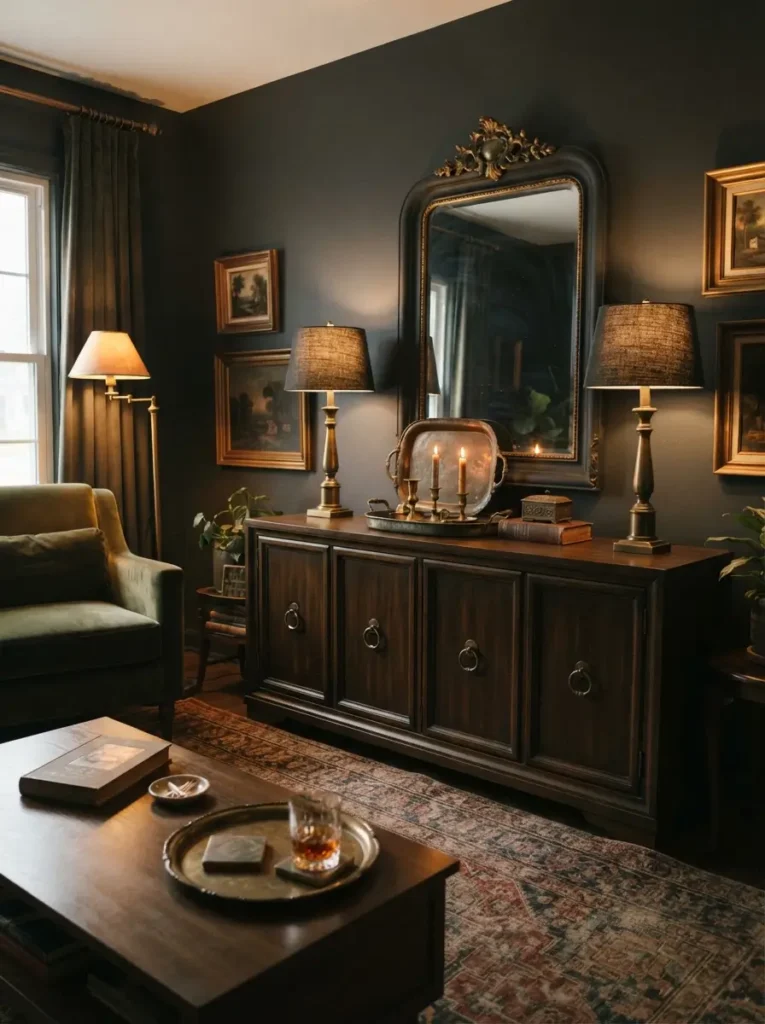
Brass, bronze, and aged metal details fit beautifully with moody vintage interiors, but they work best when used with restraint. Try brass lamp bases, antique gold frames, bronze curtain rods, aged metal trays, small candleholders, or vintage-style cabinet knobs. This idea works because warm metal reflects lamp light and adds contrast against dark colors. It brings a soft glow to charcoal, brown, olive, and burgundy without needing bright decor.
This tip is best for renters and budget decorators because small metal accents are easy to change. You can replace basic knobs on a media console, add a brass tray to a coffee table, or choose thrifted frames with aged finishes. If you use black furniture, brass can keep it from looking too modern or flat. If you use lots of brown wood, bronze or antique gold can connect with the warm undertones. Avoid using too many different metal finishes in one small room. A mix can work, but keep one main finish and one supporting finish. For example, aged brass can be the main finish, with a little matte black in curtain rods or lamp shades. Highly polished gold can look too sharp in a vintage room, so choose softer brushed or antique finishes when possible.
Build a Moody Reading Corner
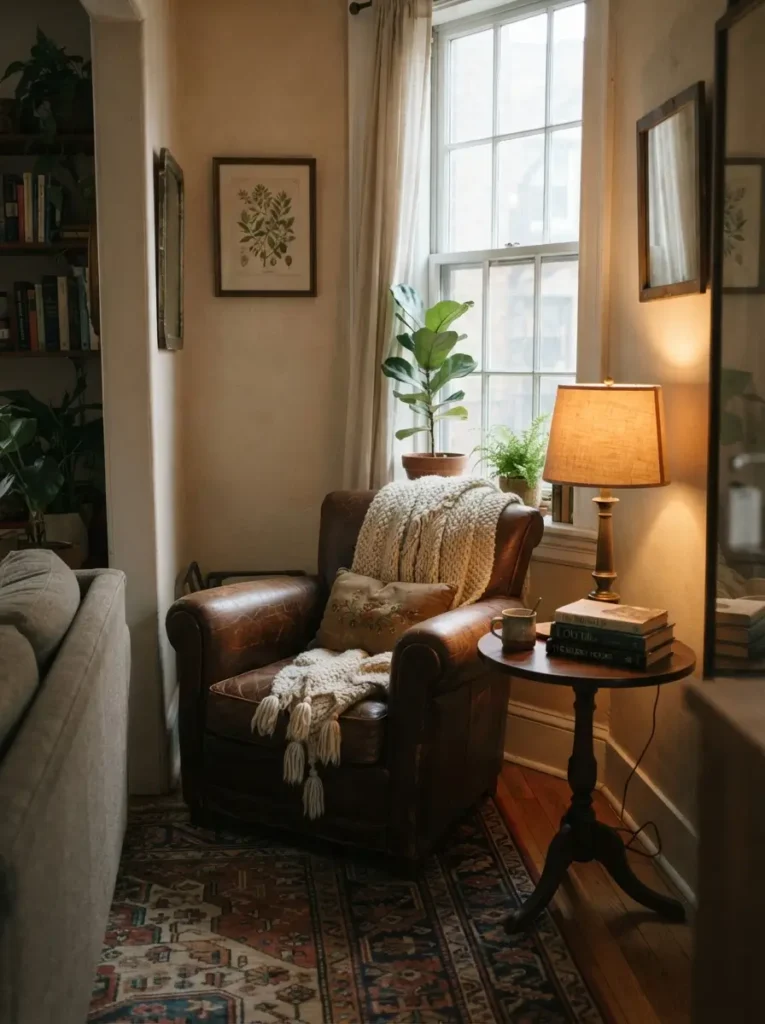
A reading corner is one of the most useful ways to bring vintage style into an apartment living room. You only need a comfortable chair, a small side table, a lamp, and one or two soft layers. A dark wood armchair, brown leather chair, slipcovered accent chair, or small velvet chair can all work. Add a warm bulb lamp, a stack of books, and a textured throw. This works because it gives the room a clear purpose and creates a smaller zone inside the living space.
This idea is best for apartments with an empty corner, awkward window area, or unused space beside the sofa. If the room is narrow, choose a chair with slim arms and legs instead of a bulky recliner. Place the lamp behind or beside the chair so the light falls over your shoulder. A small round table takes less space than a square one and is easier to walk around. For renters, a plug-in sconce above the chair can save floor space. To keep the corner moody but practical, choose a lamp shade that softens the light rather than exposing a bare bulb. Avoid placing the chair where it blocks a walkway or closet door. A beautiful corner loses its value if you bump into it every day.
Style the Coffee Table with Useful Vintage Pieces
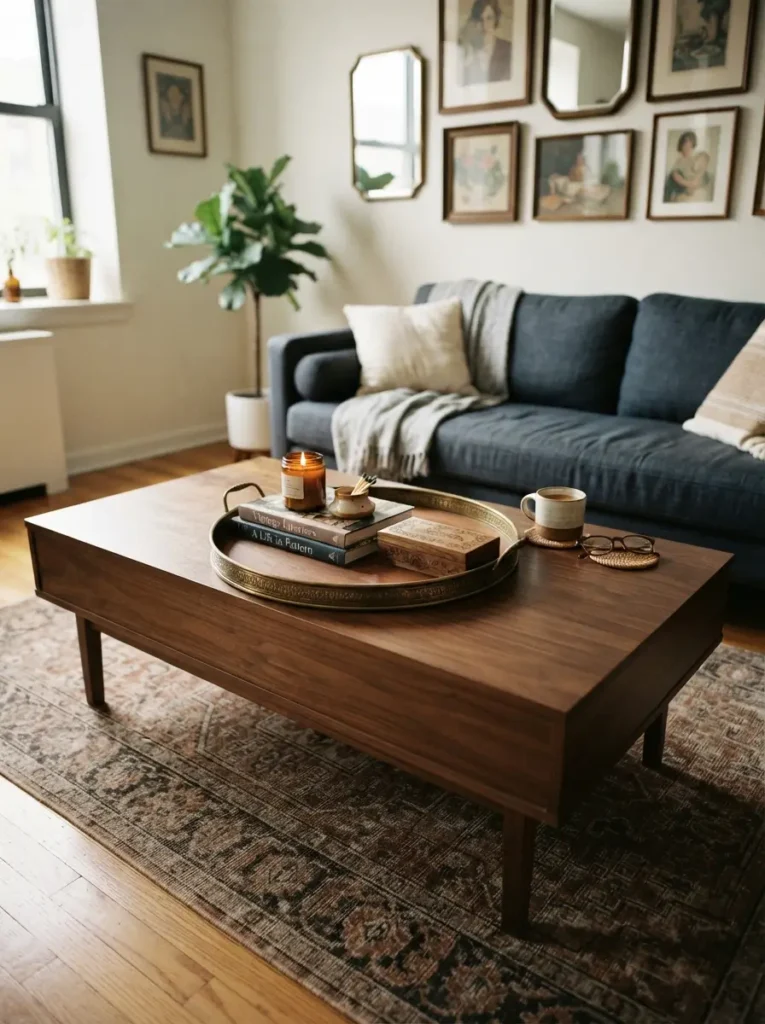
A coffee table can help carry the vintage mood, but it should still leave space for daily life. Use a tray, one or two books, a small bowl, a candle, a ceramic dish, or a vintage box for remotes. A dark wood, marble-top, glass-and-brass, or trunk-style coffee table can work well. This idea works because the coffee table sits in the center of the living room, so small styling choices have a big visual effect. It also gives loose objects a home, which matters in small apartments.
This tip is best for people who want a finished room without clutter. Start with a tray because it makes small items look organized. Place a candle or lamp-like accent on one side, books in the middle, and a useful container for remotes or matches. If your living room is tiny, consider nesting tables or an upholstered ottoman with a tray on top. These give flexibility when guests come over. Avoid styling the table with too many fragile items if you eat, work, or relax there every day. Moody vintage style should support real life, not make the room difficult to use. Also avoid very tall decor that blocks the TV or conversation across the room.
Use Peel-and-Stick Wallpaper or Dark Paint Alternatives
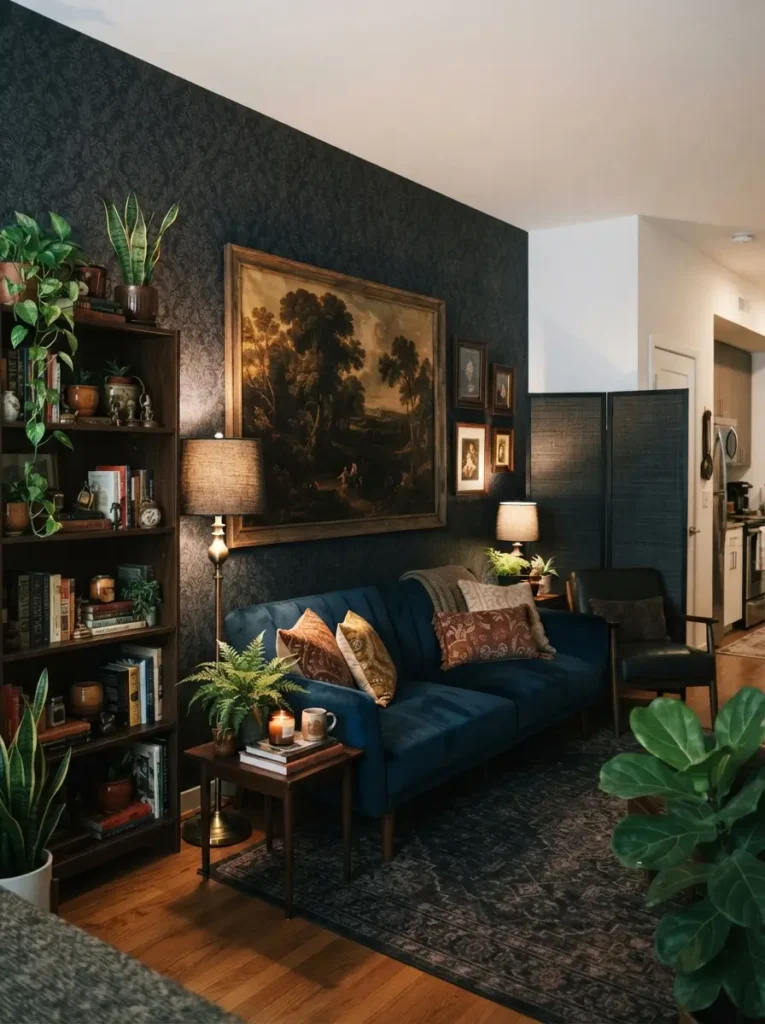
Dark walls can look beautiful in a moody living room, but many apartment renters cannot paint. Peel-and-stick wallpaper, removable wall panels, fabric wall hangings, large art, and tall bookshelves can create a similar effect. Choose vintage-inspired patterns such as subtle damask, small florals, dark grasscloth texture, muted stripes, or aged plaster designs. This works because the wall gains depth and pattern without a permanent change. It also helps separate the living area in a studio or open-plan apartment.
This idea is best for renters, studio dwellers, and anyone with plain white walls. Use removable wallpaper on one wall only, such as behind the sofa, behind a bookcase, or in a small TV nook. A full dark pattern on every wall can overwhelm a small apartment, especially if there is limited light. Before applying, test a small hidden area and check your lease rules. If wallpaper feels risky, hang a large vintage tapestry, framed fabric, or oversized art piece instead. You can also use a dark folding screen behind a chair to create a moody corner. Avoid cheap peel-and-stick paper with a shiny finish because it can look flat under warm lamps. Matte or textured finishes usually feel more believable.
Add Vintage Storage That Hides Modern Clutter
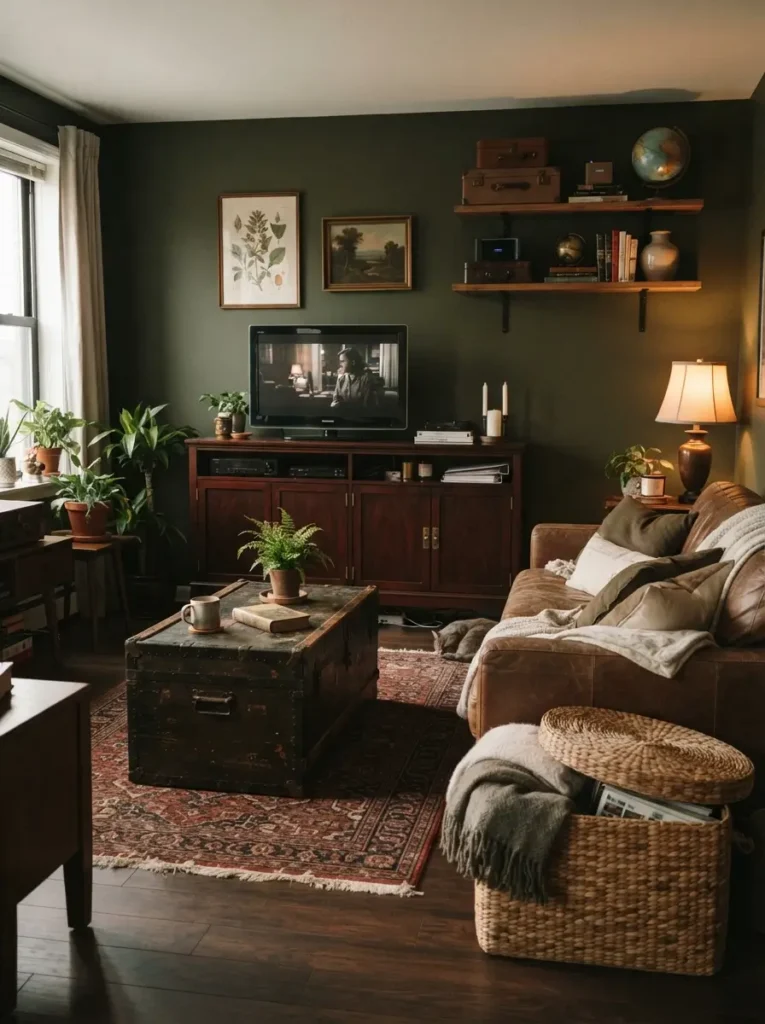
Modern clutter can quickly weaken a moody vintage room. Chargers, game controllers, mail, cleaning supplies, cables, and random packaging do not fit the style, but every apartment needs real storage. Use vintage-inspired storage pieces such as lidded baskets, dark wood cabinets, trunks, sideboards, storage ottomans, and decorative boxes. This works because storage keeps the room calm while adding character. A cabinet with doors can hide practical items better than open shelves.
This tip is best for small apartments, shared spaces, and people who work from home. A vintage sideboard under the TV can store electronics, documents, and extra candles. A trunk coffee table can hide blankets and seasonal decor. Woven baskets beside the sofa can hold throws or magazines. Decorative boxes on shelves can hide chargers and small tech items. If you cannot afford antique storage, look for basic secondhand pieces and update them with dark stain, new knobs, or furniture wax. Avoid buying storage only because it looks pretty. Measure what you need to hide first. If your biggest issue is cables, choose furniture with back openings or use cable boxes. A moody room feels better when the practical mess has somewhere to go.
Finish with Personal Vintage Details
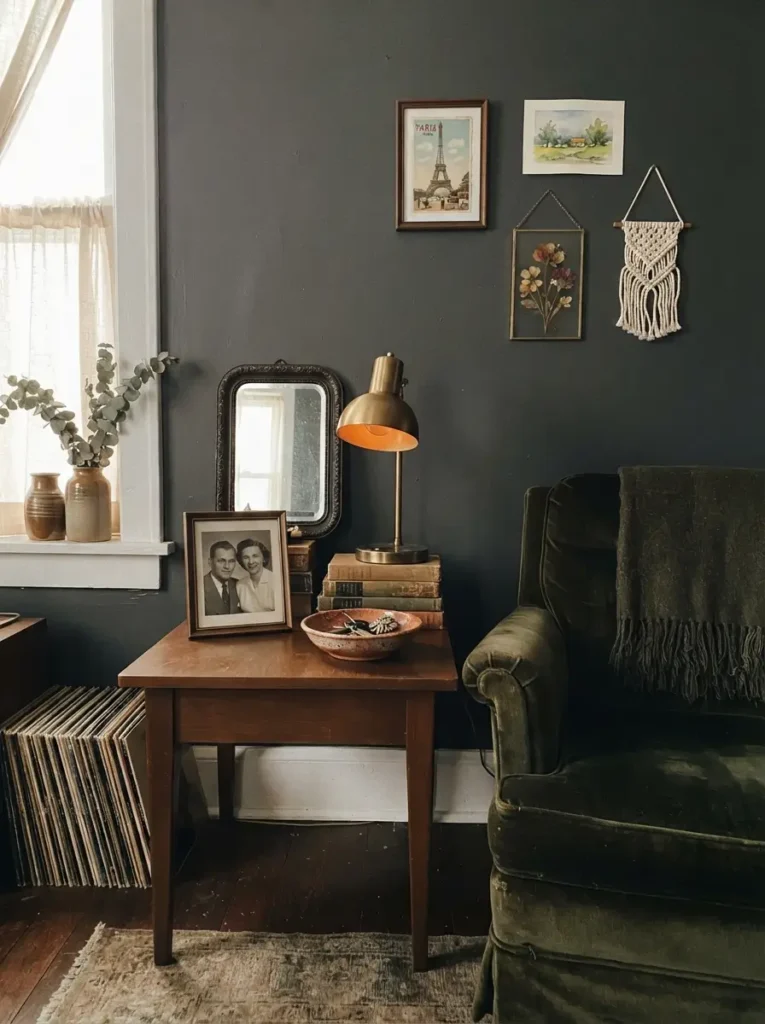
The final layer of a moody vintage living room should feel personal, not staged. Use items that show your taste, such as old family photos, travel finds, framed postcards, inherited dishes, thrifted pottery, records, worn books, handmade textiles, or a small collection displayed with care. This works because vintage style becomes more convincing when the room includes real objects with meaning. It also keeps the space from looking like a copied showroom.
This idea is best for anyone who wants a room that feels lived in. Choose fewer items and display them well. A single framed black-and-white photo on a side table can feel stronger than ten random items on a shelf. A small bowl from a market can hold keys. A stack of old books can raise a lamp to the right height. A vintage mirror can reflect light and make the room feel larger. In apartments, mirrors are especially useful when placed across from a window or lamp. Avoid filling every surface with collectibles. Moody vintage rooms need negative space so the details stand out. Keep editing as you go. If something does not add function, memory, texture, or color, it may not need to stay in the room.
Common Mistakes to Avoid
One common mistake is making the room too dark without adding enough warm lighting. Dark walls, dark sofas, dark rugs, and dark curtains can work together only when the room has several light sources and some contrast. If the living room feels heavy, add cream curtains, a warm lamp, a lighter pillow, a reflective brass tray, or art with pale areas. Another mistake is using only black and gray. Moody apartment living room ideas often look better with warm undertones, such as brown, olive, rust, burgundy, and antique gold, because these colors create comfort rather than a cold cave-like effect.
Another mistake is buying too much decor before fixing the layout. A small apartment living room needs clear walking paths, useful storage, and furniture that fits the scale of the space. If the sofa blocks the window, the coffee table is too large, or the TV stand is too deep, the room will feel cramped no matter how nice the decor is. Measure first, then decorate. Beginners also often mix too many vintage styles at once. Victorian frames, mid-century furniture, farmhouse baskets, industrial lighting, and glam gold can clash if there is no clear palette. You do not need everything to match, but you do need repetition. Repeat wood tones, metal finishes, fabric colors, or shapes so the room feels collected instead of random.
A third mistake is ignoring modern necessities. Most people have TVs, routers, speakers, chargers, laptops, and remotes in the living room. Instead of pretending these items do not exist, plan around them. Use closed storage, cable covers, dark baskets, and trays. A black TV can blend better on a dark wall or above a dark wood console. A router can sit inside a ventilated basket or behind books if it still works properly. Good decorating is not about hiding real life completely. It is about giving real life a better structure.
Budget-Friendly Tips for Moody Vintage Living Rooms
You do not need a large budget to create a moody vintage apartment living room. Start with secondhand pieces because vintage style often looks better when furniture has age. Look for solid wood side tables, framed art, brass lamps, baskets, trays, mirrors, and small cabinets at thrift stores, flea markets, online marketplaces, and estate sales. Focus on shape and material more than perfect condition. A scratched wood table can be improved with polish. A dated lamp can look better with a new shade. A cheap frame can become useful with a print or fabric inside. Spend more only on pieces you use every day, such as a sofa, rug pad, or comfortable chair.
Textiles are another affordable way to change the room. Pillow covers, throws, curtains, and rugs can shift the mood faster than small ornaments. Instead of buying many new decor pieces, choose two or three larger changes that affect the whole room. For example, a dark vintage-style rug, warm curtains, and two brass lamps will do more than a shelf full of tiny objects. If you are renting, use removable hooks, no-drill curtain brackets, peel-and-stick cord covers, and plug-in lighting. These items make the room feel finished without risking your deposit. Also shop your own home before buying anything. A stack of books, a ceramic bowl, an old scarf used as framed textile, or a family photo can become part of the room when styled with intention.
Moody Apartment Living Room Ideas Tips
When using moody apartment living room ideas in a small space, always start with the feeling you want and the function you need. A living room may need to support watching TV, reading, working, eating, hosting, or relaxing after work. The best design choices support those habits. If you watch TV often, keep the seating comfortable and reduce glare with curtains and side lighting. If you read, build a lamp-lit corner. If you host friends, use flexible seating like poufs, stools, and nesting tables. Moody decor should make the room easier to enjoy, not just more dramatic in photos.
Keep contrast in mind. A moody room needs dark elements, but it also needs lighter moments so the eye can move around. Use cream lampshades, pale art mats, warm white candles, linen curtains, or a beige throw to break up deep colors. Repeat your main colors at least three times in the room. For example, if you choose olive green, use it in the rug, one pillow, and one piece of art. If you choose brass, repeat it in a lamp, frame, and tray. This simple repetition makes the room feel designed. Finally, edit often. Small apartments show clutter quickly, and vintage decor can become crowded if every surface is filled. Leave some empty space on tables and shelves so the best pieces can stand out.
FAQ
How can I make my apartment living room moody without painting?
You can create a moody living room without painting by using dark textiles, warm lighting, vintage art, wood furniture, and removable decor. Start with a deep rug, charcoal or olive pillows, brass lamps with warm bulbs, and curtains in a rich fabric. Add a dark wood coffee table or media console if you have space. For walls, use framed art, removable wallpaper on one accent area, or a large textile hanging. These changes are rental-friendly and can move with you later.
What colors work best for a moody vintage living room?
The best colors include charcoal, espresso brown, walnut, olive green, burgundy, rust, deep navy, tobacco leather, muted plum, cream, and antique brass. These shades work well because they feel deep without depending only on black. In a small apartment, balance darker colors with warm neutrals like ivory, beige, mushroom, or linen. This keeps the room comfortable and stops it from feeling too closed in.
How do I keep a moody living room from feeling too small?
Use lighting, contrast, and smart furniture scale. Choose furniture that fits the room, keep walking paths open, and avoid oversized pieces with bulky arms. Hang curtains high to make the walls feel taller. Use mirrors across from windows or lamps to reflect light. Add warm bulbs in several places instead of relying on one ceiling light. A moody room can still feel open when the layout is clear and the colors are balanced.
Is vintage decor good for renters?
Vintage decor is very good for renters because many changes do not need renovation. You can use secondhand furniture, framed prints, plug-in lamps, removable wallpaper, no-drill curtain rods, rugs, baskets, and decorative storage. These items add character without permanent construction. Vintage pieces also help plain rental rooms feel less basic, especially when the apartment has white walls, standard blinds, or simple flooring.
What furniture should I buy first for this style?
Start with the pieces that affect the room most: sofa, rug, lighting, and storage. A comfortable sofa in leather, velvet, charcoal fabric, or warm neutral upholstery gives the room a strong base. A vintage-style rug adds color and pattern. Lamps create the mood in the evening. Storage keeps modern clutter hidden. After those pieces are in place, add smaller vintage details like frames, books, trays, and pottery.
Can I create a moody vintage look on a small budget?
Yes, this style works well on a small budget because secondhand pieces often look better than new mass-produced decor. Look for wood tables, brass lamps, old frames, mirrors, baskets, and books at thrift stores or online marketplaces. Use affordable pillow covers, curtains, and printed vintage-style rugs to change the room quickly. Spend carefully on comfort and lighting, then build the rest slowly.
Conclusion
Moody apartment living room ideas with vintage style are not about making a room dark or filling it with old things. They are about creating warmth, depth, comfort, and character in a space that still works for daily life. A small apartment can feel rich and personal when you use deep colors carefully, choose warm lighting, add practical vintage furniture, control clutter, and repeat materials like wood, brass, linen, leather, and velvet. The best rooms feel layered over time, even when you create them on a budget.
Start with one or two changes that make the biggest difference. Add a warm lamp, bring in a vintage-style rug, style your shelves, or replace bright modern accents with deeper textures. If you rent, focus on movable pieces that do not damage walls or floors. If your budget is tight, shop secondhand and improve what you already own. With the right balance of color, light, texture, and layout, your apartment living room can feel moody, vintage, comfortable, and practical without becoming cluttered or hard to live in.