
Friendsgiving has become a fun way for families and friends to celebrate gratitude, friendship, and seasonal traditions together. Children can enjoy the celebration just as much as adults when the space is planned around their needs. A thoughtful setup does not require expensive decorations or a large dining area. Small details like handmade crafts, comfortable seating, playful activities, and warm lighting can create a welcoming environment where children feel included.
Planning a Kids Friendsgiving Party means balancing decoration with entertainment. Young guests usually enjoy spaces where they can move, create, and participate. Instead of filling every corner with decorations, focus on practical areas such as a craft table, snack station, activity zone, and child-friendly dining setup. These areas help keep the celebration organized while allowing kids to enjoy the holiday naturally.
How do you make a Friendsgiving party fun for kids?
Children enjoy Friendsgiving celebrations most when they have activities that match their age and energy level. Combine simple crafts, interactive games, comfortable seating, and seasonal decorations to create a space that feels special without becoming difficult to manage.
Create a Kid-Friendly Thanksgiving Craft Table
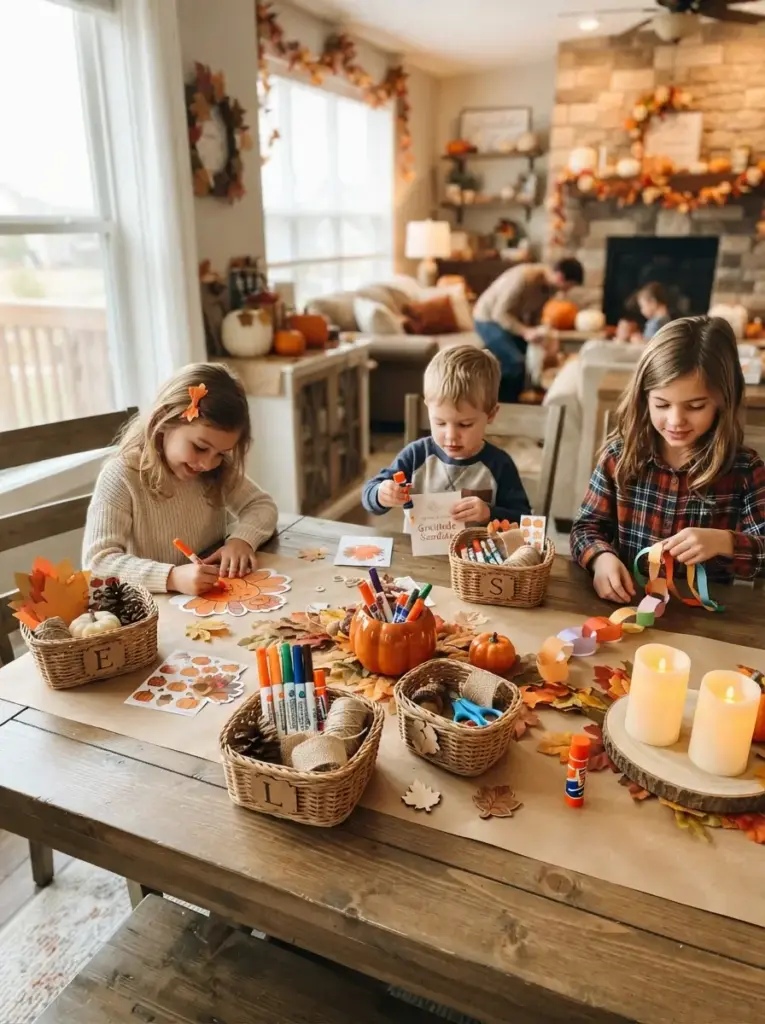
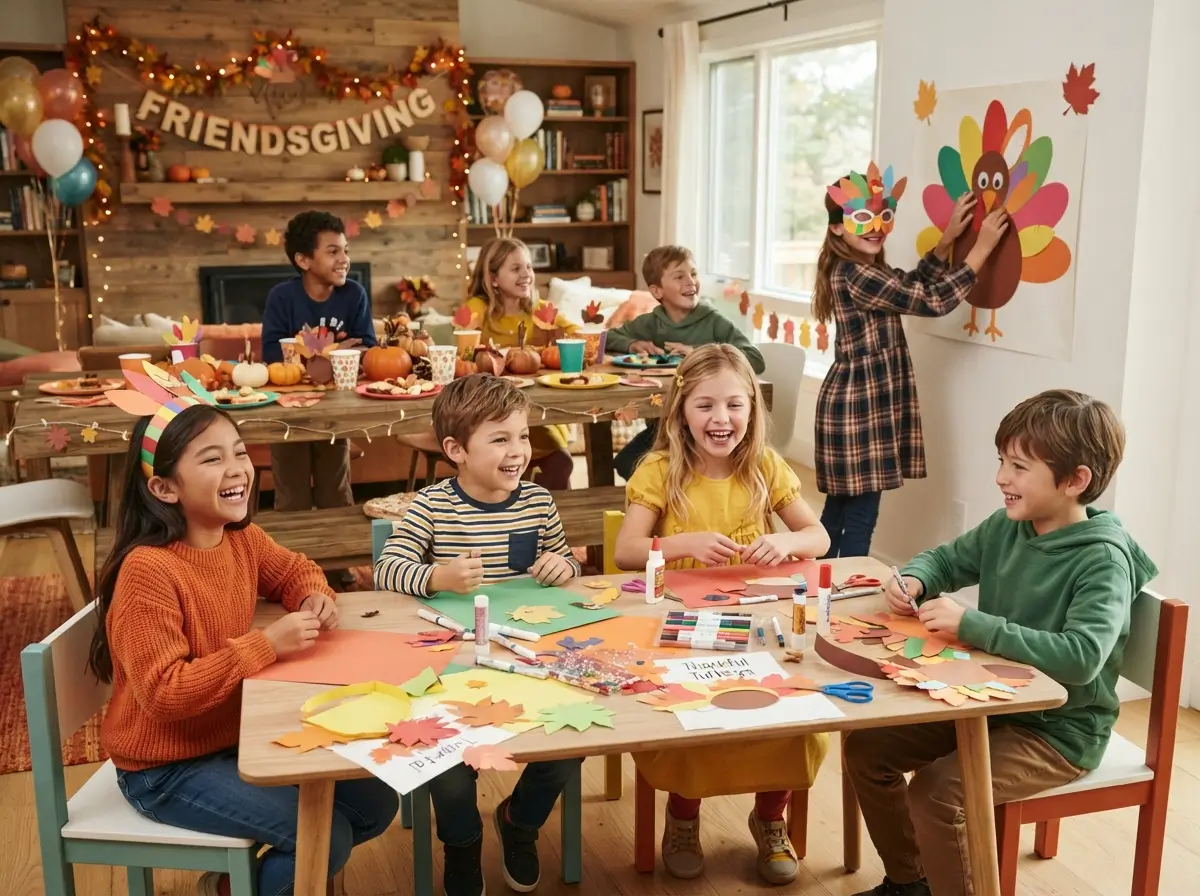
Setting up a dedicated craft table gives children their own creative space during the celebration. A small folding table, coffee table, or cleared section of a dining table can work well. Cover the surface with a washable cloth or kraft paper runner to protect furniture while giving kids room to draw and build.
Use natural fall colors such as burnt orange, soft brown, mustard yellow, and muted green for supplies. Paper leaves, washable markers, stickers, pinecones, ribbon pieces, and small wooden shapes are affordable options. Battery-powered LED candles with warm white light around 2700K can add a cozy feeling without creating safety concerns near children.
Craft stations work especially well for younger children who need structured activities. Preschool and early elementary kids can create gratitude cards, paper turkeys, or friendship bracelets while older children can handle more detailed projects like painted wooden signs.
One helpful approach is preparing small supply baskets for each child instead of placing everything in one pile. Individual baskets reduce mess and prevent arguments over materials. Families living in apartments or rental homes can easily remove the setup afterward because most supplies do not require permanent changes.
Design a Simple Kids Thanksgiving Table Setting
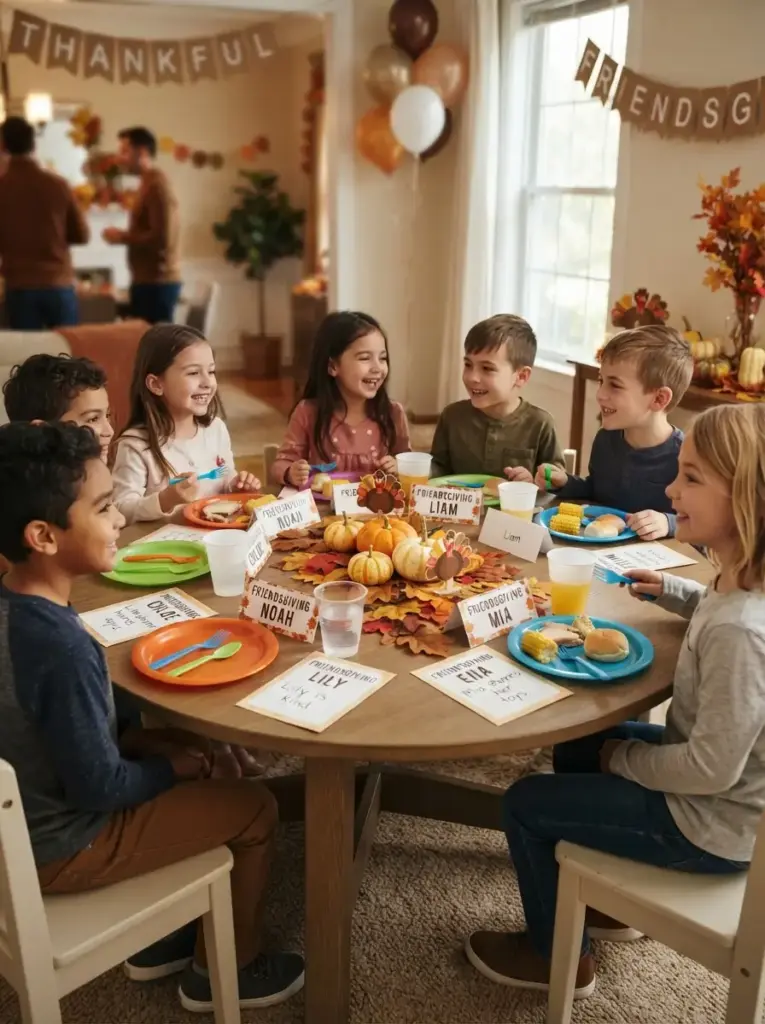
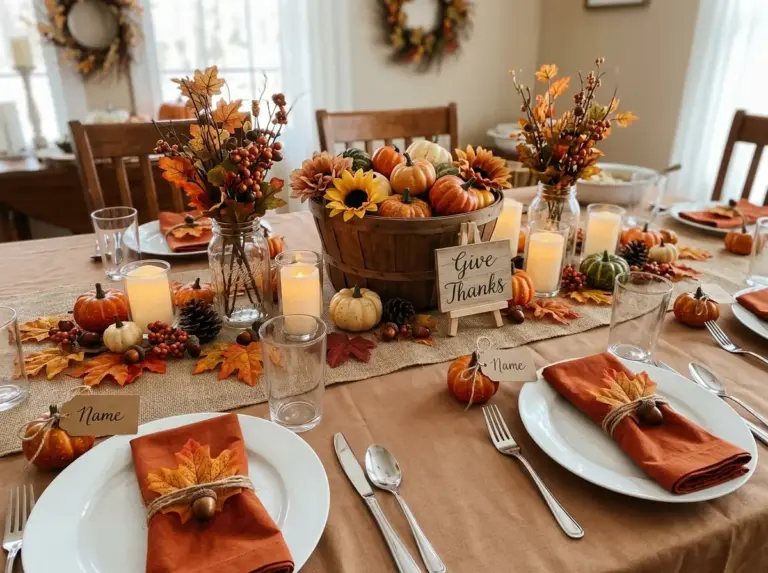
A children’s table does not need expensive dishes or formal decorations. The goal is creating a comfortable place where kids can eat, talk, and participate. Use smaller plates, lightweight cups, and easy-to-clean materials that match the holiday theme.
A round kids table works well because everyone can see each other. Rectangular tables are also practical when hosting more children because they fit against walls and save floor space. Keep the center area open so children have enough room for food and activities.
Choose decorations that stay low on the table. Small pumpkins, fabric leaves, mini wooden signs, and paper name cards create seasonal charm without blocking conversations. Avoid tall flowers or fragile decorations because they can easily fall during meals.
A Kids Friendsgiving Party becomes easier to manage when children have a table designed specifically for them. Add personalized place cards where children write one thing they appreciate about a friend. This simple activity encourages conversation and creates a meaningful holiday moment.
Add a Gratitude Leaf Wall Activity
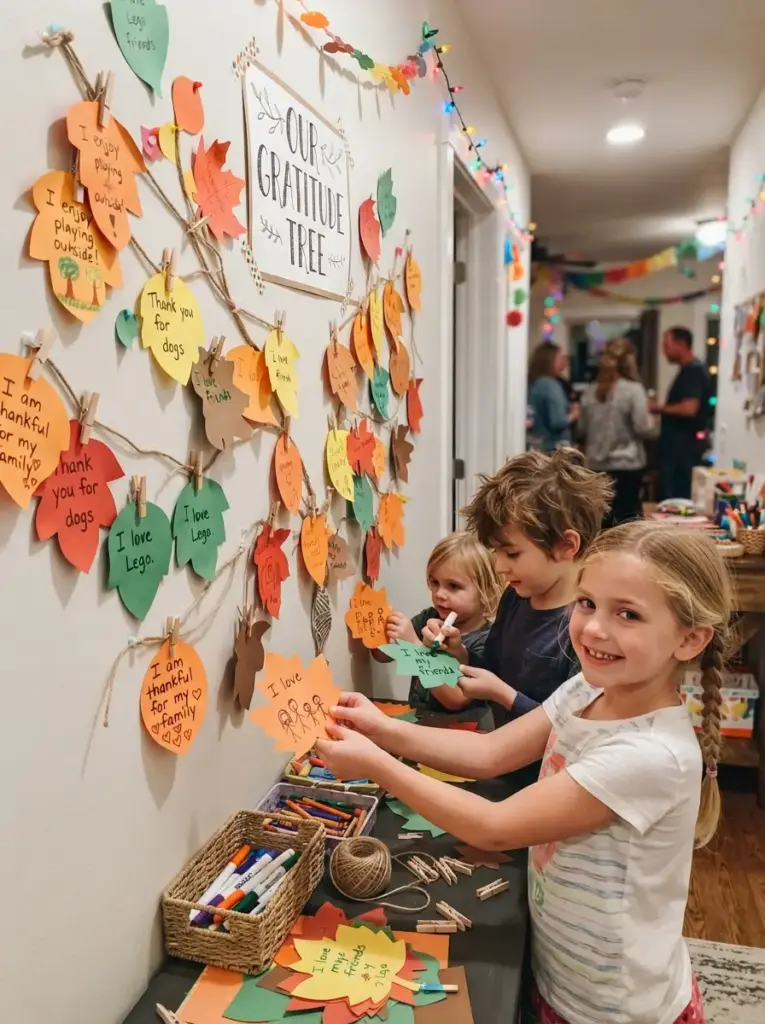
A gratitude wall combines decoration and participation. Instead of purchasing large wall art, create a display where children add their own messages. Use paper leaves cut from construction paper and attach them to a board, string, or removable wall hooks.
Choose a visible but safe location, such as a hallway wall, empty corner, or behind the craft table. Removable adhesive strips work well for renters because they allow easy decoration without damaging paint.
Children can write messages like “I am thankful for my family,” “I love my friends,” or “I enjoy playing outside.” Younger children can draw pictures instead of writing words. The finished display becomes part of the party decor and shows each child’s personality.
This idea is best for mixed-age groups because every child can participate at their own skill level. It also keeps children engaged while adults prepare food or organize other activities.
Create a DIY Friendship Bracelet Station
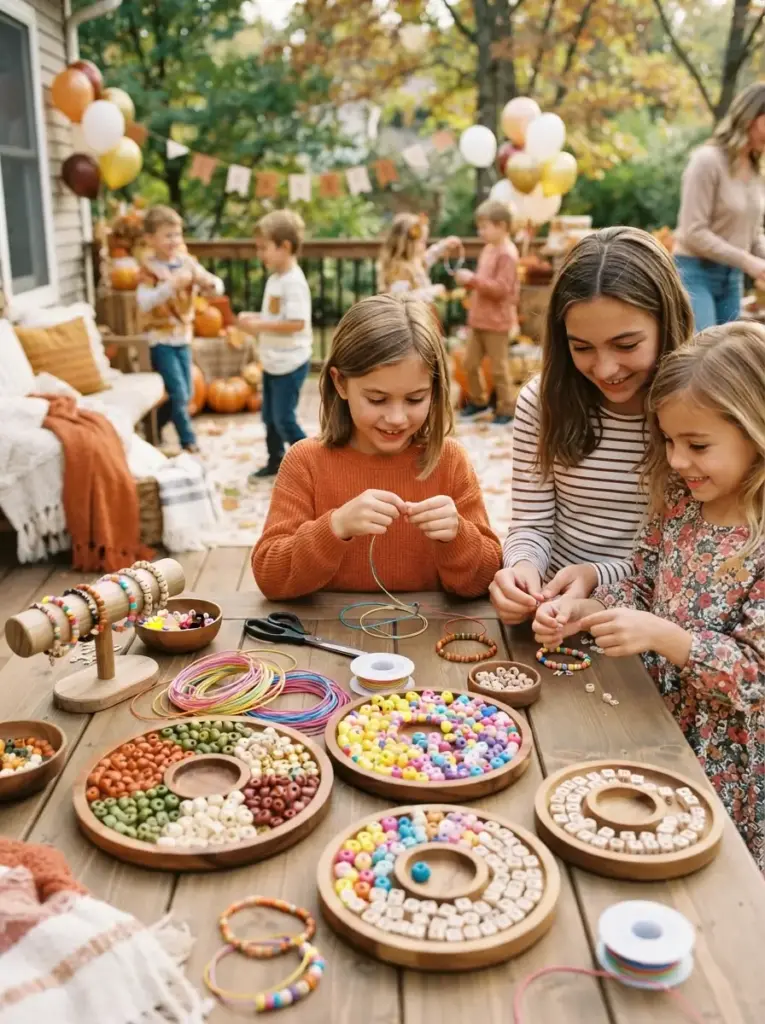
Friendship bracelets are simple crafts that also work as party favors. Children enjoy making something they can take home, and the activity requires very little space. A small tray with colorful beads, elastic cords, and letter charms can create an attractive station.
Select colors connected to fall, such as orange, cream, olive green, and dark red. Adding a few bright colors helps younger children create playful designs. Keep beads separated into small containers so children can easily choose materials.
Safety matters when using small craft items. Younger children should have adult supervision, especially when working with tiny beads. Older kids can help younger guests, which encourages teamwork.
Bracelet stations are useful for families who want low-cost activities. Supplies can often be purchased in bulk and reused for future gatherings, classroom projects, or birthday parties. The activity also creates a calm moment between energetic games.
Set Up a Thanksgiving Scavenger Hunt
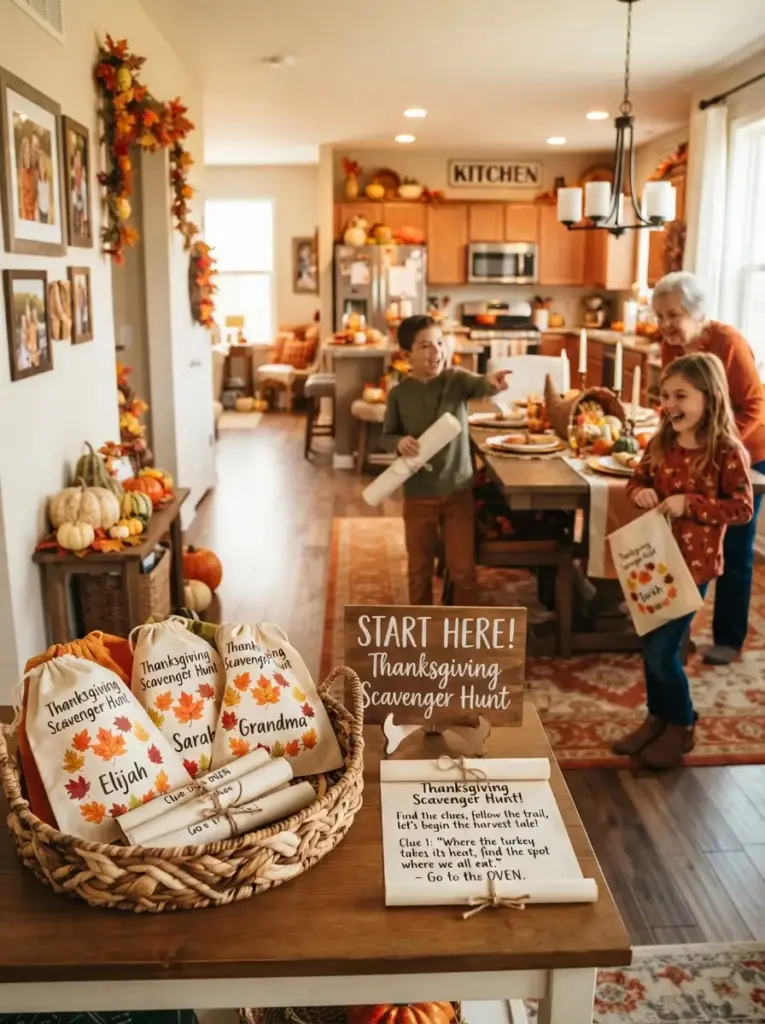
A seasonal scavenger hunt gives children a reason to explore the space while staying involved. Create simple clues connected to fall items, colors, or gratitude themes. Children can search for paper leaves, hidden pumpkins, turkey illustrations, or small surprise notes.
Indoor scavenger hunts work well in smaller homes because the activity can be controlled within specific rooms. Mark areas where children can search and avoid places with fragile decorations or personal belongings.
Outdoor spaces can also be used when weather allows. A backyard, patio, or community area provides extra movement. Add boundaries so children know where they can explore safely.
The best scavenger hunts include teamwork instead of competition. Pairing children together helps shy guests participate and prevents younger children from feeling left behind. Small rewards like stickers, pencils, or homemade certificates are enough to make the activity exciting.
Make a Cozy Kids Movie and Story Corner
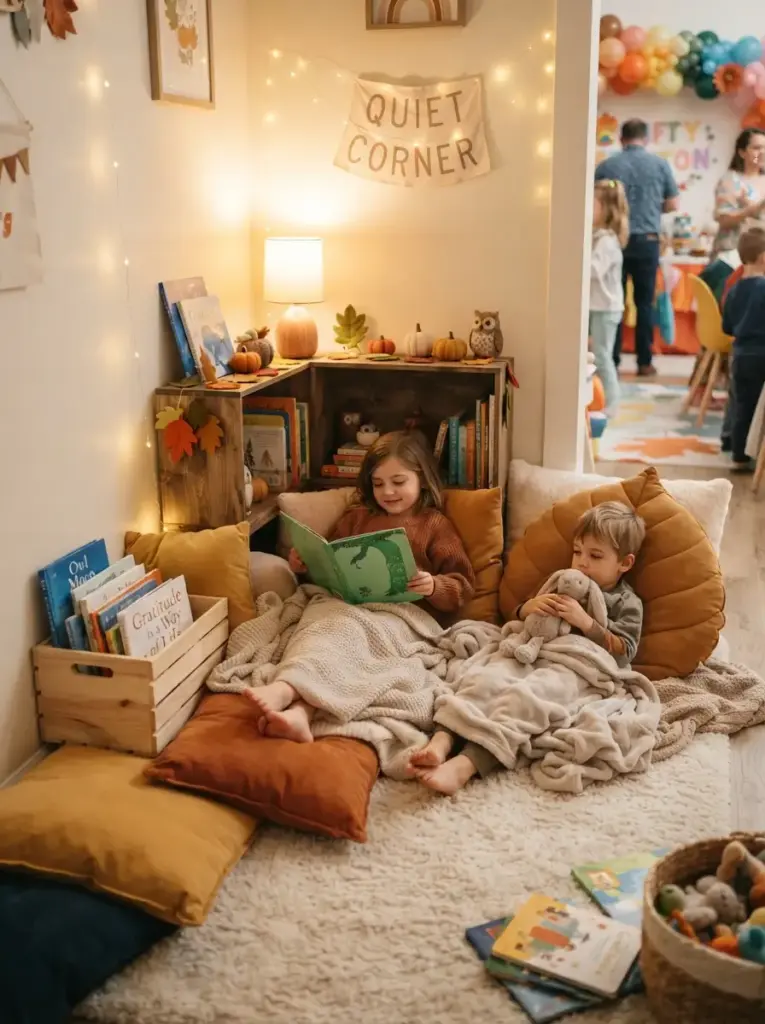
A quiet corner helps balance active games and crafts during a long celebration. Children often need a comfortable place where they can relax, especially younger guests who become tired after several activities. A small reading or movie area can be created using floor cushions, blankets, pillows, and a soft rug.
Choose a corner away from the main food area so children can enjoy a calmer environment. If the room is small, use furniture that can serve multiple purposes. For example, dining chairs pushed together with blankets can create a simple seating area, while floor pillows can be stored away after the event.
Warm lighting makes this area more comfortable. Use battery-operated string lights or table lamps with warm white bulbs around 2700K instead of bright overhead lighting. Harsh ceiling lights can make a small space feel less relaxing, while softer lighting creates a peaceful atmosphere.
Add seasonal details like leaf-shaped pillows, pumpkin-colored blankets, or a basket filled with children’s books about gratitude and friendship. Avoid using fragile decorations in this area because children will naturally move around and touch items.
This idea is especially helpful for parents hosting different age groups. Toddlers can rest, older children can read, and everyone has a place to recharge between activities.
Create a DIY Pumpkin Decorating Station
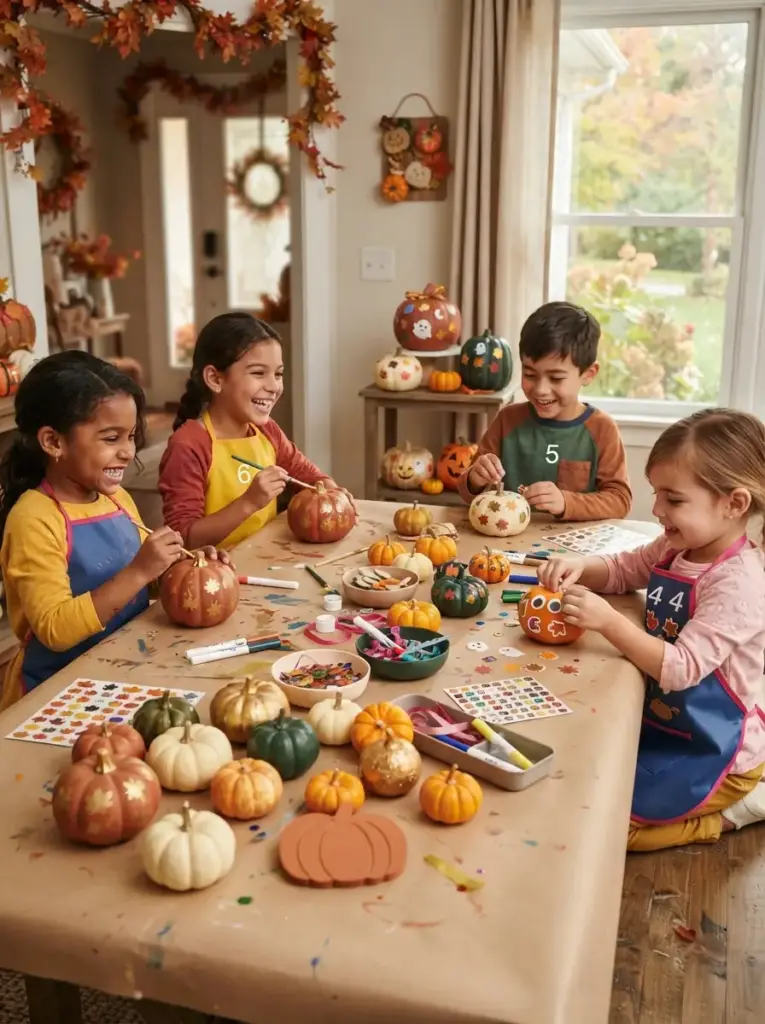
Pumpkin decorating gives children a creative alternative to traditional carving. It keeps the holiday theme strong while avoiding knives, messy pumpkin interiors, and safety concerns. Small foam pumpkins, mini pumpkins, or wooden pumpkin shapes are excellent choices.
Provide washable paint, stickers, markers, ribbons, and adhesive decorations. Fall colors like terracotta, cream, forest green, and gold create a coordinated look, but children should still have freedom to design their own pumpkins.
Set the station near an easy-to-clean surface. A kitchen counter, outdoor table, or craft table covered with paper works well. Families living in rental homes can use removable table covers to protect surfaces from paint stains.
This activity works best for children ages four and older because they can handle supplies more independently. Younger kids can decorate using large stickers or pre-cut shapes.
Finished pumpkins can become part of the party decorations. Place them around the kids’ table, entryway, or dessert area. This approach allows children to contribute to the decor instead of simply looking at decorations created by adults.
Plan a Kids Friendsgiving Party Food Decorating Activity
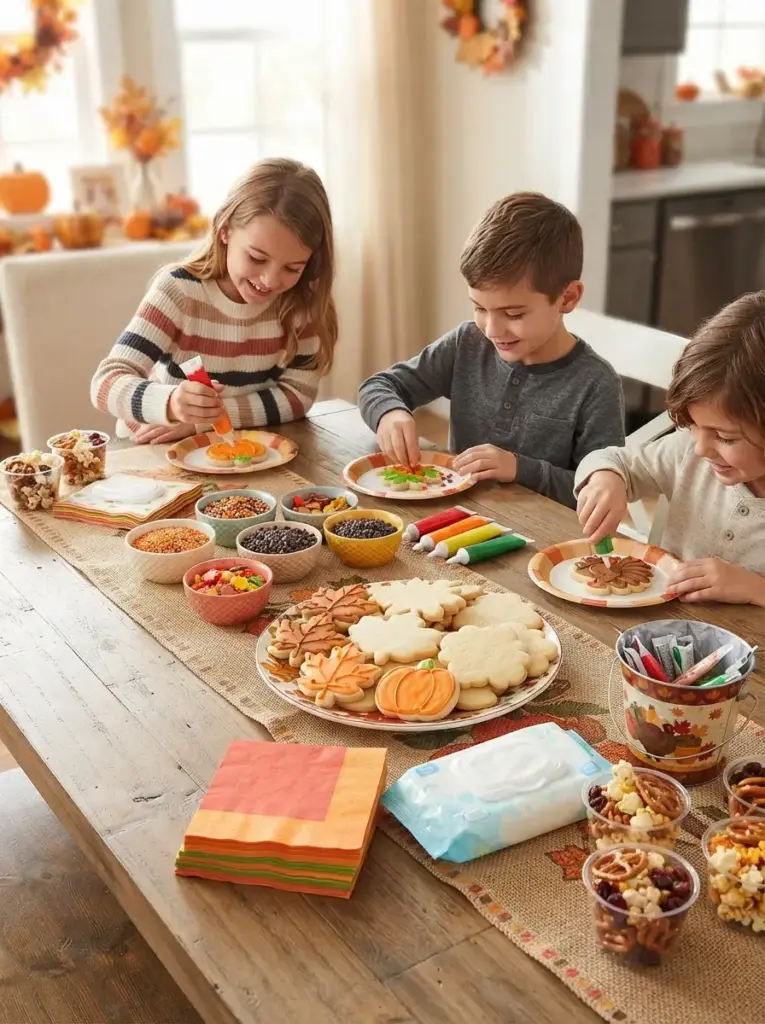
Food activities are often more memorable for children because they involve creativity and tasting. Instead of serving only prepared snacks, create a small decorating station where kids can customize simple treats.
Cookies shaped like leaves, pumpkins, or turkeys are easy options. Provide icing tubes, sprinkles, chocolate chips, and edible decorations. Another option is creating individual snack cups with popcorn, pretzels, dried fruit, or crackers.
Use a practical layout by placing food items in small bowls around the table. Keep napkins, wipes, and trash containers nearby to reduce mess. A washable runner or paper covering makes cleanup faster.
This activity works well for children who may not enjoy traditional crafts. Some kids prefer hands-on food projects because they feel more interactive.
For families trying to save money, homemade cookies or simple snacks are enough. The focus should be on the experience rather than expensive ingredients. Children usually remember creating something together more than the cost of the supplies.
Add a Thanksgiving Bingo Game Area
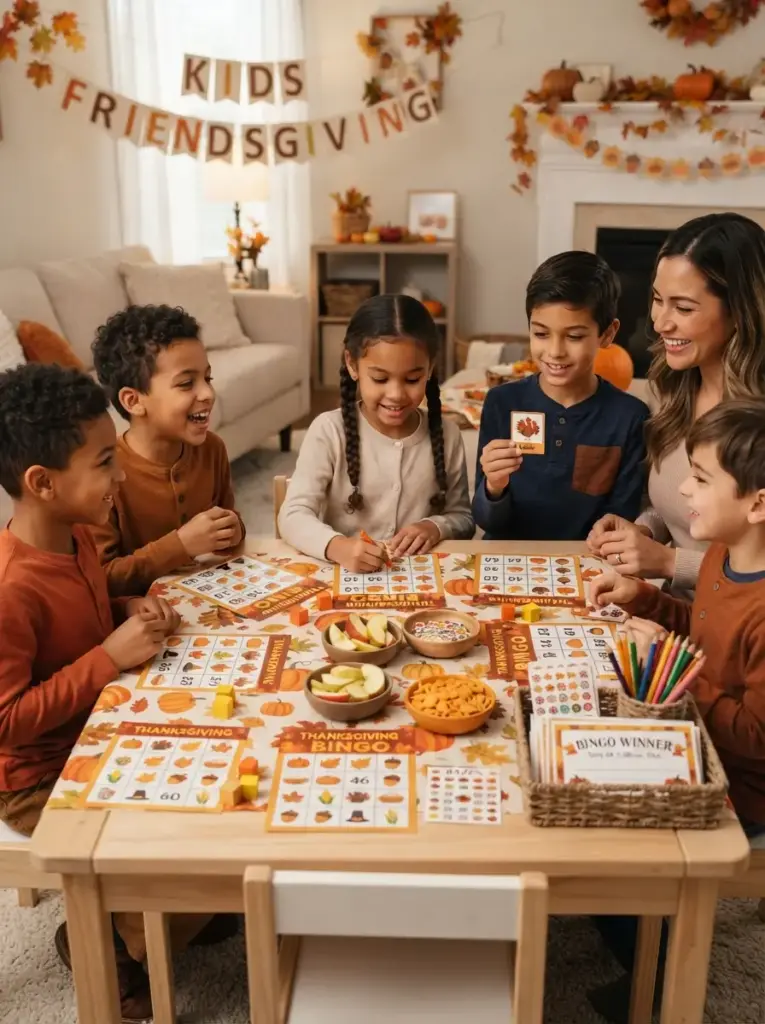
Bingo is an easy game that includes children with different personalities and abilities. Create printable bingo cards using simple Thanksgiving images or words. Pictures of pumpkins, leaves, pies, turkeys, and acorns work well for younger children.
Prepare a small game table with enough space for cards, markers, and snacks. A coffee table or children’s table can work perfectly. Keep the setup away from loud activity areas so children can concentrate.
Use small prizes that do not create pressure between children. Stickers, colorful pencils, bookmarks, or handmade certificates are affordable choices.
Bingo works especially well for mixed-age groups because adults can adjust the rules. Younger children can match pictures, while older kids can play using written words.
A Kids Friendsgiving Party benefits from activities like bingo because it creates organized fun without requiring complicated preparation. It also gives children a chance to practice patience, listening, and friendly competition.
Build a Nature-Inspired Fall Decoration Craft
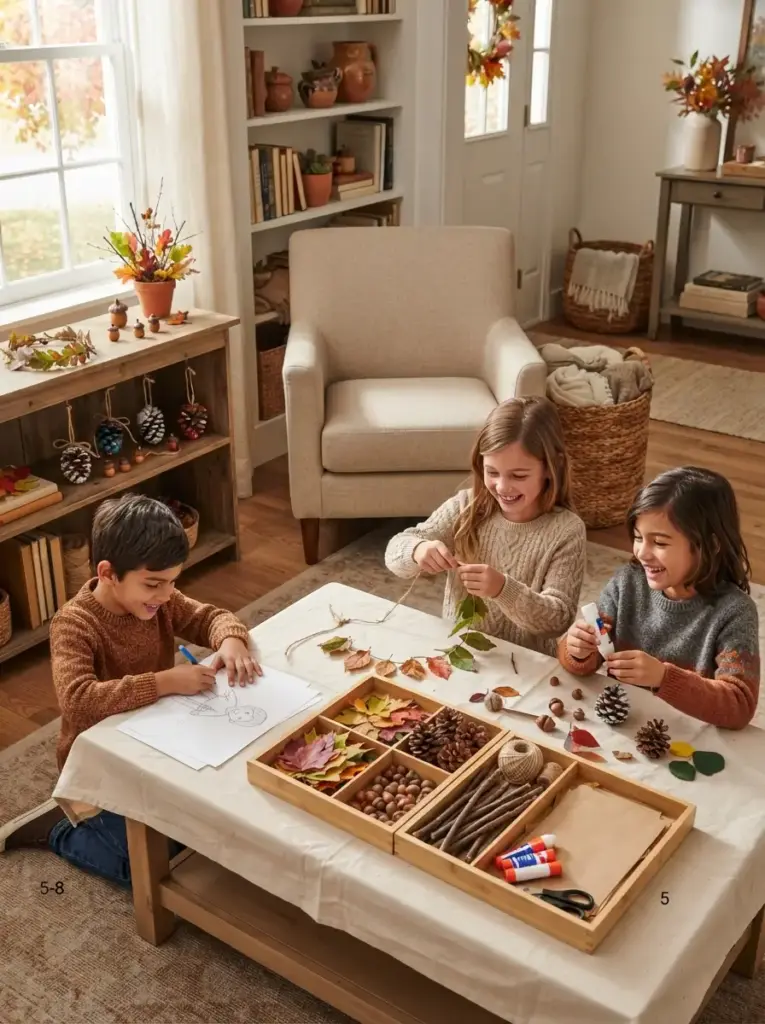
Nature crafts bring seasonal decoration into the celebration while keeping costs low. Collect safe natural materials such as leaves, pinecones, branches, and acorns from your yard or purchase inexpensive supplies from a craft store.
Children can create leaf crowns, pinecone decorations, table ornaments, or small fall arrangements. Use simple materials like glue, twine, paper, and wooden sticks.
When decorating a small home, avoid filling every surface with crafts. Choose one display area where children can place their finished projects. A bookshelf, side table, or entry console can become a rotating seasonal display.
This idea works well for families who prefer natural decor. Neutral furniture pieces such as wooden tables, beige chairs, and woven baskets pair nicely with handmade fall decorations.
Parents should prepare materials before guests arrive. Pre-cleaning leaves and organizing supplies into containers keeps the activity smooth. Children enjoy the creative process more when they are not waiting for adults to find materials.
Create a Friendship Photo Booth Corner
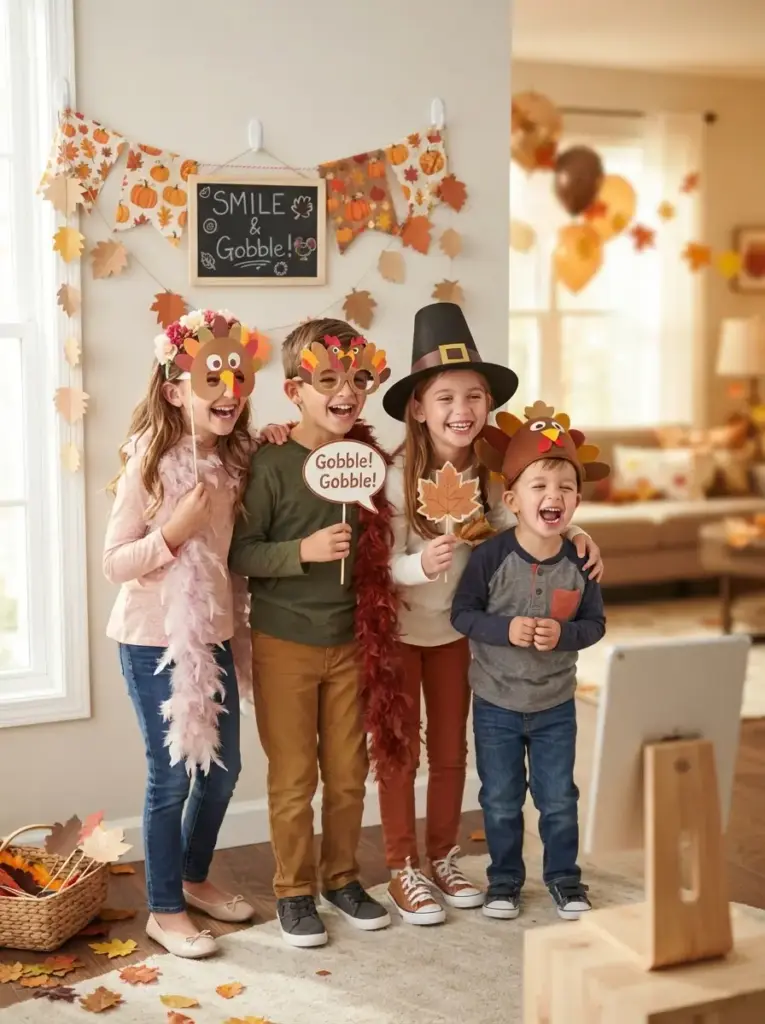
A simple photo booth gives children a fun memory from the celebration. It does not require professional equipment or expensive props. A decorated wall, empty corner, or plain curtain can become the background.
Use removable hooks or lightweight stands if you are decorating a rental home. Paper leaves, fabric banners, and handmade signs can create a festive background without permanent changes.
Add simple props such as paper turkey masks, fall hats, wooden signs, or funny glasses. Avoid overcrowding the area because children need enough space to move.
Lighting affects photo quality. Place the photo booth near natural light during daytime events. For evening parties, use a soft lamp or warm LED light instead of strong overhead lighting.
This activity is best for older children who enjoy taking pictures with friends. Younger kids can also participate with adult help.
The photo booth becomes part of the decoration because children’s energy and creativity become the main focus rather than expensive decor pieces.
Common Mistakes to Avoid During a Kids Friendsgiving Party
Using Too Many Decorations
Overdecorating can make the space uncomfortable for children. Large centerpieces, delicate objects, and crowded tables reduce the area available for movement.
Choose decorations that serve a purpose. A craft display, activity table, or handmade centerpiece provides both decoration and entertainment.
Creating Activities Without Considering Age Groups
Not every activity works for every child. Small beads, complicated crafts, or long games may frustrate younger guests.
Mix different activity levels so everyone has something enjoyable. Provide simple options for younger children and more detailed projects for older kids.
Ignoring the Room Layout
Poor furniture placement can create crowded areas and safety problems. Before decorating, consider where children will eat, play, create, and relax.
Move unnecessary furniture away from activity zones. Keep walking paths clear and place craft supplies where adults can supervise easily.
Choosing Decorations That Are Difficult to Clean
Glitter, permanent paint, and fragile decorations can create unnecessary stress. Select washable materials whenever possible.
Families renting homes should especially choose removable and easy-clean options. Paper decorations, fabric runners, and battery lights are practical choices.
Forgetting Adult Supervision Areas
Children need independence, but adults should still be able to monitor activities. Avoid placing craft stations or games in hidden corners.
An open layout allows parents to enjoy conversations while keeping an eye on children.
Budget-Friendly Tips for a Kids Friendsgiving Party
Creating a memorable celebration does not require spending a large amount of money. Many effective decorations can come from items already available at home. Before shopping, look around for baskets, jars, blankets, leftover craft supplies, and simple table items that can be reused.
Paper decorations are one of the easiest ways to save money. Children can create paper leaves, gratitude cards, banners, and table signs themselves. These handmade pieces often feel more meaningful than expensive store-bought decorations because every child contributes something personal.
Use natural materials whenever possible. Pinecones, branches, and fallen leaves can become beautiful seasonal decorations when cleaned properly. Place them in glass jars, wooden bowls, or simple containers already available in your home.
Food presentation can also stay affordable. Instead of buying themed plates and cups, use plain white dishes and add small details like paper napkin rings or handwritten name cards. Neutral tableware works well because it can be reused for many occasions.
Thrift stores can be helpful for finding affordable seasonal items. Look for wooden trays, baskets, candle holders, and fabric pieces that match fall colors. Pieces in brown, cream, beige, and orange tones usually blend easily with different home styles.
For families hosting a Kids Friendsgiving Party in a small space, focus spending on activities rather than decorations. Children usually enjoy games, crafts, and shared experiences more than expensive centerpieces.
Practical Kids Friendsgiving Party Tips
Prepare Activities Before Guests Arrive
Preparation reduces stress during the celebration. Set up craft supplies, arrange game materials, and organize food stations before children arrive.
Place supplies in labeled containers so children can understand where everything belongs. For example, create separate baskets for markers, stickers, beads, and paper crafts.
Preparation also helps adults participate in the celebration instead of spending the entire time organizing activities. A ready setup allows parents and hosts to enjoy conversations while children stay engaged.
Create Activity Zones
Dividing the room into different areas helps children understand where each activity happens. Even a small home can have simple zones.
A corner with pillows can become a quiet area. A dining table can become a craft station. A kitchen counter can hold snacks and decorating activities.
Use furniture placement carefully. Avoid placing all activities in one location because children may become crowded and distracted.
Small-space homes can benefit from flexible furniture. Folding tables, storage ottomans, and lightweight chairs can be moved easily before and after the event.
Keep Decorations Child-Friendly
Children naturally interact with their surroundings. They touch decorations, move objects, and explore the space.
Choose safe materials like fabric, paper, wood, and washable items. Avoid sharp objects, fragile glass decorations, and anything with small pieces near toddlers.
Soft textures like cotton runners, woven baskets, and fabric napkins make the environment comfortable while being practical.
Include Children in Decorating
Children enjoy celebrations more when they feel involved. Allow them to create table signs, decorate pumpkins, or arrange handmade crafts.
Giving children small responsibilities builds confidence and creates a stronger connection to the event.
For example, one child can place name cards while another arranges paper leaves on the table. These simple tasks make the celebration feel shared.
Choose a Comfortable Color Scheme
A coordinated color palette makes decorating easier. Fall colors do not need to be limited to traditional orange and brown.
Soft combinations like cream with sage green, beige with terracotta, or mustard with warm wood tones create a welcoming environment.
Furniture also affects the overall feeling of the space. Wooden tables, neutral chairs, and natural fabrics work well with seasonal decorations because they provide a calm background.
Avoid using too many strong colors because busy spaces can feel overwhelming, especially for children.
FAQ About Kids Friendsgiving Party Ideas
What activities are good for a Kids Friendsgiving Party?
Good activities include crafts, scavenger hunts, bingo, pumpkin decorating, bracelet making, and gratitude games. Choose activities based on the children’s ages and available space.
How can I decorate for a Friendsgiving party on a budget?
Use handmade decorations, natural materials, reusable table items, and simple craft projects. Children can help create decorations, which saves money and makes the celebration more personal.
How do I set up a Friendsgiving party in a small home?
Use flexible furniture, create separate activity zones, and avoid oversized decorations. A small table, floor cushions, and organized activity stations can work well in apartments or compact rooms.
What colors work best for a kids fall party?
Warm colors like orange, cream, brown, sage green, and mustard yellow create a seasonal feeling. Adding soft neutral tones helps the space feel balanced.
Should children have their own table?
A separate children’s table can make meals easier and give kids their own space. However, mixed seating can also work if the group is small and children are comfortable with adults.
How long should a Kids Friendsgiving Party last?
Most children’s celebrations work well between two and three hours. This gives enough time for activities, food, crafts, and relaxed play without causing tiredness.
Conclusion
A successful Kids Friendsgiving Party focuses on connection, creativity, and comfort rather than expensive decorations. Children remember the activities they enjoy, the crafts they create, and the moments they share with friends.
Simple ideas like gratitude walls, craft tables, friendship bracelets, pumpkin decorating, and seasonal games can transform any home into a welcoming celebration space. Thoughtful planning also helps adults manage the event without feeling overwhelmed.
Small homes, rental spaces, and limited budgets can still create meaningful gatherings by choosing practical decorations, flexible furniture arrangements, and activities that encourage participation.
The best celebrations allow children to become part of the experience. When kids help create decorations, play together, and share gratitude, the holiday becomes more personal and memorable for everyone involved.