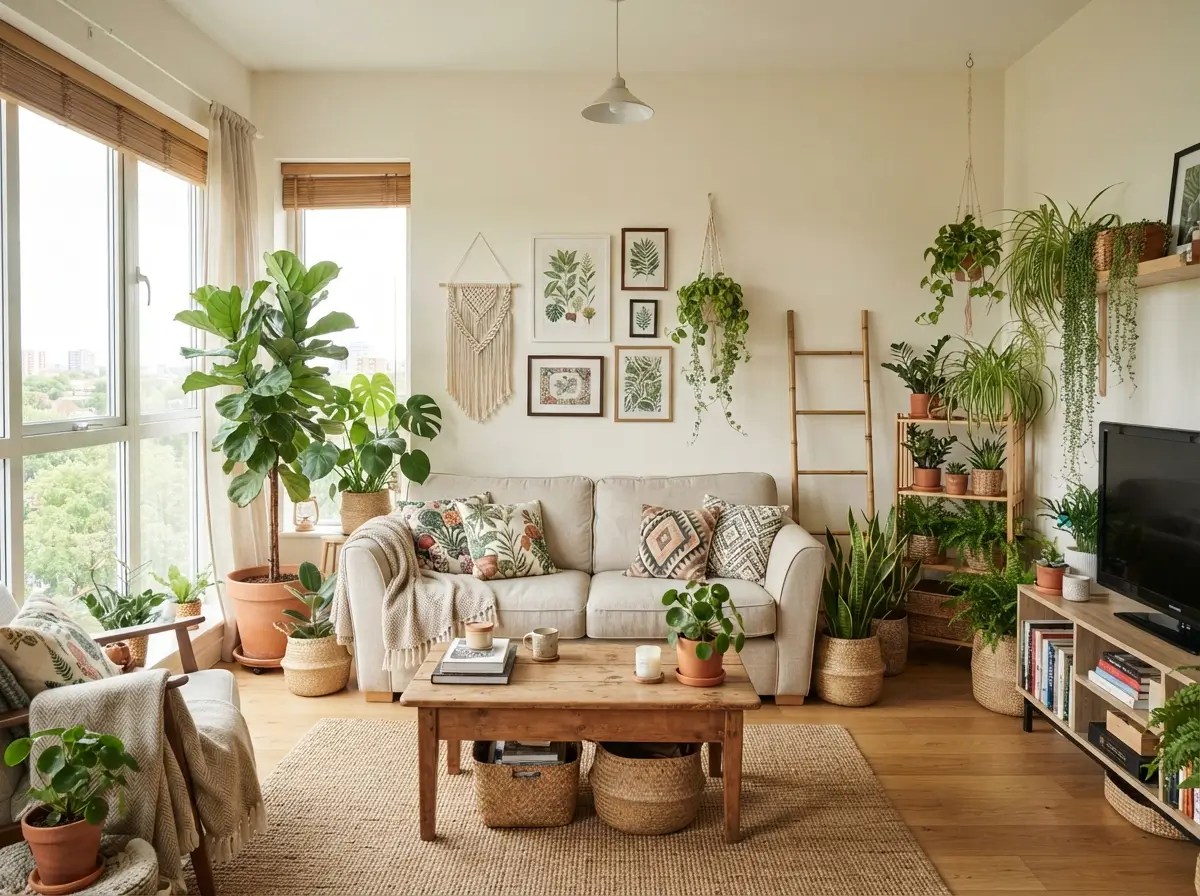

An apartment living room with plants can feel fresh, calm, and more personal without needing a full makeover. Plants bring color, shape, height, and softness into a room that may otherwise feel plain or boxy.
This is especially helpful in apartments, where you may have white walls, rental flooring, limited sunlight, and not much room for large furniture. The right plant styling can make a small living room feel warmer and more finished.
You do not need a big budget or advanced plant knowledge to start. You only need to understand your room’s light, your available floor space, and the amount of care you can realistically give. A few well-placed plants often look better than too many crowded pots.
In this guide, you will find practical apartment living room with plants ideas that work for small spaces, renters, beginners, and home decor lovers who want a fresh but easy look.
How can you decorate an apartment living room with plants?
The easiest way to decorate an apartment living room with plants is to use a mix of floor plants, tabletop plants, hanging plants, and shelf plants based on your room’s natural light. Place tall plants in empty corners, small plants on coffee tables or shelves, and trailing plants near windows or bookcases.
Choose low-maintenance plants if you are a beginner. Snake plants, pothos, ZZ plants, peace lilies, spider plants, and rubber plants are good options for many apartment living rooms. Use simple pots that match your color scheme, and avoid overcrowding the space.
The goal is not to turn every corner green. The goal is to use plants where they improve balance, soften hard edges, and make the room feel more lived-in.
Create a Green Corner Beside the Sofa
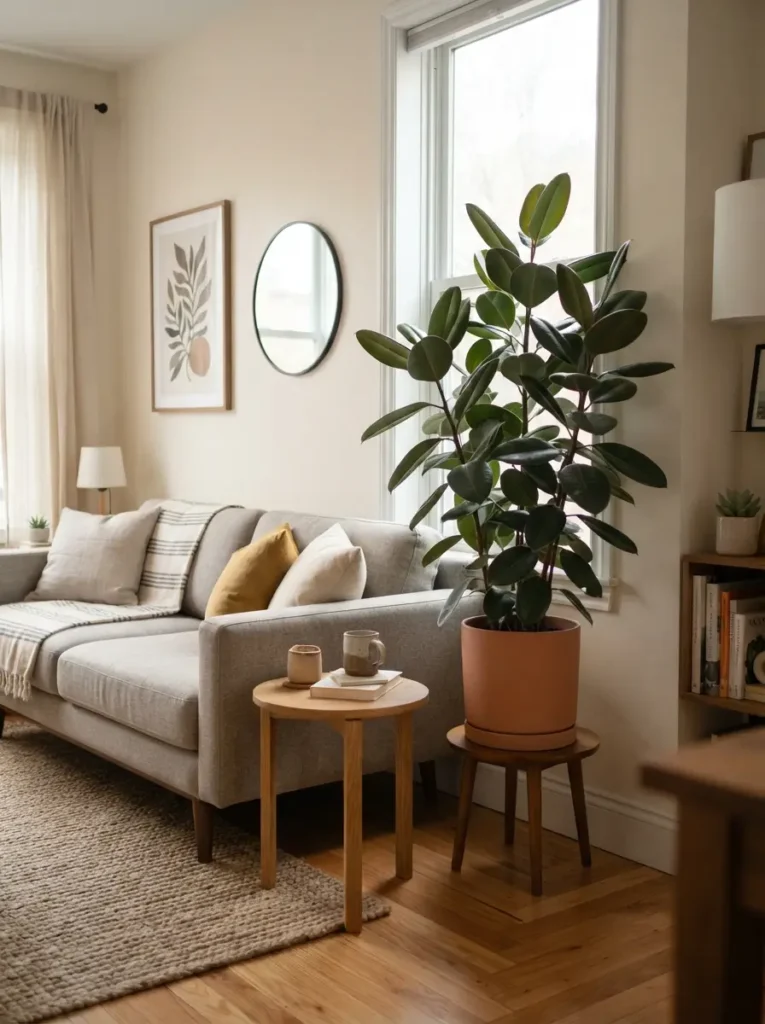
A sofa corner is one of the easiest places to start when styling an apartment living room with plants. Many apartment living rooms have an empty gap beside the sofa, especially near a window, side table, or floor lamp. A plant can fill that gap without making the room feel heavy.
This idea works because plants add height and softness. Sofas are usually low and wide, so a tall plant beside them creates better visual balance. It also makes the seating area feel more complete without adding bulky furniture.
For example, place a rubber plant, fiddle leaf fig, bird of paradise, or tall snake plant beside the sofa. If your living room has medium light, a rubber plant or snake plant is usually easier than a fiddle leaf fig. Use a pot in matte white, warm beige, soft gray, terracotta, or black depending on your room style.
This idea is best for people who have one awkward empty corner and want a simple upgrade. It also works well for renters because you do not need to drill, paint, or install anything.
Keep the plant about 6 to 12 inches away from the wall if possible. This gives the leaves room to breathe and stops the corner from looking squeezed. If the plant looks too short, place it on a small wooden stand to lift it closer to sofa-arm height.
Use Tall Floor Plants to Add Height
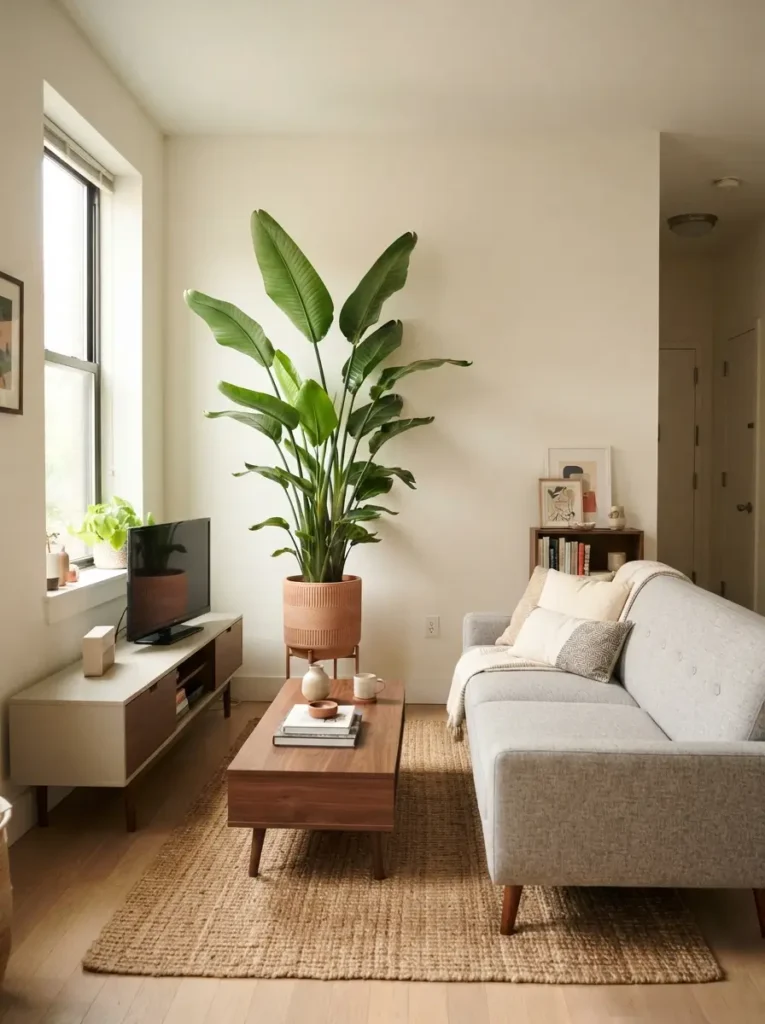
Small apartment living rooms often feel flat because most furniture stays at the same level. The couch, coffee table, TV stand, and rug all sit low. A tall floor plant helps pull the eye upward and makes the room feel more layered.
This works especially well if your apartment has plain walls or low-profile furniture. A tall plant acts almost like a living sculpture. It gives the room shape without needing extra wall art or large decor pieces.
Good options include a snake plant, corn plant, rubber tree, dracaena, parlor palm, or bird of paradise. If your room gets bright indirect light, a bird of paradise can make a strong statement. If your room is darker, a snake plant or ZZ plant is a safer choice.
Use tall plants near the TV wall, beside a reading chair, behind a sofa, or next to a window. Avoid placing them in the middle of walking paths. You should have at least 24 to 30 inches of clear walking space around main furniture areas.
This idea is best for beginners who want one strong plant moment instead of many small pots. It is also budget-friendly because one tall plant can decorate more space than five tiny plants.
Choose a simple planter that suits your furniture. A woven basket works well with beige, cream, and wood tones. A black ceramic pot suits modern rooms. A terracotta planter brings warmth to white or gray apartment walls.
Style a Window Ledge With Small Plants
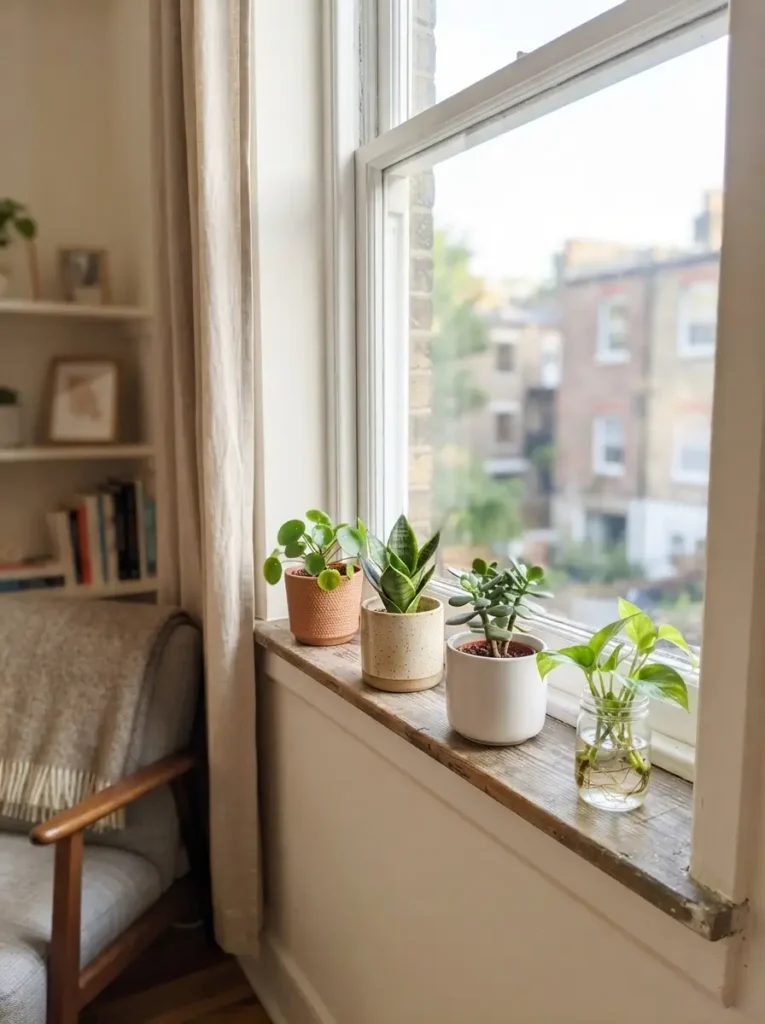
If your apartment living room has a window ledge, use it carefully. A window ledge can become a small plant display without taking up floor space. This is useful in compact homes where every inch matters.
This idea works because it uses vertical and existing space. You are not adding another table or shelf. You are simply making use of a bright area that already exists in the room.
Small plants like succulents, pothos cuttings, mini snake plants, peperomia, pilea, herbs, or small spider plants can work well on a ledge. Use matching pots for a clean look or mix two to three textures for a relaxed style. For example, combine one white ceramic pot, one terracotta pot, and one glass propagation jar.
Be careful with direct afternoon sun. Some plants burn if they sit against hot glass for many hours. If the window gets strong sun, use plants that tolerate bright light, such as jade plants or certain succulents. If the light is soft, pothos and peperomia may do better.
This idea is best for renters, studio apartments, and rooms with very little spare floor space. It is also good for people who like simple, easy-to-change decor.
Keep the number of plants controlled. Three to five small plants usually look better than a crowded row. Leave a little space between each pot so the display feels intentional instead of messy.
Add a Plant Stand for Layered Styling
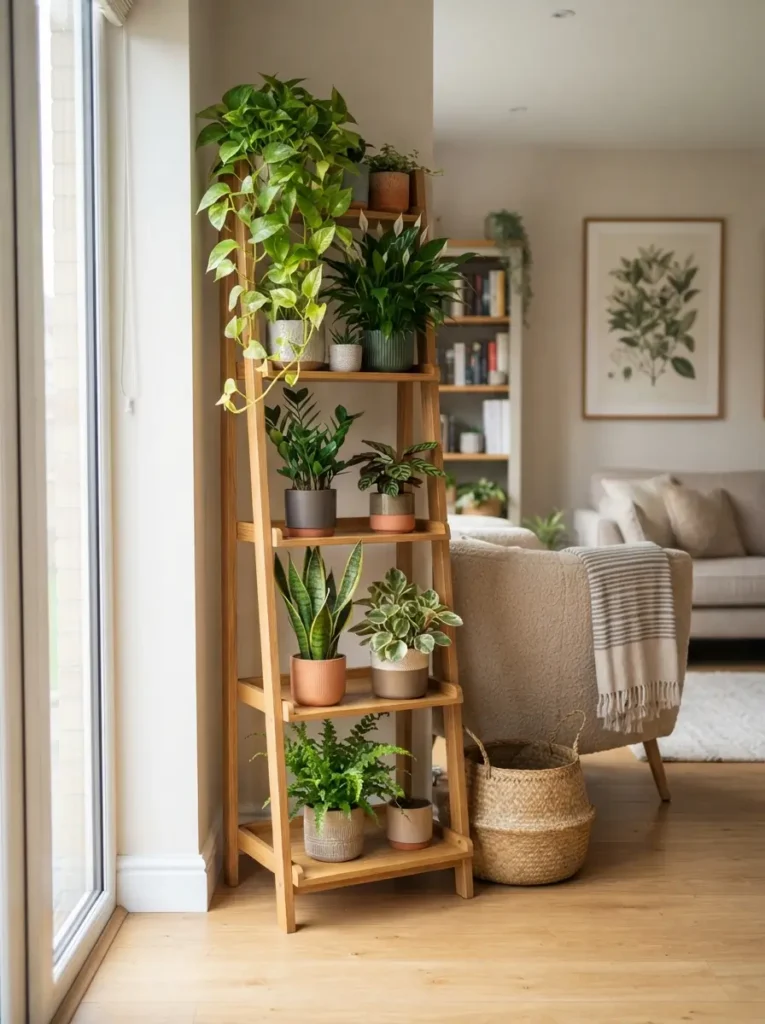
A plant stand helps you display several plants without spreading them all over the living room. It creates levels, which makes the arrangement more interesting. This is helpful when you want a plant-filled look but still need the room to feel organized.
This idea works because layered height keeps the eye moving. A low plant, medium plant, and trailing plant together look more styled than three pots sitting flat on the floor. It also keeps plants off the ground, which can make cleaning easier.
Choose a slim plant stand if your apartment is small. A narrow metal stand works well in modern rooms. A wooden ladder-style stand looks warmer and fits nicely with neutral decor. A round tiered stand can soften rooms with many straight lines.
You can place a plant stand near a window, beside a TV unit, behind an accent chair, or next to a bookshelf. Avoid placing it where people may bump into it. If your room has kids or pets, choose a sturdy stand with a wider base.
Use a mix of plant shapes. Put a trailing pothos on the top shelf, a compact peace lily in the middle, and a snake plant or ZZ plant on the bottom. The different leaf shapes will make the display feel fuller without needing too many plants.
This idea is best for home decor lovers who want a styled plant corner but do not want clutter. It is also useful for beginners because you can group plants with similar light needs in one spot.
Soften the TV Wall With Greenery
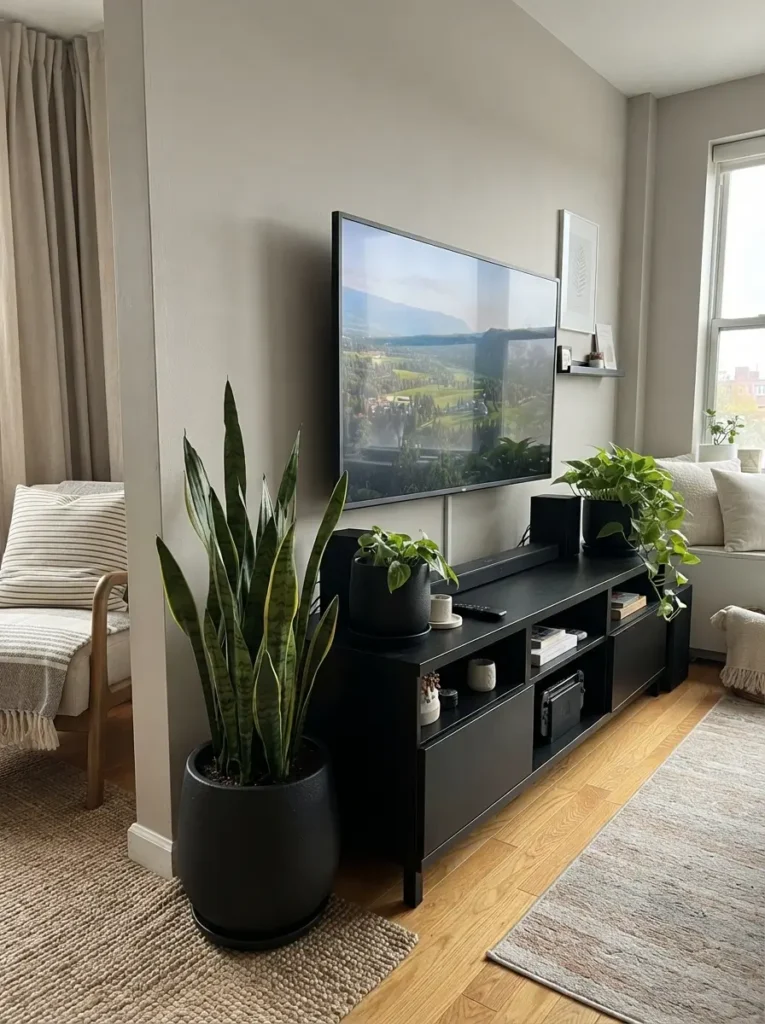
TV walls can look cold in small apartments. A black screen, media console, cables, and speakers can make the room feel technical instead of cozy. Plants help soften that area without blocking the screen.
This idea works because greenery balances the hard edges of electronics. Plants add natural texture next to smooth plastic, glass, and metal. They also make the TV wall look decorated even when the screen is off.
Place one tall plant on one side of the TV console and one smaller plant on the console itself. For example, use a snake plant on the floor and a small pothos or peperomia on the media unit. If the console is narrow, use one small plant only.
Keep plants away from heat vents, gaming consoles, and electronics that get warm. Also avoid watering plants directly over a media unit unless the pot has a waterproof saucer. Water damage can ruin wood veneer and laminate furniture quickly.
This idea is best for apartment living rooms where the TV is the main focal point. It works especially well if your wall decor is limited because of rental rules.
For a clean style, choose pots in the same color family as the TV stand. If your console is black, use black, charcoal, or soft beige pots. If your console is light wood, use cream, terracotta, or woven baskets.
Use Hanging Plants Without Damaging Walls
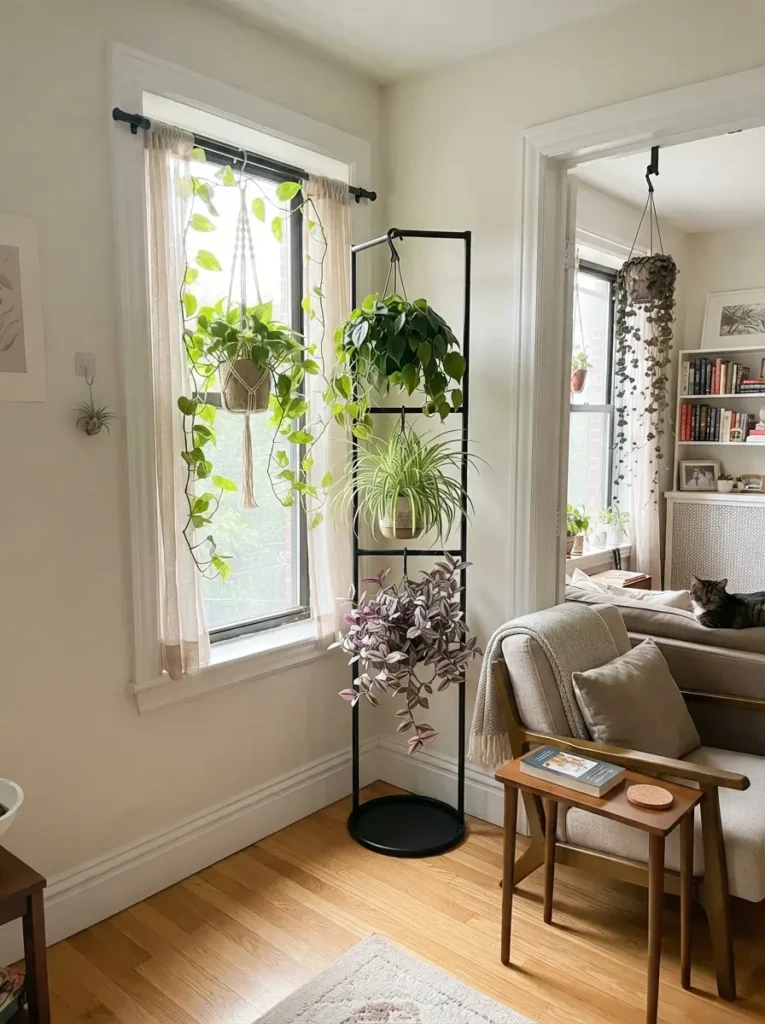
Hanging plants are a smart choice when floor space is limited. They add greenery above eye level and make the room feel more layered. Renters can still enjoy this look without drilling holes into the ceiling.
This idea works because it uses vertical space. It also helps soften windows, empty corners, and plain walls. A hanging plant can make a small room feel more decorated without taking up a side table or shelf.
For rental-friendly options, use tension rods in window frames, over-door hooks, adhesive ceiling hooks rated for enough weight, or a freestanding hanging plant rack. Always check weight limits before using adhesive hooks. A wet plant is heavier than a dry plant.
Pothos, philodendron, spider plants, string of hearts, and tradescantia are popular hanging options. They trail nicely and do not need huge pots. For beginners, pothos is one of the easiest plants to style and maintain.
This idea is best for renters, small apartment owners, and anyone who wants greenery without crowding the floor. It also works well for rooms with cats or dogs, as long as you choose pet-safe plants and place them out of reach.
Keep hanging plants high enough so people do not brush against them. In a living room, the bottom of the plant should not interfere with walking, sitting, opening curtains, or using blinds.
Decorate Shelves With Small Plant Moments
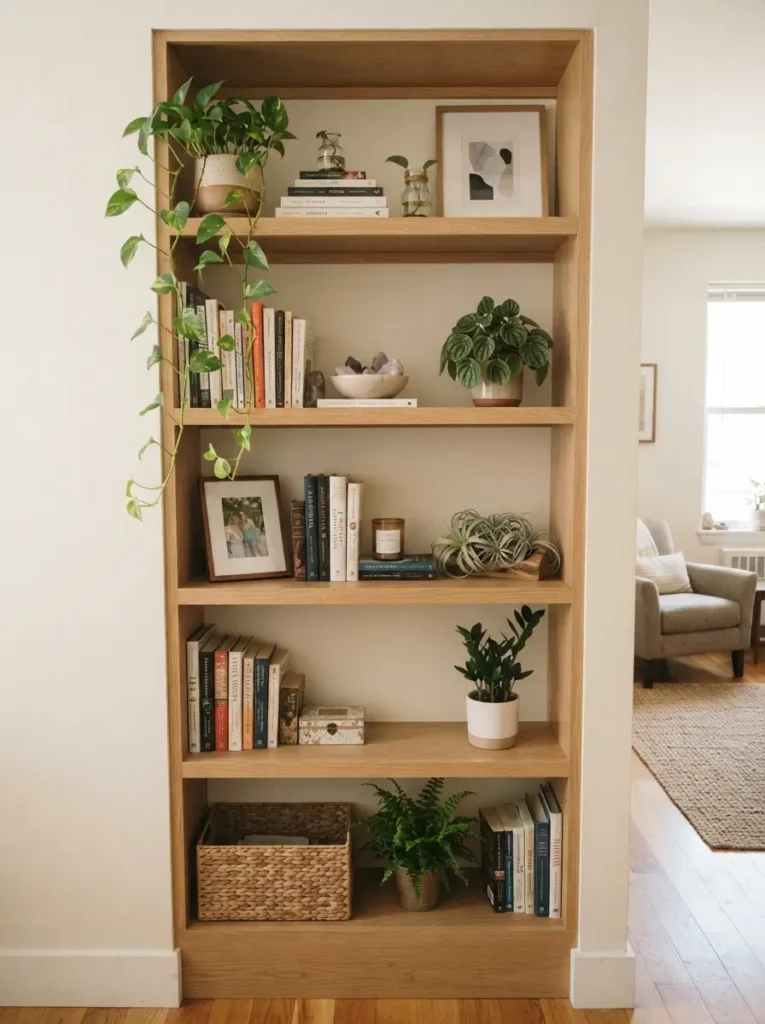
Shelves and plants work well together because they let you mix decor, storage, and greenery. A few small plants can make open shelving feel more relaxed and less like a storage area.
This idea works because plants break up hard lines. Books, boxes, candles, and frames often create square shapes. Rounded leaves and trailing stems soften those shapes and make shelves look more natural.
Use small plants like pothos, peperomia, air plants, mini snake plants, small ferns, or propagation jars. Place trailing plants on higher shelves so the vines can fall naturally. Put upright plants on lower or middle shelves where they have space to grow.
Do not fill every shelf with a plant. A good rule is to add greenery to every second or third shelf. This gives the display breathing room. For example, style one shelf with books and a pothos, the next with a framed print and bowl, and the next with a small ZZ plant.
This idea is best for apartments with built-in shelves, bookcases, wall shelves, or open media units. It is also useful for people who want plants but do not want large floor planters.
If your shelves are far from natural light, use low-light-tolerant plants or rotate plants every few weeks. You can also use one high-quality faux trailing plant on a dark shelf and keep real plants closer to windows.
Match Plant Pots With Your Color Palette
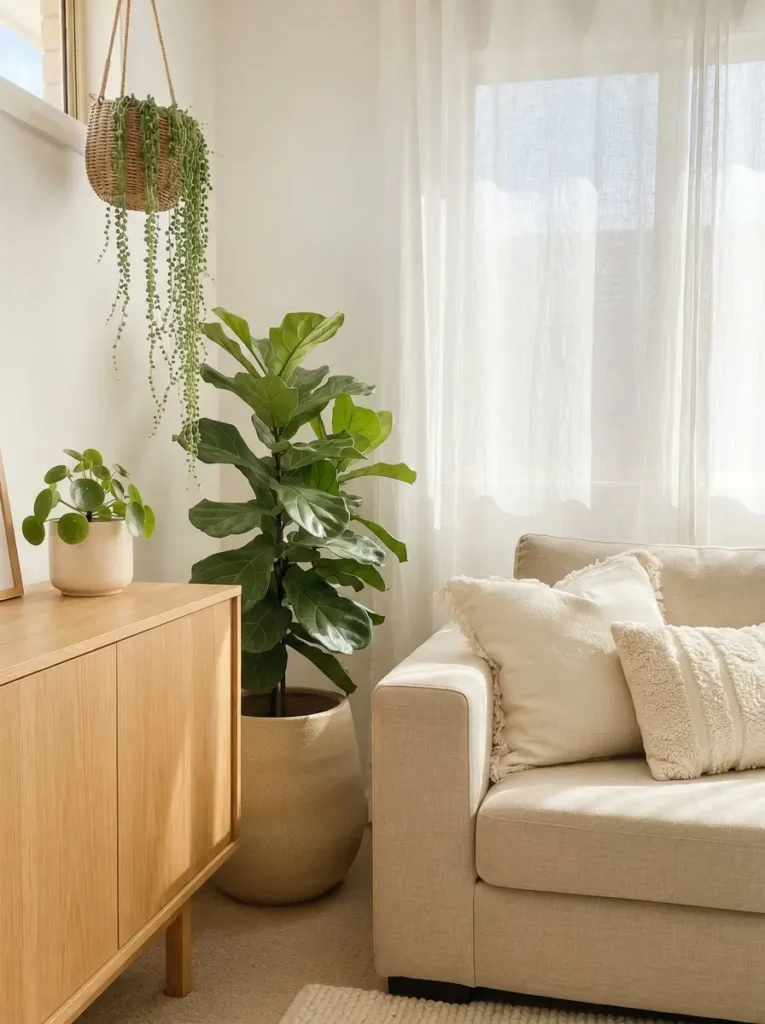
Plants look better when the pots connect with the rest of the room. The plant itself brings green, but the pot decides whether the room feels calm, modern, rustic, colorful, or cluttered.
This idea works because pots act like decor accessories. A mismatched group of plastic nursery pots can make a room feel unfinished. Coordinated planters make even simple plants look more intentional.
Start with your living room colors. If your room has beige, cream, white, and light wood, choose pots in warm white, stone, rattan, clay, or sand tones. If your room has black frames, gray sofas, and metal accents, black, charcoal, concrete, or dark green pots can work well.
You do not need every pot to match exactly. In fact, a mix often looks better. Choose two or three pot materials and repeat them. For example, use terracotta, white ceramic, and woven baskets across the room.
This idea is best for beginners who already have plants but feel the room still looks messy. Often, the issue is not the plants. It is the pot mix.
Avoid overly bright pots unless they fit your design plan. A neon pot may look fun alone but can fight with pillows, rugs, wall art, and curtains. If you want color, try muted sage, dusty blue, olive, rust, or soft mustard.
Pair Plants With Warm Living Room Lighting
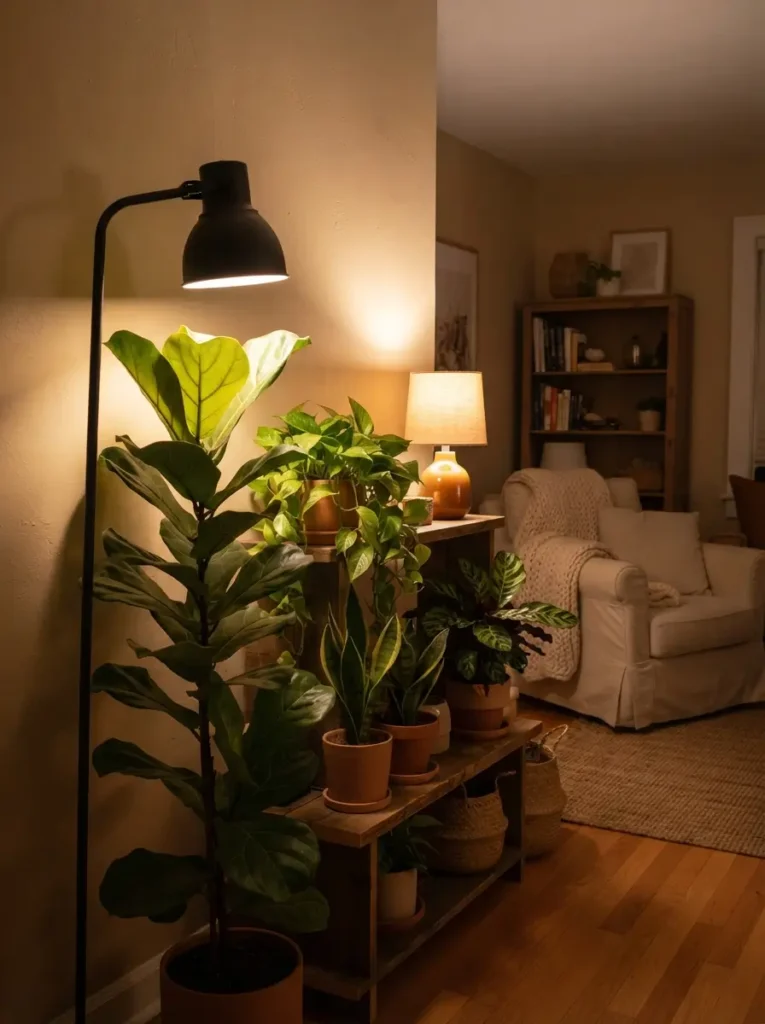
Plants look more inviting when the lighting is right. A dark plant corner can feel heavy at night, especially if the only light comes from a ceiling fixture. Warm lamps can make greenery feel softer and more visible.
This idea works because plants have texture. Leaves cast shadows, reflect light, and add depth. A floor lamp or table lamp near plants can highlight those details without making the room too bright.
For cozy evening lighting, use warm white bulbs around 2700K to 3000K. This temperature feels comfortable in living rooms and works well with green leaves, wood furniture, beige textiles, and warm wall colors. Avoid very cool white bulbs near plants if you want a relaxed mood.
Place a floor lamp behind a plant, a small lamp on a shelf near a trailing plant, or a plug-in wall sconce beside a plant corner. If you rent, plug-in sconces and battery picture lights can add light without electrical work.
This idea is best for apartment living rooms that feel flat or dull at night. It also works well for people who take photos of their home decor because warm side lighting gives plants more dimension.
Do not place lamps too close to leaves if the bulb gets hot. LED bulbs are usually safer because they stay cooler and use less energy.
Use Plants to Frame a Reading Chair
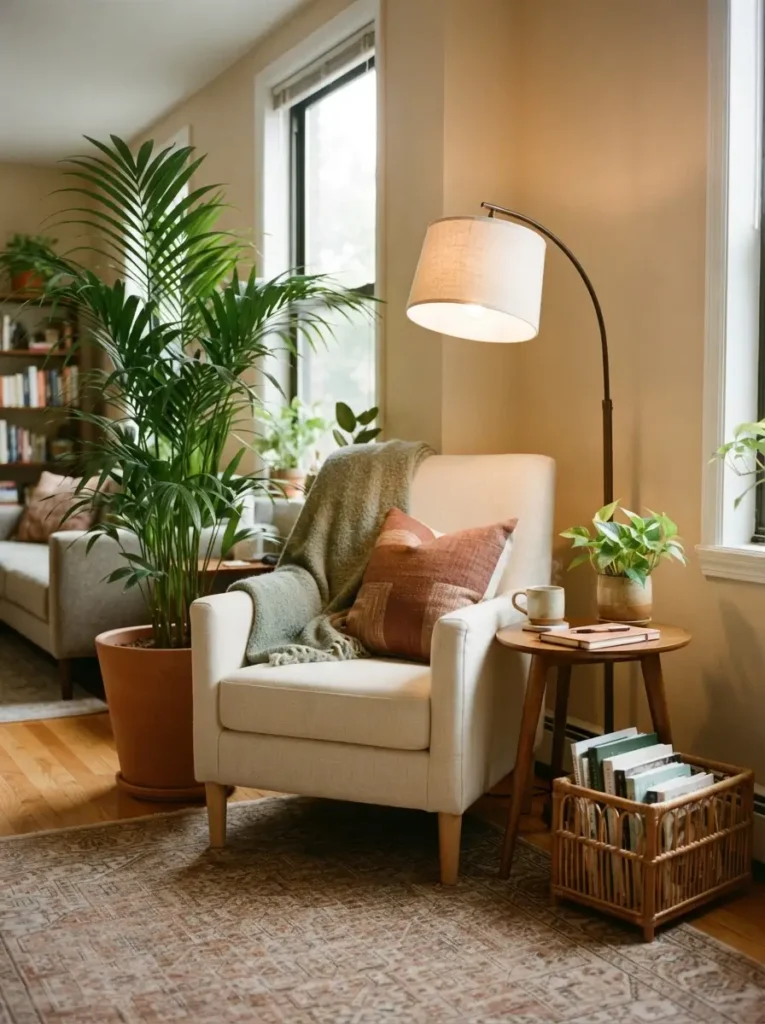
A reading chair can feel lonely if it sits by itself in a corner. Plants help turn it into a complete zone. This is a great way to make your apartment living room feel more useful and intentional.
This idea works because plants create a gentle boundary. They separate the reading spot from the rest of the living room without using a screen or divider. The chair feels like its own small retreat, even in a studio apartment.
Place a tall plant on one side of the chair and a small plant on a nearby side table. Add a floor lamp with a warm bulb, a small basket for books, and a soft throw. This creates a practical corner for reading, tea, journaling, or quiet phone calls.
Good plant choices include parlor palm, rubber plant, snake plant, pothos, or a small peace lily. If the corner has low light, choose a ZZ plant or snake plant. If it is near a bright window, use a fuller plant like a palm or rubber tree.
This idea is best for people who want their living room to support daily routines, not just look nice. It also helps small apartments feel more organized because each area has a clear purpose.
Keep the chair easy to access. Do not let plants block the side table, lamp switch, or walking path. Comfort matters more than a crowded plant display.
Place Plants Behind the Sofa
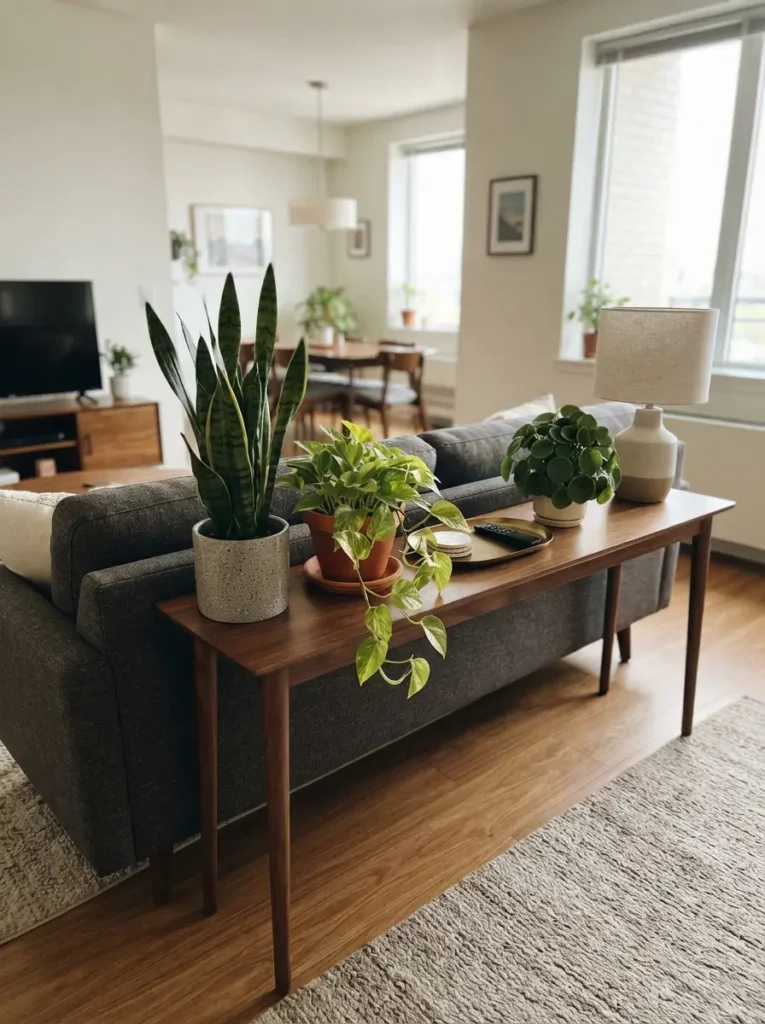
If your sofa floats away from the wall, the space behind it can feel empty. A narrow console table with plants can solve this problem. It adds greenery, height, and function without taking up much extra room.
This idea works because it uses a space that often goes unused. A behind-sofa plant setup can also create a soft divider between the living area and dining area in an open apartment layout.
Use a slim console table that is close to the sofa height or slightly lower. Add two or three plants in different shapes. For example, use one upright snake plant, one small pothos, and one round-leaf peperomia. Add a lamp or tray if you need extra function.
If you do not have room for a console table, place one tall floor plant behind the sofa near the corner. This can still make the sofa area feel finished. Just make sure the plant does not press against the wall or the sofa fabric.
This idea is best for studio apartments, open-plan living rooms, and people who want a natural divider without blocking light.
Be careful with watering. A saucer is important if plants sit on a wooden console. You can also use cachepots without drainage for display, but always remove the nursery pot when watering and let it drain before putting it back.
Create a Plant Shelf Near the Window
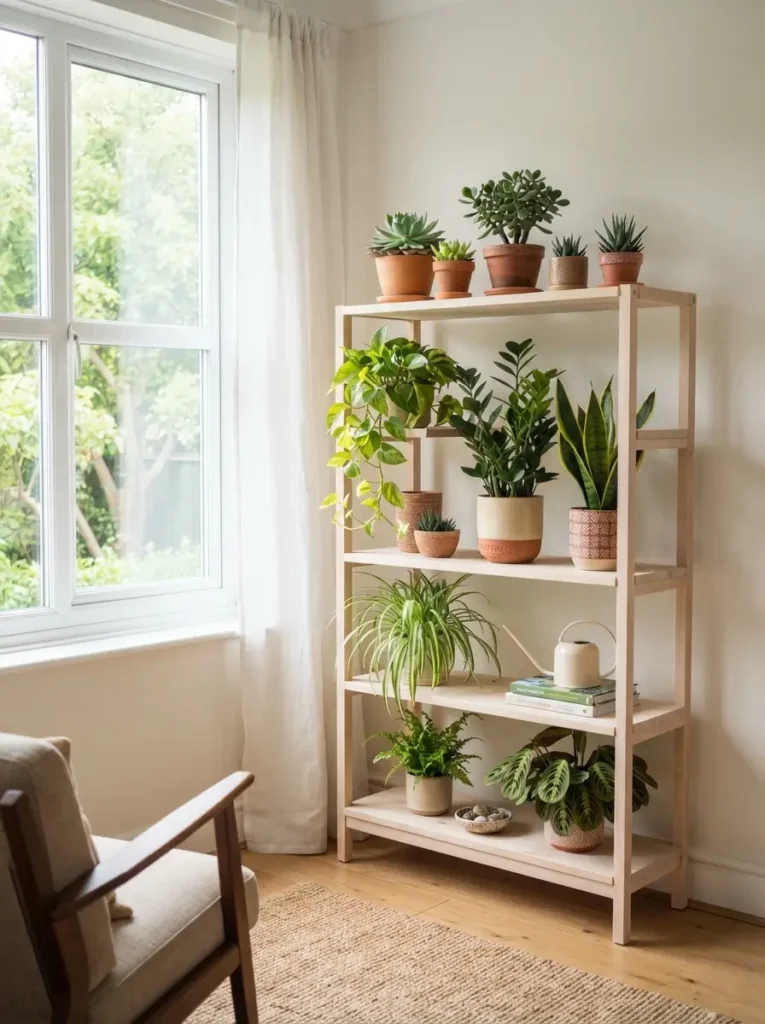
A plant shelf near the window is one of the most practical ways to decorate with plants. It gives your plants better light and keeps them grouped in one easy-care area. This can look neat when styled with care.
This idea works because most indoor plants need consistent light. Instead of scattering plants in dark corners, you place them where they can actually grow. Healthy plants always look better than struggling plants used only as decoration.
Use a narrow shelf, ladder shelf, low bookcase, or rolling cart near the window. Put sun-loving plants closer to the light and lower-light plants slightly farther back. For example, keep succulents and jade plants near bright light, while pothos and ZZ plants can sit a little farther away.
This idea is best for beginners who forget which plants need watering. Grouping plants together makes care easier. You can check soil moisture, rotate pots, and clean leaves in one place.
Keep the shelf styled, not stuffed. Mix plant heights, leave empty space, and add one or two simple decor items like a ceramic bowl or stack of books. Too many pots can block light and make the room feel cramped.
If your window is small, choose glass shelves or a light-colored shelf so the setup feels airy. Dark, heavy shelving can make a small living room feel closed in.
Mix Real and Faux Plants in Low-Light Rooms
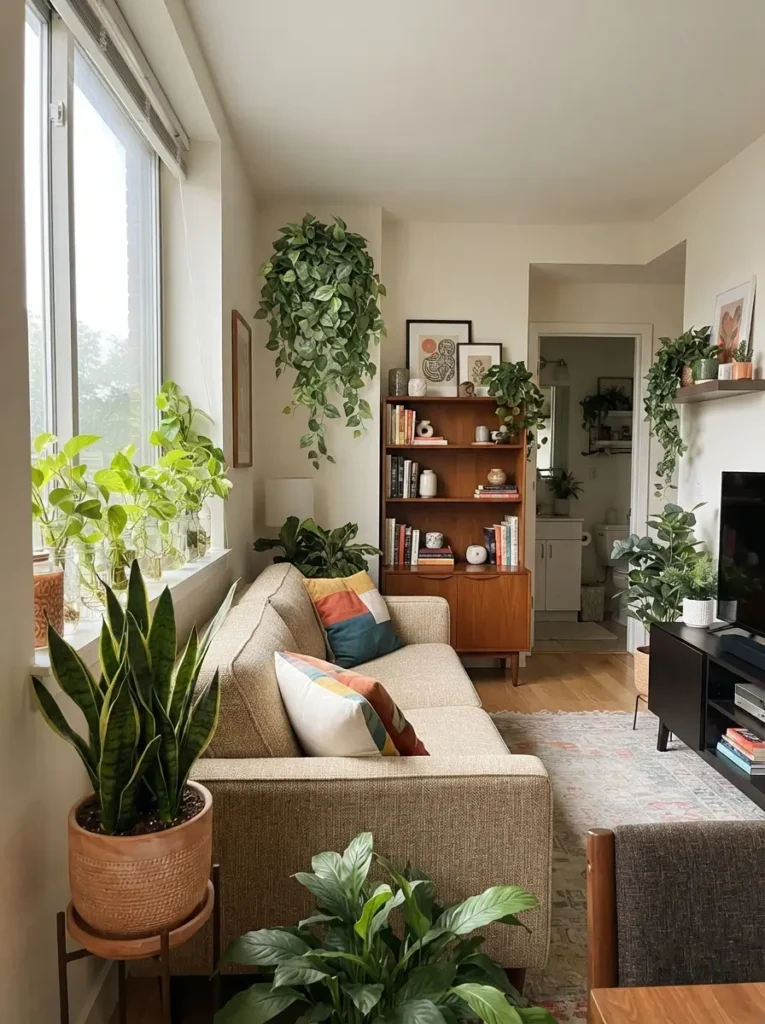
Not every apartment living room has great sunlight. Some rooms face another building, have small windows, or stay shaded most of the day. In those cases, mixing real and faux plants can be a smart decorating choice.
This idea works because it keeps the fresh look without forcing real plants into places where they will not survive. A realistic faux plant in a dark corner often looks better than a dying real plant.
Use real plants where light is available. Then use faux plants in high shelves, dark corners, bathrooms visible from the living room, or areas far from windows. Choose faux plants with natural color variation, flexible stems, and matte leaves. Very shiny plastic leaves usually look less realistic.
For example, keep a real snake plant near the sofa and a faux trailing plant on a high bookcase. Add real pothos cuttings in water near a window ledge. The mix will still feel natural because real plants are part of the room.
This idea is best for busy people, frequent travelers, renters with poor light, and beginners who have lost plants before.
Dust faux plants regularly. Dusty fake leaves are easy to notice, especially near windows or lamps. A quick wipe with a soft cloth keeps them looking cleaner and more believable.
Use Plants as Soft Room Dividers
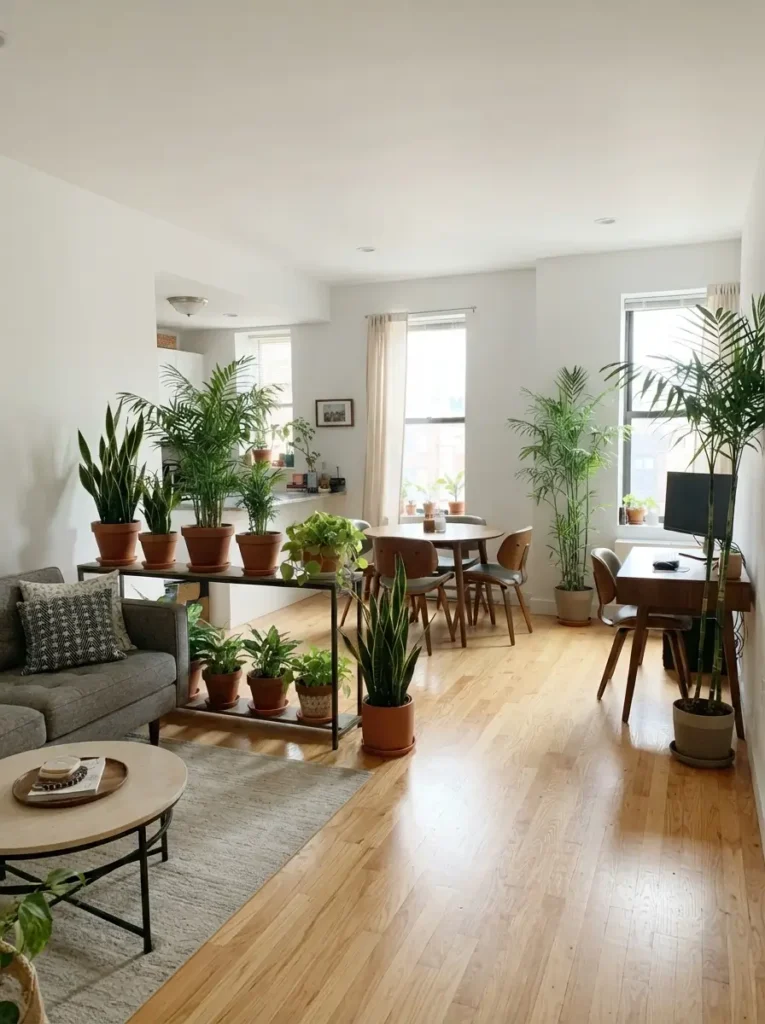
Plants can help divide spaces in small apartments without building walls or using bulky screens. This is useful in studio apartments or open layouts where the living room, dining area, and work corner share one space.
This idea works because plants create a visual boundary while still letting light pass through. Unlike a solid divider, plants keep the apartment open and breathable.
Use a row of medium plants behind a sofa, beside a desk, or between the living area and dining table. You can also use a tall plant stand with trailing plants to create a soft separation. Avoid making the divider too dense, or the room may feel smaller.
Good choices include snake plants, bamboo palms, parlor palms, rubber plants, and pothos on stands. Tall narrow plants are better than wide bushy plants in tight spaces because they take up less floor area.
This idea is best for studio apartment renters, remote workers, and anyone who wants separate zones without permanent changes.
Measure before buying plants or stands. You still need clear walkways. A plant divider should guide movement, not block it. If you constantly move around it awkwardly, the layout needs adjusting.
Build a Coffee Table Plant Moment
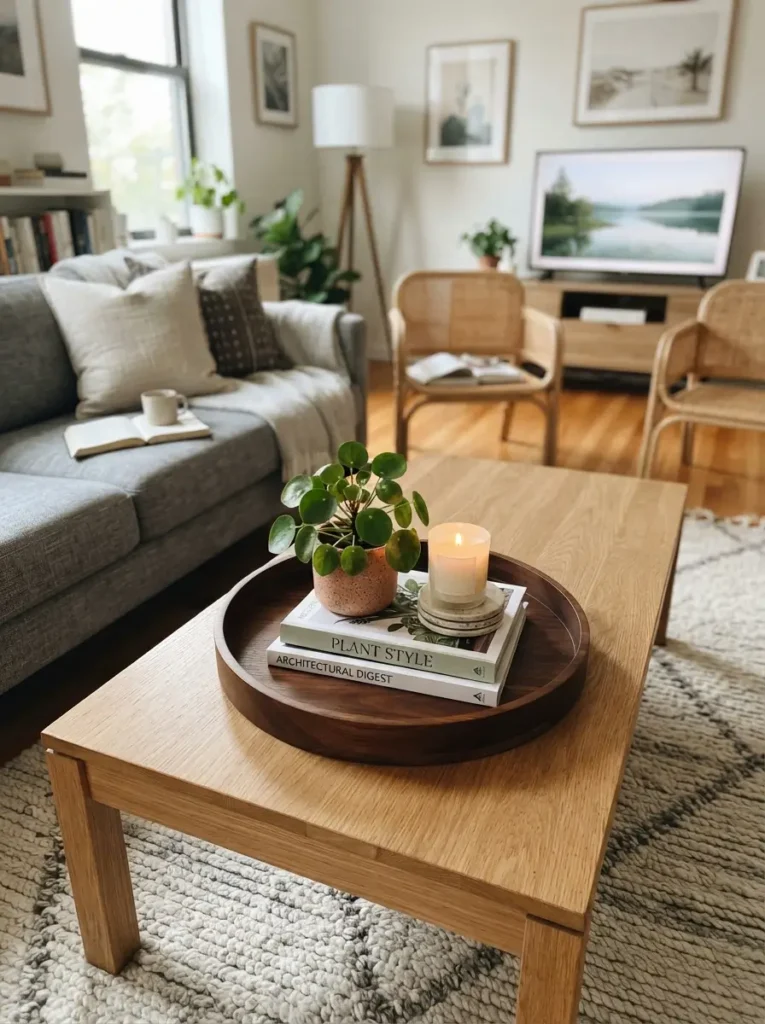
A coffee table is a small but powerful place to use plants. One small plant can make the center of the living room feel fresh without needing a large centerpiece.
This idea works because coffee tables sit in the middle of the seating area. A plant there connects the sofa, rug, chairs, and TV area. It also adds color at eye level when you are sitting.
Choose a compact plant that does not block conversation or the TV. Good options include a small pothos, pilea, peperomia, mini snake plant, baby rubber plant, or small succulent. Keep the plant in a stable pot so it does not tip easily.
Style it with a tray to keep the table organized. For example, place a small plant, candle, coaster set, and one book on a round or rectangular tray. This makes the arrangement easy to move when you need space for snacks, a laptop, or board games.
This idea is best for people who want a simple apartment living room with plants but do not want to manage many pots. It also works well in small rooms where floor plants may be too large.
Avoid large leafy plants on the coffee table. They can block sightlines and make the room feel crowded. A low plant is usually more practical.
Common Mistakes to Avoid
One common mistake is buying plants before checking your light. A plant that looks beautiful in the store may not survive in your apartment. Watch your living room for a few days. Notice where the light falls in the morning, afternoon, and evening before choosing plants.
Another mistake is placing too many plants in one small room. Plants should improve the layout, not take over every surface. If your living room already has a lot of furniture, start with one floor plant, one shelf plant, and one small tabletop plant.
Many beginners also forget drainage. A pot without drainage can trap water and cause root rot. If you love a decorative pot without a hole, keep the plant in its nursery pot inside the decorative pot. Remove it for watering, let it drain, then place it back.
Do not ignore scale. A tiny plant beside a large sofa may look lost. A huge plant next to a small TV stand may look too heavy. Match the plant size to the furniture around it.
Another mistake is using plants to hide clutter. A plant will not fix messy cables, crowded shelves, or too many decor items. Clear the area first, then add greenery.
Avoid placing plants near heaters, air conditioners, or strong drafts. Many indoor plants dislike sudden temperature changes. Leaves can dry out, curl, or drop when the plant sits too close to a vent.
Lastly, do not choose high-maintenance plants just because they are popular. If you are busy or new to plant care, start with forgiving plants. A healthy simple plant always looks better than a trendy plant that is struggling.
Budget-Friendly Tips for Decorating With Plants
You do not need expensive plants to create a fresh living room. Start small and let your plant collection grow over time. A few healthy budget plants can look better than many costly plants placed without a plan.
Buy smaller versions of popular plants instead of mature ones. A small rubber plant, snake plant, or pothos usually costs less and can grow with proper care. This also gives you time to learn how the plant behaves in your apartment.
Use plant cuttings when possible. Pothos, philodendron, spider plants, and tradescantia can often grow from cuttings in water. Ask friends or family if they can share a cutting. Place cuttings in glass jars for a simple, low-cost display.
Upgrade cheap nursery pots with baskets, thrifted bowls, or simple ceramic planters. You can also place a plain plastic pot inside a woven basket for a warmer look. Just use a saucer or liner to protect the basket from water.
Check discount stores, local markets, and plant sales for affordable options. Sometimes imperfect plants are cheaper and only need trimmed leaves, better soil, or proper watering.
Reuse items you already own. A stool can become a plant stand. A tray can organize coffee table plants. A small bench can hold several pots near a window. A glass bottle can become a propagation vase.
Spend more on the right plant for the right spot, not on trendy accessories. Good placement, healthy leaves, clean pots, and balanced scale matter more than expensive decor.
Apartment Living Room With Plants Tips
Start with your lifestyle. If you travel often, forget to water, or have a busy routine, choose low-maintenance plants. Snake plants, ZZ plants, pothos, and spider plants are easier than plants that need constant humidity or careful watering.
Think about light before style. A sunny window, shaded corner, and bright indirect area all need different plants. Decorating works best when the plant’s needs match the spot.
Use plants to solve design problems. A tall plant can fix an empty corner. A trailing plant can soften a shelf. A tabletop plant can make a coffee table feel styled. A row of plants can divide a studio layout.
Repeat colors and materials. If your living room has warm wood, use baskets and terracotta. If your room feels modern, use black or white pots. Repetition keeps the room calm.
Leave breathing room. Plants grow, and living rooms need space for movement. Avoid filling every corner. A plant should make your apartment feel fresh, not harder to use.
Clean leaves often. Dust blocks light and makes plants look dull. Wipe large leaves with a damp cloth every few weeks. This small step makes a big difference.
Rotate plants every now and then. Plants often lean toward light. Turning the pot helps them grow more evenly and keeps your display looking balanced.
Use saucers, trays, and liners. Apartment furniture can stain or warp from water. Protect your floors, shelves, and tables before problems happen.
Keep plant care simple. Put watering reminders on your phone if needed, but do not water every plant on the same schedule. Check the soil first. Many plants prefer drying slightly between waterings.
FAQ
What are the best plants for an apartment living room?
Some of the best plants for an apartment living room are snake plants, pothos, ZZ plants, spider plants, rubber plants, peace lilies, and philodendrons. These plants are popular because many of them can handle indoor conditions and do not need complicated care.
For beginners, snake plants and ZZ plants are especially forgiving. Pothos is also a good choice if you want a trailing plant for shelves or hanging baskets.
How many plants should I put in a small apartment living room?
A small apartment living room usually looks best with three to seven plants, depending on the room size and layout. You might use one tall floor plant, two small shelf plants, one coffee table plant, and one hanging plant.
Avoid counting only the number of plants. Think about visual weight. One large palm may have more impact than five small succulents.
Where should plants be placed in a living room?
Plants work well beside sofas, near windows, on shelves, on coffee tables, beside TV units, and in empty corners. The best placement depends on light, walking space, and furniture layout.
Try to place plants where they add balance. For example, a tall plant can balance a large sofa, while a small plant can soften a hard coffee table.
Can I decorate with plants if my apartment has low light?
Yes, but choose carefully. Snake plants, ZZ plants, pothos, and some philodendrons can handle lower-light conditions better than many other plants. However, low light does not mean no light. Most plants still need some natural brightness.
If your room is very dark, mix real plants near the window with realistic faux plants in darker corners.
How do I make plant decor look organized instead of messy?
Use matching or coordinated pots, group plants in odd numbers, vary the heights, and leave empty space between displays. A tray, plant stand, shelf, or basket can make plants look more intentional.
Also remove dead leaves, clean dust, and avoid keeping plants in random nursery pots unless they are hidden inside decorative planters.
Are plants good for rental apartment decor?
Yes, plants are very rental-friendly. They add color, texture, and personality without paint, wallpaper, or permanent changes. You can take them with you when you move.
Use freestanding plant stands, window ledges, shelves, baskets, and tension rods for hanging plants if you cannot drill into walls or ceilings.
Conclusion
An apartment living room with plants can feel fresh, relaxed, and thoughtfully decorated without a large budget. Plants help soften sharp corners, add height, bring color, and make small spaces feel more personal.
The best approach is to start with your room’s light and layout. Choose plants that suit your actual space, not just plants that look good online. Then place them where they solve a real decorating problem, such as an empty corner, plain TV wall, bare shelf, or flat seating area.
You do not need dozens of plants to make a difference. One tall floor plant, one trailing shelf plant, and one small coffee table plant can change the whole feeling of a room.
Keep the styling simple, choose pots that match your color palette, protect your furniture from water, and give every plant enough space to grow. With a little planning, your apartment living room can feel greener, calmer, and easier to enjoy every day.