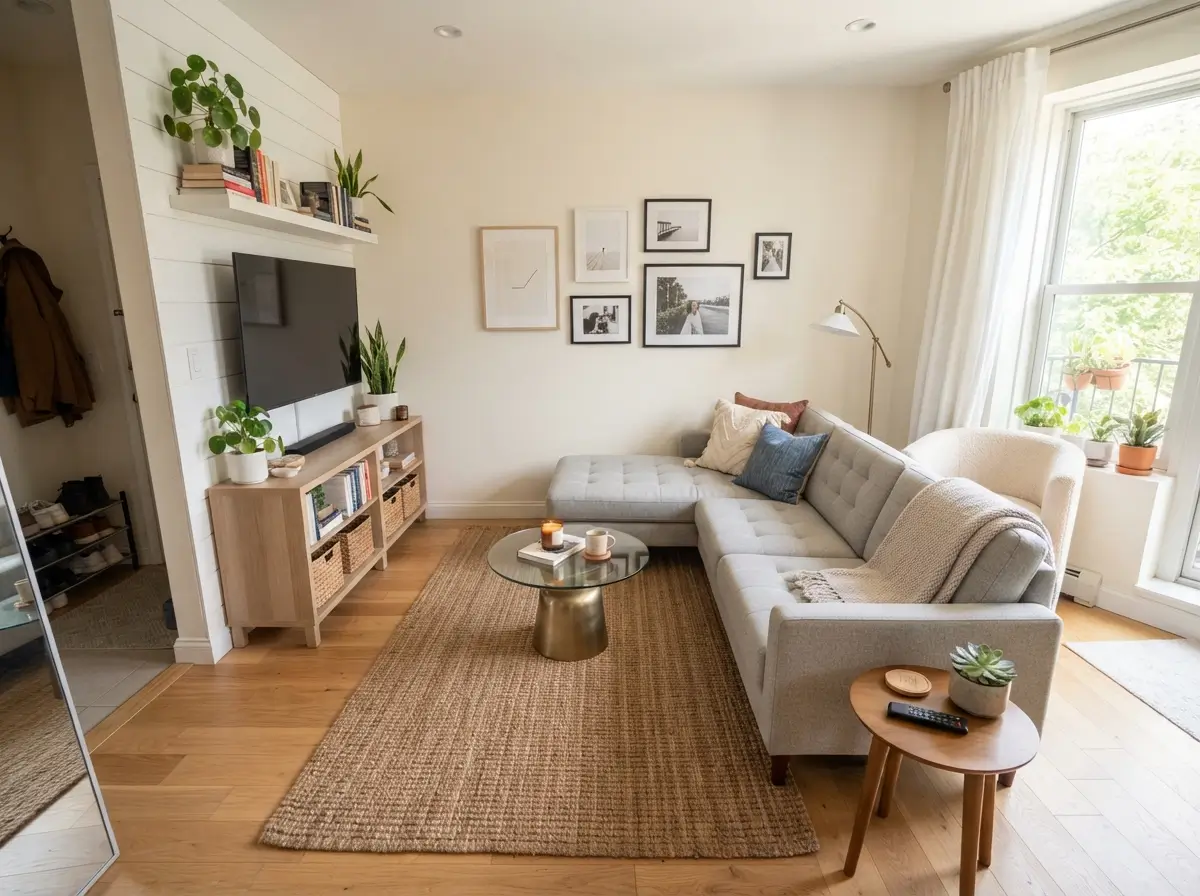

A sectional can feel tricky in a small apartment living room. It gives you comfortable seating, but it can also take over the room if the layout, size, colors, and storage choices are not planned well.
The good news is that a small living room with sectional apartment setup can still feel open, balanced, and easy to use. You do not need a large budget or a complete renovation. Most makeovers come from better placement, lighter colors, smarter furniture, improved lighting, and fewer visual distractions.
A sectional can actually work better than separate chairs and sofas in a compact home. It creates one clear seating zone, uses corners wisely, and gives the room a cozy structure. The key is choosing the right sectional style and designing around it with purpose.
This guide shares 15 practical makeover ideas for apartment renters, first-time decorators, and anyone who wants a small living room to feel more comfortable and less crowded.
Can a sectional work in a small apartment living room?
Yes, a sectional can work very well in a small apartment living room when you choose the right size, place it against the best wall or corner, keep the color palette light, and use space-saving furniture around it. The best small living room with sectional apartment design keeps walking paths clear, avoids oversized pieces, and uses vertical storage, layered lighting, and simple decor to make the room feel open.
Choose a Low Profile Sectional to Keep the Room Open
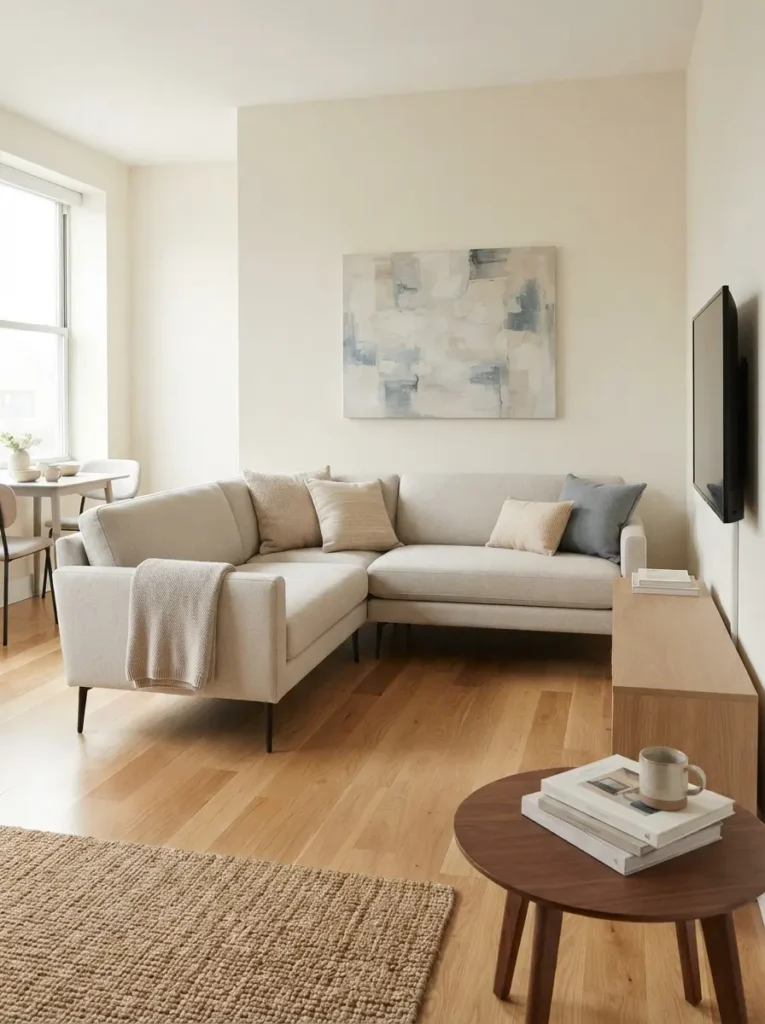
A low profile sectional is one of the easiest ways to make a small living room feel less crowded. Sofas with low backs, slim arms, and clean legs take up less visual space than bulky sectionals with thick cushions and rolled arms. This matters because the eye reads heavy furniture as clutter, even when the floor is clean.
This idea works well because it gives you full seating comfort without making the room feel blocked. A sectional with a back height around 30 to 34 inches usually feels lighter than a tall, oversized design. Raised legs also help because you can see more floor underneath the sofa, which makes the room feel more open.
This tip is best for renters, studio apartment owners, and anyone with a narrow living room. For example, a beige, warm gray, oatmeal, or soft taupe sectional with slim black or wood legs can blend into the room instead of dominating it.
Avoid deep sectionals if your room is very tight. A seat depth of 36 to 38 inches is usually more practical than a very deep lounge style that reaches 42 inches or more. You still get comfort, but you keep more walking space.
If you already own a bulky sectional, you can still improve the room. Use lighter pillows, remove extra throws, and keep the wall behind it simple. A plain wall, one large art piece, or a narrow shelf above the sectional can reduce the heavy feeling.
Place the Sectional Against the Longest Wall
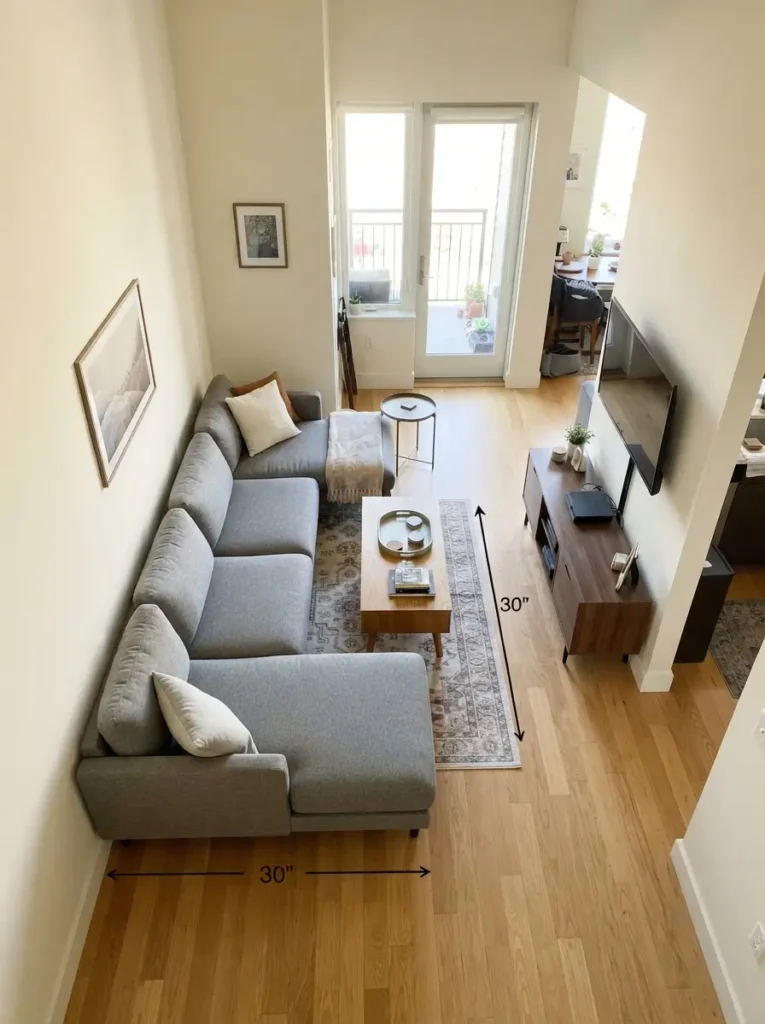
The longest wall is often the safest place for a sectional in a small apartment. It gives the sofa a natural anchor and keeps the center of the room open. When a sectional floats in the wrong spot, it can split the room and make walking paths feel confusing.
This layout works because it creates one clear seating zone. It also helps the TV wall, coffee table, and side tables line up more easily. In a small living room with sectional apartment layout, simple traffic flow is just as important as style.
This tip is best for rectangular rooms, open-plan apartments, and living rooms connected to a dining area. Place the longest part of the sectional along the longest wall, then let the chaise or return side extend into the room only as much as needed.
For example, if your living room is 10 feet by 13 feet, place the sectional along the 13-foot wall. Leave at least 24 to 30 inches for walking paths near the entry, balcony door, or kitchen opening. If possible, keep 16 to 18 inches between the sectional and coffee table.
In a rental, you may not be able to move outlets or TV wiring. Use cord covers, a media console with cable holes, or adhesive cable clips to keep the layout clean. A good layout loses impact when cords run across the floor.
Use a Chaise Sectional Instead of a Large L Shape
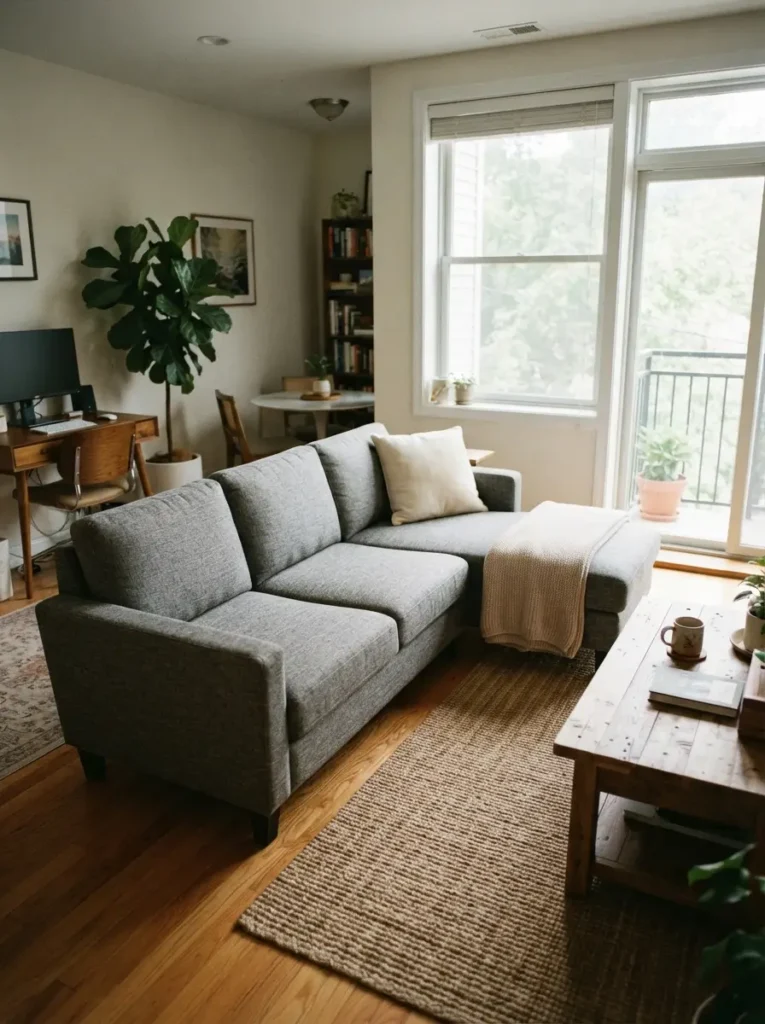
A chaise sectional is often better than a full L-shaped sectional in a small apartment. It gives you a lounge seat without using as much floor space as a sectional with two full sofa sides. This is especially helpful when you want comfort but still need room for a walkway, desk, or small dining table.
This idea works because the chaise side feels lighter than a full second sofa arm. It gives one person space to stretch out while the main sofa still seats two or three people. A reversible chaise is even more practical because you can switch sides when you move or change the room layout.
This tip is best for people who rent, move often, or are unsure which layout will work long term. Choose a sectional with a movable ottoman or reversible chaise so the room can adapt later.
For example, in a small apartment living room with a balcony door on one side, place the chaise away from the door. That keeps the exit clear and makes the room safer to walk through. If the chaise blocks a window, choose a lower back sectional so natural light can still enter.
Keep the chaise side simple. One pillow and one folded throw are enough. Too many pillows on a chaise can make it look messy and reduce the usable seating space.
Pick Light Neutral Upholstery for a Softer Look
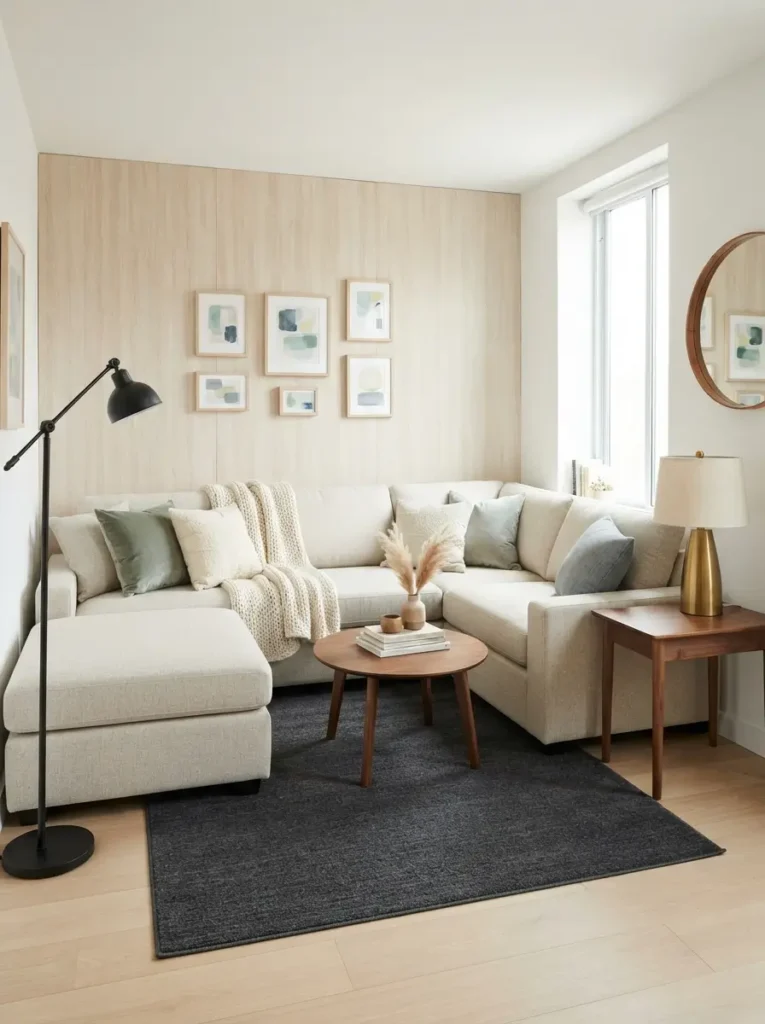
Light neutral upholstery can make a sectional feel less heavy in a small living room. Colors like beige, ivory, stone, mushroom, light gray, and warm cream reflect more light than dark charcoal or deep brown. They also pair well with many wall colors, rugs, and wood tones.
This idea works because a large sectional already covers a lot of visual space. A lighter fabric helps it blend into the room instead of creating one dark block. This is especially useful when your apartment has limited natural light.
This tip is best for beginners because neutral sectionals are easier to style over time. You can change pillows, rugs, lamps, and art without replacing the sofa. A beige sectional can work with black accents, walnut furniture, brass lamps, soft green pillows, or muted blue artwork.
If you worry about stains, choose performance fabric, slipcovers, washable cushion covers, or textured woven upholstery. A slightly heathered fabric hides everyday marks better than flat white fabric.
For a rental-friendly makeover, pair a light sectional with removable peel-and-stick wall panels, a washable rug, and warm wood side tables. This gives the room a finished look without painting or drilling.
Avoid making everything beige. Add contrast through a dark side table, black lamp, olive pillow, or walnut tray. Contrast helps the room feel designed, not plain.
Add a Rug That Is Large Enough for the Sectional
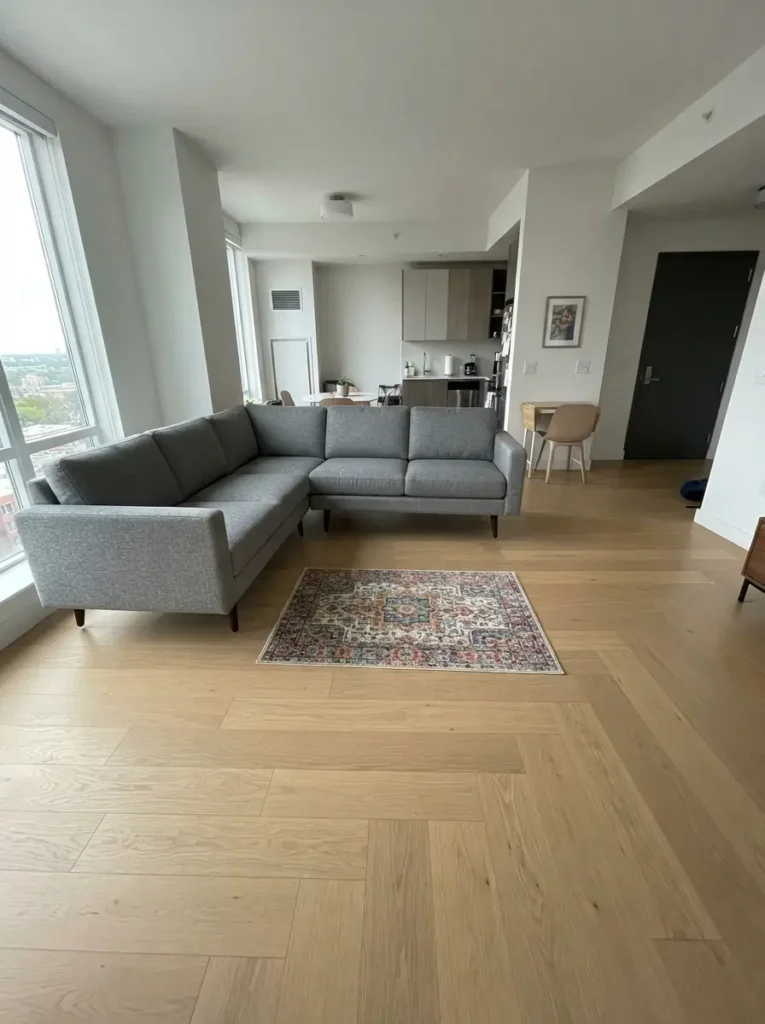
A rug can make or break a sectional layout. A rug that is too small makes the sectional look disconnected from the rest of the room. A rug that is large enough pulls the seating area together and makes the apartment feel more planned.
This idea works because a sectional needs a clear zone. The rug acts like a frame. It tells the eye where the living room begins and ends, which is useful in studio apartments or open-plan spaces.
This tip is best for apartment living rooms where the sectional shares space with a kitchen, dining nook, or entryway. Choose a rug that allows at least the front legs of the sectional to sit on it. In many small living rooms, a 6 by 9 rug works better than a 5 by 7 rug. If your room allows it, an 8 by 10 rug can look even more balanced.
For example, place the rug so the front legs of the sectional and coffee table sit on it. Keep the rug centered with the sofa, not necessarily the whole room. This simple shift often fixes awkward layouts.
Low-pile rugs are best for small apartments because they are easier to clean and do not fight with chair legs or ottomans. Try warm beige, soft gray, faded blue, muted terracotta, or a subtle pattern that hides dirt.
Avoid tiny rugs placed only under the coffee table. They make the room feel smaller because they leave the sectional floating outside the main design.
Use a Round or Oval Coffee Table
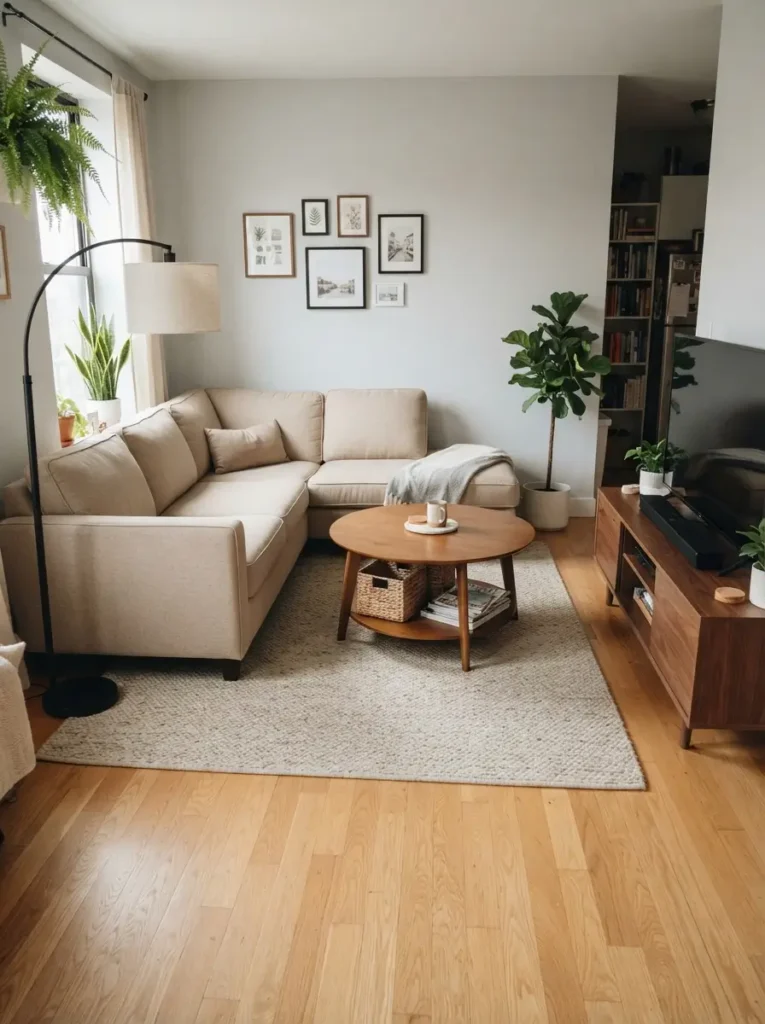
A round or oval coffee table can make a small sectional layout easier to move around. Sharp corners often feel awkward when the sectional, TV stand, and walkway are close together. Rounded shapes soften the room and reduce bumps in tight spaces.
This idea works because small living rooms need better flow. A round table gives you surface space without creating hard edges. An oval table gives a little more length while still being easier to walk around than a rectangle.
This tip is best for families, renters with narrow rooms, and anyone who often feels squeezed between the sofa and coffee table. Choose a table around 30 to 36 inches wide for a compact room. If your sectional is very small, nesting tables may work better.
For example, pair a beige sectional with a round wood coffee table and a slim black floor lamp. The wood adds warmth, while the curved shape keeps the layout relaxed. A table with a lower shelf gives space for baskets, remotes, books, or coasters.
Leave about 16 to 18 inches between the table and sectional. This distance gives you enough legroom while keeping drinks within reach.
Avoid oversized square coffee tables. They may look nice online, but they often block movement in real apartment living rooms. If you need flexibility, use a storage ottoman with a tray instead.
Float a Small Sectional Only When the Room Allows It
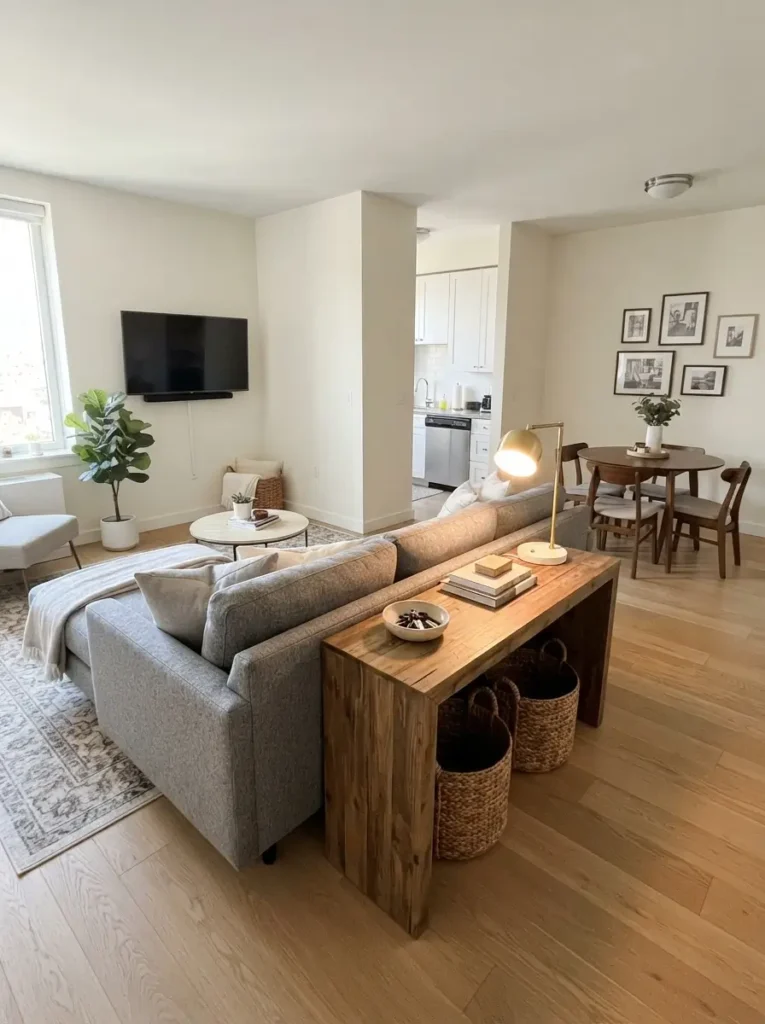
Floating a sectional means placing it away from the wall. This can look polished, but it only works when the room has enough space behind and around the sofa. In a small apartment, floating furniture can either improve zoning or make the room feel cramped.
This idea works when you want to separate the living area from a dining area, kitchen, or work corner. The back of the sectional becomes a soft divider. It gives the room structure without adding a wall or bulky shelf.
This tip is best for open-plan apartments, studio layouts, and rooms where the TV wall is opposite the kitchen. Float the sectional only if you can leave at least 30 inches behind it for walking. If not, keep it against the wall.
For example, place a low sectional with its back facing the dining nook. Add a narrow console table behind it if space allows. The console can hold a lamp, keys, books, or small baskets. Choose a table no deeper than 10 to 12 inches so it does not block the walkway.
In a rental, use a plug-in floor lamp or rechargeable table lamp on the console instead of adding wiring. This improves lighting without permanent changes.
Avoid floating a large sectional in a very narrow room. It can create wasted space behind the sofa and make the main seating area feel tighter.
Add Vertical Storage Instead of More Floor Furniture
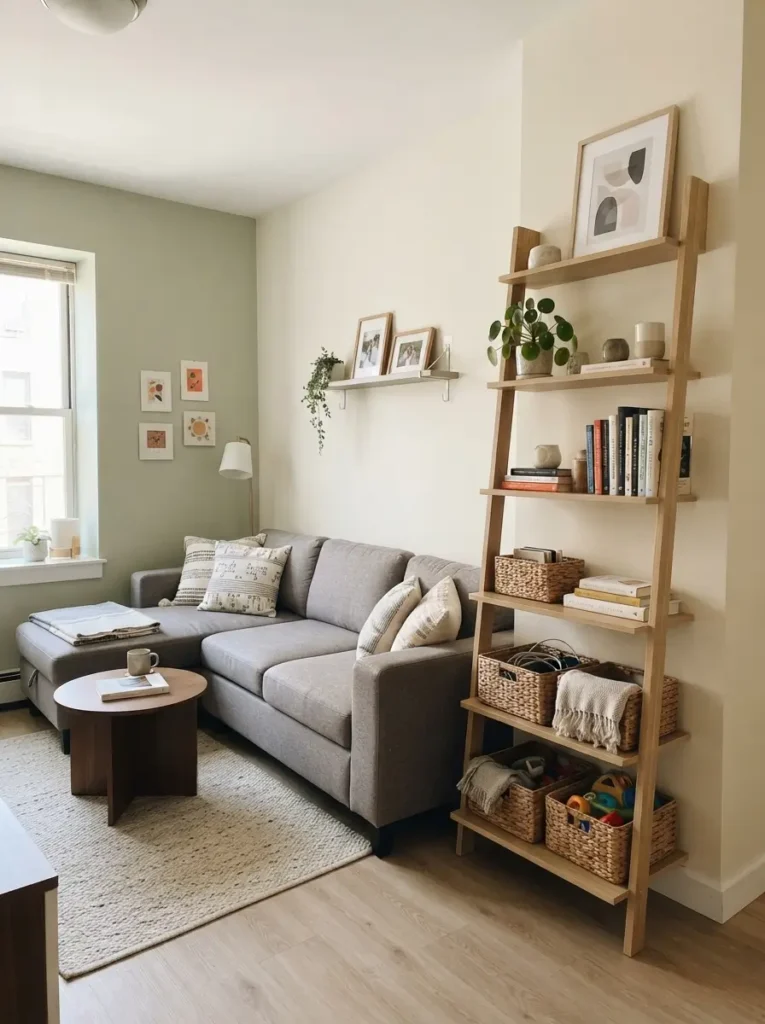
Small living rooms often fail because too many furniture pieces sit on the floor. A sectional already uses a large footprint, so storage needs to move upward. Vertical storage gives you function without crowding the floor.
This idea works because walls are often underused in apartments. Tall bookcases, wall shelves, ladder shelves, and slim cabinets add storage while keeping the main walking area open. They also draw the eye upward, which makes the ceiling feel higher.
This tip is best for renters, book lovers, families, and anyone without built-in storage. Use freestanding shelves if you cannot drill into the walls. Choose slim shelves that are 10 to 14 inches deep so they do not push into the room.
For example, place a narrow bookcase beside the sectional instead of adding a wide sideboard. Use baskets on the lower shelves for cables, toys, games, or extra throws. Keep the top shelves lighter with books, small plants, or framed prints.
Rental-friendly adhesive hooks can hold lightweight decor, but use proper anchors only when allowed and needed. Safety matters, especially with tall furniture. Use anti-tip straps when possible.
Avoid filling every shelf. Leave some empty space so the wall does not feel busy. In a small living room, open space is part of the design.
Choose a Slim Media Console for the TV Wall
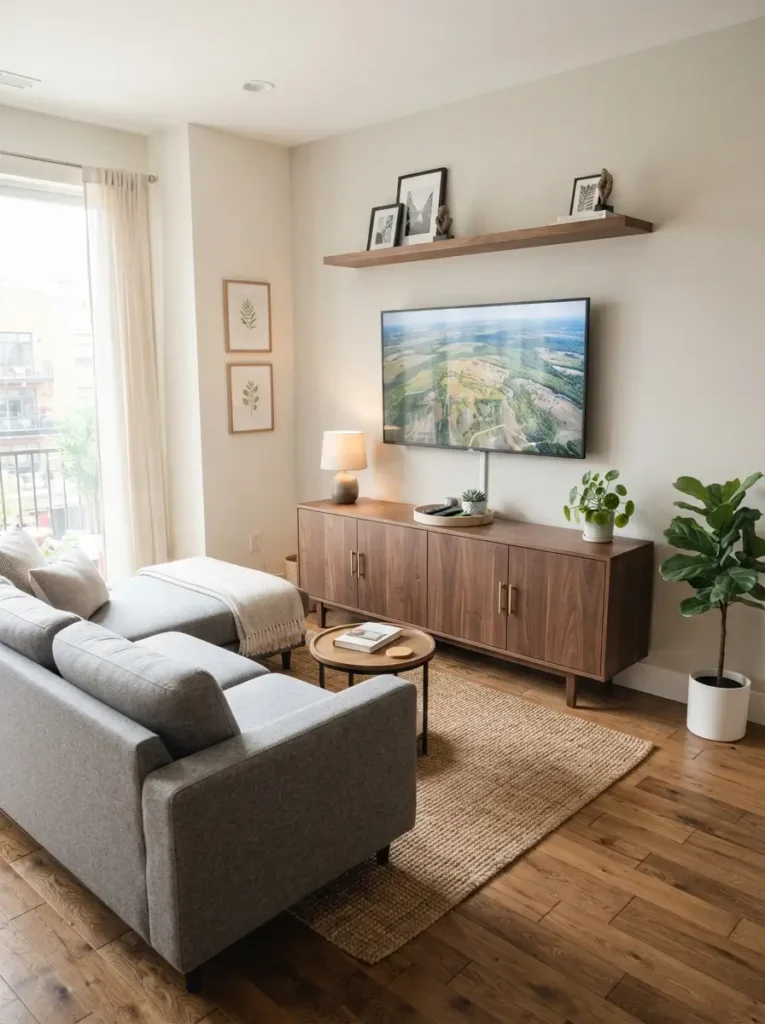
A bulky TV stand can compete with a sectional and make the room feel tight. A slim media console keeps the TV wall useful without eating too much floor space. It also gives storage for remotes, game consoles, cables, and small decor.
This idea works because the sectional and TV console usually face each other. If both pieces are oversized, the room feels narrow. A slim console balances the weight of the sectional and improves the walkway between them.
This tip is best for apartment living rooms where the TV wall is close to the sectional. Choose a console around 12 to 16 inches deep if space is limited. Wall-mounted consoles can work well, but renters may prefer freestanding pieces to avoid drilling.
For example, use a white, oak, or walnut media console with closed doors. Closed storage hides clutter better than open shelves. Add one small lamp, a tray, or a low plant, but do not cover the whole top with decor.
If the TV looks too large on a blank wall, add one long shelf above it or two simple framed prints beside it. Keep the arrangement balanced and not too busy.
Avoid deep entertainment centers with side towers. They can make a small living room with sectional apartment layout feel boxed in. Keep the TV wall light, simple, and practical.
Layer Lighting Instead of Using One Ceiling Light
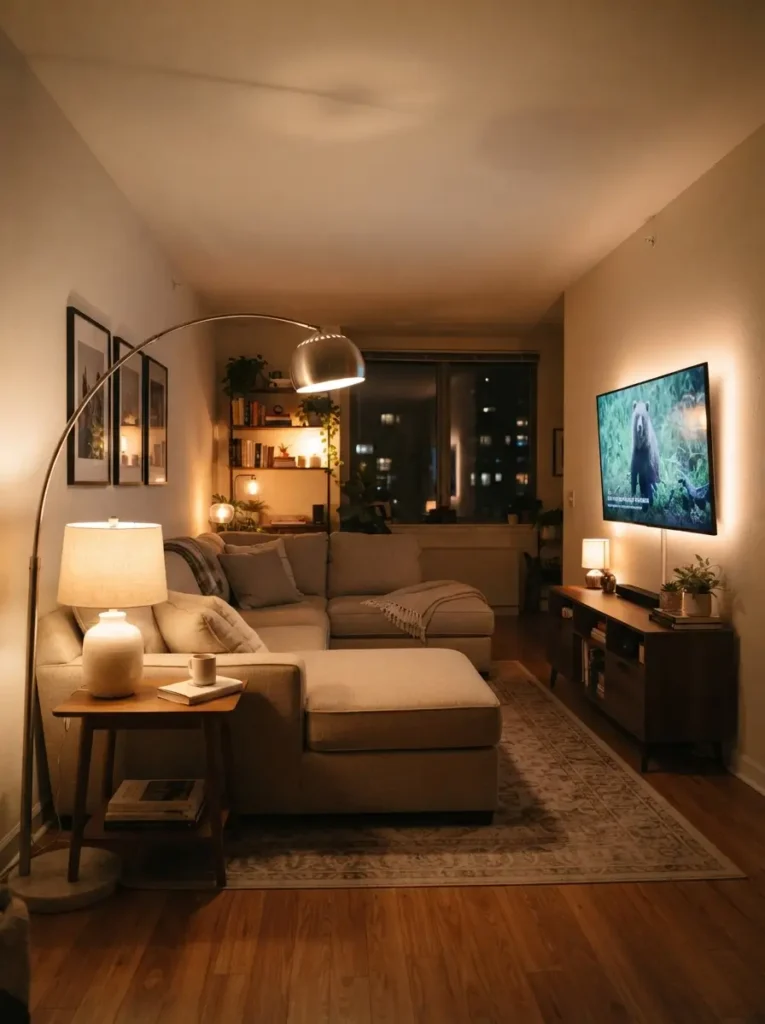
Many apartments have one harsh ceiling light in the living room. That light often makes the space feel flat and uncomfortable. Layered lighting gives the room warmth, depth, and better function for relaxing, reading, hosting, or watching TV.
This idea works because light changes how furniture feels. A large sectional can look heavy under a bright overhead bulb. Softer side lighting makes the sofa area feel calmer and more balanced.
This tip is best for renters because plug-in lighting does not require electrical work. Use three simple layers: a floor lamp near the sectional, a table lamp on a side table, and warm accent lighting near the TV or shelves.
Choose bulbs around 2700K to 3000K for a warm white glow. This range feels comfortable in living rooms. Avoid cool blue bulbs above 4000K because they can make beige, gray, and wood tones look harsh.
For example, place an arched floor lamp over the sectional corner and a small lamp on a console table. Add a low-watt LED strip behind the TV if you watch movies at night. It reduces eye strain and adds soft background light.
Avoid relying only on bright ceiling lights. Even a beautiful sectional setup can feel unfinished without good lighting.
Use Pillows to Add Color Without Clutter
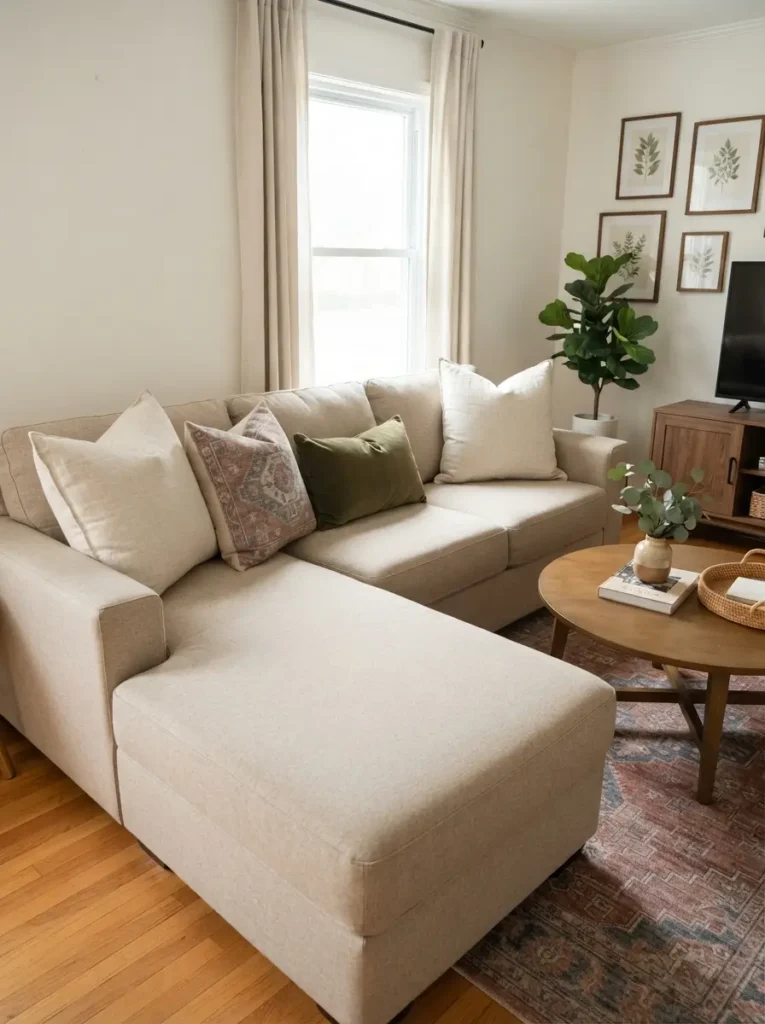
Throw pillows are an easy way to refresh a sectional, but too many pillows can make a small living room feel messy. The goal is to add color, texture, and comfort without taking away seating space.
This idea works because pillows help connect the sectional to the rest of the room. They can repeat colors from the rug, curtains, wall art, or wood furniture. This creates a pulled-together look without buying large new pieces.
This tip is best for beginners and budget decorators. Start with three to five pillows, depending on the size of the sectional. Use two larger pillows in a neutral texture, one patterned pillow, and one accent color.
For example, on a beige sectional, try warm white pillows, one olive green pillow, and one muted rust or blue patterned pillow. On a gray sectional, try cream, charcoal, soft camel, and dusty blue.
Mix textures instead of using loud patterns everywhere. Linen, boucle, cotton, velvet, and woven covers can make the sectional feel layered without looking crowded.
Avoid placing pillows across every seat. People should not need to remove half the decor just to sit down. Good styling should support daily living, not fight it.
Hang Curtains Higher to Make the Room Feel Taller
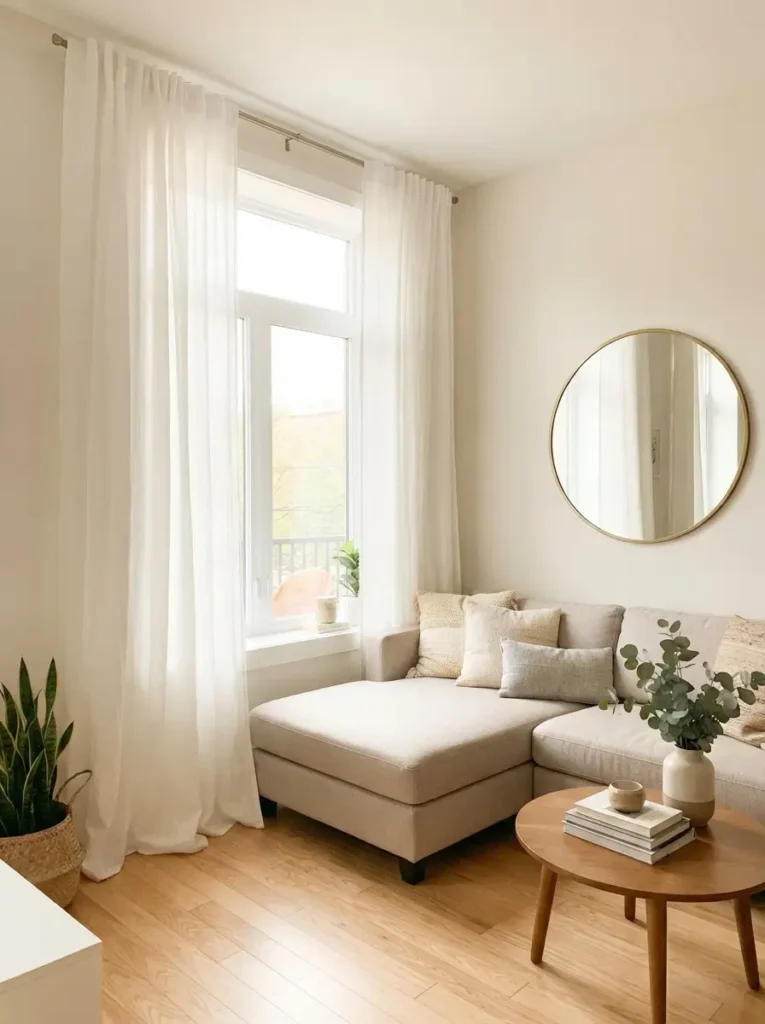
Curtains can change the proportions of a small living room. Hanging them close to the ceiling makes the room feel taller, even if the windows are small. This is a simple makeover that works especially well beside a sectional.
This idea works because vertical lines draw the eye upward. When curtains start just above the window frame, the wall can look short. When they start near the ceiling and fall to the floor, the room feels more open.
This tip is best for apartments with low ceilings, small windows, or a sectional placed near a window. Choose lightweight curtains in white, ivory, oatmeal, or soft beige to let in natural light. If you need privacy, use light-filtering curtains with blinds behind them.
For example, hang curtain rods 4 to 6 inches above the window frame, or closer to the ceiling if allowed. Extend the rod 6 to 10 inches beyond each side of the window. This makes the window look wider and lets more light show when curtains are open.
Rental-friendly tension rods can work inside window frames, but they will not create the same tall effect. If drilling is not allowed, use no-drill curtain brackets where possible.
Avoid heavy dark curtains in very small rooms unless you have strong natural light. They can close in the space and make the sectional feel heavier.
Use Mirrors Carefully to Reflect Light
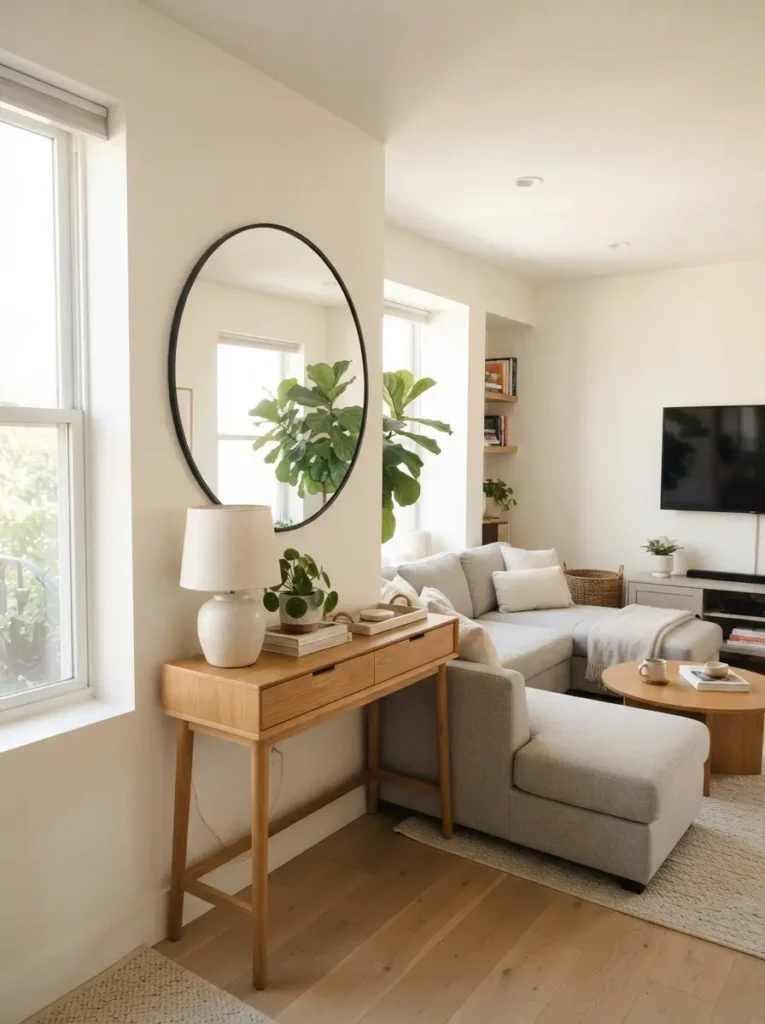
Mirrors can help a small apartment living room feel brighter, but placement matters. A mirror should reflect light, a nice view, or an open part of the room. If it reflects clutter, cords, or a crowded kitchen counter, it can make the space feel busier.
This idea works because mirrors bounce natural and artificial light around the room. They also create a sense of depth, which helps when a sectional takes up a large wall or corner.
This tip is best for darker apartments, north-facing rooms, and living rooms with one small window. Place a mirror across from or near a window, not directly opposite a messy storage area.
For example, hang a round mirror above a slim console near the sectional. You can also lean a tall mirror against a wall if your lease allows it and it is safely secured. A black frame adds contrast, while a wood frame adds warmth.
Use one medium or large mirror instead of many small mirrors. Too many reflective pieces can feel chaotic in a compact room.
Avoid placing a mirror where it reflects the TV screen. That can create glare and make evening viewing uncomfortable. A mirror should improve the room, not add visual noise.
Create a Clear Side Table Plan
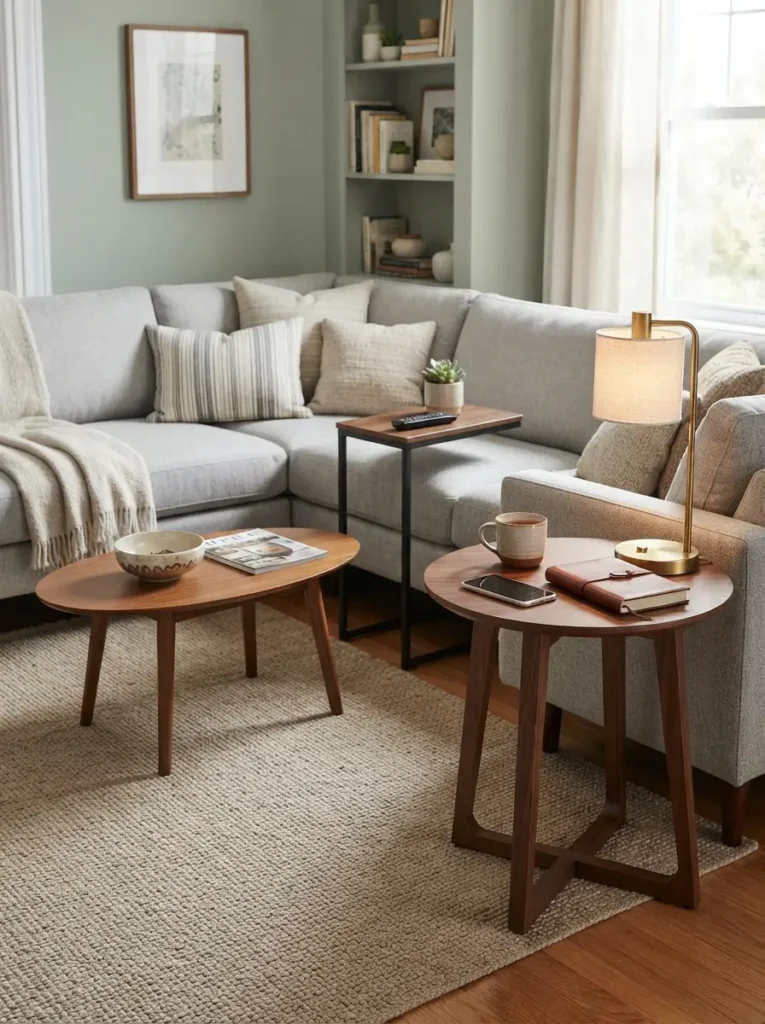
Side tables are often an afterthought, but they matter in a small sectional layout. Without a place for drinks, phones, books, and lamps, the coffee table gets crowded. With the right side table plan, the sectional becomes more practical.
This idea works because small living rooms need every piece to earn its space. A side table should support daily habits without blocking movement. Slim, nesting, C-shaped, or wall-mounted tables can work better than large square tables.
This tip is best for people who use their living room for reading, working, snacking, or hosting. Place one side table near the main seat or chaise. If the sectional has a tight corner, use a small round table instead of a wide one.
For example, a C-table can slide under the sofa and act as a laptop spot. A nesting table can open when guests visit and tuck away after. A small table with a drawer can hide chargers and remotes.
Choose tables around the same height as the sectional arm, or slightly lower. This makes them easier to use while sitting.
Avoid using two large side tables just for symmetry. In a small apartment, function should guide the choice. One useful table is better than two pieces that crowd the room.
Keep the Decor Edited and Repeated
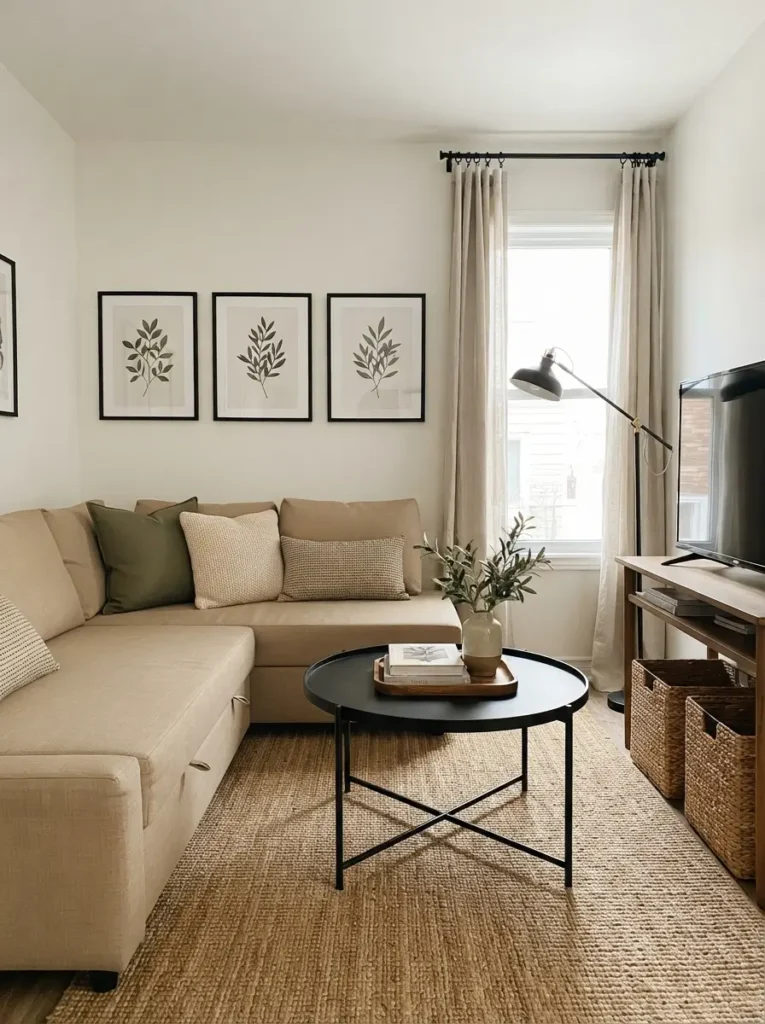
Small living rooms look better when the decor feels edited. This does not mean empty or boring. It means repeating a few colors, materials, and shapes so the room feels calm and connected.
This idea works because a sectional already creates a strong visual base. If every pillow, frame, basket, lamp, and table has a different color or style, the room can feel cluttered. Repetition helps the eye move through the space easily.
This tip is best for beginners who feel unsure about mixing decor. Choose three main colors and two main materials. For example, use warm beige, black, and olive with wood and woven textures. Or use light gray, cream, and dusty blue with black metal and oak.
Repeat each color at least twice. If you use olive pillows, add olive in artwork or a small plant pot. If you use black lamp bases, repeat black in curtain rods or picture frames.
Keep surfaces simple. A tray, a book stack, and one small plant are enough for most coffee tables. On shelves, mix storage baskets with a few personal items instead of filling every inch.
Avoid buying random decor just because it is affordable. Small spaces need fewer, better choices. A thoughtful room usually feels more expensive than a crowded one.
Common Mistakes to Avoid
One common mistake is buying a sectional before measuring the room. Always measure the wall length, doorways, stairways, elevator, and walking paths first. A sectional that fits through the door may still feel too large once it is inside the living room.
Another mistake is blocking natural light. If the sectional sits in front of a window, choose a low back style and keep curtains light. Natural light is one of the best tools for making a small apartment feel open.
Many people also choose a coffee table that is too big. A large square or rectangular table can block the path between the sectional and TV wall. Round, oval, nesting, or storage ottoman styles often work better.
Avoid using only dark furniture in a small room. Dark sectionals can look stylish, but they need balance. Add light rugs, warm lamps, pale curtains, and wall art to stop the room from feeling heavy.
Too many small decor items can also create clutter. Five tiny frames, three candles, two vases, and several trays can make a compact room feel busy. Use fewer pieces with better scale.
Another mistake is ignoring lighting temperature. Cool white bulbs can make a living room feel harsh. Warm bulbs around 2700K to 3000K usually make sectionals, wood tones, and neutral colors look softer.
Finally, do not push every piece of furniture against every wall without thinking. Sometimes a slim console, a better rug placement, or a slight sectional shift can make the room feel more intentional.
Budget-Friendly Tips for a Small Living Room With Sectional
You do not need a full furniture replacement to improve a small living room with sectional apartment setup. Start with the changes that cost the least but make the biggest difference.
Rearrange the sectional first. Try it against the longest wall, in a corner, or facing the TV wall more directly. Take photos from different angles. Photos help you see clutter and awkward spacing more clearly.
Next, update pillow covers instead of buying new pillows. Covers are cheaper, easier to store, and simple to change by season. Choose washable covers in cotton, linen, or textured fabric.
Use a large affordable rug to define the seating area. If a new rug is too expensive, look for washable rugs, flatweave styles, clearance sales, or secondhand options. A good rug can make older furniture look more planned.
Swap harsh bulbs for warm LED bulbs. This small change can improve the room at night without new furniture. Use warm white bulbs between 2700K and 3000K for a comfortable living room feel.
Add storage baskets under tables, beside the sectional, or on shelves. Baskets hide daily items like blankets, toys, chargers, and magazines. Choose similar baskets so the room looks organized.
Use peel-and-stick hooks, removable wallpaper panels, no-drill curtain brackets, and plug-in sconces for rental-friendly upgrades. Always test adhesives on a small hidden area first, especially on painted apartment walls.
Shop your home before buying. A lamp from the bedroom, a tray from the kitchen, or artwork from a hallway may work better in the living room. Moving decor around can refresh the space for free.
Small Living Room With Sectional Apartment Tips
Measure before you buy anything. Write down the full room size, sectional size, TV wall width, rug size, and walkway space. Keep these numbers on your phone when shopping.
Choose one main focal point. In most small apartments, that will be the TV wall, window, or sectional wall. Too many focal points can make the room feel scattered.
Keep walkways clear. Aim for at least 24 inches in tight areas and closer to 30 inches where people walk often. Good movement makes a room feel larger than it is.
Use furniture with hidden storage. Storage ottomans, lift-top coffee tables, closed media consoles, and side tables with drawers help reduce visible clutter.
Keep the sectional color connected to the room. A beige sectional works well with warm whites, oak, black accents, and muted greens. A gray sectional works well with cream, walnut, charcoal, and soft blue.
Do not ignore scale. A tiny lamp beside a large sectional can look odd, while a huge floor lamp can overwhelm the room. Choose medium-scale pieces that balance the sofa without fighting it.
Use wall space wisely. Shelves, vertical art, tall curtains, and mirrors can make the room feel taller. This is important when the sectional takes up most of the lower wall space.
Edit often. Small apartments collect clutter quickly. Remove items that do not serve a purpose, fit the color palette, or add meaning to the room.
FAQ
What size sectional is best for a small apartment living room?
The best sectional size depends on your room, but many small apartments work well with a compact sectional between 78 and 90 inches wide. A chaise sectional or reversible sectional is usually easier to place than a large L-shaped model. Always measure your room and leave clear walking paths before buying.
Should a sectional touch the wall in a small living room?
A sectional can touch the wall if the room is narrow or space is limited. This often keeps the center of the room open. If you have an open-plan apartment, you can float the sectional, but only if there is enough space behind it for walking.
What coffee table works best with a sectional in a small room?
Round, oval, nesting, and storage ottoman coffee tables work well with sectionals in small rooms. They are easier to walk around and usually feel lighter than large square tables. Leave around 16 to 18 inches between the table and the sectional.
How do I make a small living room with a sectional look bigger?
Use light colors, raised-leg furniture, a large rug, warm layered lighting, tall curtains, and fewer decor pieces. Keep the floor as open as possible and avoid blocking windows. A mirror placed near natural light can also help the room feel brighter.
Is a beige sectional a good choice for a small apartment?
Yes, a beige sectional is a practical choice because it feels light, flexible, and easy to style. It works with many colors, including black, olive, rust, cream, walnut, and soft blue. Choose washable or performance fabric if you worry about stains.
How can renters decorate around a sectional without making permanent changes?
Renters can use washable rugs, plug-in lamps, peel-and-stick hooks, removable wallpaper, no-drill curtain brackets, freestanding shelves, and slipcovers. These changes improve the room without major damage or permanent installation.
Conclusion
A sectional can be a smart choice for a small apartment when the layout, scale, and styling support the room. Instead of thinking of the sectional as the problem, treat it as the anchor. Once it sits in the right place, the rest of the room becomes easier to plan.
The best small living room with sectional apartment makeover ideas focus on comfort and movement. Choose a low profile or chaise sectional, keep walkways open, use a large enough rug, add warm lighting, and rely on vertical storage. These choices help the room feel useful, not crowded.
Small-space decorating is not about buying more things. It is about choosing better pieces, editing what you already have, and making each item work harder. With the right sectional layout and a few thoughtful updates, your apartment living room can feel comfortable, organized, and easy to enjoy every day.