
College bedrooms can feel small before you even unpack. Between clothes, bedding, books, snacks, shoes, laundry, beauty products, school supplies, and everyday tech, the room fills up quickly.
The good news is that you do not need a large dorm or apartment bedroom to stay organized. You need smart storage that works with the space you already have.
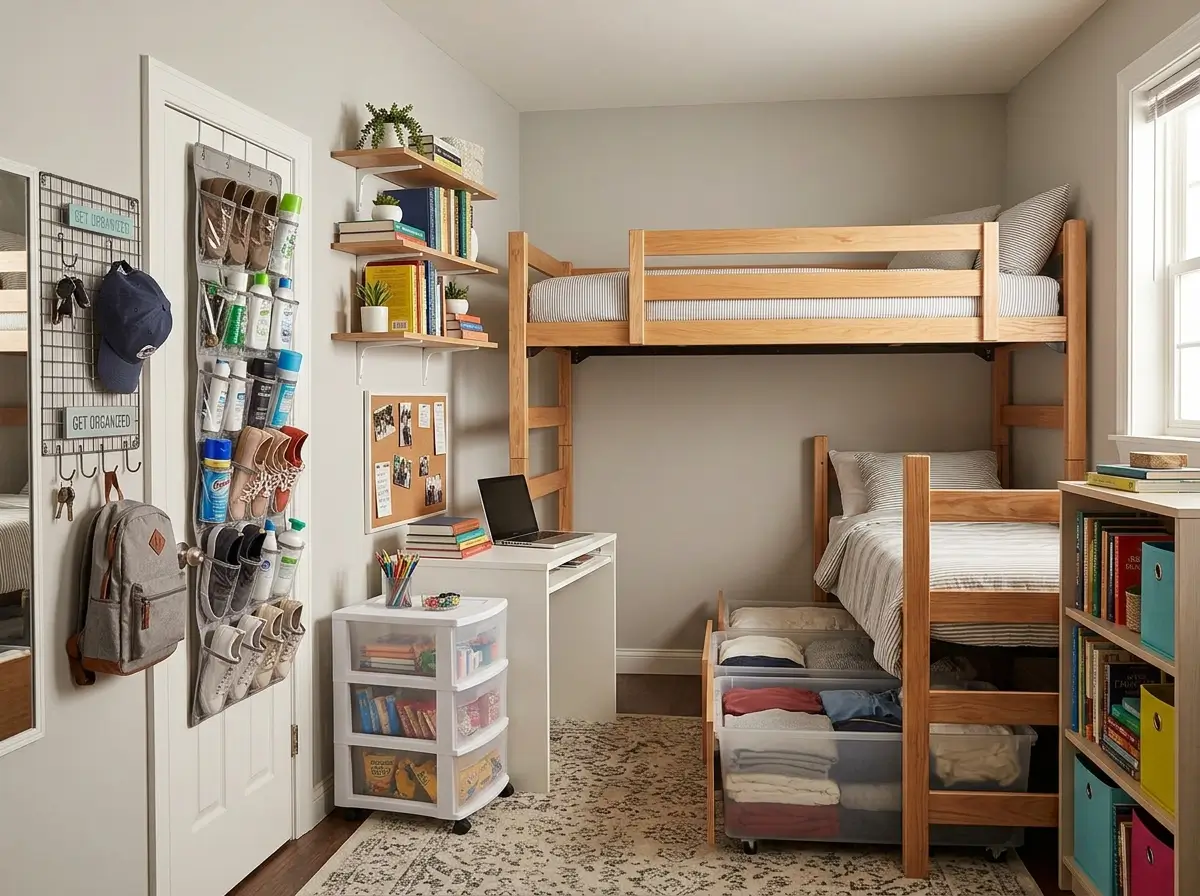
These small college bedroom storage ideas are practical, renter-friendly, and beginner-friendly. They help you use walls, corners, under-bed space, closet doors, desk areas, and hidden zones without making the room feel crowded.
This guide focuses on real decorating choices, not just pretty storage bins. You will find ideas for tight dorms, shared college rooms, rental bedrooms, and small apartments where every inch matters.
What are the best small college bedroom storage ideas?
The best small college bedroom storage ideas use vertical space, hidden storage, under-bed zones, multi-use furniture, wall hooks, slim shelves, closet organizers, and labeled bins. These ideas work because they keep daily items easy to reach while reducing floor clutter.
For a small college bedroom, start with the biggest problem first. If clothes are the issue, improve the closet and under-bed storage. If books and supplies pile up, fix the desk zone. If the room feels messy every day, add visible baskets, hooks, and a simple nightstand organizer.
A good storage plan should make your routine easier. You should not have to move five things just to grab a hoodie, charger, textbook, or towel.
Use Under-Bed Storage for Bulky Items
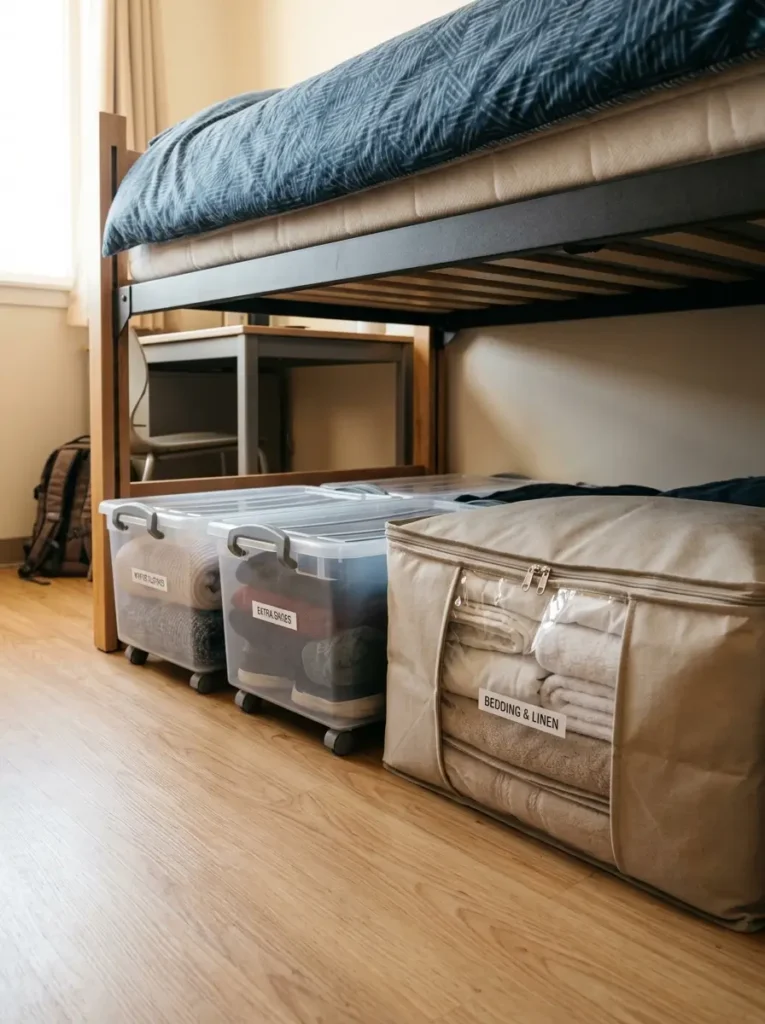
Under-bed storage is one of the most useful small college bedroom storage ideas because it uses space that often goes wasted. In a dorm or tiny bedroom, the area under the bed can hold items that take up too much closet or floor space.
This idea works best for bedding, extra towels, seasonal clothes, shoes, sweatshirts, and backup supplies. These things are important, but you do not need all of them every hour of the day.
For a neat setup, use low rolling bins, zip fabric bags, or clear plastic containers. Clear bins make it easier to see what you own. Fabric bags look softer and slide well under a low bed. Rolling bins work best if your bed has enough height and a hard floor.
If your dorm allows bed risers, raise the bed a few inches. This gives you more room for storage without adding another furniture piece. Choose sturdy risers and check the dorm rules before using them.
A practical example is to place winter clothes in one under-bed bin, extra sheets in another, and shoes in a separate shoe organizer. This keeps bulky items grouped by use instead of mixed together.
This tip is best for students with limited closet space, shared bedrooms, or dorm rooms where large dressers are not allowed. It also helps if you move often because most under-bed bins are easy to pack.
To keep the room looking calm, use matching bins in white, beige, soft gray, or light wood tones. These colors blend well with most college bedding and do not make the room feel visually heavy.
Add a Bedside Caddy for Daily Essentials
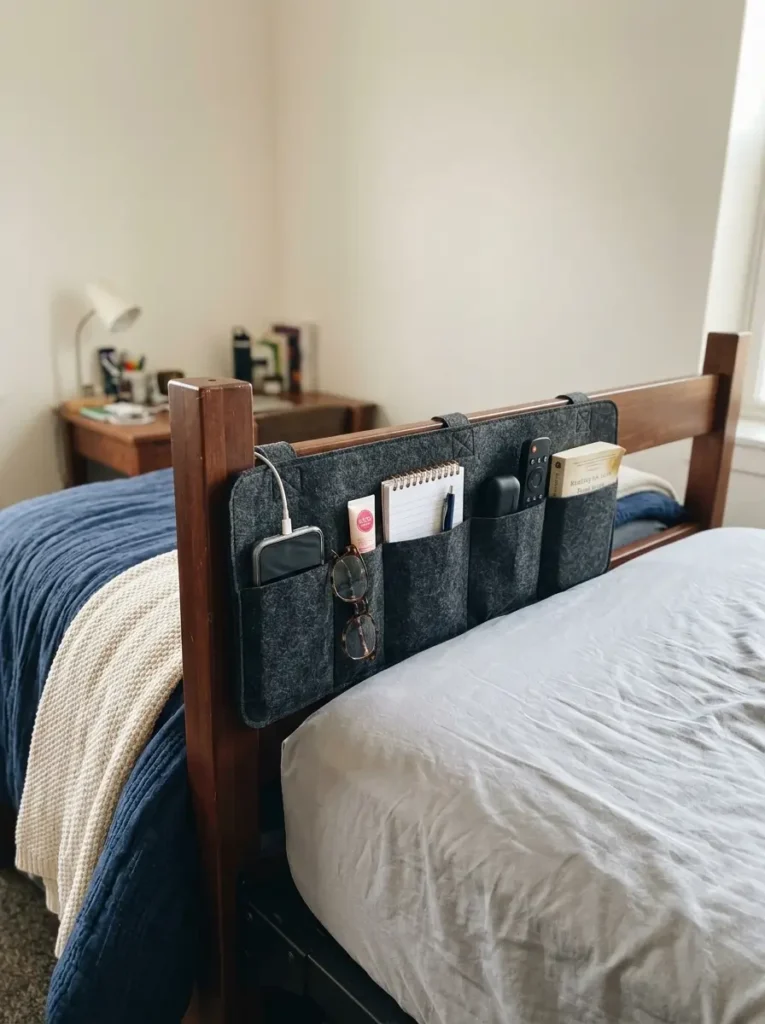
A bedside caddy is a simple storage piece that hangs from the side of the bed. It gives you a place for items you use every night, such as your phone, charger, glasses, lip balm, notebook, earphones, remote, or reading book.
This works well because small college rooms often do not have space for a full nightstand. Even when there is a nightstand, it can quickly become messy. A bedside caddy keeps the most-used items close without taking floor space.
Choose a caddy with several pockets, but avoid one that is too large or floppy. A heavy caddy can look messy if it holds too many things. Canvas, felt, or quilted fabric options usually feel softer than shiny plastic.
For a clean look, match the caddy to your bedding or bed frame. A beige, cream, charcoal, sage green, or navy caddy works well in most dorm rooms. If your bedding is colorful, choose a neutral caddy so the bed area does not look busy.
This idea is best for students who study in bed, share a room, or use a lofted bed. It is also useful for anyone who loses chargers or small items often.
A common mistake is using the caddy as a junk drawer. Keep it limited to daily items only. If you store snacks, makeup, receipts, and random cables in it, it will lose its purpose quickly.
Choose a Storage Ottoman Instead of a Basic Chair
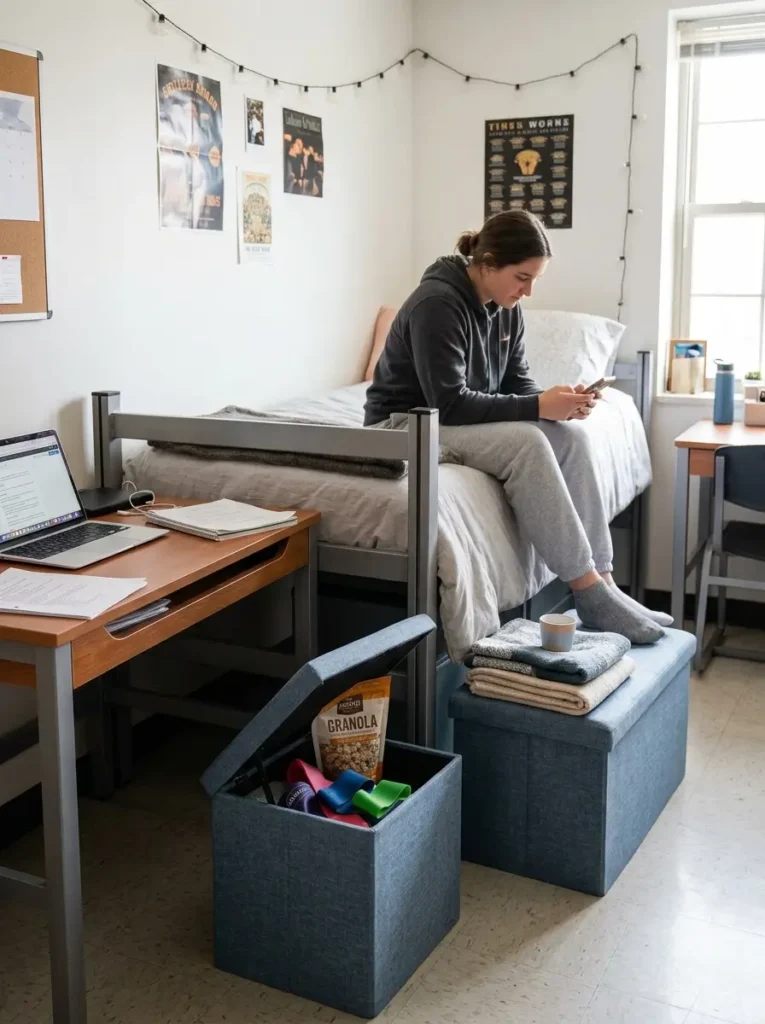
A storage ottoman gives you seating and hidden storage in one piece. This makes it a smart choice for tight college bedrooms because it replaces two separate items.
You can use it as a seat, footrest, small table, or place to hold extra blankets. Inside, you can store snacks, workout bands, hair tools, extra notebooks, chargers, or laundry supplies.
This idea works because it hides visual clutter. Small rooms feel messy when every item is visible. An ottoman lets you keep necessary things nearby without showing them all the time.
Choose a square or round ottoman that fits under your desk, beside your bed, or near a window. For a small room, avoid oversized bench-style ottomans unless you have a longer empty wall.
Soft fabric ottomans in beige, gray, cream, dusty blue, or warm brown look more homey than bright plastic storage cubes. If your room has white walls and basic dorm furniture, a textured ottoman can make the space feel more finished.
This tip is best for students who need extra seating for friends but do not have room for chairs. It also helps in small apartment bedrooms where the bed, desk, and closet take up most of the space.
For safety and comfort, do not overload the ottoman with heavy books unless it is built for weight. Use it for soft or medium-weight items instead.
Use Over-the-Door Organizers for Small Items
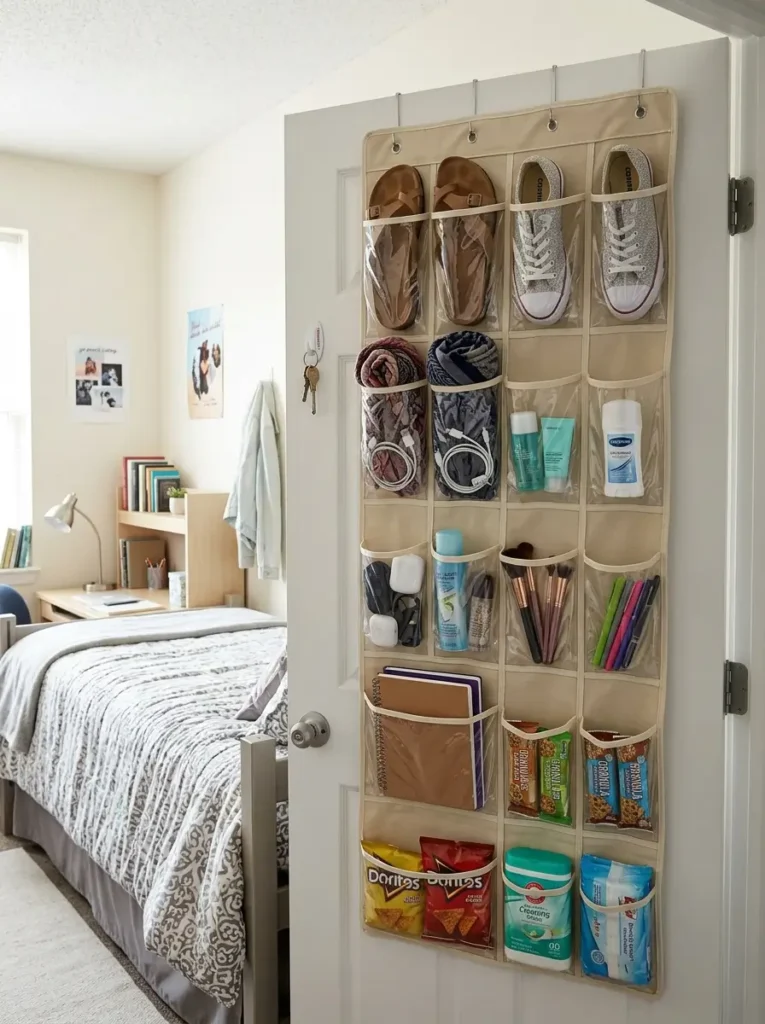
The back of a door can become valuable storage in a small college bedroom. Over-the-door organizers work well because they use vertical space without drilling holes or adding furniture.
You can use pocket organizers for shoes, toiletries, snacks, cleaning supplies, scarves, accessories, school supplies, or beauty products. If you have a closet door, you can use one organizer inside the closet and another behind the main bedroom door.
This idea works because many small items create clutter faster than large items. A pile of chargers, hair ties, deodorant, notebooks, and snacks can make a room look messy even if the furniture is clean.
Choose clear pockets if you want to see everything quickly. Choose fabric pockets if you want a softer look. For decor, neutral fabric organizers look better in visible areas, while clear ones work well inside closets.
This tip is best for students who have many small daily items and not enough drawers. It is also useful for shared dorms because each person can have one side or one organizer.
A practical setup is to use the top pockets for less-used items, middle pockets for daily essentials, and lower pockets for shoes or cleaning products. This keeps the organizer easy to use.
Before buying, check the thickness of your door and make sure the hooks fit. Some dorm doors do not close well with thick metal hooks. In that case, look for slim hooks or soft hanging straps.
Install Removable Wall Hooks for Bags and Jackets
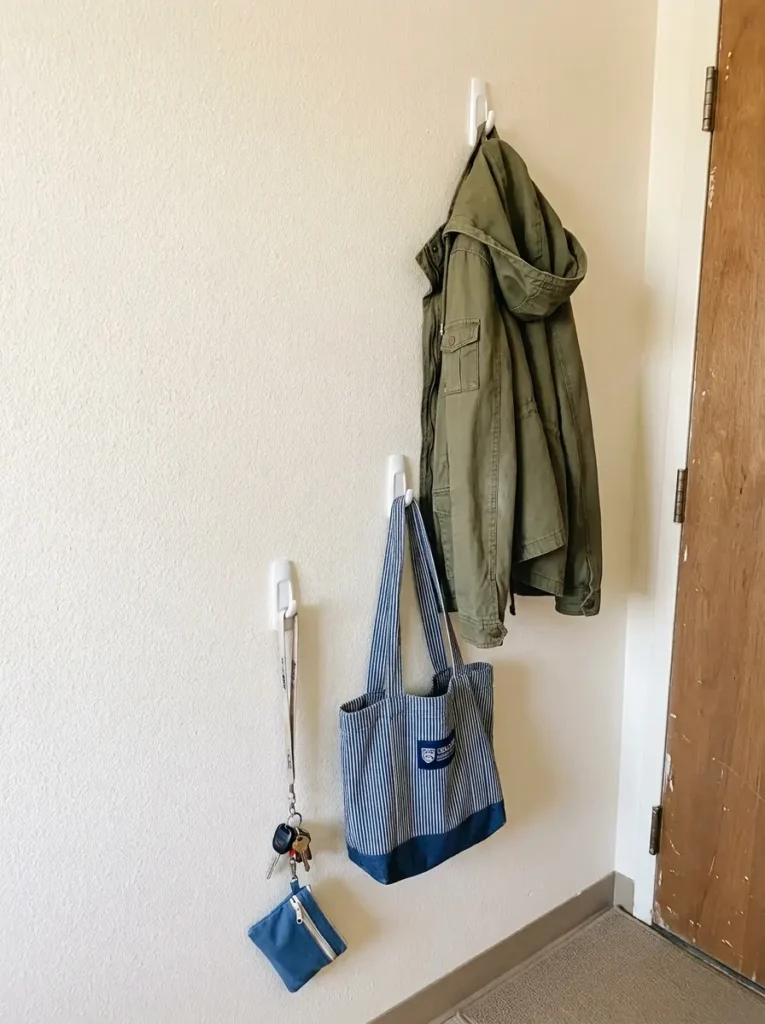
Removable wall hooks are renter-friendly and dorm-friendly when used correctly. They help you store items vertically instead of tossing them on a chair, bed, or floor.
Hooks work well for backpacks, tote bags, jackets, hats, towels, keys, headphones, and lanyards. They are one of the easiest small college bedroom storage ideas because they cost little and do not require tools.
This idea works because many college items need quick access. You may use your bag, jacket, or keys several times a day. A hook gives each item a home near the door or beside the closet.
For a clean layout, create a small “drop zone” near the entrance of the room. Add two or three removable hooks in a vertical row or straight line. Use the top hook for a jacket, the middle hook for a bag, and the lower hook for keys or a small pouch.
This tip is best for busy students who come in and out often. It also helps if your chair becomes a dumping spot for clothes and bags.
Use hooks in finishes that match the room. White hooks blend into white walls. Black hooks look sharp with modern decor. Wood-look hooks can warm up plain dorm walls.
Follow the weight limit on the package. Do not hang a very heavy backpack on a small adhesive hook. If you overload it, the hook may fall and damage the wall.
Add a Slim Rolling Cart Beside the Desk
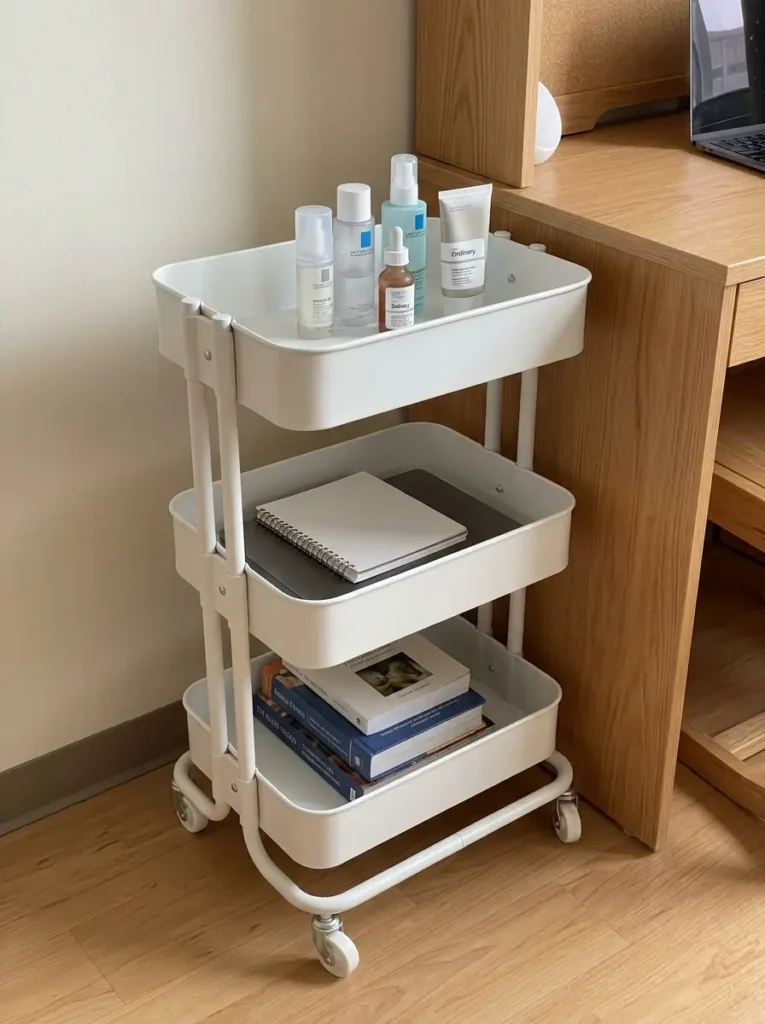
A slim rolling cart can solve many storage problems in a small college bedroom. It can hold school supplies, skincare, snacks, craft items, hair tools, or tech accessories.
This idea works because a cart moves with you. You can keep it beside the desk while studying, roll it near the bed at night, or tuck it into a corner when guests come over.
Choose a three-tier cart if you need flexible storage. The top shelf can hold daily items, the middle shelf can hold books or notebooks, and the bottom shelf can hold heavier supplies. Use small cups or bins on each level to stop items from sliding around.
A white cart feels clean and bright. A black cart works well in modern rooms. A soft sage, blush, or beige cart can add color without making the room feel childish.
This tip is best for students who do homework, makeup, snacks, and planning in the same small room. It also works well in dorms where built-in storage is limited.
For a practical example, use the top tier for pens, a planner, and a desk lamp. Use the middle tier for textbooks and folders. Use the bottom tier for printer paper, chargers, and backup supplies.
Do not let the cart become a clutter tower. Review it once a week and remove empty packaging, old papers, and random items.
Use Drawer Dividers Inside Every Small Drawer
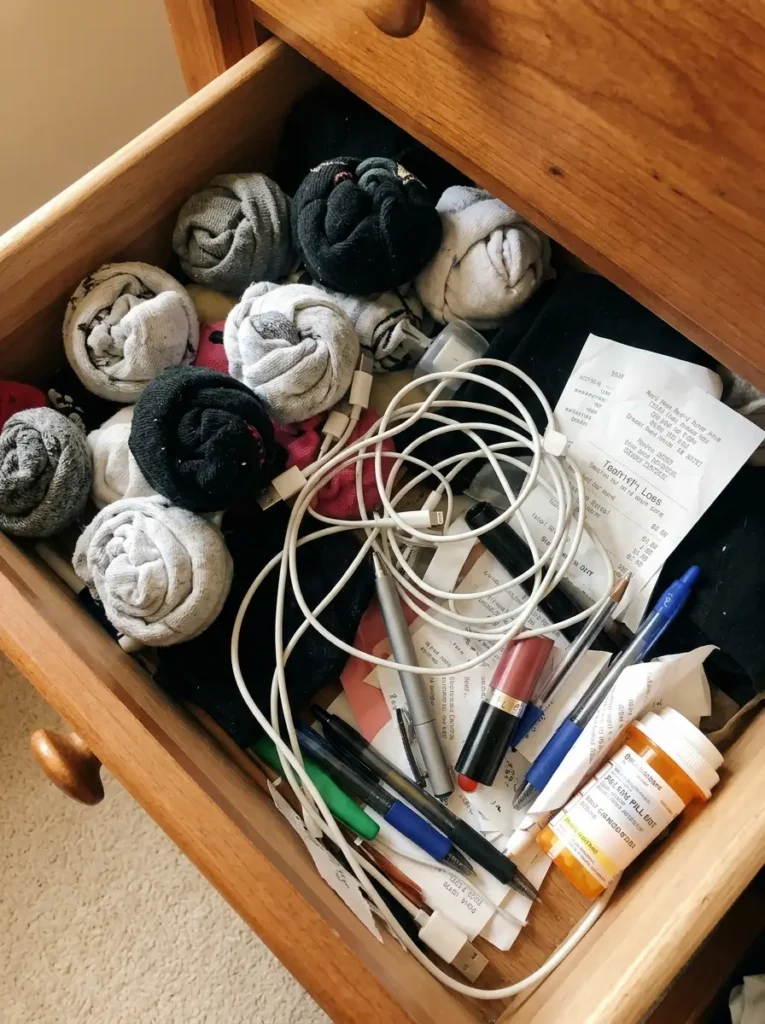
Small drawers can become messy fast because they hold mixed items. Drawer dividers help you create sections for each category. This makes storage more useful without buying a new dresser.
This idea works because organization depends on separation. When socks, chargers, pens, makeup, medicine, and receipts all sit in one drawer, you waste time looking for things.
Use dividers in desk drawers, dresser drawers, nightstand drawers, and bathroom carts. You can choose adjustable plastic dividers, bamboo dividers, small fabric boxes, or even clean cardboard boxes as a budget option.
This tip is best for students who have enough drawer space but still feel disorganized. It is also useful for beginners because it does not require design skills or installation.
A practical example is to divide a desk drawer into four zones: pens and pencils, sticky notes, chargers, and small tech items. In a clothing drawer, divide socks, underwear, workout tops, and sleepwear.
For a softer decor look, use beige or gray fabric drawer boxes. For a cleaner modern look, use clear acrylic or white plastic dividers. Bamboo dividers work well if your room has warm wood furniture or neutral bedding.
Do not buy dividers before measuring the drawer. Small college furniture often has shallow drawers, and some organizers may be too tall.
Try a Desk Hutch or Desktop Shelf
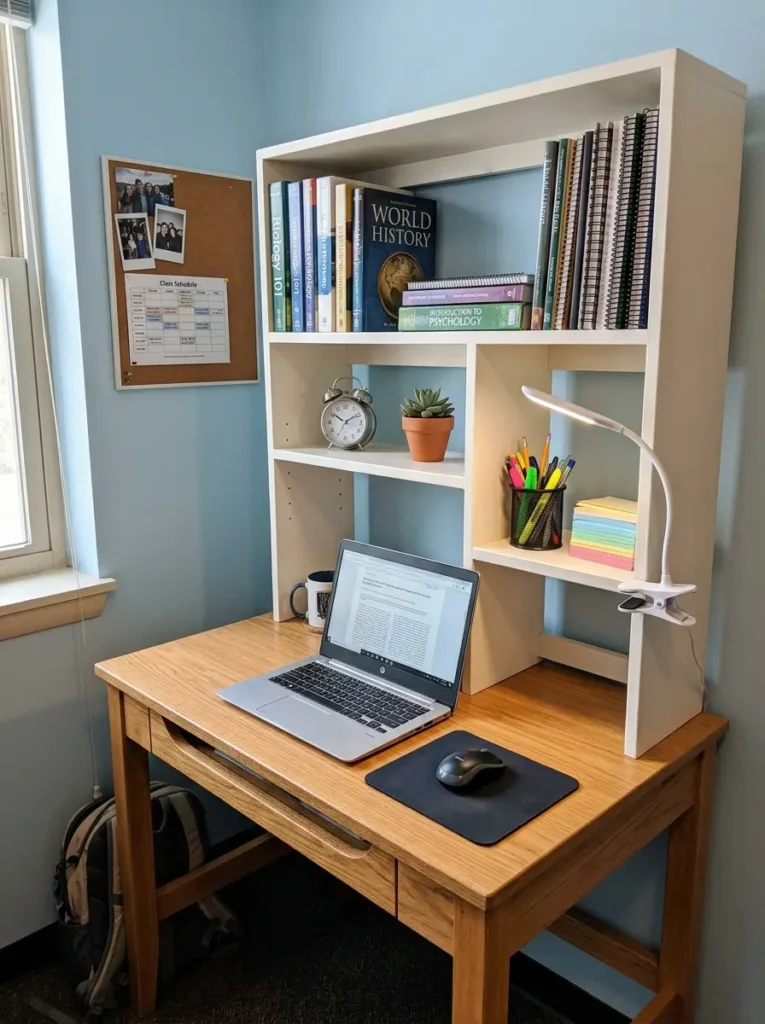
A desk hutch or desktop shelf adds storage above the desk without taking extra floor space. It gives you room for books, notebooks, a lamp, small plants, a clock, and study supplies.
This idea works because most college desks have unused vertical space. When you build upward, the desktop stays clearer. A clean desk makes studying easier and helps the room feel less crowded.
Choose a hutch if your desk allows it. Choose a simple desktop shelf if you need something removable. Many lightweight shelves sit directly on the desk and do not need screws.
This tip is best for students who study often and need books nearby. It also helps if you have limited closet storage and no room for a full bookcase.
A practical setup is to keep textbooks on one side, a small warm lamp in the middle, and daily supplies in cups or small bins. Use the top shelf for decor only if the lower area already handles your study needs.
For lighting, choose a desk lamp with a warm white bulb around 2700K to 3000K if you want a cozy evening study zone. If you need sharper task lighting, a 3500K to 4000K bulb can feel clearer without looking too harsh.
Avoid overloading the hutch with too many decorations. In a small bedroom, storage should come first. Add one small framed print, one plant, or one personal item instead of filling every inch.
Use Closet Shelf Risers for Folded Clothes
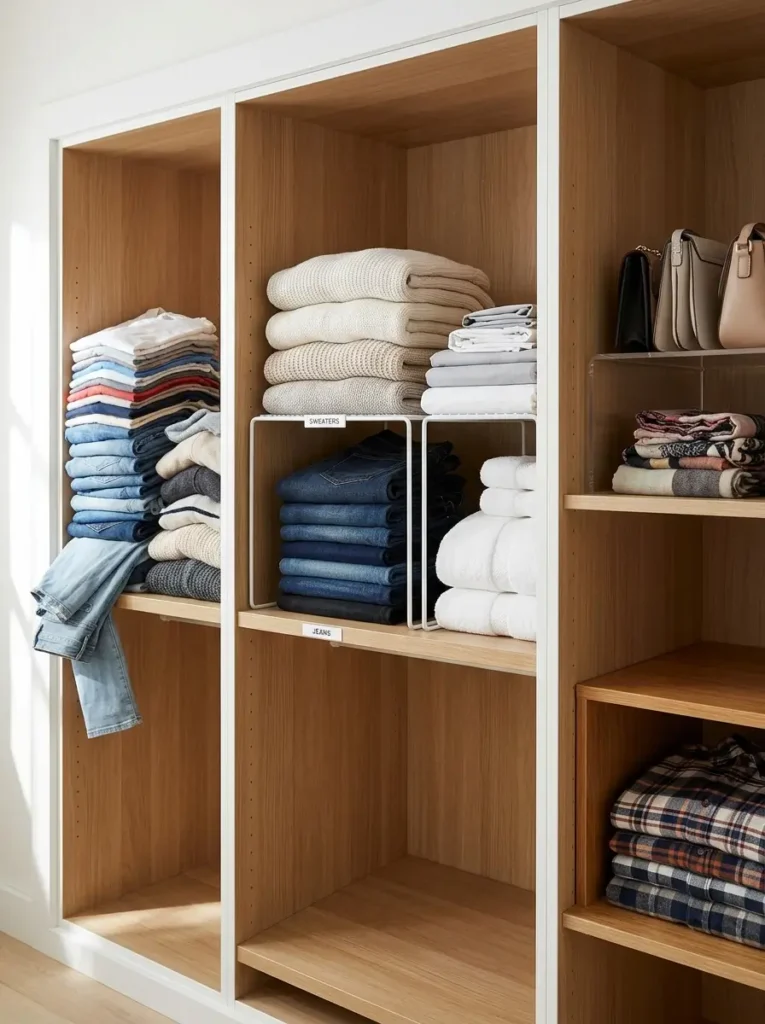
Closet shelf risers help you stack folded clothes without creating tall piles that fall over. They are useful in dorm closets, small apartment closets, and shared wardrobes.
This idea works because flat shelves often waste vertical space. A riser creates another level, so you can separate jeans from sweaters, towels from bedding, or bags from folded shirts.
Choose metal, acrylic, plastic, or wood shelf risers based on your budget and style. White metal risers look clean and simple. Clear acrylic looks lighter in a small room. Wood risers add warmth if your room has beige or natural tones.
This tip is best for students with more folded clothes than hanging clothes. It also helps if you do not have a large dresser.
A practical example is to place jeans under the riser and sweatshirts on top. Or use one riser for towels and another for extra bedding. This keeps stacks shorter and easier to manage.
You can also use shelf dividers if the closet already has tall shelves. Dividers stop piles from leaning into each other. They work well for sweaters, hoodies, and bags.
Do not stack clothes too high. When a pile becomes taller than your hand can manage, it usually falls apart. Keep stacks low and grouped by type.
Store Shoes Vertically Instead of Across the Floor
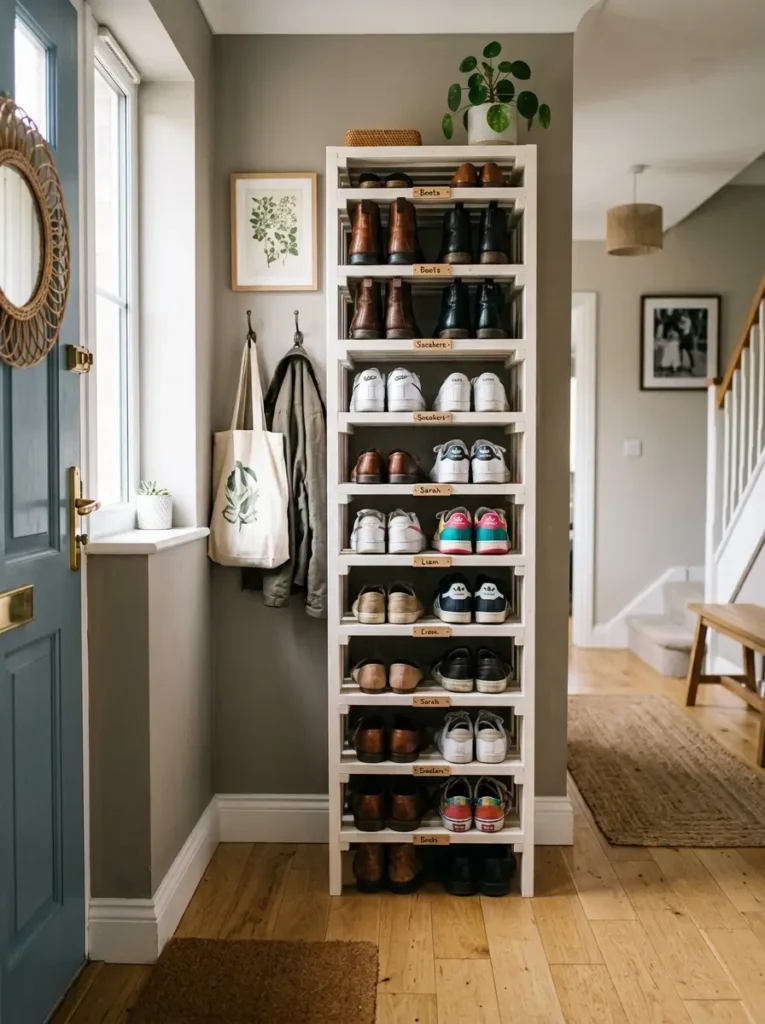
Shoes can take over a small college bedroom quickly. They often end up under the bed, near the door, inside the closet, and beside the desk. Vertical shoe storage solves this problem by using height instead of floor width.
This idea works because shoes are awkward shapes. If you leave them loose, they spread out and make the room feel messy. A vertical rack, hanging shoe organizer, or stackable shoe shelf keeps them in one place.
For a dorm, choose a narrow shoe rack that fits inside the closet or beside the door. For a very tight space, use an over-the-door shoe organizer. If you want a cleaner look, use fabric shoe boxes with labels.
This tip is best for students who own several pairs of sneakers, flats, sandals, or boots. It also helps if your room entrance doesn’t get cluttered.
A practical layout is to keep daily shoes on the lowest shelf, gym shoes in the middle, and less-used shoes on the top. Store seasonal shoes under the bed if you do not wear them often.
For color, white or black shoe racks are easy to match. Natural wood shoe racks look warmer, but they may cost more. Fabric shoe cubbies feel softer and work well in bedrooms with cozy bedding.
Avoid placing too many shoes near the bed. Shoes carry dirt, and they can make the sleeping area feel less clean. Keep them near the closet or door when possible.
Use Matching Baskets on Open Shelves
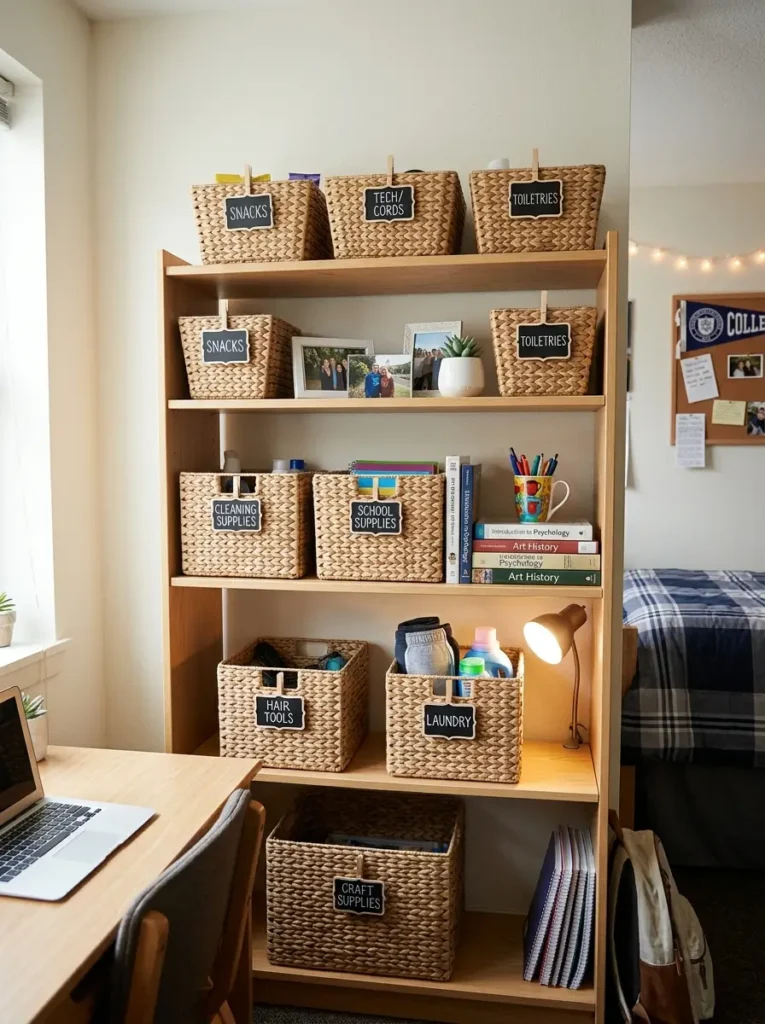
Open shelves can look messy if every item is visible. Matching baskets help open storage look intentional while hiding small clutter.
This idea works because baskets create visual order. Even if the items inside are mixed, the outside looks neat. This is helpful in small college bedrooms where shelves are often visible from every angle.
Use baskets for snacks, toiletries, extra cords, cleaning supplies, hair tools, notebooks, laundry items, or craft supplies. Choose baskets that fit the shelf depth so they do not hang over the edge.
This tip is best for students who have open shelving, cube organizers, or bookshelves. It is also useful for beginners who want the room to look organized without styling every single item.
For a calm room, use three to five matching baskets instead of many different styles. Beige fabric bins, white woven baskets, gray felt bins, or natural seagrass baskets all work well.
A practical example is to use one basket for tech, one for beauty, one for snacks, and one for school supplies. Add small labels if you forget what is inside.
Do not choose baskets only because they look cute. Check the size, handle strength, and material. A weak basket may bend when filled with books or bottles.
Add a Laundry System That Fits Your Routine
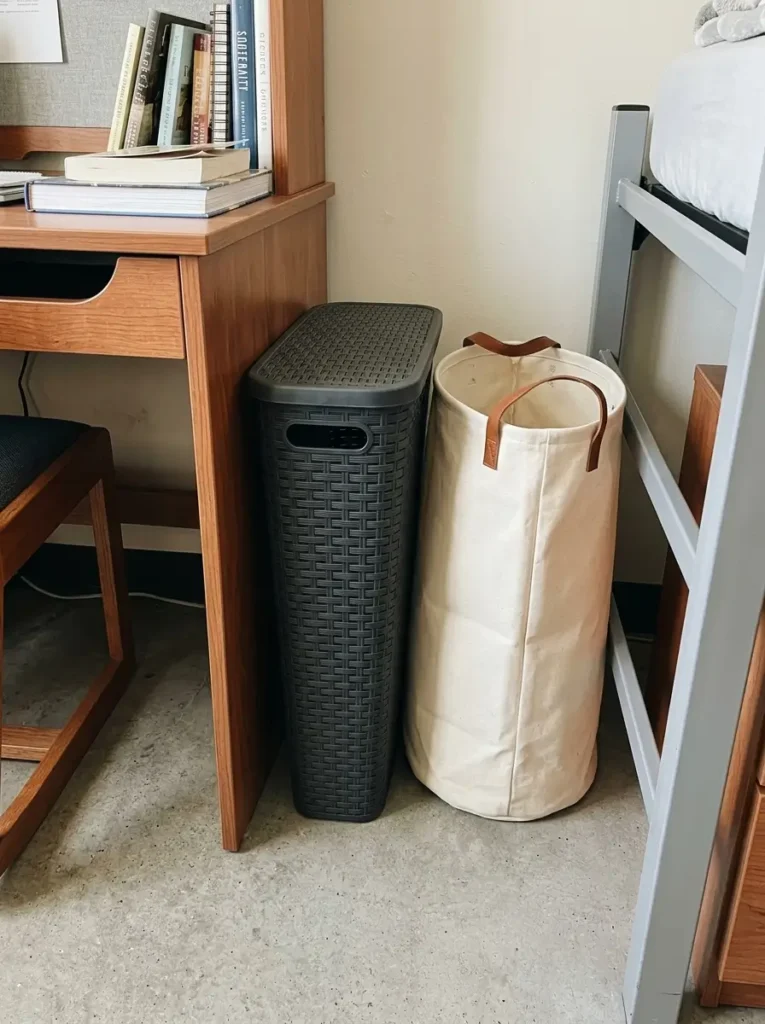
Laundry storage matters in a small college bedroom because dirty clothes can fill the floor fast. A good laundry system keeps clothes contained and easy to carry.
This idea works because it supports your real routine. If your laundry basket is too small, clothes overflow. If it is too bulky, it blocks the room. If it has no handles, you avoid using it.
Choose a slim hamper for tight corners. Choose a tall fabric hamper if you have narrow floor space. Choose a backpack-style laundry bag if your laundry room is far away. Choose a divided hamper if you separate lights, darks, and towels.
This tip is best for students who share laundry rooms or have busy schedules. It also helps if you tend to delay laundry until clothes pile up.
A practical setup is to place the hamper near the closet, not beside the bed. This makes it easier to drop clothes in after changing. If the closet is too small, place the hamper behind the door or beside a dresser.
For style, choose a hamper in canvas, beige, gray, black, or soft white. Avoid bright plastic baskets if you want the room to feel calmer.
Do not use the floor as a laundry zone. Once clothes land on the floor, clean and dirty items mix. A simple hamper prevents that daily mess.
Create a Compact Command Center Near the Door
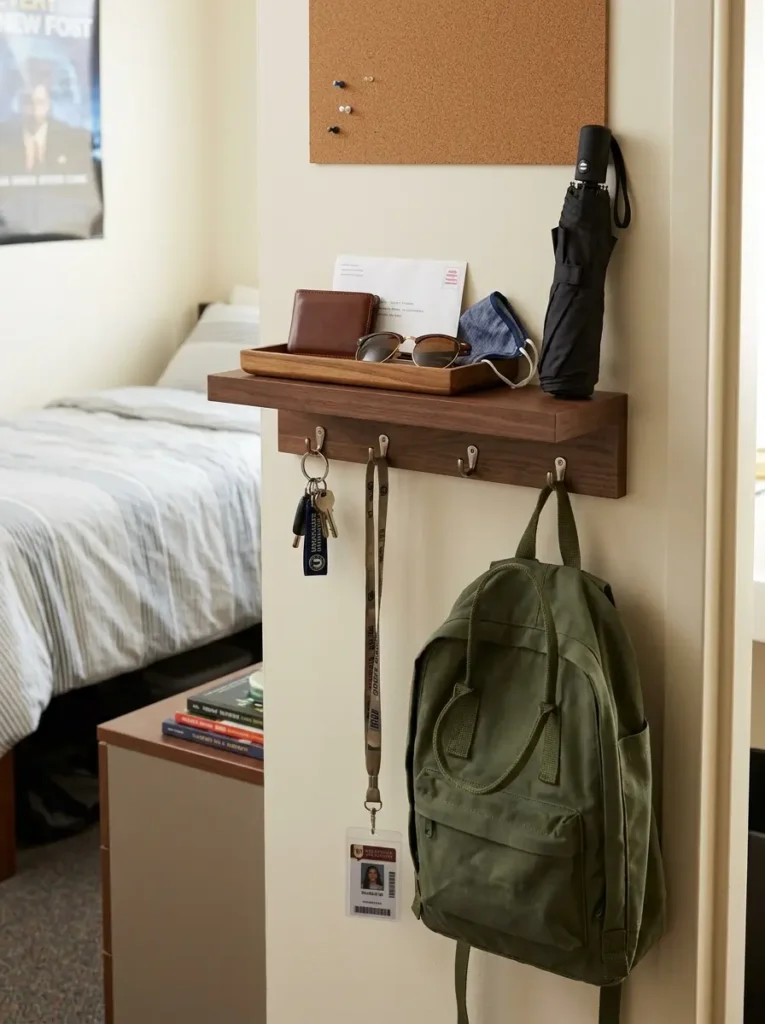
A command center is a small area for items you need when leaving the room. It can include keys, student ID, wallet, bag, umbrella, mask, sunglasses, and mail.
This idea works because mornings are easier when essentials have one home. In a small college bedroom, losing small items can create stress and mess.
You do not need a large entryway. Use a small wall hook, adhesive shelf, magnetic board, cork board, or narrow tray on top of a dresser. Keep the setup simple so it does not become cluttered.
This tip is best for students with early classes, internships, campus jobs, or shared living spaces. It also helps if you often misplace keys or ID cards.
A practical example is to place two removable hooks near the door for keys and a lanyard. Add a small tray on the dresser for a wallet and earbuds. Add a slim folder or wall pocket for important papers.
For decor, choose one finish and repeat it. If you use black hooks, use a black tray or black frame. If your room has warm colors, use wood-look pieces or a woven texture.
Keep this area minimal. A command center should hold only items for leaving the room. Do not add makeup, snacks, books, and random papers here.
Use a Headboard Shelf or Bed Shelf
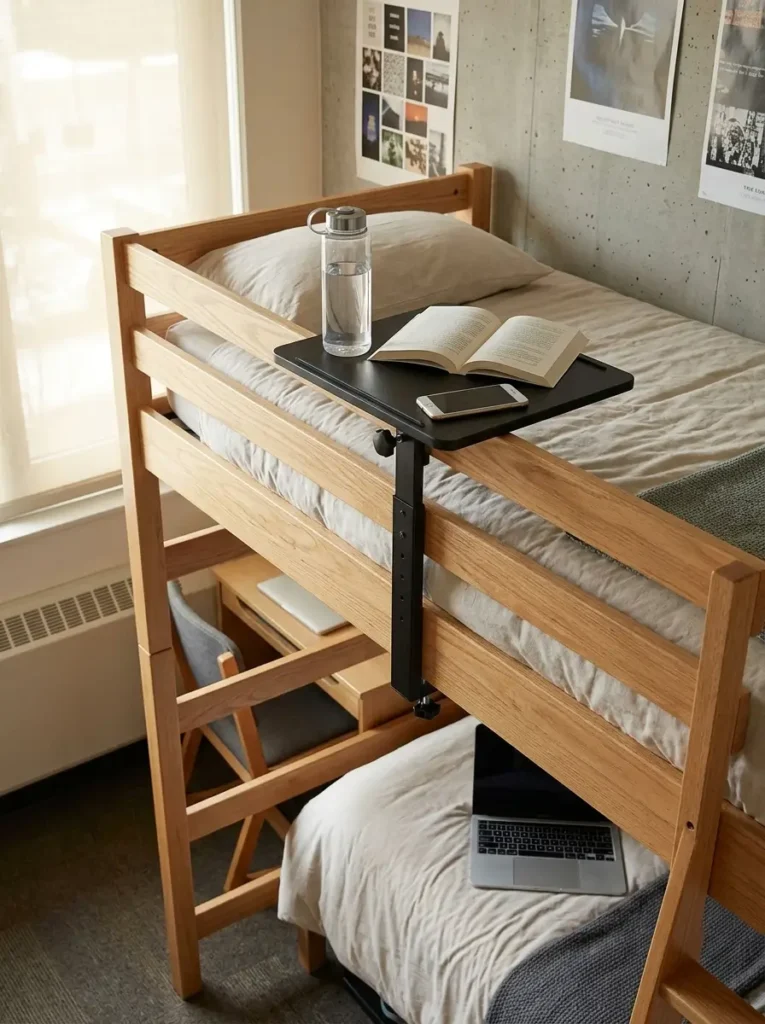
A headboard shelf or clamp-on bed shelf gives you storage near the sleeping area without using a nightstand. It works especially well in dorm rooms with lofted beds or very narrow layouts.
This idea works because the bed often becomes the main zone for relaxing, reading, scrolling, and studying. A small shelf gives your phone, water bottle, glasses, and book a safe place.
Choose a clamp-on shelf if your bed frame allows it. Choose a slim headboard shelf if you have space behind the bed. Choose a wall-mounted removable shelf only if it is safe and allowed by your rental or dorm rules.
This tip is best for students who do not have room for a bedside table. It also helps if your bed sits against a wall with no extra floor space on either side.
A practical setup is to keep only five items on the shelf: lamp, phone, charger, water bottle, and one book. This keeps it useful instead of crowded.
For lighting, a small clip lamp with a warm 2700K bulb works well for evening reading. A rechargeable lamp is helpful if outlets are limited. Use cord clips to guide charging cables neatly along the bed frame.
Avoid placing heavy items on a small bed shelf. A laptop, a large speaker, or a stack of books may fall. Keep it light and stable.
Use Tall Narrow Storage Instead of Wide Furniture
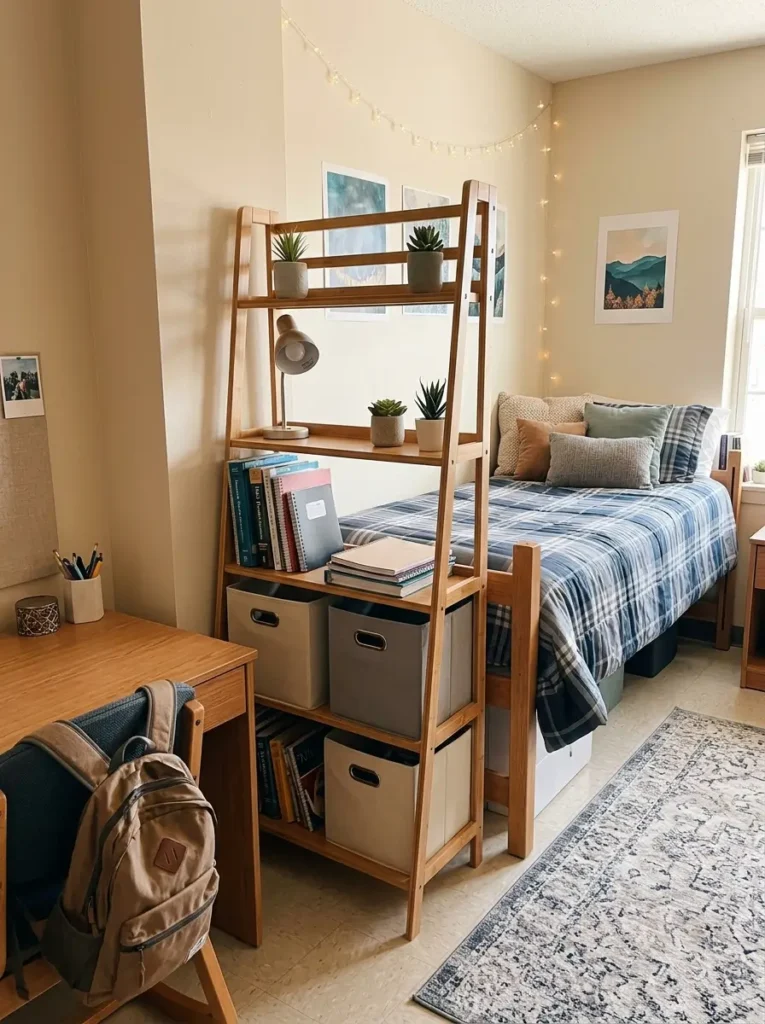
Tall, narrow storage is better than wide furniture in many small college bedrooms. It gives you storage height without taking much floor space.
This idea works because small rooms need open walking paths. A wide dresser, bulky bookcase, or large cabinet can block movement and make the room feel tight. A tall, narrow shelf uses less floor area while still holding many items.
Choose a slim bookcase, narrow drawer tower, ladder shelf, or vertical cube unit. Place it in a corner, beside the desk, beside the closet, or near the foot of the bed if there is enough room.
This tip is best for students in tight dorms, studio apartments, or shared bedrooms. It also helps if you need storage for books, folded clothes, beauty items, snacks, or decor.
A practical example is a five-tier narrow shelf with baskets on the lower shelves and lighter decor on the top shelves. Store heavier items at the bottom so the shelf stays stable.
For style, choose white furniture if you want the room to feel brighter. Choose black if your room has a modern look. Choose light wood if you want warmth without making the space feel dark.
Always check stability. Tall furniture should not wobble. If dorm rules allow, secure it safely. If wall anchoring is not allowed, choose a low-risk piece with a wide base and avoid overloading the top.
Common Mistakes to Avoid in a Small College Bedroom
One common mistake is buying storage before sorting your items. This often leads to bins that do not fit your real needs. Before shopping, group your belongings into categories like clothes, school supplies, shoes, bedding, food, and daily essentials.
Another mistake is using too many different storage styles. A room can look messy even when organized if every bin, basket, and box has a different color or pattern. Choose two or three main colors, such as white, beige, and light wood, or gray, black, and soft blue.
Many students also forget vertical space. They focus on the floor and then wonder why the room feels crowded. Doors, walls, closet shelves, desk height, and bed height can all add storage without taking up more walking space.
A major mistake is keeping everything visible. Open storage is useful, but too much of it creates visual noise. Use closed bins, baskets, drawers, and under-bed bags for items that do not need to be displayed.
Avoid blocking light with bulky storage. Natural light helps a small room feel larger. Do not place tall, dark shelves directly in front of a window. If you need storage near a window, choose a low piece or a slim cart.
Another mistake is storing daily items too far away. If your laundry hamper, hooks, chargers, or school supplies are hard to reach, you will stop using the system. Good storage should match your habits, not fight them.
Do not overfill every container. A packed bin becomes hard to use. Leave a little extra space so you can remove and return items without making a mess.
Finally, avoid ignoring dorm or rental rules. Some rooms do not allow nails, wall shelves, bed risers, or heavy furniture changes. Use removable hooks, freestanding shelves, rolling carts, and over-the-door organizers when you need renter-friendly options.
Budget-Friendly Tips for Small College Bedroom Storage
You do not need expensive furniture to organize a small college bedroom. Start with low-cost items that solve real problems. Under-bed bags, adhesive hooks, drawer dividers, and fabric bins often make a bigger difference than a large new dresser.
Before buying anything, reuse what you already own. Shoe boxes can become drawer dividers. A clean mug can hold pens. A small tray can hold keys and jewelry. A tote bag can store extra bedding under the bed.
Shop slowly instead of buying everything at once. Live in the room for one or two weeks and notice where clutter collects. If bags land on the floor, buy hooks. If clothes overflow, improve the closet. If papers pile up, fix the desk.
Choose multi-use pieces when possible. A storage ottoman, rolling cart, or narrow shelf can serve more than one purpose. This gives you better value and reduces the number of items in the room.
Use labels if you have several similar bins. You do not need fancy labels. Small paper tags, masking tape, or simple sticker labels can work. Labels save time when you store items under the bed or high in the closet.
Look for foldable storage. Collapsible bins, foldable hampers, and soft storage bags are easier to move at the end of the semester. They also take up less space when not in use.
Buy neutral basics if you are decorating on a budget. White, beige, gray, black, and light wood pieces can move with you from dorm to apartment. Trendy colors may feel old faster.
Check measurements before buying. A cheap organizer is not helpful if it does not fit under the bed, inside the closet, or behind the door. Measure height, width, and depth first.
Small College Bedroom Storage Ideas Tips
Start with zones. A small bedroom works better when every area has a purpose. Create a sleep zone, study zone, clothing zone, laundry zone, and daily essentials zone. This helps you decide where each item belongs.
Keep the floor as clear as possible. Floor clutter makes a small room feel smaller. Use hooks, shelves, carts, and under-bed bins to move items off the floor.
Store items by frequency. Daily items should be easy to reach. Weekly items can go in drawers or closet bins. Seasonal or backup items can go under the bed or on high shelves.
Use light colors for large storage pieces. White, cream, beige, pale gray, and light wood help storage blend into the room. Dark pieces can work, but use them carefully in very small spaces.
Balance open and closed storage. Open shelves are good for books and attractive baskets. Closed bins are better for toiletries, snacks, cords, and extra supplies.
Use lighting to make storage areas easier to use. A small desk lamp, clip light, or battery puck light can help inside dark closet zones. Warm white lighting around 2700K to 3000K feels comfortable at night, while 3500K to 4000K works well for study tasks.
Keep one empty basket or bin for quick resets. When the room feels messy, place random items in the basket and sort them later the same day. This helps during busy weeks, but do not let it become permanent clutter.
Create a weekly five-minute reset. Empty trash, return clothes to the closet, clear the desk, check the laundry, and put small items back in their zones. Small rooms need regular resets because clutter shows quickly.
Do not copy a storage idea just because it looks good online. Ask yourself if it fits your habits. If you never fold clothes neatly, open clothing shelves may not work. If you use many products daily, hidden bins may slow you down.
The best storage setup is simple, reachable, and easy to repeat.
FAQ
How do I add storage to a very small college bedroom?
Start with under-bed storage, over-the-door organizers, removable wall hooks, and a slim rolling cart. These options add storage without taking up much floor space. Focus on the items that create the most mess first, such as clothes, shoes, books, or laundry.
What should I store under my dorm bed?
Store bulky or less-used items under the dorm bed. Good examples include extra bedding, towels, seasonal clothes, shoes, backup toiletries, and storage bags for move-out. Use clear bins or labeled fabric bags so you can find things easily.
How can I organize a college closet with limited space?
Use shelf risers, slim hangers, hanging shelves, storage bins, and door organizers. Keep daily clothes at eye level and store seasonal pieces higher or under the bed. Avoid stuffing the closet too full because packed clothes are harder to manage.
What storage is best for a shared dorm room?
The best storage for a shared dorm room is compact, labeled, and personal. Use under-bed bins, bedside caddies, rolling carts, drawer dividers, and over-the-door pockets. These pieces keep your items separate without taking over shared floor space.
How can I make storage look good in a small bedroom?
Use matching bins, soft neutral colors, and simple labels. Mix closed storage with a few open shelves. Keep everyday clutter hidden in baskets or drawers, and display only a few useful or personal items.
Are removable hooks safe for dorm walls?
Removable hooks can be safe if you follow the instructions and weight limits. Use them for light items like keys, hats, towels, and small bags. Do not use small adhesive hooks for heavy backpacks or shelves.
Conclusion
Small college bedrooms need storage that works hard without making the room feel crowded. You do not need a large budget or a complete furniture makeover. You need smart zones, simple organizers, and storage pieces that match your daily routine.
The most useful small college bedroom storage ideas make use of hidden space, vertical space, and multi-purpose furniture. Under-bed bins, over-the-door organizers, removable hooks, rolling carts, drawer dividers, and narrow shelves can all help you create a cleaner room.
Start with the area that bothers you most. If clothes pile up, fix the closet and laundry system. If your desk feels messy, add drawer dividers and a desktop shelf. If small items disappear, create a command center near the door.
A small room can still feel comfortable, practical, and personal. When every item has a clear place, your bedroom becomes easier to clean, easier to study in, and easier to enjoy every day.