
A small apartment desk setup needs to do more than look nice. It has to fit your routine, your floor plan, your storage needs, and the way you actually work every day.
In a tiny home, a desk can easily feel too large, too messy, or out of place. But with the right furniture, lighting, layout, and storage, even a narrow wall or unused corner can become a useful work zone.
The goal is not to copy a large home office. The goal is to create a desk area that supports focus without taking over your apartment.
You can use a floating desk, slim writing table, corner desk, fold-down desk, or even a small console table. The best option depends on your room shape, natural light, rental rules, and daily work habits.
This guide shares practical small apartment desk setup ideas that work for renters, students, remote workers, creators, and anyone trying to make a compact home feel more organized.
What Is the Best Small Apartment Desk Setup
The best small apartment desk setup uses a compact desk, a comfortable chair, warm task lighting, vertical storage, and a layout that does not block walkways. A good setup should fit your daily work needs while keeping your apartment open and easy to move through.
For most tiny work zones, a desk between 32 and 42 inches wide works well. It gives enough room for a laptop, notebook, lamp, and a few daily supplies without making the room feel crowded.
A wall-facing setup works well for focus. A window-facing setup works well if you need natural light. A corner setup works well when floor space is limited. A foldable or floating desk works well in rentals where every inch matters.
The most important rule is simple. Your desk should support your routine, not just fill a space.
Use a Slim Writing Desk Against a Clear Wall
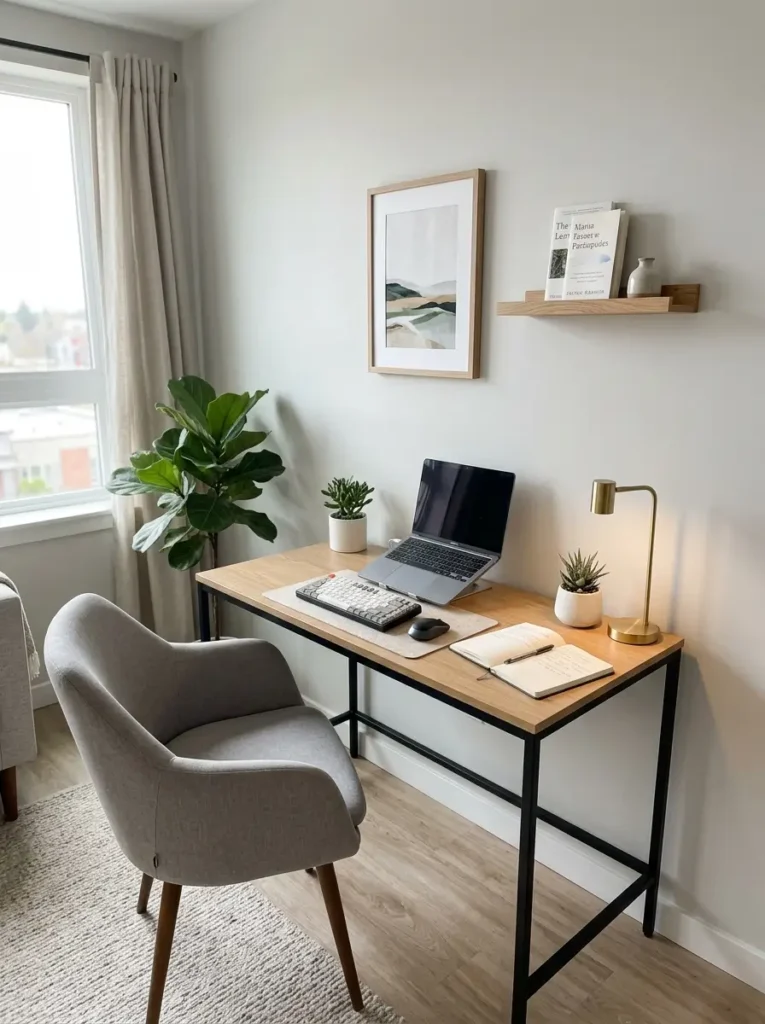
A slim writing desk is one of the easiest choices for a small apartment desk setup. It works well because it gives you a clear work surface without adding too much visual weight.
Look for a desk that is around 16 to 20 inches deep. This depth is enough for a laptop, keyboard, notebook, and small lamp. It also keeps the desk from sticking too far into the room.
A simple white, light oak, walnut, or black metal desk can fit many decor styles. White and light wood feel airy in small rooms. Walnut adds warmth. Black metal works well in modern or industrial apartments.
Place the desk against a plain wall, then keep the wall area clean. You can add one small shelf, a pinboard, or a framed print, but avoid covering the full wall with clutter.
This idea works because the desk creates a clear work zone without making the apartment feel like an office. It blends into the room and still gives you a practical place to work.
It is best for renters, students, and anyone who needs a daily laptop station in a bedroom or living room.
For a rental-friendly version, use felt pads under the desk legs to protect the floor. If you add wall decor, use removable strips instead of nails when your lease does not allow wall damage.
A common mistake is choosing a desk that is too deep. Deep desks look useful in stores, but they can make a small room feel tight. Measure your walkway before buying. Leave at least 30 inches of walking space if possible.
Turn an Empty Corner Into a Work Nook
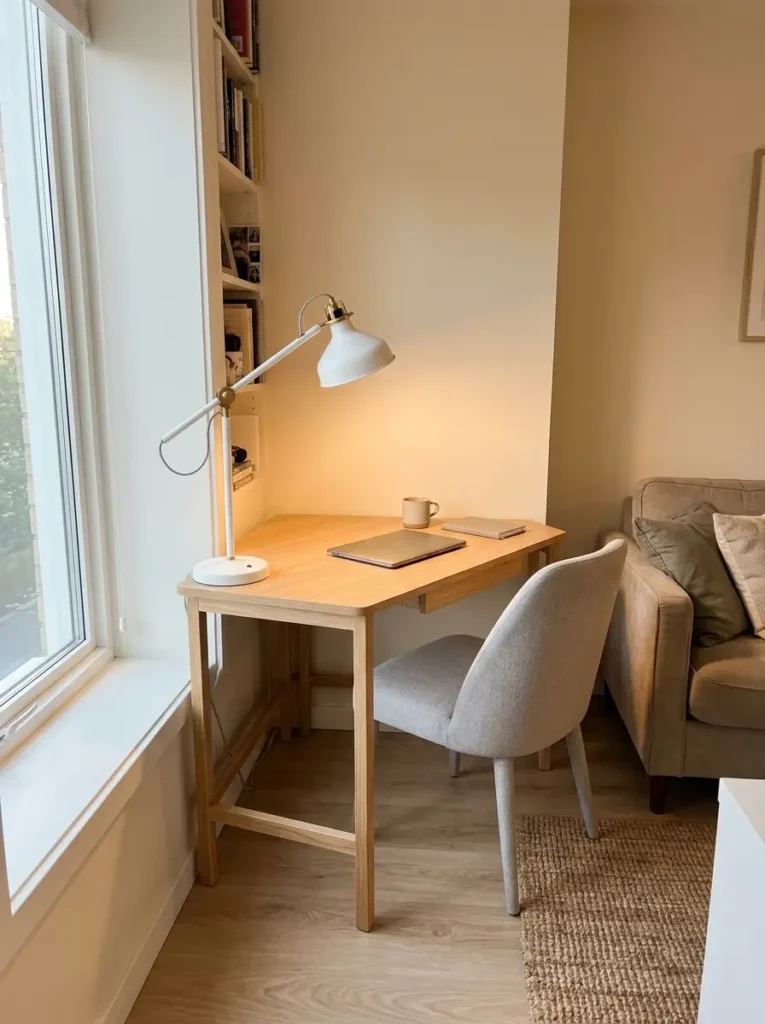
Corners often go unused in small apartments. A corner desk setup can make this dead space useful without taking over the center of the room.
You do not always need a large L-shaped desk. In many apartments, a small triangular desk, compact corner table, or narrow rectangular desk placed diagonally can work better.
Choose a desk with open legs if the room feels tight. Open legs keep the floor visible, making the area feel less crowded. A heavy desk with thick sides can make a corner feel boxed in.
For color, keep the corner light and simple. Soft white, pale beige, warm gray, or natural wood works well. If your apartment already has dark furniture, a lighter desk can help the corner feel less heavy.
Add a small task lamp with a warm white bulb around 2700K to 3000K for evening work. This color temperature feels softer than bright blue-white light and works better in living rooms and bedrooms.
This idea works because corners naturally create boundaries. Your brain reads the area as a separate zone, even if there are no walls or dividers.
It is best for small bedrooms, studio apartments, and shared apartments where you need a dedicated work spot without using the main living area.
A practical example is placing a 36-inch desk in a bedroom corner beside a wardrobe. Add a floating shelf above it for books and a small basket under the desk for cables.
Avoid pushing too many items into the corner. Corners collect clutter quickly because they feel hidden. Keep only the items you use every day on the desk.
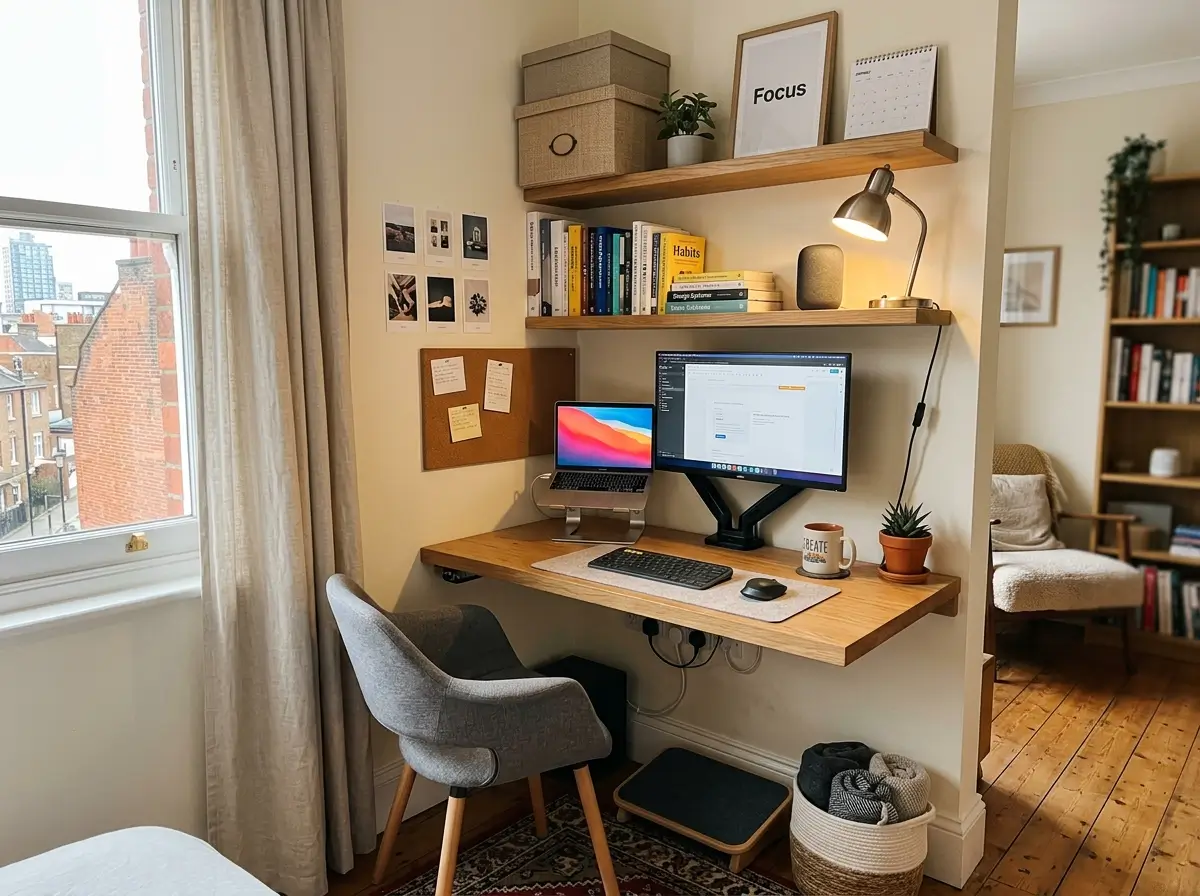
Choose a Wall-Mounted Floating Desk
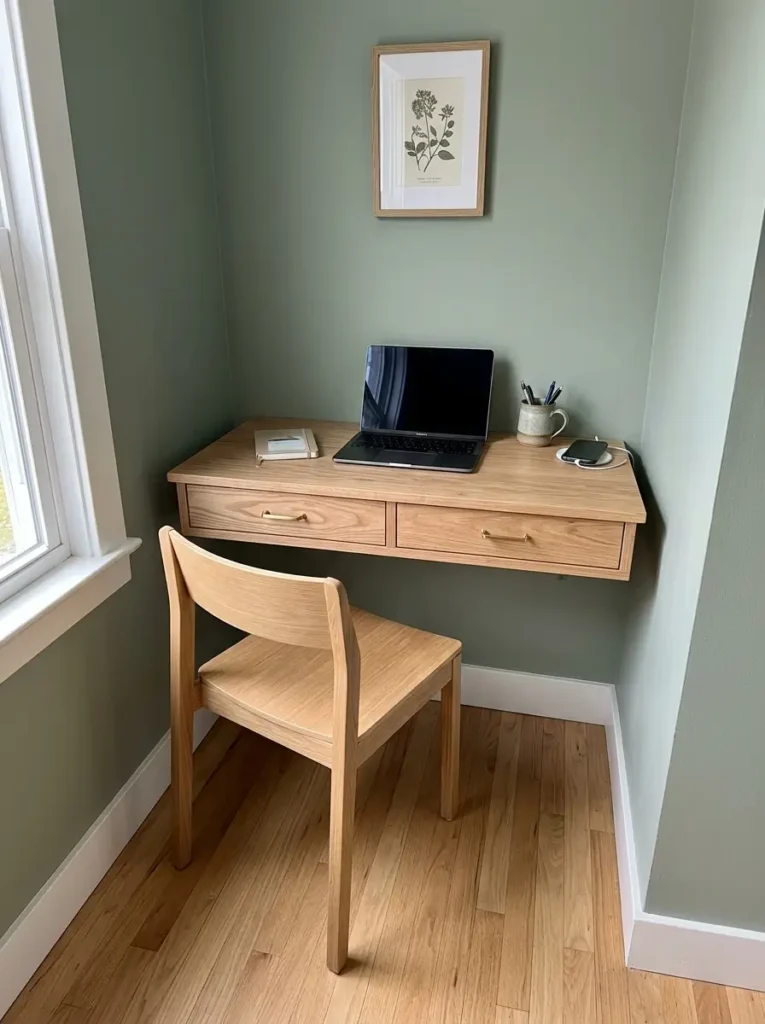
A wall-mounted floating desk is useful when floor space is very limited. It keeps the floor open and makes the room feel lighter.
This type of small apartment desk setup works especially well in narrow bedrooms, entry corners, and studio apartments. You can install a floating desk at a height that suits your chair, which makes it more comfortable than using a random table.
Look for a floating desk with a depth of 14 to 18 inches if you use a laptop. If you use a monitor, choose a deeper model or add a wall-mounted monitor shelf.
Some floating desks include small cubbies or drawers. These are helpful for notebooks, chargers, pens, and headphones. Closed storage is better than open storage if your desk is in a visible area.
This idea works because it removes bulky legs and creates a cleaner floor line. In a tiny apartment, visible floor space matters because it makes the room look more open.
It is best for minimalists, renters with permission to mount items, and people who mainly work on a laptop.
If you rent, check your lease before drilling. If wall mounting is not allowed, use a freestanding ladder desk instead. It gives a similar vertical look without permanent installation.
A good styling example is a light oak floating desk with a white chair, beige pinboard, and black adjustable wall lamp. This mix feels clean but not cold.
The main mistake is installing the desk too high or too low. Standard desk height is usually around 28 to 30 inches, but your chair and body height matter. Sit first, measure your elbow position, and install the desk where your arms rest naturally.
Use a Fold-Down Desk for Flexible Space
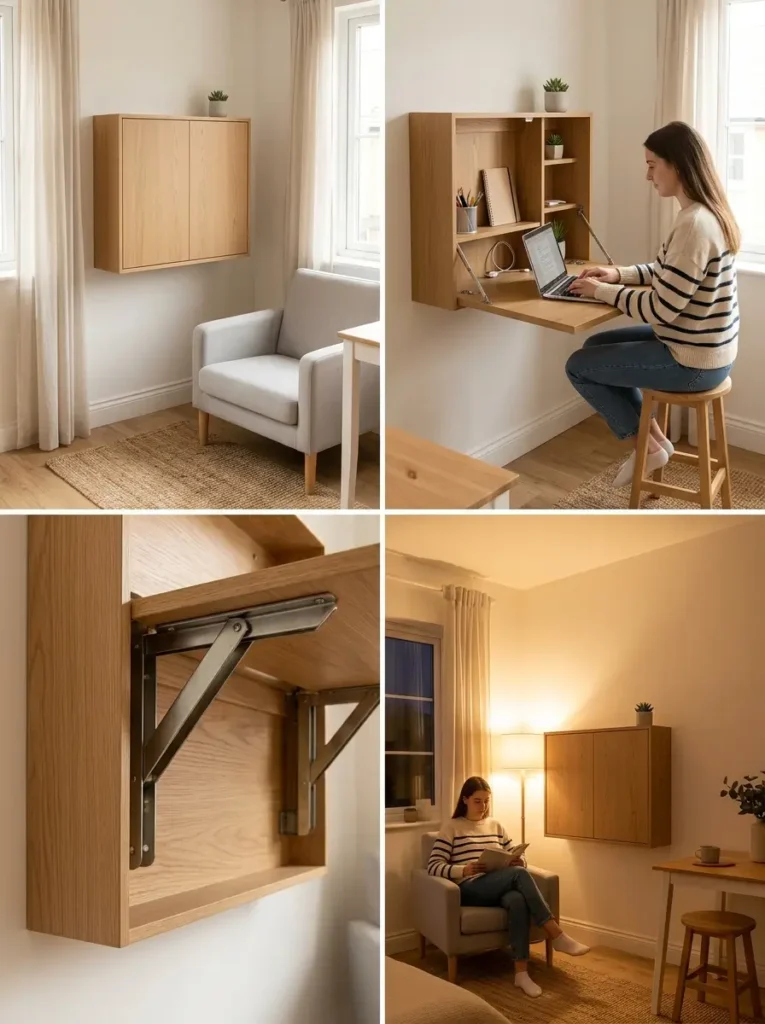
A fold-down desk is a smart option when your apartment needs to change throughout the day. It gives you a work surface when needed, then folds away when you want more room.
This setup works well in studio apartments, multipurpose bedrooms, and small living rooms. It is also helpful if your desk area sits near a dining table, sofa, or bed.
Many fold-down desks look like small wall cabinets when closed. Some include shelves inside for stationery and chargers. This keeps your work supplies hidden after work hours.
Choose a model with a strong support system. A weak fold-down desk can wobble while typing, which makes work uncomfortable. Read the weight limits before storing heavy books or equipment.
This idea works because it separates work time from home time. When you close the desk, your apartment feels calmer and less like a workspace.
It is best for people who work part-time from home, students in small bedrooms, and anyone who dislikes seeing office items after work.
For a rental-friendly alternative, try a folding tray table or compact folding desk that stores behind a door. It will not look as built-in, but it gives you similar flexibility.
Use a clip-on lamp if the desk folds away. A small rechargeable lamp also works well because you do not need to manage cords every time.
Avoid buying a fold-down desk that is too shallow. Some models are designed more for display than real work. Choose one that can fit your laptop and allow your wrists to rest comfortably.
Place a Desk Behind the Sofa
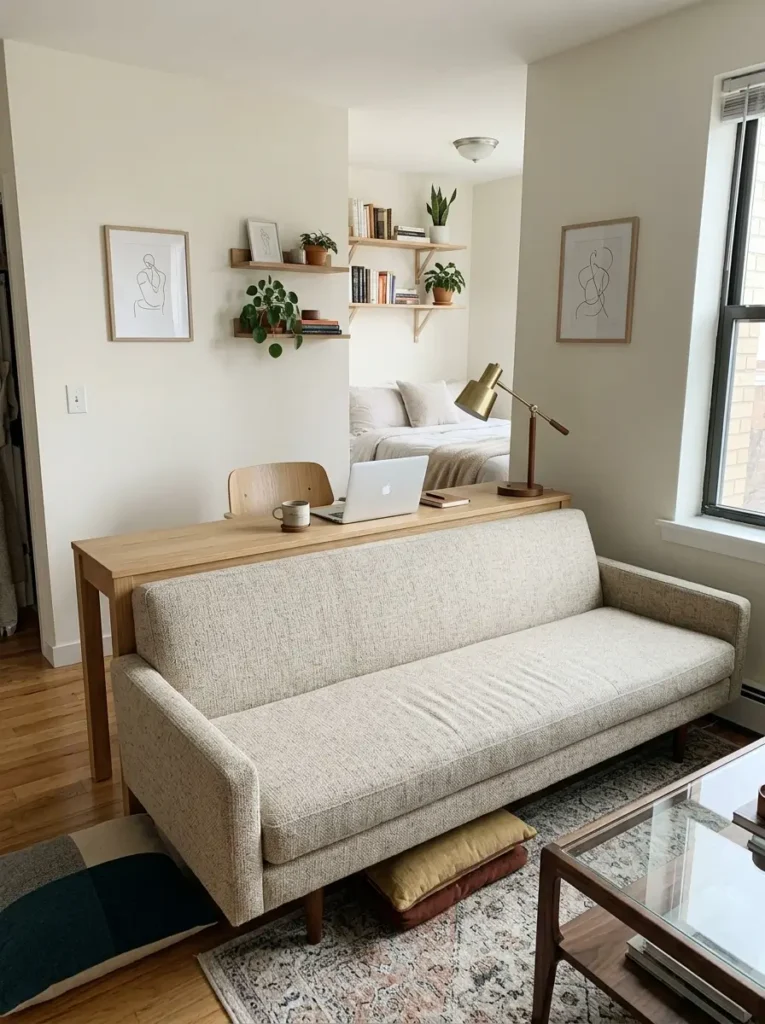
In a studio apartment, the back of a sofa can become a useful desk wall. A narrow desk or console table behind the sofa can create a compact work zone without needing a separate room.
This setup works best when the sofa floats in the room instead of sitting directly against a wall. The desk can act like a soft divider between the living area and workspace.
Choose a desk that is close to the sofa height or slightly higher. A narrow console-style desk around 14 to 18 inches deep can work for laptop tasks. If you use a full desktop computer, you may need more depth.
This idea works because it uses space that often stays empty. It also creates a natural zone in an open-plan apartment.
It is best for studio apartments, small living rooms, and people who want a desk without facing a wall all day.
For styling, choose a desk finish that matches either the sofa legs or nearby furniture. For example, use a black metal desk if your coffee table has black legs. Use light wood if your TV unit is oak or pine.
Add a low-profile desk lamp or wall sconce nearby. Keep the lamp small so it does not block the view across the room.
A practical layout example is a beige sofa with a slim walnut desk behind it, a simple upholstered chair, and a lidded basket underneath for cables and notebooks.
The biggest mistake is making the sofa area too tight. Leave enough space to pull out the chair without hitting the sofa. A chair with a small footprint works better than a wide office chair in this layout.
Create a Window Desk Setup
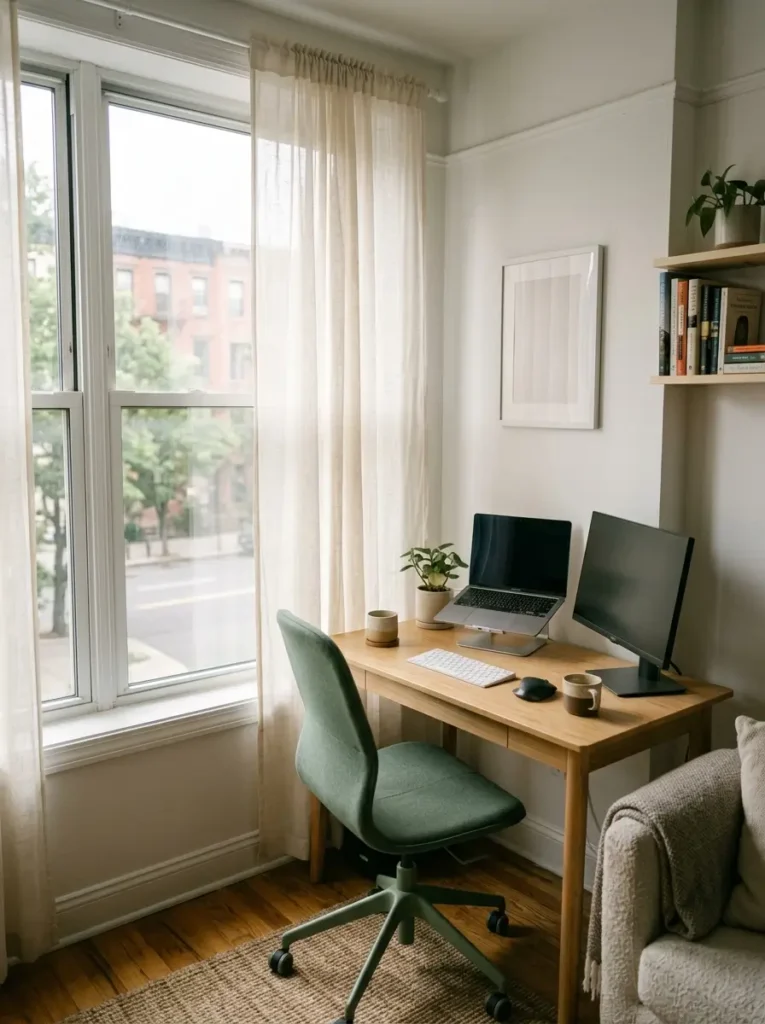
A window desk can make a tiny work zone feel brighter and more pleasant. Natural light helps the desk feel connected to the rest of the apartment instead of being hidden in a dark corner.
Place the desk near the window, but think about glare. If your laptop screen faces direct sunlight, you may struggle to see clearly. A side-facing window layout often works better than facing the window directly.
Use light-filtering curtains, linen panels, or renter-friendly tension rods to soften strong sunlight. Sheer white or warm ivory curtains can keep the area bright without harsh glare.
This small apartment desk setup works because natural light reduces the need for daytime lamps and makes a compact area feel more open.
It is best for people who write, study, draw, plan, or work during the day. It is also useful for apartments with limited overhead lighting.
Choose a desk with a simple shape so the window remains the focus. A white desk, glass-top desk, or light wood desk can keep the area airy.
For evening work, add a task lamp with adjustable brightness. Warm white light around 3000K is comfortable for bedrooms and living rooms. If you need a sharper task light, 3500K can work without feeling too cold.
Add one small plant if the window gets enough light. A pothos, snake plant, or small herb pot can soften the setup without taking over the desk.
Avoid placing too many decor items on the windowsill. You need room to open curtains and clean the area. Too many items can also make the desk feel cramped.
Use a Ladder Desk for Vertical Storage
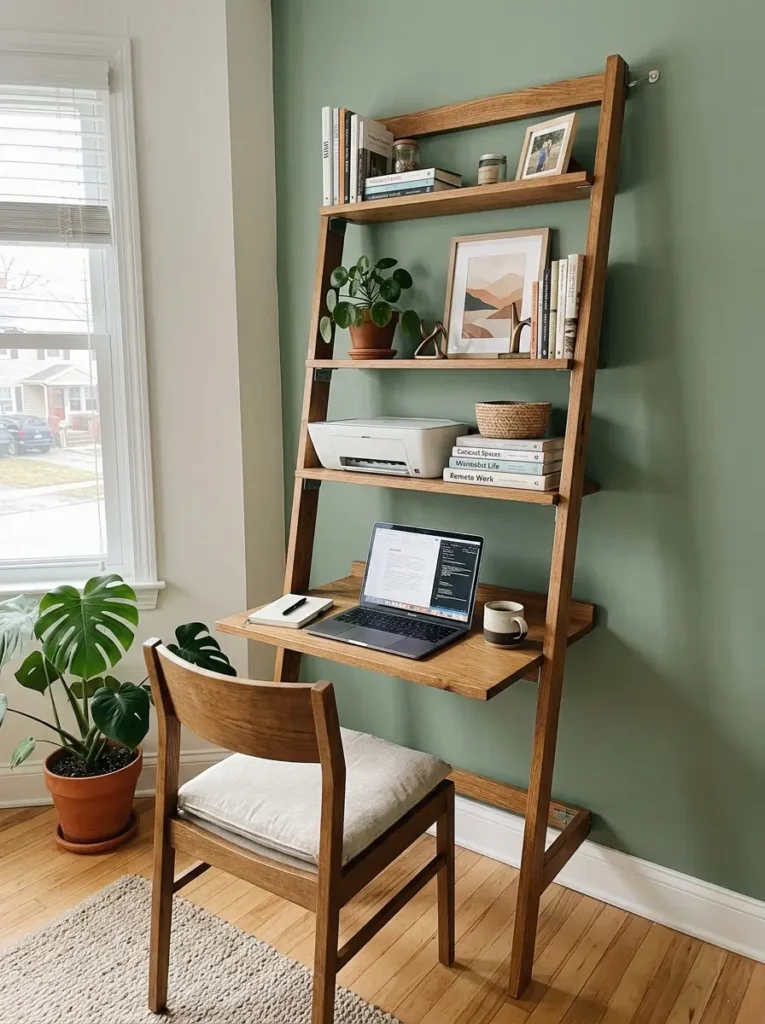
A ladder desk is a strong choice when you need storage but do not have room for a wide desk. It gives you shelves above the work surface without using extra floor space.
This setup works well in rentals because many ladder desks lean against the wall and do not need heavy installation. Some models still need a small safety anchor, so check before buying.
A ladder desk usually has a narrow worktop and two or three shelves above it. Use the lower shelf for items you reach often, such as notebooks or a small printer. Use higher shelves for decor, storage boxes, or books you do not need daily.
This idea works because it uses wall height instead of floor width. In a small apartment, vertical storage is often the difference between a useful desk and a messy one.
It is best for renters, students, book lovers, and anyone who wants storage without installing wall shelves.
Choose a ladder desk in light wood, white, or black, depending on your room. Light wood feels warm and casual. White works well in bright apartments. Black works better when you already have black frames, lamps, or hardware.
Use matching boxes or baskets on the shelves. Beige fabric bins, white photo boxes, or woven baskets can hide cords and supplies.
A common mistake is overloading every shelf. Keep at least one shelf partly empty. Negative space helps the setup look intentional and makes the room feel less crowded.
For safety, avoid placing heavy items on the highest shelf. Keep heavier supplies lower so the desk feels stable.
Add a Desk Inside a Closet Nook
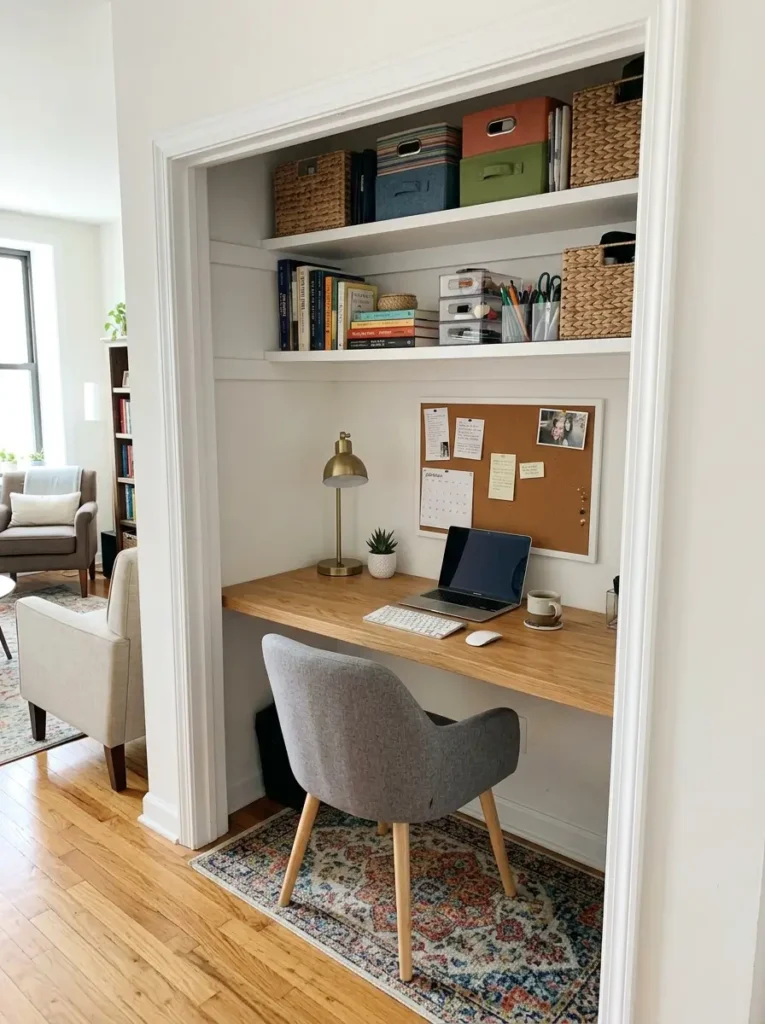
A closet desk, often called a cloffice, can be a practical solution in a small apartment. It works especially well if you have a shallow closet that you do not fully use.
Remove the closet doors if allowed, or keep them open while working. Add a small desk, shelf, or countertop inside the closet space. Use the upper area for storage and the lower area for seating.
This small apartment desk setup works because the closet already creates a built-in zone. You do not need to find extra wall space in the main room.
It is best for studio apartments, bedrooms, and renters who have more closet space than floor space.
For a renter-friendly version, avoid permanent built-ins. Use a freestanding desk that fits inside the closet. Add removable peel-and-stick wallpaper to the back wall if you want color without painting.
Good color choices include soft sage, warm beige, dusty blue, or creamy white. These shades add interest but still feel calm in a small work zone.
Lighting matters in a closet desk because closets are often dark. Add a rechargeable LED puck light, plug-in wall sconce, or slim desk lamp. Choose warm white light around 3000K for a softer feel.
Use the closet rod area wisely. You can hang small baskets, a fabric organizer, or a rail with hooks for headphones and supplies.
Avoid turning the closet desk into a storage dump. Since the space is tucked away, it can become messy fast. Use labeled bins and keep only work-related items in the zone.
Pick a Desk With Built-In Drawers
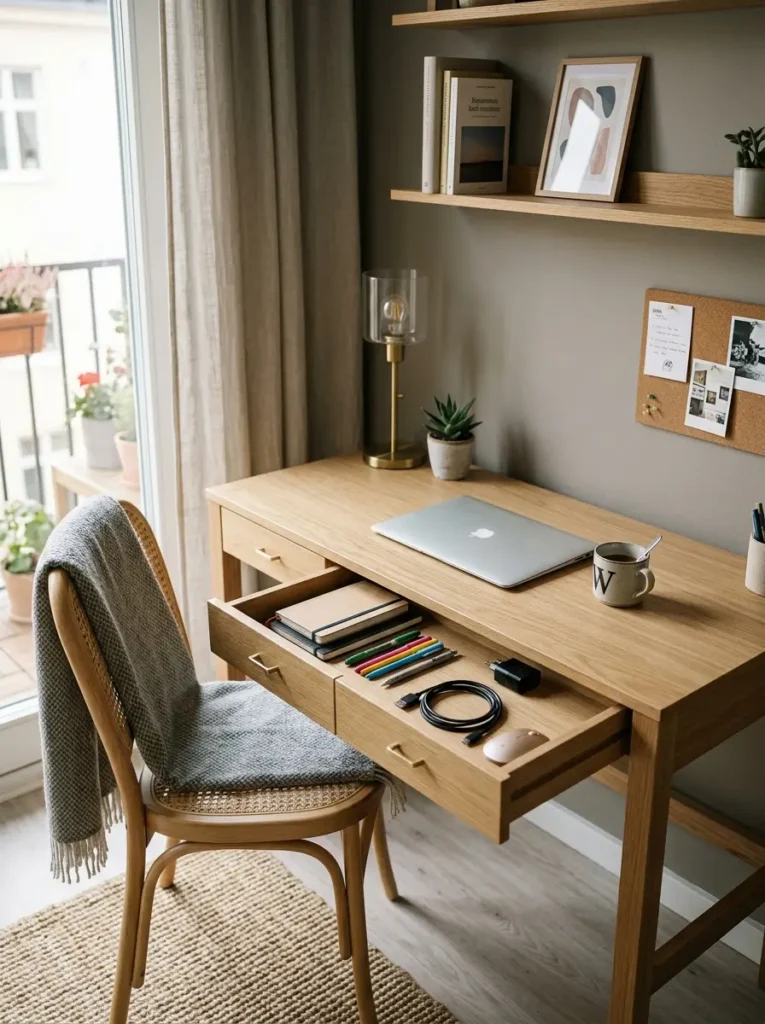
A desk with built-in drawers can help a small apartment stay tidy. It gives you a place to hide everyday items that would otherwise sit on the work surface.
This setup is useful if you work with papers, chargers, pens, makeup, craft supplies, or small tech accessories. Drawers keep these items close but out of sight.
Choose a desk with shallow drawers rather than deep, bulky ones. Shallow drawers are easier to organize and do not make the desk feel heavy.
This idea works because visual clutter makes small rooms feel smaller. When supplies have a home, the desk stays calmer and easier to use.
It is best for remote workers, students, planners, and people who use their desk for more than one task.
A practical example is a 40-inch white desk with two drawers, a slim brass or black lamp, a neutral chair, and a small tray for daily items. The drawers can hold notebooks, cords, sticky notes, and extra pens.
Use drawer dividers or small containers inside the drawers. Without dividers, drawers become messy very quickly. You can use small cardboard boxes, acrylic trays, or budget kitchen organizers.
Avoid choosing a desk with too many drawers if your room is very small. Large drawer units can make the desk look like office furniture. A lighter desk with one or two drawers often works better.
For a softer home decor look, choose rounded drawer pulls, wood texture, or fabric storage nearby. This helps the desk blend with the apartment instead of looking too corporate.
Use a Console Table as a Desk
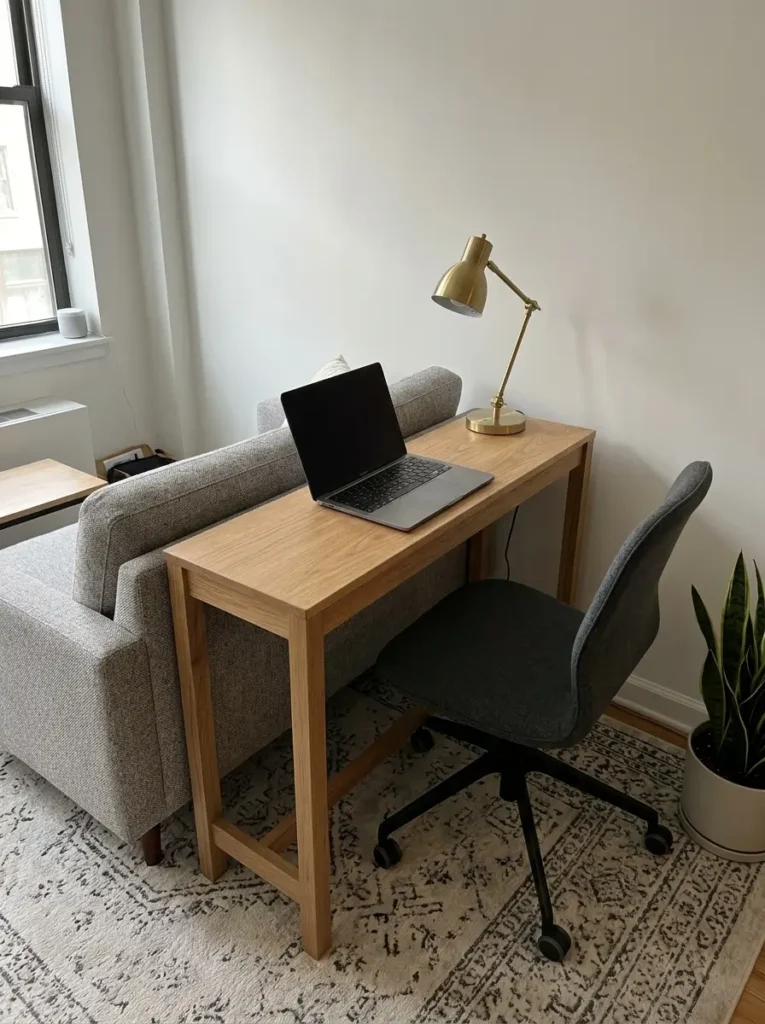
A console table can work as a desk in a small apartment when you mainly use a laptop. It is usually narrow, light, and easy to place behind a sofa, in an entry area, or along a bedroom wall.
This idea works because console tables are designed for tight spaces. They provide a surface without the depth of a traditional office desk.
Choose a console table that is at a comfortable desk height. Many console tables are around 30 inches high, which can work well, but some are taller. Test the height of your chair before using it daily.
It is best for occasional work, blogging, studying, journaling, or apartment dwellers who do not need a full office setup.
A simple styling example is a narrow oak console table near a living room wall, paired with a compact armless chair and a small lamp. Add a wall shelf above for books and keep a basket below for cables.
If your console has an open bottom, you can slide a stool underneath when not in use. This keeps the walkway clear.
Use a desk mat to make the surface more comfortable. Some console tables have decorative surfaces that may scratch easily, so a mat protects the finish.
Avoid using a very shallow console if you work long hours. A surface under 14 inches deep may feel uncomfortable because your wrists and arms have little support.
For renters, this is one of the easiest options because it needs no drilling, mounting, or major changes.
Choose a Clear Acrylic Desk for a Light Look
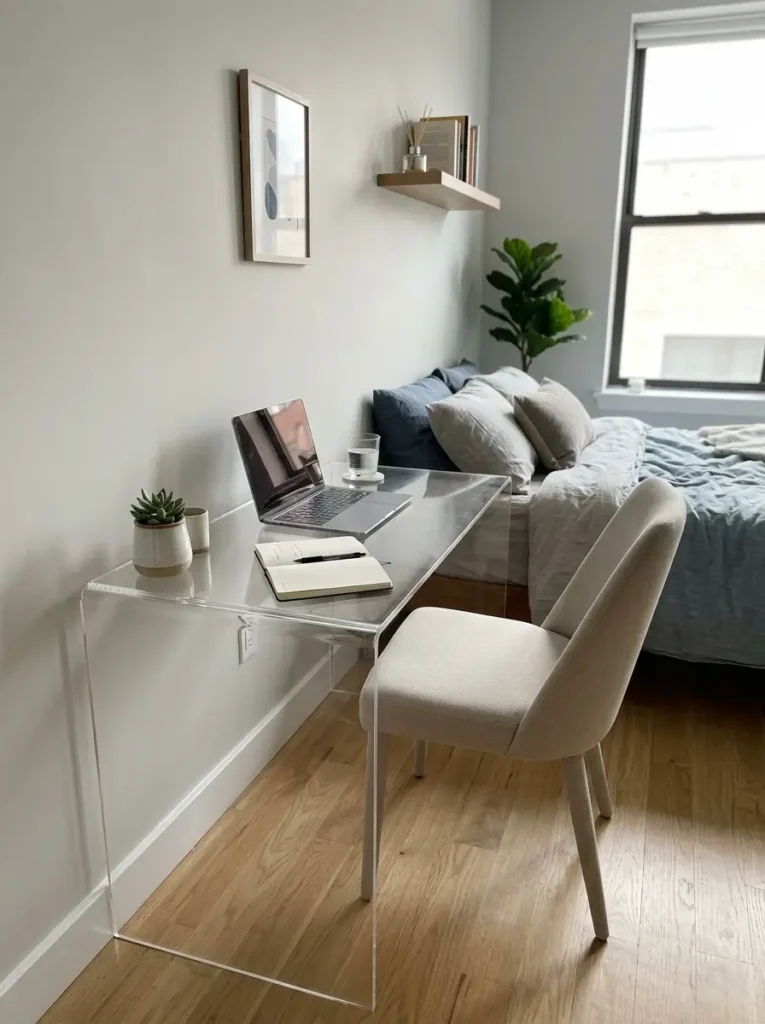
A clear acrylic desk can be useful in very small rooms because it takes up less visual space. The desk is still there, but it does not block the view of the floor or wall behind it.
This setup works well in small bedrooms, modern apartments, and corners where solid furniture would feel too heavy.
Acrylic furniture is not for everyone. It can show fingerprints and scratches, so it needs regular cleaning. But in the right space, it can make a tiny work zone feel less crowded.
This idea works because transparent furniture reduces visual weight. In small-space decorating, what the eye sees matters almost as much as actual measurements.
It is best for people who want a desk in a visible area, such as beside the bed or near the living room.
Pair an acrylic desk with soft textures so the room does not feel cold. A beige upholstered chair, a woven basket, linen curtains, or a warm wood lamp can balance the clear surface.
For color, keep the nearby palette simple. Cream, taupe, pale gray, soft blush, or warm white can work well. Too many bright colors around acrylic may make the area feel busy.
Avoid placing too many objects on the clear desk. Since you can see through the surface, clutter becomes more noticeable. Keep only a laptop, lamp, notebook, and one small organizer on top.
Acrylic desks are often more expensive than basic desks. For a budget-friendly version, look for a glass-top desk with slim legs or a secondhand clear table.
Build a Desk Zone With a Room Divider
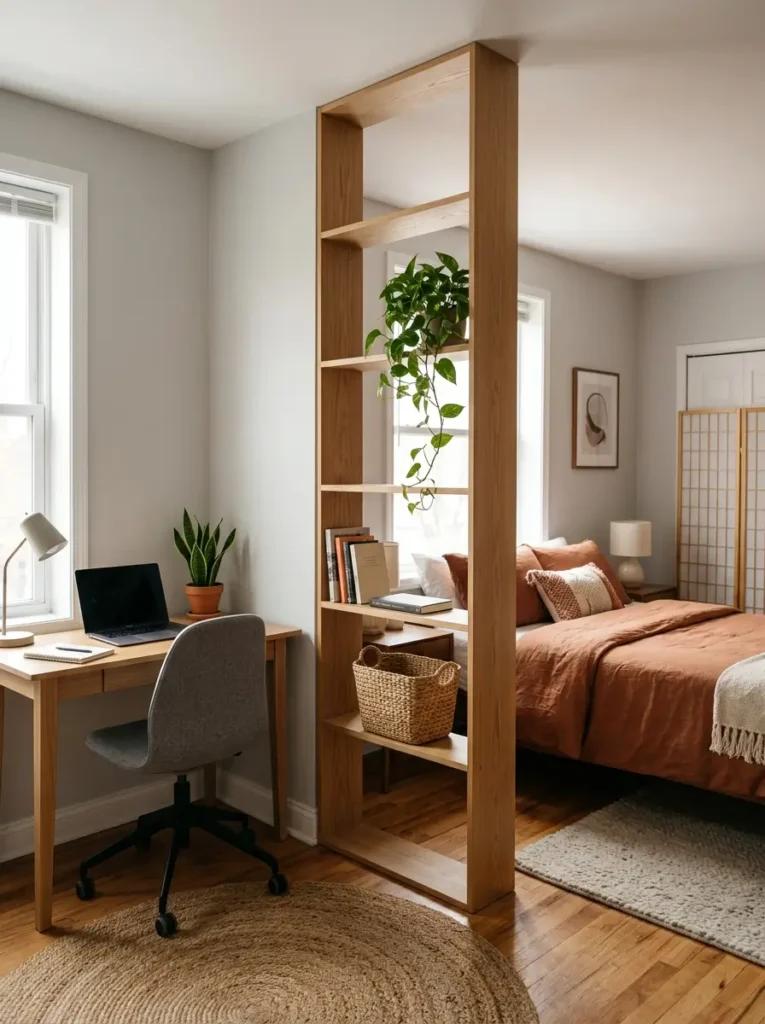
In a studio apartment, your desk may sit close to your bed or sofa. A room divider can help the work zone feel separate without building a wall.
Use a folding screen, open bookcase, curtain, or tall plant stand to create separation. The divider does not need to fully hide the desk. Even a partial boundary can help define the area.
This small apartment desk setup works because zoning makes a tiny apartment easier to use. When each area has a clear purpose, the whole room feels more organized.
It is best for studio apartments, shared spaces, and people who struggle to switch off after work.
A low open bookcase can work as both storage and a divider. Place books, baskets, and a few decorative items on it. Keep some openings empty so light can pass through.
A curtain divider is another renter-friendly choice. Use a tension rod, ceiling track with removable installation, or freestanding garment rack with fabric panels. Choose linen or cotton fabric in beige, white, or soft gray for a calm look.
Avoid using a heavy divider in a dark room. It can block light and make the apartment feel smaller. Open dividers usually work better than solid ones.
A practical example is placing a small desk near the bed, then using a narrow open shelf between the desk and the sleeping area. Store work items on the desk side and books or decor on the bed side.
Use Wall Shelves Above the Desk
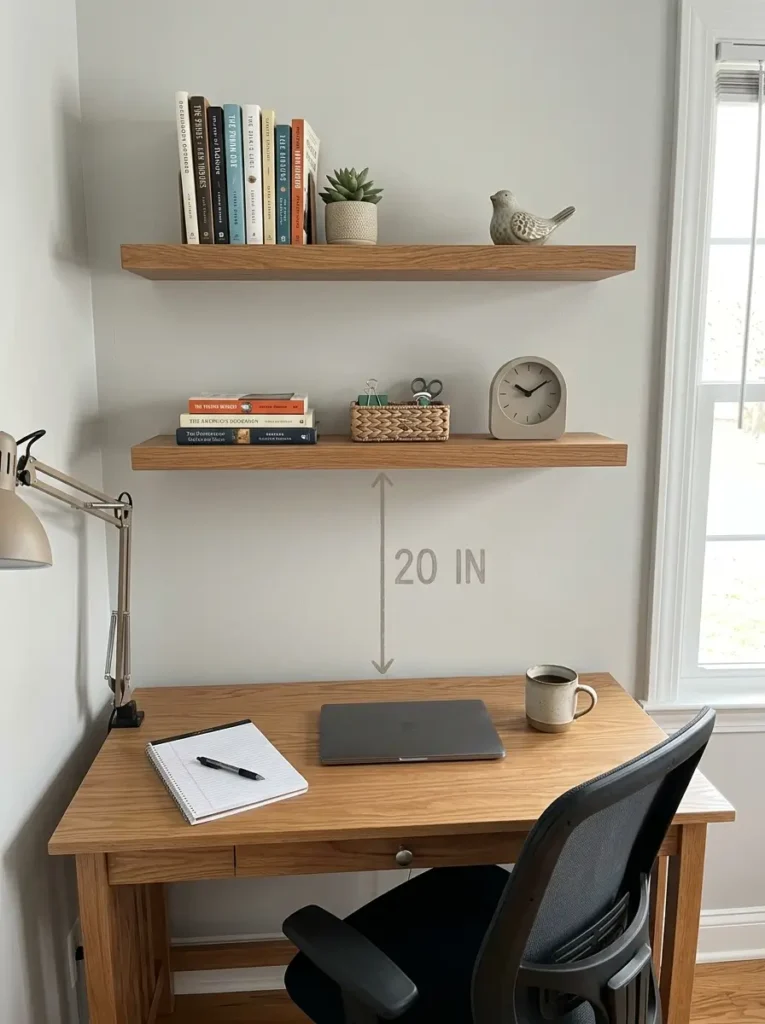
Wall shelves can make a small desk much more useful. They keep supplies nearby without covering the desktop.
This idea works best when the desk itself has little or no storage. You can add one or two shelves above the desk for books, small boxes, decor, and office supplies.
For a balanced look, install the first shelf at least 18 to 24 inches above the desk surface. This gives enough headroom and prevents the area from feeling cramped.
This idea works because it uses vertical space and keeps the work surface clear. A clear desktop helps you focus and makes cleanup easier.
It is best for renters with permission to hang shelves, students, remote workers, and people with many small supplies.
If you cannot drill, use a freestanding desktop shelf, hutch, or ladder shelf behind the desk. You can also use lightweight adhesive shelves only for very light items, but never place heavy objects on them.
Choose shelves that match your desk or wall color. White shelves on a white wall feel clean. Wood shelves add warmth. Black brackets can connect the desk to black lamps, frames, or chair legs.
Use closed storage on shelves. Small boxes, magazine holders, and baskets prevent visual clutter. Label them if you store paperwork or study materials.
Avoid placing shelves too low. Low shelves can make the desk uncomfortable and may cause you to bump your head when standing up.
Make a Nightstand Desk Work in a Tiny Bedroom
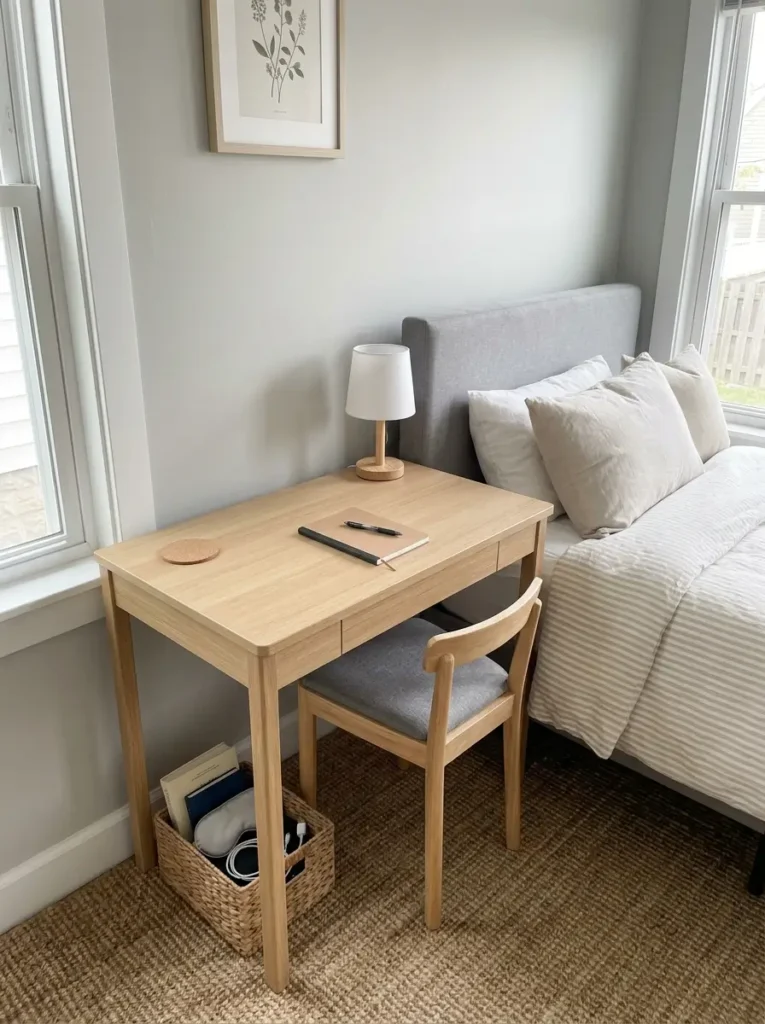
In a very small bedroom, you may not have room for both a nightstand and a desk. A small desk can work as both.
Place a compact desk beside the bed and use it as a nightstand after work. Keep the surface simple so it can handle both roles.
This setup works best with a desk around 30 to 36 inches wide. Add a small lamp, a coaster, a notebook, and one drawer or basket for bedtime items.
This idea works because it combines two furniture pieces into one. In small apartments, double-duty furniture helps you save space without losing function.
It is best for students, renters, and people living in studio apartments or small bedrooms.
Choose a chair that can tuck fully under the desk. An armless chair or small stool works better than a large office chair. Add a cushion if you need more comfort.
Use lighting that works for both work and bedtime. A dimmable lamp is ideal. Use 2700K for a warm bedroom feel or 3000K if you also need clear task lighting.
For storage, use one small tray for bedtime items and one drawer divider for work items. This prevents your desk from turning into a messy nightstand.
Avoid keeping too many work items visible at night. Seeing open notebooks, cables, or laptop stands near your bed can make the room feel stressful. Store work supplies in a drawer or basket before sleeping.
Create a Minimal Desk Setup With Only Daily Essentials
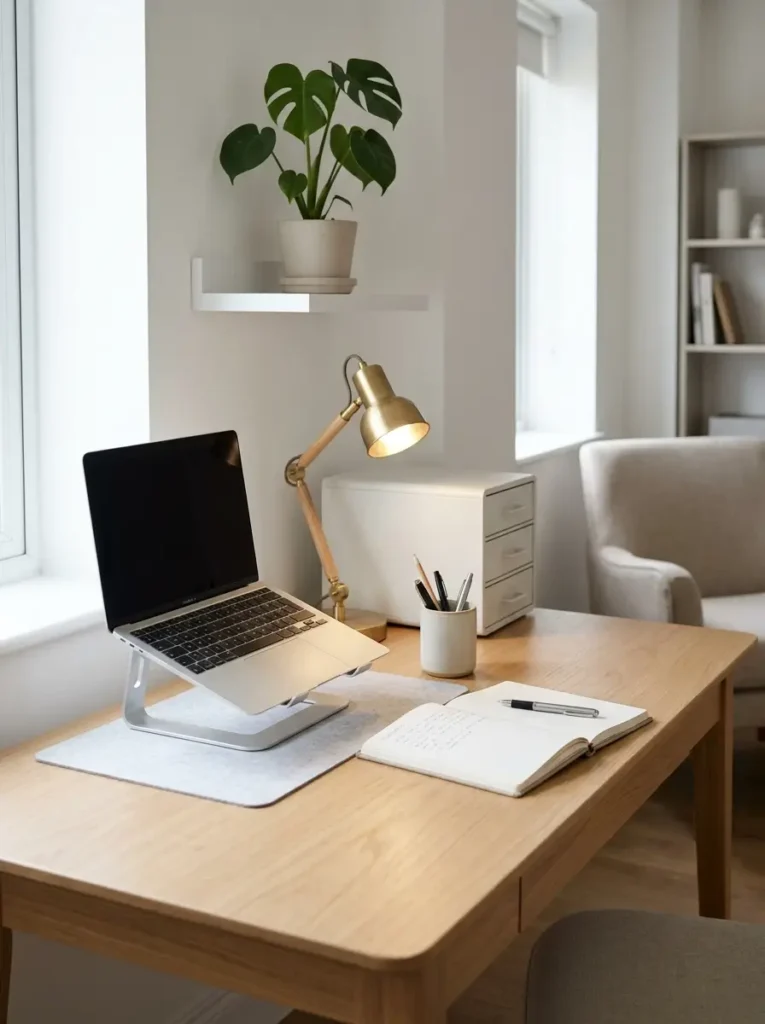
A minimal desk setup works especially well in small apartments because it keeps the work zone easy to clean and easy to use.
This does not mean your desk has to look empty. It means every item should earn its place. Keep your laptop or monitor, a lamp, one notebook, a pen cup, and one small storage piece.
This idea works because small spaces become overwhelming when too many items compete for attention. A minimal setup gives your eyes a place to rest.
It is best for beginners, remote workers, renters, and anyone who feels distracted by clutter.
Start by removing everything from the desk. Add back only what you used in the last week. Store the rest in a drawer, box, or nearby shelf.
Use a simple color palette. Try white and oak, black and walnut, beige and cream, or soft gray with warm wood. A limited palette makes the setup feel more organized.
A practical example is a light wood desk, a white chair, a black task lamp, a cream desk mat, and a woven basket under the desk. This setup feels warm, useful, and easy to maintain.
Cable control matters in a minimal setup. Use cable clips, a cord box, or reusable ties. Attach cords to the back of the desk if possible, especially when the desk is visible from the living area.
Avoid buying too many organizers before you know what you need. Extra organizers can become clutter, too. Start with one tray, one cup, and one storage box.
Common Mistakes to Avoid in a Small Apartment Desk Setup
One common mistake is choosing a desk before measuring the room. A desk may look small online, but feel large once you place it beside a bed, sofa, or closet door. Always measure the wall, walkway, chair pull-out space, and nearby doors before buying.
Another mistake is ignoring chair comfort. A pretty chair may work for short tasks, but long work sessions need support. If you cannot fit a full office chair, choose a compact chair with a supportive back and add a seat cushion.
Poor lighting is another issue. Many small apartments have weak overhead lighting. A desk lamp with warm white or neutral white light can reduce eye strain and make the desk more useful at night.
Too much open storage can also make the area feel messy. Open shelves look nice when styled carefully, but they can collect clutter. Use boxes, baskets, and closed drawers for supplies you do not want to see daily.
Many people also place the desk where it blocks movement. A desk should not make it hard to open a closet, walk around the bed, or reach the sofa. Function matters more than squeezing in the largest desk possible.
Another mistake is using the desk as a drop zone. Keys, mail, makeup, chargers, receipts, and snacks can quickly take over. Give each item a proper home so the desk stays ready for work.
Avoid placing a desk directly in harsh sunlight without curtains. Natural light is helpful, but glare can make screen work uncomfortable. Use light-filtering curtains, blinds, or a side-facing layout.
Do not copy large office setups without adjusting them for your apartment. Large monitors, deep desks, wide chairs, and oversized shelves may not suit a tiny home. Scale everything down to your actual space.
Finally, do not forget the background. If you take video calls, check what people see behind you. A plain wall, tidy shelf, curtain, or simple artwork works better than a messy bed or open closet.
Budget-Friendly Small Apartment Desk Setup Tips
You do not need expensive furniture to create a useful desk area. Start with the basics, then improve the setup over time.
A simple table can work as a desk if the height is comfortable. Look for secondhand writing desks, console tables, folding tables, or small dining tables. Check the depth and stability before buying.
Use what you already own first. A dining chair, spare lamp, basket, or small shelf may work well enough until you can upgrade.
For lighting, choose a basic adjustable desk lamp. You do not need a designer lamp. Look for a lamp with a movable arm and a warm white bulb between 2700K and 3000K for a comfortable home setting.
For storage, use budget items like magazine files, small bins, cardboard boxes, kitchen drawer trays, and woven baskets. These can organize papers, cords, notebooks, and tech accessories without costing much.
Peel-and-stick hooks are useful for renters. Use them to hang headphones, cables, calendars, or lightweight organizers. Always check weight limits and test in a hidden spot first.
A desk mat can make an old desk feel cleaner and more comfortable. Choose a neutral color like beige, tan, gray, or black so it blends with your room.
If you need shelves but cannot drill, use a desktop shelf riser or a small bookcase beside the desk. This gives you vertical storage without wall damage.
A rolling cart can also help. Place it beside the desk while working, then move it away after. It works well for craft supplies, study materials, beauty items, or printer paper.
Use matching containers when possible. Even cheap boxes look better when they share the same color family. White, kraft paper, beige, black, or clear containers are easy to style.
Do not spend your whole budget on decor. Prioritize a stable desk, comfortable chair, good light, and basic storage. Decorative items can come later.
Small Apartment Desk Setup Tips for Better Daily Use
Start with your routine. Think about what you do at the desk every day. A laptop worker needs a different setup than a student, crafter, gamer, or makeup user.
Keep daily items within arm’s reach. This may include your laptop charger, notebook, pen, headphones, water glass, and task lamp. Store occasional items farther away.
Use vertical space whenever possible. Shelves, pegboards, wall pockets, and ladder desks help you store supplies without widening the desk.
Keep cables under control from the beginning. Use cable clips along the back edge of the desk. Place a power strip in a cable box or attach it under the desk if safe to do so.
Choose the right chair for the room. In a tiny apartment, a chair that tucks under the desk can save valuable space. If you work long hours, comfort should still come first.
Pay attention to the wall color behind the desk. A busy wall can feel distracting. Soft white, warm beige, pale gray, sage green, or dusty blue can create a calm background.
Use lighting in layers. Combine natural light, a task lamp, and soft room lighting. This helps the desk feel comfortable during the day and evening.
Keep the desktop 70 percent clear. This is a practical rule for small spaces. When most of the surface stays open, the desk feels easier to use.
Add one personal item, not ten. A small framed photo, plant, candle, or ceramic cup can make the desk feel like home. Too many personal items reduce working space.
Reset the desk at the end of the day. Close the laptop, put papers away, wrap cords, and clear cups or plates. This small habit keeps your apartment from feeling cluttered.
Use furniture that matches your apartment style. If your room has warm wood tones, choose a desk in a similar finish. If your space is modern, try black metal, white, or glass.
Think about sound and privacy. If your desk is in a shared space, add a rug, curtain, or soft textiles nearby. These can reduce echo and make the zone feel more comfortable.
Do not force a desk into the wrong place. If one wall feels cramped, try the window, corner, closet, or behind-the-sofa layout. Small apartments often need testing before the layout feels right.
FAQ
How do I fit a desk in a small apartment?
Fit a desk in a small apartment by using narrow furniture, corners, wall space, or double-duty areas. A slim writing desk, floating desk, fold-down desk, or console table can work well. Measure the walkway and chair space before buying so the desk does not block daily movement.
What size desk is best for a small apartment desk setup
A desk between 32 and 42 inches wide usually works well for a small apartment desk setup. A depth of 16 to 20 inches is enough for most laptop work. If you use a monitor, keyboard, or drawing tablet, choose a deeper desk when space allows.
Where should I place a desk in a studio apartment?
Place a desk in a studio apartment near a wall, window, corner, closet nook, or behind the sofa. The best spot should feel separate from your sleeping area if possible. Use a rug, shelf, curtain, or room divider to define the work zone.
How can I make a small desk look less cluttered?
Make a small desk look less cluttered by keeping only daily essentials on the surface. Use drawers, baskets, cable clips, wall shelves, and trays for storage. Choose a simple color palette and avoid placing too many decorative items on the desk.
What lighting is best for a small apartment desk?
A task lamp with warm white or neutral white light works best for most small apartment desks. Use 2700K to 3000K for a cozy bedroom or living room setup. Use around 3500K if you need clearer light for detailed work, studying, or planning.
Can I create a desk setup without drilling into the walls?
Yes, you can create a desk setup without drilling. Use a freestanding desk, ladder desk, rolling cart, desktop shelf, folding desk, or console table. For light items, renter-friendly hooks may help, but always check weight limits and lease rules first.
Conclusion
A small apartment desk setup should feel useful, comfortable, and easy to maintain. You do not need a separate office or a large room to create a tiny work zone that supports your daily routine.
Start with the space you already have. A corner, window wall, closet nook, sofa back, or bedroom side area can become a practical desk setup with the right furniture and layout.
Choose pieces that match your apartment size. Slim desks, fold-down desks, floating desks, ladder desks, and console tables often work better than large office furniture.
Good lighting, smart storage, and clear surfaces make the biggest difference. A warm task lamp, simple cable control, and a few closed storage pieces can make even the smallest desk feel organized.
The best setup is not the one with the most decor. It is the one you can use every day without feeling cramped, distracted, or overwhelmed.
With careful measuring, renter-friendly choices, and budget-conscious styling, your tiny work zone can become one of the most useful corners in your apartment.