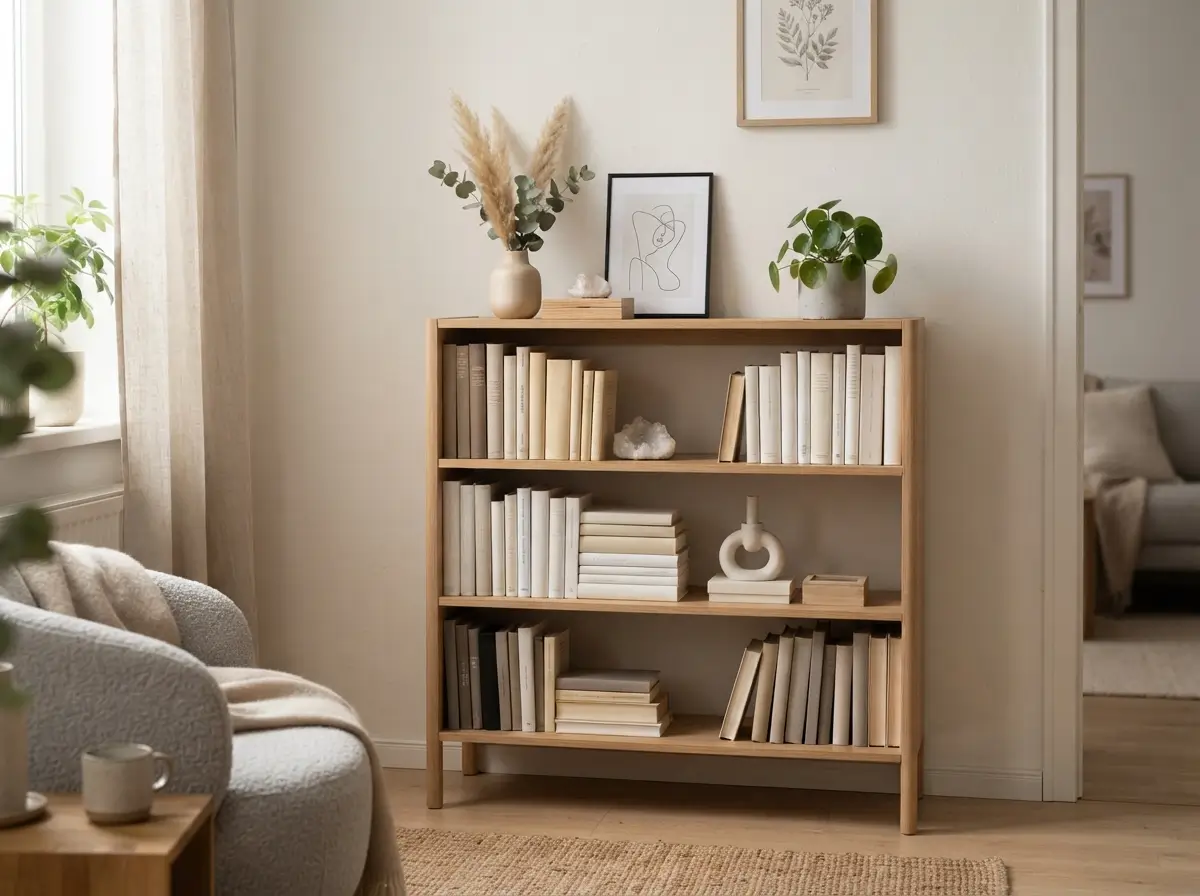

A bookshelf can do much more than hold books, especially in a small apartment where every surface matters. When styled well, it can create storage, add personality, make a room feel calmer, and help a minimal home look finished without feeling crowded. The challenge is that small rooms do not forgive clutter easily. A few extra objects, mixed colors, or uneven shelves can quickly make the whole space feel busy. That is why small apartment bookshelf styling works best when you treat the shelf as both a storage piece and a design feature.
Minimal homes need balance. You want the bookshelf to feel warm and lived-in, but you do not want it to become a display of everything you own. The right approach is simple: choose fewer items, repeat colors, leave breathing space, and use practical pieces that make daily life easier. Whether you have a tall bookcase in a studio, floating shelves above a desk, a narrow shelf beside the sofa, or built-ins in a rental apartment, you can style it in a clean and useful way without spending a lot of money.
What Is the Best Way to Style a Small Apartment Bookshelf?
The best way to style a small apartment bookshelf is to mix books, useful storage, a few decorative objects, and empty space in a planned way. Start with the items you actually need, then add simple pieces like baskets, framed art, plants, ceramic bowls, or small lamps. Keep the color palette tight, use different heights, and avoid filling every inch. This creates a bookshelf that looks calm, practical, and intentional instead of messy.
Good small apartment bookshelf styling is not about buying many new decorations. It is about editing what you already own and arranging it better. For example, a stack of books can lift a small vase, a woven basket can hide chargers, and a framed print can cover the back of a shelf while adding depth. These small choices help a bookshelf look designed without making your apartment feel packed.
Start With a Clean Shelf and Edit First
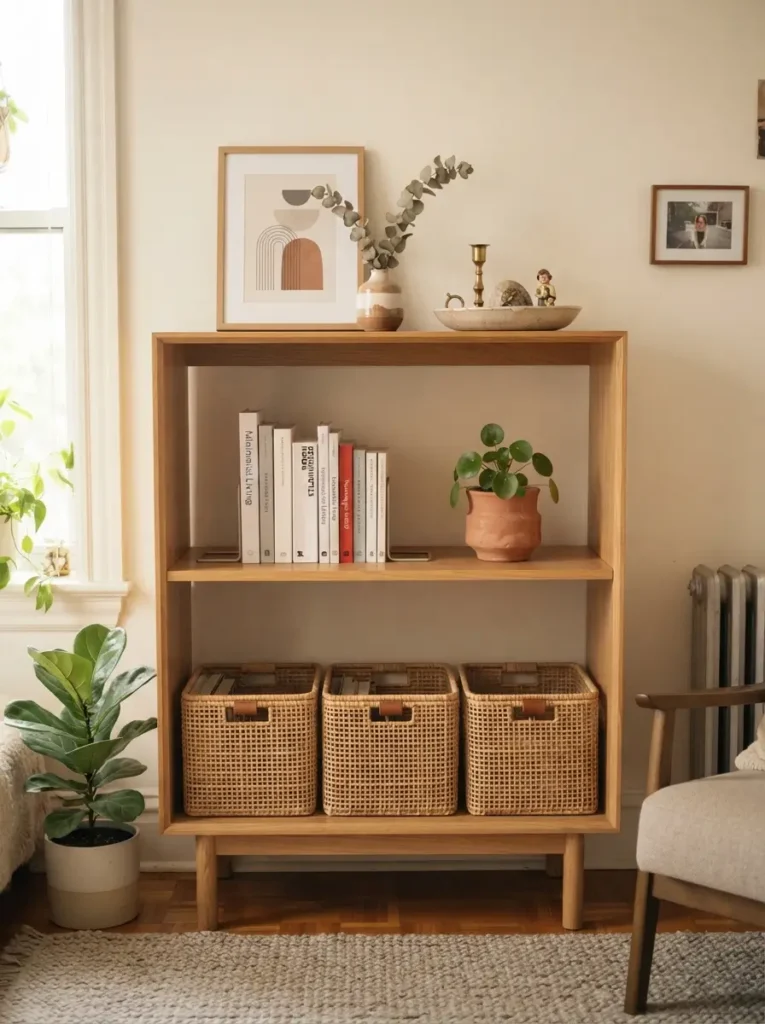
Before you style anything, remove everything from the bookshelf and look at the empty structure. This step sounds basic, but it makes a huge difference in small apartments because shelves often collect random items over time. Old receipts, extra cables, unread magazines, candles without lids, tiny souvenirs, and loose papers can all make the shelf feel heavier than it is. When you clear the shelf first, you can see the actual height, depth, and shape you are working with. You can also decide which items deserve a place and which ones need to move elsewhere.
This idea works because minimal styling depends on selection, not decoration. A small bookshelf looks better when every item has a reason to stay. Keep books you read, items you use, and decor that matches your room. Remove anything broken, dusty, duplicated, or visually distracting. If you love sentimental objects, choose only one or two for display and store the rest in a memory box. This tip is best for beginners who feel their shelf looks messy but cannot tell why. Most of the time, the issue is not the shelf itself. The issue is too many unrelated items fighting for attention.
A practical example is a three-shelf bookcase in a studio apartment. Use the top shelf for display, the middle shelf for books and one decorative object, and the bottom shelf for closed storage. If you own many small items, group them into a tray instead of spreading them across the shelves. A matte black tray, light wood tray, or shallow ceramic dish can instantly make tiny pieces look organized. For renters, this is also useful because you can improve the look without drilling, painting, or changing the furniture.
Choose a Simple Color Palette
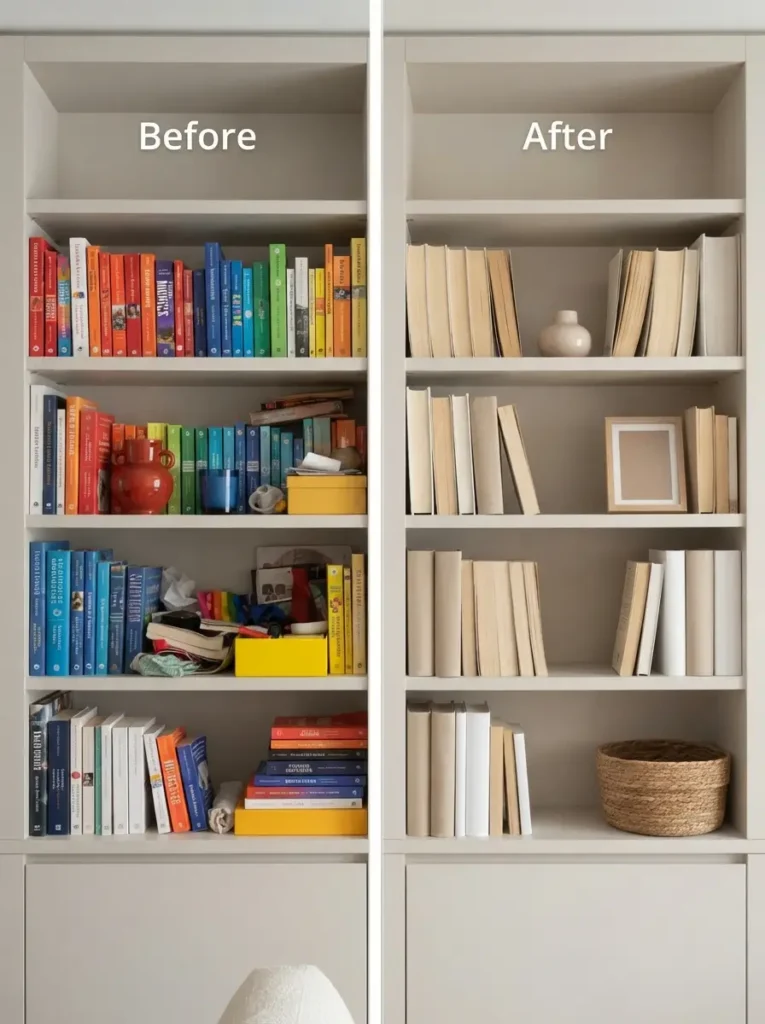
Color is one of the easiest ways to make a bookshelf feel calm. In a small apartment, a shelf with too many colors can make the wall look visually noisy, even if the items are neat. A simple palette helps everything connect. For minimal homes, try warm white, beige, soft gray, oak, black, and muted green. If your apartment has cooler tones, use white, charcoal, pale blue-gray, and brushed metal. If your room already has warm furniture, use cream, tan, walnut, terracotta, and aged brass.
This idea works because repeated colors guide the eye. When the bookshelf uses the same tones as the rest of the room, it becomes part of the space instead of looking like a separate clutter zone. You do not need everything to match exactly. In fact, a little variation keeps it natural. For example, cream book covers, a beige vase, a light wood frame, and a woven basket can all work together even if they are not identical. The goal is harmony, not a showroom match.
This tip is best for small apartment owners who want a cleaner look without buying new furniture. You can start by turning some books around so the pages face outward, using neutral book jackets, or placing colorful books inside baskets or lower shelves. You can also group bright books together instead of spreading them everywhere. If you have a red book, a blue candle, a yellow box, and a green souvenir on different shelves, the whole unit feels busy. If you place all colorful items on one shelf and keep the rest neutral, the display feels controlled.
Mix Vertical Books With Horizontal Stacks
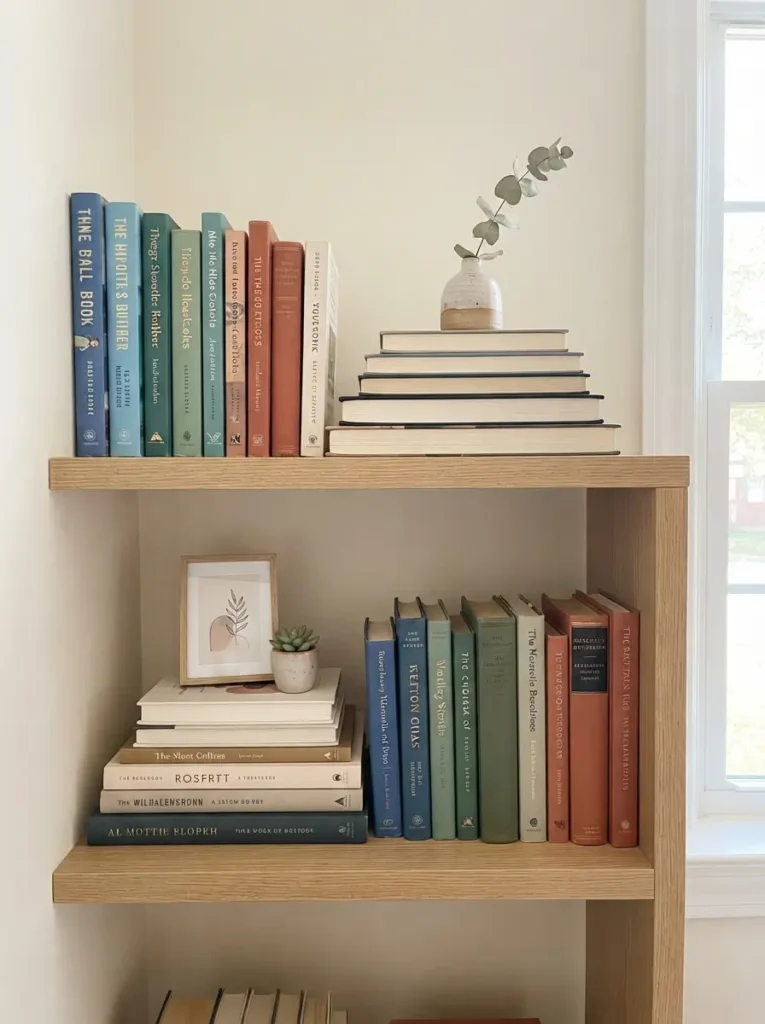
A bookshelf filled only with upright books can look flat and heavy, especially in a small room. Mixing vertical books with horizontal stacks creates movement and gives you small platforms for decor. Place most books upright, then create one or two horizontal stacks on each section. Keep stacks low, usually three to five books, so they do not look unstable. Use larger books at the bottom and smaller books on top. Then place a small object on the stack, such as a candle, bowl, framed photo, or tiny plant.
This idea works because it breaks up straight lines. Most bookshelves already have strong horizontal shelves and vertical sides. If every book stands in the same direction, the shelf can look stiff. Horizontal stacks soften that structure and make the arrangement feel more relaxed. They also help you create height differences without buying risers or extra decor. In minimal homes, this is useful because one stack can do two jobs: store books and support a decorative item.
This tip is best for book lovers who want their shelf to look styled without hiding their collection. For example, place eight upright books on the left side of a shelf, a horizontal stack of four books on the right side, and a small ceramic vase on top. On the shelf below, reverse the layout by placing upright books on the right and a stack on the left. This creates balance without making the shelves identical. If your books have very colorful spines, group similar colors together or place brighter titles lower down where they draw less attention.
Leave Empty Space on Purpose
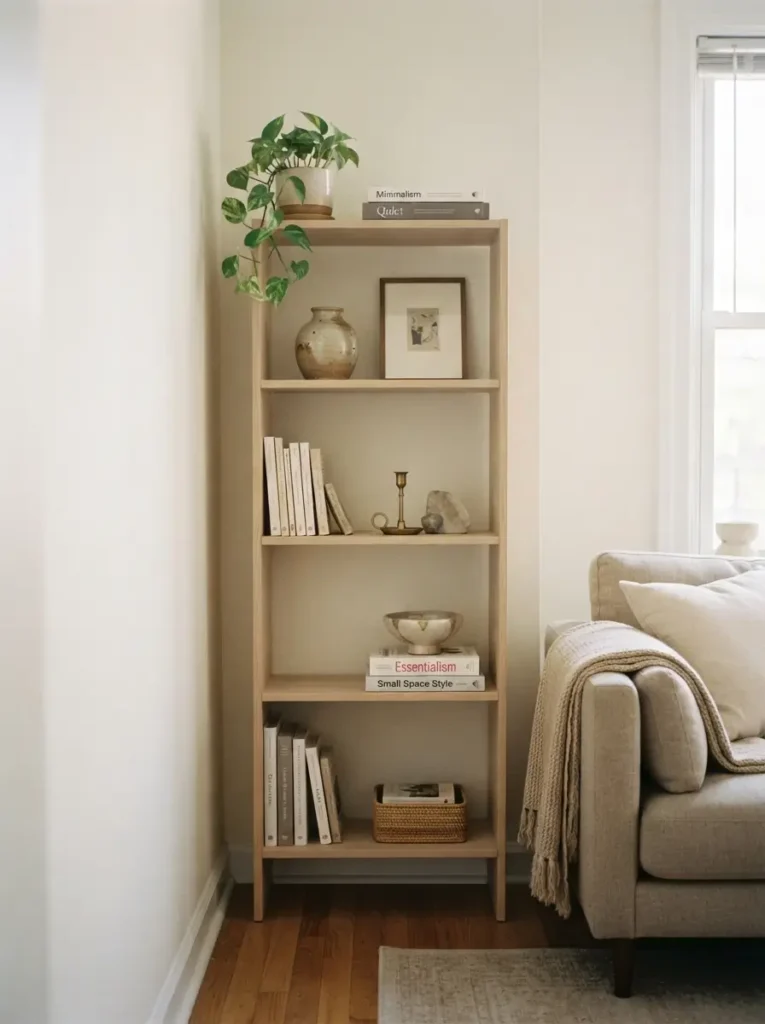
Empty space is one of the most important parts of small apartment bookshelf styling. Many people feel they must fill every shelf because storage is limited, but a completely packed bookcase can make a room feel smaller. Empty space gives the eye a place to rest. It also makes the items you keep look more important. In minimal homes, the space around an object often matters as much as the object itself.
This idea works because visual breathing room reduces clutter. A shelf with ten small objects may look crowded, while a shelf with three well-placed pieces can feel calm and expensive. You do not need huge empty gaps. Even leaving three to six inches between groups can improve the look. On a narrow bookshelf, leave one side of a shelf partly open. On a wide shelf, create two or three small groupings instead of one long row of items. The empty space between those groups keeps the shelf from feeling packed.
This tip is best for anyone living in a studio, shared apartment, or small bedroom where the bookshelf sits close to the bed or sofa. If you see the shelf every day while relaxing, you want it to feel peaceful. Start by removing one-third of the items from your bookshelf. Place the removed items in a box for a week. If you do not miss them, store, donate, or relocate them. This simple editing process often improves a shelf more than adding new decor.
Use Baskets and Boxes for Hidden Storage
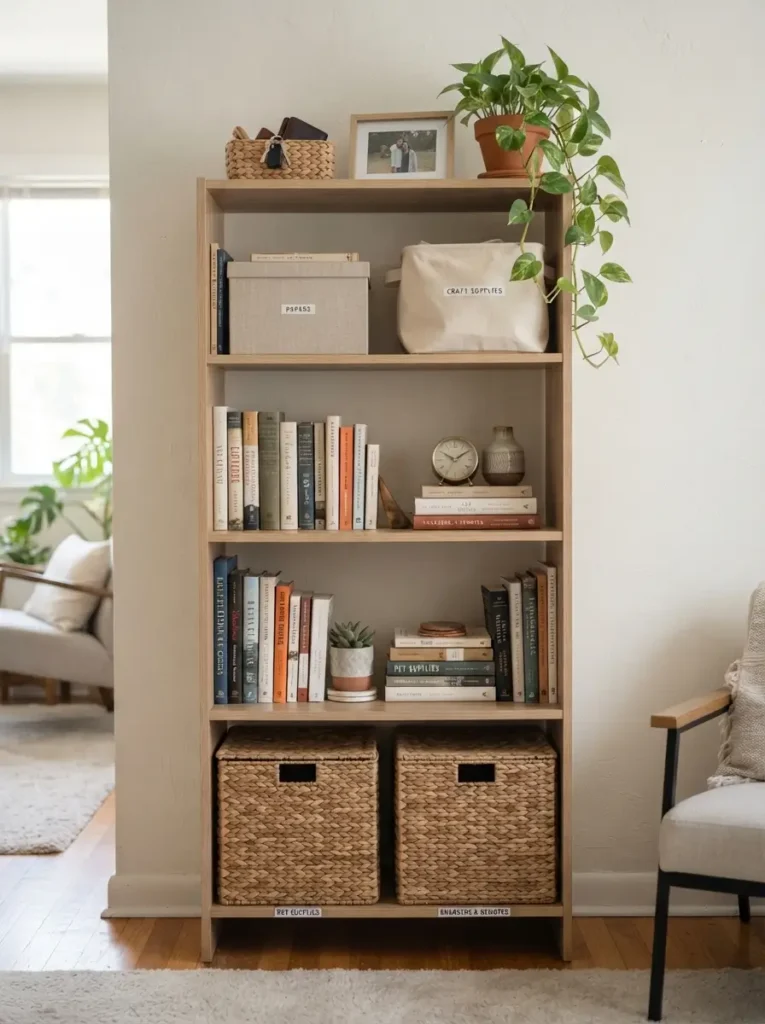
Small apartments need storage, but open storage can look messy. Baskets, fabric bins, and lidded boxes help you hide everyday items while keeping the bookshelf attractive. Use them for chargers, remotes, notebooks, craft supplies, pet items, beauty products, gaming accessories, or paperwork. Choose baskets that fit the shelf depth, not just the shelf width. A basket that sticks out too far can make the shelf look awkward and block walkways in tight rooms.
This idea works because closed storage controls visual clutter. Minimal styling does not mean owning nothing. It means keeping daily items organized and out of sight when they do not need to be displayed. For a warm minimal look, choose woven seagrass baskets, linen boxes, canvas bins, or matte cardboard storage boxes. For a modern minimal look, choose smooth white, black, gray, or wood-toned boxes. Avoid clear plastic bins on open shelves unless the contents are very neat, because visible clutter still affects the room.
This tip is best for renters and small-space beginners who need their bookshelf to work hard. A practical layout is to place two matching baskets on the bottom shelf, books in the middle, and lighter decorative pieces on top. The bottom shelf naturally feels heavier, so storage baskets look grounded there. If you have children, pets, or many small items, this layout keeps fragile decor higher and practical things lower. Budget-friendly options include thrifted baskets, fabric cubes from discount stores, or shoeboxes covered with peel-and-stick paper.
Add One Small Lamp or Soft Light
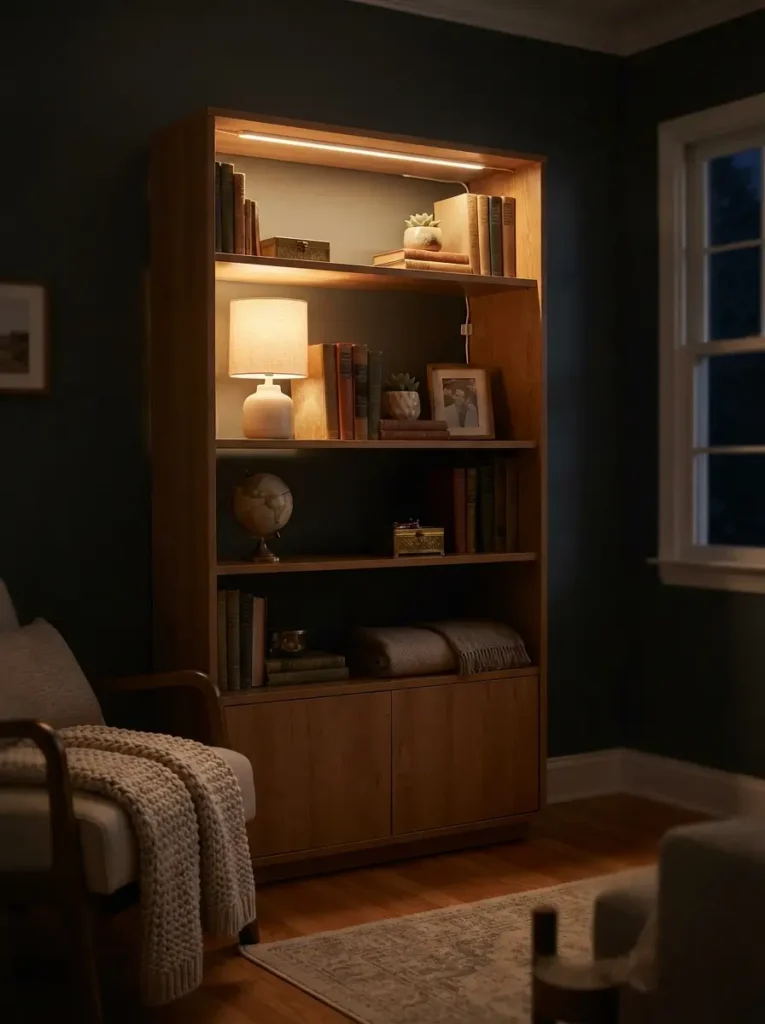
Lighting can completely change how a bookshelf feels. A small lamp, clip-on light, LED puck light, or battery-operated picture light can make your shelf feel warmer in the evening. In small apartments, lighting matters because overhead lights often feel harsh. A bookshelf light creates a soft glow and makes the room feel more layered without adding bulky furniture. Choose warm white light around 2700K to 3000K for a cozy but clean look. Avoid cool blue light on shelves, because it can make books and wood tones look flat.
This idea works because light adds depth. When a bookshelf has gentle lighting, it stops looking like a storage unit and starts feeling like part of the room design. A small lamp also creates a focal point, especially if your shelf sits in a living room corner, beside a reading chair, or near the bed. For minimal homes, choose a lamp with a simple shape. A small ceramic base, wood base, metal dome shade, or linen shade works well. Keep the cord hidden by running it down the back corner of the shelf.
This tip is best for apartments with poor natural light or rooms that feel unfinished at night. Renters can use battery lights, rechargeable lamps, or adhesive LED strips placed under a shelf. Use warm light and keep it subtle. The goal is not to make the bookshelf bright like a store display. The goal is to add a low, comfortable glow that helps the room feel calm after sunset. If you work from home, this can also make your video call background look more polished without much effort.
Style With Plants That Fit the Shelf
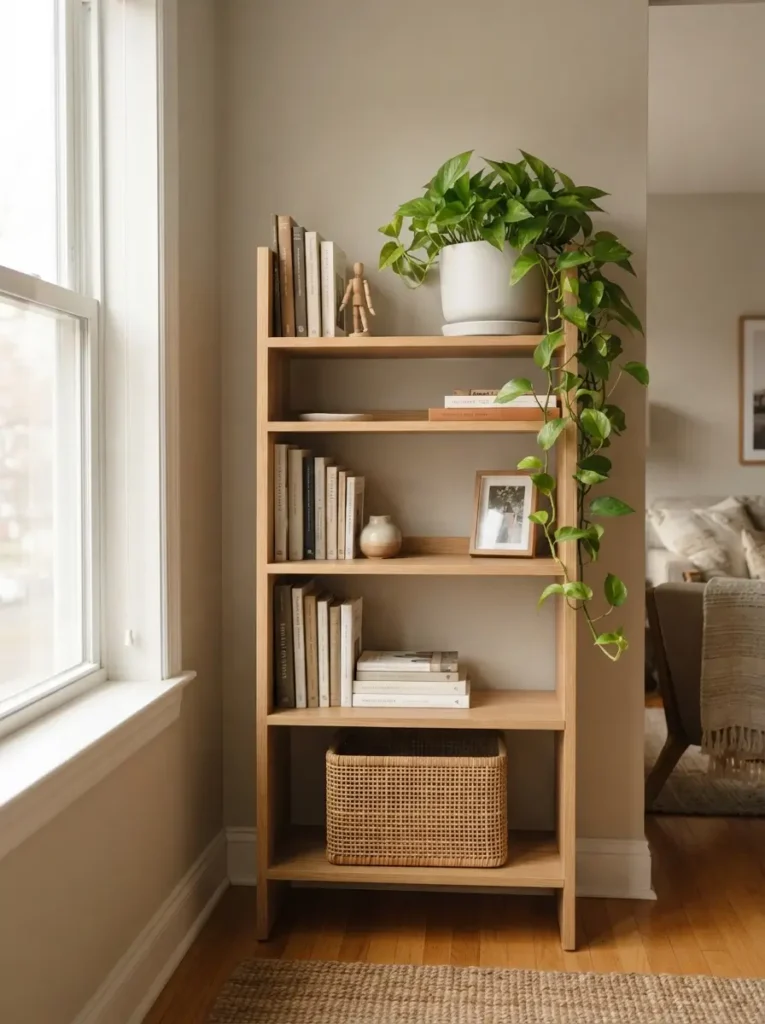
Plants bring life to a bookshelf, but they need the right size and light conditions. In a small apartment, oversized plants on a shelf can look crowded and may damage books if they leak water. Choose compact plants like pothos, snake plant, ZZ plant, peperomia, small fern, or a small trailing ivy. Use a saucer under every pot, even if the pot looks sealed. If your shelf gets little light, use a realistic faux plant or dried stems instead. A dead plant does not make a minimal home look better.
This idea works because natural shapes soften straight shelves. Bookshelves are usually full of hard edges, square books, and straight lines. A plant adds curves, texture, and a different kind of height. A trailing plant can also guide the eye downward and make a tall shelf feel less rigid. For a minimal look, limit plants to one or two areas. Too many small pots can look cluttered and create watering problems.
This tip is best for people who want warmth without adding many decorative objects. A simple example is a pothos on the top shelf with vines trailing slightly down one side, upright books on the middle shelf, and a woven basket on the bottom. If your bookshelf is near a window, rotate the plant every week so it grows evenly. If you rent and cannot hang planters, using the top of a bookshelf is a good way to add greenery without wall hooks. Keep plant pots in neutral colors such as white, terracotta, beige, matte black, or soft gray.
Use Art Frames Without Hanging Anything
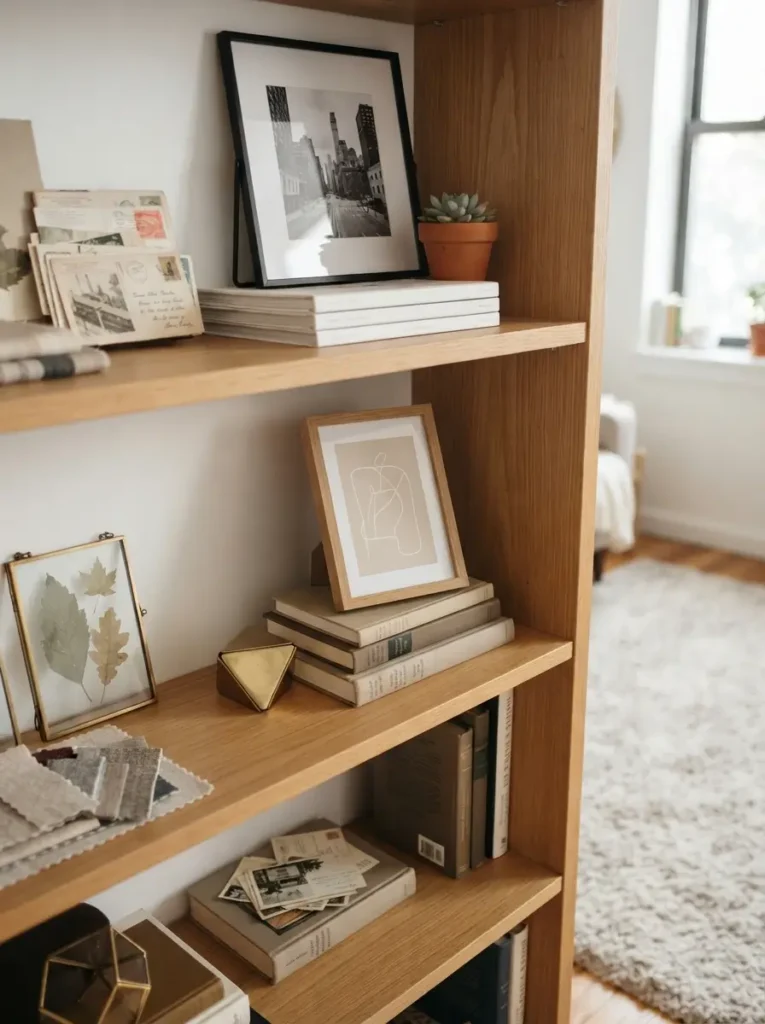
Framed art can make a bookshelf feel personal, and you do not always need to hang it. Leaning a small frame against the back of a shelf adds depth and works well for rentals. Use simple art prints, black-and-white photos, pressed leaves, line drawings, vintage postcards, or fabric samples in frames. Choose frame sizes that leave space around them. A frame that fills the whole shelf height can feel cramped unless it is the main feature.
This idea works because art creates a background layer. Instead of placing every object in a row, you can lean a frame at the back and place a small stack of books or a bowl in front. This makes the shelf feel layered without adding clutter. It also helps cover plain backs on cheap bookcases. If your bookshelf has a dark back panel, a light frame can brighten it. If the shelf is white, a black or wood frame can add contrast.
This tip is best for renters, students, and anyone who wants personality without making holes in the wall. A practical example is a slim oak frame with a beige abstract print behind three upright books and a small brass object. Another option is a black frame behind white books and a small plant for a modern minimal look. You can also rotate art seasonally without changing the whole shelf. In autumn, use a warm-toned print. In spring, use a soft botanical print. This keeps the room fresh without buying new furniture.
Create Small Groups of Three
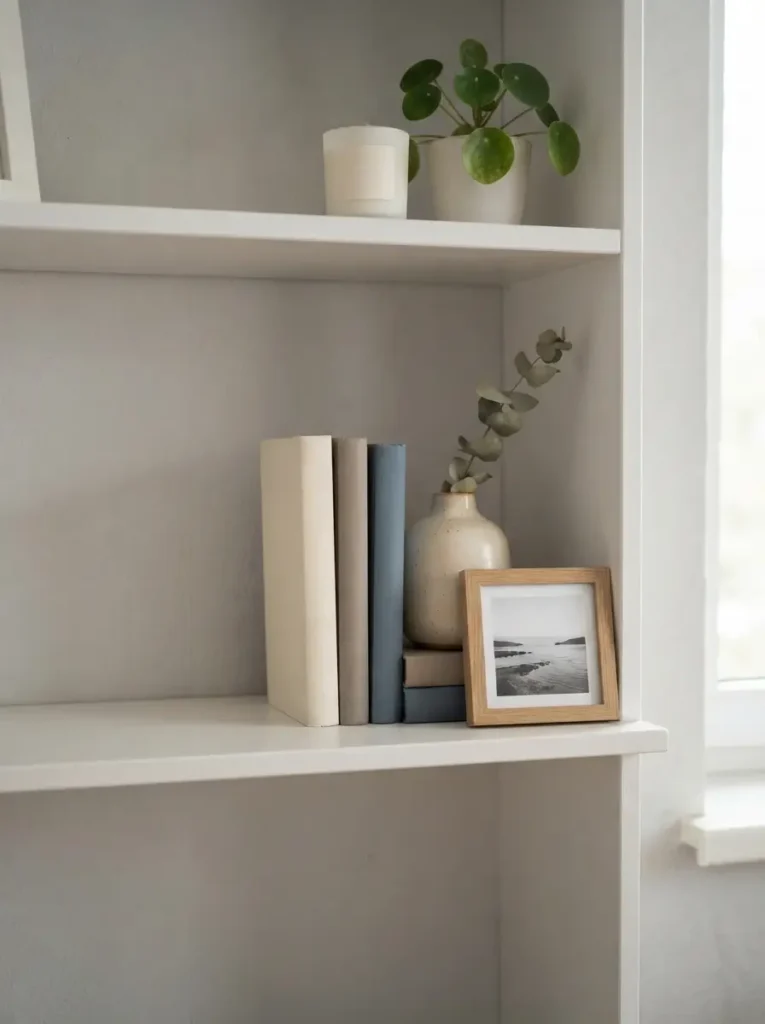
Grouping objects is a simple styling method that works well on bookshelves. A group of three often feels balanced because it has enough variation without becoming crowded. Choose three items with different heights, shapes, or textures. For example, place a stack of books, a small vase, and a framed photo together. Or use upright books, a candle, and a small plant. The items should relate through color or material so the group feels intentional.
This idea works because groups prevent the shelf from looking random. When every item sits alone, the display can feel scattered. When items form small clusters, the eye reads them as one arrangement. This is especially helpful in small apartments because it reduces visual noise. Instead of seeing fifteen separate objects, you see four or five calm groupings. Minimal styling often depends on this kind of quiet organization.
This tip is best for beginners who struggle with placement. Start with one shelf and create one group on the left or right side. Use the tallest item at the back, the medium item beside it, and the smallest item in front or on a book stack. Do not line all three items up like soldiers. Slight overlap looks more natural. If you use a candle, choose one with a simple label or remove the label if possible. Busy labels can make a minimal shelf feel commercial instead of calm.
Place Heavier Items on Lower Shelves
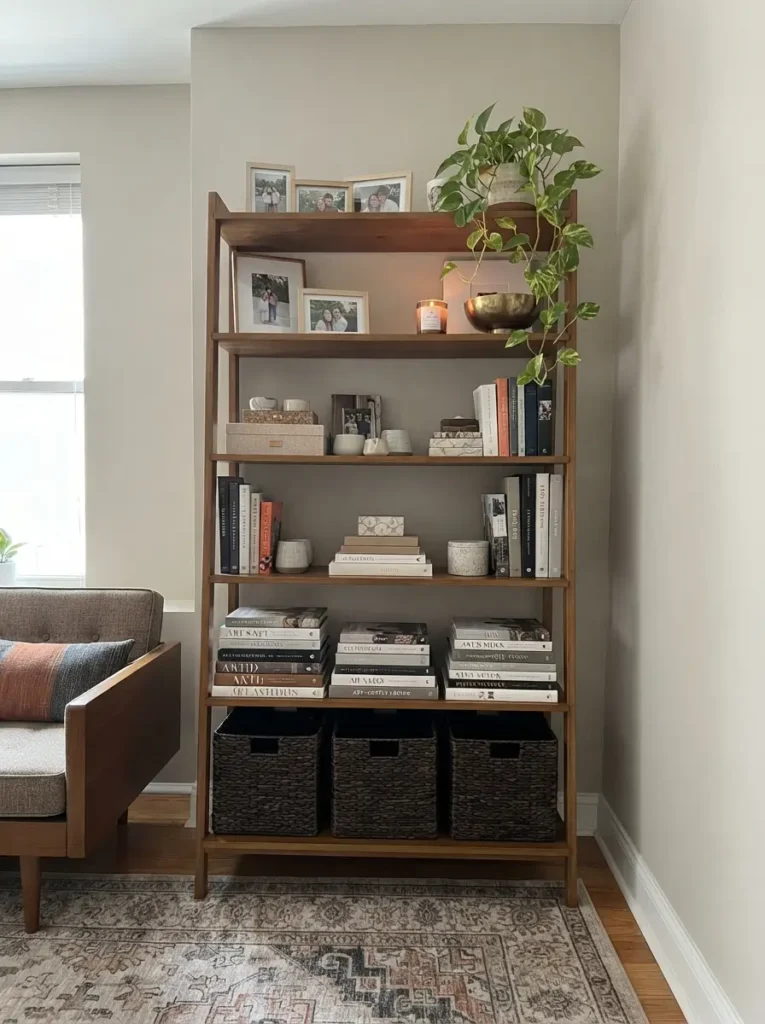
A bookshelf looks more stable when heavier items sit near the bottom. This includes baskets, large books, storage boxes, record collections, photo albums, and ceramic pieces. Lighter items like frames, small plants, candles, and decorative bowls can sit higher. This layout also makes practical sense because heavy items are easier and safer to access at waist height or below. In small apartments, where furniture may be narrow or lightweight, this rule can also improve safety.
This idea works because visual weight affects balance. If you place bulky dark boxes on the top shelf and tiny objects below, the bookshelf can look top-heavy. The room may feel slightly off even if you cannot explain why. When heavier pieces stay low, the shelf feels grounded. This is especially important for tall bookcases in minimal homes because clean spaces show imbalance quickly.
This tip is best for renters using affordable flat-pack shelves, narrow ladder shelves, or freestanding units. Always anchor tall furniture if your lease allows it and especially if children or pets live in the home. If wall anchoring is not possible, avoid loading the top shelf with heavy items. Use the lowest shelf for baskets, the next shelf for larger books, the middle shelves for mixed styling, and the upper shelves for lighter decor. A bottom row of matching bins can also hide items you use often while making the bookcase look neat.
Use Repetition to Make the Shelf Feel Calm
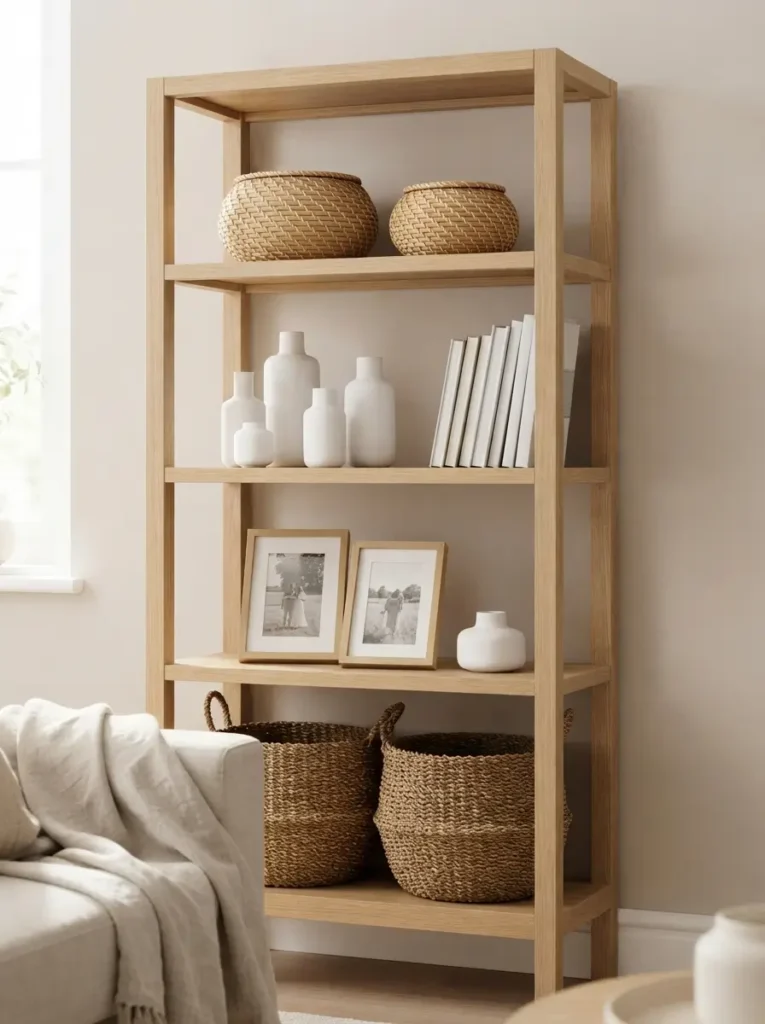
Repetition is a powerful tool in minimal decorating. When you repeat a material, color, shape, or texture, the bookshelf feels more connected. You might repeat black frames, woven baskets, white ceramic pieces, oak wood, or linen textures. Repetition does not mean every shelf should look the same. It means the eye can find a pattern. In a small apartment, that pattern helps the room feel less chaotic.
This idea works because small spaces need visual consistency. If one shelf has shiny gold, another has bright plastic, another has dark rustic wood, and another has colorful glass, the whole unit can feel busy. Repeating two or three materials keeps the shelf calm while still allowing personality. For example, use white ceramics on two shelves, light wood frames on two shelves, and woven texture on the bottom shelf. These repeated details make the shelf feel planned.
This tip is best for people who already own a mix of decor and want it to look more cohesive. Gather your items and sort them by material. Choose the materials that match your room best and remove the rest from the shelf. If your apartment has a Scandinavian style, repeat light wood, white, and soft gray. If your home leans modern, repeat black metal, glass, and smooth ceramics. If you like warm minimal style, repeat beige, brown, rattan, and linen. This method is budget-friendly because it uses editing more than shopping.
Add Texture Instead of Extra Color
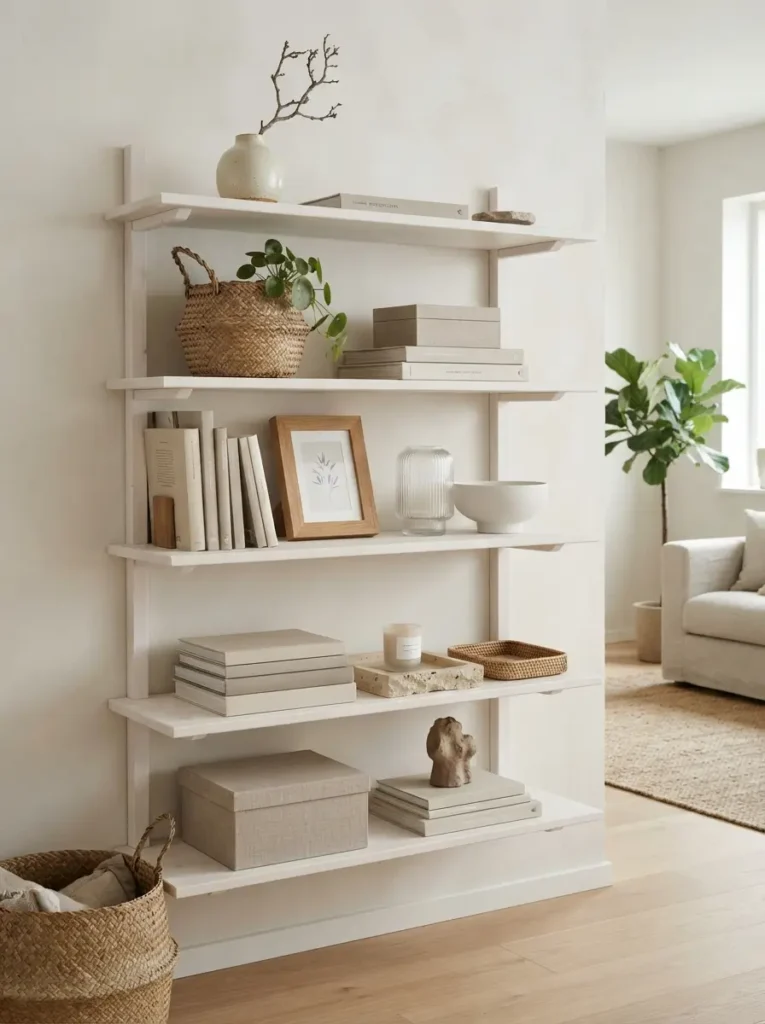
Minimal homes can look flat if everything is smooth and plain. Texture solves this problem without making the bookshelf feel loud. Use woven baskets, linen book boxes, ribbed glass, matte ceramics, wood grain, stone trays, or a small fabric-covered box. Texture adds interest while keeping the color palette quiet. This works especially well in small apartment bookshelf styling because it gives depth without adding visual clutter.
This idea works because texture creates contrast you can feel, not just see. A beige shelf with beige objects may sound boring, but it can look beautiful if the surfaces are different. A rough clay vase, smooth book covers, woven basket, and linen box can all share a neutral color while still feeling layered. This is more effective than adding bright colors just to make the shelf interesting.
This tip is best for minimal homes that feel too plain or unfinished. For example, if you have a white bookcase, white walls, and light flooring, add a seagrass basket, a warm wood frame, and a matte cream vase. If your shelf is dark, add texture through lighter linen boxes, a stone coaster, or a small woven tray. Avoid using too many tiny textured objects. One or two strong textures per shelf are enough. The goal is depth, not clutter.
Make One Shelf Practical for Daily Use
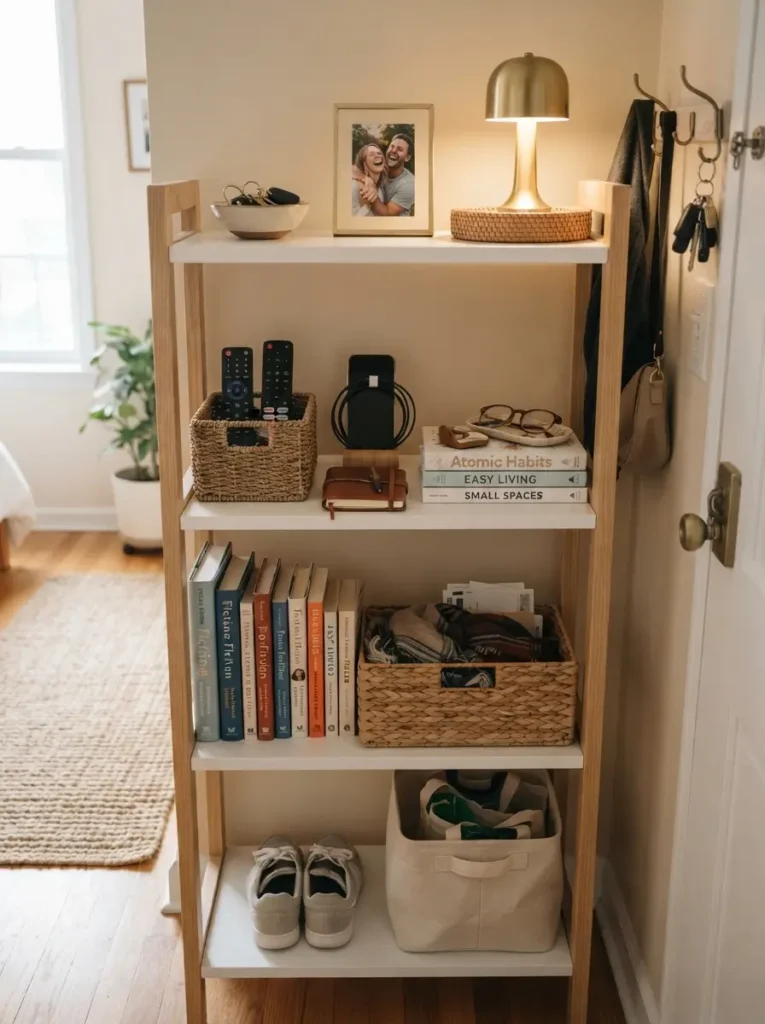
A small apartment bookshelf should not only look good. It should also support daily life. Choose one shelf or section for useful items you reach for often. This might include a small bowl for keys, a tray for glasses, a basket for remote controls, a notebook, a charging station, or a box for mail. Keep this section neat and simple so it blends with the rest of the shelf. When practical storage looks intentional, the apartment feels easier to live in.
This idea works because minimal decorating fails when it ignores real habits. If you always drop your keys on the nearest surface, create a proper place for them. If you charge your phone near the sofa, hide the cable inside a basket or behind a stack of books. If you read before bed, keep your current book and glasses on the shelf near your bed. Styling should make your home smoother, not stricter.
This tip is best for busy renters, small families, students, and anyone who wants a clean home but needs realistic storage. A practical example is a narrow bookcase by the entryway. Use the top shelf for a tray, small lamp, and one frame. Use the middle shelves for books and baskets. Use the lower shelf for shoes, bags, or folded scarves in a bin. This turns a simple bookshelf into an entry station without needing a console table. In a studio apartment, that kind of multi-use furniture can save valuable floor space.
Match the Bookshelf to the Room Layout
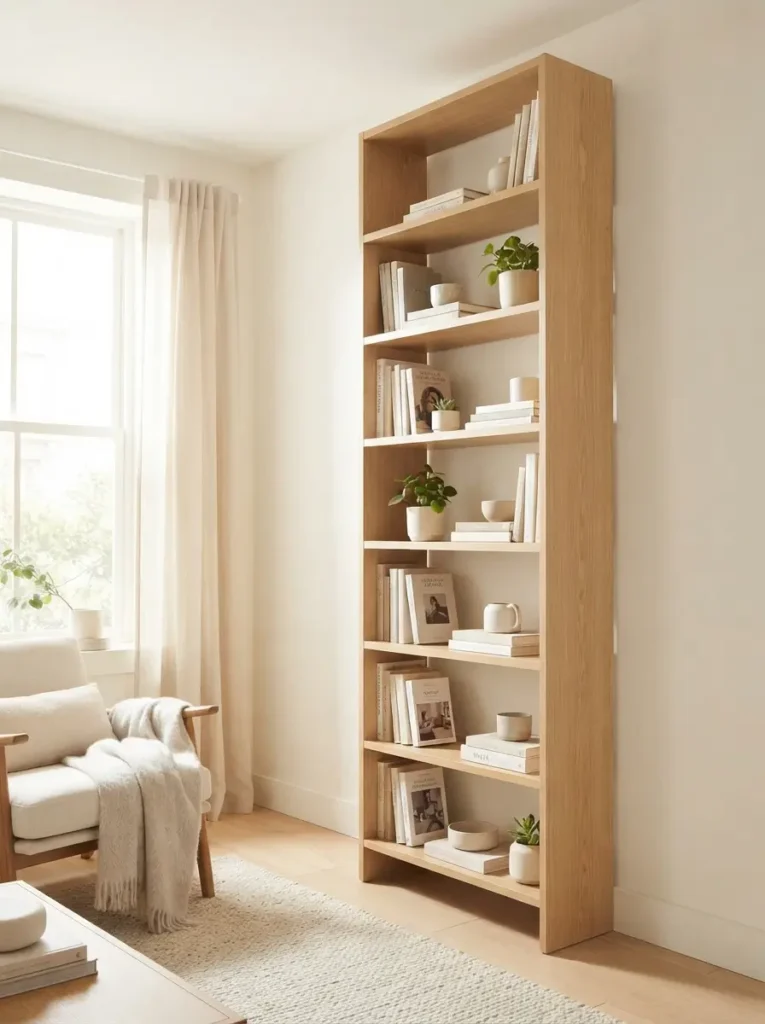
A bookshelf should work with the room, not against it. In a small apartment, placement matters as much as styling. A tall shelf can draw the eye upward and make the room feel higher. A low bookshelf can sit behind a sofa, under a window, or beside a bed as a storage surface. A narrow bookcase can fill an awkward corner without blocking movement. Before styling, think about how people move through the room and what the shelf faces.
This idea works because good layout reduces the feeling of crowding. Even a beautifully styled bookshelf can feel wrong if it blocks a walkway or overwhelms a small wall. Leave enough space to walk comfortably, usually at least 30 inches in main pathways when possible. If your shelf sits near a door, avoid placing breakable items near the edge. If it sits beside a desk, use it for work supplies on lower shelves and calmer decor at eye level.
This tip is best for studio apartments, small living rooms, and bedrooms where one piece of furniture must do several jobs. If your bookshelf is visible from the sofa, style the middle shelves most carefully because they sit at eye level. If it appears in the background of video calls, keep that section simple with books, one plant, and one frame. If the shelf is beside the bed, use soft lighting and fewer objects so it does not feel busy while you rest.
Rotate Decor Instead of Adding More
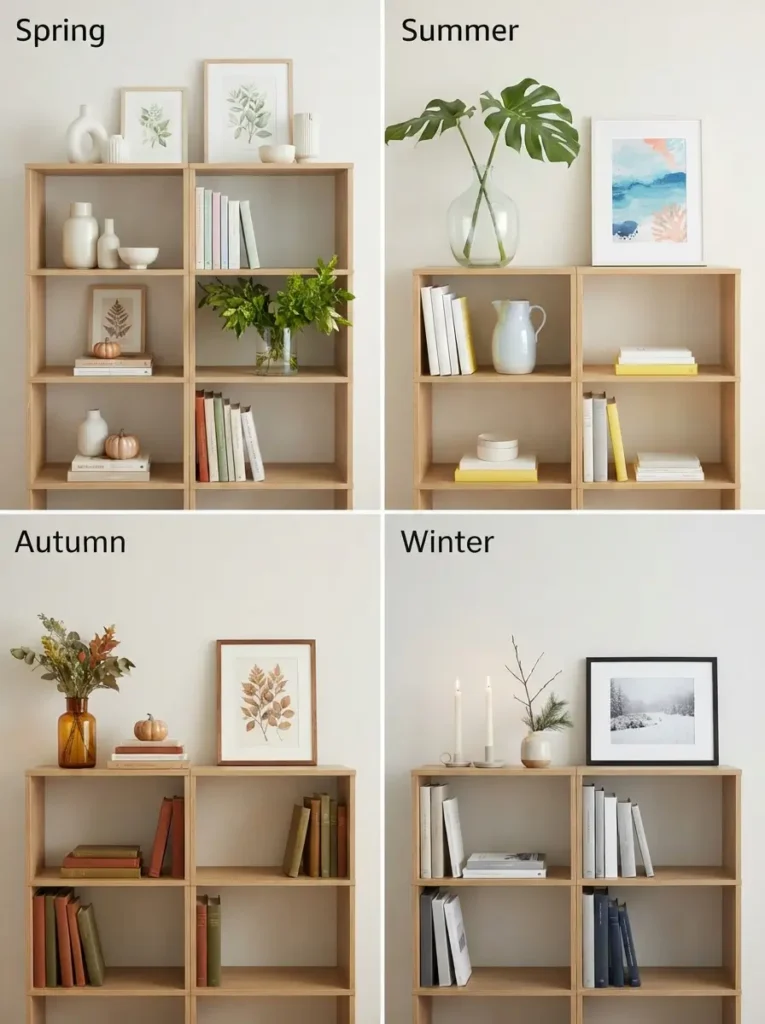
One of the smartest ways to keep a minimal bookshelf fresh is to rotate decor instead of constantly adding new pieces. Store extra decorative items in one box and swap them every few months. Use lighter ceramics and greenery in spring, warm wood and amber glass in autumn, simple candles in winter, and fresh books or framed prints whenever your room feels stale. Keep the total number of displayed items about the same each time.
This idea works because small apartments have limited visual capacity. If you keep buying small decor pieces and adding them to the shelf, it will eventually look crowded. Rotation lets you enjoy variety without clutter. It also helps you notice what you actually like. If an item stays in storage for a year and you never miss it, you can donate it. Minimal homes become easier to maintain when you stop treating every surface as permanent storage.
This tip is best for people who love seasonal decorating but want a calm apartment. For example, instead of adding ten autumn pieces, replace your summer print with a warmer one, swap a glass vase for a ceramic vase, and place one small pumpkin or wood object on a book stack. That is enough. In December, replace the pumpkin with a simple candle or small evergreen stem. This keeps the bookshelf current without turning it into a crowded holiday display.
Common Mistakes to Avoid
The most common mistake in small apartment bookshelf styling is overfilling the shelves. Many people use every inch because they need storage, but open shelving looks best when it has some empty space. If you truly need every shelf for storage, use closed bins and keep the visible items simple. Another common mistake is using too many small objects. Tiny candles, mini figurines, small frames, and little jars can look cute alone, but together they create visual clutter. Fewer medium-sized pieces usually look cleaner than many tiny ones.
Another mistake is ignoring scale. A very small vase on a wide shelf can look lost, while an oversized plant on a narrow shelf can look forced. Match the size of your decor to the shelf height and depth. If your shelves are shallow, use slim frames, small bowls, and paperback stacks. If your shelves are deep, layer objects with frames at the back and smaller items in front. Also avoid placing all decor at the same height. A shelf with items of equal height looks flat, while varied heights make the arrangement more natural.
Poor lighting is another issue. Bright white bulbs above a shelf can make the room feel cold, while no lighting at all can make the bookshelf disappear at night. Warm lighting between 2700K and 3000K usually works best for home decor. You should also avoid mixing too many unrelated styles. A rustic basket, neon sign, glam crystal piece, farmhouse plaque, and modern sculpture may all be nice separately, but they can clash on one small shelf. Choose one main direction and repeat it.
A final mistake is styling only for photos and not for real life. If you need to move five objects every time you grab a book, the shelf is not practical. If baskets hide items so deeply that you never use them, the storage system needs work. A good minimal bookshelf should look calm and make your daily routine easier. Beauty and function should support each other, especially in a small apartment where every piece of furniture needs to earn its place.
Budget-Friendly Bookshelf Styling Tips
You do not need expensive decor to style a bookshelf well. Start with what you already own. Books, mugs, bowls, trays, framed cards, travel postcards, candles, baskets, and small plants can all work if you arrange them with care. Remove packaging, loud labels, and mismatched clutter first. A simple thrifted frame with a printable art piece can look better than a costly object that does not match your room. The strongest budget tip is to edit before buying because removing clutter often gives the biggest improvement.
Thrift stores are useful for small apartment bookshelf styling because they often have baskets, frames, ceramic bowls, hardback books, and small lamps at low prices. Look for simple shapes and good materials instead of trendy pieces. A plain white vase, wood frame, or woven basket can work for years. Avoid buying too many small decorative objects just because they are cheap. A few useful, medium-sized pieces will make the shelf look more polished.
You can also use DIY updates. Cover old boxes with linen fabric, kraft paper, or peel-and-stick wallpaper. Wrap colorful book jackets in neutral paper if they clash with your palette. Paint mismatched frames in one color to create repetition. Use a leftover tile, wood board, or stone coaster as a small tray. If your bookshelf itself looks worn, clean it deeply, tighten screws, and consider renter-friendly peel-and-stick paper on the back panel. A light wood or warm neutral backing can make a basic shelf look more custom.
For lighting, choose rechargeable lamps, clip-on lights, or battery puck lights if you cannot add wiring. For plants, propagate pothos from a cutting or buy one small low-maintenance plant instead of several. For art, frame fabric scraps, pressed leaves, old calendar pages, or simple black-and-white photos. The goal is not to make the shelf look expensive. The goal is to make it look calm, useful, and connected to the rest of your home.
Small Apartment Bookshelf Styling Tips
Small apartment bookshelf styling works best when you think in zones. Use lower shelves for storage, middle shelves for the items you see most, and upper shelves for light decor. This creates a natural order. The lower area handles practical needs, the eye-level area carries the style, and the top area adds height without feeling heavy. If your shelf is very tall, avoid putting tiny items at the top because they may look lost. Use a larger frame, a trailing plant, or a simple basket instead.
Keep the shelf connected to nearby furniture. If your sofa has beige pillows, repeat beige on the shelf through a basket or vase. If your coffee table has black legs, repeat black through a frame or lamp. If your room has warm wood tones, bring a little wood onto the shelf. These small repetitions help the bookshelf belong to the room. In small homes, disconnected pieces stand out quickly, so color and material links matter.
Think about sightlines too. The shelves at eye level should be the calmest because you notice them most. Place your best-looking books, art, or plant there. Lower shelves can hide less attractive items in bins. Upper shelves can hold objects you do not use daily. If the bookshelf sits behind your desk or appears on camera, keep that view especially simple. A background with a few books, one plant, and one frame usually looks cleaner than a busy wall of objects.
Use the rule of enough. After styling a shelf, step back and ask whether anything feels extra. If the shelf already has books, a basket, and a plant, it may not need a candle too. If a shelf has a frame and a stack of books, it may not need another object. Minimal decorating is often about stopping at the right moment. The best shelves feel useful, warm, and calm because they are not trying too hard.
FAQ
How do I make a small apartment bookshelf look less cluttered?
Start by removing everything and only putting back the items you use, love, or need. Group books together, hide small practical items in baskets, and leave open space between objects. Use a limited color palette so the shelf feels connected. If you have many colorful books, group similar colors together or place the brightest ones on lower shelves. The easiest way to reduce clutter is to remove small random objects and replace them with fewer medium-sized pieces.
What should I put on a bookshelf besides books?
You can add baskets, storage boxes, framed art, small lamps, plants, candles, ceramic bowls, trays, photo frames, and meaningful objects. Choose items that support the room instead of filling space for no reason. In a small apartment, useful decor works best. A bowl can hold keys, a basket can hide chargers, and a lamp can improve evening lighting. This keeps the shelf practical and attractive.
How many items should be on each shelf?
There is no fixed number, but most small shelves look best with one to three groupings. A grouping might include upright books, a small plant, and a stack of books. If the shelf is narrow, one grouping may be enough. If it is wide, two groupings with space between them can work well. Avoid placing many tiny objects across the whole shelf because they make the display feel busy.
What colors work best for minimal bookshelf styling?
Warm white, cream, beige, soft gray, black, oak, walnut, muted green, and terracotta work well in minimal homes. Choose colors that already appear in your room. If your furniture is light wood, repeat that tone on the shelf. If your room has black metal accents, use black frames or a black lamp. A simple palette helps the bookshelf look calm and intentional.
How can renters style a bookshelf without damaging walls?
Renters can lean frames instead of hanging them, use battery lights instead of hardwired lighting, add peel-and-stick backing to the shelf, and use baskets for storage. You can also style the top of the bookshelf with plants or art without drilling. If you need to secure a tall shelf, check your lease and use renter-friendly safety options where possible. Avoid heavy items on upper shelves if you cannot anchor the furniture.
Can a bookshelf make a small apartment look bigger?
Yes, a well-styled bookshelf can make a small apartment feel bigger by drawing the eye upward, reducing clutter, and creating organized storage. Tall shelves make use of vertical space, while baskets hide items that would otherwise sit on tables or counters. Light colors, open space, and warm lighting can also make the room feel more open. The key is to avoid overfilling the shelves.
Conclusion
Small apartment bookshelf styling is about making smart choices, not filling shelves with more decor. A minimal home needs storage, warmth, and breathing room, and a bookshelf can provide all three when styled with care. Start by editing what you own, choosing a simple color palette, mixing book directions, adding hidden storage, and leaving empty space on purpose. Then bring in practical layers like warm lighting, plants, frames, baskets, and textured pieces.
The best bookshelf for a small apartment should match your life. It should hold the books you read, hide the items you use, and display a few pieces that make the room feel personal. It should also work with your layout, your budget, and your rental limits. When you style with function first and decoration second, your bookshelf becomes more than a place to store things. It becomes a calm, useful part of your minimal home.