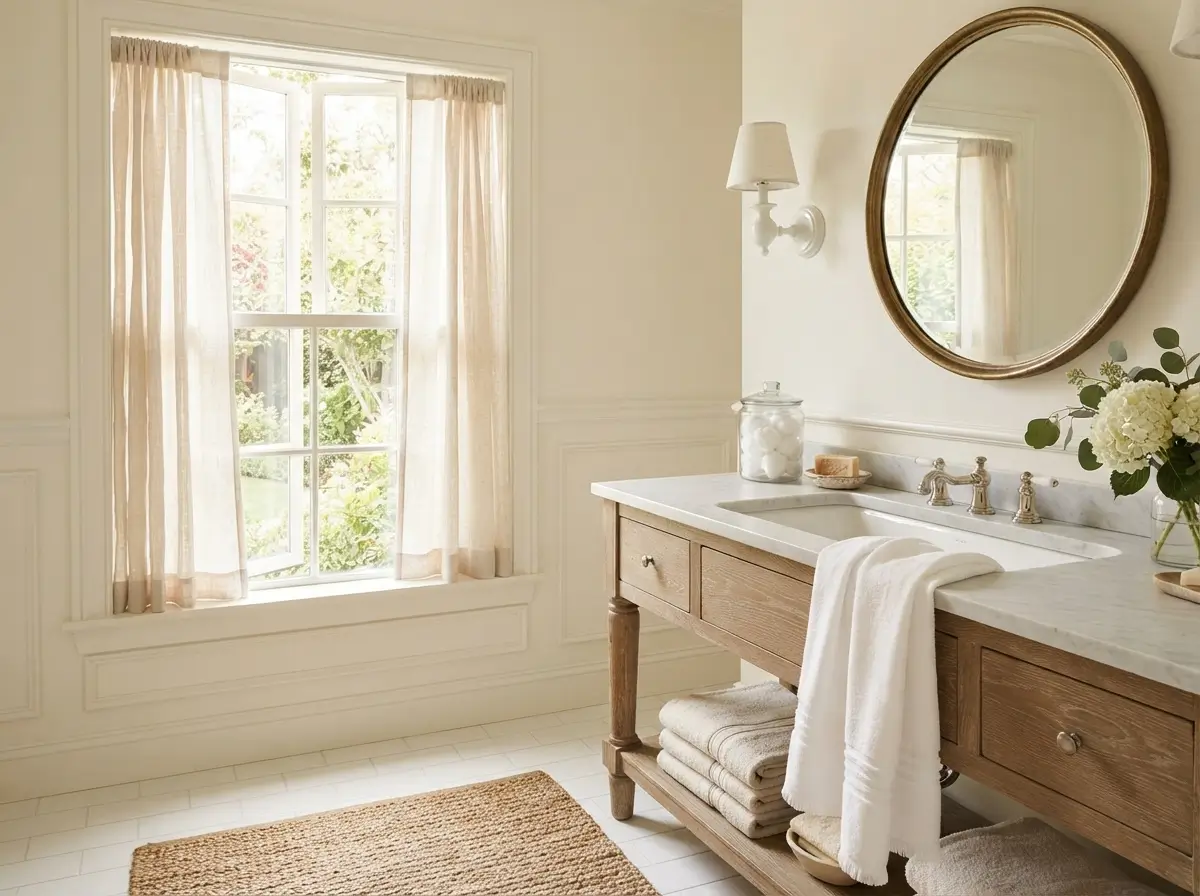

Bathrooms in Nancy Meyers films feel calm because they look lived in, useful, and carefully edited. Their appeal rarely comes from one expensive feature. Warm light, natural materials, polished fittings, framed art, useful furniture, and soft textiles work together to make the room feel settled. Good nancy meyers bathroom decor also avoids the cold, showroom effect that can make a new bathroom feel unfinished. The goal is not to copy a film set exactly. Your goal is to create a practical room that feels collected over time and supports the way you actually get ready, store essentials, and relax.
First-time homeowners and renters can use the same approach without replacing every surface. Start with lighting, towels, storage, and a restrained colour palette before considering major changes. Small bathrooms benefit especially from this method because every visible item has a job. A tray can hold daily products, a stool can store folded towels, and a mirror can improve both light and proportion. Each decision should make the room easier to use while adding warmth. The following ideas explain what to choose, why it helps, who will benefit most, and how to avoid common styling problems.
How do you create a Nancy Meyers-inspired bathroom without a large renovation budget?
Build the room in layers. Choose warm white or soft stone colours, improve the lighting, add useful wooden furniture, use thick towels, hide visual clutter, and finish with art or flowers. Strong nancy meyers bathroom decor balances polished details with ordinary objects that make the space feel personal. Renters can rely on removable hardware, plug-in lighting, framed prints, baskets, and textiles. Homeowners can take the same idea further with classic tiles, better mirrors, fitted storage, and upgraded taps.
Begin with a Warm White Colour Base
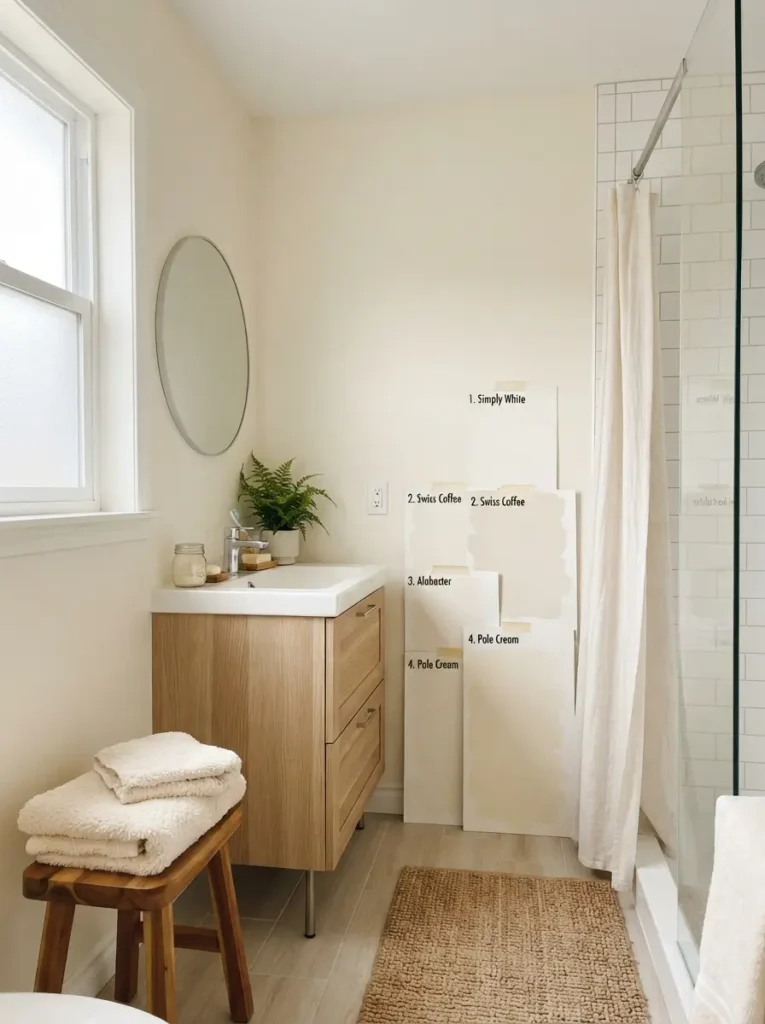
Warm white creates a calmer foundation than sharp blue-white paint. Look for shades with cream, beige, or light taupe undertones rather than grey or icy undertones. Examples include soft ivory, chalk, oatmeal, and pale mushroom. These colours reflect light while keeping the room comfortable in the morning and evening. Small bathrooms gain visual space because the walls do not interrupt the eye, yet the warmer undertone stops the room from feeling clinical. Choose washable bathroom paint with mould resistance, especially near the shower or bath.
Colour testing matters because bathroom light changes throughout the day. Paint large sample cards and move them beside the vanity, shower curtain, flooring, and window. A colour that looks creamy in daylight may look yellow beneath a poor bulb. Aim for a balanced result under 2700K to 3000K lighting. This approach suits beginners, renters with permission to paint, and homeowners who want a flexible background. Renters who cannot paint can bring in warm white through a shower curtain, bath mat, towels, and removable wallpaper on one dry wall.
Layer Lighting Instead of Relying on One Fixture
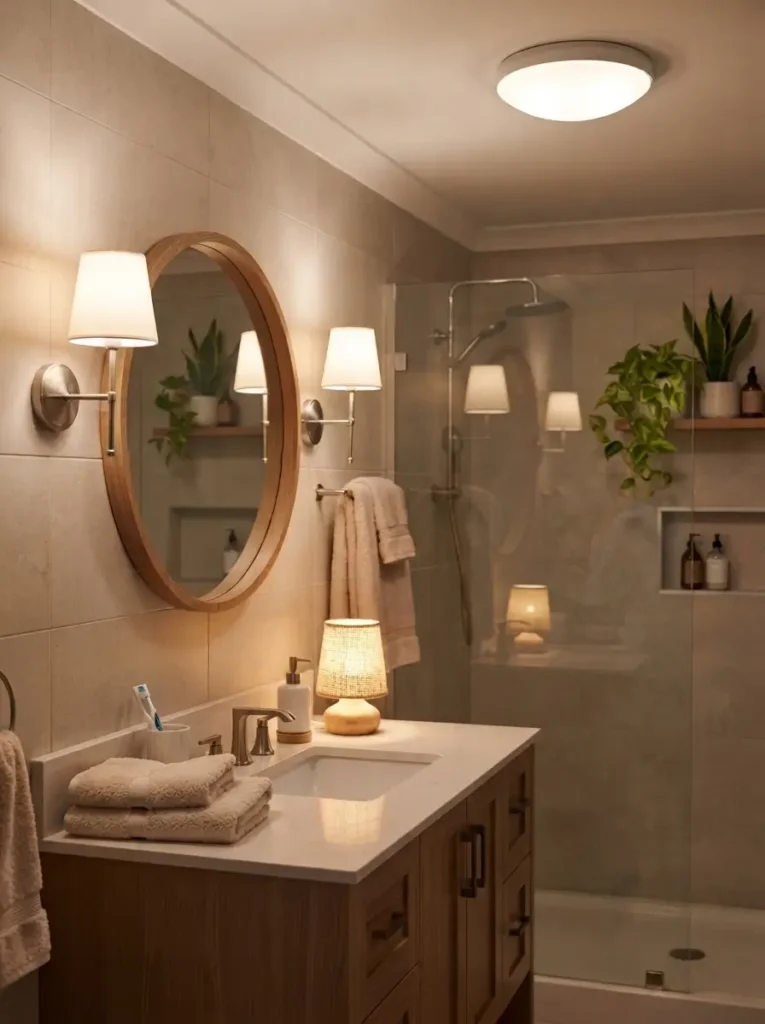
Single ceiling lights often create shadows under the eyes and make a bathroom feel flat. Layered lighting solves both problems by combining general, task, and soft accent light. Use a ceiling fixture for overall visibility, wall lights beside or above the mirror for grooming, and a small lamp or rechargeable light for evening comfort. Bulbs between 2700K and 3000K provide a warm, natural effect. Higher colour rendering, ideally CRI 90 or above, helps skin tones, towels, paint, and timber look accurate.
Place mirror lighting close to face level whenever the layout allows. Side lights reduce harsh shadows better than a bright downlight directly over your head. A shaded wall light can soften the room, while an opal globe adds a classic shape without demanding attention. Renters can use rechargeable sconces with removable mounting strips, provided the product weight suits the wall system. Layered lighting is especially helpful for windowless bathrooms, early morning routines, and households where one person needs bright task light while another prefers a softer evening setting.
Choose a Framed Mirror with Quiet Character
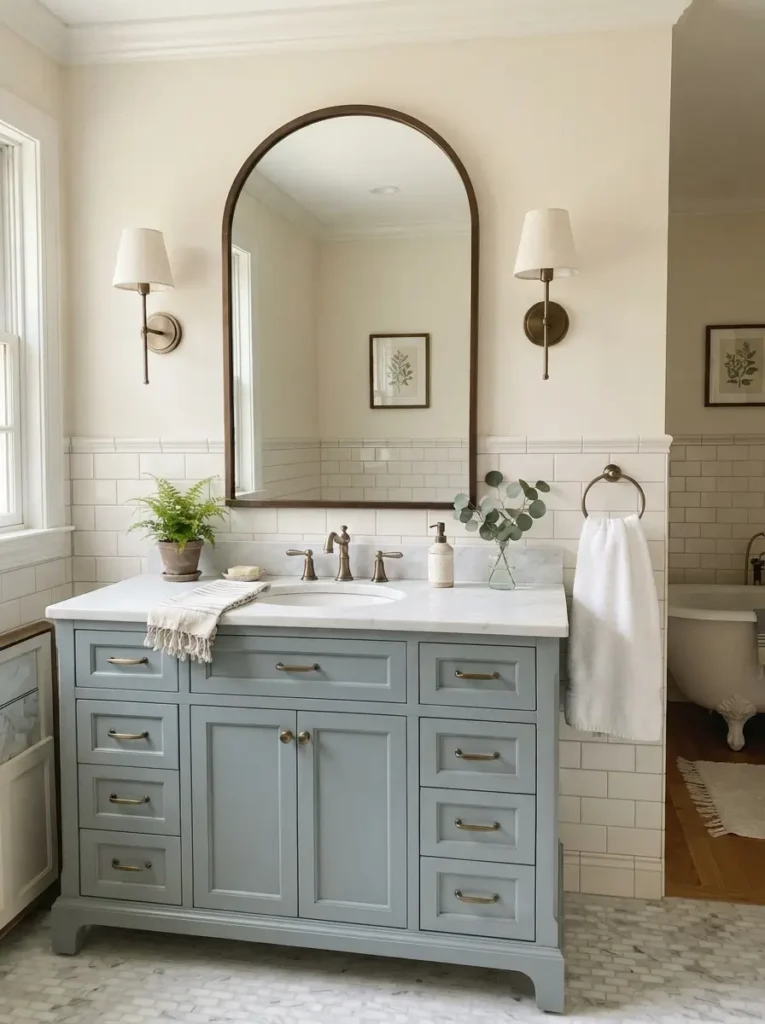
Plain builder mirrors cover a large area but often leave the room looking temporary. A framed mirror introduces shape, material, and proportion without taking up floor space. Consider aged brass, dark bronze, warm oak, painted wood, or a narrow black frame. Rectangular mirrors feel tailored, arched mirrors soften hard tile lines, and rounded corners suit smaller rooms because they reduce visual sharpness. Keep the frame simple enough to work with changing towels, art, and accessories.
Scale should follow the vanity rather than the entire wall. A mirror slightly narrower than the vanity usually looks balanced, while an undersized mirror can make the sink area feel awkward. Leave enough room for wall lights and check that the tallest user can see comfortably. Nancy meyers bathroom decor often depends on familiar, traditional shapes used in an unfussy way, and the mirror is an easy place to apply that principle. Renters can frame an existing mirror with removable trim or hang a lighter mirror using an approved no-drill system.
Add a Small Wooden Stool or Side Table
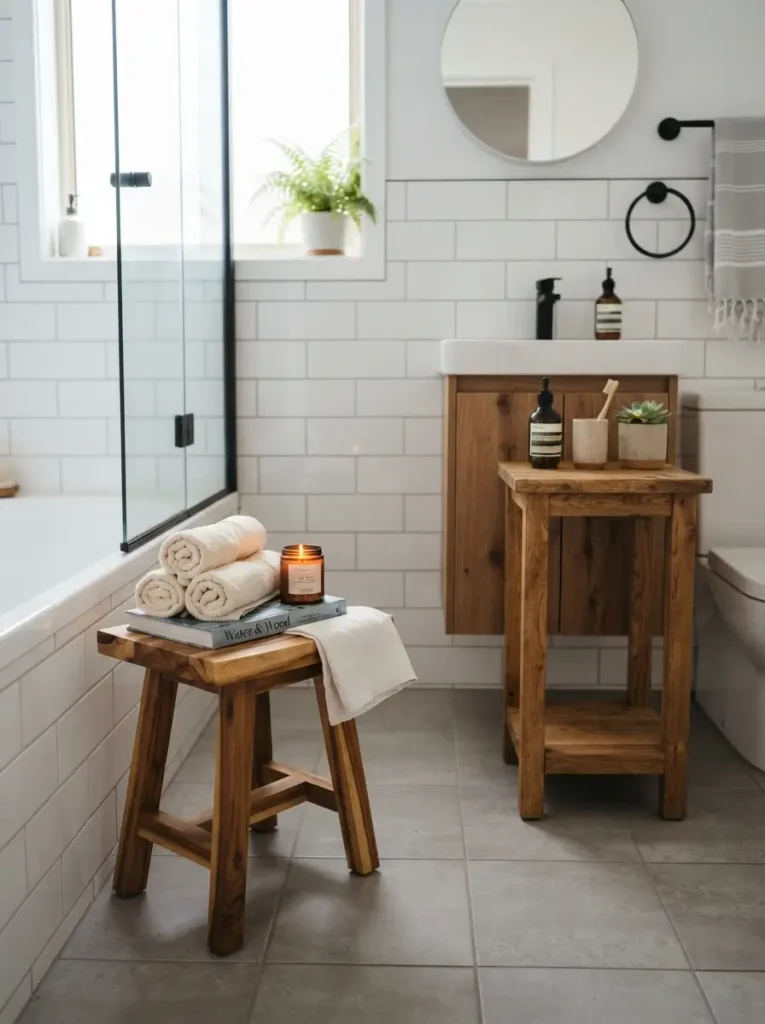
Wood prevents a tile-heavy bathroom from feeling cold. A small stool beside the bath or shower can hold towels, a book, a candle, or clean clothes, while a narrow side table can support daily items without crowding the vanity. Teak, sealed oak, bamboo, and painted hardwood work well in humid rooms. Avoid untreated softwood near splashing because it may warp or stain. A compact piece with visible grain adds warmth even when every fixed surface is white.
Choose a size that keeps walkways clear. Leave at least 60 centimetres of comfortable passage where possible and avoid placing furniture where it blocks cabinet doors, towel rails, or the shower screen. Small-space owners should look for stools that fit partly beneath a floating vanity or beside the toilet. Renters benefit because the piece moves easily and requires no installation. Budget shoppers can buy second-hand furniture, sand it lightly, and seal it with a moisture-resistant finish rather than purchasing a dedicated bathroom table.
Use Thick Towels in a Restrained Palette
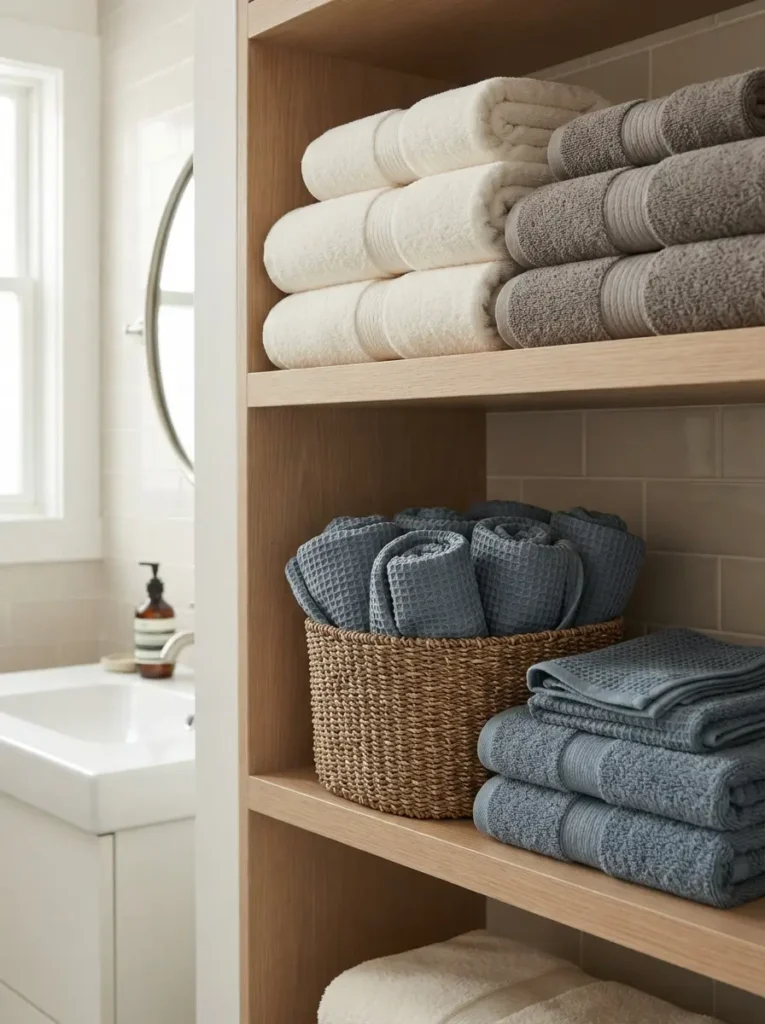
Towels cover a surprising amount of visual space, so their colour and condition strongly affect the room. Choose two or three related shades such as ivory, sand, faded olive, dusty blue, warm grey, or muted terracotta. Avoid mixing many bright colours unless the rest of the bathroom is very simple. Thick cotton, waffle weave, or a cotton-linen blend looks relaxed and feels useful. Matching every towel exactly is not necessary, but the tones should look connected.
Folded towels create order when they are stored in open shelves or baskets. Roll smaller hand towels, stack bath towels with the folded edge facing outward, and keep heavily patterned towels behind closed doors. Replace only the most visible pieces first if your budget is limited. Two good bath towels and two hand towels can change the room more than a full set of cheap accessories. This idea suits move-in checklists because towels are essential from day one, and a controlled palette immediately makes a new bathroom feel more settled.
Style the Vanity with a Practical Tray
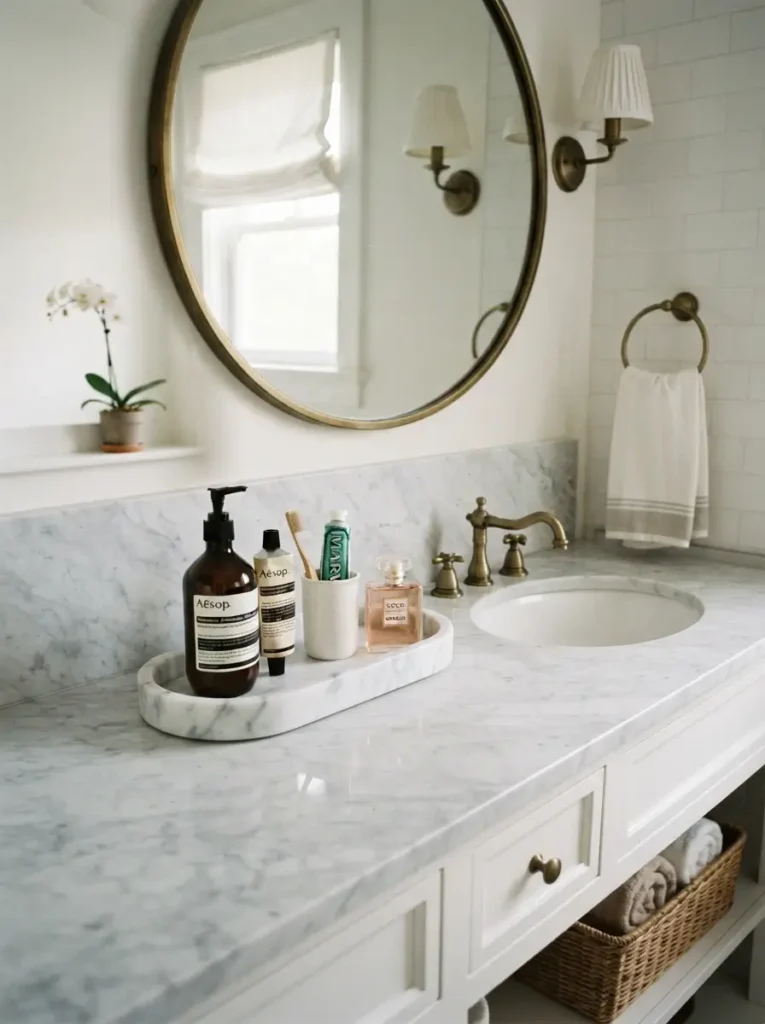
Loose bottles make even a clean vanity look cluttered. A tray groups daily products into one clear zone and leaves the rest of the surface easier to wipe. Choose marble, ceramic, wood, rattan, or metal with a washable base. Keep only the items used every morning or evening, such as hand soap, moisturiser, perfume, or a toothbrush cup. Store backups, medicines, and rarely used products elsewhere. Grouping objects by function creates order without making the room feel staged.
Proportion keeps the tray useful. Aim to cover no more than one-third of the available counter, and leave a clear landing space near the sink. A narrow tray works well on a small vanity, while a round dish can fit between twin basins. Add one low decorative item only if there is room, such as a small bud vase or covered jar. Strong nancy meyers bathroom decor looks generous but never gets in the way of ordinary routines, so beauty should support cleaning, grooming, and storage rather than compete with them.
Bring in Soft Pattern Through the Shower Curtain
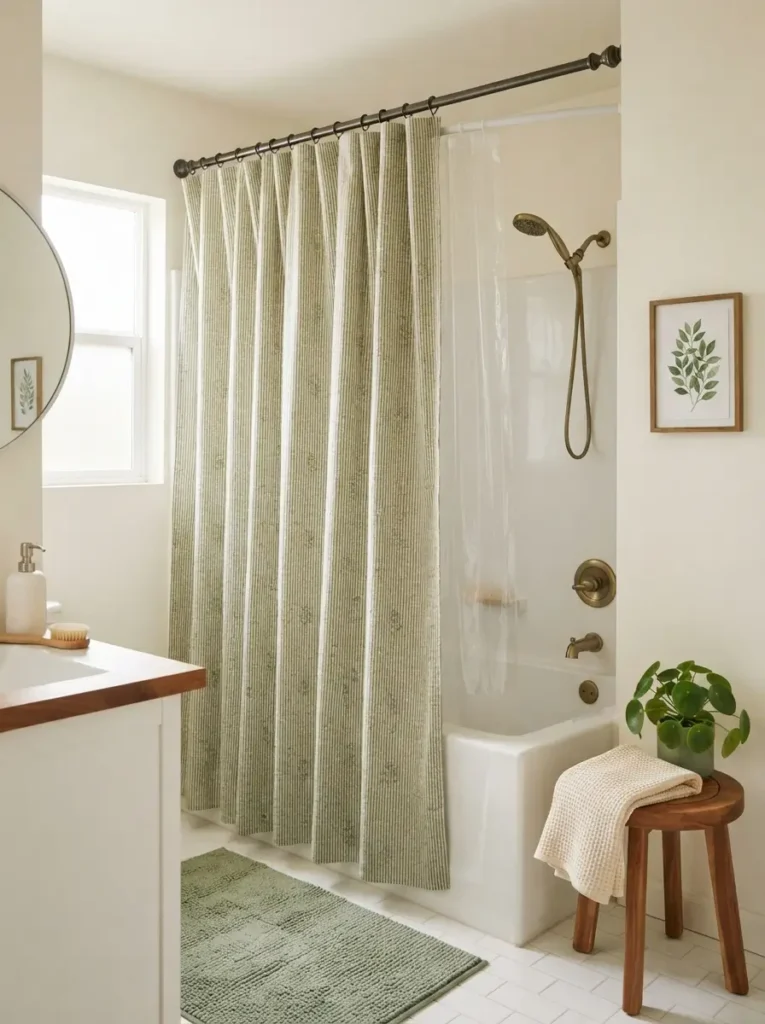
Shower curtains provide one of the largest rental-friendly design opportunities. Soft stripes, tiny checks, faded botanical prints, block prints, and subtle ticking patterns introduce depth without permanent work. Choose cotton or a cotton-blend outer curtain with a separate washable liner. Hanging the rod higher and using a longer curtain can make the ceiling appear taller, but the fabric should not drag on the floor. A curtain that lightly clears the floor looks neat and dries more efficiently.
Pattern scale should match the room. Small prints suit narrow bathrooms because they do not overwhelm the walls, while broad stripes can make a short room feel wider. Repeat one curtain colour in a towel, framed print, or bath mat to create a deliberate connection. Beginners should avoid buying an entire matching accessory set because the result can feel dated. One patterned textile against warm white walls offers enough interest. Renters can also replace a basic tension rod with a sturdier decorative rod and take it to the next home.
Hang Framed Art Where Moisture Is Controlled
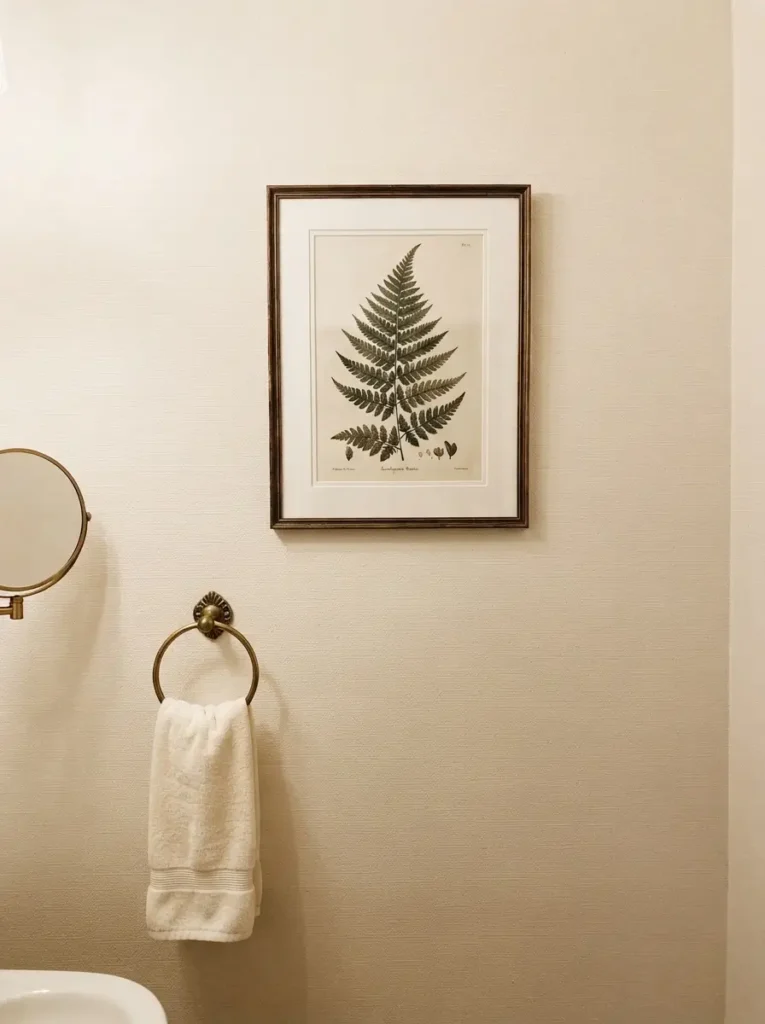
Art makes a bathroom feel like part of the home rather than a purely functional zone. Landscapes, sketches, botanical studies, small abstracts, vintage travel prints, and black-and-white photographs work well. Choose subjects you would happily display in a hallway or bedroom. Keep original works, valuable prints, and delicate paper away from heavy steam. Powder rooms and well-ventilated bathrooms offer the safest locations. In humid rooms, use inexpensive reproductions, sealed frames, and acrylic glazing.
Placement can solve awkward blank walls. A small pair above the towel rail, one vertical print near the door, or a narrow gallery beside a freestanding bath can balance the layout. Avoid hanging art directly over a bath where splashes are likely. Use moisture-resistant hooks or removable strips rated for the frame weight. Art is especially useful for renters because it adds personality without changing tile or fittings. Budget-friendly printable art can look polished when paired with second-hand timber or brass-toned frames.
Add a Roman Blind or Soft Window Treatment
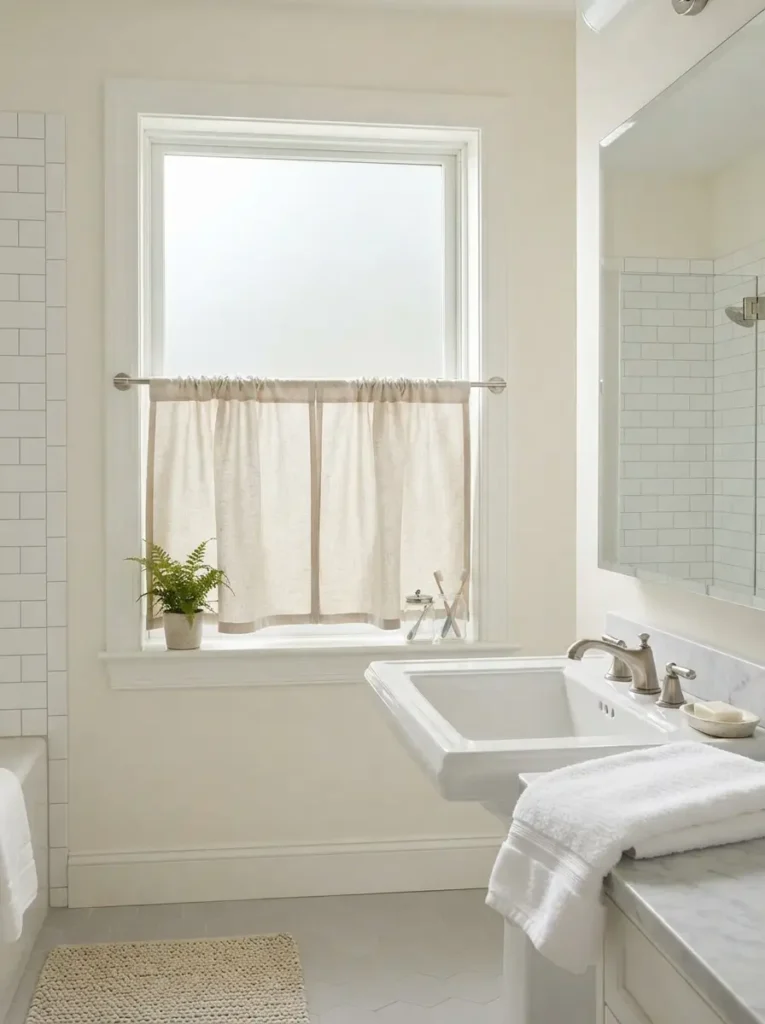
Bathroom windows often receive practical coverings that ignore the rest of the room. A Roman blind in linen-look fabric, a simple café curtain, or a woven shade adds softness and controls glare. Choose washable or moisture-resistant fabric and make sure the room has adequate ventilation. Pale oatmeal, warm white, soft blue, or a quiet stripe works with many wall colours. Privacy film can be combined with a short curtain when the window faces neighbours or a busy street.
Mounting the treatment close to the ceiling can make the window appear taller. Inside-mounted blinds look tidy, while an outside mount can hide an unattractive frame. Keep fabric clear of direct shower spray and avoid heavy floor-length curtains in a compact bathroom. Homeowners can invest in a made-to-measure blind, but renters may prefer a tension café rod or static-cling film. Soft window treatments work best for bathrooms with hard tile, large mirrors, and limited textiles because they reduce echoes and add visual comfort.
Use Baskets to Hide Everyday Clutter
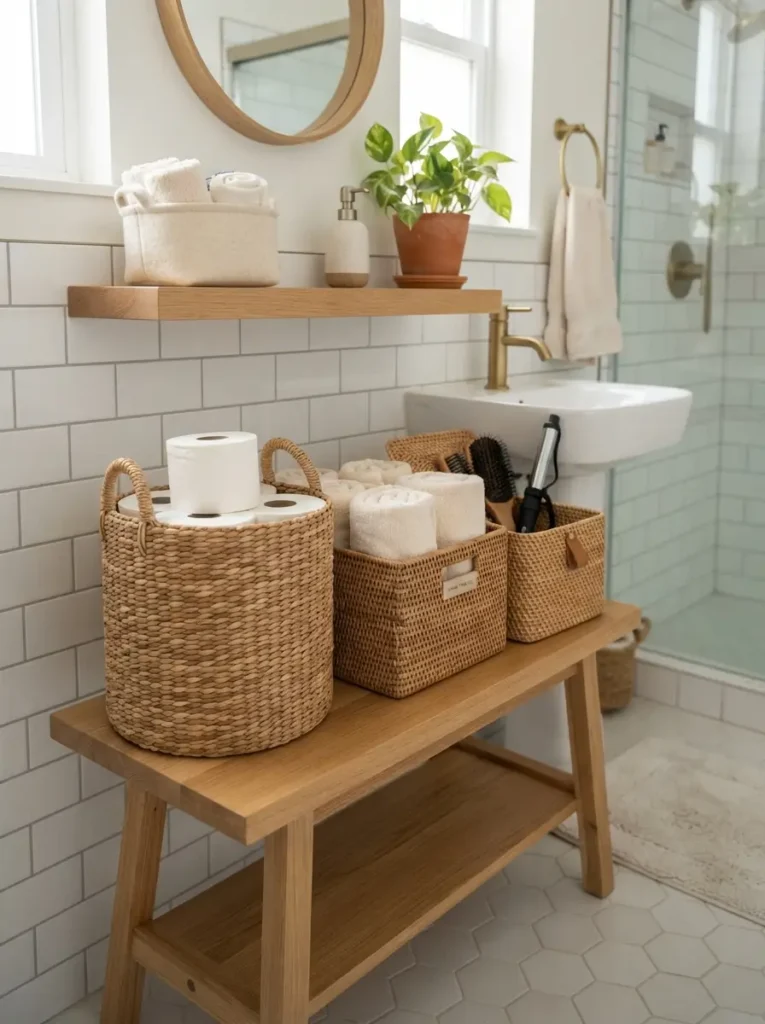
Open storage can look warm and useful when containers have a clear purpose. Use one basket for spare toilet rolls, another for clean hand towels, and a small lidded box for hair tools or personal items. Woven seagrass, rattan, felt, canvas, and washable plastic in a woven finish can all work. Avoid placing natural fibre baskets directly on wet floors. A sealed shelf, stool, or cabinet protects them from splashes and extends their life.
Matching every basket is unnecessary, but consistent colour helps. Choose natural tan, dark brown, black, or warm white and repeat it across the room. Labels can help inside cupboards, though visible labels should remain discreet. Small bathrooms benefit from tall baskets that use vertical space, while deep vanities need shallow bins that slide out easily. Anyone creating a first-home essentials list should include a few measured storage containers rather than buying a large set before checking cabinet dimensions.
Upgrade Small Hardware Before Major Fixtures
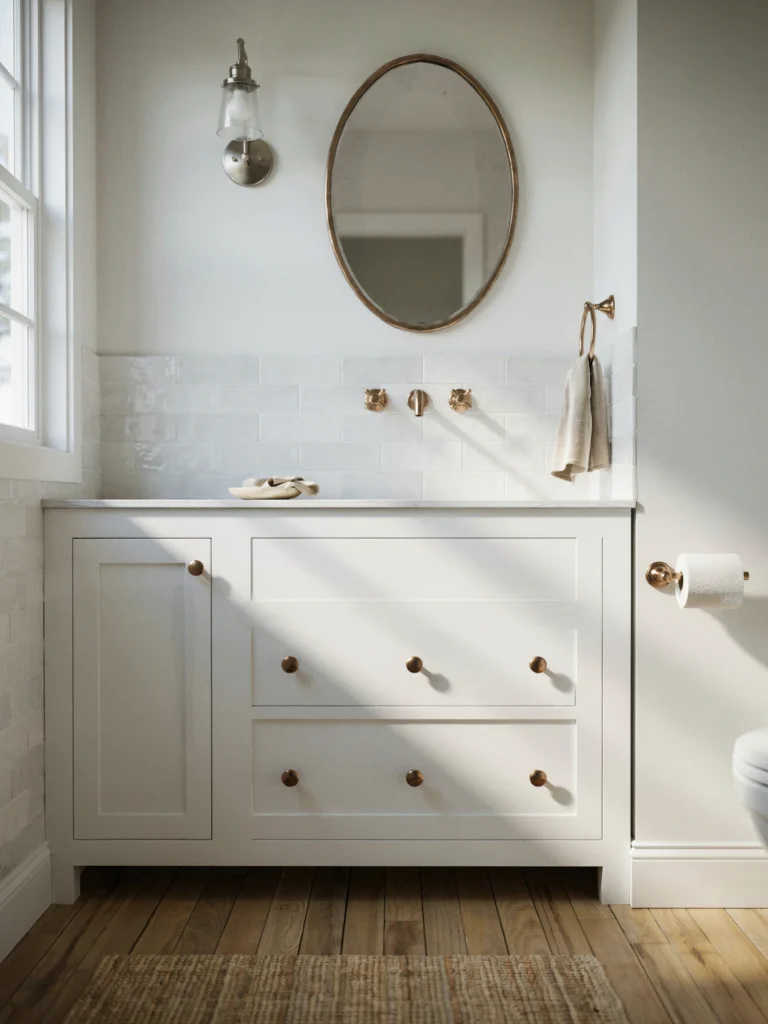
Cabinet knobs, drawer pulls, towel hooks, toilet-roll holders, and robe hooks influence the room more than their size suggests. Replacing shiny chrome pieces with aged brass, brushed nickel, dark bronze, or painted ceramic can bring consistency to a mixed bathroom. Choose one main metal and allow a second metal only when it already appears in a mirror frame or light fitting. Exact matching is less important than keeping the undertones related.
Measure existing screw centres before buying new pulls so you can avoid drilling extra holes. Renters may be able to change knobs and store the originals for move-out day. Adhesive hooks provide another option for light towels, but they need a clean, dry surface and a suitable weight rating. Small hardware upgrades suit limited budgets because they create repeated visual detail across the room. Nancy meyers bathroom decor often feels coherent because small finishes relate to one another without looking like a packaged set.
Add a Freestanding Storage Cabinet
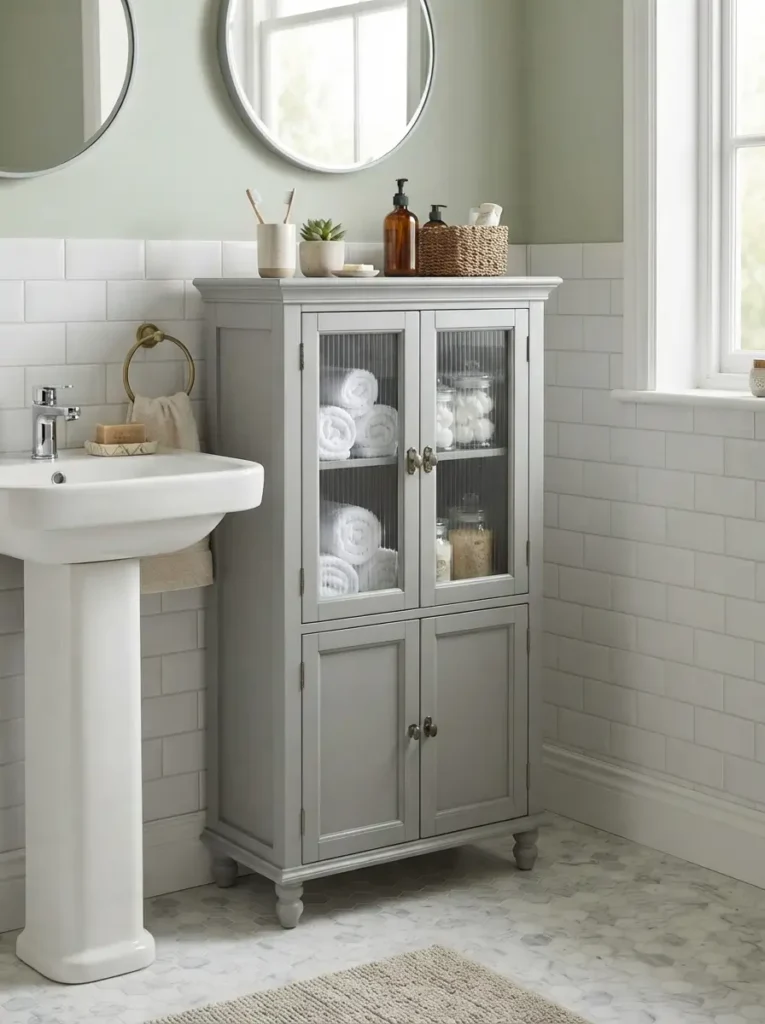
Bathrooms with pedestal sinks or limited built-in storage often need furniture more than decoration. A narrow freestanding cabinet, vintage washstand, glass-front cupboard, or small chest can hold towels, toiletries, and cleaning products. Painted wood in warm white, pale sage, muted blue, or soft grey fits a classic scheme. Natural oak adds warmth, while reeded glass or fabric-lined doors can hide visual clutter without making the piece feel heavy.
Depth matters in narrow rooms. Cabinets between 25 and 35 centimetres deep can provide useful storage without reducing movement as much as standard furniture. Secure tall pieces to the wall where required, especially in homes with children. Keep daily items between waist and eye level and store heavy bottles lower down. Second-hand cabinets often cost less than bathroom-specific units, but check for swelling, mould, unstable joints, and strong odours before bringing them home. This idea works best for homeowners, long-term renters, and first homes with basic builder layouts.
Mix Polished Surfaces with Natural Texture
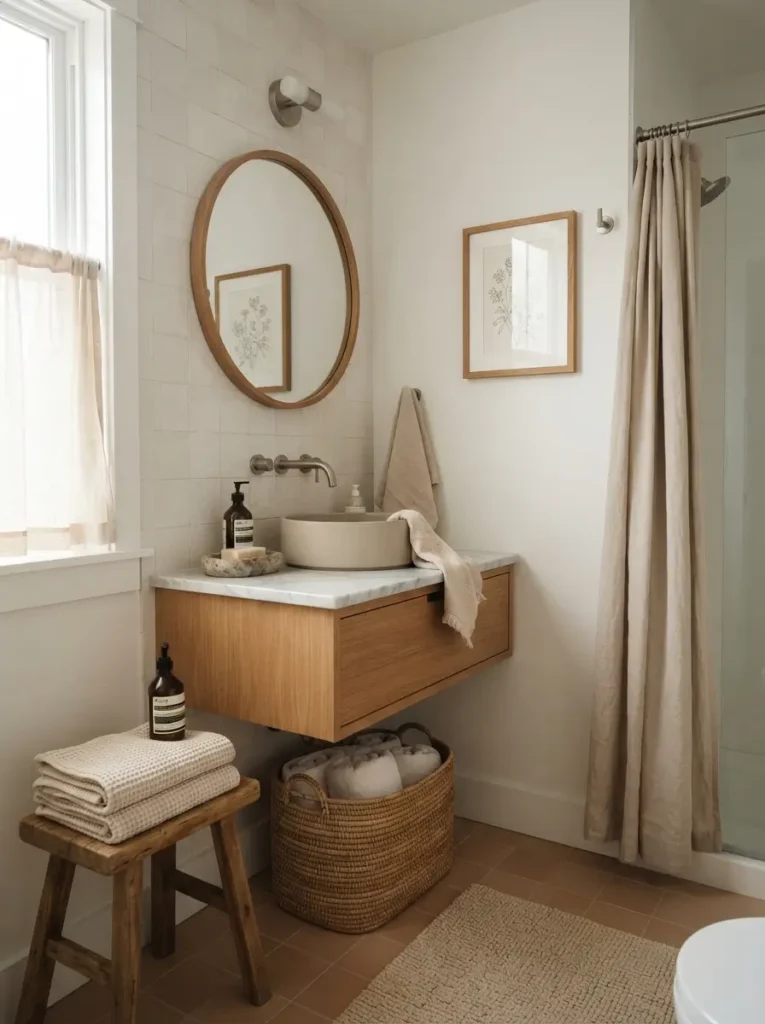
Too many glossy surfaces can make a bathroom feel hard and noisy. Balance polished tile, mirrors, and metal with timber, woven fibres, matte ceramics, linen, and cotton. A stone soap dish, wooden stool, waffle towel, woven basket, and framed sketch create several textures without adding many colours. The contrast makes each material easier to notice and gives the room a more established character.
Limit the number of textures in a very small bathroom. Four or five material families are usually enough. For example, combine warm white tile, brushed nickel, oak, cotton, and one woven basket. Repeating each material at least twice can make the design feel intentional. Avoid delicate materials in splash zones and choose washable versions whenever possible. Texture works especially well for neutral rooms because it creates interest without relying on strong pattern or dark paint.
Choose a Bath Mat That Looks Like a Small Rug
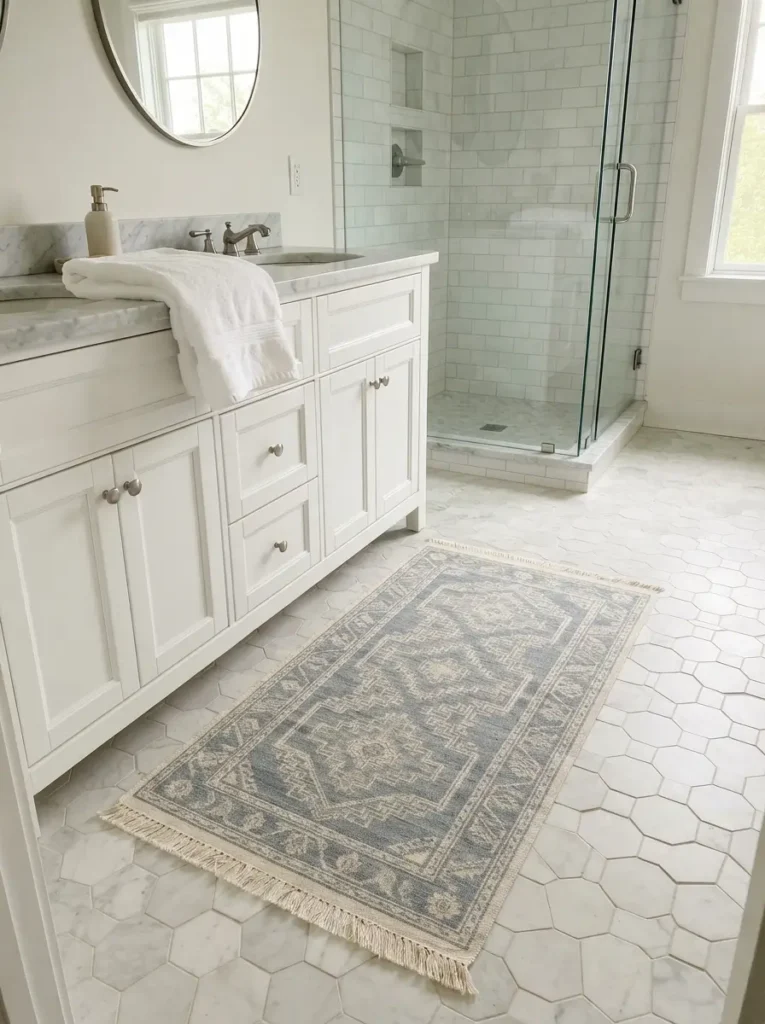
Standard synthetic bath mats often look bulky and wear quickly. A flat-weave cotton runner, washable patterned rug, or tightly woven bath mat can give the floor more character while remaining practical. Look for low pile, washable construction, non-slip backing, and a size that fits the clear floor area. Soft stripes, muted Persian-style patterns, checks, and simple borders suit a collected bathroom without dominating it.
Safety should guide placement. Keep the mat flat, dry it regularly, and use a proper non-slip layer if the backing is not secure. Avoid thick vintage rugs beside showers used by children or anyone with reduced mobility. A runner can visually lengthen a narrow bathroom, while a rectangular mat can define the vanity zone. Renters often gain the most from this change because it covers an unattractive floor without adhesive or renovation. Budget options are easy to rotate seasonally, but one durable washable rug usually gives better value.
Display Useful Ceramics and Glass Jars
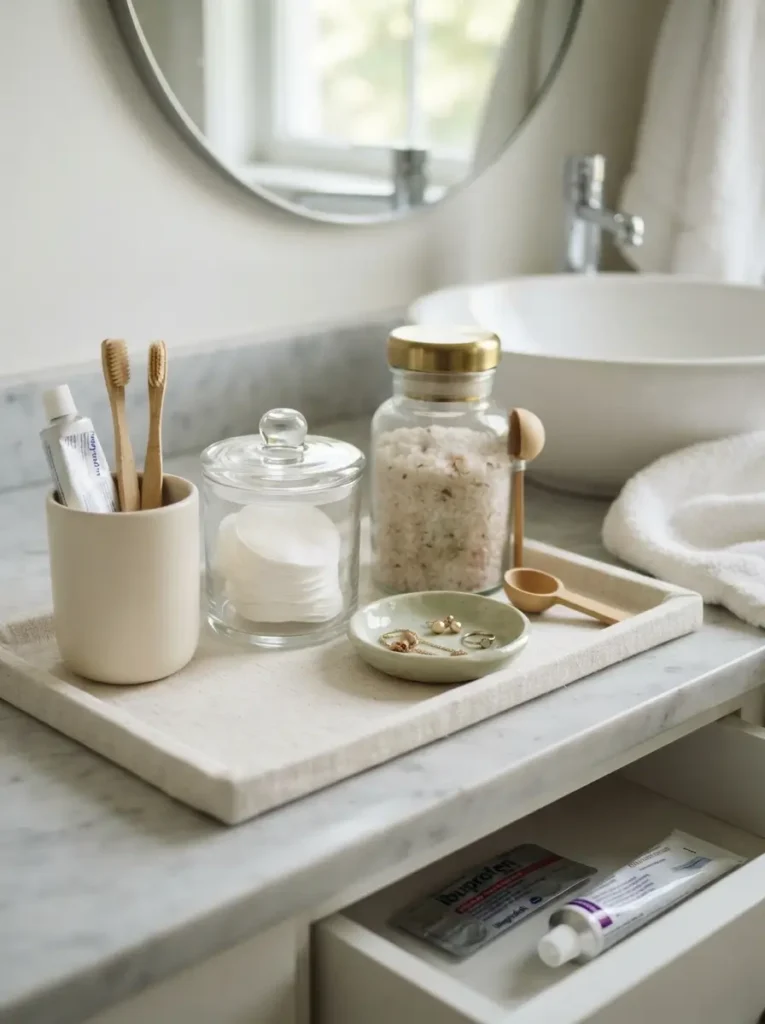
Everyday storage can become part of the decor when containers are simple and easy to clean. Use a ceramic cup for toothbrushes, a covered jar for cotton pads, a small dish for jewellery, and a glass bottle for bath salts. Avoid transferring products when labels contain important safety instructions or expiry information. Medicines should remain in original packaging and stay away from humidity, heat, and children.
Choose containers with slightly varied shapes but a related colour story. Cream ceramic, clear glass, pale green, and one brass lid can feel collected without looking random. Keep jars away from the edge of the sink and limit the number on display. Open containers gather dust and moisture, so covered pieces are more practical for items used less often. This approach suits organised beginners who want a polished vanity without buying decorative objects that serve no purpose.
Bring in Greenery with Realistic Expectations
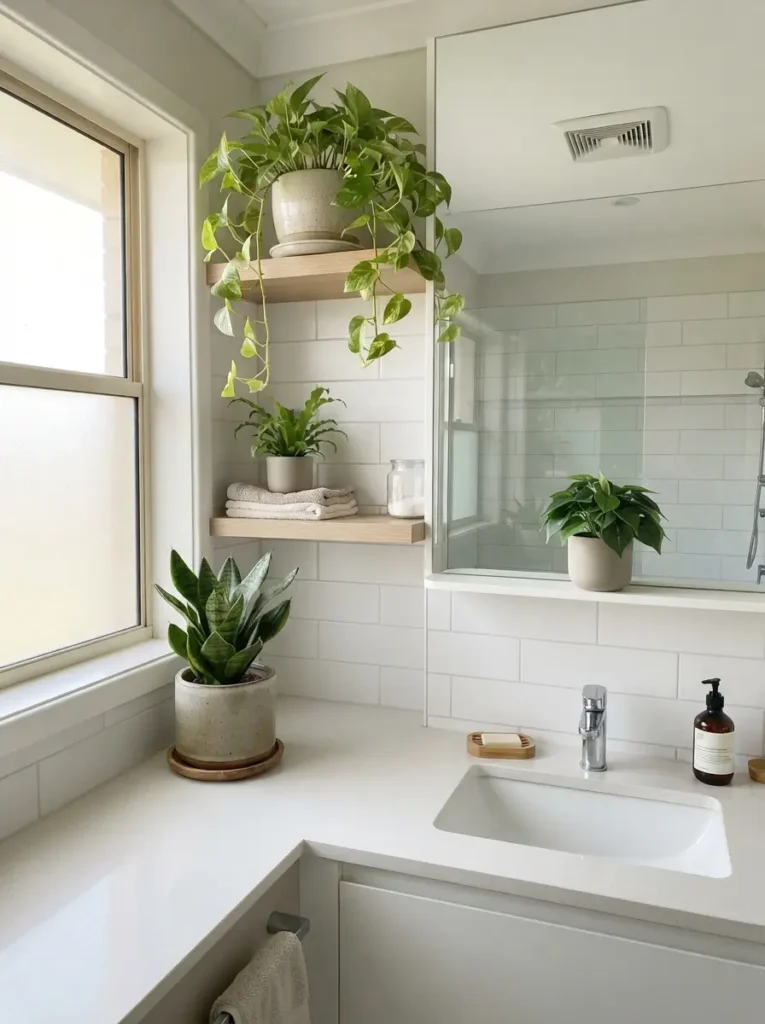
Plants can soften tile and introduce natural colour, but bathroom conditions vary. Pothos, heartleaf philodendron, bird’s-nest fern, and some snake plants may cope with humidity when they also receive suitable light. No plant can thrive indefinitely in a completely dark room. Windowless bathrooms need a grow light or a realistic artificial plant. Choose one medium plant or two small plants rather than filling every shelf.
Position greenery where it will not block mirrors, cleaning, or ventilation. A trailing plant can sit on a high shelf, while a compact fern may suit a windowsill. Use saucers to protect timber and empty standing water to avoid damage. Artificial stems look more convincing when the pot has weight and the leaves are not overly glossy. Plant styling is best for people who already maintain houseplants; beginners should start with one low-maintenance option and observe the light for several weeks.
Create a Calm Open-Shelf Arrangement
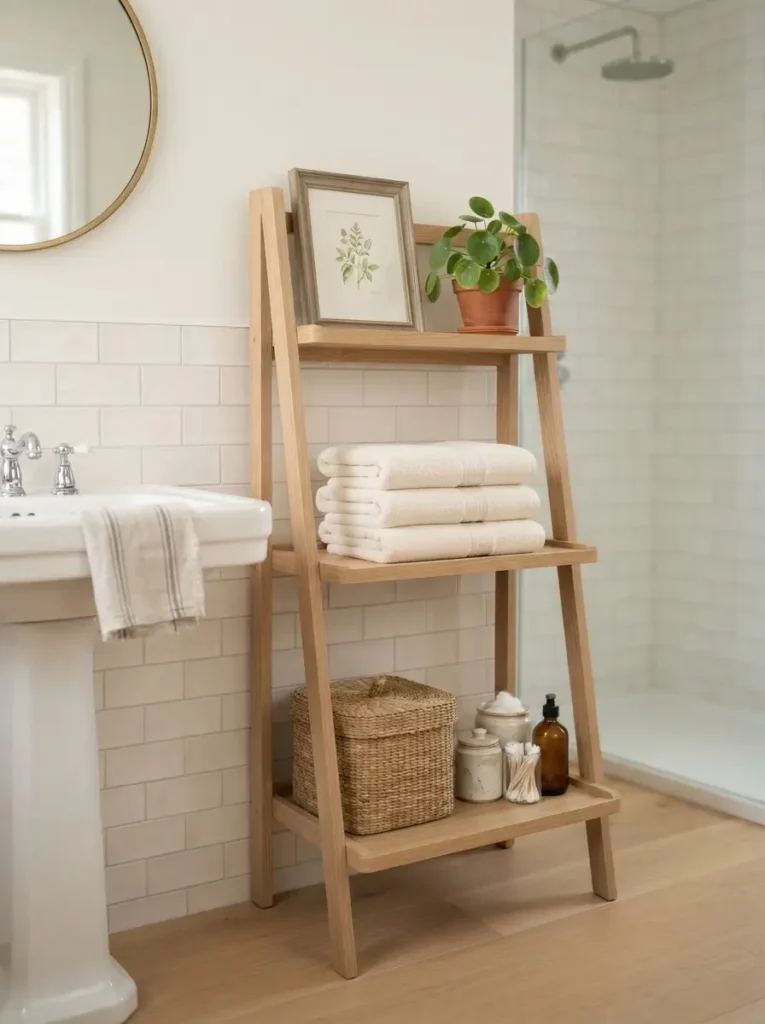
Open shelves work when they hold a limited number of useful items. Place folded towels, a lidded basket, one framed print, and perhaps a small plant across two or three shelves. Leave some empty space around each group so the arrangement remains easy to read. Heavy products, cleaning chemicals, and colourful backups belong behind doors or inside matching containers.
Shelf spacing should reflect what you plan to store. Towels need more height than small jars, while baskets require enough clearance to lift out comfortably. Mount shelves where they will not become head hazards or collect direct shower spray. Renters can use a freestanding ladder shelf, over-toilet unit, or tension-pole system instead of drilling. Good nancy meyers bathroom decor uses open storage as part of daily life, but it never asks you to maintain a display that becomes exhausting after one busy week.
Make the Tub or Shower Area Feel Considered
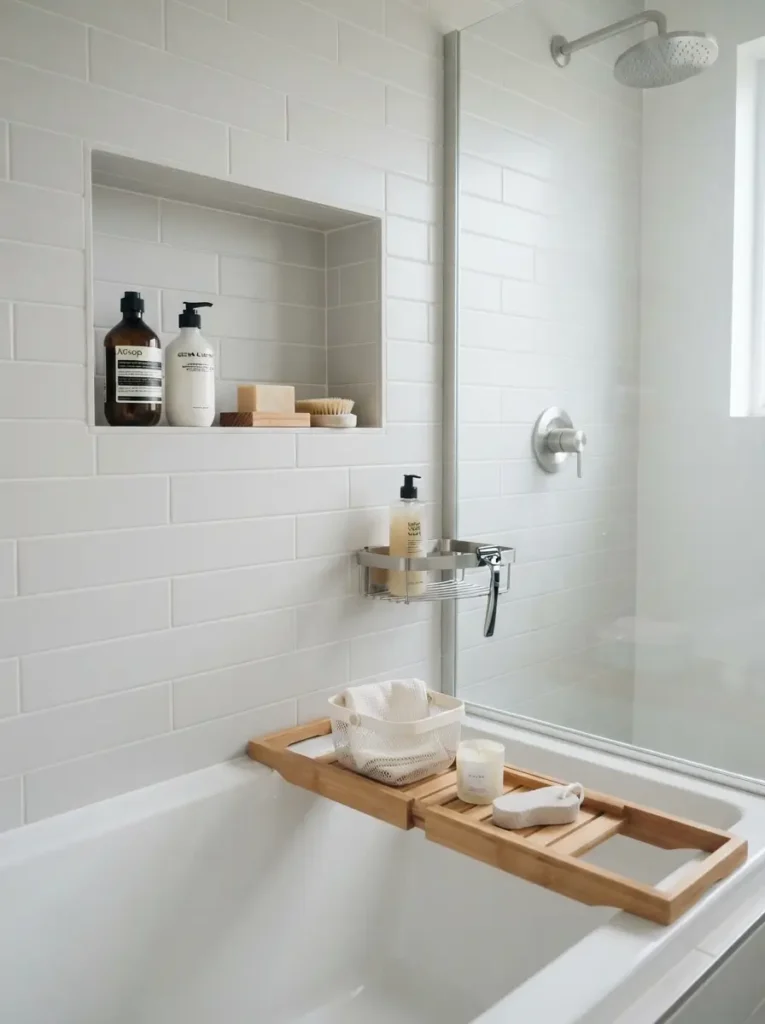
Built-in niches, bath caddies, and corner shelves often become crowded with half-used bottles. Keep the bathing area organised by limiting products to current use and storing backups elsewhere. A rust-resistant caddy, teak bath bridge, or simple wall shelf can hold what you need without creating a shop display. Choose containers that drain properly, and clean beneath them often to prevent soap residue and trapped moisture.
Visual consistency helps, but decanting every product is not required. Keep original containers when safety, ingredients, or instructions matter. Products can be grouped in one washable basket or caddy instead. Homeowners planning a renovation should place niches at a comfortable height and include enough depth for larger bottles. Renters can add suction shelves designed for tile, provided the surface and weight limit are suitable. This idea suits busy households because it improves cleaning speed as much as appearance.
Add One Vintage or Collected Piece
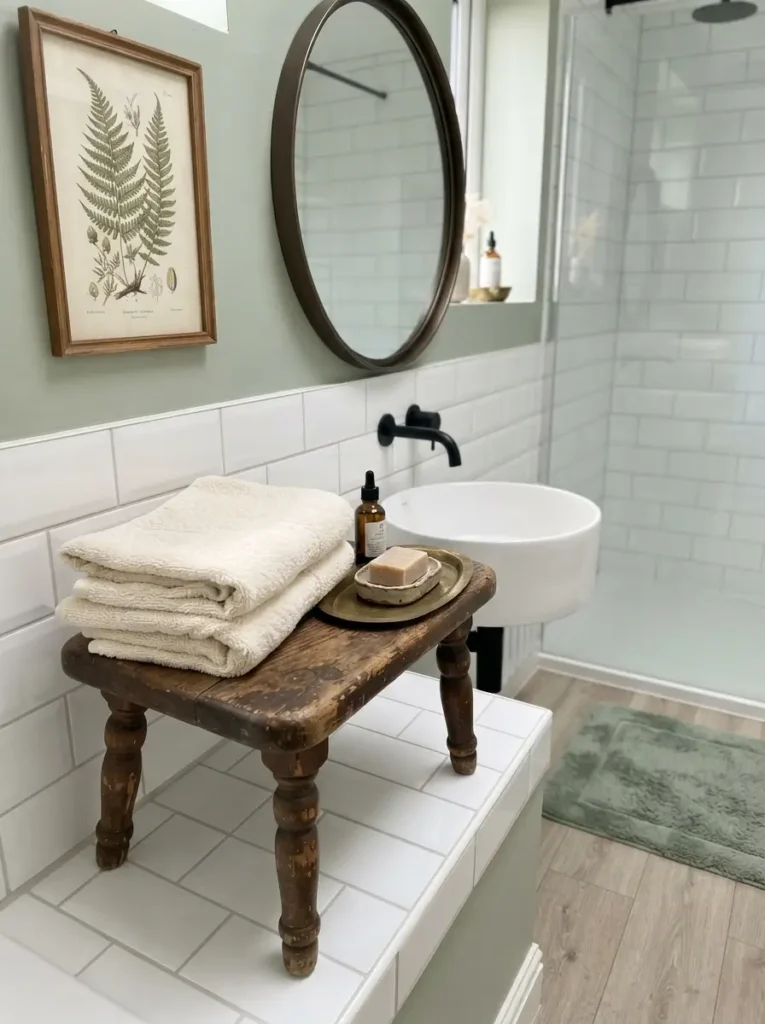
One older object can make a newly fitted bathroom feel less generic. Consider a small timber mirror, vintage-style stool, framed botanical print, ceramic jug, brass tray, or old wooden box used away from water. The piece should be stable, clean, and suited to humid conditions. Avoid antique electrical items unless a qualified professional has checked them, and do not place fragile furniture in a splash zone.
Restraint keeps the room from becoming themed. One collected item has more impact than several unrelated pieces competing for attention. Repeat its colour elsewhere through a towel, frame, or cabinet knob. Charity shops, flea markets, and online resale sites can offer affordable options, but measure first and inspect carefully. First-home owners often benefit from this approach because it adds character while they gradually replace temporary furniture and accessories.
Finish with a Simple Scent and Daily Reset
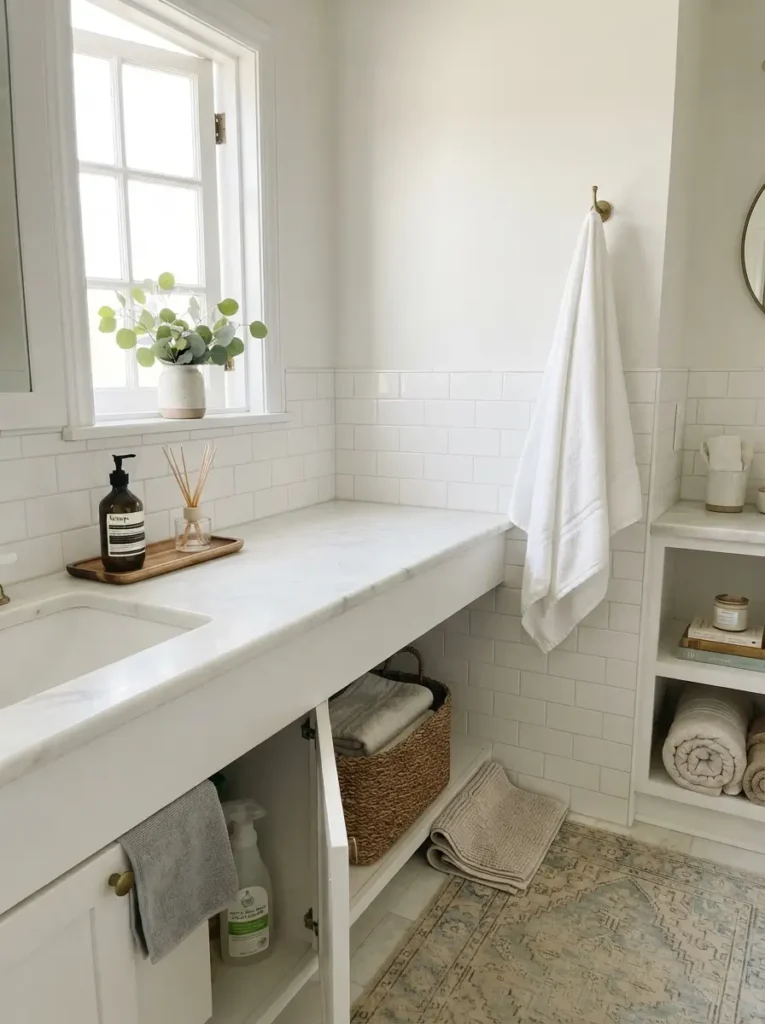
Scent contributes to comfort, but strong fragrance can overwhelm a small room. Choose one gentle source such as a candle used only when supervised, a reed diffuser placed away from children and pets, or naturally scented soap. Clean air matters more than perfume, so use the extractor fan, open the window when possible, and wash towels regularly. Never use fragrance to cover damp, mould, or drainage problems.
Daily maintenance protects the finished look. Return products to the tray, hang towels so they dry, wipe the sink, and remove laundry from the floor. A two-minute reset keeps the room calm without turning housekeeping into a major task. Store a microfibre cloth and mild cleaner in a secure cabinet for quick use. The most convincing nancy meyers bathroom decor feels comfortable because the room functions well, not because every object remains arranged like a photograph.
Common Bathroom Decorating Mistakes to Avoid
Crowding every surface is the most common mistake. Too many jars, candles, baskets, frames, and plants make a small room harder to clean and visually smaller. Keep one clear area beside the basin and leave at least part of every shelf empty. Another error is choosing accessories before checking the fixed finishes. Warm brass can look disconnected beside cool grey tile unless you repeat warmth through timber, cream textiles, or art. Start with the room you have rather than buying a complete themed set.
Poor lighting can undo good colour choices. Bright 4000K or 5000K bulbs may make warm paint look dull and can feel harsh at night. Use 2700K to 3000K bulbs and add task lighting near the mirror. Oversized furniture causes another problem in narrow rooms. Measure door swings, drawer clearance, and walking space before ordering a cabinet or stool. Finally, avoid materials that cannot handle moisture.
Budget-Friendly Ways to Build the Look
Spend first on items you touch every day. Good towels, a reliable bath mat, flattering bulbs, and functional storage usually improve the room more than decorative objects. Set a simple budget by category, such as £40 for textiles, £25 for lighting, £20 for storage, and £15 for art or frames. Shop your home before buying anything; a bedside stool, spare framed print, ceramic bowl, or small lamp may work better in the bathroom.
Second-hand timber furniture and frames offer character for less, provided they are clean and structurally sound. Paint mismatched pieces in one warm white or muted colour to create unity. Renters can prioritise a long shower curtain, removable hooks, rechargeable wall lights, baskets, and a washable runner. Homeowners should delay major fixture changes until they have used the room for several weeks. Daily routines often reveal whether the real need is better storage, brighter mirror light, or more towel hanging space.
Nancy Meyers Bathroom Decor Tips for Beginners
Build the style in a sensible order. Begin with cleaning, repairs, and ventilation, then choose the colour palette, lighting, textiles, storage, and final accessories. Limit the room to three main colours and two metal finishes. Repeat each important material at least twice, such as oak in a stool and frame or brass in a mirror and cabinet knobs. Keep daily products within easy reach, but hide backups and visually noisy packaging.
New homeowners should complete the essentials before decorative shopping. Start with towels, a bath mat, shower liner, bin, toilet brush, soap, storage for medicines, basic cleaning supplies, and safe lighting. Add art, plants, and vintage pieces only after the room functions well. Small-space decorators should protect floor area, use wall height, choose shallow furniture, and avoid storage systems that require moving several objects to reach one item.
Frequently Asked Questions
What colours suit a Nancy Meyers-inspired bathroom?
Warm white, ivory, pale mushroom, oatmeal, soft sage, muted blue, and light taupe create a calm base. Use darker tones in small amounts through frames, hardware, a runner, or artwork. Test paint beside tile and under evening lighting because undertones can change dramatically. Crisp white can still work when timber, woven texture, and warm bulbs soften it.
Can renters create the style without renovating?
Renters can change the room through a long shower curtain, coordinated towels, a washable rug, removable hooks, rechargeable sconces, framed prints, baskets, and a small stool. Replace cabinet knobs only with permission and store the originals safely. Use static-cling privacy film instead of adhesive versions, and confirm weight limits before hanging mirrors or shelves.
How do I make a small bathroom feel less cluttered?
Keep the vanity mostly clear, group daily products on one tray, and move backups into labelled bins. Choose shallow storage, use the area above the toilet carefully, and keep the floor visible. Matching containers are less important than limiting quantities. Remove expired products and duplicates before purchasing organisers, since storage cannot solve excess belongings.
Which lighting temperature works best?
Bulbs between 2700K and 3000K usually create a warm, comfortable result. Choose CRI 90 or higher near the mirror when possible so skin tones and colours appear accurate. Combine ceiling light with mirror lighting rather than using one powerful bulb. Dimmers are useful for evening baths, but switches and fittings must suit bathroom safety zones and local electrical rules.
Should all bathroom metals match?
Exact matching is unnecessary. One dominant finish and one supporting finish usually look controlled. Brushed nickel can pair with aged brass, while dark bronze can work with warm black. Existing taps can remain when smaller hardware relates through shape, colour, or undertone.
What should I buy first for a new bathroom?
Prioritise a shower liner or screen solution, two bath towels per regular user, hand towels, a non-slip mat, soap, toilet paper storage, a bin, basic cleaning products, and secure medicine storage. Add hooks if towels cannot dry properly. Decorative pieces should come later, once you understand the room’s light, storage limits, and everyday traffic.
Conclusion
Serene bathrooms come from useful layers rather than constant shopping. Warm colour, flattering light, natural texture, edited storage, and comfortable textiles can improve both rented and owned spaces. Begin with the features that support daily routines, measure before buying furniture, and leave enough empty space for easy cleaning. Over time, art, greenery, and one collected piece can add personality without creating clutter. A bathroom feels welcoming when every detail earns its place and the room remains simple to maintain every day.