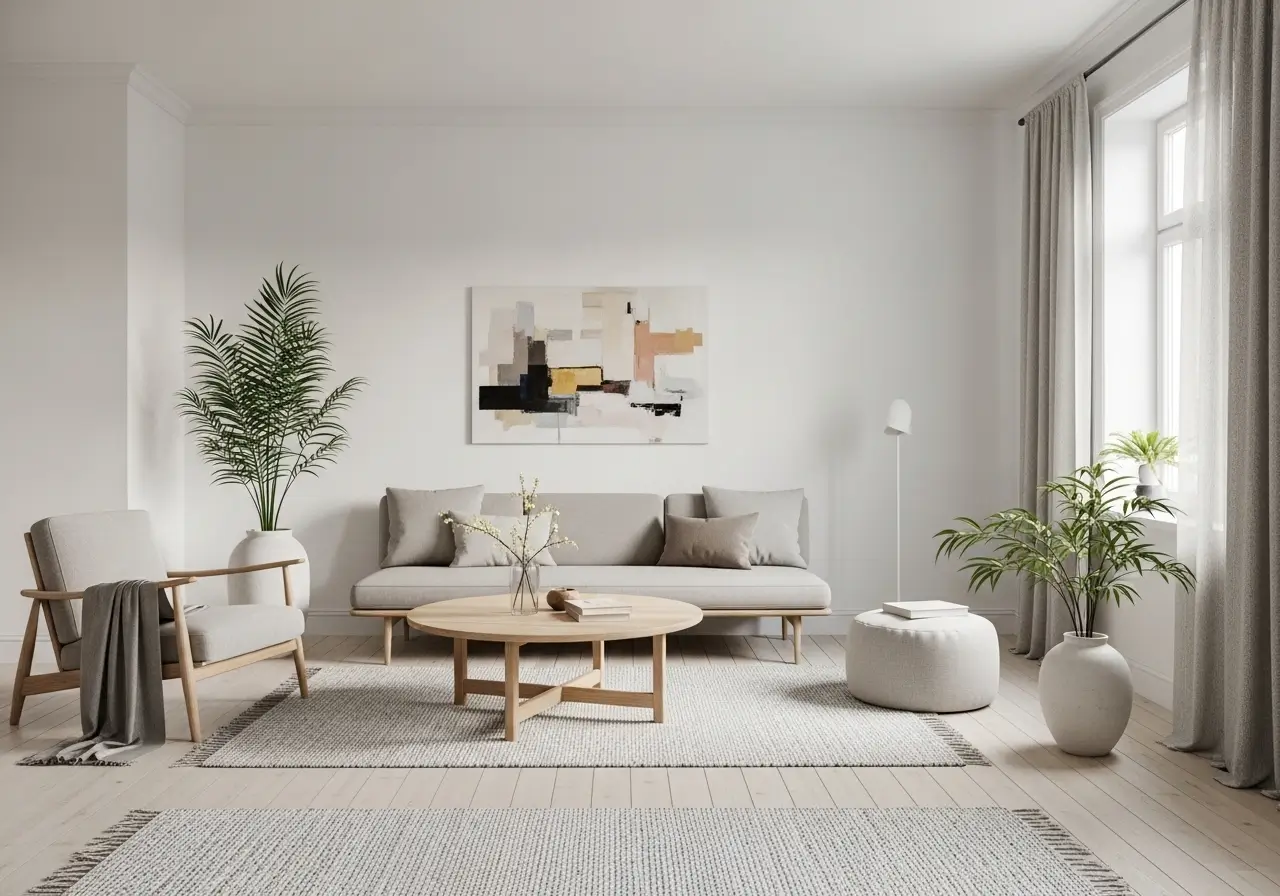

Peaceful homes rarely come from filling rooms with more things. Calm spaces grow slowly through thoughtful choices, soft colors, and gentle details that make everyday living feel lighter. Minimalist decor is not about empty rooms. It is about creating breathing space where your mind can rest after long, busy days.
Many people imagine minimalism as cold or boring, yet real minimalist homes feel warm, personal, and comforting. Soft textures, natural light, and simple styling help rooms feel balanced without looking plain. Small changes often shift the entire mood of a space, turning ordinary corners into places that feel quiet and welcoming.

Why Minimalist Decor Creates Emotional Calm
Minimalist styling works because fewer distractions allow your eyes and thoughts to slow down. When rooms feel organized and visually soft, stress naturally fades. Neutral tones, intentional furniture placement, and cozy textures create harmony between comfort and simplicity, helping your home feel like a peaceful retreat rather than another busy environment.
Soft Neutral Living Room Layers
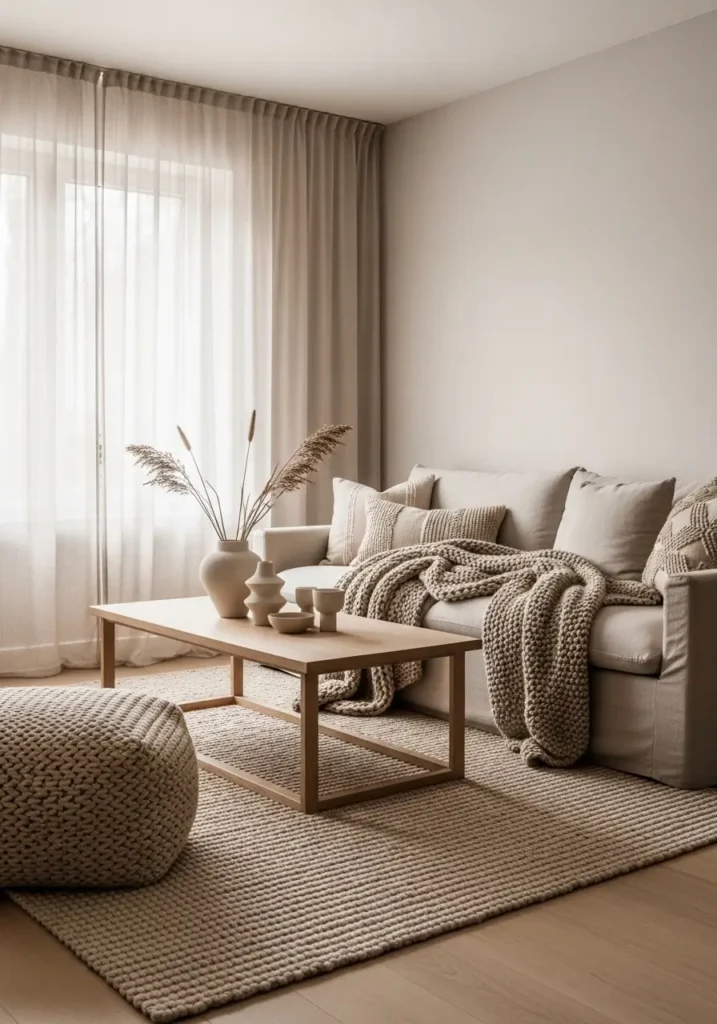
Soft neutral tones instantly calm visual noise and make living spaces feel airy and relaxed. Think warm whites, gentle beige shades, and muted taupe fabrics layered through cushions, throws, and rugs. Keeping furniture simple allows textures to do the talking. Linen sofas, light wood tables, and woven accents add depth without heaviness. Leave breathing space between pieces so movement feels natural. Natural light reflecting on pale surfaces creates a soothing glow that changes throughout the day, making the room feel alive yet quiet.
Floating Shelves With Intentional Styling
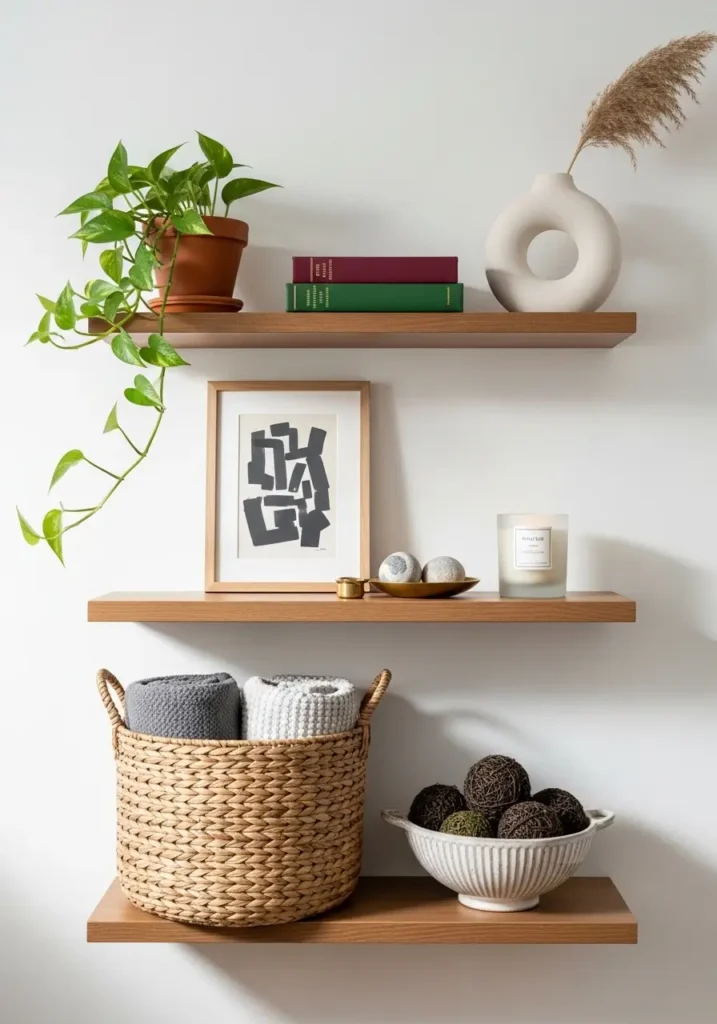
Floating shelves bring order without visual heaviness when styled thoughtfully. Instead of filling every inch, place only meaningful objects, such as ceramic vases, small books, or framed art. Empty space becomes part of the design, giving each item importance. Light wood or matte white shelves blend gently into walls, keeping attention on balance rather than storage. Soft spacing between objects creates a rhythm that feels calm and curated rather than crowded.
Calm Bedroom With Low Furniture
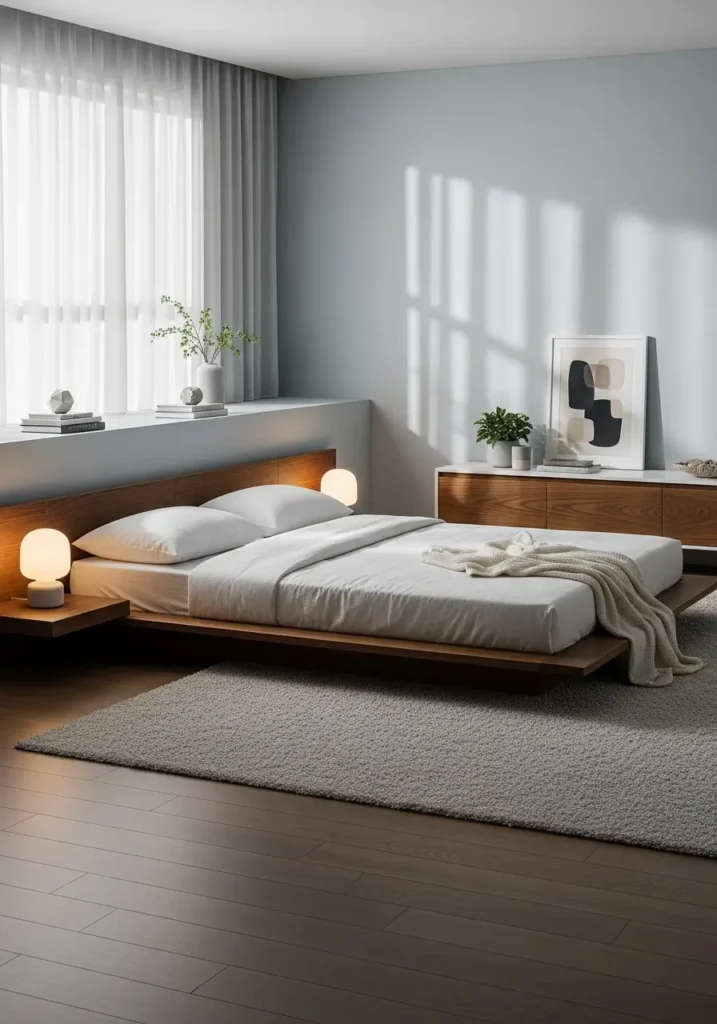
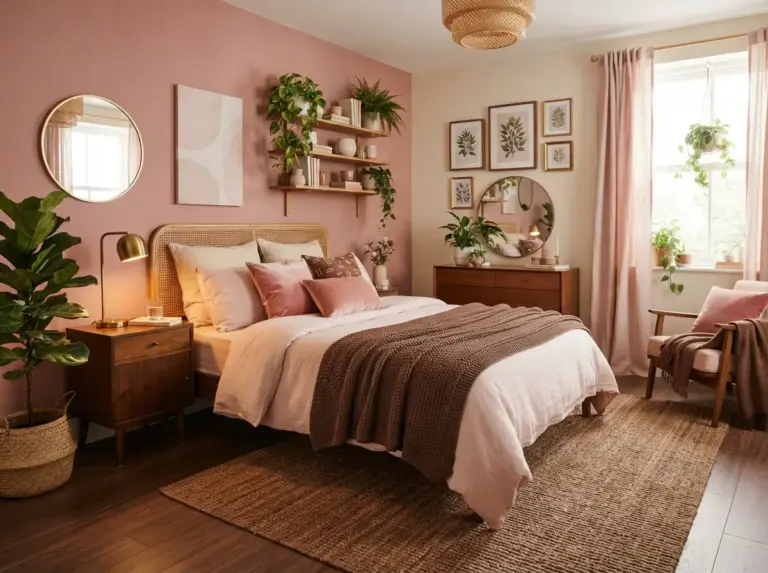
Low-profile furniture changes how a bedroom feels by visually lowering energy levels. Platform beds, simple nightstands, and soft, layered bedding create grounding comfort. Keeping furniture closer to floor level makes ceilings feel taller and the space more open. Choose cotton or linen bedding in muted tones for softness without distraction. Minimal decor near sleeping areas encourages deeper relaxation and makes mornings feel slower and gentler.
Natural Wood Accents Everywhere
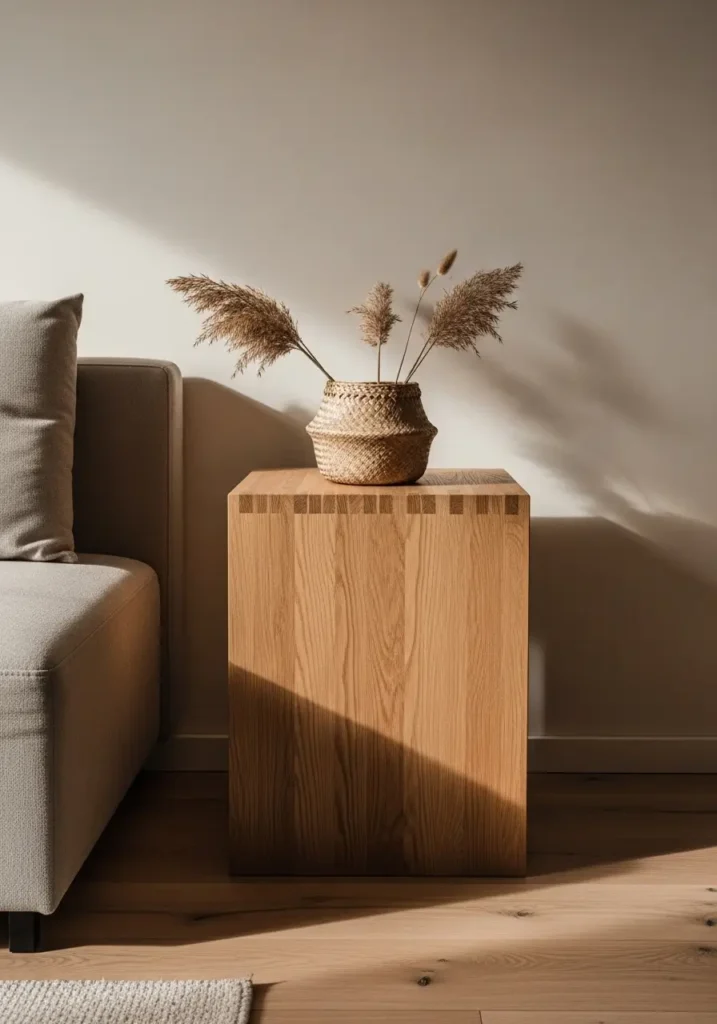
Natural wood introduces warmth while keeping decor simple. Light oak, ash, or bamboo pieces add organic softness that beautifully balances neutral palettes. Wooden trays, stools, or side tables quietly connect different areas of a home. Imperfect grain patterns bring subtle personality without overwhelming the room. Carefully mixing wood textures keeps spaces grounded and welcoming while maintaining minimalist calm.
Sheer Curtains For Gentle Light
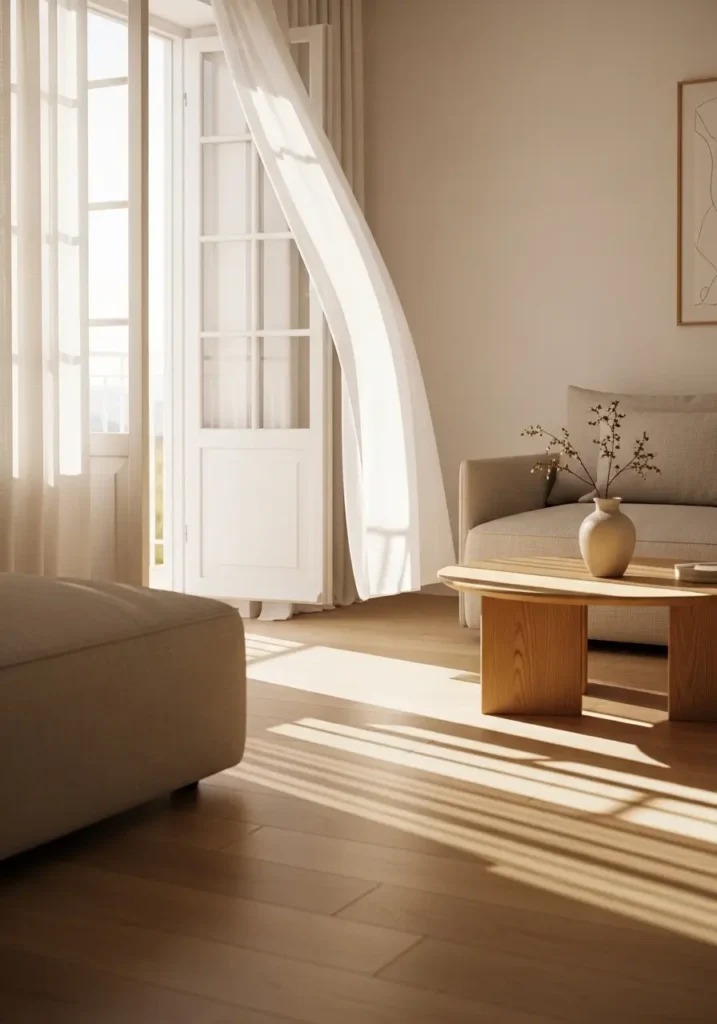
Heavy curtains can feel visually loud, while sheer fabrics soften sunlight and create dreamy movement. Light flowing curtains allow brightness without harsh glare. Rooms instantly feel more open and peaceful as daylight spreads evenly. Choose off-white or warm ivory tones to maintain warmth. Gentle fabric motion adds life without clutter, creating a relaxed, airy environment.
Simple Statement Wall Art
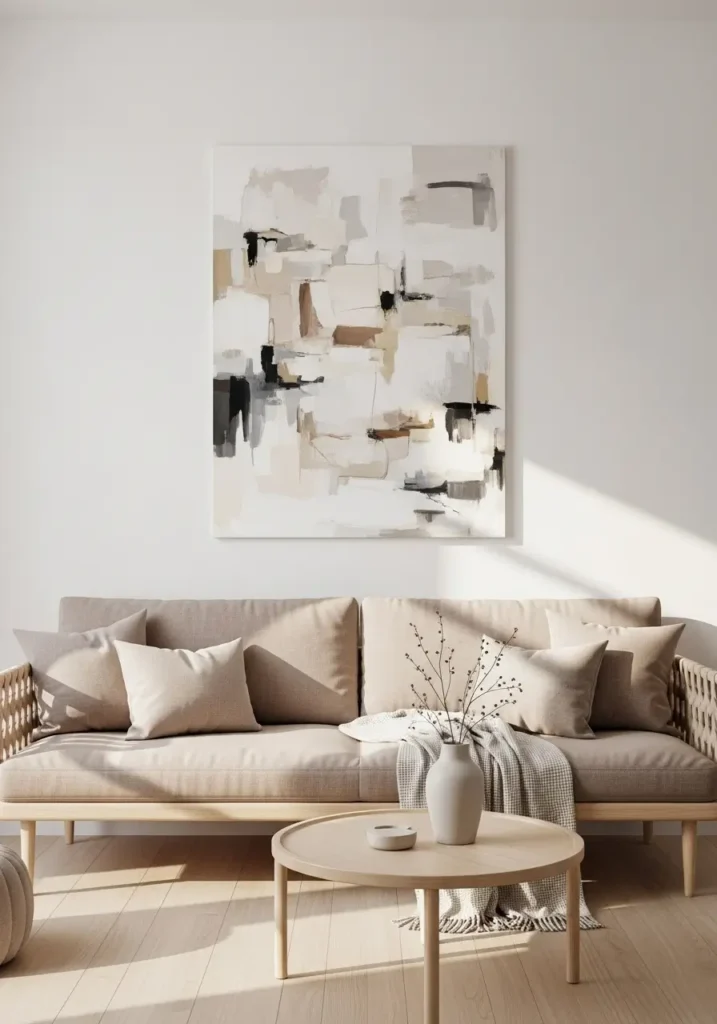
One meaningful artwork often feels stronger than many small decorations. Choose calming abstract art, soft landscapes, or neutral line drawings that match the room tones. Leave space around the artwork so it can breathe visually. Centering one piece creates focus while maintaining calm energy. Minimal framing keeps attention on the feeling rather than decoration overload.
Decluttered Entryway With Purpose
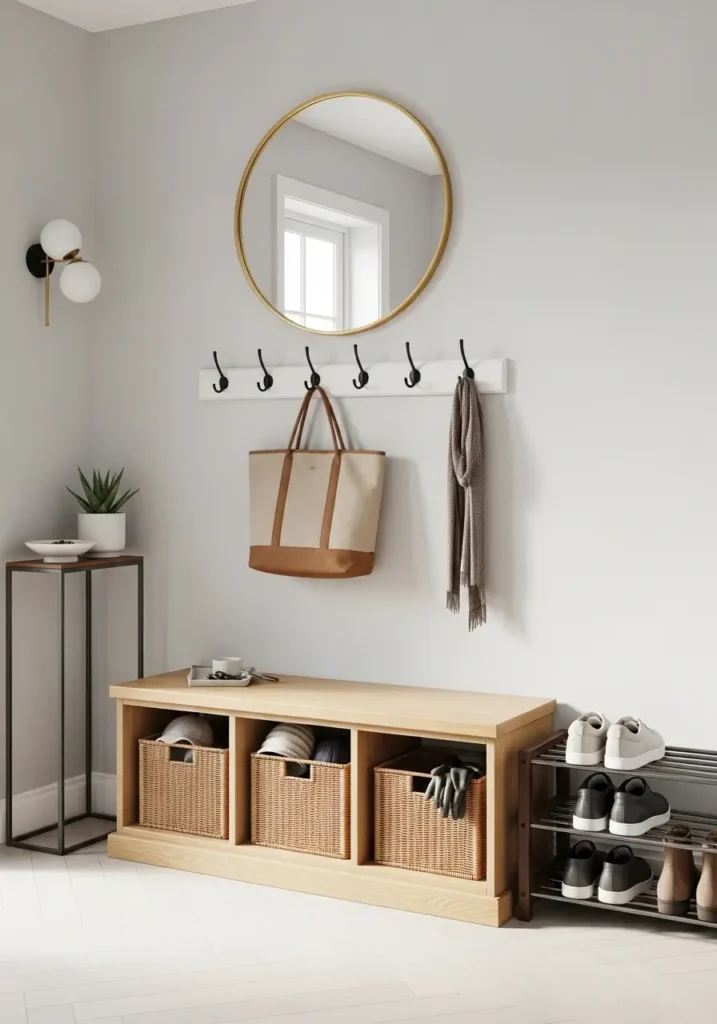
Entryways set an emotional tone for entire homes. Keeping this area simple makes arrivals feel calm instead of chaotic. A small bench, woven basket, and wall hooks provide function without excess. Neutral tones help transition from outside noise into indoor comfort. Leaving open floor space allows movement and creates welcoming energy every time you walk through the door.
Cozy Minimalist Reading Corner
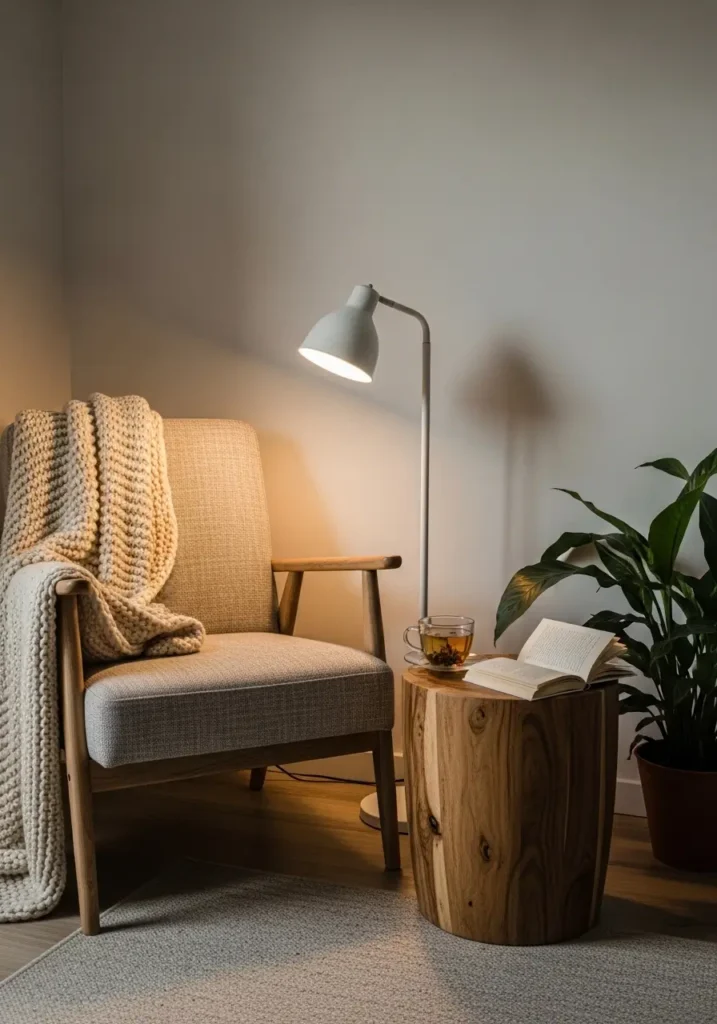
Quiet reading corners bring emotional warmth while staying visually simple. Comfortable chairs, soft throw blankets, and small lamps create an intimate atmosphere without crowding the space. Neutral textures layered gently make the corner feel inviting. Adding one plant introduces life while maintaining simplicity. Soft lighting encourages slow moments and peaceful evening routines.
Indoor Plants With Breathing Space
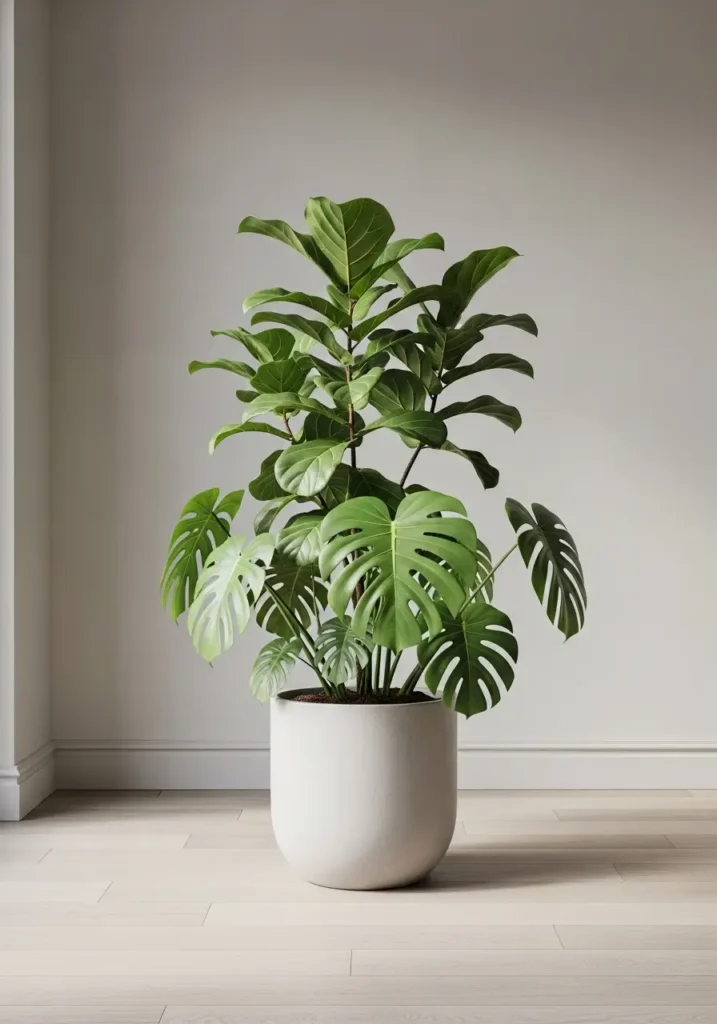
Plants bring freshness, but minimalist styling uses fewer plants placed intentionally. A large leafy plant in a simple pot creates a calm focal point. Allowing space around greenery highlights natural beauty instead of clutter. Neutral ceramic planters keep the look cohesive, while greenery adds gentle movement and organic softness.
Hidden Storage Solutions
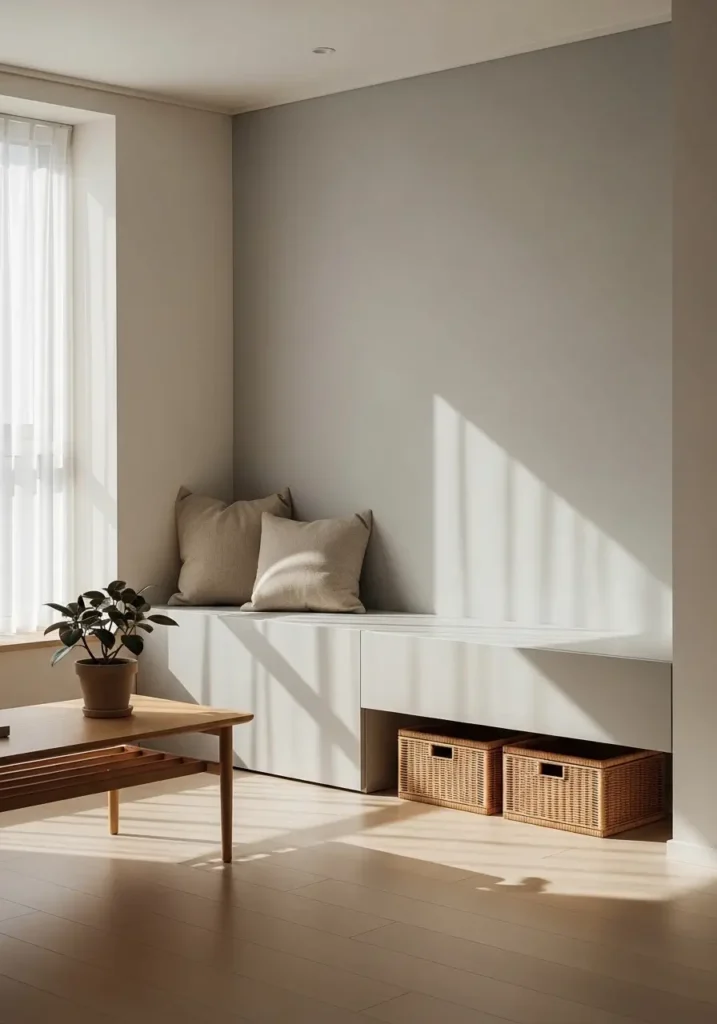
Clutter often creates visual stress even when rooms look decorated. Hidden storage keeps surfaces calm while maintaining practicality. Storage benches, closed cabinets, and woven boxes keep belongings accessible yet invisible. Clean surfaces help eyes rest and make daily routines feel smoother and more organized.
Soft Layered Lighting
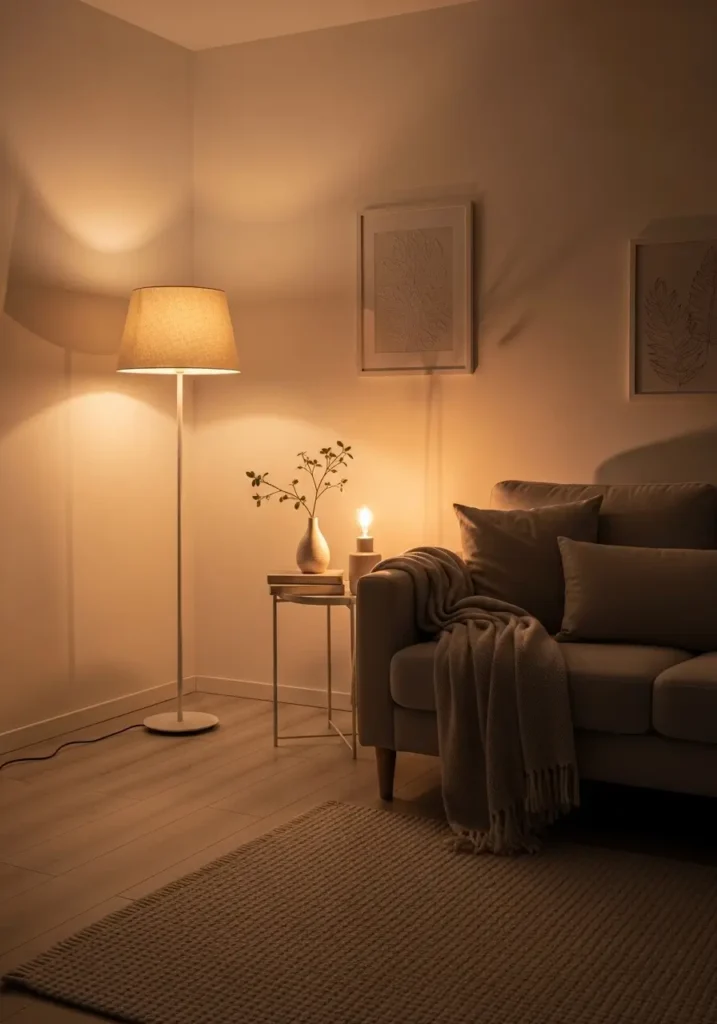
Lighting shapes mood more than decor pieces. Combining table lamps, floor lamps, and warm bulbs creates a gentle evening glow. Avoid harsh overhead light alone. Soft, layered lighting makes rooms feel cozy and peaceful while beautifully highlighting textures. Warm light tones help create a restful atmosphere after sunset.
Neutral Textured Rugs
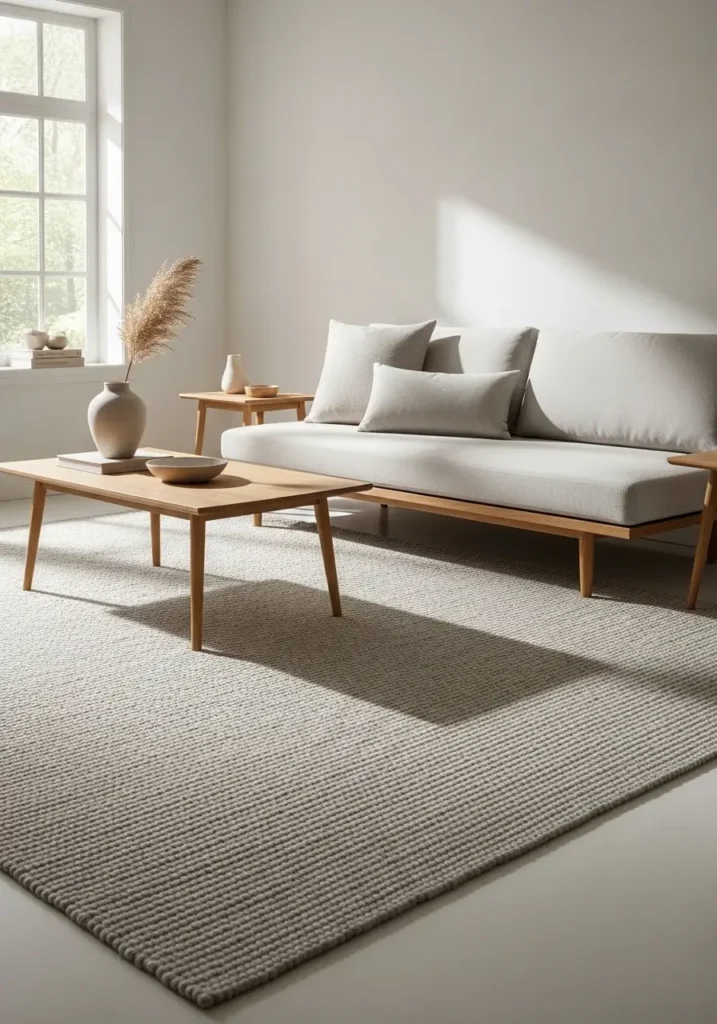
Rugs ground spaces visually while adding comfort underfoot. Neutral-textured rugs bring warmth without overwhelming design. Choose woven or wool textures for subtle depth. Keeping patterns soft helps maintain a calm flow across rooms. Large rugs also unify furniture arrangements and create cozy zones within open spaces.
Minimal Dining Table Styling
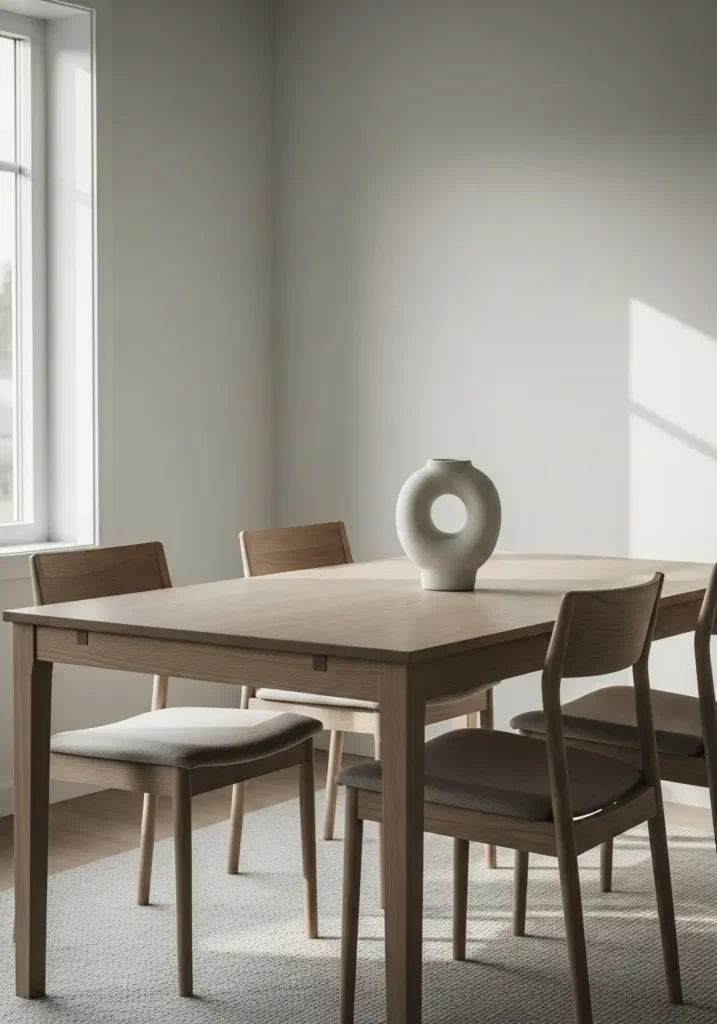
Dining areas feel calmer when tables remain mostly clear. Simple centerpieces like ceramic bowls or fresh branches add interest without crowding. Neutral tableware, stacked neatly, maintains visual harmony. Open table surfaces make meals feel relaxed and welcoming while maintaining a clean aesthetic.
Bathroom With Spa Simplicity
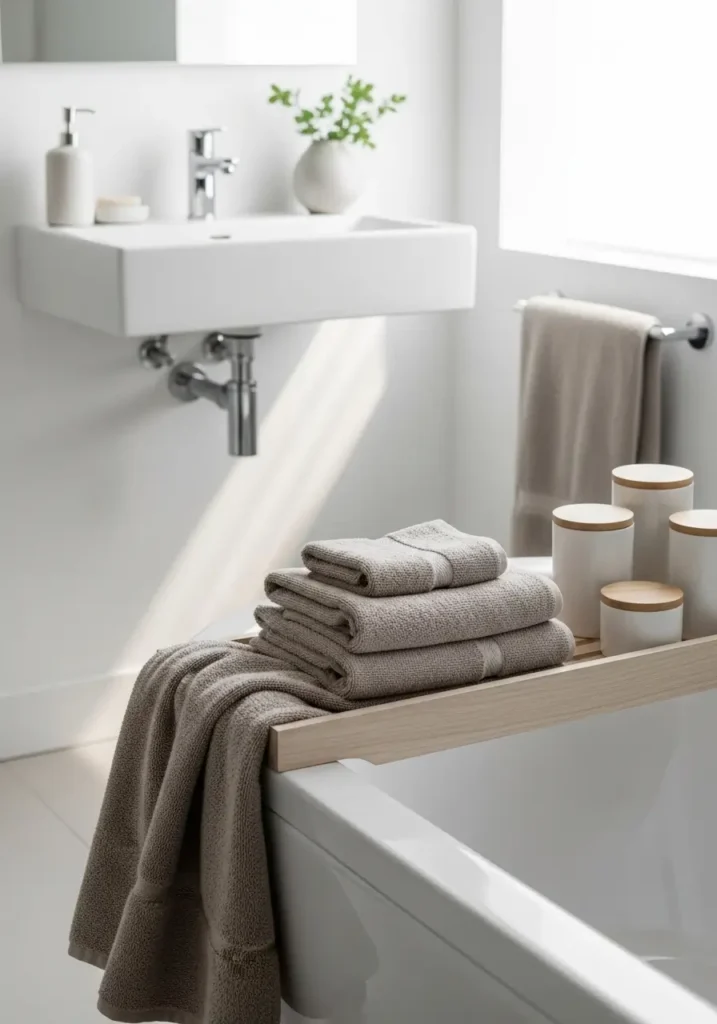
Minimalist bathrooms focus on softness and cleanliness. Rolled towels, neutral containers, and simple trays create spa-like calm. Limiting the color palette to whites and warm neutrals keeps the environment refreshing. Natural textures like wood or stone add warmth without visual noise, turning everyday routines into peaceful rituals.
Personal Corners With Meaningful Objects
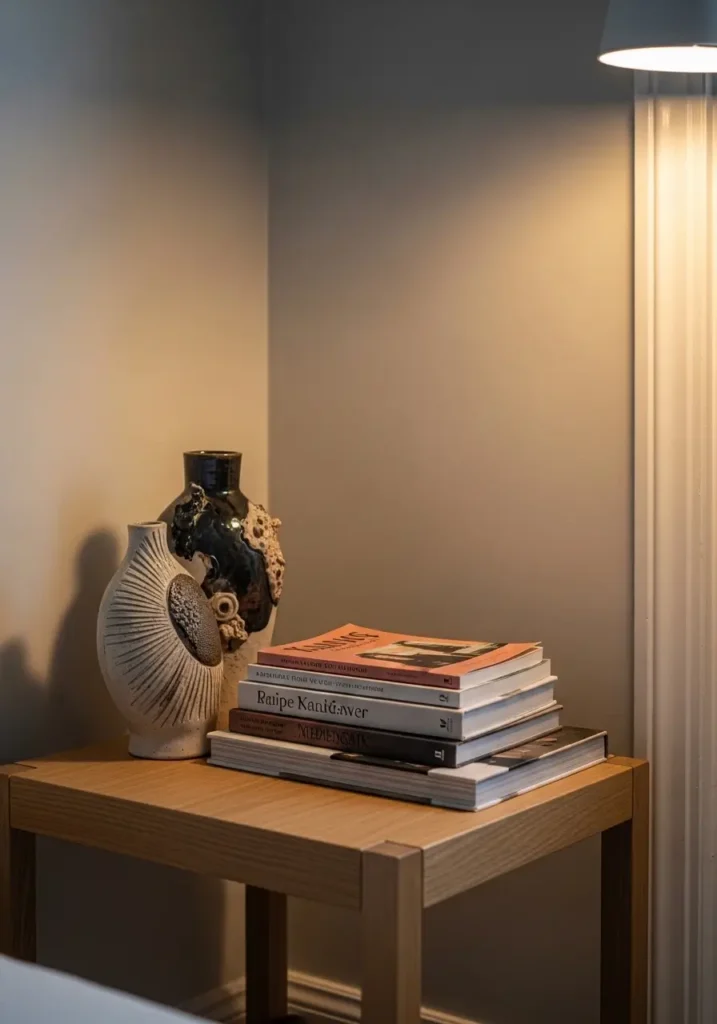
Minimalism still allows personality. Display only items that hold emotional value, like favorite books or handmade decor. Thoughtful placement gives objects importance while maintaining a calm atmosphere. Personal touches make a home feel lived-in and comforting without creating clutter.
Final Thoughts
Peaceful homes grow from intentional simplicity, not perfection. Minimalist decor invites calm by giving every object space and meaning. Soft textures, warm lighting, and neutral tones work together to create an effortless sense of comfort. Small, thoughtful changes slowly transform rooms into places where you can breathe, rest, and reconnect with yourself. When spaces feel lighter, daily life naturally feels softer too.