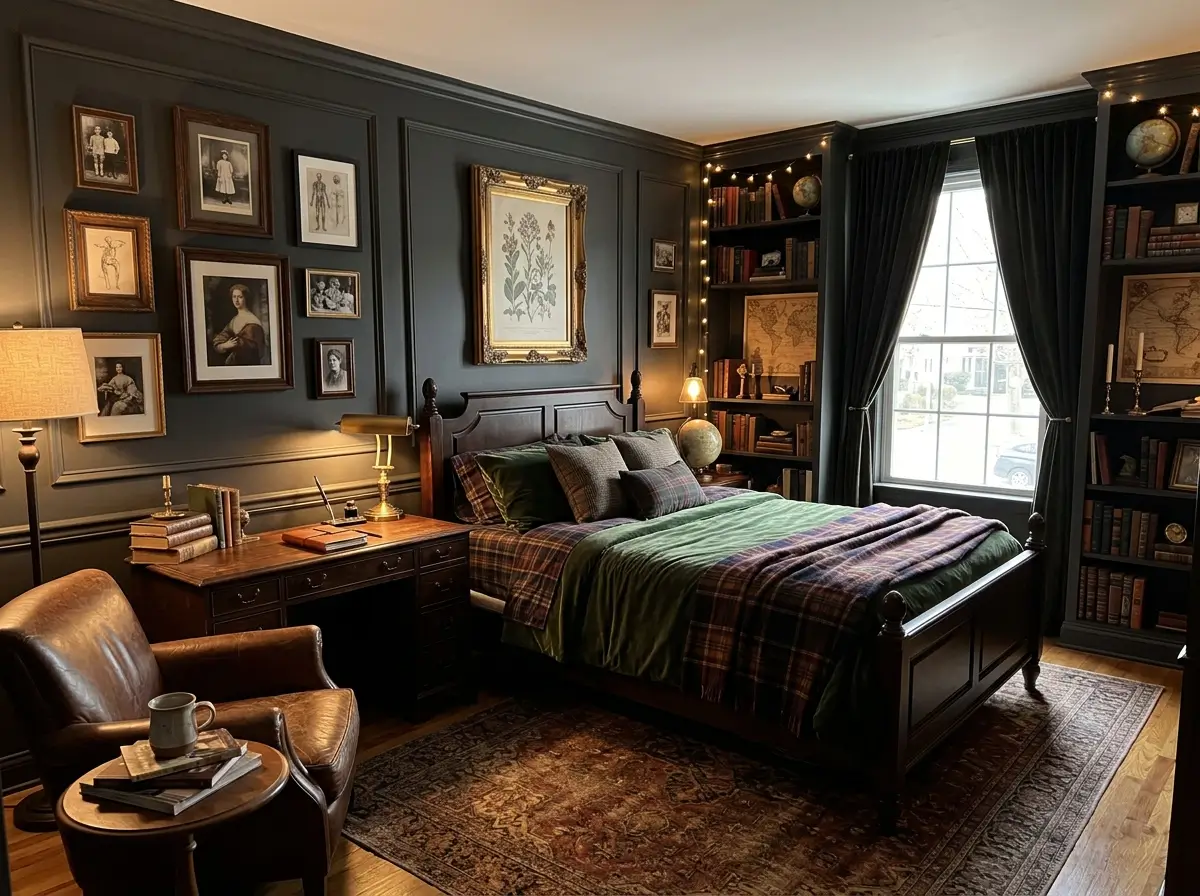

A dark academia apartment bedroom is more than a room filled with old books and brown bedding. It is a practical way to make a small bedroom feel warm, thoughtful, layered, and calm without needing expensive furniture or permanent changes. The style works especially well in apartments because it uses rich colors, soft lighting, vintage-inspired pieces, and smart styling instead of large renovations. You can create the mood with renter-friendly paint alternatives, removable wallpaper, thrifted furniture, warm lamps, dark textiles, framed prints, and a few useful storage pieces that make the room feel collected rather than crowded.
This look is a good choice if you like deep wood tones, old libraries, classic literature, antique details, warm metals, moody colors, and cozy spaces that still feel grown-up. It can work in a tiny studio bedroom, a shared apartment, a rental room, or a simple bedroom with plain white walls. The key is balance. Too many dark items can make a small apartment bedroom feel heavy, while too many decorative objects can make it look messy. A successful makeover uses dark academia details with intention, so the room feels comfortable for sleeping, reading, dressing, and relaxing.
What Makes a Dark Academia Apartment Bedroom Work?
A dark academia apartment bedroom works when it combines moody colors, warm lighting, vintage-inspired furniture, layered fabrics, books, artwork, and useful storage in a way that still supports daily life. The style should feel thoughtful and lived-in, not cluttered or staged. The best version uses deep shades like espresso brown, olive green, charcoal, burgundy, oxblood, camel, cream, brass, and aged wood, then softens them with linen, wool, cotton, glass, and paper textures.
The main question is simple: how can you create a dark academia apartment bedroom without making a small room feel cramped? The answer is to build the room in layers. Start with the bed and lighting because they shape the mood first. Then add furniture with slim profiles, closed storage, framed wall decor, books, and personal objects. Keep the color palette tight, repeat materials across the room, and leave enough empty space around the bed, closet, and door so the bedroom still feels usable.
Start With a Deep but Controlled Color Palette

Color is the foundation of a dark academia apartment bedroom, but it needs control in a small space. Instead of covering every surface in black or dark brown, choose two deep colors, one warm neutral, and one metal finish. A strong beginner palette could be espresso brown, olive green, warm ivory, and antique brass. Another easy combination is charcoal, burgundy, tan, and black iron. These colors give the room depth without making it feel random. If your apartment has white walls, you do not have to paint immediately. Use dark bedding, curtains, rugs, lampshades, framed prints, and wood furniture to bring the palette into the room.
This idea works because repeated colors make a small bedroom feel planned. When every item belongs to the same color family, the eye moves smoothly around the room instead of stopping at mismatched pieces. This tip is best for renters, beginners, and anyone who feels overwhelmed by decor choices. A practical example is choosing a dark olive duvet, ivory sheets, walnut bedside table, brass lamp, and charcoal art frames. Avoid using too many strong colors at once, such as emerald, navy, burgundy, purple, black, and gold together, because the room can start to feel busy instead of calm.
Make the Bed the Main Moody Feature

In most apartment bedrooms, the bed takes up the most visual space, so it should carry the dark academia mood. Start with simple bedding in natural-looking fabrics. A cotton or linen duvet in chocolate brown, charcoal, deep olive, or warm taupe works better than shiny synthetic bedding because matte textures feel softer and more classic. Add ivory or cream sheets to prevent the bed from looking too dark. Then layer one plaid blanket, herringbone throw, or wool-style cover at the foot of the bed. You do not need ten pillows. Two sleeping pillows, two larger back pillows, and one smaller lumbar cushion are enough for a polished but practical setup.
This idea works because the bed creates an instant visual anchor. Even if you cannot paint, change flooring, or replace furniture, bedding can transform the room quickly. It is best for beginners who want a weekend makeover with a clear starting point. For example, use a dark brown duvet, cream sheets, a muted plaid throw with burgundy and tan, and one leather-look cushion. Keep the bed easy to make every morning. A dark academia apartment bedroom should feel comfortable and useful, not like a display that takes twenty minutes to reset.
Use Warm Lighting Instead of Bright White Bulbs

Lighting can make or break this style. Bright cool bulbs often make dark colors look flat and harsh, especially in apartment bedrooms with plain walls or basic ceiling fixtures. Choose warm bulbs around 2200K to 2700K for bedside lamps, wall sconces, and reading corners. A warm bulb gives wood, brass, leather, and deep fabrics a softer glow. If your room only has one overhead light, do not rely on it as your main light source. Add at least two smaller lamps at different heights, such as a bedside lamp and a floor lamp near a chair or dresser.
This idea works because dark academia interiors depend on shadow, warmth, and contrast. Good lighting creates depth without needing expensive furniture. It is best for renters because lamps are portable and do not require permanent changes. A practical setup could include a brass bedside lamp with a cream shade, a small banker-style lamp on a desk, and a dimmable plug-in floor lamp near the bed. Avoid daylight bulbs labeled 5000K or higher because they can make the room feel like an office. Also avoid using only string lights, because they may look decorative but often do not provide enough usable light for reading or getting ready.
Add a Vintage-Style Headboard or Create the Look
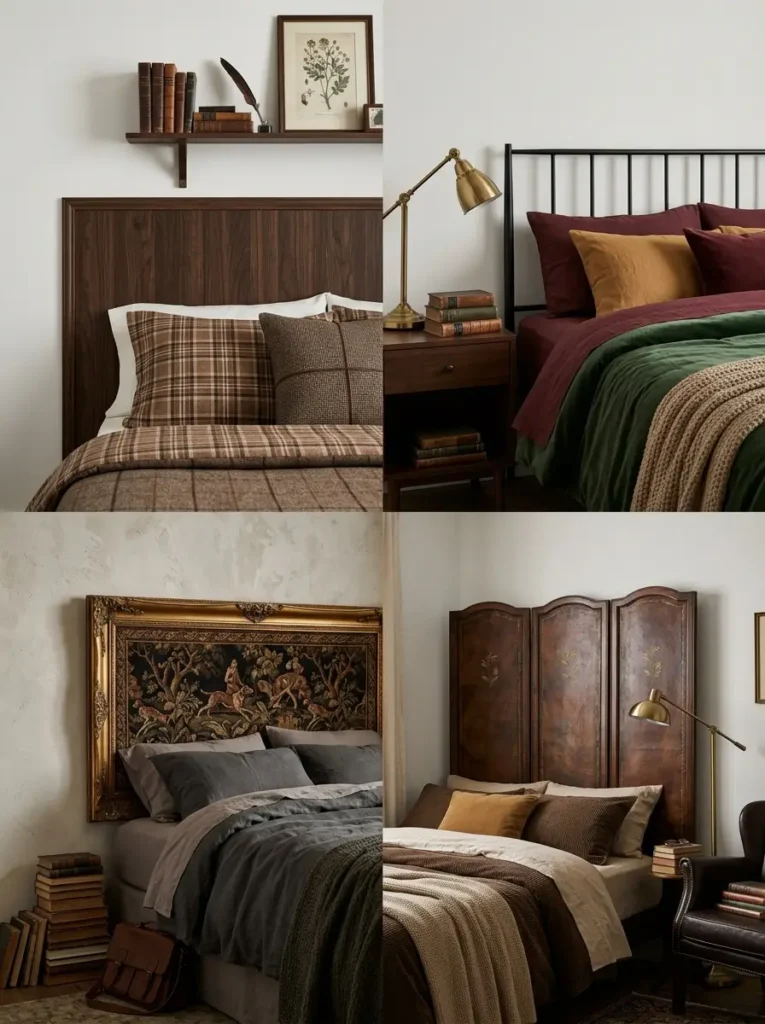
A headboard helps a bedroom feel finished, and dark academia style works especially well with wood, leather, cane, or upholstered headboards. In a small apartment, choose a slim headboard instead of a bulky one. Walnut, mahogany, dark oak, black metal, or brown faux leather can all work. If you cannot buy a new headboard, create the look with a large framed textile, peel-and-stick wallpaper panel, a folding screen behind the bed, or two tall pillows against the wall. The goal is to give the bed height and structure without taking up too much floor space.
This idea works because a headboard frames the sleeping area and gives the room a more intentional layout. It is best for renters, studio apartments, and bedrooms where the bed sits against a blank white wall. A budget example is placing a dark wood-look peel-and-stick wallpaper rectangle behind the bed and framing it with narrow removable molding strips. Another option is a simple black metal headboard paired with warm bedding and brass lamps. Avoid oversized tufted headboards if your room is narrow because they can make the bed feel too large and reduce walking space.
Love moody interiors? Browse our Whimsigoth Apartment ideas for inspiration throughout your home.
Bring in Books Without Creating Clutter

Books are one of the strongest dark academia elements, but they should not take over the bedroom. A few carefully arranged stacks can feel charming, while piles on every surface can make the room harder to clean and use. Choose one main book zone, such as a small bookcase, wall shelf, bedside stack, or desk corner. Use books with dark, cream, brown, or muted covers when possible, but do not worry about making every spine match. Real books that you read or enjoy will always feel better than fake display books.
This idea works because books add personality, texture, and height. They also make the room feel lived-in, which is important for this style. This tip is best for students, readers, writers, and anyone who wants the bedroom to feel thoughtful without buying many decorative items. A practical example is placing a narrow bookcase beside the bed and styling it with books, a small lamp, one framed print, and a covered storage box. Leave some open space on the shelves so the arrangement can breathe. Avoid stacking books where you need daily function, such as on top of your laundry basket, dresser mirror area, or laptop workspace.
Choose Apartment-Friendly Wall Decor

Wall decor adds character, especially when you cannot paint your apartment walls. Dark academia wall decor can include framed vintage prints, botanical drawings, old maps, architectural sketches, literature quotes, portrait-style art, or black-and-white photography. Use frames in black, walnut, dark brown, antique gold, or brass. For a small bedroom, one medium gallery wall above the bed or dresser usually works better than scattering tiny frames across every wall. If you rent, use removable hooks, poster rails, leaning frames, or lightweight frames with damage-free strips.
This idea works because wall decor adds history and detail without using floor space. It is best for renters and small bedrooms where every inch matters. A practical layout is one large print centered above the bed with two smaller frames beside it, or a grid of four prints above a dresser. Keep the frame spacing even, usually around two to three inches apart, so the wall looks organized. Avoid using too many unrelated posters, because the room can start to feel like a dorm wall instead of a calm dark academia apartment bedroom.
Use Dark Curtains to Frame the Room

Curtains can make an apartment bedroom feel more finished, especially if the room has basic blinds. Choose curtains in deep olive, espresso, charcoal, brown, burgundy, or warm beige depending on how dark your bedding already is. If the room is very small, hang the curtain rod higher and wider than the window to make the wall feel taller. Floor-length curtains usually look better than short curtains because they create a stronger vertical line. For renters, tension rods, no-drill brackets, or damage-free curtain rod holders can help if you cannot drill holes.
This idea works because curtains soften hard apartment lines and control light. They also add fabric, which helps a dark room feel warm instead of bare. This tip is best for bedrooms with bright windows, cheap blinds, or awkward wall proportions. A good example is pairing warm ivory walls with dark olive curtains, a walnut nightstand, and a brown duvet. If you use very dark curtains, balance them with lighter bedding or a cream rug. Avoid thin shiny curtains, because they often look cheap and do not support the rich, layered mood of the room.
Add a Compact Reading Corner
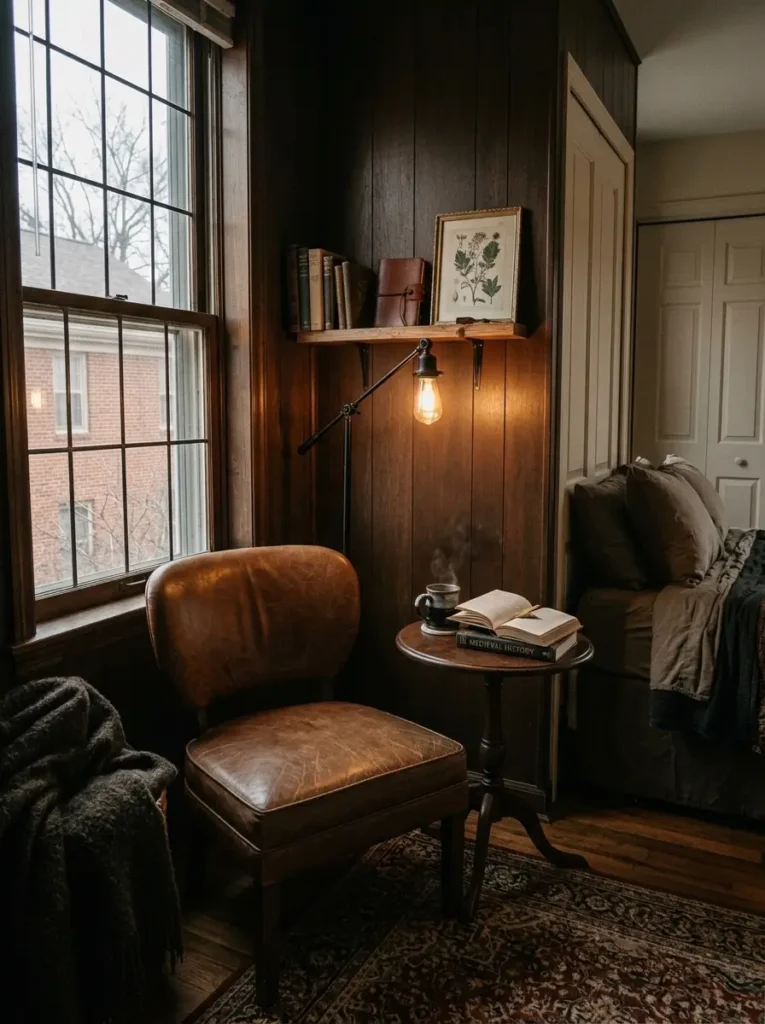
A reading corner is a classic part of the dark academia apartment bedroom, but it must fit the room you actually have. If your bedroom is small, you do not need a large armchair. A slim accent chair, wooden chair with a cushion, upholstered slipper chair, or small bench near the window can work. Add a narrow side table or wall shelf for a book and mug. Place a warm floor lamp nearby if possible. If there is no room for a chair, create a reading zone on the bed with a supportive back pillow, clip-on lamp, and small tray.
This idea works because it gives the bedroom a purpose beyond sleeping. It also supports the thoughtful, quiet mood of dark academia without adding unnecessary clutter. It is best for people who read, journal, study, or want a screen-free corner. A practical example is placing a small brown slipper chair in an unused corner with a black metal floor lamp and a thrifted round table. Avoid buying a chair before measuring your space. Leave enough room to open closet doors and walk around the bed comfortably.
Pick Furniture With Slim Shapes and Dark Finishes
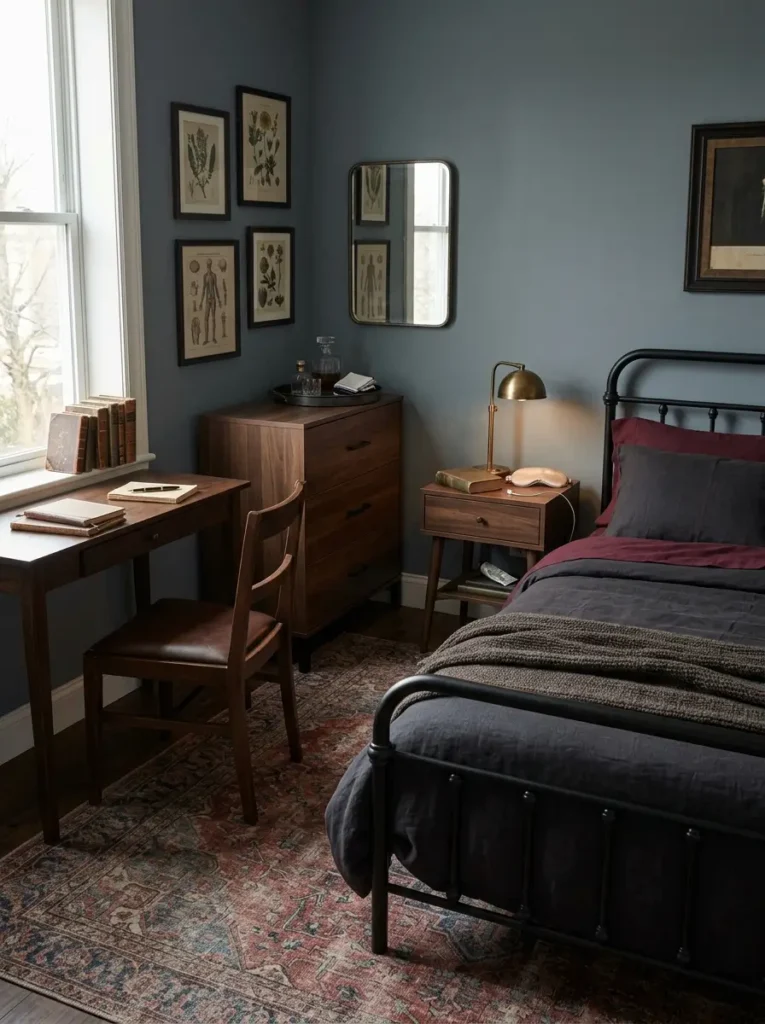
Dark academia furniture often includes heavy wood desks, carved dressers, and old library chairs, but apartment bedrooms need lighter versions of those pieces. Look for slim furniture with dark finishes, tapered legs, simple shapes, and useful storage. A small walnut nightstand with one drawer, a narrow writing desk, a black metal bed frame, or a compact dresser can create the style without crowding the room. If you already own light furniture, you can still make it work by adding darker lamps, trays, handles, bedding, and art nearby.
This idea works because furniture sets the structure of the room. Dark finishes make the bedroom feel grounded, while slim shapes keep it from feeling cramped. This tip is best for small apartments, renters, and anyone decorating with secondhand pieces. A practical example is replacing a bulky bedside table with a narrow dark wood table that has a drawer and open shelf. You can store your book, charger, eye mask, and hand cream without leaving everything visible. Avoid buying matching furniture sets if they are too large for the room. A collected mix often suits dark academia better than a full showroom set.
Layer Rugs for Warmth and Sound Control
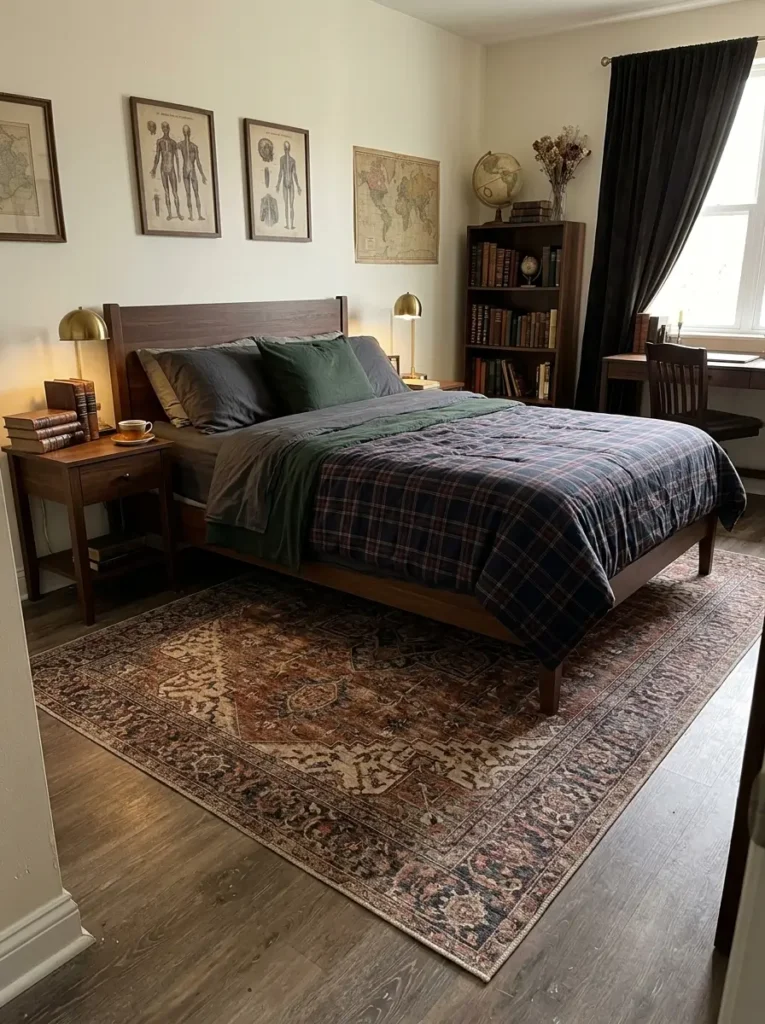
Apartment bedrooms often have basic carpet, cold tile, or plain laminate flooring. A rug can help define the bed area, soften sound, and add color. For dark academia style, choose traditional patterns, faded Persian-style prints, plaid, herringbone, dark florals, or simple wool-look textures. Colors like rust, brown, charcoal, muted red, navy, and cream work well. In a small room, place a rug under the lower two-thirds of the bed so it extends on both sides. If that is not possible, use two smaller runners beside the bed.
This idea works because rugs add softness and visual depth without permanent changes. They are also helpful in apartments where noise travels easily through floors. This tip is best for renters, upstairs apartments, and bedrooms that feel cold or unfinished. A practical example is using a 5×7 vintage-style rug under a full-size bed, with the front legs of the nightstands just off the rug. Avoid rugs that are too tiny and float in the middle of the room, because they can make the layout look accidental. Also avoid very high-pile rugs if you need easy cleaning or have little storage space.
Style a Small Desk Like a Writing Nook

A desk fits naturally into a dark academia apartment bedroom, especially if you work, study, write, or plan your day there. The goal is to make the desk useful first and decorative second. Choose a compact writing desk rather than a large office desk if your room is small. Add a warm desk lamp, a small tray for pens, one notebook, and a framed print or pinboard above it. Keep cables controlled with clips or a cable box. A dark wood desk, black metal desk, or even a simple white desk can work if you style it with darker accessories.
This idea works because dark academia is connected to reading, writing, learning, and quiet focus. A desk gives the style a natural function instead of making it only decorative. It is best for students, remote workers, and apartment bedrooms that also serve as workspaces. A practical example is placing a 36-inch writing desk beside a window, adding a banker lamp with a warm bulb, and using a dark leather-look desk mat. Avoid covering the desk with too many candles, books, and decor pieces. You still need space for your laptop, notebook, and daily tasks.
Use Brass, Bronze, and Black Metal Details

Metal finishes add contrast and polish to a dark academia apartment bedroom. Antique brass, aged bronze, black iron, and oil-rubbed metal work better than shiny chrome for this style. You can use these finishes in lamps, curtain rods, picture frames, drawer pulls, mirrors, trays, candle holders, and small storage boxes. If your apartment has basic silver hardware, you do not have to replace everything. Focus on the visible pieces you control, such as lamps and frames. Repeating one metal finish two or three times makes the room feel more connected.
This idea works because metal details catch warm light and keep dark rooms from looking flat. They also make budget furniture feel more intentional. This tip is best for renters and beginners because small metal details are easy to add over time. A practical example is using an antique brass lamp, brass picture frame, and brass tray on the dresser. If you prefer a sharper look, choose black metal curtain rods, black frames, and a black reading lamp. Avoid mixing too many finishes in one small room, such as chrome, gold, rose gold, brass, and black together, because it can look unplanned.
Add Texture With Natural and Tactile Materials
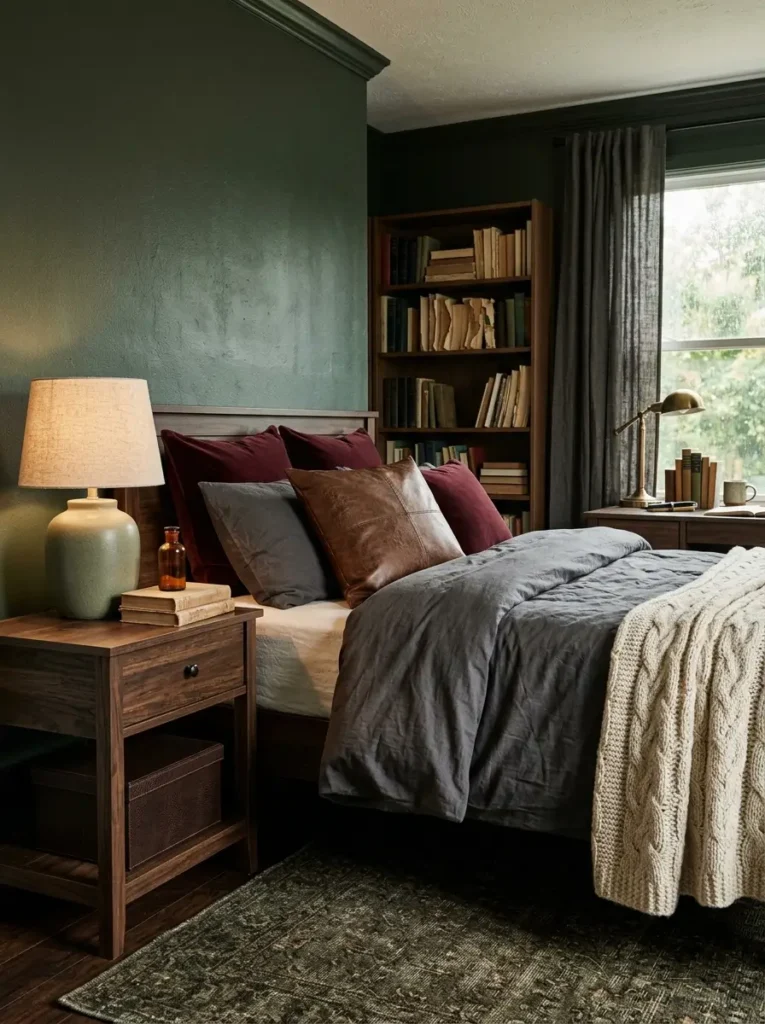
Dark academia style depends on texture as much as color. Use materials that feel grounded and warm, such as linen, cotton, wool, tweed, velvet, leather-look fabric, wood, paper, glass, and ceramic. In a bedroom, this can mean a linen duvet, wool-style throw, velvet cushion, wooden tray, ceramic lamp base, paper book covers, and a leather-look storage box. You do not need all of these at once. Start with two or three textures and repeat them around the room.
This idea works because texture prevents a dark room from feeling flat or plain. A bedroom with only smooth black furniture and dark bedding can feel cold, but one with woven fabric, matte wood, and soft lampshades feels layered. This tip is best for anyone decorating with a simple color palette because texture adds interest without adding clutter. A practical example is pairing a charcoal cotton duvet with a brown faux leather pillow, a cream knit throw, and a dark wood nightstand. Avoid too many shiny materials, especially glossy bedding or plastic decor, because they can weaken the classic mood.
Use Mirrors Carefully to Open the Space

Mirrors are useful in apartment bedrooms because they reflect light and make small spaces feel larger. For dark academia style, choose mirrors with black, dark wood, antique brass, or vintage-inspired frames. A tall leaning mirror can look beautiful, but only use one if it does not block walking space. A wall-mounted mirror above a dresser or a medium mirror near the closet can be more practical. If your room has very little natural light, place a mirror where it can reflect a window or lamp instead of reflecting clutter.
This idea works because dark colors absorb light, and mirrors help return some of that light to the room. It is best for small bedrooms, narrow rooms, and apartments with limited windows. A practical example is placing an arched black-framed mirror above a dresser and styling the dresser with a brass lamp, tray, and two books. Avoid placing a mirror directly opposite a messy open closet or laundry pile, because it doubles the visual clutter. Also avoid mirrored furniture, because it usually feels too glam for this style.
Create a Collected Dresser or Nightstand Display

Dark academia decor should feel collected, but it still needs editing. A dresser or nightstand is a good place to create a small display with useful items. Use a tray to group objects, such as a lamp, book, candle, small framed print, jewelry dish, or clock. Keep the display low enough that it does not compete with wall art or mirrors. Choose items with different heights, but limit the number of pieces. A dark academia apartment bedroom looks stronger when each surface has breathing room.
This idea works because small displays add personality without filling the whole room. It is best for beginners who want to style decor but do not want the room to feel messy. A practical nightstand setup could include a warm lamp, one current book, a small ceramic dish, and a glass of water. A dresser could hold a framed sketch, a brass tray, a candle, and a wooden box for small items. Avoid leaving every perfume bottle, charger, receipt, and hair clip visible. Closed storage keeps the room calm and easier to maintain.
Common Mistakes to Avoid
One common mistake is making the room too dark too quickly. A dark academia apartment bedroom needs contrast, especially in a small apartment. If you use a black bed frame, charcoal bedding, black curtains, dark rug, and dark wall decor all together, the room may lose shape. Add warm ivory, camel, aged brass, cream paper, or lighter wood to give the eye a place to rest. Contrast helps the dark pieces look intentional rather than heavy.
Another mistake is buying decor before solving layout. A bedroom should still be easy to move through. You need space to open drawers, reach outlets, walk around the bed, and access your closet. Measure before buying a chair, desk, rug, or dresser. A beautiful piece that blocks daily movement will become frustrating fast. In small apartments, furniture with storage usually beats furniture that only looks good.
Clutter is also a major issue. Dark academia style includes books, papers, art, and vintage pieces, but that does not mean every surface should be full. Too many objects can make the room look dusty and stressful. Use trays, boxes, baskets, drawers, and shelves to control the visual weight. Keep only the best-looking or most-used items visible, and store the rest.
A fourth mistake is using only decorative lighting. Candles, string lights, and tiny lamps can add mood, but you still need enough light to read, clean, and get dressed. Use warm bulbs, but make sure the room has functional brightness. A bedside lamp, desk lamp, and floor lamp usually work better than one ceiling light. Good lighting makes dark colors feel rich instead of dull.
Finally, avoid copying the style so closely that your room loses your own life. A dark academia apartment bedroom should support your habits. If you do not read old novels, you can display art, journals, music books, photography, or travel pieces instead. If you need a laptop desk, build it into the room. The style works best when it feels personal, useful, and honest.
Budget-Friendly Tips for a Dark Academia Bedroom
You can create this look without buying everything new. Thrift stores, secondhand marketplaces, flea markets, and family storage rooms are often better sources than expensive decor shops. Look for wood frames, old lamps, small side tables, baskets, mirrors, brass trays, ceramic dishes, and hardcover books. Even if a piece has scratches, it may fit the style better than something too polished. Focus on shape, color, and material instead of brand.
Textiles are one of the fastest budget upgrades. If you cannot replace your bed, dresser, or curtains, change the bedding and add a throw. A dark duvet cover, cream sheets, and one patterned blanket can shift the whole room. You can also use pillow covers instead of buying new pillows. Choose covers in velvet, cotton, tweed, plaid, or faux leather. This saves money and storage space.
Lighting is another affordable improvement. Replace cool bulbs with warm bulbs first. Then add a thrifted lamp or budget lamp with a fabric shade. A simple lamp can look more expensive if the bulb is warm and the shade has a soft cream tone. If you find an old lamp with a good shape but bad color, consider painting the base in black, bronze, or dark brown.
For walls, use printable art, old book pages, thrifted frames, postcards, or removable wallpaper panels. You do not need a full gallery wall right away. One large framed piece above the bed can look more mature than many small cheap prints. If frames are expensive, use poster rails or clip frames for a clean renter-friendly option. Keep the colors muted so the art works with the bedding and furniture.
Small hardware changes can also help. If your dresser or nightstand has plain knobs, replace them with antique brass or black pulls. Keep the original hardware in a labeled bag so you can put it back before moving out. This is a simple renter-friendly trick that makes basic furniture feel more aligned with the dark academia style.
Dark Academia Apartment Bedroom Tips
For a dark academia apartment bedroom, always start with function. Decide what your bedroom must do every day. Do you sleep, study, work, read, store clothes, film content, or get ready there? Once you know the room’s job, choose decor that supports that routine. A bedroom that looks good but does not work for your life will become messy quickly.
Use vertical space when the floor plan is tight. Wall shelves, tall bookcases, hanging art, curtain height, and tall mirrors can pull the eye upward. This helps small apartment bedrooms feel more spacious. Keep heavier visual weight lower in the room, such as the bed, rug, and dresser. Then add lighter details higher up, such as framed prints or shelves.
Repeat materials across the room. If you use walnut on the nightstand, add a walnut frame or wooden tray somewhere else. If you use brass on a lamp, repeat brass on a frame or drawer pull. Repetition makes budget pieces feel planned. It also keeps the room from looking like a random collection of dark items.
Leave some negative space. This style can handle layers, but small bedrooms need empty areas too. A clean wall corner, an open section of rug, or a dresser with only a few objects can make the whole room feel calmer. Negative space also makes your best pieces stand out. A dark academia apartment bedroom does not need to be packed to feel complete.
FAQ
What colors are best for a dark academia apartment bedroom?
The best colors are deep, warm, and slightly muted. Try espresso brown, walnut, olive green, charcoal, burgundy, oxblood, camel, cream, warm ivory, black, and antique brass. If your room is small, use dark colors on bedding, curtains, rugs, and art instead of making every wall dark. This keeps the room moody but still comfortable.
Can I create this style in a rental bedroom?
Yes, this style works very well in rentals because it depends on movable decor. Use removable wallpaper, damage-free hooks, lamps, curtains, bedding, rugs, framed art, and thrifted furniture. You can also replace drawer knobs and switch them back before moving out. Focus on changes you can take with you.
How do I stop a dark bedroom from feeling too small?
Use contrast, warm lighting, mirrors, and slim furniture. Add cream sheets, warm lamps, reflective brass details, and a mirror that reflects light. Choose furniture with legs or narrow profiles so the floor does not feel blocked. Avoid filling every wall and surface with decor.
What furniture works best for this style in an apartment?
Slim dark wood furniture, black metal bed frames, compact writing desks, narrow nightstands, small dressers, and vintage-style chairs work well. Look for pieces that provide storage without taking over the room. In a small bedroom, useful furniture matters more than large decorative furniture.
Is dark academia bedroom decor expensive?
It does not have to be expensive. Many of the best pieces can come from thrift stores, secondhand sellers, budget home stores, or items you already own. Start with bedding, lighting, framed art, and a small number of vintage-style accessories. Spend more only on pieces you use every day, such as a bed, desk, chair, or dresser.
How many books should I display?
Display enough books to add personality, but not so many that the room becomes hard to clean or use. A small shelf, bedside stack, or desk arrangement is usually enough. Keep your daily surfaces clear, and store extra books in baskets, boxes, or a bookcase with breathing room between items.
Conclusion
A dark academia apartment bedroom makeover does not require a large room, a big budget, or permanent changes. The strongest results come from careful choices: warm lighting, deep but balanced colors, useful furniture, layered bedding, vintage-inspired wall decor, soft textiles, and personal objects that support the way you live. Small apartments need extra attention to scale, storage, and walking space, so every item should earn its place.
Start with the bed, lighting, and color palette before buying smaller decor. Add books, art, rugs, curtains, and metal details slowly so the room feels collected instead of crowded. Use renter-friendly changes when you cannot paint or drill, and choose budget upgrades that bring the most visual impact. With the right balance, your dark academia apartment bedroom can feel warm, practical, personal, and easy to enjoy every day.