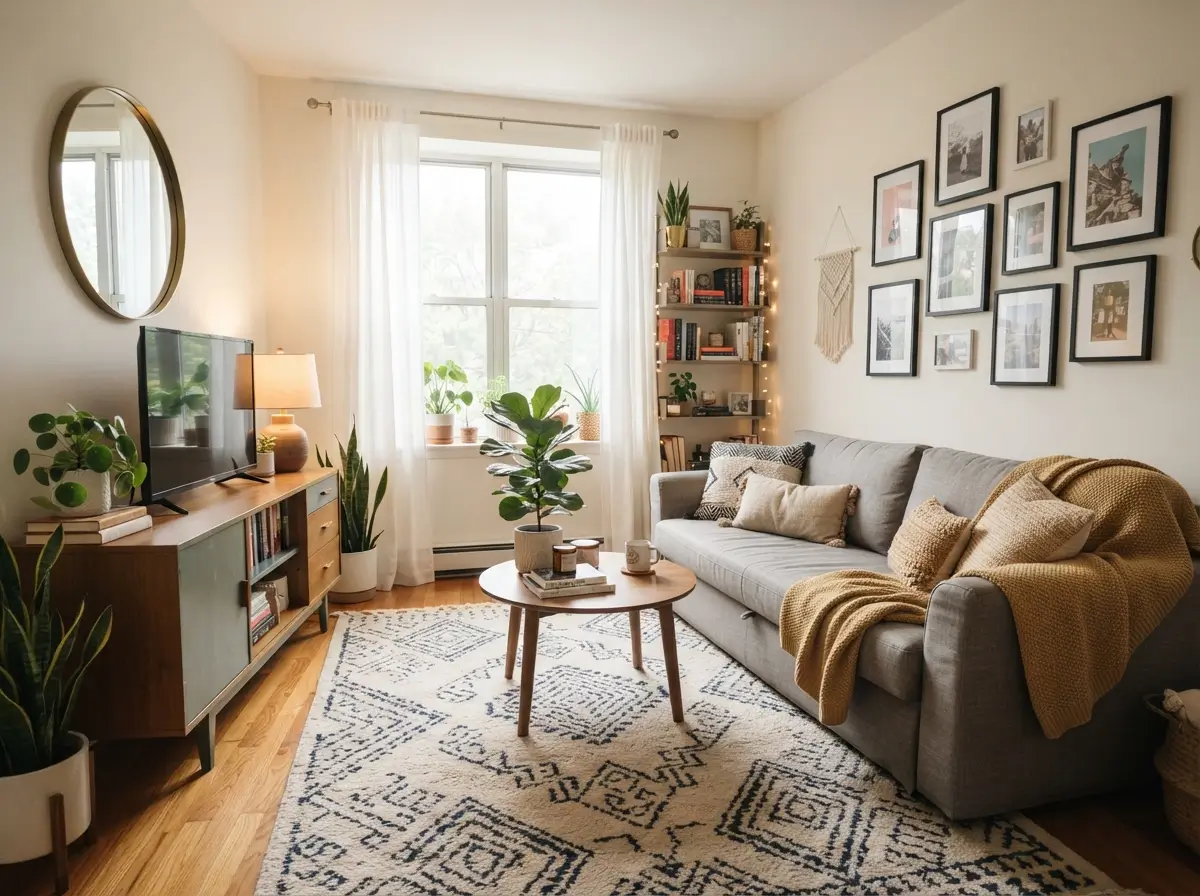

A living room makeover does not need a big budget, a contractor, or a full week of work. In many apartments, the biggest changes come from better layout, smarter lighting, cleaner surfaces, and a few thoughtful decor choices.
A good budget apartment living room makeover should make your space feel fresher, easier to use, and more comfortable. You do not need to replace every piece of furniture. You can work with what you already own, add a few low-cost items, and fix the details that make the room feel unfinished.
This guide is made for renters, beginners, and home decor lovers who want real results in one weekend. Each idea explains why it works, how to do it, and who it is best for.
How can you do a budget apartment living room makeover within one weekend?
You can refresh an apartment living room in one weekend by rearranging furniture, improving lighting, styling walls, using peel-and-stick upgrades, adding textiles, decluttering surfaces, and choosing affordable decor that works with your room size. Focus on changes that give high visual impact without permanent damage, such as new curtains, warm lamps, throw pillows, rugs, removable hooks, and better storage.
Start with a Fast Living Room Reset

Before you buy anything, reset the room. Remove small items from coffee tables, side tables, shelves, TV units, and window areas. Put everything in one place, then decide what should return.
This works because clutter hides the shape of the room. A small apartment living room can feel crowded even when the furniture is fine. Once you clear the surfaces, you can see what the room actually needs.
Start with three piles. Keep items you use often. Store items that belong somewhere else. Donate or discard things that no longer fit your style. Be honest with extra candles, random frames, old magazines, broken baskets, and decor pieces you keep only because they were gifts.
For example, if your coffee table has five objects, reduce it to three. Try one tray, one small plant, and one book. If your TV unit has loose wires, game controllers, receipts, and remotes, use a small basket or box to group them.
This tip is best for renters and beginners who feel overwhelmed. It costs nothing, but it gives you a clearer room before the weekend makeover begins.
A common mistake is cleaning around clutter instead of editing it. Do not style every surface just because it exists. In a small apartment, empty space is also part of the design.
Rearrange Furniture for Better Flow

A furniture layout change can make your apartment living room feel new without spending money. Move the sofa, angle a chair, shift the coffee table, or pull furniture slightly away from the wall.
This works because layout controls comfort. A living room may look messy because the walking path is blocked, the seating faces the wrong direction, or the rug does not connect the furniture.
Start by finding the main function of your room. Do you mostly watch TV, host friends, read, work, or relax after a long day? Arrange your main seating around that activity. In most apartments, the sofa should face the TV, window, or main conversation area.
Leave at least 24 to 30 inches for walking paths where possible. If your room is narrow, choose a layout that keeps one clear side open. A sofa against the longest wall often works well, but not always. Sometimes placing the sofa across from a window makes the space feel calmer.
For example, in a small rectangular apartment living room, place the sofa on the long wall, use a slim coffee table, and put a floor lamp in the corner. Add one accent chair only if it does not block the walkway.
This idea is best for people who like their furniture but feel the room does not work. It also helps renters who cannot paint or drill into walls.
A common mistake is pushing every piece against the walls. That can make the center feel empty and the edges feel crowded. Try pulling the sofa forward by a few inches and placing a narrow console, basket, or lamp behind it if space allows.
Use a Rug to Define the Seating Area

A rug can change the whole living room in one weekend. It adds warmth, softens noise, and makes the seating area feel more finished. You do not need an expensive rug to get the effect.
This works because apartments often have open layouts. A rug helps separate the living area from the dining corner, desk, or entryway. It also adds color and texture without touching the walls.
Choose the largest rug your budget allows. In a small living room, a rug that is too small can make the room feel smaller. A good rule is to place at least the front legs of the sofa and chairs on the rug. If that is not possible, make sure the rug sits close enough to the sofa so the seating area feels connected.
For colors, try beige, ivory, warm gray, taupe, muted blue, olive, or a soft pattern with two or three shades. These colors hide daily dust better than pure white and still keep the room bright.
For example, if you have a gray sofa, try a cream rug with thin charcoal lines. If you have a beige sofa, try a muted rust, tan, and ivory pattern. If your room feels flat, a low-pile patterned rug can add interest without making the space busy.
This tip is best for renters with plain flooring, cold tile, or older carpet. A rug can cover floor flaws without permanent changes.
A common mistake is buying a tiny rug because it is cheaper. Instead, look for sales, washable rugs, flatweave styles, or secondhand options. A simple 5×7 or 6×9 rug often makes more impact than several small decor items.
Change the Mood with Warm Lighting
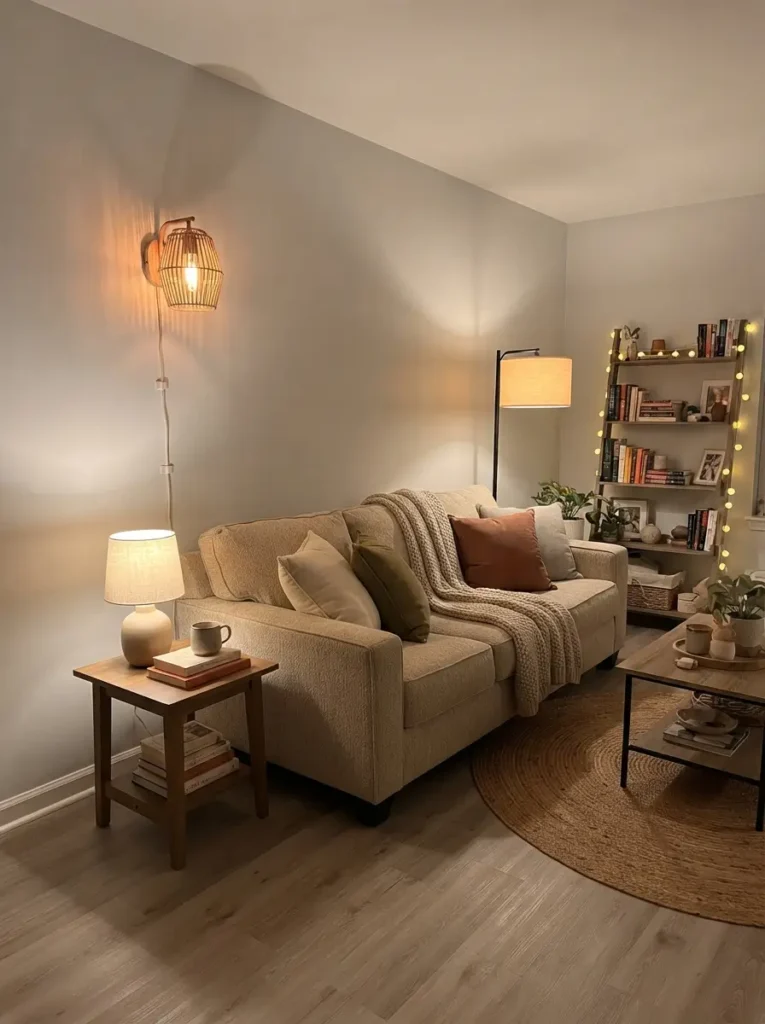
Lighting can make or break a budget apartment living room makeover. Many apartments have harsh ceiling lights that make the room feel flat. You can fix this quickly with lamps and warm bulbs.
This works because good lighting creates layers. Instead of relying on one bright overhead light, use two or three smaller light sources around the room. This makes the space feel softer and more comfortable in the evening.
Choose bulbs between 2700K and 3000K for a warm living room glow. Avoid cool white bulbs above 4000K unless you need task lighting for work. Warm light works especially well with beige, wood, cream, terracotta, olive, and soft gray decor.
Use a floor lamp beside the sofa, a small table lamp on a side table, or plug-in wall sconces if you want a renter-friendly wall light. A lamp with a fabric shade gives softer light than a bare bulb.
For example, place a slim black floor lamp in an empty corner, then add a warm white bulb. Put a small ceramic lamp on a side table near the sofa. If the room has no side table, use a wall-mounted plug-in sconce with adhesive cord clips.
This idea is best for apartments that feel cold at night. It is also useful for people who want a cozy room without buying large furniture.
A common mistake is using only decorative string lights. They can be charming, but they should not be your only light source. Mix practical lamps with softer accent lighting for better results.
Refresh the Sofa with Pillows and a Throw

Your sofa is usually the largest piece in the living room. If you cannot replace it, update it with pillows and a throw blanket. This is one of the fastest weekend changes.
This works because textiles change color, texture, and comfort at the same time. A tired sofa can look more intentional when the pillows match the room’s palette.
Choose two or three pillow colors, not six. For a calm budget apartment living room makeover, use a simple palette like cream, tan, and olive. For a warmer look, try rust, beige, and brown. For a cooler look, use soft blue, white, and gray.
Mix textures instead of adding too many patterns. Try one linen pillow, one boucle or woven pillow, and one simple patterned pillow. Add a throw blanket over one sofa arm or across the back. Keep it relaxed, not overly folded.
For example, a dark gray sofa can look softer with ivory pillows, a tan knit throw, and one black-and-cream patterned cushion. A beige sofa can look richer with olive green pillows and a rust-colored throw.
This tip is best for anyone with an older sofa, a plain sofa, or a rental living room that needs personality. It is also budget-friendly because pillow covers cost less than new pillows.
A common mistake is buying pillows that are too small. For most sofas, 18×18 or 20×20 inch covers look better than tiny cushions. Use inserts that are slightly larger than the cover for a fuller look.
Create a Simple Feature Wall without Paint

A feature wall can give your apartment living room a strong focal point. You do not need paint, nails, or expensive wallpaper. Use removable options that work for rentals.
This works because a focal point gives the eye somewhere to rest. Without one, the room may feel scattered. In many apartments, the TV wall, sofa wall, or wall behind a reading chair is the best place to create interest.
Try peel-and-stick wallpaper, removable wall decals, framed prints, fabric panels, or a large tapestry. If you prefer a clean style, use two or three large frames instead of many small pieces. Bigger art often looks calmer in a small room.
For example, behind a beige sofa, use three black frames with neutral abstract prints. Behind a TV, try a peel-and-stick wood slat effect or a narrow picture ledge if your lease allows small holes. For a softer look, hang a fabric wall hanging with removable hooks.
This idea is best for renters who cannot paint but want the room to feel styled. It also works for beginners because you can finish it in a few hours.
A common mistake is covering every wall. One feature wall is enough. Keep the other walls quieter so the room does not feel crowded.
Upgrade Curtains for Height and Softness

Curtains can make a living room look taller, softer, and more complete. Many apartments come with basic blinds, but adding curtains can change the room quickly.
This works because fabric softens hard edges. It also draws the eye upward when you hang the rod higher than the window frame. This makes the ceiling feel taller.
Hang curtains close to the ceiling if possible. Extend the rod 6 to 10 inches wider than the window on each side. This lets the curtains sit beside the window instead of covering natural light.
Choose light-filtering curtains for a bright room. Linen-look curtains in ivory, warm white, oatmeal, or light gray work with many styles. If privacy is a concern, layer sheer curtains with heavier panels or choose thicker fabric.
For example, if your living room has a small window, hang floor-length ivory curtains from a black or brass tension rod. If drilling is not allowed, use a tension rod inside the window frame or no-drill curtain brackets.
This tip is best for renters with dull blinds, short windows, or rooms that feel unfinished. Curtains also help absorb sound, which matters in apartments with echo.
A common mistake is buying curtains that stop halfway down the wall. Floor-length curtains usually look more polished. Make sure they lightly touch the floor or hover just above it.
Style the Coffee Table with Useful Decor
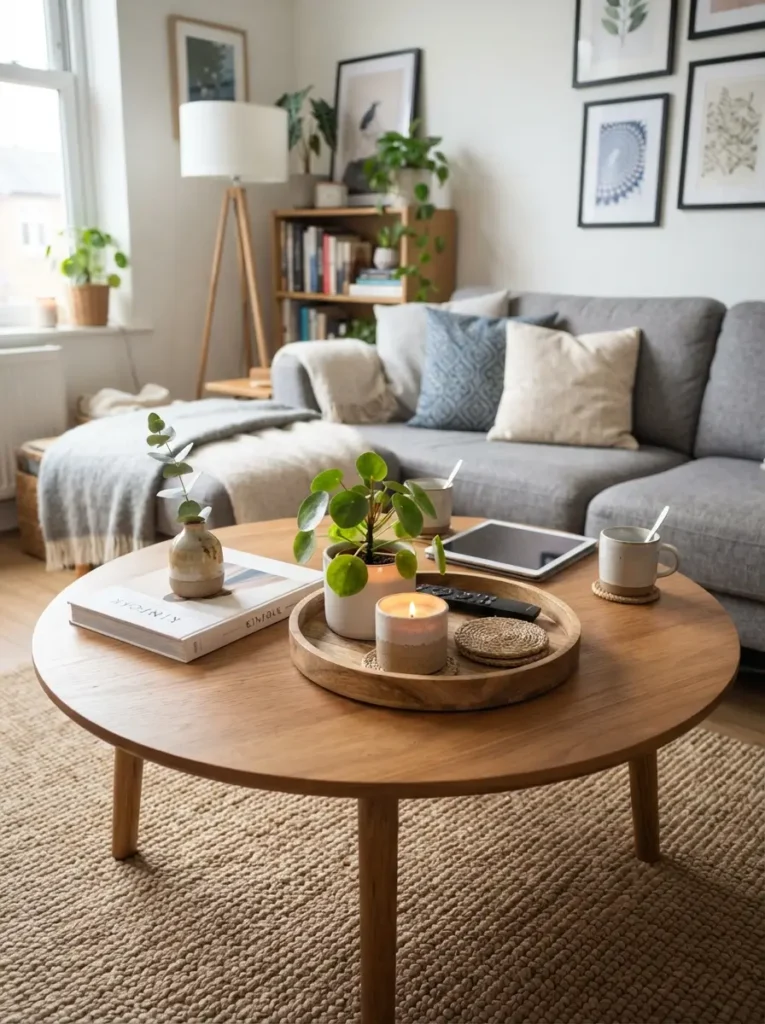
A coffee table should look good, but it also needs to work for daily life. Keep the styling simple, especially in a small apartment living room.
This works because the coffee table sits in the center of the room. When it looks messy, the whole living room looks messy. When it looks organized, the room feels more controlled.
Use the rule of three. Place one tray, one vertical item, and one soft or natural item. A tray can hold remotes and a candle. A vertical item could be a small vase or lamp. A natural item could be a plant, wooden bowl, or woven coaster set.
For example, use a round wooden tray with a small plant, two coasters, and a candle. Add one book underneath if the table needs height. If you have kids or pets, skip glass pieces and use soft baskets or wood.
This idea is best for beginners because it teaches balance without needing many decor items. It is also good for small spaces where every surface must stay useful.
A common mistake is copying large coffee table styling from big homes. Apartment coffee tables need breathing room. Leave space for drinks, snacks, laptops, or daily use.
Add Storage That Looks Like Decor
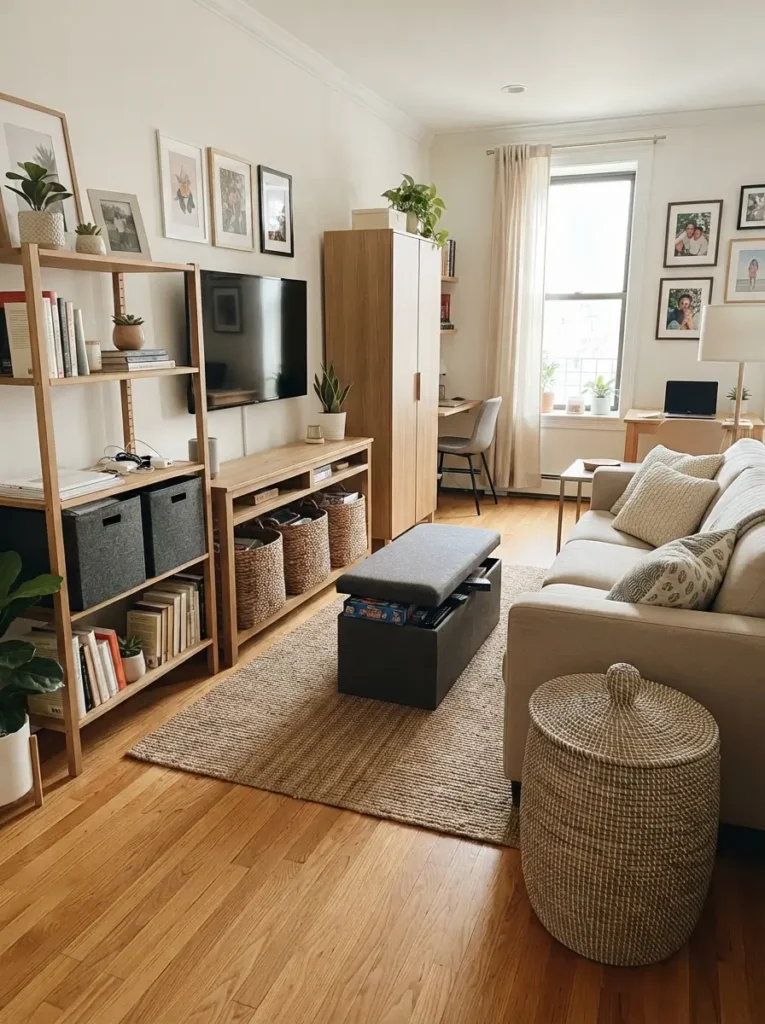
A budget apartment living room makeover should solve storage problems, not just add pretty things. Choose storage that blends with your room style.
This works because visible clutter makes a small room feel busy. Closed or semi-closed storage helps the room look calm without forcing you to own fewer practical items.
Use baskets under a console, lidded boxes on shelves, storage ottomans, or a slim cabinet near the sofa. Woven baskets work well with warm neutral rooms. Black metal baskets suit modern spaces. Fabric bins work inside cube shelves.
For example, place a lidded basket beside the sofa for blankets. Use a storage ottoman instead of a regular coffee table if you need space for games, chargers, or extra pillows. Add two matching boxes to an open shelf for papers and cables.
This tip is best for renters, families, students, and anyone with a living room that also works as an office, dining space, or guest area.
A common mistake is buying open shelving before planning what will go on it. Open shelves can create more visual clutter. Mix closed storage with a few open decorative items for balance.
Bring in Plants or Realistic Faux Greenery

Plants add life to an apartment living room, but they should match your light level and routine. You do not need a jungle to make the room feel fresh.
This works because greenery adds shape, color, and softness. It breaks up straight lines from sofas, TV stands, shelves, and windows. Even one plant can change an empty corner.
Choose low-maintenance plants if you are a beginner. Snake plants, pothos, ZZ plants, and peace lilies are common choices for indoor spaces. Check your room’s light before buying. If your living room has low light, avoid plants that need strong sun.
For example, put a snake plant in a simple white or terracotta pot beside the TV unit. Hang a pothos near a window with a removable ceiling hook only if it is safe and allowed. Place a small plant on a side table to soften a dark corner.
If you do not want plant care, use realistic faux greenery. Choose fewer, better-looking faux plants instead of many shiny plastic ones. Matte leaves look more natural than glossy ones.
This idea is best for apartments with plain corners, neutral furniture, or rooms that feel too hard and boxy.
A common mistake is placing plants where they block walkways. Keep floor plants in corners, beside cabinets, or near windows. Do not crowd the sofa area.
Refresh the TV Wall with Better Balance
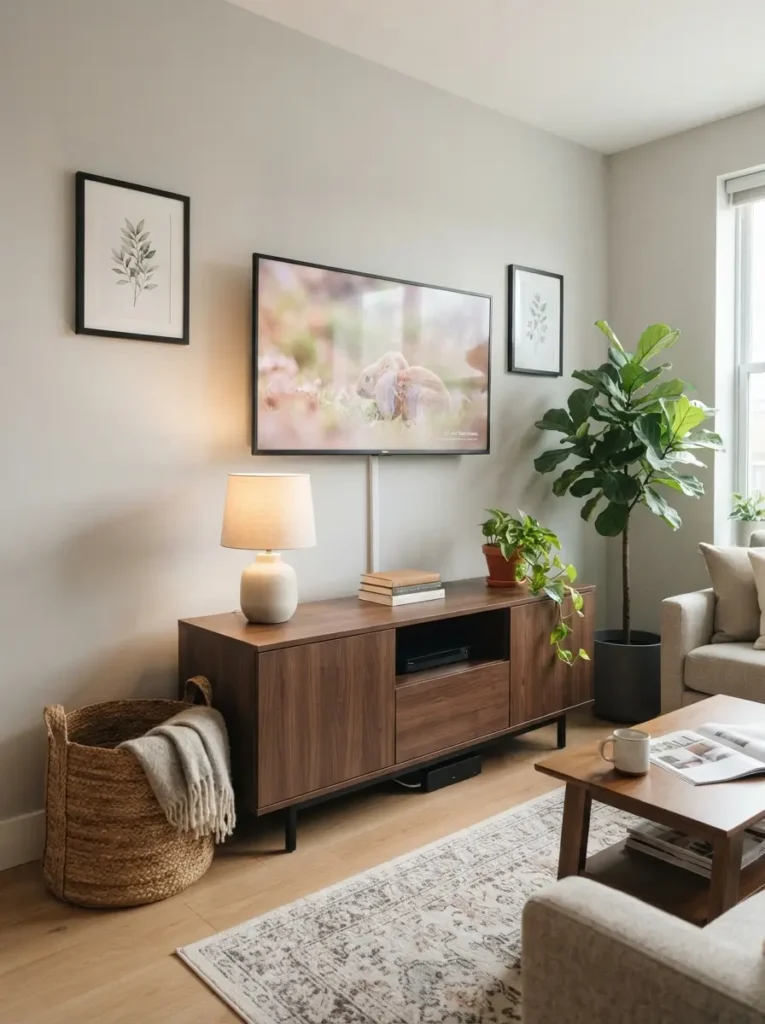
The TV wall often becomes the least attractive part of an apartment living room. With a few budget changes, it can look cleaner and more intentional.
This works because the TV is a strong black rectangle. If the area around it feels empty, messy, or uneven, the whole room can feel unfinished. Balance makes the TV look like part of the room instead of a random object.
Start by hiding cords. Use adhesive cord covers, cable clips, or a cord management box. Keep the TV stand surface simple. Add one lamp, one stack of books, or one plant. Do not line up many small items under the screen.
If your TV stand is too small, the wall may look top-heavy. A media unit should usually be wider than the TV. If you cannot replace it, place baskets or small stools beside it to visually extend the width.
For example, place a woven basket on one side of the TV stand and a tall plant on the other. Add a warm lamp to soften the screen at night. Use two simple frames on the wall if the TV is not mounted.
This tip is best for renters and small apartments where the TV is the main focal point.
A common mistake is decorating too close to the TV screen. Keep decor low or to the sides so it does not distract while watching.
Use Peel-and-Stick Details for Quick Upgrades
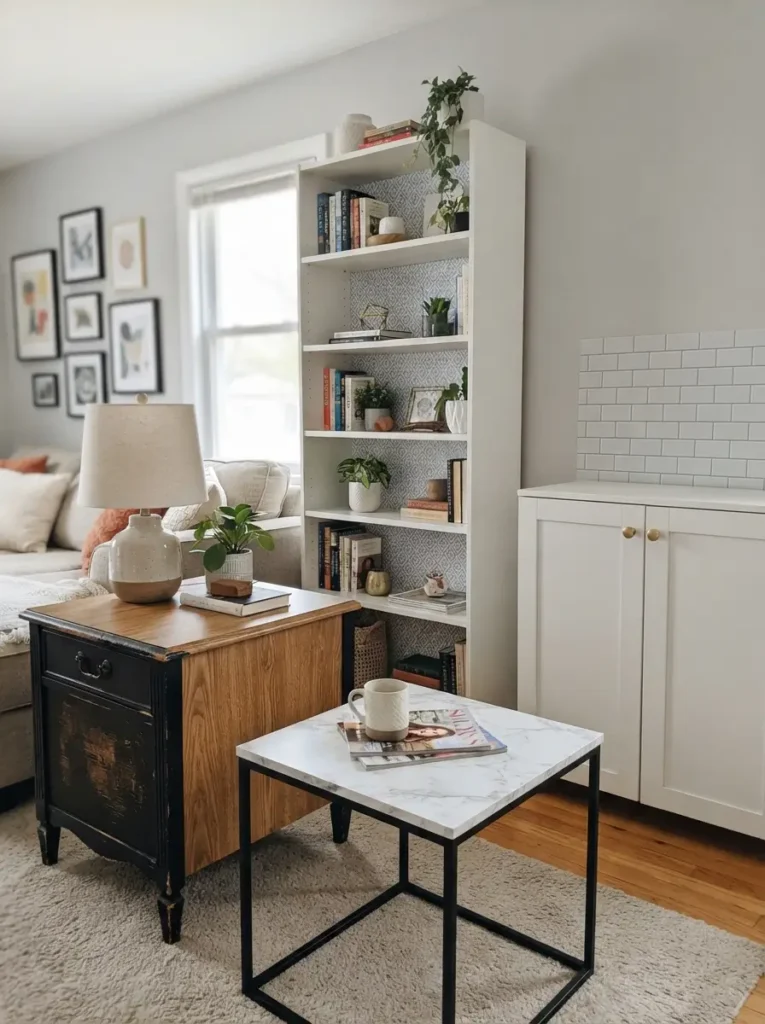
Peel-and-stick products can update a living room quickly when used carefully. They are ideal for renters because many options are removable.
This works because small surfaces can have a big effect. You can refresh a tired tabletop, old shelf, plain cabinet, or dull wall section without replacing furniture.
Try peel-and-stick wood grain film on a worn side table, marble-look contact paper on a small coffee table, or removable tile stickers around a faux fireplace area. Use peel-and-stick wallpaper on the back of a bookshelf for subtle pattern.
For example, cover a scratched black side table with warm oak contact paper. Add brass knobs to a small cabinet if the hardware can be changed. Place removable wallpaper behind open shelves to make simple white furniture look custom.
This idea is best for renters, students, and anyone working with secondhand furniture. It helps you stretch your budget while still changing the room.
A common mistake is using peel-and-stick products on dirty or uneven surfaces. Clean the surface first, measure carefully, and apply slowly. Cheap contact paper can bubble, so test a small area before covering a large piece.
Create a Reading Corner in an Empty Spot

An empty corner can become one of the best parts of your living room. You only need a chair, light source, and small surface.
This works because a small zone gives the room purpose. A reading corner also fills awkward space without adding bulky furniture. It makes the apartment feel more personal and useful.
Choose a chair that fits the room scale. In a small apartment, avoid oversized recliners unless they are your main seat. Try a compact accent chair, slipper chair, or armless chair. Add a small side table or stool for a drink.
Lighting matters here. Place a floor lamp behind the chair or a table lamp nearby. Use a warm bulb around 2700K for relaxed evening reading. Add a small pillow or throw for comfort.
For example, place a beige accent chair in a corner near the window. Add a black floor lamp, a small round wood table, and one olive pillow. Put a basket underneath for books or magazines.
This tip is best for people who want a cozy function without renovating. It also works in studio apartments where zones help separate living, sleeping, and working.
A common mistake is forcing a reading corner into a tight walkway. The chair should not block doors, balcony access, or the path to the sofa.
Update Small Hardware and Finishes

Small details can make budget furniture look more polished. Changing hardware, legs, frames, and finishes can refresh the room in one weekend.
This works because the eye notices repeated finishes. If your room has random silver, black, gold, and plastic details everywhere, it can feel mismatched. Repeating one or two finishes creates order.
Choose a finish direction. Black works well for modern apartments. Brass adds warmth to beige, cream, olive, and wood tones. Brushed nickel suits cool gray and blue rooms. Wood adds natural warmth.
For example, replace basic cabinet knobs with simple brass pulls. Add black picture frames to connect with a black floor lamp. Use matching wooden trays and baskets to warm up a white room.
You can also upgrade furniture legs if the piece allows it. A simple sofa or cabinet can look better with tapered wooden legs or slim black metal legs. Check weight limits and safety before changing anything.
This idea is best for people with budget furniture, flat-pack pieces, or mixed secondhand items. It helps the room feel more connected without buying all-new furniture.
A common mistake is changing every detail at once. Pick one finish and repeat it three to five times. Too many finishes make the room feel busy.
Add Personal Decor with a Clear Limit

Personal decor makes a living room feel like home. The key is to edit it so the room feels warm, not crowded.
This works because meaningful items create connection. A budget apartment living room makeover should not look like a showroom. It should reflect your life, hobbies, memories, and daily comfort.
Choose a small number of personal pieces. Use framed photos, travel souvenirs, handmade items, favorite books, or art prints. Group them with intention instead of spreading them across every surface.
For example, create one shelf with two framed photos, one small plant, and three favorite books. Use matching frames for family photos so they feel connected. Place a meaningful ceramic bowl on the coffee table for keys or small items.
This tip is best for anyone who wants the room to feel less plain without spending much. It is also useful for renters who move often because personal items travel easily.
A common mistake is displaying everything at once. Rotate decor seasonally instead. Keep extra pieces in a storage box and switch them when the room starts to feel stale.
Common Mistakes to Avoid
One common mistake is buying decor before fixing the layout. A new pillow or lamp cannot solve a blocked walkway. Move furniture first, then decide what the room needs.
Another mistake is choosing too many colors. Small apartment living rooms look calmer with a limited palette. Pick one main neutral, one secondary color, and one accent color. For example, use warm white walls, beige textiles, and olive accents.
Do not ignore lighting temperature. Cool bulbs can make a living room feel harsh, especially at night. Warm bulbs between 2700K and 3000K usually create a more comfortable living space.
Avoid rugs that float in the middle of the room. If the rug does not connect to the sofa or chairs, it can look accidental. Try to place at least the front legs of major seating pieces on the rug.
Do not fill every corner. Empty space helps small rooms breathe. A corner can hold a plant, lamp, or chair, but it does not need all three.
Another mistake is copying oversized decor from large homes. Big sectionals, huge coffee tables, and heavy curtains may not suit an apartment. Scale matters more than trends.
Avoid buying storage that does not match your habits. If you always use blankets on the sofa, place a basket nearby. If you work in the living room, create a box for chargers and notebooks. Storage should make daily cleanup easier.
Do not use temporary products carelessly. Peel-and-stick wallpaper, hooks, and contact paper can damage weak paint if removed too quickly. Always test a small area and follow removal instructions.
Budget-Friendly Tips
Set a small makeover budget before the weekend starts. Divide it into categories like lighting, textiles, storage, and wall decor. This keeps you from spending too much on small items that do not change the room.
Shop your home first. Move a lamp from the bedroom, use books as decor, place a tray on the coffee table, or move a plant into the living room. Many rooms already have pieces that can work better in a new spot.
Use pillow covers instead of buying new pillows. Covers cost less, take less storage space, and let you change the room seasonally. Keep your inserts and swap covers when you want a new look.
Check secondhand stores for frames, lamps, side tables, baskets, and small cabinets. Focus on shape and size. Paint, contact paper, or new hardware can fix many style problems.
Spend more on items that change the room most. A good rug, warm lighting, and curtains usually make a bigger difference than many small decorative objects.
Use removable hooks and no-drill solutions where possible. This protects your deposit and makes the makeover easier to reverse when you move.
Look for multipurpose furniture. A storage ottoman can work as a coffee table, footrest, and hidden storage. A stool can work as a side table or extra seat.
Keep receipts until the room is finished. Sometimes a decor item looks good in the store but wrong at home. Returning one wrong item can free money for something better.
Budget Apartment Living Room Makeover Tips
Plan your makeover in stages so the weekend feels manageable. On Friday night, declutter and choose your color palette. On Saturday, rearrange furniture, clean the room, and shop for missing items. On Sunday, hang curtains, style surfaces, add lighting, and finish small details.
Take photos before you start. Photos help you see what feels off. You may notice uneven furniture, too many dark items, poor lighting, or cluttered corners more clearly in a picture.
Choose a simple color palette. For a warm neutral room, use ivory, beige, tan, and soft brown. For a fresh small-space look, use white, light gray, pale wood, and muted blue. For a cozy but grounded room, try cream, olive, black, and warm wood.
Repeat materials. If you use one woven basket, add another woven texture through a tray or lampshade. If you use black frames, repeat black in a lamp or curtain rod. Repetition makes budget decor look more planned.
Measure before buying. Measure your window height, sofa width, wall space, rug area, and walkway. A low-cost item becomes wasted money if it does not fit.
Use vertical space carefully. Tall curtains, floor lamps, slim bookcases, and wall art can make a small room feel taller. Avoid heavy tall furniture that blocks light or makes the room feel narrow.
Keep daily life in mind. A living room should look good, but it should also support real habits. Leave room for snacks, remotes, laptops, pets, kids, guests, and quiet evenings.
Edit at the end. After styling, remove one or two items from each surface. This final edit often makes the room look more expensive and calm.
FAQ
How much should I spend on a budget apartment living room makeover?
You can make noticeable changes with a small budget if you focus on high-impact items. Start with free changes like decluttering and rearranging furniture. Then spend on lighting, pillow covers, curtains, a rug, or storage. Even a modest budget works better when you avoid random small decor purchases.
What is the fastest way to make an apartment living room look better?
The fastest way is to clear clutter, fix the layout, and improve lighting. These changes can make the room feel cleaner and more comfortable in a few hours. After that, add simple textiles like pillows, a throw, and curtains.
Can I do a living room makeover without painting?
Yes, you can refresh the room without paint. Use removable wallpaper, framed art, curtains, rugs, warm lamps, peel-and-stick furniture film, and better storage. These renter-friendly changes add color and texture without permanent wall changes.
What colors work best for a small apartment living room?
Light neutrals often work well because they reflect light and make the room feel open. Try warm white, cream, beige, taupe, light gray, or pale wood tones. Add one accent color like olive, rust, navy, soft blue, or black for contrast.
How do I make a cheap sofa look better?
Use larger pillow covers, a textured throw, and better surrounding decor. Place a lamp nearby, add a rug under the seating area, and style the coffee table simply. These details help the sofa feel connected to the room instead of standing alone.
What should I avoid during a weekend makeover?
Avoid buying too much before planning. Do not choose a rug that is too small, use harsh bulbs, overcrowd shelves, or block walkways with extra furniture. Focus on comfort, scale, storage, and lighting before adding decorative pieces.
Conclusion
A budget apartment living room makeover works best when you focus on smart changes, not expensive ones. Start with the room’s layout, lighting, storage, and main surfaces. Then add color, softness, and personal details in a controlled way.
You can finish many of these ideas within one weekend. Rearrange the sofa, add warm lamps, style the coffee table, hang better curtains, refresh pillows, create a small reading corner, or improve the TV wall. Each change should make the room easier to live in, not just nicer to photograph.
The best apartment living rooms feel comfortable, practical, and personal. When you choose pieces that fit your space, match your habits, and respect your rental limits, even a small makeover can make your home feel fresh again.