
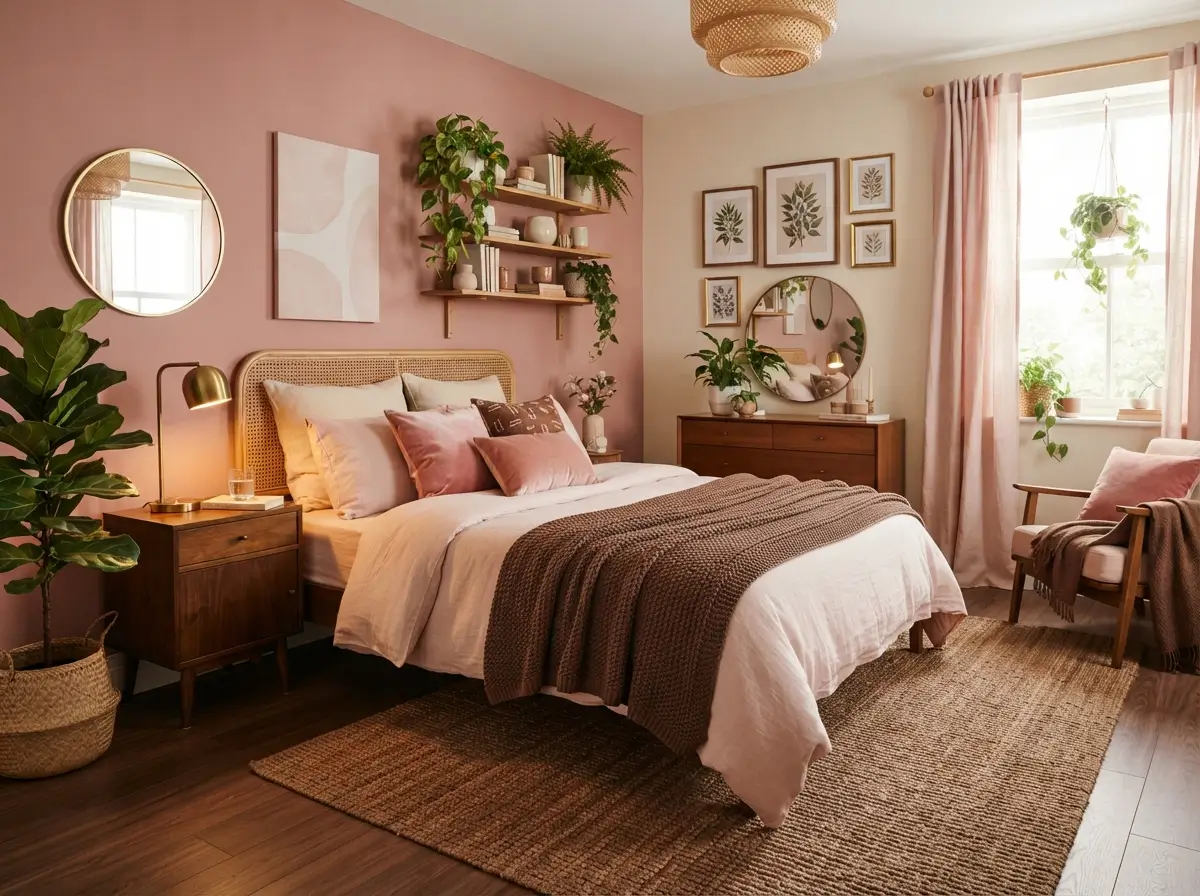

Pink and brown can create a bedroom that feels warm, personal, and grown-up without relying on overly sweet decorations. Pink brings softness, while brown adds depth and visual weight. Together, they work especially well when you balance pale blush shades with earthy browns, warm wood, cream fabrics, and gentle lighting.
Good pink and brown bedroom decor starts with more than choosing two colors. Room size, natural light, furniture scale, bedding texture, wall color, and the amount of pattern all affect the final result. A small bedroom may need lighter pinks and medium wood tones, while a larger room can handle chocolate brown furniture or a darker accent wall.
Romantic style also does not mean filling every surface with hearts, roses, or matching accessories. Thoughtful proportions can create a softer atmosphere while keeping the room practical for everyday life. Below are 20 ideas you can mix and match, including renter-friendly changes, small-space solutions, and inexpensive ways to refresh an existing bedroom.
What Makes Pink and Brown Work Together in a Bedroom?
Pink and brown work because the colors offer different visual qualities. Pink can feel light and delicate, while brown has a grounded, earthy character. Pairing dusty rose with walnut, blush with taupe, or muted pink with chocolate brown gives the room contrast without creating a harsh color clash.
Color temperature matters too. Warm pinks generally pair more naturally with warm browns than with gray-based brown shades. For example, dusty rose bedding can look beautiful beside walnut furniture and cream curtains. Cooler blush pink can work with taupe or mushroom brown when the room already contains cooler flooring or gray accents.
Beginners should start with one dominant color, one supporting color, and one neutral. A simple combination could use cream walls, blush bedding, walnut furniture, and small touches of deeper brown. That approach gives you room to add personality without making every item compete for attention.
Start With Blush Bedding and Walnut Furniture
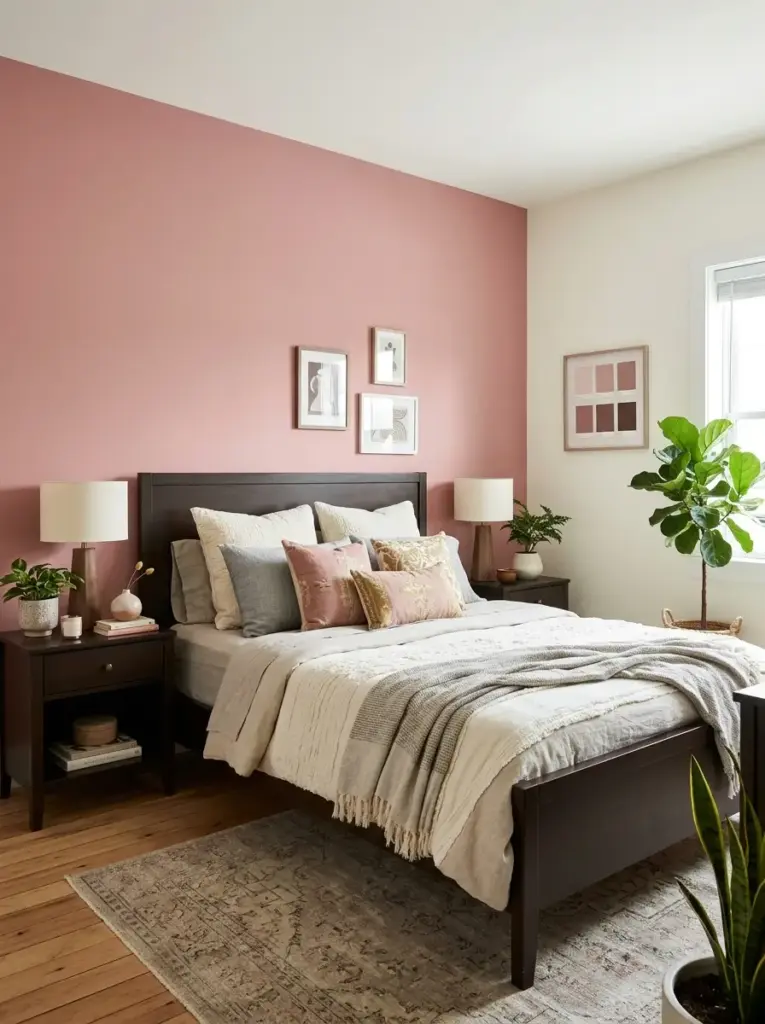
Blush pink bedding provides an easy starting point because it introduces color without requiring permanent changes. Pair a blush duvet or quilt with walnut nightstands, a medium-brown bed frame, or a wooden dresser. Cream sheets can sit between the pink and brown elements and stop the combination from feeling visually heavy.
Walnut works particularly well because its warm undertones support pink without making the room look childish. Choose simple furniture with straight lines if you prefer a modern bedroom, or look for turned legs and curved details if you enjoy traditional interiors.
People decorating a first bedroom or updating existing furniture can use this approach with minimal spending. Keep your current wooden pieces if their finish works with the palette. New bedding may be enough to shift the room toward pink and brown without replacing expensive furniture.
Use Dusty Rose Instead of Bright Pink
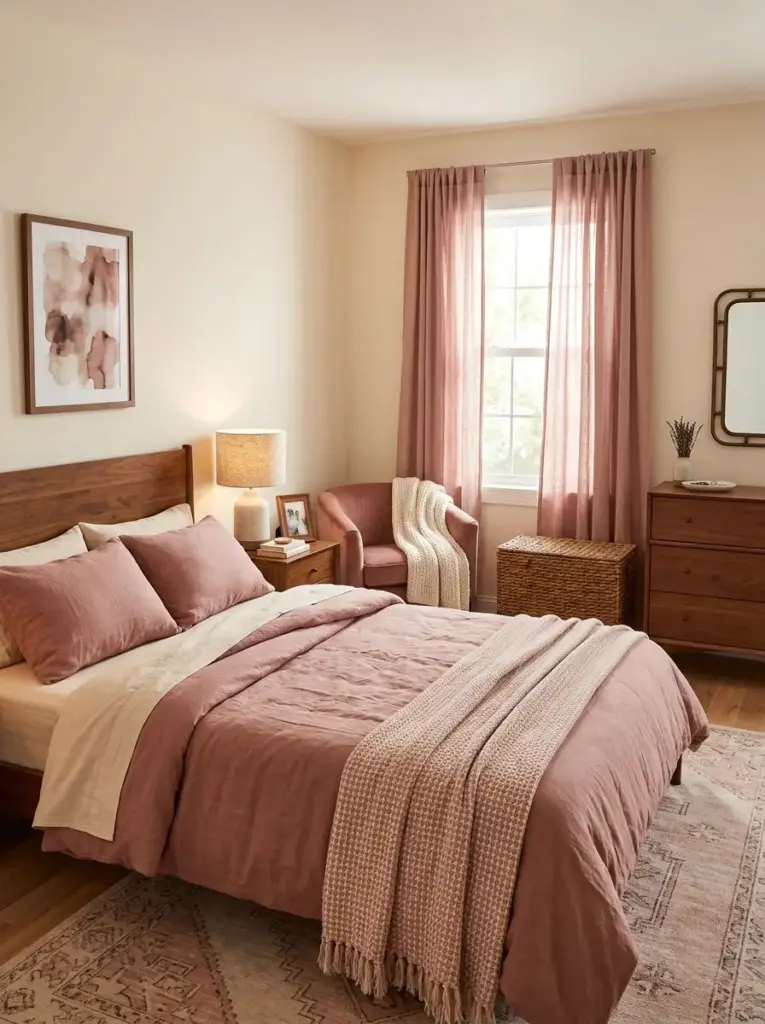
Bright pink can quickly dominate a bedroom, especially when the room receives strong daylight. Dusty rose, muted blush, antique pink, and mauve are easier to combine with brown because their lower saturation gives the eye somewhere to rest.
Try dusty rose on the duvet, curtains, or one upholstered chair rather than putting it on every surface. Brown can then appear through wood, baskets, picture frames, lamps, or a headboard.
Small bedrooms benefit from this strategy because strong colors can make limited walls and furniture feel more crowded. Someone who wants a romantic room without a distinctly youthful appearance may also prefer dusty rose over hot pink.
For a useful starting palette, try blush pink around #D8A0A8, warm cream around #F4E9DC, and medium walnut brown around #6B4632. Exact paint shades vary by lighting, so test samples during both daytime and evening.
Create Contrast With Chocolate Brown Accents
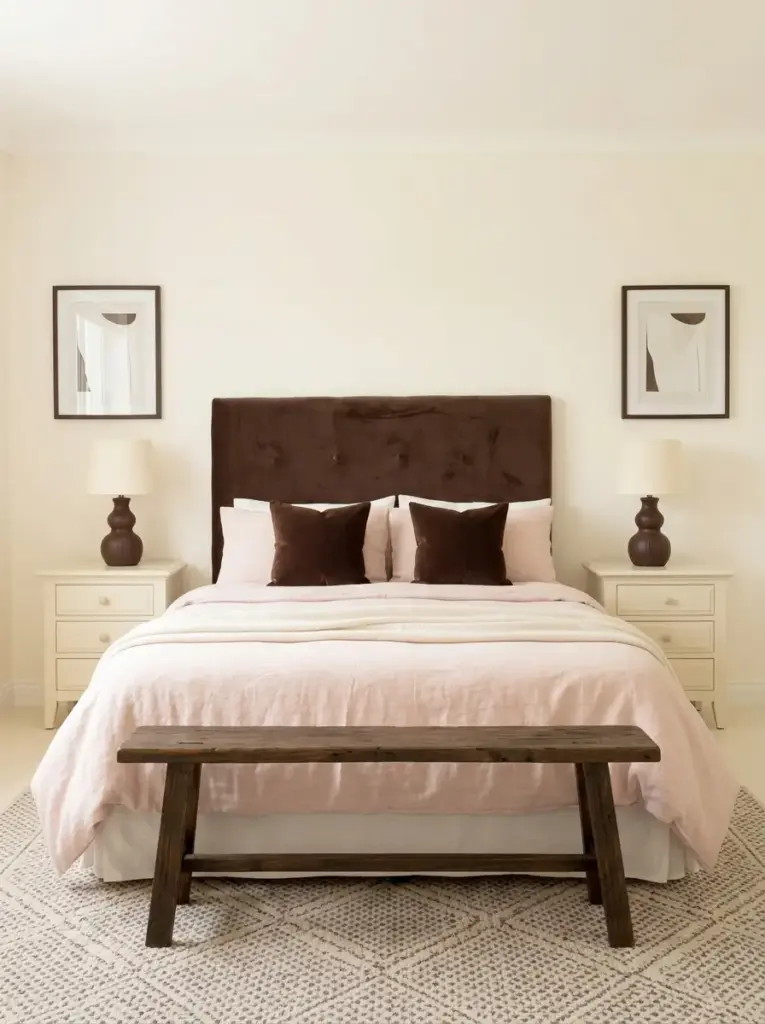
Chocolate brown adds depth when the room contains mostly pale pink and cream. Rather than painting every wall dark brown, introduce the shade through smaller elements such as throw pillows, lampshades, picture frames, rugs, or a wooden bench.
A chocolate-brown upholstered headboard can also become a strong focal point behind blush bedding. Keep surrounding walls light so the darker feature remains intentional rather than making the room feel smaller.
Couples may particularly like this approach because it creates a balanced color scheme instead of making pink the obvious dominant shade. Brown gives the room a more mature foundation while pink keeps the overall palette soft.
Furniture placement matters here. Avoid putting several large brown pieces on one side of a small room. Spread darker elements around the space so the visual weight feels balanced.
Layer Pink Shades Instead of Using One Pink
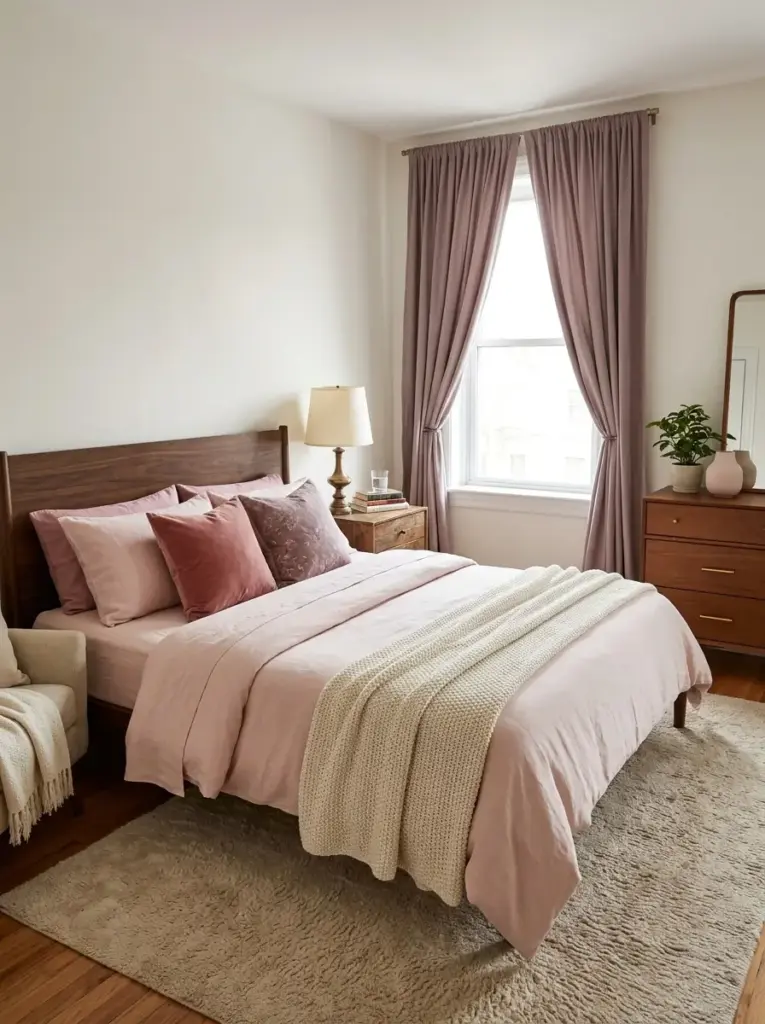
Using several related pink shades can make the room feel more collected. Try pale blush sheets, dusty rose pillows, muted mauve curtains, and a slightly deeper rose accent. Brown furniture can then provide the grounding color.
Keep the number of strong shades limited. Three pink variations are usually enough for a beginner-friendly scheme. Add cream, beige, or warm white as the bridge between colors.
Layering also helps when you already own mismatched pieces. A pink pillow from one collection does not need to perfectly match the bedding. Similar undertones can make different items look intentional.
Renters can use removable textiles to create this layered palette without touching the walls. Pillow covers, blankets, bedding, and curtains are especially useful because they can move with you later.
Add Warm Lighting for a Softer Bedroom
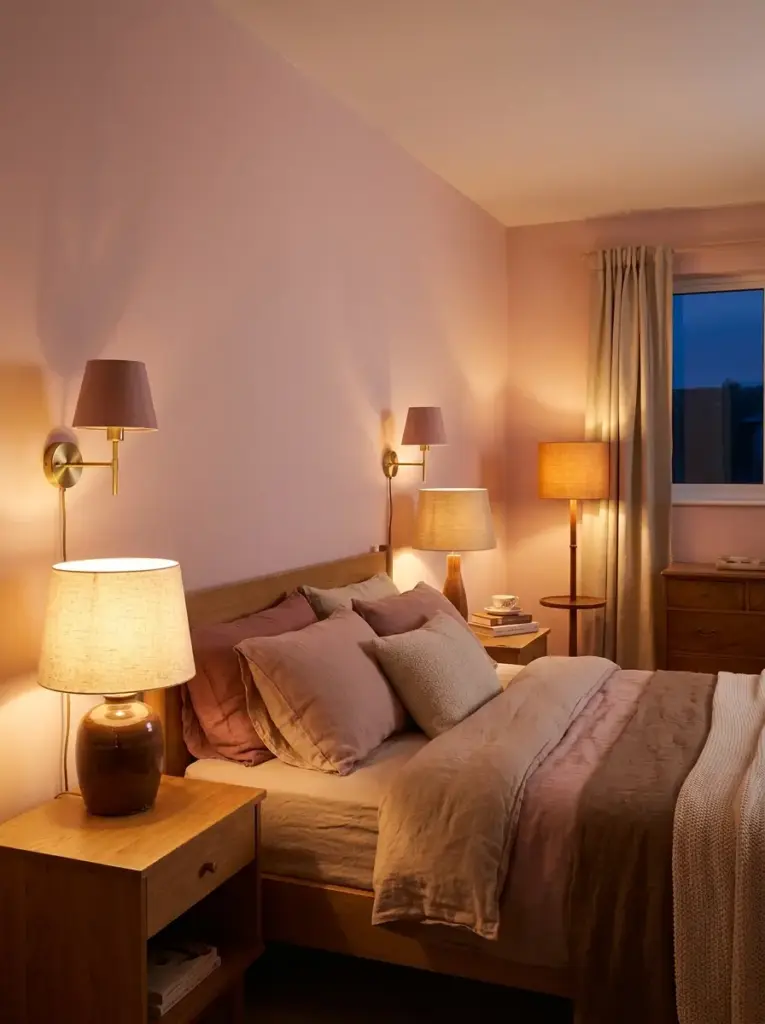
Lighting can completely change how pink and brown appear. For a bedroom, bulbs around 2700K to 3000K generally create a warm atmosphere that complements blush, rose, beige, and wood tones.
Avoid relying on one bright ceiling fixture. Add a pair of bedside lamps, a small floor lamp, or plug-in wall sconces where practical. Layered lighting lets you choose brighter illumination when dressing and softer light when relaxing.
Fabric lampshades can soften the light further. Cream, beige, or muted pink shades usually blend easily with the palette. Brown ceramic or wooden lamp bases can reinforce the color scheme without adding another major pattern.
People in small bedrooms can benefit from wall-mounted or plug-in lighting because it keeps bedside surfaces available for books and everyday items. Renters should check their lease before installing hardwired fixtures.
Choose Cream as the Connecting Neutral
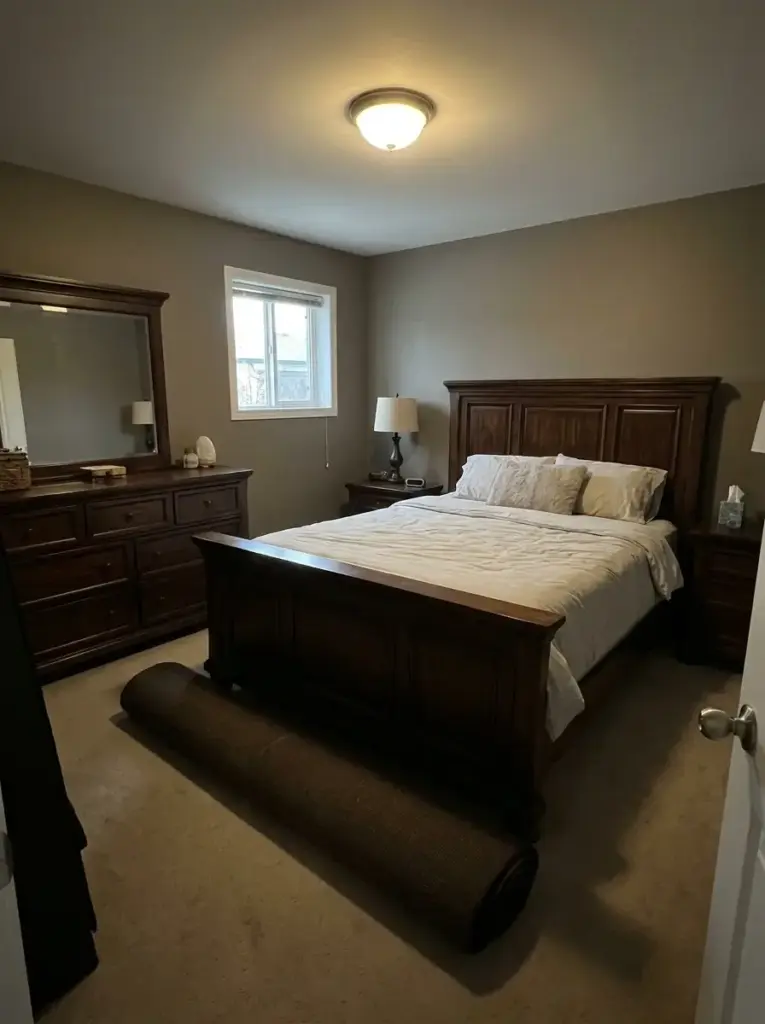
Cream can prevent pink and brown from becoming too heavy. Use it for walls, sheets, curtains, rugs, or upholstered furniture when the room needs more visual breathing space.
Warm cream generally works better with warm brown than stark blue-white. If your brown furniture has golden or reddish undertones, a warm neutral will help everything look more coordinated.
Try cream walls with a brown bed, blush duvet, and medium-brown rug. For a stronger color combination, use cream bedding with a dusty pink throw and brown cushions.
People working with limited natural light should be careful with beige and cream shades that become muddy under weak bulbs. Sample paint near the largest window and check it after sunset under your bedroom lighting before committing.
Mix Wood Tones Without Making the Room Chaotic
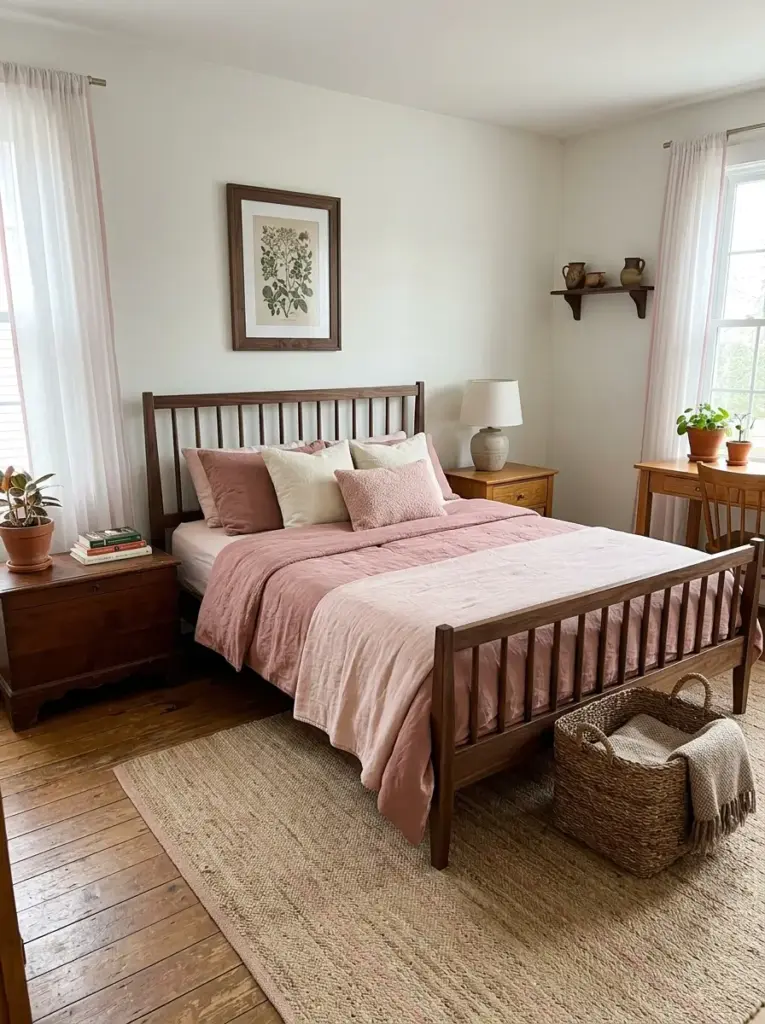
Brown does not need to come from one furniture collection. Walnut, oak, chestnut, and medium brown finishes can coexist when you repeat each tone at least twice.
For example, use a walnut bed, medium-oak side table, and brown woven basket. Add a small wooden frame that relates to one of those finishes. Repetition creates a connection even when the pieces are not identical.
Avoid buying an entire matching bedroom set simply because you think every brown needs to be the same. Mixed furniture often creates more character and can save money when you reuse pieces you already own.
People decorating rented apartments or inherited bedrooms will find this particularly useful. Instead of replacing furniture, work with existing wood finishes and introduce pink through soft furnishings.
Use a Curved Headboard for Romantic Character
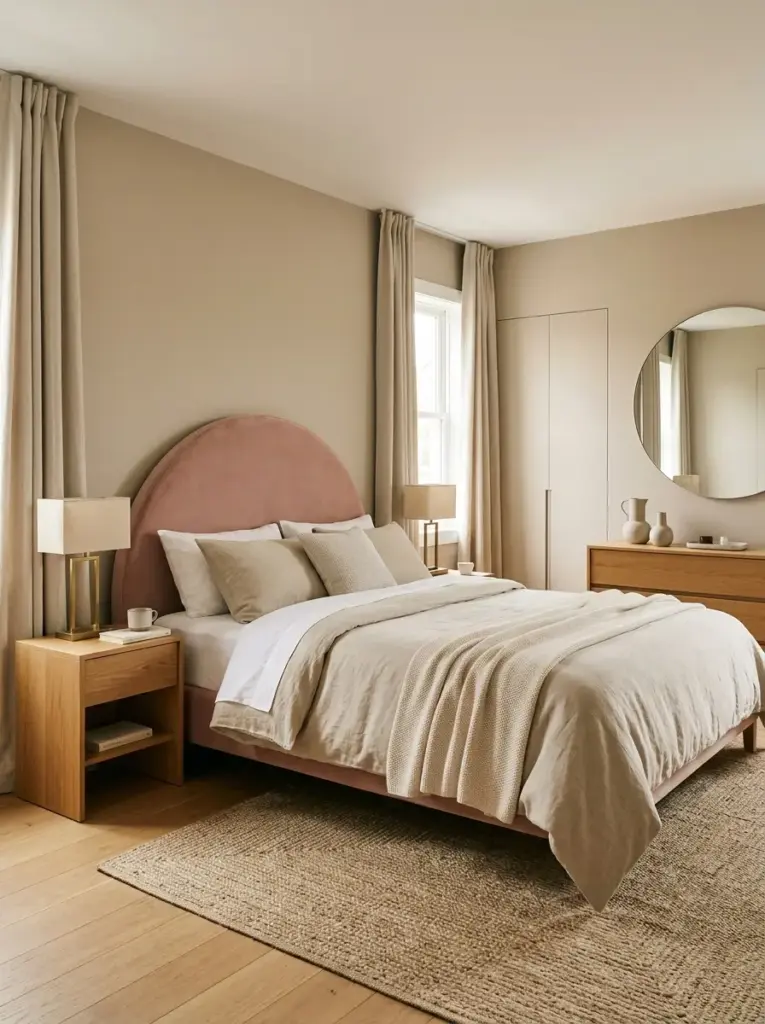
Curved furniture can soften a bedroom filled with rectangular furniture. A rounded upholstered headboard in dusty pink, beige, or warm brown can become a focal point without needing wall decoration.
Choose a headboard that fits the bed width properly. In a narrow room, avoid oversized designs that extend far beyond the mattress because they can reduce walking space and make the wall feel crowded.
A simple curved headboard can also be paired with straight nightstands to create contrast. Add one rounded mirror or curved lamp elsewhere in the room so the shape appears more than once.
People who want romantic character without floral patterns may prefer this idea. The shape itself creates softness while keeping the overall design simple.
Bring in Floral Patterns Carefully
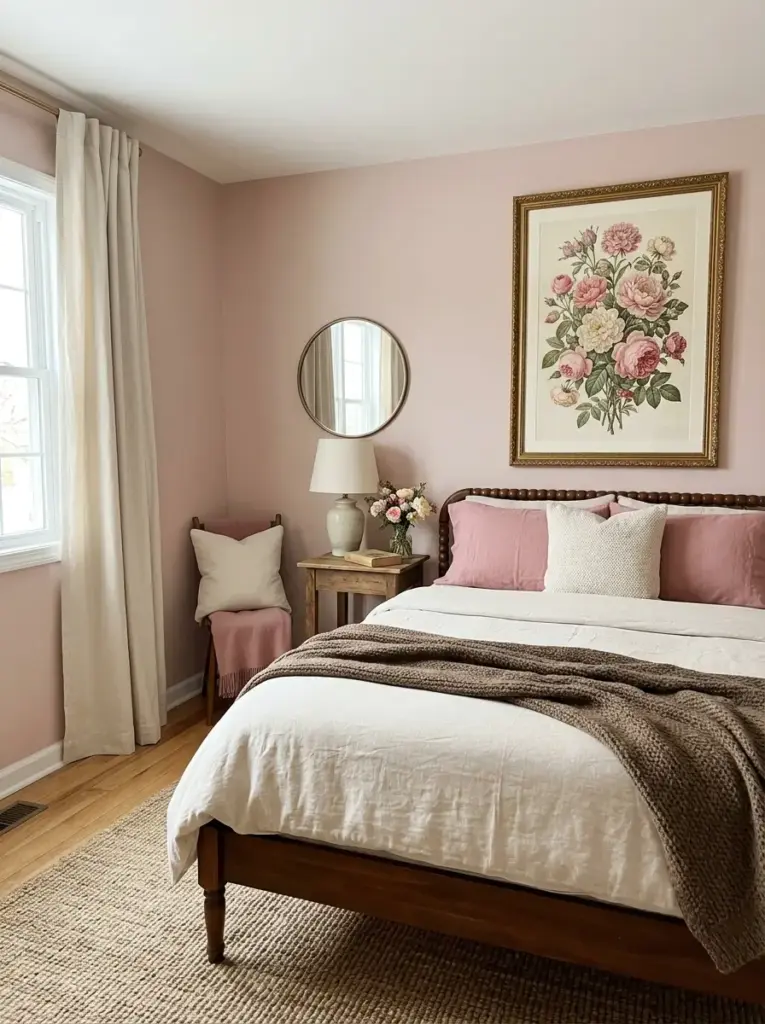
Flowers naturally complement pink, but too many floral patterns can make the room look busy. Choose one main floral piece, such as a duvet, curtain panel, accent chair, or framed print, and keep surrounding fabrics simpler.
For example, a cream duvet with small dusty-pink flowers can sit nicely against a brown wooden bed. Solid pink pillows and a textured brown throw can support the pattern without competing with it.
Scale matters too. Large floral prints need more visual space, while tiny patterns can work better in compact bedrooms. If the room already contains patterned flooring or curtains, select a mostly solid duvet instead.
Anyone who likes traditional or cottage-inspired rooms can lean further into florals. Modern bedrooms may look better with abstract botanical prints in muted pink, brown, and cream.
Add Texture With Bouclé, Linen, and Velvet
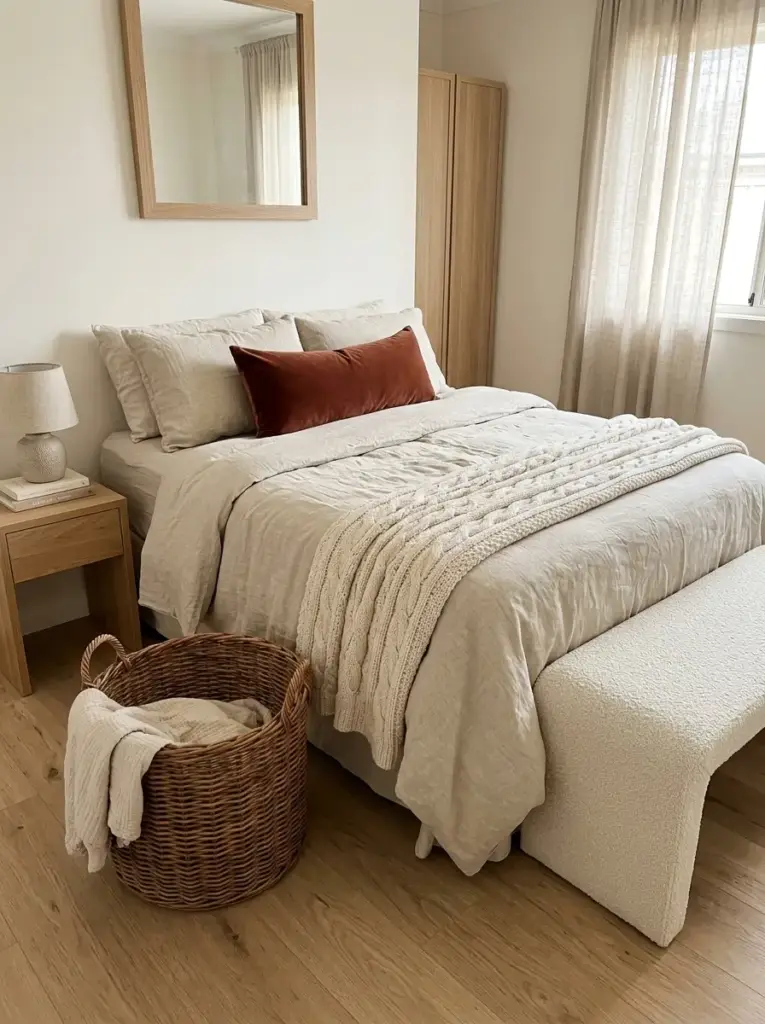
Texture can make a simple color palette feel richer without introducing more colors. Linen bedding, a bouclé bench, velvet pillows, knitted throws, and woven baskets can all add tactile variation.
Use velvet selectively because too much can make a bedroom feel formal. One velvet lumbar pillow or accent chair is usually enough. Linen works well for curtains and bedding because its relaxed texture keeps the room from feeling overly polished.
Brown woven baskets can also provide useful storage. Place one near the dresser for blankets or beside the wardrobe for accessories. Decorative pieces become more valuable when they solve a real storage problem.
People with small rooms should favor texture over extra decoration. Instead of adding ten small accessories, choose a few useful pieces with interesting materials.
Use a Pink Accent Wall in the Right Shade
Painting one wall pink can create a strong focal point without overwhelming the room. Dusty rose, muted mauve, and soft clay pink are good starting points for a bedroom that already contains brown furniture.
Place the accent wall behind the bed whenever possible. Doing so creates a natural visual anchor and helps the bed feel intentional rather than simply pushed against a wall.
Renters can recreate the effect with removable wallpaper, fabric wall panels, or a large textile hung carefully according to lease rules. Always check the product instructions before applying removable wallpaper to painted walls.
Small rooms can still use an accent wall, but keep the remaining walls light. Dark brown furniture against a deep pink wall may feel heavy if the room has little daylight, so test samples first.
Balance Dark Brown With Pale Floors and Curtains
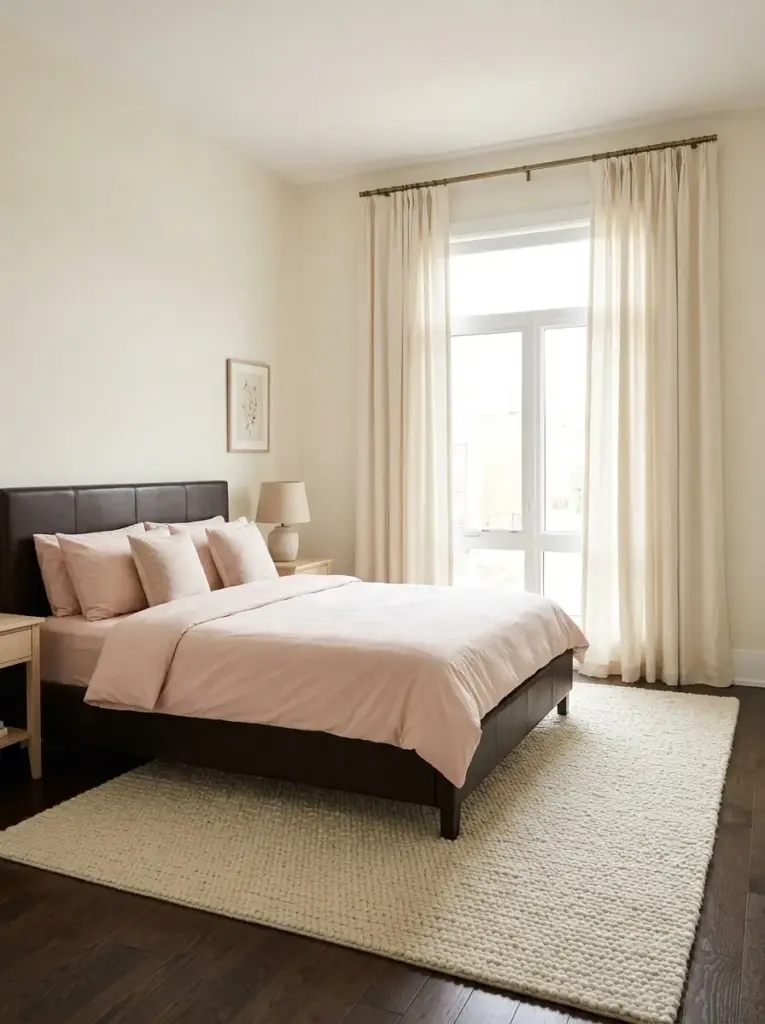
Dark furniture can look beautiful with pink, but it needs enough lighter space around it. Pale curtains and a light rug can keep the room from becoming visually dense.
Try floor-length cream curtains with a chocolate-brown bed and blush bedding. If the flooring is already dark, choose a larger pale rug that extends under the lower portion of the bed.
Curtain length also affects proportions. Mounting curtain hardware slightly higher than the window frame can draw the eye upward and make the room feel taller, provided the installation is permitted.
People with low ceilings can benefit from this approach because light vertical fabric adds height without requiring structural changes. Renters can use tension rods or removable hardware where suitable.
Make a Small Bedroom Feel Less Crowded
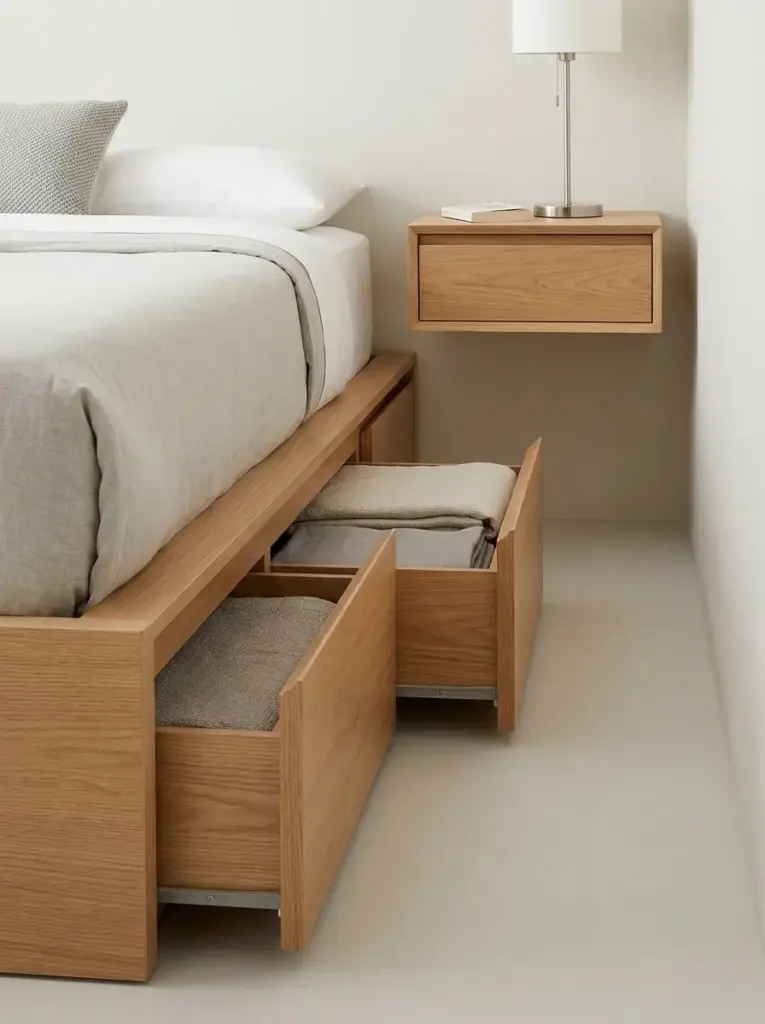
Small bedrooms need careful furniture selection. A bed with built-in drawers can provide storage without taking additional floor space. Floating nightstands can also free the floor below while keeping essentials within reach.
Avoid placing oversized benches, wide dressers, and multiple accent chairs in a compact room. One useful seat is better than three decorative pieces that block movement.
Use mirrors strategically rather than covering every wall. A medium mirror opposite or near a window can reflect available daylight, while a narrow full-length mirror can provide a practical dressing solution.
People working with studio apartments or compact guest rooms should keep walking paths clear. Aim for comfortable movement around the bed rather than filling every empty corner.
Try Brown Bedding With Pink Accents
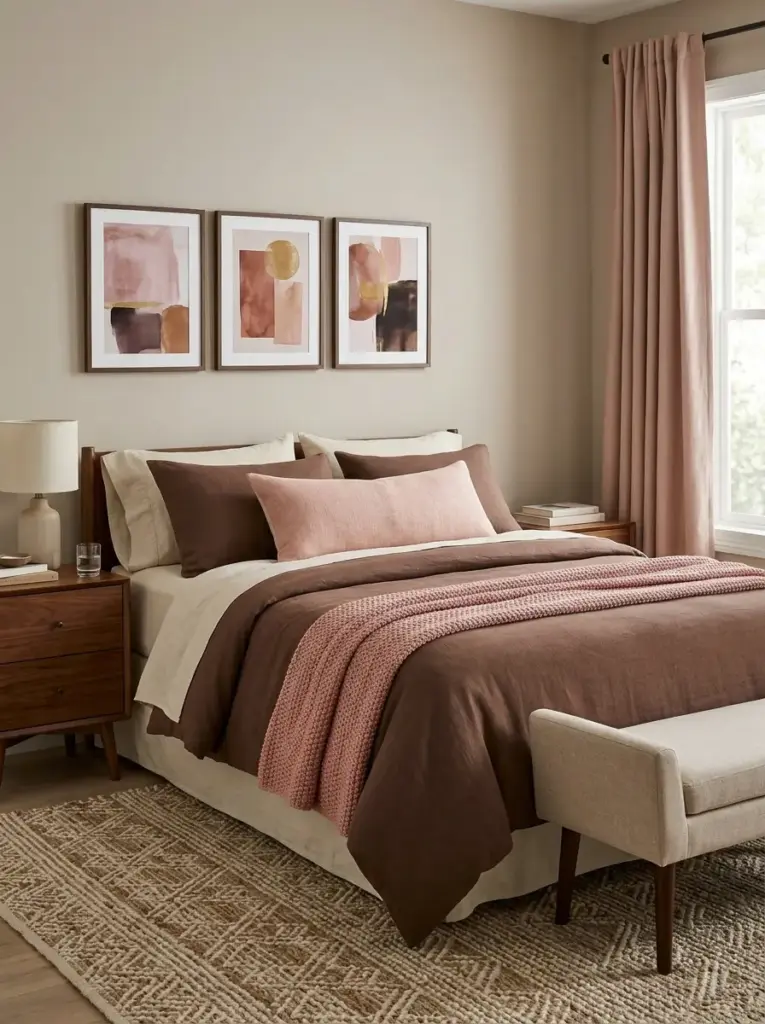
Pink does not have to dominate the bedroom. Brown bedding can create a richer base, while pink appears through pillows, throws, curtains, artwork, or a small upholstered bench.
Choose a medium brown rather than an almost-black chocolate if the room lacks natural light. Warm taupe and cocoa can also create depth without making the bed visually overpowering.
A simple combination could include cream sheets, cocoa duvet cover, blush lumbar pillow, rose throw, and walnut nightstands. Keeping the sheets lighter creates separation between the bedding layers.
People who prefer a more mature or understated bedroom may enjoy this arrangement. Pink remains part of the palette without becoming the main visual feature.
Add Personal Art Instead of Generic Decorations
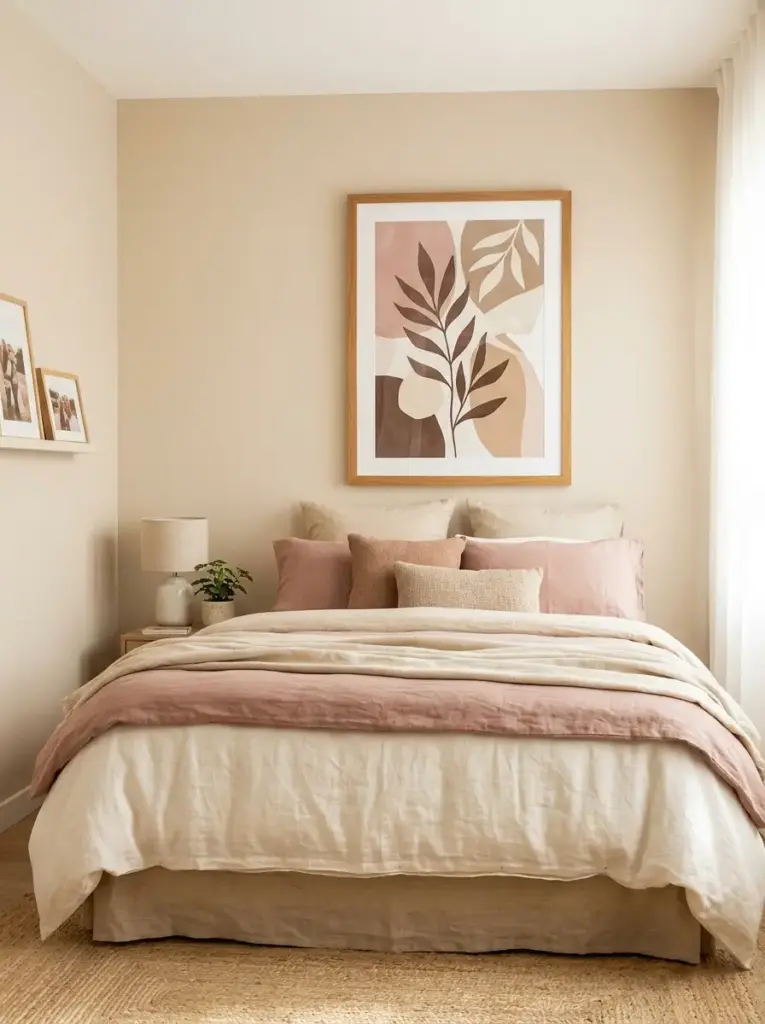
Wall art should support the colors while reflecting your personality. Look for botanical prints, abstract shapes, vintage-inspired illustrations, photography, or artwork containing muted pink, brown, cream, and beige.
Use one larger artwork above the bed instead of filling the wall with many tiny frames. A large piece can create a clearer focal point and usually looks calmer in a small room.
Frames can reinforce brown through walnut, oak, or dark wood finishes. For a lighter appearance, use cream or natural wood frames instead.
People decorating on a tight budget can print artwork themselves and place it in inexpensive frames. Personal photographs can also work when their colors coordinate with the bedroom rather than introducing many unrelated shades.
Create a Cozy Reading Corner
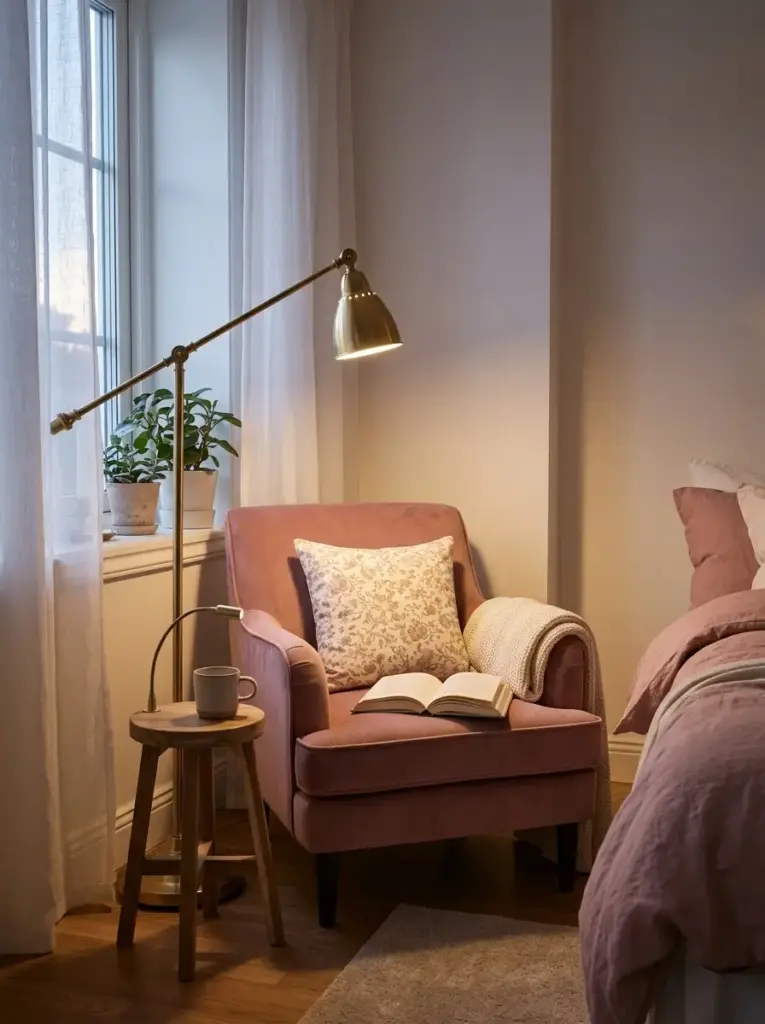
A romantic bedroom can include a practical corner for reading or relaxing. A compact upholstered chair, small wooden stool, and floor lamp can create a useful zone without requiring a large seating area.
Choose a chair in cream, dusty pink, or warm brown. Add a small cushion that connects the chair to the bedding. Keep the side table narrow enough to preserve the walking path.
Lighting should be directed toward the reading position rather than simply illuminating the whole room. A warm bulb around 2700K to 3000K can provide comfortable evening light.
People with larger bedrooms can create a complete reading nook. Small bedrooms can achieve the same purpose with a comfortable chair placed beside a window or at the end of the bed.
Pair Pink and Brown With Natural Materials
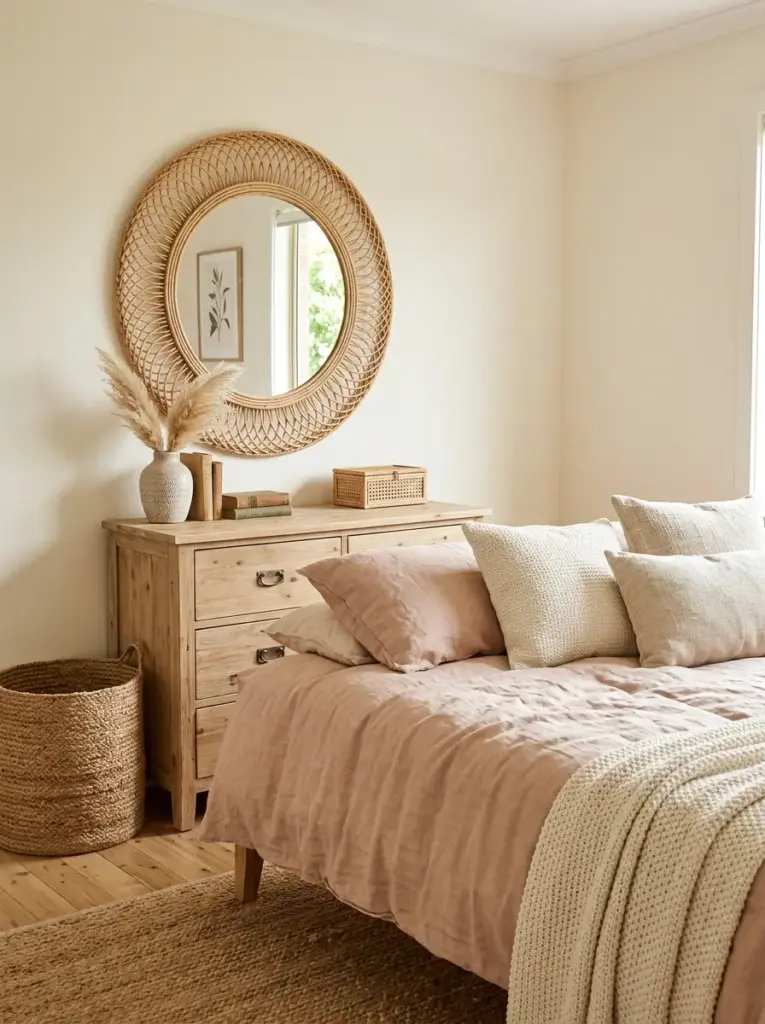
Natural materials help keep the palette grounded. Rattan, cane, jute, linen, unfinished wood, and woven cotton can add variety without introducing competing colors.
A rattan mirror above a wooden dresser can work with blush bedding and cream walls. Jute baskets can add storage while reinforcing the earthy side of the palette.
Avoid using too many different materials at once. Two or three natural textures are usually enough for a small bedroom. Repeat them across the room so they feel connected.
People who prefer relaxed interiors may especially enjoy this combination. Natural materials also work well for renters because baskets, mirrors, textiles, and freestanding furniture do not usually require permanent alterations.
Use a Mirror to Improve Light and Proportion
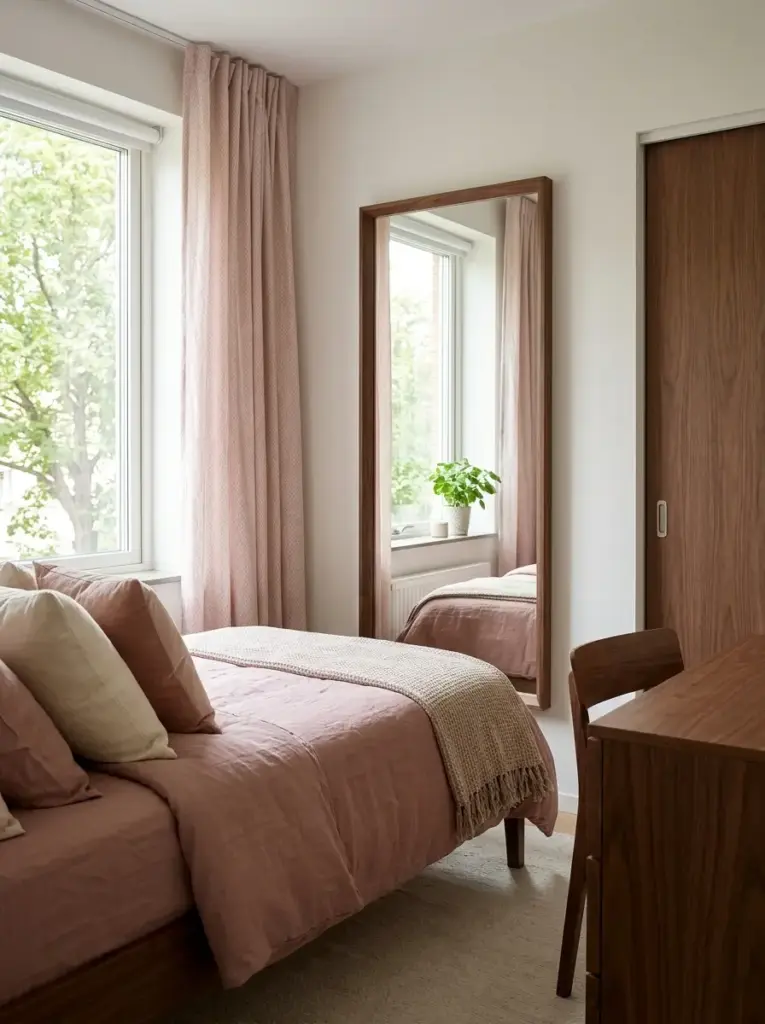
Mirrors are useful in bedrooms when placed thoughtfully. Position one where it can reflect daylight or a pleasant part of the room rather than a cluttered corner.
A brown wooden frame can connect the mirror with walnut furniture. Pink does not need to appear on the mirror itself; the bedding or curtains can provide that color.
Tall mirrors can emphasize vertical space, while wider mirrors can visually stretch a narrow wall. Check the available clearance before choosing the size, particularly near doors and wardrobes.
People in compact rooms should prioritize a mirror that serves a daily purpose. Full-length versions can combine decoration with dressing functionality, saving you from adding another piece of furniture.
Style the Nightstand With Restraint
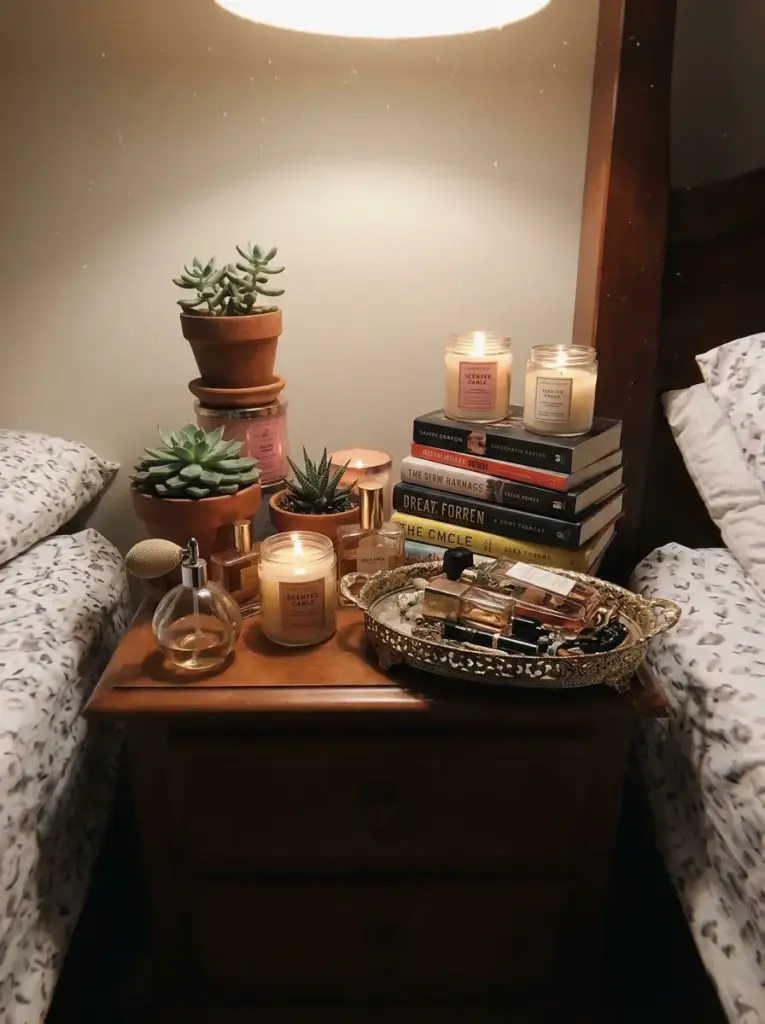
Nightstands often become clutter zones. Keep only items you actually use, such as a lamp, book, water glass, small tray, or alarm clock.
A brown wooden nightstand paired with a blush ceramic lamp can connect both main colors. Add a small framed photograph or a cream-colored dish if the surface still needs personality.
Avoid filling the tabletop with candles, plants, perfume bottles, books, and decorative objects all at once. Crowded surfaces can make even a carefully decorated bedroom feel messy.
People with small nightstands should prioritize vertical solutions. A slim lamp or wall-mounted light can leave enough room for practical necessities.
Finish With One Deep Accent Color
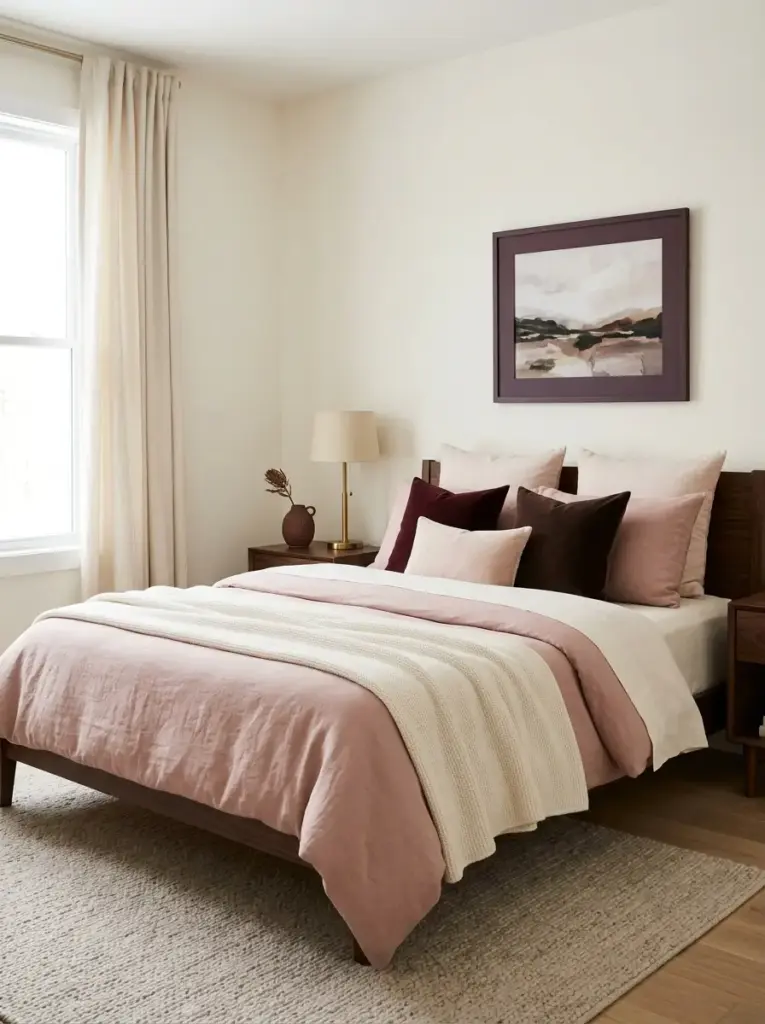
A final dark accent can make the palette feel intentional. Deep burgundy, espresso brown, muted plum, or dark terracotta can appear in small amounts through cushions, artwork, ceramics, or a throw.
Keep the accent limited to perhaps two or three locations. Adding too much dark color can shift the room away from soft pink and brown toward a much heavier scheme.
For example, use blush bedding, walnut furniture, cream curtains, and two deep burgundy cushions. Another option is dusty rose bedding with chocolate furniture and a dark plum artwork frame.
People who feel their bedroom looks flat after adding pink and brown may benefit from this technique. A deeper accent creates contrast while keeping the main palette intact.
Common Mistakes to Avoid
Using Too Much Bright Pink
Bright pink can quickly become the loudest element in the room. If you want a calmer result, use muted blush, dusty rose, mauve, or clay pink instead. Bright pink works better as a small accent than as the dominant wall, bedding, and accessory color.
Choosing Brown That Is Too Dark
Very dark brown furniture can absorb light, particularly in rooms with small windows. If your bedroom receives limited daylight, consider walnut, medium oak, warm taupe, or cocoa instead of nearly black brown.
Ignoring Undertones
Two colors may look compatible online but clash under your bedroom lighting. Pink with blue undertones can feel disconnected from orange-toned wood. Warm pinks generally pair more naturally with warm brown furniture.
Matching Everything Too Closely
Buying bedding, curtains, lamps, cushions, and rugs from the same collection can make the room feel staged. Mix solid colors, textures, and wood finishes while keeping the overall palette controlled.
Blocking Walking Space
Decoration should not make the bedroom harder to use. Measure furniture before buying it, especially in small rooms. Keep doors, wardrobe openings, and the main route around the bed clear.
Relying Only on Ceiling Lighting
One overhead fixture often creates flat or harsh lighting. Add bedside lamps, a floor lamp, or suitable wall lighting so the room has different levels of illumination.
Adding Too Many Small Accessories
Tiny decorative objects can quickly create visual clutter. Choose fewer pieces and give each one enough space around it. Practical accessories such as baskets and trays are especially useful.
Budget-Friendly Ways to Refresh the Bedroom
You do not need to replace an entire bedroom to create a new color scheme. Start with the pieces that have the largest visual impact. Bedding, curtains, a rug, and lighting can change the room more dramatically than a collection of small decorations.
Secondhand furniture can also work beautifully with this palette. Look for solid wood nightstands, dressers, benches, and mirrors with warm finishes. A dated brown piece may only need cleaning, new hardware, or a light refinishing treatment if the material and finish allow it.
Pillow covers are another inexpensive option. Buying covers instead of complete cushions gives you more flexibility and takes up less storage space between seasonal changes. Try two blush covers with one brown textured cover rather than buying a complete new set.
Paint can create one of the biggest visual changes for relatively little money, but preparation matters. Test the color first, especially if your room has unusual daylight. For renters, removable wallpaper or large textile wall treatments can provide a similar focal point without permanent painting.
Shop your own home before buying accessories. A brown basket from another room, cream throw from the living room, or wooden frame stored in a cupboard may already fit the new palette. Moving useful pieces around can reveal combinations you had not considered.
Lighting upgrades can also be inexpensive. Replace cool white bulbs with warm bulbs around 2700K to 3000K, then reassess the room before buying new lamps. Sometimes the existing fixtures look much better once the color temperature suits the decor.
Smart Styling Tips for Pink and Brown Bedroom Decor
Use pink and brown bedroom decor as a flexible color framework rather than a strict decorating rule. Pink can come from bedding, artwork, curtains, or upholstery, while brown can come from wood, leather, baskets, rugs, and furniture.
People who already have brown furniture should start with textiles instead of replacing the furniture. Add blush bedding and cream curtains first, then introduce one deeper pink accent. This method keeps spending under control and makes it easier to evaluate the palette before making larger purchases.
Beginners can also create a simple 60-30-10 color balance. Use cream or another neutral for roughly 60 percent of the room, brown for about 30 percent, and pink for around 10 percent. Exact percentages do not matter, but the principle helps prevent one color from taking over.
Renters should focus on reversible changes. Bedding, rugs, lamps, freestanding mirrors, curtains, artwork, removable wallpaper, and furniture can all contribute to the color story without major structural work.
Small rooms need extra attention to scale. Choose narrow nightstands, beds with storage, wall-mounted lighting, and furniture with visible legs when possible. These choices preserve floor space and can make the room easier to move through.
Creating Different Moods With the Same Palette
A softer bedroom can use blush, cream, light oak, and sheer curtains. Keep patterns small and rely on linen, cotton, and woven textures. Warm lamps can add evening comfort without making the room look overly formal.
More dramatic rooms can shift toward chocolate brown, dusty rose, burgundy, and walnut. Keep at least one large neutral surface, such as cream walls or a pale rug, so the deeper colors remain balanced.
Modern rooms can use simple furniture, solid bedding, geometric artwork, and restrained accessories. Traditional bedrooms can introduce floral fabrics, curved furniture, antique-style frames, and richer brown wood.
Bohemian-inspired rooms can combine pink and brown with rattan, woven baskets, linen, patterned rugs, and handmade-looking accessories. Keep the color palette consistent even when adding different textures.
A playful bedroom can lean toward softer pinks and lighter brown furniture. If you enjoy cute interiors, elements from Kawaii Bedroom styling can work as small accents, but keeping the main furniture simple prevents the room from becoming visually crowded.
Choosing Pink and Brown for Different Bedroom Sizes
Large bedrooms can support darker furniture and stronger color contrast because there is more visual space between major pieces. A chocolate headboard, brown dresser, and dusty rose curtains can work when balanced with cream walls and a pale rug.
Medium bedrooms offer the most flexibility. Use one dominant brown furniture finish, two or three pink textiles, and a neutral background. Keep the floor area relatively open so the room does not feel overloaded.
Small bedrooms should rely more heavily on pale neutrals. Use blush pink through bedding or curtains and bring brown in through smaller furniture and accessories. A large dark accent wall may be less suitable if natural light is limited.
Very small rooms benefit from multifunctional furniture. Storage beds, slim nightstands, narrow wardrobes, and wall-mounted lights can provide more value than decorative furniture with little practical purpose.
Choosing the Right Brown for Your Pink
Walnut is a strong option for warm, mature bedrooms because it contains enough depth to balance blush and dusty rose. It works particularly well with cream bedding and brass or bronze details.
Light oak creates a fresher appearance. Pair it with pale pink, warm white, and woven textures if you want the bedroom to feel airy. This combination can be particularly helpful in compact rooms.
Chocolate brown provides stronger contrast. Use it carefully with soft pink and cream, particularly if your room does not receive much daylight.
Taupe sits between brown and gray and can work with cooler blush shades. Rooms that already contain gray flooring or furniture may benefit from this softer brown alternative.
Where Other Colors Can Fit
Pink and brown do not need to exist alone. A small amount of another color can add personality when it relates to the existing palette.
For instance, muted green can connect with plants and natural wood. Cream can soften the contrast. Deep burgundy can provide drama. Soft gold or aged brass can introduce a warm metallic accent without changing the basic color scheme.
If you already have a Teal Bedroom color element, use teal sparingly when adding pink and brown. Muted teal can work as an accent, but too much saturated teal may compete with the softer palette.
Rooms based around Calming Bedroom Colors can also borrow the pink and brown combination. Choose muted blush, taupe, cream, and soft walnut rather than bright pink and deep chocolate.
Working With Unusual Bedroom Shapes
Sloped ceilings can make furniture placement difficult. In an Attic Bedroom, place lower furniture beneath the lowest ceiling areas and reserve taller pieces for the highest points. Soft pink bedding can draw attention toward the center of the room without making the ceiling feel lower.
Long, narrow bedrooms need a clear traffic route. Position the bed so people can move around it comfortably, then use brown furniture along the longer walls if space allows.
Bedrooms with large windows should avoid placing tall furniture directly in front of the main light source. Use the window as a natural focal point and place low furniture nearby.
Rooms connected to another living space need color continuity. Repeat one brown finish or pink textile outside the bedroom if the layout is open, but do not copy every decorative element.
FAQ About Pink and Brown Bedrooms
Is pink and brown good for a bedroom?
Yes. Pink and brown can create a balanced bedroom when you control saturation and proportion. Soft pink adds color while brown provides depth through furniture, textiles, and accessories. Warm cream can bridge the two shades and keep the room from feeling too dark or overly colorful.
What shade of pink looks best with brown?
Dusty rose, blush, muted mauve, antique pink, and clay pink are easy starting points. Warm pinks usually work particularly well with walnut, oak, and chocolate brown. Bright pink can still work, but it is usually easier to control as a smaller accent.
What color walls go with pink and brown furniture?
Warm white, cream, beige, soft taupe, and muted blush are practical choices. If the room receives limited daylight, test paint samples before choosing a darker shade. Warm neutrals can help connect brown furniture with pink textiles without introducing another strong color.
Can pink and brown work in a small bedroom?
Yes. Keep the largest surfaces relatively light and use pink and brown strategically. Cream walls, blush bedding, medium-brown furniture, and a pale rug can make a small room feel balanced. Storage beds, slim nightstands, and wall-mounted lighting can preserve valuable floor space.
How can renters decorate a pink and brown bedroom?
Focus on removable and freestanding pieces. Bedding, curtains, rugs, lamps, mirrors, artwork, baskets, furniture, and removable wallpaper can all change the room without permanent alterations. Always check your rental agreement before using adhesive products or installing fixtures.
How do I make pink and brown look more mature?
Use muted pink instead of highly saturated shades, then pair it with walnut, chocolate, taupe, cream, linen, and simple furniture. Reduce novelty decorations and choose quality-looking textures such as linen, wood, woven materials, and velvet accents.
Final Thoughts
Successful pink and brown bedroom decor comes down to balance rather than buying a room full of pink and brown accessories. Start with the largest elements, decide which color should dominate, and use the second shade to create depth.
For beginners, blush bedding, warm cream walls, walnut furniture, and 2700K to 3000K lighting offer a dependable starting point. Small rooms can benefit from pale surfaces and multifunctional furniture, while larger bedrooms have more room for darker brown pieces and stronger contrasts.
Budget-conscious decorators can make meaningful changes with bedding, pillow covers, lamps, secondhand furniture, paint, and textiles. Renters can rely on reversible updates that travel easily from one home to another.
Most importantly, build the room around how you actually live. Keep storage accessible, protect walking space, choose lighting that works at night, and let personal artwork or meaningful objects provide character. Romantic decorating does not require excessive decoration; thoughtful color, comfortable materials, practical furniture, and controlled lighting can create a bedroom that feels warm every day.