
Small apartment wall shelf decor can change how your home looks and works. In a small apartment, every surface matters. Your coffee table, dining table, kitchen counter, and bedside area can fill up fast. Wall shelves help you move useful items upward, so your rooms feel cleaner, lighter, and easier to live in.
The best part is that wall shelves do not need a big budget. You can style them with books, baskets, plants, framed prints, candles, jars, trays, and everyday items you already own. You only need the right placement, simple styling rules, and a clear purpose for each shelf.
Wall shelves are also great for renters. You can use lightweight shelves, picture ledges, freestanding ladder shelves, adhesive options for small items, or no-drill shelf units where allowed. The goal is not just to decorate empty walls. The goal is to create organized walls that support your daily routine.
This guide shares practical small apartment wall shelf decor ideas for living rooms, bedrooms, kitchens, bathrooms, entryways, and narrow corners. Each idea explains why it works, who it is best for, and how to style it without making your apartment feel crowded.
What Is the Best Way to Style Small Apartment Wall Shelf Decor?
The best way to style small apartment wall shelf decor is to combine beauty with function. Use shelves to hold items you need often, then add a few decorative pieces to make the setup look intentional. Keep the color palette simple, leave empty space between objects, and avoid filling every inch of the shelf.
A good shelf should solve a small-space problem. It can hold books beside your reading chair, mugs above your coffee station, baskets near the entryway, or skincare items in a tiny bathroom. When each shelf has a job, your apartment feels more organized.
For a clean look, use the rule of three. Group one tall item, one medium item, and one small item together. For example, place a slim vase, two stacked books, and a small candle on one shelf. This creates balance without making the wall look messy.
Lighting also matters. If your apartment feels dark, add a small rechargeable shelf lamp or place shelves near warm lighting around 2700K to 3000K. This temperature gives a soft, homey glow without looking too yellow. For kitchens or work corners, 3500K can feel cleaner and more practical.
Use Floating Shelves Above the Sofa
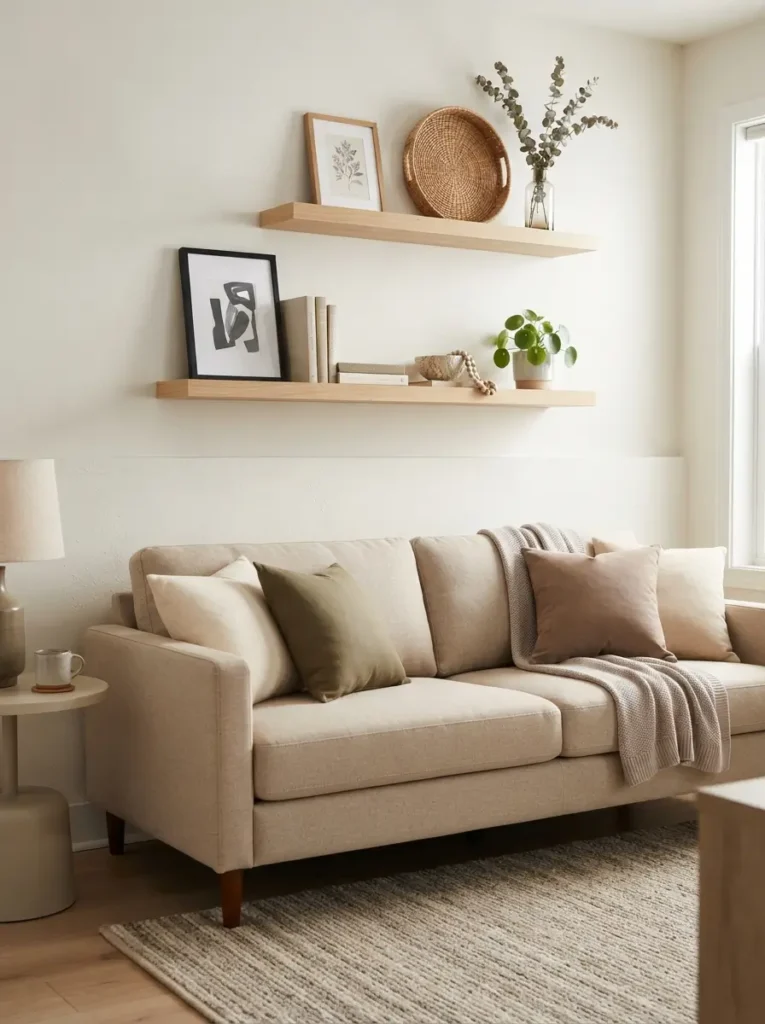
Floating shelves above the sofa are one of the easiest ways to decorate a small living room without taking floor space. They work especially well when your sofa wall feels blank, but you do not want a bulky bookcase.
This idea works because it draws the eye upward. In a small apartment, vertical styling makes the room feel taller and more finished. It also gives you space to display framed art, small plants, books, and sculptural pieces without blocking the walking path.
Keep the shelves narrower than your sofa. If your sofa is 72 inches wide, a shelf between 36 and 48 inches usually looks balanced. You can also use two shorter shelves instead of one long shelf. This helps avoid a heavy line across the wall.
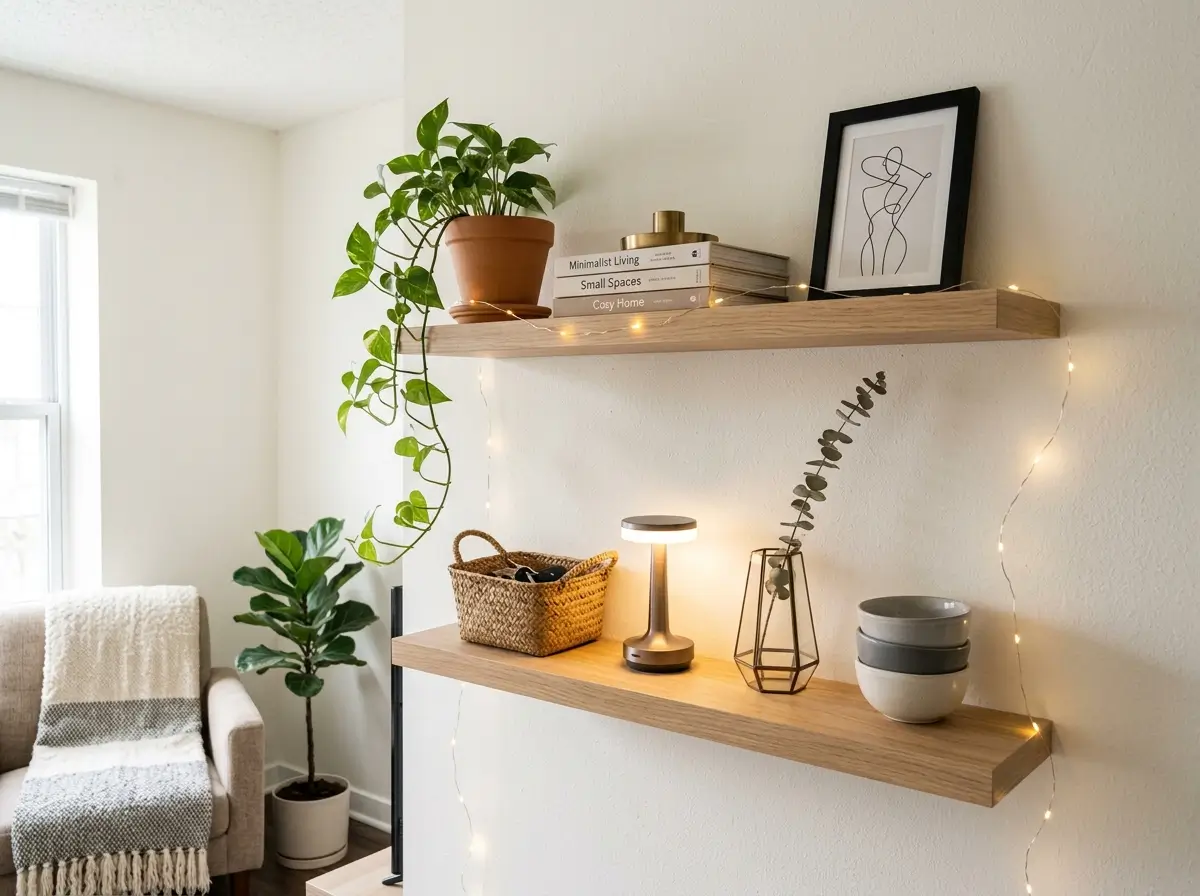
For decor, mix flat and upright items. Lean one framed print against the wall, add two small books, and place a ceramic bowl or candle beside them. Choose colors that connect with your sofa pillows or rug. Beige, warm white, black, olive green, and soft brown work well in neutral apartments.
This tip is best for renters and beginners who want a low-effort living room upgrade. If drilling is not allowed, use a freestanding shelf unit behind the sofa instead. You can also use lightweight picture ledges with removable mounting systems only if the shelf will hold very light items.
Avoid placing heavy objects above a seating area. Heavy frames, large planters, and glass items can be unsafe if the shelf is not installed correctly. Use proper wall anchors for drywall, and always follow the shelf weight limit.
Create a Narrow Picture Ledge Gallery
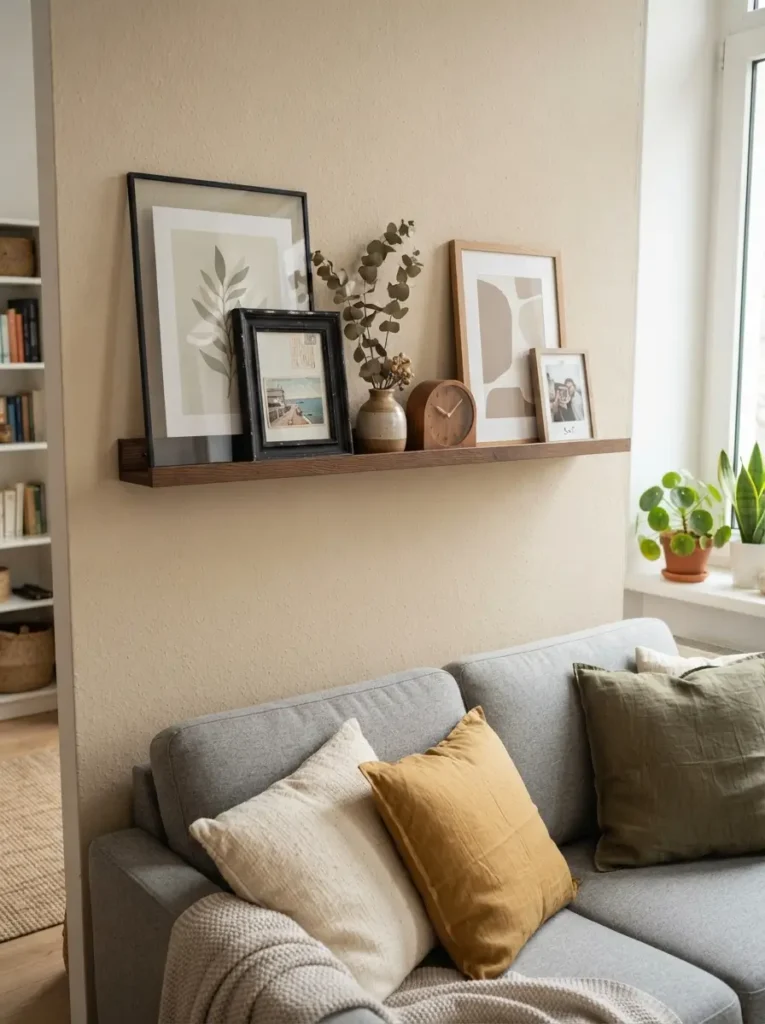
A picture ledge is a shallow shelf made for framed art, postcards, small books, and photos. It is one of the best small apartment wall shelf decor options because it gives you flexibility. You can change the art without making new holes in the wall.
This idea works because ledges are slim. They do not project far into the room, so they suit narrow apartments, hallways, and small living rooms. A picture ledge gives the look of a gallery wall, but it feels easier to update and less permanent.
Use two or three frames in different sizes. Start with one larger frame, then layer a smaller frame in front of it. Add a tiny vase, a small clock, or a decorative object on one side. This keeps the ledge from looking flat.
For a calm look, choose frames in one finish. Black frames look modern. Oak frames feel warm. White frames blend well with light walls. If your apartment has beige decor, try light wood frames with cream, taupe, and muted green prints.
This tip is best for people who like seasonal decor. You can switch prints for spring, autumn, holidays, or personal photos. It also works well for renters because you can keep the installation minimal.
Place the ledge at eye level if it is in a hallway. Above a sofa or bed, leave enough space so people do not hit it when sitting. A common mistake is hanging ledges too high. When shelves sit too close to the ceiling, the decor feels disconnected from the room.
Add Corner Shelves to Use Dead Space
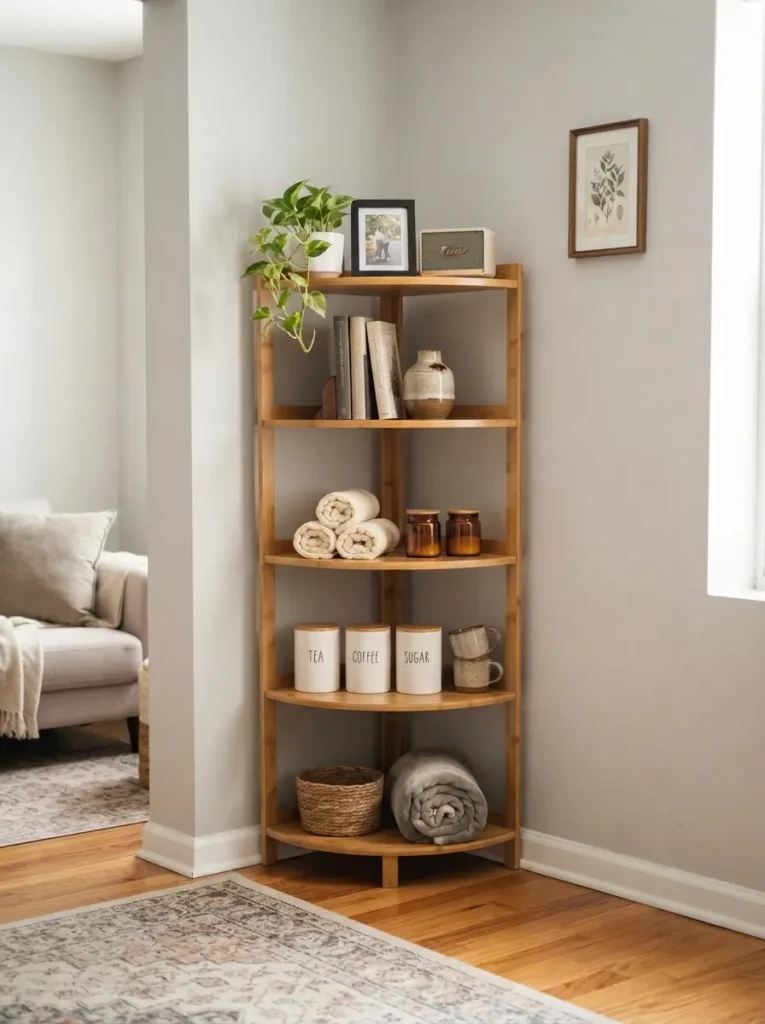
Small apartments often have unused corners. A corner shelf turns that forgotten area into storage and decor. It works in living rooms, bedrooms, bathrooms, kitchens, and even tiny entryways.
This idea works because corners usually do not interrupt movement. You can add vertical storage without making the room feel smaller. Corner shelves are helpful when you do not have space for side tables or cabinets.
In a living room, use corner shelves for plants, books, a small speaker, and a framed photo. In a bathroom, use them for rolled towels, jars, and daily toiletries. In a kitchen, use them for spice jars, mugs, or small bowls.
Keep the styling simple. Corners can look cluttered if every shelf is full. Leave one shelf partly empty or use matching containers to control visual noise. Woven baskets, white bins, clear jars, and matte black containers all work well depending on your room style.
This tip is best for tiny apartments with awkward layouts. It also helps beginners because corner shelves naturally define one zone. You do not need a full wall plan.
Choose rounded corner shelves if the area is tight. Sharp corners can feel uncomfortable in narrow walkways. If you rent, consider a tall freestanding corner shelf. It gives a similar look without drilling.
Style Kitchen Shelves with Everyday Items
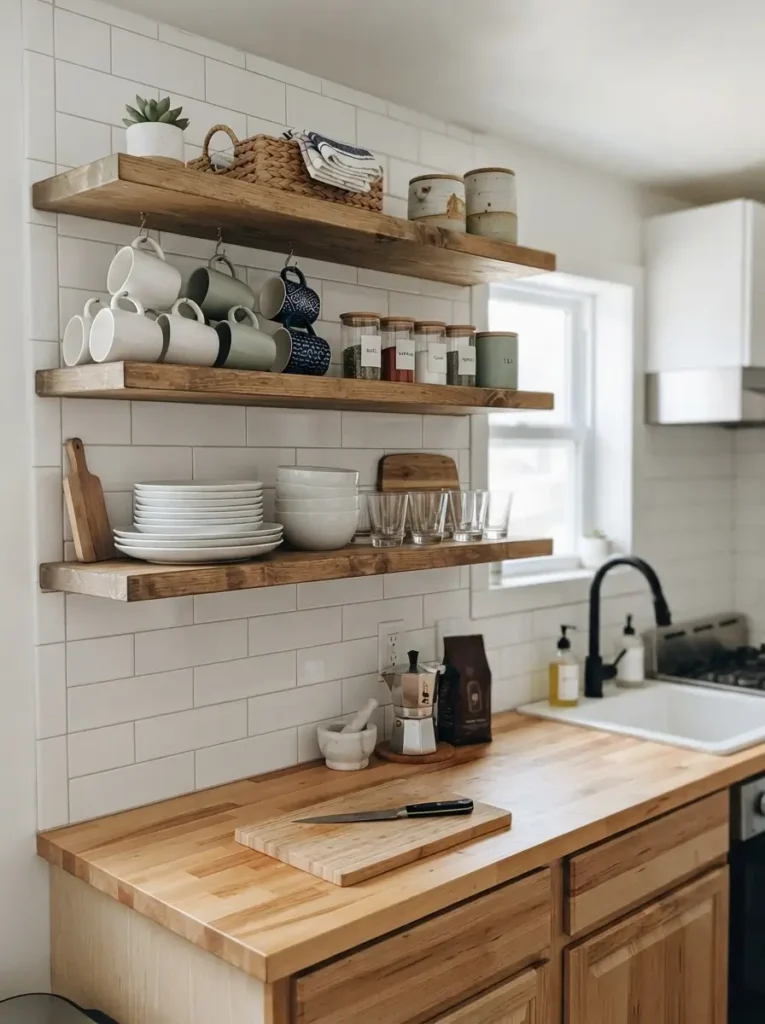
Open kitchen shelves can look beautiful, but they need to stay practical. In a small apartment kitchen, shelves should hold items you actually use. This keeps your cabinets from overflowing and makes cooking easier.
This idea works because daily items can become decor when you arrange them neatly. White plates, clear glasses, wooden cutting boards, spice jars, and ceramic mugs all look good when grouped with care. You do not need extra decorations.
Start with a simple color palette. Use white dishes, clear glass, wood, and one accent color. For example, sage green mugs or navy bowls can add personality without making the shelf look busy. If your kitchen is very small, lighter colors usually feel cleaner.
Place heavier items on lower shelves. Store plates and bowls where you can reach them easily. Use upper shelves for lighter pieces, such as mugs, small jars, or decorative canisters. This keeps the setup safe and useful.
This tip is best for small kitchens with limited cabinet space. It also works for renters who can add a small no-drill rack or freestanding wall shelf. A narrow shelf above a coffee cart can hold mugs, tea tins, sugar jars, and a small plant.
Avoid overcrowding kitchen shelves with too many mismatched items. If you own many colorful mugs, display only your favorites and store the rest elsewhere. Open shelves collect dust and grease, so keep them easy to clean.
Use Wall Shelves as a Mini Entryway Drop Zone
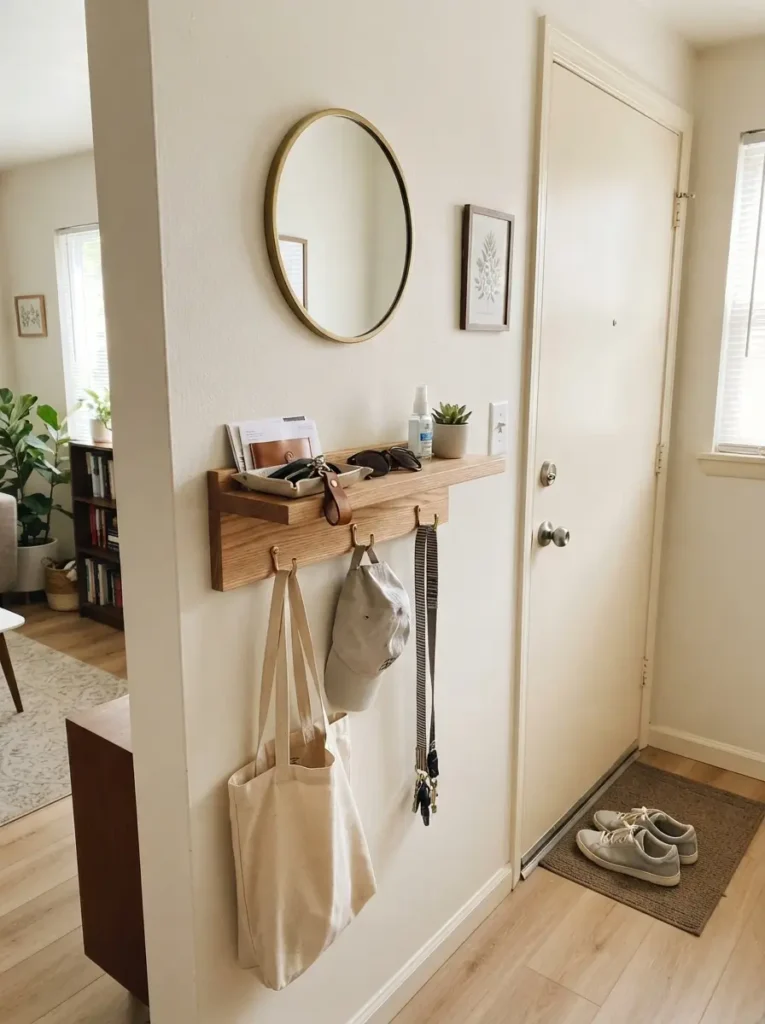
Many small apartments do not have a real entryway. A small wall shelf near the door can create one. It gives you a place for keys, sunglasses, mail, hand sanitizer, and small daily items.
This idea works because it prevents clutter from spreading into the living room or kitchen. When you have a set place for grab-and-go items, your apartment stays more organized. A shelf also takes less space than a console table.
Choose a shelf with hooks if possible. Hooks can hold keys, a small umbrella, a dog leash, a tote bag, or a lightweight cap. Add a small tray on the shelf for loose items. A tray keeps everything grouped and makes the area look neat.
For decor, add one framed print or a small mirror above the shelf. A mirror helps you check your look before leaving and reflects light into the space. Choose a mirror with a slim frame so it does not feel bulky.
This tip is best for renters, studio apartments, and anyone who loses keys often. It is also budget-friendly because one small shelf can replace a larger entry table.
Keep the shelf shallow, around 4 to 6 inches deep. A deep shelf near the door can block movement. If the entryway is very narrow, use a picture ledge or a wall-mounted pocket organizer instead.
Build a Bedside Shelf Instead of Using a Nightstand
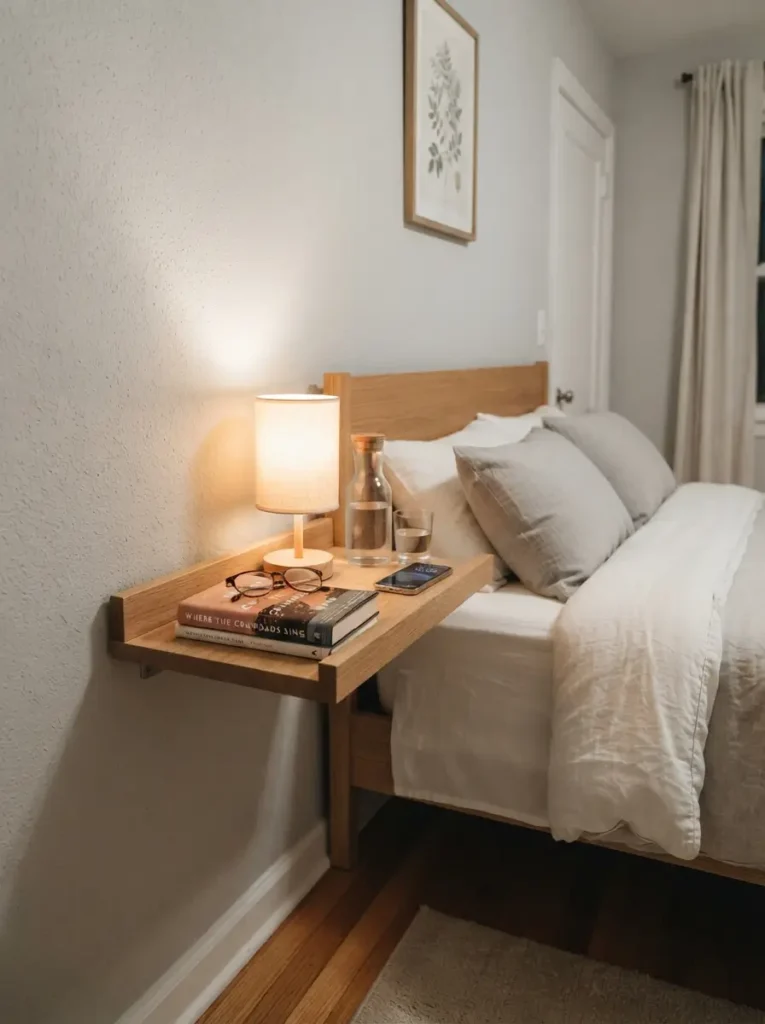
A wall-mounted bedside shelf is useful when your bedroom is too small for a nightstand. It can hold your phone, book, water glass, lamp, and glasses without using floor space.
This idea works because it opens the area around the bed. More visible floor space makes a small bedroom feel less cramped. It also helps if your bed sits close to a wall or closet door.
Choose a shelf with a small lip if you can. A raised edge helps stop items from sliding off. You can also use a compact floating drawer shelf if you need hidden storage for chargers, medicine, or small personal items.
Style it with only essentials. A small lamp, one book, and a tiny dish may be enough. If you use a lamp, choose a warm bulb around 2700K. This creates softer bedtime lighting than a cool white bulb.
This tip is best for tiny bedrooms, studio apartments, and people who want a cleaner sleep area. It also works well for renters if you use a lightweight shelf and proper removable solutions where safe.
Do not overload a bedside shelf. Avoid heavy lamps, large plants, and too many books. Since the shelf is close to your head, safety matters more than styling.
Add Bathroom Shelves Above the Toilet
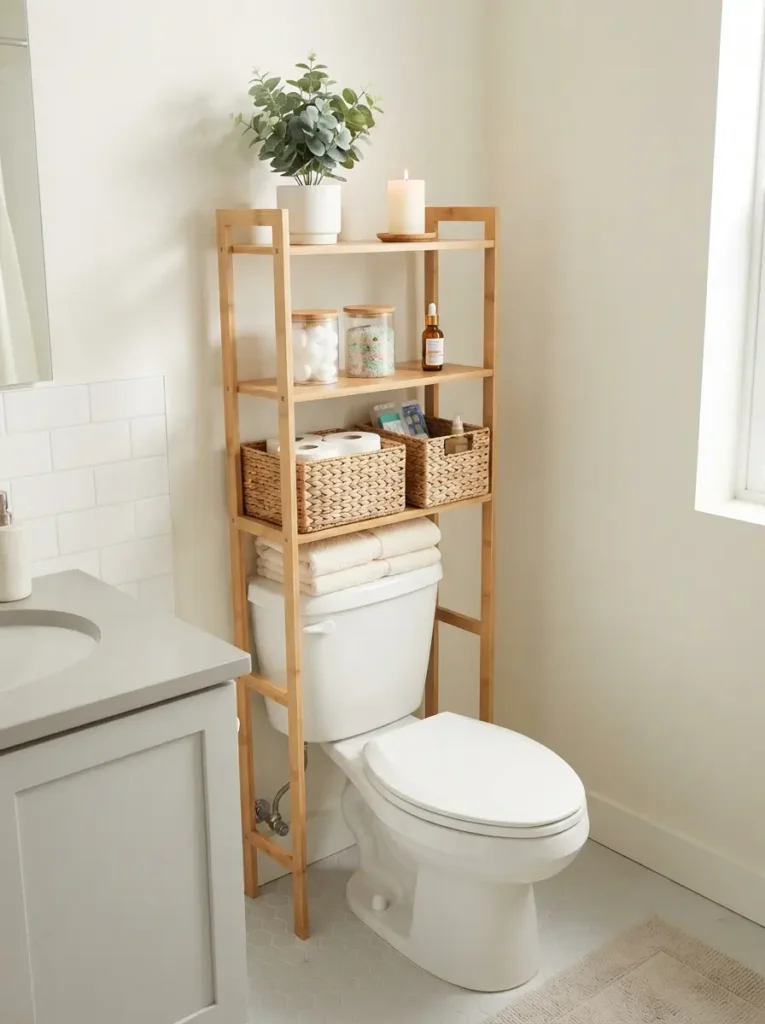
The wall above the toilet often goes unused. In a small apartment bathroom, this space can hold practical storage and simple decor. It is one of the easiest ways to reduce counter clutter.
This idea works because it uses vertical space in a room where floor storage is usually limited. A shelf above the toilet can hold extra toilet paper, towels, candles, jars, skincare, and small baskets.
Use closed or semi-closed containers for bathroom items. Woven baskets, white plastic bins, or fabric boxes can hide clutter. Clear jars work well for cotton pads, bath salts, and hair ties. The goal is to make daily items look controlled.
For color, keep the bathroom light and fresh. White, beige, soft gray, eucalyptus green, and pale wood tones work well. Add one small plant only if the bathroom gets enough light. If it does not, use a realistic faux plant or skip greenery.
This tip is best for renters with small bathrooms and no linen closet. A freestanding over-toilet shelf can work if you cannot drill into the wall. Choose one with slim legs and simple lines so the bathroom does not feel crowded.
Avoid storing too many products in the open. Labels, bright packaging, and different bottle shapes can make shelves look messy. Decant only when it is practical, and keep backup items in baskets.
Turn Shelves into a Small Home Office Wall
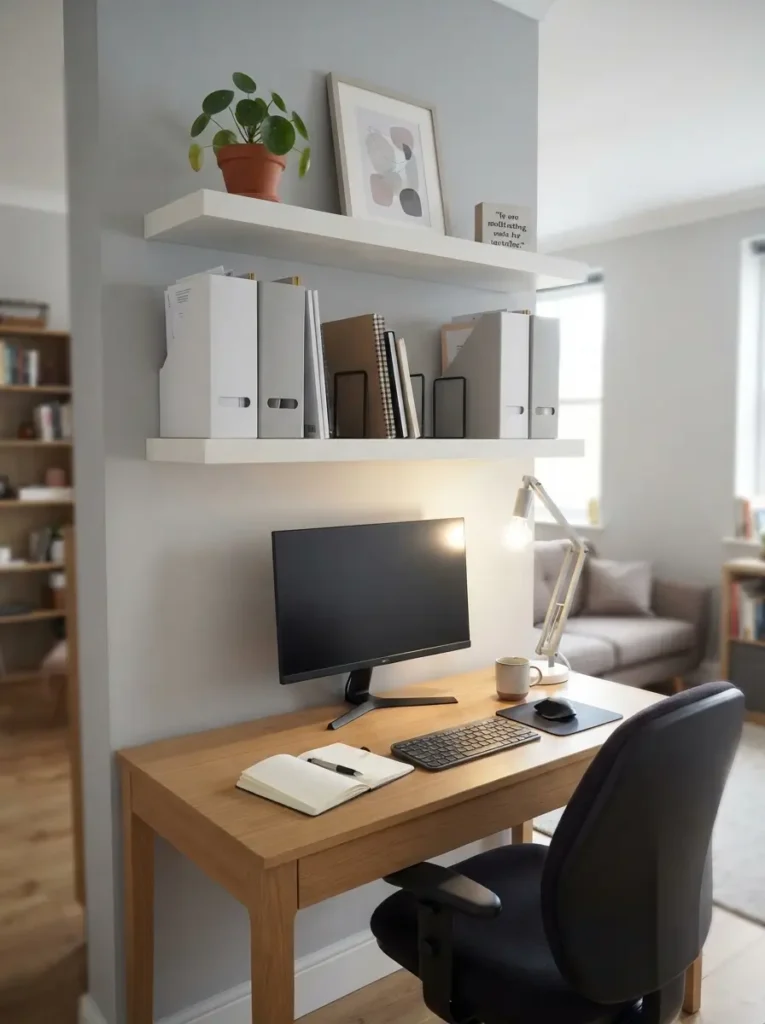
A small apartment office does not always need a full bookcase. Wall shelves above a desk can hold supplies, notebooks, files, and a few motivating decor pieces. This keeps your work surface clear.
This idea works because it separates work items from relaxation areas. A shelf above the desk creates a clear office zone, even if the desk sits in the living room or bedroom. It also helps you stay focused because the desk stays less cluttered.
Use boxes or magazine holders for papers. Choose matching holders in white, kraft, black, or soft gray. Store notebooks vertically with bookends. Add one small plant or framed print to soften the work setup.
Good lighting is important. Use a desk lamp with a bulb around 3500K to 4000K if you work during the day or need clear task lighting. Warmer bulbs may feel cozy, but they can be too dim for focused work.
This tip is best for remote workers, students, and small apartment residents who use a desk daily. It also works for creative people who need supplies nearby but do not want them spread across the room.
Do not place shelves too low above your monitor. Leave enough clearance so the desk does not feel boxed in. If the shelf is above eye level, use it for storage boxes instead of items you reach for every hour.
Use Plant Shelves Near a Window
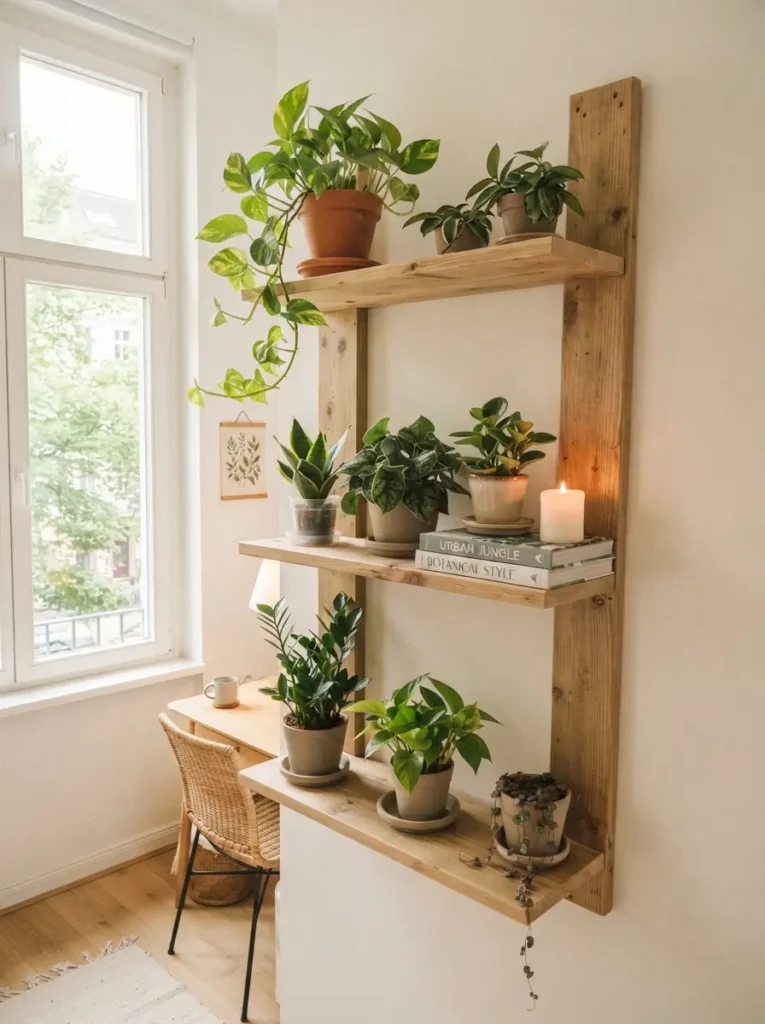
Plants are popular in small apartments, but they can take over floor space quickly. A wall shelf near a window gives plants a bright place to live without crowding the room.
This idea works because plants add color, shape, and life to plain walls. They also soften hard lines from shelves, desks, and cabinets. A few plants can make a room feel cared for, as long as you choose the right types.
Use lightweight pots on wall shelves. Plastic, resin, or small terracotta pots work better than heavy ceramic planters. Place trailing plants like pothos on higher shelves, and compact plants like snake plants or peperomia on lower shelves.
Group plants in odd numbers. Three small plants usually look better than four lined up evenly. Add a small book stack or candle between plants if you want more variety. Keep saucers under pots to protect the shelf from water damage.
This tip is best for plant lovers who live in studios or apartments with limited floor space. It also works in kitchens and bedrooms if there is enough natural light.
Do not place moisture-loving plants on shelves that are hard to reach. If watering becomes annoying, you may neglect them. Start with low-maintenance plants and avoid overloading one shelf with heavy soil-filled pots.
Style Shelves with Baskets for Hidden Storage
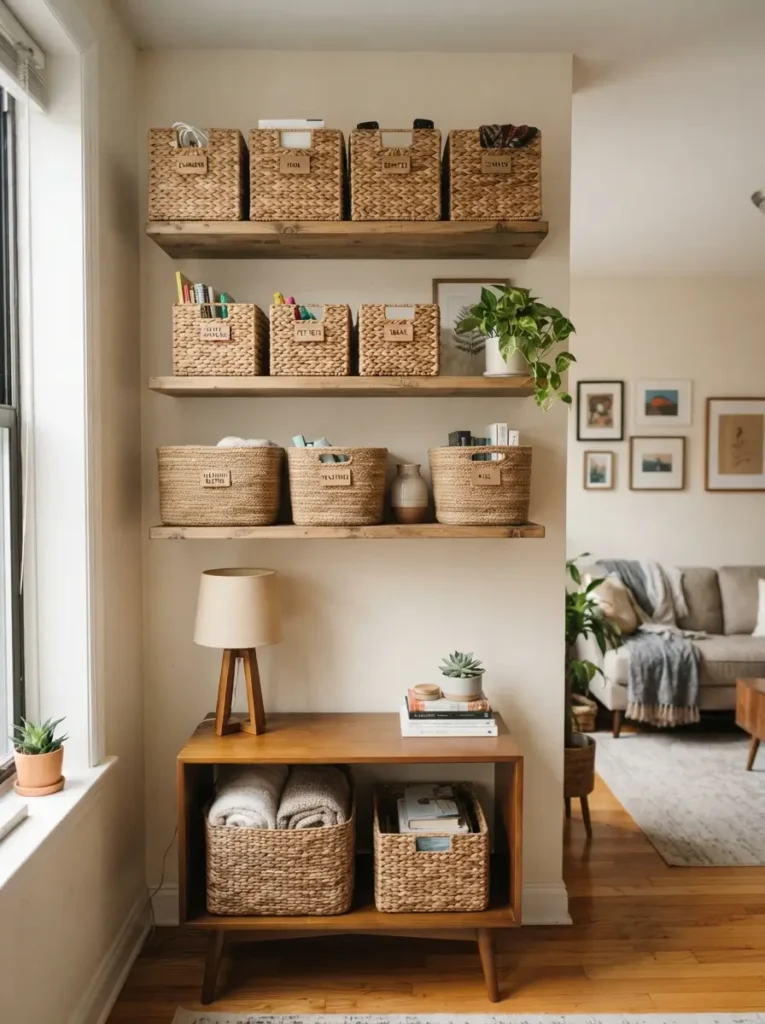
Baskets are one of the most useful tools for small apartment wall shelf decor. They hide clutter while adding texture. This makes shelves look warmer and more organized.
This idea works because small homes often need storage that does not look like storage. Baskets can hold remote controls, chargers, mail, toiletries, socks, craft supplies, pet items, and cleaning cloths. They reduce visual clutter in seconds.
Choose baskets that fit the shelf depth. A basket that sticks out too far can look awkward and may fall. Measure the shelf before buying. Shallow baskets work well for narrow shelves, while cube baskets fit better on deeper wall units.
For a neat look, use matching baskets on one shelf. For a relaxed look, mix materials but keep the color family similar. Natural seagrass, beige fabric, and light wood can work together. Black wire baskets suit modern or industrial apartments.
This tip is best for busy households, beginners, and anyone who struggles with visible clutter. It is also budget-friendly because baskets can often be found at discount stores, thrift shops, or home goods sales.
Label baskets if you store practical items. Small labels help you find things without pulling everything out. Use simple labels like chargers, mail, skincare, or pet supplies.
Make a Coffee or Tea Shelf Station
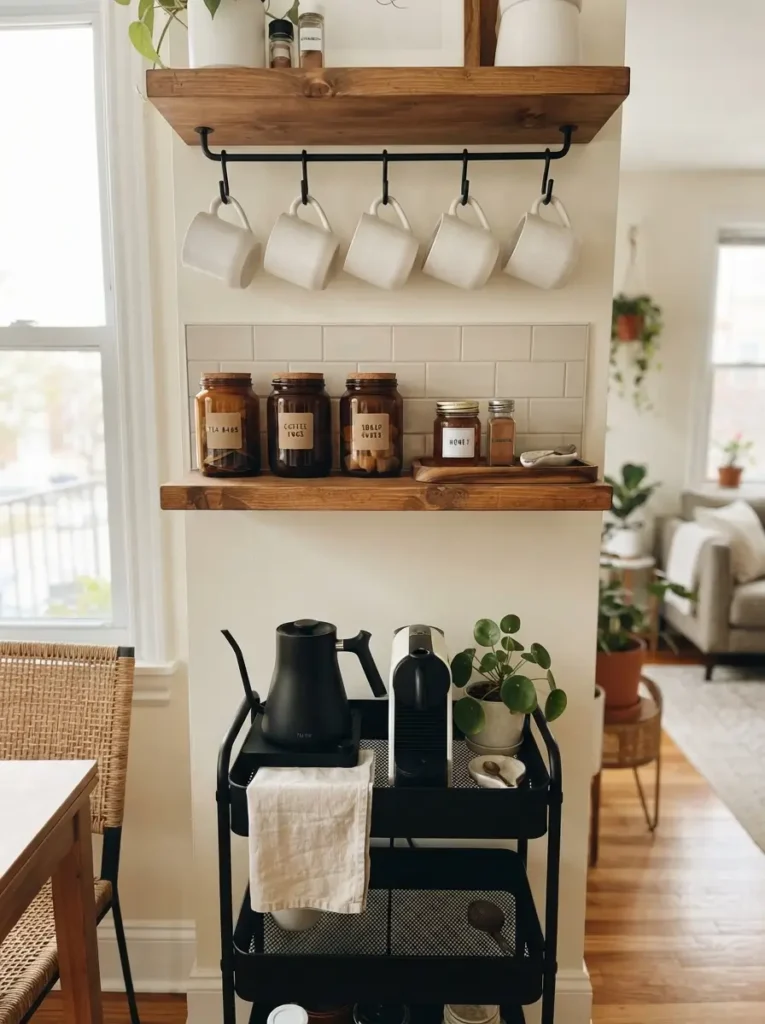
A small coffee or tea shelf can make your morning routine easier. You can place it above a compact cart, beside the kitchen counter, or near a dining nook. It saves cabinet space and keeps your favorite items together.
This idea works because it gives one daily habit a clear home. Instead of spreading mugs, tea bags, coffee pods, sugar, and spoons across the kitchen, you place them in one zone. This makes the apartment feel more organized.
Use one shelf for mugs and another for containers. Glass jars can hold tea bags, coffee pods, sugar cubes, or stir sticks. A small tray can hold honey, cinnamon, or a spoon rest. Keep the most-used items at arm level.
Choose a warm color palette for this station. Wood shelves, white mugs, amber glass jars, and beige labels can make the setup feel calm. If your kitchen is modern, black brackets and clear jars may look cleaner.
This tip is best for coffee lovers, tea drinkers, and renters with limited kitchen storage. It also works well in studio apartments where a small routine zone can make the space feel more personal.
Do not display every mug you own. Pick four to six mugs that look good together and store the extras. Too many mugs can make a small shelf look crowded.
Use Shelves to Decorate Above a Dining Nook
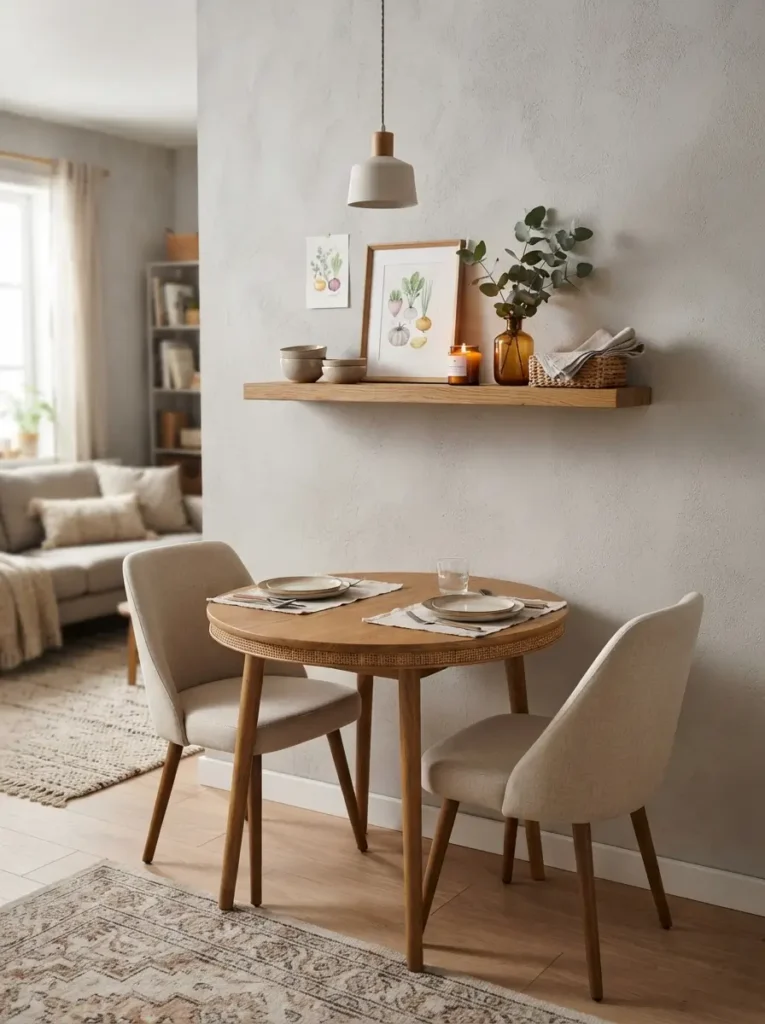
Small apartments often have tiny dining corners. A wall shelf above the table can make the area feel intentional without adding bulky furniture. It can hold dishes, art, candles, or small serving pieces.
This idea works because shelves create a visual frame around the dining zone. In an open-plan studio, this helps separate eating space from the living or sleeping area. It gives the nook its own identity.
Place the shelf high enough so people do not bump their heads while sitting. A good starting point is 18 to 24 inches above the tabletop, depending on shelf depth. Shallow shelves can sit a little lower, while deeper shelves need more clearance.
Style the shelf with items that match dining use. Try small bowls, a framed food print, a candle, a vase, or a stack of linen napkins in a basket. Keep the colors connected to your table, chairs, or rug.
This tip is best for apartments with small round tables, drop-leaf tables, or breakfast nooks. It is also useful for renters because it adds style without changing the room structure.
Avoid placing fragile glassware above seats unless the shelf is secure. If you want to display glasses, use a cabinet-style shelf or place them away from the table edge.
Create a Kids or Hobby Shelf Wall
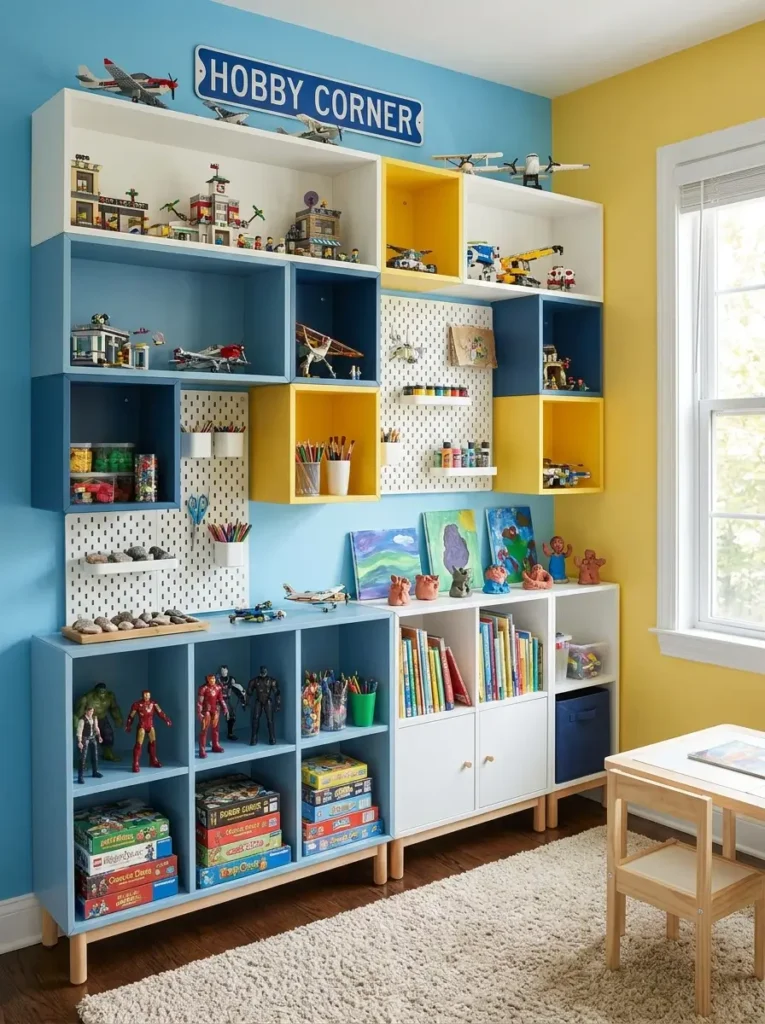
If you live with children or have a hobby, shelves can keep small items organized. A shelf wall can hold toys, art supplies, puzzles, yarn, books, cameras, craft tools, or collectibles.
This idea works because small items need boundaries. Without shelves or bins, they spread across tables and floors. Wall shelves give these items a visible but controlled place.
For kids, use low shelves they can reach safely. Add baskets for blocks, crayons, small toys, and books. Keep heavier items at the bottom. Use soft colors like cream, light blue, pale yellow, or natural wood to keep the room calm.
For hobbies, use shelves based on how often you use each item. Keep daily tools within reach and display only your favorite supplies. For example, a craft shelf can hold jars of brushes, folded fabric, and labeled boxes.
This tip is best for families, artists, crafters, and collectors in small apartments. It helps prevent hobby clutter from taking over the whole room.
Avoid turning hobby shelves into a storage dump. Review them every month. Remove broken supplies, empty boxes, and items you no longer use. A shelf stays useful only when it is edited.
Add a Shelf Above a Radiator or Low Cabinet
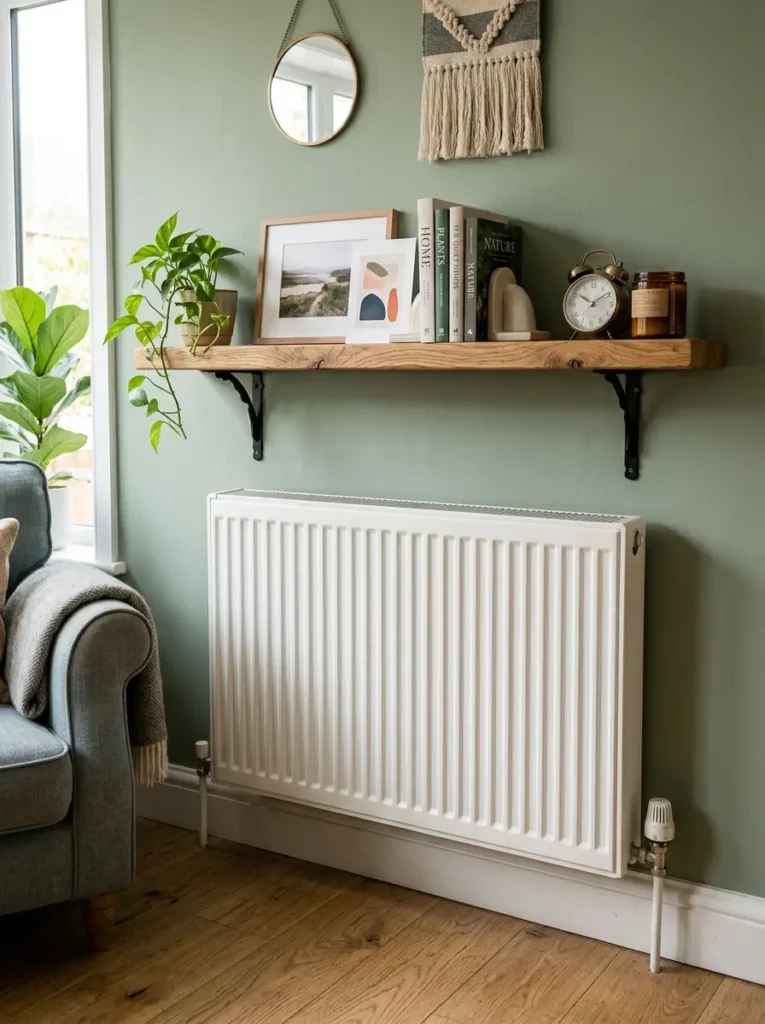
Many apartments have awkward low areas near radiators, heaters, or short cabinets. A shelf above that area can create a styled surface without blocking floor space. You must keep safety in mind around heat sources.
This idea works because it gives purpose to a hard-to-use wall. You can create a small display area for art, books, a clock, or lightweight decor. It helps the wall feel finished without adding another piece of furniture.
If placing a shelf near a radiator, leave enough space for heat to circulate. Avoid candles, plants that dry out easily, electronics, or anything that can warp from heat. Use heat-safe decor and check the area often.
Above a low cabinet, use the shelf to extend storage. For example, place a shoe cabinet near the entryway and add a shelf above it for baskets, a mirror, and keys. In a living room, place a shelf above a media cabinet for books and art.
This tip is best for apartments with awkward walls, older buildings, and rooms with limited furniture placement options. It is also useful when you want a layered look without buying a tall cabinet.
Do not install shelves too close to heaters, vents, or air conditioners. Heat and airflow can damage decor, dry plants, or create safety issues. Always check building rules and product instructions.
Keep One Shelf Minimal for Breathing Room
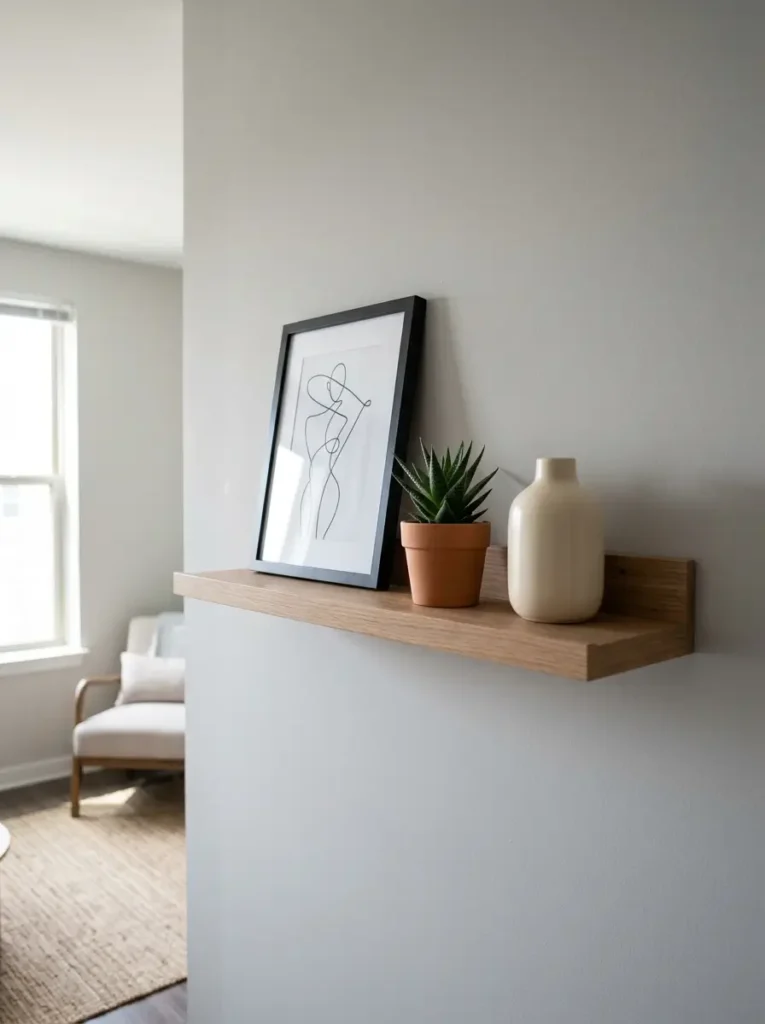
Not every shelf needs to be full. A minimal shelf can make your apartment feel calmer and more spacious. It can hold one piece of art, one plant, and one small object.
This idea works because empty space is part of good decorating. Small apartments can feel crowded when every wall and surface has something on it. A quiet shelf gives the eye a place to rest.
Use this approach in bedrooms, small living rooms, and narrow hallways. Choose pieces with simple shapes and useful colors. For example, try a cream vase, a black frame, and a small green plant. This creates contrast without clutter.
A minimal shelf is also easier to clean. Dusting takes less time, and you are less likely to pile random items on it. It can make a beginner’s home look more intentional because the styling feels edited.
This tip is best for people who like simple decor, renters with small rooms, and anyone who feels overwhelmed by clutter. It is also a good starting point if you are unsure how to style shelves.
The common mistake is going too empty in a way that looks unfinished. Give the shelf enough weight with one taller item or one framed piece. The goal is calm, not bare.
Common Mistakes to Avoid with Small Apartment Wall Shelf Decor
One common mistake is choosing shelves that are too deep. Deep shelves can block movement in narrow rooms and make walls feel heavy. In small apartments, shelves around 4 to 8 inches deep often work better for decor, while deeper shelves should be saved for storage zones.
Another mistake is ignoring scale. A tiny shelf above a large sofa can look weak, while a huge shelf above a small desk can feel overwhelming. Match the shelf size to the furniture below it. The shelf should look connected to the room, not random.
Many beginners also overcrowd shelves. When every inch is filled, the decor looks messy even if the items are beautiful. Leave open space between objects. Edit the shelf until each item has a reason to be there.
Using too many colors can also create visual clutter. Small apartment wall shelf decor usually works best with a limited palette. Choose two or three main colors, then repeat them across the shelf. For example, use white, oak, and black for a clean modern look.
Another issue is placing shelves too high. Shelves should relate to the furniture and people in the room. If you need to stretch to see the decor, it may be too high. Eye-level placement usually works better for display shelves.
Poor installation is a serious mistake. Shelves need the right anchors, brackets, and weight limits. Drywall, brick, and plaster walls all need different hardware. If you are unsure, ask for help or choose a freestanding unit.
A final mistake is mixing storage and decor without a plan. If a shelf holds random mail, old receipts, beauty products, and decor pieces together, it will look messy. Use trays, baskets, and clear categories to keep practical items organized.
Budget-Friendly Small Apartment Wall Shelf Decor Tips
You do not need expensive shelves to decorate well. Start by checking what you already own. Books, jars, baskets, candles, mugs, trays, framed cards, and small bowls can all become shelf decor. The most affordable styling often comes from editing, not buying.
Thrift stores are great for shelf pieces. Look for small frames, ceramic bowls, brass candle holders, baskets, and glass jars. Choose items with simple shapes and colors. Avoid buying random pieces just because they are cheap.
You can also upgrade basic shelves with better styling. A simple white shelf can look more polished with matching baskets, a small lamp, and one framed print. If you want warmth, use peel-and-stick wood-look contact paper on a budget shelf where appropriate.
Printable art can save money. You can place it in affordable frames and lean it on picture ledges. Black-and-white line art, botanical prints, abstract shapes, and neutral photography work well in small apartments.
Use jars instead of buying decorative containers. Clean glass jars can hold cotton pads, tea bags, coffee pods, pencils, or small craft supplies. Add simple labels if you want a cleaner look.
Plants can be budget-friendly if you start small. Pothos cuttings, small succulents, and snake plant pups are often affordable. Use lightweight pots and avoid buying large planters for wall shelves.
For renters, avoid spending too much on permanent installations. Choose shelves you can move to your next home. Freestanding ladder shelves, modular cubes, and picture ledges are often more flexible than custom built-ins.
Small Apartment Wall Shelf Decor Tips
Start with purpose before style. Ask what the shelf needs to do. Should it hold daily items, display art, store kitchen pieces, or clear a surface? Once the purpose is clear, styling becomes easier.
Use repeated materials. If your room has light wood furniture, add a light wood shelf or wood-framed art. If your room has black lighting or black chair legs, black brackets can make the shelf feel connected.
Balance open and closed storage. Display pretty items like books, vases, and plants. Hide messy items in baskets, boxes, or trays. This balance makes shelves useful without making them look crowded.
Keep shelves easy to clean. If you hate dusting, avoid filling shelves with many tiny objects. Choose fewer, larger pieces. A framed print, one basket, and one plant can look better than ten small decorations.
Think about lighting. A shelf in a dark corner may need a small rechargeable lamp or nearby wall sconce. Warm white lighting around 2700K to 3000K works well for cozy living rooms and bedrooms. Neutral white lighting around 3500K works better near kitchens and desks.
Use height variation. Combine tall, medium, and short items. A tall vase beside a low stack of books looks more natural than objects of the same height lined in a row.
Leave space around meaningful items. If you have one special photo, handmade bowl, or travel souvenir, do not bury it among clutter. Give it room so it stands out.
Edit by season, not every week. Small changes can refresh shelves without spending money. In winter, use warmer textures and candles. In spring, add lighter colors, small flowers, or fresh greenery.
Match shelf strength to shelf use. Decorative shelves can hold lightweight items. Storage shelves need stronger brackets and proper anchors. Never guess the weight limit.
Keep safety first. Do not place heavy objects above beds, sofas, cribs, or dining seats unless the shelf is securely installed. In small apartments, safety and function matter as much as style.
FAQ
How do I decorate wall shelves in a small apartment without clutter
Decorate with fewer items and stronger groupings. Use one framed piece, one plant, and one practical item like a basket or box. Leave empty space between objects. If you need storage, hide small items in matching containers instead of leaving them loose on the shelf.
What should I put on apartment wall shelves
You can put books, small plants, framed prints, baskets, candles, bowls, jars, mugs, skincare items, office supplies, or daily essentials. The best items depend on the room. Kitchen shelves should hold useful kitchen pieces, while living room shelves can mix books, art, and decor.
Are floating shelves good for renters
Floating shelves can work for renters if your lease allows drilling and you use the right hardware. If drilling is not allowed, try freestanding ladder shelves, over-toilet shelves, narrow bookcases, or lightweight picture ledges with approved removable mounting methods for very light items.
How many shelves should I use on one wall
For most small apartments, one to three shelves are enough on one wall. A single shelf works well above a desk or entry table. Two shelves look balanced above a sofa or dining nook. Three shelves can work in a kitchen or office if the wall has enough height.
What colors work best for small apartment wall shelf decor
Light wood, white, beige, black, soft gray, and muted green work well in small apartments. These colors are easy to repeat across a room. If you like bold colors, use them in small accents, such as one vase, one frame, or a few book covers.
How do I make cheap shelves look expensive
Keep the styling simple and organized. Use matching baskets, framed art, stacked books, and one or two quality-looking objects. Avoid overcrowding. You can also choose shelves with clean lines, paint brackets to match the wall, or use contact paper for a warmer finish.
Conclusion
Small apartment wall shelf decor works best when it solves real problems. A good shelf can clear your counters, organize your entryway, improve your kitchen storage, create a bedside surface, or make a blank wall feel useful. The key is to decorate with purpose.
You do not need a large apartment or expensive furniture to create organized walls. Start with one area that feels cluttered. Add a shelf that fits the space, then style it with practical items, simple colors, and a few personal pieces. Keep the arrangement easy to clean and easy to use.
For beginners, the safest approach is to start small. Try one shelf above a desk, sofa, toilet, bed, or entryway. Use baskets for hidden storage, repeat colors from the room, and leave some empty space. Over time, your shelves will become part of your daily routine, not just decoration.
When styled well, wall shelves make a small apartment feel more thoughtful, organized, and comfortable. They help you use vertical space wisely while keeping the floor open. That is what makes them one of the most practical decorating choices for small homes.