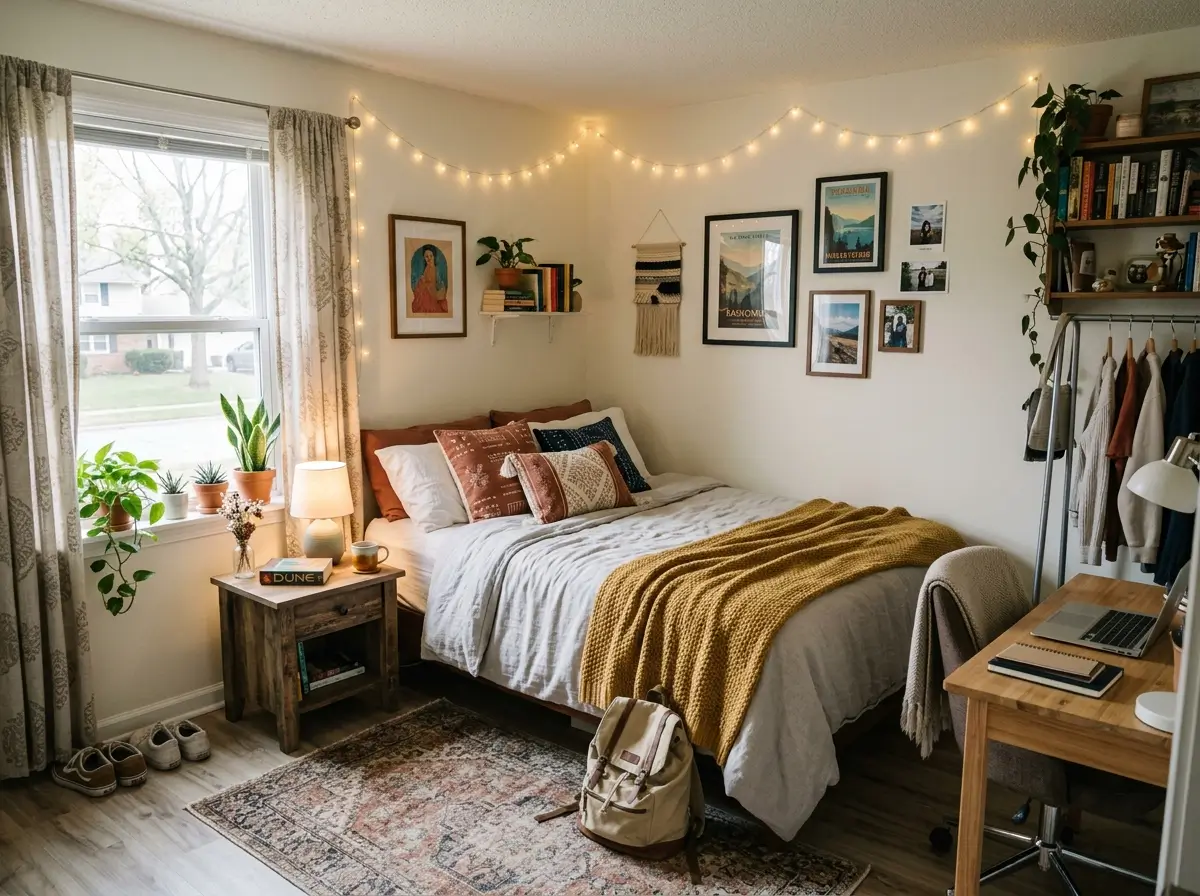

Moving into your first apartment feels exciting, but the first night can also feel a little unfinished. Boxes are everywhere, the room feels empty, and you may realize too late that you forgot basic bedroom items.
This first apartment bedroom checklist helps you set up a space that feels comfortable, organized, and easy to live in from day one. The goal is not to buy everything at once. Start with the pieces that help you sleep well, get ready easily, and keep your room from becoming cluttered.
These ideas are practical for renters, small bedrooms, tight budgets, and beginners who want their first apartment bedroom to feel calm without overspending.
What should a first apartment bedroom checklist include for night one?
A first apartment bedroom checklist should include a comfortable mattress, clean bedding, pillows, basic lighting, a nightstand setup, curtains or privacy covering, clothing storage, laundry basics, and a few easy decor pieces. These items help you sleep, unpack, and move around safely before the rest of the room is fully styled.
Start With a Real Mattress Plan
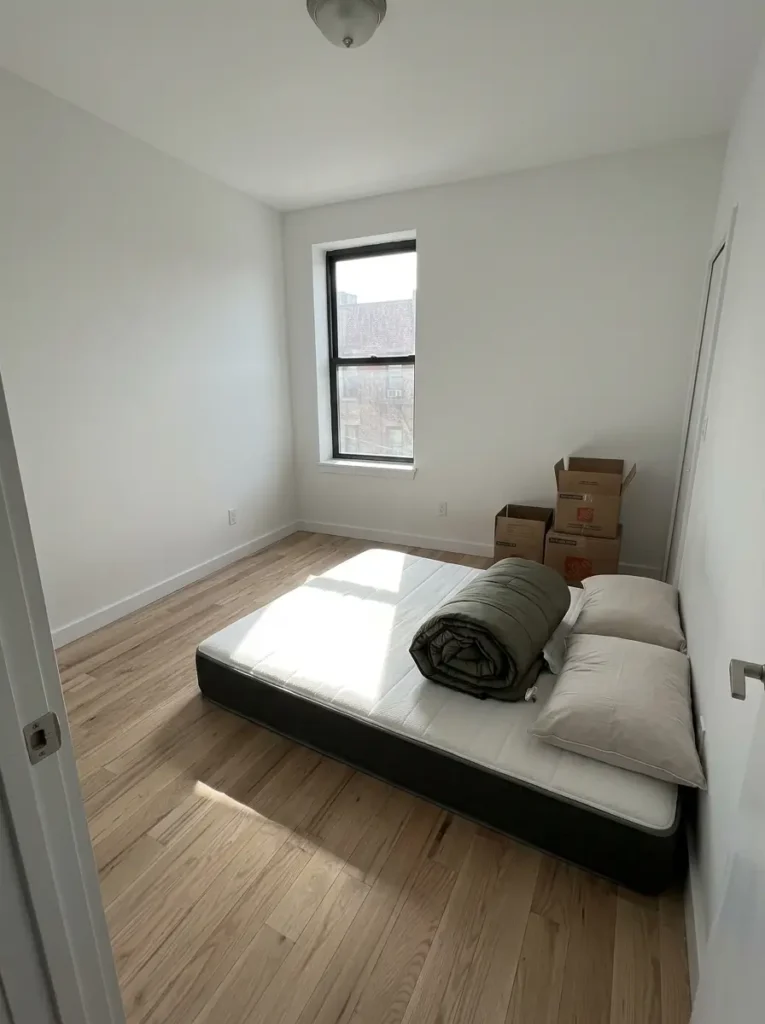
Your bed is the first thing to sort because it affects your sleep immediately. A mattress on a basic metal frame or simple platform bed is often better than sleeping directly on the floor. It improves airflow, keeps bedding cleaner, and makes the room feel more settled.
For a first apartment, choose a mattress size based on the room, not only comfort. A queen bed works well in medium bedrooms, but a full-size bed may leave better walking space in a small rental. Leave at least 24 inches on one side if possible, so the room does not feel blocked.
This tip works best for anyone moving in with limited furniture. Avoid buying an oversized bed before measuring the bedroom, closet door, and hallway.
Choose Bedding You Can Wash Easily
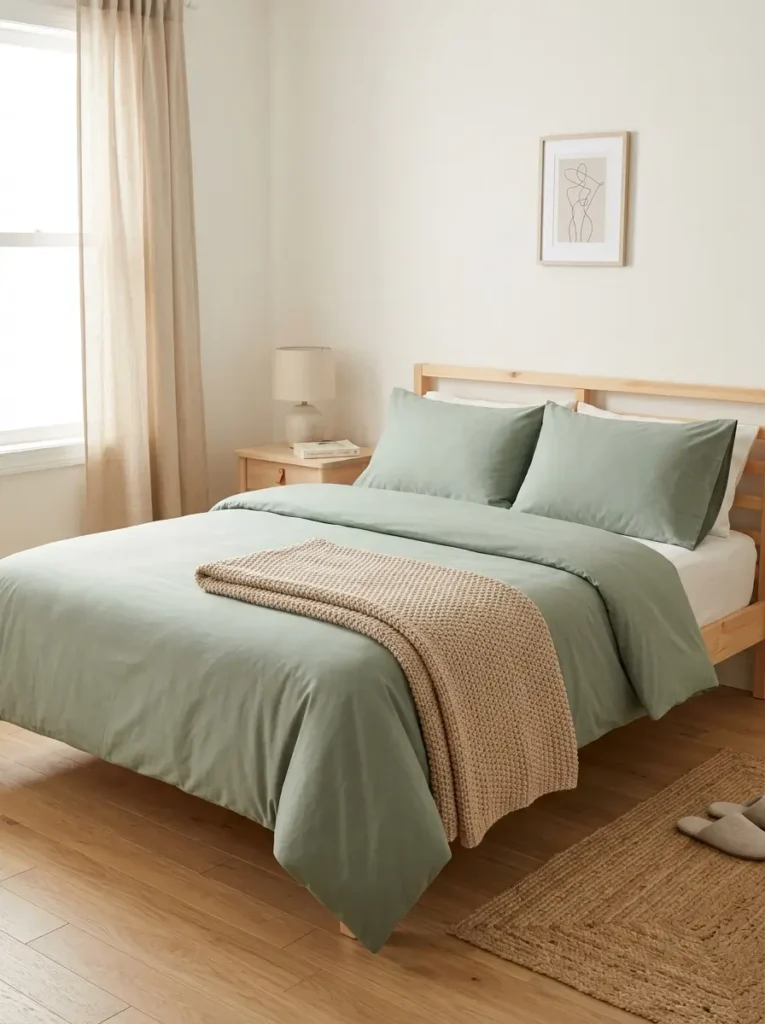
Bedding should be comfortable, simple, and easy to clean. Start with a fitted sheet, flat sheet or duvet cover, comforter, two pillows, and one extra blanket. Cotton, microfiber, or cotton-blend sheets are practical because they are easy to wash and usually budget-friendly.
For colors, white, warm beige, soft gray, muted sage, or light blue work well in a first apartment bedroom. These shades are easy to match later with rugs, curtains, or wall art. Dark bedding can look stylish, but it often shows lint and pet hair faster.
This idea is best for beginners who want a clean room without complicated styling. A common mistake is buying decorative pillows before buying proper sheets and pillowcases.
Add a Nightstand or Small Bedside Surface
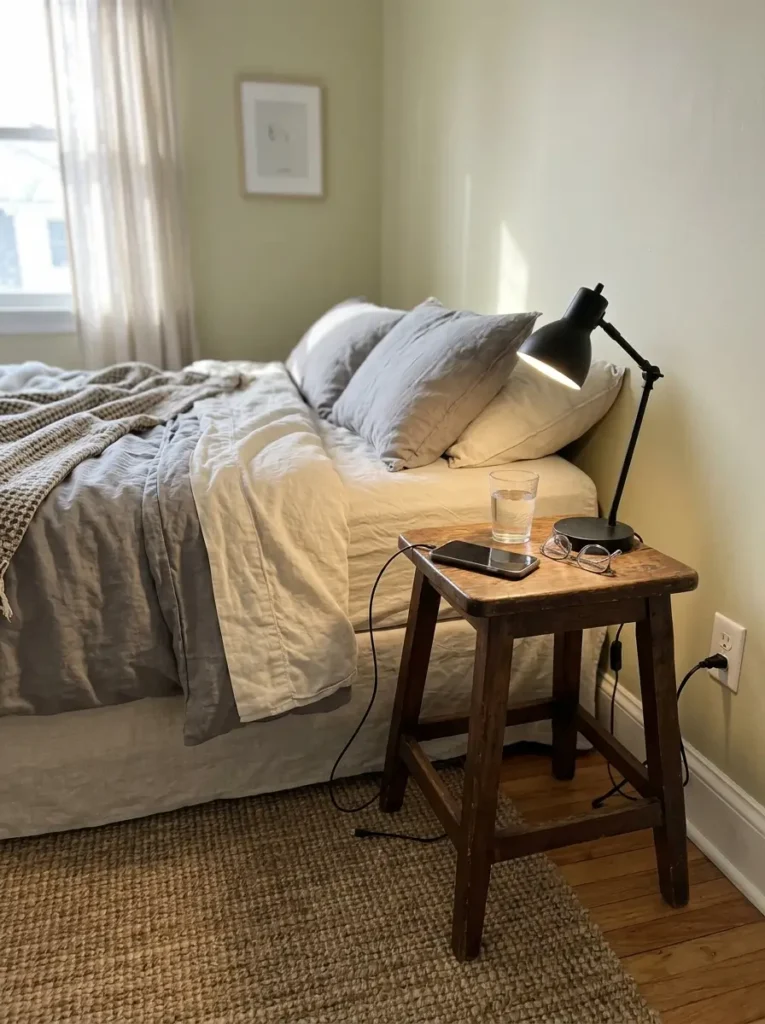
You do not need a large matching nightstand right away. A small side table, narrow shelf, storage cube, or even a sturdy stool can work beside the bed. The goal is to keep your phone, water, lamp, glasses, and charger within reach.
Choose a bedside piece that fits your layout. In a tiny bedroom, a wall-mounted shelf can save floor space. In a rental, use renter-friendly mounting strips only for lightweight items, and avoid drilling unless your lease allows it.
This works well for small spaces and tight budgets. It also prevents the habit of leaving essentials on the floor, where they can get stepped on or lost under bedding.
Use Warm Lighting Instead of Harsh Overhead Light
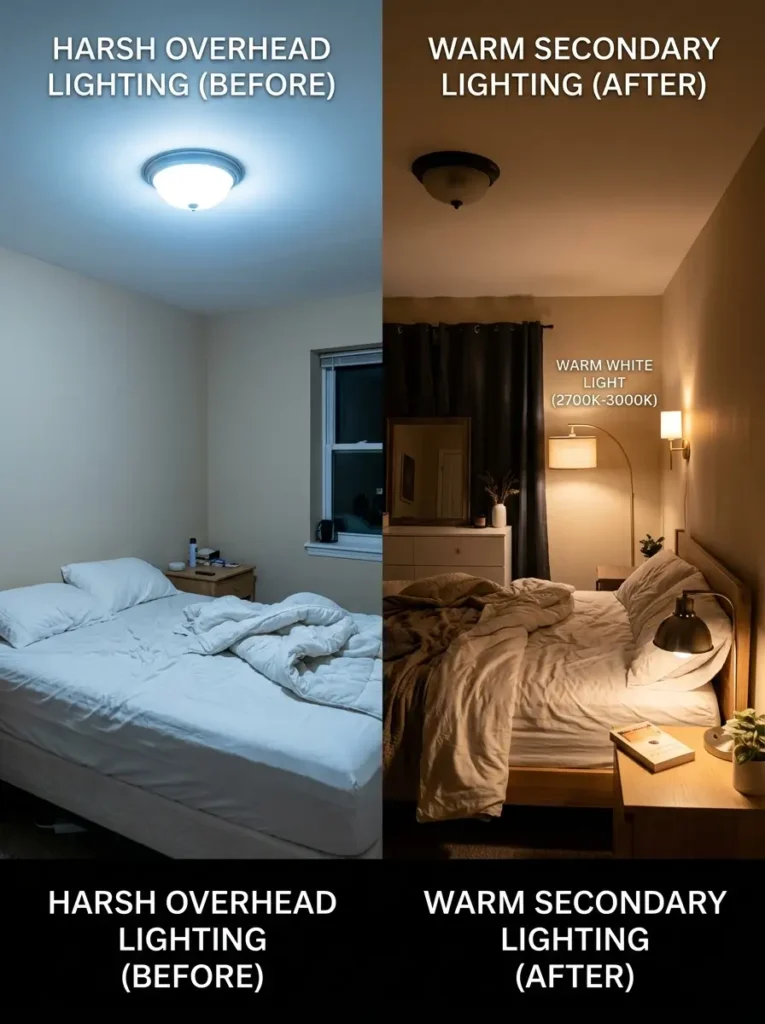
Lighting changes how your bedroom feels at night. Many apartments come with bright ceiling lights that feel too harsh for relaxing. Add a bedside lamp, floor lamp, or plug-in wall sconce with a warm bulb around 2700K to 3000K.
Warm white light helps the room feel softer without making it too yellow. For reading, choose a lamp with a shade that directs light downward. For small rooms, a slim floor lamp in a corner can brighten the space without taking up much surface area.
This tip is best for renters who cannot change ceiling fixtures. Avoid cool blue-white bulbs in the bedroom because they can make the room feel more like an office than a place to rest.
Set Up Privacy Before Decorating
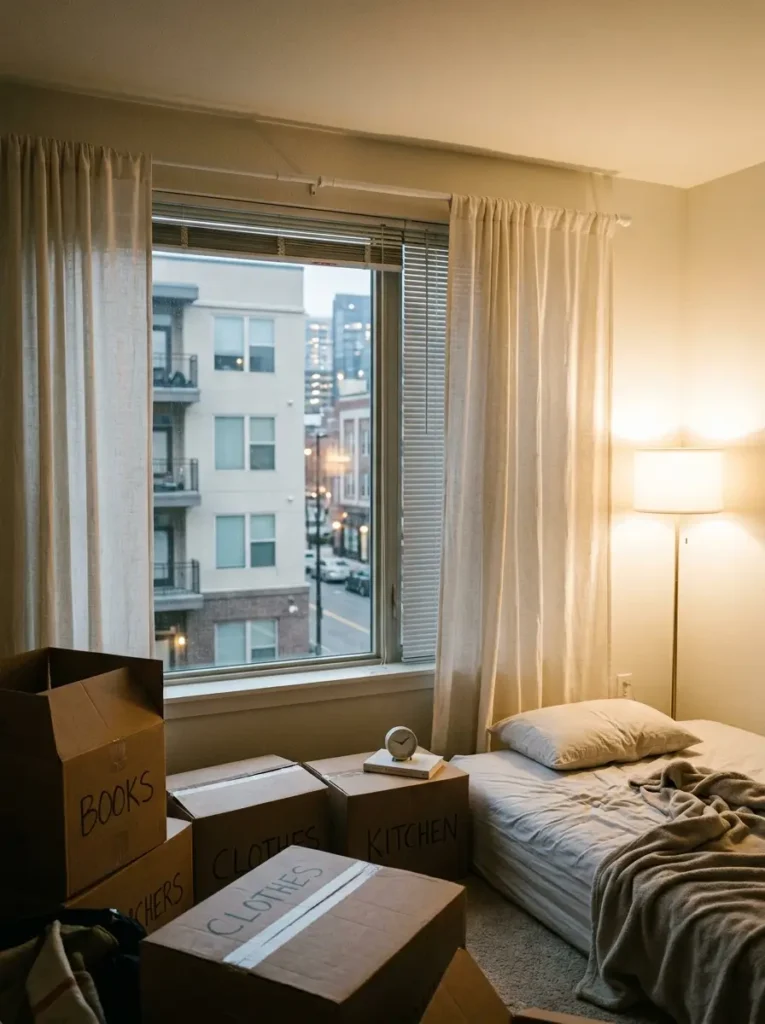
Curtains, blinds, or temporary privacy film should be part of your first apartment bedroom checklist. Privacy matters on the first night, especially if your bedroom faces another building, a street, or a shared walkway.
If your apartment already has blinds, add simple curtains for softness and better light control. Use tension rods when possible because they are rental-friendly and do not require holes. For a budget option, start with plain white, beige, or gray curtains that can match future decor.
This works best for renters and anyone living on a lower floor. A common mistake is styling the bed first but forgetting window coverage until bedtime.
Create a Simple Clothing Zone
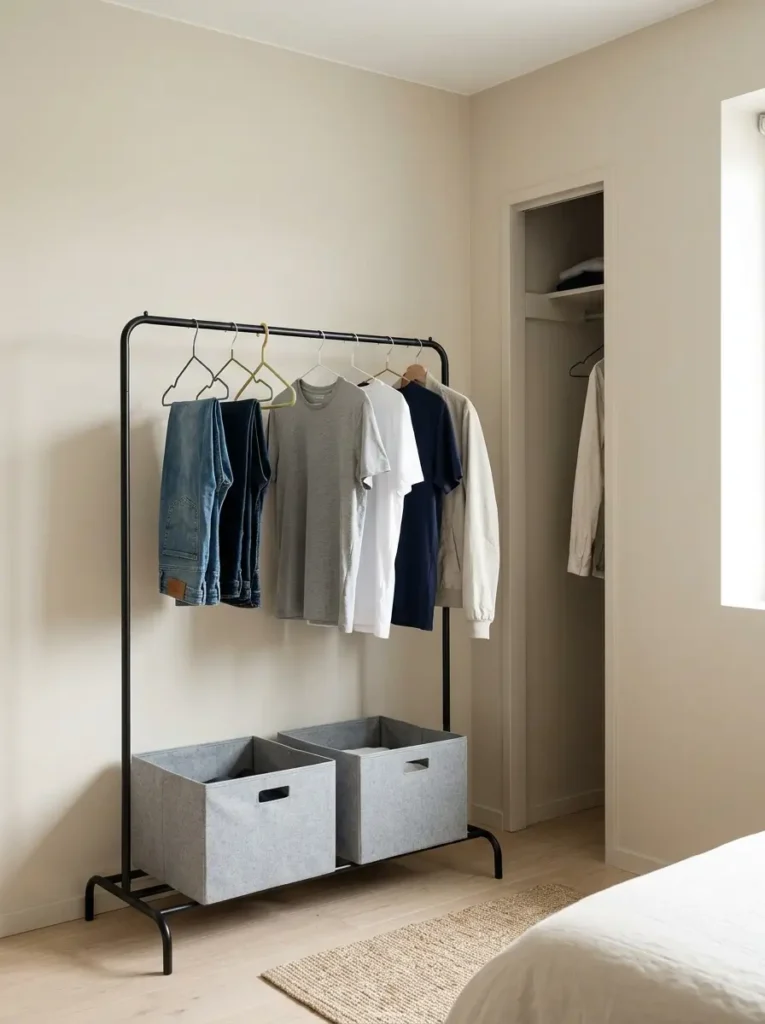
Your bedroom needs a clear place for clothes, even before you buy a full dresser. Use closet hangers, fabric bins, under-bed storage bags, or a basic clothing rack. Separate daily clothes from special items so your room does not turn into a pile of laundry.
If your closet is small, use slim velvet hangers to save space. Add one bin for folded basics like T-shirts, leggings, or sleepwear. Keep work clothes or outfits you wear often at eye level, so mornings feel easier.
This idea is best for beginners who are still unpacking. It works because a simple clothing zone reduces visual clutter and helps you avoid buying storage furniture that may not fit later.
Keep a Laundry Basket in the Right Spot
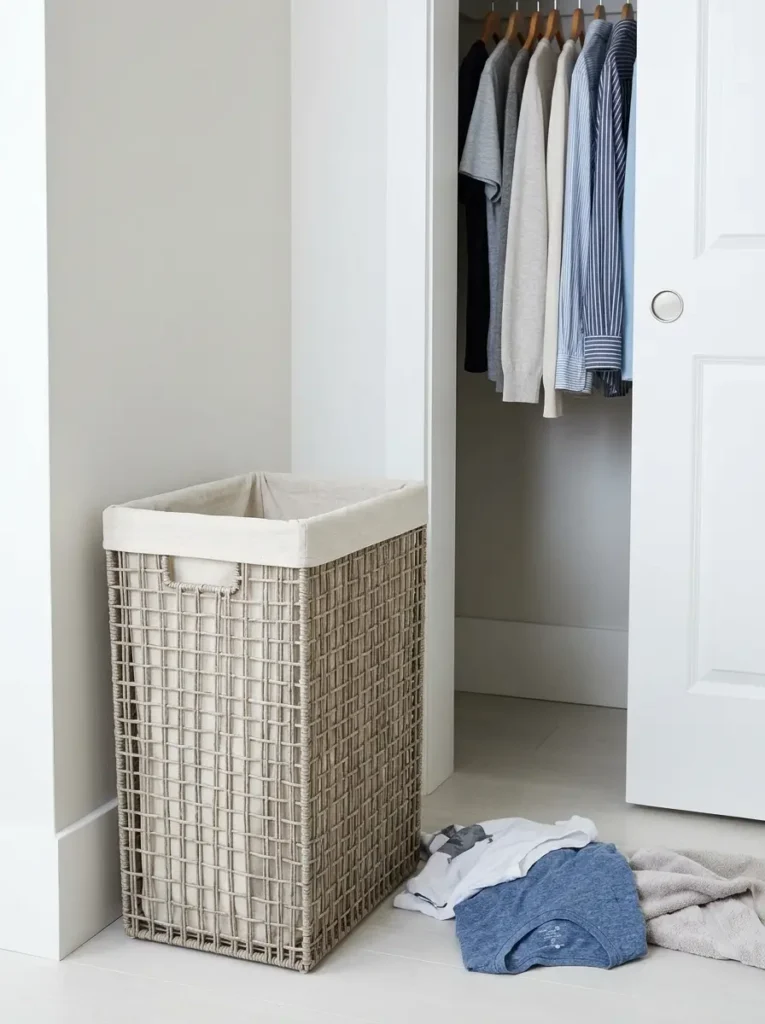
A laundry basket sounds basic, but it helps keep your first bedroom clean from the start. Place it where you usually change clothes, such as near the closet, bathroom door, or foot of the bed. If it is hidden too far away, clothes often end up on a chair.
Choose a slim hamper for narrow rooms or a soft fabric basket if you need to carry laundry to another floor. A divided hamper is useful if you already separate lights, darks, and towels.
This tip is best for renters, students, and anyone sharing laundry facilities. It works because it creates a habit before clutter builds up.
Add One Rug for Comfort and Noise Control
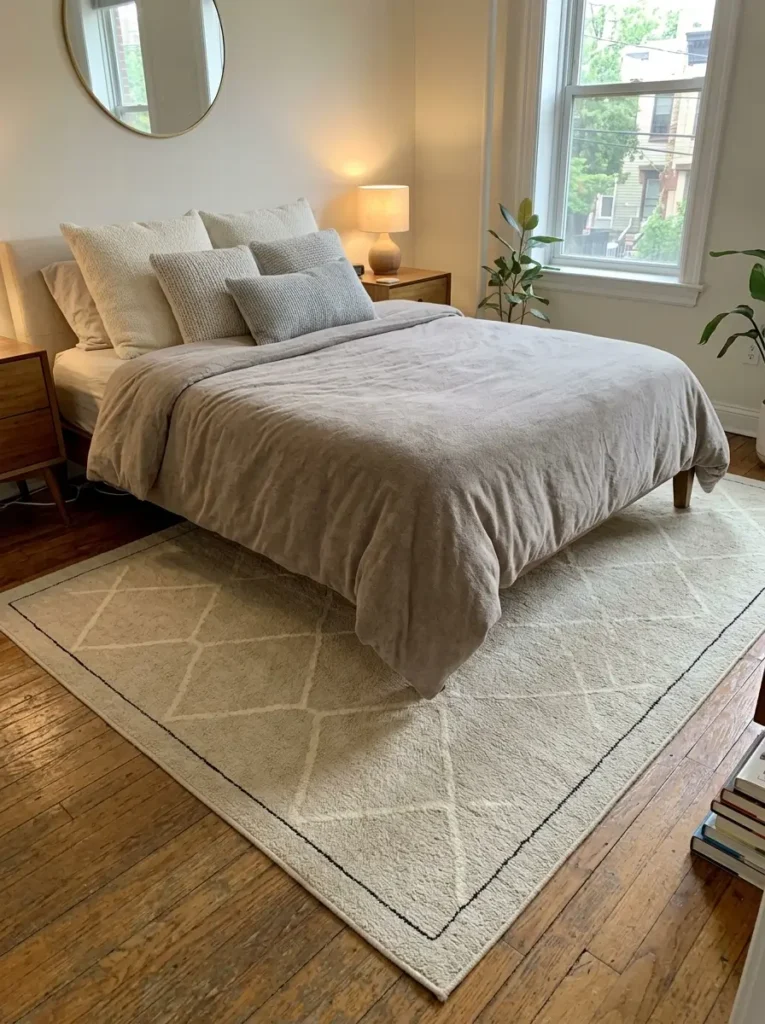
A rug makes a bedroom feel warmer, especially if the apartment has tile, vinyl, or old hardwood floors. It also helps reduce noise, which is useful in rentals with neighbors below.
Place the rug under the lower two-thirds of the bed if the room allows it. For a small bedroom, a 5×7 rug beside or under the bed can still make a difference. Choose low-pile rugs if you want easier cleaning and less dust buildup.
Good beginner colors include oatmeal, taupe, soft gray, cream with black lines, or muted terracotta. This idea works best for renters who want comfort without changing the flooring.
Use Wall Decor That Does Not Damage Paint
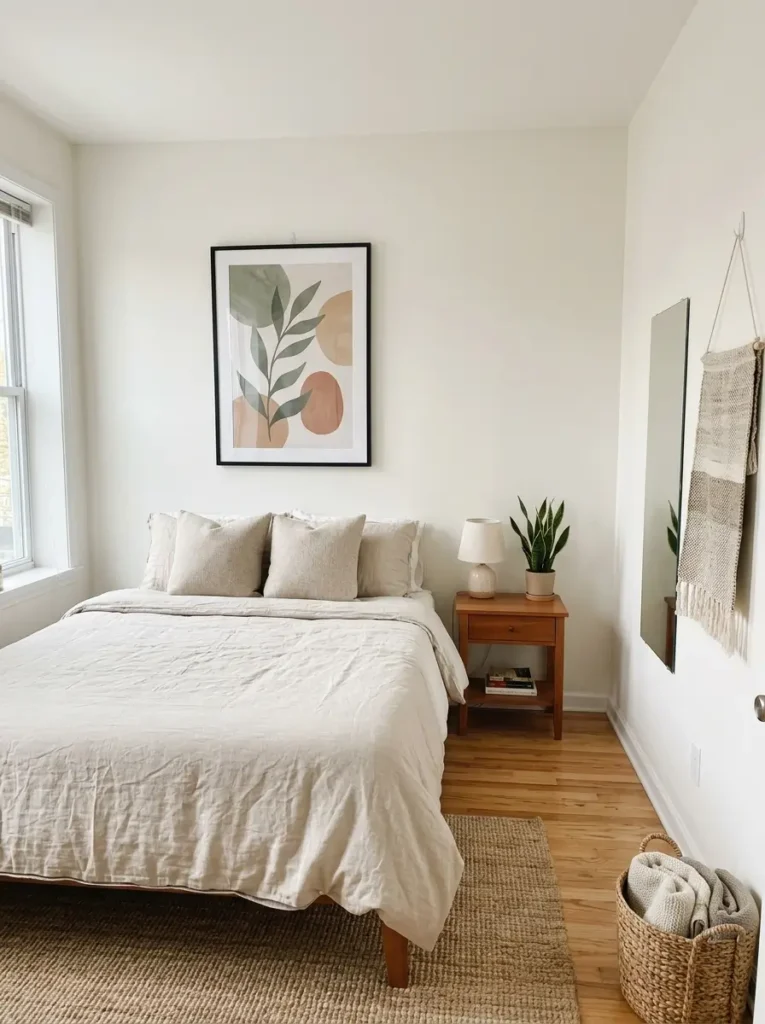
Rental-friendly wall decor can make the room feel personal without risking your deposit. Use lightweight framed prints, fabric wall hangings, peel-and-stick decals, or removable hooks. Avoid heavy mirrors or shelves unless you can mount them safely and repair the wall later.
A good first bedroom wall setup is one large print above the bed or two smaller frames above a dresser. Keep the colors connected to your bedding or rug. For example, beige bedding pairs well with black frames, soft green art, or warm wood tones.
This tip is best for renters who want personality without permanent changes. The key is to decorate slowly instead of filling every wall on move-in day.
Add a Full-Length Mirror Where It Helps Most
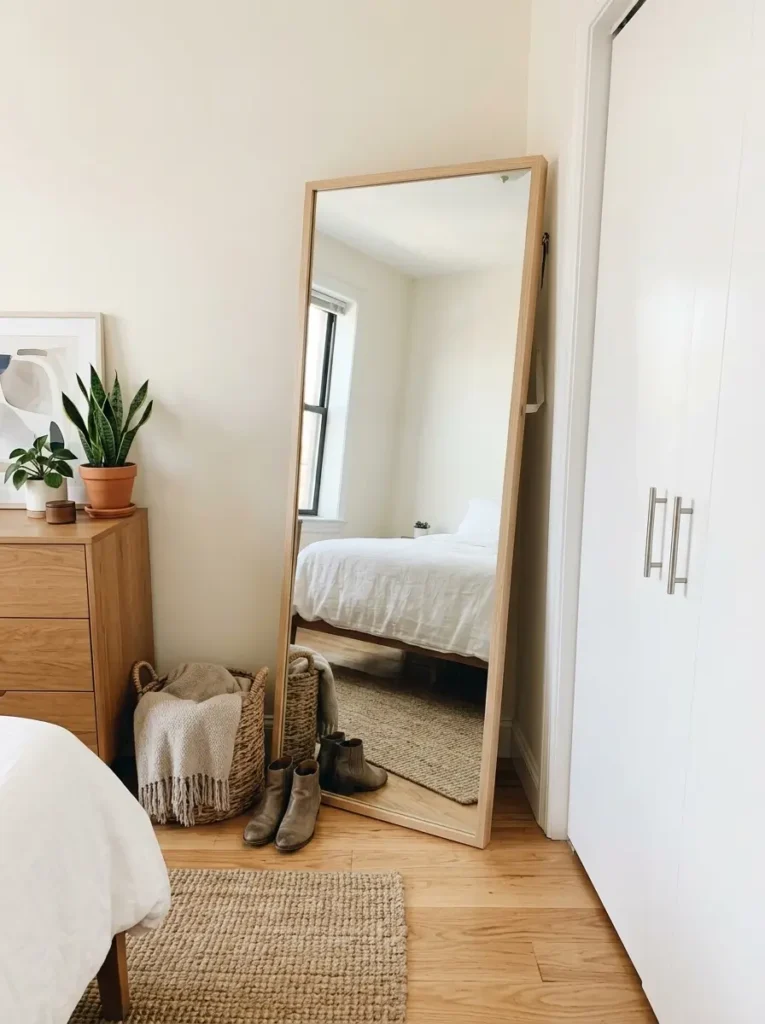
A full-length mirror is practical, not just decorative. It helps you get dressed, check outfits, and reflect light in a small bedroom. Place it near the closet or beside the bedroom door, depending on where you naturally get ready.
For rentals, choose a leaning mirror with anti-tip safety hardware if allowed. Over-the-door mirrors are also useful when floor space is limited. A mirror with a thin black, white, or wood frame usually works with many decor styles.
This idea is best for small apartments and beginners building a functional room. Avoid placing a mirror where it reflects clutter, because it can make the room feel busier.
Use Under-Bed Storage Without Overfilling It
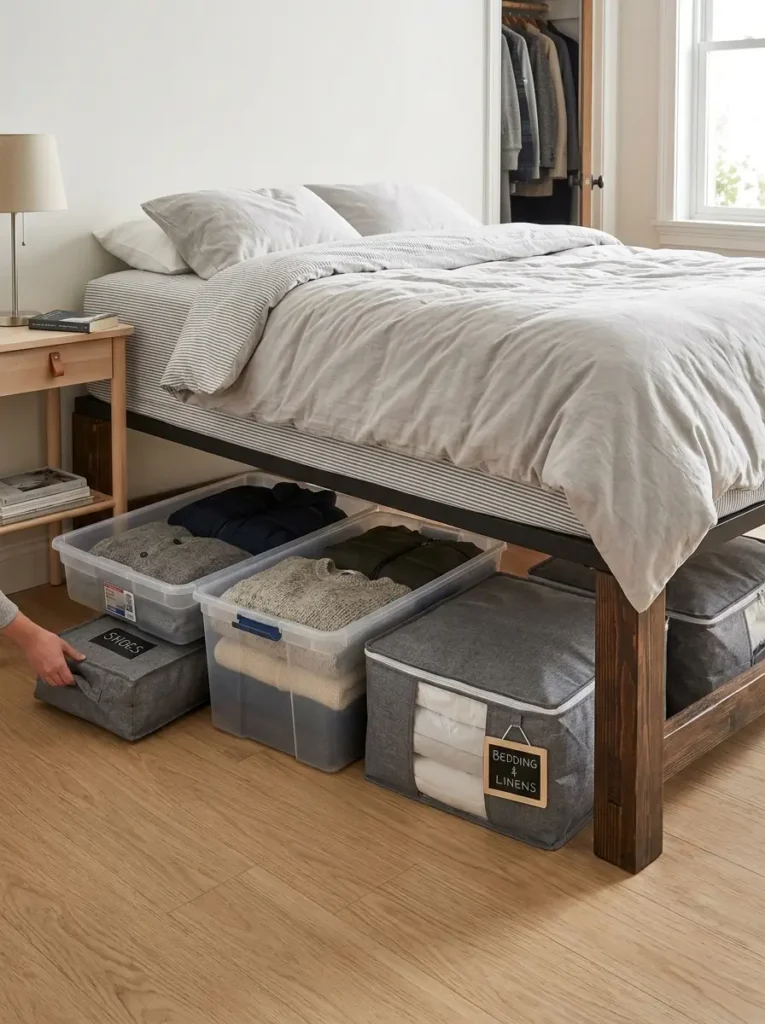
Under-bed storage is helpful when your first apartment bedroom has limited closet space. Use it for seasonal clothes, extra bedding, shoes, or items you do not need daily. Clear bins or labeled fabric bags make it easier to find things later.
Measure the height under your bed before buying storage containers. If your bed sits low, bed risers can help, but check that the bed remains stable. Keep one side easy to access so you do not have to move furniture every time.
This tip is best for small bedrooms and studio apartments. It works because it uses hidden space without adding more furniture.
Create a Small Getting Ready Corner
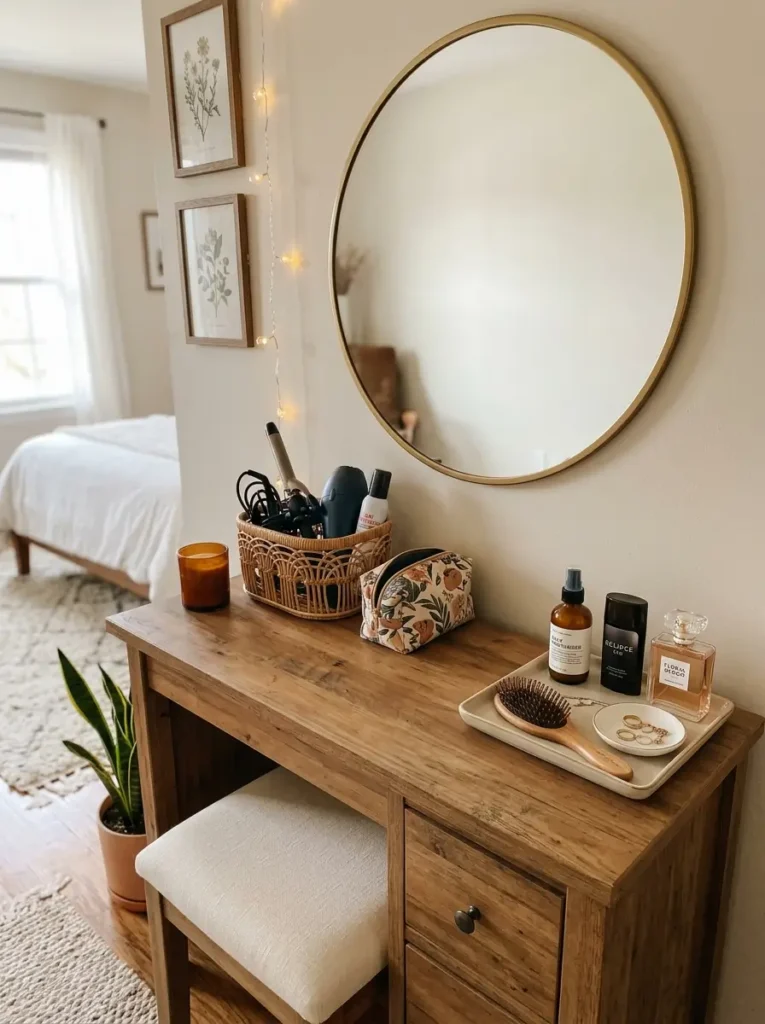
A getting-ready corner can be simple. You may only need a mirror, a small tray, a hair tools basket, a makeup pouch, and a chair or stool. If you do not have space for a vanity, use the top of a dresser or a narrow wall shelf.
Keep daily items together and store the rest away. For example, place moisturizer, deodorant, perfume, hairbrush, and jewelry tray in one zone. This saves time and keeps bathroom counters from becoming crowded.
This idea is best for anyone who gets ready in the bedroom. It works because it gives small everyday items a home instead of spreading them across the room.
Choose One Main Color Direction
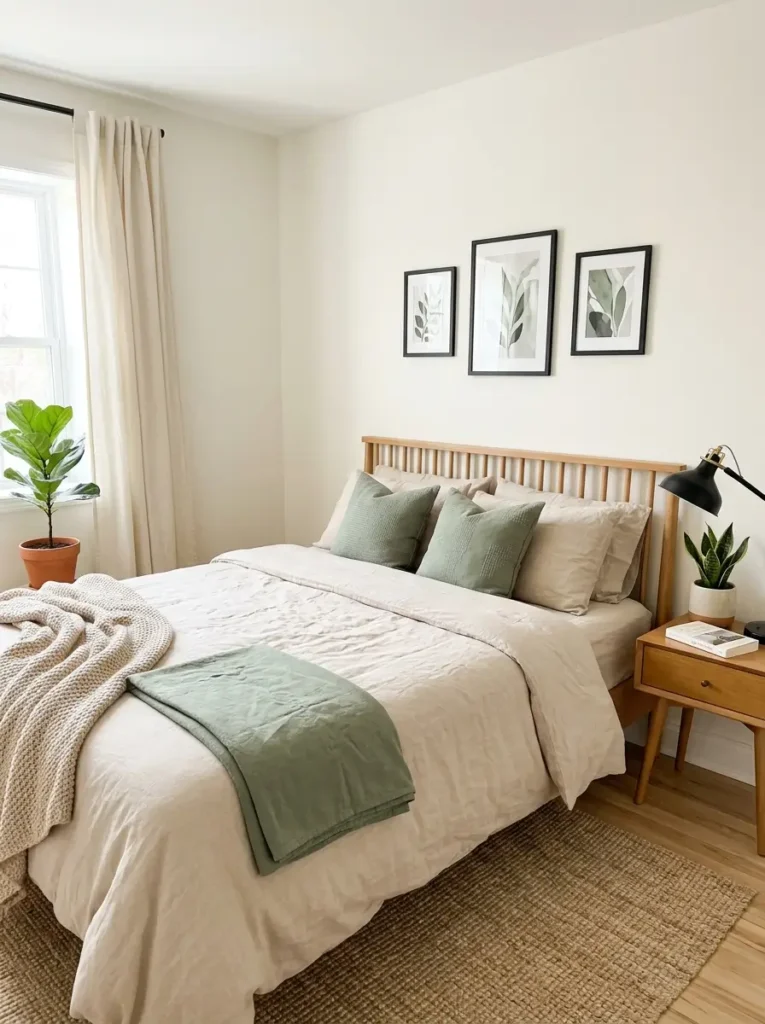
Your first bedroom does not need a full design plan, but it helps to choose one color direction. This keeps budget buys from looking random. Start with three simple layers: a base color, a soft accent, and one grounding color.
For example, try warm white walls, beige bedding, sage green accents, and black frames. Another option is soft gray bedding, light wood furniture, cream curtains, and navy details. These combinations are easy to build over time.
This tip is best for home decor beginners. It works because a simple palette makes low-cost pieces look more intentional.
Keep One Clear Walkway Around the Bed
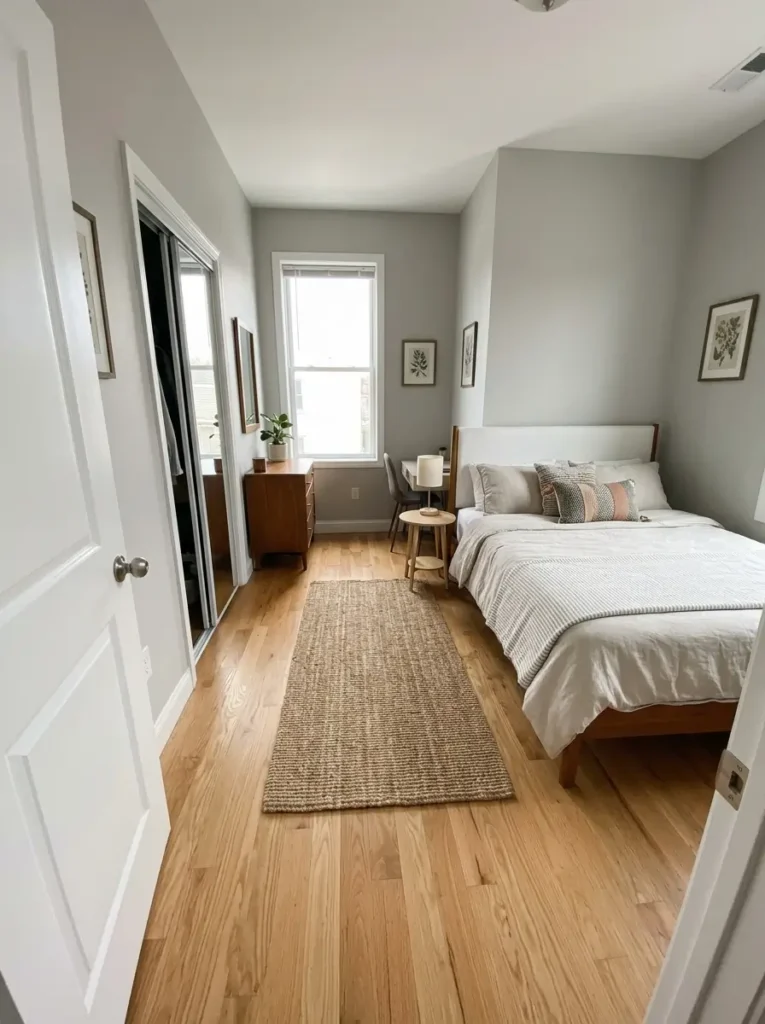
Layout matters more than buying more decor. Keep a clear path from the door to the bed, closet, and window. If you have to turn sideways to walk, the furniture is probably too large or placed poorly.
Place the bed against the longest solid wall when possible. Avoid blocking closet doors, outlets, vents, or windows. In a very small room, pushing the bed into a corner may work better than forcing two nightstands.
This idea is best for small-space decorating. It works because a comfortable walkway makes the room easier to use every day.
Prepare a Night One Comfort Basket
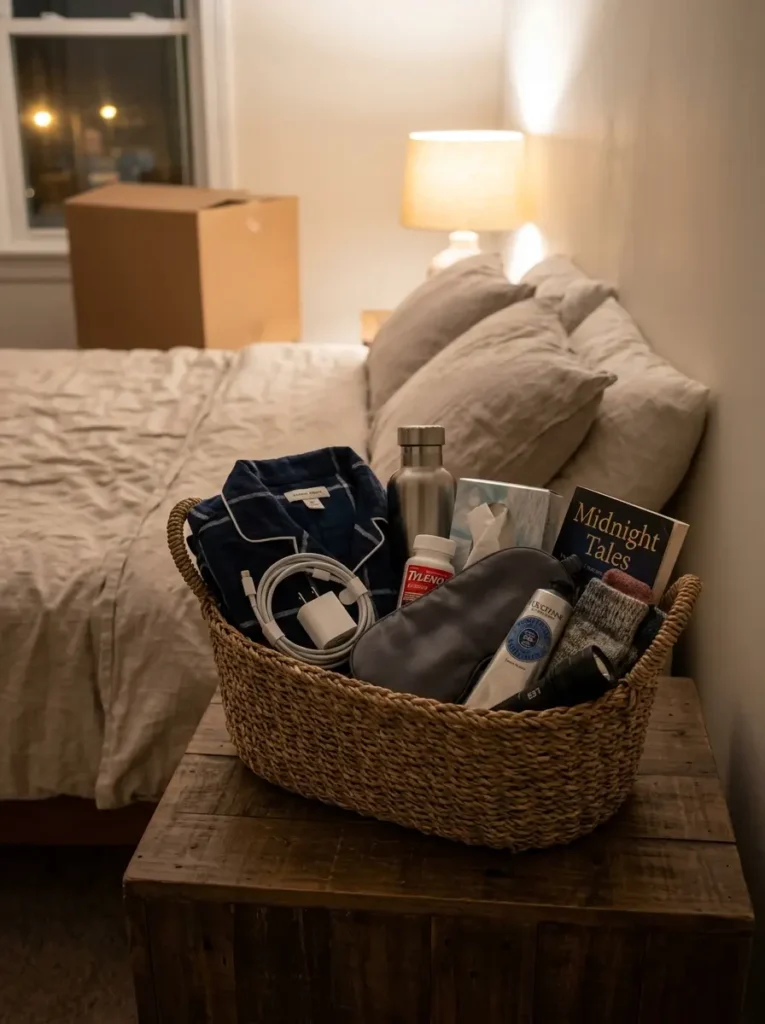
A night one comfort basket helps you avoid digging through boxes when you are tired. Add pajamas, phone charger, water bottle, tissues, basic medicine, sleep mask, hand cream, socks, and any personal items you use before bed.
Place the basket on your nightstand, dresser, or floor beside the bed. You can also add a small flashlight if your apartment is unfamiliar and you may need to move around at night.
This tip is best for move-in day. It works because it separates urgent bedroom basics from items that can wait until later.
Common Mistakes to Avoid
One common mistake is buying decor before measuring the room. A bed, dresser, or rug can look right online but feel too large in a small apartment bedroom. Always measure the room, doorways, and wall space before ordering big pieces.
Another mistake is relying only on overhead lighting. A bedroom needs softer light for night routines, reading, and relaxing. Even one warm bedside lamp can make the room easier to use.
Avoid filling the room with too many colors at once. A first apartment often comes together slowly, so choose flexible basics first. Bedding, curtains, and rugs in simple colors are easier to update with smaller accents later.
Do not ignore storage. A beautiful bedroom will not feel comfortable if clothes, shoes, and daily items have nowhere to go. Start with bins, hooks, baskets, and hangers before buying decorative extras.
Also, avoid permanent changes without checking your lease. Peel-and-stick wallpaper, mounted shelves, curtain rods, and wall hooks can cause damage if installed carelessly. Use rental-friendly options and test removable products in a hidden spot first.
Budget-Friendly Tips for a First Apartment Bedroom
Start with the items you touch every day. Bedding, pillows, lighting, laundry storage, and privacy coverings should come before wall art or extra pillows. These pieces affect comfort right away.
Buy furniture slowly when possible. A simple bed frame and a temporary side table can work for the first month while you learn how the room functions. This helps you avoid buying a bulky dresser or desk that blocks the layout.
Choose pieces that do more than one job. A storage ottoman can hold blankets and work as seating. A dresser can also become a getting-ready station. A bed with drawers can reduce the need for extra cabinets.
Look for secondhand wood furniture, metal bed frames, mirrors, and lamps. These items often last well and can be cleaned easily. For soft items like mattresses, pillows, and bedding, buying new is usually the safer choice.
Use small upgrades to make budget pieces feel better. Matching hangers, a clean lampshade, a simple tray, and neatly folded bedding can make a low-cost bedroom feel more organized.
First Apartment Bedroom Checklist Tips
Use this first apartment bedroom checklist as a practical starting point, especially for your first week.
- Mattress or sleeping surface
- Bed frame or platform base
- Fitted sheet, pillowcases, and comforter
- Two sleeping pillows
- Extra blanket
- Bedside lamp with warm bulb
- Phone charger near the bed
- Curtains, blinds, or privacy film
- Laundry basket
- Hangers and basic closet storage
- Small nightstand or bedside table
- Trash bin
- Mirror
- Rug if the floor feels cold or noisy
- Under-bed storage bins
- Small basket for night one essentials
Keep your first apartment bedroom checklist focused on comfort, privacy, and organization first. Once those basics are handled, you can add art, plants, decorative pillows, and other styling pieces over time.
FAQ
What is the most important item for a first apartment bedroom?
The most important item is a comfortable sleeping setup. Start with a mattress, clean sheets, pillows, and a blanket. Good sleep matters more on night one than extra decor.
How can I decorate my first apartment bedroom on a budget?
Choose simple bedding, warm lighting, secondhand furniture, and rental-friendly wall decor. Stick to one color direction so affordable pieces look more connected.
What colors work best for a first apartment bedroom?
Soft neutrals are the easiest starting point. Warm white, beige, light gray, muted sage, and dusty blue work well because they pair with many furniture styles and decor pieces.
Do I need a full bedroom set for my first apartment?
No, you do not need a full matching bedroom set. Start with a bed, lighting, storage, and privacy. Add a dresser, mirror, rug, and decor once you understand the room layout.
How do I make a small apartment bedroom feel comfortable?
Use furniture that fits the room, keep one clear walkway, add warm lighting, and use under-bed storage. Avoid oversized furniture and too many small decor items on open surfaces.
What should I avoid when setting up a rental bedroom?
Avoid drilling holes without permission, buying furniture before measuring, blocking windows or closets, and using poor-quality removable products without testing them first.
Conclusion
A first apartment bedroom does not need to be fully decorated on the first day. It needs to help you sleep, get dressed, stay organized, and feel comfortable in your new space.
Use this first apartment bedroom checklist to handle the basics first: bedding, lighting, privacy, storage, and a simple layout. Then add color, wall decor, rugs, and personal pieces slowly. A bedroom built this way feels more useful, more comfortable, and easier to maintain in everyday apartment life.