
Small apartment living rooms carry their own kind of charm. Limited space often pushes creativity in the best way, turning simple corners into cozy moments that feel deeply personal. Every chair choice, soft throw, and lighting detail starts to matter more, creating rooms that feel thoughtful instead of crowded. Tiny layouts can actually feel warmer because every piece has intention behind it. Small apartment living room
Living in a smaller space also teaches balance. Too many items quickly feel overwhelming, yet the right styling makes even compact rooms feel calm and inviting. Smart decor choices help rooms breathe while still showing personality. Soft textures, layered lighting, and clever furniture placement can completely change how a living room feels without needing extra square footage.
Why Space Saving Decor Makes Small Living Rooms Feel Better
Smart decor choices are less about removing things and more about choosing pieces that work harder. Furniture that serves multiple purposes, light color palettes, and thoughtful layout decisions help rooms feel open while still cozy. When styling feels intentional, small living rooms begin to feel peaceful instead of restricted.
Small Apartment Living Room Decor Ideas
Floating Shelves Instead of Bulky Cabinets
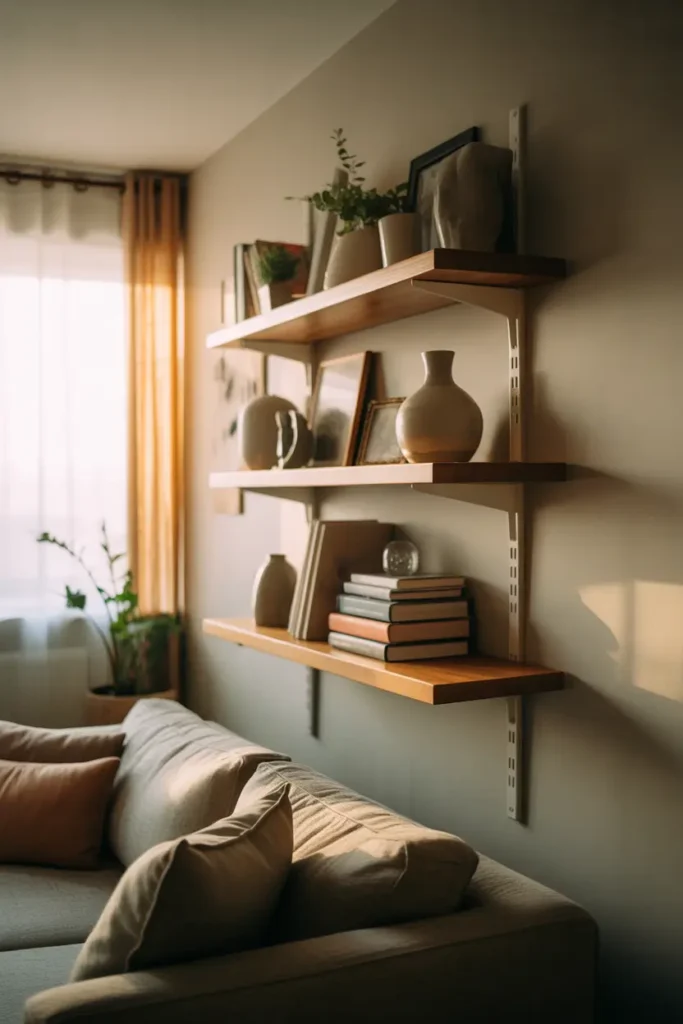
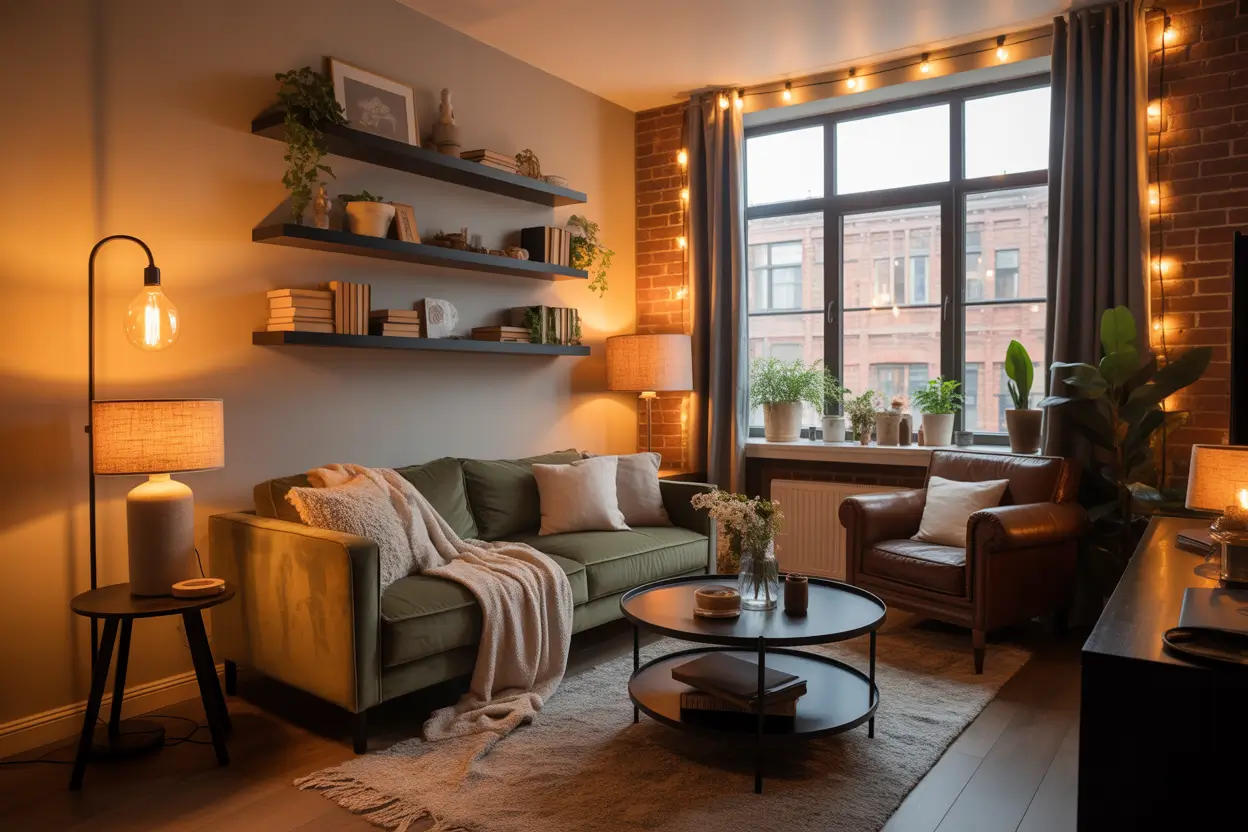
Floating shelves instantly free up floor space while adding visual height to a small living room. Walls become part of the design rather than empty surfaces waiting for furniture. Styling shelves with books, candles, and small decor pieces keeps the room feeling airy while still personal. Light wood tones or soft white finishes help shelves blend into the background, preventing visual heaviness. Keeping styling minimal allows breathing room, so nothing feels crowded. Small apartments benefit from vertical styling because eyes naturally move upward, making ceilings feel higher and spaces more open. Balanced spacing between items creates calm energy, while layered textures like ceramics and woven baskets bring warmth without adding clutter. Thoughtful shelf styling turns storage into decoration and makes even tight layouts feel styled and intentional.
Hidden Storage Coffee Table Styling
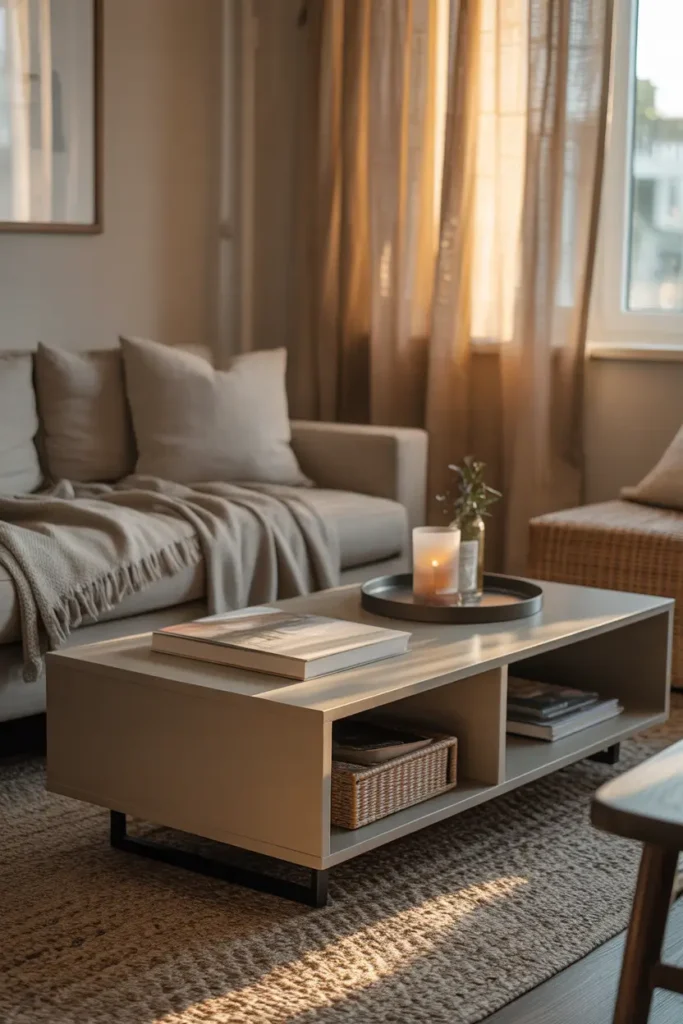
Coffee tables can do much more than hold mugs and magazines. Storage coffee tables quietly hide blankets, remotes, and everyday clutter while keeping surfaces clean and relaxed. Lift-top or drawer designs allow easy access without disrupting the room’s flow. Choosing rounded edges softens the look and prevents the furniture from feeling heavy in compact layouts. Neutral finishes like oak or soft walnut add warmth while staying visually light. Styling the top with one tray, a candle, and a small book stack keeps the balance without overcrowding. Clean surfaces create mental calm, which makes small rooms feel bigger instantly. Functional furniture like this allows comfort without sacrificing style, giving living rooms an organized, peaceful feeling that supports daily life.
Wall-Mounted Lighting for Extra Floor Space
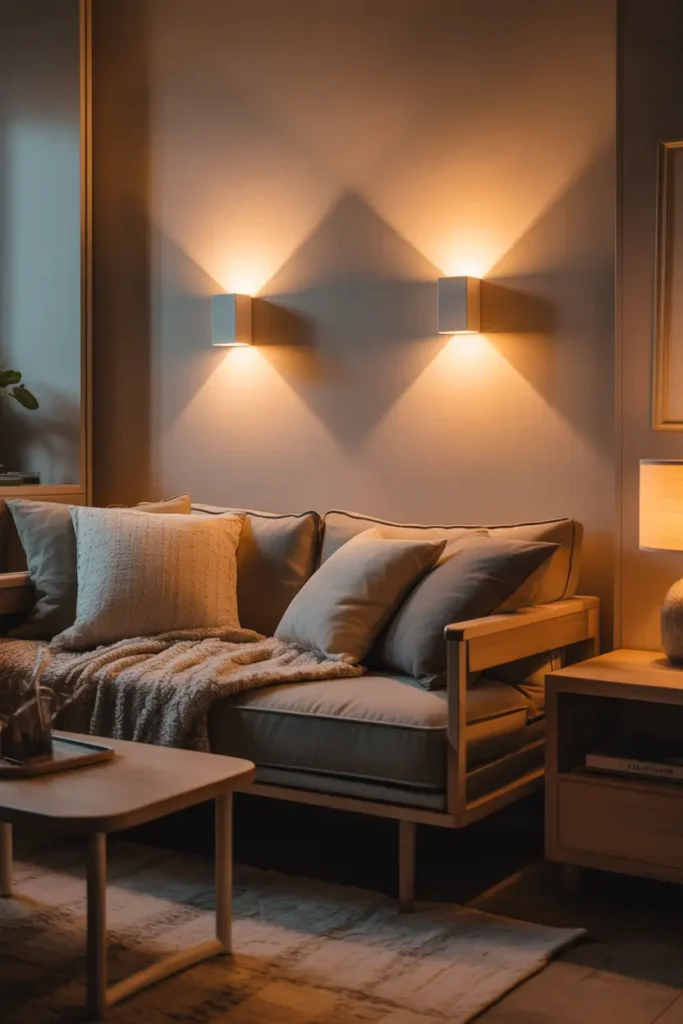
Floor lamps often take up precious space in small apartments, while wall-mounted lighting keeps pathways open and uncluttered. Mounted sconces or adjustable wall lamps create cozy lighting without adding bulk near seating areas. Soft warm lighting instantly changes the mood, making rooms feel intimate during evenings while remaining functional for reading or relaxing. Choosing slim designs helps fixtures blend into the wall instead of dominating the space. Symmetrical placement around a sofa or artwork adds balance and visual harmony. Lighting placed slightly above eye level draws attention upward, helping ceilings feel taller. This simple switch removes visual heaviness and replaces it with softness and intention, creating a living room that feels styled yet effortless.
Slim Profile Sofa for Open Flow
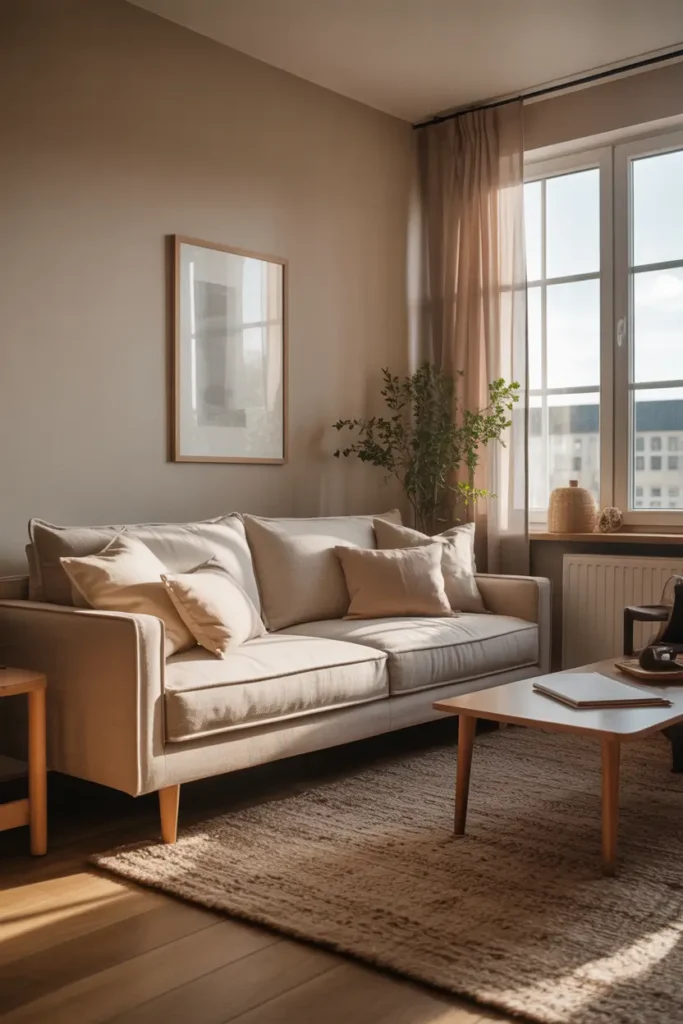
Oversized sofas quickly overwhelm small living rooms, while slim-profile seating keeps layouts breathable. Sofas with raised legs allow light to pass underneath, creating visual openness that makes rooms feel larger. Soft neutral upholstery blends easily with changing decor styles, allowing flexibility over time. Choosing compact armrests instead of bulky sides saves valuable inches without sacrificing comfort. Adding textured pillows introduces personality while maintaining simplicity. Placing the sofa slightly away from the walls creates subtle depth, helping the room feel thoughtfully arranged rather than squeezed together. Balanced proportions make movement easier and prevent the space from feeling crowded. Slim seating proves that comfort and spaciousness can exist together when scale is carefully considered.
Corner Styling That Uses Every Inch
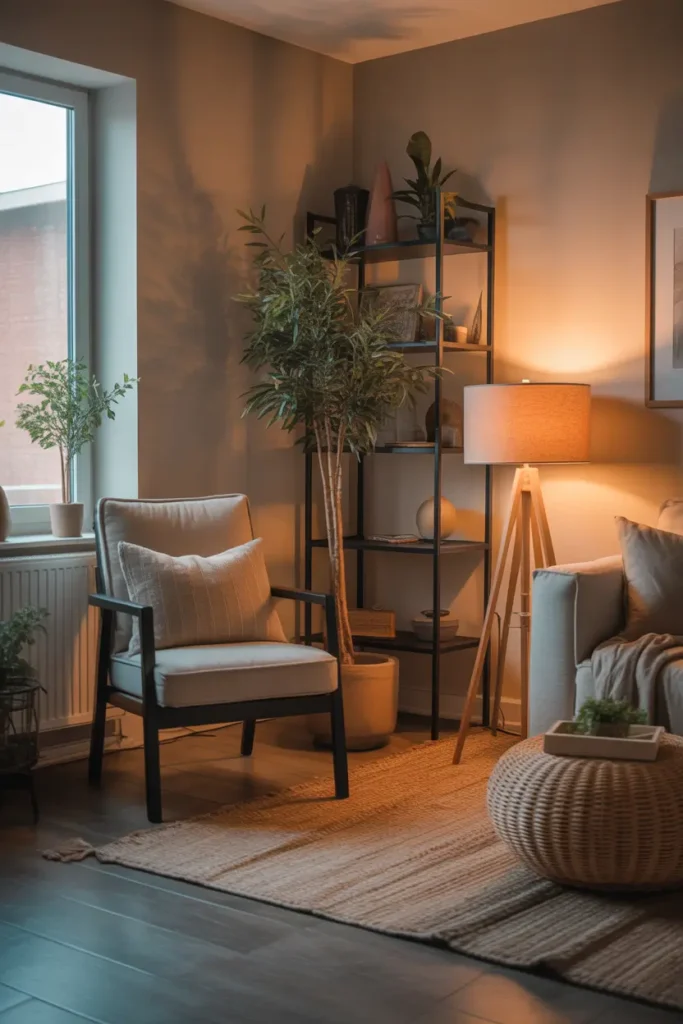
Corners often stay empty even though they hold valuable potential in small living rooms. Turning corners into styled zones adds function without crowding central space. Small accent chairs, tall plants, or narrow shelving units fit beautifully into unused angles, making rooms feel complete. Layering a floor cushion or compact side table creates cozy reading moments without overwhelming the layout flow. Vertical decor like tall lamps or plants draws eyes upward, subtly expanding visual height. Soft lighting in corners removes dark, empty areas and brings warmth to the entire room. Thoughtful corner styling transforms overlooked spaces into intentional design moments, helping apartments feel fuller yet still open and comfortable.
Foldable Furniture That Adapts to Daily Life
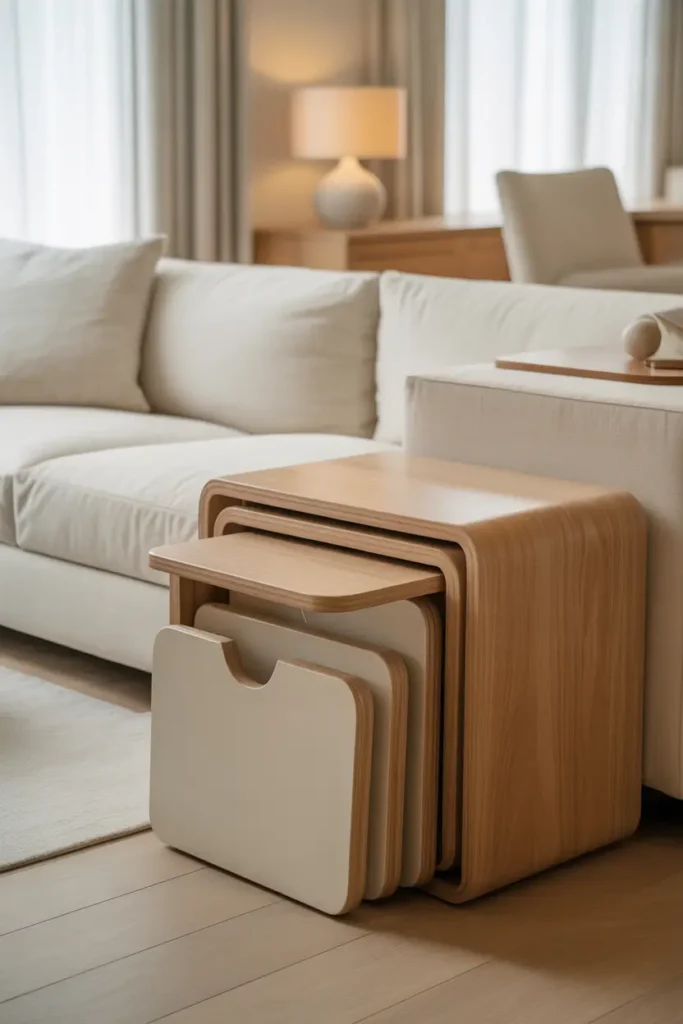
Foldable furniture brings the flexibility that small apartment living rooms truly need. Pieces that open when required and tuck away afterward help spaces shift easily from relaxing to working or hosting friends. Foldable side tables or nesting designs allow surfaces to be used only when needed, preventing visual clutter in everyday moments. Light wood or soft neutral finishes keep furniture feeling gentle rather than temporary. Keeping foldable items near seating areas keeps the room functional without feeling crowded. Movement becomes easier, and layouts feel less fixed, which adds a relaxed and effortless mood. Small rooms feel calmer when furniture adapts to lifestyle instead of permanently filling every corner. This approach creates breathing space while still supporting comfort and practicality.
Mirrors That Visually Expand Space
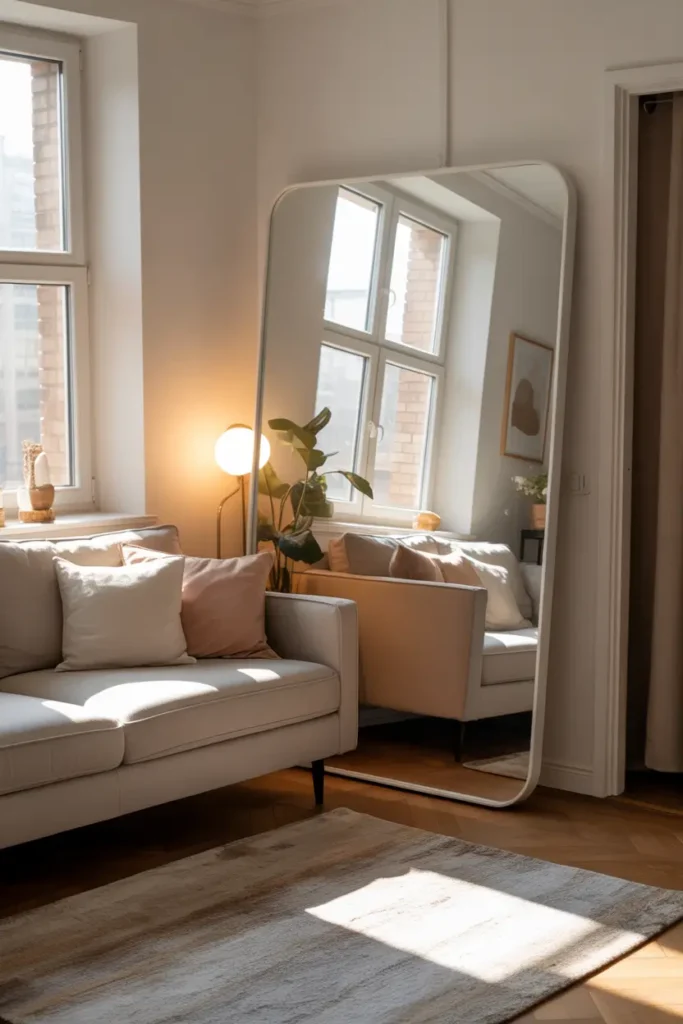
Mirrors quietly change how a living room feels by reflecting light and creating depth. Placing a large mirror opposite a window spreads natural brightness across the room, making the walls feel farther apart. Thin frames or frameless designs prevent heaviness and maintain softness in small layouts. Leaning mirrors casually against walls adds a relaxed personality while saving drilling effort. Reflection also doubles visual styling, allowing plants, textures, and lighting to appear layered without adding extra decor. Soft curved shapes feel especially welcoming and reduce sharp visual lines. Mirrors create openness without needing additional furniture, helping compact rooms feel airy, calm, and thoughtfully styled throughout the day.
Vertical Storage That Draws Eyes Upward
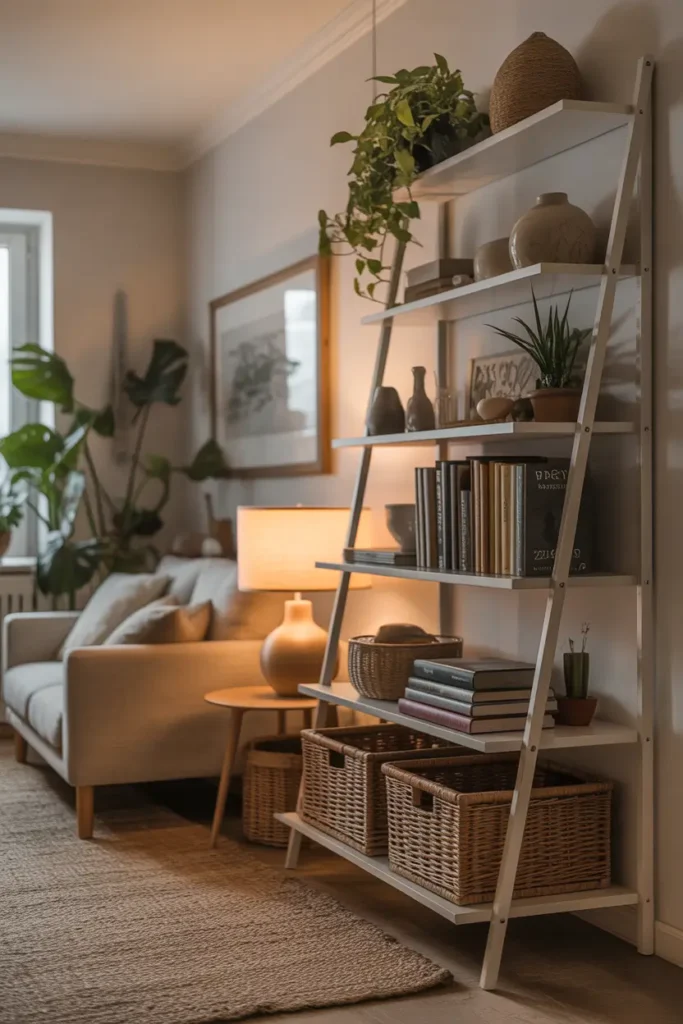
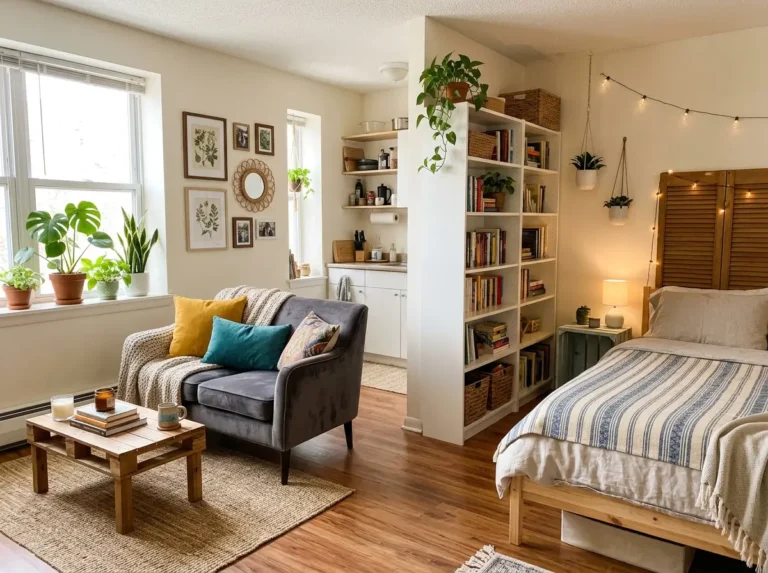
Vertical storage transforms unused wall height into practical beauty. Tall shelving units or ladder shelves allow storage without consuming valuable floor space. Styling shelves with balanced spacing keeps them light and breathable rather than crowded. Mixing books, baskets, and small decor pieces creates visual rhythm while maintaining organization. Lighter colors help tall furniture blend into walls, preventing visual weight. Vertical lines naturally guide eyes upward, making ceilings feel taller and rooms more open. Keeping lower shelves simple while decorating upper levels lightly maintains harmony. This method turns storage into decoration and helps small living rooms feel layered yet calm.
Light Color Palette for Airy Feeling
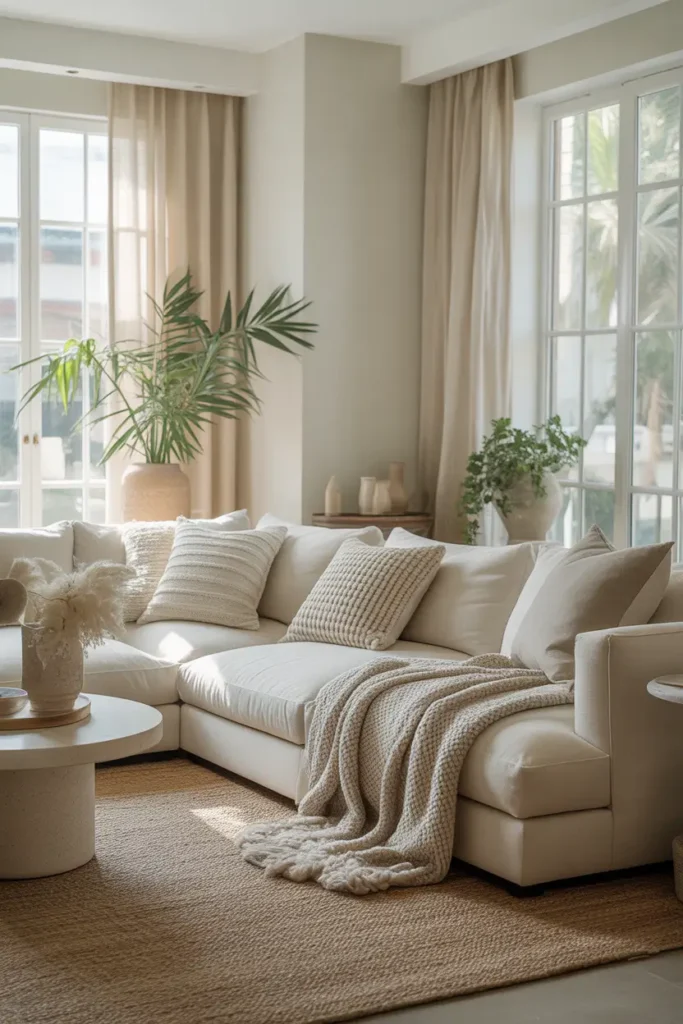
Light colors instantly change how space feels by reflecting more light around the room. Soft whites, warm beiges, pale greys, and gentle pastels create a calm visual flow without overwhelming small layouts. Walls, rugs, and furniture working within similar tones remove harsh contrasts, allowing the room to feel continuous and open. Layering textures instead of bold colors keeps interest while maintaining softness. Linen curtains, woven rugs, and plush cushions add depth without heaviness. Light palettes also allow seasonal decor changes easily, keeping the space fresh without redesigning everything. Balanced softness creates peaceful energy that makes compact living rooms feel relaxing and welcoming every day.
Multi-Functional Ottoman Styling
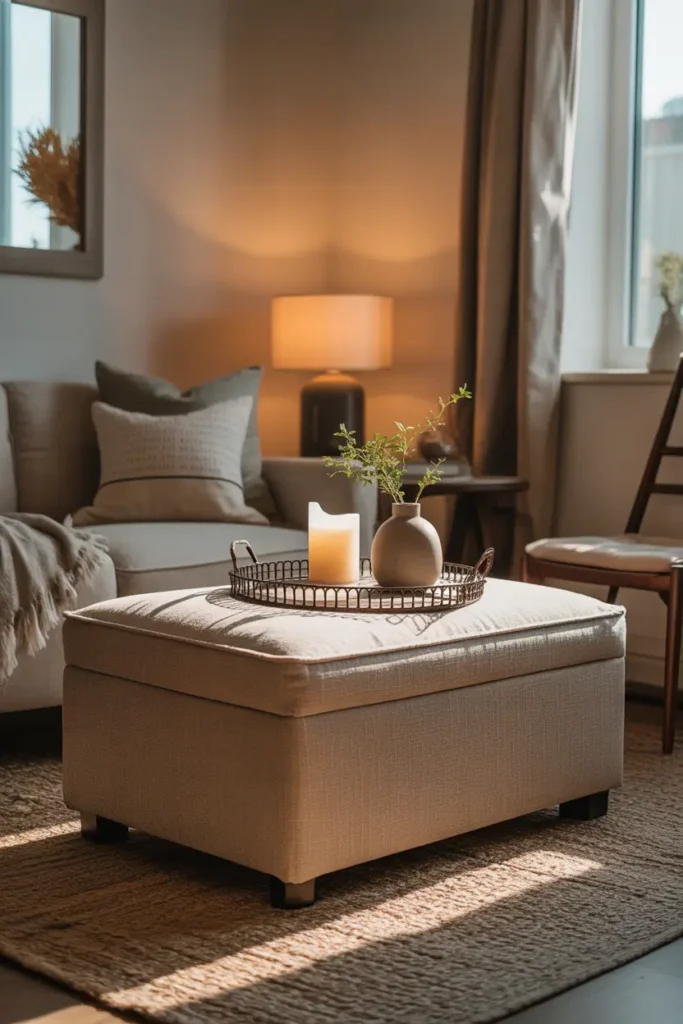
Ottomans quietly become one of the most useful pieces in a small living room. They serve as seating, a footrest, storage, and even a coffee table when topped with a tray. Soft upholstered designs keep the room cozy while avoiding hard visual edges. Storage ottomans hide blankets or magazines, reducing clutter instantly. Choosing lighter fabrics helps maintain openness while still adding texture. Placing the ottoman slightly off-center creates relaxed styling that feels natural rather than rigid. Flexible furniture like this allows rooms to shift depending on mood or activity, making small apartments feel comfortable and thoughtfully arranged without adding extra furniture pieces.
Layered Rugs That Define Zones Softly
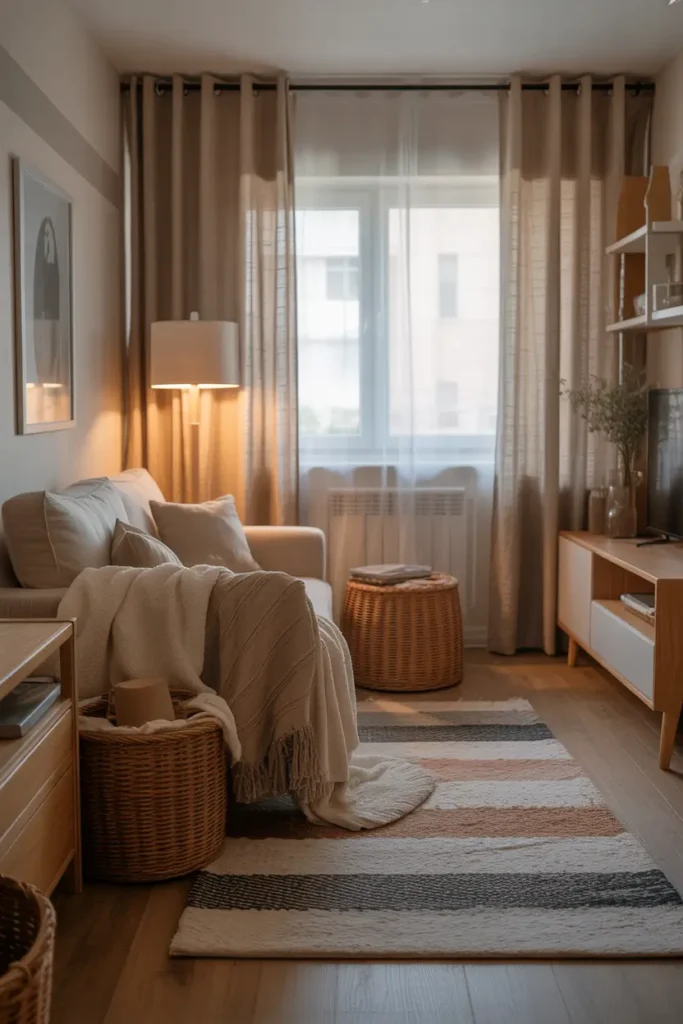
Layering rugs helps small living rooms feel organized without adding walls or bulky dividers. Placing a larger neutral rug underneath and a smaller textured rug on top creates subtle separation between seating areas while keeping the room open. Soft layers add warmth underfoot and make spaces feel cozy instantly. Choosing light tones keeps the visual flow smooth, so the room never feels heavy. Patterns should stay gentle to avoid overwhelming the layout. Layered rugs also hide floor imperfections while adding personality through texture instead of clutter. This styling trick gives structure to compact living rooms while keeping everything relaxed and inviting.
Transparent Furniture for Visual Lightness
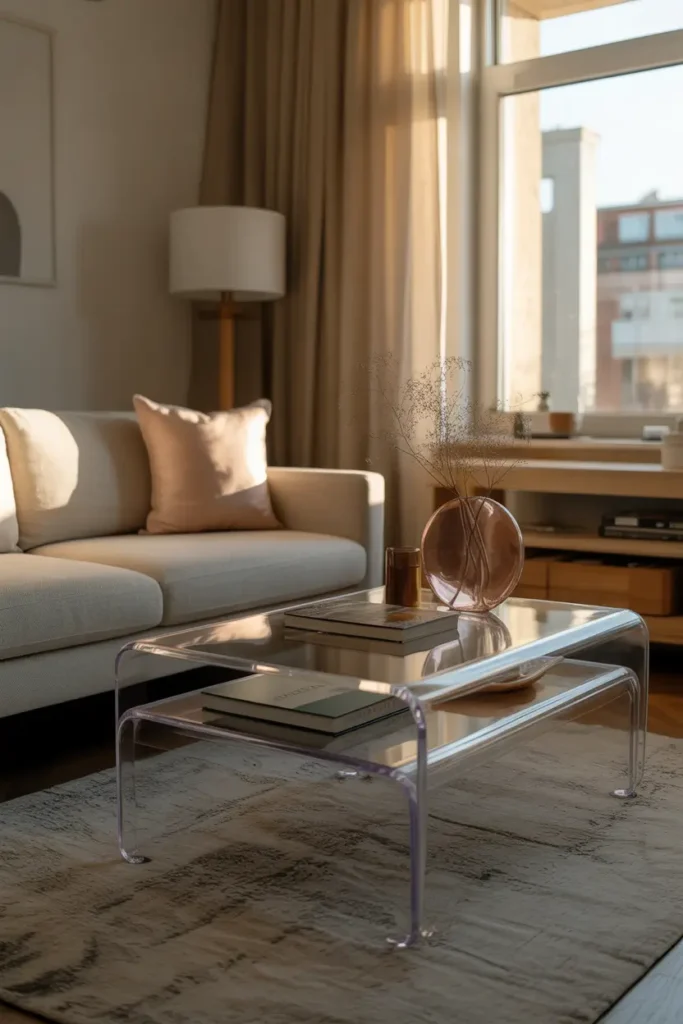
Transparent furniture quietly blends into surroundings, making small rooms feel less crowded. Acrylic coffee tables or clear side chairs allow light to pass through, keeping sightlines open. Even though furniture remains functional, it visually disappears, giving the illusion of more space. Pairing transparent pieces with soft textiles balances warmth and modern style. Keeping the surrounding decor minimal helps maintain a clean visual flow. This approach works especially well in compact apartments where heavy furniture can quickly dominate. Clear materials reflect light softly and keep the room feeling fresh, modern, and comfortably uncluttered without sacrificing usability.
Curtains Hung High for Taller Feel
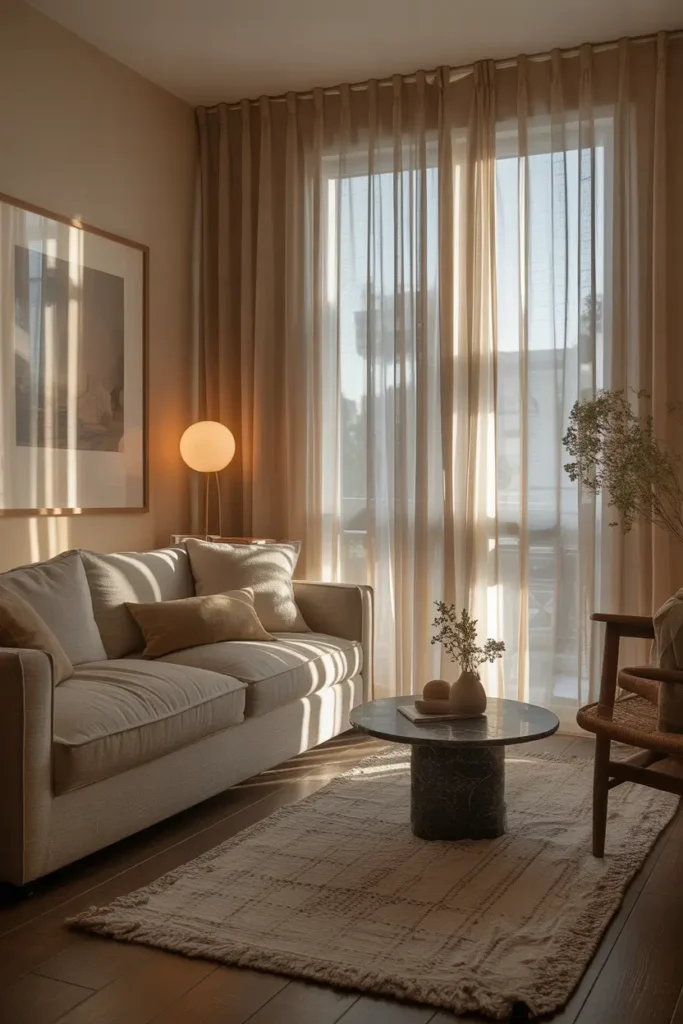
Hanging curtains closer to the ceiling instantly makes walls appear taller. Long flowing curtains draw eyes upward, creating elegance even in compact rooms. Choosing lightweight fabrics allows natural light to filter gently while maintaining privacy. Neutral shades blend seamlessly with walls, keeping visual continuity intact. Curtains that lightly touch the floor add softness and polish without feeling formal. Wider curtain placement beyond window edges also makes windows appear larger. Small adjustments like this change room proportions visually, helping living rooms feel airy, graceful, and thoughtfully styled with minimal effort.
Minimal Wall Art with Intentional Placement
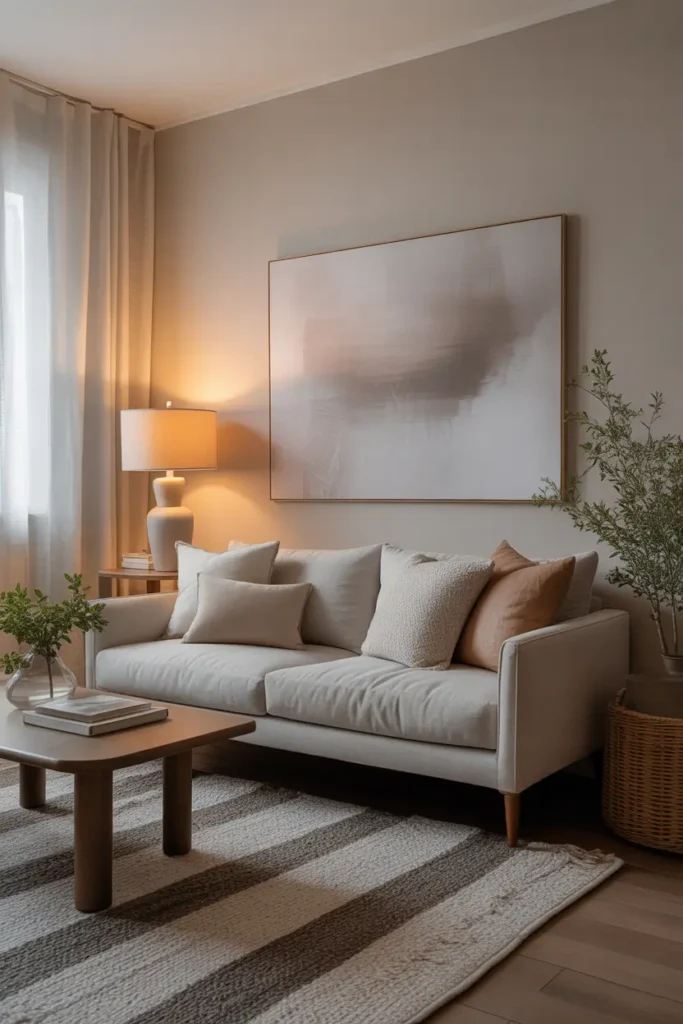
Wall art adds personality, yet too many frames can overwhelm small living rooms. Choosing one or two larger pieces instead of many small ones keeps walls calm and balanced. Soft color palettes or abstract prints maintain harmony with furniture while still adding character. Centering artwork at eye level creates grounding and visual stability. Leaving space around art allows walls to breathe, which helps rooms feel bigger. Frames in light wood or thin metal keep styling delicate. Intentional placement creates impact without clutter, allowing personality to shine through simplicity and thoughtful design.
Soft Lighting Layers for Cozy Evenings
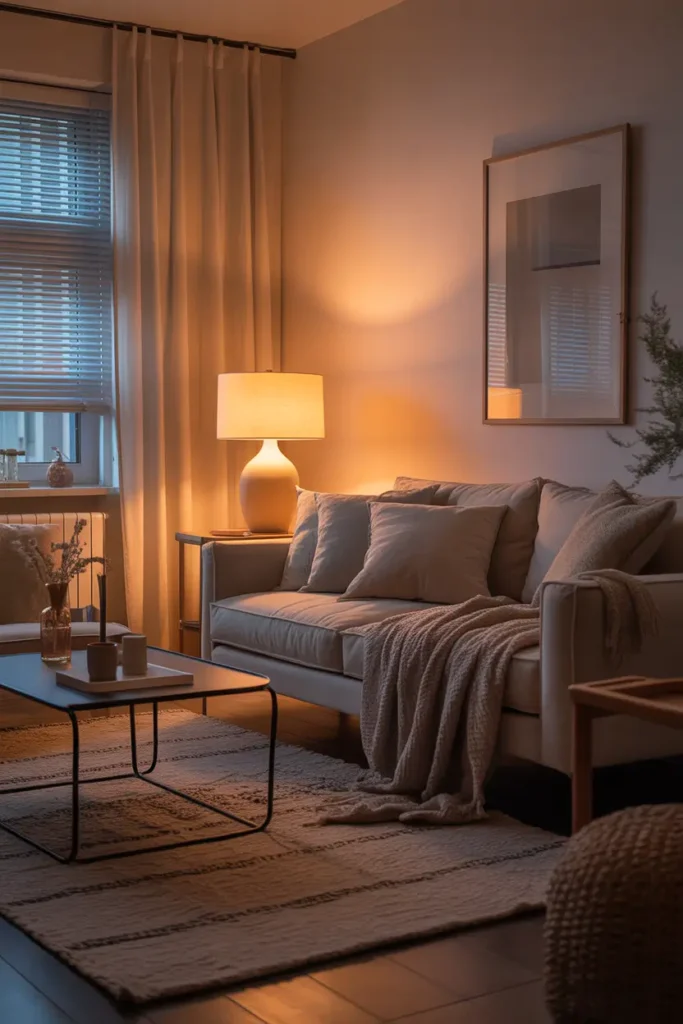
Lighting layers transform mood more than any furniture change. Combining a ceiling light, a table lamp, and warm accent lighting creates depth that makes small living rooms feel welcoming at night. Warm bulbs soften shadows and remove harsh brightness that can make compact spaces feel smaller. Placing lamps at different heights adds gentle visual rhythm while highlighting textures and decor. Soft lighting encourages relaxation and creates emotional comfort after long days. Even a small room begins to feel intimate and peaceful when lighting feels layered and thoughtful rather than overly bright or flat.
Final Thoughts
Small apartment living rooms do not need more space to feel beautiful. Thoughtful choices, soft textures, and furniture that works smarter can completely change how a room feels. When every piece has purpose, rooms become calmer and easier to live in. Focusing on light, balance, and comfort allows small spaces to feel personal and welcoming. Cozy living comes from intention, not size, and even the smallest living room can feel warm, stylish, and deeply inviting.